
Thomas Zummer
grund; foundation; fundament; principe; principle, arché/αρχη; cause; origin; substrate; strata; sediment; soil; earth; surface; bottom; remainder; ghremtús; *ghrem–; growinde; grundus; ghrn̥to-; space; position; solidity; proficient; established; pulverized, reduced; to gather, possess or occupy; to have come from or reside upon; etc.1
ground I
How to speak about Monika works, or to adequately describe her aesthetic method? Perhaps it is useful to consider certain devices of rhetorical naming, metaphoric or allegorical processes. These might serve not only as a useful point of entry but also enlist a pattern of allusions and references that set in motion a richer and more complex act of reading. To this end I have used a tacit geological metaphor to approach Czyżyk’s complex patterns of “abstractions,” and entitled this essay “ground,” a term deeply resonant with the rhetorical strategies that she employs.
The word ground supports a plurality of meanings, constituting an intricate network of cognates, allusions, perceptions and etymologies. We commonly speak of a relation between figure and ground in images, by which we designate a perceptual capacity to differentiate an object from its background. “Figure” in this sense is conventionally an object of focus while “ground” is the background, field, support, or context. Figure and ground operate in a perceptual/conceptual organization as a way to “describe the parts of a situation”2 in an image, an environment, or in media. For Marshall McLuhan the terms figure and ground are employed to explain how a communications technology, designated as the medium or figure, necessarily operates through its ground or context. A complex, dynamic array of engagements between figure and ground similarly persists in the cognitive neurophysiology of pattern recognition and extends into realms of abstraction, visual allegory, and illusion to capture, stabilize or destabilize animage. In this sense, ground is the frame or armature within which [on the surface of which] an image appears, is held in place, and persists.
The anthropologist Claude Levi-Strauss has famously described his own conceit concerning geology as a secondary tropology in the explication of the hidden, or subterranean, elements in the conceptualization and discernment of anthropological meanings in myth, text, and ritual.
When I was a child, for a while my main interest was geology. The problem in geology is also to try to understand what is invariant in the tremendous diversity of landscapes, that is, to be able to reduce a landscape to a finite number of geological layers and of geological operations. Later as an adolescent, I spent a great part of my leisure time drawing costumes and sets for opera. The problem there is exactly the same – to try to express in one language, that is, the language of graphic arts and painting, something which also exists in music and in the libretto; that is, to try to reach the invariant property of a very complex set of codes (the musical code, the literary code, the artistic code). The problem is to find what is common to all of them. It’s a problem, one might say, of translation, of translating what is expressed in one language – or one code, if you prefer, but language is sufficient – into expression in a different language.3
Levi-Strauss would later write that his formative intellectual influences were geology, Freud, and Marxism, in that order. What these apparently different domains had in common for him was a recognition that below an ostensible surface, there exists a hidden order of reality – a substrate, an unconscious, a base – that affects the shape and contours of the perceptible, and that these subterranean structures can explicate, in part, what one might see.
Every landscape offers, at first glance, an immense disorder which may be sorted out howsoever we please. We may sketch out the history of its cultivation, plot the accidents of geography which have befallen it, and ponder the ups and downs of history and prehistory: but the most august of investigations is surely that reveals what came before, dictated, and in large measure explains all the others. From that pale broken line, that often imperceptible difference in the form and consistency of the jumbled rocks, I can detect that, where there is now nothing but an arid waste, one ocean once followed another. The investigator who establishes, trace by trace, the evidence of their millenary stagnation may not seem to make much sense as, indifferent alike to footpath and barrier, he negotiates the obstacles – landslips, cliff-faces, stretches of bush, farmland-that stand in his way. But his contrariness springs from a determination to find the master-key to the landscape; baffling this may well be, but in comparison with it all others are deformed or incomplete.
And sometimes the miracle happens. On one side and the other of a hidden crevice we find two green plants of different species. Each has chosen the soil which suits it; and we realize that within the rock are two ammonites, one of which has involutions less complex than the others. We glimpse, that is to say, a difference of many thousands of years; time and space suddenly commingle; the living diversity of that moment juxtaposes one age and the other and perpetuates them. Thought and sensibility take on a new dimension, in which every drop of sweat, every moment of a muscle, every quick-drawn breath becomes the symbol of a story; and, as my body reproduces the particular gait of that story, so does my mind embrace its meaning. I feel myself luxuriating in a state of heightened perception, in which Place and Period make themselves known to one another and have at last a common language in which to communicate.4
Levi-Strauss’ geological model offers entry to a complex tropology of schemes and elements through which one might discern and interpret otherwise unseen or imperceptible configurations. His anthropological magnum opus, the four volumes of Mythologiques5 exploits the metaphors of irregular displacement, disappearance, erosion, and (dis)interment, similar to those found in geological methods to trace and analyze the interrelated mythologies of indigenous South American peoples. He convincingly argues for a rich and complex pattern of affinities and variations of the deep structures of mythological thinking across widely disparate groups and tribes. To be sure, within this pattern of complicities and imbrications there are gaps, elisions, missing elements; there are accretions, piles, accumulations, too; an often bewildering palimpsest of traces, fragments, and dispersions.
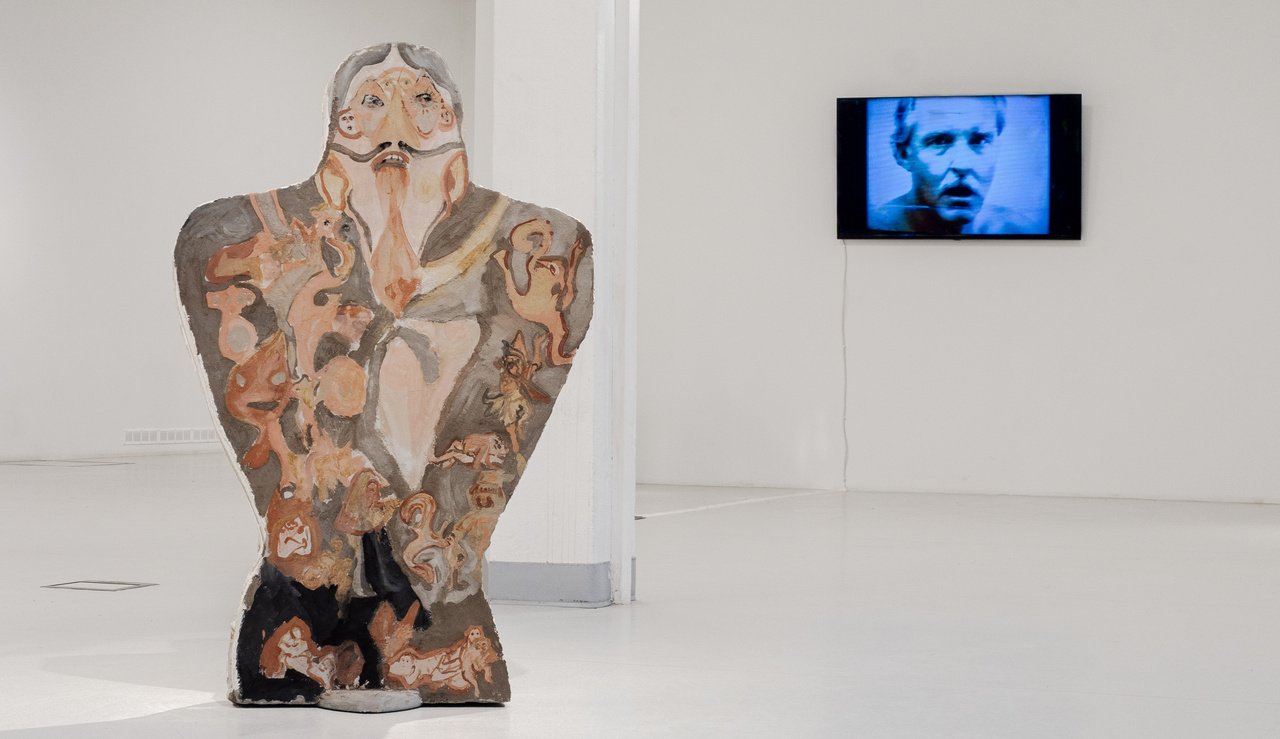
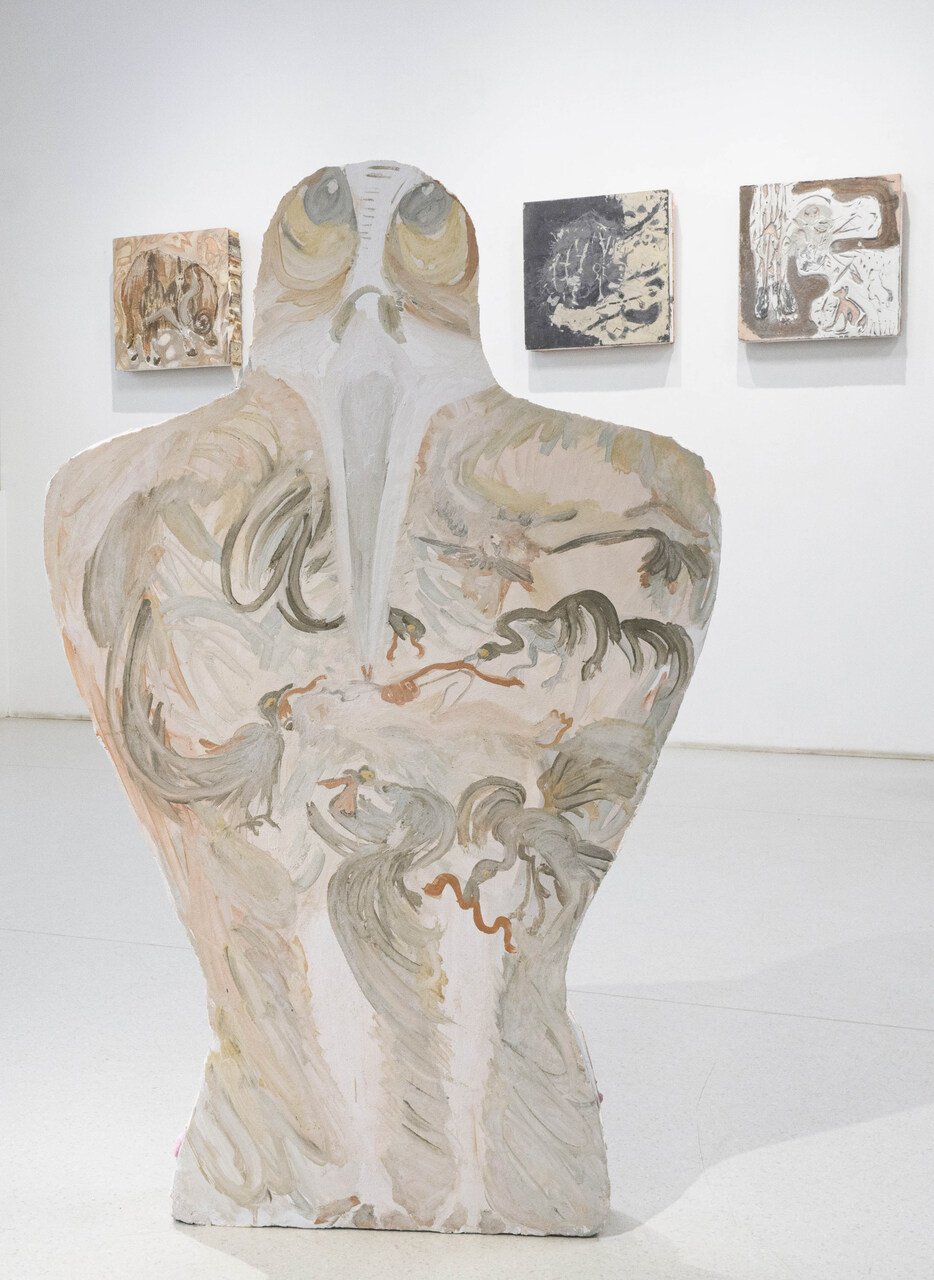
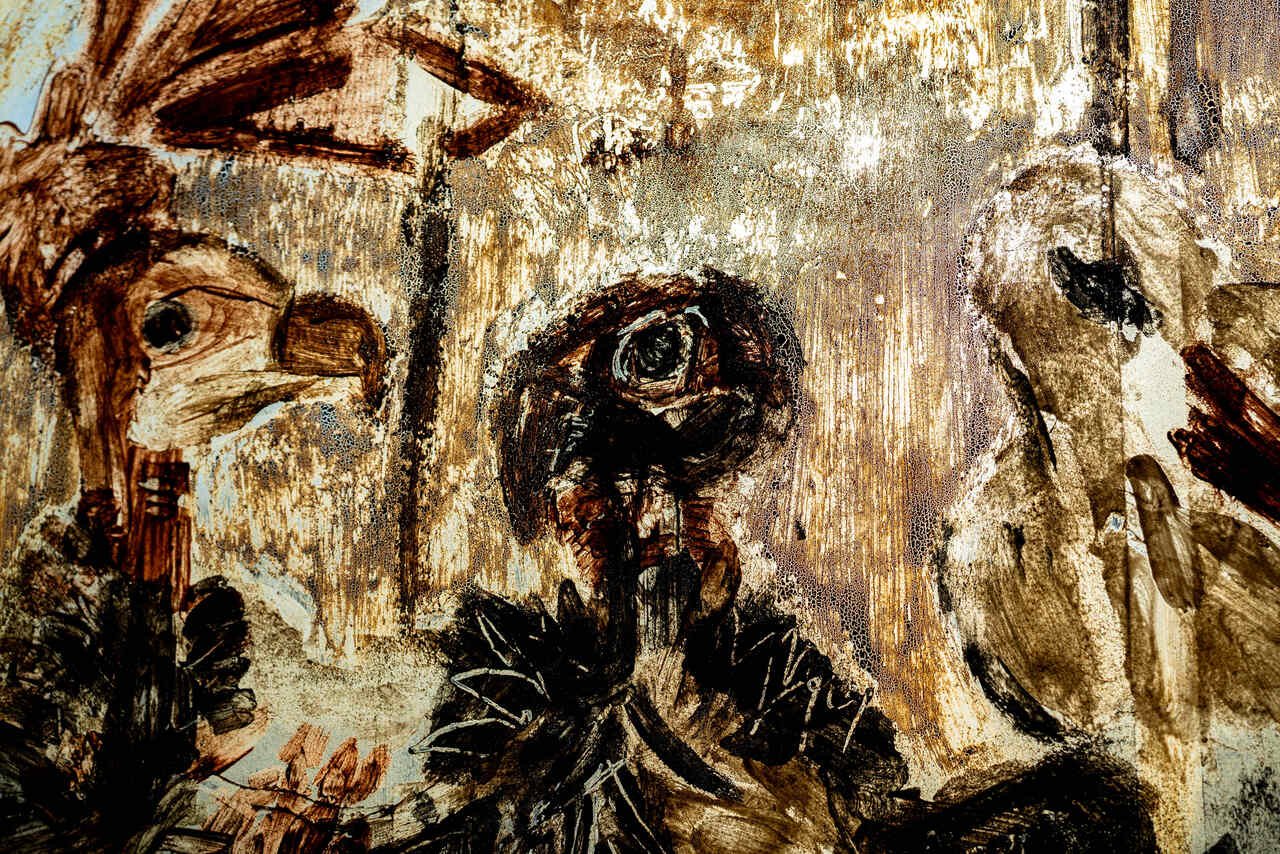
Czyżyk’s large-scale performative installation works tamper with context, expectation, definition, and frame of reference; in doing so they intervene in and transform our habitual interpretation of what artworks are or can be. She teases out and reveals subtle differences, often to induce epiphanies in our common consumption of aesthetic artifacts. In her recent projects she employs soils, ochres, natural pigments, dirt, and silt, taking advantage of attributes such as viscosity, friction, granularity, accretion, opacity, translucence, or erosion, in a microcosm of material conditions. Clay, mud, silt, dust, fine particulate matters are gathered, usually in proximity to the sites of her exhibition, to be used as pigments, materials in an expansive palette, constituting a palimpsest of images. There is a kind of tacit geology here – a geography, too – though that is not her primary point. It is, rather appropriately, a substrate of her works, and crucially important as an allusion or referential trace rather than as an index of sense, labor, process, or direct aesthetic address. Czyżyk’s materialist method is direct, accessible, and “hands on.” She is unafraid to immersively “get dirty,” or to “muddy the waters,” moving gracefully between material, conceptual, and rhetorical registers. At the same time, she presents a codex of hidden, half-salient threads, complex strands that, perceived and unraveled, open unto remarkable and unexpected spaces of aesthetic practice. Czyżyk presents the spectator with a mystery at the heart of a certain visual pleasure. Her works are paradoxical and apophantic,6 addressing “that which cannot be said” as well as that “which goes without saying.”7 In this she reveals an affinity to Augustine’s dilemma: “I know very well what time is,” he writes in the Confessions, until the moment someone asks me, and then I cannot say. Augustine, paraphrased in this manner, offers a clue to the apprehension of Czyżyk’s work. By subtly and relentlessly changing the conditions, the conventions, and the sites within which an artwork can take place, Czyżyk shifts the register of common perception, opening the space of signs and attributions, inviting the spectator to rethink, and reimagine, what an image can be. This is a somewhat unusual practice in contemporary art-making; a form of abstract thinking found more often in philosophical, mythical, or even theological processes. One may discern similar notions in the writings of philosophers such as Parmenides, Dionysius the Aereopagite, or Plotinus, or in the rhetorical intricacies of Nietzsche and Derrida. There are also artistic affinities as well, with Duchamp, Broodthaers, Jonas, Borremans, Eliassen, and others. Czyżyk’s works admit of many references and affinities, all of which inform what she does without leading to a predictable closure or resolution.
ground II
There is something strikingly novel about Monika Czyżyk’s large-scale works, something that cannot be easily derived from an analysis of materials, or a recognition of signs, symbols, references or affines; they are all there, and one almost reflexively begins to interpret her work in this register. It is an approach that all too soon appears incomplete, impoverished. Perhaps this is because we are used to simple endings, easy interpretations, or facile closures. Czyżyk doesn’t allow us any of this. She, like certain other contemporary artists (Mark Leckie, James Richards, and Leslie Thornton come to mind) undoes the indexical relations between forms, images, and referentiality. In this sense, her works are resolutely abstract, inventing procedures to recast and displace common comprehensions and consumptions. Mark Leckie, for example, employs a bewildering array of repetitions and recastings to designate – and at the same time falsify – an event. Leslie Thornton tampers with the incessant displacements of surfaces (images) in time, puncturing and displacing their z-axis dimensionality to open a radically different spatiality of media. Czyżyk similarly deconstructs place, time, reference, and sense, alluding to what one might possibly say rather than indicating what has been said. In their recent works, all these artists retain a residual trace of the referential; an index that is nonetheless profoundly disturbed, pluralized, and destabilized. This is not to indicate that this approach is novel or difficult without being pleasurable or inspiring – it very often is – but that you get there through very different trajectories.
A conventional reading of the sort that readily places artworks in a familiar continuum may be accomplished – the elements, signs, and attributes are all there – but, as noted above, there is something vaguely dissatisfying in this. Czyżyk takes us (if we give ourselves over to it) to different, unexpected, places. This is why an approach to Czyżyk’s work may be more cogent and revealing via a more philosophical or etymological register. By moving to a more marginal position, rather than casting comprehension into the dense centrality of artistic discourse, one might hope to see a bit differently, and perhaps a bit more acutely, from the edges. As philosopher, semiotician, and novelist Umberto Eco notes
[i]n order to understand a philosophical system (or the philosophical corpus of an entire historical period), it is often necessary to approach it from the margins rather than from the center. From its center, a system always seems well defined and hardly challengeable; it is at its periphery that it gets put to the test.8
While a move to the periphery or exteriority of a work is a well-recognized literary trope,9 such traversals – stepping away from or outside a given framework – are not altogether as common in current artistic practice. The withdrawal, or “step outside,” to the edge of a given paradigm – aesthetic or scientific – reveals a common trait in creative reasoning: that to render porous or to break a given frame of reference may admit of a hitherto unexpected perspective; it might open a space for thinking, being, or making, that might otherwise remain inaccessible. Ecstasy, from the Greek exstasis (e’´κστασις, consisting of e’´κ- “out” – combined with στασις “staticos”, from the stem “histanai” – to “to make stand,” or “to place in balance”) produces just such a “standing outside oneself.” These terms and their etymological complicities present a subtle, tacit, and entirely appropriate lens through which one might consider the openings and procedures rendered accessible in Monika Czyżyk’s work. At times it is a struggle; it can be difficult, even destructive, throwing one off balance, outside oneself (and one’s practice), and into another. Czyżyk presents, in her varied works, a trace of that impression, of a singular or collaborative move toward the exterior of established aesthetic, technical, social configurations; it is a withdrawal, but also a circumlocution, of the marginal. In that sense, it is through such abstractions and deconstructions that an image, configuration, or sense of a phenomenon or event may be captured and enter into a field of discourse or public sphere, a manner of thinking images – in relation to non-images – may become accessible, coming into and taking place, admitting of an apprehension otherwise impossible.10 That there is an ecstasy, in many senses, in Czyżyk’s project is immediately apparent, though that immediacy is often but the initial scratching of a surface that opens into surprising depths.
In 1969, Werner Heisenberg presented a paper at a symposium initiated by the Karajan Foundation in Salzburg on the theme of the “significance of modern scientific knowledge – in medicine, physiology, and physics – for art, music, pedagogy, and aesthetic practice.” Heisenberg’s paper was titled “The Tendency to Abstraction in Modern Art and Science.”11 Heisenberg, however, dissembled, preferring to avoid an approach from a merely technical point of view, in favor of consideration of a more general principle, of what he called a “philosophy of culture,” in order to ask whether certain tendencies in modern art, at times appearing as strange or incomprehensible, might have some parallel in the form of similar phenomena in modern science. Heisenberg was not concerned with specific forms or techniques of contemporary aesthetic or scientific practice, but with what he described as their “overall shape”. It is an interesting position, not because it afforded Heisenberg a new or privileged insight, but because unlike most discussions of the relations between art and science, it did not proceed in a hegemonic manner wherein one discipline annexes and establishes sovereignty over another. In Heisenberg’s query, scientific procedures did not circumscribe or subsume art (as illustration, exemplar, or ornament) and aesthetic practices did not circumscribe and annex scientific data (as argument, justification, evidence, alibi, or authority). Heisenberg wasn’t overly concerned with equanimity or symmetry in the relationships of these various disciplines, though he was interested in certain affinities – the possibility of common grounds, in science and art as they are practiced.
. . .the step towards greater generality is always itself a step into abstraction – or more precisely, into the next highest level of abstraction; for the most general unites the wealth of diverse individual things or processes under a unitary point of view, which means at the same time that it disregards other features considered to be unimportant. In other words, it abstracts from them.12
Heisenberg’s approach, like Eco’s, is to apprehend relations of affinity and difference in a field of operational procedures from a broader, more peripheral position (of which abstraction is a species), which may offer unexpected insights and contribute to a broader, richer knowledge formation through the inclusion of other sensations and comprehensions13 that are often hidden or unseen. By considering the possibility of their common ground in terms of abstraction, technics, and capture, (i.e. by acknowledging what it is that is purported to be captured, secured, or preserved, in order to be represented) Czyżyk similarly opens up a different space for thinking and perceiving – within the museum (as a specific site), within the general notion of an artwork (as a specific artifact and simultaneously a defining condition), and in relation to other spaces of appearance, interpretation, and understanding (the heterodoxies between objects, systems, interests, and taxonomies).
ground III
At this point, a consideration of context – both precisely and in a broader array – is of particular importance.
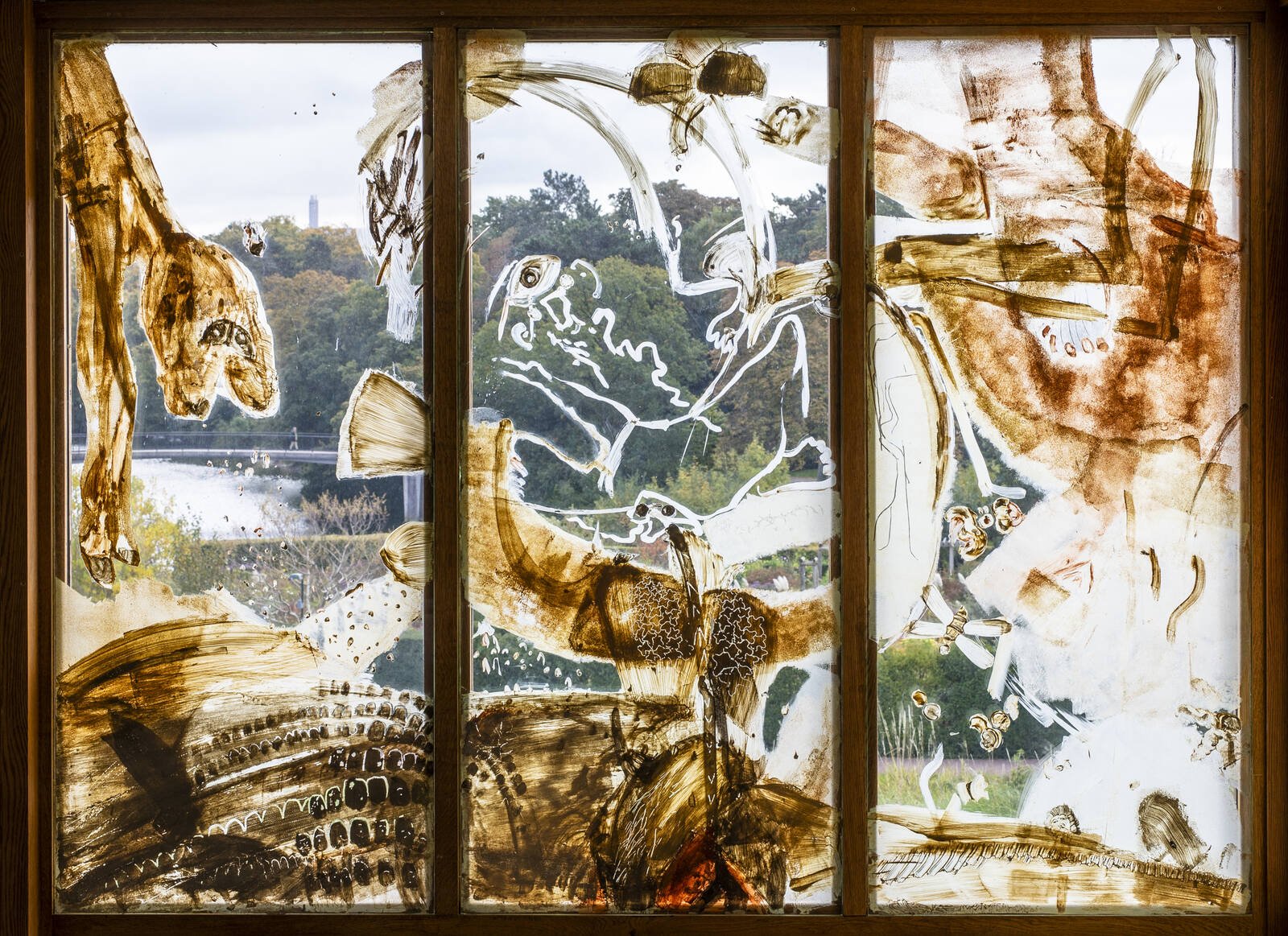
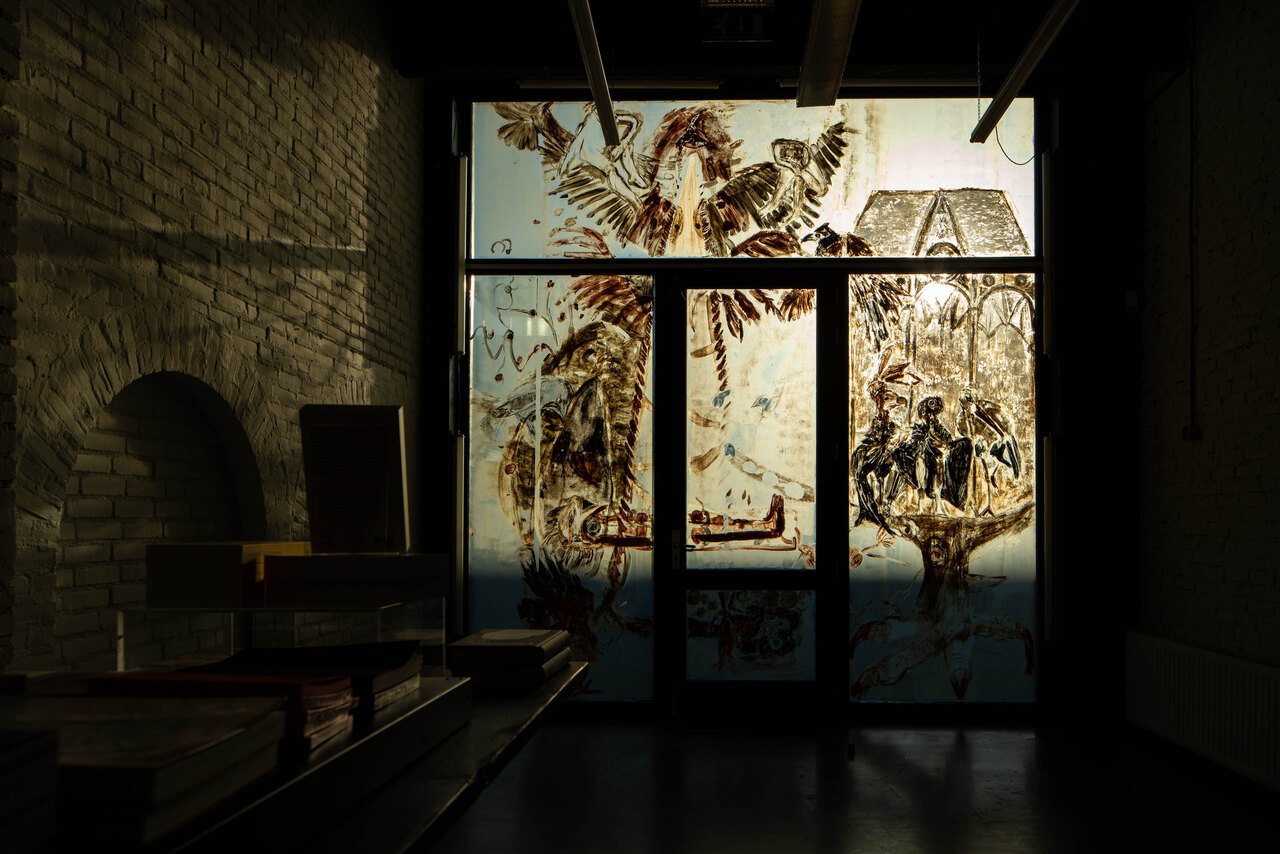
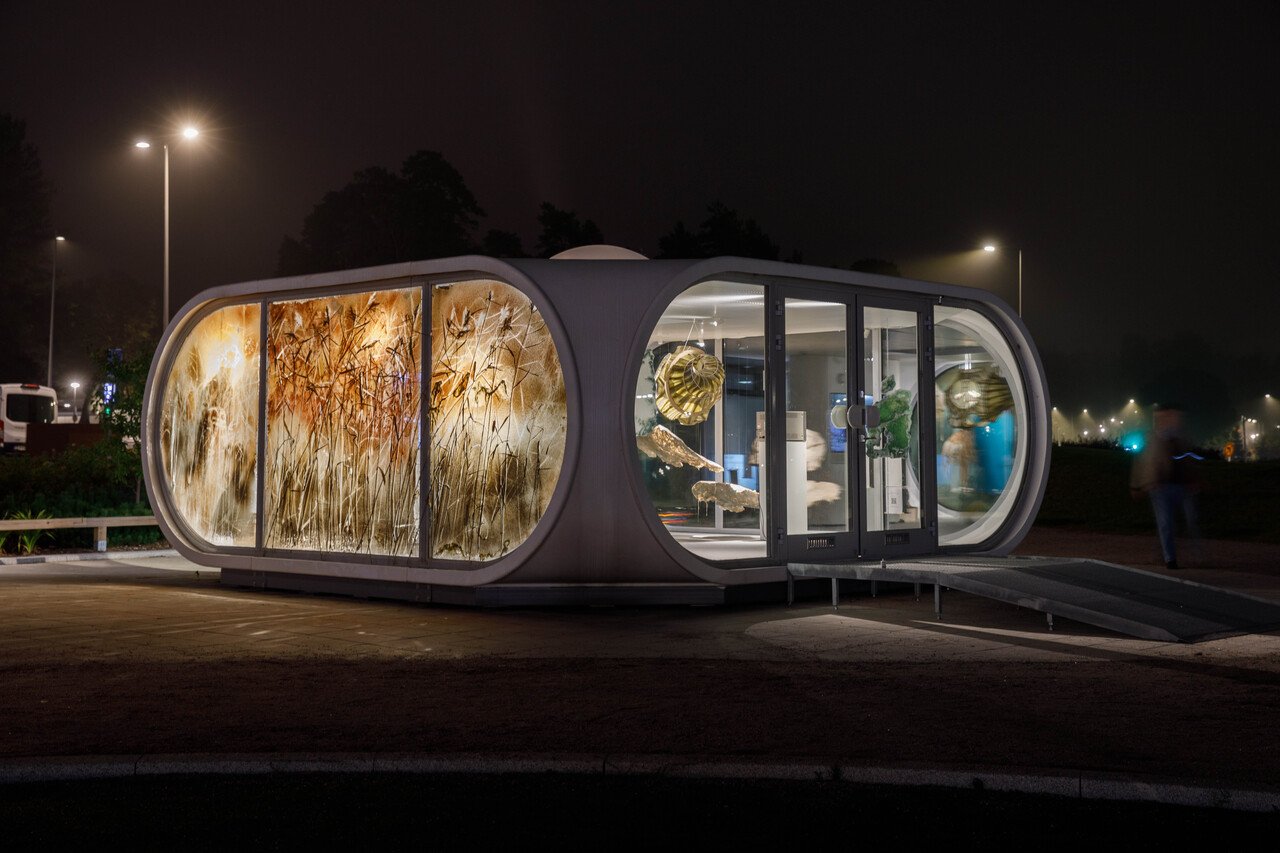
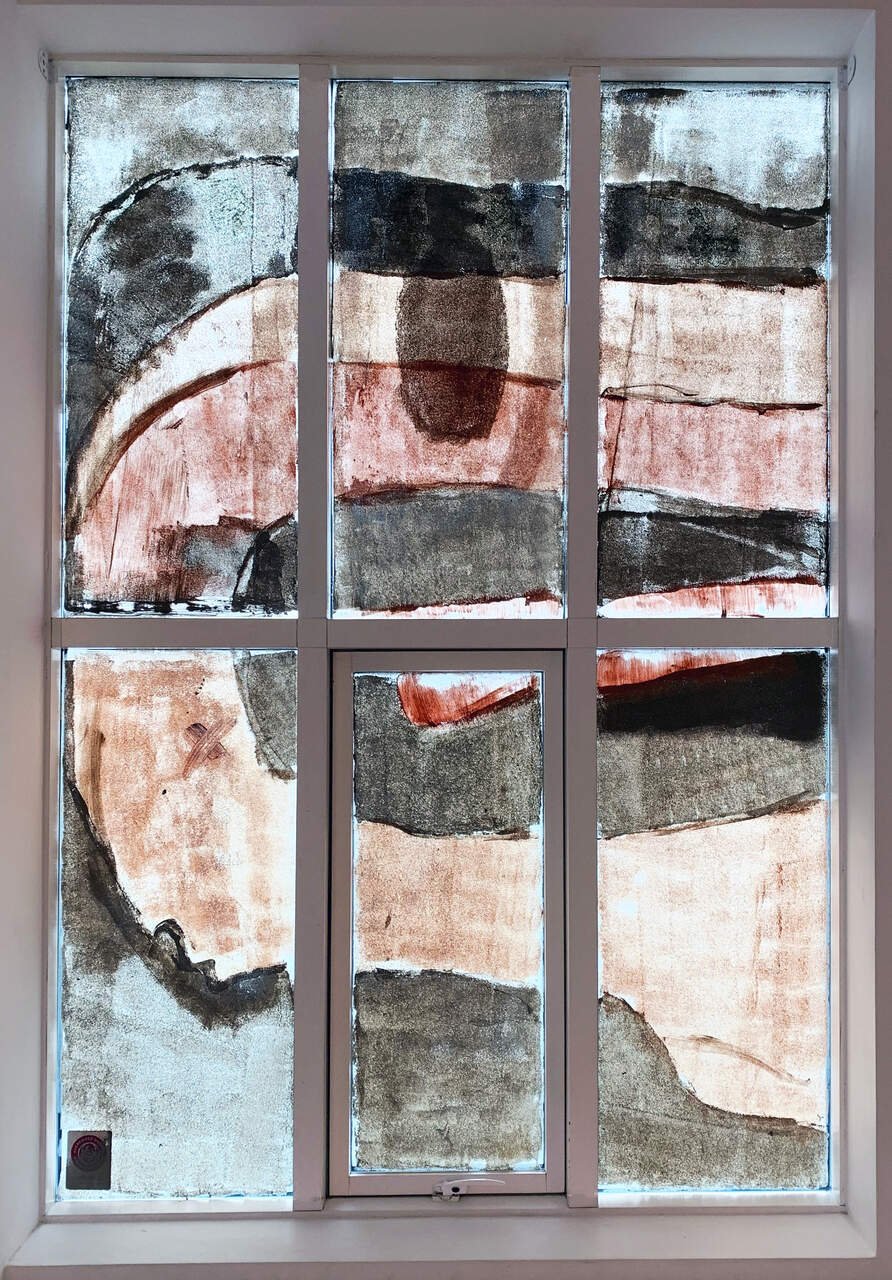
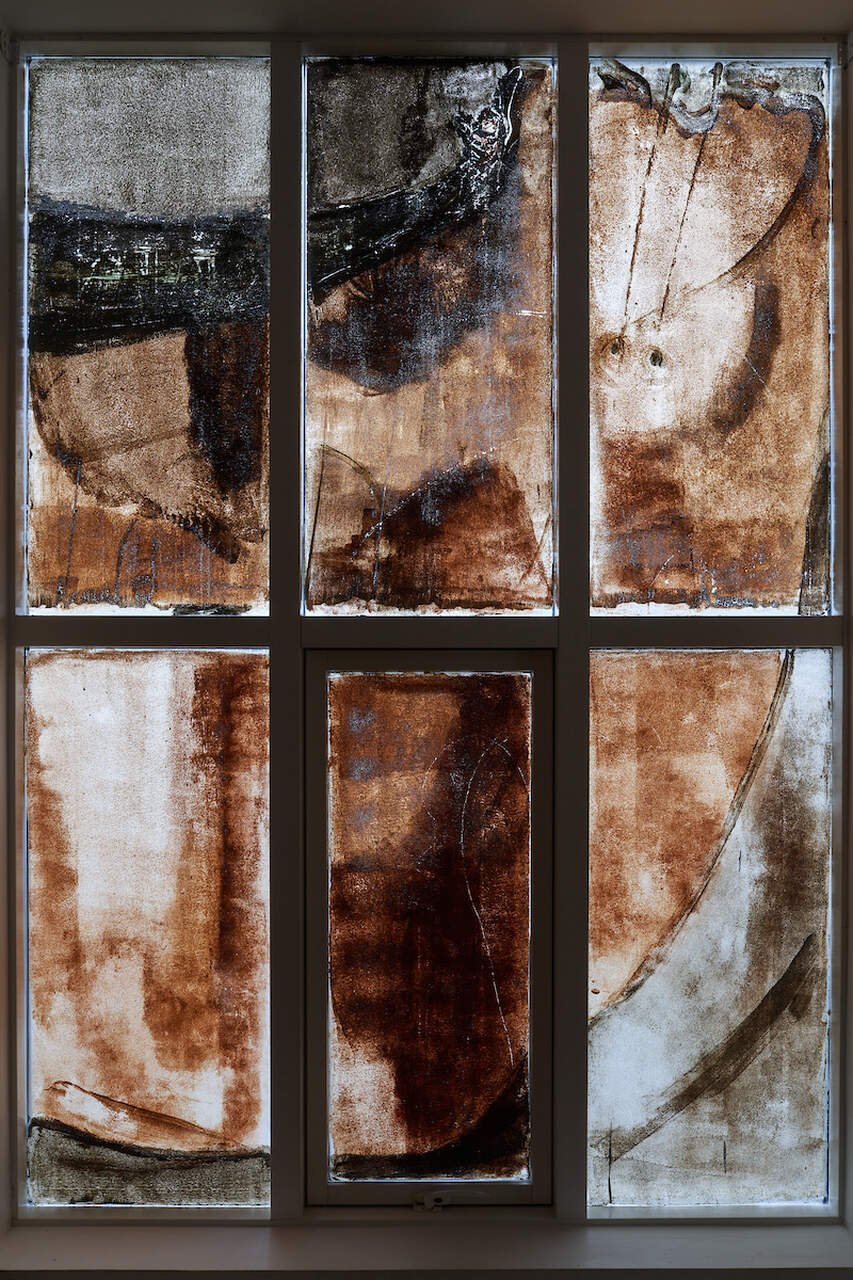
Working with clays, silts, and precipitates gathered from sites in Sweden, Poland, Finland, and Iceland, Czyżyk “paints” on large-scale glass panels, exploiting the transparencies, translucencies, and opacities of outward-facing windows. Her means of acquisition are very unusual, often following the tracks and traces of animals to locate specific strata with certain textures, consistencies, or colors. There is something almost shamanic in her process, though her particular form of hunting/gathering is not imbricated in a specific ritual. There are nonetheless affinities with, for example, the sand paintings of the Navajo (Diné) people of the American Southwest.14 The Navajo word for sandpainting is iikááh, which is translated as “place where the gods come and go.” During ceremonies, the Navajo shaman (hataałii) creates a “sandpainting” in order to summon “holy people” to inhabit the sandpainting, using their powers and influence to restore the health of the people. Navajo sandpaintings are made from sandstone and minerals ground to a fine consistency and applied one layer at a time to a wood backing with a special adhesive bonding mixture. The sand is not painted. The design may depict one of the many traditional healing designs or even a contemporary theme, such as a still-life or landscape. While the complexity of design, fineness of materials, and skilled hand of the artisan have their roots in Navajo ceremony, many of these pieces are not necessarily considered as ceremonial items. In older forms, according to Navajo belief, a sandpainting heals because the ritual image attracts and exalts the holy people, serving as a pathway for the mutual exchange of illness and healing. The sandpainting creates a ritual reality within which the patient and the supernatural interact, (re)creating the patient’s correct relation with the world, spiritual and material.
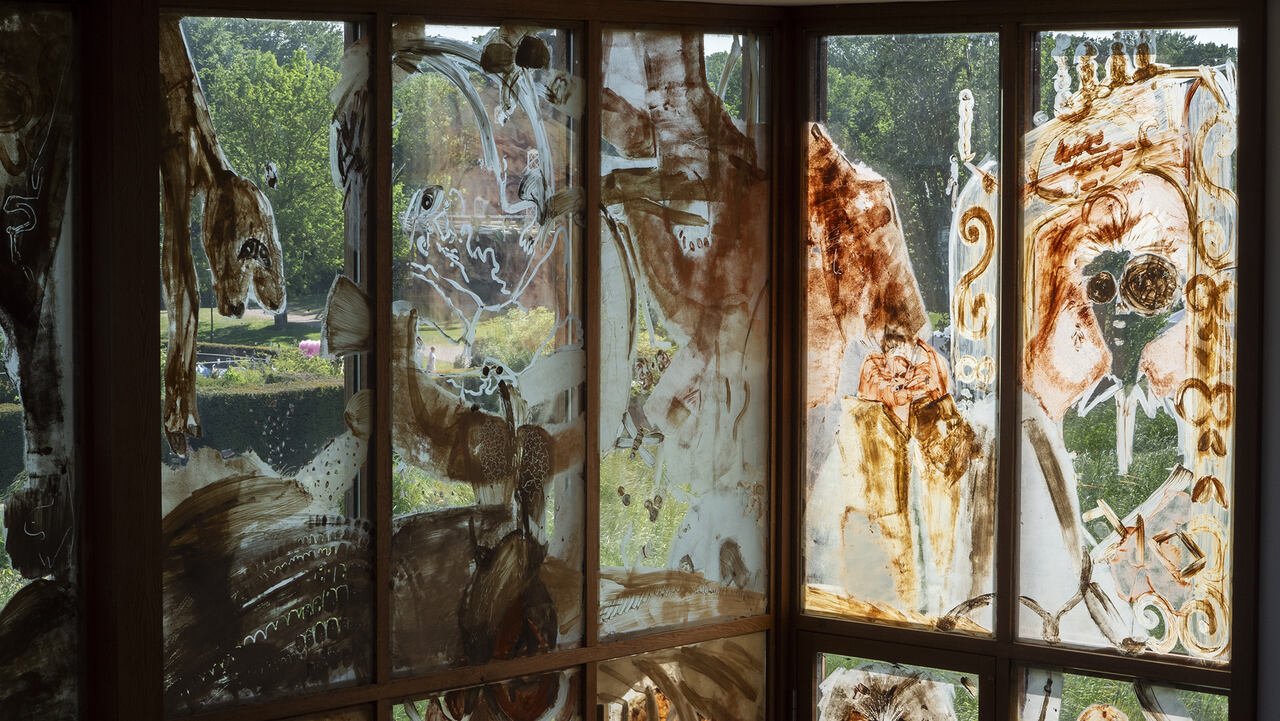
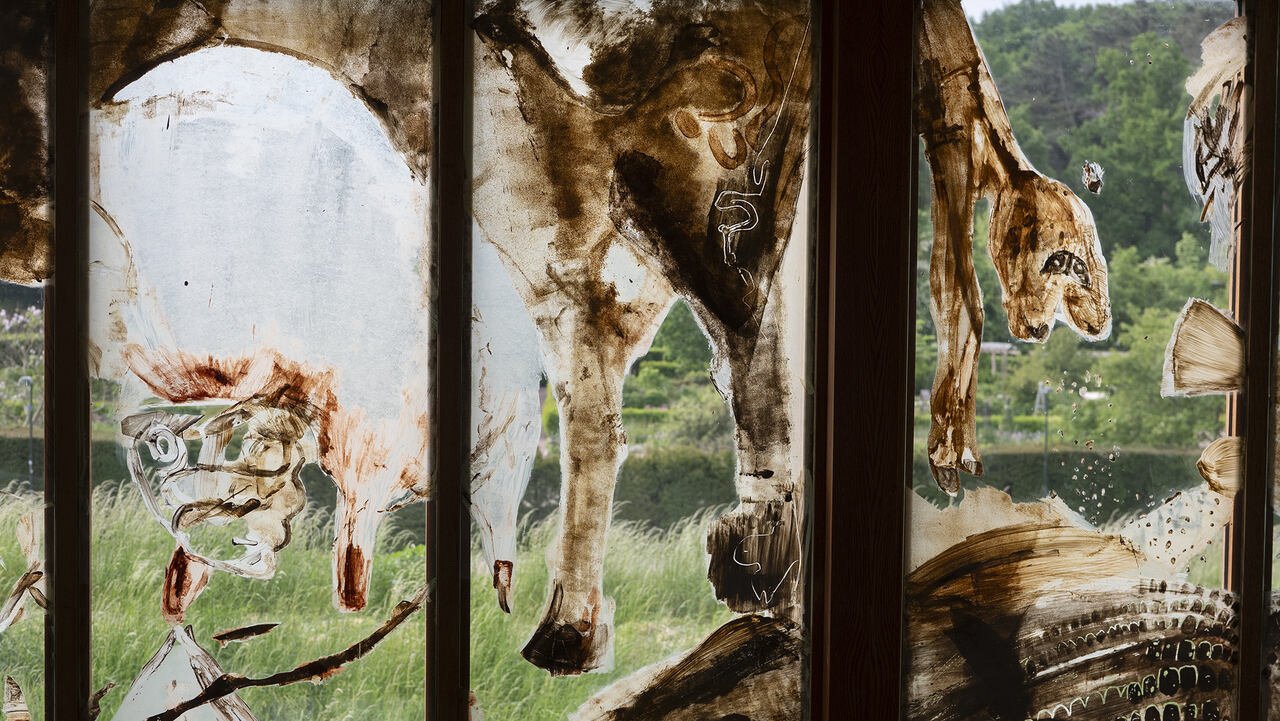
In addition to the preparation of the ground and pigments, the application of sacred pollen, water, and other elements, the complicated construction of the parts of a specific sandpainting is often accompanied by a sacred chant or patterned rhythm.15 In similar fashion, Czyżyk considers the tools she employs in the process of “painting” with clay on glass surfaces to be an audial, sonic element, a “sound-image” conjuring and grounding a rhythmic topology, a meditative patterned regularity through which images “take place.”
There are other affinities as well: The Tibetan sand mandala (དཀྱིལ་འཁོར། / 沙壇城/壇城沙畫)16 is a Buddhist practice involving the creation and destruction of mandalas made of colored sand. Once complete, the sand mandala’s ritual dismantling is accompanied by various strictly patterned steps. Constructing and deconstructing Buddhist sand mandalas is an intricate affair and can take many weeks to accomplish. Colored sand granules are applied with small tubes, funnels, and scrapers called chak-pur, until the final desired pattern is achieved. The Kalachakra Mandala for example, contains 722 deities portrayed in its intricate geometric structure. Many Tibetan Buddhist sand mandalas also contain a specific outer locality which is clearly marked and identified as a “charnel ground.” The destruction of a sand mandala is highly ceremonial, with even the deity syllables being removed in a precise order. The elements are collected in a jar, wrapped with silk, and transported to a river or other body of moving water, where they are released back into nature, to dispense healing energies to sentient beings in the water and earth.17
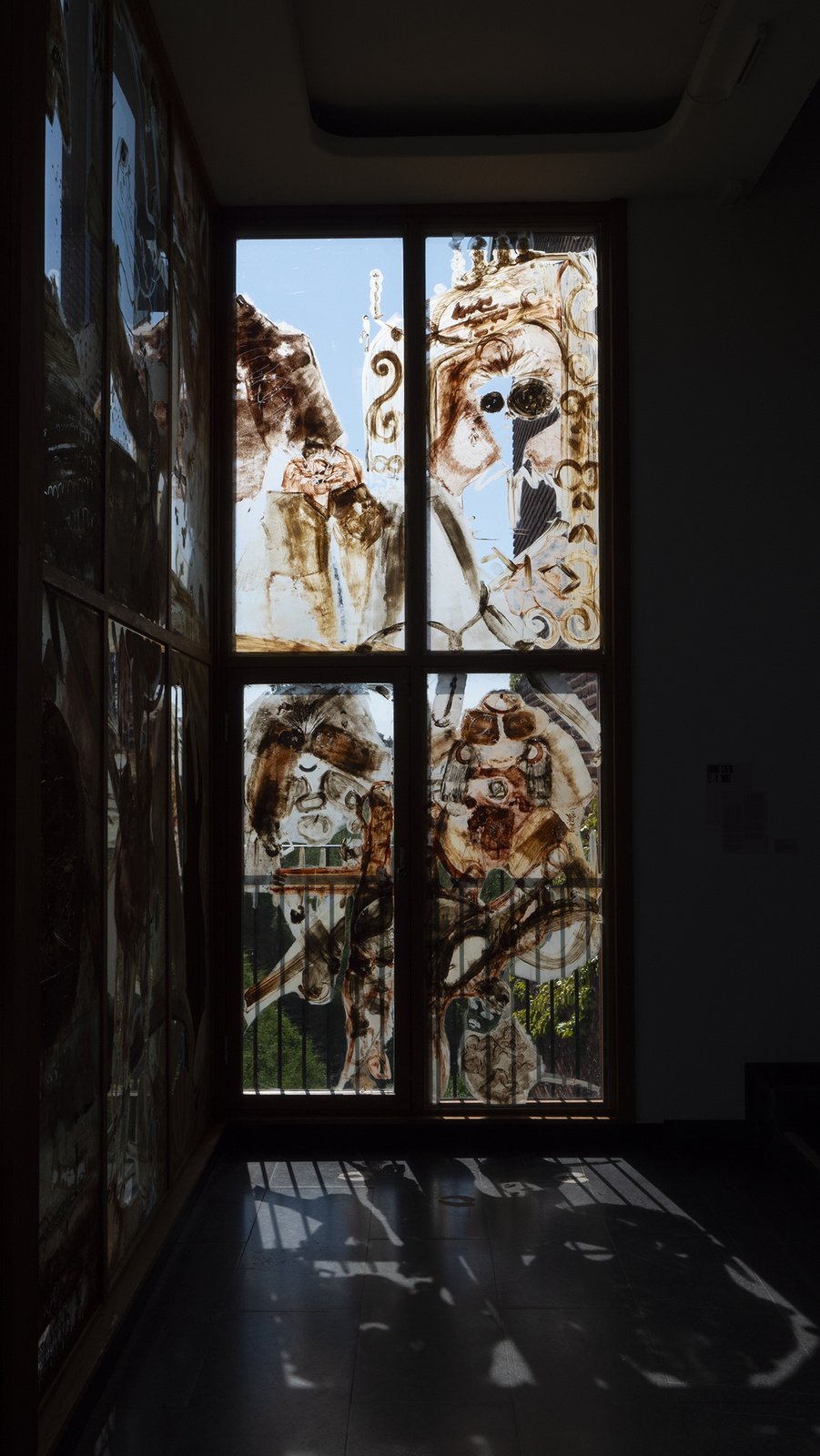
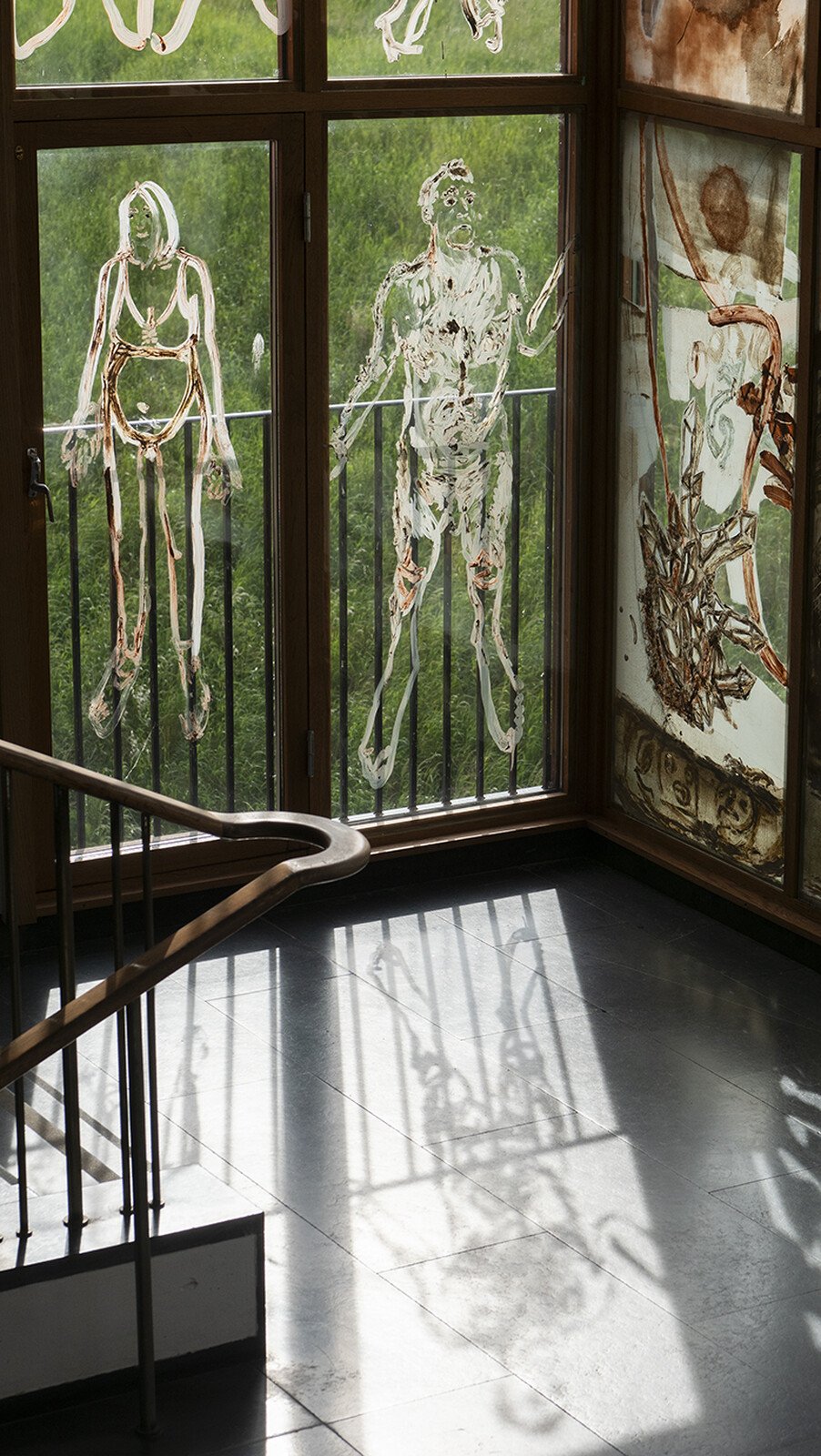
Monika Czyżyk’s images, reminiscent of Georges Bataille’s descriptions of prehistoric cave paintings at Lascaux and elsewhere, bear many images – animals, spirits, the traces and impressions of men and women – amidst the ochres, oxides, and carbon layers. In the images on the cave walls of Lascaux there is a referential move to the outer world, where the representation of zoomorphic/anthropomorphic figures originate elsewhere, held in the darkness of the earth, to indicate another origin. How might we think of the ethereal traces of Czyżyk’s animal-figures, whole, partial, mythic/metaphoric/metonymic, if not in a similar fashion, a reference to an “elsewhere.” In fact, this is not a metaphor derived from visual formations alone, as there is a concrete reference, embedded in the very materiality of Czyżyk’s image-fields, and which one may readily understand in relation to the context of the exhibition of this work.
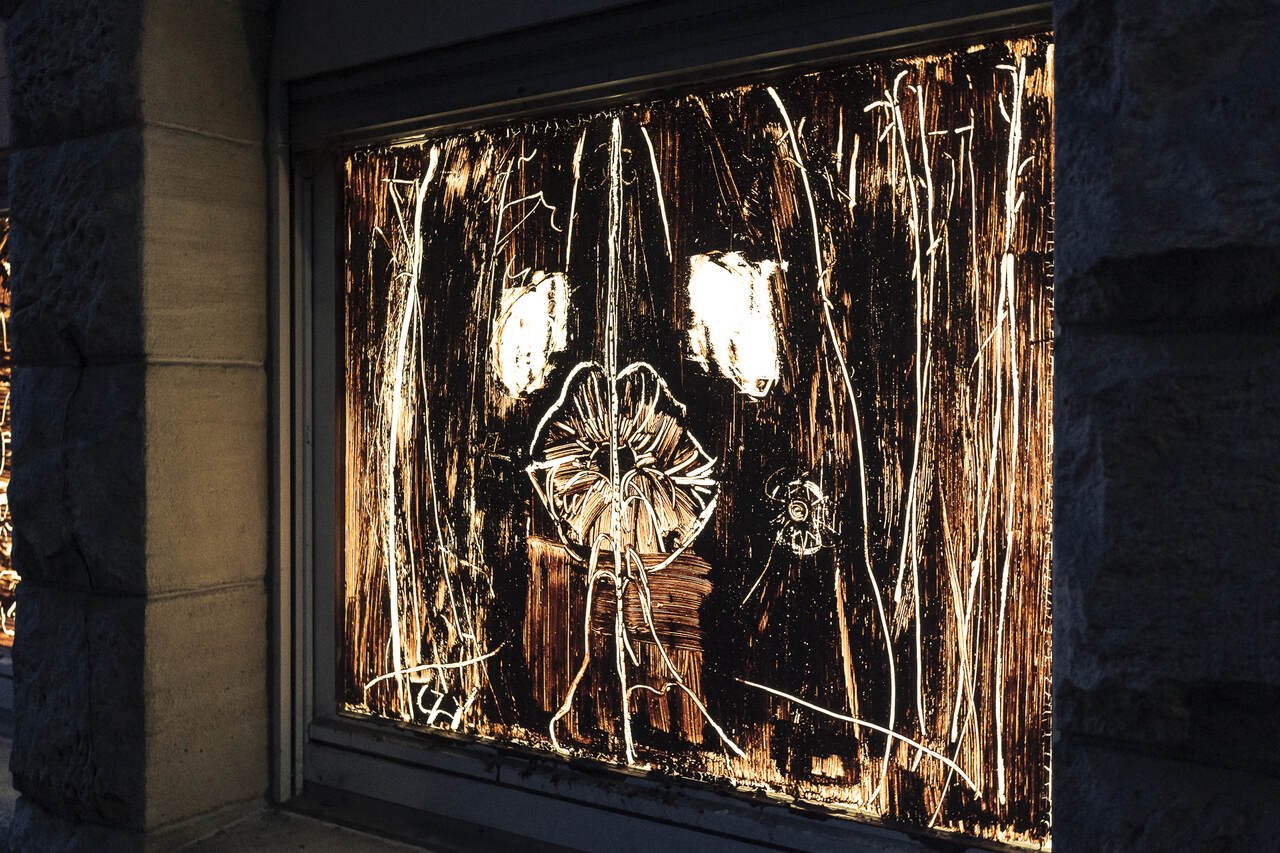
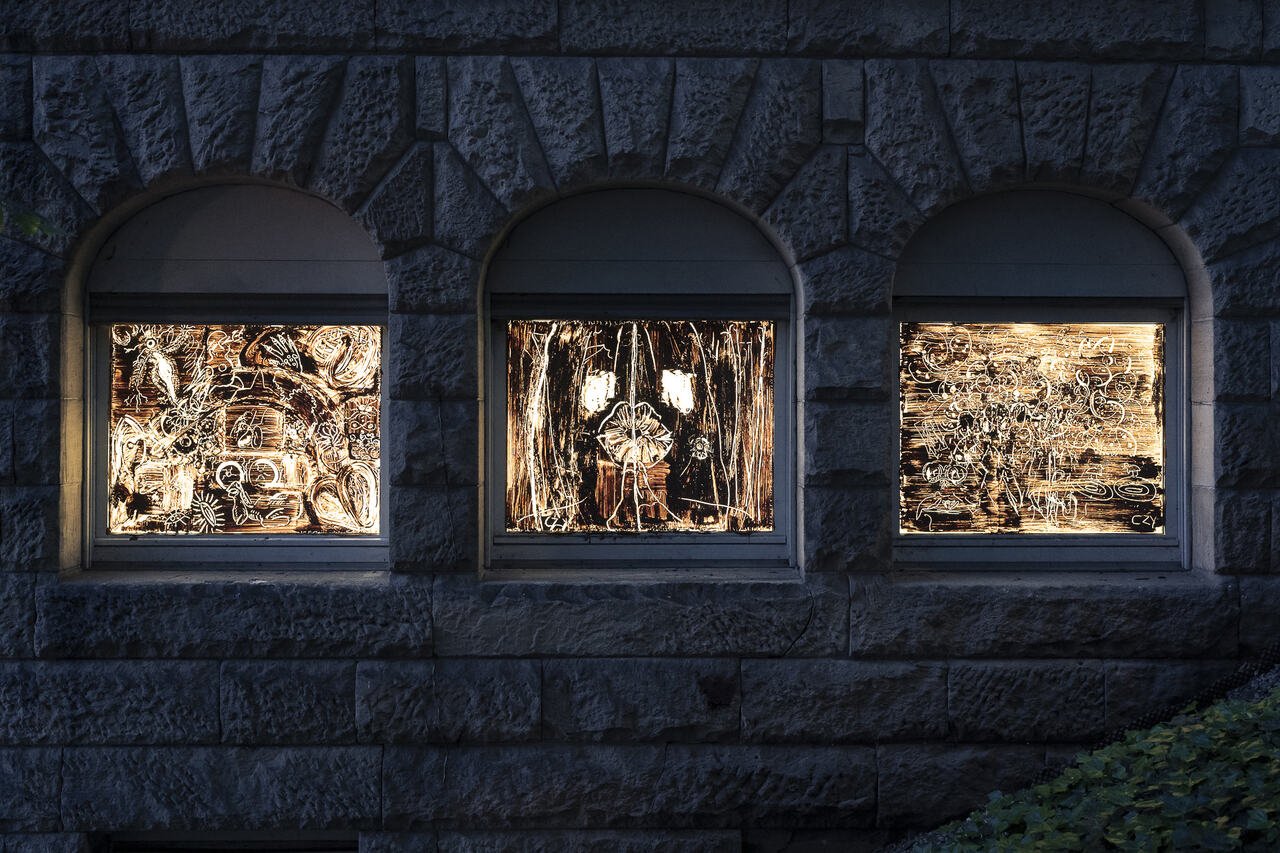
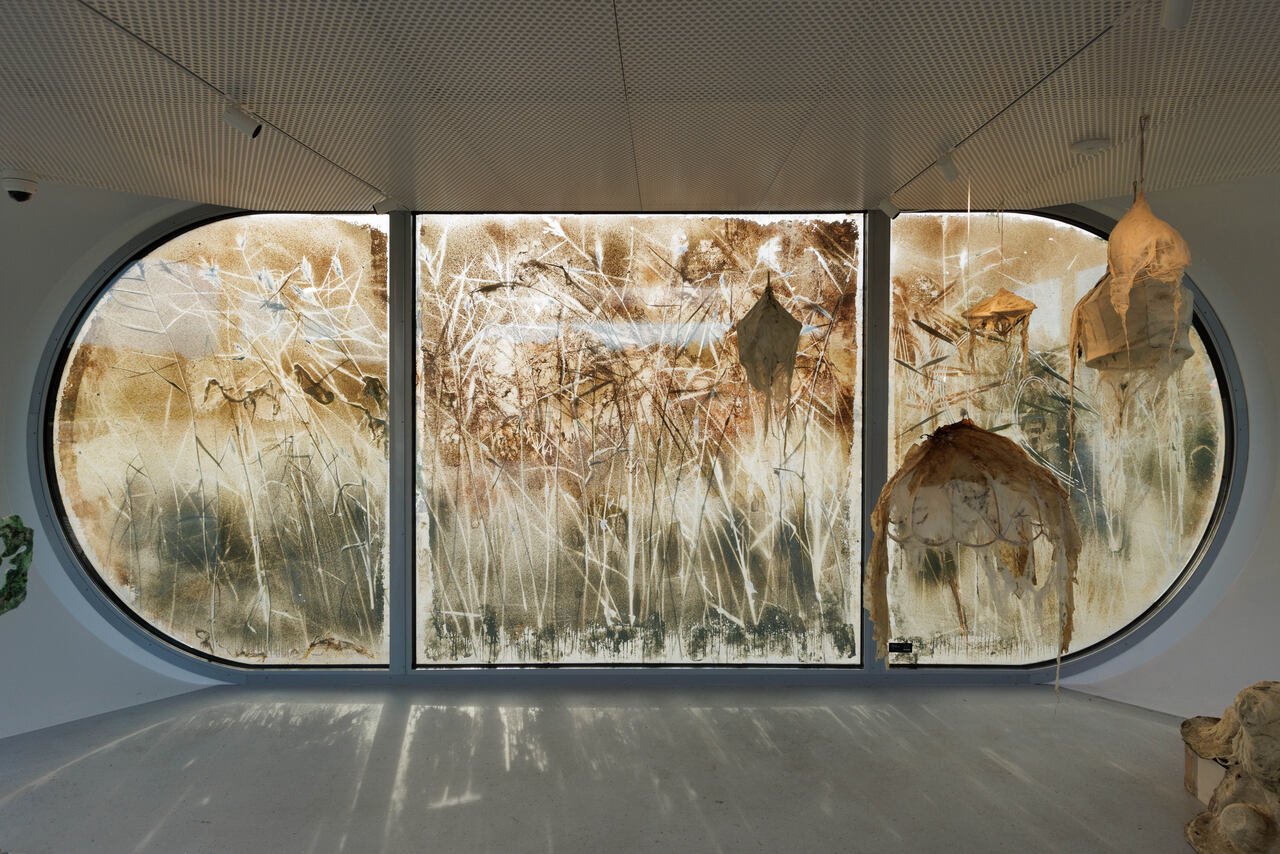
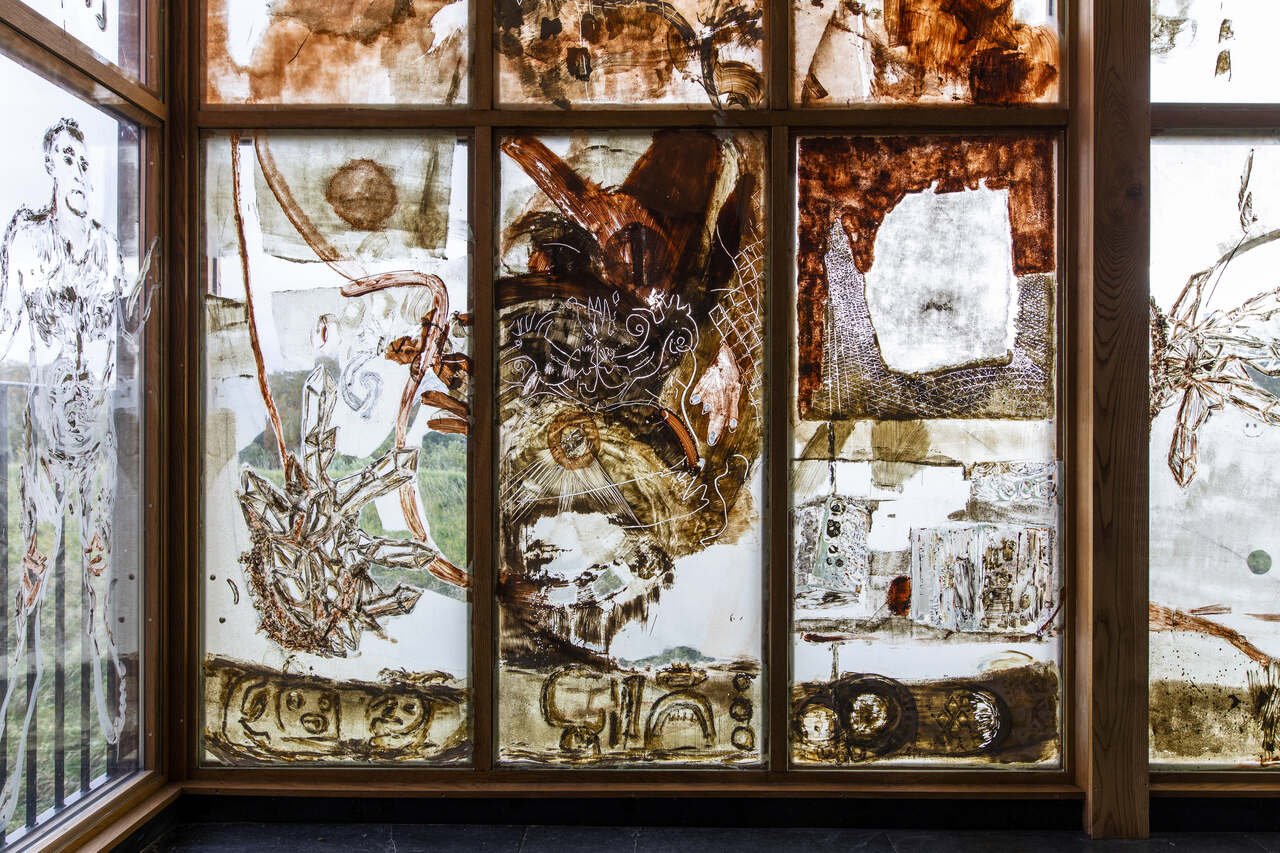
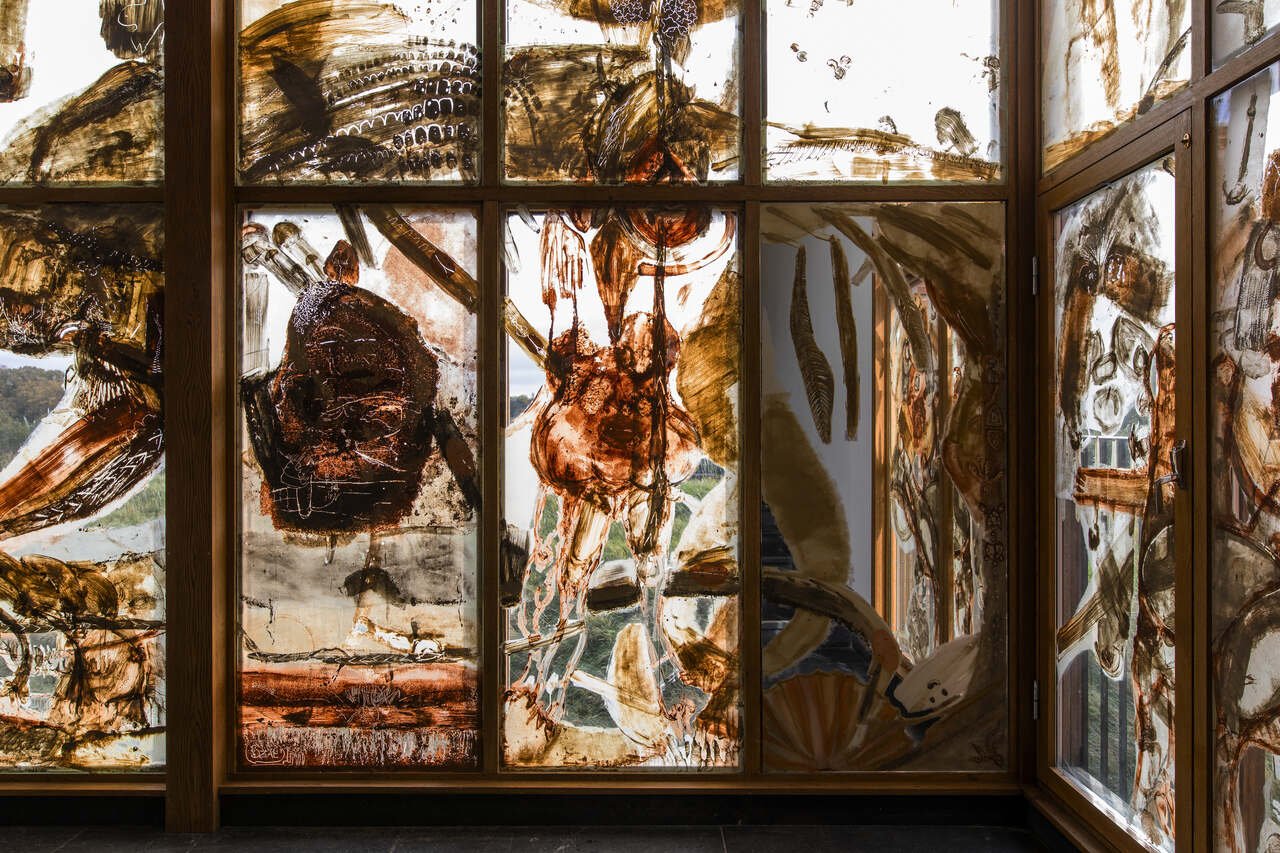
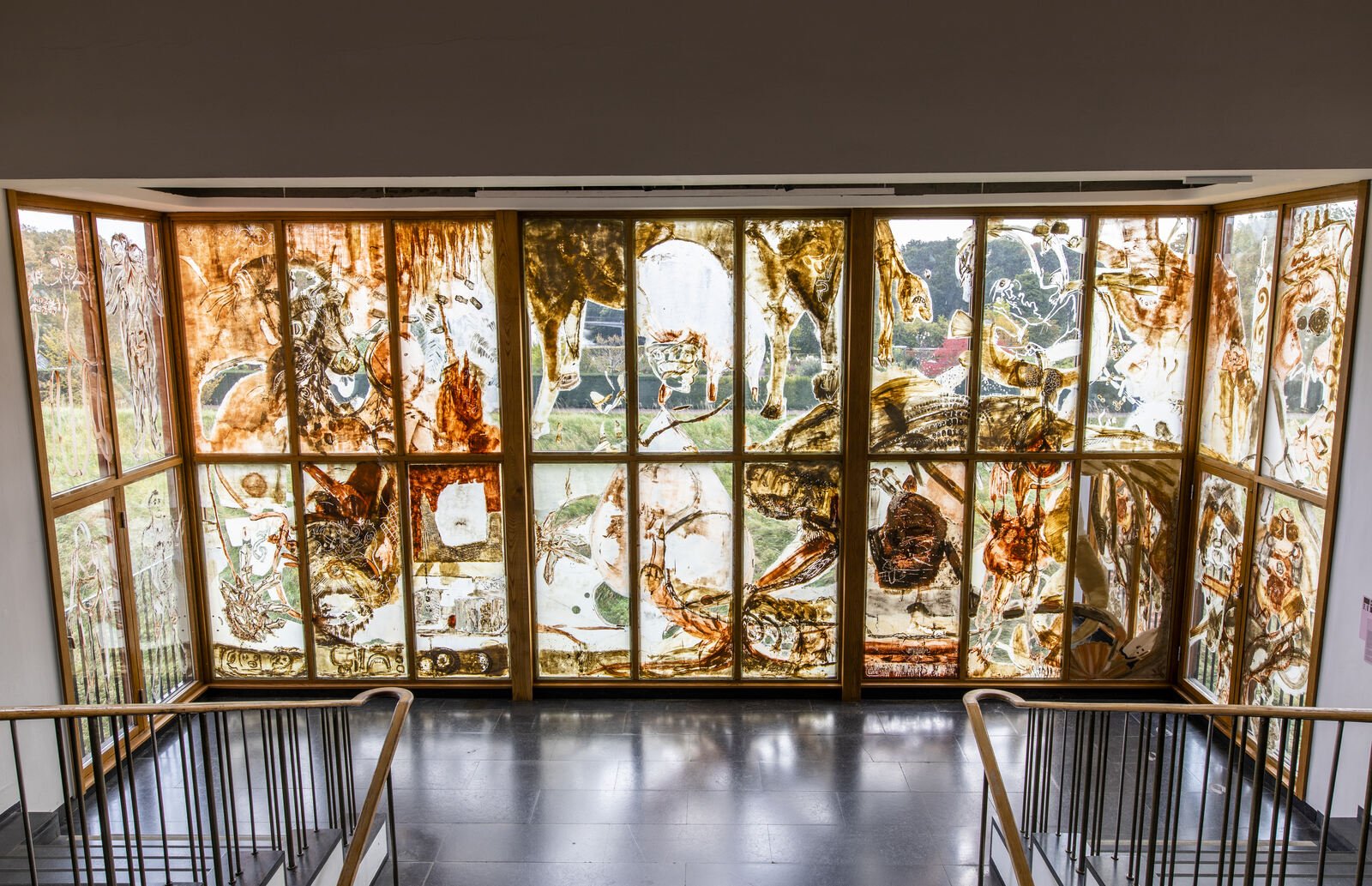
Czyżyk’s monumental “painting” is titled Milking Hole (2024). It is a large-scale work painted with clays, silts, and pigments on laminated glass, on a series of exterior windows at Malmøo Konstmuseum. This work, commissioned and acquired by Malmö Konstmuseum, makes its appearance within an exhibition entitled Gränstrakt/Borderland, on display from 18th May – 3rd November, 2024. In the exhibition, one finds a wide array of artworks and artifacts, including traditional 19th century landscapes and seascapes by regional artists, incised stones, sculptural works, projections, printed and photographic works, and documentations of performative events. There is a surprising subtext to this exhibition: Czyżyk’s piece not only opens onto the collection of works (it is precisely placed on the landing of the main stairway into the exhibition) but operates as an eccentric cartography, suturing place, space, time, and reference into a sophisticated topography of allusion and identification. Many of Czyżyk’s materials – the clays and sediments with which she “paints,” were gathered at the sites that are depicted in many of the regional landscapes. Carved or incised stone consisting of hematite, ochres, and calcium carbonate have also a material relation to Czyżyk’s hued sediments. The consonance of place and site form an abstract, conceptual key – what one might phrase as a legend – to the overall theme of the exhibition, Gränstrakt/Borderland. Czyżyk’s work serves beautifully as a set of territorial markers, holzwege (paths or trackways)18 through the forest of aesthetic signs and symbols, wegmarken (pathmarks) to reveal other, more vigorous, more interesting trajectories than those you already know.
This text was originally written for and published in the book “Borderland”, ed. Julia Björnberg & Anna Johansson. Published by DISTANZ Verlag, 2026, in connection with the exhibition “Borderland,” curated by Julia Björnberg, Anna Johansson, Ellen Klintenberg at the Malmö Art Museum (Malmö) and Ystad Art Museum (Ystad), Sweden, on view from 18.05 – 03.11.2024.
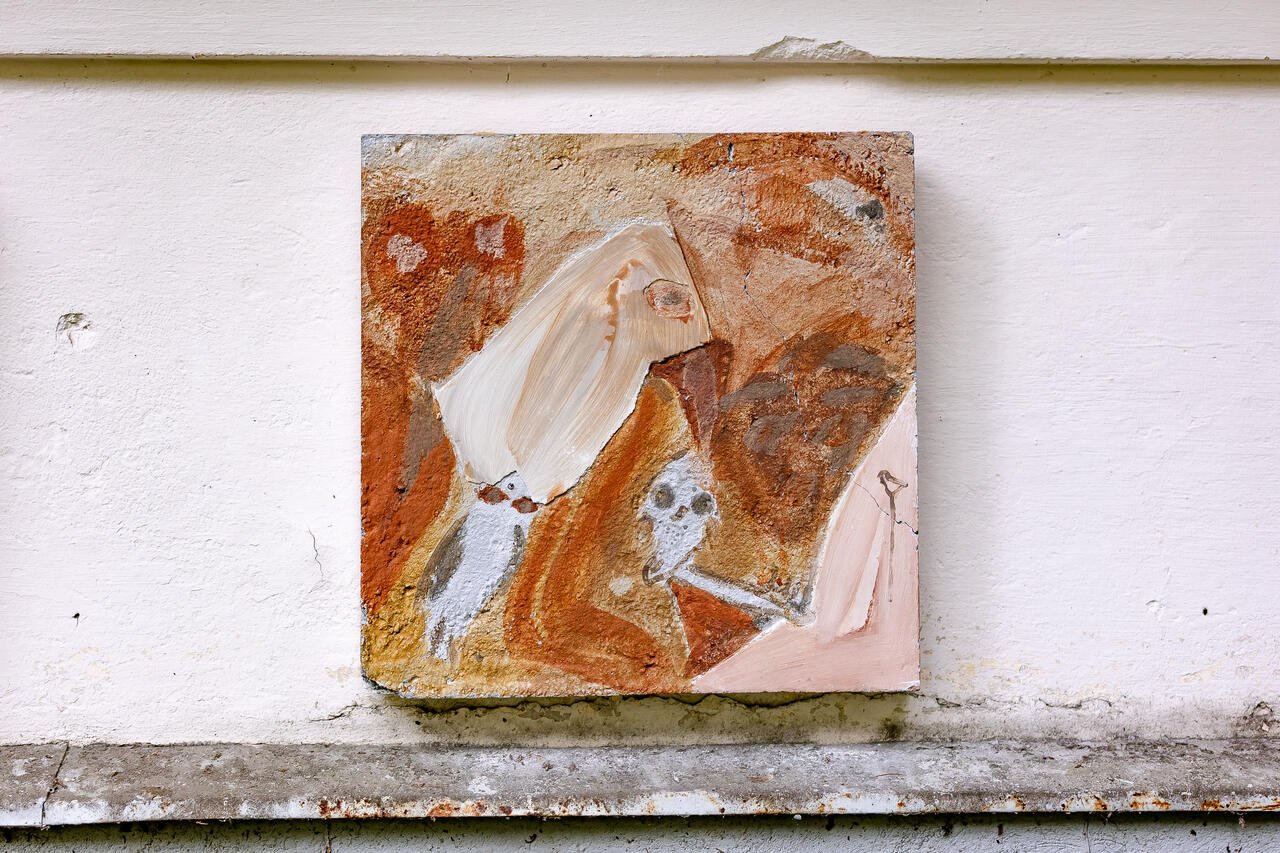
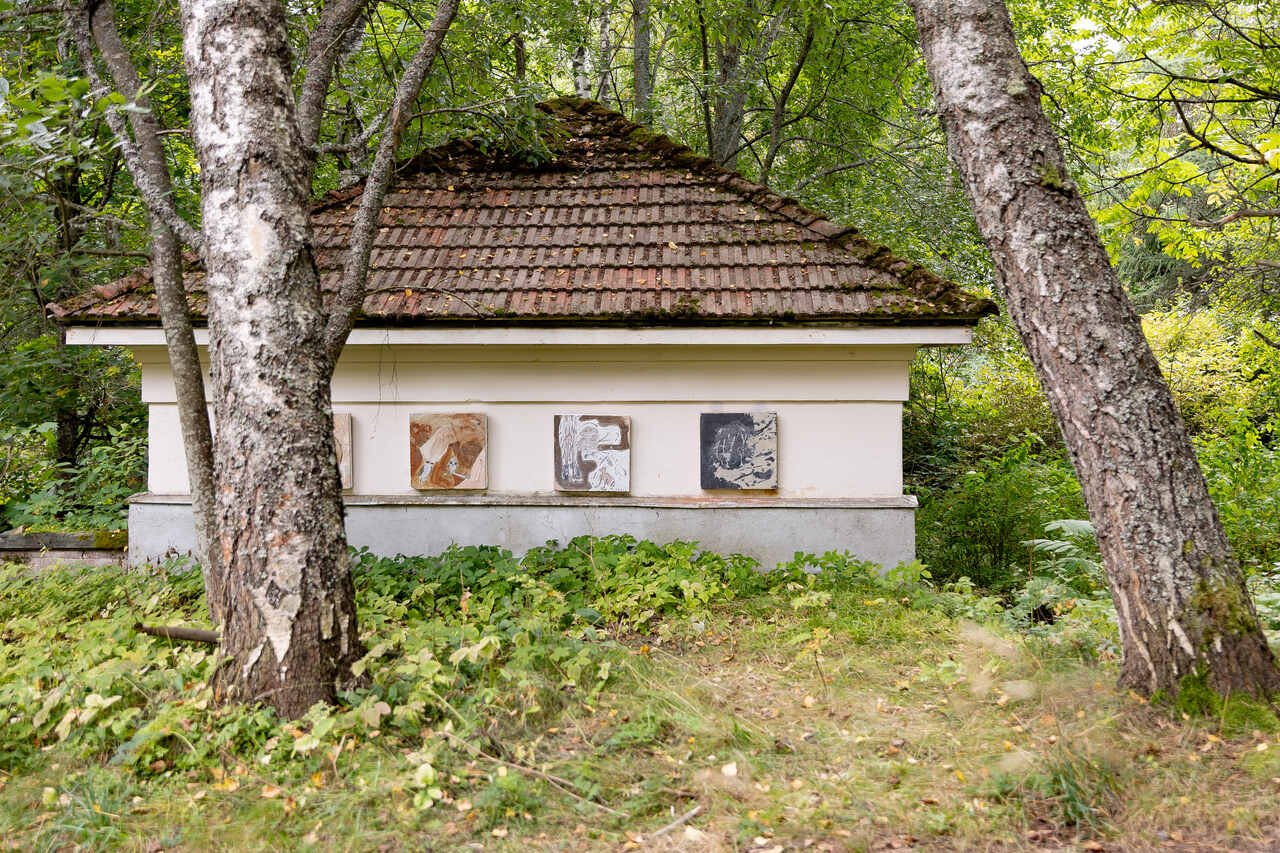
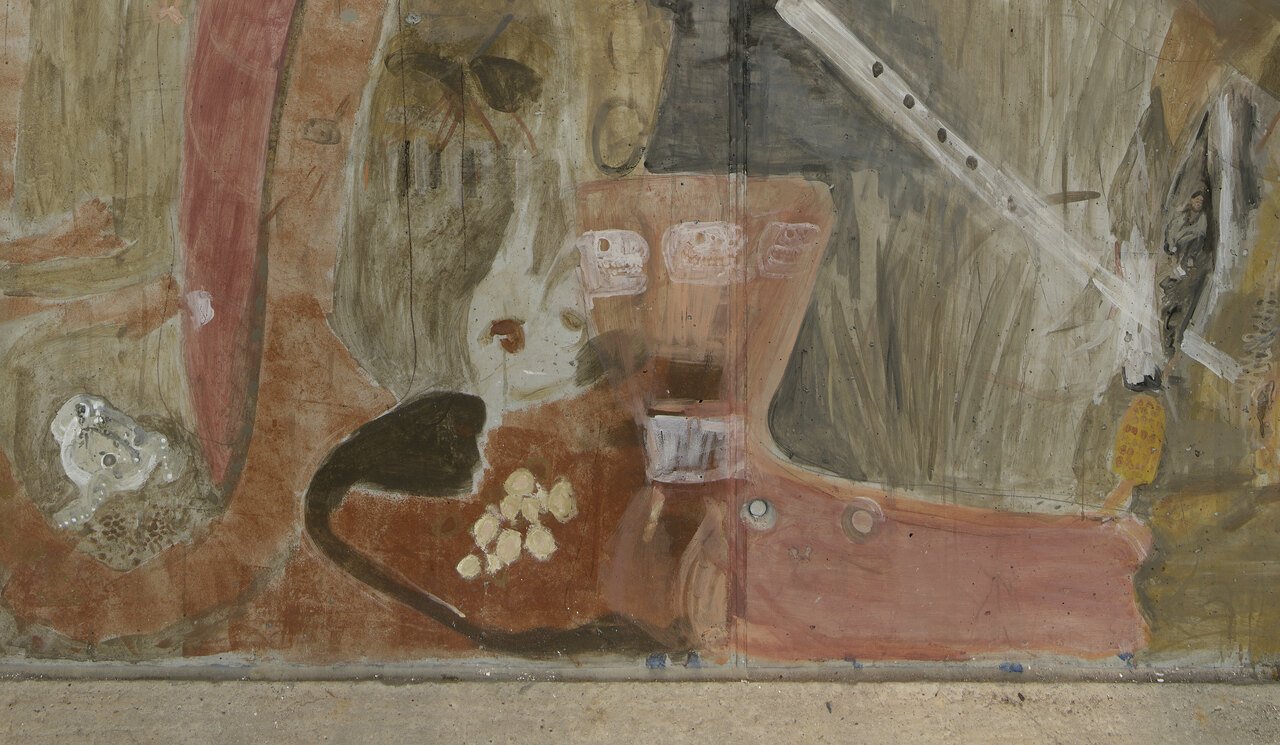
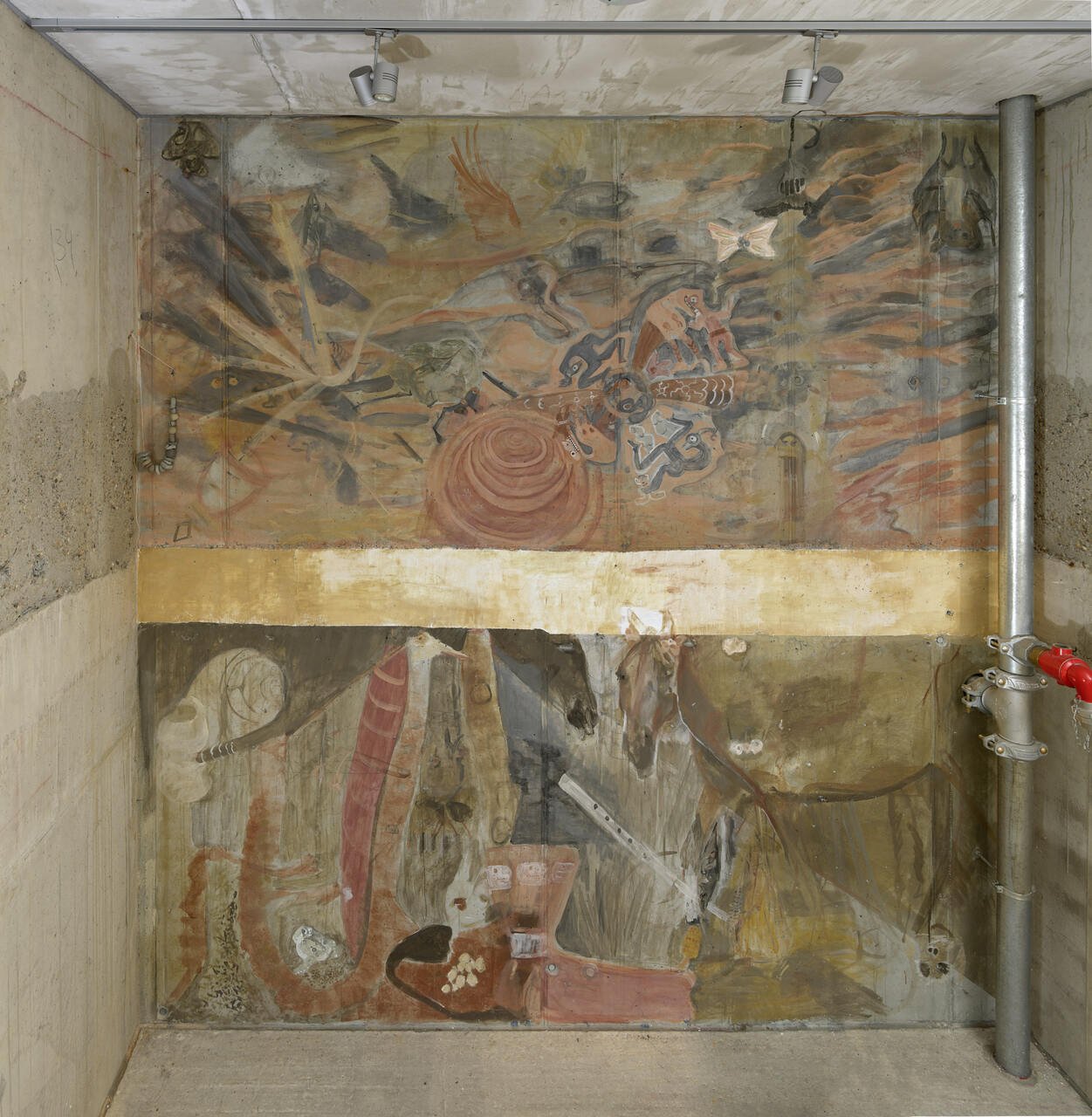
Special note about Line carried on two horses (Kopiec), 2026: the work was created directly on a concrete wall using the fresco technique. The work combines clay pigments with a fresco ground of marble dust and dehydrated limestone. The pigments used in the painting were collected from places throughout the world during the artist’s travels, each carrying its own geological and geographical history:
• Pink – collected near the ancient rock paintings at Cerro Azul, La Lindosa, San José del Guaviare, Colombia
• Blue – collected near Muela del Diablo, La Paz, Bolivia
• Yellow – collected along the Sohra highway, on the way to the root bridges, Meghalaya, India
• Yellow – collected on the road to Seltún, Iceland
• Red – collected in Kielce, Poland
• Green – collected in the Scania region, Sweden
• Grey – collected in Finland and Iceland
• Black – collected near the Salar de Uyuni, Bolivia
- McLuhan, Marshall, “CIOS/McLuhan Site: Probe: Figure & Ground”. www.cios.org. Retrieved 12.25.2025. [Wikipedia] ↩︎
- All defining terms are from The Compact Edition of the Oxford English Dictionary, Volume I, A–O, [New York and London: Oxford University Press] 1971/9th printing 1980, pp. 449-456. ↩︎
- Levi-Strauss, Claude, Myth and Meaning, University of Toronto Press, 1978. ↩︎
- Levi-Strauss, Claude, Tristes Tropiques, Atheneum, 1974. Cited in Donato, Eugenio, “Levi-Strauss and the Protocols of Distance,” Diacritics, Vol. 5, No. 3 (Autumn, 1975). ↩︎
- Levi-Strauss, Claude, Mythologiques, [Paris: Plon], Tome I: Le Cru et le cuit (1964)/Vol. 1: The Raw and the Cooked (1969); Tome II: Du miel aux cendres (1966)/Vol. 2: From Honey to Ashes (1973); Tome III: L’Origine des manières de table (1968)/Vol. 3: The Origin of Table Manners (1978); Tome IV: L’Homme nu (1971)/Vol. 4: The Naked Man (1981) [New York/San Francisco: Harper & Row]. ↩︎
- Apophasis [απο−φαναι]: to deny; a form of irony; to ‘speak off’ an admission that words fail, unspeakability. The Compact Edition of the Oxford English Dictionary, Volume I, A–O, [New York and London: Oxford University Press] 1971/9th printing 1980, p. 389. ↩︎
- See: Franke, William, ed., On What Cannot Be Said: Apophatic Discourses in Philosophy, Religion, Literature and the Arts, Vol. 1: Classical Foundations [Notre Dame, Indiana: University of Notre Dame Press] 2007; Franke, William, ed., On What Cannot Be Said: Apophatic Discourses in Philosophy, Religion, Literature and the Arts, Vol.2, Modern and Contemporary Transformations [Notre Dame, Indiana: University of Notre Dame Press] 2007; Franke, William, ed., On The Universality Of What Is Not: The Apophatic Turn in Critical Thinking, [Notre Dame, Indiana: University of Notre Dame Press] 2020. ↩︎
- Eco, Umberto, Constantino Marmo, eds., On the Medieval Theory of Signs [Amsterdam: John Benjamins] 1989. ↩︎
- See: Lanham, Richard A., A Handlist of Rhetorical Terms, 2nd ed. [Berkeley: University of California Press, 1991. ↩︎
- Ibid. ↩︎
- Heisenberg, Werner, “The Tendency to Abstraction in Modern Art and Science,” in Ruth Nanda Anshen, ed., Across the Frontiers [New York: Harper & Row/World Perspectives] 1974; see also Heisenberg, Werner, “Abstraction in Modern Science,” Ibid., pp. 70-78. ↩︎
- Ibid., p. 144 ↩︎
- Ibid. See also: Zummer, Thomas, “Remarks on Certain Affinities and Differences Between Aesthetic and Scientific Practices,” artnodes– e-journal on art, science, and technology 2020 [http://artnodes.uoc.edu] ↩︎
- See: navajoboy@navajopeople.org, ©1994-2019, Navajo People. See, in particular, the description of the four pictures in the “Mountain Chant” [Dsil´yídje Qaçàl] sandpainting ceremony. ↩︎
- [https://en.wikipedia.org/wiki/Sand_mandala] (accessed 03 March, 2025) ↩︎
- Bryant, Barry; Yignyen, Tenzin; Samten, Lobsang; Chogyen, Pema Lobsang; Gyaltsen, Dhondup Lobsang; Lhundup, Jamphel; Migyur, Tenzin; Legdan, Tenzin; Gyaltsen, Lobsang; Kirti Tsenshab; Moldow, Deborah; Durgin, Gregory (2003) [1992]. “X et. seq.”. Wheel of Time, The: Visual Scripture of Tibetan Buddhism (2nd ed.). [Ithaca, NY: Snow Lion Publications]. ↩︎
- Cozort, Daniel The Sand Mandala of Vajrabhairava.[Ithaca, NY:: Snow Lion Publications] 1995. ↩︎
- The term holzwege refers to the sort of subtle hidden path that an animal might make on repeated forays to find food, water or shelter. It is a ‘forest path’ that follows the contours of given landforms and topographies in the most efficient and pragmatic manner. Wegmarken—‘pathmarks’— are the signs, often extremely minute or subtle, that mark or indicate a path or trajectory. Martin Heidegger used both words to title collections of his later writings. See: Heidegger, Martin, Pathmarks (wegmarken), William MacNiel, trans. [Cambridge: Cambridge University Press] 1998.; Heidegger, Martin, Off the Beaten Track (holzweg), Julian Young, Kenneth Haynes, trans. [Cambridge: Cambridge University Press] 2002. ↩︎