
Ewa Borysiewicz, Vera Zalutskaya
There are moments when a work of art opens onto a world. Some artists, whom we might now call worldbuilders, create universes so coherent and complex one can almost feel their physical proximity; their level of detail gives the imagination an abundance of material to grasp onto. Stefan Câlția is one such artist, although his world-work is denser still: in addition to devising an entirely new realm, filled with a cast of unique characters, landmarks, objects, and relationships between them, he creates realities with a completely novel ontology, implying an ethical stance that stretches well-beyond the frame of the canvas.
Worldbuilding has become a fashionable term in the contemporary art community, often used in relation to artists working with video game poetics, offering tools and mechanics through which viewers can directly engage with a constructed world, navigating it through interaction. Conversely, one engages with Stefan Câlția’s world through observation: it enters the viewer almost against their will, prompting a reconsideration of purpose, locality, hospitality, and one’s connection to the place from which one originates. Transylvania / Extravaganza, a complex and comprehensive exhibition held in the artist’s native region of Transylvania, Romania, facilitates precisely that. At its core is an ethical proposition: the exhibition promotes a particular way of being in the world, in which belonging somewhere is understood not simply as something given, but something to be earned, a way of life.
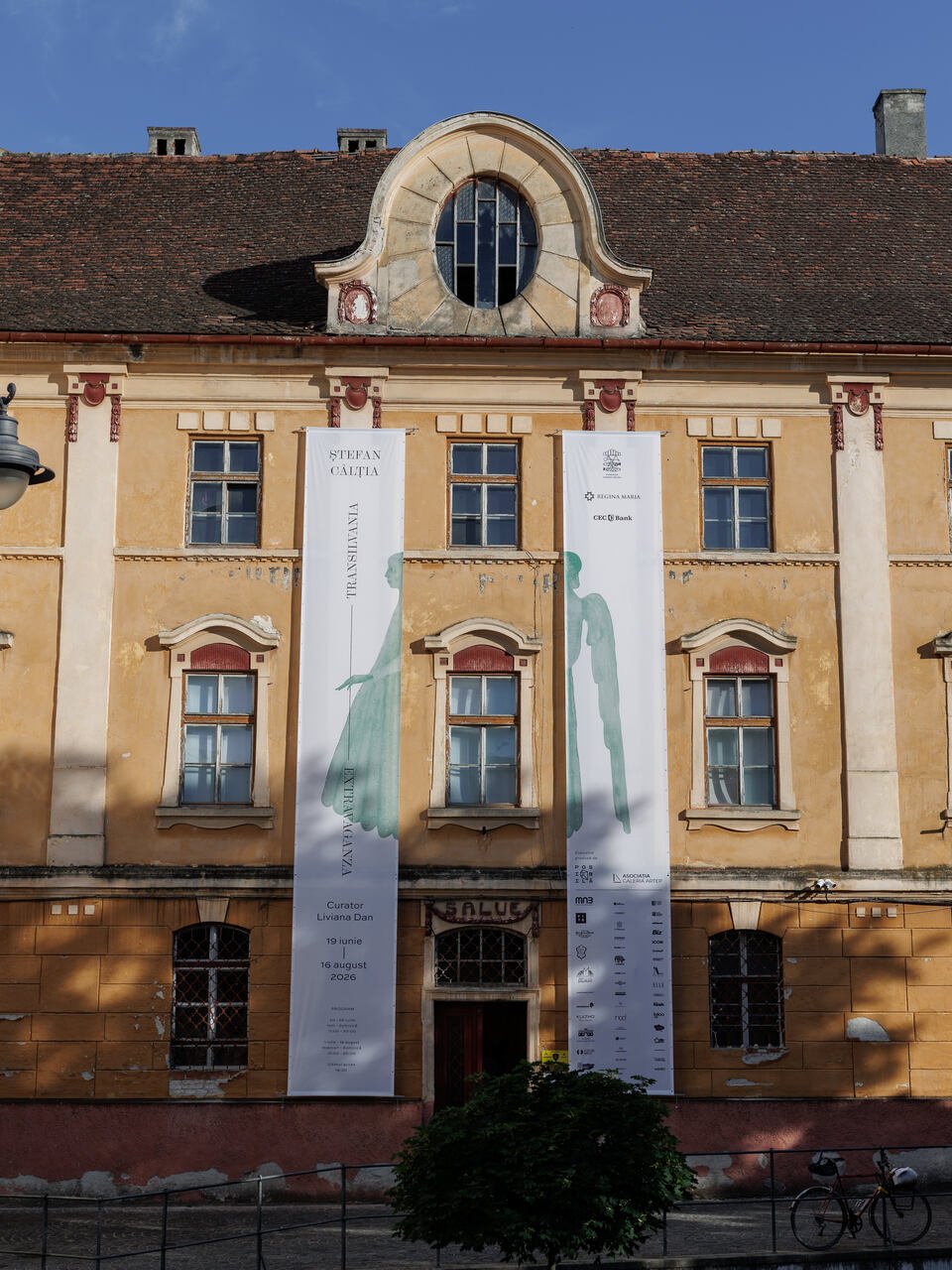
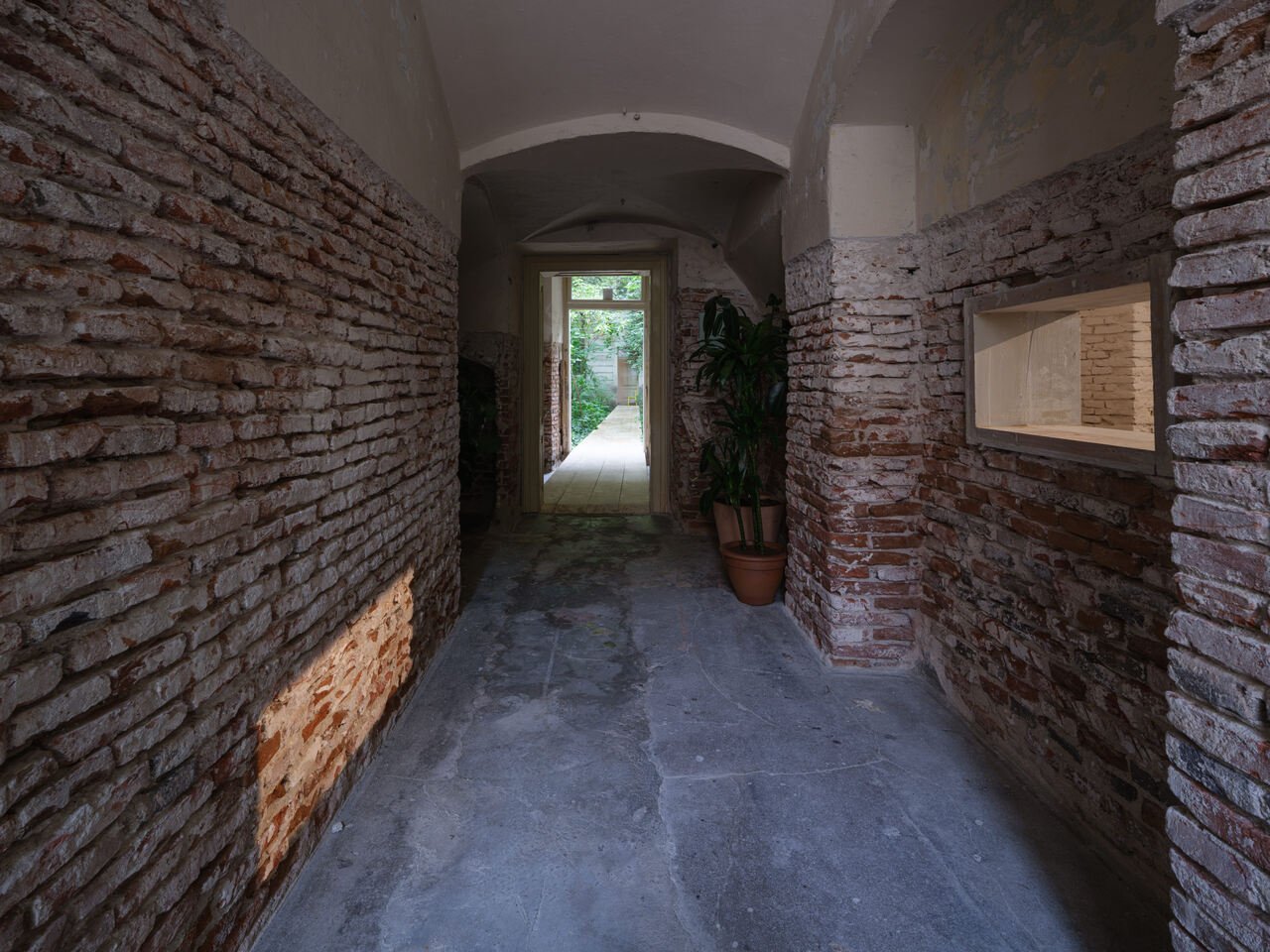
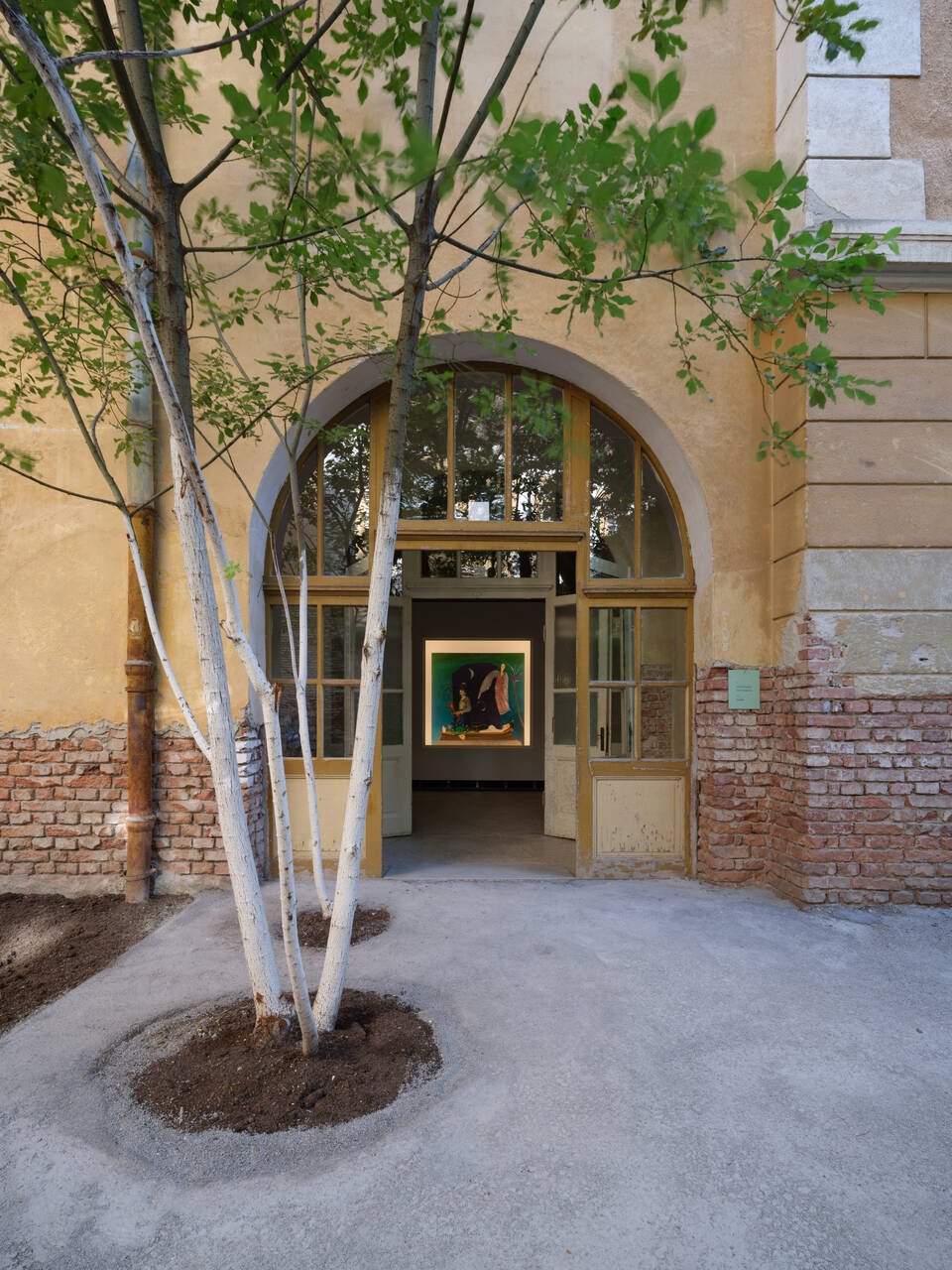
Transylvania / Extravaganza unfolds in two chapters across Sibiu: the former Ursuline Monastery, with a smaller selection at the Brukenthal Museum. Both venues are equally crucial to an understanding of Câlția’s work, foregrounding different aspects of his practice. The larger part of the exhibition occupies the monastery, originally established as a Dominican convent and expanded in the eighteenth century for the Ursuline nuns. Secularised during the communist period, the building subsequently assumed various educational and administrative functions, including that of a Catholic elementary school for girls. A quote foregrounds the connection between the show itself and the building that hosts it: “We needed to do this exhibition because this place needed to be taken care of,” said Câlția, speaking through Alexandra Mihali, who acted as his translator, “to make people in Sibiu, as well as those visiting the city, recognise it as a cultural center, and as something more than anything else.” The statement relates to a very specific goal: drawing attention to the building[1] was to prevent it from being taken over by developers planning on turning it into a hotel, rather than a space which would serve local artists and cultural workers. This attentiveness – equally devoted to aesthetics and the place one resides in – anticipates a sensibility that will surface repeatedly in Câlția’s approach as discussed in later parts of this text.
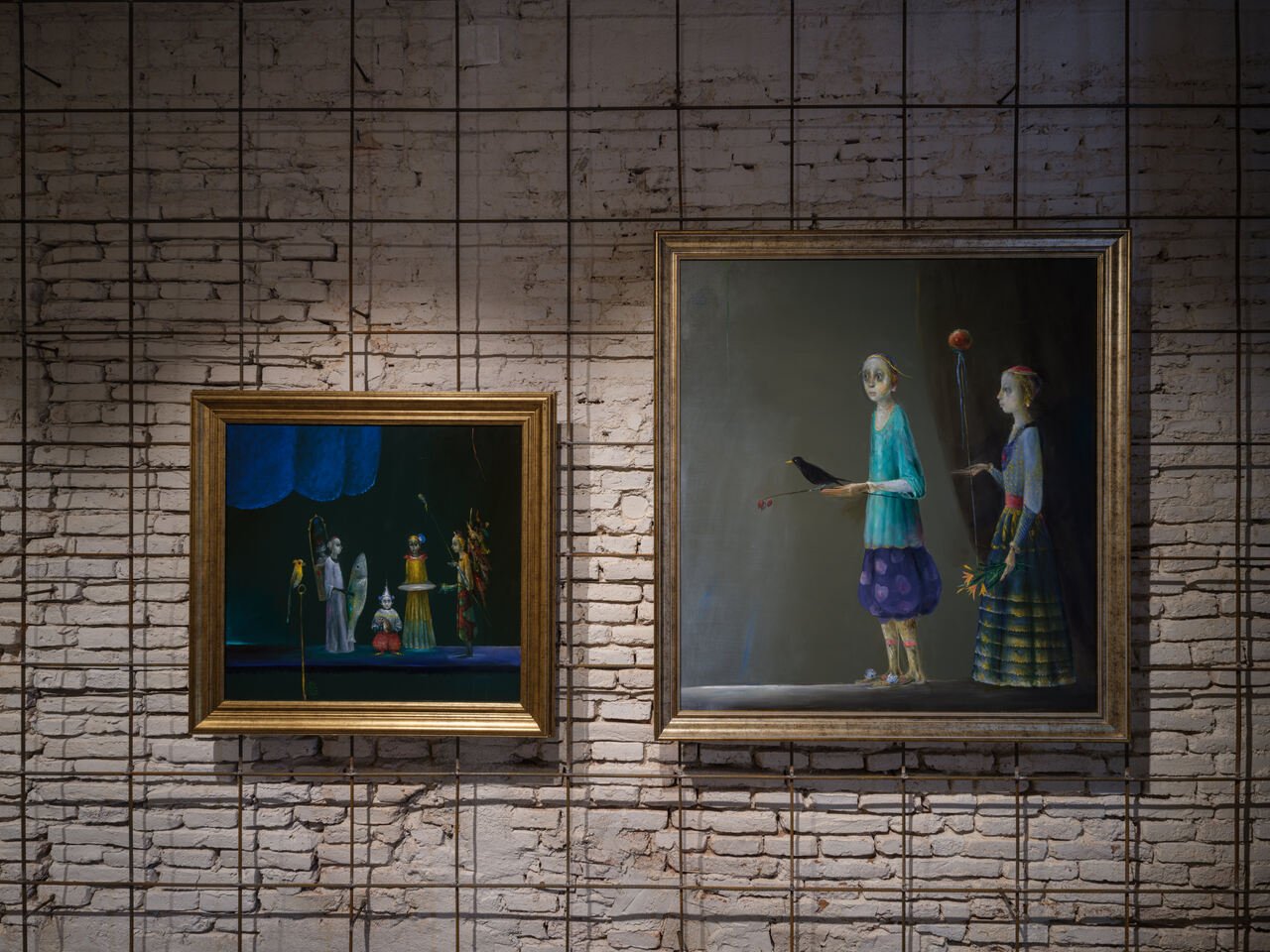
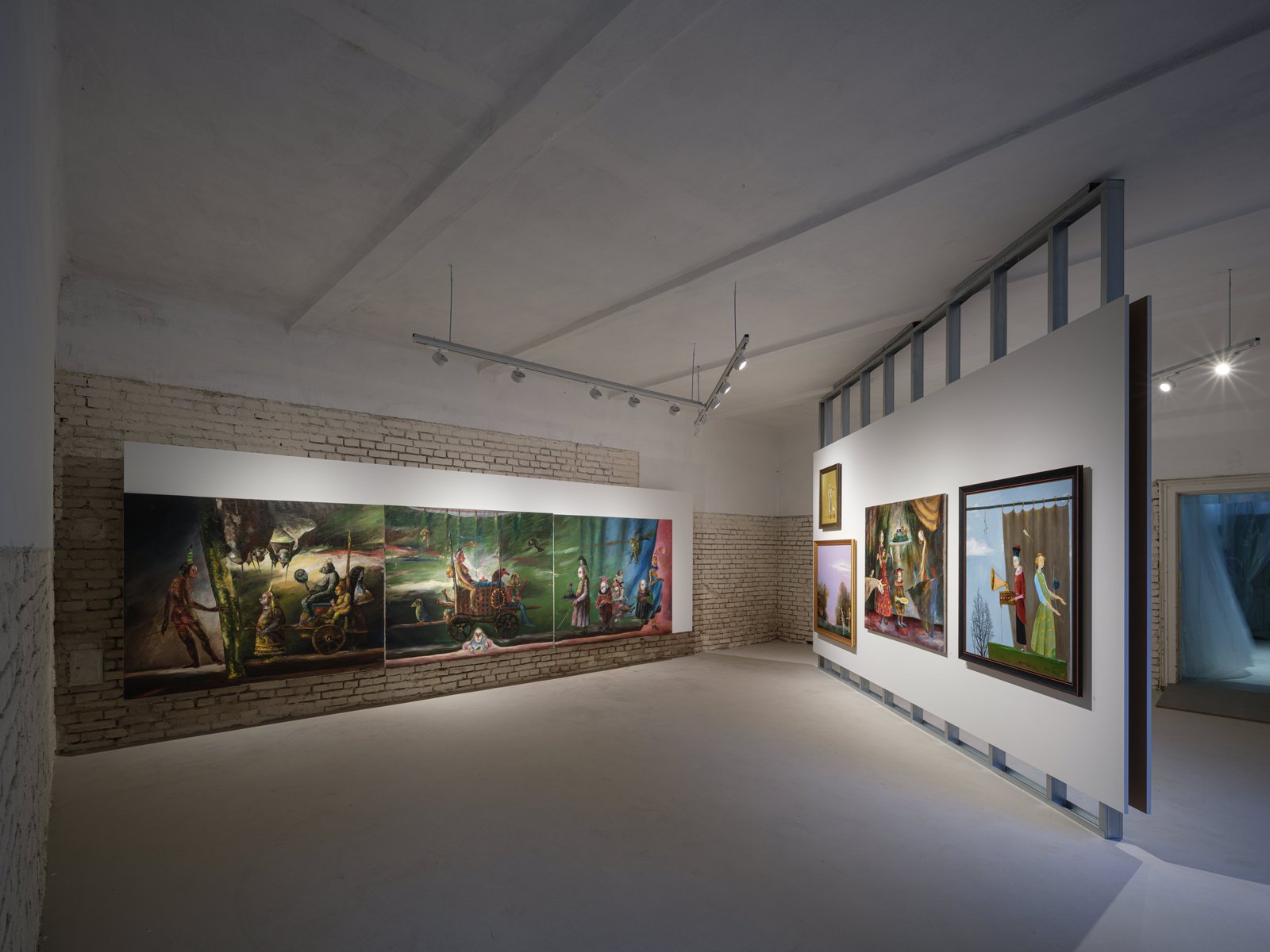
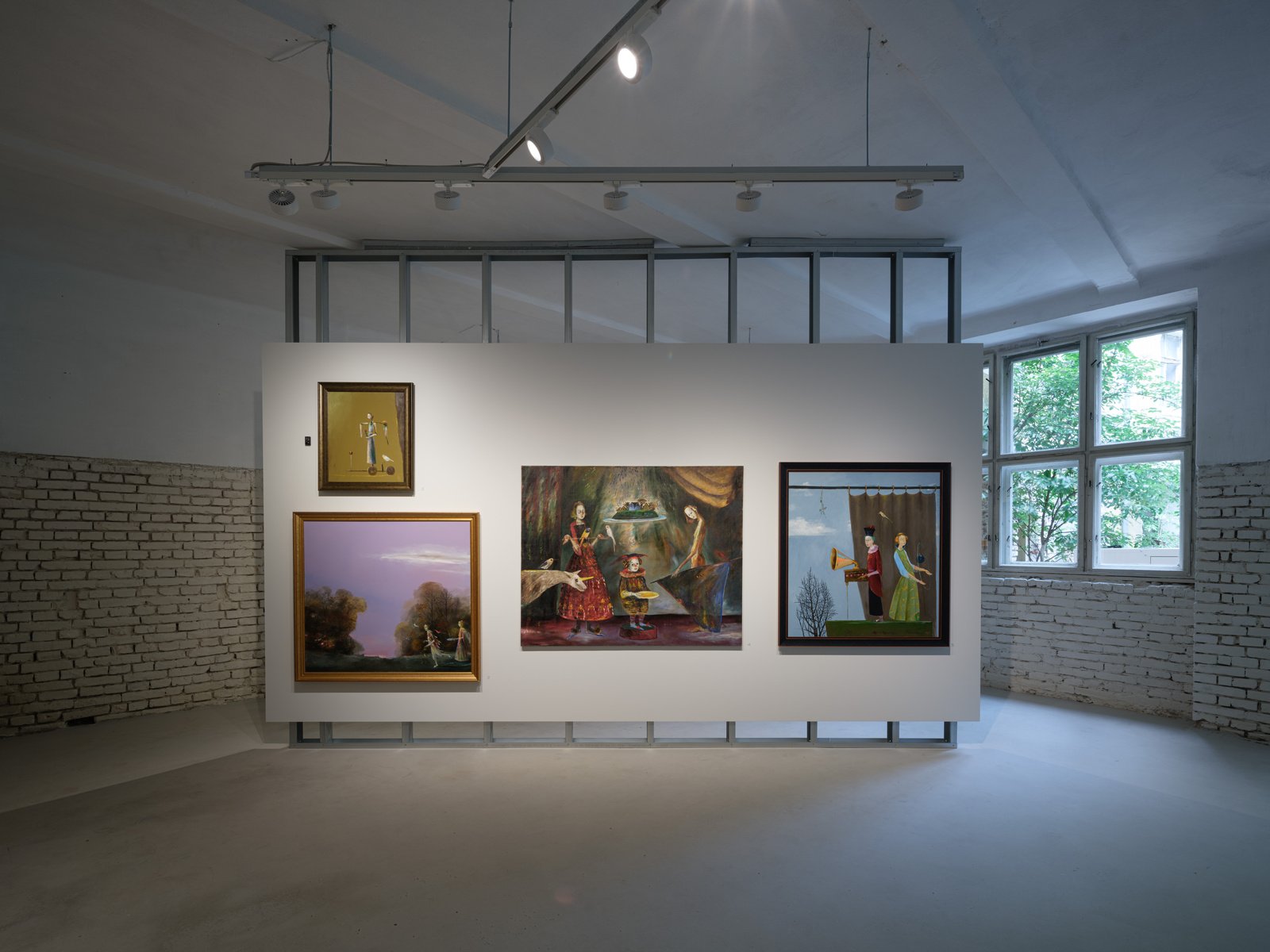
Câlția is well attuned to the ways in which anything – a self, an object, an image – emerges from an entanglement of influences rather than standing as a stable, immovable being. This logic of accumulation is borne of the exhibition itself, which brings together more than 130 pieces, surveying Câlția’s most prominent iconography. Portrayals of flora and fauna, both real and fantastical, alongside supernatural human figures (some graceful, El Greco-esque, others uncanny), inhabit parable-like roles: clowns, actors, dames, angels. Despite this variety, the majority of the paintings share a similar construction: the background dominates the composition and the personages depicted appear detached from the realities they inhabit, gazing straight ahead with a wide-eyed, dispassionate regard. Some, even when present in a painting alongside others, in groups, do not engage with one another, as if unaware of each other’s presence.
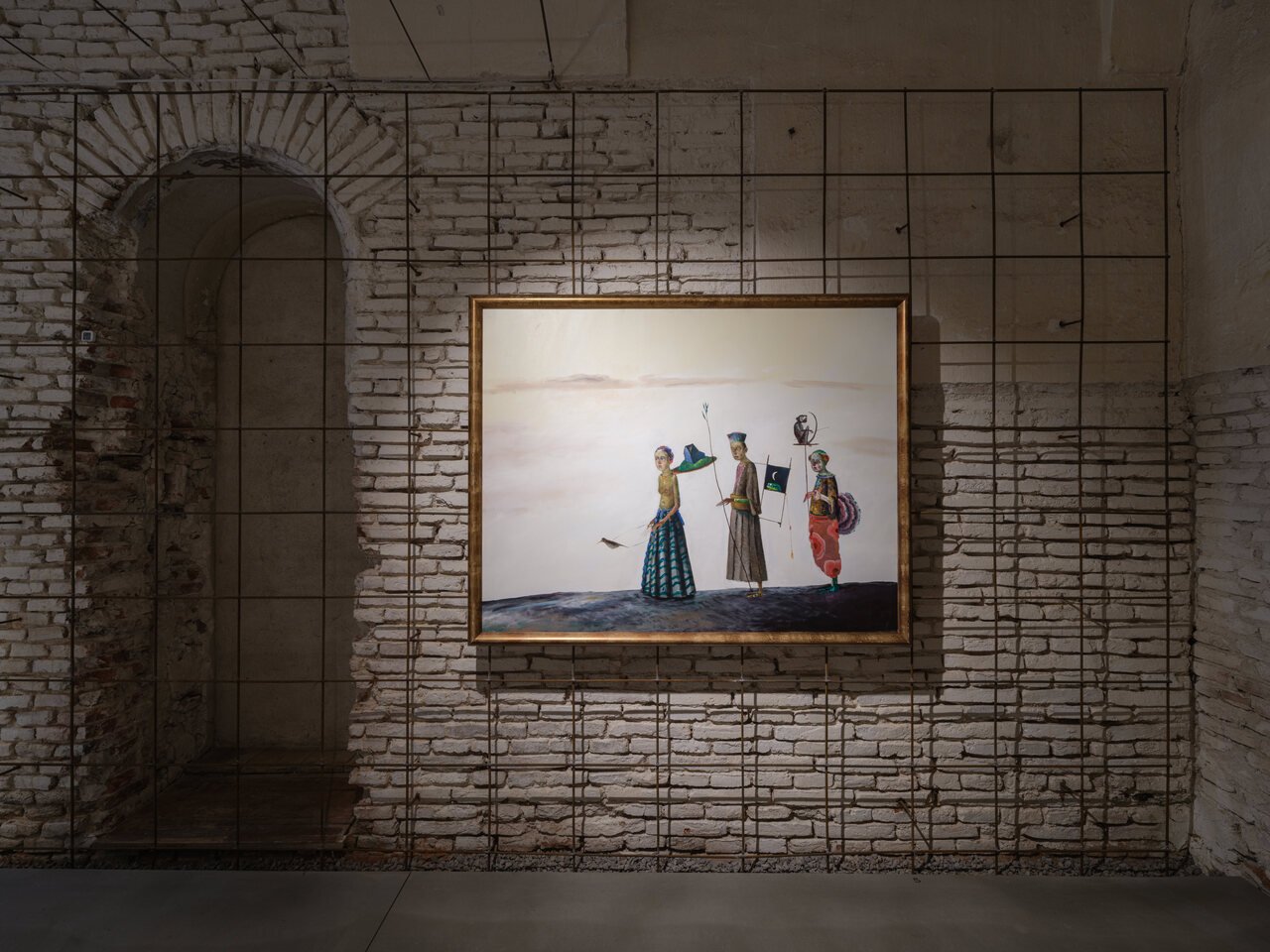
This is clearly visible in Procession (2008), a large canvas depicting three figures standing in a row, all richly dressed, their clothes displaying vivid, colorful patterns. They all look toward the left side of the canvas, standing neatly in a line. Each carries an object in their arms: a detail that might be read as both symbol and a meta-reference, these items being recurring motifs throughout Câlția’s pictorial world. The first figure leads a wingless bird on a leash, a blue house attached to their person; the one in the middle holds a branch and carries an item painted with a moon and a frog; the last holds a scaffold supporting a monkey. The artist often draws on his own work as a point of reference, which is as well, so deeply rooted in the place in which it has developed that the external world remains equally important. As a result, fiction and reality become enmeshed, almost impossible to separate.
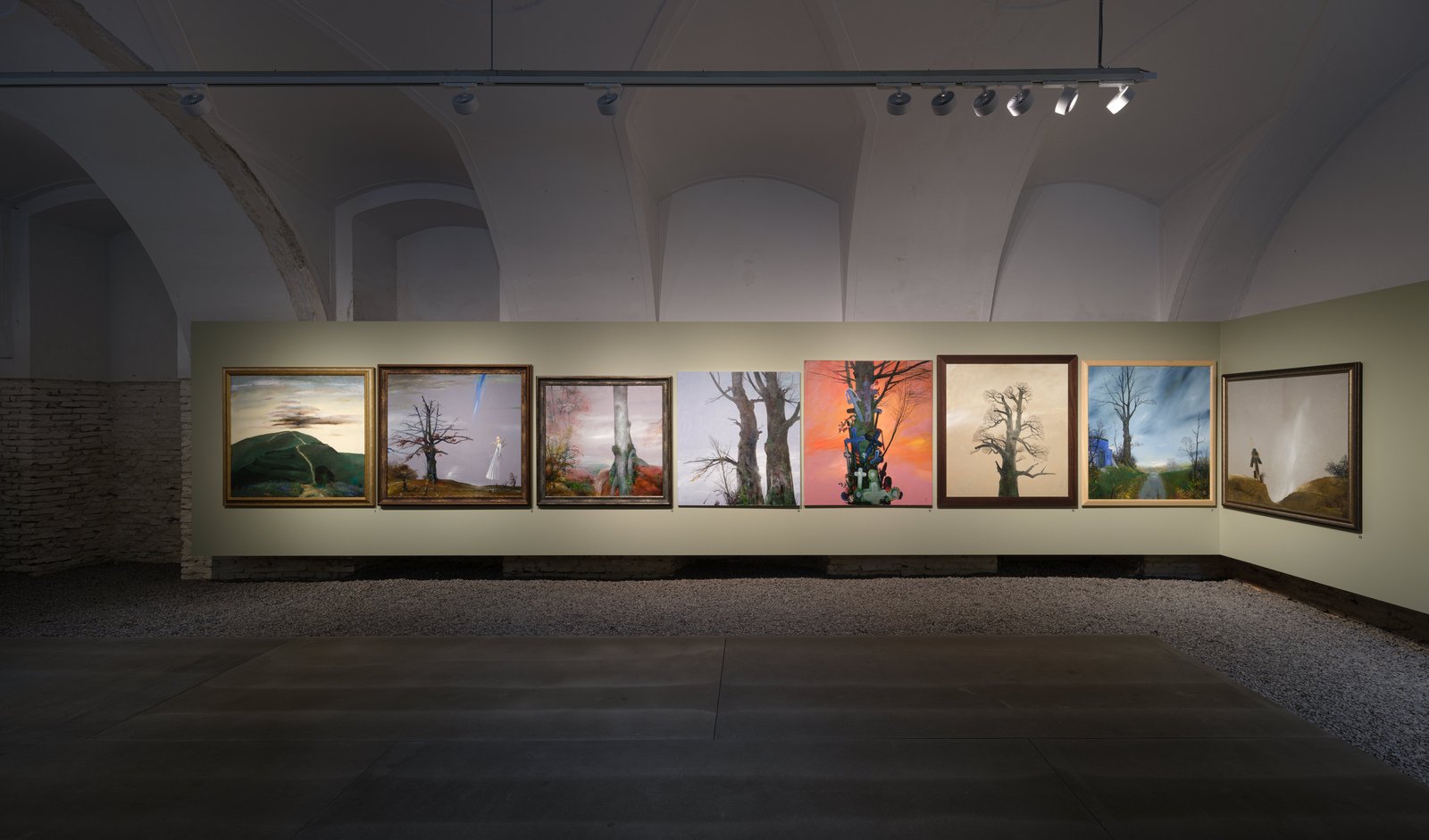
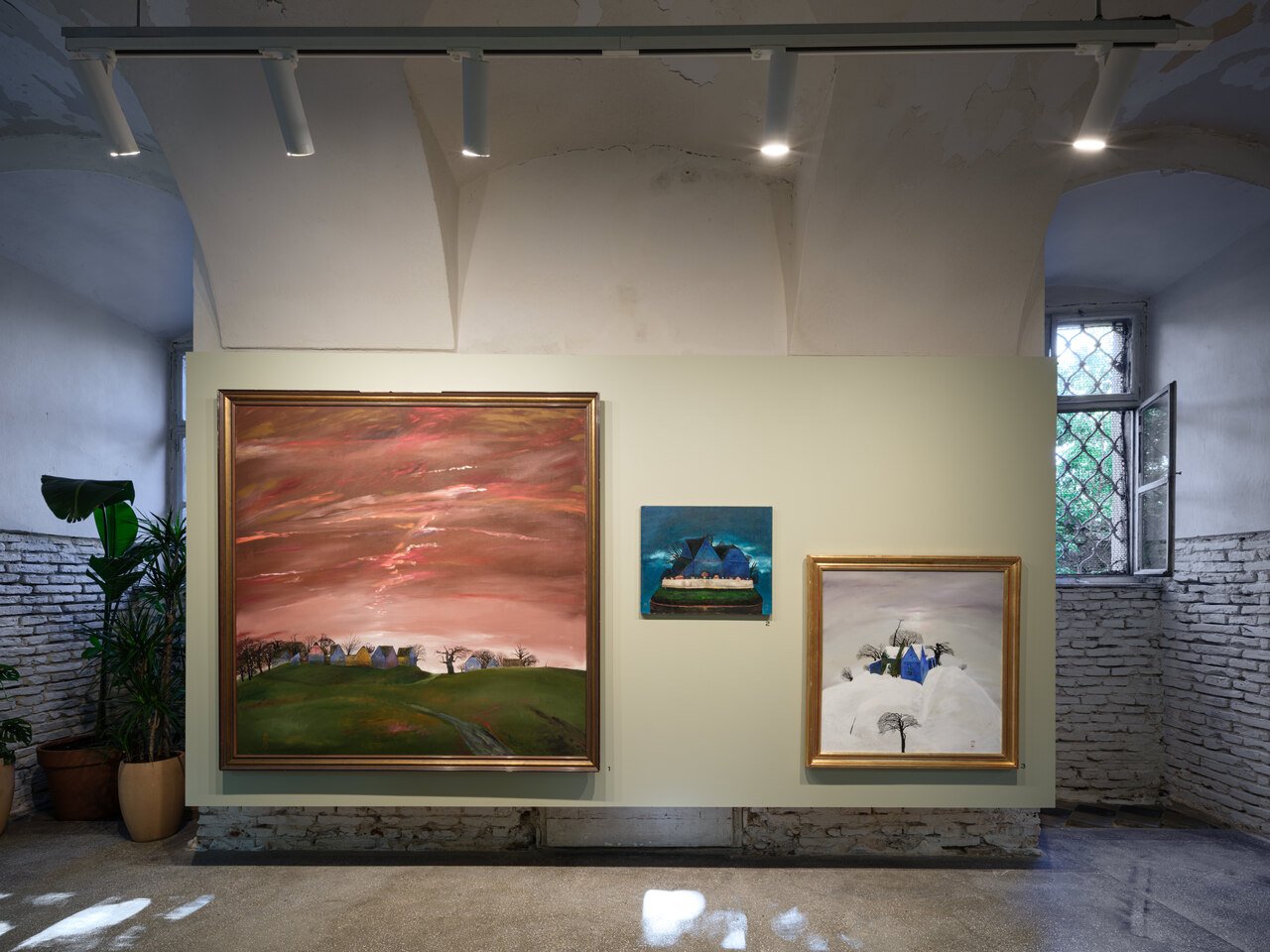
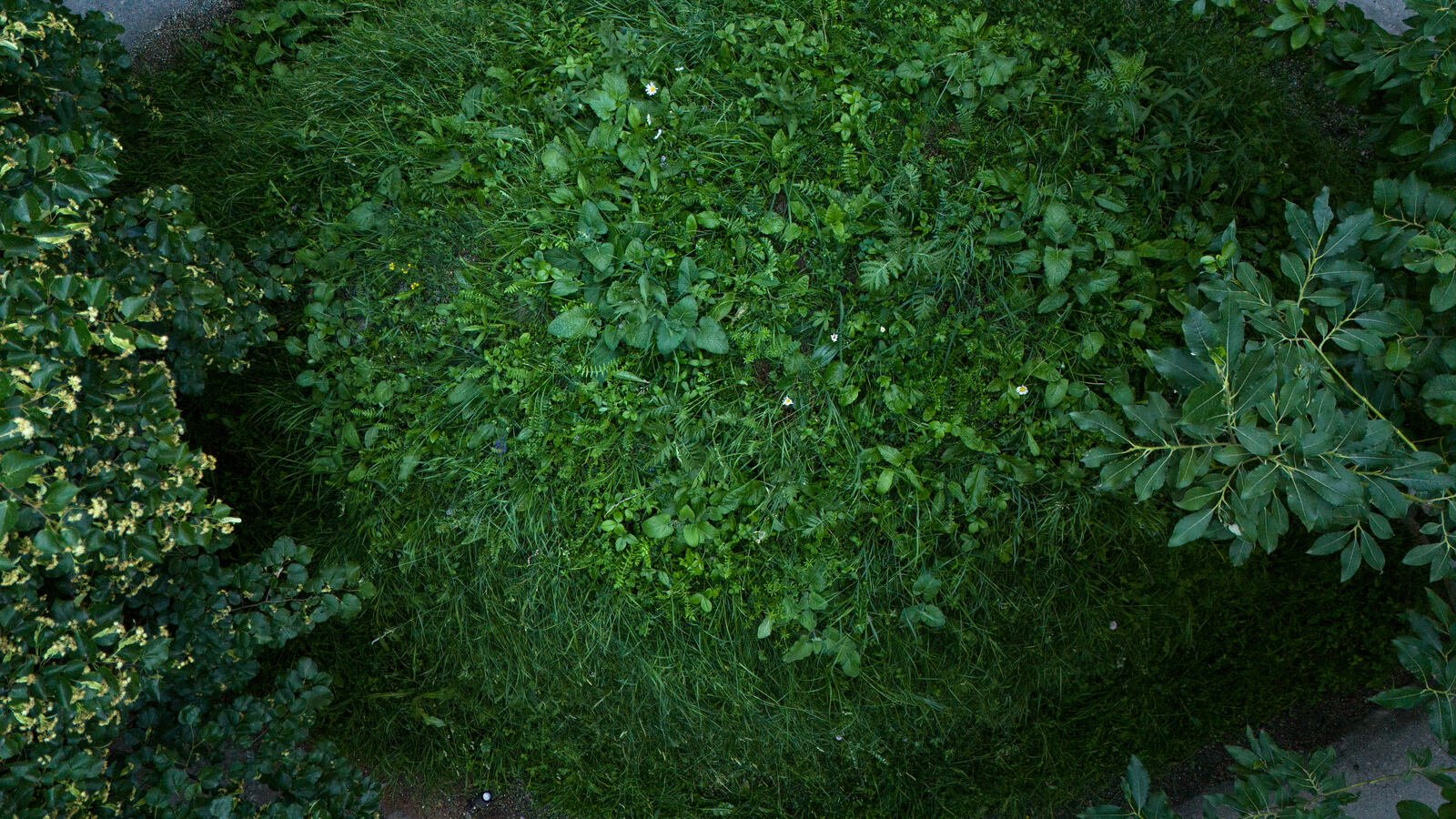
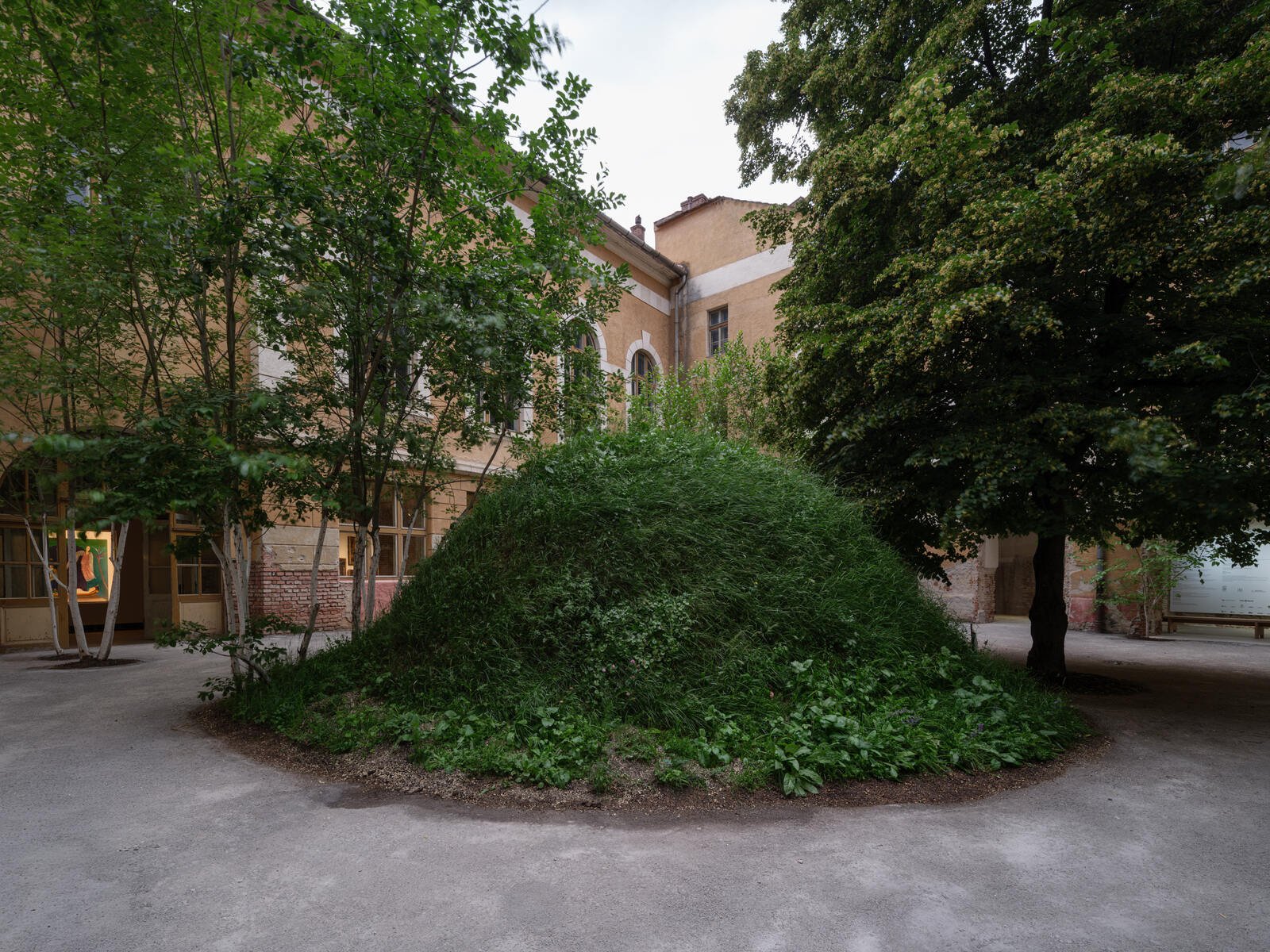
Transylvania / Extravaganza does not simply present this relationship, but it constructs a setting in which it can be experienced. One of the first images one encounters upon entering the convent is not a painting, but an artificially constructed hill in the courtyard: a recreation of the hills that dot the Transylvanian landscape, whose origins remain unclear (and vary depending on which version of the story one subscribes to: formed of agricultural waste, or raised by mythical giants). A similar, if not identical one, recurs throughout Câlția’s works, as does his elaborate signature, composed of his initials, two fish, and the seven hills neighbouring the village of Șona – home to the blue houses – which became his wellspring.
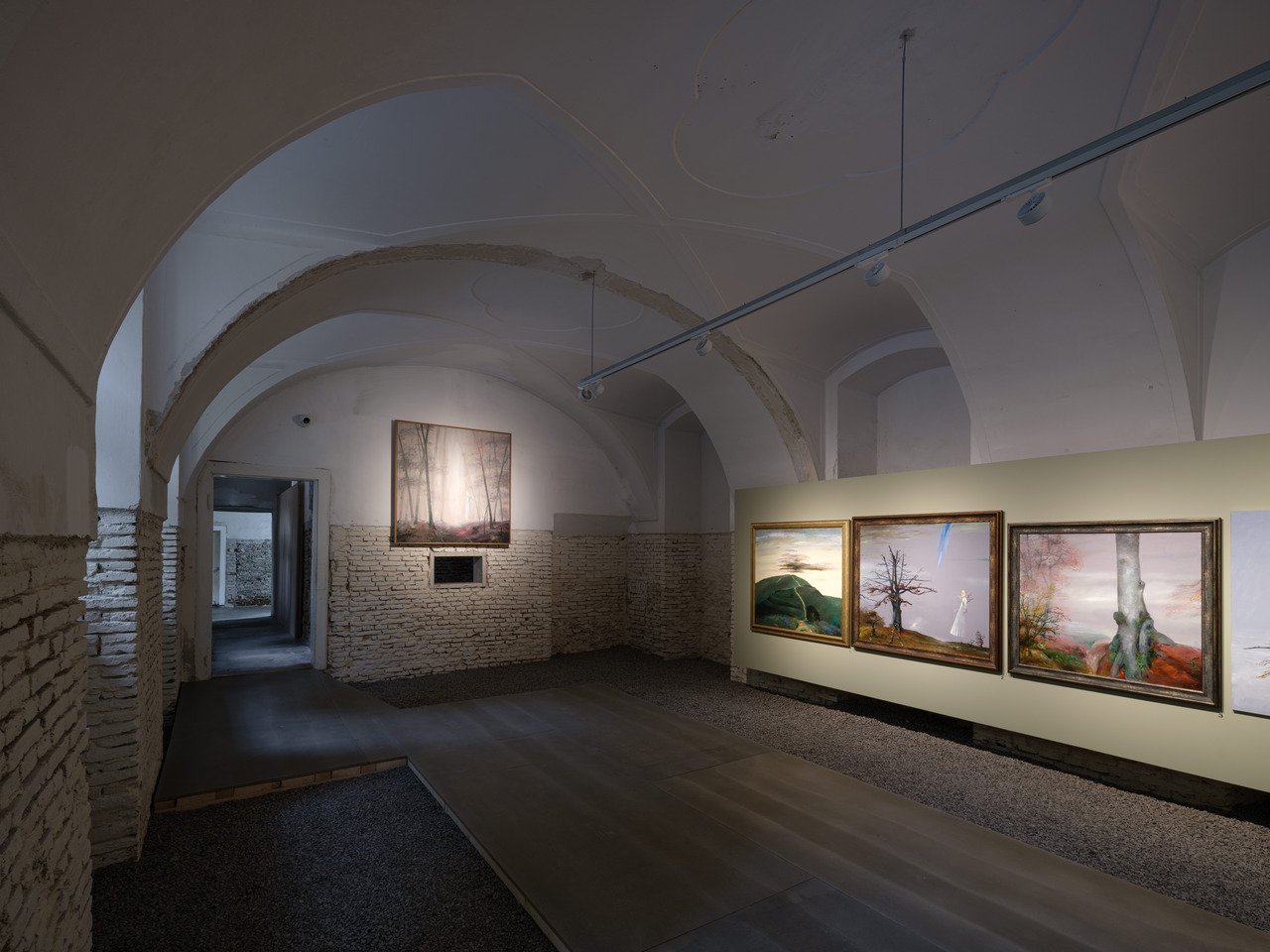
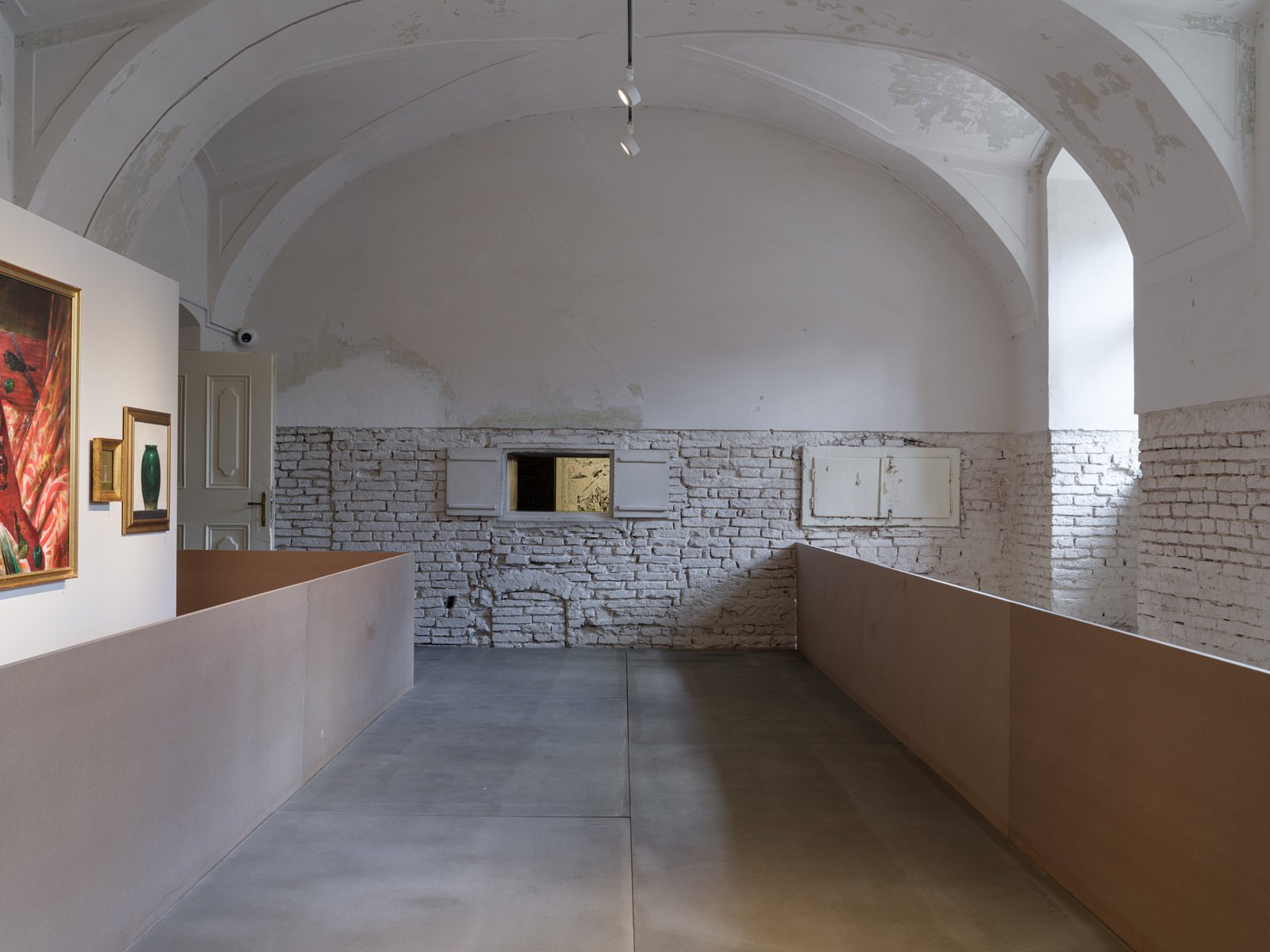
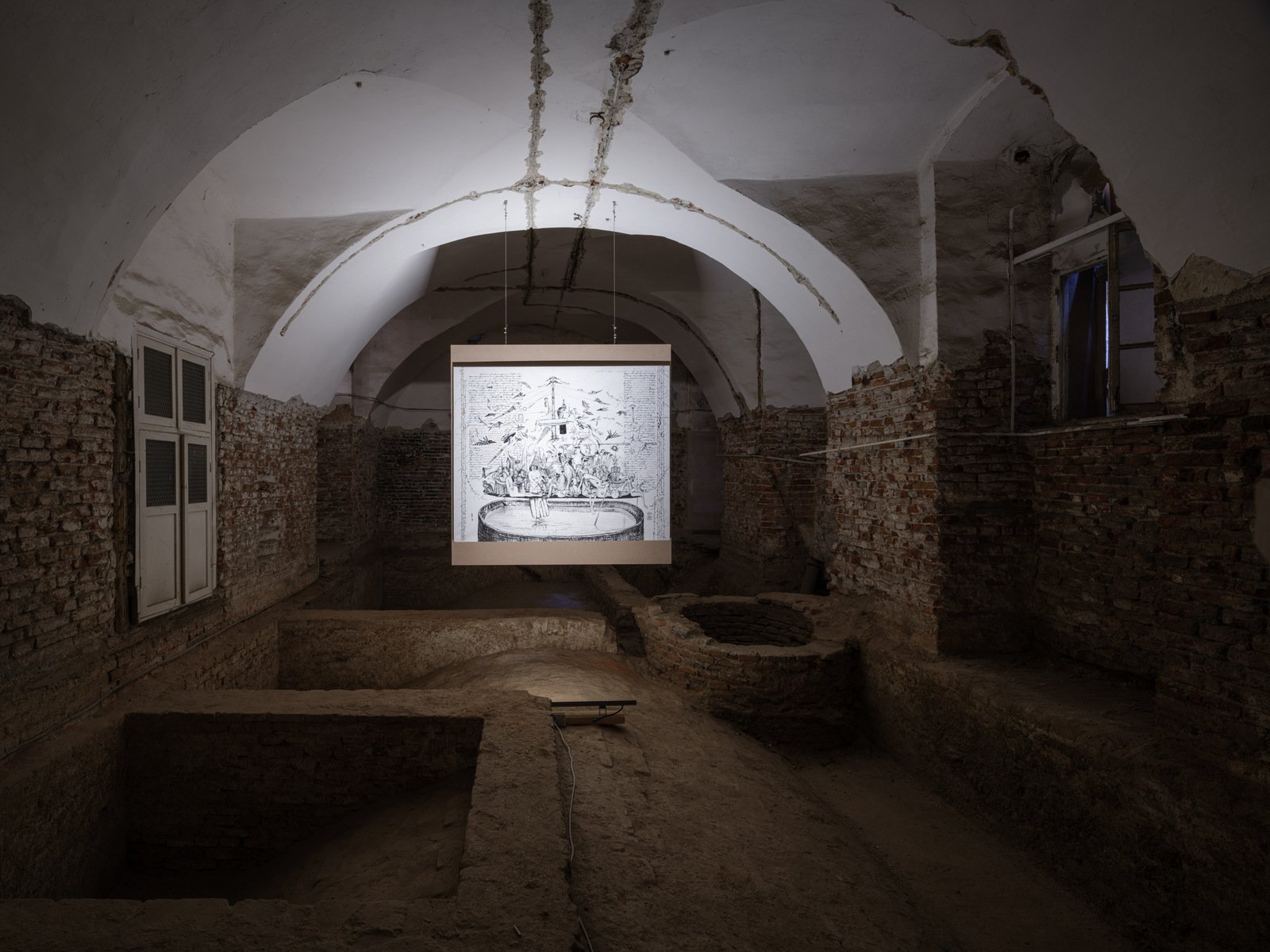
Câlția’s recurring motifs – spatial, as in Forest Edge / Village Edge and The Birdhouse, and thematic, as in The Circus, The Clowns, The Plants, The Animals, and Offering – give the exhibition its organising structure. Chronology seems redundant: pieces from various periods are mixed together, linear time suspended, teleology set aside, making way for each painting to be treated as an emanation of a parallel world of the artist’s creation. It is not that time does not exist, but that past, present, and future seem to collapse into one another, leaving the viewer in a different time-space altogether. This effect is amplified by Yokina’s scenography, whose sleek, discreet, minimal elements stand in contrast to the building’s peeling architecture, and complement the painting’s multiplicities.
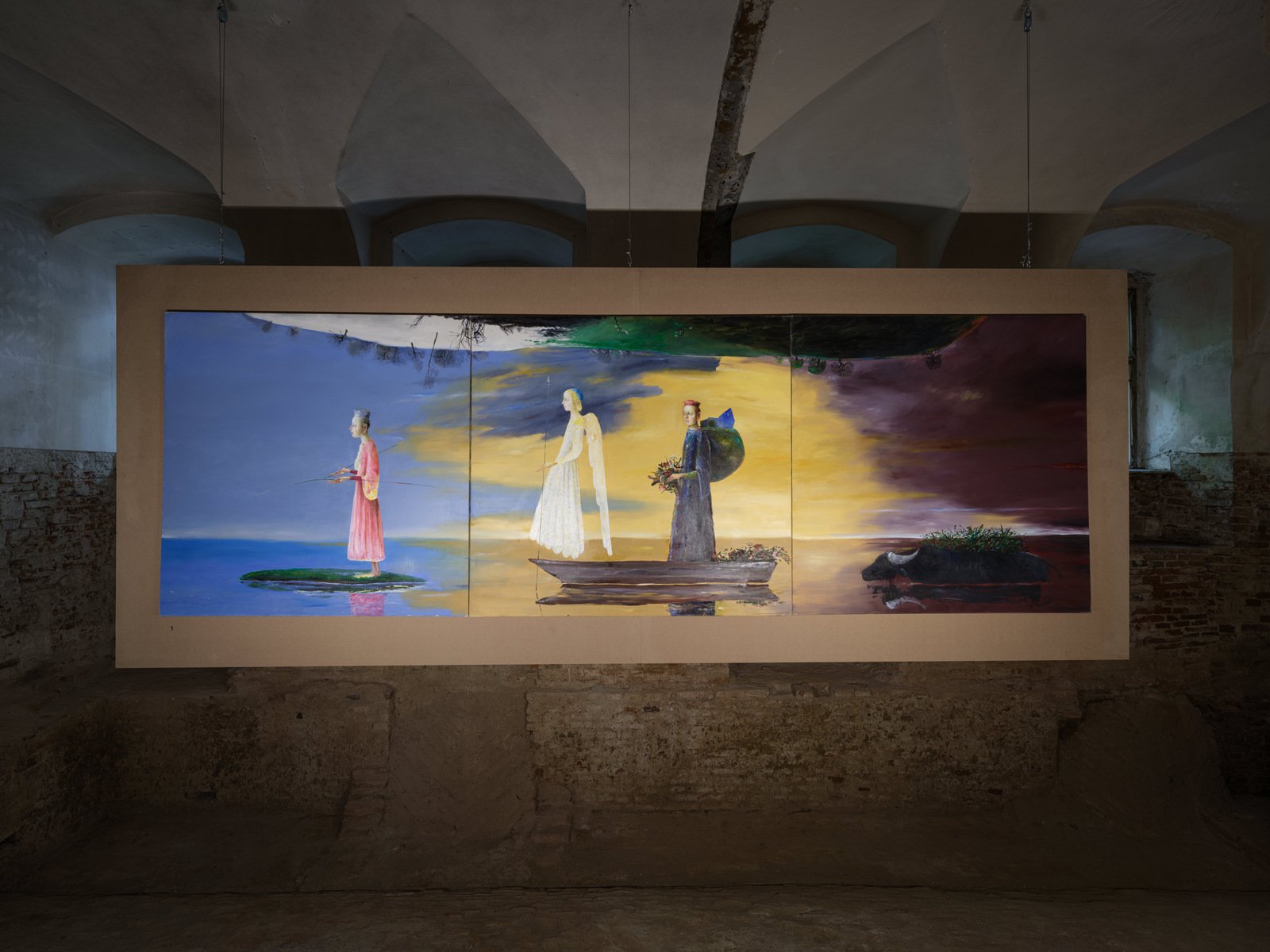
Wandering through the exhibition feels like walking through one of Câlția’s paintings. The viewer is gently drawn into this world: the first chapter one encounters, following a passage through a courtyard swamped with greenery, is Forest Edge / Village Edge, as if one were standing just at the threshold of this world. This chapter focuses on landscapes: almost all personless, uninhabited. One of them is particularly striking, given the view of the real hill one has just seen before entering the show: Path (2008) shows a painterly rendition of it, with a discreet path cutting across it (as the text will later show, even a path is never merely a path). At one point, the visitor encounters a work (The Last Journey of the Water Seeker, 2011) suspended in mid-air, hanging within a section closed for conservation, inaccessible at close range. Visible only through two openings separated by a wall, the painting depicts two figures travelling by boat and another standing on a small patch of land. Behind them, a partially submerged bull emerges from the water, its plant-covered neck recalling the hill described earlier. The restricted mode of viewing becomes part of the work’s effect: moving between the two apertures, one begins to feel almost as though drifting alongside the painting’s protagonists. This shift between viewpoints lends the composition an unexpected sense of movement and spatial dynamism.
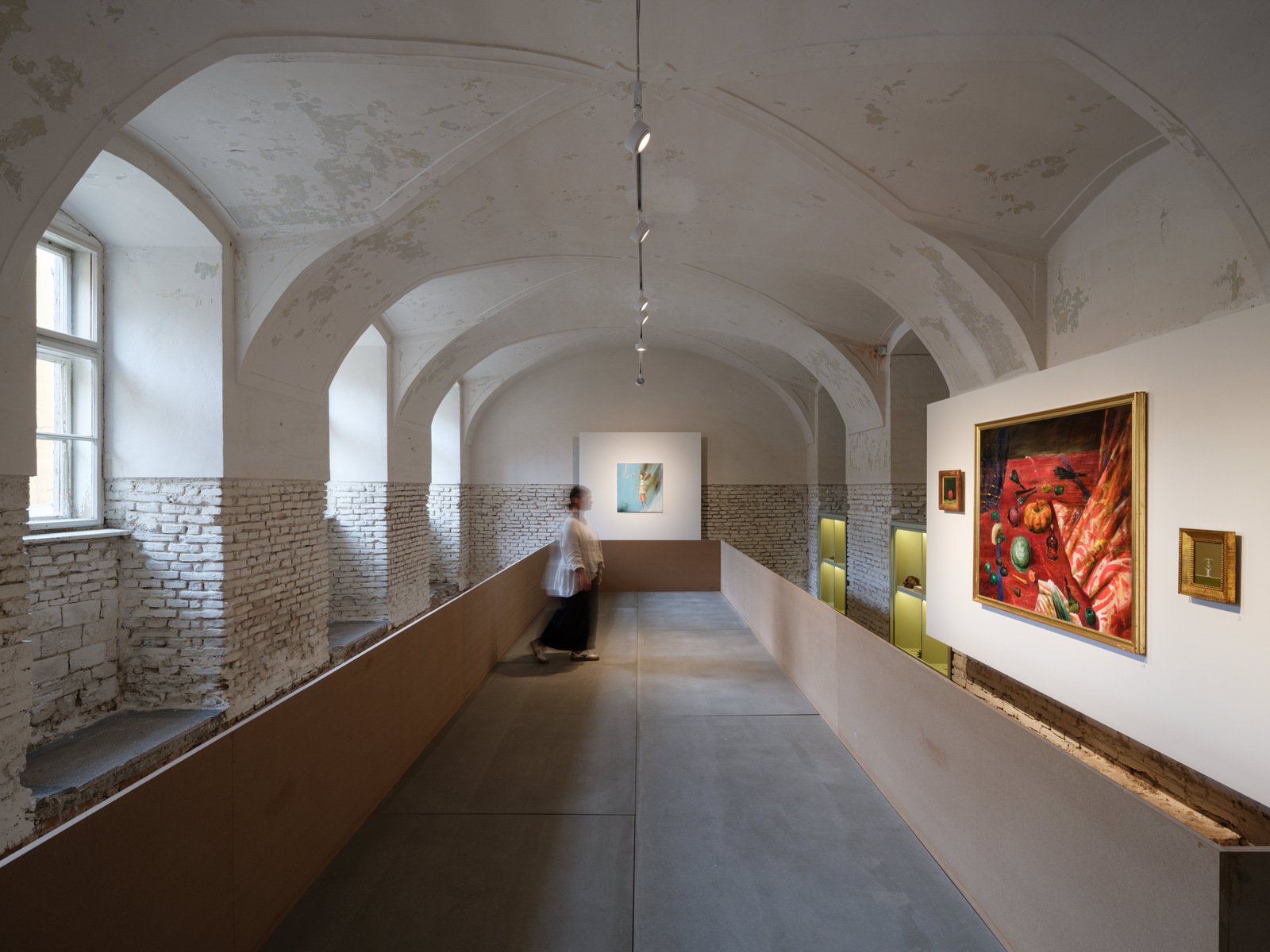
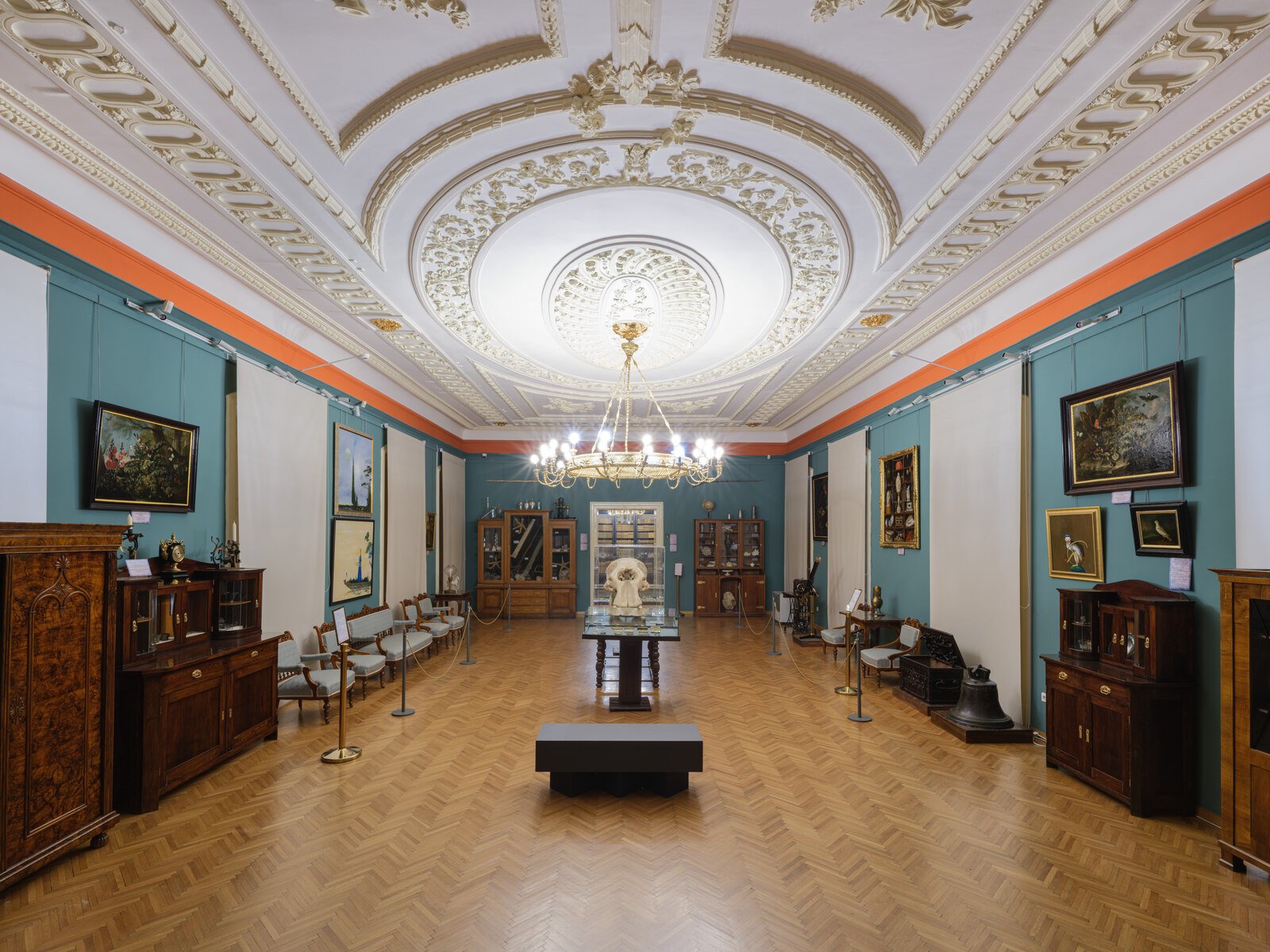
At first glance, Stefan Câlția’s paintings seem to favor symbolic interpretation. Their strange inhabitants – figures, plants, animals and dreamlike landscapes – appear to constitute a self-contained universe, governed by its own mythology; one might feel tempted to treat them solely as allegories. The part of the exhibition held at the Brukenthal Museum, however, produced almost the opposite experience. There we learned that the very concrete and tangible materials the artist uses to create his mythologies come from the region, and so are quite literally extracted from the material and historical past of the region. The exhibition unfolded beyond its own walls, through the museum collection, the landscape of Transylvania, encounters with the artist, and the objects and stories surrounding him. What initially appeared fantastical, gradually became surprisingly grounded.
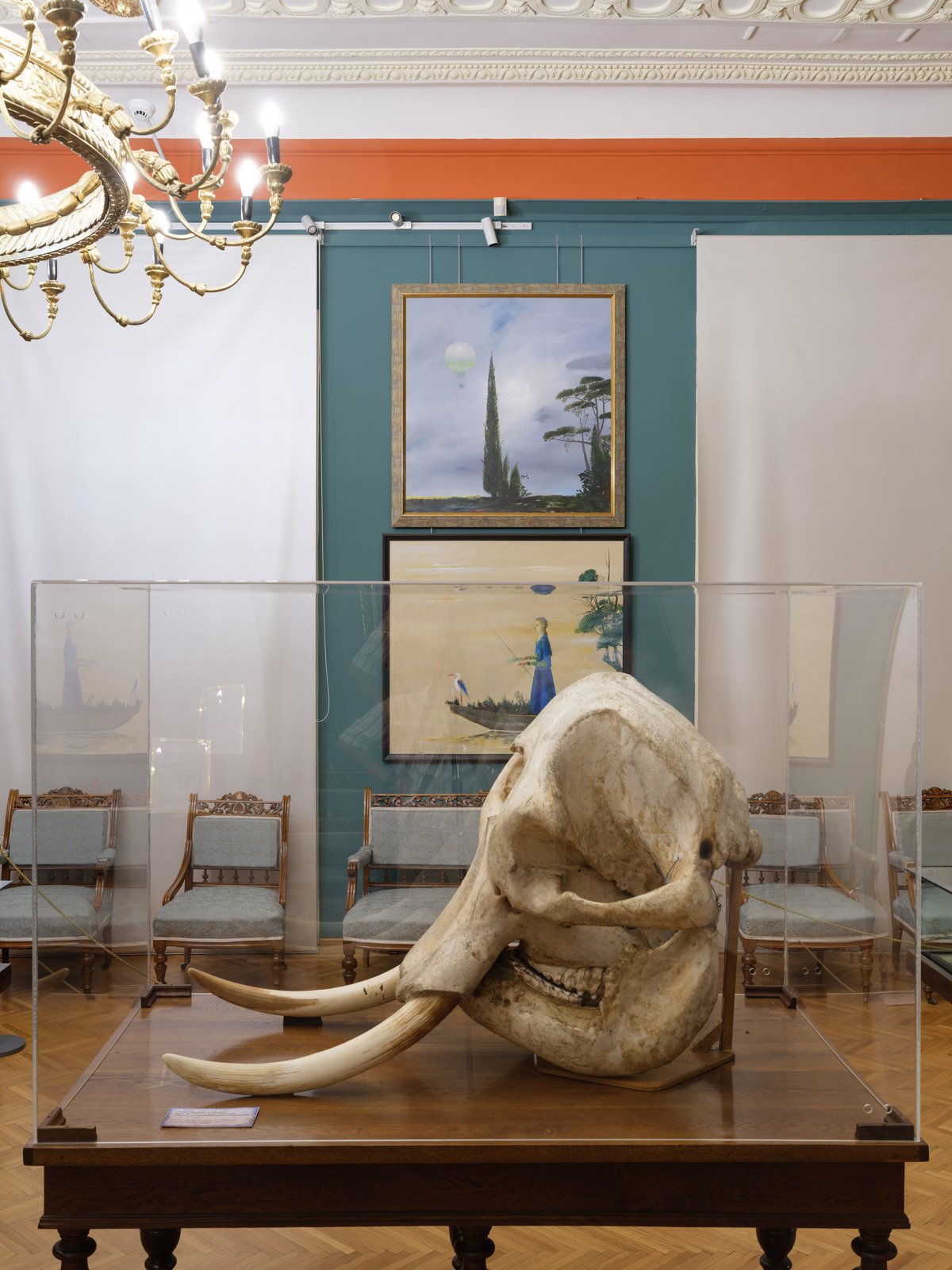
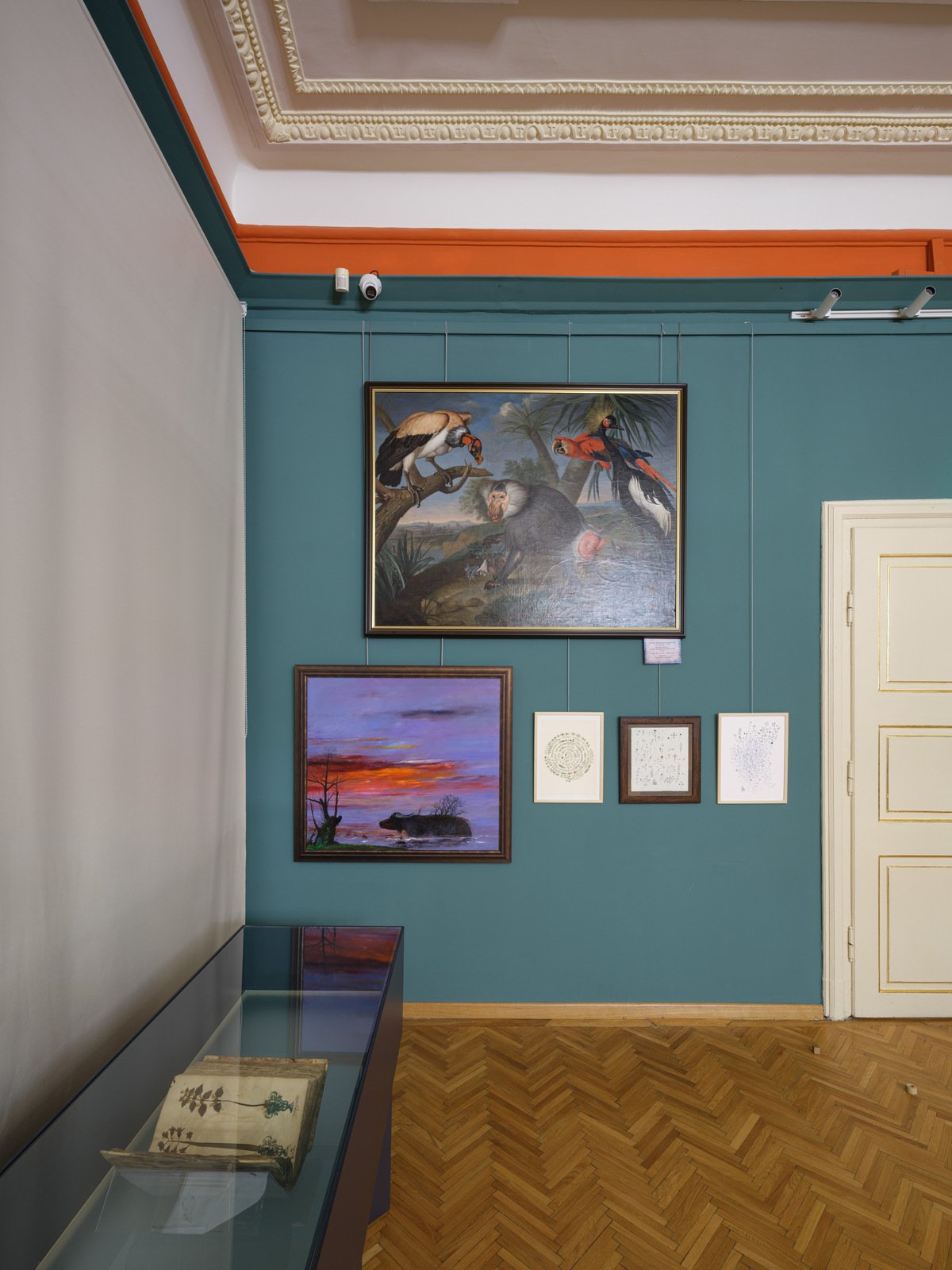
The decision to place Câlția’s works in dialogue with the Brukenthal National Museum’s Cabinet of Curiosities was crucial to this process. Established by Baron Samuel von Brukenthal during the Habsburg period, the collection brings together paintings, natural specimens, and objects originating from different periods and geographies. Câlția and Brukenthal seem to share a particular kind of curiosity: not simply an interest in extraordinary things, but an ability to make ordinary things strange enough to deserve another look. Among other striking objects in one of the cabinets sits a unique pre-Liné Baussner Herbarium from the XVII century. Unlike later botanical specimens intended purely for scientific documentation, where plants are usually preserved as completely as possible, the plants here are combined with delicate add-ons. Some appear to have been placed inside cutouts vases, printed on paper and then glued to the stem. The intervention is so precise that the distinction between specimen and representation becomes momentarily uncertain: one has to look carefully to establish where the plant ends and the image begins. One’s mind immediately thinks of Câlția’s works and their relationship to both dream and waking realms, either intertwined, or simply being the opposite sides of the same coin. To quote the artist once more: “Dreams help reality accommodate what happens within it.”
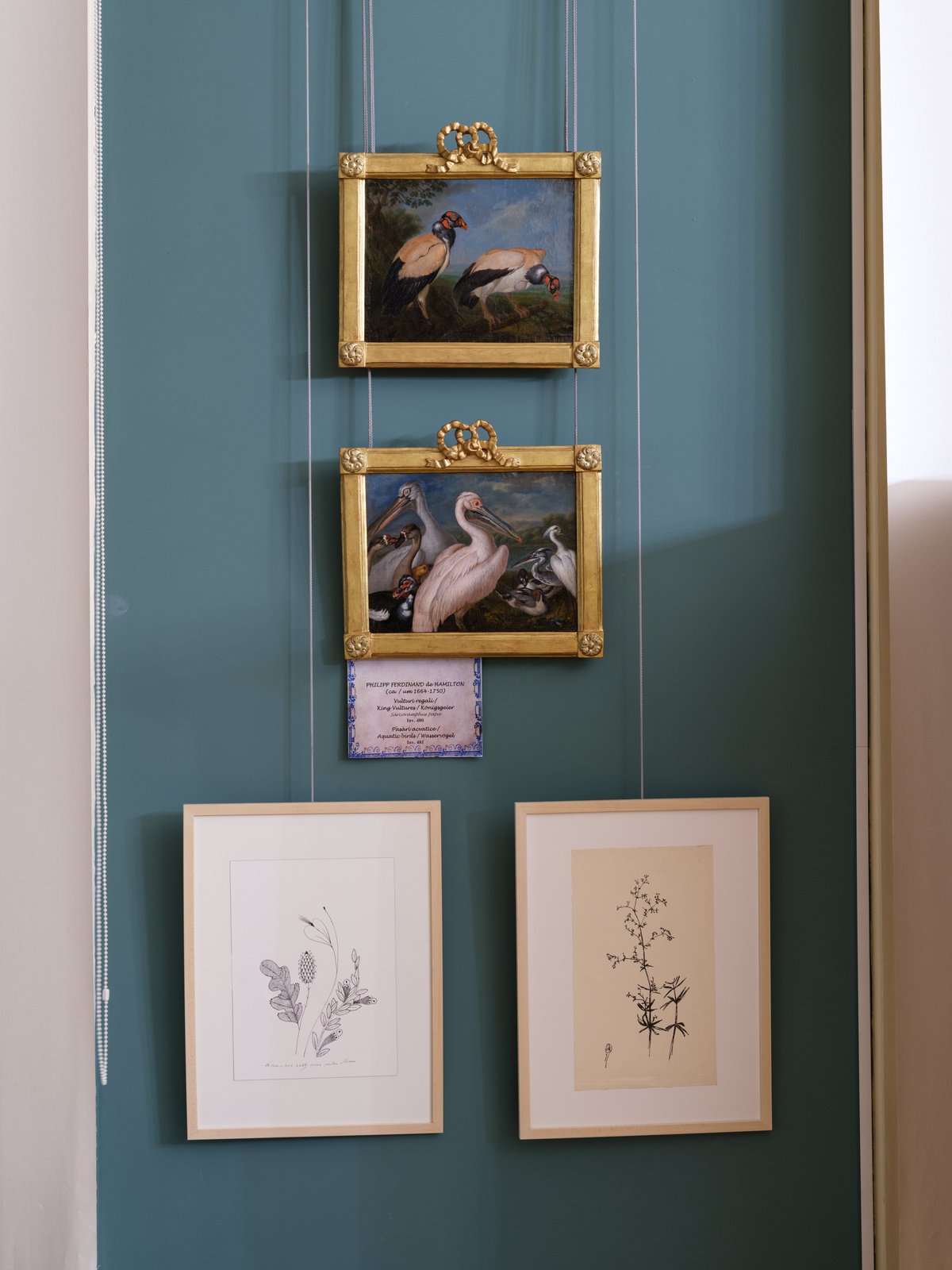
Nearby, juxtaposed with the historical objects on permanent display, Câlția’s own drawings of plants suddenly acquire another dimension. They – meticulously recreated from their natural counterparts in felt tip pen – no longer appear simply as recurring motifs within an individual artistic mythology. One such drawing, hung beneath Philipp Ferdinand de Hamilton’s (c. 1664-1750) Exotic Animals, shows a delicate whirlwind-like arrangement of flora, prototyped from the local species and simplified to form a delicate, graphic composition. It points towards the botanical understanding embedded in both the mind of the artist as well as the region itself: knowledge of plants used for healing, cooking, and rituals, transmitted between generations, has become increasingly endangered by changing ways of living and by the growing distance between everyday life and the natural environment.
This became tangible outside the museum. During a walk through a field with the artist, an otherwise unremarkable plant released an extraordinarily intense scent when touched. Invited to smell it, Ewa, the co-author of this text, immediately responded: “It smells like childhood.” The recognition seemed very to the point. For many born in the 80s and 90s in different parts of Central and Eastern Europe, childhood involved extended periods in villages, often with grandparents, and a kind of unstructured proximity to plants, soil, animals, and seasonal rhythms that is becoming less self-evident. The recognizable smell collapsed geography particularly effectively: for a moment, a field in Transylvania could evoke another village hundreds of kilometers away.
It was perhaps at this point that the geography surrounding Câlția’s work began to shift. Romania, Transylvania in particular, can occupy a surprisingly distant position in the cultural imagination of someone living in Poland, despite the physical geography suggesting otherwise. Yet once Câlția’s world is approached through landscapes, plants, domestic practices, and memories rather than national histories, another map begins to emerge. The Carpathians cease to function merely as mountains dividing contemporary states and instead become a possible line of connection. This is not an invitation to imagine a unified, universal, and immediately relatable construct of “Carpathian culture.” What becomes interesting is precisely the less stable network of affinities: landscapes that resemble one another, forms of practical knowledge, childhood memories, stories, and ways of relating to the material world that resurface without it being possible to pinpoint them to a single national tradition.
Such a perspective is particularly important in Câlția’s case because his position within Romanian culture makes another reading readily available. Over the past decades he has become an artist of enormous esteem, with substantial recognition from the middle- and upper-middle-class public and a strong collector base. His recurring figures and references to local landscapes and traditions can therefore easily be absorbed into narratives of national identity. Familiarity can quickly become evidence of supposedly stable national values. Yet the closer one comes to Câlția’s actual relationship with locality, the less convincing such a reading becomes. A story the artist told about reconstructing his grandparent’s blue house on a hill offers a different model of belonging. Câlția rebuilt much of the house himself. Initially, he worked according to what he thought he knew about traditional construction. When parts of it began to fall apart, he turned to his neighbours. They showed him how materials should actually be prepared and applied, transmitting knowledge not through manuals or institutionalised heritage programs, but through demonstration and practice. Câlția described this experience through a simple proposition: “love is a path.” Attachment is produced by the time spent with something. You work on a house, repair it, fail, learn how to repair it again, ask somebody else for knowledge, return to it. Through accumulated effort, it becomes dear to you, as it was for those who preceded you along the way. As the artist himself puts it, “When you walk a path, you never walk alone, but with those who have walked this path before you.”
This offers a much more compelling way of understanding locality in his work than national belonging. Place is not something one possesses by birth. Neither is tradition a collection of symbols that needs to remain unchanged. Belonging is produced through labor, attention, transmission, and care. You belong to a place partly because you participate in maintaining it. Locality here, rather than a fixed characteristic, is understood as a process-based practice.
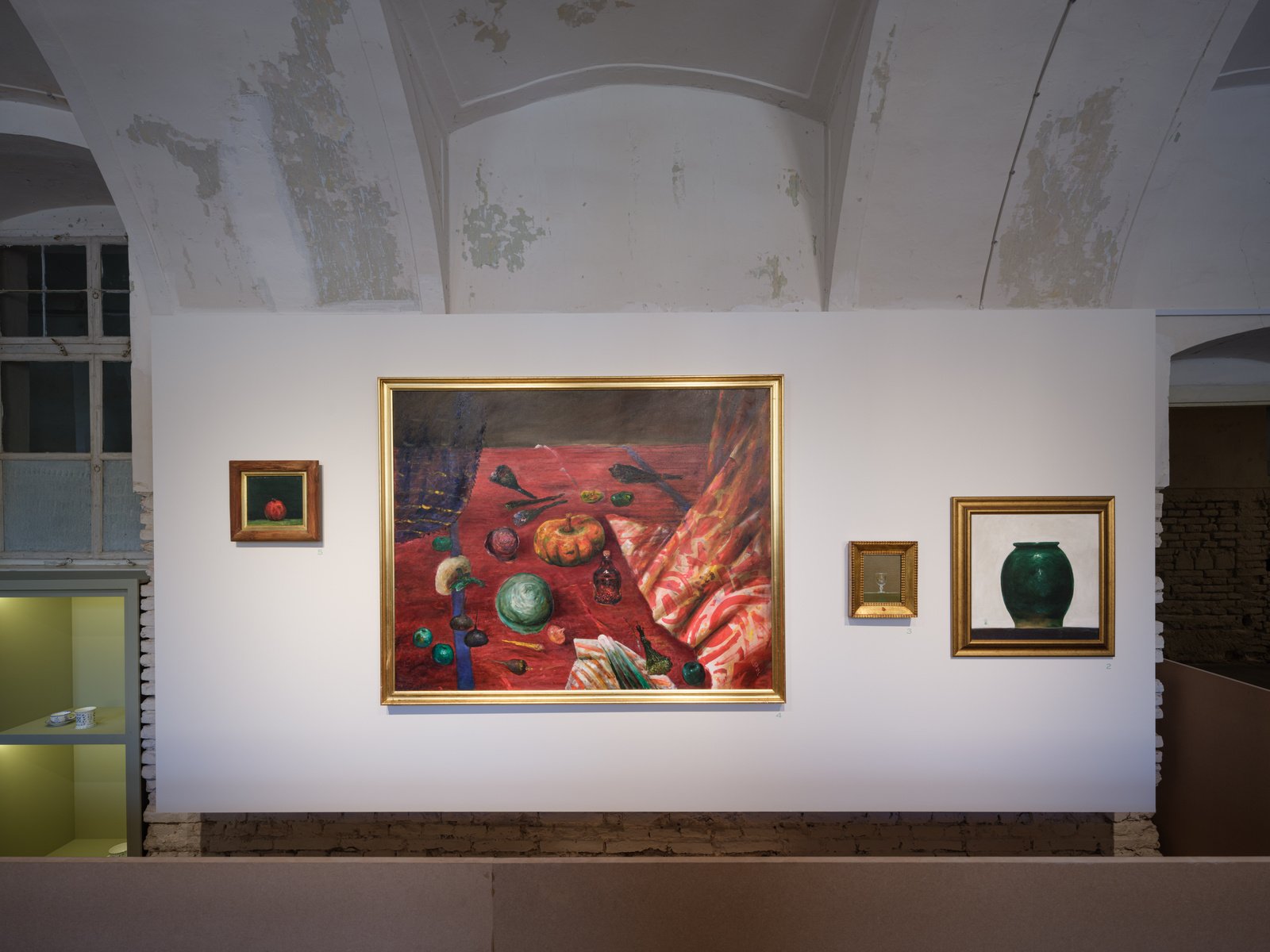
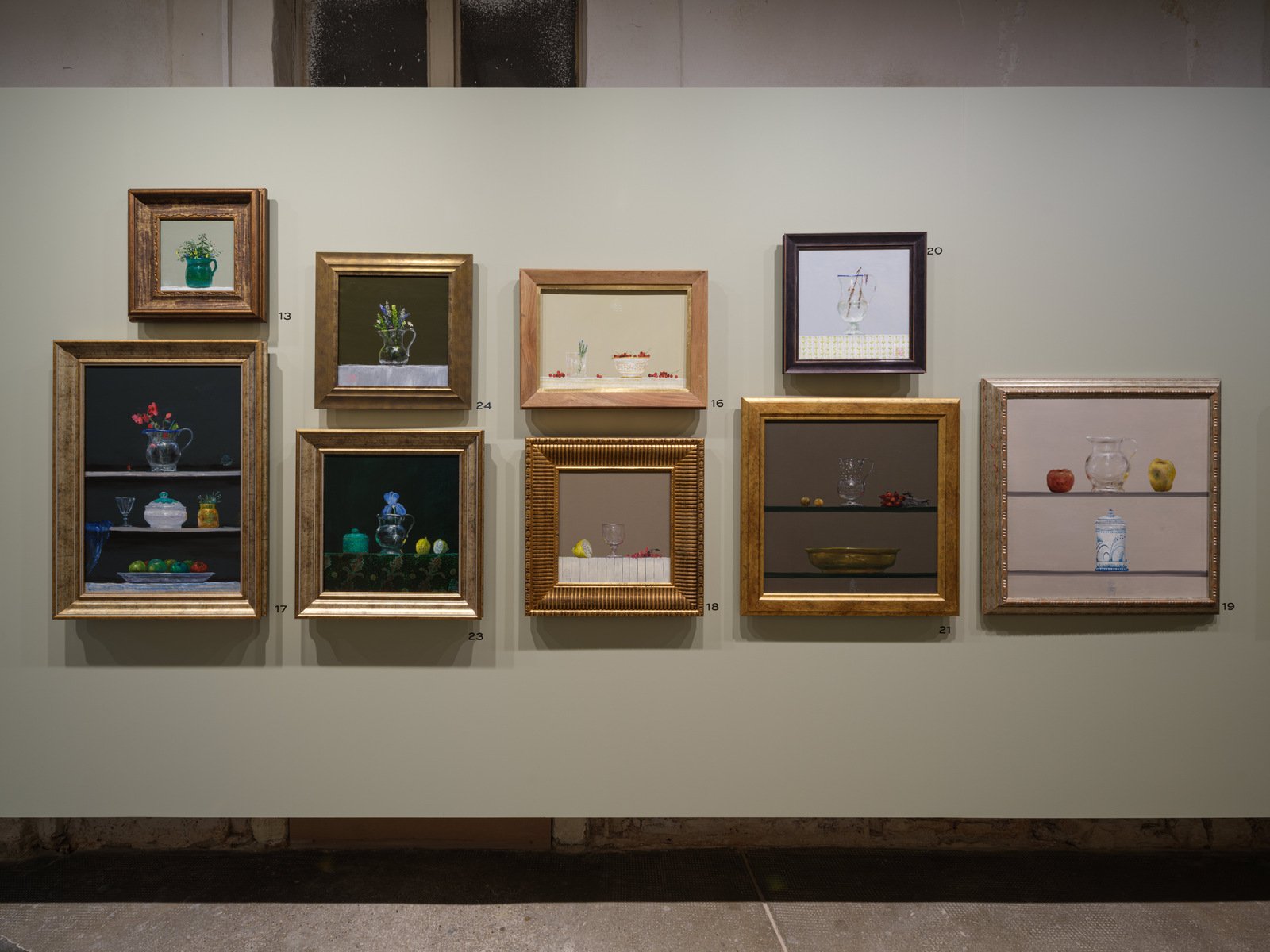
Hospitality – another principle central to Câlția’s world – can perhaps be understood through the same logic. It means the practical construction of relations: opening a house, preparing something, sharing knowledge, making room for somebody else. Curiously, one finds this same care and attention to detail extended to Câlția’s treatment of still lifes, objects elevated to artifacts and granted the same status as human subjects. Yellow Flower (2018) is a case in point: the oil painting depicts a deep blue vase placed on a red surface against a brown background, holding a yellow dandelion and green leaves with pinkish buds. The background dominates the canvas, much as it does in Câlția’s scenes involving humans and animals. It seems that all of them – objects, people, fauna – inhabit the same space, and are granted the same gravitas and dignity, the same agency and meaning.
This distinction also seems fundamental to the curatorial work of Liviana Dan, whose long collaboration with Câlția plays an important role in how his work is contextualized. Dan is herself a significant figure in Romanian contemporary art. Despite having worked within museums for decades, she still emphasizes the underground/countercultural roots of her approach. Her institutional practice consistently attempted to push museums away from linear and self-confirming accounts of art history, introducing contemporary practices and artists associated with experimental or oppositional practices. Her treatment of Câlția’s work resists the easy temptation to turn him into a monument, although he could readily have been presented as such, given his substantial following, firmly established reputation, and widespread appreciation within Romania.
In the exhibition catalogue, Dan writes that Câlția “projects a future in thinking about the past.” The formulation is particularly useful because it separates his attention to tradition from nostalgia. The past in his work is not necessarily a place to which one should return. It is material that remains available for thinking about how to inhabit the present and construct a future. Painting, in Dan’s interpretation, becomes a “refuge of imagination,” but not an escape from reality.
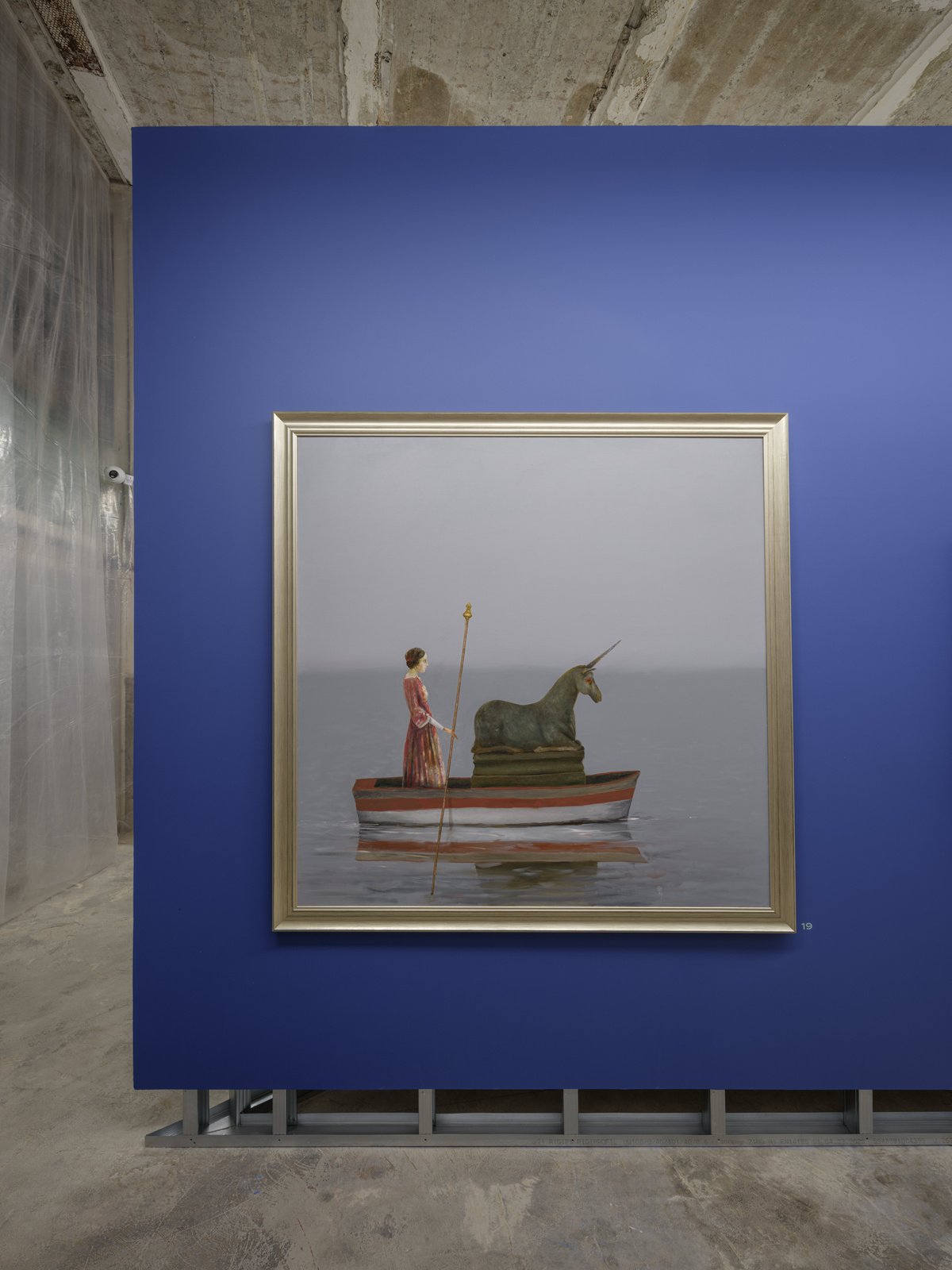
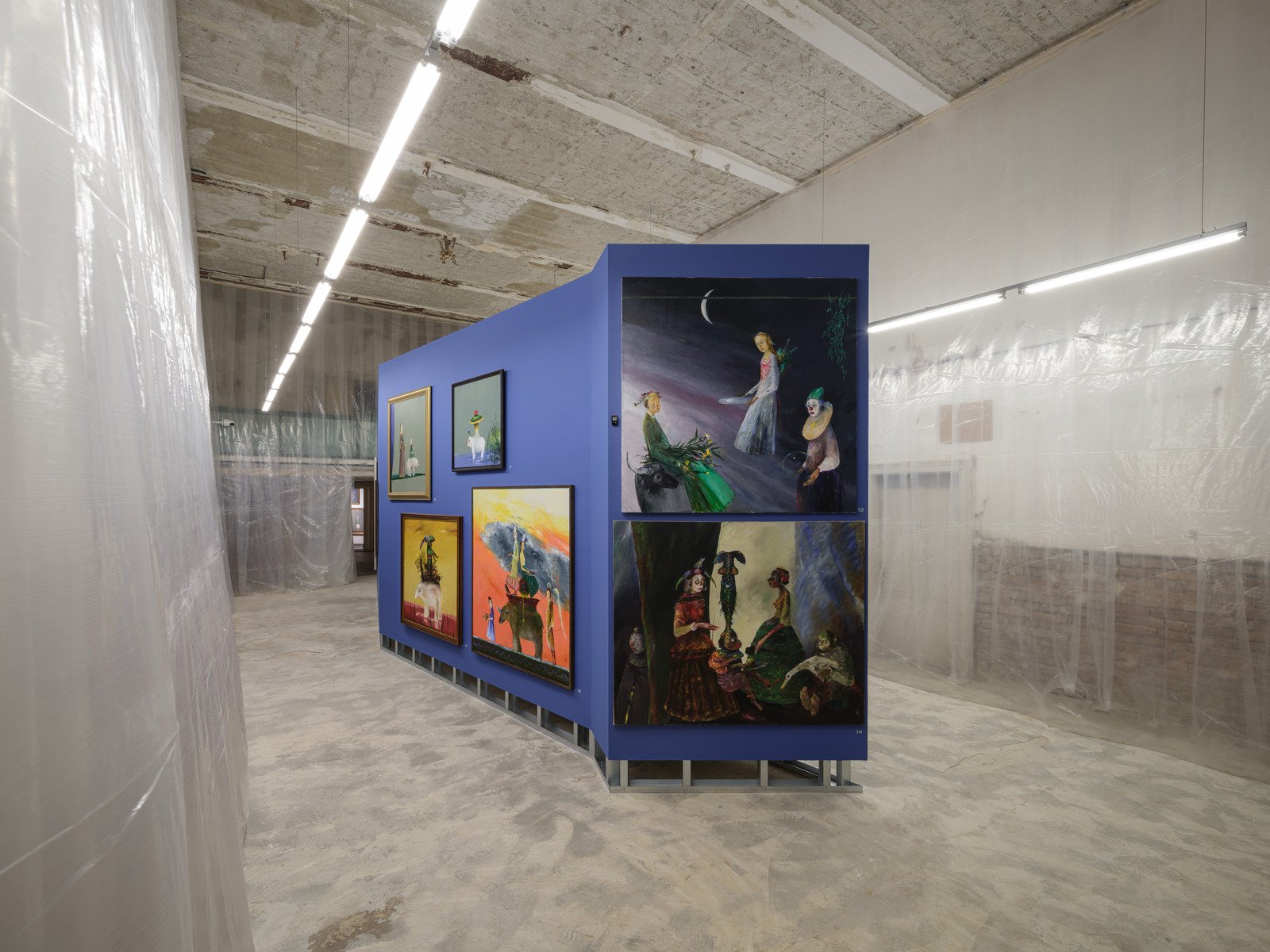
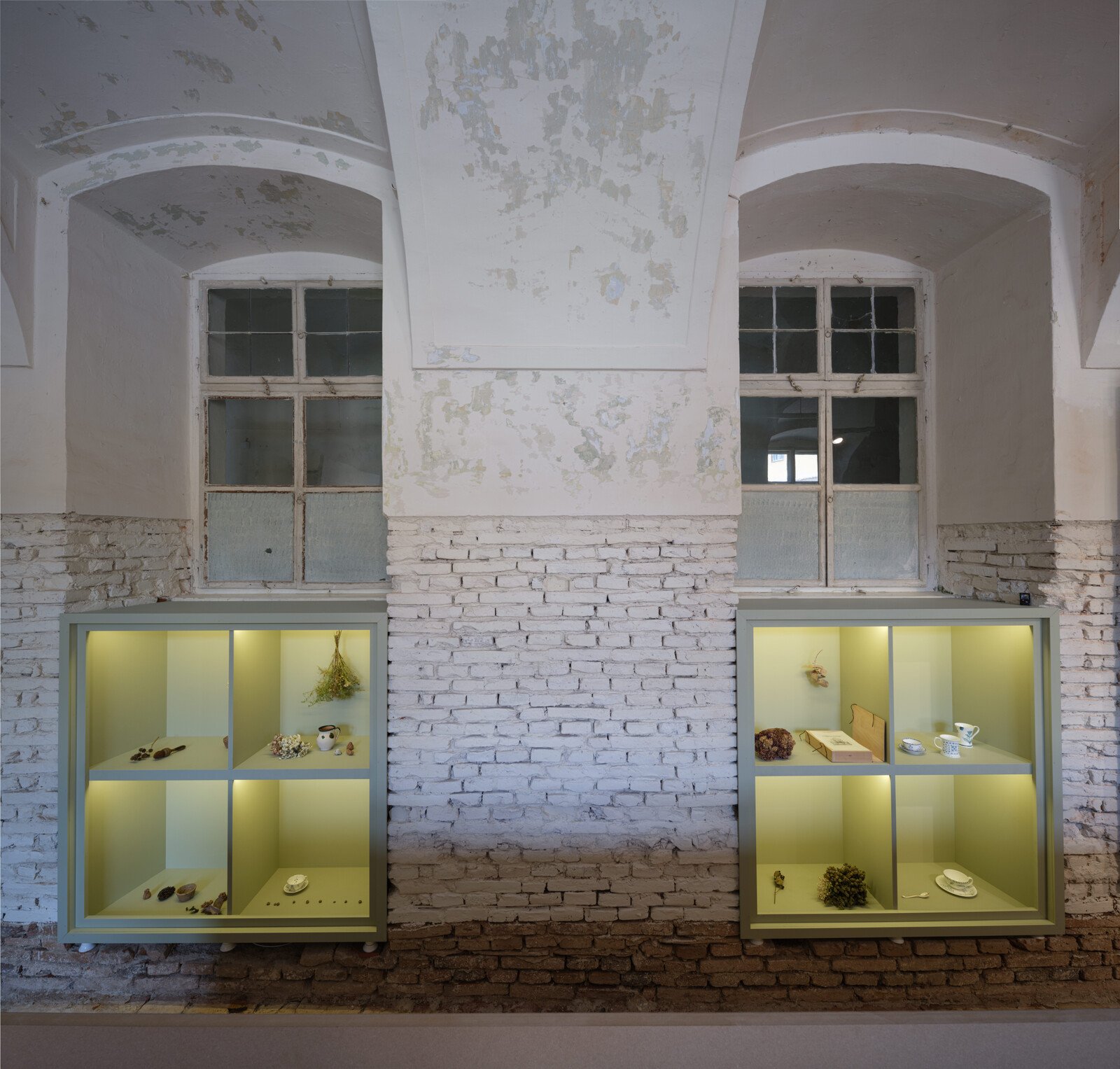
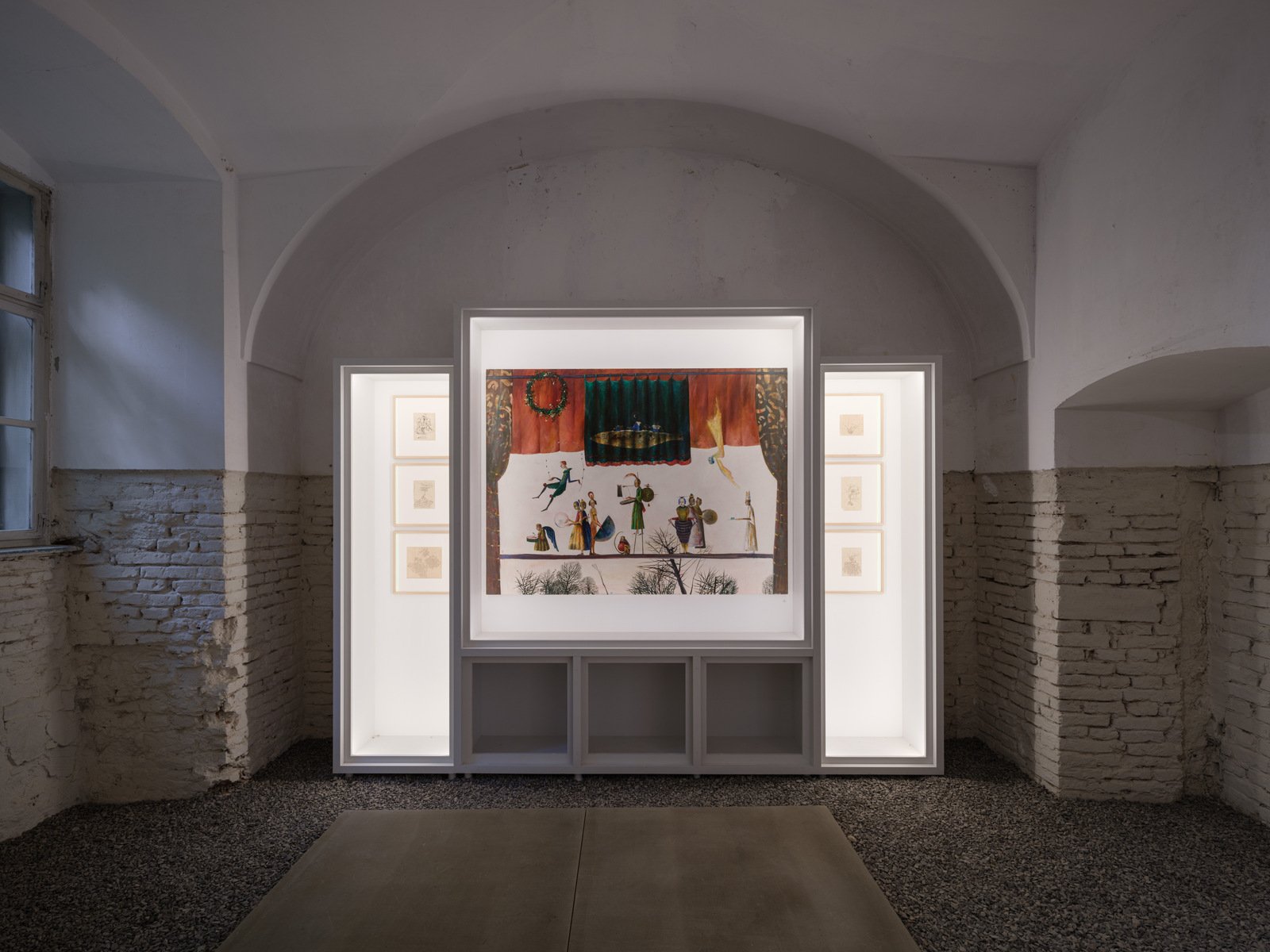
The more one learns about the physical environment surrounding the paintings, the more their apparently invented universe begins to acquire real life equivalents. For example, a monkey that frequently appears in Câlția’s paintings is also present in the Brukenthal collection in the aforementioned Exotic Animals, along with a blue and red macaw and a crested crane. Obviously, it is not an animal native to Transylvania, and yet, as an image has been present there for centuries through collecting, representation, repetition, and memory, something geographically foreign can become part of a local visual vocabulary.
This makes the question of what counts as “local” considerably more complicated. Locality does not necessarily require origin. An animal can become local through its image; an object can arrive from elsewhere and accumulate stories; a technique can travel and then be transmitted for generations. A landscape can produce memories shared by people who never were its guests.
Perhaps this is where the political potential of Câlția’s apparently traditional universe becomes most interesting. His work undoubtedly grows from a particular place, but being rooted does not have to mean being enclosed.”Câlția may be considered national but never nationalist.”[2] The more closely one looks at what constitutes this locality, the more heterogeneous it becomes: plants and paintings, imported images and inherited techniques, neighbours’ knowledge, childhood memories, labour, stories, houses, and objects accumulated over centuries.
Transylvania / Extravaganza makes these connections visible without resolving them into a single identity. Instead of asking what Câlția’s paintings symbolize, it might be equally illuminating to ask what kinds of relationships they preserve. Seen this way, his strange painted world is neither an escape into fantasy nor a nostalgic image of an “authentic” national past. It is a world constructed through attention – to objects, landscapes, knowledge, and people – and through the long process by which things become familiar enough to be loved.
[1] The exhibition attracted more than 17,000 visitors, confirming the success of the artist’s ambitions. Source: https://www.turnulsfatului.ro/2026/08/17/peste-17-000-de-vizitatori-la-expozitia-transilvania-extravaganza-stefan-caltia-doneaza-o-lucrare-muzeului-national-brukenthal/ (last accessed: 08.09.2026)
[2] Authors’ own notes, based on a conversation with Liviana Dan during the tour of the exhibition.
Artist: Ștefan Câlția
Curator: Liviana Dan
Exhibition Title: Transilvania | Extravaganza
Venue: Ursulines Monastery (34–36 General Magheru Street, Sibiu)
Place (Country/Location): Sibiu, Romania
Dates: June 19 – August 16, 2026