
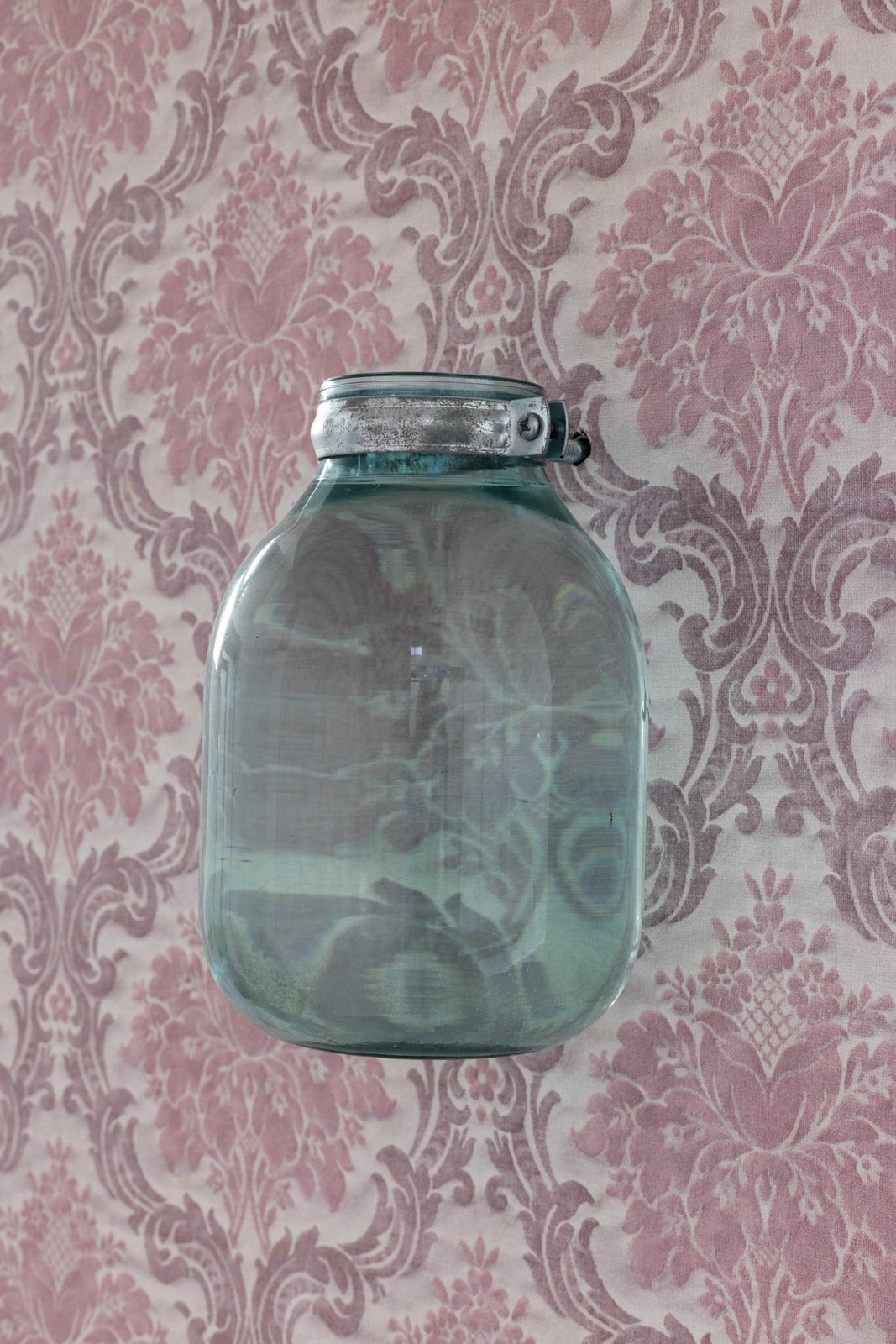
Edd Schouten
At the center of Luftslott: The Phenomenon of Dagne Daudere lies a simple but disquieting condition: the moment when an idea begins to outweigh reality. The exhibition takes as its point of departure the figure of Mr. Dauders, a man who has been married three times to women all named Dagne, and who, through repetition, begins to construct an image of what “Dagne Daudere” should be. What emerges is not a person, but an ideal, a figure shaped through expectation, projection, and refinement. With each attempt, the distance between the real individual and the imagined Dagne widens, until the idea itself takes precedence.
In this sense, “Dagne Daudere” becomes less a character than a phenomenon, an example of how a constructed image can acquire a kind of autonomy. The real Dagne is gradually reduced to a surface onto which this ideal is projected, while the imagined version gains clarity, density, and authority. The exhibition draws on this condition to reflect on a broader tendency within contemporary life, where ideals of identity, selfhood, and perfection are continuously shaped and reinforced, often at the expense of lived experience. What begins as a personal fixation unfolds into a more general question: what happens when the representation becomes more convincing than the thing it is meant to represent?
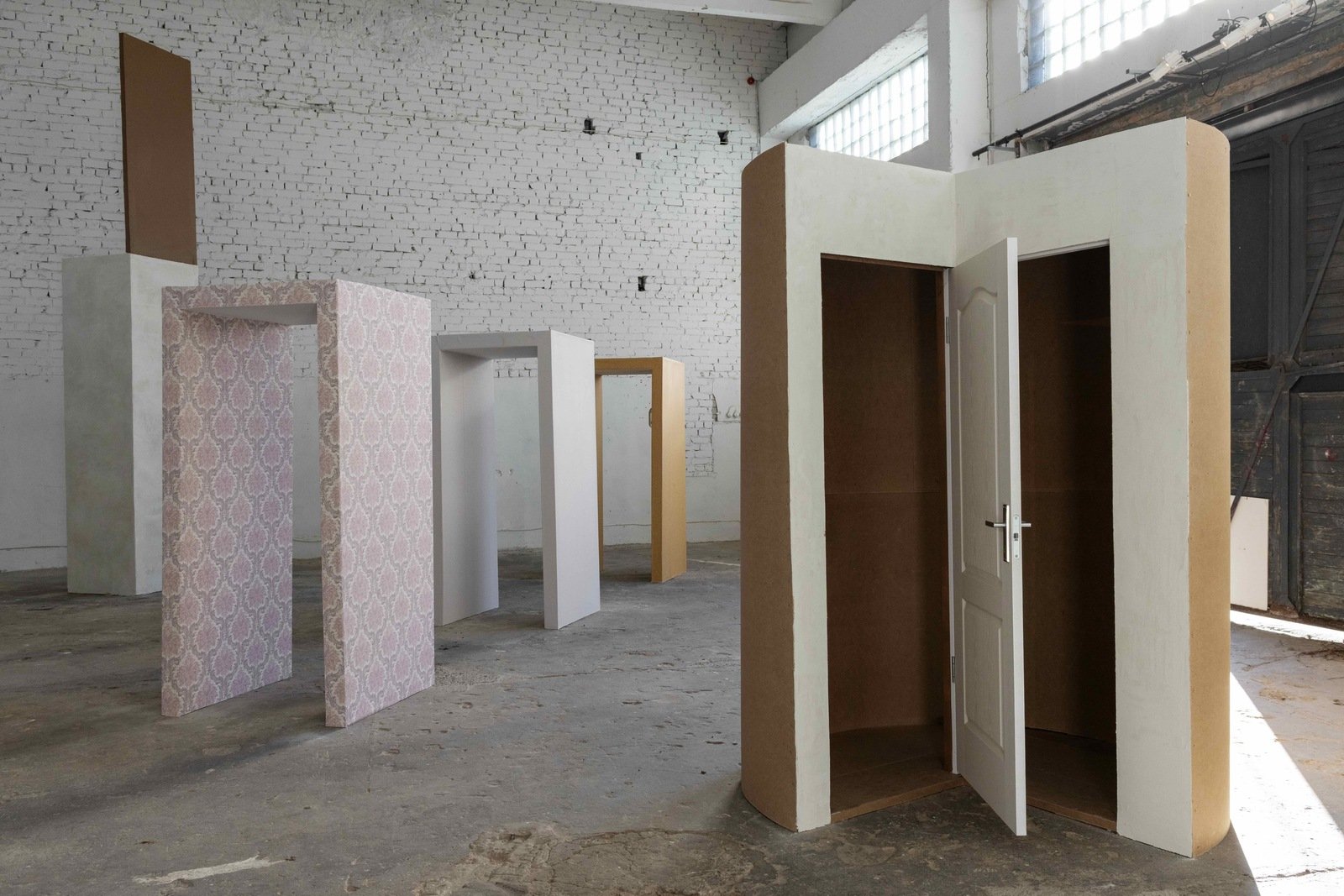
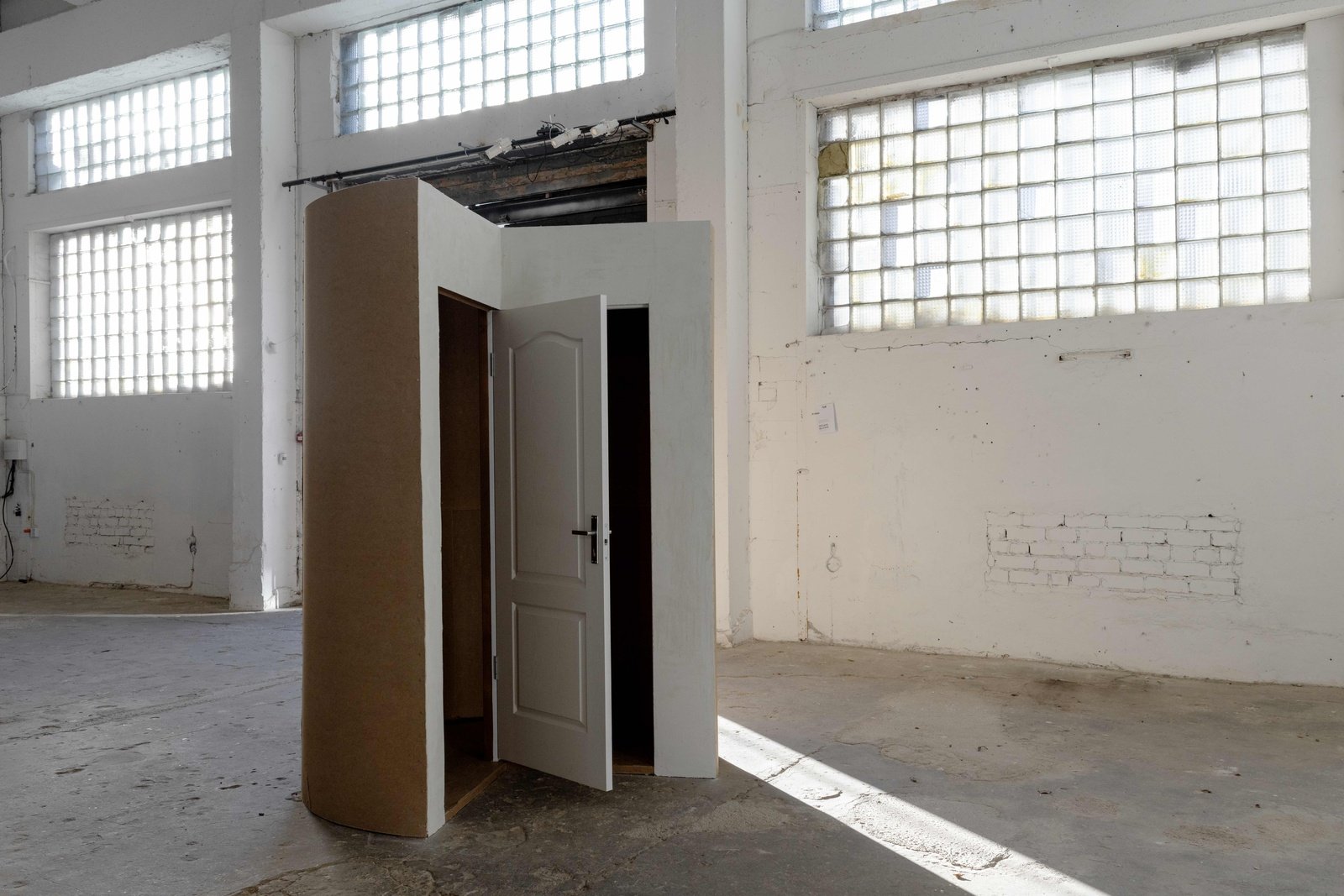
01.04 – 02.05.2026, TUR, Riga, photo: Kristīne Madjare. Image courtesy of TUR.
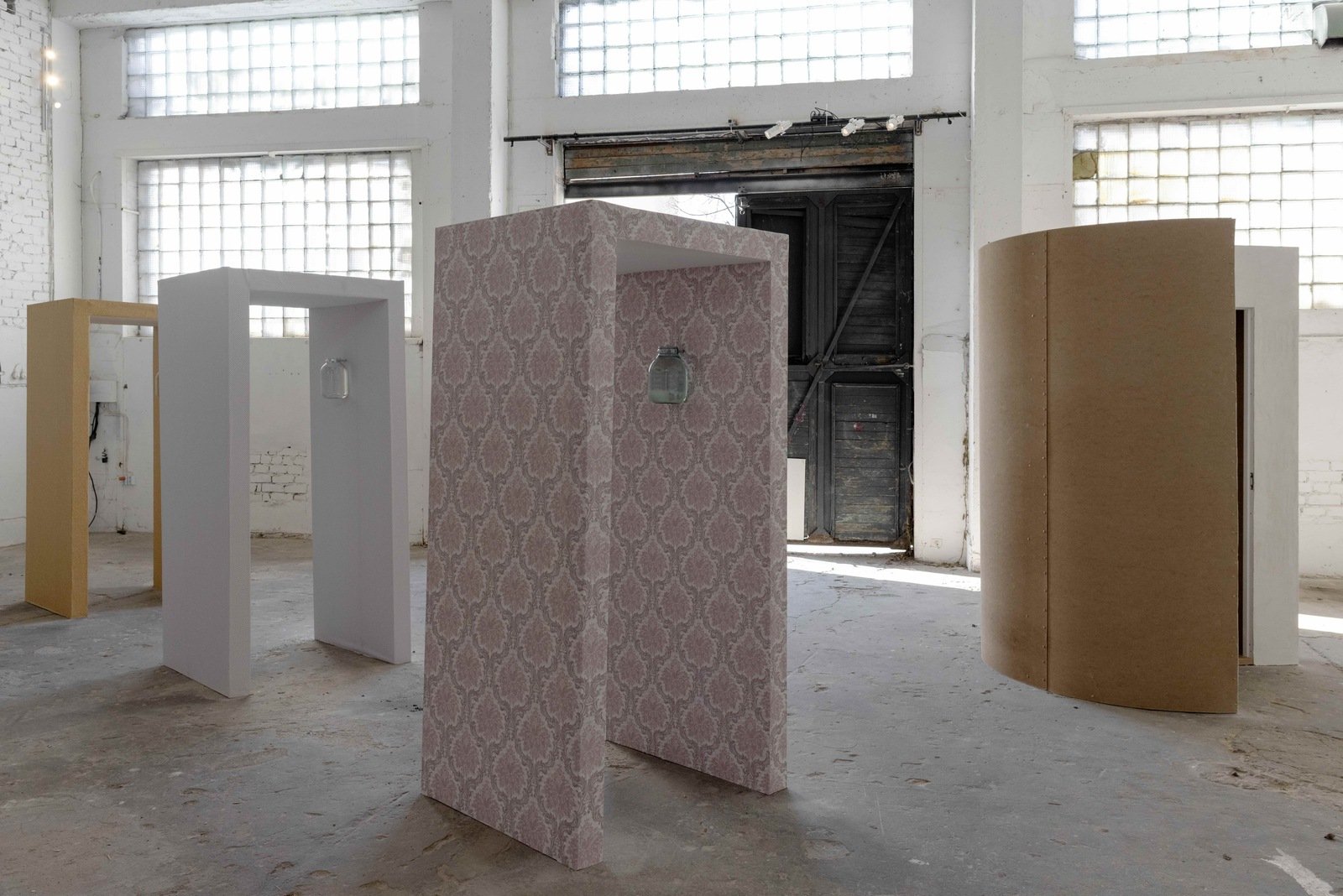
01.04 – 02.05.2026, TUR, Riga, photo: Kristīne Madjare. Image courtesy of TUR.
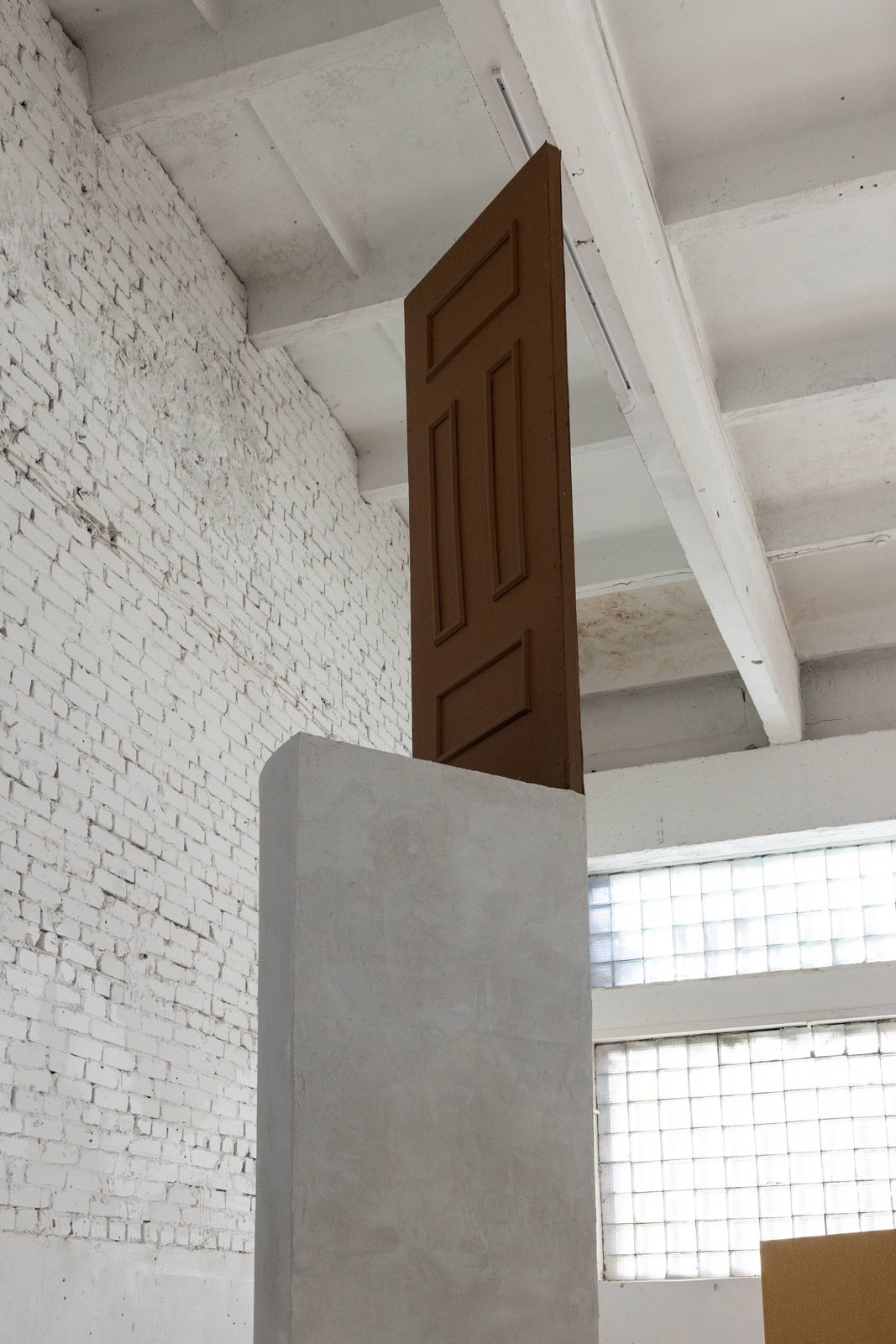
01.04 – 02.05.2026, TUR, Riga, photo: Kristīne Madjare. Image courtesy of TUR.
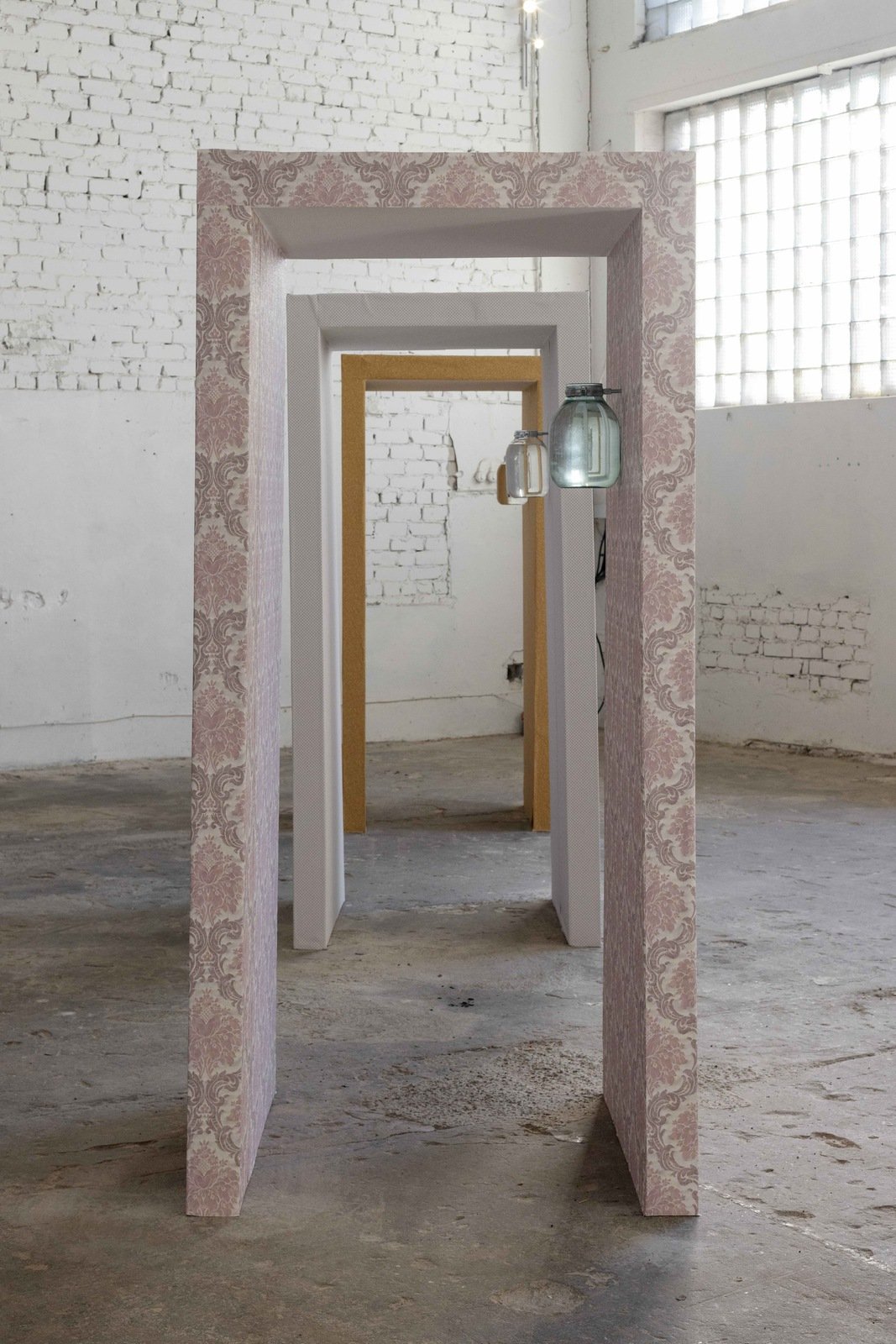
01.04 – 02.05.2026, TUR, Riga, photo: Kristīne Madjare. Image courtesy of TUR.
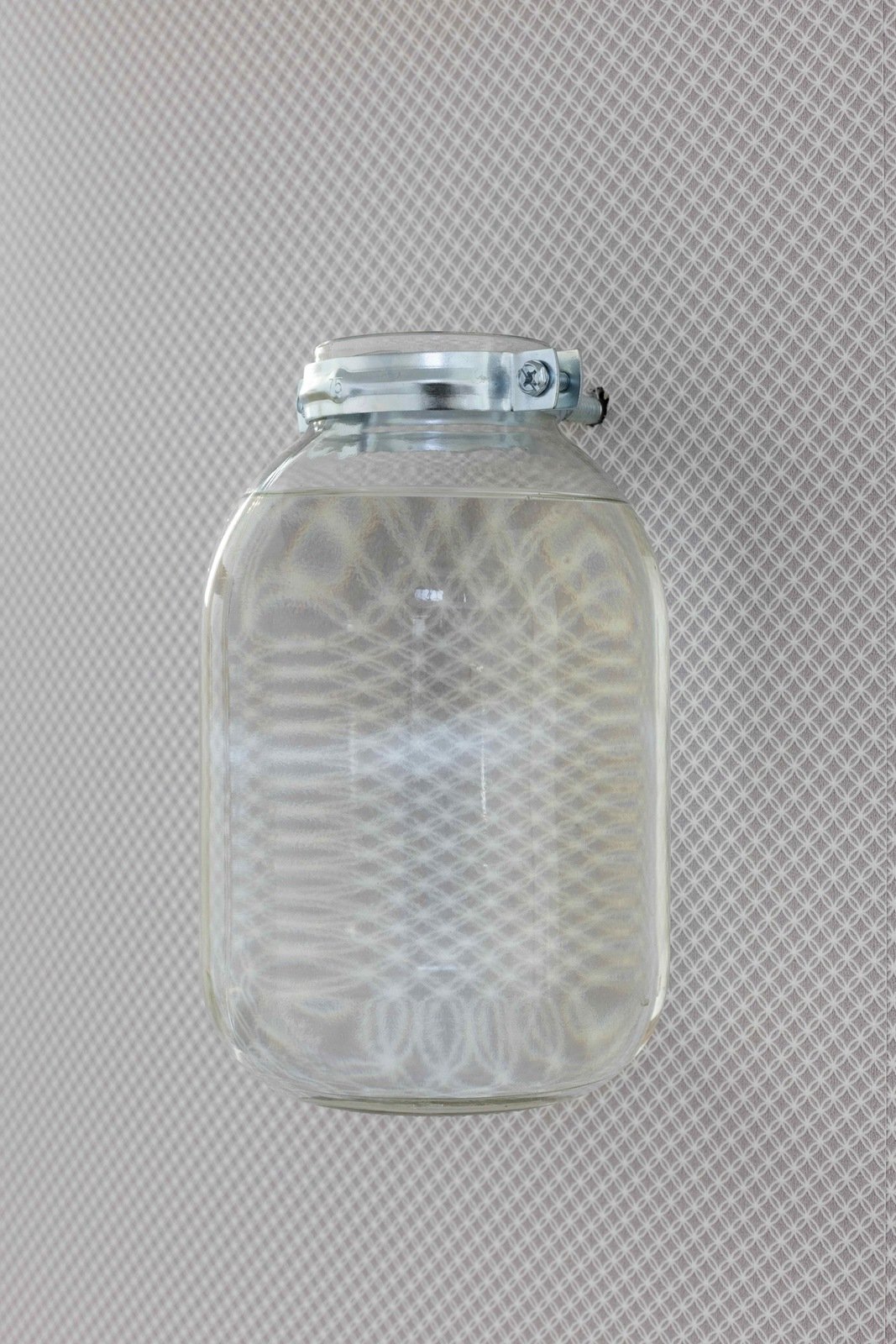
01.04 – 02.05.2026, TUR, Riga, photo: Kristīne Madjare. Image courtesy of TUR.
The space of TUR is transformed into a spatial analogue of this mental state. Architectural elements appear suspended in partial completion, structures fail to align, and gestures remain unresolved. Doors do not act as expected, forms do not fully connect, and materials seem caught between intention and execution. The installation evokes a mind in the act of constructing something that cannot be completed, where each attempt is interrupted or diverted. Within this environment, the logic of the idea persists, but its realization is continually deferred.
Luftslott, literally “air castle,” names this condition directly. It describes a structure built entirely from imagination, convincing in its coherence yet lacking a foundation in reality. The exhibition does not seek to resolve this tension, but rather inhabits the space between the belief and its collapse. What remains is a space in which the ideal continues to assert itself, even as the world around it resists, misaligns, and quietly falls out of place.
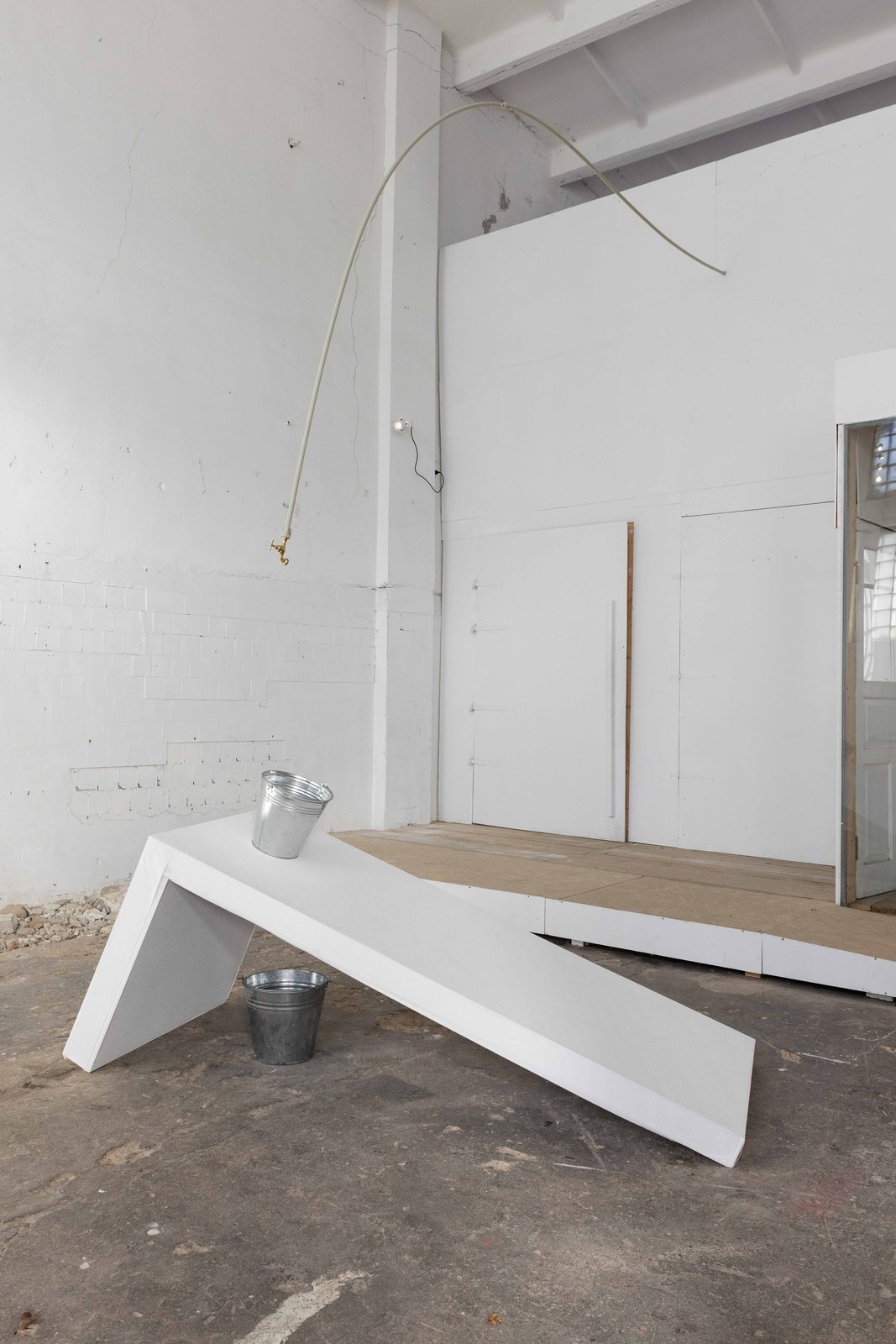
01.04 – 02.05.2026, TUR, Riga, photo: Kristīne Madjare. Image courtesy of TUR.
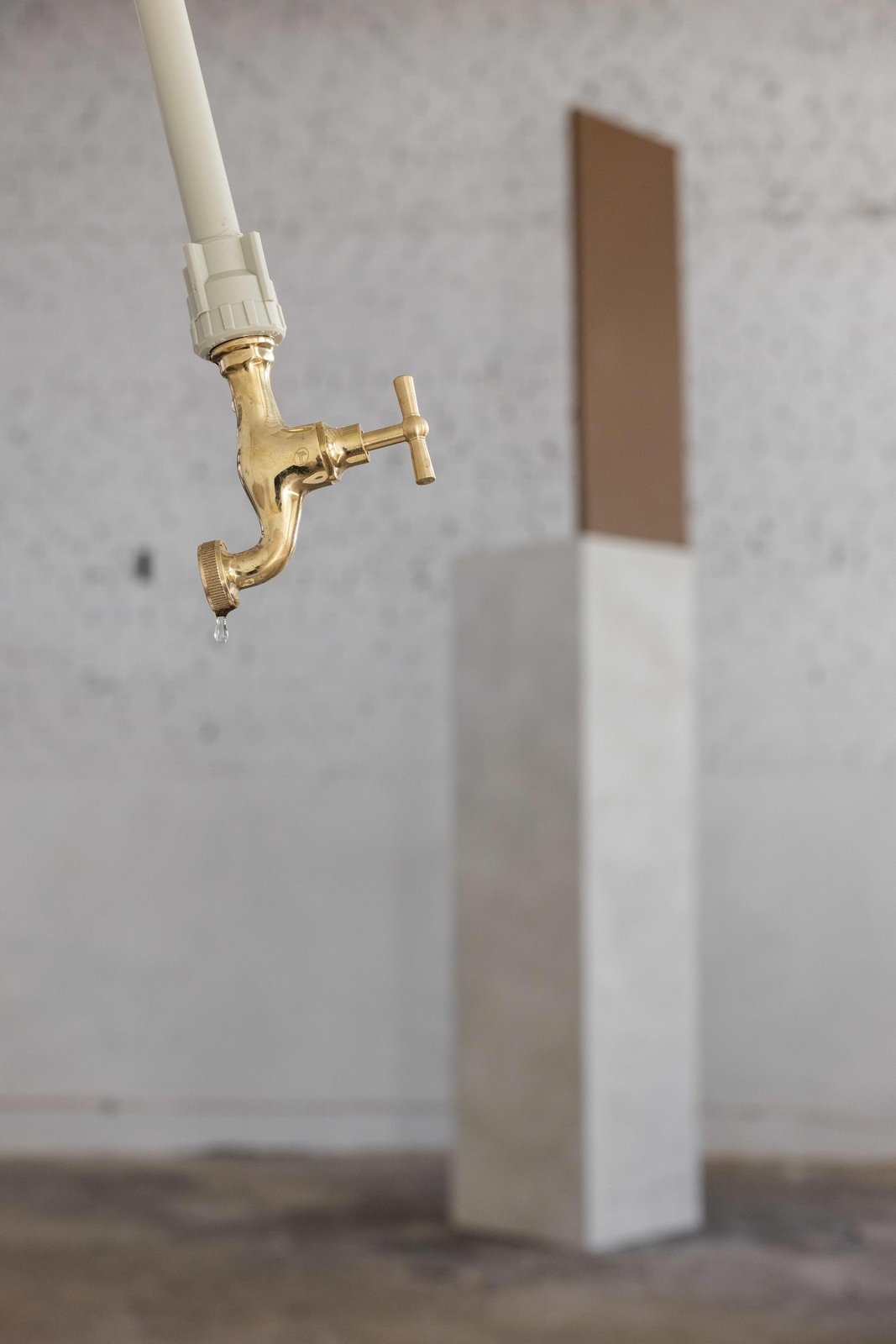
01.04 – 02.05.2026, TUR, Riga, photo: Kristīne Madjare. Image courtesy of TUR.
Krišjānis Beļavskis works across sculpture, installation, and text. His practice often takes on a theatrical or staged quality, constructing situations in which roles, expectations, and systems of value are tested through direct engagement. Since 2017, he has participated in group exhibitions and performances across Latvia, Germany, Austria, Hungary, and the United Kingdom. He holds a BA from the Sculpture Department of the Art Academy of Latvia, studied at the Academy of Fine Arts in Munich in the class of Peter Kogler, and in 2025 completed his studies at POST, an interdisciplinary MA programme. In the same year, he was awarded the SPOT Exchange residency at DAS WEISSE HAUS in Vienna.
Beļavskis’ work frequently unfolds through constructed frameworks that invite others into the process, allowing authorship, labour, and artistic intention to shift and redistribute. In one project, he invited a participant through an open call to sit in his studio and observe his working process, paying them the average hourly wage in Latvia. In another, he auctioned five of his own working days as a digital object, while elsewhere he has developed artworks that extend into contractual relationships with collaborators. These approaches can be understood as speculative or parasitical structures that attach themselves to existing systems and test their limits from within.
Across these works, Beļavskis is less concerned with producing stable objects than with setting conditions in which meaning is negotiated, displaced, or quietly destabilised. His practice often operates in a space where intention and outcome do not fully align, and where the logic of an idea begins to unfold beyond its initial premise. Within this context, Luftslott: The Phenomenon of Dagne Daudere continues his ongoing interest in how constructed ideas take hold, and how they begin to shape, distort, or override the realities they are meant to describe.
Artist: Krišjānis Beļavskis
Exhibition Title: Luftslott: The Phenomenon of Dagne Daudere
Curated by: Edd Schouten
Text by: Edd Schouten
Venue: TUR
Place (Country/Location): Riga, Latvia
Dates: 01.04 — 02.05.2026
Photos: Kristīne Madjare. Images courtesy of TUR.