
Maria Vtorushyna
In a world where everything is burning, absurdity stops being a philosophical proposition and becomes the essence of daily reality. Alina Kleytman has nailed the genre with her ability to capture absurdity precisely, and to stay satirical while working with the contexts of war and social, gendered violence. Kleytman’s new body of work, Trigger Warning, a set of three videos (Сradle of Democracy; Thank you, Daddy!; Are You Tired?), was first launched this summer at Kunstverein Friedrichshafen, traveling next to steirischer herbst’26 Red Flags, and finally was presented in Kleytman’s solo exhibition Trigger Warning at the Yermilov Centre.
Pornography and caricature have always gone hand in hand with information warfare. From a feminist perspective, this combination is so unbearable that a post-ironic take helps us grasp at least a little of this construction. There is no actual pornography in Kleytman’s series, but if we think of mainstream porn oriented towards the male gaze as the most accessible form of pleasure and an endless archive of delusion, inherently violent toward the body (and simultaneously capable of being violent toward the body of the person consuming it), then porn is the method here.
The key characters of the new set of work – baby democracy, the interrogator, and the sex worker – are all played by the artist herself. Being the worst – that is, identifying a phenomenon’s most negative manifestation, exaggerating it until it becomes grotesque, and then performing it – has long been an important strategy in Kleytman’s practice. Born and raised in Kharkiv and often exhibiting there, for these works, Kleytman draws some of this particular “worst” from the dynamics of the relationship between Europe and Ukraine. This itching West-to-East stretch of power dynamics is examined by the artist through gender and sexuality. Drawing on OnlyFans imagery and BDSM aesthetics, these works give a distinctly de Sadean tradition of critiquing power and morality an internet-vernacular glow-up.
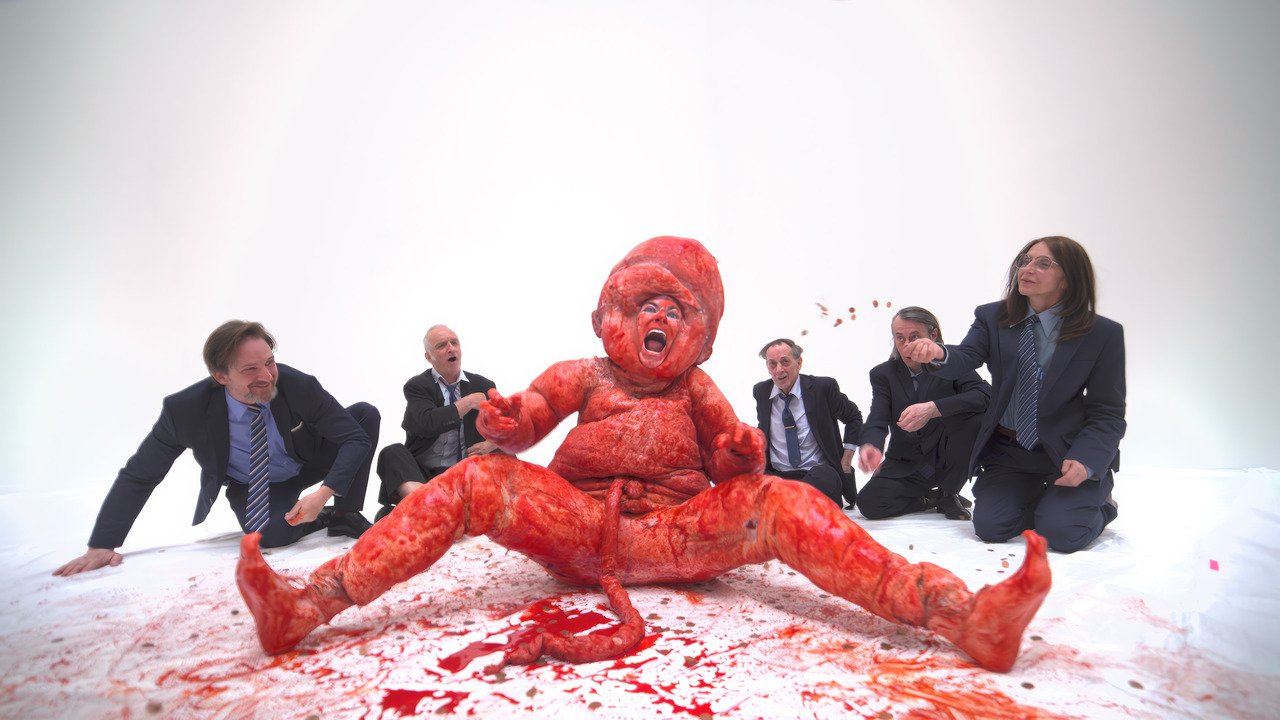
In Cradle of Democracy, an angry newborn baby democracy hysterically whips the Coalition of the Willing with its umbilical cord. The video opens with a shot of an empty white space where people in suits applaud, cheerfully welcoming the newborn. A gigantic infant, covered in blood and feces, appears on the floor. The sound of the baby’s hysterical crying joins the applause and soon fills the entire space. Over the course of several minutes, the sterile, white floor and the faces of the applauding people become covered in blood, smeared around by the baby. Paying no attention to the screams that are growing louder, the coalition congratulates the newborn by tossing Euro coins, covered in blood, that land on the floor with a ringing clatter. Constructed around a deliberately blunt metaphor, the work examines performative solidarity. Here, the emotional needs of the infant are completely neglected, empathy is off the table. Yet the newborn still receives a form of support – financial donations, or rather, a handful of coins that serve more as a symbol of funding than as anything with actual purchasing power. Is this a mockery, or an investment that must give a percentage of returns? The topic of collecting symbolic coins reappears later in the series, with the sex worker, who is focused on raising tokens for the “Independence of Ukraine.”
According to Kleytman herself, who travelled to Kharkiv to open her exhibition at the Yermilov Centre, curated by Nataliia Ivanova, the statement was meant to provoke both Ukrainian and European audiences, to stir a sense of pride and determination to act independently (as a “real grown-up” democracy) among the former, while reminding the latter of the not-so-well-hidden postcolonial logic underlying their actions. The Kyiv–Kharkiv train, which was the artist’s route to the Yermilov Centre, had to stop several times on this most recent journey to evacuate passengers as russian attacks using AI-guided jet drones intensified.
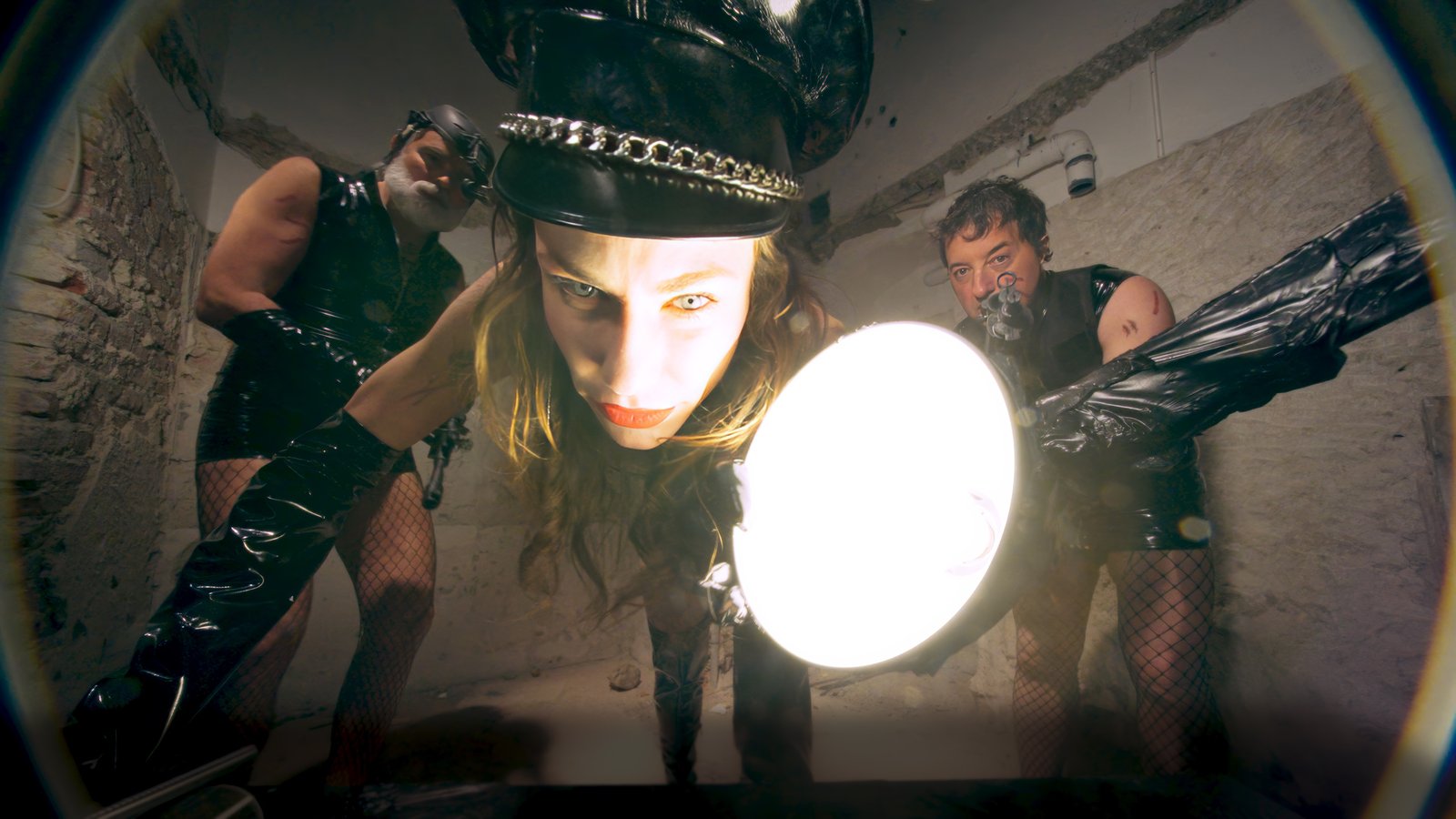
Dressed as a domme police officer, the artist interrogates the viewer in Are you Tired?. She tries to find out whether the viewer “supports the war,” and whether they “believe in victory.” And if yes, which victory exactly, and for how long have they believed this: “Maybe you only started believing in victory a month ago?” The key question of this farce is whether the viewer stands with the “good” ones or the “bad” ones. No further definitions are provided in the domme’s monologue, as if that part is self-explanatory and gives rise to no further metaethical hesitations. At gunpoint, with two slaves in latex holding assault rifles, “the rights must go right,” while “the lefts go left.” At the end, the viewer-interrogatee is asked to sign a blank sheet of paper.
The interrogation in the video grows increasingly absurd and excruciating, with no safe word to end it. Moreover, the latex uniform and weapons are too semiotically close, if not directly linked, to Tom of Finland’s troubling Nazi fetish imagery, making it hard for me to read this scene more simply as BDSM play. Can a costume rooted in consensual practices of BDSM come to signify its opposite? Given Kleytman’s engagement with Tom of Finland’s legacy, I think so. The word fascism itself has become detached from its meaning, functioning almost as a design object whose political significance shifts with context. The terrifying aspect of Are You Tired? is that the viewer-interrogatee must decide themselves to whom the label applies. In the context of russia’s war against Ukraine, the term’s historical urgency has been obscured by multiple manipulations. Since at least 2014, russian propaganda has exploited every sign of Ukrainian national thought to portray the entire Ukrainian population as fascist and neo-Nazi. Meanwhile, the obvious fascism of the russian state (who is also in possession of nuclear weapon(s)) itself remains subject to debate in the West, where the term fascist is applied with massive hesitation.
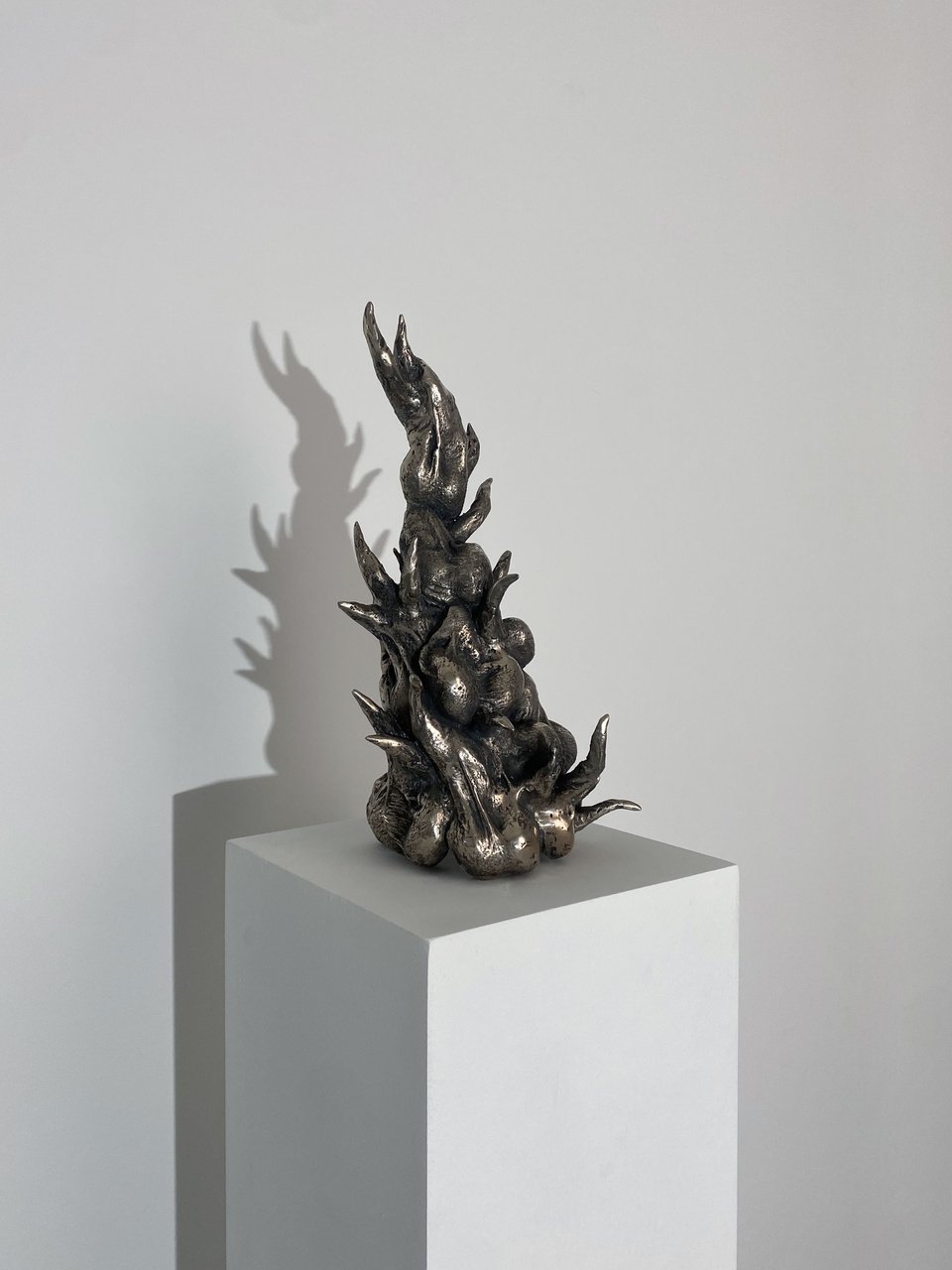
Courtesy of Gunia Nowik Gallery.
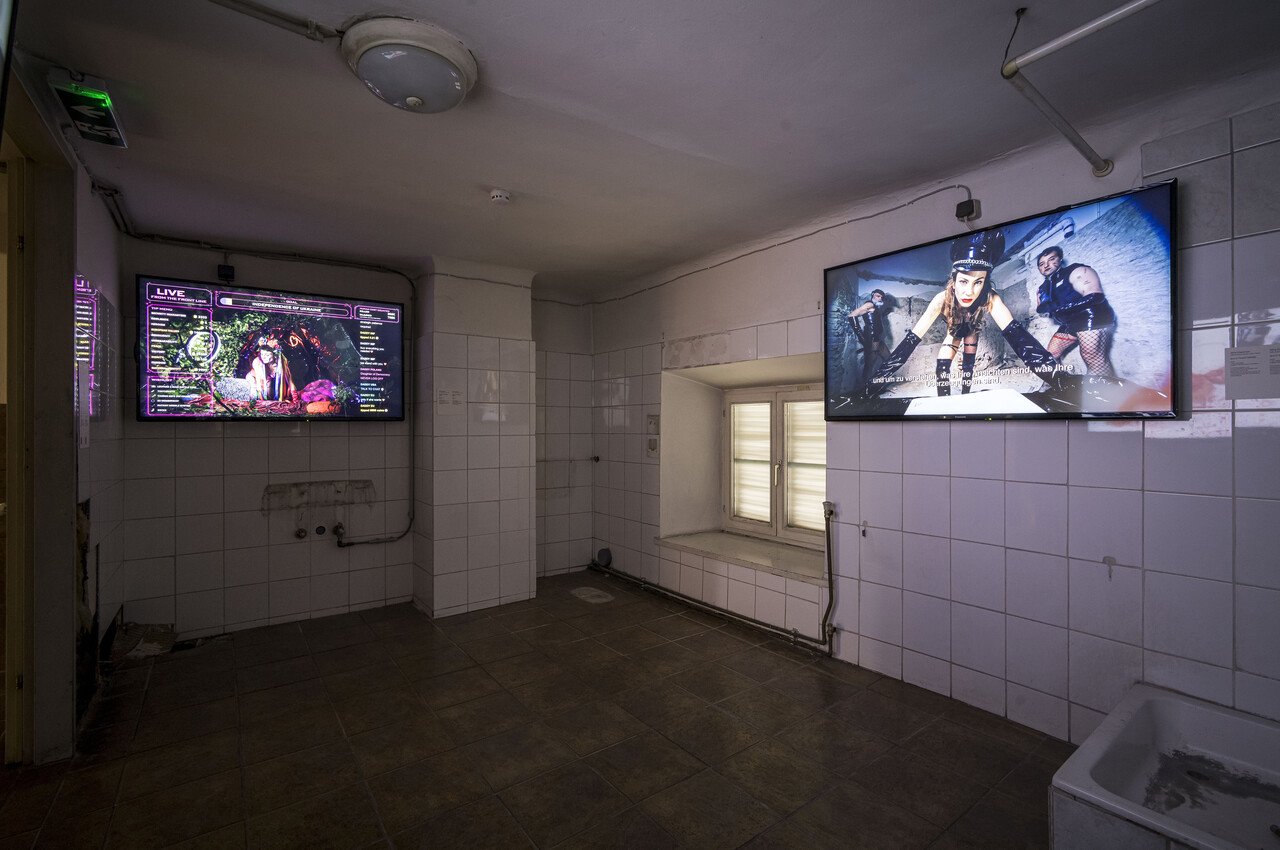
photo: steirischer herbst, Mathias Völzke. Image courtesy of steirischer herbst 2026.
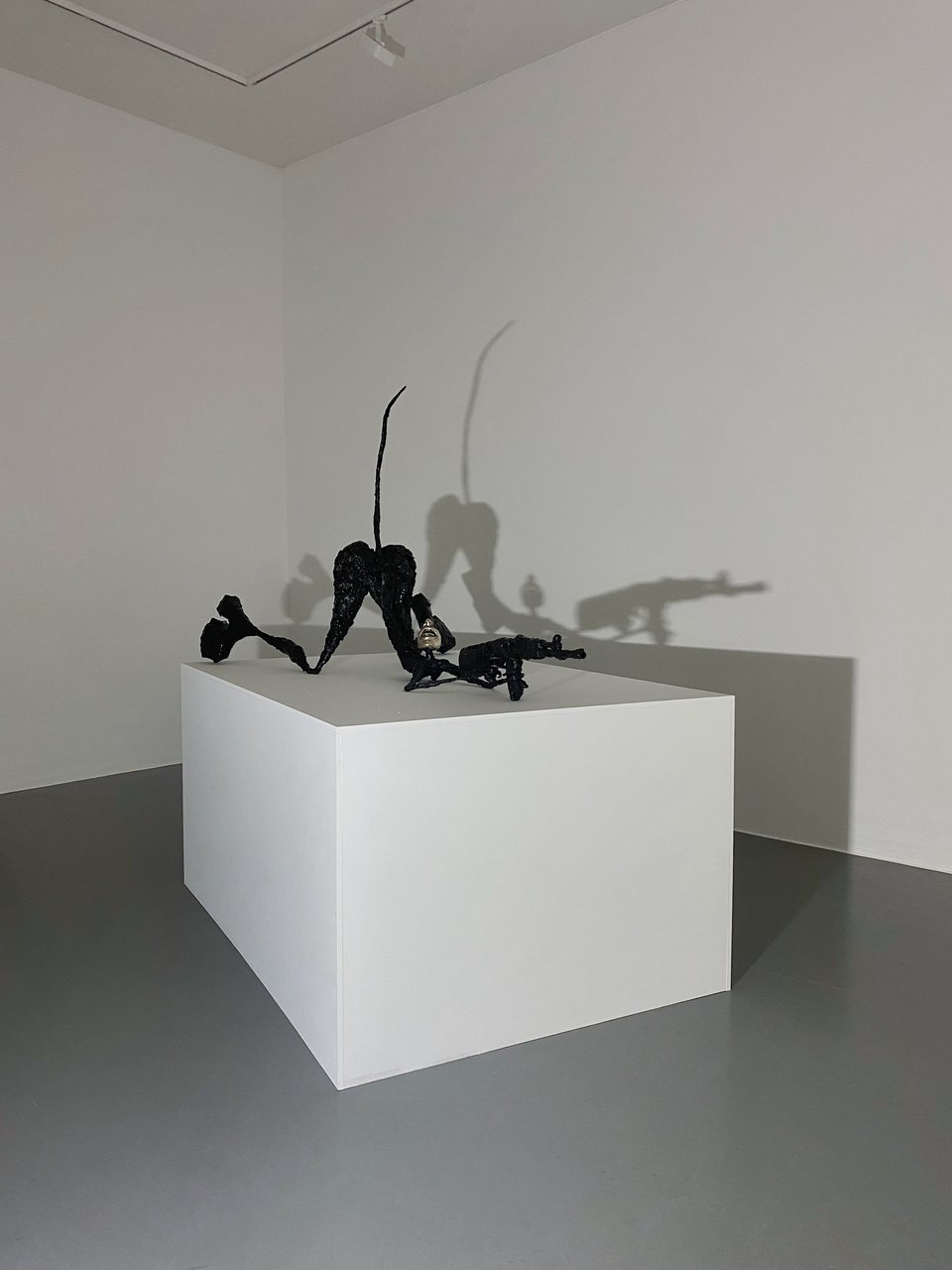
Courtesy of Gunia Nowik Gallery.
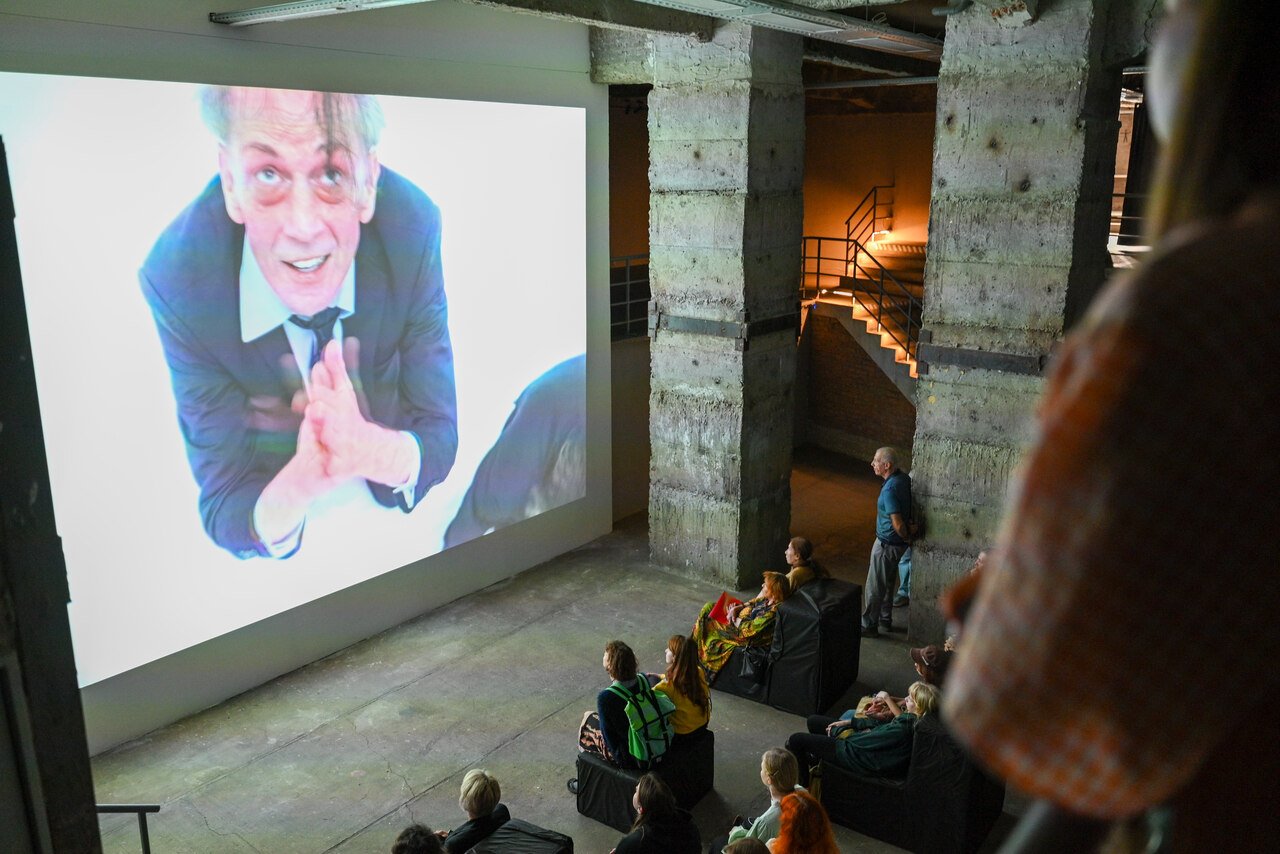
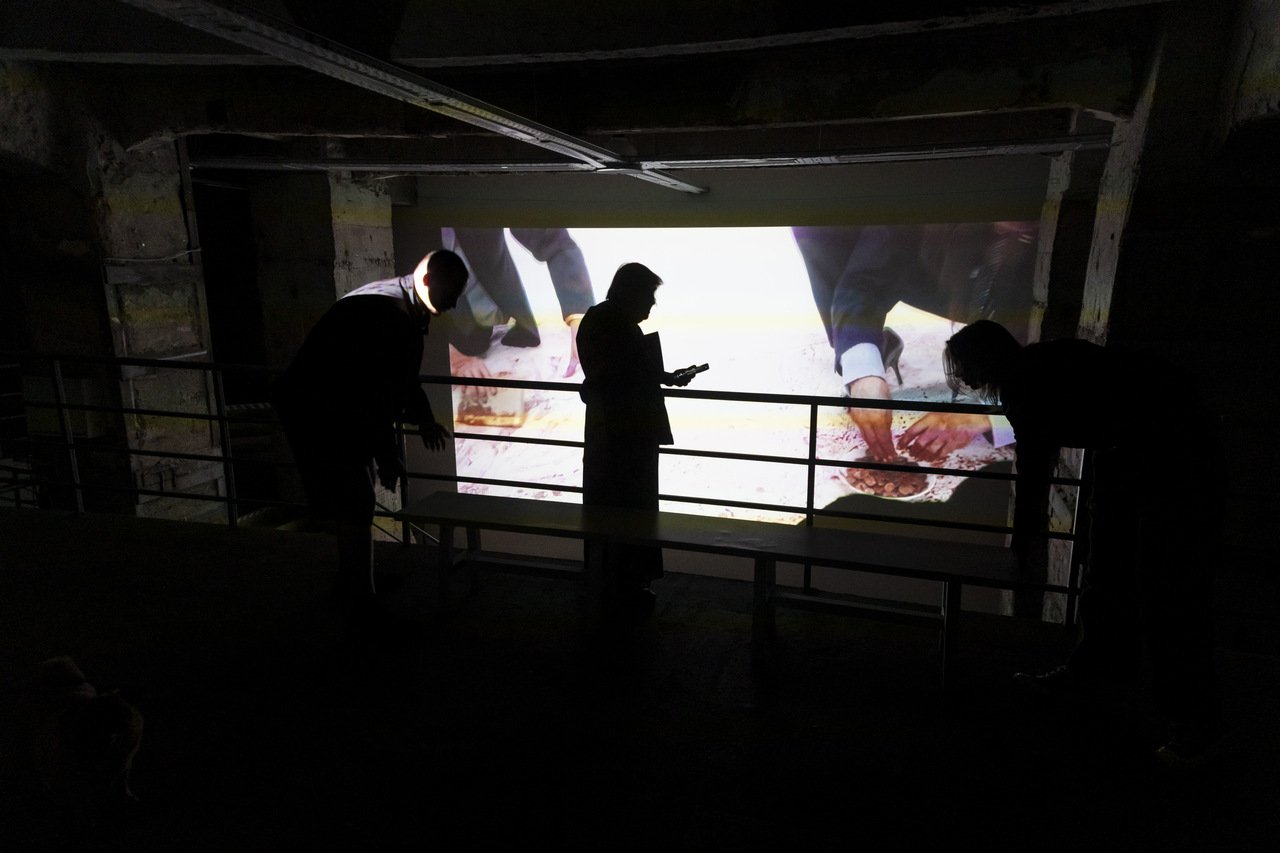
While Kunstverein Friedrichshafen presented Kleytman’s works in a precisely calculated white-cube setting, steirischer herbst and the Yermilov Centre opted for rough, underground spaces more organically aligned with her artistic practice. Located in the basement of Karazin University, the Yermilov Centre has also served as a bomb shelter since 2022, giving its largely unchanged interior a dual function in wartime. In Graz, steirischer herbst screened the works in the former utility room of a 17th-century building previously housing a schnitzel restaurant – a space that, under different political circumstances, could just as easily have been a small, kinky nightclub. The curators[1] situated it at the “epicentre of local and European anxieties,” in a neighborhood where in the run-up to the municipal elections, the right-wing groups and party members started a violation campaign against its international character and foreign residents.
The basement where the interrogation takes place is as well too traumatic to be treated abstractly. Among all the possible places it might evoke, I, for one, think of the basement of Izolyatsia (the allusion might be incidental) – the international art center in Donetsk that was occupied by russian militants in 2014 and turned into a torture chamber, which has been called a “prison” since then. Although such places and Western prisons are referred to by the same word, such basements (as well as Abu Ghraib and Sednaya) have nothing to do with the development of the Western penitentiary system, which is meant to punish the individual not more harshly, but more productively. The violence inflicted in these torture chambers is aimed at destroying both body and reason.
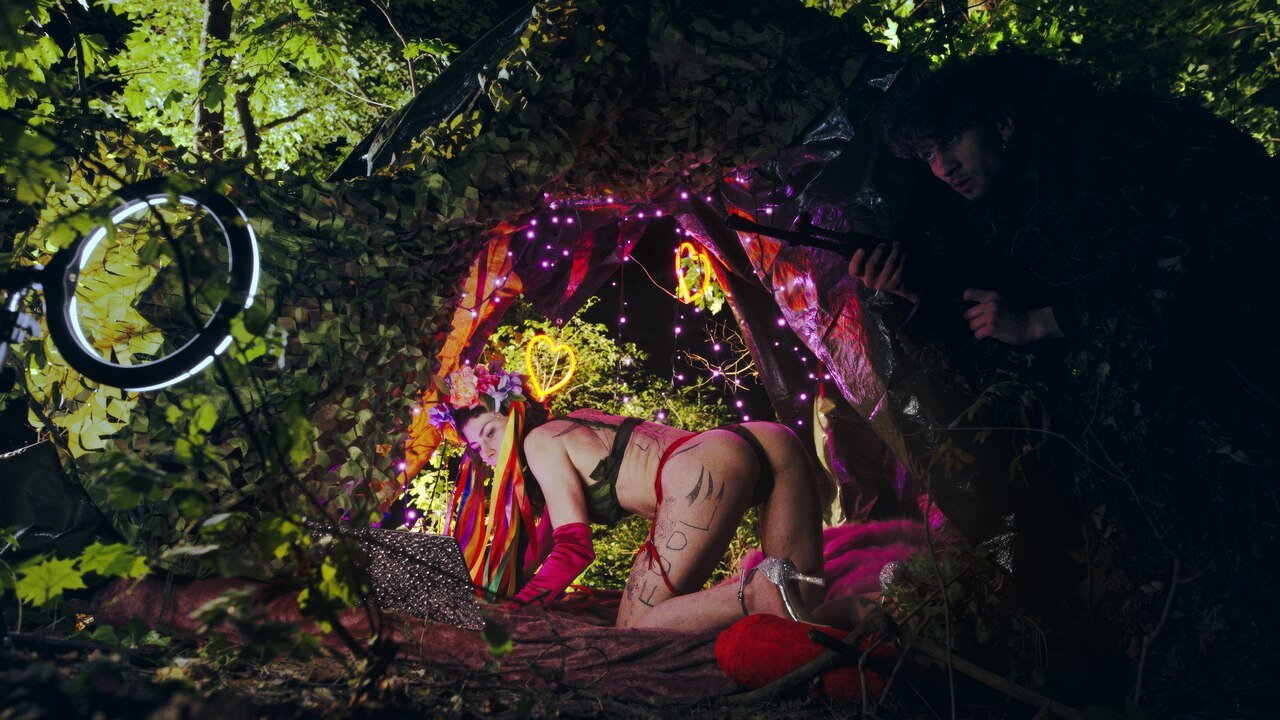
The last piece of the trilogy, Thank You Daddy!, takes a mercilessly dark look at how outspoken ethical convictions are transformed, becoming yet another resource for monetisation. Wearing lingerie and a flower crown in the colors of the Ukrainian flag, the sex worker streams from an improvised tent on the front line, framed by a gamified interface with various charts and a chatroom. The main indicator at the top of the screen is the level progress bar, which depicts the development of “Ukrainian Independence.” The artist serves top-tier cunt as she is observed by a very familiar roster of subscribers – Daddy Europe, Daddy NATO, Daddy USA, Daddy Germany, and Daddy Poland. They reward the sex worker with tokens for abstract ideas such as democracy, dignity, and peace, while funding a wishlist where anti-dandruff shampoo sits alongside Leopard tanks and NATO membership.
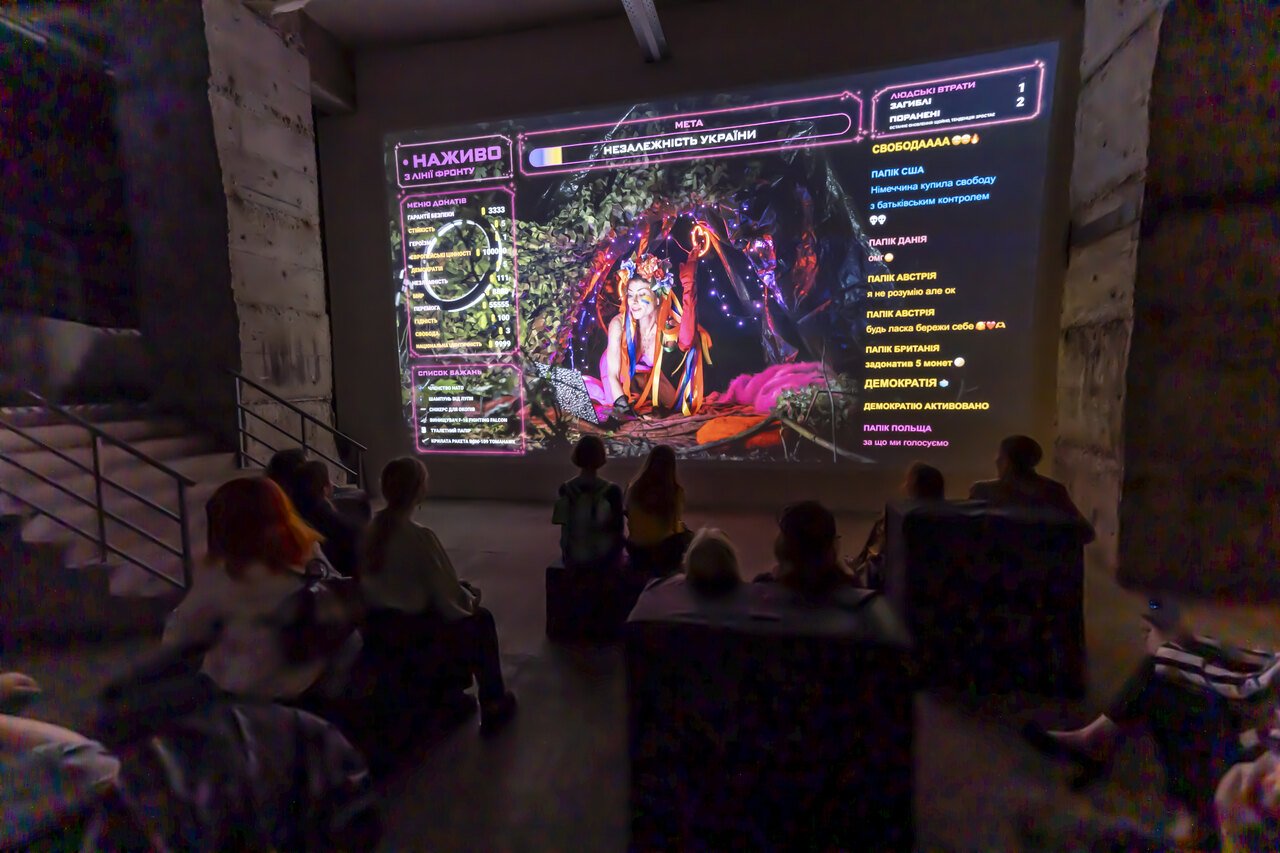
Image courtesy of Yermilov Centre.
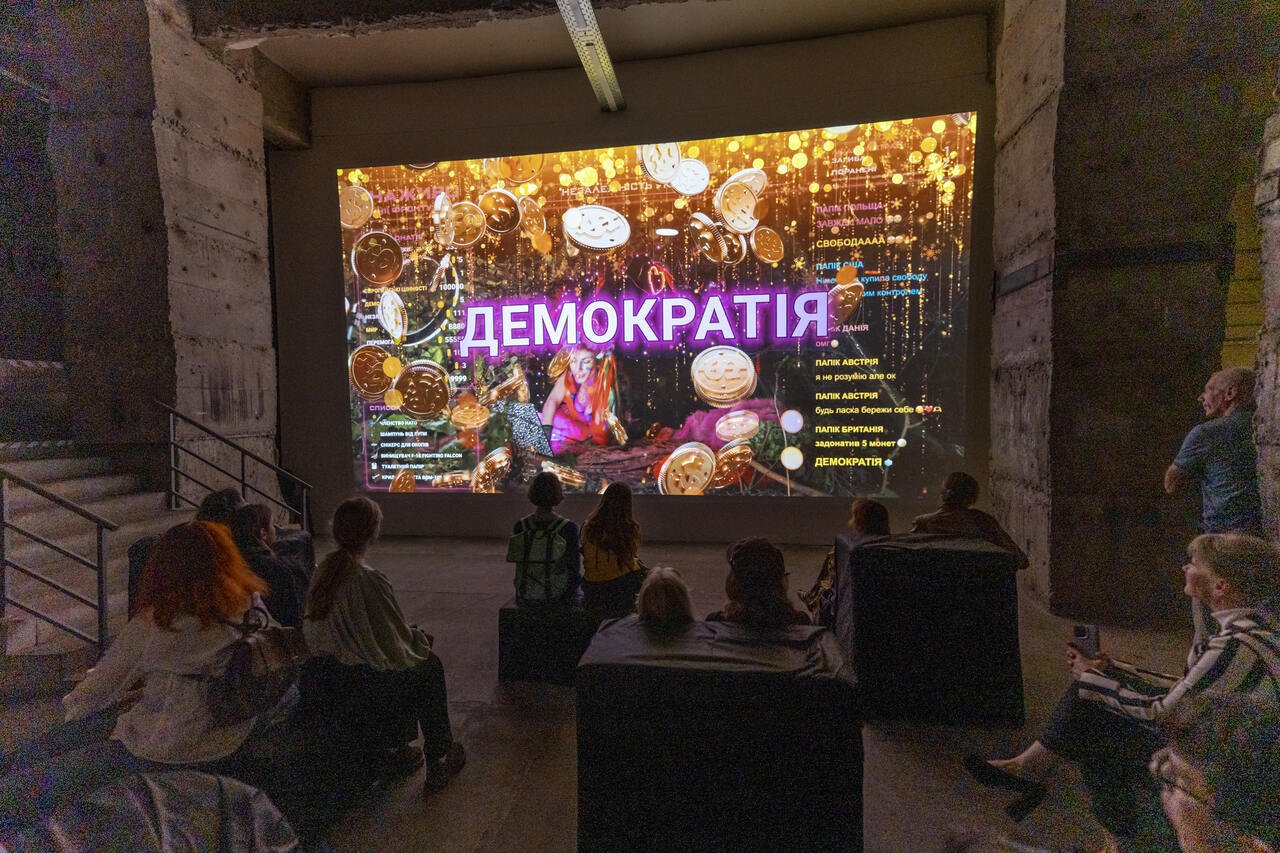
Image courtesy of Yermilov Centre.
It’s quite useless to try to re-tell or describe the level of sarcasm in all three of Kleytman’s videos. To provide at least a reference to it, I’d bring the reader’s imagination back to de Sade’s ability to describe horror with a unique hint of overall ridiculousness (diminishing everything that is deemed to be ethically good or moral). But, if the comparison in the narrator’s intonation might be evoked, there is a difference in depicting the dynamics of violence and resistance between the victim and the torturer or aggressor. De Sade, in order to render the abuse of power in maximal contrast, spared himself paper by depicting the victims as people who are, at the moment, beyond any ability to use real force to resist or mobilize (as in The 120 Days of Sodom, or in Justine, or the Misfortunes of Virtue). In Salò, Pasolini historicizes this structure, placing it against fascism. What might be appropriate to some historical events might as well turn into a cliché that itself becomes a form of violence: the manipulation and instrumentalization of the victim’s image through the erasure of complexity and especially, agency.
Western representations tend to overuse Ukraine’s vulnerability in order to produce a kind of perverted patronising pleasure. In art, this can be evidenced by an institutional frame that has developed in recent years, which has been described by Nicola Budzhinska: “Since Russia’s full-scale invasion in 2022, Ukrainian artists have become far more visible internationally. But that attention comes with a demand: their work is often expected to remain legible as testimony to violence, displacement and national resistance.” Ukrainian discourse can also adopt the same narrative, and it carries a hidden benefit: if Ukraine appears exclusively as the violated, its own capacity for state and social violence stays out of view.
Sexual violence and gendered exploitation are traumatic topics to depict, the image is very often at the risk of being seen as one that also brings more violence, by putting energy into depicting it. Kleytman, therefore, balances in a very risky territory, and the balance she has managed to keep with the series is the success of this series of work. Moreover, in Trigger Warning, she is able to catch the nuanced state in which the victims that are abused are at the same time the tricksters, and the powerful figures are strong but also fools. Any of these positions can flip at any moment, because neither side shies away from violence.
[1] steirischer herbst ’26 is curated by Ekaterina Degot, David Riff, Line Spellenberg, and Pieternel Vermoortel, supported by junior curators Beatrice Forchini and Lukas Michelitsch, with curatorial advice by Gábor Thury
Artist: Alina Kleytman
Exhibition Title: Trigger Warning
Venue: Kunstverein Friedrichshafen
Place (Country/Location): Friedrichshafen, Germany
Dates: 03.07. – 30.08.2026
Photos: Courtesy of Gunia Nowik Gallery.
Artists: Max Höfler and Andreas Unterweger, Alina Kleytman, Heather Phillipson, Gabriele Edlbauer and Julia S. Goodman, Rawan Almukhtar, Nikolay Karabinovych, Maya Deren, Leila Hekmat, Vanessa Baird, Alexa Karolinski and Ingo Niermann, Jaro Varga, Josefin Arnell
Exhibition Title: Red Flags
Curators: Ekaterina Degot, David Riff, Line Spellenberg, and Pieternel Vermoortel, supported by junior curators Beatrice Forchini and Lukas Michelitsch, with curatorial advice by Gábor Thury
Venue: steirischer herbst
Place (Country/Location): Graz, Austria
Dates: 24.09. – 18.10.2026
Photos: various
Artist: Alina Kleytman
Exhibition Title: Trigger Warning
Curated by: Nataliia Ivanova
Venue: Yermilov Centre
Place (Country/Location): Kharkiv, Ukraine
Dates: 11.09. – 27.10.2026
Photos: various