
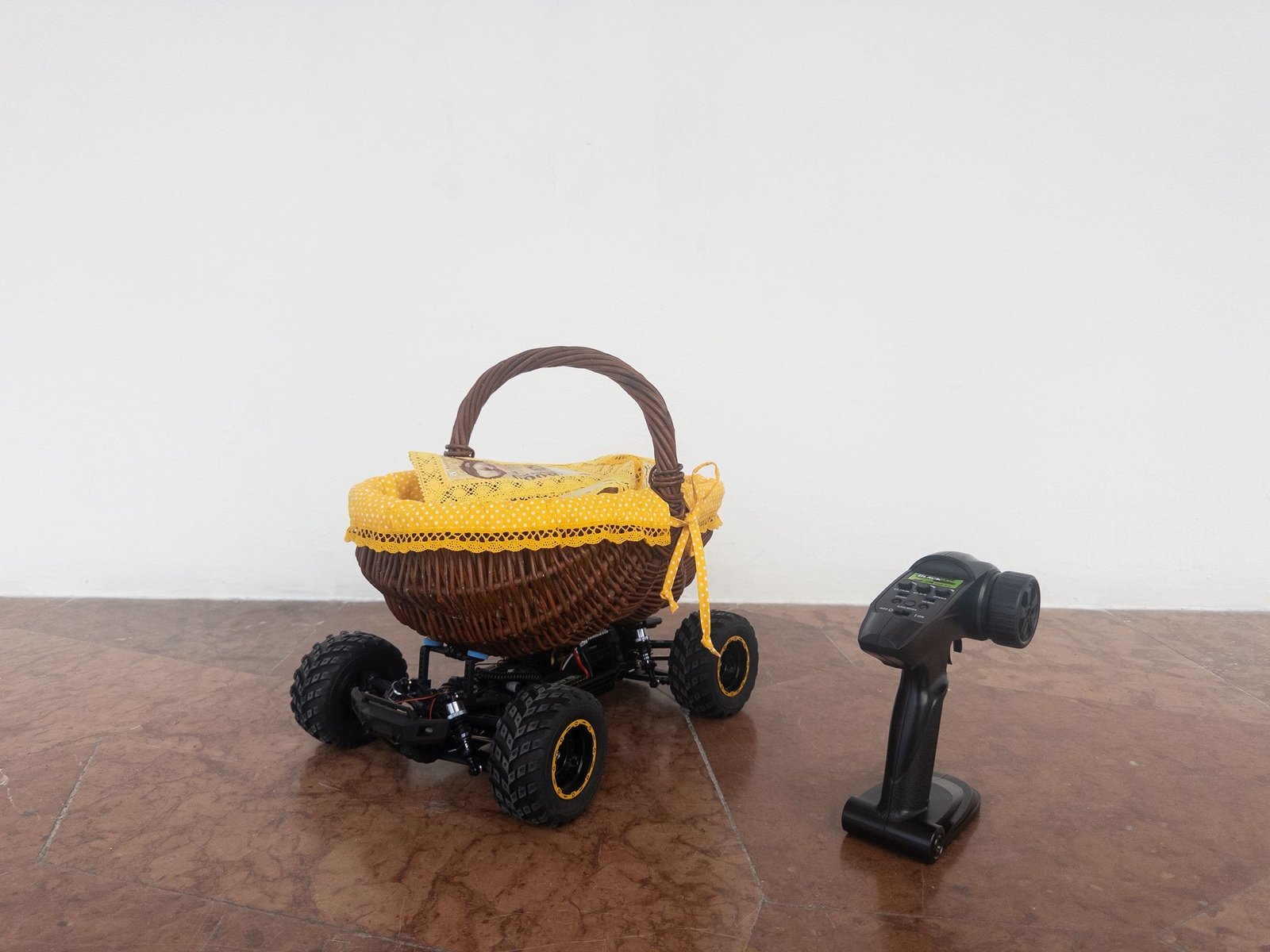
Lili Rebeka Tóth
Severe euphoria framed my visit to Róza El-Hassan (1966) and Réka Lőrincz’s (1978) joint exhibition, Ways of Being, at the Institute of Contemporary Art in Dunaújváros. It took place the day after the Hungarian elections and the landslide win of the opposition party over the Orbán regime. When pitching the interview, I focused on the importance of giving voice to two women artists whose practices can be contextualized as feminist, political, and activist against the background of a misogynistic, Christian-conservative political leadership in Hungary, marked by fascist, openly anti-immigrant, gender-normative rhetoric. That era already feels distant, as since then the atmosphere has changed as if by a magic wand: trust between people and the political seems to be slowly healing, as media hate-centered rhetoric has shifted into a more openly communicative style. The country is making small steps towards a collective healing, within which the two artists’ practices can perfectly fit.
After Réka and curator Sonja Teszler showed me around ICA-Dunaújváros, an institution established in 1989, with a significant history rooted in an era that believed contemporary art could function as a tool for democratic change after the dissolution of the Soviet Union, I left with high hopes. I was excited to see that there may be a chance that the process of hegemonic centralization of contemporary art around Budapest may loosen, and that other institutions in the countryside will be rediscovered and reintegrated, involving a reawakening that Central Europe has the great charm of proximity between its significant cities such as Vienna, Bratislava, Prague, Kraków, and so on.
Concerning the exhibition itself, one could Iearn that radical feminist practices do not always approach vulnerability through repression, oppression, or individual suffering, but are also capable of offering collective ways to resist and build comfort. In their work, El-Hassan and Lőrinc use intuitive methods as a political act: a way of working through lived crises and releasing internalized norms shaped by war, displacement, and the pressures of late-capitalist life. In both practices, process becomes a means of thinking and feeling in relation to others, positioning making as an interrelational activity that resists isolation and opens up space for alternative forms of attention and solidarity.
A couple of days after the visit, I sat down with both artists for a cup of coffee to ask them about the exhibition and their joint work.
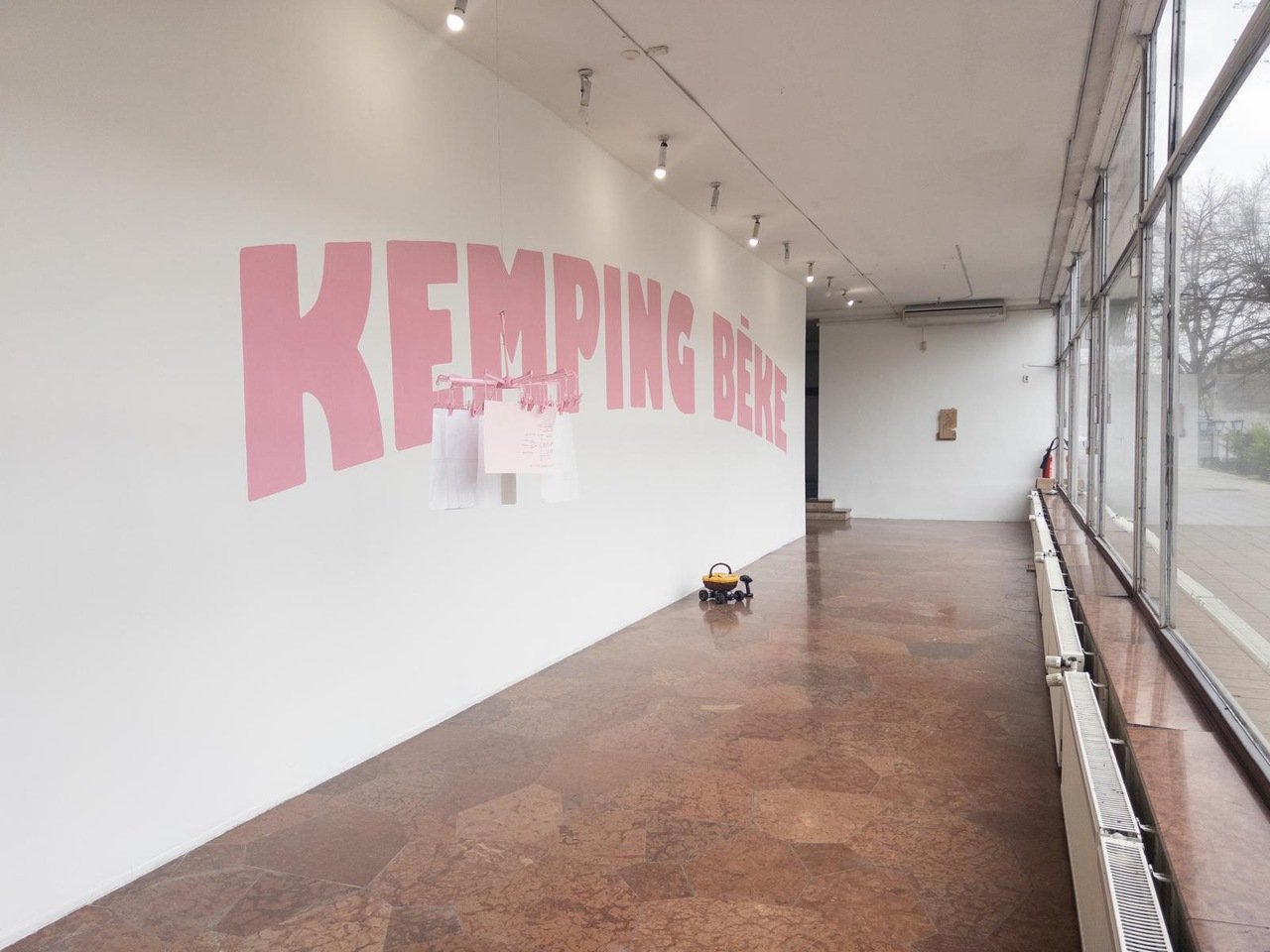
ICA-D (Dunaújváros), photo: Áron Weber. Courtesy the Artist, ICA-D, and Longtermhandstand.
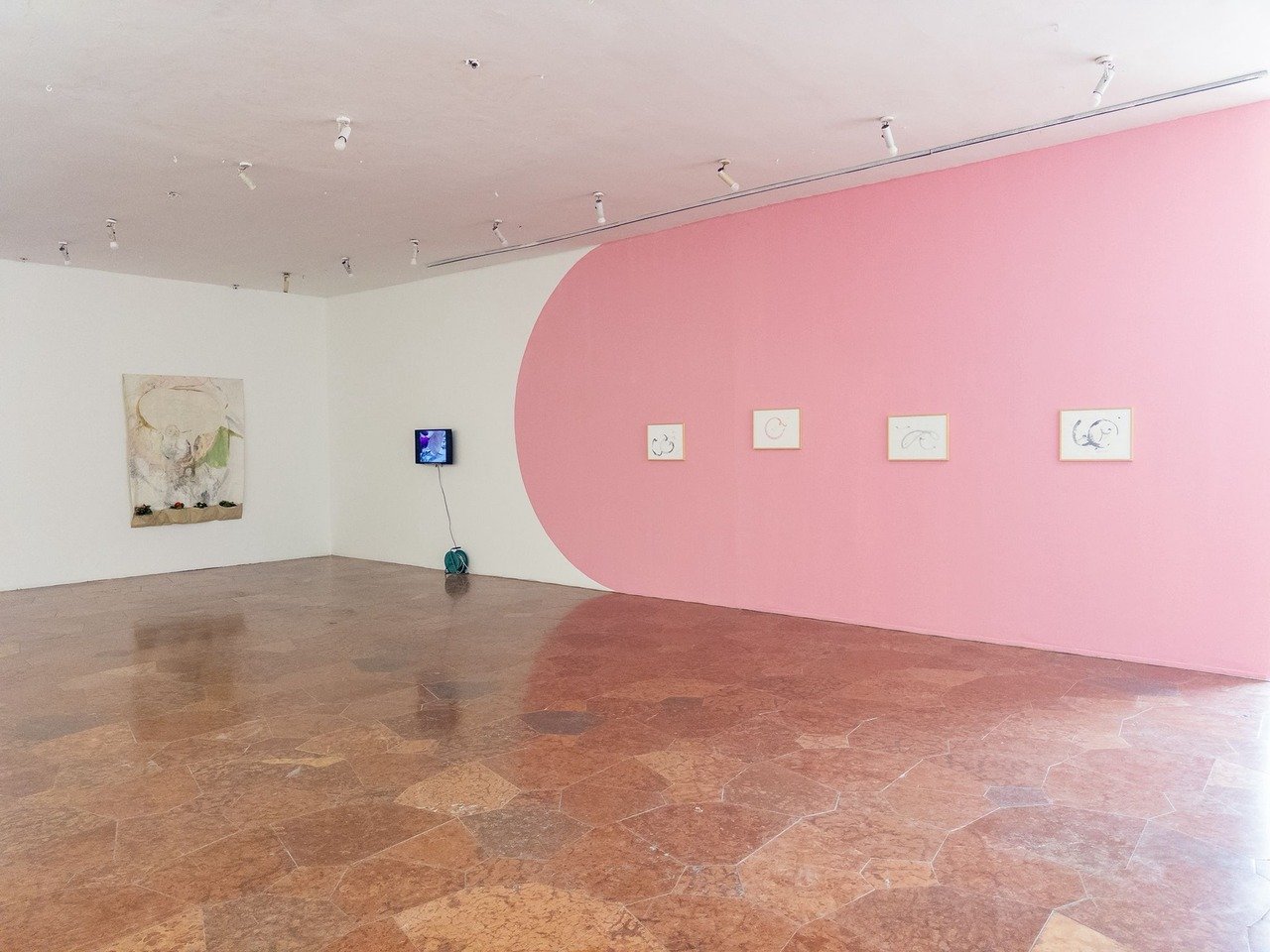
ICA-D (Dunaújváros), photo: Áron Weber. Courtesy the Artist, ICA-D, and Longtermhandstand.
Lili Rebeka Tóth: I cannot hide the fact that the idea of seeing you in a duo came as a surprise. Your practices are often regarded as feminist, but I have always associated Róza’s work more with stylistic and methodological approaches to Arte Povera and post-Beuysian conceptualism, and Réka’s with a critical engagement with material culture and consumerism. To me, they have always seemed quite distinct in both their use of materials and their final forms. I am very curious to learn whether this collaboration had already been developing between you, or whether it came about specifically through the exhibition context.
Róza El-Hassan: It matured gradually. When I saw Réka’s solo exhibition, Body Lotion at Kisterem Gallery in Budapest two years ago, I really liked it. I liked it because it was playful, light, lively, and positive. The way she placed things next to each other that were completely unrelated — a silly beaded bowl next to some other strange object — really appealed to me. I enjoy combining things that are far apart from one another, almost like making collages. I thought it would be great if we could do something together.
Réka Lőrincz: Then Róza wrote to me, we met up, and we agreed that if an opportunity came along, we would be happy to exhibit together. And then this possibility came up.
LRT: To exhibit at Dunaújváros?
RL: Yes. Honestly, it feels as though everything has happened very organically. Whether responding to each other’s work or working together, it never felt like, “Okay, let’s come up with something jointly now, what’s the concept?” and so on. It was more like how one leg naturally follows the other when you walk.
REH: It was very easy to work together. When planning the exhibition, and I felt that something was missing, Réka would have a work that perfectly fit there.
LRT: One of the unifying themes seems to be energy and a shared outlook on life. Was that something you discussed beforehand, or was it something already present in both of you that you later discovered as a common thread?
REH: These fluctuating energies are present in both of our drawings. These moving, wave-like energies that describe motion naturally connected with each other. It happened organically. We never discussed it beforehand.
RL: Yes, it emerged somewhat automatically, instinctively. And the curator, Sonja Teszler, also looked at everything from the outside and recognized what fit together. By the time Sonja became involved, it almost felt impossible to separate things anymore. Working with her was also very effortless and automatic. We all shared the same intention: to create something uplifting. Nobody obstructed anyone else’s ideas.
REH: Once we selected the drawings depicting energy fields, it became obvious that the exhibition would be about energy fields. Sonja selected drawings because both of us have a large number of works on paper. Her selection essentially shaped the concept of the exhibition.
RL: Exactly. Sonja particularly likes those works. Most people know me primarily through my jewelry, so these drawings weren’t new works, but they weren’t very well known. I make all sorts of things. I don’t like boxing myself into a single identity — saying “I am this” or “I am that.” Certain objects simply received more attention. My drawings mostly remained in my studio and at home. I really wanted to show them. Also, because I work with energetic healing, not only through manual techniques but also through the subconscious. This became another connection between us. Róza is also sensitive to energies. In the end, that’s what we made more visible through this exhibition.
LRT: Could you tell us a bit more about energetic healing?
RL: Some aspects of it are learned. I’m almost obsessive about continuing my education because I enjoy it so much. Understanding how energy can be moved has become a major part of my life. I attend trainings all over the world. At the same time, it also entered my life quite naturally. Earlier, when friends had some problem, I’d jokingly say, “Shall we heal it as a game?” Since many people actually felt better afterward, I originally called it “play-healing.” Over time, I started seeing images and patterns revealing where blockages originated. Even a thought can create an energetic blockage in the physical body. These are quantum-based healing approaches: every thought is energy and has a frequency. That’s why I also work with the subconscious. Certain thoughts, or emotions like anger have very specific energetic qualities. Anger feels agitated and jerky, for example. When someone is angry, their thoughts reflect that, and you can also feel it physically in the body. Thoughts influence the physical body. That’s why I work with both consciousness and the subconscious. Both can help ease physical tension and even what we conventionally call illness. In quantum healing we tend not to use the word “illness” because it carries such a negative charge.
LRT: So you would call it a vibration instead?
RL: Exactly. It’s more like a vibration that has fallen out of balance or changed in some way. The goal is to harmonize it again.You can think of it similarly to exercise. I would even consider sport a kind of healing method, just not in the conventional sense. Imagine doing arm circles: they affect your mind too. They can make you feel more open, generate more ideas, stimulate creativity. There are ways to harmonize the right and left sides of the body so that the mind becomes more receptive to different perspectives and possibilities. I’ve been engaged with these ideas for a very long time, and then it turned out that Róza is interested in them too.
REH: Yes, because I also build my work from the subconscious, or perhaps the superconscious. My works usually begin with drawings. Something affects me: maybe I meet someone in a highly emotional state, and I physically transfer that experience into the drawing. The story then becomes a narrative that I tell through the drawing. Not literally, but through the way energies move, open up, and unfold. The work itself opens.
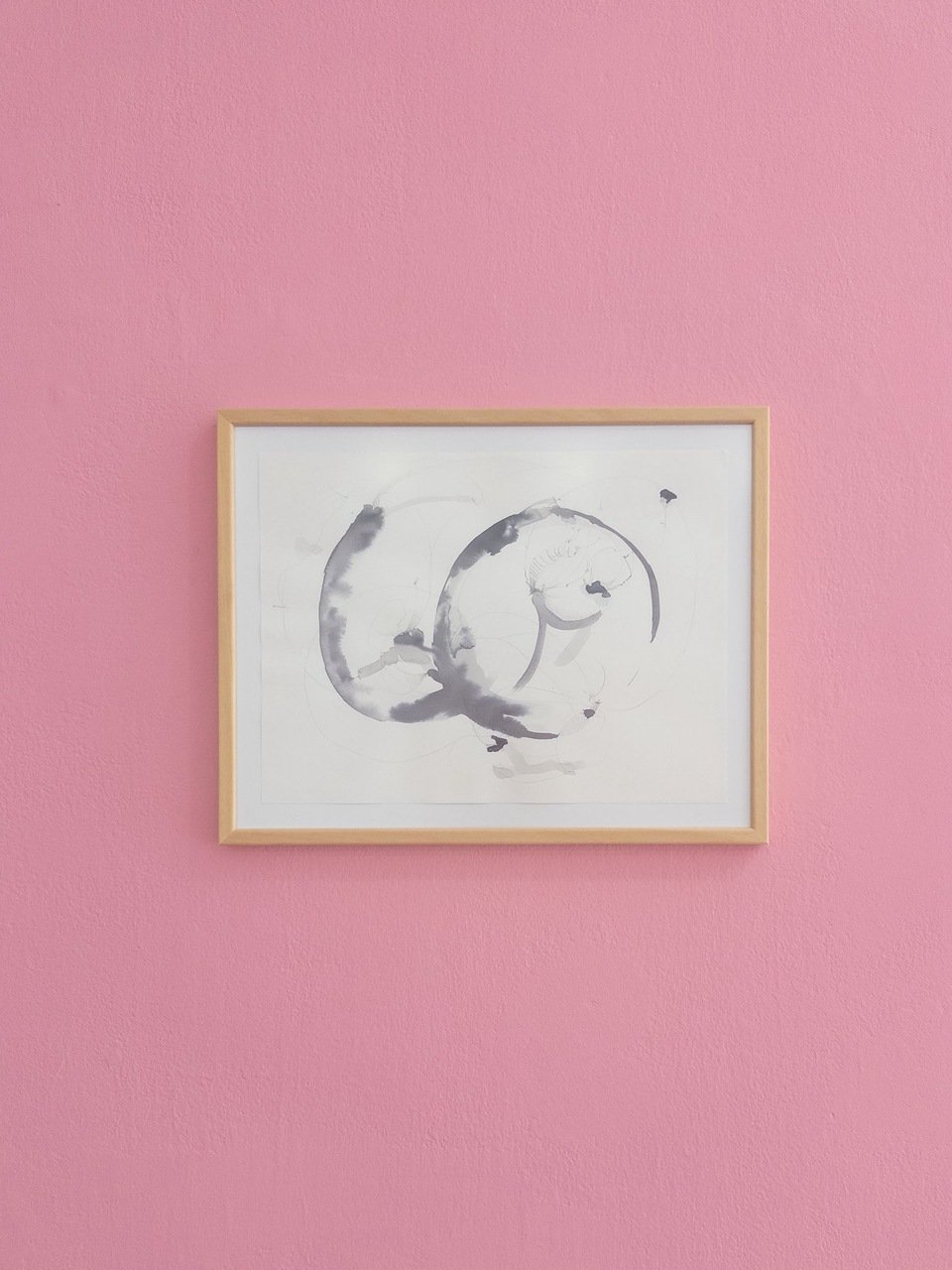
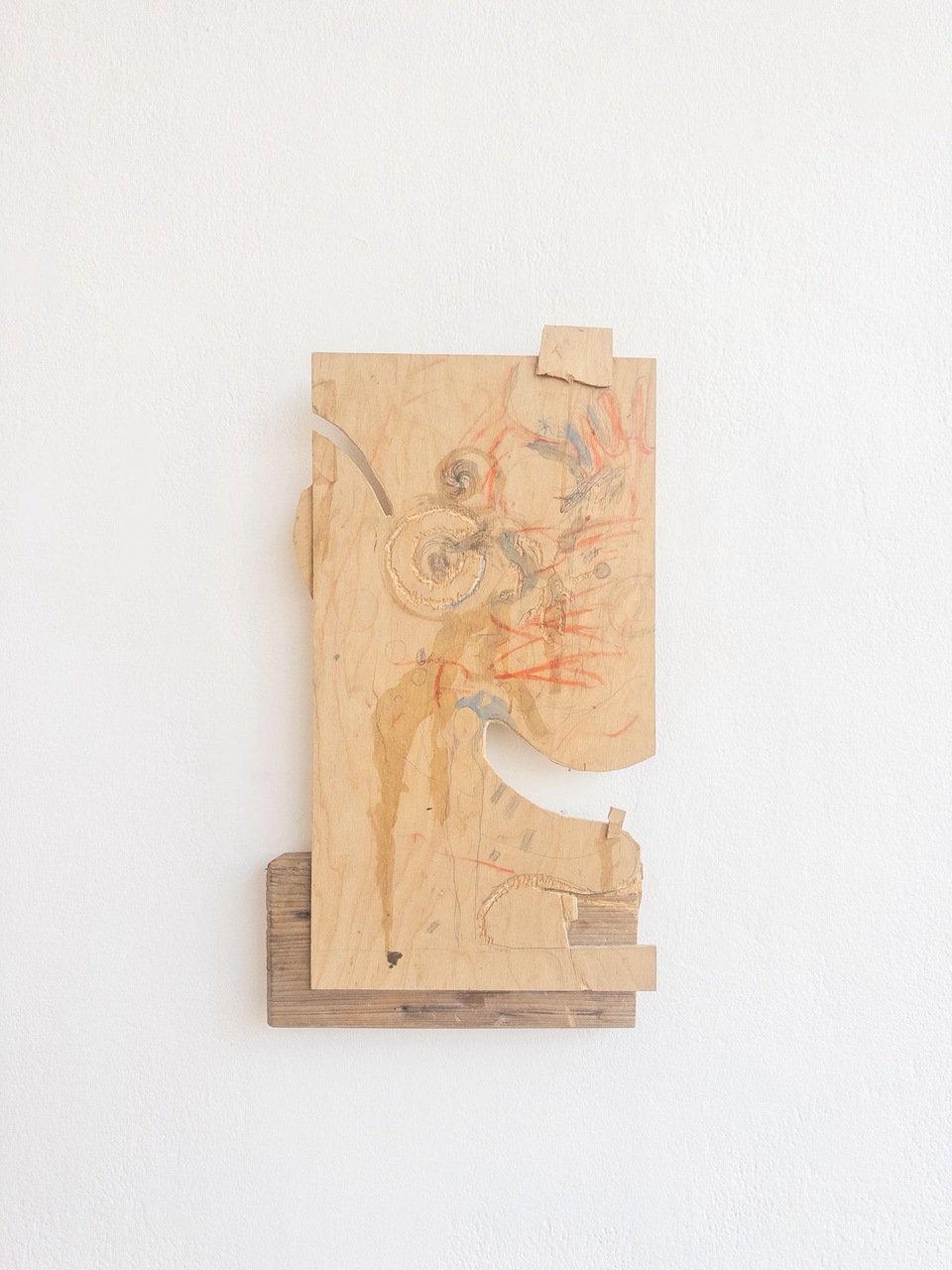
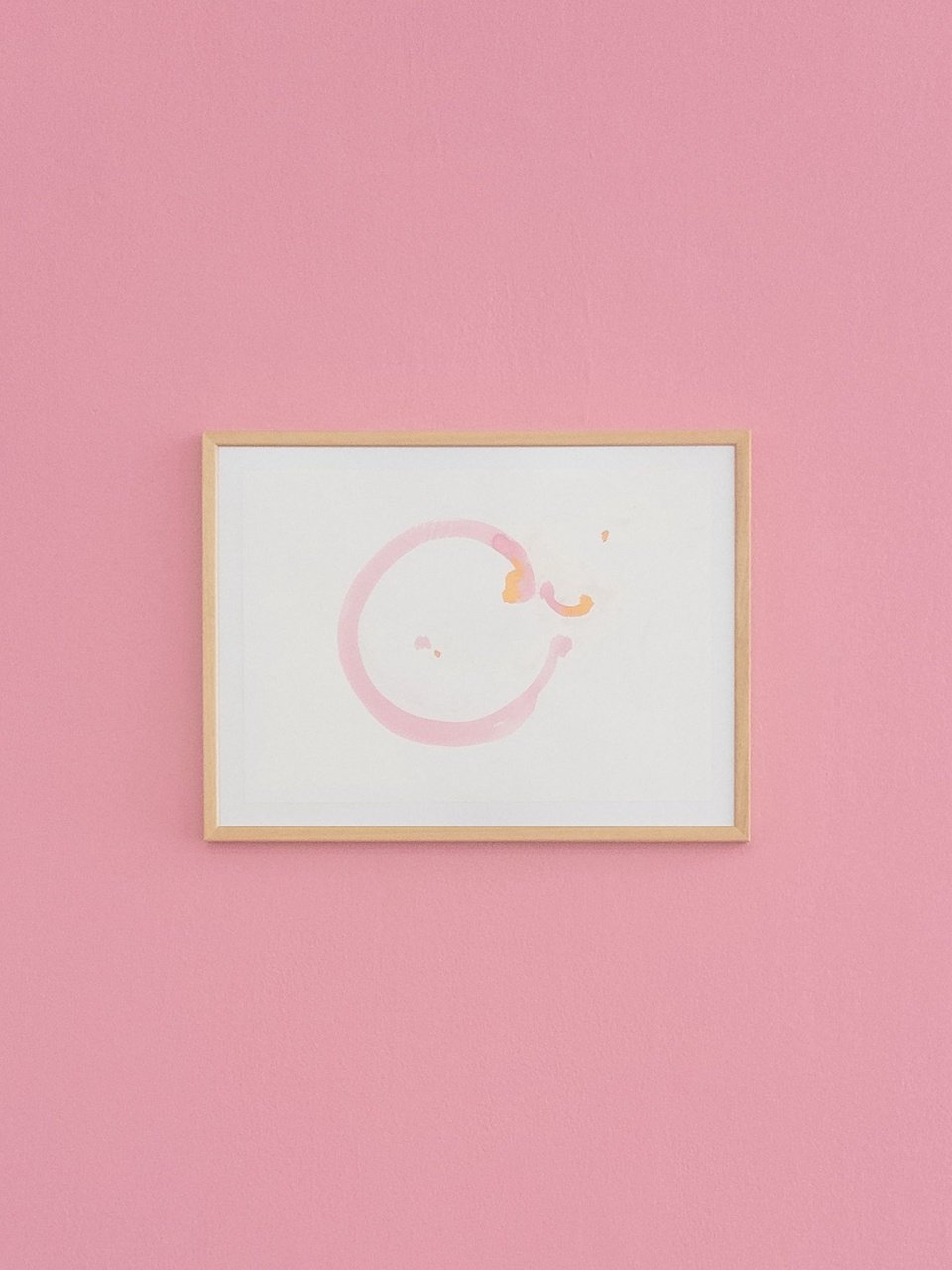
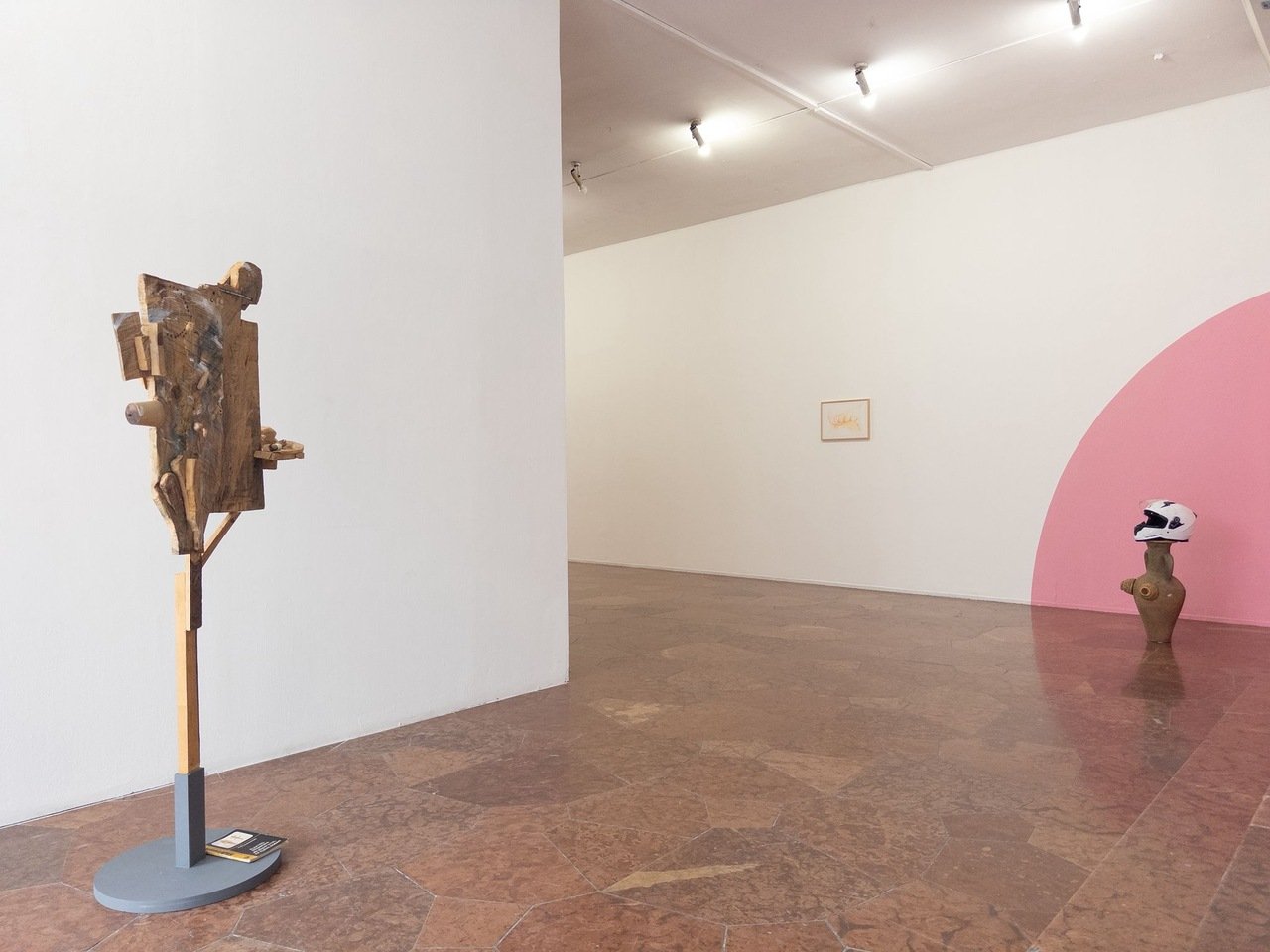
LRT: Is there a specific work in the exhibition that deals with this? I remember that near the entrance, as part of Protest Sign (Electromagnetic Signal Transmission in the Living World) (2022), there is a found book that discusses the energy fields of living beings.
REH: This book titled Electromagnetic Transmission in Life was like a revelation for me. It shows how low energy frequencies in our body and in animal bodies make non-verbal communication possible and how they set inner clocks. That’s slightly different. It’s more about a kind of forgetting of consciousness, or a state of unconsciousness that accompanies drawing. It’s not about following a predetermined story. Rather, it’s about letting thoughts flow freely and allowing connected ideas to emerge on their own.
LRT: Could you tell us about those two works?
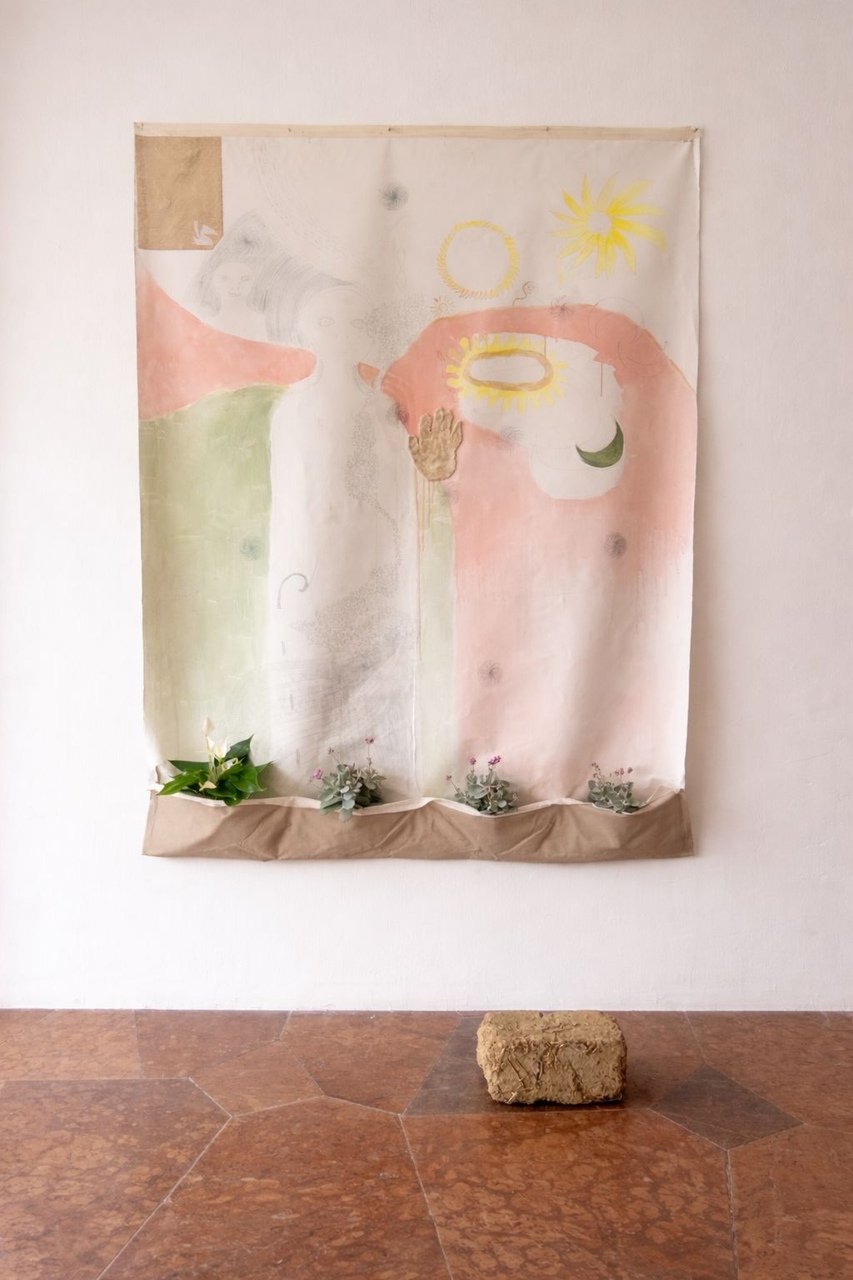
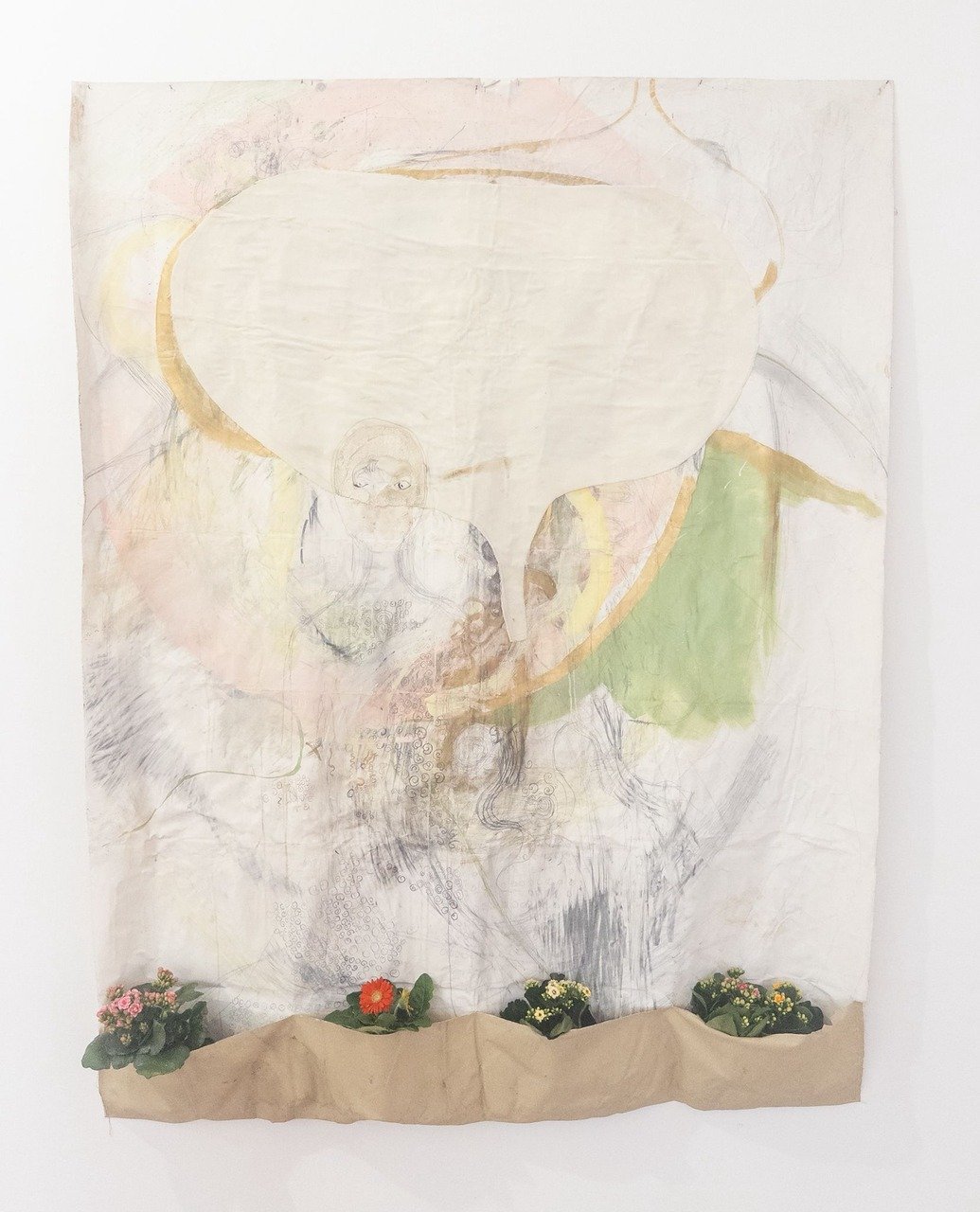
REH: Well, it’s really about allowing thoughts to flow. First there was Spring Forgetfulness (2008). In spring, hormones can become very intense, and I drew that experience — the way those hormones were raging — starting from my own body. Sometimes they cause forgetfulness. But it’s a fleeting kind of forgetfulness: the memories can return. Then, many years later, I made Autumn Forgetfulness (2024). It’s “autumn” because I’m older now. A calm, childlike realm emerged in the work. Old age and childhood overlap with one another. It’s much less turbulent and much more suspended, floating.
LRT: Could you describe how we should imagine the artwork?
REH: There’s a head in the image, and around it, lines and forms move through space in spiral-like motions. There are small spirals, large spirals, little berries, suns, flowers — all moving through the surrounding space. I also attached a piece of plush fabric to the work that people can touch. I folded the bottom of the canvas back and sewed little pockets into it, where I planted flowers. Real flowers, which I replace again and again.
LRT: The spiral that appears in Autumn Forgetfulness is a recurring motif. It also appears in your drawing Shell Face (2026), which was inspired by Réka’s Untitled / Ammonite (2026), and it can also be found in the healing drawings and in the drawing with breasts.
RL: Yes, we only noticed this synchronicity afterward. We even realized that the motif appears in the marble cladding of the building itself.
LRT: The ammonite motif is often seen as a symbol of the eternal cycle of the world.
REH: The spiral is related to the circle because it is also a circular movement, but it simultaneously moves toward or away from a center. It can expand or contract.
LRT: And that’s the same dynamic that reappears in Early Computer Animation (Making Bread) (1990).
REH: Yes. There too, as the bread is being made, the hands move in similar circular motions. Alongside that, there is an animation written in very basic programming language, where I was also trying to represent these pulsating circles. I wanted to create an ensemble out of the two elements.
LRT: The visual language of the video strongly evokes the world of the 1990s and early personal computing. In Hungary, this technology arrived after the political transition with support from the Soros Foundation and was embraced as a new, innovative, and democratic artistic language.
REH: Yes, that was when the Commodore 64 became accessible. It was an early computer system that allowed people to program quite easily using basic programming language.
LRT: But later you didn’t really continue working with programming, did you?
REH: No. At the time I was studying in the Intermedia Department at the Academy of Fine Arts in Budapest, which is why I was working with it then.
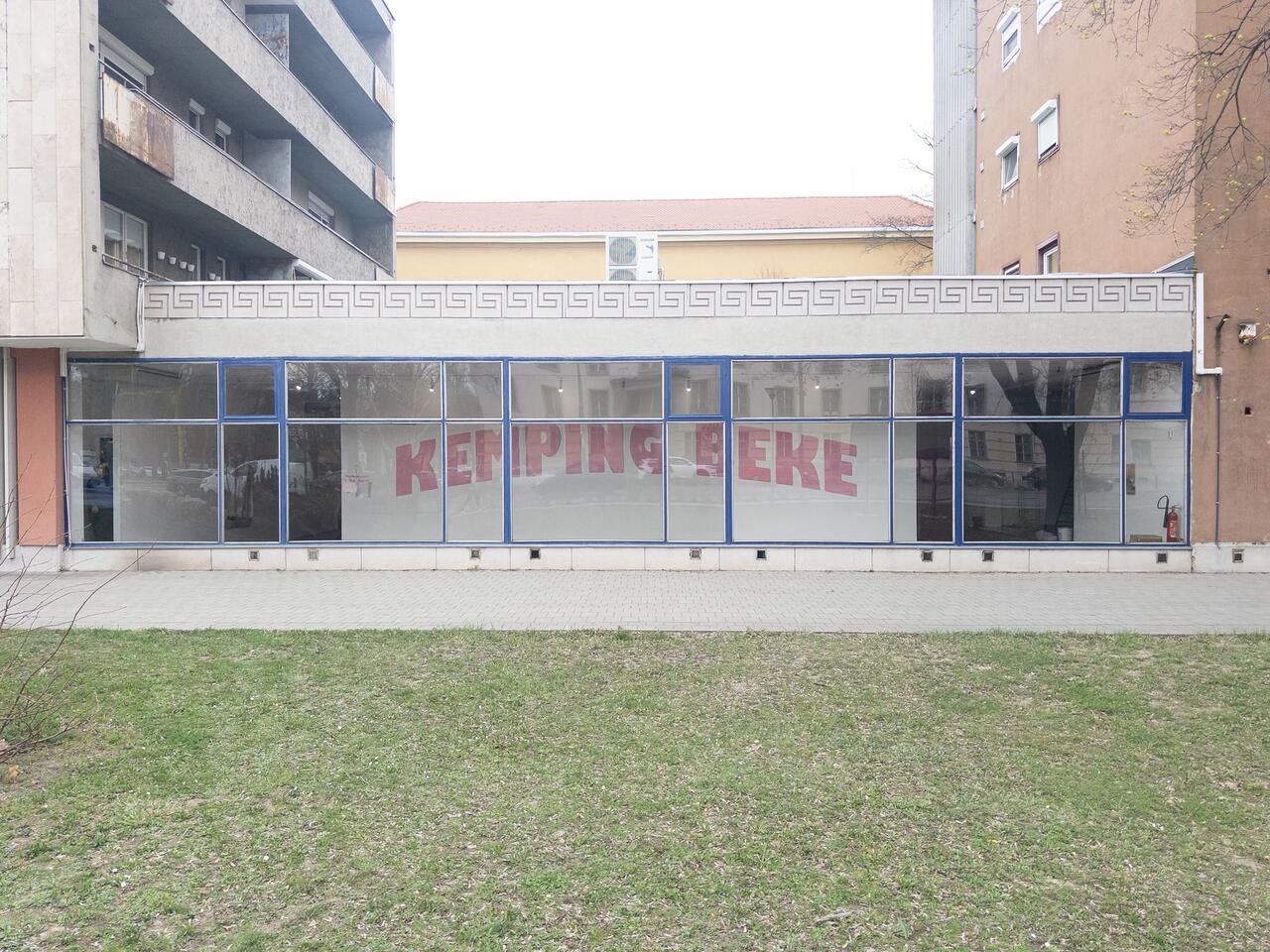
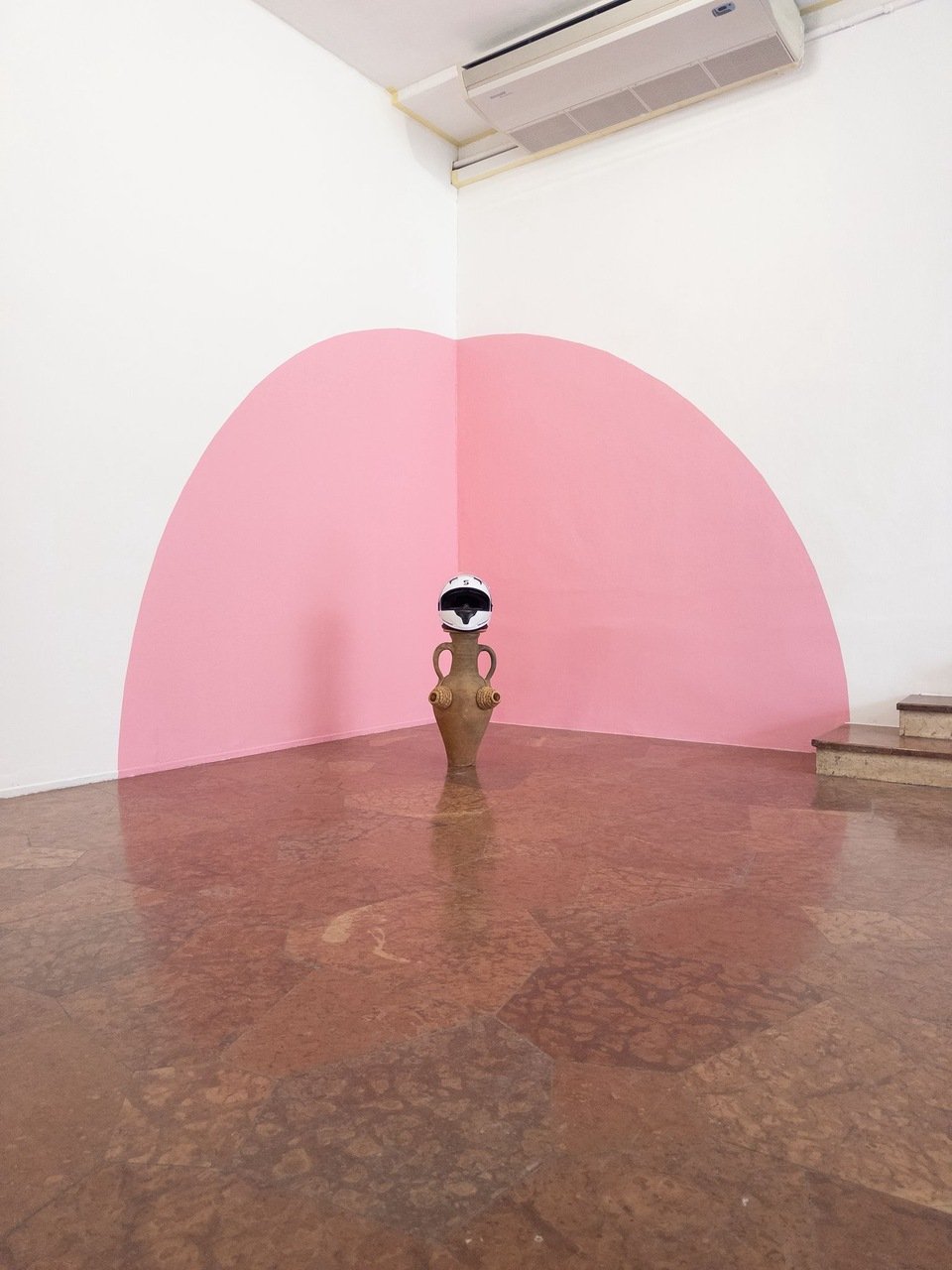
LRT: The exhibition as a whole has a strongly analog character. There are two video works, but even they revolve around themes of craftsmanship and presence. The exhibition’s overarching theme — also expressed in the large wall mural that functions almost like a motto, Camping Peace — seems to encourage us to go out into nature and leave the virtual world behind. What exactly does Camping Peace mean?
REH: We came up with it together. I’ve been interested for a long time in the idea of universal world peace, both through artistic activism and through themes that appear in my work. Réka’s camping theme similarly relates to peace, but more to the individual’s experience of peace. We combined those two ideas.
RL: For me, camping means that what I want is possible anywhere and everywhere. I can create it for myself wherever I am. Only later did I realize where this comes from. When I was a child, my father traveled to Cambodia, and that inspired my younger brother and me to play “Cambodia.” We would pack our toys into bags, go behind a bush, and that place became Cambodia. We had far fewer toys back then — before consumer culture became so dominant. We could turn anything into anything else through imagination. Whatever we imagined became possible. I think this contributes to the fact that I genuinely believe almost anything is possible if I truly want it. We were standing behind a bush in Máriabesnyő, yet for us, it was completely Cambodia. Camping became my own metaphor for the ability to create whatever I need, wherever I happen to be. This also connects to how I experience being Hungarian. I don’t define my Hungarian identity narrowly, but I do experience it through this perspective. In the past I could see what existed “in the West” and elsewhere, but I never experienced it as a lack because I felt that I could create whatever I wanted for myself if I truly desired it.
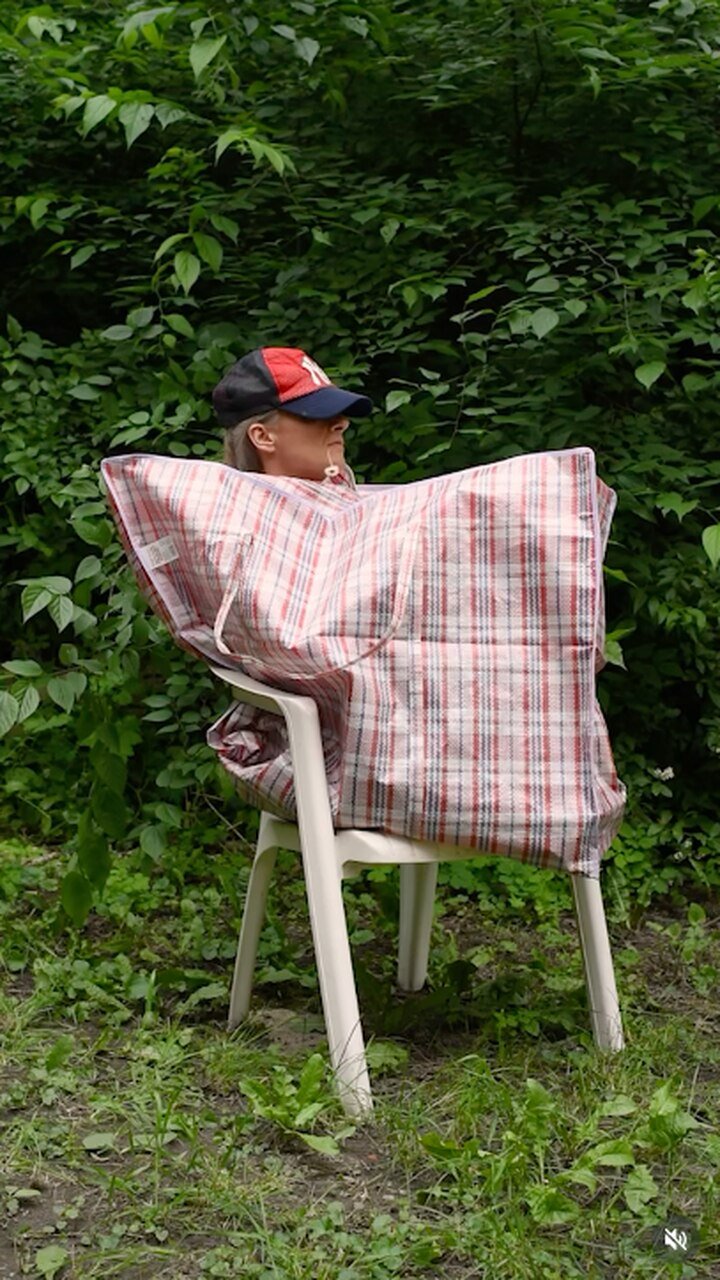
REH: The second work also relates to Camping Peace: the image of sitting on a chair and smoking with a daisy.
RL: The chair itself is significant. It’s that typical, simplest possible plastic chair — the kind that has probably sold more units worldwide than any other chair. It’s interesting how much a seemingly ordinary object can contain.
REH: Réka often works with simple materials, which also connects her practice to Arte Povera — the “poor art” movement — with its emphasis on poverty, simplicity, and readily available materials.
Courtesy the Artist, ICA-D, and Longtermhandstand.
LRT: That’s actually something I felt was missing from the curatorial text: references to Arte Povera and assemblage. I was curious how you both relate to those traditions, because they seem central to both your techniques and your use of materials.
RL: That’s really interesting, because it also goes back to our childhood. We often played a game we literally called “playing poor.” At the time, we didn’t have much money, but in a way nobody really had much wealth under socialism. “Playing poor” meant connecting with what was around us and creating everything from anything. We would build a tent out of towels; nothing ever seemed impossible. The work where I’m sitting on that chair smoking while wrapped up in a bag is also about something else. I became aware of how much fear exists around not constantly thinking or producing. We often tie action and even our sense of legitimacy to measurable achievements. I once mentioned this comparison to you [Róza]: it often seems as though someone who builds six skyscrapers out of stress and anxiety is considered more valuable within society’s hierarchy than an elderly woman sitting on a bench in the countryside, smiling at you as you walk home, perhaps offering you a piece of cake. I enjoy dismantling these hierarchies, just as I do in my use of materials.
LRT: Yes, and Róza, Arte Povera is just as important a reference point in your work.
REH: Absolutely. Discovering Arte Povera artists and also Lucio Fontana was incredibly liberating for me. These simple gestures — working with the ordinary materials of the world and assembling them in such a vital and life-filled way — resonated deeply with me. I recognized something in my own work when I encountered theirs. It felt like confirmation that someone else was also working in a similar way. For example, in Spring Forgetfulness and Autumn Forgetfulness,the gesture of placing flowerpots within an artwork can be understood in relation to Arte Povera. We don’t usually plant flowers inside artworks. Those kinds of boundary crossings are very liberating. I recognized that same spirit in Réka’s work. Through working together, I returned to this youthful, liberating way of making art.
LRT: Exactly. Throughout the exhibition there’s a sense of humor, or perhaps mischief, that runs through both of your practices — the idea that perhaps a peach pit could become a nipple. The curatorial concept connects this approach to the automatic methods of Central and Eastern European women surrealists of the 1930s and 1940s, such as Toyen and Unica Zürn.
REH: Yes, that sense of humor is exactly what I noticed when I saw Réka’s exhibition at Kisterem. There was a work called Personal Shaman (2023) in which a figure had a scooter wheel attached underneath its slipper. It was these lively little details that first drew my attention to Réka’s art.
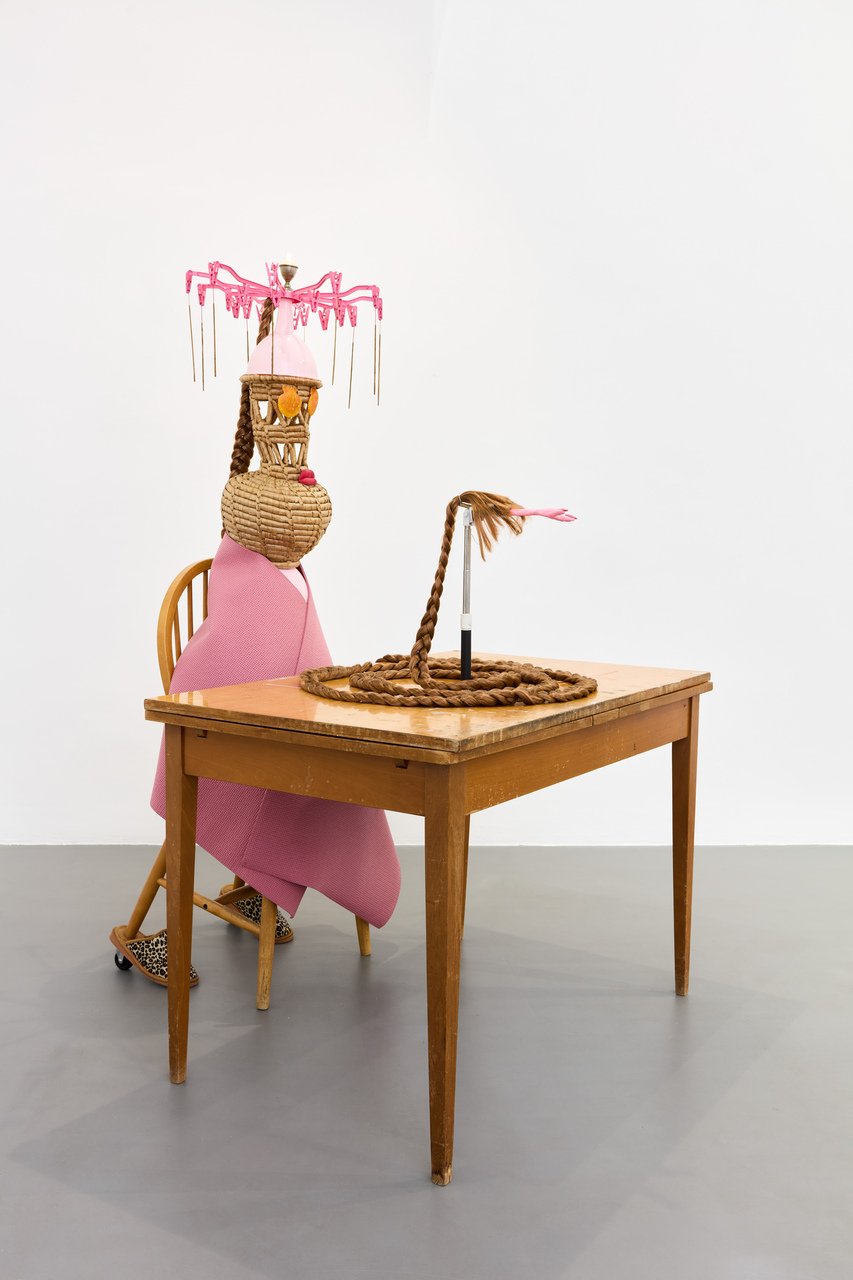
LRT: What also interests me is the strong contrast between your works. Réka, your works are colorful, and plastic frequently appears in them. Róza, by contrast, your works initially struck me as almost frightening. They possess an art brut-like honesty and rawness: direct, hand-made, drawn with broad gestures, without smoothing things over. There is an absence of perfection or polish. Yet despite these differences, the two oeuvres become organically intertwined. In the exhibition space it almost feels self-evident — the intuitive creative methods and the parallels between your inner worlds.
REH: The idea of the found object is another connection. Réka finds a plastic bowl and builds a sculpture from it; I gather pieces of wood. Often I collect them from the street, and friends sometimes save leftover pieces of wood for me because used wood develops such beautiful surfaces. The aesthetics of found objects are something that recurs in both of our practices.
LRT: Róza, there’s a video of you online where you talk about basket weaving. And with Réka, woven baskets keep appearing as a motif as well, often symbolizing the body.
REH: Yes, I worked with baskets too, but in a very different way. It was part of a social project. We wove objects together with Roma communities. Réka, on the other hand, finds baskets with unusual shapes, collects them, and incorporates them into her work. The motif of weaving itself is fascinating. It’s a process, a logical operation: front-back, yes-no. It’s almost like a scientific logical system. People even say that weaving develops intelligence. When I worked with Roma craft communities, I was amazed by how quickly their hands moved and how rapidly they learned — not only techniques, but also approaches and language. The bird motif is related as well. Humans learned basket weaving by observing birds building nests. The nest represents warmth, shelter, and containment.
LRT: The body and the home as well.
RL: Yes, exactly. Listening to you talk about this, I realize how differently we use these motifs. For me, bringing these forms into the studio is a little like a small animal retreating into its burrow. I’m here in the city, surrounded by materials that naturally occur in this environment — such as plastics — but I also bring in materials because my body seems to need them. Living in the city, I crave natural materials with a warm presence. I like being surrounded by them. And of course I have a choice about what materials I work with. Usually, when I’m gathering things, I already have some sense of what they might become. It’s not accidental that I pair these found objects with natural materials.
LRT: Róza, when you begin a sculpture, do you already know where it’s going? Do you make plans?
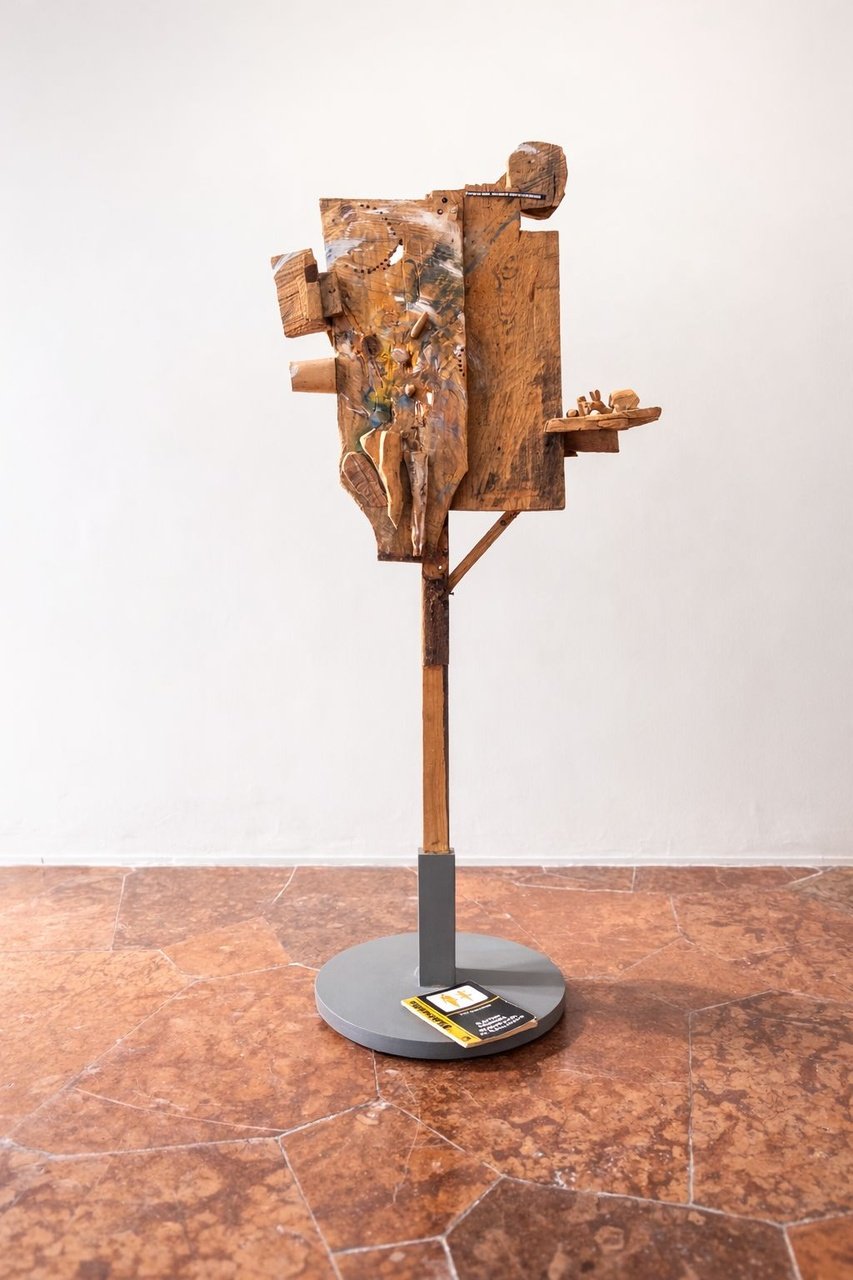
REH: Yes, generally I do. I usually make drawings for my sculptures. Something appears in the drawing, and then I develop it further, enriching it with different elements as the sculpture takes shape. I also work with found objects. A small piece of mahogany, for example, can completely transform the outcome. However, the work exhibited in Dunaújváros called Couple (2020 – 2023) did not begin with a sketch. That one developed organically. I gradually added details over time. It evolved almost like a sequence of found objects accumulating together.
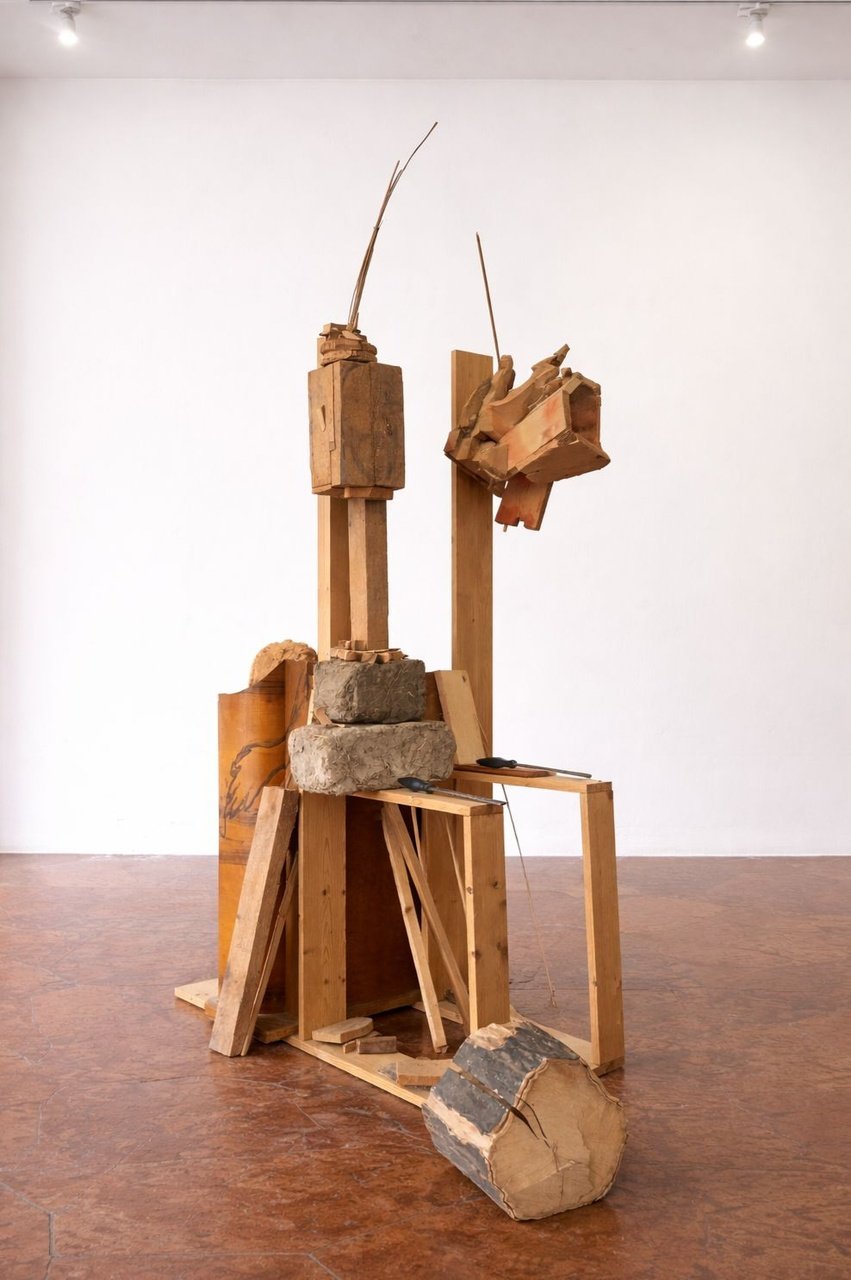
LRT: Another historical artistic movement that came up in relation to your work is Dadaism.
REH: Yes. There too, playfulness and chance are essential. Objects that are far apart suddenly come together again — like the famous encounter of a sewing machine and an umbrella on an operating table. In my own work, a rasp, a piece of wood, an Indonesian sculptural couple, and a book might all meet within the same sculpture.
LRT: What I also find interesting is the way the word “peace” enters the conversation, because it seems to mean quite different things for each of you. For Réka, it appears to be connected to inner peace, while for Róza it seems directed outward, toward others and the world. Could you speak a little about that?
REH: In fact, the two aren’t that far apart. Peace meditation, for example, has an effect on both inner peace and outer peace.
LRT: Like a form of manifestation?
REH: Meditation. Rather than protesting for peace, people meditate for peace, and that has an effect on the world. I believe it has an impact on the external world. Besides meditating for peace, I attend also public demonstrations for peace and humanitarian causes, especially Gaza.
RL: What I enjoy about contemporary science is that these things can now be measured in terms of frequency. For example, in the United States, Dr. Joe Dispenza has a large research group conducting many studies on frequencies and measuring changes in the brain. They examine how elevated emotional states brought about through meditation can emerge, how those frequencies can spread through the air, and even affect plants. They also study how people heal. Frequencies accumulate and reinforce one another. I especially enjoy the fact that these are now things that can be scientifically measured.
LRT: So being kind in the face of the aggression we often experience in Hungary — can that help society?
RL: Yes, I believe it can. In quantum healing, we consciously avoid using words like “illness,” because the moment you hear the word, you already begin to feel worse — it places a burden on the body. That’s one of the reasons this approach is helpful to me.
LRT: The Energy Scores series shown in the Dunaújváros exhibition are connected to this as well.
RL: I began making those during COVID. People would come to me for manual treatments, and after my clients left, I often sensed that the deepest wounds underlying many of their struggles were sadness or anger. Energetically, those feelings have a heavy quality. They can feel like pressure in the chest or tension in the shoulders. After they left, I would often automatically draw these sensations. I used watercolor because, for me, the energy of water continues to dissolve emotions. In a sense, I made these energies visible on paper. I placed them into the quantum field and continued working with them there. Where attention goes, energy flows. I continued the process through drawing and painting. I don’t really think of these works as paintings, because the essential thing is the energetic transformation. A movement forward, a continuation. I felt — without the clients necessarily knowing — that this process could help them. It was a way of releasing and loosening those energies.
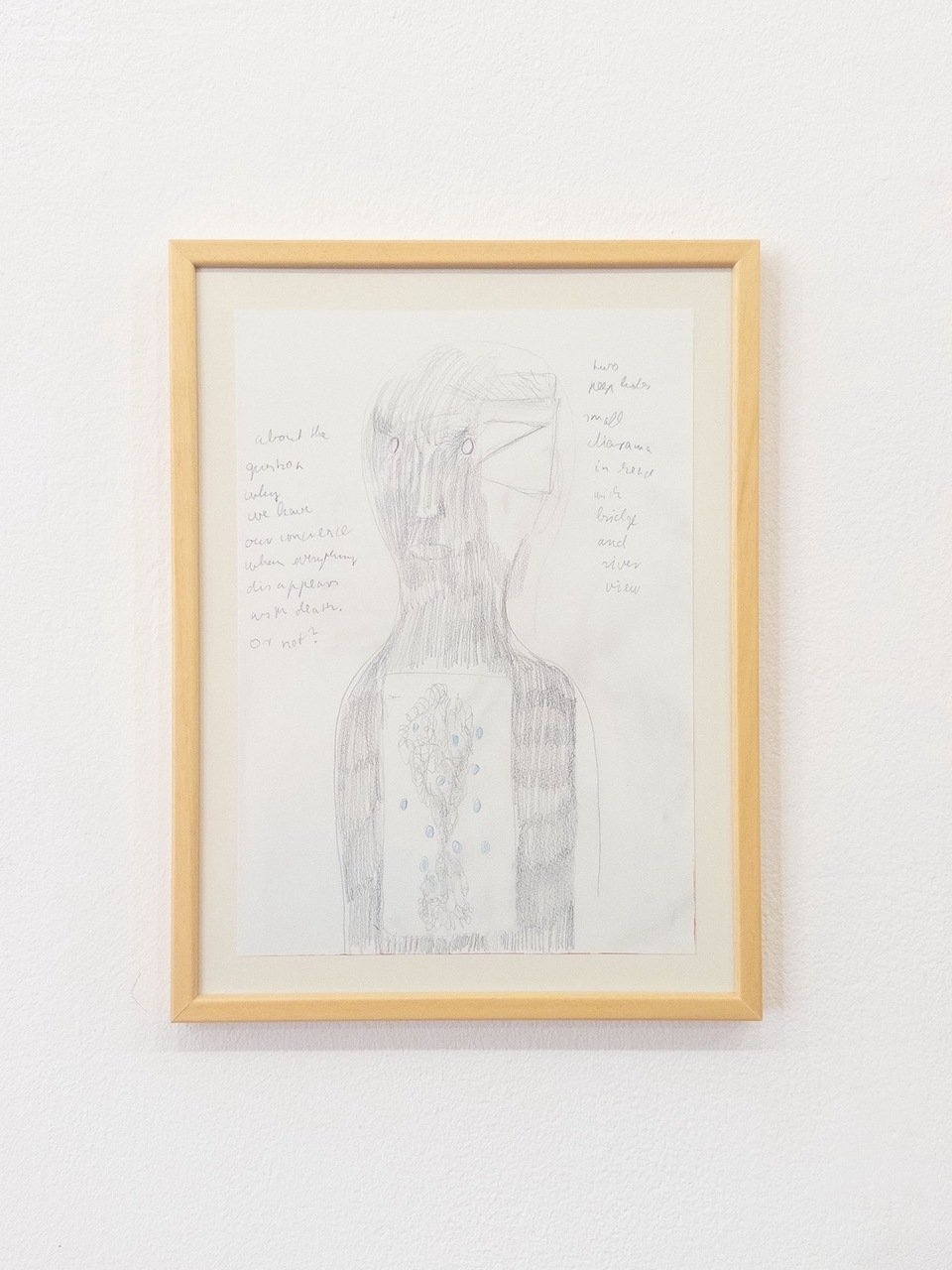
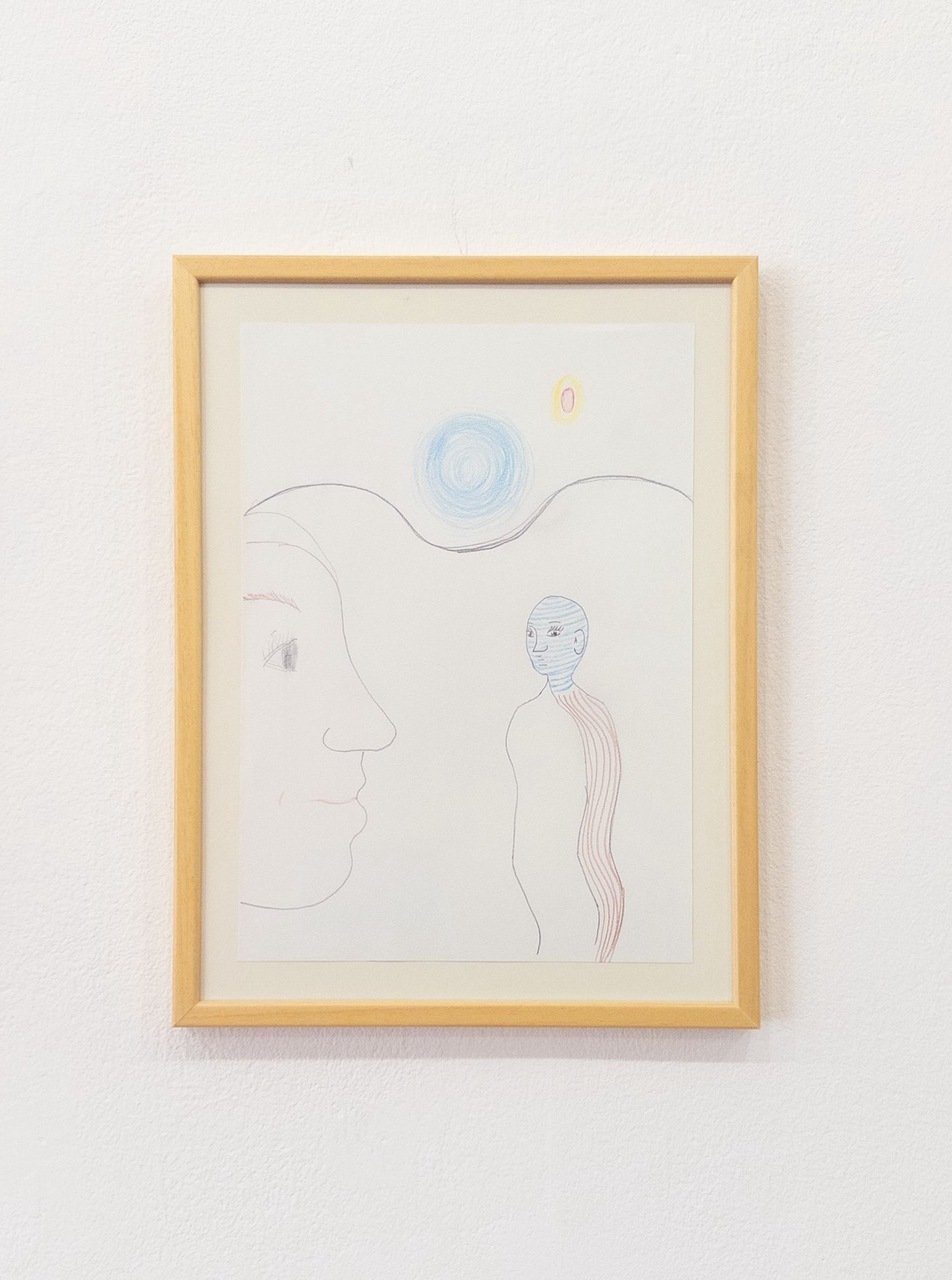
LRT: Róza’s smiling faces and drawings can also be connected to the Energetic Scores. They seem like a kind of manifestation as well — an attempt to bring joy to people.
REH: I try. There’s also a sense of childlike wonder in them. Imre Kertész (Hungarian author who won the Nobel Prize for Literature in 2012) is one of my greatest role models, particularly in the way he depicts the world from a child’s perspective. When I read his work, I realized that I, too, aim to look at the world through a child’s eyes. I want to convey a certain openness, a lack of prejudice. But it’s not a conscious decision. It comes from the subconscious when I’m drawing.
LRT: As a closing thought, I’d like to return to what, for me, is perhaps the exhibition’s central message: art-making as a method of coping with life.
REH: That’s one of the reasons the Arte Povera connection is so interesting. It takes the natural objects that surround us and brings them into the work, arranging them in new ways. It brings art closer to life, rather than turning it into an abstract artistic movement. Work becomes part of life.
LRT: Which is also reflected in the title: Ways of Being.
RL: That’s what I enjoy about this profession, and what I truly believe in — that it’s possible to work without suffering. To expand our understanding of what work can be. It can be joyful. It can become so light and pleasurable that you barely notice you’re working at all. If I’m alive, then I want to enjoy being alive.
REH: You simply do it, and it carries itself forward.
RL: It’s like being on a playground. But because I’m an adult, I learn much more from it.
REH: In play, things scatter in all directions. Here, there is also something that coherently holds everything together.
RL: The mind remains alert. But it doesn’t become fragmented or rigid because of that.
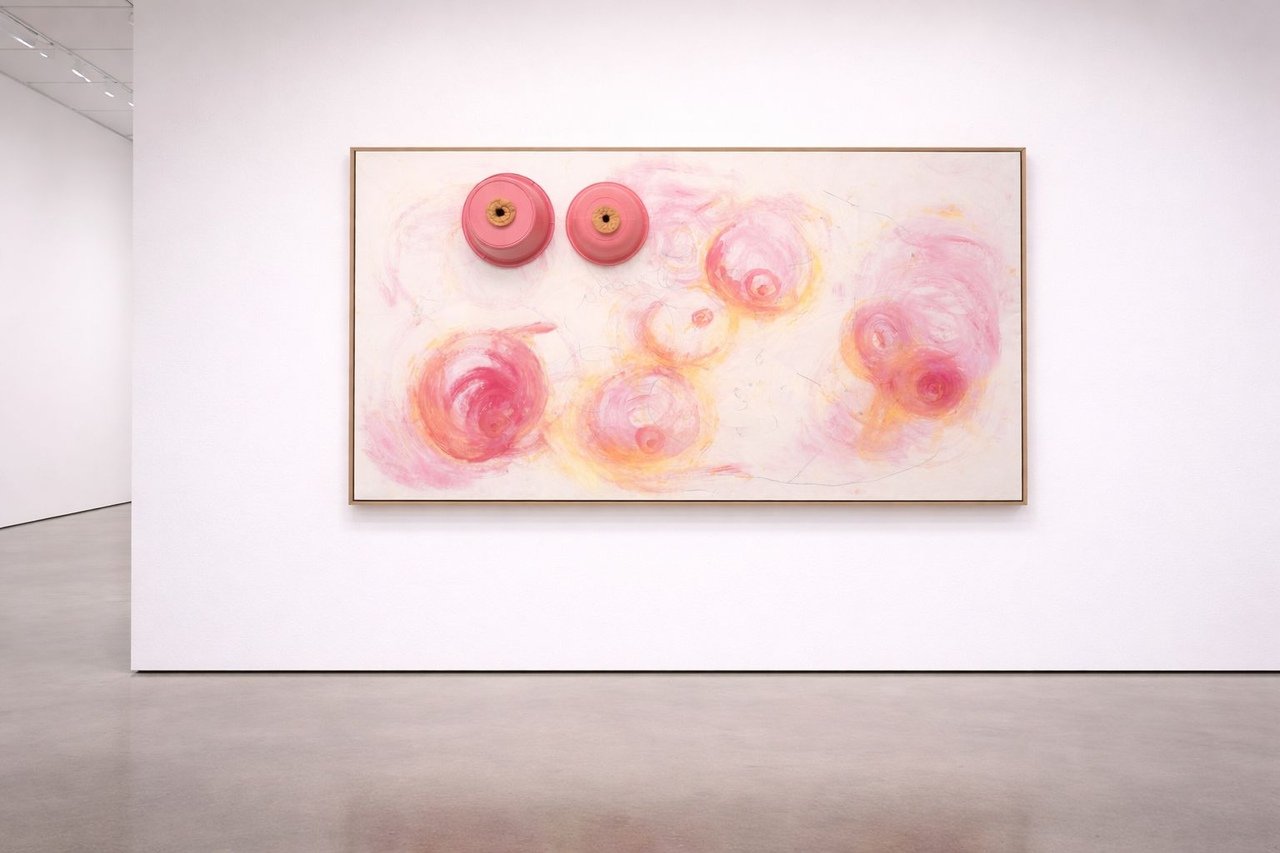
293 x 149 x 20 cm. Courtesy the Artist, ICA-D, and Longtermhandstand.
Artists: Róza El-Hassan, Réka Lőrincz
Exhibition Title: Ways of Being
Curated by: Sonja Teszler
Venue: ICA-D
Place (Country/Location): Dunaújváros, Hungary
Dates: 21.03 – 30.04.2026
Photos: