
Eugene Yiu Nam Cheung
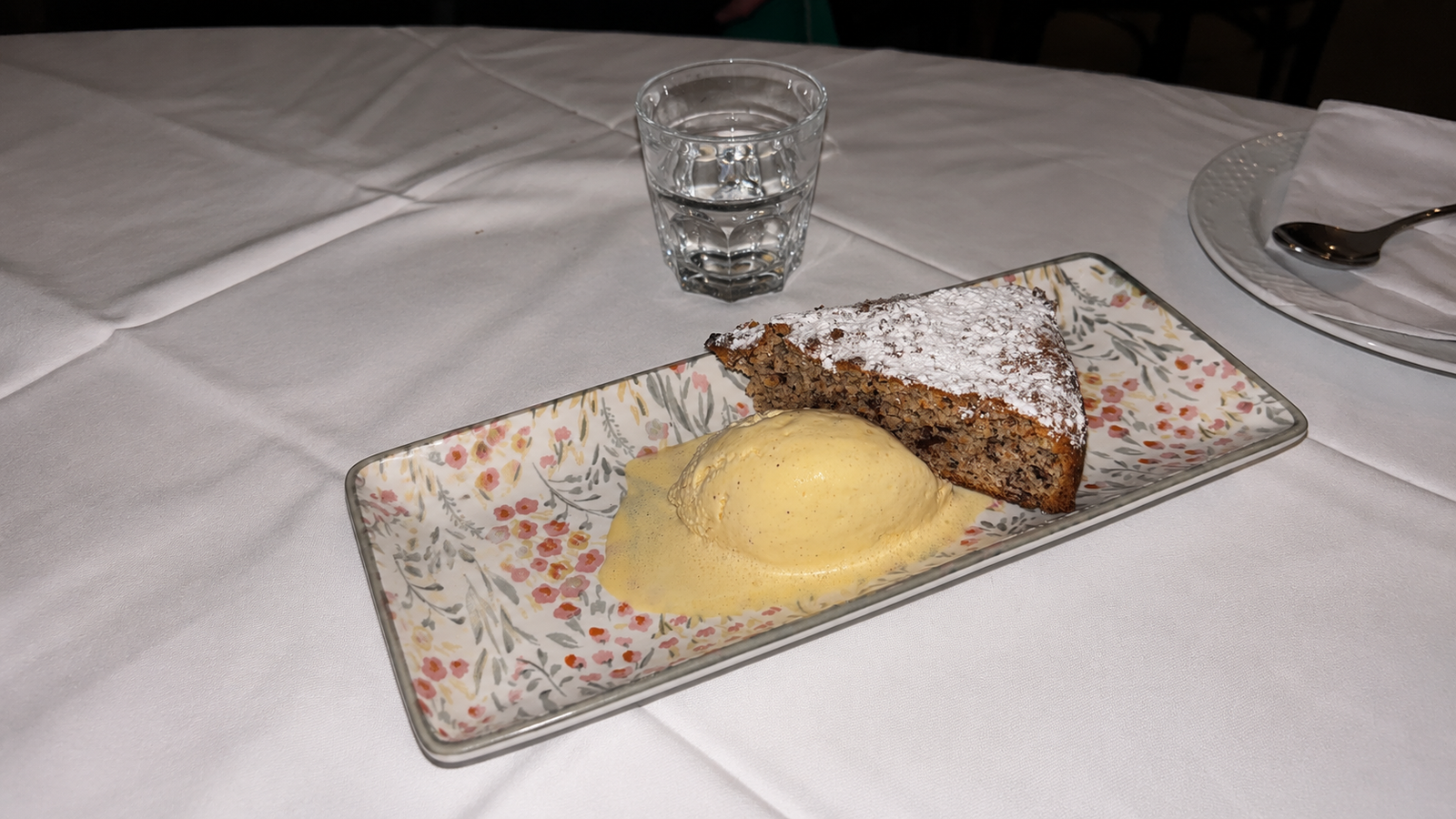
Vienna: exhausted city, ruined city, city with a café that boasts the continent’s second-largest mirrors, dwarfed only by their sister in Versailles. A white woman with frail wrists, green eyes, and ebony hair sits alone at a table for two in front of these mirrors. She is eavesdropping on a Japanese man at a table diagonal to hers with Herr Ober towering above him. They are arguing over the gratuity the Japanese man has left for a slice of Sachertorte, an espresso, and a glass of milk.
The Japanese man complains of his Sachertore being too dry. The sponge fell apart in his mouth like a ball of sand, he says, before mixing with his saliva and transforming into a paste that sat on his tongue, palate, and the insides of his cheeks like mud. Because of this, he could scarcely finish three spoonfuls before his espresso and milk had depleted, both of which proved functionally necessary to eat this famous cake, and therefore served a purpose no different to water, which he ought to have ordered for free, instead. His was an entirely unpleasant experience and thus the gratuity, he insists, should be commensurate to the quality of the food rather than to its service – fifty cents.
To hell with it, you’d be better off at Hitler’s favourite Café Sperl!
The woman registers in Herr Ober’s retort the significance of this other café as a historic site. She conjures the image of the tyrant with his moustache flecked with clotted cream and chocolate, smirks, and proceeds to hastily type the establishment into her phone – Caffe Shperl – before swiping away to turn on its camera, directing the lens outwards into her reflection. Whatever is grand of the gilded mirror and the world it captures – golden chandeliers, bronze sculptures, marble walls, ornate stucco – is lost in their compression on her screen. She recognises the feelinglessness of the image that she is to take, but she doesn’t hesitate, angling the phone such that it ejects both men from the frame. She glances upwards to accentuate her profile and pretends as if she is marveling at the room. Immediately after she takes this image, there is a feeling of indifference. She has captured nothing more than a silhouette pressed into a diminished shell of decadence. She will never look at it again.
Yes, what big mirrors indeed!
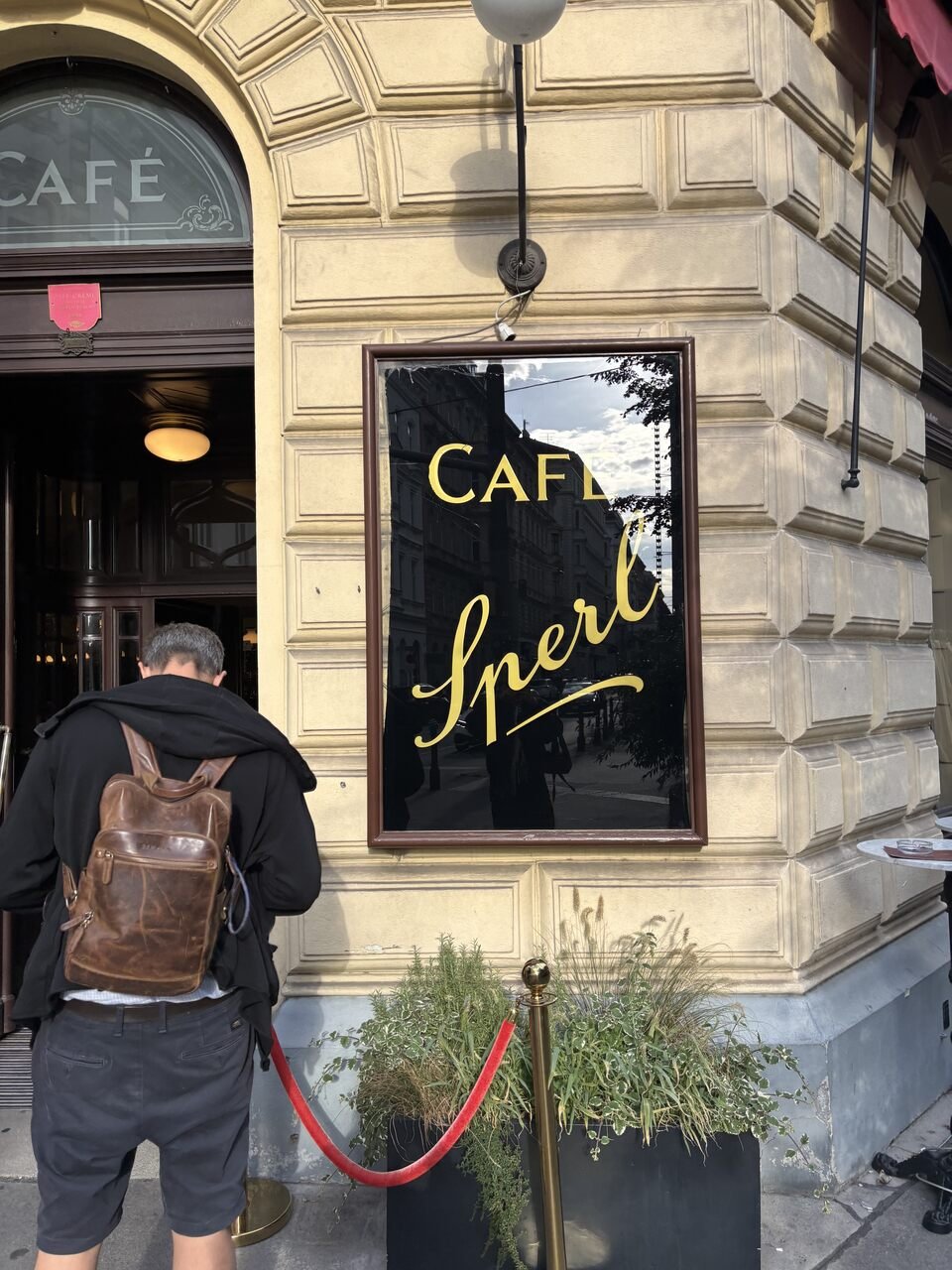
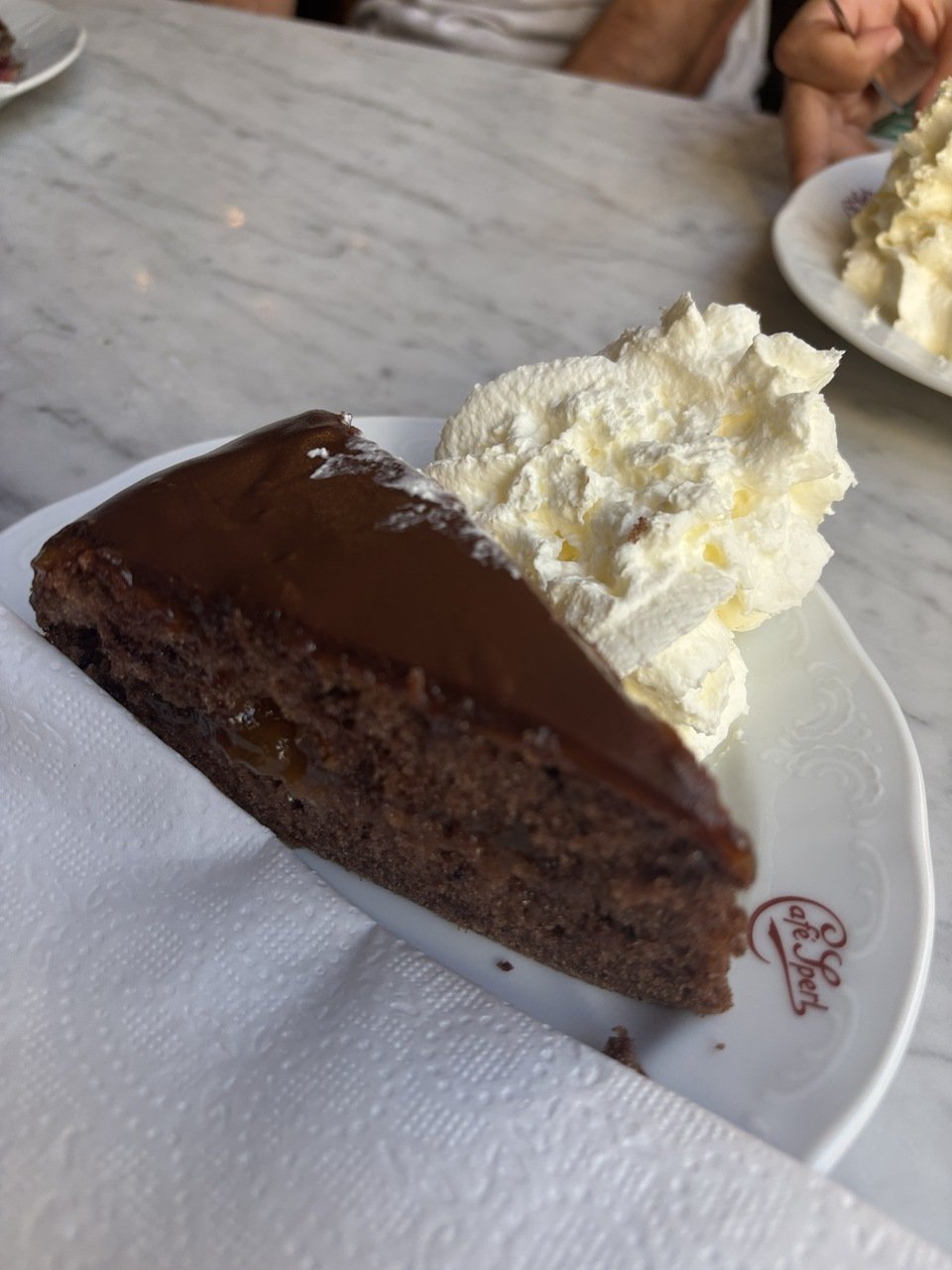
From the starched uniforms of every Herr Ober to the antique fixtures inside each coffeehouse, the practice and theatre of culinary leisure in Vienna is moved by a longing for its imperial past. Antecedent empires are embalmed in buttercream, traceable and evoked through names like Sachertorte, Esterházy Torte, Imperialtorte, Kaiserschmarrn… What to make of a culture whose most primal desire (eating) is so inalienable from this taste?
Ernst Bloch: “The psychoanalytical doctor and above all his patient come from a middle class which until recently had to worry little about its stomach. When Freud’s Vienna became less carefree though, there was a psychoanalytical advice bureau for attempted suicides… However, even in bourgeois déclassé Vienna, the notice hung on the wall of the [psychoanalytical advice] bureau: ‘Economic and social questions cannot be treated here.’ … Hunger and troubles constrict libido in the lower class; there are fewer noble sufferings here, and they have a more tangible cause with a less sophisticated name… the fear of losing one’s job is hardly a castration complex.”
It could be said that the fear of losing one’s job is divine in character. That, for the wage laborer, joblessness is a spectre from apocalyptic scripture. The most masterful rhetoric in the Book of Revelation are those passages that reconstitute our fears into inevitabilities: “They will long to die, but death will elude them” – and so on.
The art critic – bourgeois by disposition and sometimes, but not always, by inheritance – finds themself in a peculiar position. They must grapple with the precarity of their work whilst fulfilling a mandate to imply, or expressly state, which artists they believe are or are not worthy of their job. Theirs is an assessment that conventionally turns on an analysis of the art object and its exhibition vis-à-vis the resolution (or not) of its purported intellectual inquiry. A middling critic argues predominantly on the basis of aesthetics and formalism, whereas the maven goes beyond what is perceivable to strike at what is profane, and why. In other words, the maven follows history.
Four art critics briefly inhabit the same world as the Japanese man, Herr Ober, and the tourist. The critics, standing outside the café, are unaware of the heated exchange between the Japanese man and Herr Ober, and care little of the mirrors inside. The critics have found themselves at the café – and certainly in Vienna – not through want of sightseeing but that of refreshment. As participants of a “critics residency” the four are here to enhance their understanding of Vienna’s cultural taste, and perhaps find themselves invigorated by the artists they encounter. Herr Ober finds the critics outside, looks at them disapprovingly, and informs them that a table could be free in ten minutes. They decide to wait.
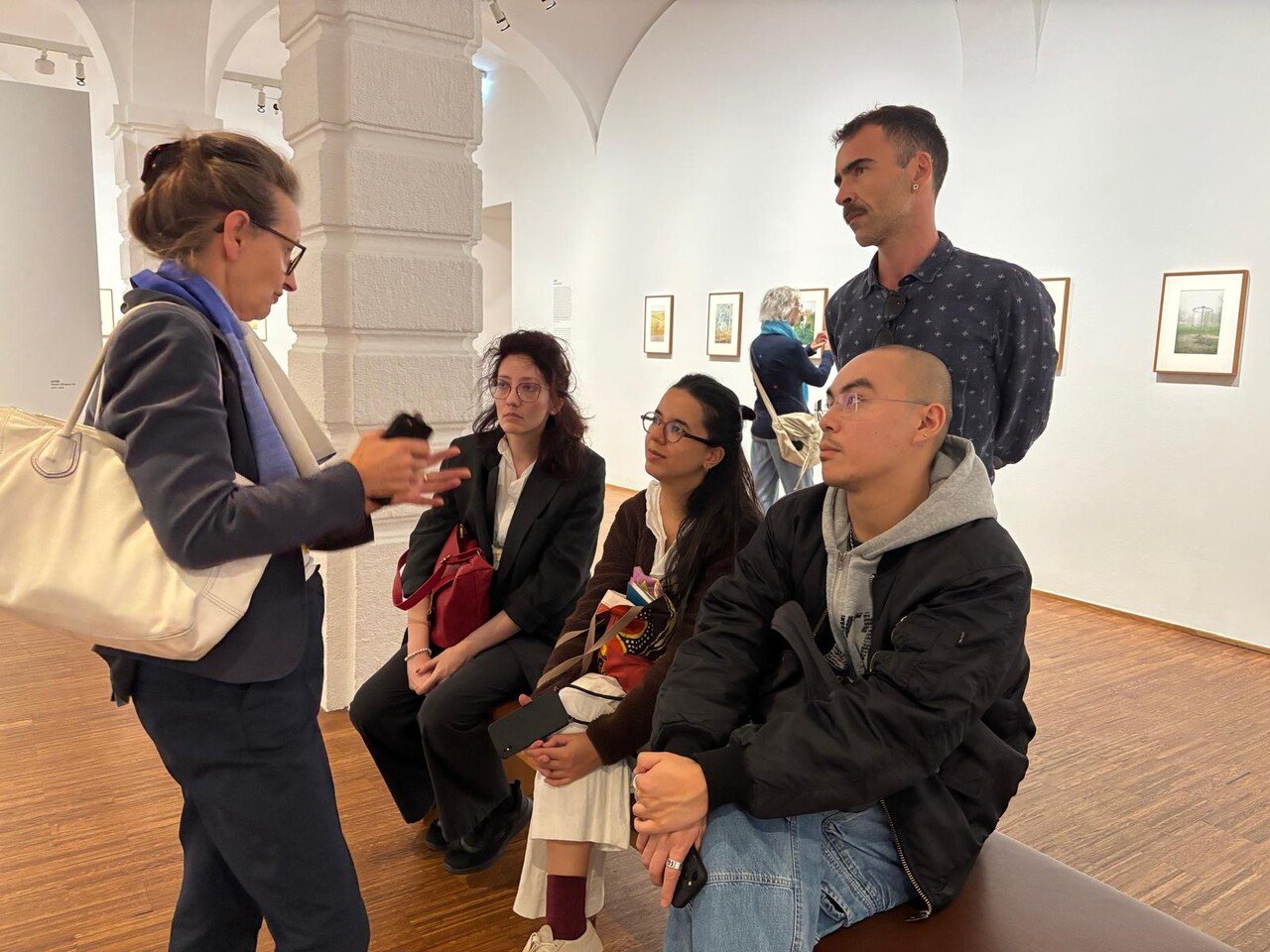
Eugene Yiu Nam Cheung with artist Jitka Hanzlová. 2025, Vienna. Photo by Dejan Kaludjerović.
The critics have just met the photographer Jitka Hanzlová for a private walkthrough at the Albertina Museum where her retrospective, Identities, is on view. The exhibition presents an array of images taken across Hanzlová’s career that are unified by her devotion to essentialism and the banal. In the series Female (1997–2000), portraits of women strangers that the artist met across Europe, North Africa, and America are presented as individuals stripped of all history beyond their gender. Little else unifies the women: Hanzlová’s images read simply of her happening across women and imposing her will to photograph them. A marginally more layered interpretation is offered by the artist, twenty years prior: “When depicting women I am primarily interested in abstracting their unique emotional state.” Each woman is captured in a vertical composition, a standard portrait shot from the waist up, and dons a neutral expression. Whatever “interest” Hanzlová might have in representing the many dimensions of female interiority manifests not in abstraction per se, but in her reduction of this subject into uniform, conventional, and categorical frames.
Another series, Rokytnik (1990–1994), shows inhabitants of the eponymous village where the artist grew up in former Czechoslovakia. In 1982, she left Rokytnik for a vacation to West Germany that proved, compared to her village, so wondrous and plentiful that she decided to stay. One is reminded of how a vacation is a form of leisure that exists within the terms of “free time.” Per Marx, “free time – which is idle time and time for higher activity – [naturally transforms] its possessor into a different subject, and he then enters into the direct production process as this different subject.” For Hanzlová, this free time in 1982 presented her with the tantalising image of economic mobility, a higher possibility that she seized and successfully exploited to become the subject of the institutionalised artist. Her leaving Czechoslovakia is continuous with the understandable (and ultimately commonplace) choice of those who emigrate to improve the material conditions of their life.
However, institutional framings of Hanzlová figure her as an “exile.” A more politically engaged valence is grafted onto her work through the use of this curatorial language; a strategy to buff-up the bona fides of an artist whose emigration was, doubtless, motivated more powerfully by economic desires than by persecution. Indeed, in neither the exhibition nor in Hanzlová’s life is there evidence of any subversive political tendency that might justify invoking, and evoking, “exile” to describe her move from Czechoslovakia to West Germany. Rokytnik presents images of the inhabitants of the village after the so-called fall of communism, taken by the artist when she was more freely able to return home. In these photographs, like those in Female, Hanzlová’s subjects are strung together by nothing more than their relation to one essential detail: there it was gender, here it is place.
To the four critics at the Albertina, Hanzlová explicates in unsparing detail the minutiae of her life to convince them of the thesis underpinning her practice: that personal experience is universal, and that there is a shared essence between the people she captures. When asked of this common quality and how she selects the subjects that prove her hazy notion that the particular is universal, Hanzlová simply grins, points at her stomach, nods slowly, and whispers: “I feel it here.” Hegel she is not.
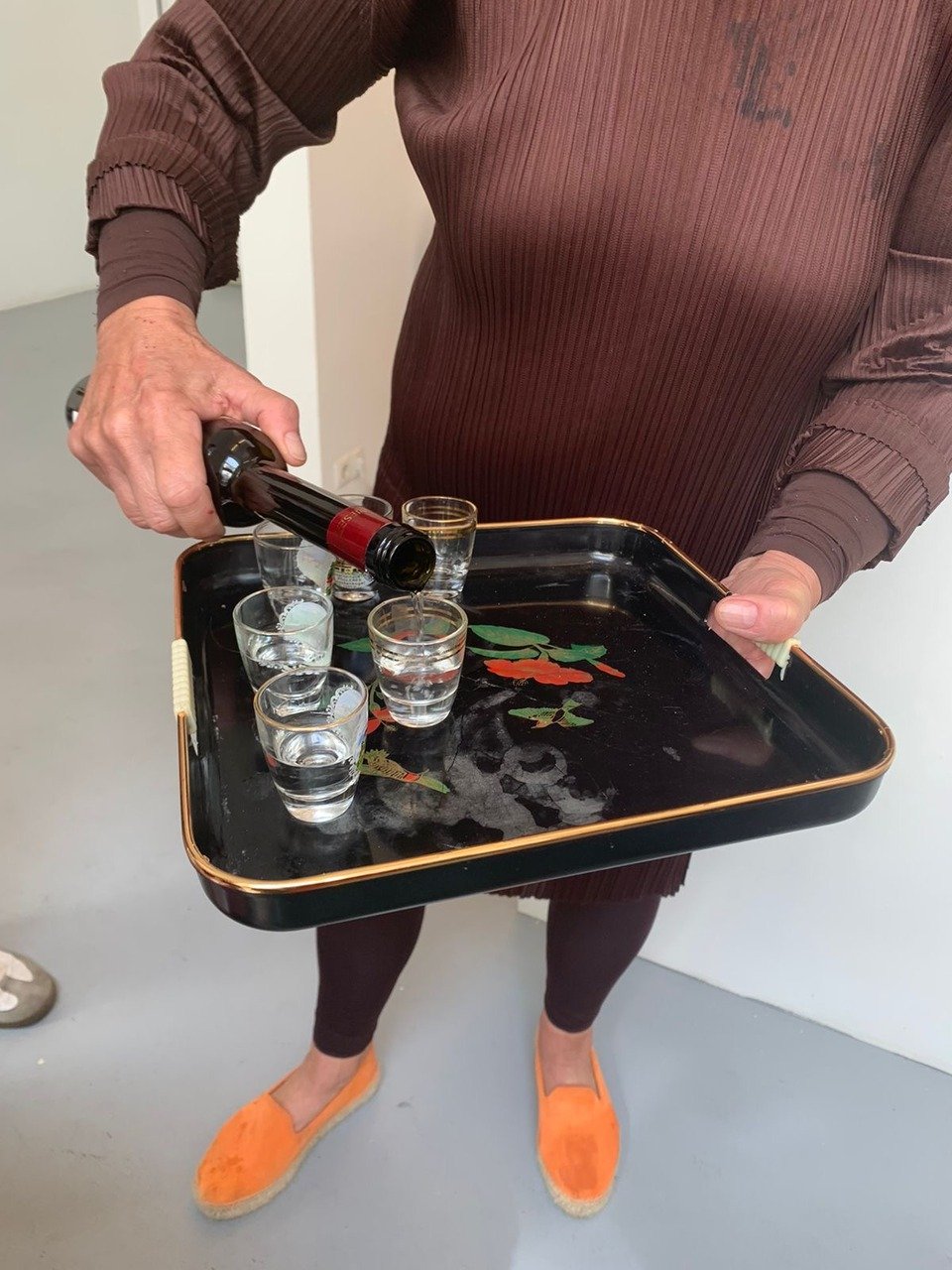

The sun, uncharacteristically bright for a September day in Vienna, sweeps past the awning of the café and clears away any shadow that could provide respite. How hot the day is, what a chore these people are, Herr Ober mutters to himself, looking peevishly at the growing line behind the four critics, who themselves do not exhibit any sign of impatience. In fact, as their discussion on Hanzlová continues, they appear to have forgotten about the refreshment they originally sought.
“This is ethnographic photography,” notes Critic One, “the curators may reject this relational ontology… but is it not somewhat disingenuous to conceal it entirely from a blockbuster audience?” Critic Two agrees, proposing that “one has the impression that Hanzlová is as close as possible to her subjects, but never enough… the eyes of the portrayed seem to evoke a single homogeneous gaze, [that] of Hanzlová herself.” After a brief silence, Critic One speaks again. “I returned to my first impulse in this imposed encounter – the only ethical one – to look away.” Critic Three posits that “the main art spaces in Vienna… [have] a bit of a ‘last ball’ flavour, with most shows ignoring the turbulence of History, past and present. The sound of music at this Viennese ball of sorts effectively [overshadows] any noise coming from the outside.” A more complex or rigorous interrogation of history is forsaken to reify the lie that the institutionalised artist is singular, says Critic Four. What makes it interesting or ethical, he wonders, to program the art of Hanzlová: an artist who has only herself to mediate an entire epoch, and who cannot wrest herself from mystification or self-mythology to articulate a meaningful relation to others?
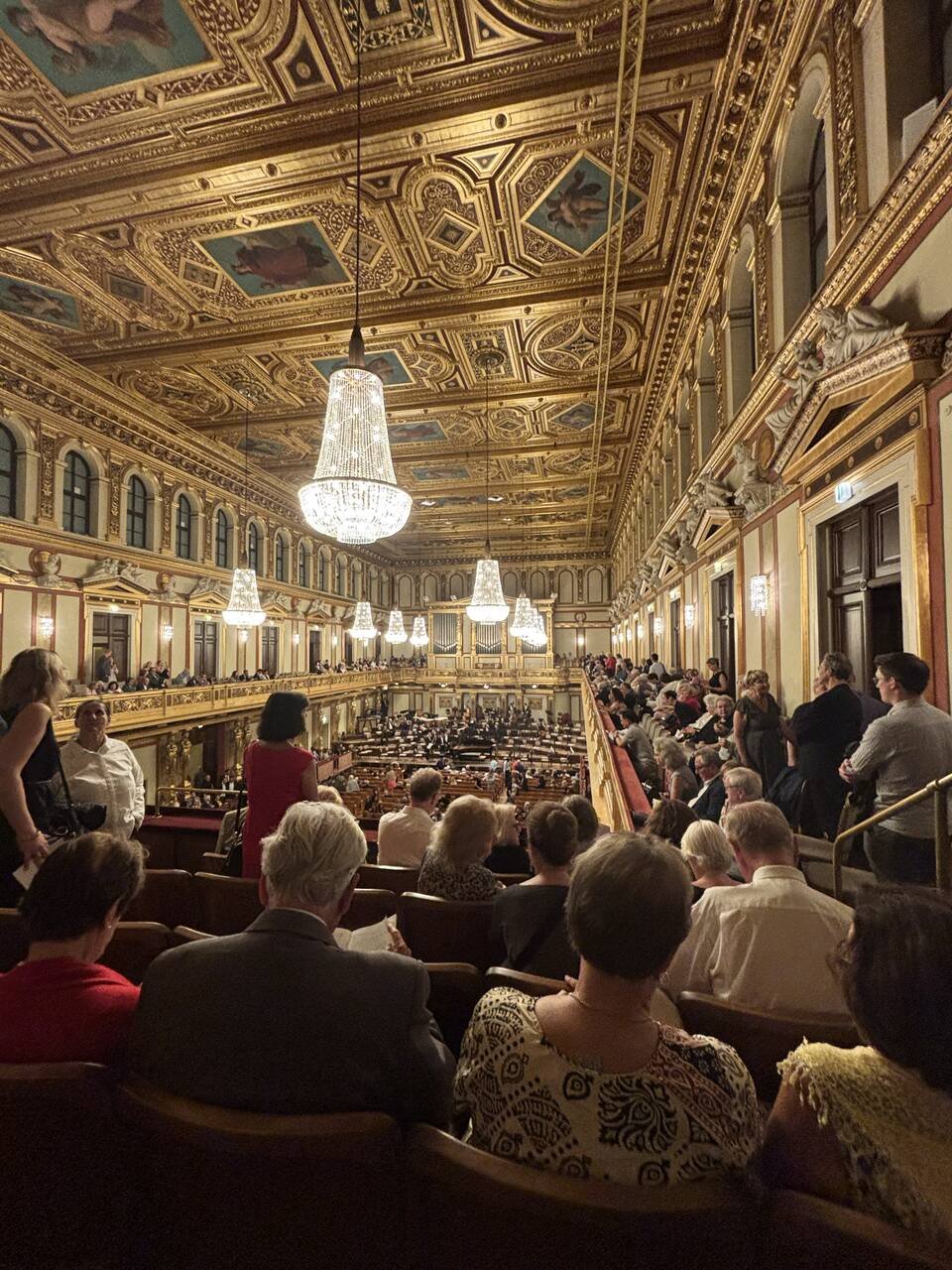
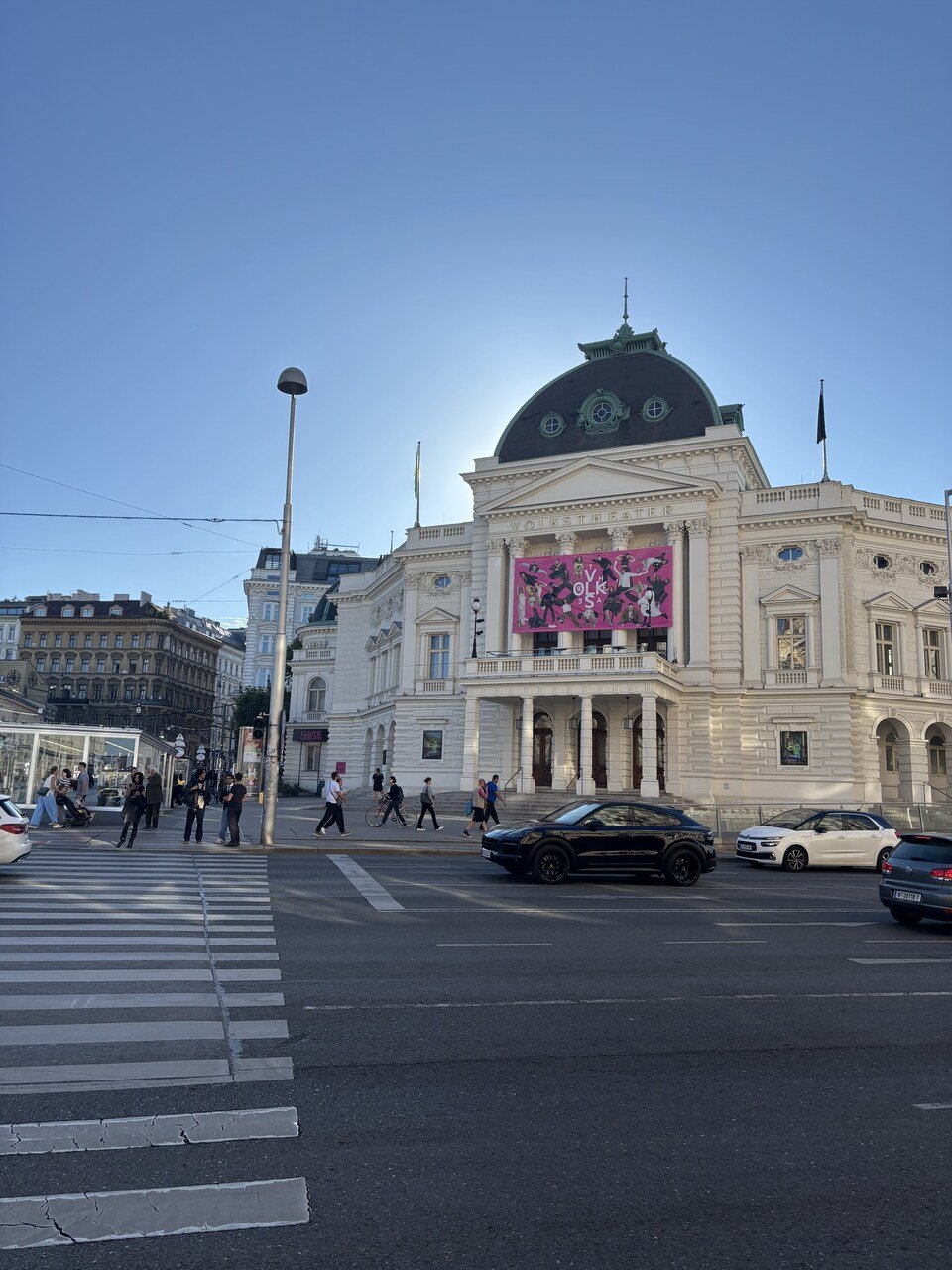
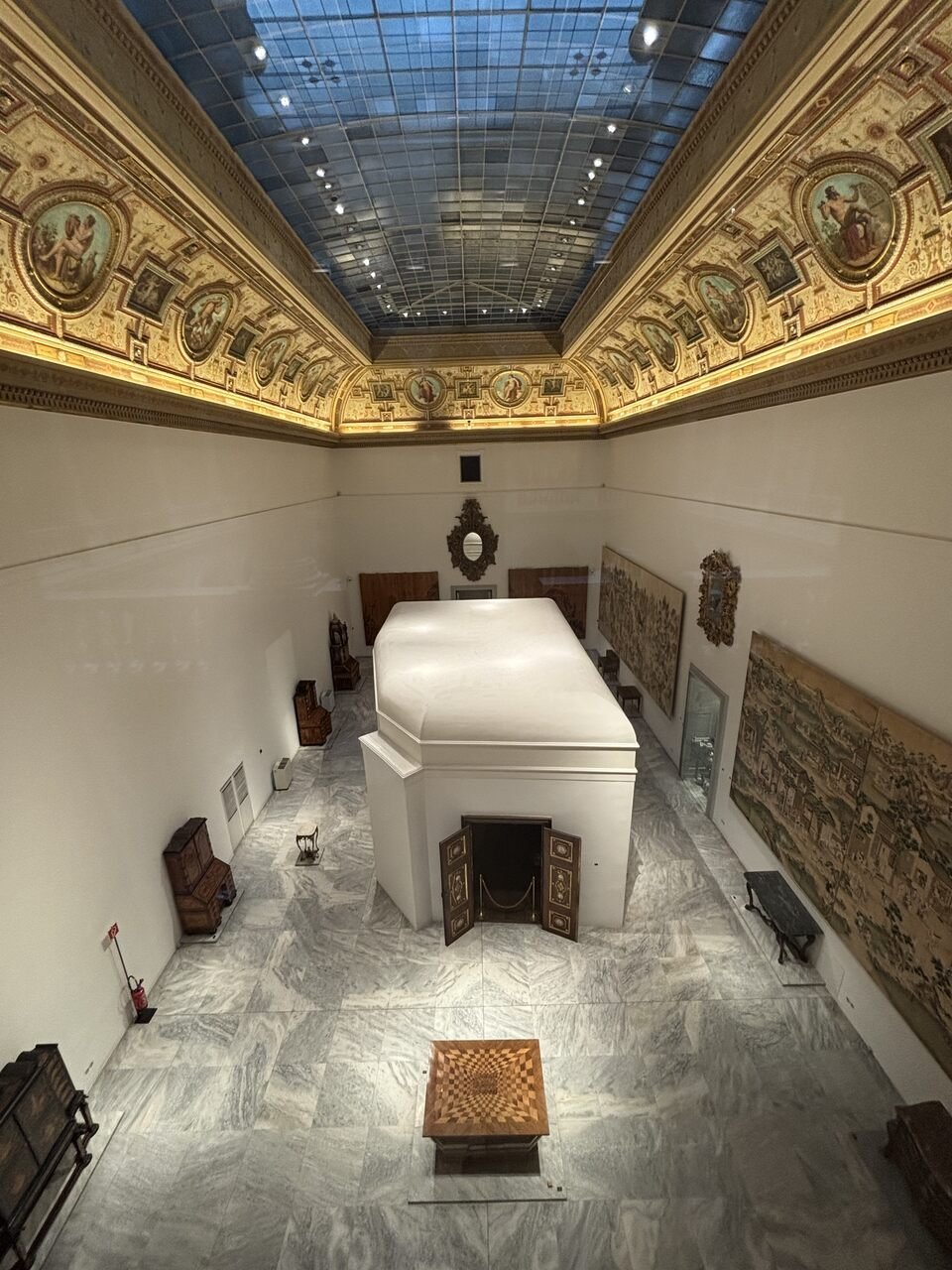
A return to Critic Three, then. What is happening outside? The aberration of a genocide in Gaza; permissive governments all over encouraging their citizens to turn away from the suffering of others; an immoral culture that criminalises those who organise for Palestine, which is to say, against the avarice of the state line. Inside: a Viennese institution censors artists for communicating a politics of solidarity with the oppressed, students similarly expelled. Here is a more unequivocal and convincing link between the universal and the particular. The state’s messaging could not be more clear: obey and you shall be spared. Indifference and cruelty are the two largest mirrors that the European has ever known – far greater than whatever lies in Versailles.
The white woman with frail wrists, green eyes and ebony hair exits the café. She notices the line of patrons and, in the discordant tones of her American accent, affirms to those waiting just how beautiful the interiors are, but should they like to escape the blaring sun, they could visit Caffe Shperl instead for a comparable Viennese experience. The woman is pleased with herself, smug with the glory of local nous. Critic Four takes out his phone to search for this Caffe Shperl, quickly registers its past associations with Hitler, and shares his findings with his colleagues. The critics seem to agree that stumbling upon this fact feels honest to their being in Vienna and its history; more honest, perhaps, than any exhibition they might encounter in the city. And so, they set out to see it.
This review was produced in the context of the residency program Visiting Critics Vienna 2025 organized by Vienna based arts and cultural organisation Verein K, and with support from the Austrian Culture Forum in Warsaw.