
Lizaveta German
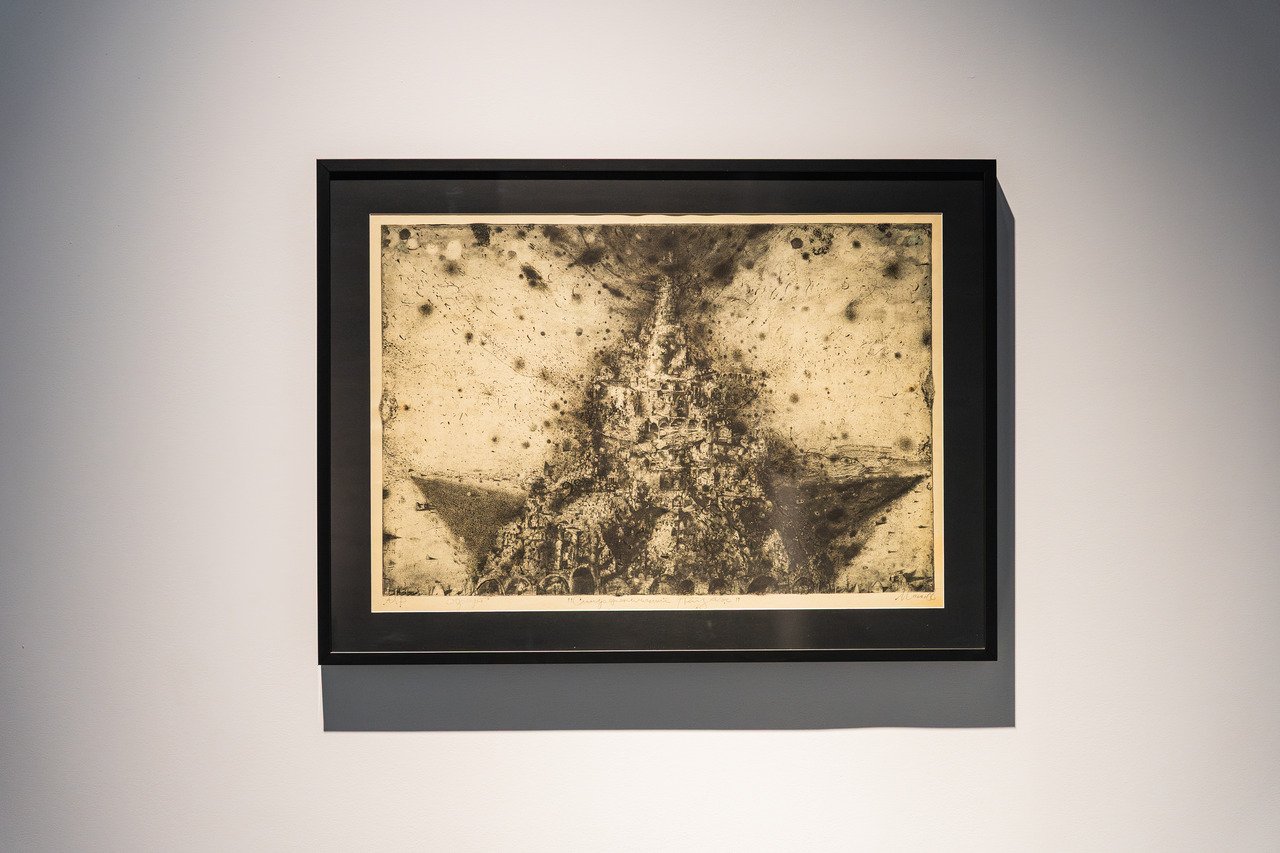
What do we see when we look at Pavlo Makov’s etching, Simferopil Landscape? A phantasmagoric Tower of Babel, a symbol of a once-seemingly stable entity that is shaking and cracking on the eve of the Soviet empire’s collapse? A sort of an anthill; a pile of things in a chaotic interaction with one another? A steep mountain covered with some sort of cave homes, standing bare under two suns — we cannot see them actually, only the two dark shadows they cast. This is the work that opens the show, “What We Talk About When We Talk About Crimea,” which is on view at CCA Ujazdowski Castle until June 28th.
Simferopil Landscape was created in 1988, during the brief period when young Makov, now one of the most renowned living artists of Ukraine, was based in Crimea, before settling in Kharkiv. That same year, Makov was also invited to participate in the so-called “Sedniv Plein Airs” — an artistic residency organised by the Union of Artists’ most progressive members, an event many researchers now consider a turning point in the emergence of the contemporary art scene in Ukraine. 1988 was also the year when the author of this text was born. For my generation, whose childhood and early teen years were in the 1990s, the Crimean peninsula, or “Krym,” with its magnificent beaches and endless sea, was the epitome of summer. Little did we know, in those careless young years, about the price that was paid for those magnificent “made in USSR” white sanatoriums, the youth camps, and small cottages in the so-called “private sector” along the seashore — built on land from which the native Crimean Tatar people had been forcibly expelled during the Second World War.
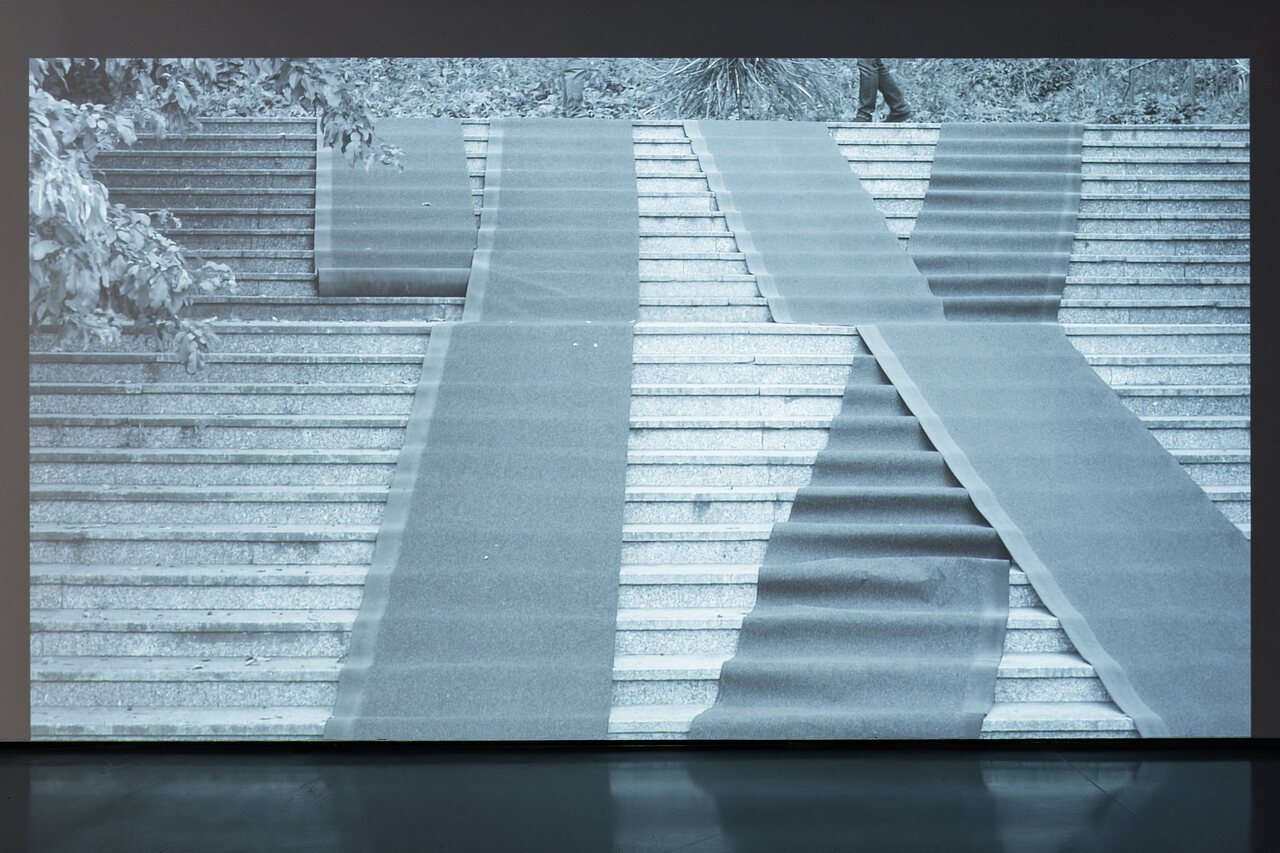
photo: Dominika Jaruga. Image courtesy of the artist.
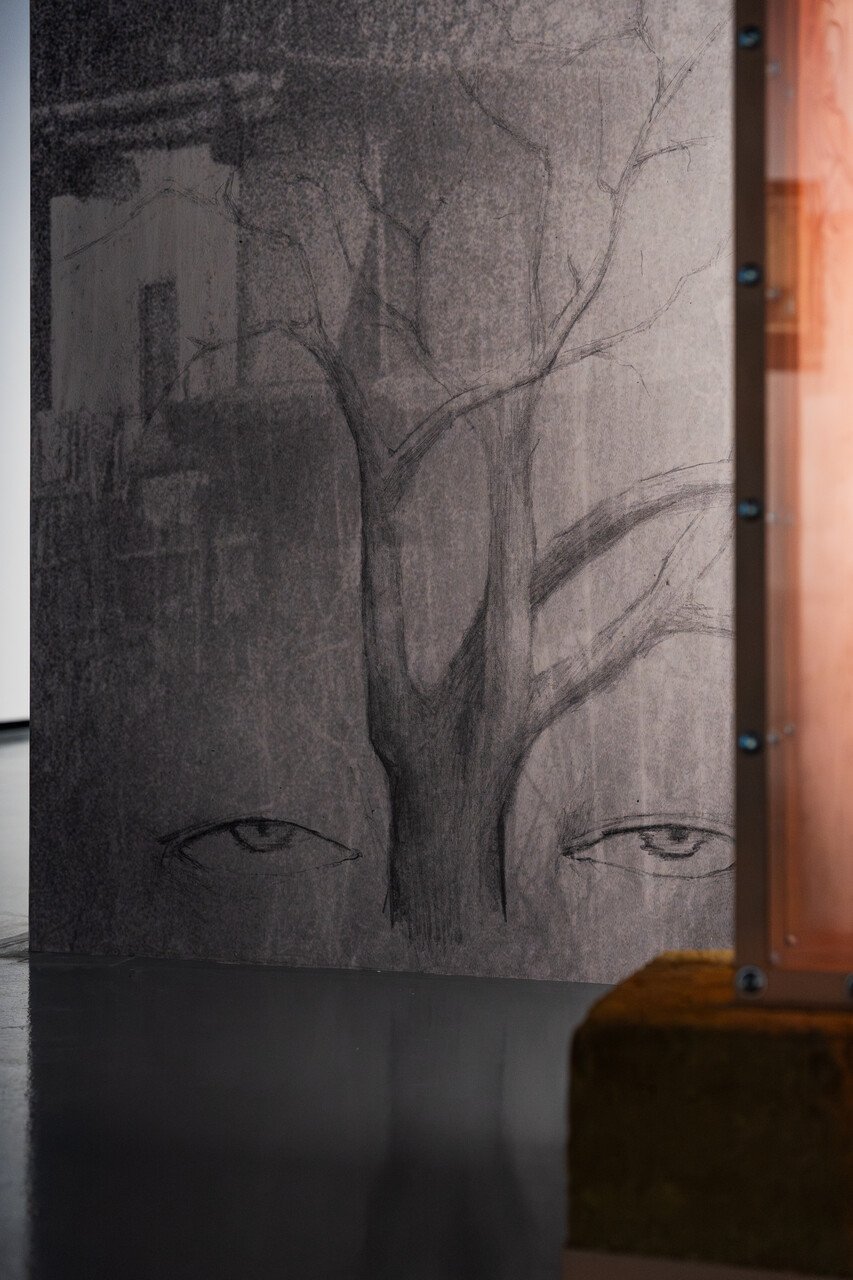
And it was precisely in the 1990s, as we were bathing at Mishor or enjoying the funicular ride to the touristy Ai-Petri peak, that Crimean Tatar families were moving back from decades-long exile to reclaim their land and rebuild their homes. In most cases literally from scratch. Available materials they used in construction at the time included shelly limestone and ruberoid. The former is a locally sourced material, which was widely used for building in the peninsula historically, returning to construction in the 1990s. The latter is an asphalt-based waterproof roof covering that accompanied the limestone for a quick, relatively cheap but not very long-lasting home building method.
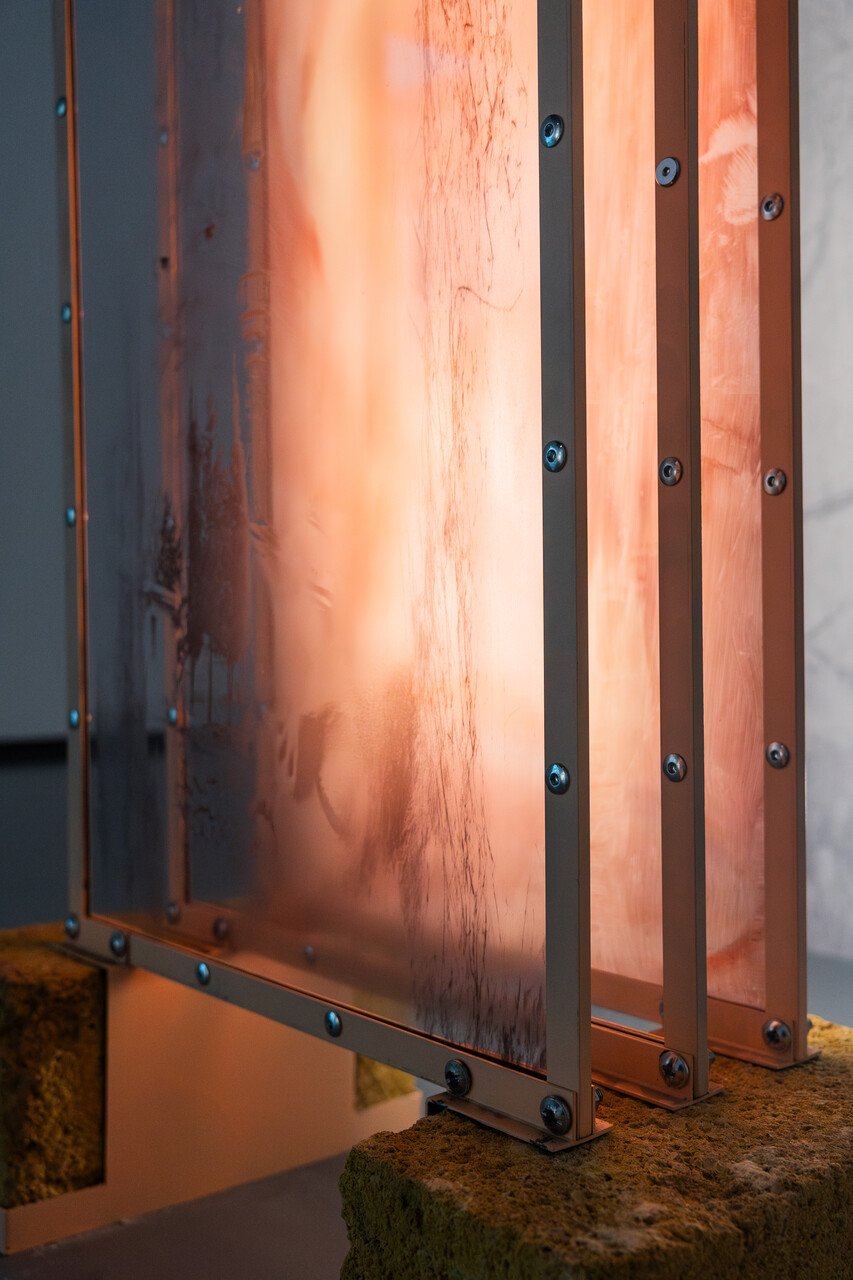
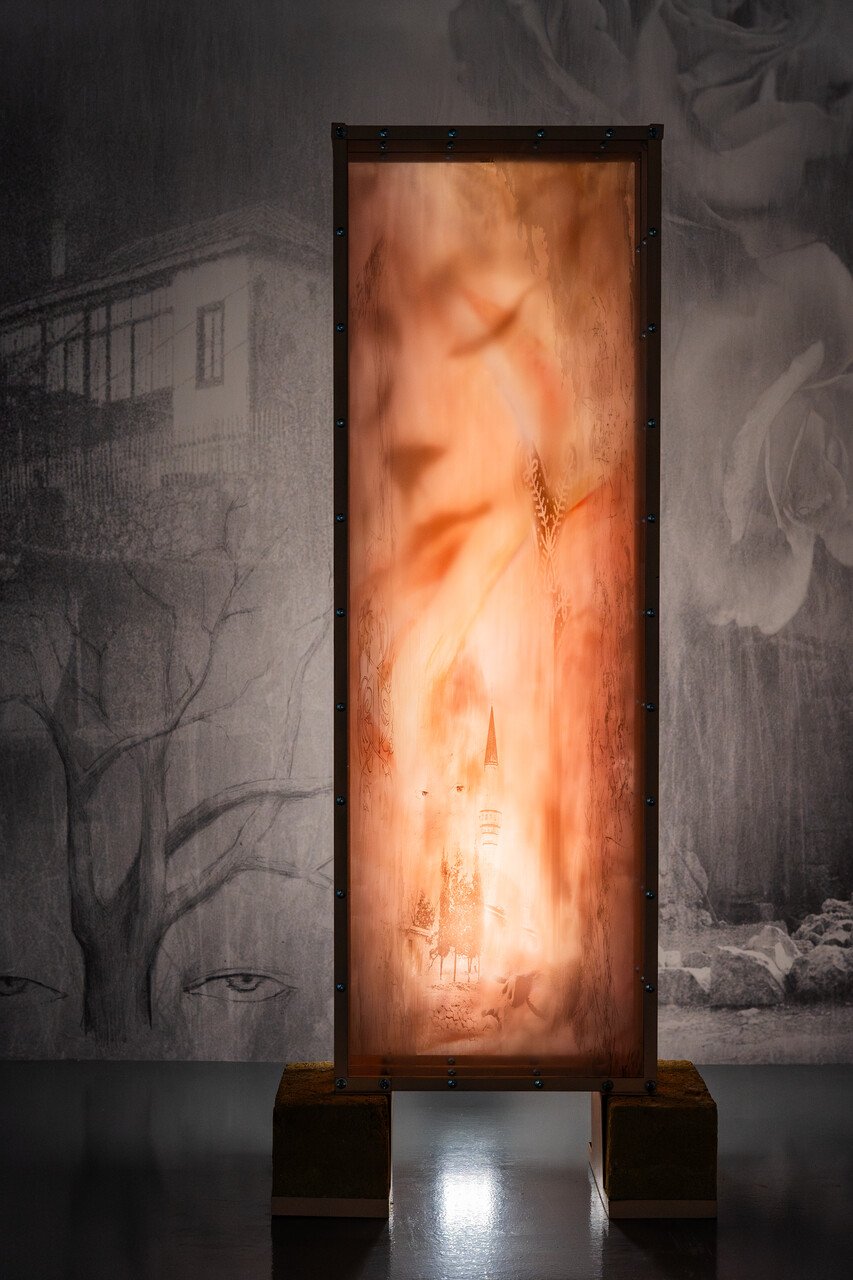
We encounter both materials in the very first exhibition room, right next to Makov’s etching. Limestone blocks serve as a base for a sophisticated, multi-layered installation by Sevilâ Nariman-qizi, an artist and graphic designer of Crimean Tatar origin. Ruberoid (also known as roll roofing or tar paper) appears in the video work, where it serves as a prop for the repeated actions of two performers — Vlodko Kaufman and Khalil Khalilov. The artists fold and unfold large rolls of this material on the stairs of Ujazdowski Castle, as if restaging a silent ritual.
While looking at these pieces together, as if at a starting point or an opening statement of the show, one simple observation struck me: all four artists have accidental geographic interconnections in their life paths. After studying in Crimea for several years, Makov went to Kharkiv to live. Several decades later, Sevilâ Nariman-qizi made the same move, only to realise she cannot travel back to her hometown while Crimea is under russian occupation. Khalil Khalilov also left Crimea after the 2014 occupation. He moved to Lviv, the hometown of Vlodko Kaufman, one of the best-known figures of Lviv’s art scene. And Kaufman? Well, being somehow sure that he was a native of Lviv, I was surprised to discover the real story of his origin and early years. The artist was born in Karaganda, Kazakhstan, the country where Crimean Tatars were deported to in 1944. Kaufman’s family story has nothing to do with this, but reveals another layer of entwined narratives. He was the son of an ethnic German father from the so-called Volga German Autonomous Soviet Socialist Republic (1918–1941), and a Ukrainian mother, both deported to Siberia where they met, married, and later moved to Kazakhstan to give birth to their son and then, to divorce. Kaufman’s mother was, in her turn, a victim of another earlier deportation during the infamous Vistula Operation after the Second World War. She returned to the Lviv region only in 1985 to reunite with her son, Vlodko, who had graduated from the Lviv National Academy of Arts to realise his childhood dream of living in Lviv. While this family saga may distance us a bit from the topic of the exhibition, at the same time, it brings us closer to its essence — unveiling the tangled, perplexing identity of a certain place; to think about aloud, all the ways we may approach it today. A place that is one among many in the present-day geopolitical map.
The exhibition was commissioned by the Ukrainian Institute and produced by the Past/Future/Art “memory culture platform” — an independent institution led by curators and historians. In recent years, Past/Future/Art has launched several projects at the intersection of art and memory, focusing on the commemoration of the ongoing russian–Ukrainian war. This constellation with the CCA Ujazdowski Castle, a partner with a long history of supporting the Ukrainian art scene, gives the show a clear political background — the support of the uncompromised Ukrainian agenda for Crimea and its legislative status. But it also doesn’t lean into a project that’s conceptually too straightforward, as could have been expected by a state-backed project. It is not a “cultural diplomacy” showcase, but a critical show built around a subjective curatorial narrative.
So, what do we talk about when we talk about Crimea, as curators Kateryna Semenyuk, Alim Aliyev, and Oksana Dovgopolova invite us to consider? In the introduction text, we read that for contemporary Ukrainian artists — and non-artists, I may add — thinking about Crimea predominantly means reflecting on kinship and loss, namely after the outbreak of the russia-Ukraine war in 2014. But not only.
To quote the curators: “Each of the works in this exhibition simultaneously presents the view of an individual who is marked by their own experience, and mirrors the collective examination of the time we find ourselves in.” The important point for me here is the timemark. The show juxtaposes these various personal, if not intimate, reflections of people with quite different backgrounds and attachments to Crimea. And it underlines that these positions belong to the time we find ourselves in. Not to the past — though some works, like Makov’s, were made a while ago — and not to the visionary future, but to today. Twelve years after annexation, after a whole new generation of children has been raised outside of their familial hometowns in Crimea — or, if we are to face a bitter fact, have remained there but under a different political regime, with the prospect of receiving russian passports and entering russian universities. Four years after the start of the full-scale war, those optimistic dreams about bringing the peninsula back to Ukraine are not that easy to dream about anymore.
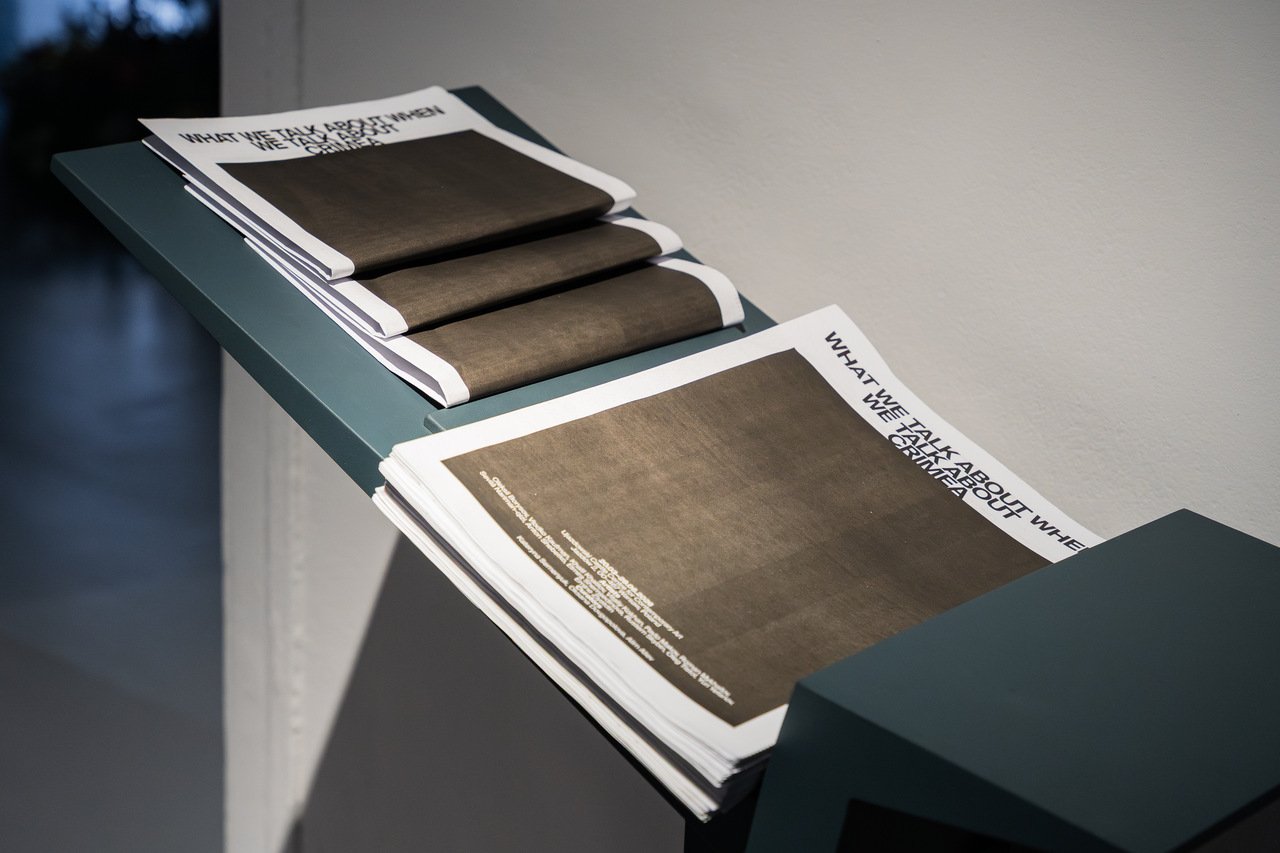
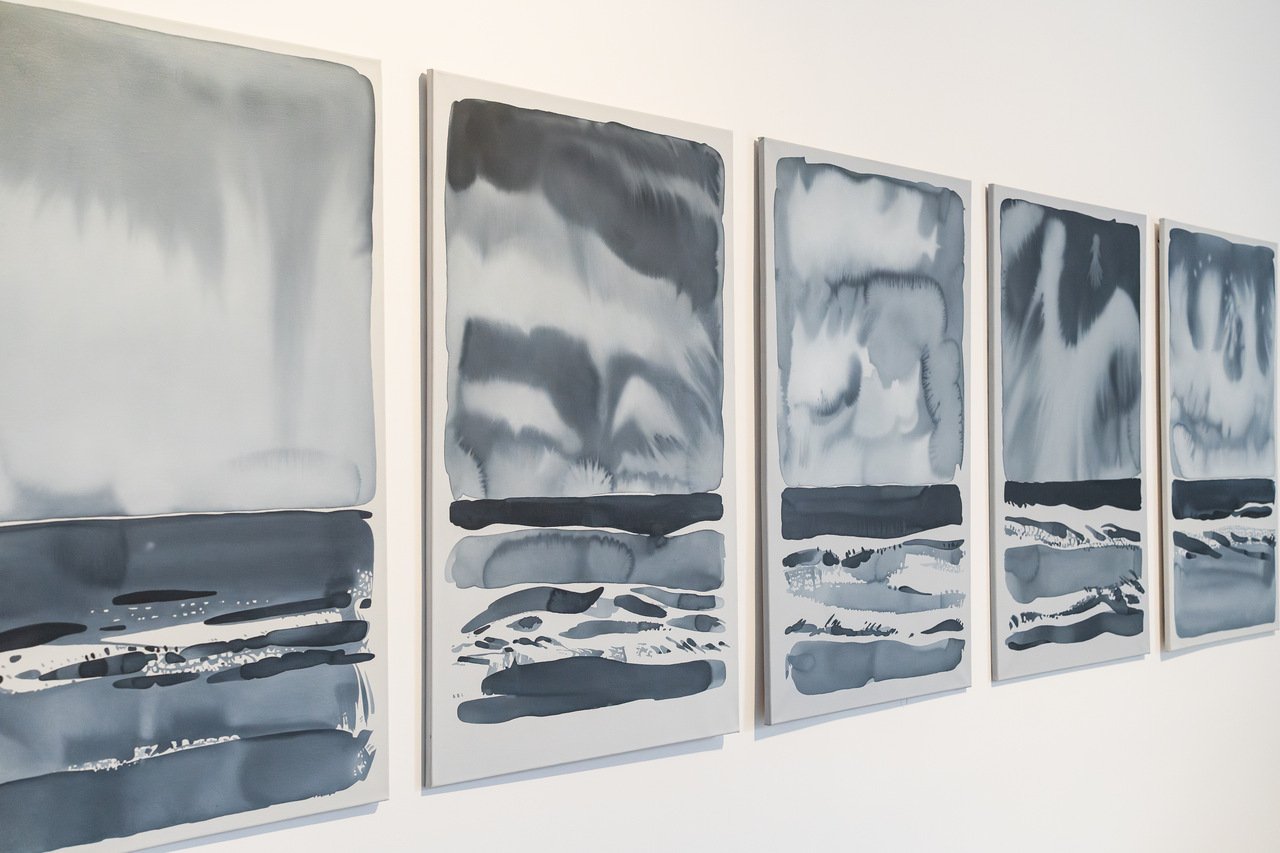
Image courtesy of the artist.
So, what kind of experiences and attachments are we talking about? Well, family ones, to start with. In a series of watercolours, Elmira Shemsedinova recalls her once frequent trips to her Crimean Tatar grandfather’s house, where she painted the Black Sea shore en plein air. This simple, almost banal artistic act — cherishing a vacation landscape — became impossible to perform after 2014. It was only possible to do from memory, as Elmira did in 2022–2023. Her colour palette changed, too. Vivid pigments of the earlier canvases made in situ were replaced by faded, greyish ones, as if manifesting the impossibility of depicting the place in its full colours.
The theme of family and national affiliation is dug even deeper in the project of Emine Ziyatdin — a documentary photographer, researcher, writer, and human rights activist, one of the most prominent voices in international culture for Crimean Tatars. Here, Emine speaks — literally through an audio piece and visually through pictures and videos — about three generations of women entwined within a broader history of the political oppression of her people in recent centuries.
The wise point of this show is that Crimean Tatar artists — present here by nature, not by ideological mandate — are not reduced only to folk art practices. This element is not artificially hidden, either, since for many of the artists it rather serves as a gesture of political resistance as opposed to being a method for upholding “traditionalism.”
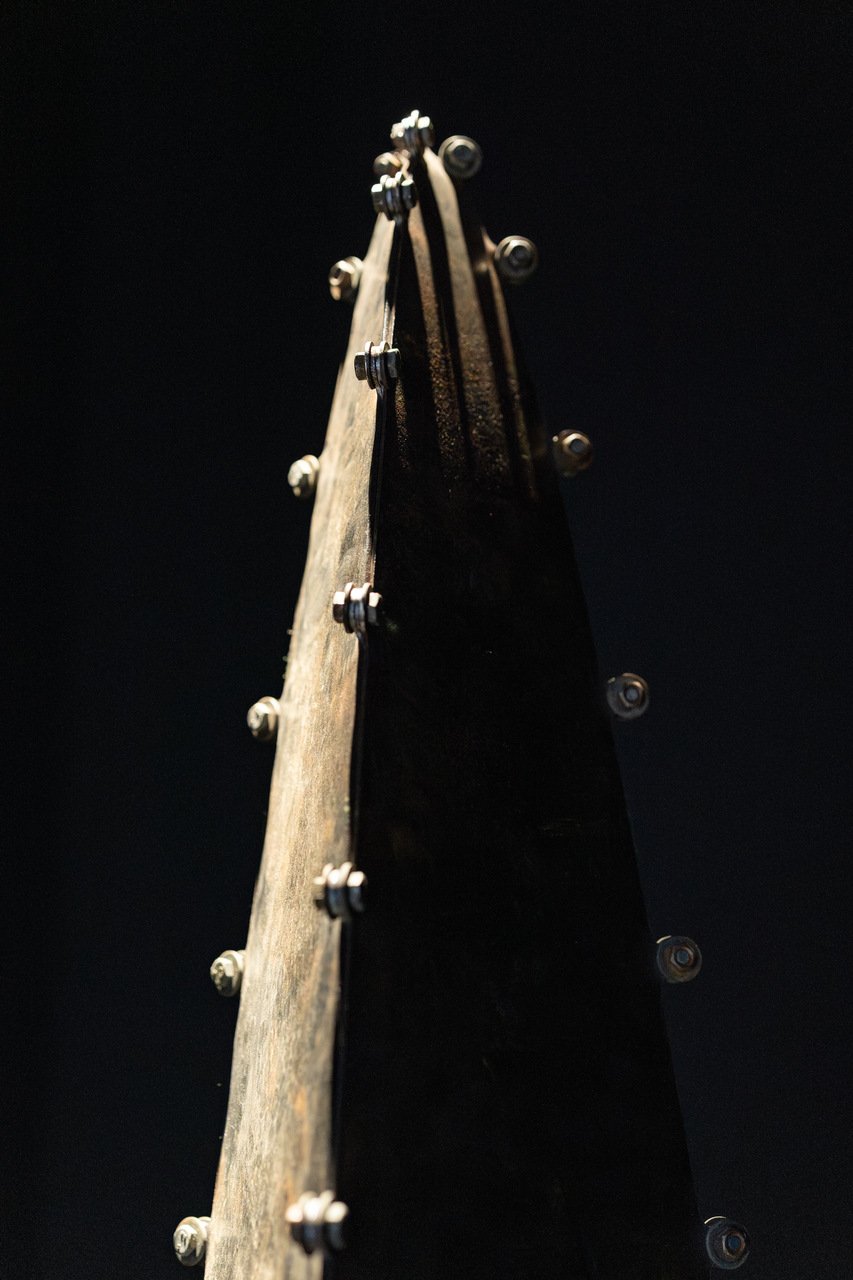
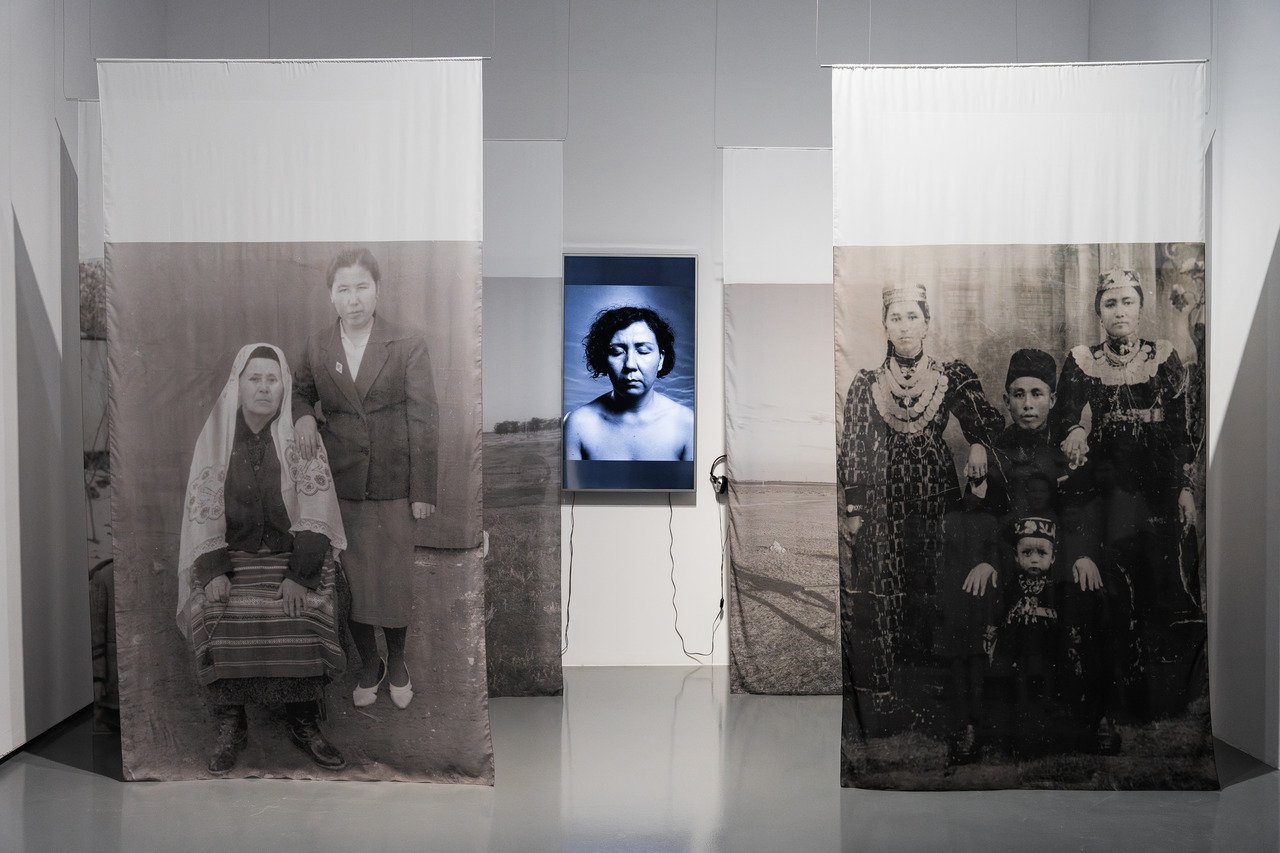
Image courtesy of the artist.
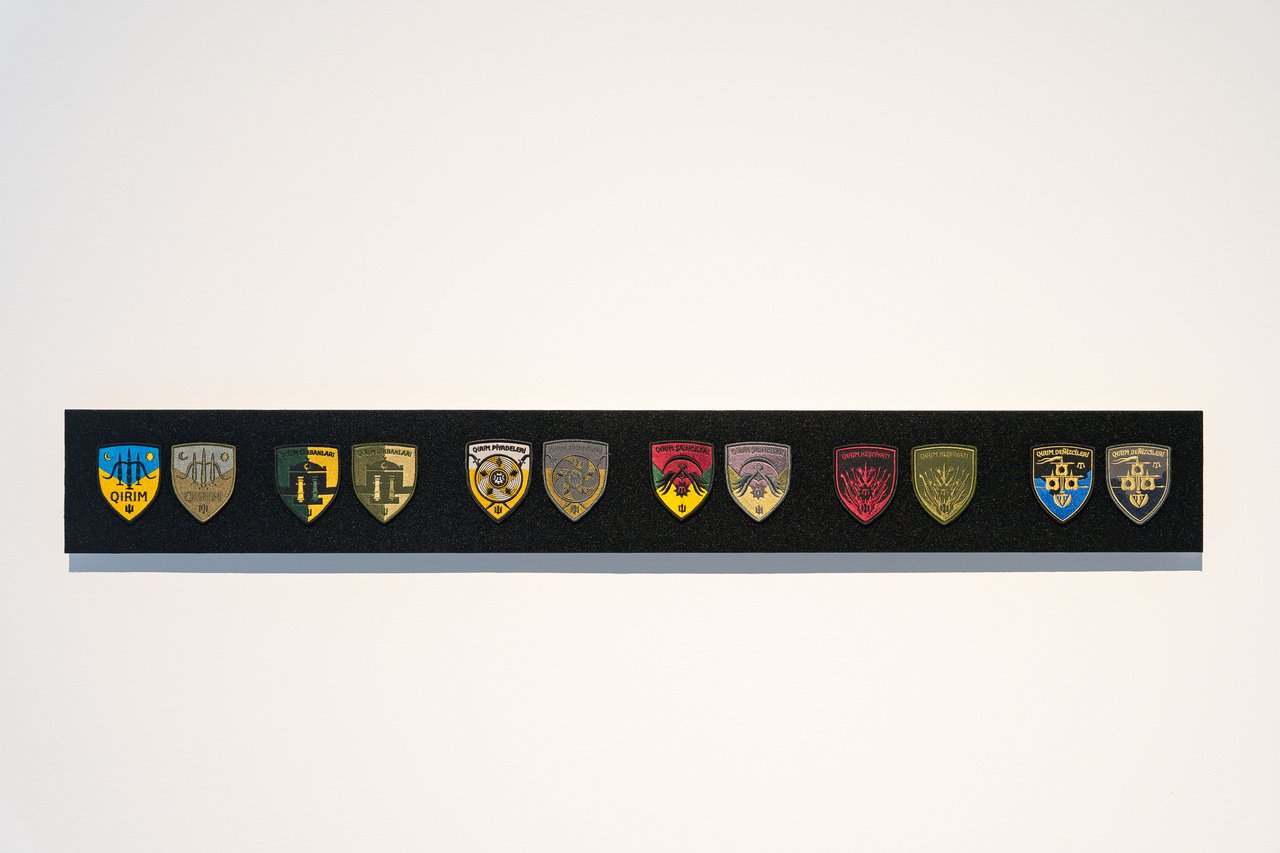
The perfect case here is Rustem Skybin — artist, ethnographer, and teacher who has been practising traditional Crimean Tatar crafts for over 25 years. In recent years, he has transformed his research of national ornaments into a completely new form, into a part of present-day Ukrainian reality: military chevrons, also known as shoulder patches, which are worn daily by everyone in military service to distinguish their unit affiliation. Bold and stylish, patches carry an original ornament rooted in the visual traditions of the Crimean Khanate. Developed in dialogue with military historians and cultural experts, they bring Crimean Tatar motifs into an object all Ukrainians know intimately — at once restoring a suppressed visual identity and opening it to anyone with a connection to Qırımlı history.
Another Crimean symbol — not an age-old one but rather ridiculously new — is the palm tree. This exotic plant, universally associated with resorts and luxury vacations, is depicted on canvas in a pop-art manner by Oleg Tistol. The issue is that palm trees are not part of the autochthonous flora of the otherwise naturally rich Crimean peninsula; they were imported here only in the 19th century and have since become a stereotypical emblem of Crimea as a dreamlike holiday destination for workers; a vision which was actively promoted during the Soviet years.
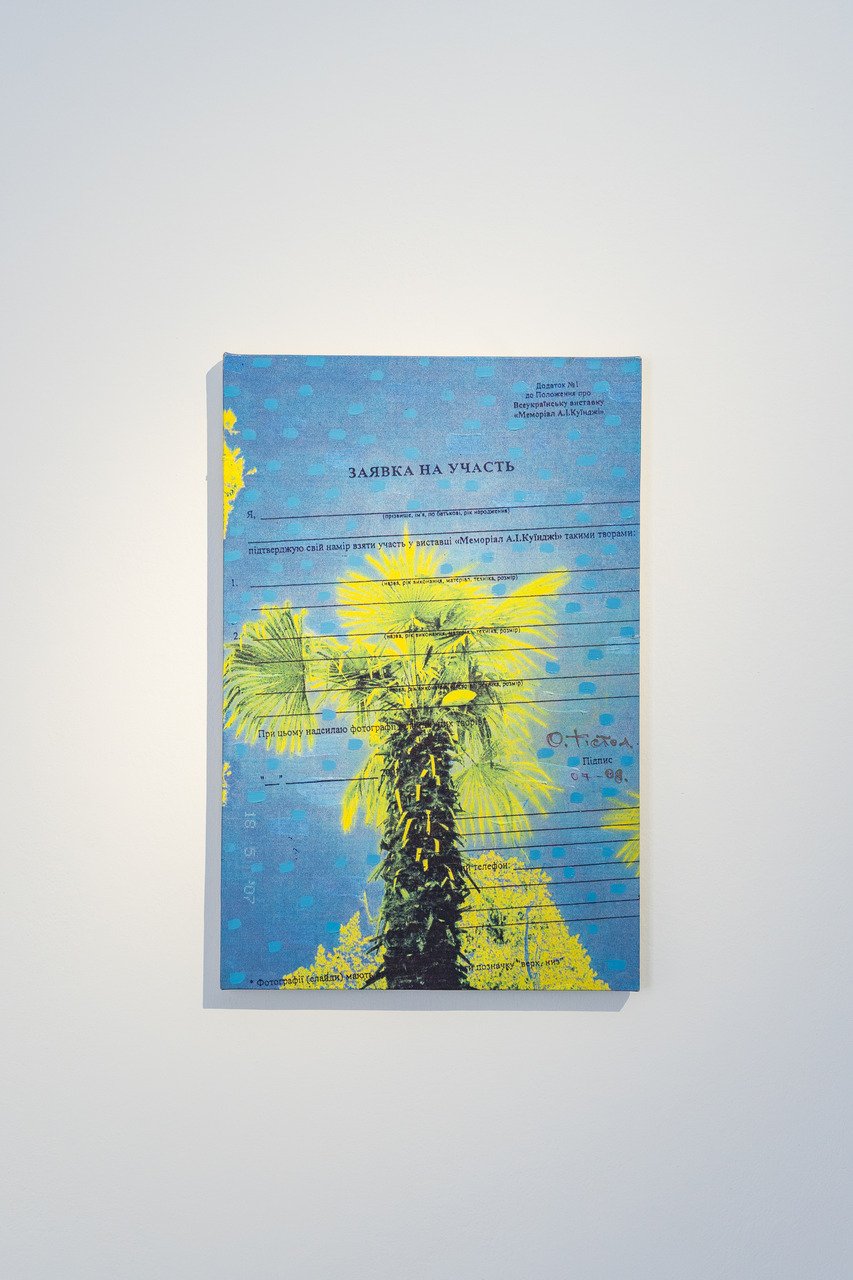
Tistol’s work also stands out for an unexpected material choice: its support is not a conventional canvas but a printed registration form for the Kuindzhi Memorial Festival, established in Mariupol in 2007. Knowing that the monument to this celebrated painter of the Ukrainian South, along with the museum bearing his name, have both been destroyed in the course of the russian occupation of the city, the work acquires an unmistakably political charge. The palm tree at its center reads differently now — no longer a breezy seaside motif, but a symbol of something much heavier.
Unlike the palm tree, cypress is native to the peninsula. Vitalii Kokhan’s heavy-metal (literally), stylized tree spins around solemnly in a separate tower space of the CCA, revealing its rough steel surface and massive bolts under dim lights — like a stele, or maybe a funerary monument? In the world’s cultures, this conifer has a rich and diverse representation. In Crimean Tatar culture in particular (though the artist isn’t a member of the people’s community himself), the cypress symbolises courage, but also grief and mourning.
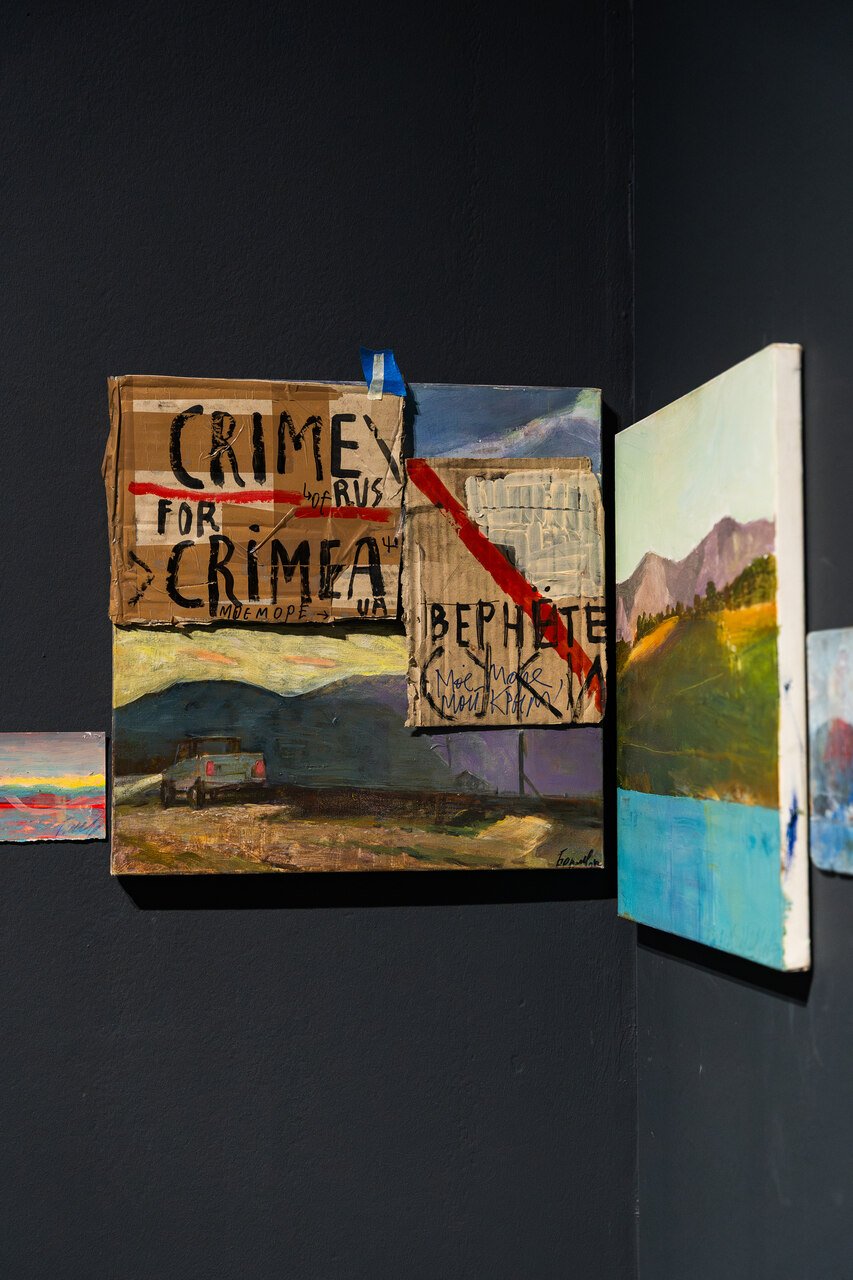
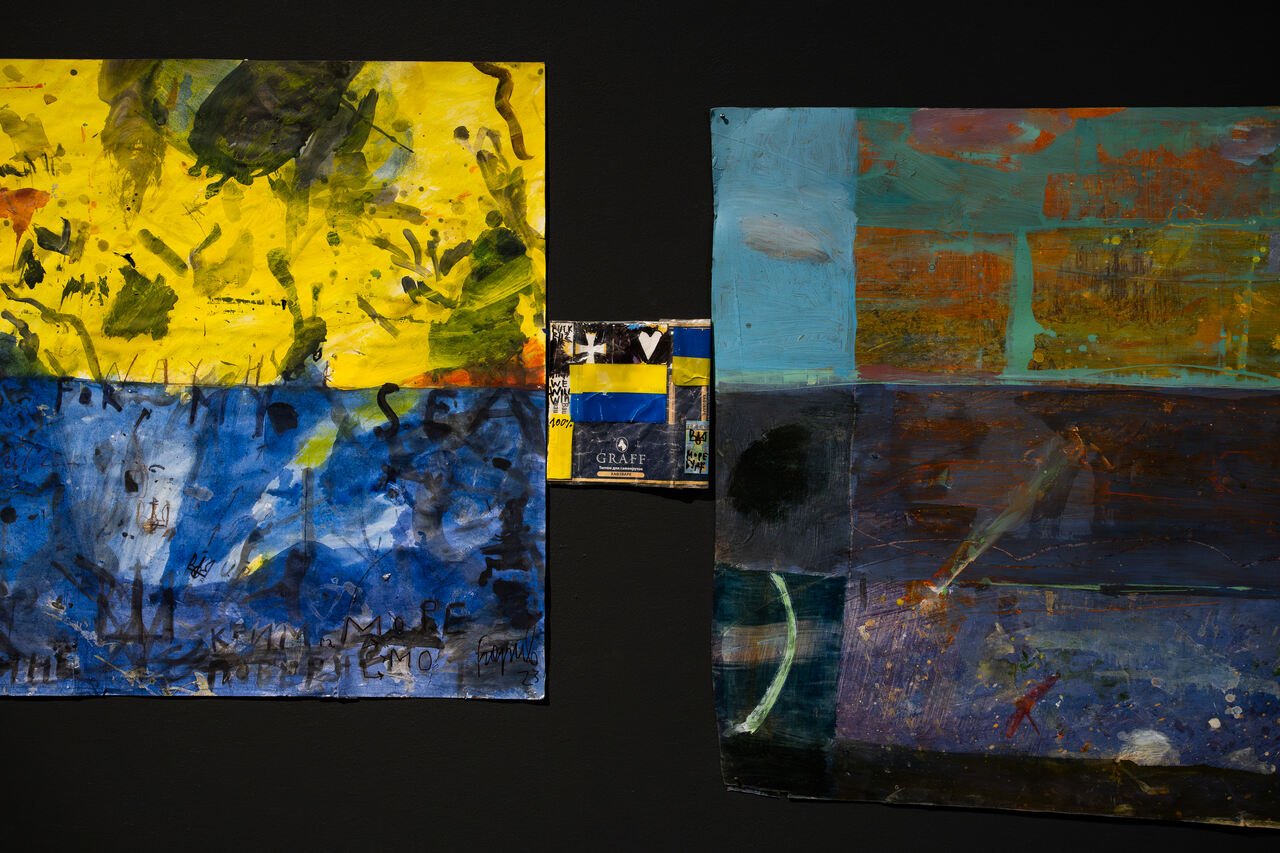
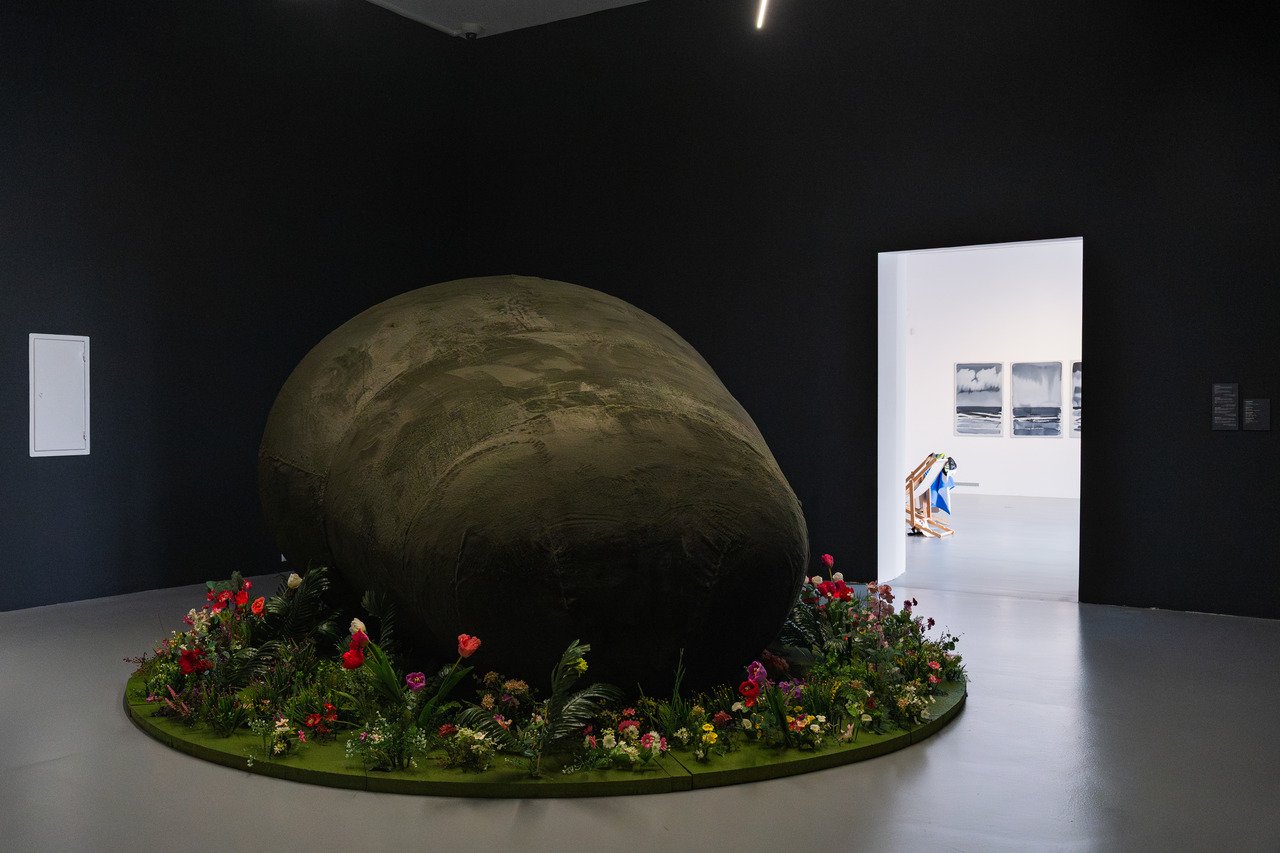
Image courtesy of the artist.
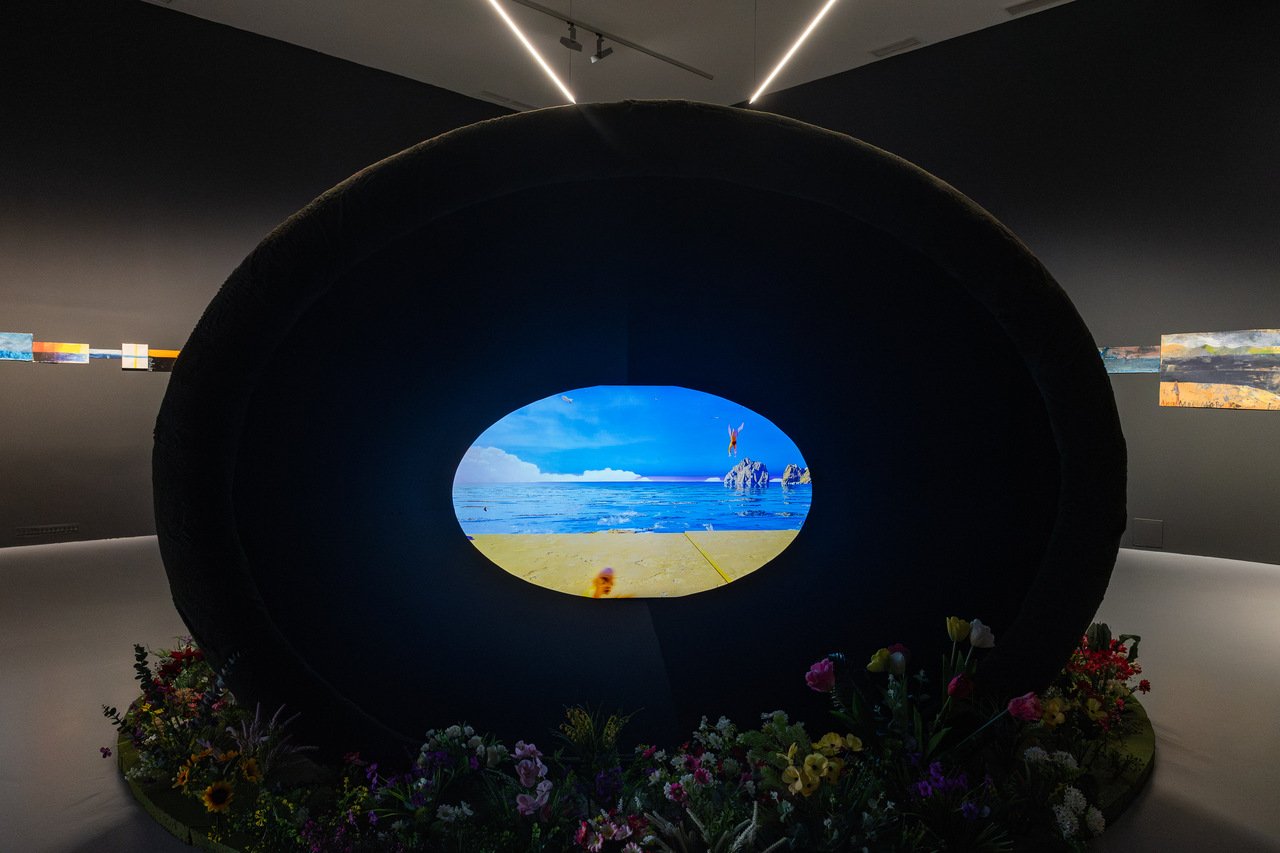
Image courtesy of the artist.
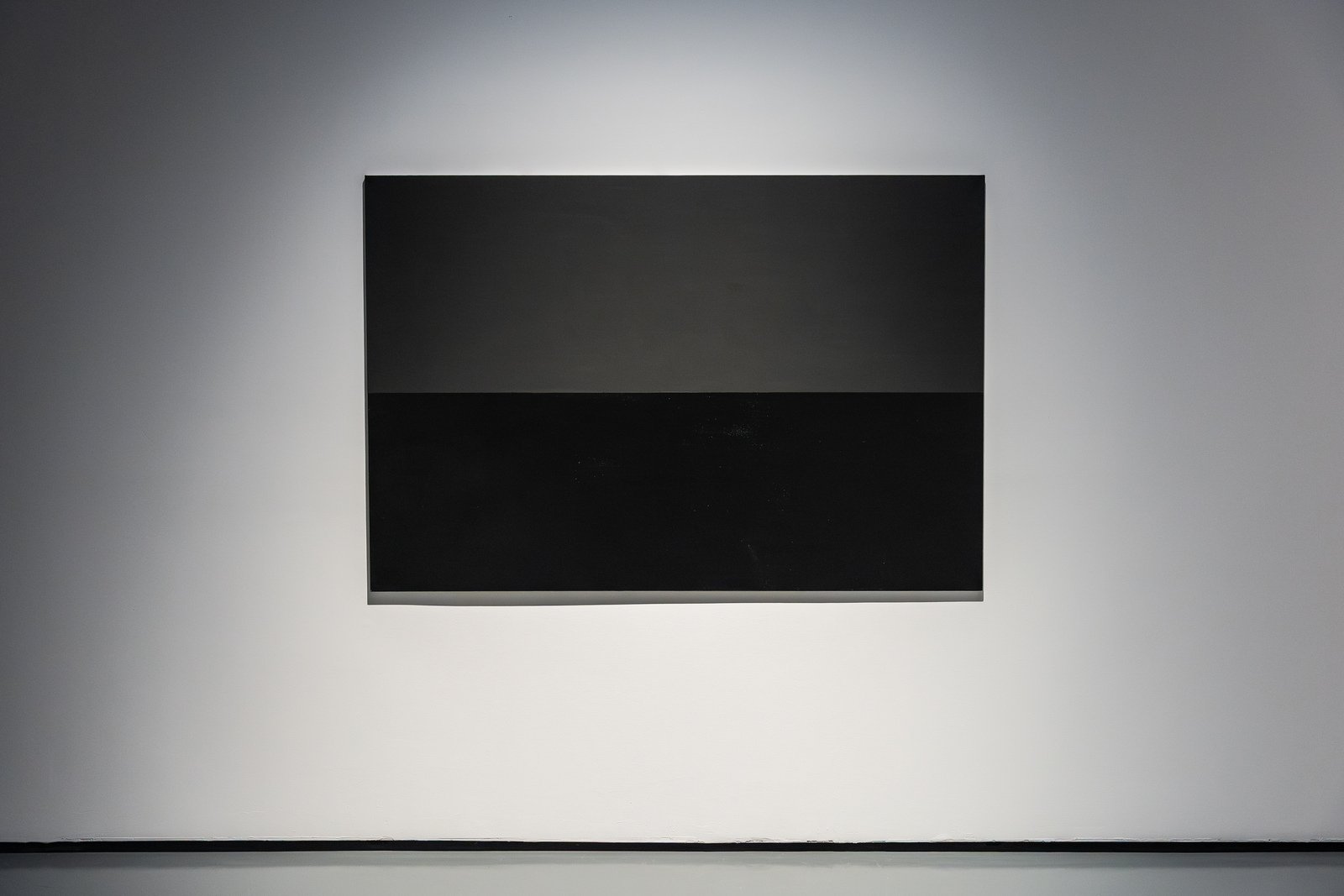
Another iconic image of Crimea — the horizon line over the Black Sea — is addressed by two Kharkiv-born artists, Roman Mikhailov and Oleksii Borysov. Like Tistol, they don’t have any ancestral connections to this land, but rather a sentimental one. Historically, Crimea was a much loved destination among artists who frequently travelled here for easygoing retreats, festivals, and wild camping at stunning venues, between the mountains and beaches, undeveloped by state-run or commercial resorts. The horizon, reduced to an emblem in Mikhailov’s monochromatic canvas and, on the contrary, exaggeratedly multiplied in dozens of repetitive “landscape paintings” of Borysov, was the first thing travellers saw when they moved through the peninsula in the direction of the southern shore. This first glimpse of the sea, a magnificent view that opened after a certain road turn, was a promise of freedom and of a carefree time spent in nature, among friends. For many artists, the loss of Crimea has been a metaphor for the loss of their youth.
This feeling is present in a media installation by Gurzuf-born Yurii Yefanov, who strives to recollect this essence of youthful energy through a game. A digital simulation serves as the setting: AI-generated characters compete in a diving tournament. The exaggerated, splash-heavy style of these dives is something Yefanov associates exclusively with Crimea — and he envisions staging an actual version of the competition once the peninsula is free. For him, an unofficial diving championship of this kind stands for something larger: the radical opening-up of public space and a refusal of hierarchies — a direct counterpoint to the violence the occupier has imposed on the land and its people.
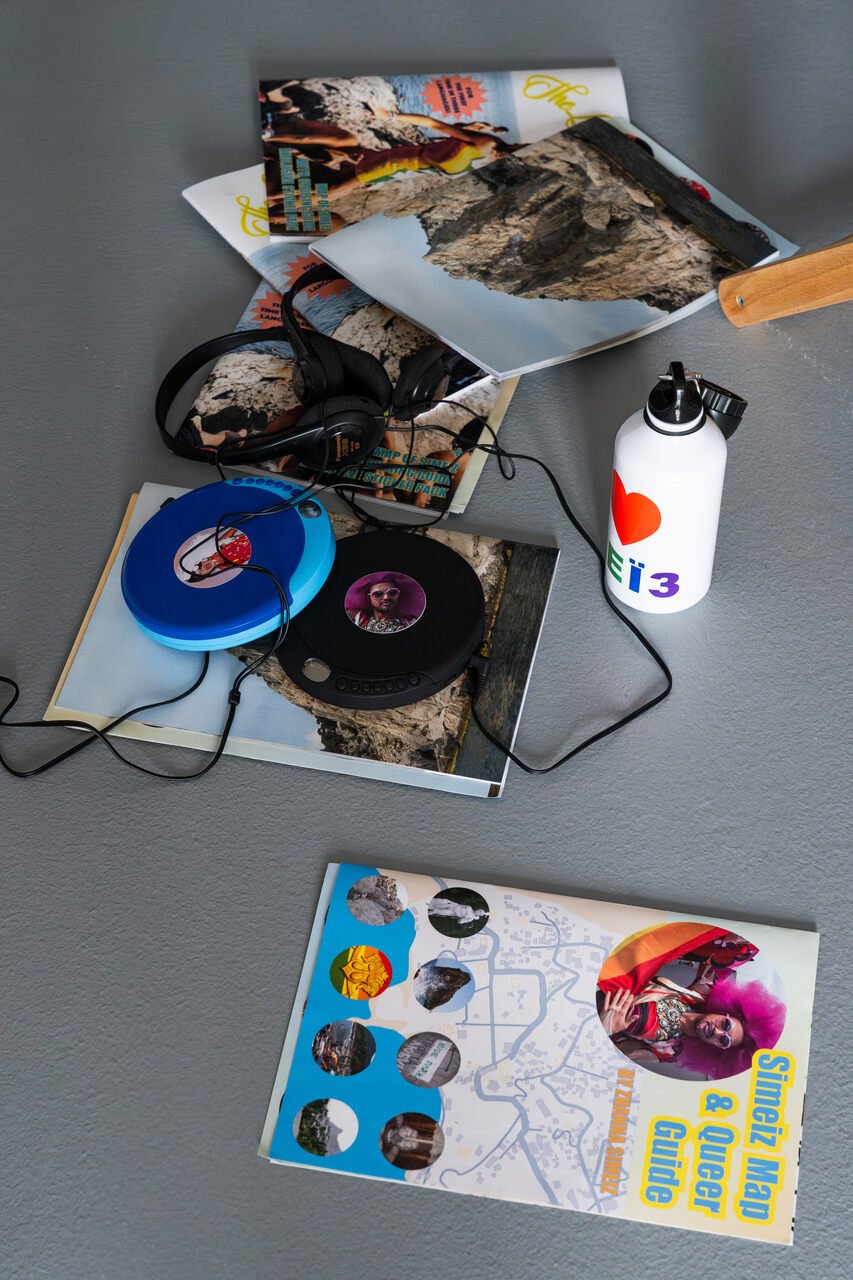
A similar longing for an alternative liberal community space is at the core of Anton Shchebetko’s project Simeiz. It is dedicated to the eponymous village on the seashore, famous for its nudist beaches and an informal summer destination for the queer community. Simeiz was also home to the iconic nightclub Yezhy (Headgehogs). The history of this place and the large community behind it is printed in a zine, and is also narrated by Zhanna Simeiz, drag queen and also the club’s former art director. The work is a tribute to Ukraine’s drag capital — a hub of radical openness and love that faced extinction under the homophobic laws imposed by the russian Federation. Zhanna Simeiz, however, is unambiguous about the future: the Equality March will return to Crimea on the second day after liberation, she claims.
What will we talk about if, or rather when, Crimea is liberated from russian occupation? Or, as the curators ask in the press release, “what does the world lose when it cannot, or will not, access Crimea?” How can we keep collecting all these voices and embrace the contradictions they represent and make them sound equal? How can we cherish the fantastic architecture of the 1960–80’s resorts (symbolically present in the show with a seagull-shaped stand for the catalogues designed by Oleksandr Burlaka) while knowing that it was all backed by the same regime that expelled native people from this land in order to build those resorts? How can we acknowledge this dark side without objecting to its artistic merit, and also keep it as part of an enriching aspect of our history? If someone organises another show after Crimea’s liberation, will we exhibit artists who, for reasons we are not yet aware of, have continued to live and work there after 2014? This mild, elegantly assembled show at Ujazdowski Castle doesn’t have any sharp angles or reveal possible tensions between particular artistic statements. Instead, it gives enough room, literally and symbolically, for each work to be seen and heard, for each story and private insight to be accessed by viewers. And it feels like the right way to (re)start the conversation about the state of things not only in Crimea but in Ukraine in general, while its artists and activists face new and continuing challenges in gaining attention from Europe and the rest of the world.
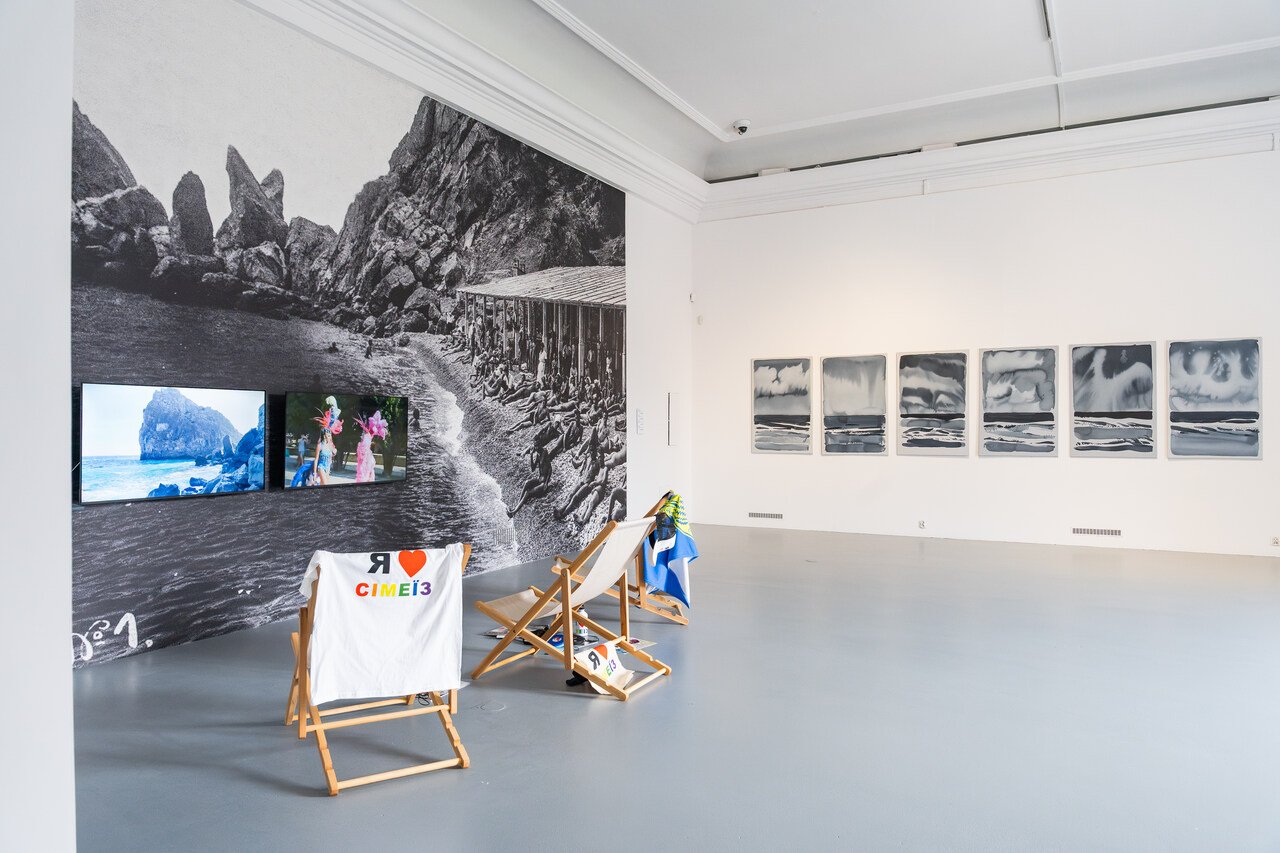
Image courtesy of the artist.
Artist(s): Oleksii Borysov, Yurii Yefanov, Emine Ziyatdin, Vlodko Kaufman, Vitalii Kokhan, Pavlo Makov, Roman Mykhailov, Sevilâ Nariman-qizi, Rustem Skybin, Oleh Tistol, Khalil Khalilov, Anton Shebetko, Elmira Shemsedinova
Exhibition Title: What We Talk About When We Talk About Crimea
Curated by: Kateryna Semenyuk, Oksana Dovgopolova, Alim Aliev
Venue: Ujazdowski Castle Centre for Contemporary Art
Place (Country/Location): Warsaw, Poland
Dates: 20.03–28.06.2026
Photos: Robert Głowacki