
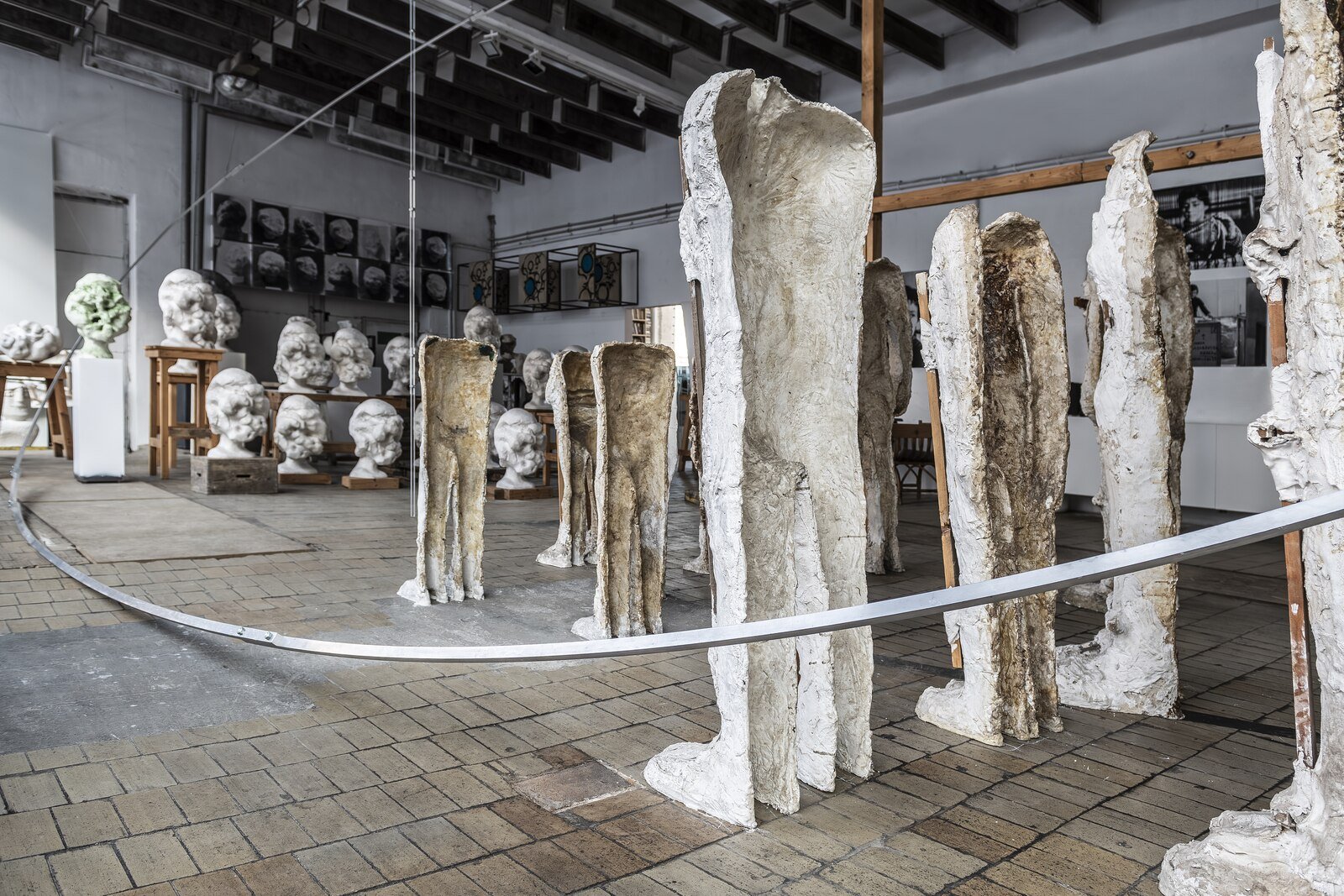
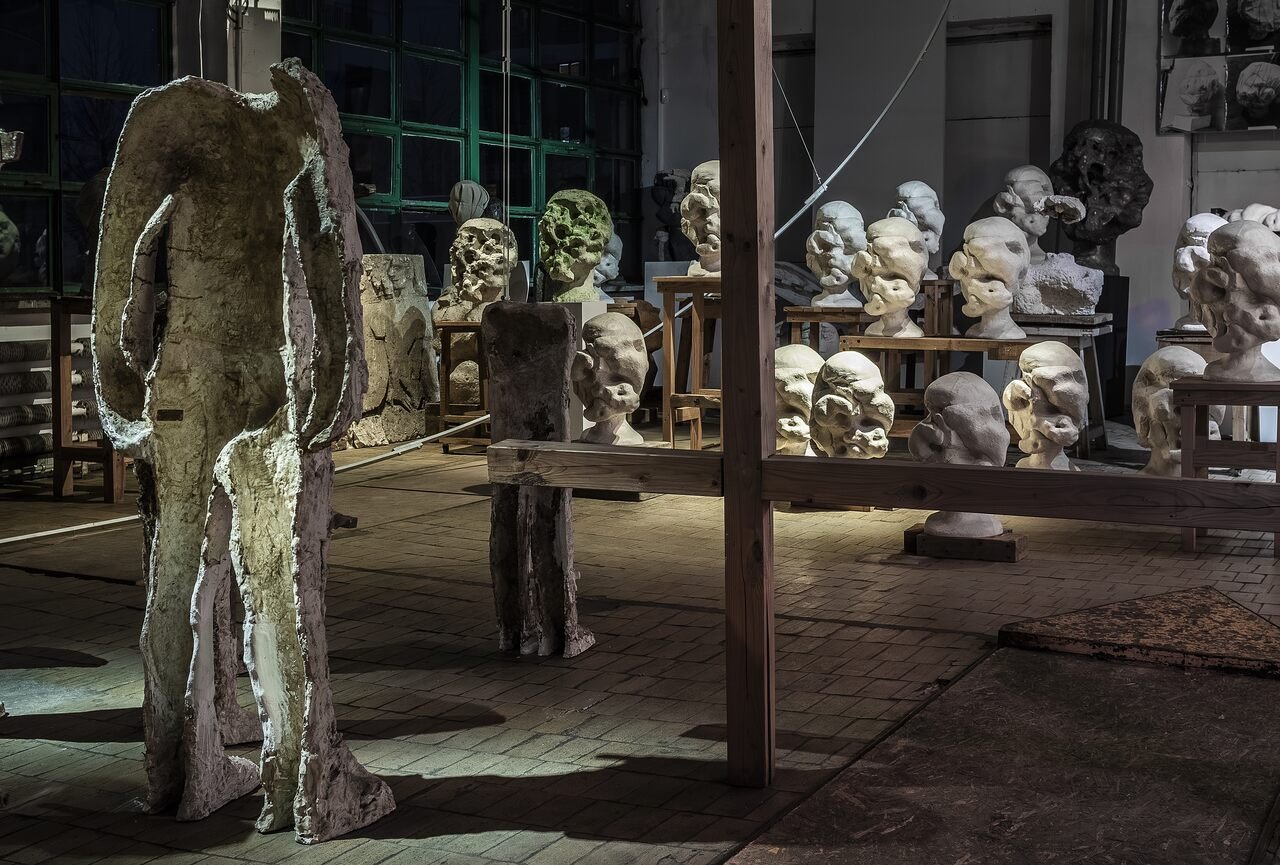
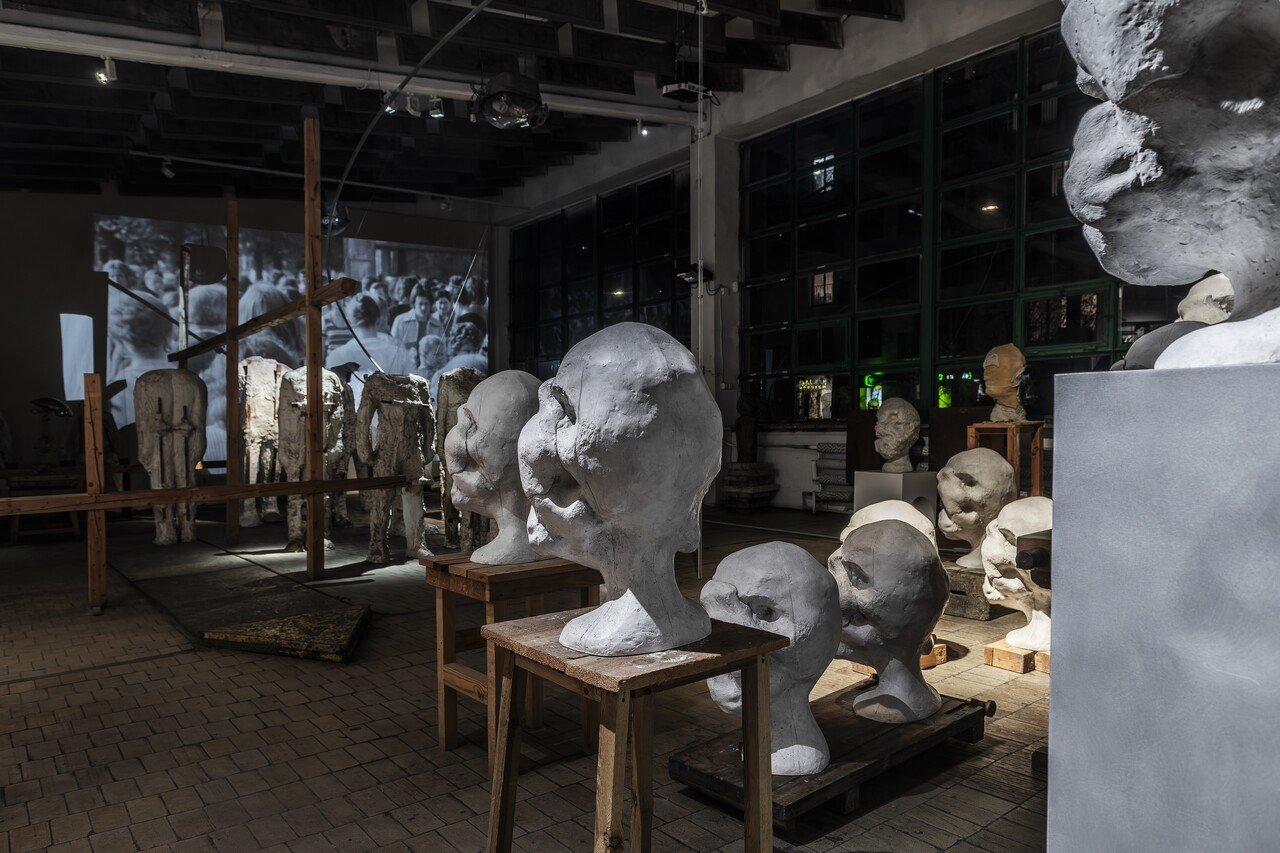
The impulse for a joint presentation of works by two outstanding sculptors of the same generation, Magdalena Abakanowicz (1930-2017) and Wanda Czełkowska (1930-2021), was the observation that the leading motifs of their work complement each other. In one, the human figure is reduced to a head, in the other to a headless body. In both, on the one hand, we have framing, isolation, reduction; on the other, the multiplication of forms. In the case of Magdalena Abakanowicz, identical headless figures are juxtaposed in a single work, while in the case of Wanda Czełkowska, a multiplied head, in a strict arrangement, forms a single object.
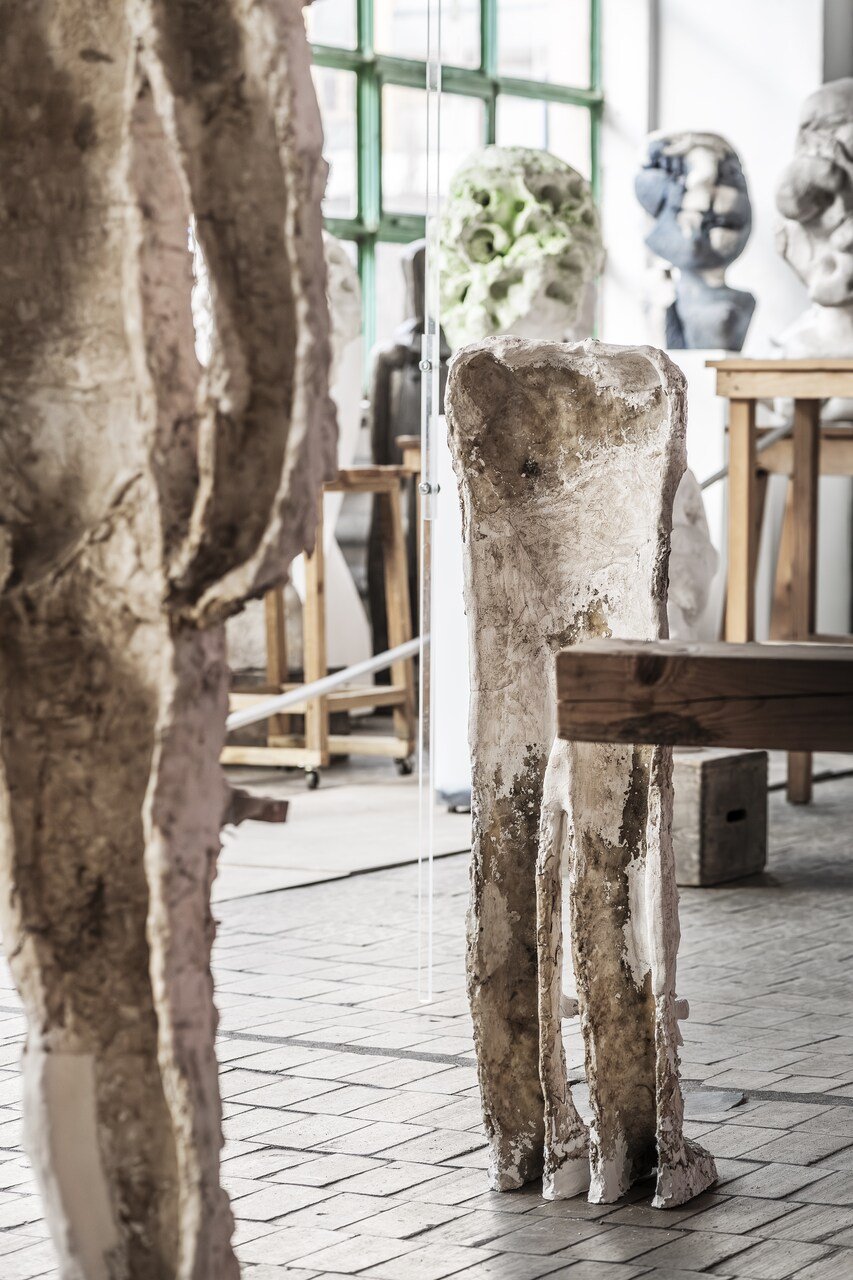
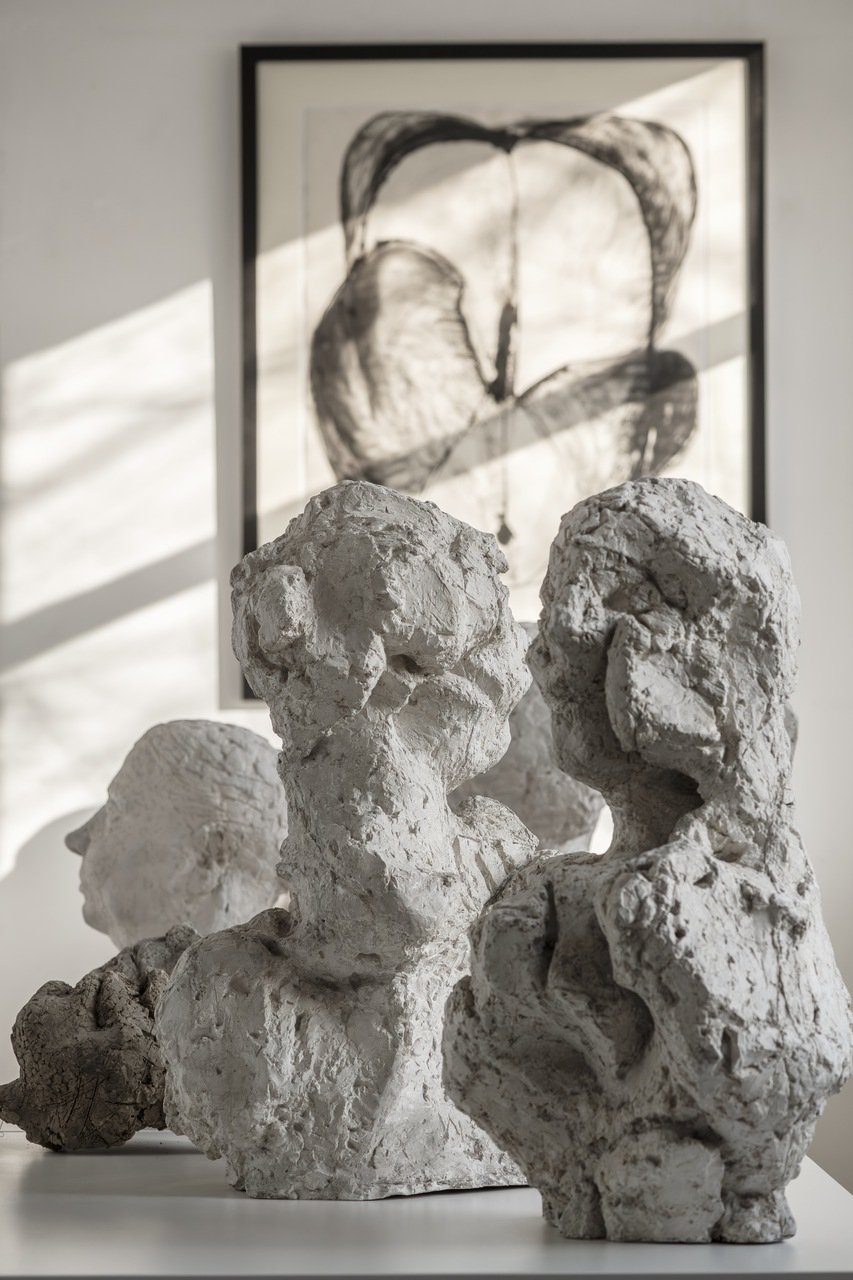
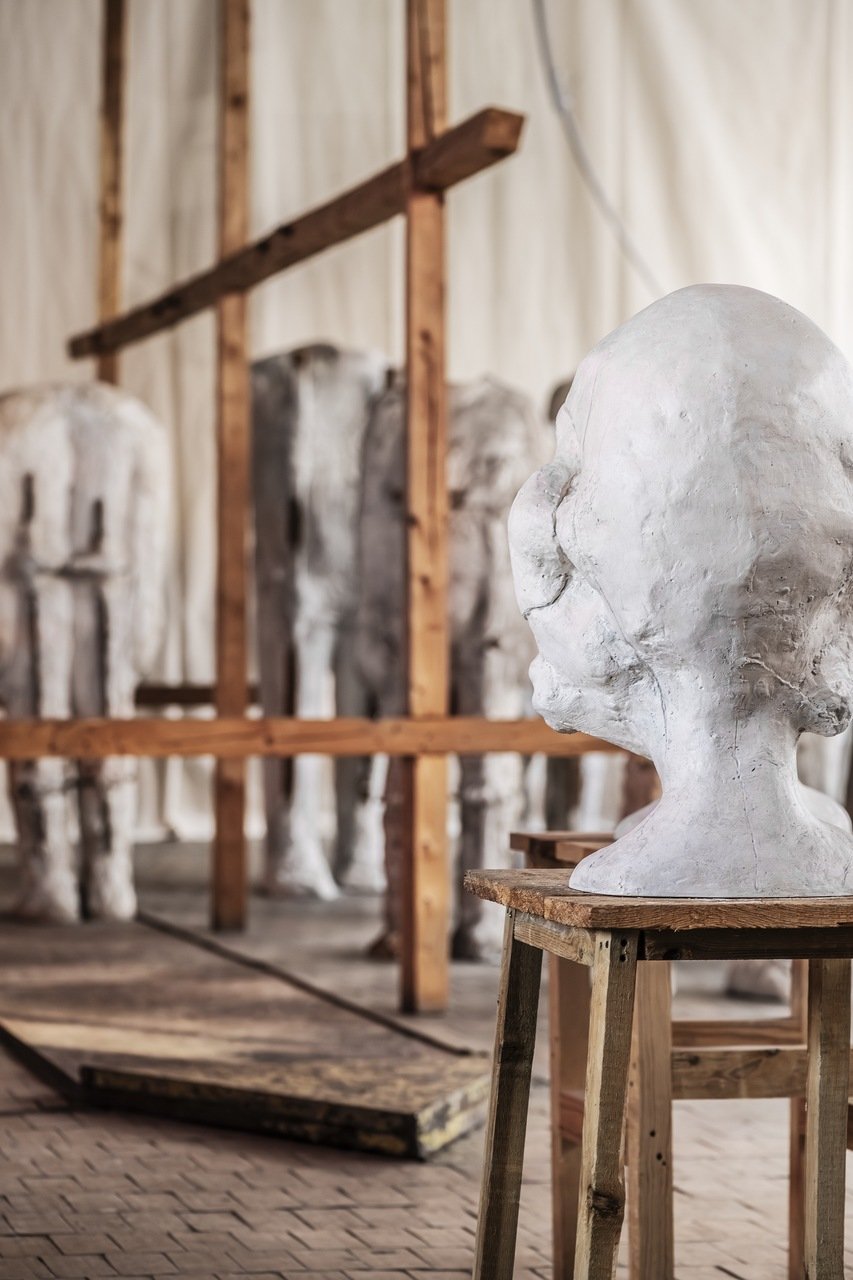
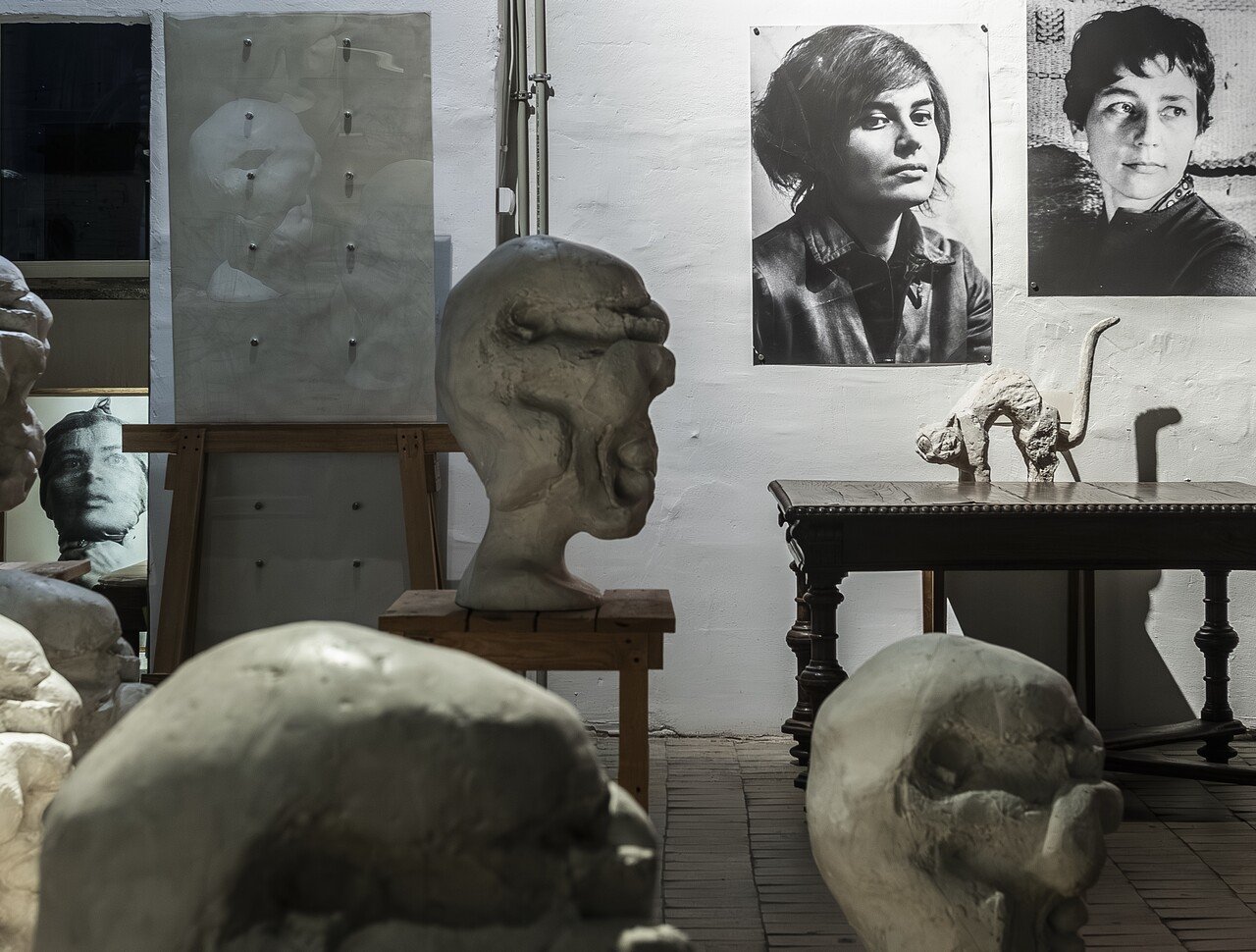
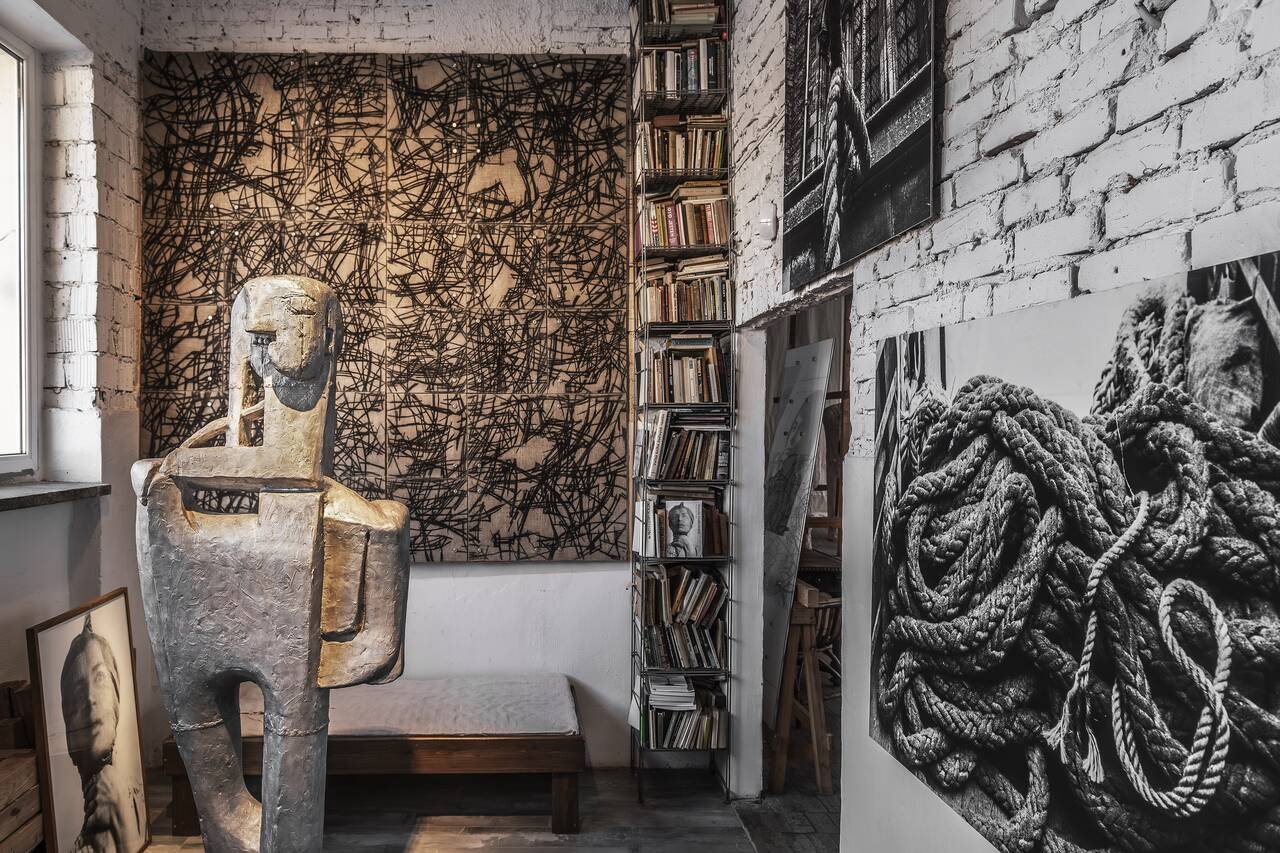
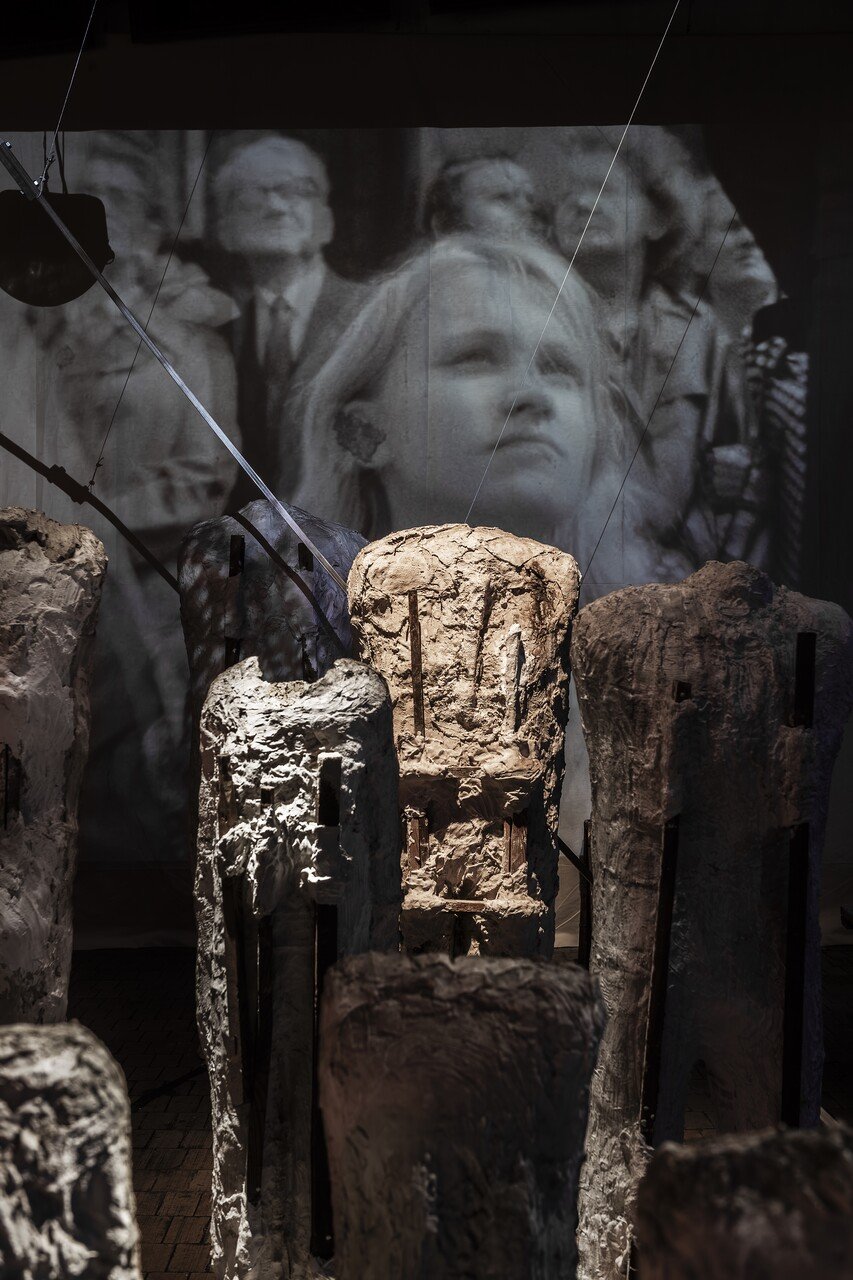
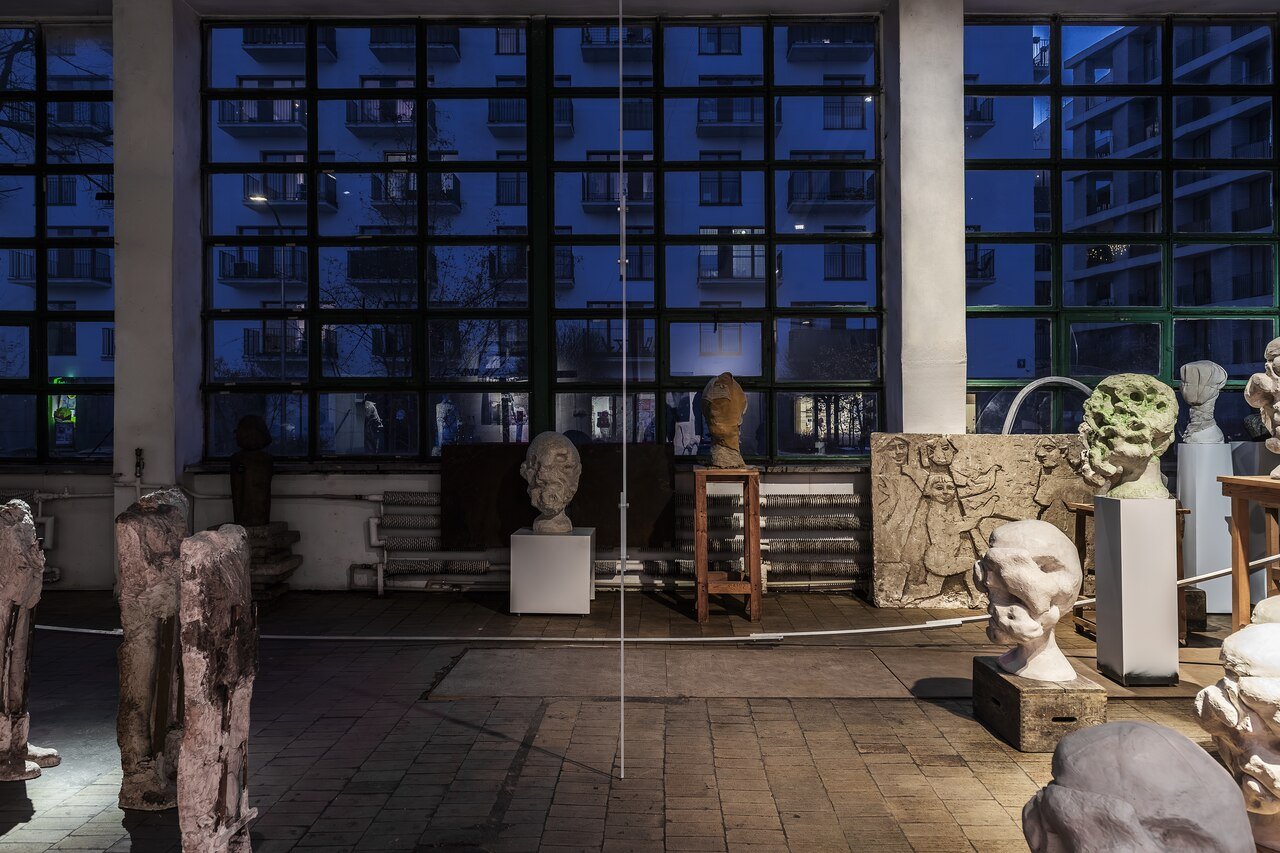
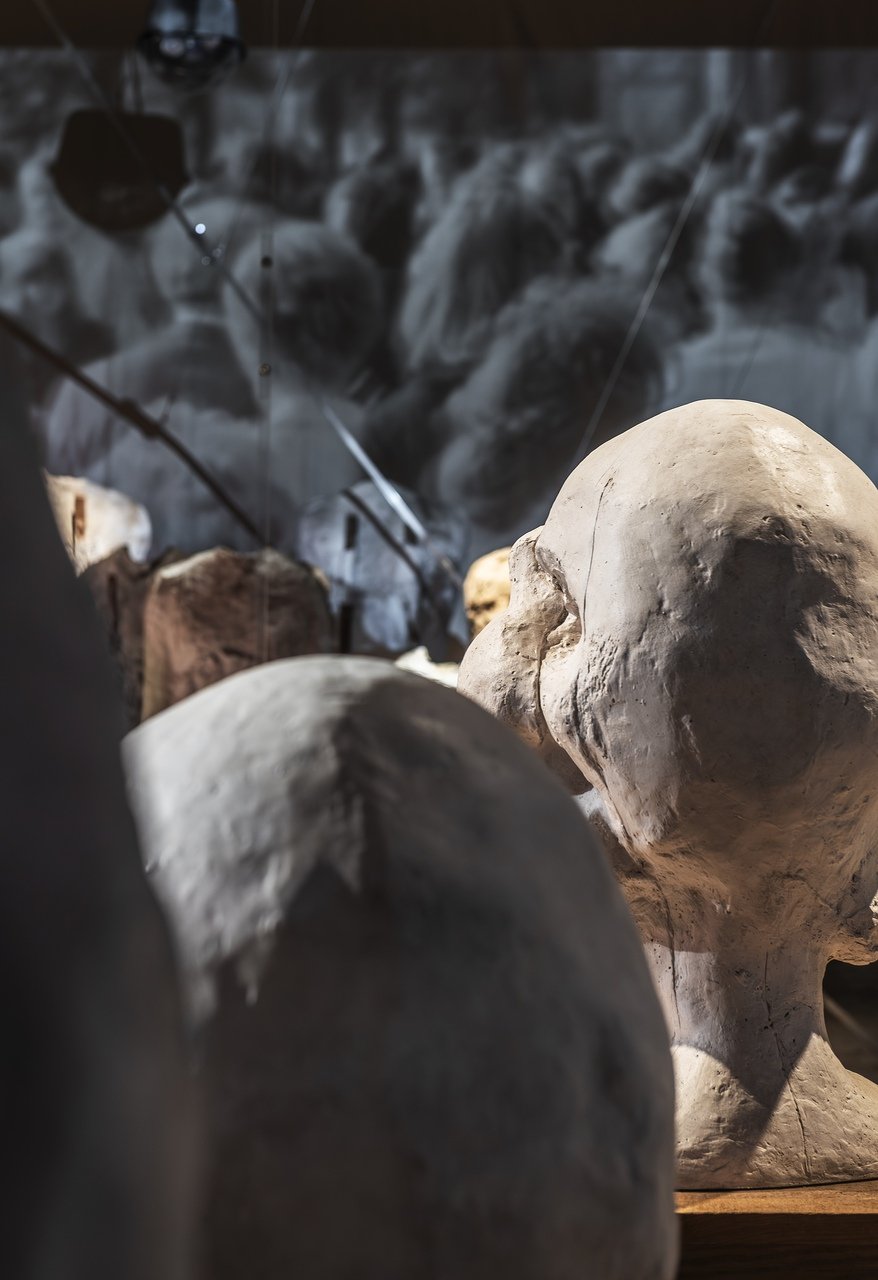
Wanda Czełkowska’s Historical Art Studio in Warsaw will become a place for presenting the works of two artists, their creative attitudes and artistic biographies, with particular emphasis on the 1970s, including their meeting at the Atelier 72 festival in Edinburgh. In the case of Magdalena Abakanowicz, it will primarily be 20 never-before-seen objects – they are technical in nature (they come from the collection of the Marta Magdalena Abakanowicz-Kosmowska and Jan Kosmowski Foundation at 1, Bzowa St.), and were moulds for sculptures from the Tłum (Crowd) series. The plaster moulds themselves are magnificent sculptural objects, which resonate particularly well in the industrial space of the studio on Magazynowa Street, in confrontation with the works of Wanda Czełkowska. The aspects of exposing the construction, technical transparency, surprising the viewer with the reverse side of the work, so eagerly taken up by Wanda Czełkowska, find their reference in the raw forms of Magdalena Abakanowicz and revealing their undeniable craftsmanship. The backdrop for this special presentation is a rediscovered archival film by Magdalena Abakanowicz from the 1970s. An ordinary human crowd captured in unusual frames is juxtaposed with the trivial reality of the urban space of that decade. The film will be premiered during the exhibition. Selected photographs, drawings and paintings by both artists will complement the exhibition.
Magdalena Abakanowicz: born on 20 June 1930 in Falenty, died on 20 April 2017 in Warsaw. In 1954, she graduated from the Academy of Fine Arts in Warsaw. She lived and worked in Warsaw. In the 1960s, she began to create large-format, three-dimensional works using weaving techniques (including rope and sisal). These forms, named after the artist as abakans, revolutionised the field of artistic textiles. During Atelier 72 in Edinburgh, Magdalena Abakanowicz presents Lina (Rope). She has been creating similar works from thick industrial ropes since 1970 – they take the form of spatial interventions or linear sculptures. Her numerous works in public spaces, which can be admired in Poznań, Shanghai, Vancouver, Seoul and Jerusalem, among other places, also enter into dialogue with their surroundings.
Wanda Czełkowska: born on 28 November 1930 in Brest, died on 17June 2021 in Warsaw. She spent her childhood in Vilnius. She studied at the Academy of Fine Arts in Krakow, graduating in 1954. From her studies until 2004, she was associated with this city. In 1968, after presenting the concept of the sculpture Table, Tadeusz Kantor invited the artist to join the Second Kraków Group. Valuing her independence, she exhibited with the artists of the group for 13 years as an unaffiliated artist. In 1972, Czełkowska took part in the Atelier 72 festival in Edinburgh. She planned to show Table there, but due to a technical error, the artist abandoned her plan and instead created and presented Conceptual Information about Table on site. Czełkowska’s three monumental sculptures: Table, The Absolute Elimination of Sculpture as a Concept of Shape (Concept Presentation), and Wall were completed in 1971, 1973, and 1975, respectively.
Artists: Magdalena Abakanowicz, Wanda Czełkowska
Exhibition Title: Magdalena Abakanowicz/Wanda Czełkowska
Curated by: Marta Kowalewska
Venue: Wanda Czełkowska Studio
Place (Country/Location): Warsaw, Poland
Dates: 14.02—18.10.2026
Photos: Norbert Piwowarczyk. All images courtesy of Wanda Czełkowska Studio.