
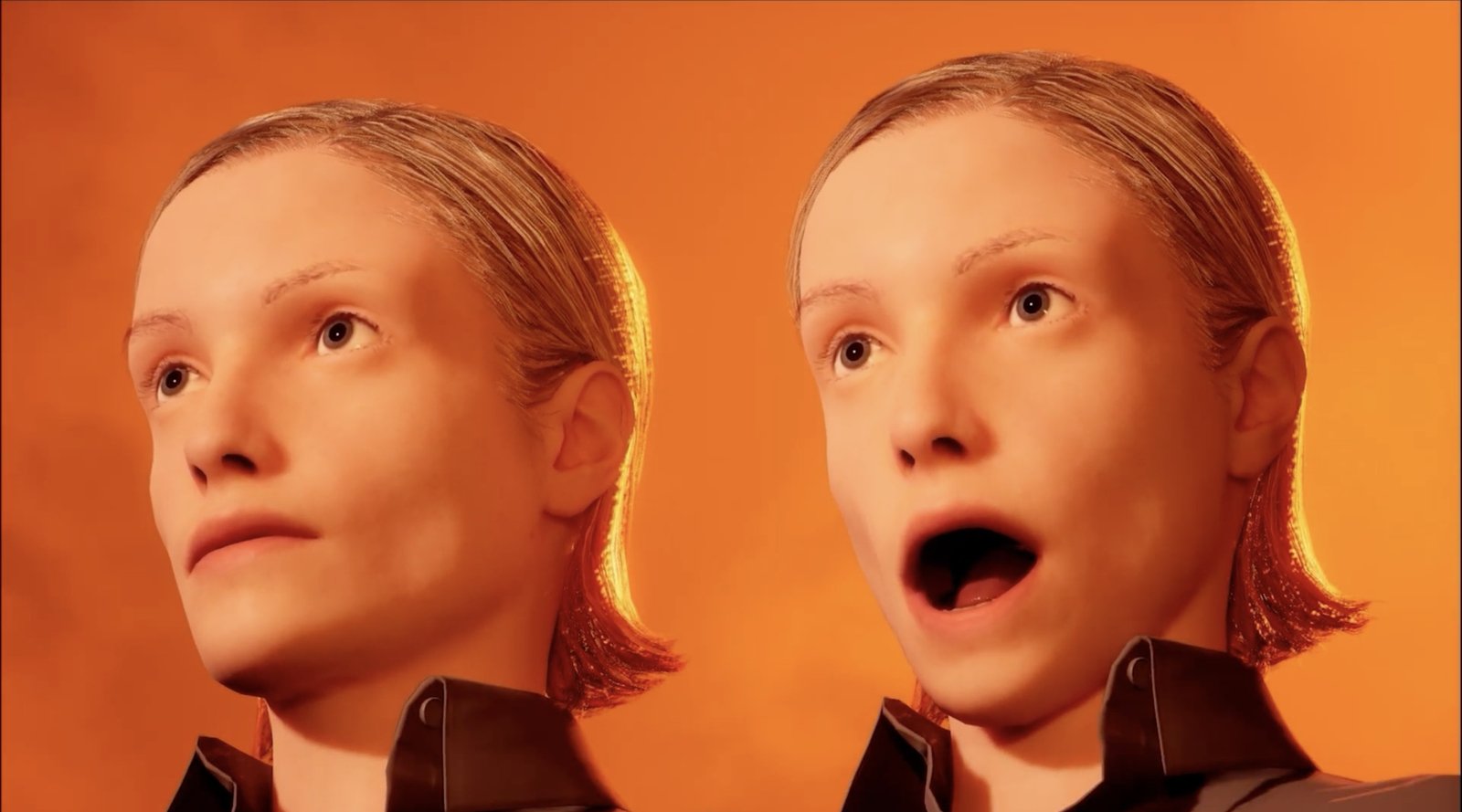
Ewa Borysiewicz
Ewa Borysiewicz: “You must gather your party before venturing forth.” So: how did you two meet?
Martix Navrot: It happened in 2014 at the Intermedia Department of the Academy of Fine Arts in Kraków. I remember that I always loved the work Jagoda brought to class. I was also curious about her as a person. I was interested in the technical side of artistic work, such as 3D modeling software, so when I found out that Jagoda had been rendering an animation on a computer that didn’t even have a graphics card – and she carried it in a bag, plugging it in at home and at school just so it wouldn’t stop rendering those frames – I was really impressed. That’s when I struck up a conversation with her, just as a friend.
Jagoda Wójtowicz: I remember that moment. I didn’t turn off my computer for six months so I could finish my final project for the animation workshop. We became friends quickly. It turned out we had a lot in common. We started working together on 3D animations, and together with Anastasia Vorobiova we even established a VJ collective called NN Visuals; we’d hang out at raves all night long, experimenting and creating 3D samples and interactive elements. For me, this was my first venture into the visual arts field, and it helped define my future path.
MN: Thanks to the fact that we świeciłyśmy – because we used to say we would “shine” at parties – we were able to support ourselves through university. 200 zlotys per performance which was a very good rate back then.
EB: Which clubs did you play at?
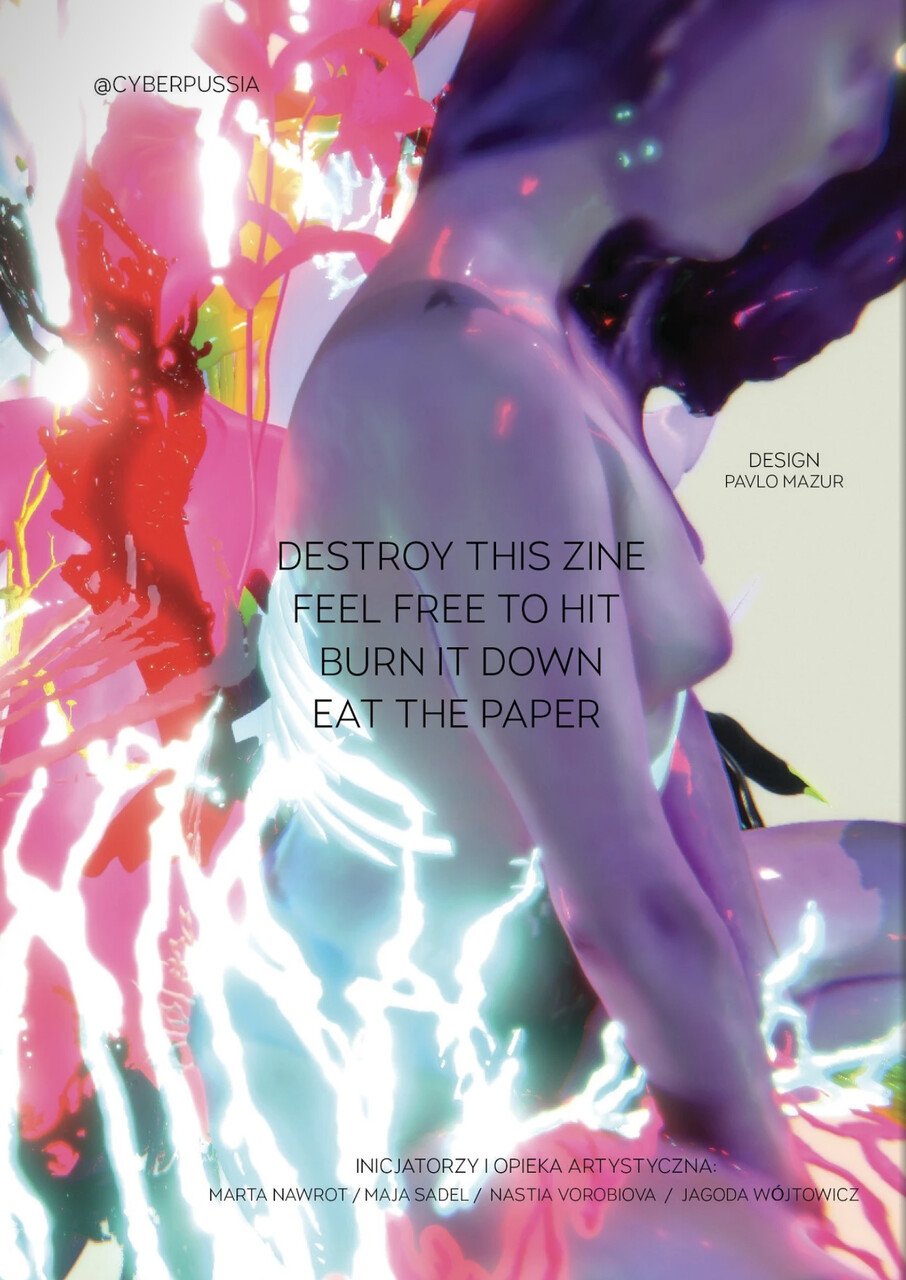
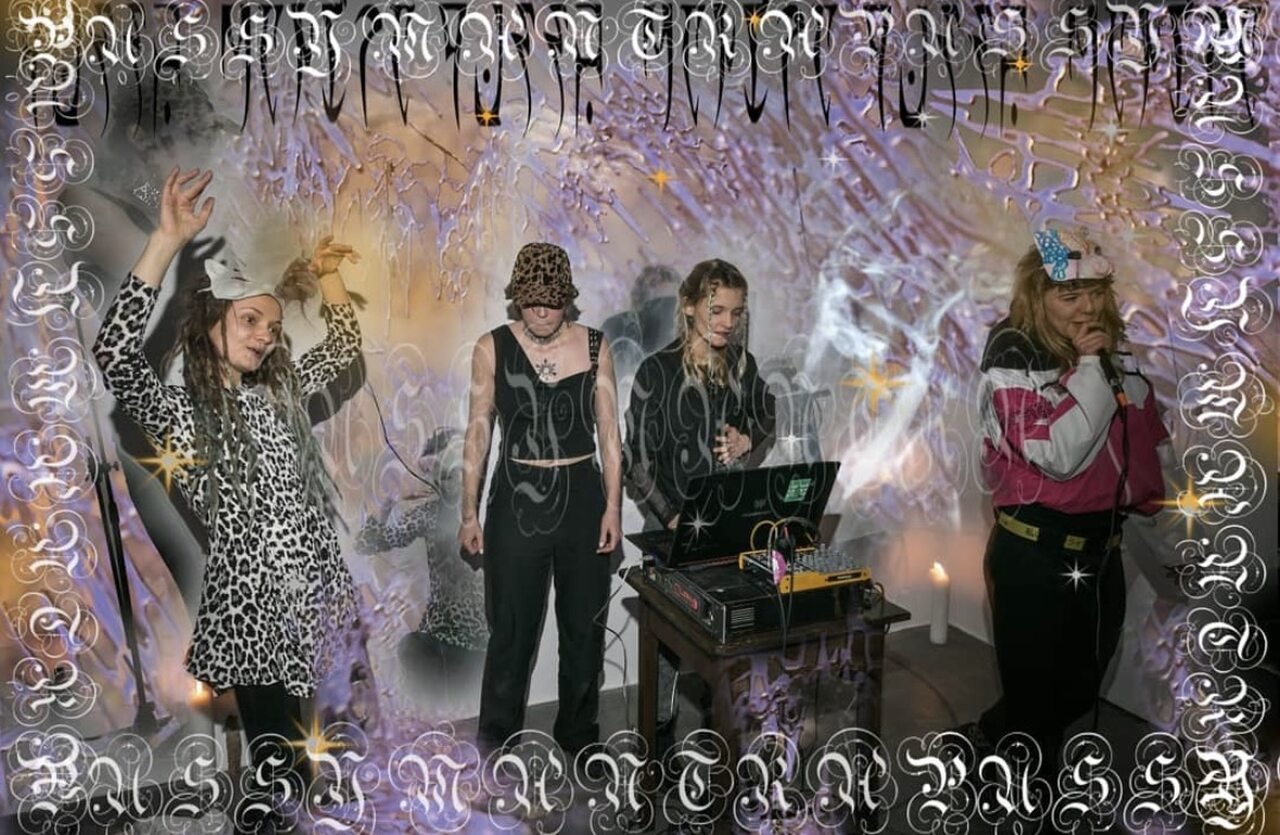
JW: We shone at all the clubs in Kraków that had an experimental vibe. Betel, Święta Krowa, Bal, at the now-defunct Bomba, an anarchist hangout called Warsztat… At the same moment, Pussymantra was formed, a band that – thanks to the encouragement of our professor Marek Chołoniewski – we created together with Maja Sadel and Anastasia. It’s hard to classify this project by genre, but among ourselves we called it a “ritual-sound-noise-performance-act.” For me it felt like a dream come true, because suddenly I was part of a band founded entirely by AFAB individuals. We traveled a lot around Poland, played concerts, went on tours… It was an amazing experience. We also published Cyberpussy, a zine where we featured our own work and that of our friends.
MN: Back then, we were really fascinated by cyberfeminism, people like Donna Haraway, Sadie Plant, VNS Matrix. We also had this ambition to help energize the community of digital artists, which I think we succeeded in doing: as zine editors we received a crazy amount of submissions and feedback. I remember that everything we did back then was imbued with a great deal of optimism: in 2016, the potential for technological development was just beginning to clarify.
EB: Given today’s approach toward technology, this sounds a bit like a story from another era. Back then, it seemed that technological development could be guided ethically and sensibly, that the world’s fate remained in our human hands: that WE shape technology, not the other way around.
JW: Indeed, it was a time filled with an unambiguously positive attitude toward technology as a tool for decentralizing various systems, emancipation, and self-expression. Pussymantra also grew out of this conviction. The key element of the project was not the sound itself, but the sense of community that emerged as a result of a kind of trance we sought to trigger in the audience. We heard that people were literally melting into these sounds, that they transported them somewhere else, beyond the immediate experience of place and time. Equally important was the dynamic of our collaborative work: the care, attentiveness, and mutual respect with which we treated one another.
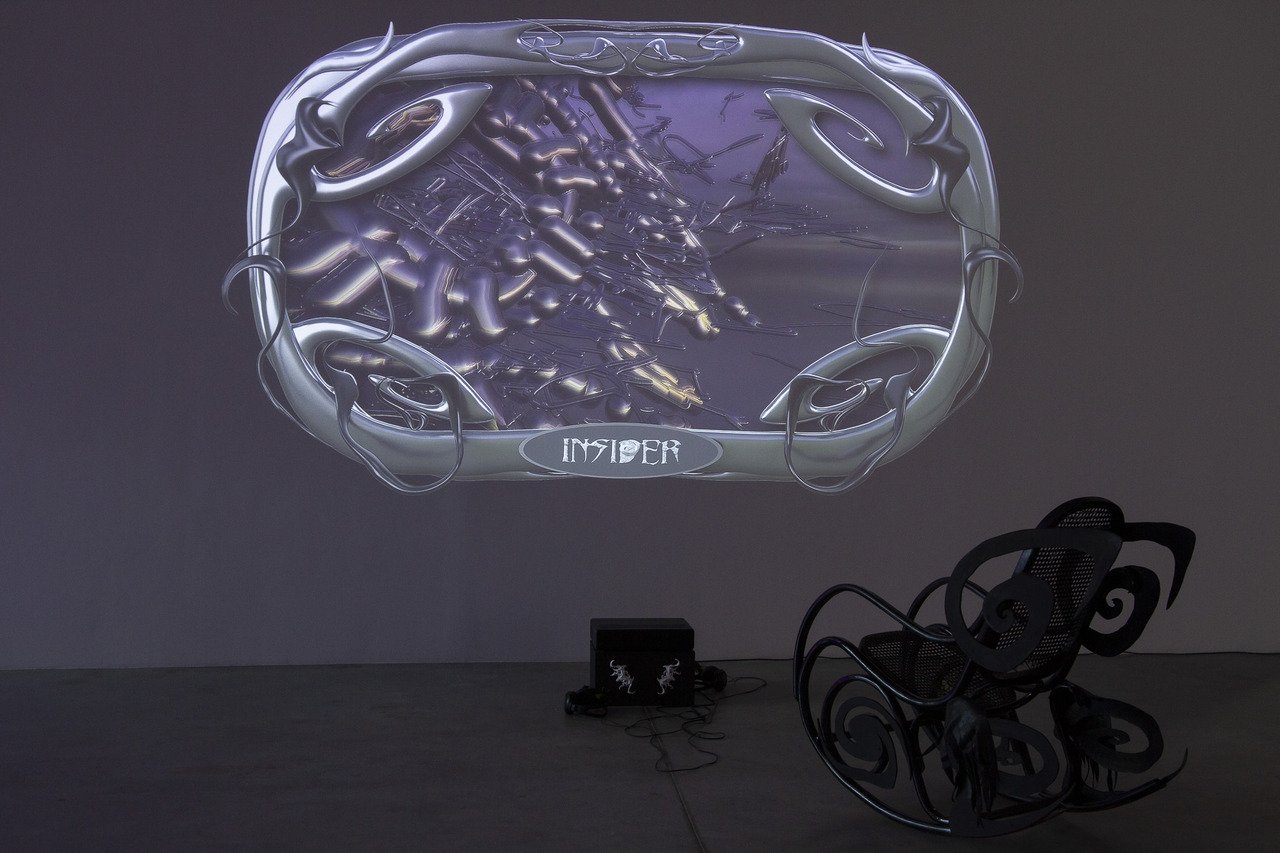
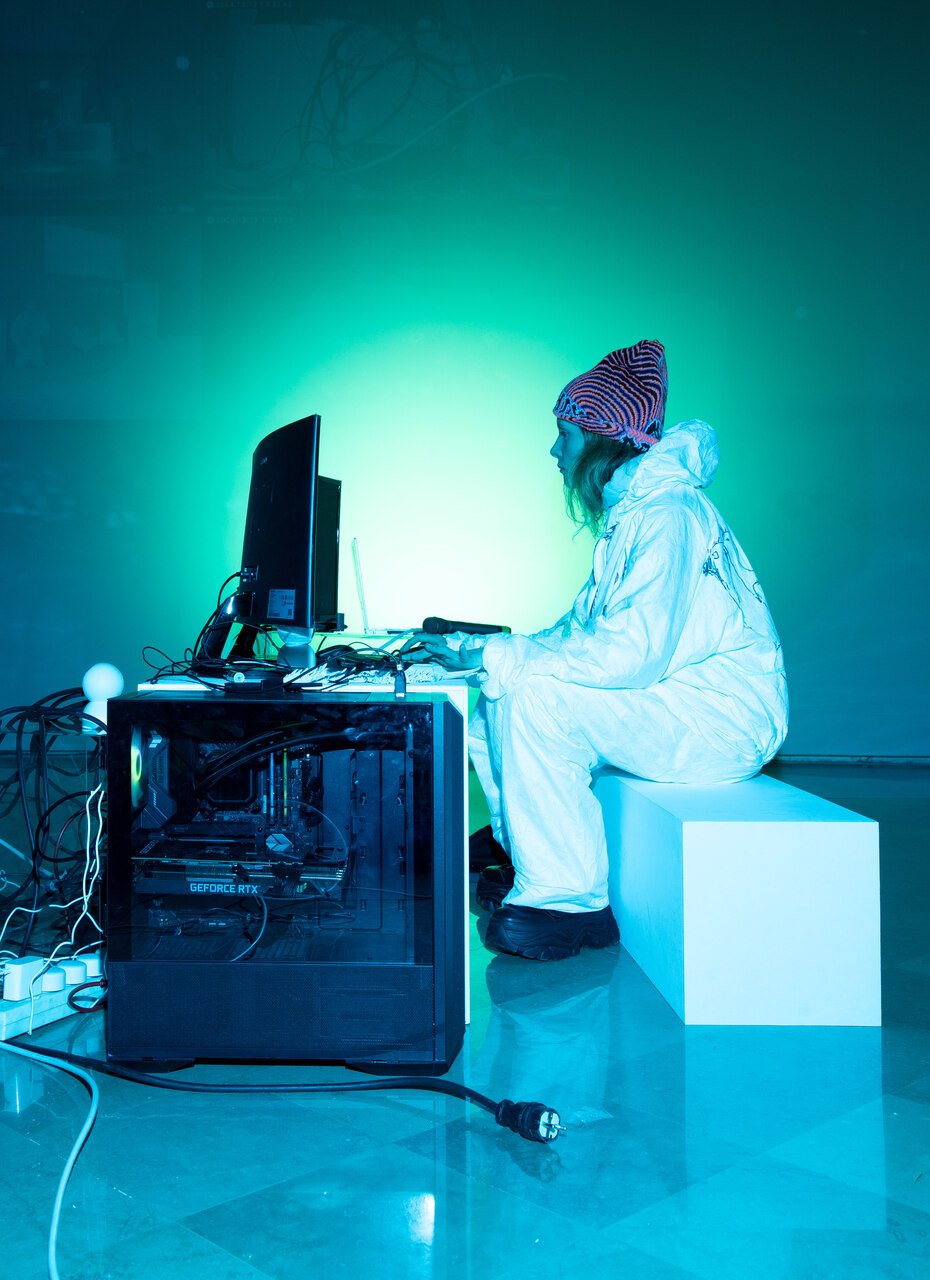
Image courtesy of Arsenal Gallery in Białystok.
EB: But this optimism and faith in the promise of technological development has now undergone a rather substantial reassessment, no?
JW: For sure. This positive outlook was just the beginning, strongly tied to our early years in intermedia and to a very personal experience of simultaneously discovering both our own potential and that of digitality itself. However, reality fundamentally challenged that way of thinking, and our attitude shifted toward a much more critical perspective.
MN: What I remember most from that time is the sense of agency and the joy I felt from developing skills and experimenting with digital tools. We learned together: we took coding classes, played around with a game engine… Most importantly, however, all of this gave us – as queer people and people socialized as women – empowerment: by learning technology and comprehending the mechanisms behind it, we could influence it. I believe that programming should be taught in schools – that we should understand it, because if we don’t, we very easily give up control; especially now, when technology, AI in particular, has become heavily commodified and market-driven. Meanwhile, what we most often have at our disposal is a set of tools functioning as products – paid, fixed, unmodifiable – rather than something we would be taught to use for the common good.
JW: Importantly, this was a time before the advent of artificial intelligence, and certain processes related to digital artistic work had not yet been automated. If we wanted to create some form of animation, such as modeling a 3D object or programming a simple interaction, we first had to understand the environment, immerse ourselves in it, and adapt it on our own. So it seems to me that this perspective has changed on many levels, but that sense of agency Martix speaks of was rooted in specific skills for operating tools. Nowadays, code writes itself – or rather, it’s written by a person in collaboration with artificial intelligence. But that sense of satisfaction, the joy of solving technical problems on our own, of exploring and adapting digital tools to our needs, was a very important element that shaped the approach we have today.
MN: Actually, I’m glad there wasn’t that kind of automation back then, although sometimes I imagine how much time I would have saved if I hadn’t had to sit on forums looking for answers to various technical hurdles. Back then, a decade ago, you’d go to a forum, ask a question, and wait for someone on the other end to post a reply. How much stress and frustration it cost me when sometimes something wouldn’t work for no apparent reason, and, for example, we had an hour until the exhibition opening…
JW: The internet was a completely different place than it is today; there was a sense of working together on various things, and people felt part of a community built around shared knowledge, mutual support, and collaboration.
EB: Meanwhile, my contribution to the development of technology today consists of pointing out which ChatGPT response suits me best. That communal dimension of the internet has largely ceased to exist; now it’s a rather atomized collection of entities (not necessarily human according to the “dead internet theory”). And the claim that social media has become a caricature of what is de facto “social” has become something of a cliché.
JW: The first thing that comes to mind is Bogna Konior’s book The Dark Forest Theory of the Internet, in which the author develops the theory of the eponymous “dark forest”: a vision of the internet as a hostile space, consisting of bots and corporate agents interacting with one another, while human users – if they are present at all – hide in less frequented, even hidden, spaces.
MN: Obviously, just as one no longer has to carry RAM modules in their backpack, there’s no going back to the “old internet.” Fortunately, forums like Discord, which has become a haven for smaller digital communities, are still human. I also think, but maybe this is just my personal bias, because I’m much less active on Instagram these days – it’s become a medium for brand-building rather than genuine sharing – but it seems to me that soon, we humans will move from the major social media platforms to those with a smaller reach.
EB: Nevertheless, this collective ethos of the early internet and the practice of tweaking, hacking, and adapting existing technological tools to your own needs is still very close to your hearts: tools serve as a starting point, modified to address needs other than those for which they were designed. I get the impression that this is clearly evident in Body Open Source, a work which was described as a “multiplayer VR,” so in an already oxymoronic, paradoxical way.
MN: I generally think of our entire practice as a constant need to understand and analyze tools. If I “get” something from a big corporation, I want to know how it works – what it actually is, how it “thinks,” how it’s built – and I want to be able to recreate it. I don’t like the feeling when a mechanic is unclear or opaque to me, because that ignorance – in line with the principle “if you’re not paying for the product, you are the product” – can cost me a lot, leading to a situation where someone takes control of my data for example. I wouldn’t yet describe myself as paranoid about digital surveillance or data theft, but the number of trackers running in my browser scares me.
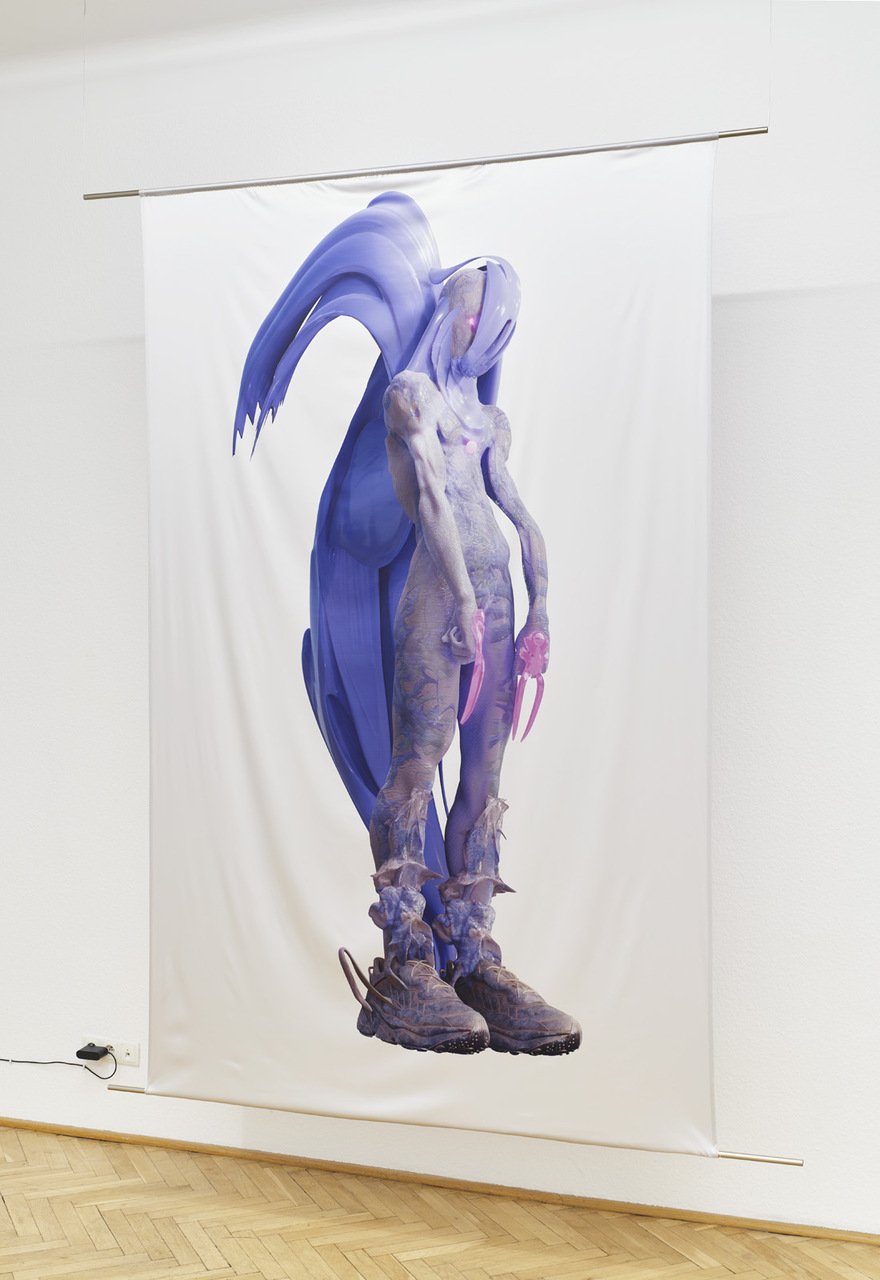
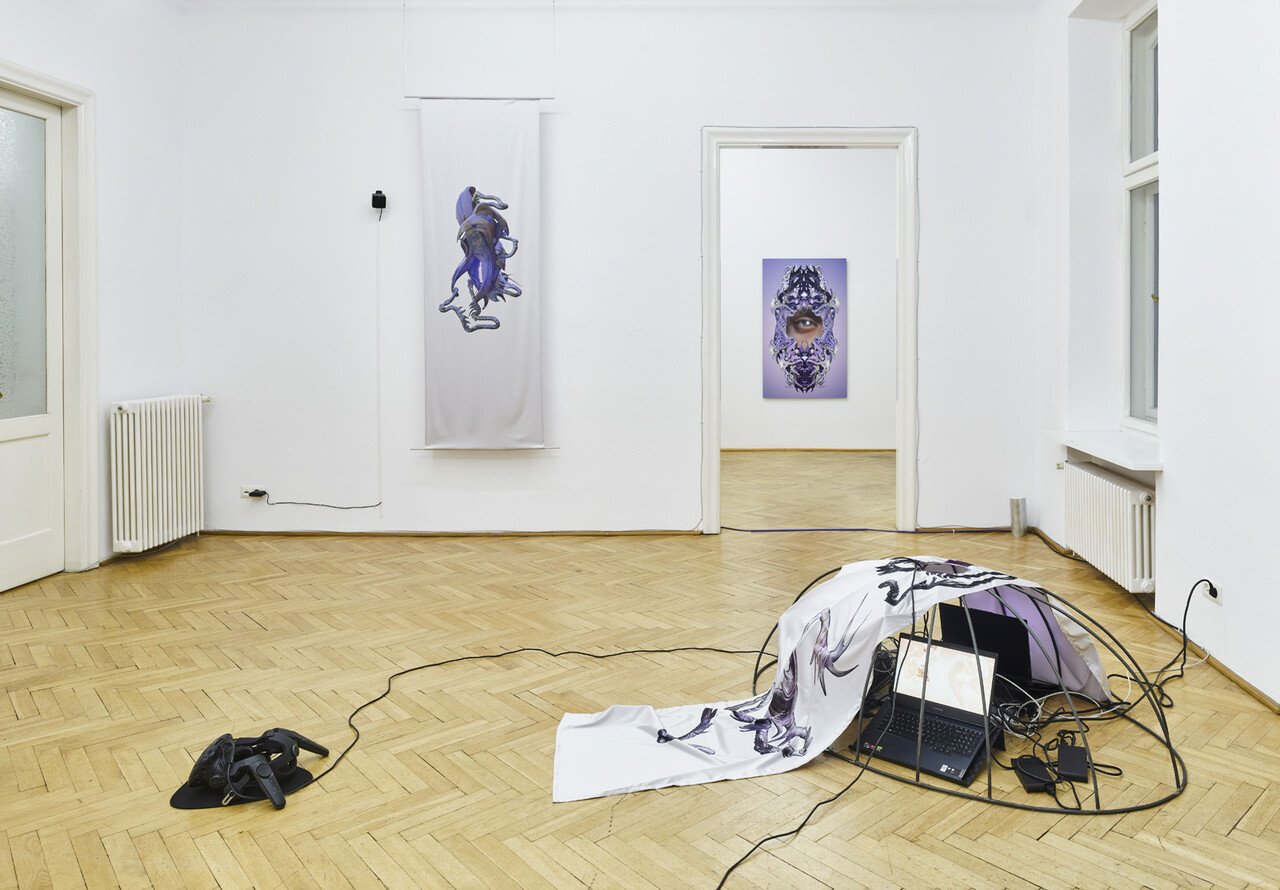
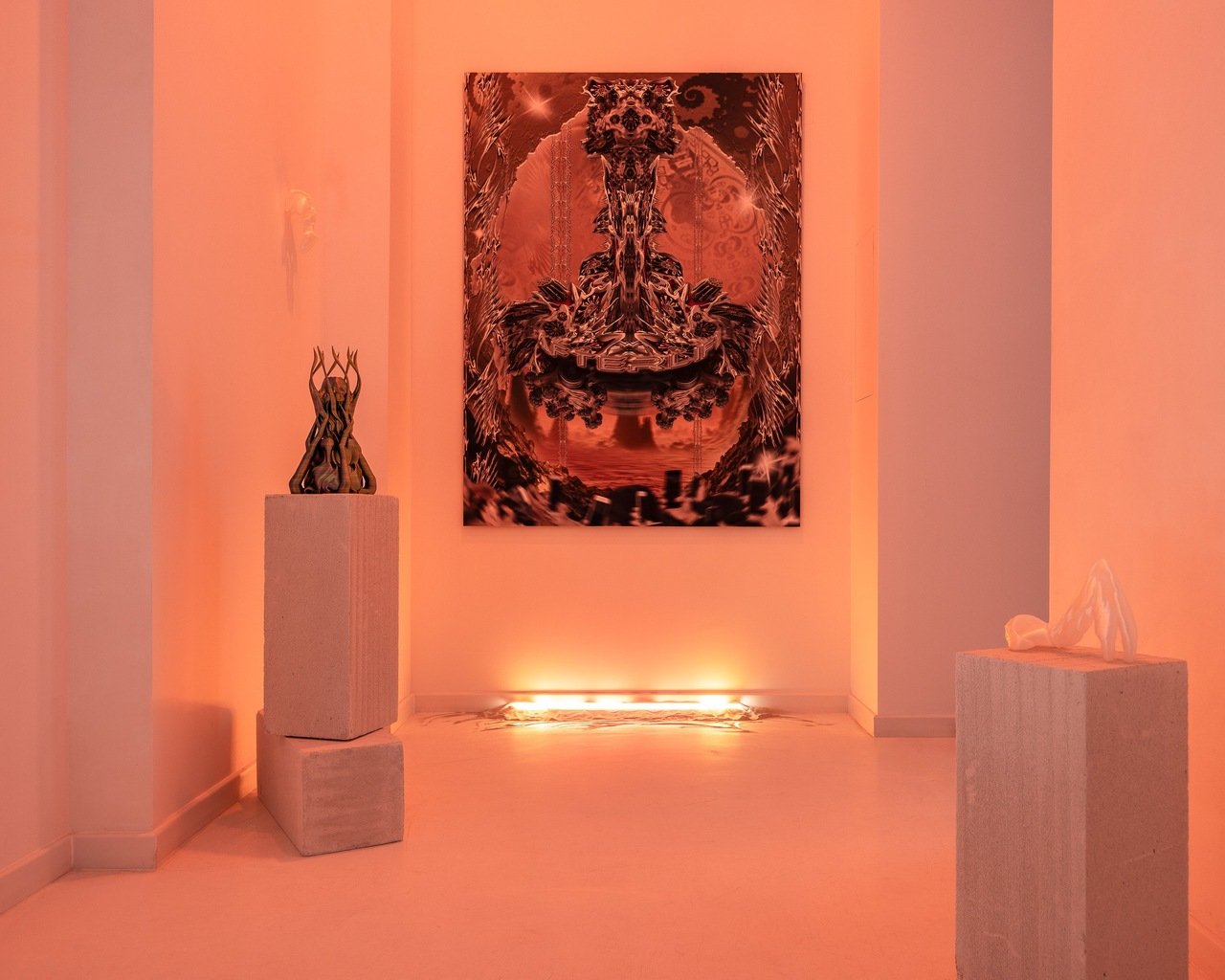
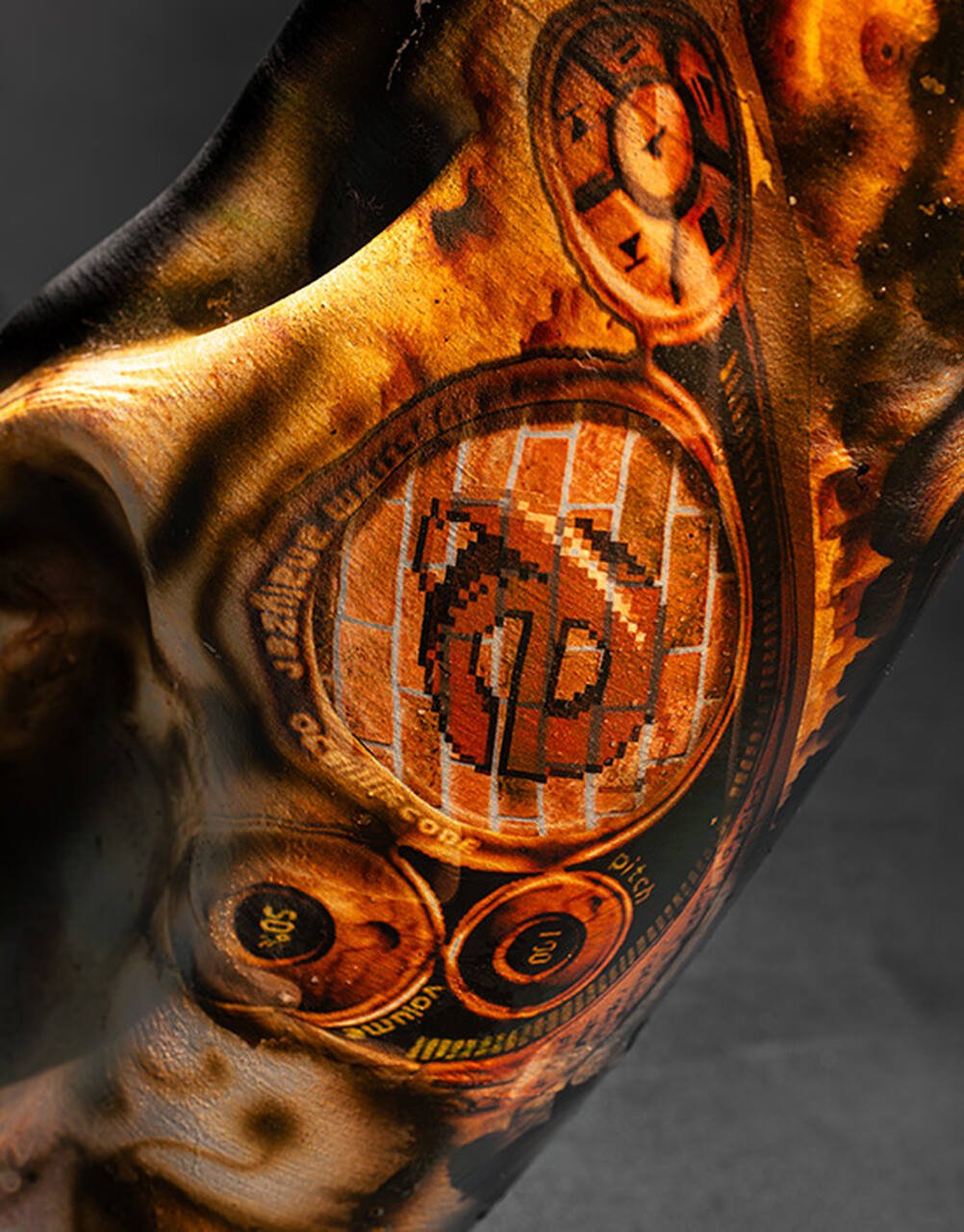
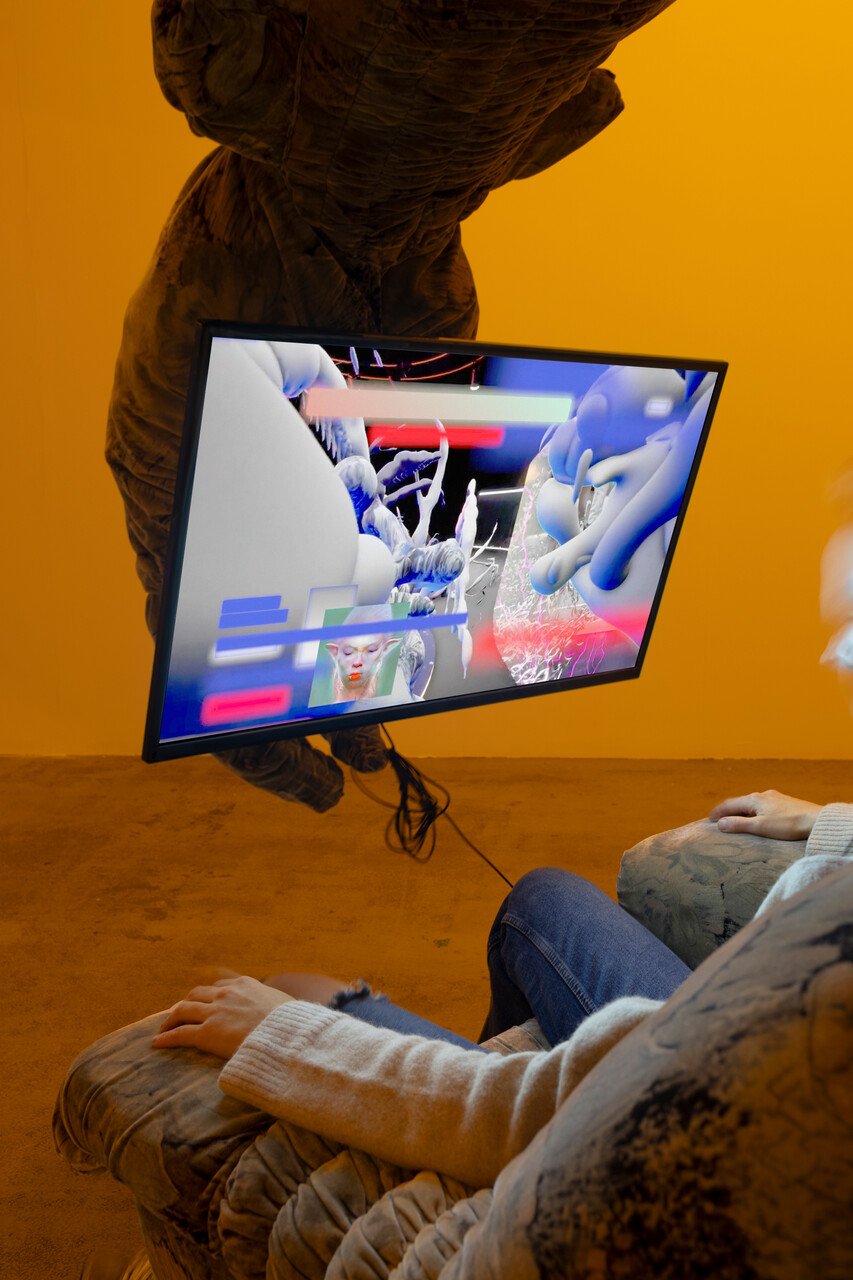
JW: Body Open Source has a very long history; it dates back to 2018, when it began as an attempt to treat the body as an interface that transcends binary (nomen est omen) thinking and allows the virtual body and its capabilities to come to the fore. It is primarily about using digitality to express fluidity and queerness, as well as intimacy mediated by technology – about designing a body that does not have a single, fixed form, but emerges through the process of interaction among its many users. Together with curator Kat Zavada, in the exhibition please be tender with my data, we revisited this work, but this time addressing the issue of mass collection of data and tracking users’ online activity without their knowledge. We created our own decentralized system – Body Open Source ran on a server we designed ourselves – which took on additional significance, linked to separateness and being on the outside, almost a gesture of autonomy.
MN: At the time we were very inspired by the work of Char Davies, who created some of the very first VR-based art projects. In one of them, Osmose, the participants’ breath became the basis for interacting with the virtual environment: the artist constructed a device worn on the chest, thanks to which the user floated in that space as they breathed. That experience deeply moved us: it offered the opportunity to explore more subtle, almost intimate dimensions of perception and corporeality in VR. At the same time, many VR projects at the time were designed for a single person, and from the start we were interested in something else: what it’s like to be in that space together, in a multiplayer setting. We wondered what would happen if co-presence became the focal point of an experience designed toward the individual. Such an attitude also posed a technical challenge: back then almost no one was doing a similar thing!
EB: So, it was an attempt to deconstruct certain established patterns and to question what is usually taken for granted. In this context, how do art institutions view your practice? I get the impression that digital works – whether VR or those that borrow aesthetics and mechanics from video games – are sometimes treated as a kind of “exotic” phenomenon, a curiosity, something foreign that has sprung up in the art field somewhat unexpectedly.
MN: Since the very start, we were aware that it might be misunderstood, and that’s often still the case today. But I’m not sure if we’d even want to be fully understood. We also create out of a specific, perhaps utopian, need: we simply enjoy working together. To a certain extent, we’ve also given up on the dreams of “making it” in the art world. I get the impression that in Poland there’s still a lack of broader discourse around digitality. Digital art is still a relatively niche field, and the few people involved in it often operate in the independent scene or are more visible abroad. There is also still a lack of discussion about how to archive and preserve digital art, though it must be said that this is a rather new issue outside of Poland as well. The difference, however, lies in the scale of available resources. Institutions in the so-called West have much larger budgets at their disposal: after all, presenting game art in an appropriate manner requires very significant investment.
Sometimes it comes down to even something as basic as a computer. We often found ourselves in situations where the gallery simply didn’t have one, and we had to take on the responsibility of providing it. If there wasn’t a budget for rental, we would often show our works on our own equipment. So yes, in a sense I feel “exotic,” but since I understand these circumstances, it’s no longer a problem for me. Besides, we’re currently transitioning from the gallery context toward presenting work in the digital world: we’re developing a game that will be released on itch.io or Steam.
JW: I, on the other hand, don’t believe art and “digital” being separate realms. However, I get the impression that in Poland, digital art is still not treated as a full-fledged, equal part of the visual arts field. It’s probably a matter of time that this changes, but for now, I see it also a result of a rigid perspective and attachment to more classical forms of expression. On the one hand, this is understandable, and on the other, it’s frustrating. And it’s not just about us, but about the entire community of people working digitally, creating incredibly valuable, complex worlds; yet their practices often remain invisible or underappreciated as art. I feel that when such works end up in a gallery, they must, in a sense, “prove” their artistry, rather than being immediately treated as an equally valid language of expression. Nor are they interpreted or critiqued from the same perspective as other, older media.
It seems to me that another problem is the relatively underdeveloped discourse. In Poland, there are few people who write regularly about digital art, and furthermore, few initiatives receive support to change this state of affairs. Without that, it’s difficult to build a sustainable space for reflection. This state of affairs is, of course, evolving, but only gradually. As a result, I get the impression that many people are still surprised that games can be treated as art.

EB: I don’t know where this skepticism stems from. One might say it’s because video games operate within a commercial sphere to a greater extent than art. On the other hand, this sphere is also deeply entangled with the market – there are fairs, sales, collectors… But perhaps the answer is simple: despite frequent declarations of openness, the institutional level of the art world remains largely conservative.
MN: I’ve also been considering this. Because on the one hand, we have the art market, where artworks function as financial instruments, and what sells well tends to be physical objects rather than something ephemeral or experimental. Such a work ends up with a collector, and from that moment on, it belongs to just one person. Of course, it can later be exhibited or loaned out, but as private property. Games also circulate commercially, but here, access and “ownership” are much more dispersed and democratic. They belong to many users, and very large communities form around games. Interesting, isn’t it? Something more decentralized and shared is often considered less valuable than a unique object assigned to a single individual.
EB: Another aspect of this is that the divisions between high and low art were theoretically challenged some time ago, but in practice they still exist, albeit in a more subtle form. This is evident, for example, in how art and craft are still set apart; craft, understood as a field that involves adapting tools, using and developing specific technical skills, is often placed lower in these informal hierarchies. At this point in art history there is a certain primacy of the “brain”: of thought, concept, and the idea behind the artistic work. At the same time, technical skills – such as painting – are no longer in the foreground, or treated as essential. I’m not judging this. For me, it simply proves that hierarchies haven’t disappeared, just shifted.
JW: It is also interesting that video games and digital practices tend to function as tools or technological outcomes rather than as spaces for the creation of entities, relationships, or systems of meaning. And yet this is an area that requires the combination of many different skills – technical, aesthetic, narrative, etc. – and which is capable of generating vast and complex worlds. It’s like creating new ontological systems.
MN: We are currently at Sybil in Berlin – a space dedicated to game art and weird gaming practices – and along with a dozen other artists-in-residence, we talk a lot about how game art is perceived today within the art world. Many people are already fed up with the lack of recognition, but also with the lack of institutional infrastructure that would enable the adequate exhibition and reception of this type of work. Perhaps art institutions have never been the right place for game art, and we should turn to other circuits and communities that are more ready to appreciate, accept, and understand these practices. During one such discussion someone proposed to “free games/game art from galleries” and to prepare works for environments dedicated to video games instead.
JW: It’s also crucial to note the overlaps between two spheres: on the one hand, the gallery, where digital art is exhibited but not always fully embraced, and on the other, the community of game developers and small studios deeply rooted in digital culture. I’m not sure if separating the two is constructive. More and more artists are moving between these fields, treating them as contexts that influence one another rather than as clearly distinct systems. Perhaps, over time, games will return to galleries in some form. But surely on different terms than now.
EB: Meanwhile, you’re engaged in worldbuilding for Unbelievable Geomagnetic Storm [UGS] the video game you’re currently developing. Since definitions of this term can vary significantly (it is also a word that appears very often in the art field at the moment), I’d like to pause for a moment and ask each of you for a brief explanation of how you understand the concept.
MN: For me, worldbuilding – and it is perhaps worth mentioning that the term itself originates from literature – is the action of defining a world: the beings that inhabit it, the rules that govern it, and the relationships that develop within it. In the case of video games, it often serves as the starting point for the creative process. This is true in our case: whether we’re working on an art installation or a game, we always start with conceptualizing the world. From this foundational layer, we develop subsequent ones – from the ontology of the world to its concrete manifestations – and on this basis we build a narrative structure, that needs to be coherent with the world’s ontology, but does not necessarily need to be coherent in itself: after all, both: the narrative and the world can be glitchy, incoherent, fragmentary. What we later present to the audience is always just a fragment which may manifest as a game, but it could also be a poem, music, or another form; all of these are merely different manifestations of the same, previously constructed reality.
JW: Worldbuilding is a process that never really ends; it is constantly alive. It begins with an idea, with an attempt to define the genesis and circumstances of a new environment, which then begins to take on a life of its own. It’s like watching something evolve in real time, helping it materialize, while simultaneously observing how the world mutates and what it transforms into. And that’s what fascinates me the most: the moment when the designed world begins to produce its own elements, hybrids, mutations… in a sense, going beyond the original intention. Worldbuilding then consists not only of creating worlds, but also of caring for them and closely observing their development.
MN: It’s an enjoyable, deeply engaging thing to be involved in and ideal for neuroatypical people: because the world you’re creating is constantly evolving, always in motion, and continually posing new questions, it never becomes boring. There are so many things to think through and refine, such as which elements to incorporate into the mechanics so that they accurately and logically reflect the relationships between the interactive and static parts of the game.
JW: New questions, rules, relationships, and interactions keep popping up.
EB: So what does the world of UGS look like? The title suggests that one of the main characters or agents having a real impact on the gameplay is a non-human entity.
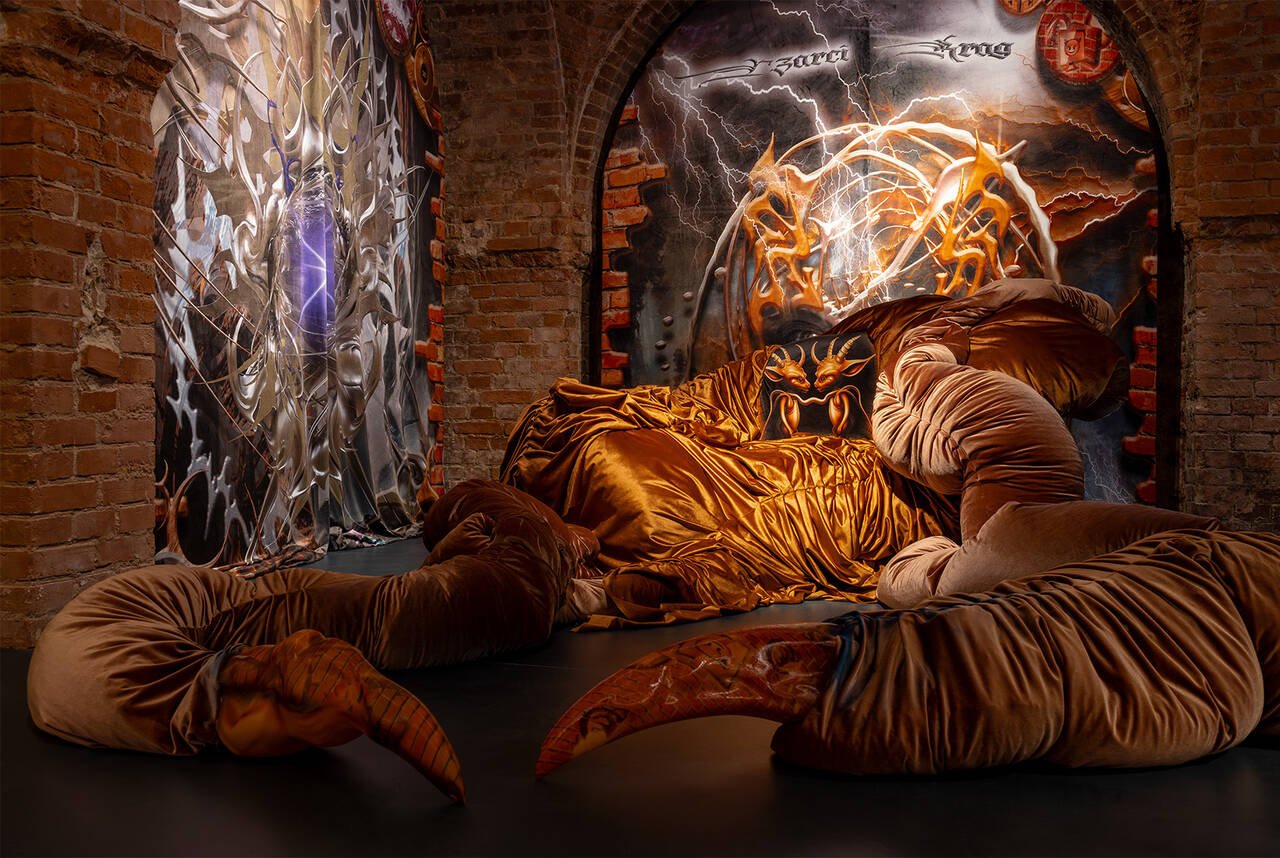
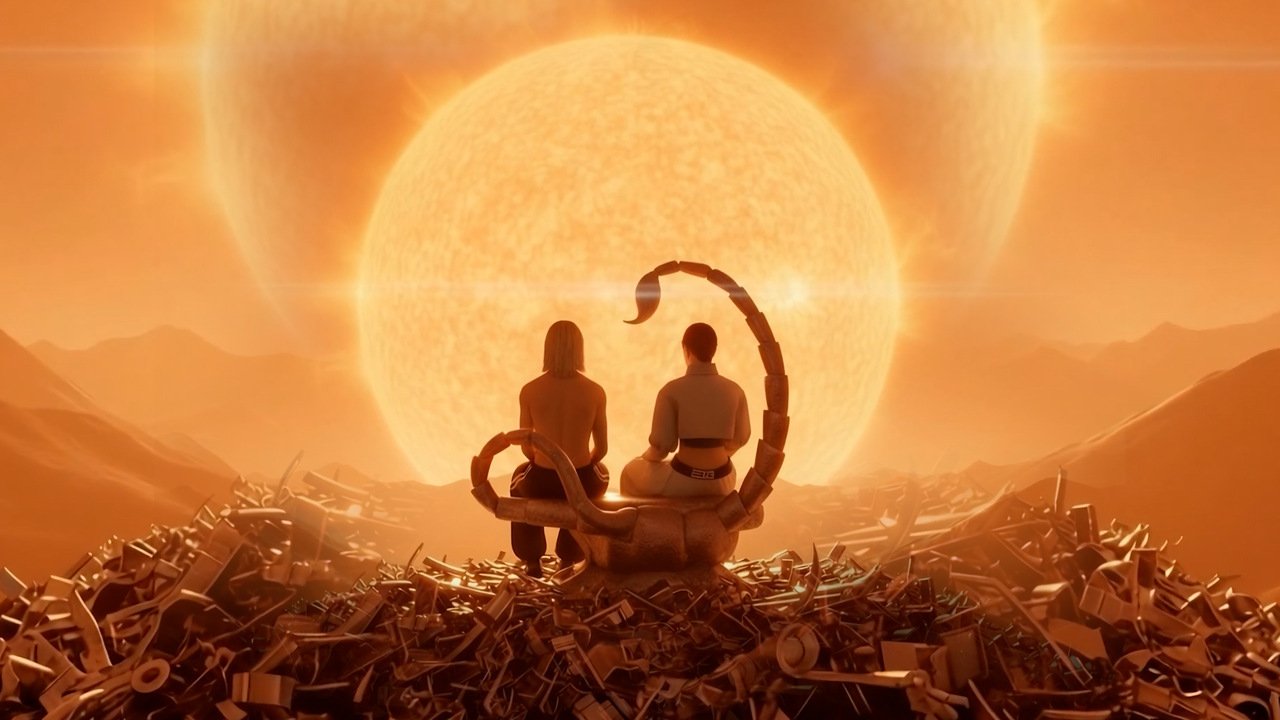
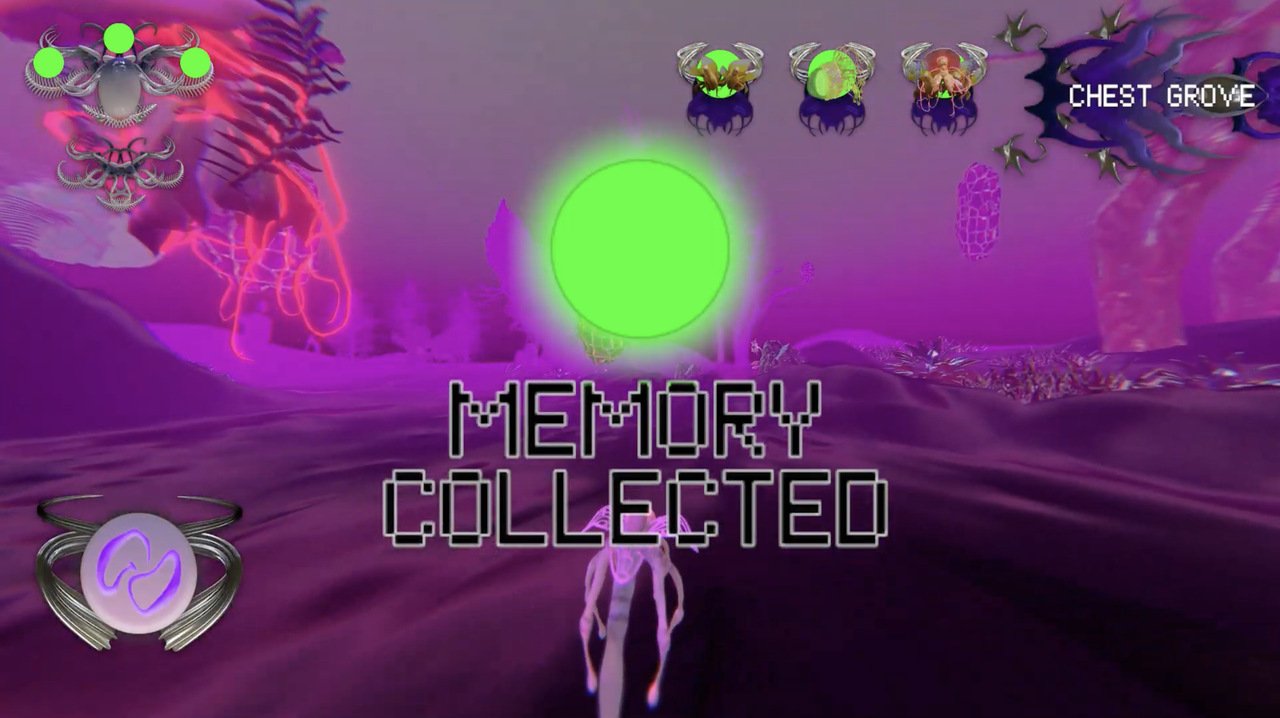
JW: The titular geomagnetic storm is the defining force of the game-world, as it has disrupted communication and destabilized the entire technological infrastructure within it. Much like in Elden Ring, the gameplay begins at a moment when the existing order has been destroyed, it’s falling apart. In this reality, two protagonists, the Trickster (the embodiment of the forces of chaos) and the Watchmaker, set out on a journey to Immortal Castle, the center of the techno-feudal government and the incarnation of a monstrous network of hyper-corporations. Taking advantage of the disturbance caused by the storm, players attempt to “hack” the system, an endeavor that can end in several different ways, one of which being the ultimate destruction of the game-world, another: the initiation of a process that transforms it into something entirely new (though not necessarily better).
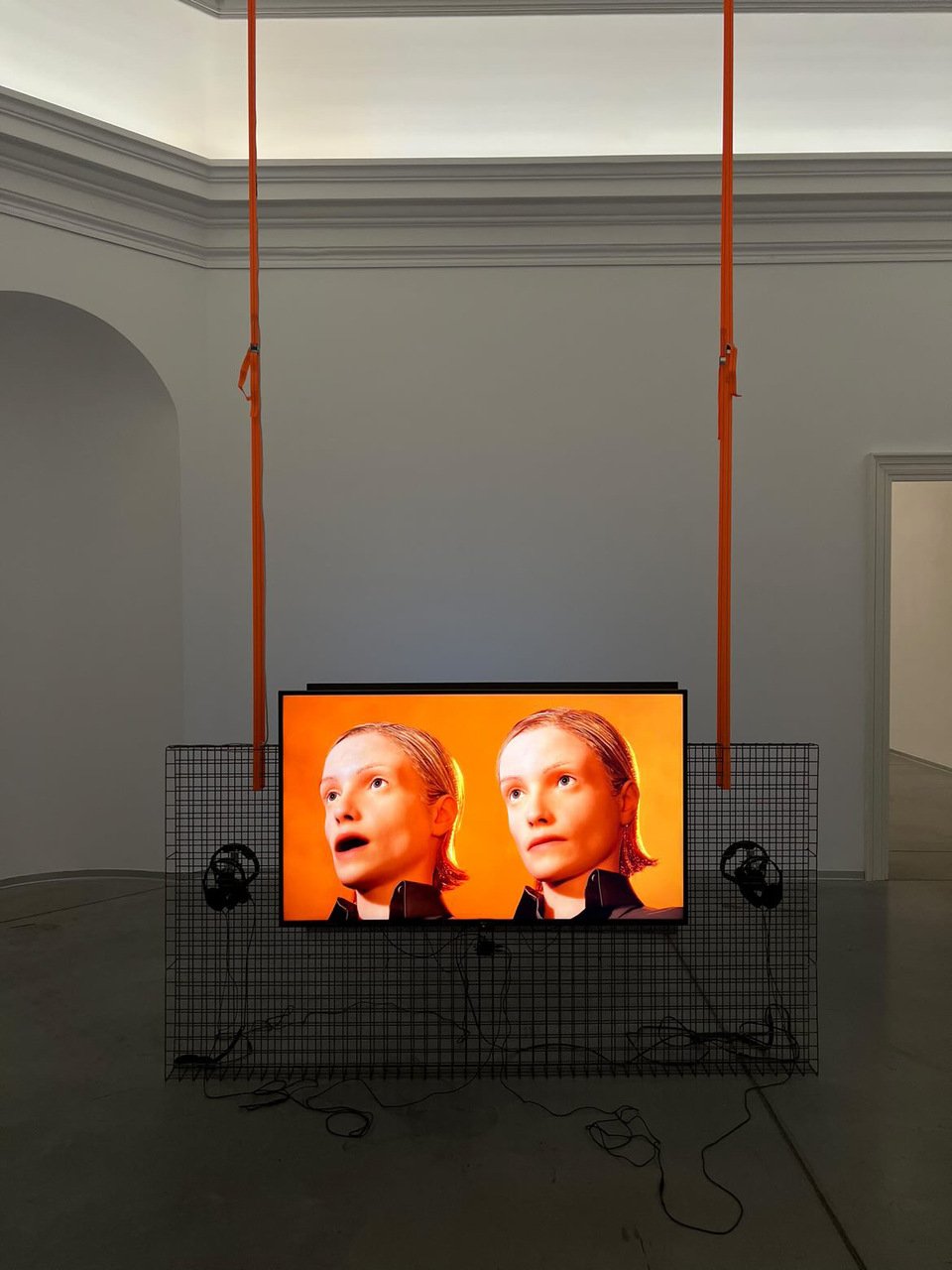
MN: This stage involves many changes, including a shift in our approach to the project. The first version of UGS, from 2024, was a video work; now, however, we are beginning to think not only in terms of visuals, but also in terms of mechanics, “playability,” and the player’s satisfaction in interacting with the game. In the case of the original version of UGS, what mattered most to us was critiquing the idea of techno-feudalism and posing – in a somewhat coming-of-age, perhaps even naive way – the question of whether its hegemony could be challenged and its conditions transformed.
EB: Where did the idea for these two characters, the Trickster and the Watchmaker, come from?
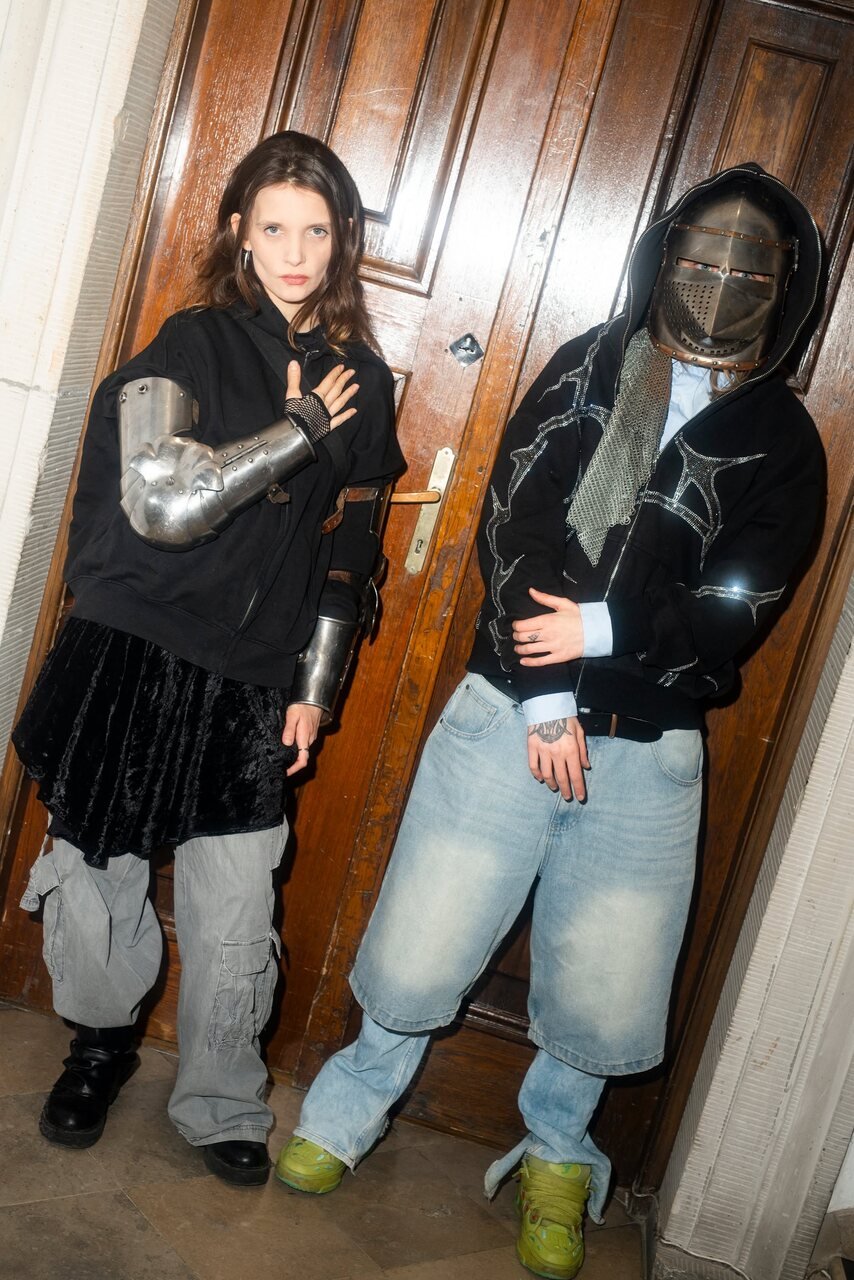
MN: We noticed – for instance on forums or in the game art community’s Discord – that many people use the image of Stańczyk as their avatar. This figure began to function as a kind of metaphor. The jester is someone who simultaneously belongs to the system and maintains a critical relationship with it. Historically, he was present at court, close to power, but he also had the privilege of undermining and mocking it. In this sense, he knows the system “from the inside,” yet can simultaneously violate it. He struck us as an interesting personification of subversive practices related to code and technology. The Watchmaker emerged somewhat differently: we were looking for a female figure associated with science, but also with organicity and fluidity. “The Watchmaker” seemed to us to be an apt name for a character who breaks technology down into its constituent parts: just as a watchmaker analyzes a mechanism to understand how the passage of time works in the first place. We also wanted queerness to be central to both characters: the Watchmaker is a dyke, and the Trickster is a trans man.
JW: And we, as players, experience this story through the lens of their friendship. Both characters are inspired by so-called “storm chasers”: people who livestream their pursuit of storms and tornadoes on Twitch or YouTube, using radar and AI-based tools to track weather phenomena. This influence partly sheds light on the protagonists’ incentives and explains why they are heading to Immortal Castle. The Trickster is driven by curiosity: he wants to witness the catastrophe, to be at the very epicenter of a system teetering on the brink of collapse. The Watchmaker, on the other hand, seems to believe in the possibility of change: the reason she sets out on this journey is more about transformation than observation.
As for the game itself, we want to let players switch between first- and third-person modes and between the two characters, because each will have different skills and their own way of interacting with the world. For example, the Watchmaker will use technomancy: a form of “magical” hacking of the machines and devices that appear in their path. In the case of the Trickster, we’re considering whether his strength will be realized through diplomacy and persuasion.
EB: The mechanics you’re describing remind me of classic RPGs, where you choose character classes and assemble them into a party. I’m currently playing Final Fantasy XII. There’s a class called the Time Battlemage, a character you play offensively, but who can also apply status effects to characters on both your own team and the opposing team. On the other hand, the hacking mechanics remind me of NieR: Automata, an open-world action RPG. I’m wondering what genre your game will actually fall under?
JW: Actually, we’re asking ourselves that question as well. However, it will for sure reflect the underlying logic of our practice so far and likely take the form of a genre hybrid, bringing together several modes of gameplay at once. We’re closest to the immersive sim formula, based on maximum player freedom, high world interactivity, and emergent (so less-scripted or predetermined) gameplay. The player is given objectives and tools, but how they’re achieved depends on their decisions and creativity. This allows for a real impact on the course of events, gameplay dynamics, and the ending. The gameworld is meant to be shaped by the player’s movement between the two characters and by their interactions with the factions they encounter, such as solarpunk peasants or ravers. For example, your decision to either hack a data center, destroy it, or perhaps sell the data you’ve obtained, will have consequences for the world, its dynamics, and the final outcome.
MN: To be completely honest, however, what we create probably won’t be an immersive sim in the strict, traditional sense of the genre. If we were to use that label, players might have very specific expectations, and the community is quite demanding in that regard. An immersive sim depends on interconnected systems where mechanics respond to one another, and a high degree of player freedom, not just a choice between options, but the ability to approach a situation in many equally valid ways. In an ideal scenario, this means the world is fully reactive and “physical”: you can enter through a door, but you can also find an alternative route, such as through a window, use various strategies – melee combat, AoE attacks, stealth, hacking – and combine them in unpredictable ways. It’s a very complex and demanding approach. Of course, there are examples of games that have managed to achieve this level on relatively small budgets, but it’s still a huge challenge. That’s why we’re leaning toward a hybrid: a narrative RPG adventure with certain features of an immersive sim.
EB: Given how important lore is to you, I immediately think of formats that could expand it and build a community around the game. I really enjoy extensive, in-depth YouTube analyses, such as the several-hour long breakdowns devoted to the lore, mechanics, and worldbuilding of FromSoftware games. I do hope you’ll also produce similar content! It’s a great tool not only for deepening the world but also for promoting it. That said, when do you plan to complete UGS?
MN: We’re currently working on a test version, which we plan to finish by the end of October. We hope that it’s already playable, though more in the form of a prototype than a full-fledged demo. As for finishing the entire game, I think we’re looking at a timeframe of about a year and a half, though of course that could change. Ideally, by the end of 2026, we’d have a version ready to showcase, perhaps even release on Steam. We’re also planning an “exhibition” version, in the form of a shorter experience, that could be presented in a gallery space. All of this demands a great deal of work, but it is the kind of effort that feels genuinely engaging and satisfying. I never expected to be so excited about a project.
EB: Is the team behind the game just the two of you?
JW: A year ago, Martix, Eliza Chojnacka, and I founded the game studio age3000. We began with specific projects: for HerVision, we collaborated on a mobile game for the exhibition Radical Landscapes at Morris Gallery, and later made a music video for god.wifi using a game engine. This inspired us to start something we’d been dreaming of for a long time – a queer gaming studio that uses new technologies and operates on its own terms, not just within the art world. Now we’re moving the Unbelievable Geomagnetic Storm project to age3000, and it will be the studio’s first title. It was previously developed as an Eternal Engine project, and Eternal will remain involved, responsible for the game design, and for bringing in its aesthetics, interests, and lore. age3000, meanwhile, gives us the framework needed for a more ambitious production. We’re also thinking about producing games by other artists in the future. We’ve invited Sebulec to work on UGS as a character designer, and stylist Weronika Wood will collaborate on the character costumes. We are also currently seeking a game developer to join the team. In a small studio, many things happen collaboratively, which brings us back to the very beginnings of our work as artists: Martix and I handle programming and technical art, and with Eliza we write the narrative, build environments, plan mechanics, and test them.
EB: Finally, I’d like to ask about your favorite games. Were any of them an inspiration for you while working on UGS?
MN: This might sound cliché, but I’m a huge fan of Cyberpunk 2077. I think I’m playing it for the third time now. Of course, once you’ve mastered a certain playstyle, the gameplay becomes repetitive and you can breeze through the levels very quickly, but despite that, the game still keeps me hooked. In many ways, The Witcher is fantastic, and one has to admit that CD Projekt RED does a good job of incorporating queer themes. The older Skyrim and Gothic are also important points of reference for me, alongside strategy and survival games.
JW: A strong emphasis on worldbuilding probably connects all these titles. For me, the Dark Souls series was certainly significant, and among newer titles, Death Stranding, which I greatly appreciate for elevating roaming around the map to the status of a full-fledged mechanic and for its incredibly cinematic approach to cutscenes and narrative. It’s a very subtle game and, in my opinion, exceptionally beautiful, set in a highly complex world that operates according to its own rules, whose logic you discover very slowly, step by step. Almost like in real life.
The original, Polish-language version of the interview was published in SZUM Magazine.