
Tomek Pawłowski-Jarmołajew
“The Egg Egg. Exhibition in IX Acts” is a solo presentation by Rafał Zajko, a visual artist born in Białystok and based in London, whose practice spans ceramics, sculpture, installation, fresco, video, performance, and elements of design. The exhibition brings together works created over the past eight years with selected pieces from the collection of Arsenal Gallery in Białystok, including paintings from the Three Streams. Realism – Metaphor – Geometry collection, works developed during the Białowieża plein-air workshops, and artworks by Białystok-based artists. The exhibition is structured into nine titular acts, conceived as sequential spatial arrangements in which the Arsenal Gallery collections, through formal, narrative, and iconographic correspondences with Zajko’s practice, form new speculative narratives around the mythology of place and the circulation of forms, symbols, and memories. The titular Dadaist play on words serves as a point of departure for a subversive, self-reflexive engagement with the artist’s own oeuvre and biography, the power plant space, and the Arsenal Gallery collections. This play unfolds through a series of surprises and hidden “easter eggs,” as well as references to artistic heritage.
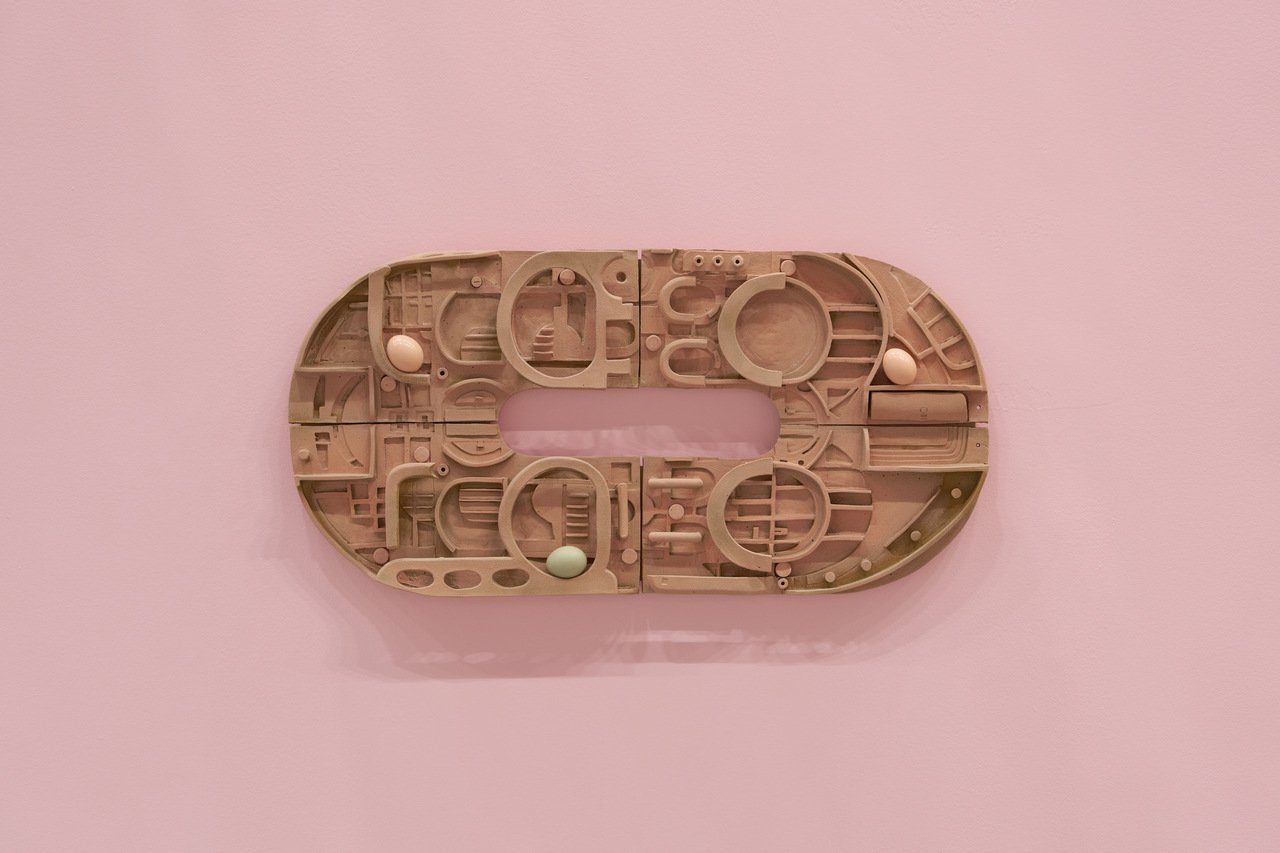
The titular egg recurs in Zajko’s practice as an archetype of origin, fertility, and the primal source of life. Motifs drawn from mythology and folklore, along with universal symbols and narrative structures, intertwine in his work with elements of popular culture, quotations from the histories of art and design, autobiography, and utopian visions, looping into a single spatiotemporal continuum. This constellation forms a kind of queer science fiction, which the artist describes as “a space of otherness in which it is possible to imagine and test alternative futures and belief systems.” Looping, rotation, and circularity are persistent concerns in Zajko’s work. His interests range from electrical circuits and agrarian cycles to modes of labour and the relationships between the body and the machine. This logic is also reflected in the way the artist constructs his cycles and projects, which are grounded in repetition, sampling, and the reconfiguration of existing motifs, while remaining attentive to modularity and variability, to the processual nature of matter, and to movement, embedded in many of his works. For this reason, his creations, as well as the exhibition “The Egg Egg,” may be read as choreographic systems.
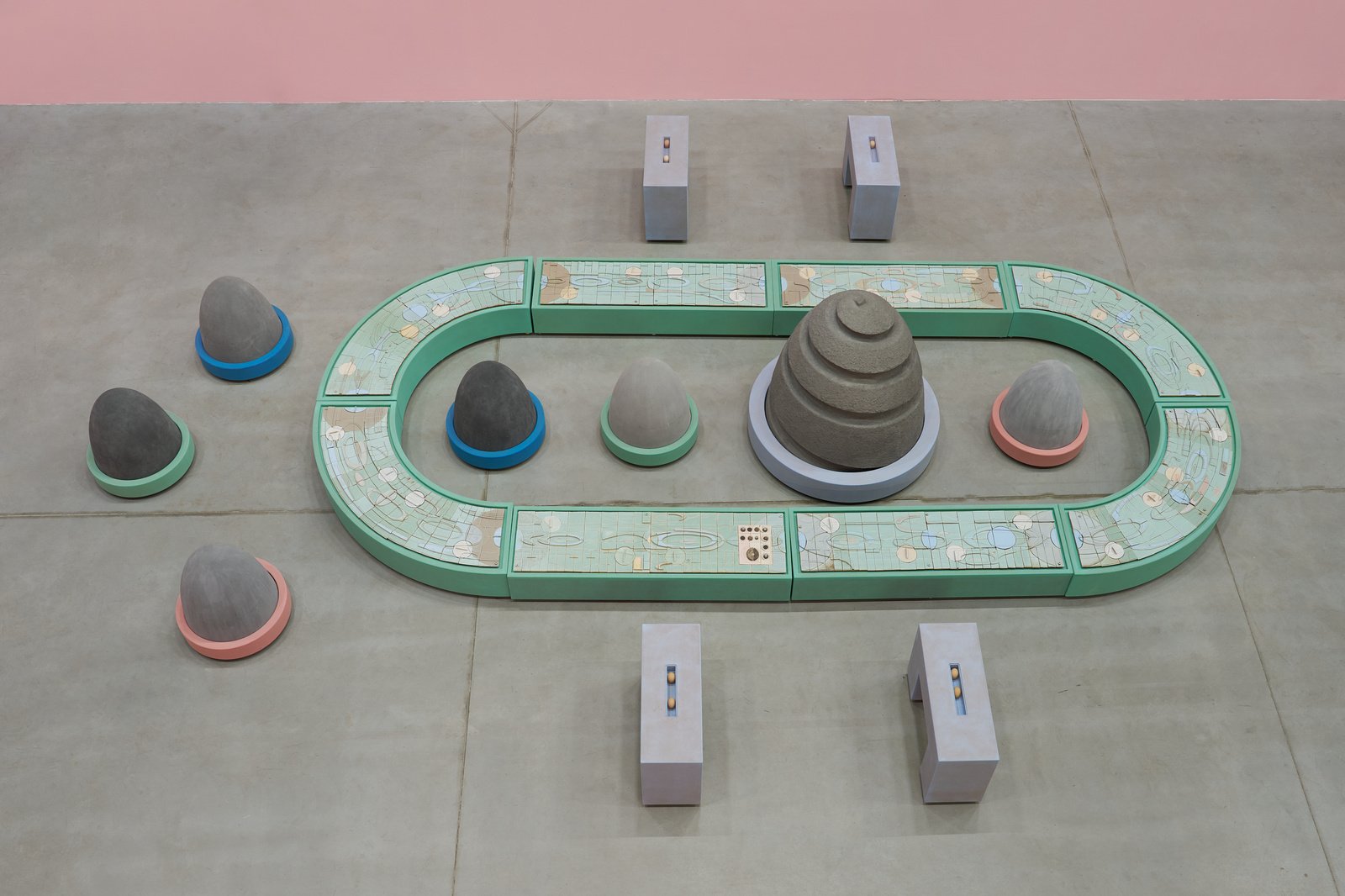
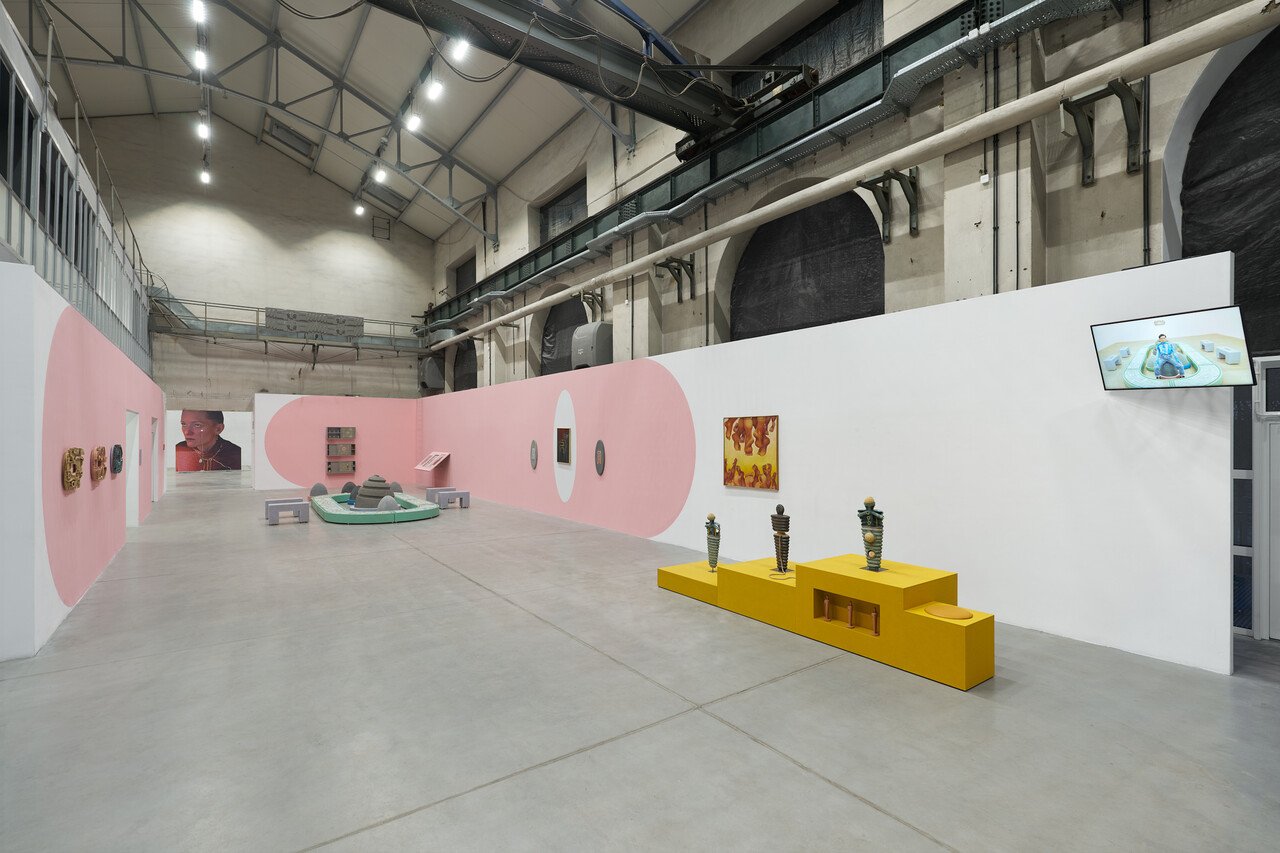
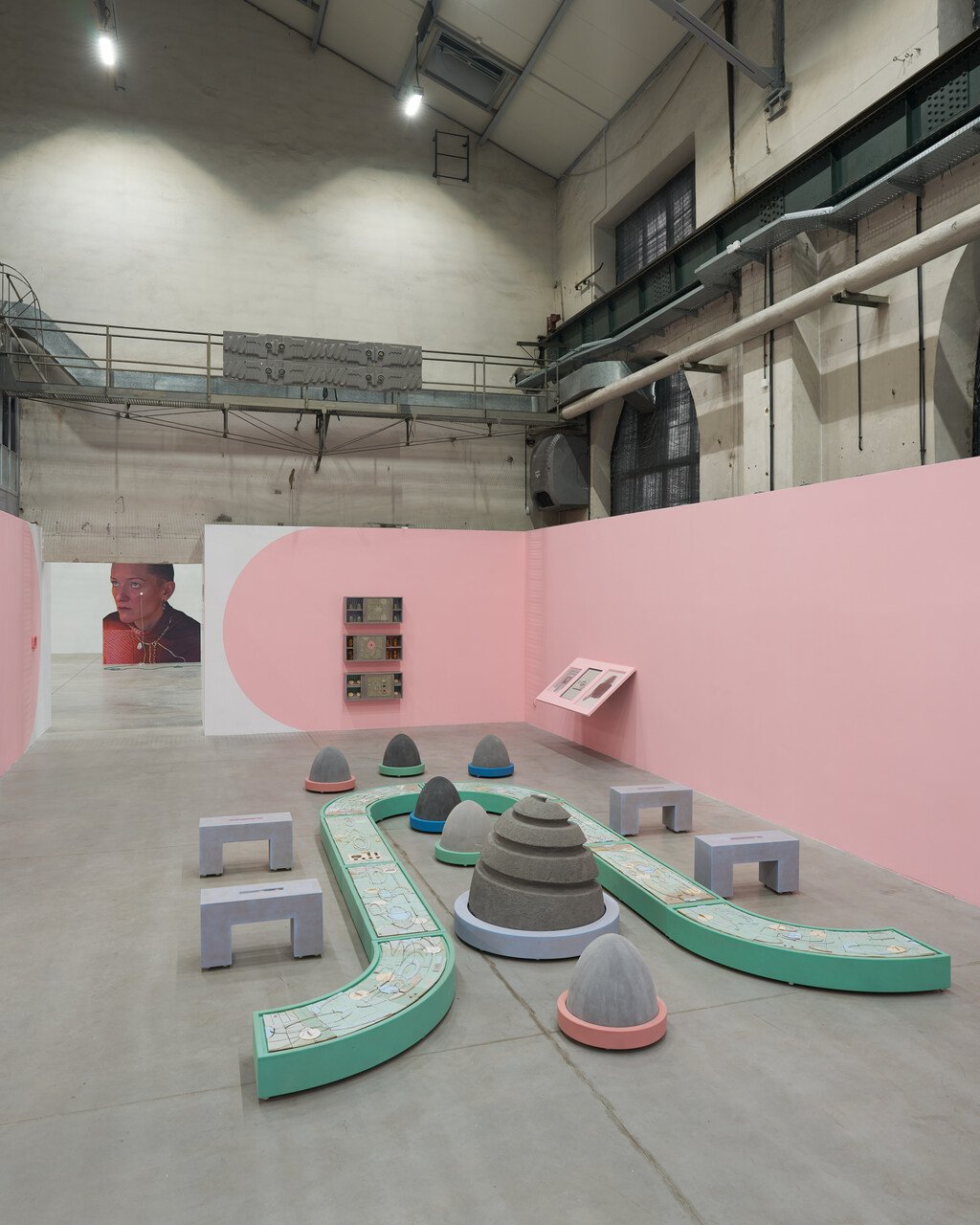
The theme of repetition and reconfiguration comes through with particular clarity in works from the Spin off series, initiated in 2025 at Focal Point Gallery in Southend-on-Sea, marking Zajko’s first institutional exhibition in the United Kingdom. In this body of work, the artist 4 engages with the phenomenon of the continual refreshing of the past, examining how contemporary culture operates through nostalgia and the reworking of familiar forms. At the centre of the exhibition at the Arsenal Gallery is the monumental installation Funny Games, which references Frederick Kiesler’s Endless Theatre, a utopian vision of theatre grounded in the idea of infinity. The modular structure, composed of ceramic reliefs, egg-shaped domes set on platforms, and storage-cabinet modules rearranged according to diagrams, functions simultaneously as scenography and as a model of the world, evoking associations with sacral architecture, urban planning, or the schematic layout of an electrical circuit.
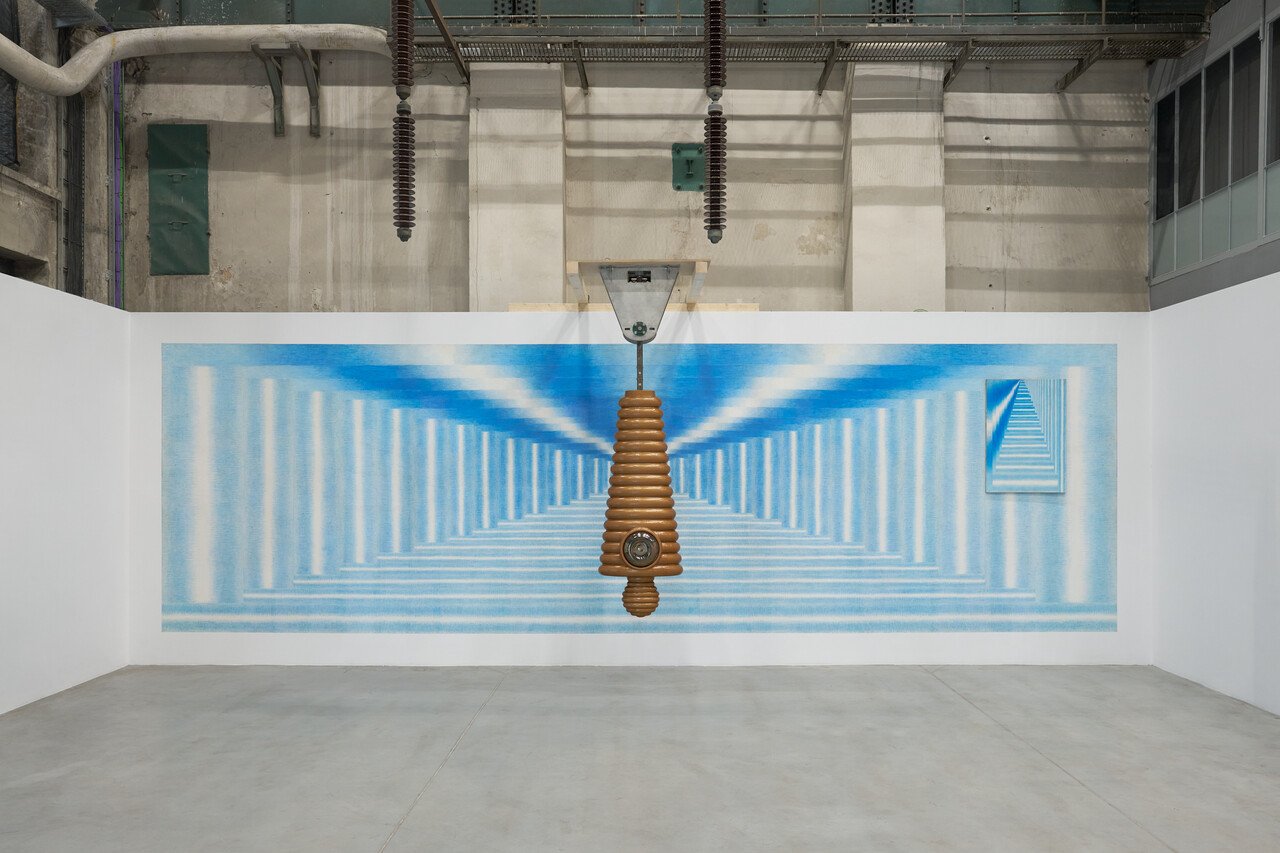
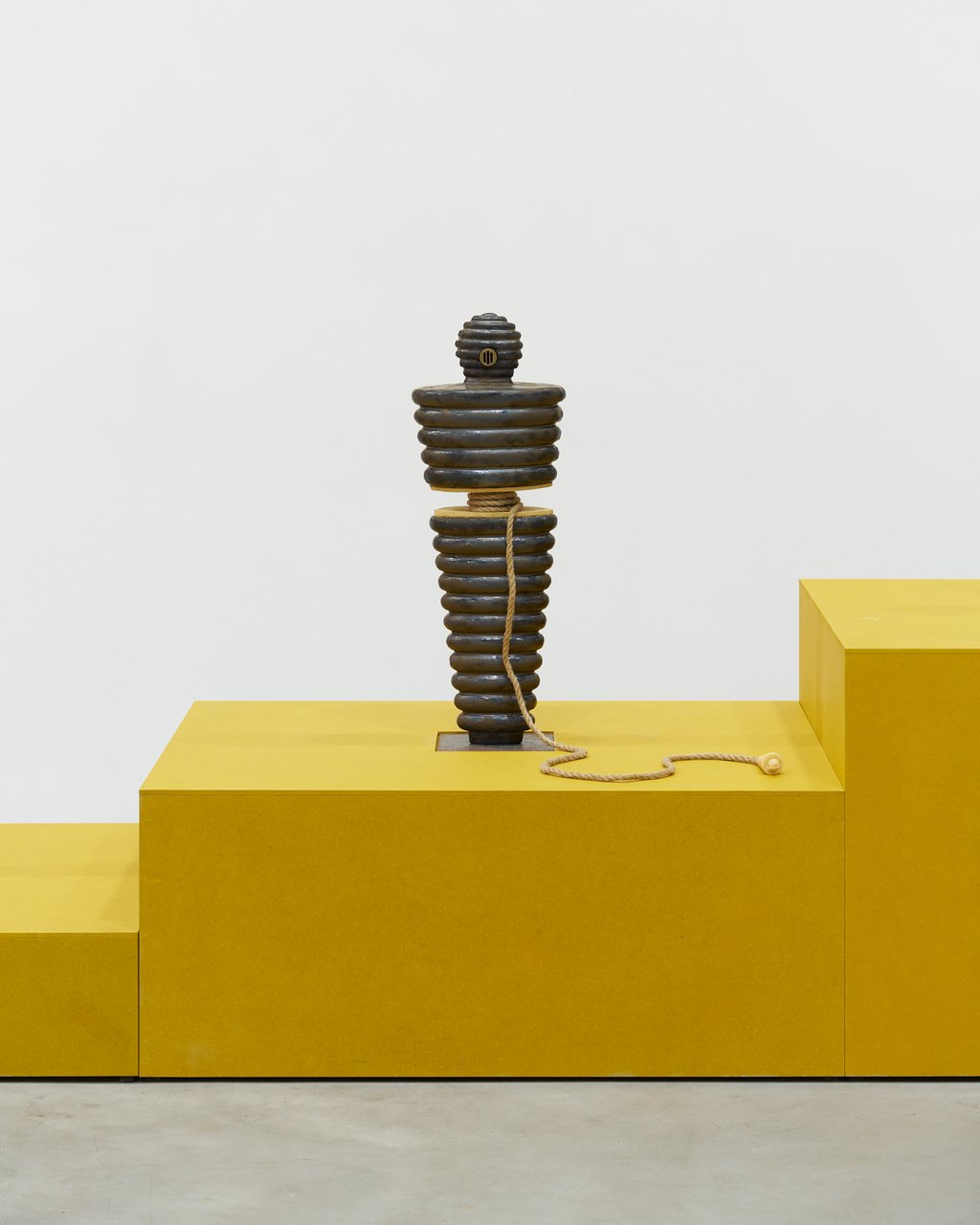
In the Clocking off series, Zajko turns his attention to industrial space: a world in which the human body coexists with machines and biological processes are subordinated to a single, unified rhythm of production. This reading gains additional resonance in the post-industrial setting of the former power plant, where the works are embedded within the existing architectural fabric. The artist’s interest in factories, industrial aesthetics, and labour also arises from his biography. Zajko was raised by his grandparents who worked at the Fasty textile plant in Białystok. He recalls a childhood spent among weaving looms and production lines in factory halls he visited while accompanying his caretakers, and he repeatedly returns to the afterimages of these scenes in his subsequent works.
A key motif in the Clocking off series is the humanoid “bobbins”: figures resembling spools and coils that also recur in other projects by the artist. These entities exist somewhere between the human and the tool, evoking immobilised bodies or anthropomorphised production lines. Each possesses an individual character and a distinct function within the system. Across successive works, the unified form is combined with ceramic elements, wax, liquids, or fragments of textiles. One of the figures, Sisyphus, positioned at the entrance to the exhibition, hangs upside down and functions like a pendulum. As it ticks, it measures time, introducing into the space a tension between movement and entrapment within a loop.
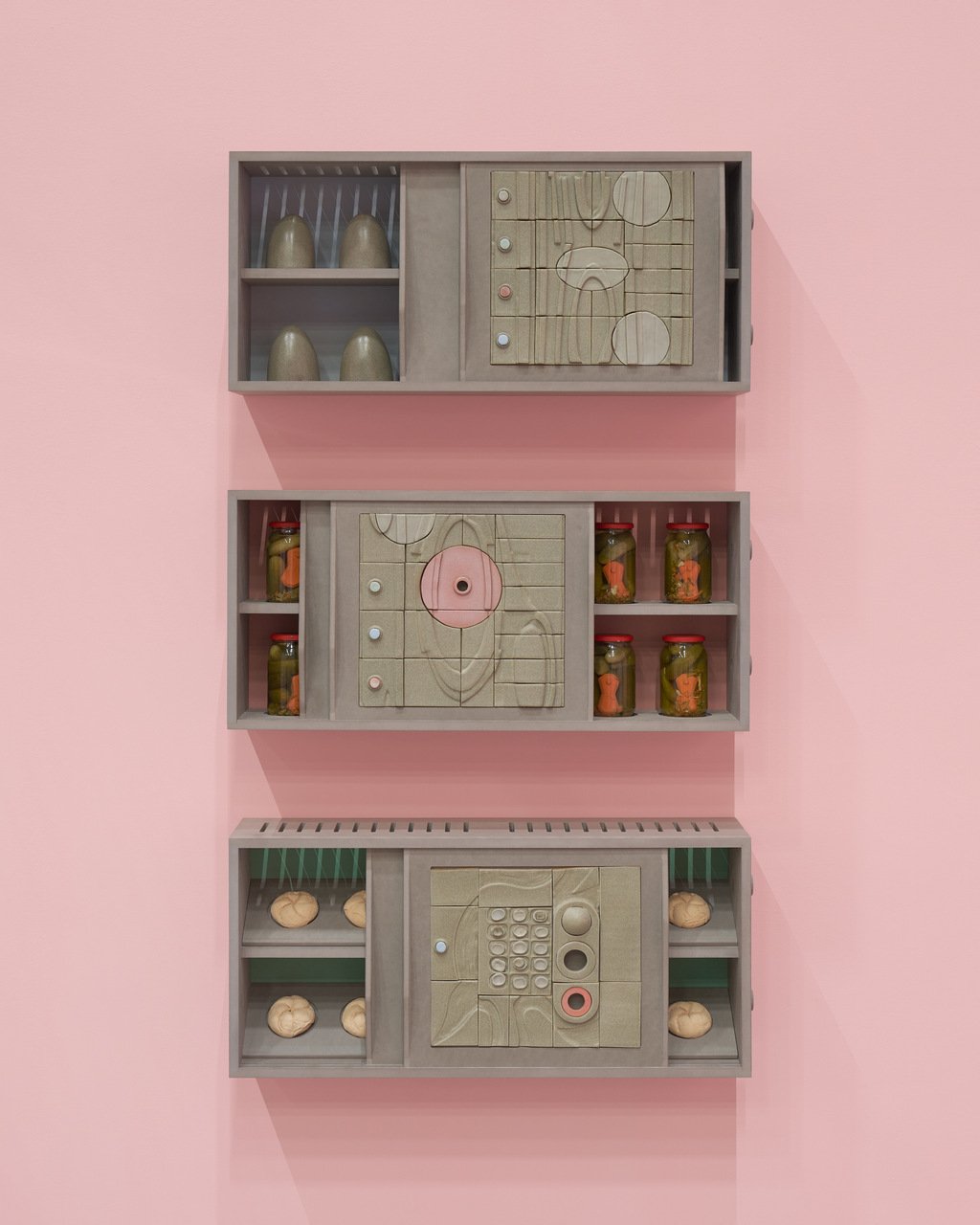
Another important symbol in Zajko’s practice is grain, a motif that appears across its various stages and aspects, from seed and cultivation to processing and the making of bread. The artist is drawn to its processual, ritualistic, and symbolic qualities. Grain and bread function simultaneously as carriers of meaning and as materials of everyday life, ranging from monumental connotations in Christian culture, such as the transubstantial transformation of bread into the body of Christ, to prosaic forms like the Kaiser roll, which appears as a rotating element in the sculpture Prometheus.
In the Bread and Milk series, grain, just like the egg, emerges as a figure of fertility and life. A group of ceramic objects resembling “bread monstrances,” embedded within a mural-like installation system, centres on the relationships between the industrial production of grain and milk and the politics of the body, gender, and the cultural histories of care and desire. What begins with grain and an egg develops into a narrative of the circulation of matter, transformation, and the sustaining of life, both biological and symbolic, extending far beyond an individual story.
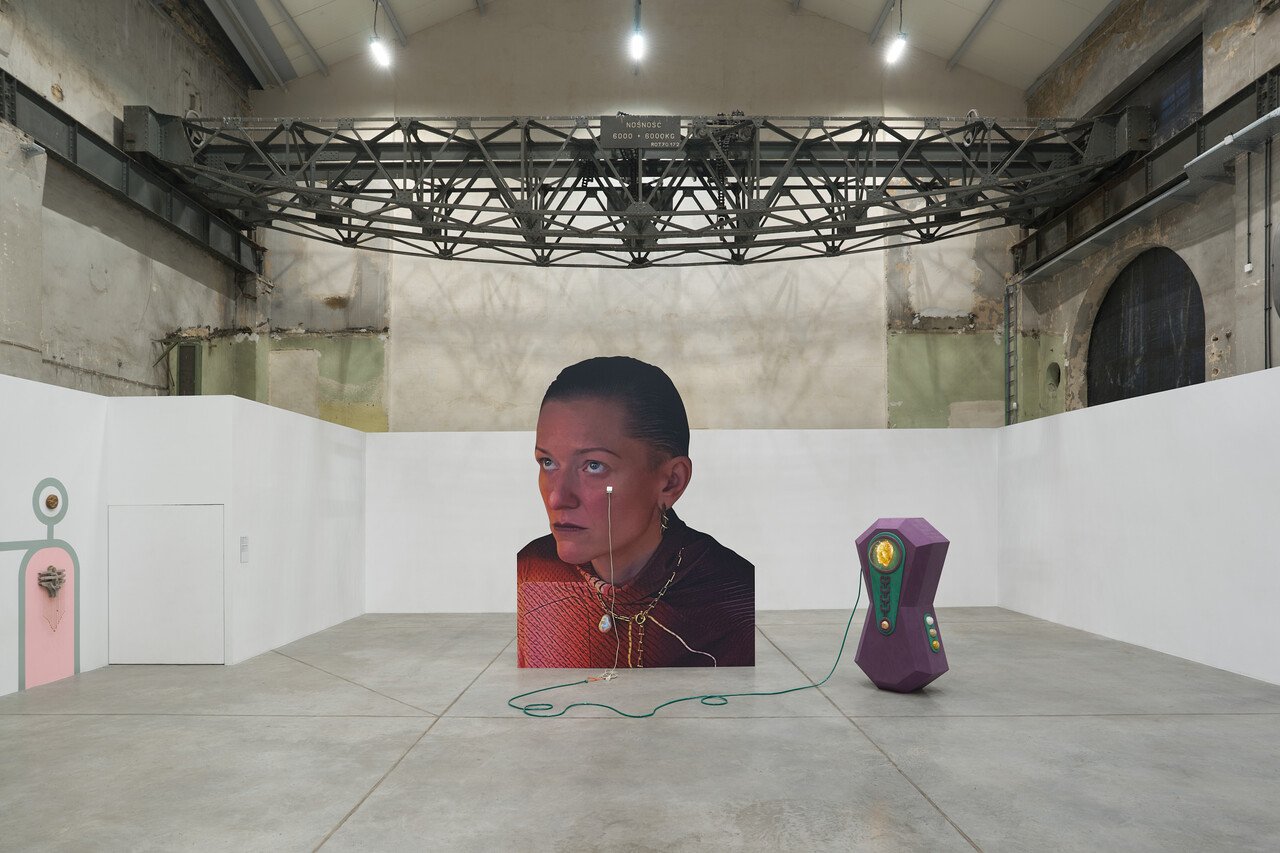
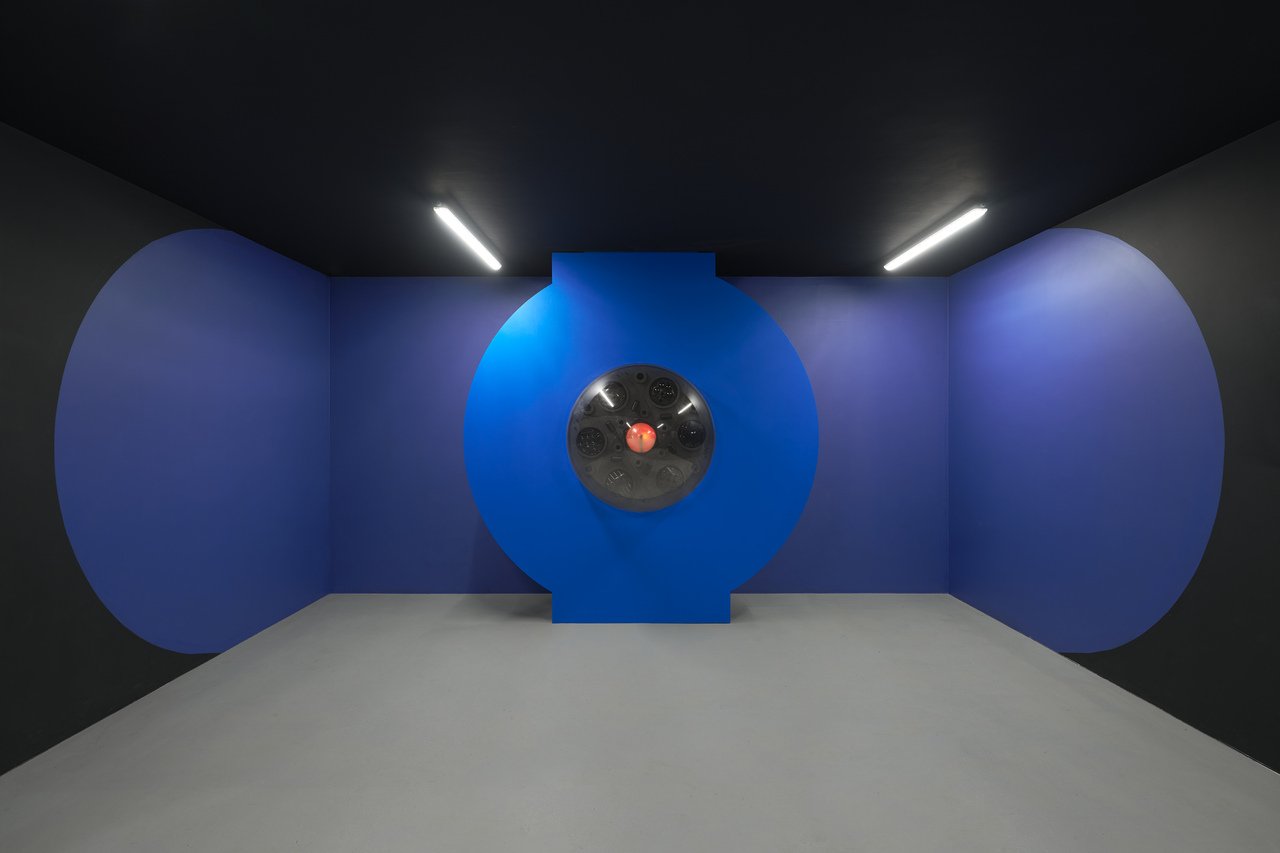
The motif of grain returns in Zajko’s diploma work Amber Chamber from 2020, a futuristic reimagining of the chochoł, a figure from Slavic mythology, which the artist translates into the language of science fiction. The object resembles a capsule, a body case, or a coffin fitted with a domed porthole and concealing ears of grain inside, as if these archaic specimens were being preserved and sent into the future. In the most recent iteration of the series, Amber Chamber III, presented in 2025 at Frieze London, the chamber takes the form of an immersive object: a closed space that a person can enter. It is “activated” by the performer Agnieszka Szczotka (including during the opening of the exhibition “The Egg Egg”), and is now inhabited by the figure of a siren rather than a chochoł. This mythological seductress, at once alluring and an alarm signal, is another recurring motif in Zajko’s practice.
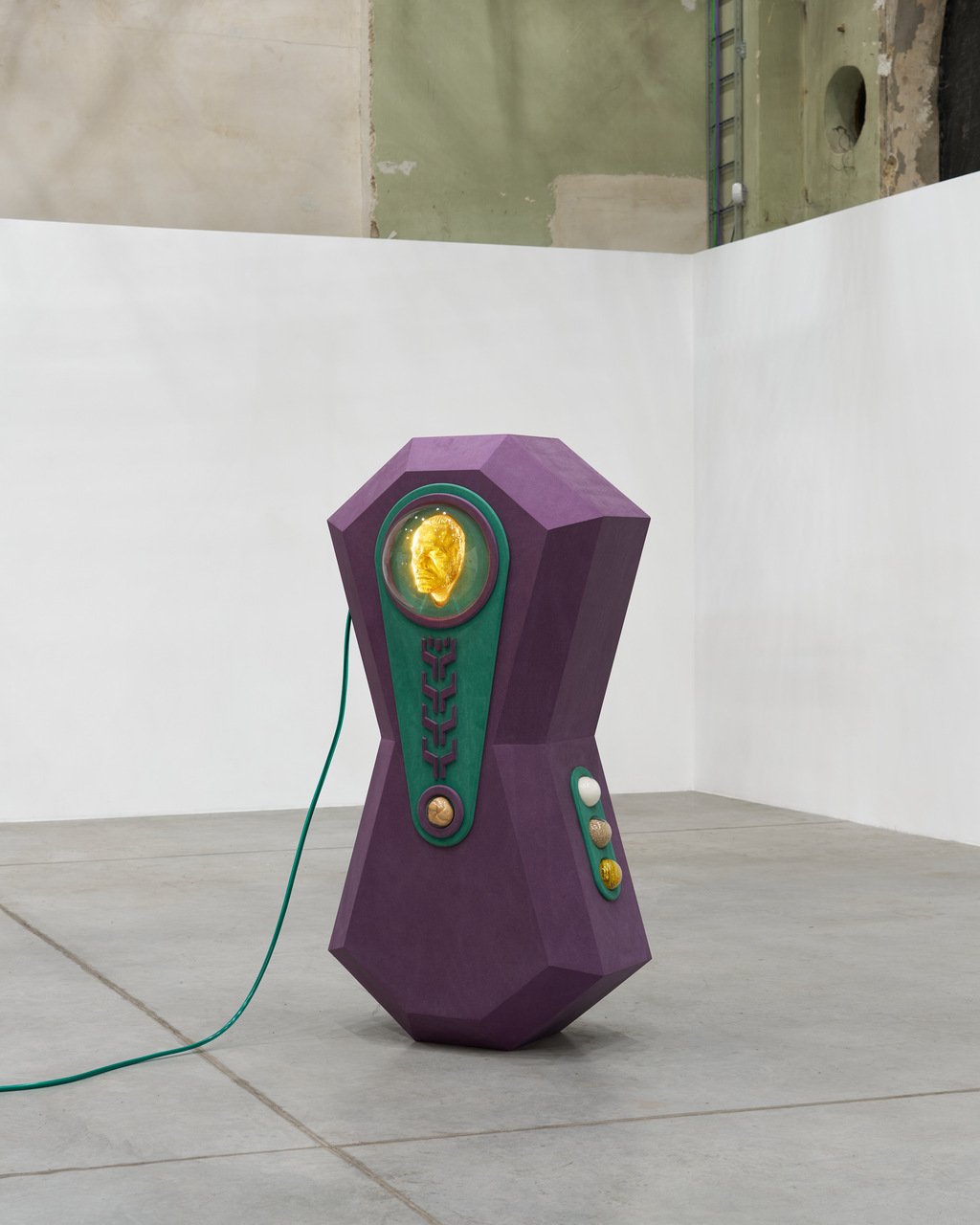
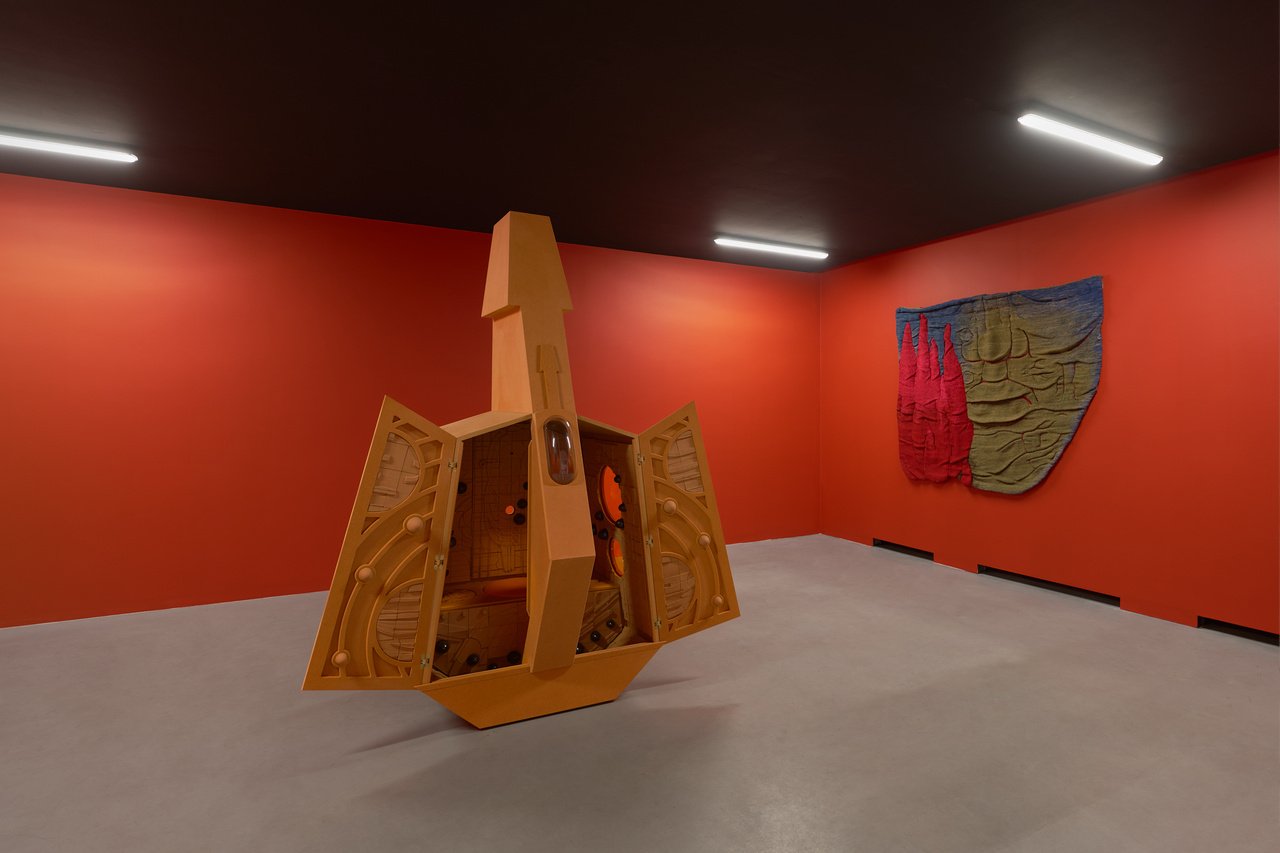
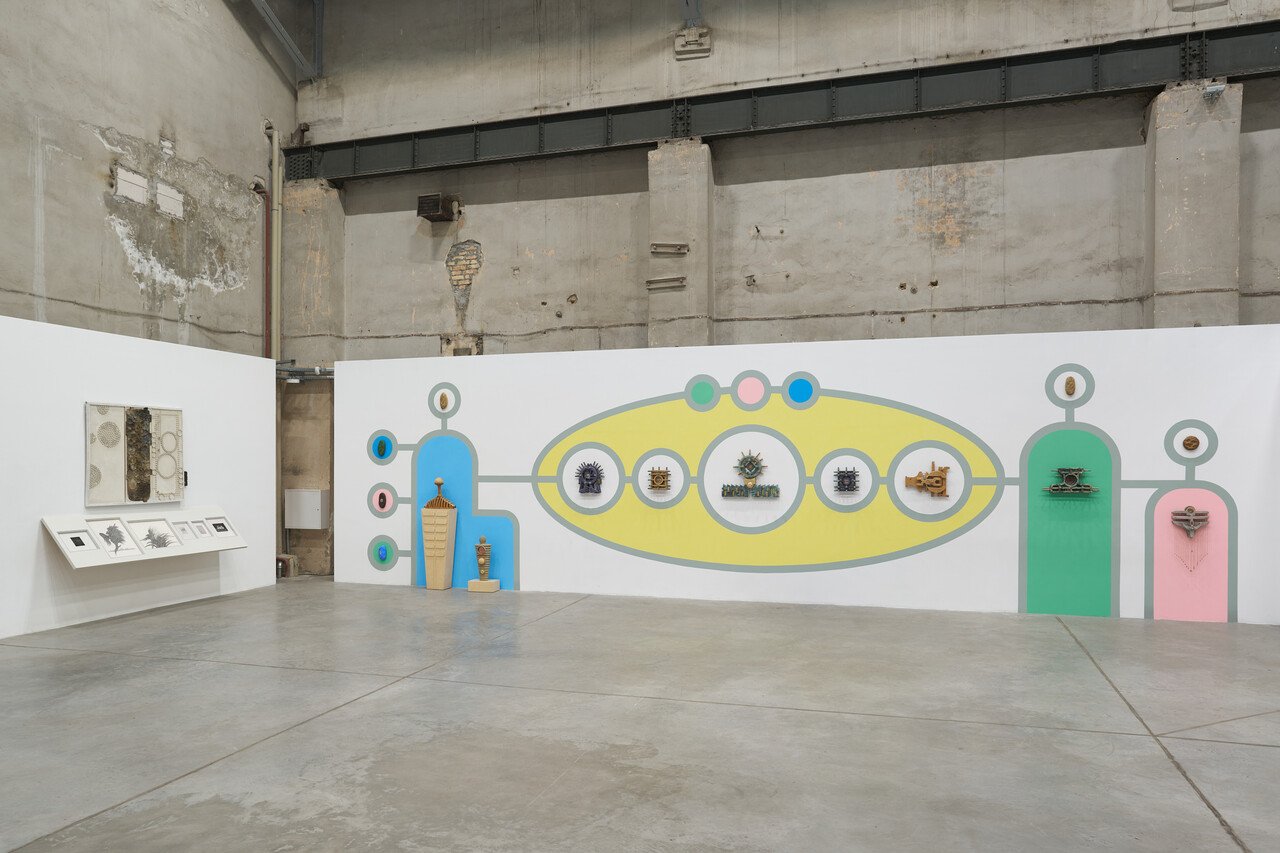
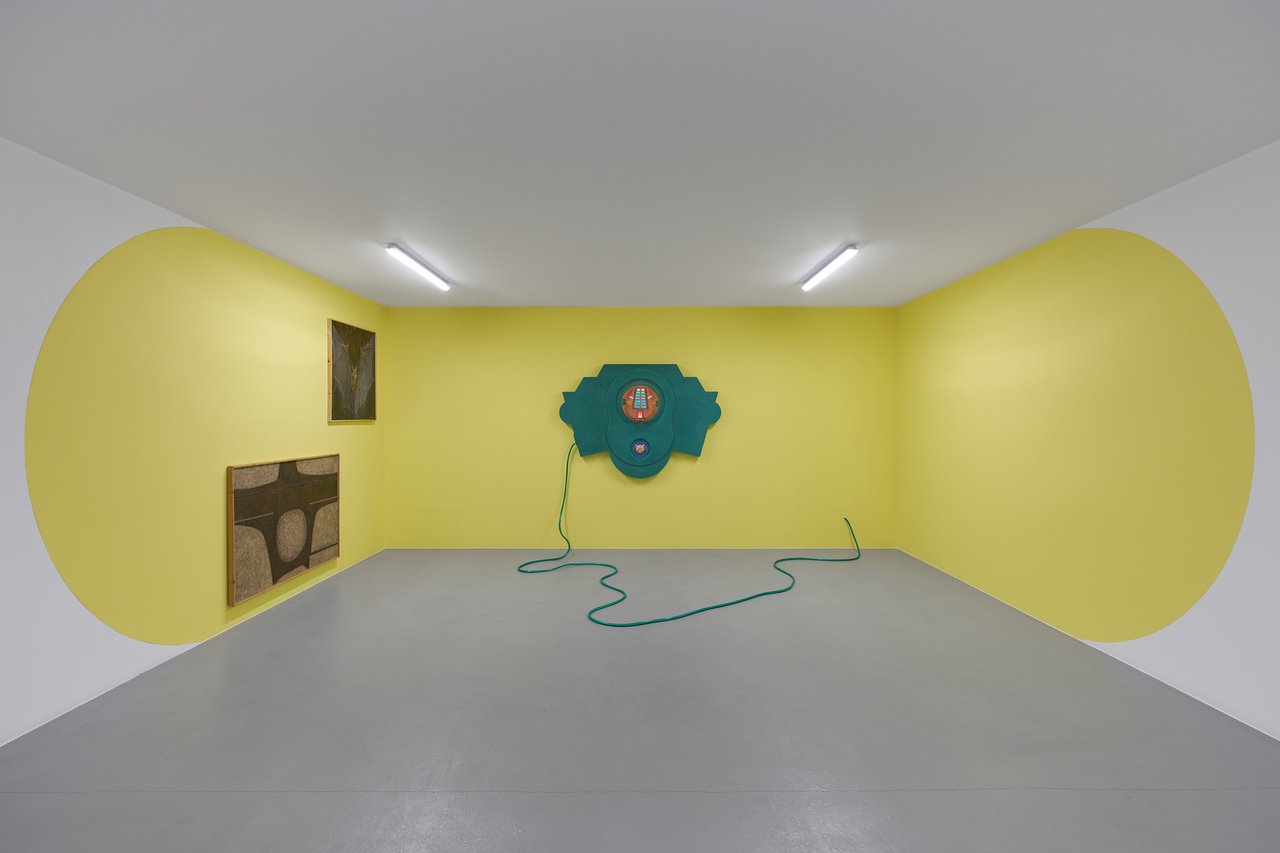
In the exhibition, Zajko’s works are presented in close dialogue with pieces from the collection of the Arsenal Gallery in Białystok. The selection is dominated by works from the 1970s and 1980s, including paintings, reliefs, as well as works on paper and textiles, drawn primarily from the Three Streams. Realism – Metaphor – Geometry collection, developed in the 1980s according to the concept devised by Bożena Kowalska. The research process revealed unexpected affinities, both formal and visual, as well as symbolic and narrative. Motifs that emerge intuitively in Zajko’s practice find their counterparts in works from the 1970s and 1980s.
The collection includes works by artists who were pivotal to the period, among them Erna Rosenstein, Henryk Stażewski, Zofia Artymowska, Jerzy Nowosielski, and Stanisław Fijałkowski, alongside 6 works by less canonical figures such as Maria Michałowska, Jan Ziemski, and Eugeniusz Markowski, as well as Białystok-based artists: Jerzy Lengiewicz, Andrzej Dworakowski, and the textile pioneer Izabela Marcjan. The status of this collection remains ambivalent. On the one hand, it brings together figures of major significance within the history of art; on the other, for many years it functioned at the margins of the institution’s programme. Following the political transformation, the change of name from BWA “Arsenal” to Arsenal Gallery, and the establishment of Collection II by Monika Szewczyk, many of these works remained in storage and were only occasionally exhibited. The last major presentation of this part of the collection took place in 2014, with the exhibition “The Materiality and Value of the Artwork,”* curated by Michał Jachuła, which addressed questions of their status and modes of valuation.
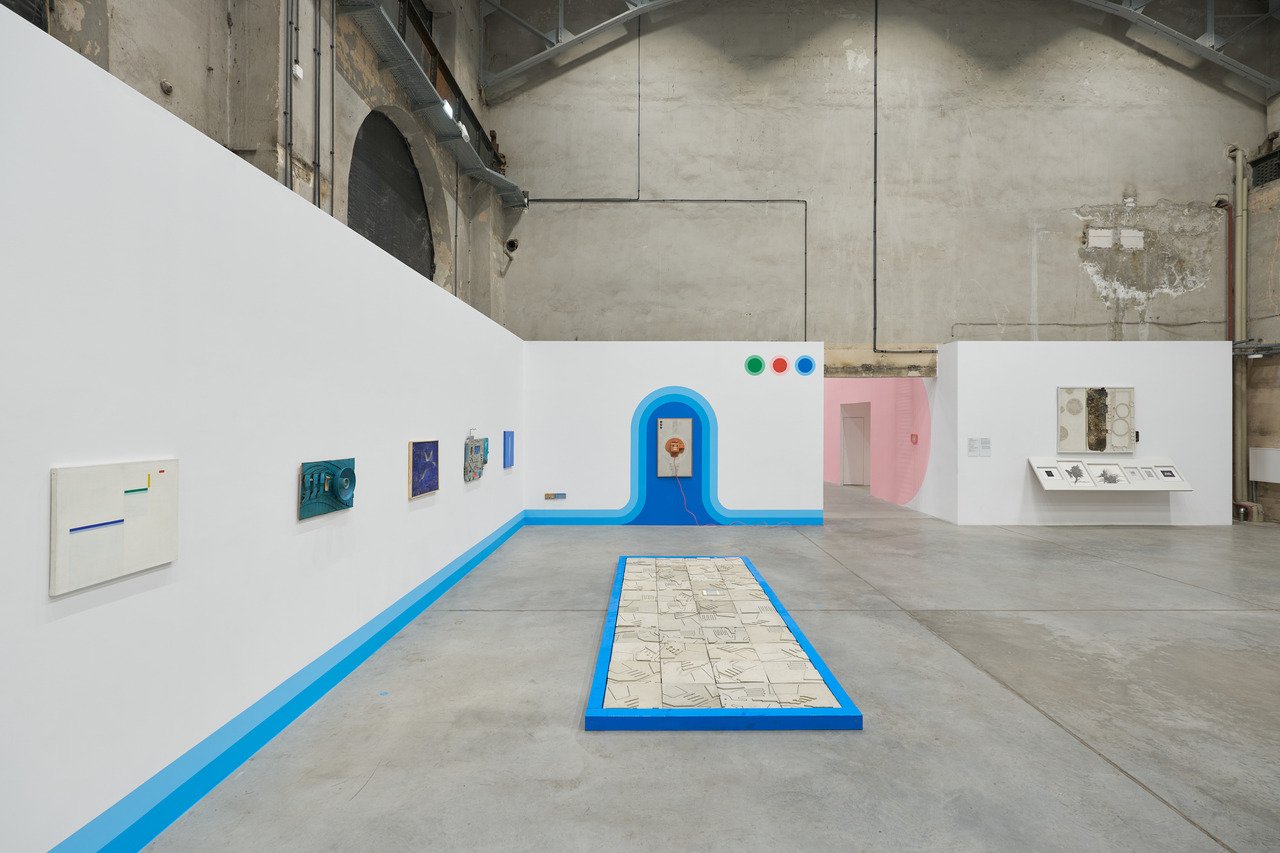
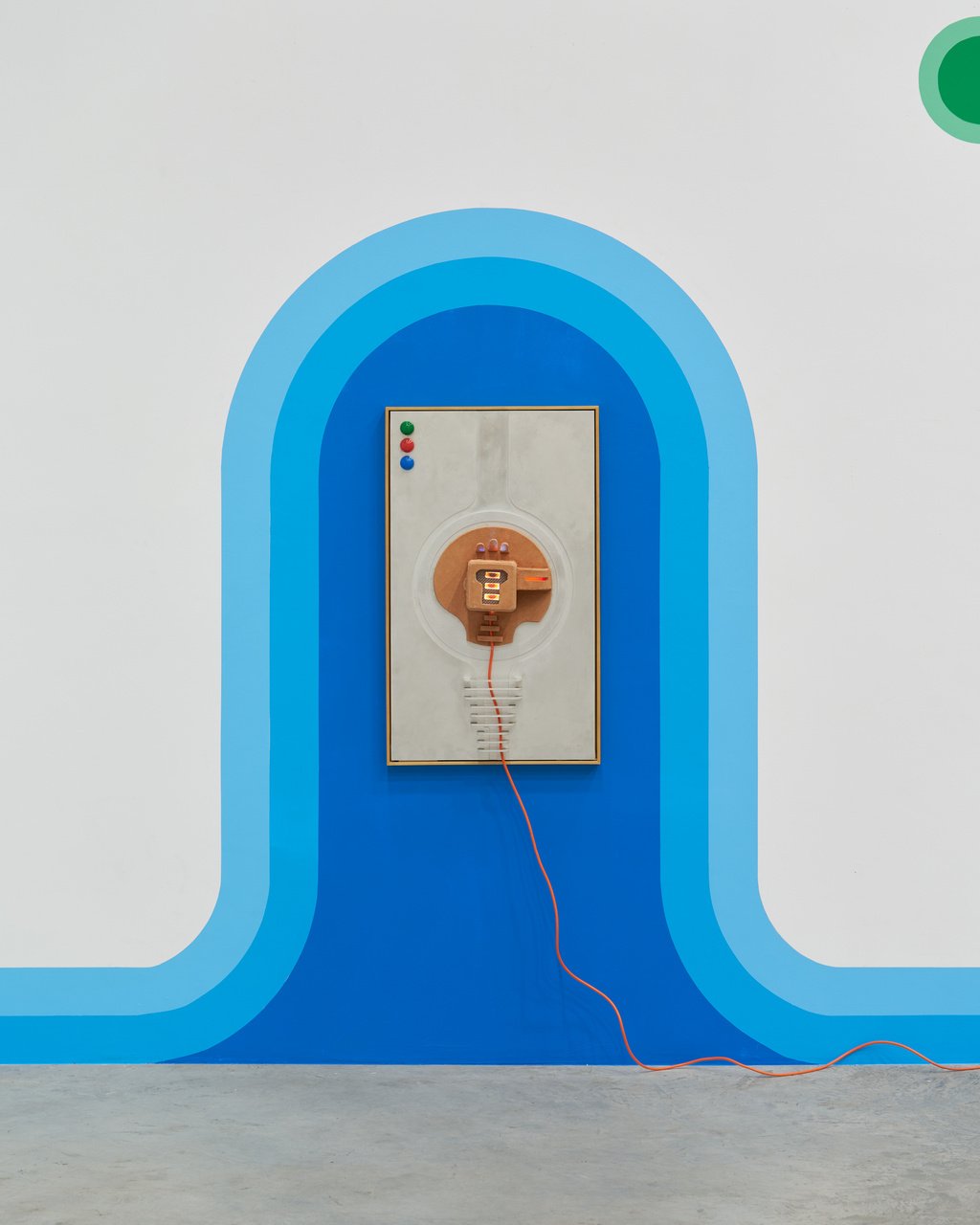
In “The Egg Egg,” Zajko brings selected objects out of storage, treating them not as a background but as equal participants in the narrative. His interest in forgotten or underrepresented parts of the history of art enables him to reframe the story of the institution and the place, particularly in the context of the gallery’s recent anniversary, during which this chapter of its history was largely absent. The accompanying texts by Michał Jachuła situate the works within their biographical and artistic contexts, allowing them to be reinterpreted.
“The Egg Egg” comes full circle. It marks Rafał Zajko’s return to Białystok and the first presentation of his work on such a scale in Poland, functioning as a precisely constructed mechanism for retelling the story of the place. The exhibition offers multiple ways of engagement. It can be read as a particular form of monographic exhibition, as a presentation of a fragment of the Arsenal Gallery’s collection, and simultaneously as a parallel archive: a dual system in which Zajko’s works intertwine with those of post-war avant-garde artists. One way into this structure is the text by Post Brothers accompanying the exhibition, a narrative essay that describes the Arsenal Gallery power station as a site of speculative fiction and a spatiotemporal rupture.
Artist: Rafał Zajko
Exhibition Title: The Egg Egg. Exhibition in IX Acts
Curated by: Tomek Pawłowski-Jarmołajew
Venue: Arsenal Gallery
Place (Country/Location): Białystok, Poland
Dates: 27.02.2026 – 10.05.2026
Photos: Photos by Tomasz Koszewnik. Courtesy of Arsenal Gallery in Białystok.