Phoebe Blatton
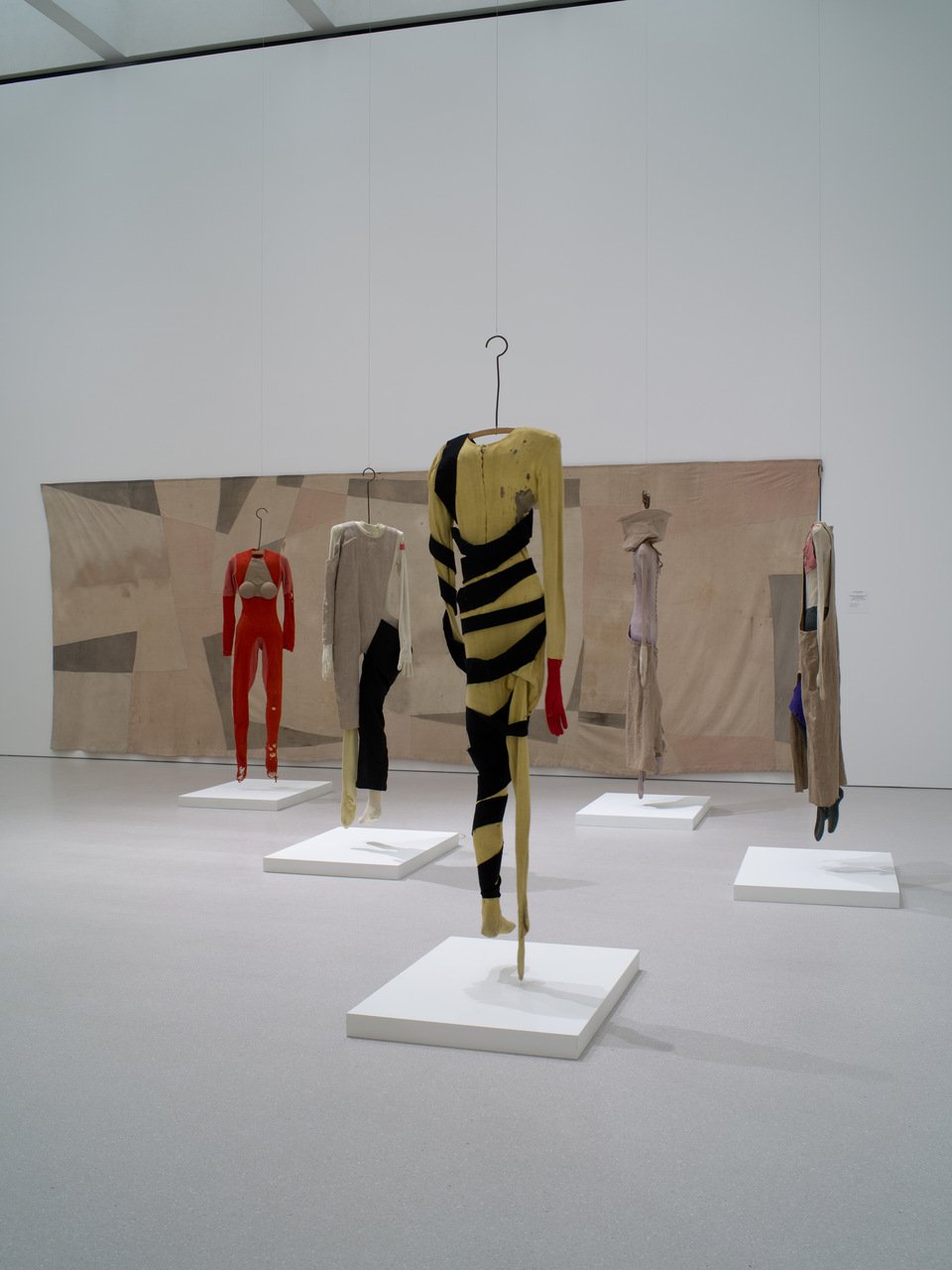
Although many outside Poland may not have heard of her, Maria Jarema (1908–1958) is a cherished figure within Polish Art History – at once the fondly diminutised “Jaremianka” of her bohemian milieu and the pedestalled “Great Lady of our Polish Presence,” as her long-time collaborator and fellow titan of the Polish Avant-Garde, Tadeusz Kantor, referred to her. Living through the ferment, horror, and fallout of two world wars, after which Poland became a Soviet-aligned socialist state, Jarema was a pioneering painter, sculptor, printmaker and writer, as well as activist, actor, and stage and costume designer, recognised and included in exhibitions at home and abroad in her lifetime. Her artworks and costumes are in the collections of public and private institutions throughout Poland. Recent years have seen a symposium organised in Warsaw by MSN in 2022 and the publication of Agnieszka Dauksza’s acclaimed biography, Jaremianka (2019), which unearthed texts written by the artist in 1947 defending women’s reproductive rights, demonstrating the lengths to which her activism extended. With her “inexhaustible energy [and] big, booming voice” (as the theatre critic Jerzy Lau described her), she was a cofounder of the radical left-wing Kraków Group and the city’s inter-war Cricot theatre, later participating in Kantor’s revived Cricot 2. The writer Tadeusz Różewicz imagined her as the “sick” yet “haughty” painter “M.” in his 1945 poem, “In the Most Beautiful City in the World” – another measure of how vividly she registered on her contemporaries. There are photographs and caricatures capturing her serious, androgynous mien. One photograph, taken at a Kraków ball in the 1930s, reveals Jarema the Dandy, in full tuxedo, hair slicked back, arm in arm with a woman in a gown of tulle who returns her partner’s sensual, attentive gaze.
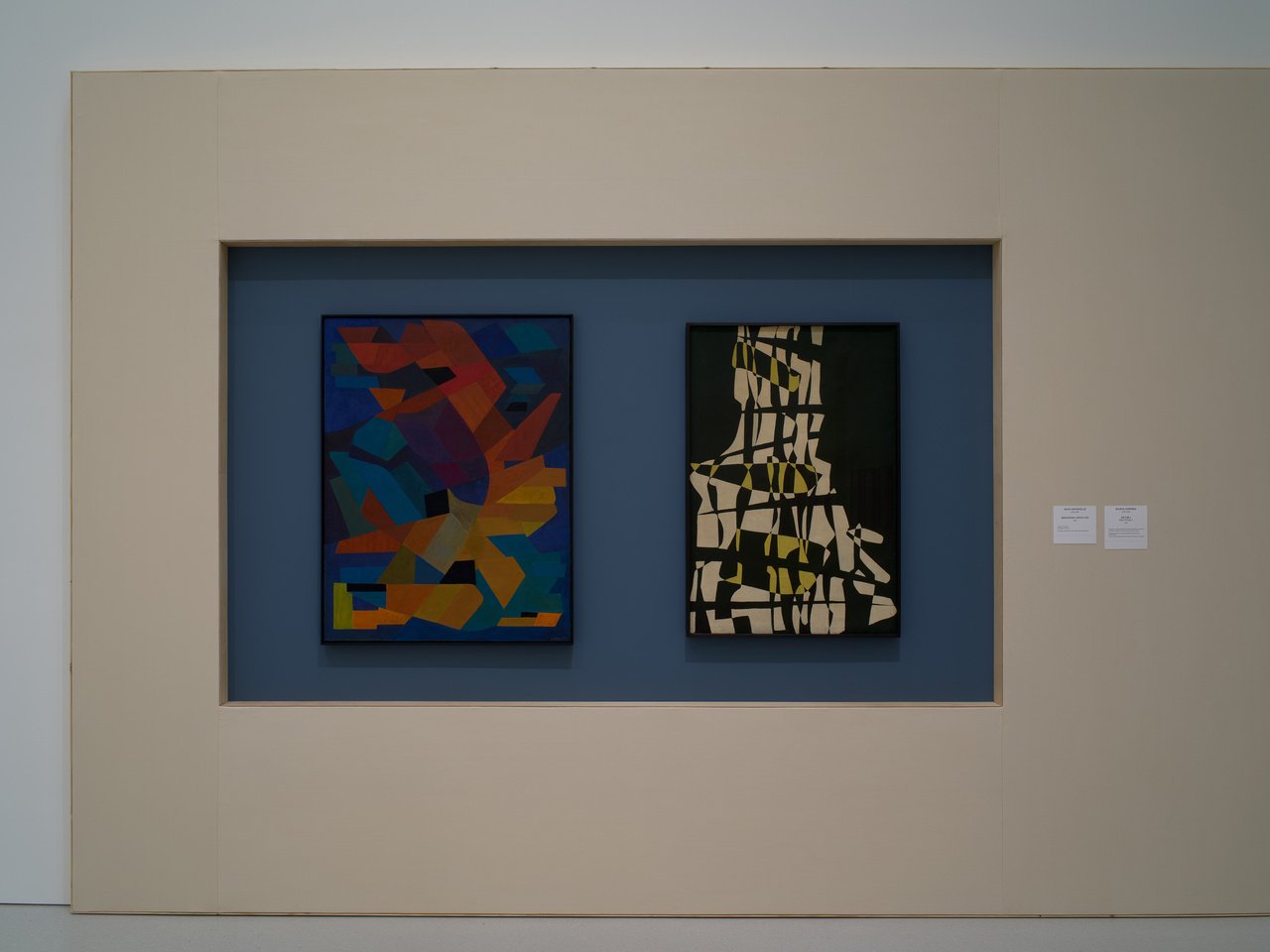
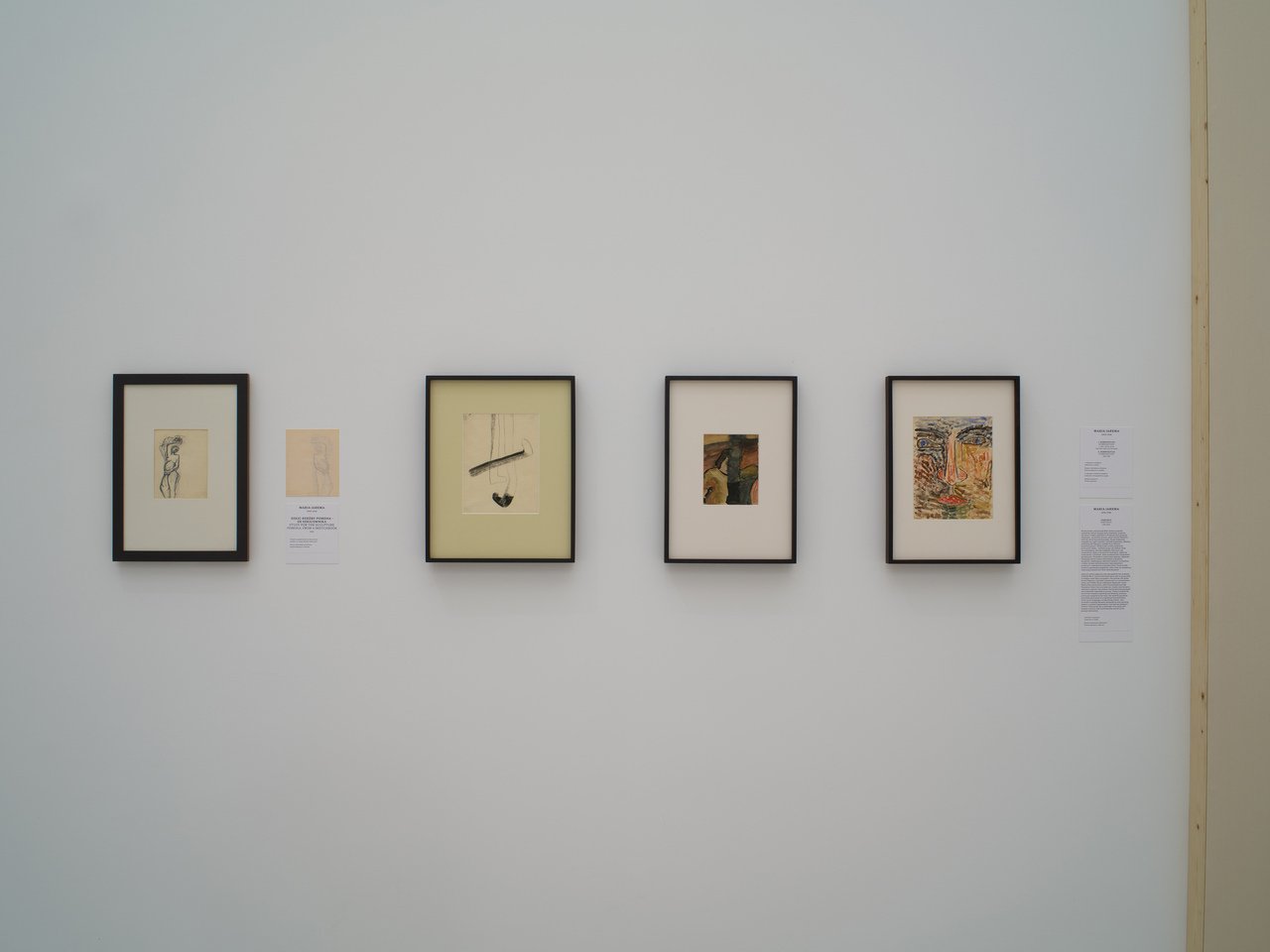
Maria Jarema. Cracked Modernism resists a chronological trajectory from figuration towards abstraction and instead organises the rich terrain of Jarema’s life and work around the idea of escalation, from depictions of the single figure to doubles, the family and the multitude. This idiom reflects the fragmentation or “cracking” of the self that Jarema must have experienced not only as a woman, mother, and victim of cancer (she died from leukaemia in 1958 at the age of 49), but as an ambitious progressive who chose to withdraw from society rather than bend to its turn against emancipation. She insisted that “freedom is the essential discovery of modern painting. Not selflessness, not fantasy, nor originality ‘at any cost,’ as is commonly said, but the artist’s right to explore, without reservation, the ultimate limits of his or her own self.”[1] Does Jarema’s art hold up to this lofty demand? And how does the exhibition honour this imperative at the core of her being? Is it possible to untether Jarema from all the stories, caricatures and collectives, yet somehow circle back to Jarema in all her myriad, “cracked” glory?
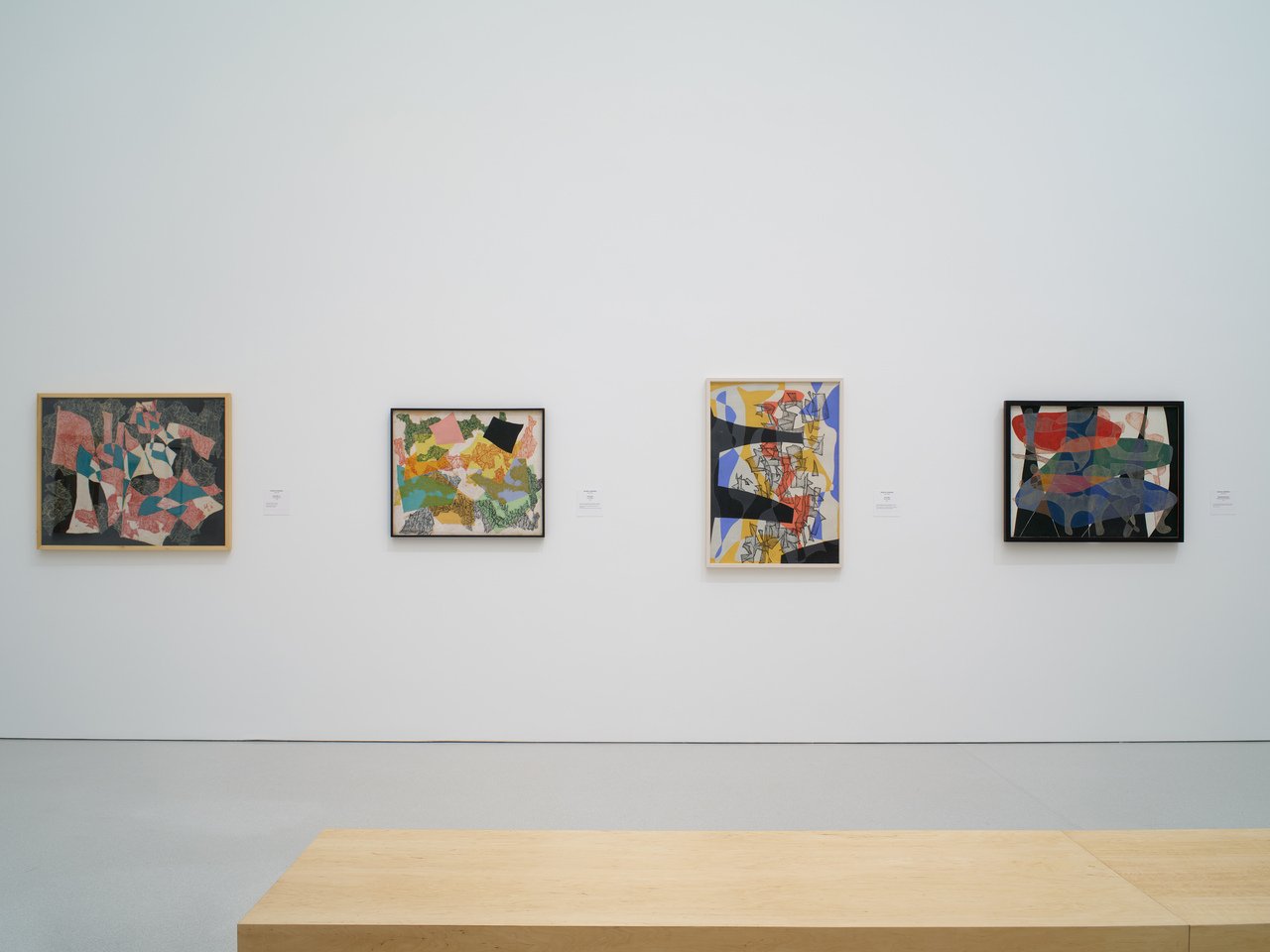
When considering cracks, one must begin with the surface. Jarema’s surfaces are generally flat, dashes of dislocated matte distemper or units of colour in cell-like isolation from each other. Sometimes there is a “blink and you’ll miss it” collage addition, a slither of applied paper or some frankly comical googly eyes (Did Composition (Kompozycja) (1952–1956) take so long to complete because it was missing the pair of eyes?) It is not to say that Jarema’s works lack depth, especially in the works that incorporate monotype printing, such as Penetrations (Penetracje) (1958), an image that is both the positive and invert of itself. Her painting style, or the way she applies colour, imparts this sense of simultaneousness, of haste and rhythm, as though there is little time to get “painterly,” no great urge to invest in the materiality of paint; rather some other, proto-pop sensibility for the surface in “the age of mechanical reproduction” and its relation to the body and soul. Some would denigrate Jarema by claiming her paintings evoke textile designs of the era. So what if they do? Such misogynistic attempts at reduction fall flat when considering how artists such as Jarema frequently crossed disciplines, with the graphic arts embedded in their education, and their egalitarian politics embracing all forms of visual communication. As she said herself in 1956, “Painting has approached poster art, and the poster has become a commemorative painting, neither less acute in expression than the other.”[2]
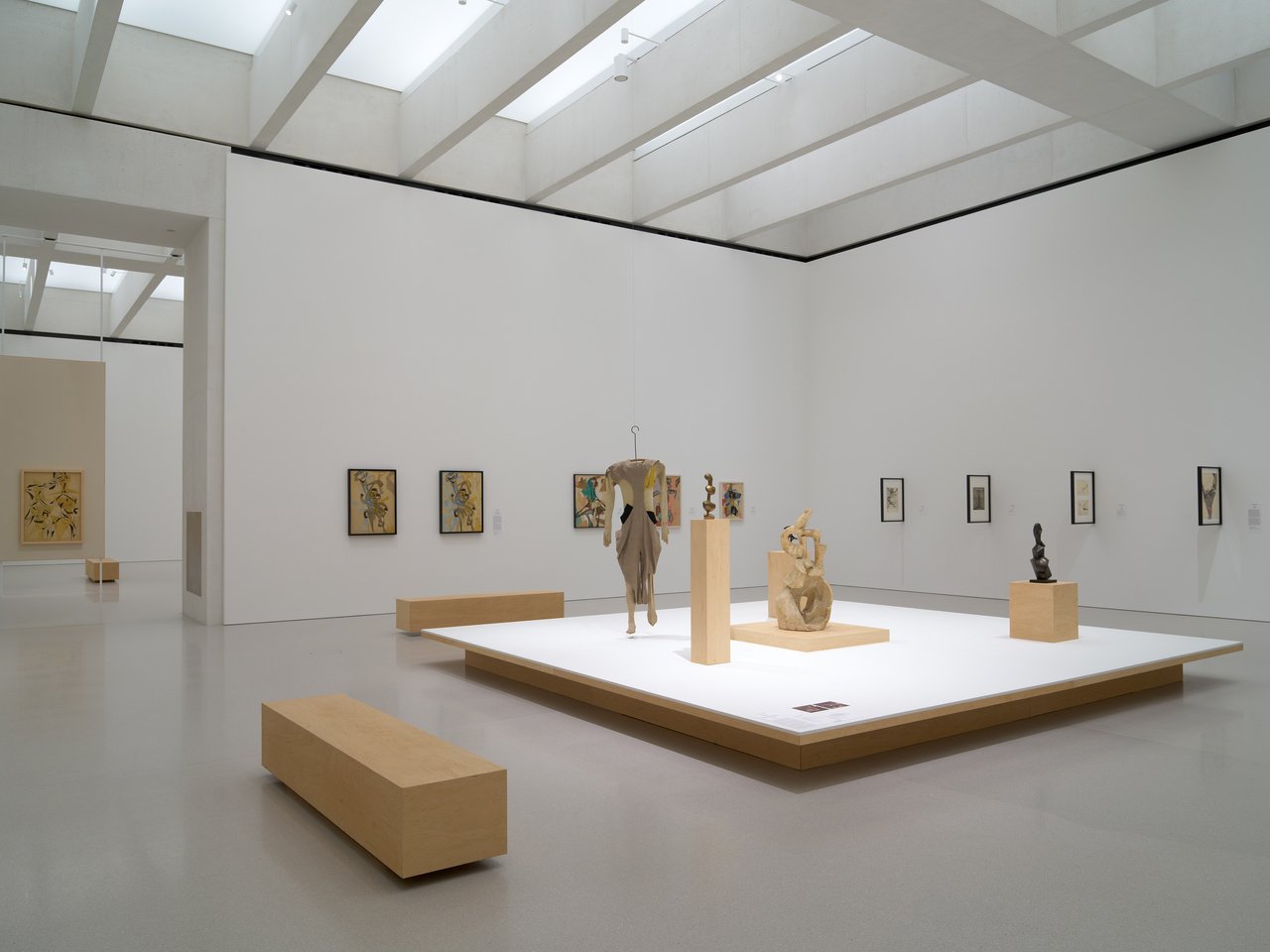
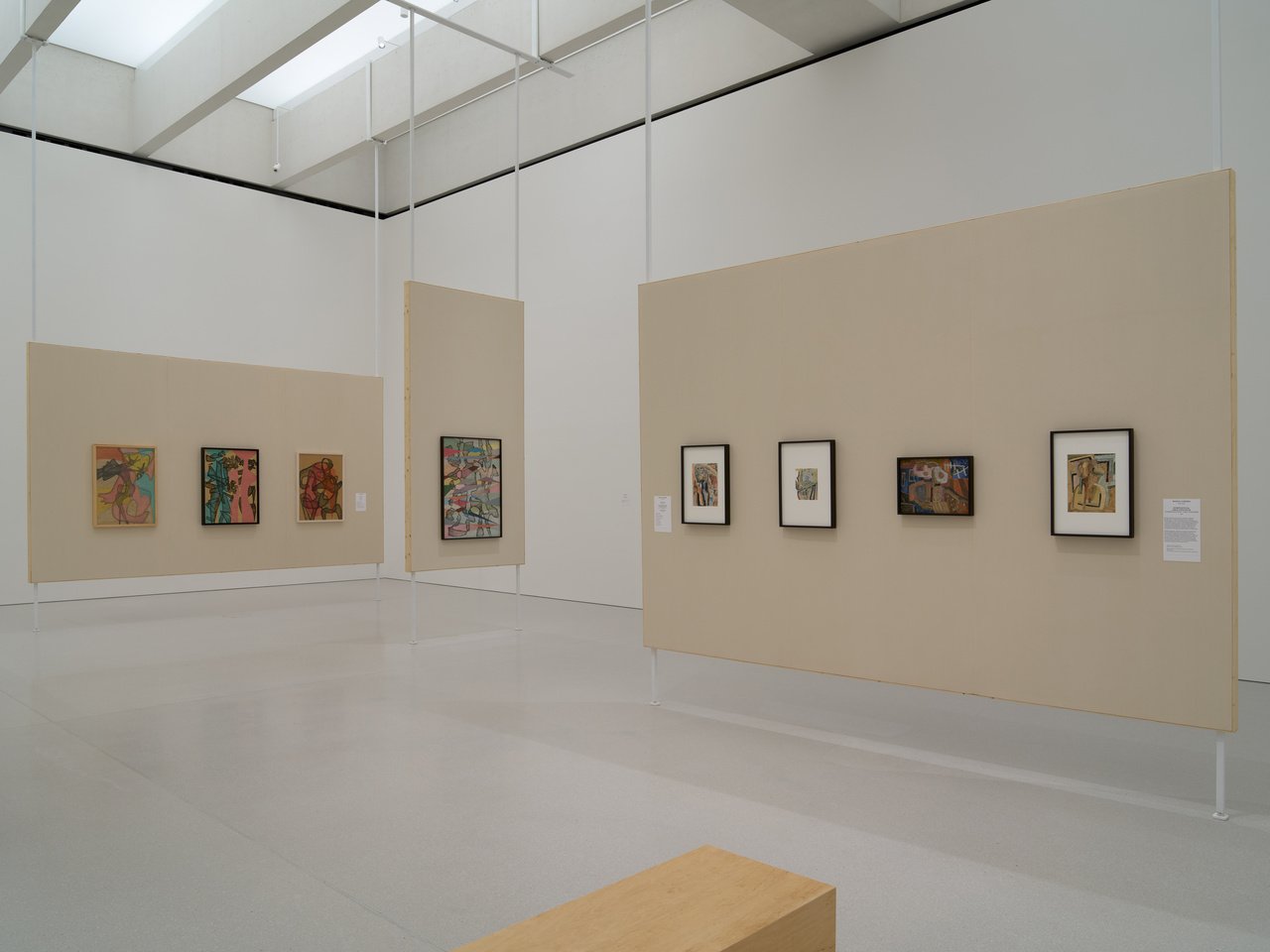
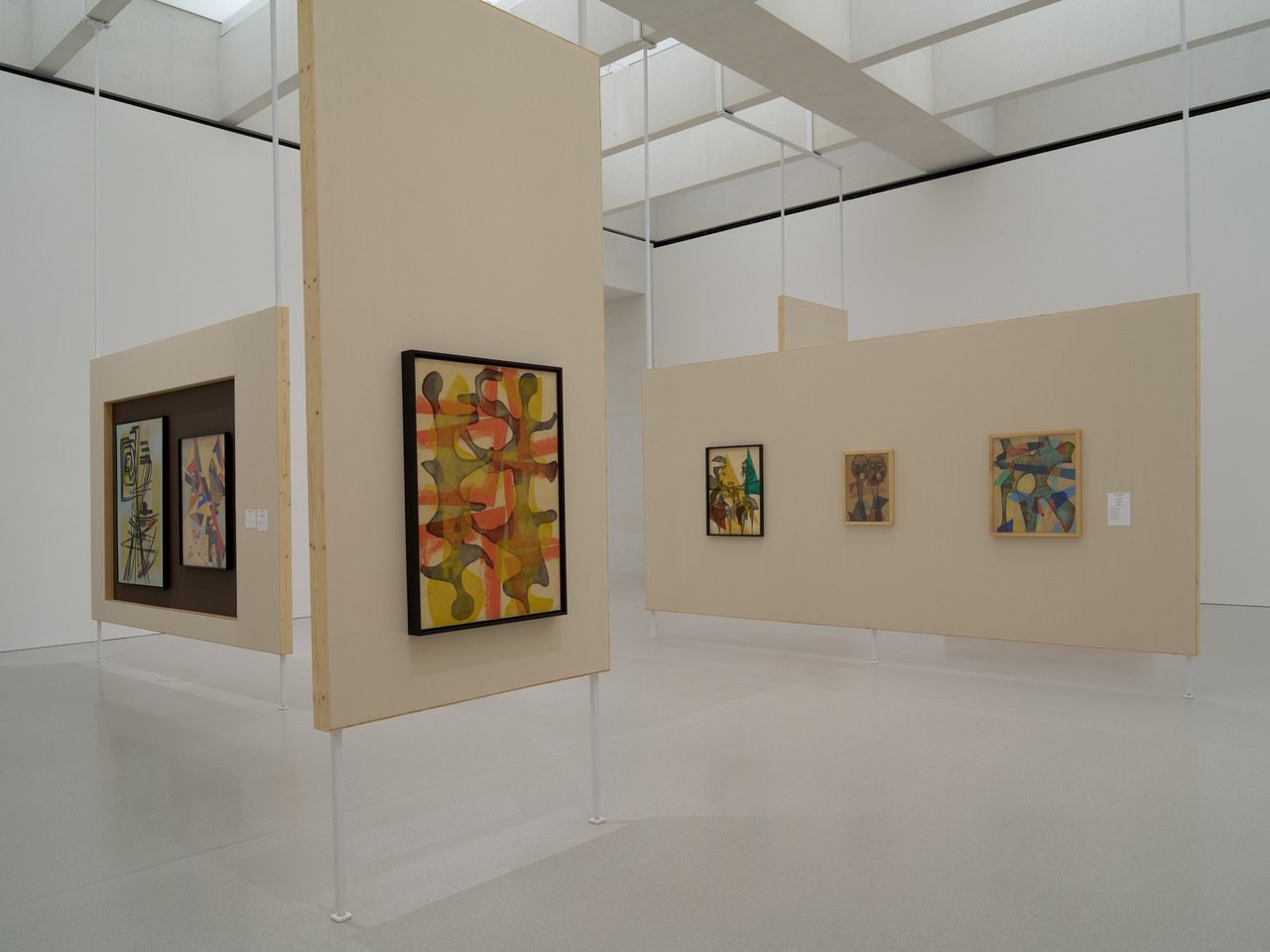
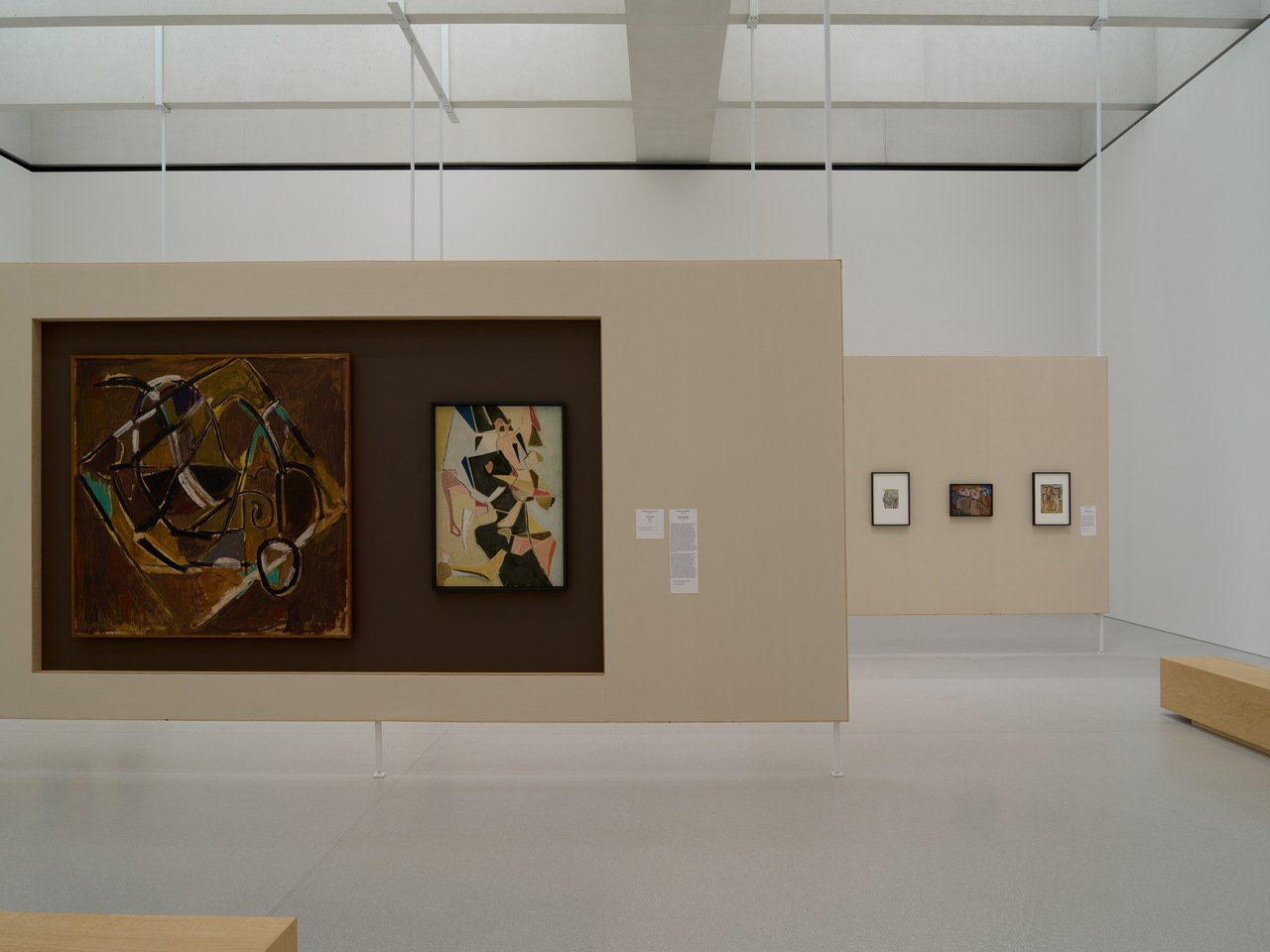
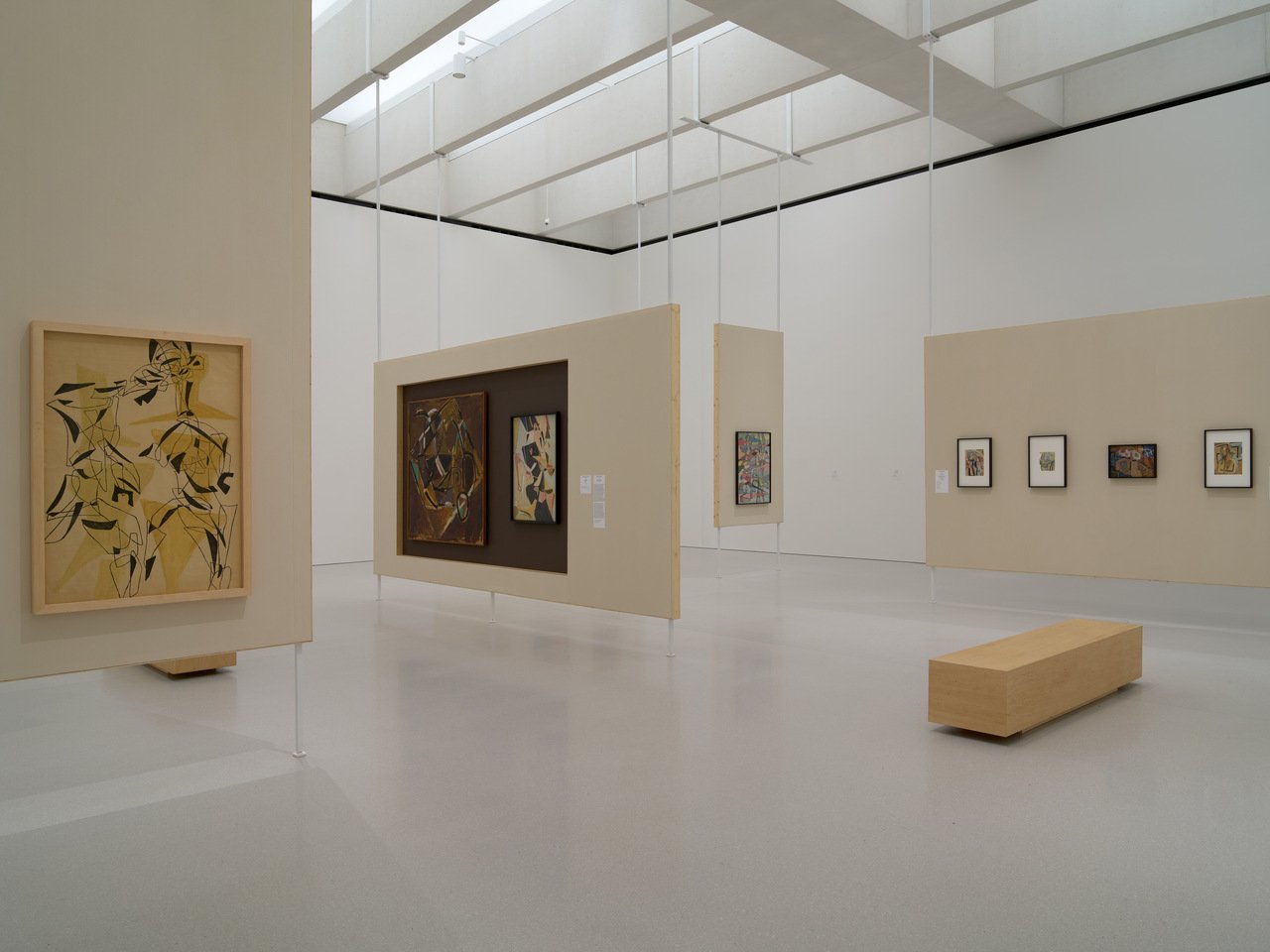
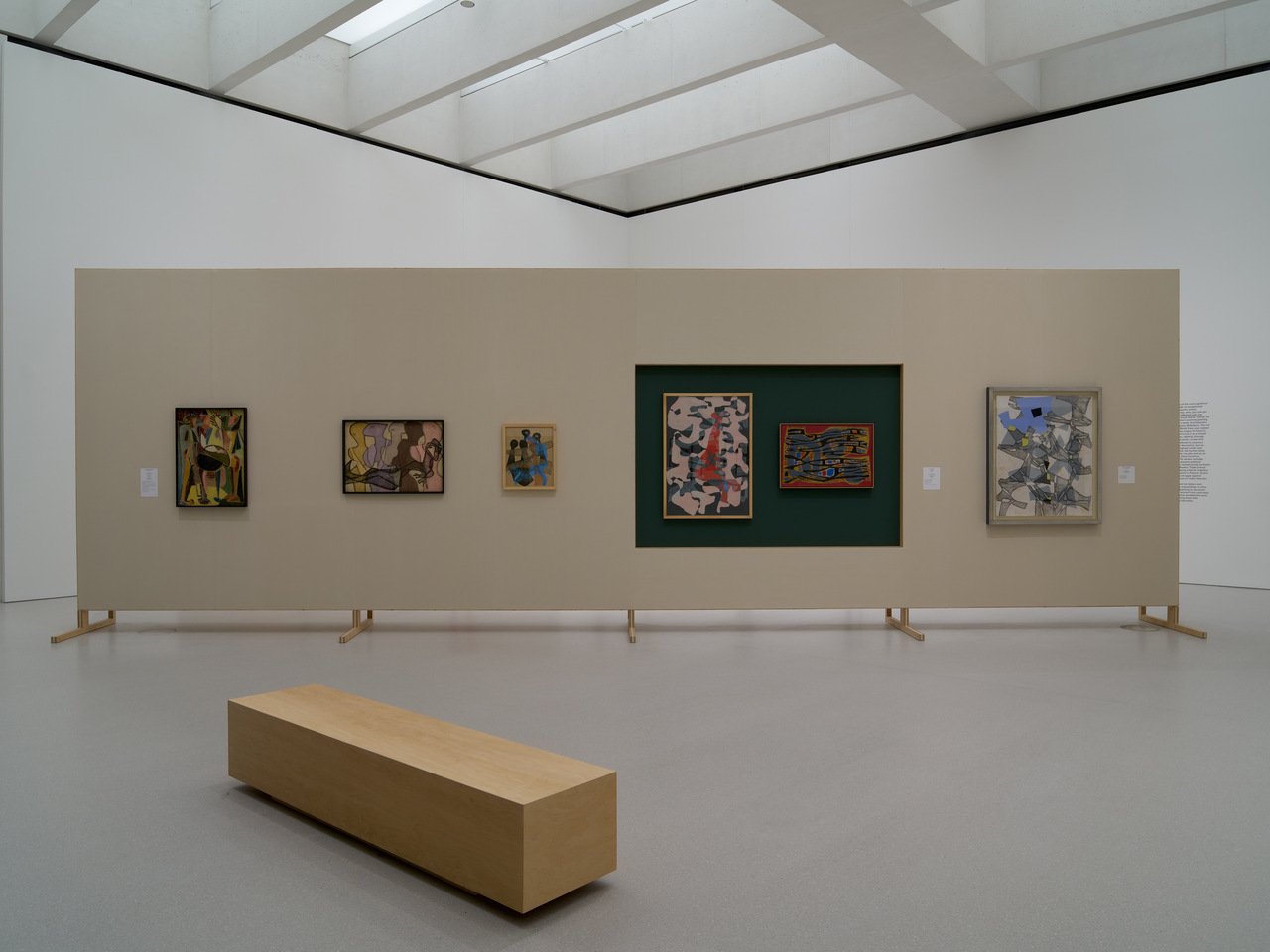
Navigating the exhibition is a curious experience. Despite the elegant logic of its escalating structure, there exists a slightly jarring curatorial undertow: the decision to frame Jarema’s work as a “conversation” with a selection of modernist painters from France, Italy, and Switzerland. The contextual justification has some merit. Jarema was deeply immersed in what was happening across Europe, as evidenced in her writing and the ephemera she collected on visits to Paris between 1937 and 1957, and via Italy, where her brother Józef had settled after the war. A whole room is dedicated to her bounty of art publications – a treat for the nerdy book collector. It is also true that despite her stature in Poland, she remains virtually unknown beyond its borders, even though she represented her country at the 29th Venice Biennale in 1958, shortly before her death. These juxtapositions with European peers could, in principle, connect her to a broader art world and invite the international attention she never received in her lifetime. Jarema may well have approved of the company – she actively resented Poland’s relegation to the fringe of European significance and wished for serious exchange on equal terms.
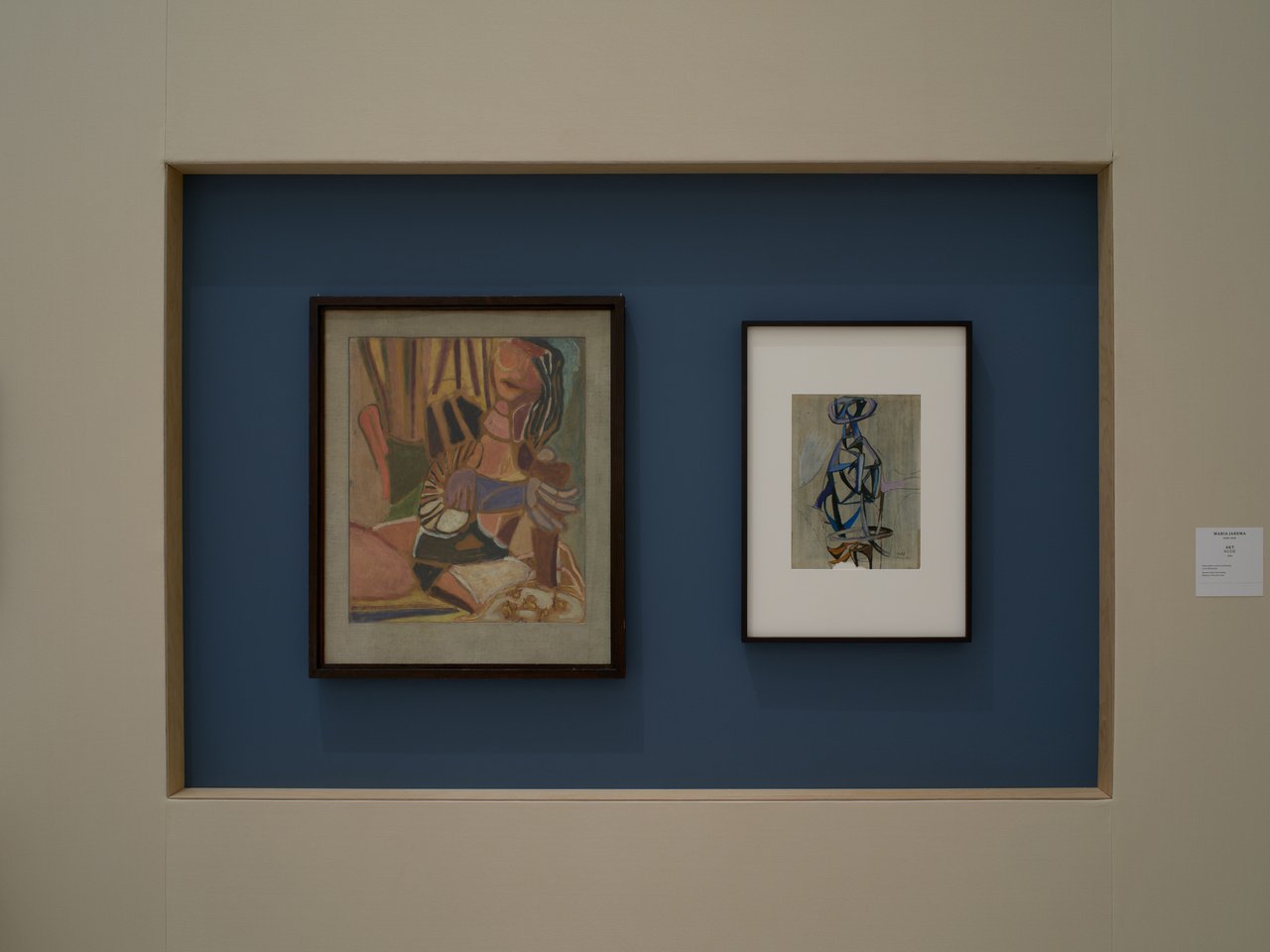
Yet this is precisely where the strategy becomes uncomfortable. The curators candidly admit that some of the comparative works are subpar, arguing that this only throws Jarema’s qualities into sharper relief. But rather than vindicating her, the approach risks raising the more troubling question of how artists from the “east” have long had to wrestle with their own legitimacy while being perfectly entitled to an affinity with the rest of Europe. And when those comparisons are with works of lesser quality, the power dynamic quietly inverts. Placing Hans Hartung’s strident T 1947-12 (1947) beside Jarema’s more interestingly fragile Composition (Kompozycja) (1949) – because, as French co-curator Éric de Chassey argues, both reflect a shared “transformation of the post-cubist structuring of the painterly surface” – draws the suspicion that such works are being hitched to Jarema in a major institutional setting in order to elevate them, rather than the other way round.
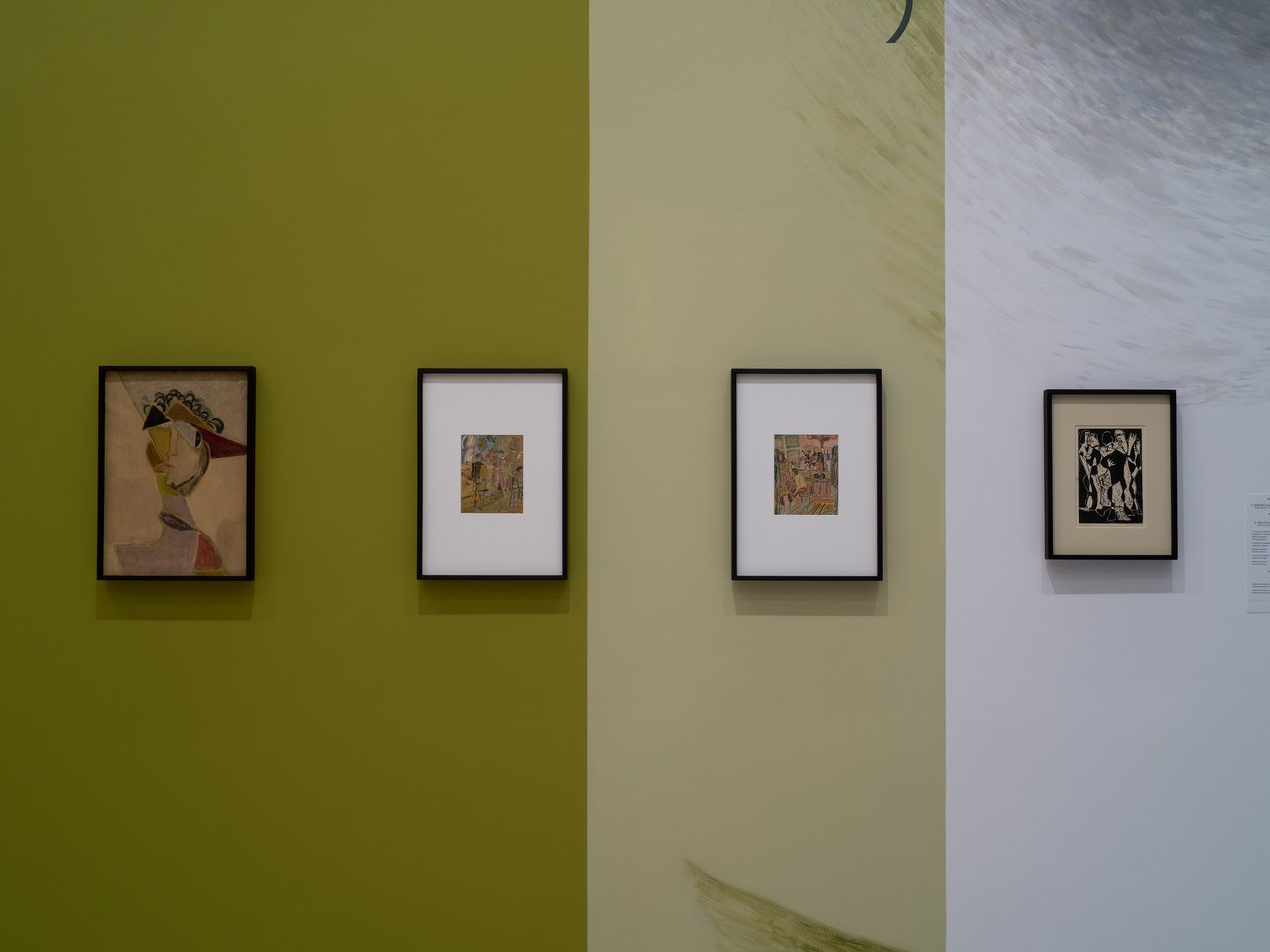
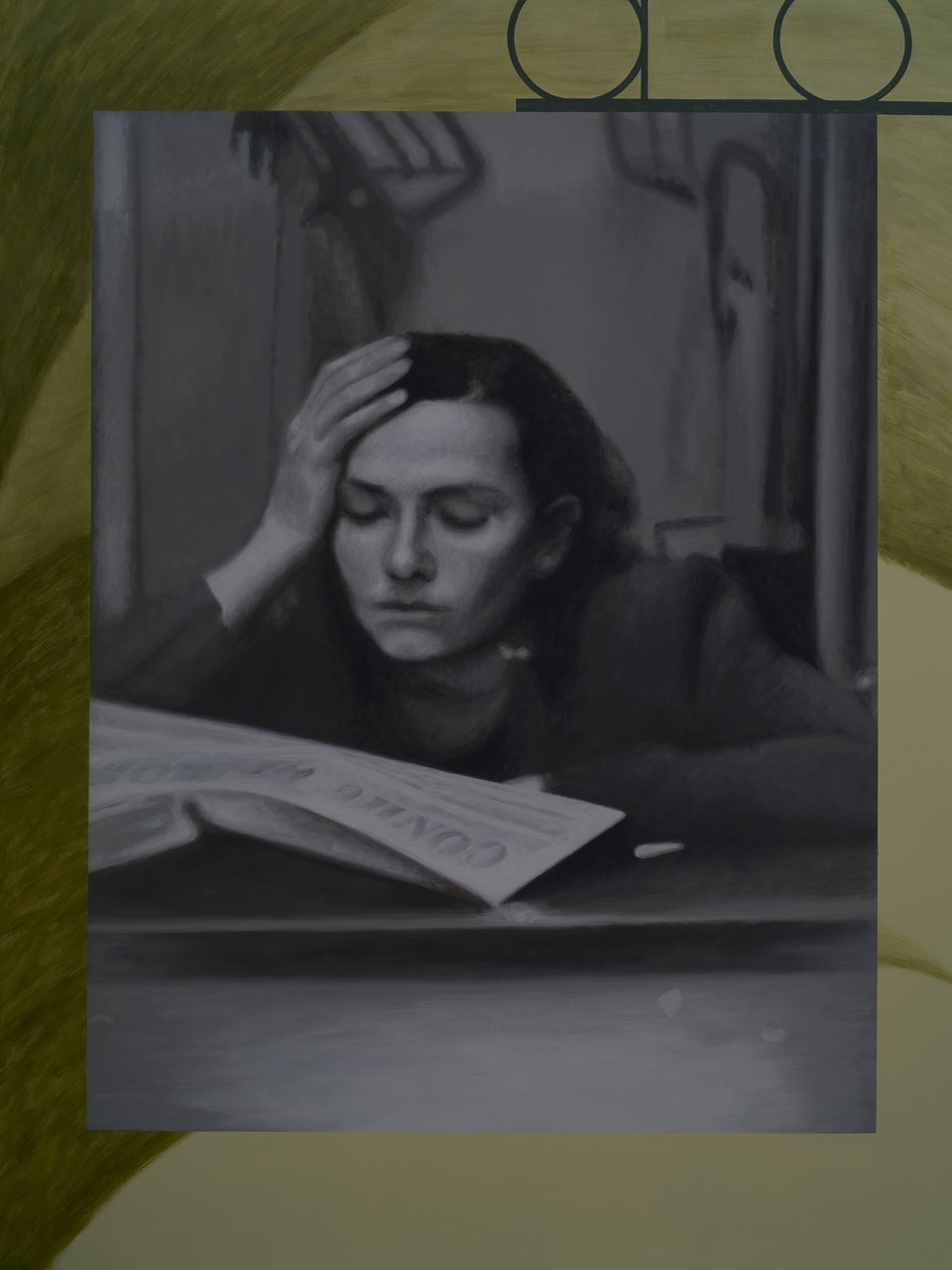
Furthermore, it is understood that artists absorb the aesthetics, ideas, and movements of their time – often across surprisingly distant borders. The modernist palette of soft, optimistic tones and bold accents is a defining feature of Jarema’s art and, arguably, the times: think of Elsa Schiaparelli’s hot pink or the post-war prevalence of atomic orange when looking at Composition (Fabric Design): Coal (Węgiel) (1949–1950). It is a palette echoed in Władysław Strzemiński’s solar paintings, but also, further back, in the virtually uncategorisable oeuvre of Stanisław Ignacy Witkiewicz (1885–1939).
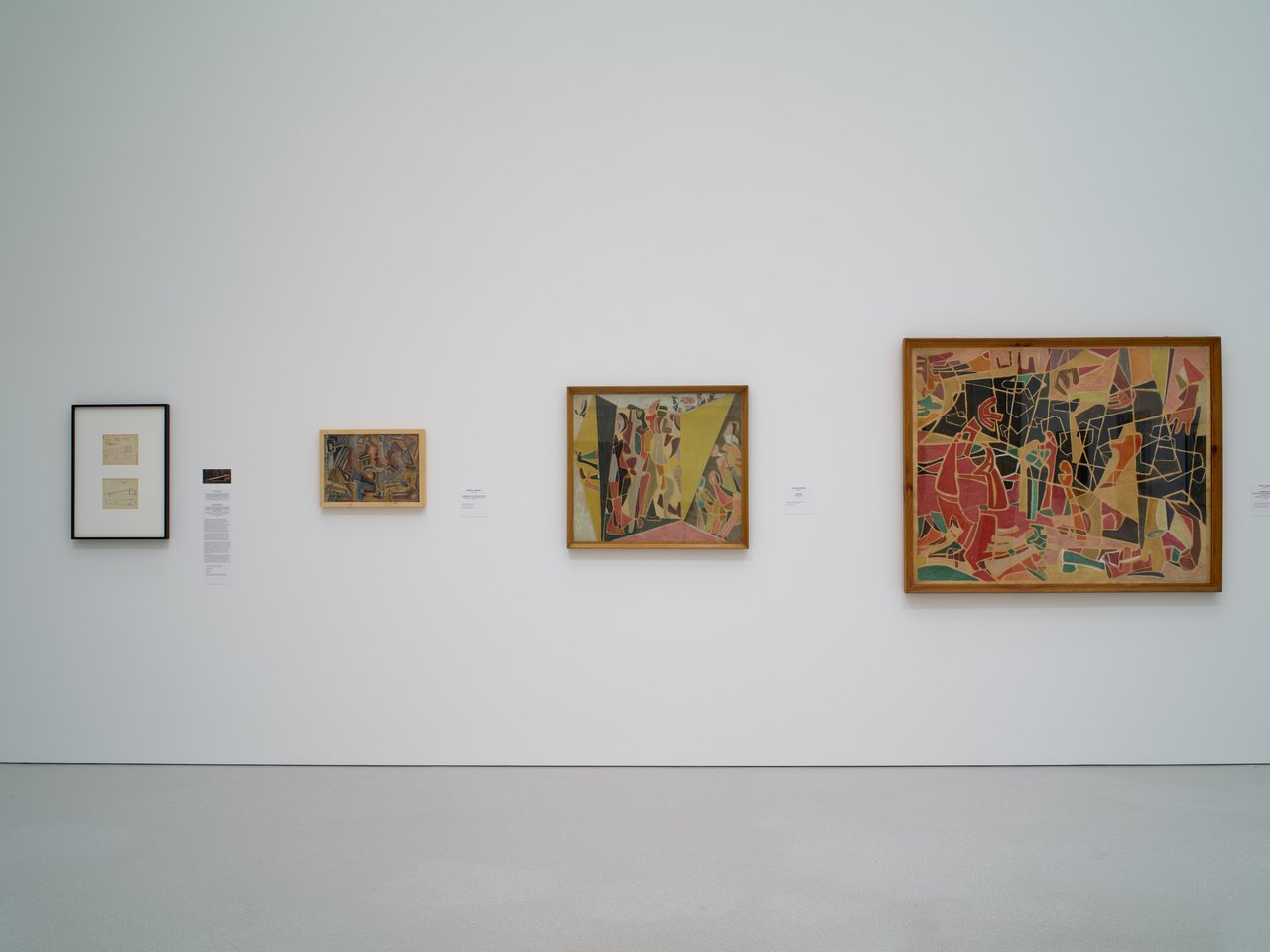
Jarema was educated, outward-looking, and considered herself a European. She admired Picasso’s Guernica (1937). But do we really need a catalogue reproduction of it, drawn from her library, displayed directly beneath one of her most affecting paintings? Beach (War II) (Plaża [Wojna II]), tentatively dated 1942, is a response to the holocaust unfolding in her immediate vicinity. Figures lie close together on the “beach” – a title loaded with irony and pathos, the beach being a place of leisure and light. It might also have been a disguising title, since depicting such scenes during the occupation could have been a death sentence. Are they resting, or are they corpses piled high? The central figures, their faces either skull-like or reduced to two vertical slit-like orifices that evoke prison bars, wear black caps that signal either that they are Jews or their uniformed murderers. The ambiguity is unbearable and possibly deliberate.
Perhaps Jarema referenced Guernica – and to invoke her own words, “freedom is not ‘originality at any cost.’” But the contrast with Picasso is pointed. He drew a sympathetic portrait of Stalin for the front page of Les Lettres Françaises after the dictator’s death in 1953 – a move unimaginable for Jarema, who had rejected the dictates of Socialist Realism and gone into internal exile rather than comply. Beach (War II) is rendered in distemper on cardboard, a mere 50 x 64 cm. Its material paucity is profoundly embedded in the pain it depicts; it should stand alone.
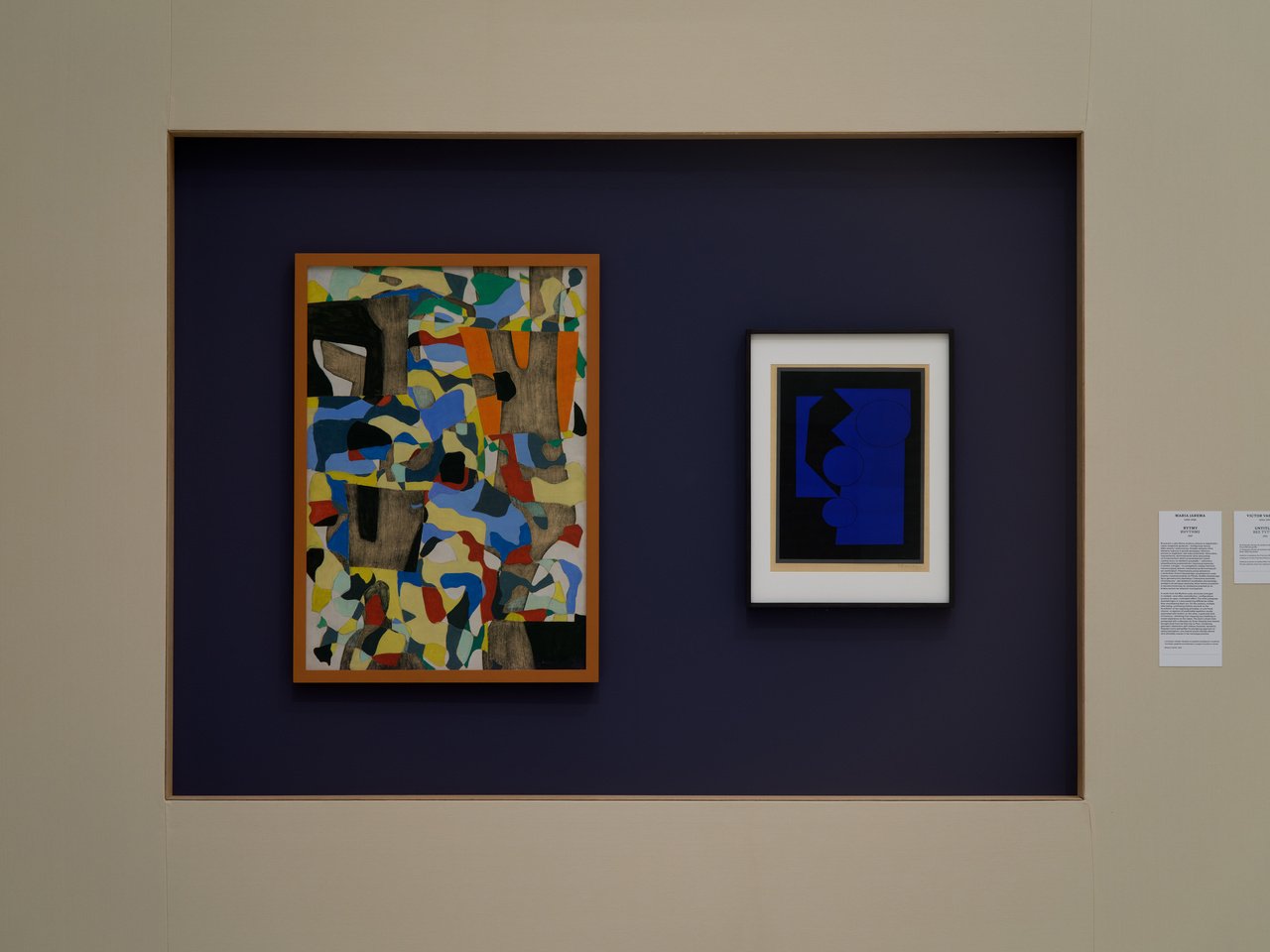
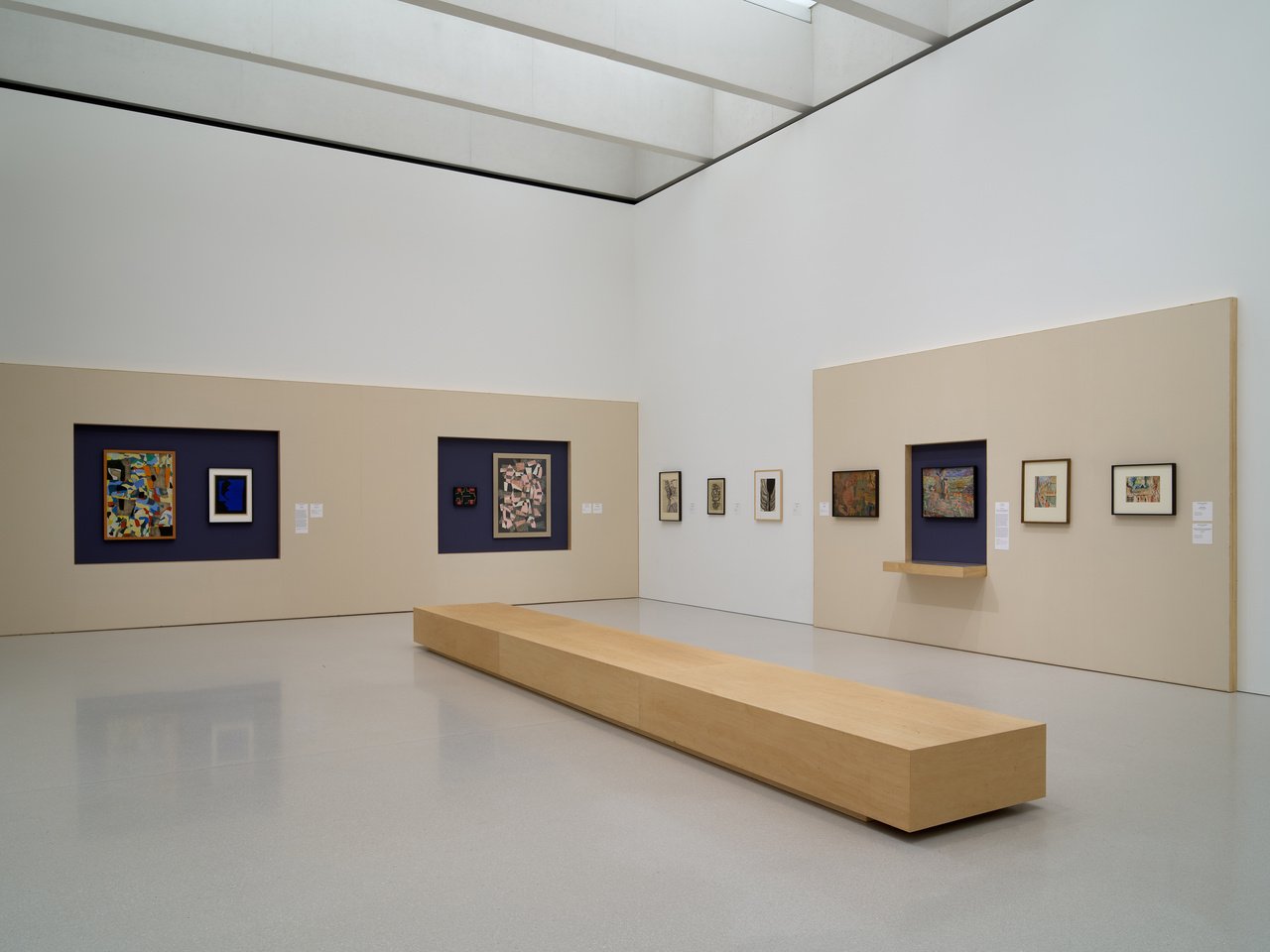
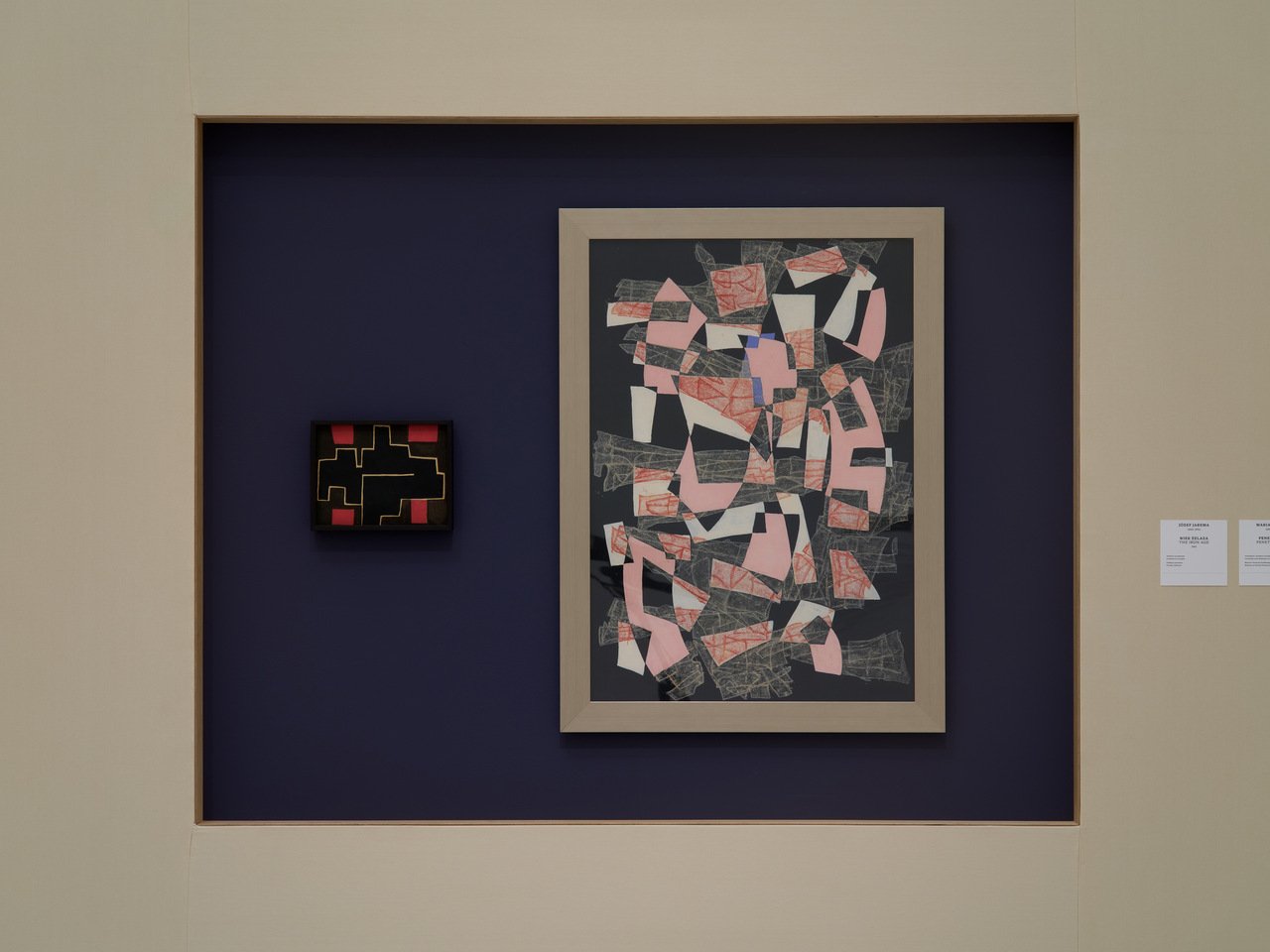
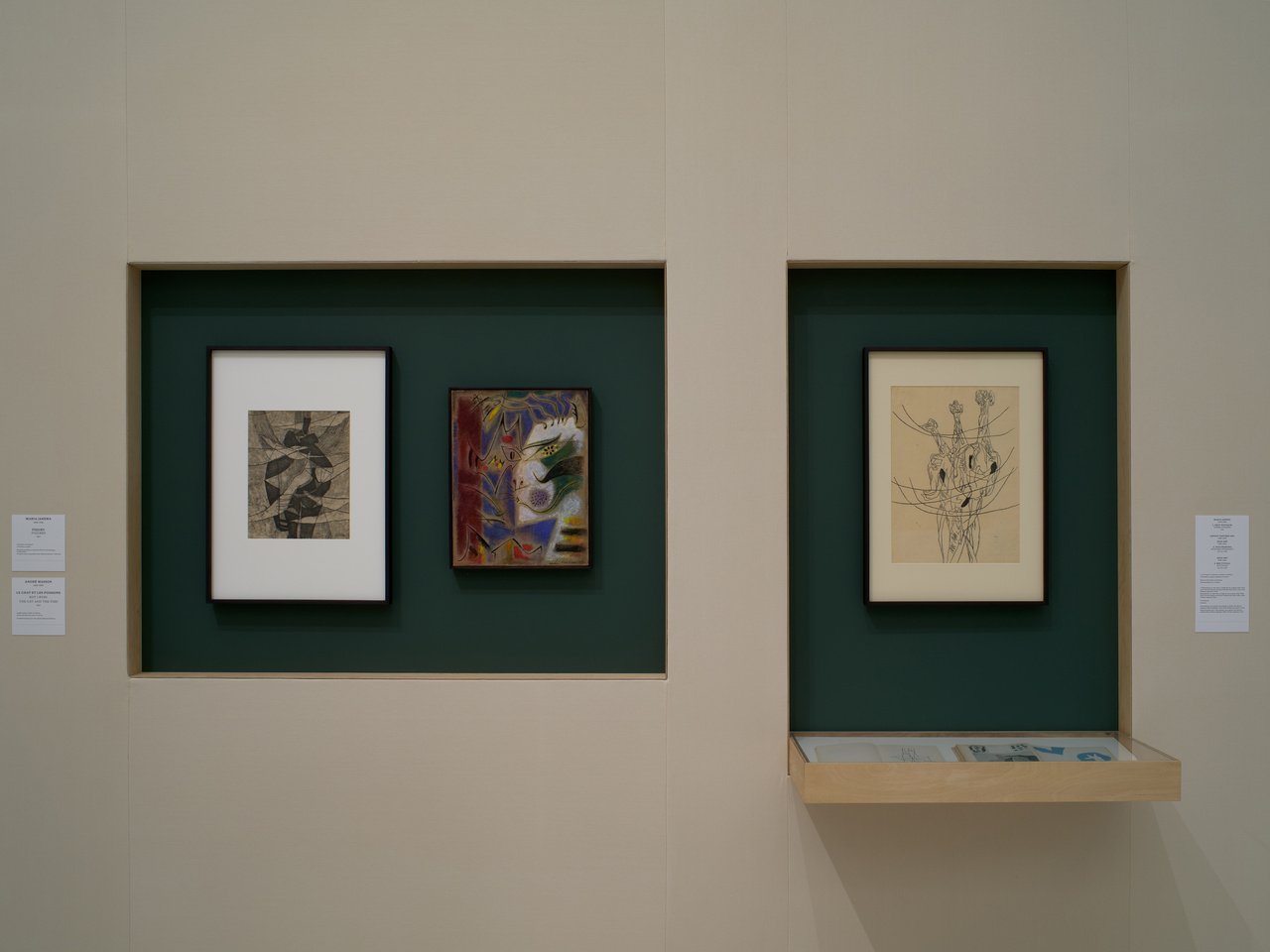
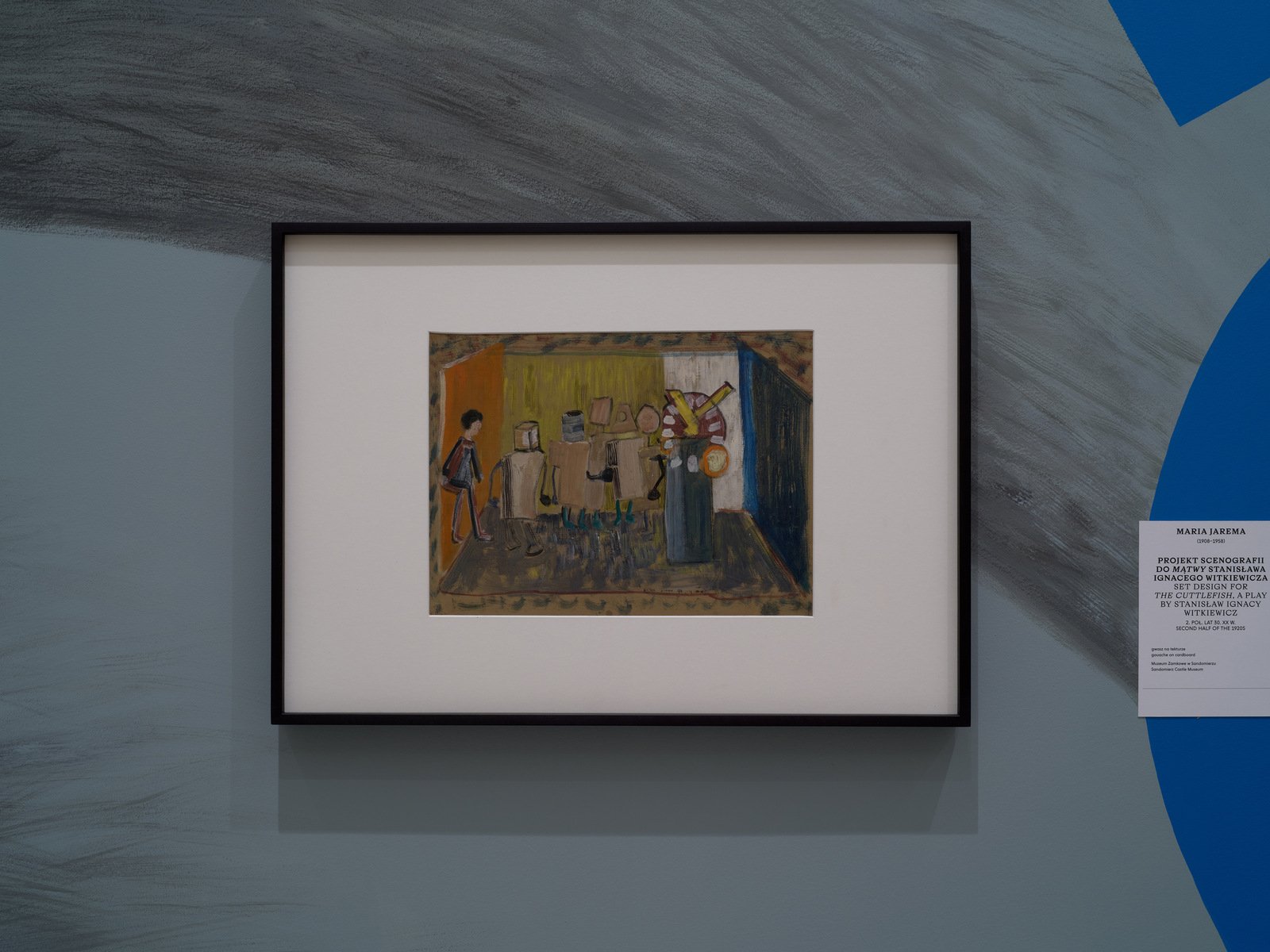
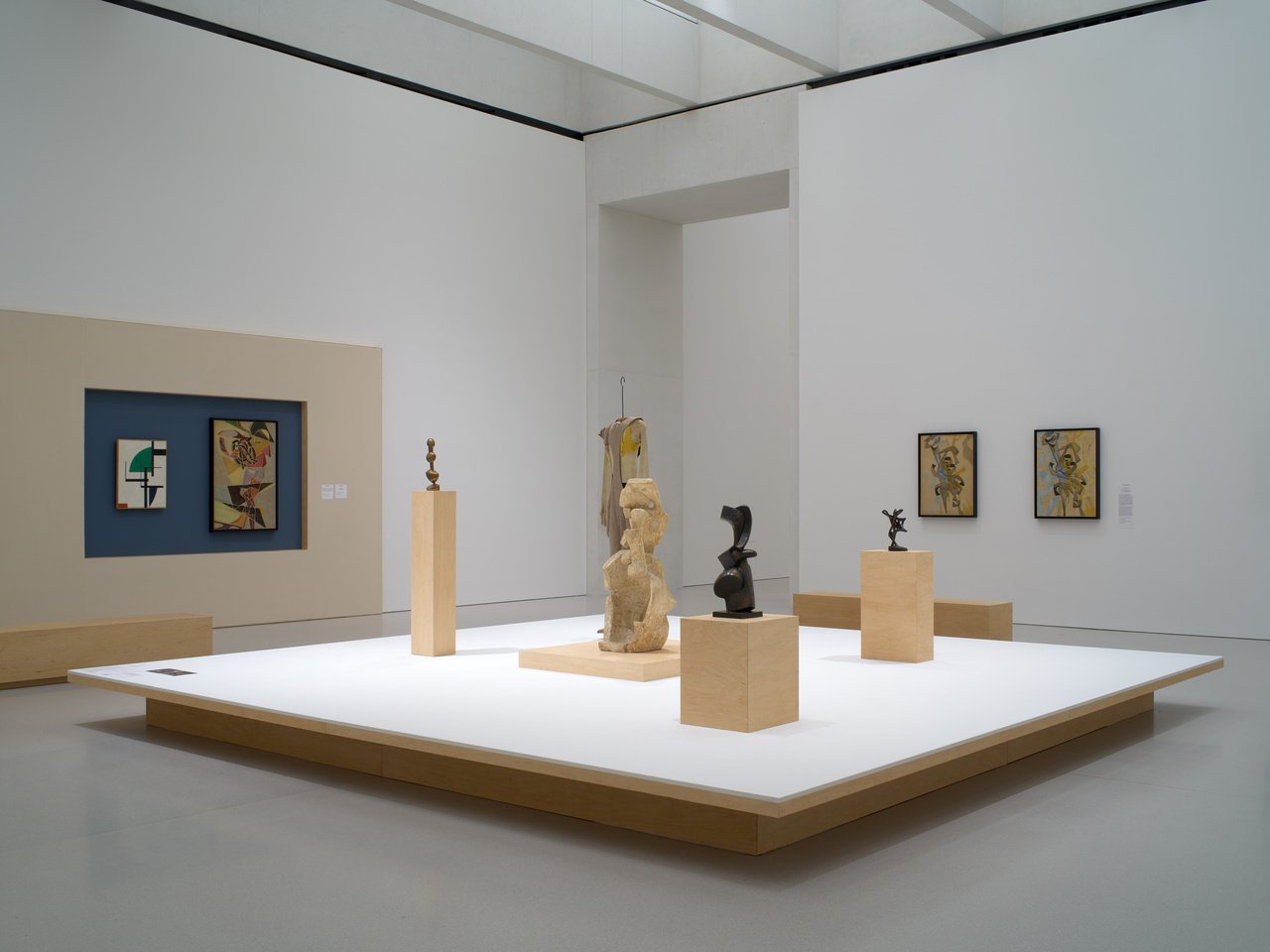
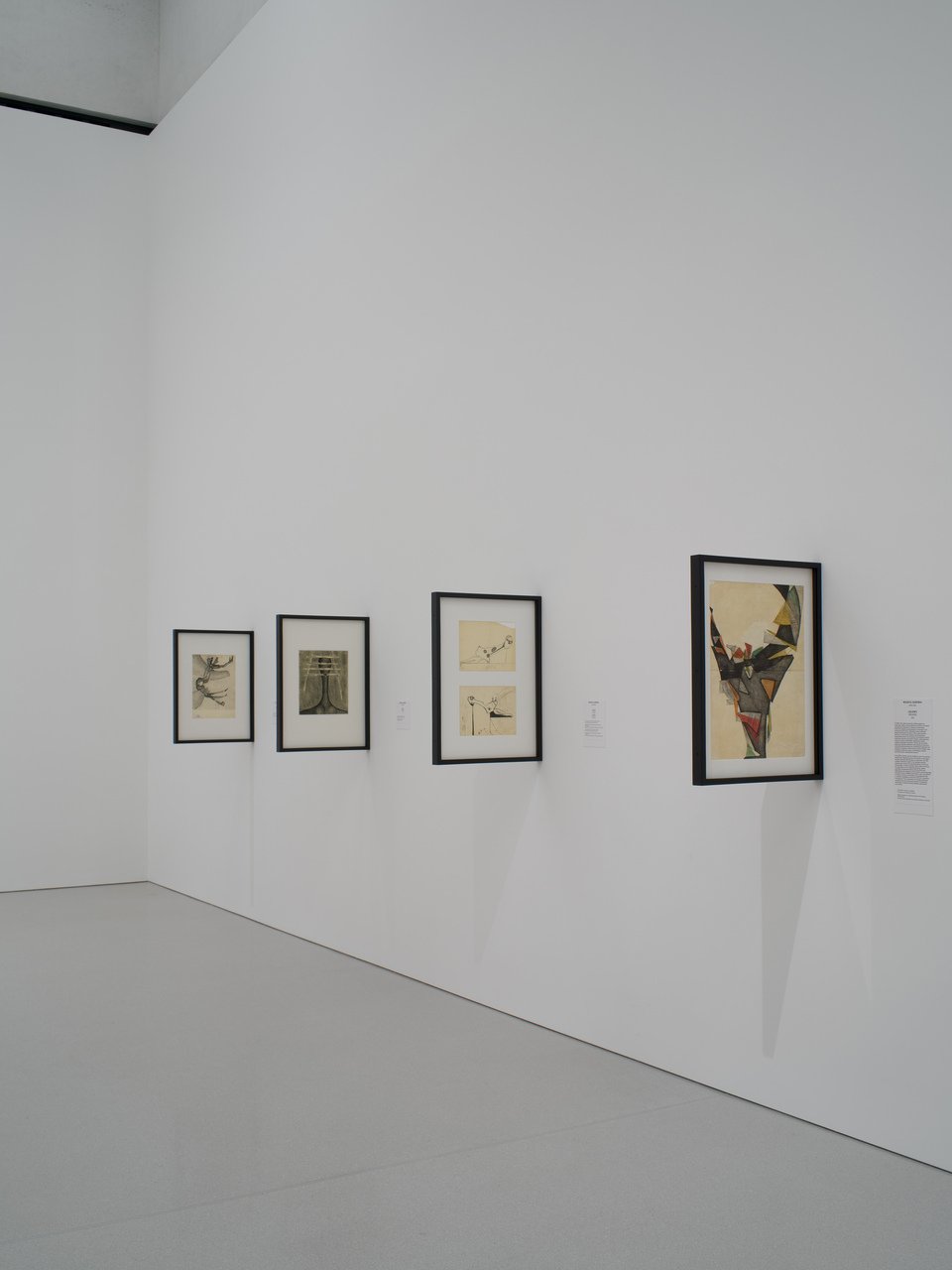
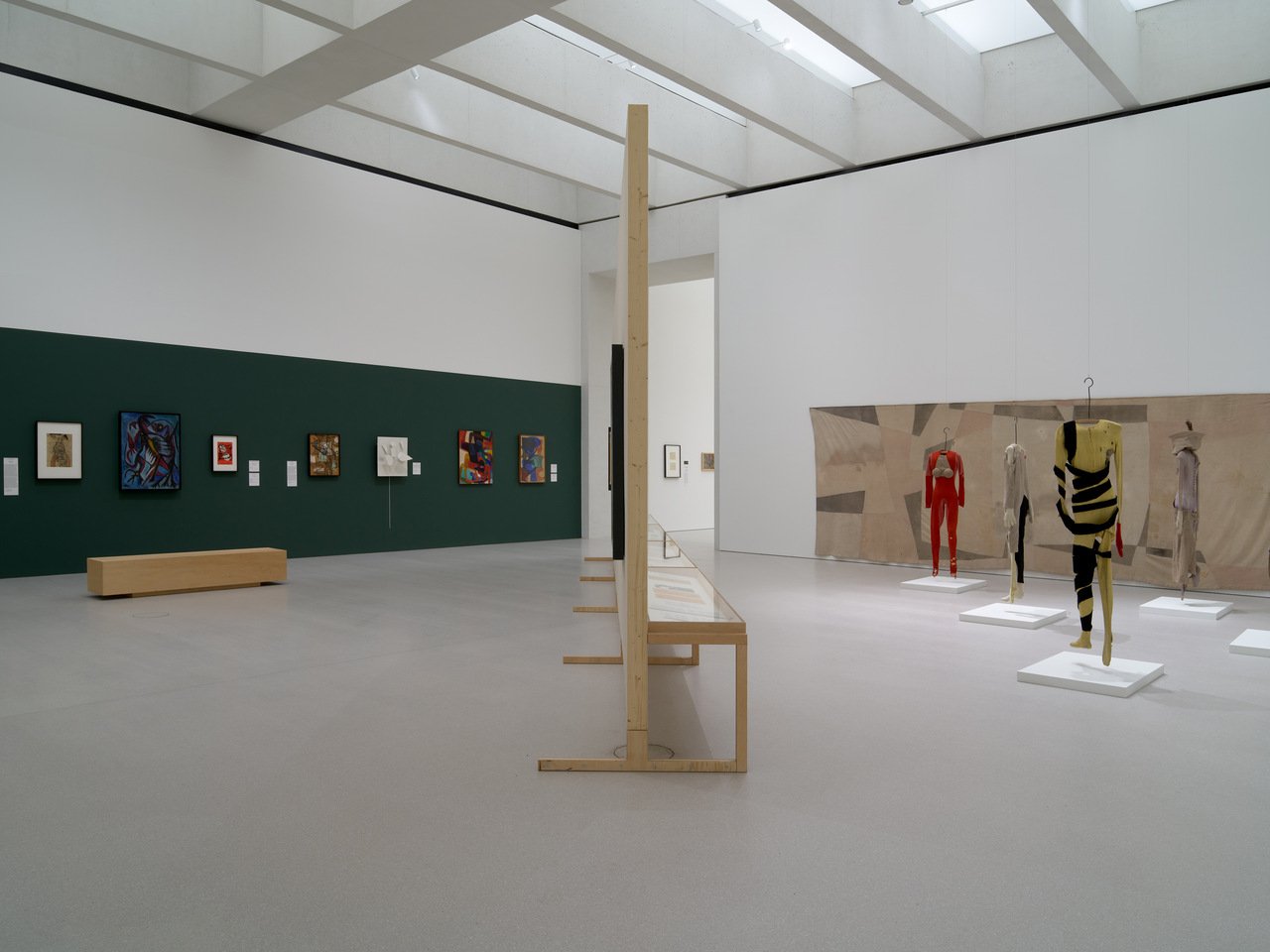
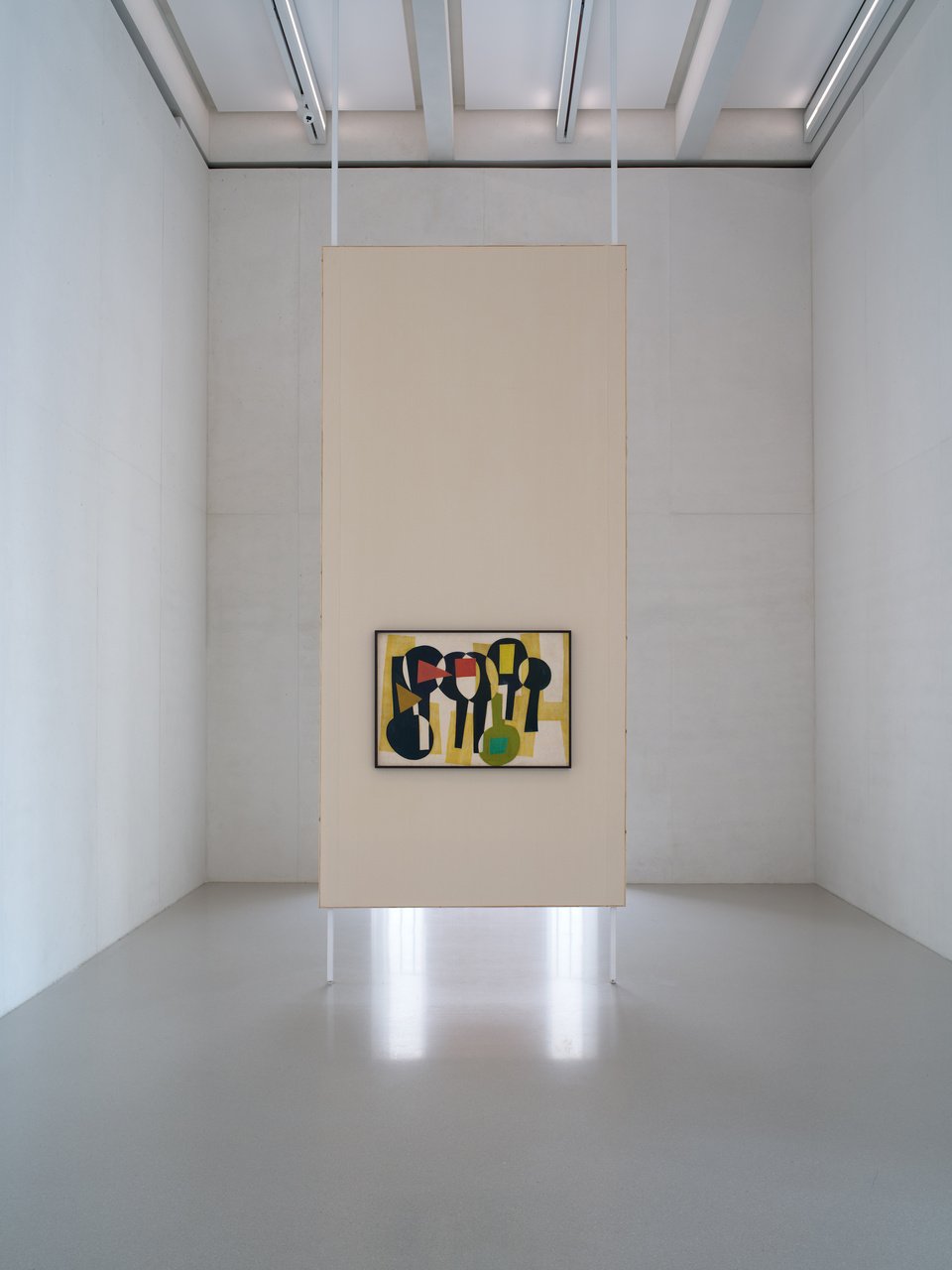
This gripe aside, the intimate architecture of the exhibition, its muted lighting and spare signposting mediate the vastness of the MSN building, creating a calm, concentrated atmosphere in which to engage with Jarema’s relatively small-scale works, rarely larger than a meter at their maximum dimension. Occasionally the works are fixed onto floating panels that section off the space, quietly enacting the division and multiplication, the cracks and fissures, at the heart of her practice, and providing areas of contemplative seclusion. Various monotypes are displayed throughout the exhibition in frames at right-angles from the wall, drawing the viewer close and revealing the preliminary drawing and “happy accidents.” This method illuminates her meticulous technique and the membrane-like qualities of the works on paper, literally getting the viewer to step in between the layers she built upon in a way that almost feels like trespassing into delicate, private moments. One such work, a costume design for The Cuttlefish by Stanisław Ignacy Witkiewicz, was made in 1956, when Jarema was aware of her cancer diagnosis. On the “finished” side, the monotype extracts what it needs from the graphite sketch on the reverse, reducing the design to its necessary elements. The bodice of the costume on the female figure appears to reveal or at least accent the stomach, where what looks like a flower in the drawing becomes a ragged hole or metastasising lump that punctuates the image.
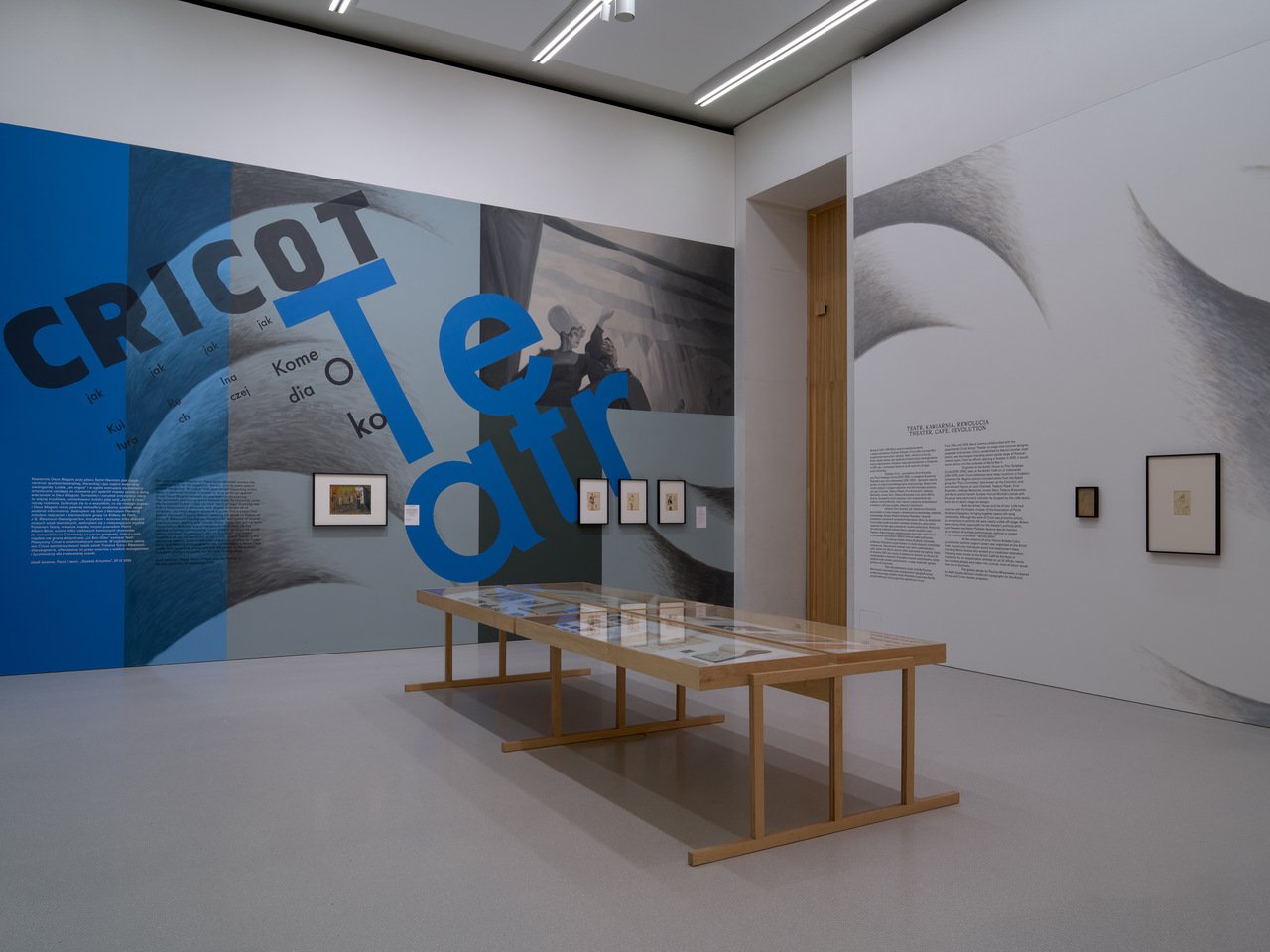
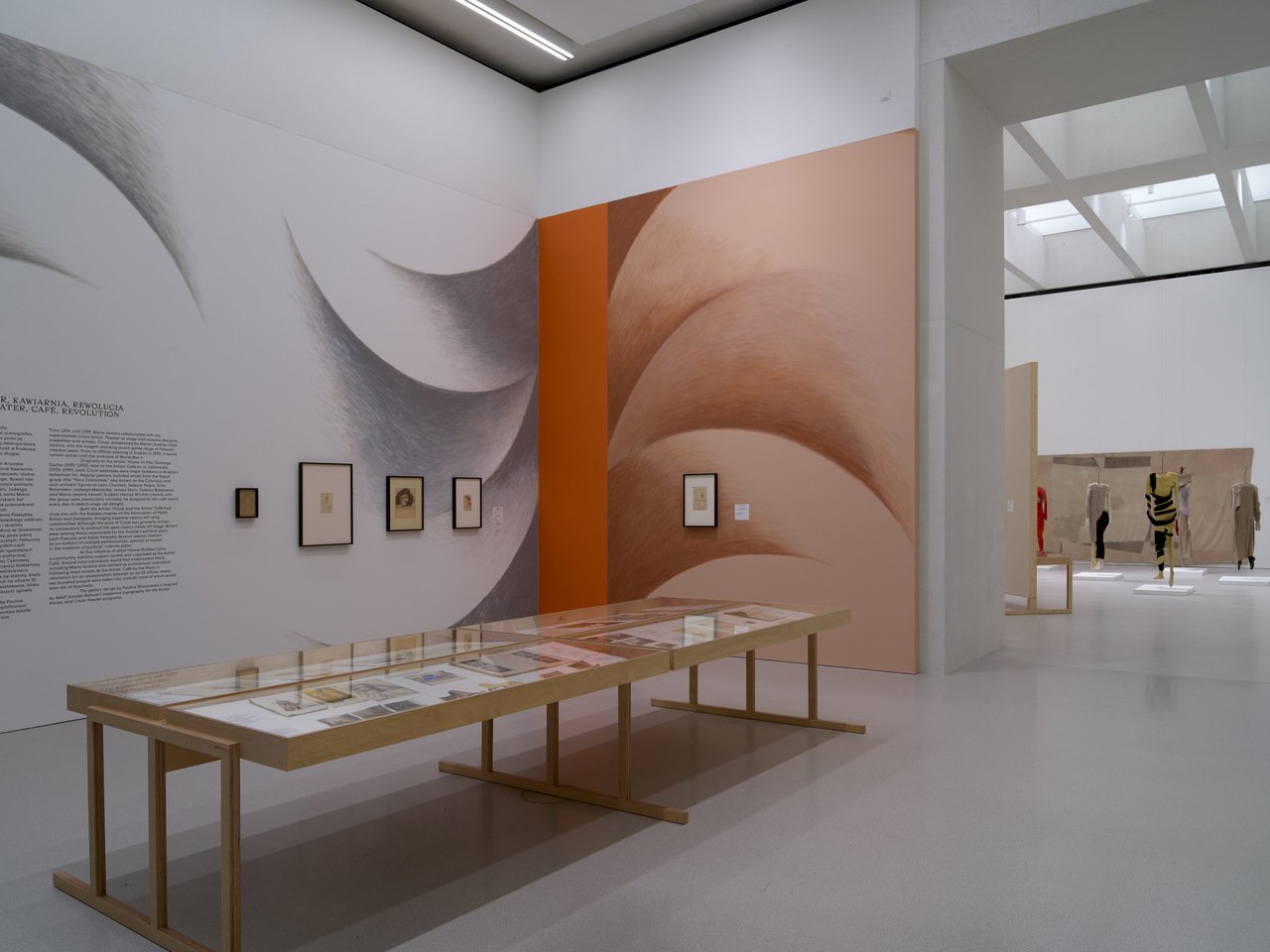
One room is devoted to Jarema’s involvement with Kraków’s Cricot Artists’ Theatre, originally housed at the Artists’ House and later at the Artists’ Café. For this space, the artist Paulina Włostowska (b. 1987) has created murals drawing on Adolf Szyszko-Bohusz’s modernist typography for the Artists’ House and Cricot theatre programs. Enveloping the documentation and artworks produced during this fragile period, the commission acts as a bridge to the present and presses home the continued relevance of Jarema and her circle, and of their struggle against fascism.
To retain her identification card under German occupation, Jarema worked as a cloakroom attendant at the Artists’ Café, where artist Hanna Rudzka-Cybis had initiated a community support system. Following an assassination attempt on an SS officer, Nazis raided the café and arrested nearly two hundred people, most of whom would later die at Auschwitz. Jarema’s sketchbook-size scenes of café life in the 1940s might appear devoid of political meaning until understanding that the creation of art was forbidden. The scenes are painted with a characteristic sense of haste and her spectrum of pinks, yellows, and blues, busy with figures in conversation or passing through. Windows and walls meet at awkward angles, parallel lines converge, creating a simultaneous sensation of movement and claustrophobia. Looking at these café interiors one is reminded of the power of not only the artist’s individual compulsion to create, but that of the collective; the spaces for imaginative resistance that are continually threatened and erased. In the current moment, a time of rabid gentrification, geo-political instability, and indeed, genocide, Jarema’s café sketches are as much a reflection of her quest for freedom as anything else she produced.
[1]Maria Jarema, b.d./n.d. From the exhibition caption for JEDNOSTKI/SINGLES
[2] Maria Jarema, Notatki rozproszone (Scattered Notes), 1956
Artist: Maria Jarema
Exhibition Title: Maria Jarema. Cracked Modernism
Curated by: Éric de Chassey, Natalia Sielewicz
Venue: Museum of Modern Art
Place (Country/Location): Warsaw, Poland
Dates: 20.03–28.06.2026
Photos: Robert Głowacki