
Dr. Bernadette Buckley
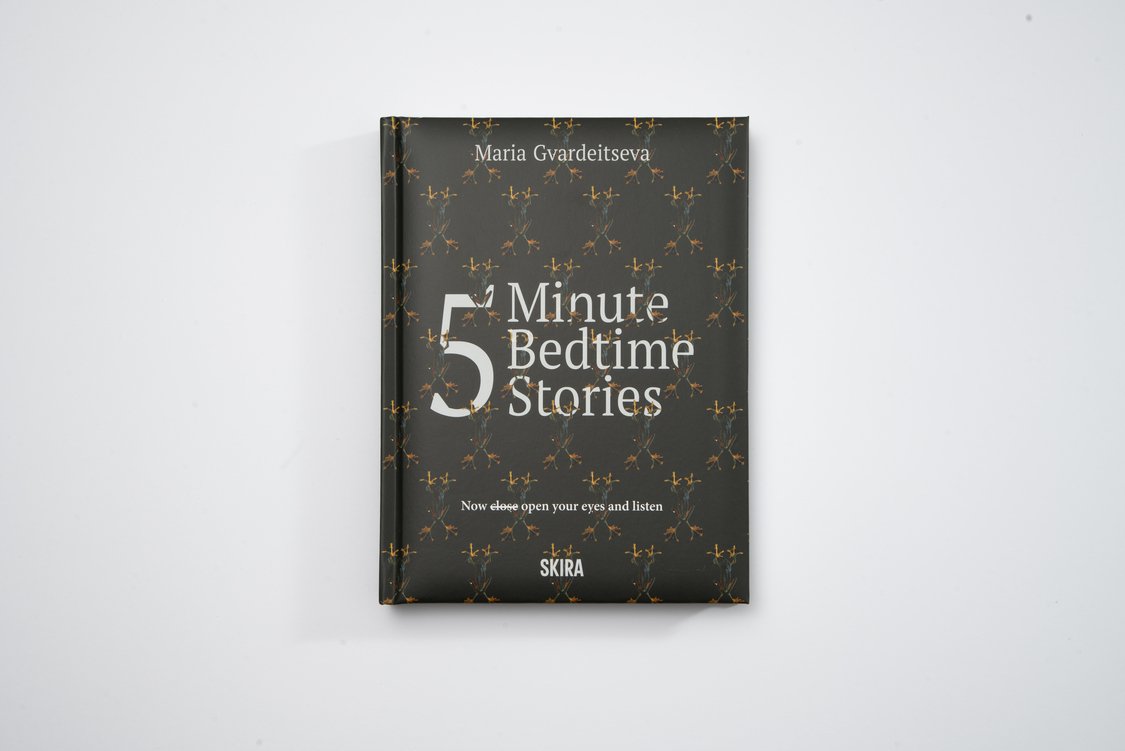
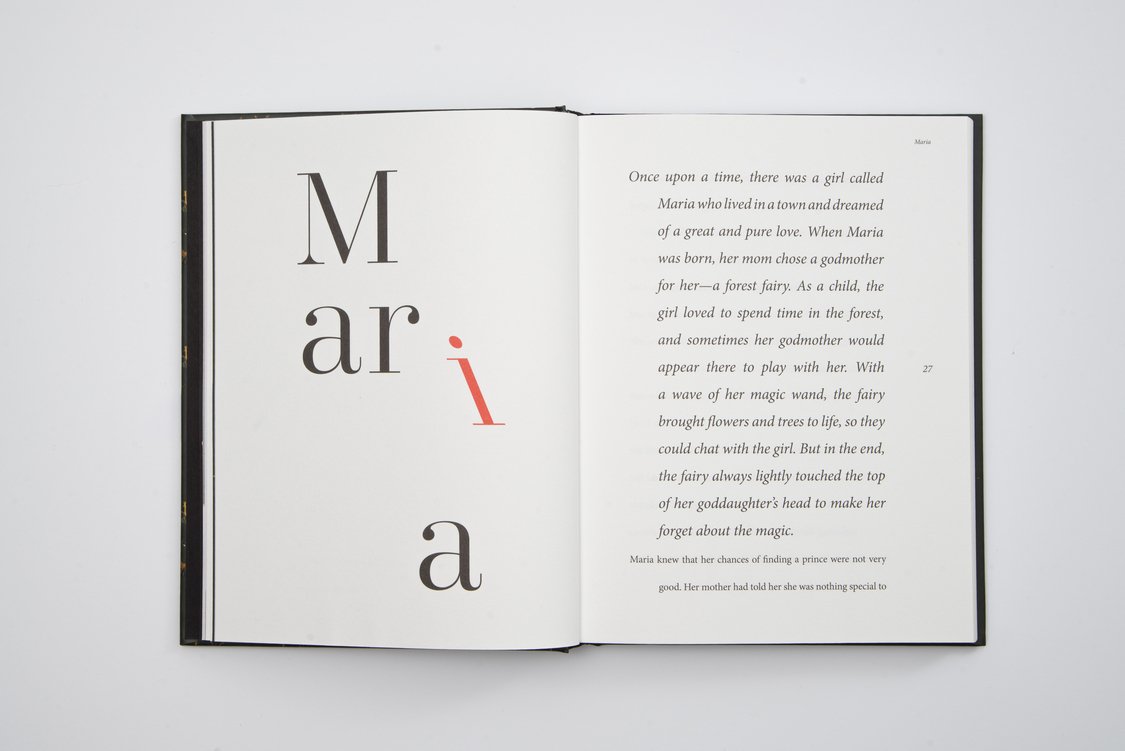
5 Minute Bedtime Stories, by multidisciplinary artist Maria Gvardeitseva and published by Skira in 2025, grew out of the exhibition of the same name first shown at Fitzrovia Gallery in London in 2023, and is an expansion of that project into a meditation on separation, female agency, and the stories women are expected to live by. For this conversation, which was commissioned for publication in the aforementioned book, Gvardeitseva was joined by Dr. Bernadette Buckley, Lecturer in International Politics and Programme Convenor of the MA Art & Politics at Goldsmiths. The conversation moves between lived experience and form, asking how art can turn a private rupture into language, structure, and self-authorship.
Bernadette Buckley: To start with the obvious question: Why did you want to look at divorce using the form of the fairy tale?
Maria Gvardeitseva: Well, I’ve gone through divorce myself and, to start with, it was really interesting for me to compare my own experience of loss, failure and, actually, rediscovery of myself with other women’s experiences. So I began by doing in-depth interviews with women from different social circles, different life pathways, and I was trying to find out how they rediscovered themselves and how they reinvented themselves when they were going through this really hard experience of divorce. And the first thing that I found was that nobody was prepared – that’s what all the women I talked to told me. And I realized that I needed to dig deeper, and that’s how I ended up with fairy tales. I realized that I needed to look into the subconscious, and our subconscious is formed in childhood when we learn about life from fairy tales. But there are no fairy tales about divorce – fairy tales commonly end with “happily married” and “lived happily ever after.” And I realized that since our subconscious doesn’t have any pathways, any answers for how to behave in the very complicated and difficult life situation of divorce, I needed to write those stories. And that’s how I ended up doing the 5 Minute Bedtime Stories.
BB: But do you think that it is an appropriate form for thinking about what is obviously a very traumatic experience for anybody? Because marriage is so often presented as a ritualised fairy tale that starts with a princess’s dress, a horse and carriage, a ceremony and a community feast. How does the fact that marriage is presented as a fairy tale in your work strengthen its rationale?
MG: For me, weddings and marriage have the biggest amount of hallucinations around them. Like engagement rings and those white horses and the magical prince, the prince who can come and help with everything. All those hallucinations create so many expectations about marriage, about married life, and about some happily-ever-afters that have no connection with real life, because any marriage entails a lot of work, a mutual work; though there is a lot of happiness as well. Nobody talks about…
BB: … About the risk…
MG: … and about how artificial those expectations are.
BB: You talked about the subconscious and the unconscious and I was wondering if Belarusian fairy tales, specifically, were an important resource for you in thinking about this work and imagining it?
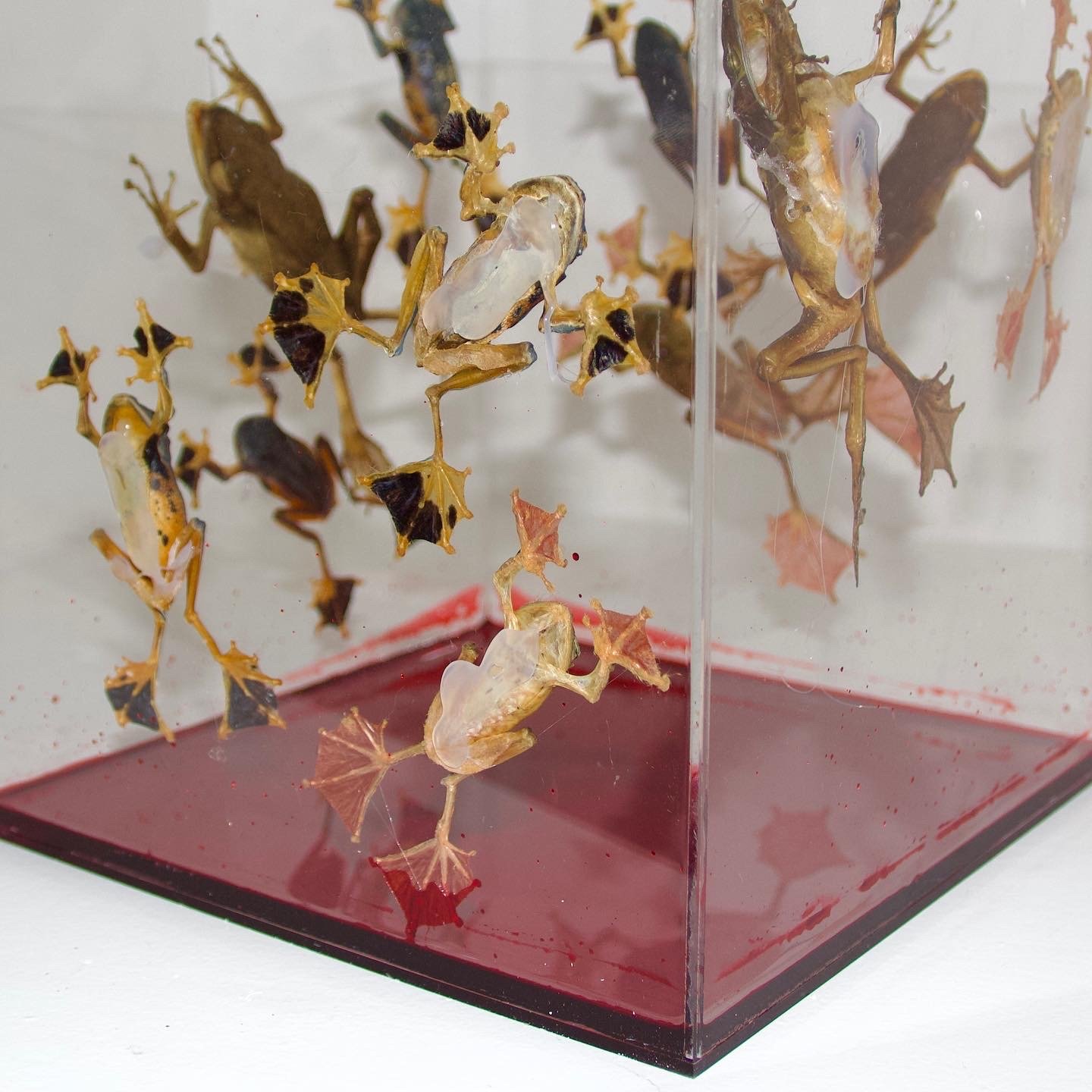
MG: Well, I worked a lot with Belarusian and with Slavonic fairy tales, and I use a lot of ancient traditions in my artistic practice. For instance, I was interested in ancient spells. There is a spell for getting rid of unwanted love, a whispering spell, and it’s one that I use in my artwork. And I was very interested in the figure of the frog in Slavonic fairy tales as well as in Western fairy tales. In the Western fairy tale, the frog is a prince who needs to be kissed. But funnily enough, in Slavonic fairy tales the plot is different – the princess is turned into a frog and then a prince saves her. But later she escapes from her married life with him, and turning back into a frog again is a kind of divorce.
BB: That’s interesting.
MG: So she escapes from him and returns to her parental home. But then he finds her again, and he remarries her. But I personally see being a frog as a kind of divorce, an escape. The frog is a female figure.
BB: Yeah, that’s absolutely fascinating. Fairy tales are so full of these very big themes. They connect us with the worlds of magic and enchantment, which immediately bring us into childhood spaces. But they are also full of these very big themes of justice and injustice, of punishment and wrongdoing, rights needing to be restored and all of that. And divorce in the middle of all of that offers a lot of food for thought, for rethinking these big scenes of justice and injustice. And there was also a sense, in the modern fairy tales that you tell about the stories of the other women, that highlights how these women had been treated badly, fooled, or had their expectations unmet. So how do you see that layer of modern justice and injustice, from a feminist perspective, playing out in your fairy tales?
MG: Well, if we are talking about traditional fairy tales, whether they are Western or Slavonic, or even from South America or North America, women are very rarely active heroines and they don’t interact much with magic. Or the power to interact with magic is usually given to elderly women…
BB: The hags…
MG: …who are already outside society and live in the forest and they have a witch’s wisdom, but then they are never active parts of society. They live on their own and they are closer to death than to real people. Another thing is that fairy tales can set the tone for change in society. Because often in a fairy tale, the hero does something that is forbidden in real life, but he’s not punished for it. On the contrary, it takes the action forward.
Traditional fairy tales don’t show the changes that have happened in the last 100 years in our society, with feminist approaches and women’s rights, and I thought that there was a space here to make justice and equality work. And that’s why all my fairy tales are about heroines who are very active. They are the ones who get the supernatural magical powers that let them change their life and be powerful.
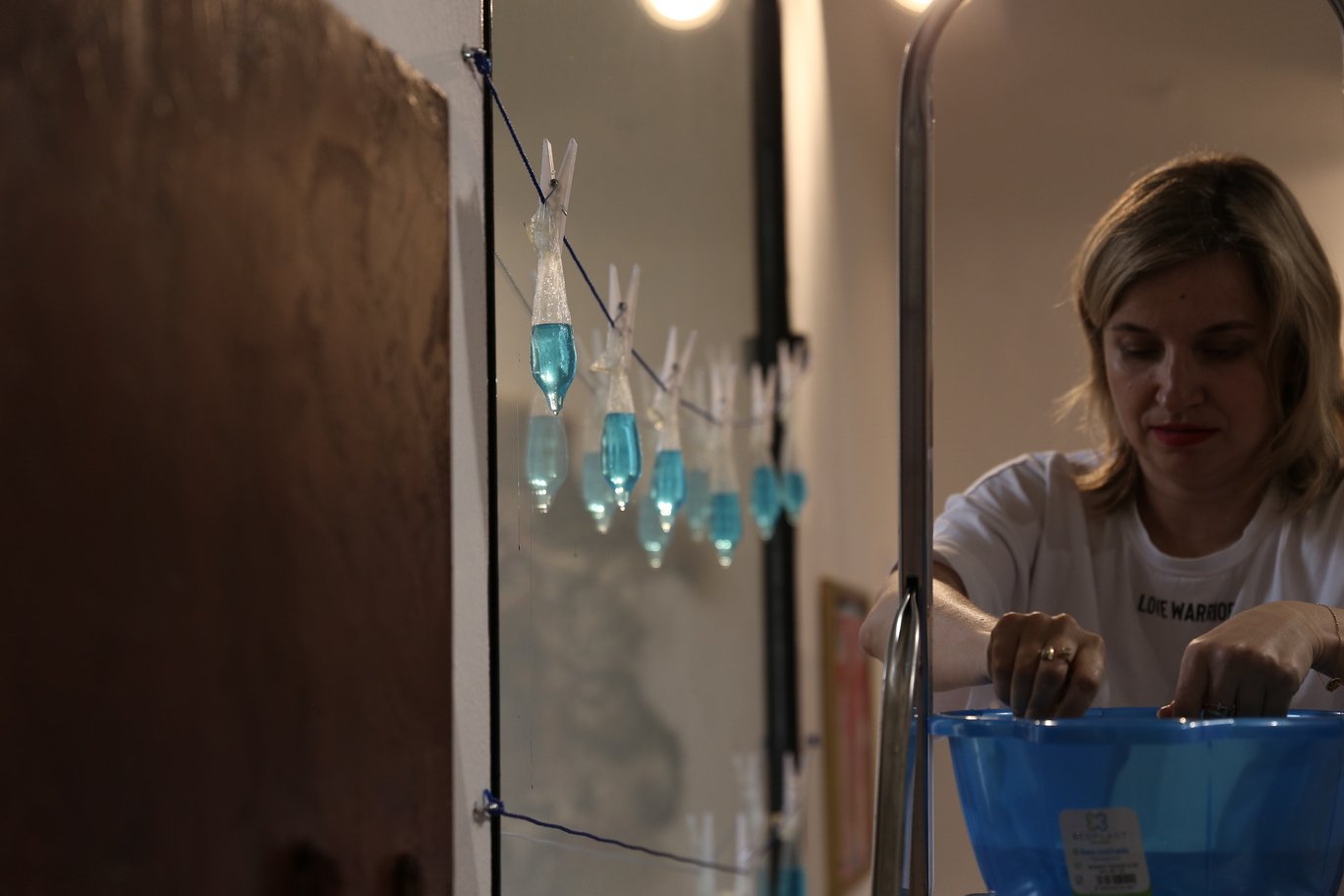
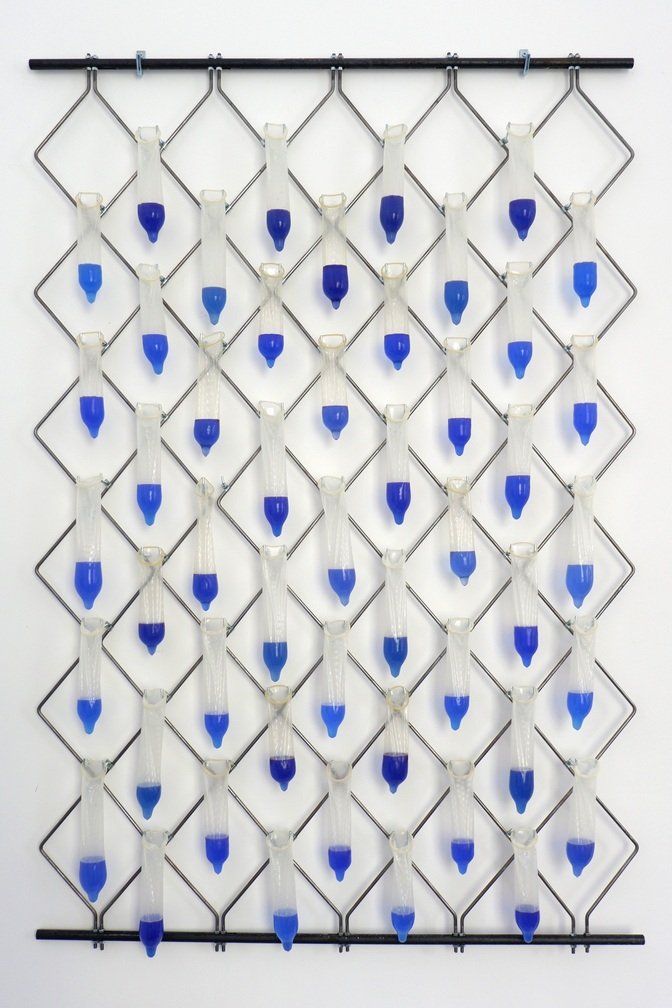
BB: As a reader of the fairy tales and a listener to them as well, it’s very powerful to hear your voice telling the stories and to hear the voices of women telling these stories, and when you’re listening to them there is a sense not just of the trials that the heroine has had to go through, which is, of course, a very traditional trope in fairy tales – so often there is some trial that has to be endured, or a challenge – but also there is a sense of self-transformation. There’s a sense of a new agency and of potential, and so the divorce is not at all an ending, but the start of a new chapter of a life transformed. Maybe you could say a bit more about that and also about the other women that you spoke to who produced their own stories.
MG: In my opinion, the real stories are even more fascinating than the fairy tales, and I feel very grateful to them for sharing the stories they have, which come from very different pathways. It was an honor to have the opportunity to hear them. Some of the stories are from working-class women, some are from very privileged women with busy lifestyles and a successful career. But what I found was that divorce actually gave them the opportunity to have their own agency and to create more freedom, to be connected with their own source of power. All of them feel more powerful after going through the divorce. At the end of the interview, I always ask the same question: whether they could suggest something to women who are now going through divorce or are thinking about divorce, whether to do it or not. And actually the answers were very similar. All my heroines told me the same: “Don’t be afraid, just go forward and feel your power. You will get help from everyone else and you will have enough power to go through it and you will feel much better after the divorce.” So basically I got the same answers from all my heroines.
BB: Right. And I love the way you describe how the princess becomes the dragon. She’s not sacrificed to the dragon and she’s not afraid of the dragon – she becomes the dragon, and that is wonderfully inspiring and heart-warming, particularly for anybody who has found themselves having to become a part of society that isn’t really endorsed. You know, we are trained as women to think of ourselves as dependents or as part of a unit. And so to create this kind of image of women as fearless fighters going through life with this power is wonderfully evocative, and is a much-needed image to balance the other contemporary myths about women, which are mostly that they are prey, that they are subject to domestic abuse, etc. It’s a wonderful counter to all of that.
And what I wanted to know next, I guess, was how the images that you produce in the exhibition work in tandem with this project about empowerment and about agency, because the images are quite dark and literally bloody. They point to death and to a kind of experience that is often suppressed or of a very, very private nature. So how do they fit with the fairy tales?
MG: Well, as you mentioned, the texts of the fairy tales are more up-lifting and light-hearted, while the artworks are more on the dark side. But I see divorce as a small death and, in fairy tales, the heroes or heroines often experience a “small death” in order to get a magical power – they go to the forest, they find a special place, they find somebody who can connect them with the world of death in order to get a magical power. And that’s why I believe that darker images, darker-side artworks work well with fairy tales. If we take the original texts of Grimms’ fairy tales for instance, they are all about death, about killing, and it’s only with time that they have gotten a sugar-coating. We all need this sugar-coating in life, but it’s good to have a combination, and this is the essence of life. Only by understanding that our life is limited by death can we sense all the powers and all the opportunities that life gives us.
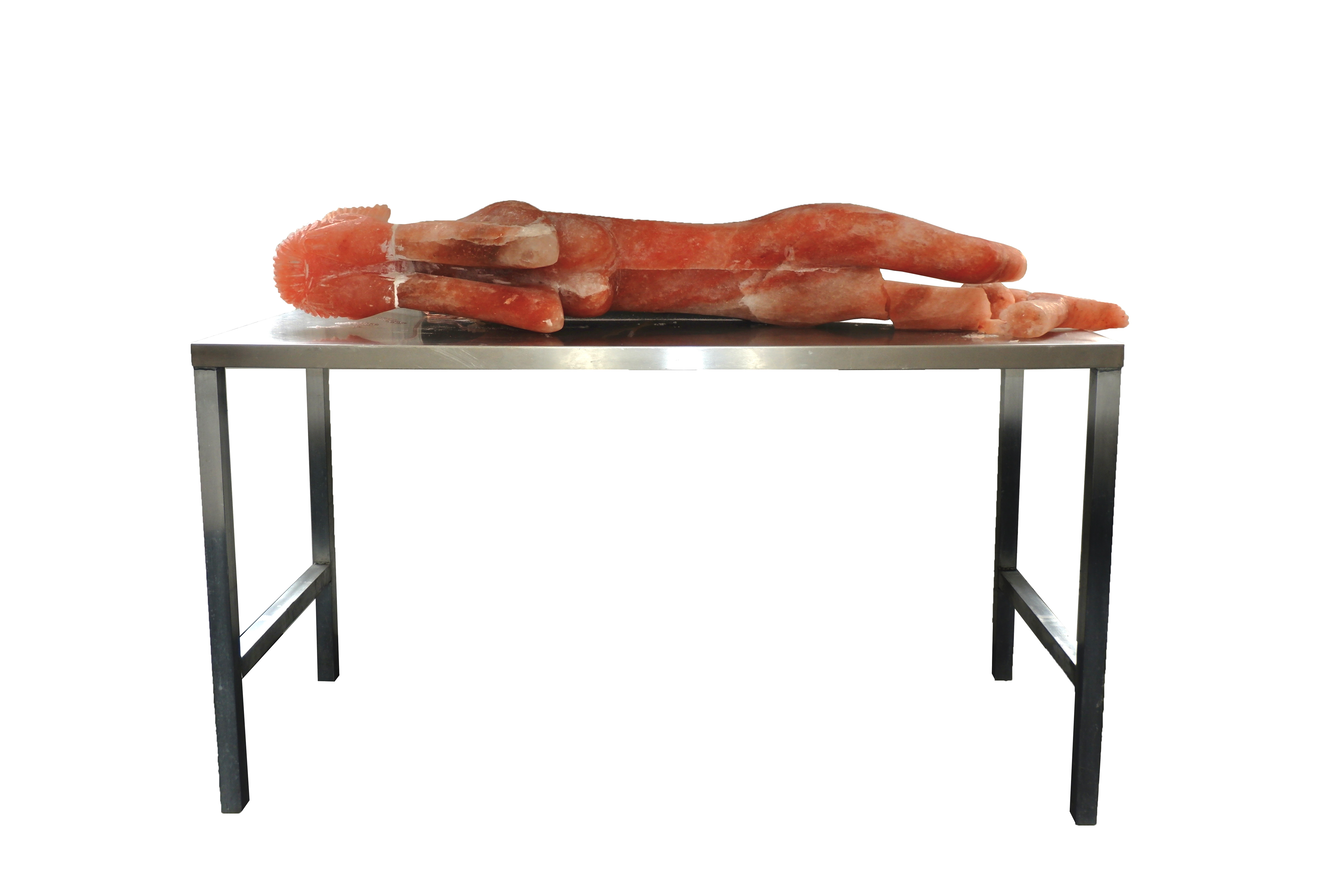
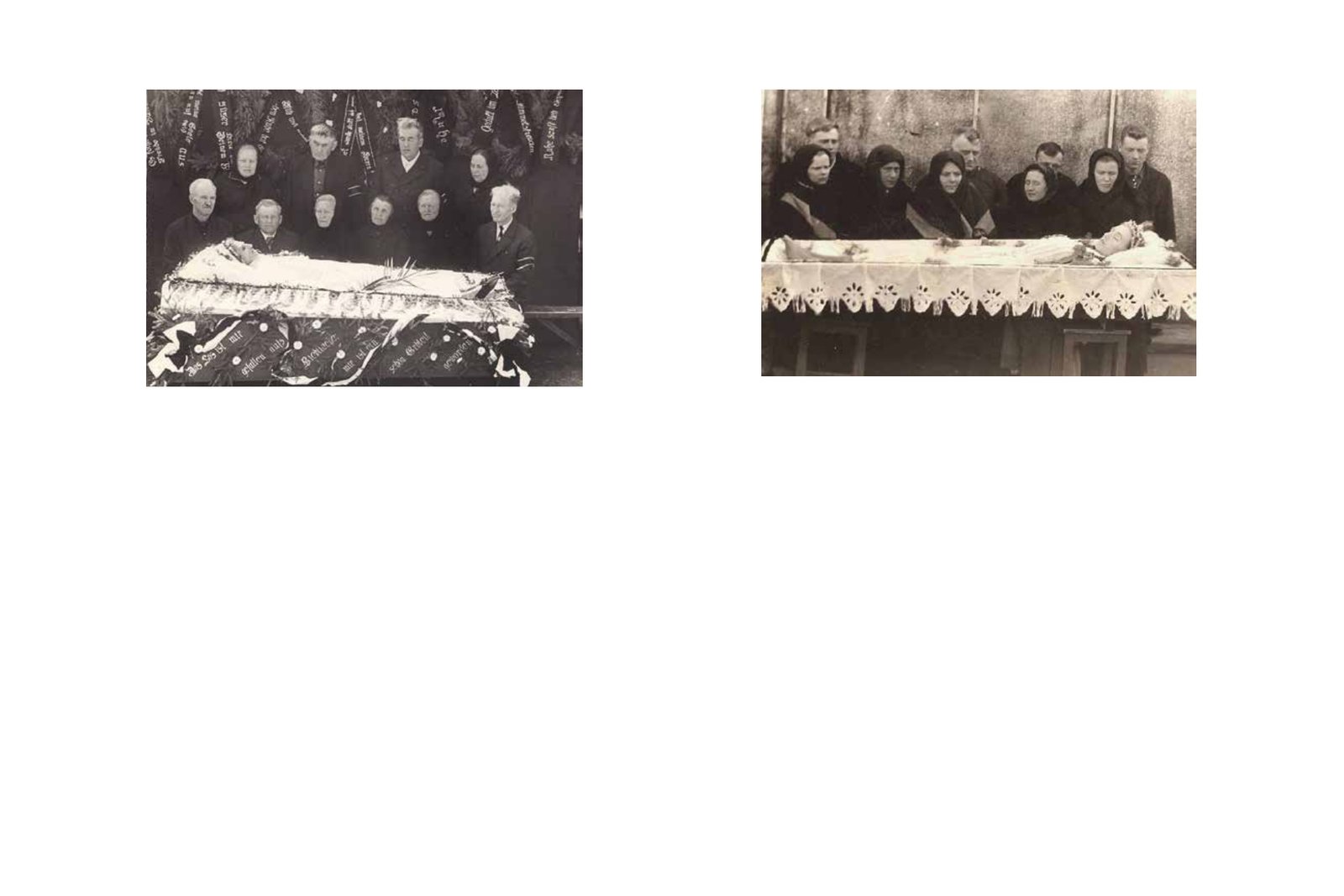
BB: That is very strong in the images and the artworks. And maybe we could talk a little bit about that very striking image of the young woman lying in her coffin dressed as a bride. Maybe you could just say something about why you chose to use that image and about its significance in relation to the fairy tales and your cultural background.
MG: When I was doing research for the project, I read a lot about the institution of marriage, about divorce, and I came across this ancient tradition, which is still alive in some Slavic countries – the tradition of burying unmarried women in wedding gowns. We were saying there are so many hallucinations about wedding dresses, but I was really shocked and astonished to find thousands of images of dead women, girls, elderly women in wedding gowns, and I decided to dig deeper to find out more about this tradition. In Slavic countries and in Germany, a girl who wasn’t married was considered to be “undone” – she wasn’t complete, and if she died before marriage, there was a superstition that she could become a vampire, she could reappear after her death. So there would be an artificial marriage at the funeral: somebody, some man, was assigned as a groom and the girl who had died was married to him, so that she became “complete,” which I think is insane.
BB: Incredible.
MG: A woman doesn’t need a man to be complete. It’s nice to be in love, if you prefer men, and to be a couple, but you don’t need anyone in order to be complete. So that’s why I decided to create an archive of these photos of dead girls in wedding gowns in coffins, which I called Say Yes to the Dress or Hallucination Ended.
BB: And those images are incredible to look at as well because they are ghoulish, but they are also beautiful. They are very reminiscent of Sleeping Beauty who lies in her glass coffin. It’s a moment of frozen beauty and that seems to chime very much with the work on fairy tales. But there is something else as well: the corpse obviously doesn’t need to give its consent in this instance and so it is as if there is an opportunity to engage with the woman as a beautiful object. You don’t have to deal with her trauma or her psychology or her history. You can just deal with her as an object and therefore, as it were, create her as part of a performance and ritual, which doesn’t require her consent. I wondered if you had had any thoughts around that at all and around our fascination with these women who are rendered as aesthetic objects to be looked at?
MG: Well, for many centuries, the woman was considered an object with hardly any more rights than domestic animals. And this continued after her death. There wasn’t a lot of difference between life and death when the agency was taken from her, in life or in death. It’s true, though I found that there are a lot of people, a lot of communities that are really fascinated by those images of death, who see beauty in death. But my main idea was to show this lack of agency, and also I was sarcastic about this idea of spending thousands of euros or pounds on a wedding gown and, you know, choosing this wedding dress and making a big thing of it. So when you go to the basics and get to the roots of the tradition, that could be a way for you to find your own approach, to stop living in the metrics of the capitalist society and to find out what you really feel, to take back agency to do whatever you want with your life.
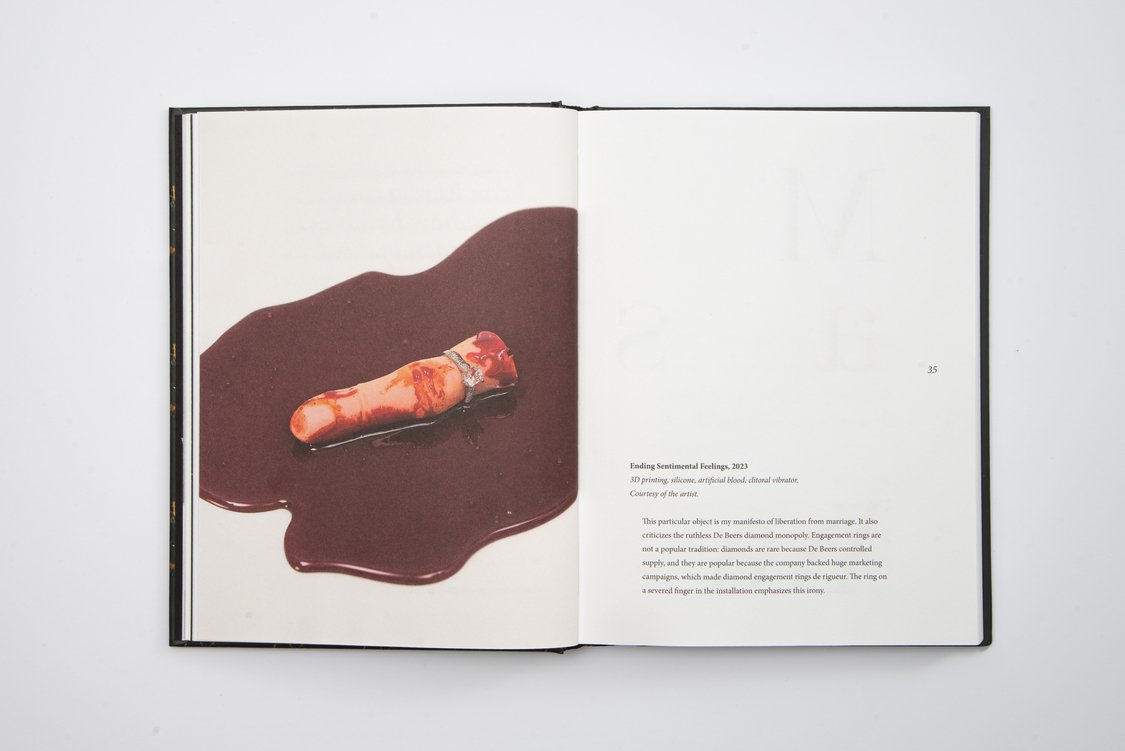
BB: That’s a good connection to the next image, the image of the finger with the ring and the artificial blood and the finger as vibrator because, on the one hand, in some languages the orgasm is described as a “mini-death” or a “little death,” and that chimes with the little death that you were talking about earlier. This image is obviously very sarcastic or ironic: sexual gratification is utterly commodified, partly as connoted by this vibrator but also partly by the ring, which, as we spoke about before, goes back to the tradition invented by the De Beers diamond and mining company, which literally invented the idea that, when a woman gave consent, she got something back, she got the diamond. So this is more than a promise, it also binds her to the moment of consent. Could you say more about this? Because it brings the themes of mythology and ritual together with neoliberalism in a very powerful way.
MG: My idea was to be sarcastic and to put some sarcasm on the table around this idea of price-tagging love. We know that De Beers did a huge marketing campaign, effectively putting a price tag on love, saying that the engagement ring should cost three months’ salary of the man who wants to propose, which again I think is insane. Although you have to admire the effort that De Beers put into the campaign – “Diamonds are forever” is considered the best marketing slogan of the twentieth century. Behind that there are real women and real men with their real life, which has no tag, and that was one of the ideas that I wanted to implement in the artwork. And it’s also about the huge amount of pain that anyone who is going through divorce feels.
Sometimes it is like cutting something out of yourself so that you can get rid of it and, exaggerating this idea, I decided to create this finger floating in blood with the engagement ring. I do understand that this image and this art object are intense, but the intensity actually helps to get back to what you are really thinking. Maybe you are scared of this finger, but you can maybe ask yourself: How am I feeling? What kind of feeling do I have about this image and about this tradition of engagement rings? Where am I and what is my attitude towards that? And as an artist, it is very important for me to ask those questions, and I hope that my artworks can help the audience to ask the same questions themselves and find who they are and what they feel.
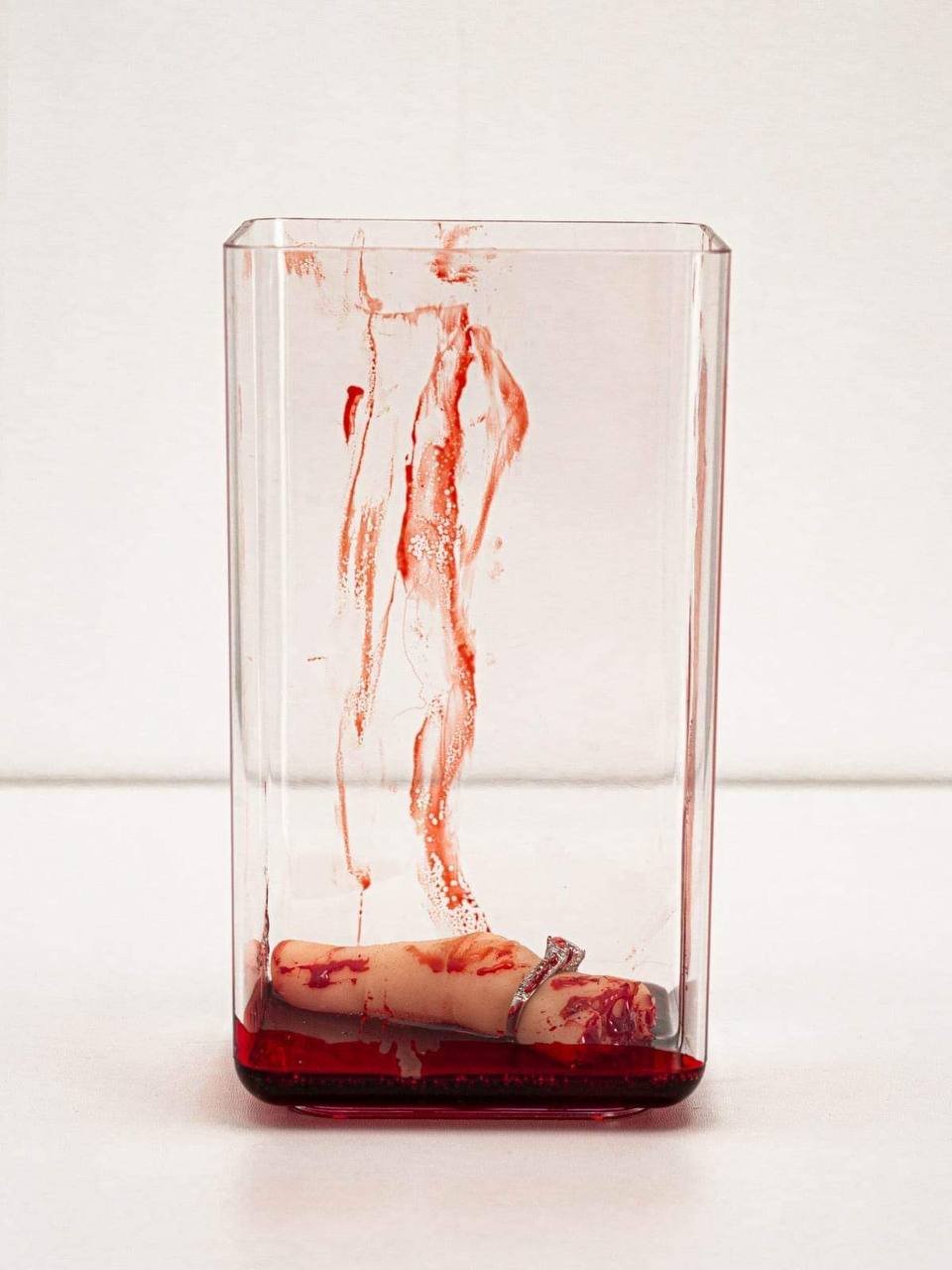
BB: And the intensity that you talk about is very palpable in fairy tales as well, where people are always having their heads chopped off or losing legs and arms, or being ritually disembowelled. Fairy tales are full of these moments of enormous pain. The bloodiest, most graphic images come to us through myths, fairy tales, or through, say, the Greek Homeric legends, which are full of the goriest detail. And of course, divorce is the most heart-wrenching, painful, and transformative ordeal for most people, so, in a way, it seems strangely fitting to have this very graphic bloodied digit in the exhibition. But then you move away from that, through this kind of forest that connects us back to the world of the fairy tale.
MG: I do agree that traditional fairy tales are quite intense, with chopping off heads and fingers and so on. It just illustrates life and nowadays, in the twenty-first century, I don’t think that our world is getting any kinder. We see a lot of wars, conflicts, terrorist attacks and massacres happening all around the globe.
Divorces are not bloody but they are painful, and that’s why this experience was depicted in the fairy tales and in my artworks, because this is a pathway that a lot of people go through. I’m really hoping that fairy tales can help make this process smoother, because this is what civilization should do – it should create methods and tools for making life better and getting the light of humanism into our life. And divorce, as a relatively new part of our life, needs this humanist light as well. We should show our dark sides and I hope that more fairy tales will appear, because it’s a wonderful genre. I had a lot of fun, you know, writing them. I hope they will be an inspiration for the world to become a kinder place, even if it sounds quite optimistic. But we need to take small steps in order to make this world a better place and, for me, those fairy tales and this book were my way of sharing my experience. I hope it will in some way help somebody who is going through this hard time in their life – make it a little bit easier by shining some light.
BB: It really struck me that what was in common between all the women you spoke to was that nobody was prepared for this. Everybody was taken by surprise and again it seems that the fairy tale is a very good mechanism for universalizing that experience of being taken by surprise by some enormous troubling life event, but also for seeing life as a journey, where one faces all sorts of challenges and dark paths and coming through it as different, as somehow transformed. That’s also why I was asking about the forest, because it evokes the idea of a journey and a place of transformation, of soul-searching and connection with forces that are more than human. There’s a suggestion here, perhaps, that the human spirit needs to have some connection with the greater universe. In this part of the exhibition, one hears the sounds of nature and this is obviously an important part of the story too, even though in a way it feels as if the plot is kind of empty in this part of the show. But it is an important part of the story, isn’t it?
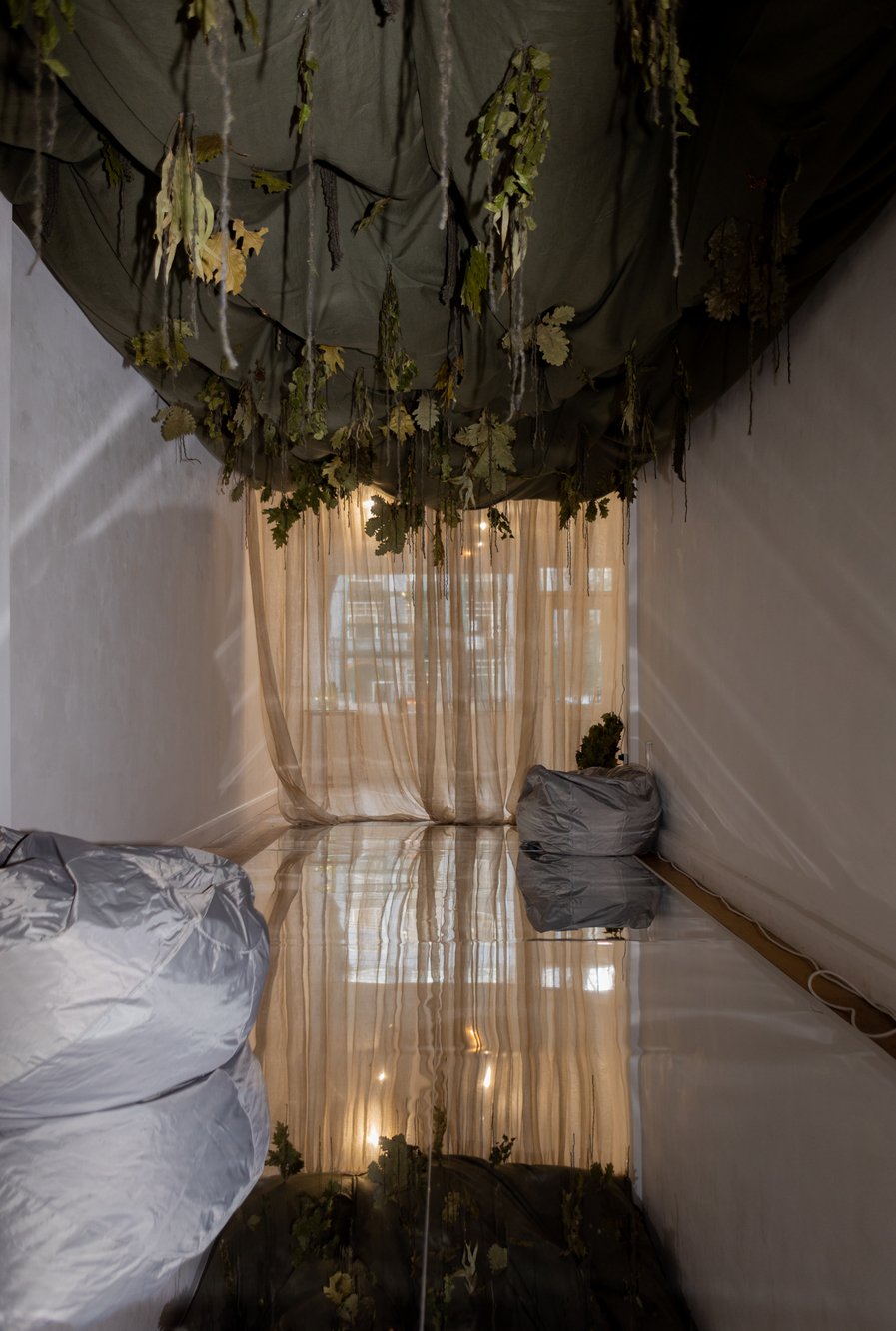
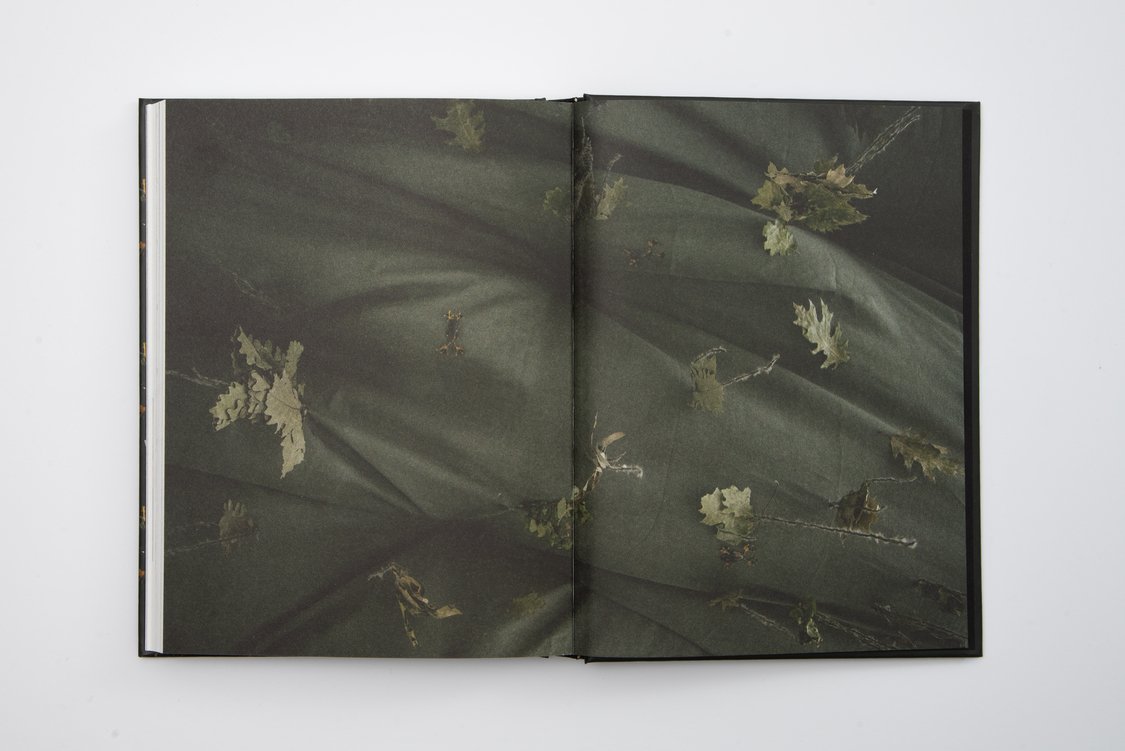
MG: When I was doing the research, I read and learned a lot about theories of fairy tales. In order to get a magical power, the heroines and heroes go to the forest and they find this special place between the world of death and the world of life, because this place in between is the only space where you can get these powers. They are given these powers by talking to people who have a connection with the world of death. And in many ways, in many cases, this resonates with what is going on in the world now. We need to listen to and be connected with the earth and be very conscious of this Planet. We need to be mindful of the place where we live, because the Earth’s wisdom and the Earth’s power can help us – it is a great power, which is granted to us, and it is granted for free. So that is why all the fairy tales that I wrote have heroines who go somewhere in order to find this power and in my artwork I also created a special place in between. The ceiling installation with natural linen and with natural sounds of forest and swamp is designed to create this. It invites you to relax in an atmosphere where you can remain. You can connect with your inner self and find your inner powers.
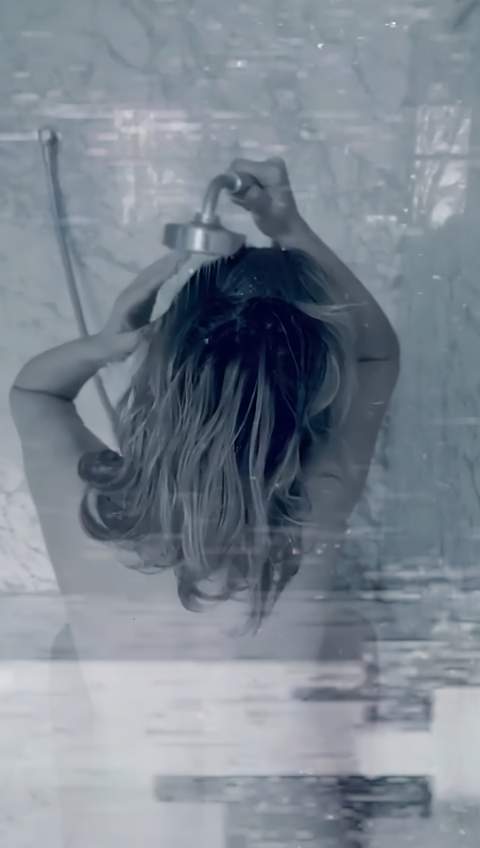
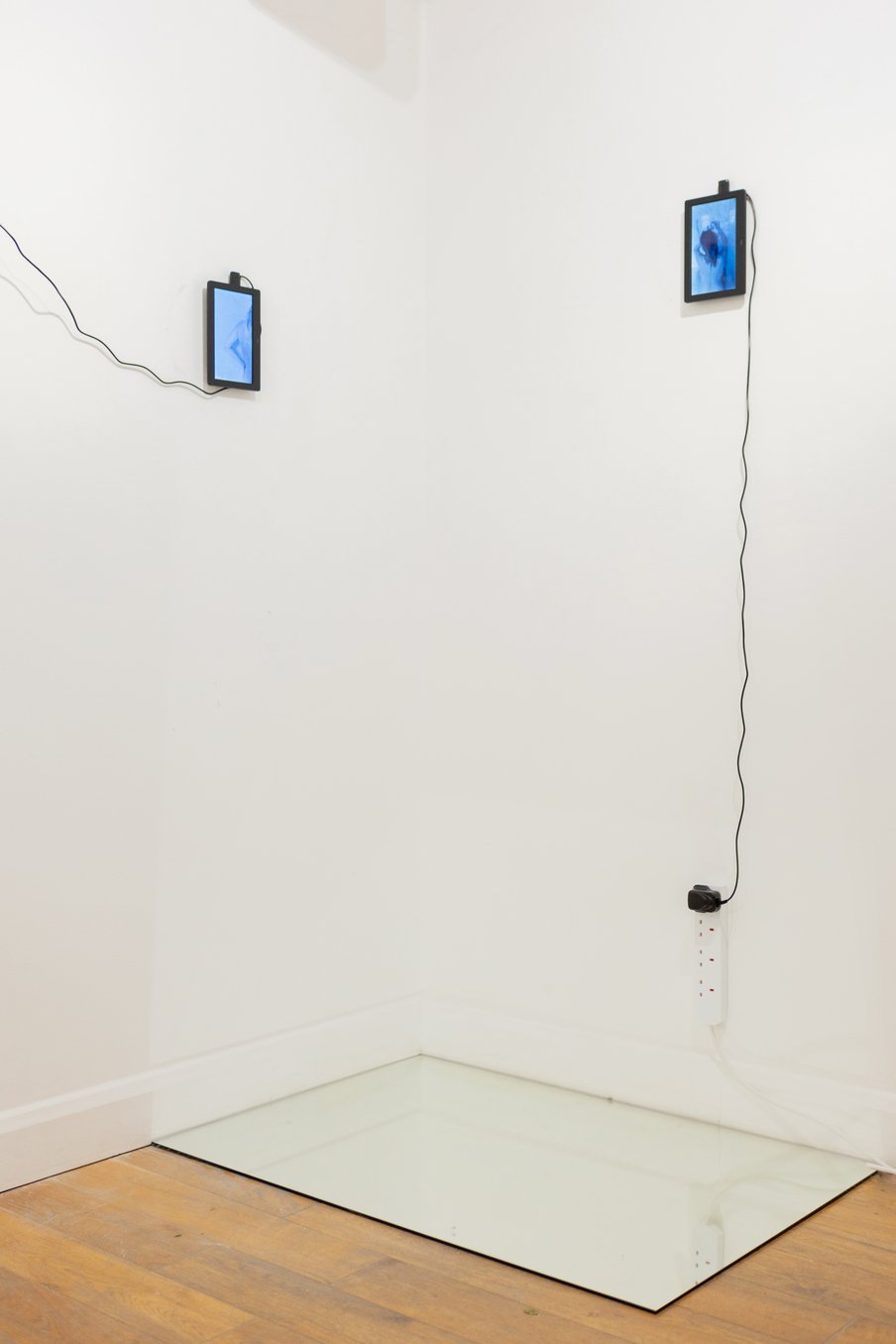
BB: And recharge and set off again in another direction. And then there is the last part of the exhibition – I would love you to say something about the 3D printers, the self-portrait, because this is the epitome of self-transformation using the most modern of technological tools. What inspired you to use that and what were you hoping to achieve by including that in the exhibition?
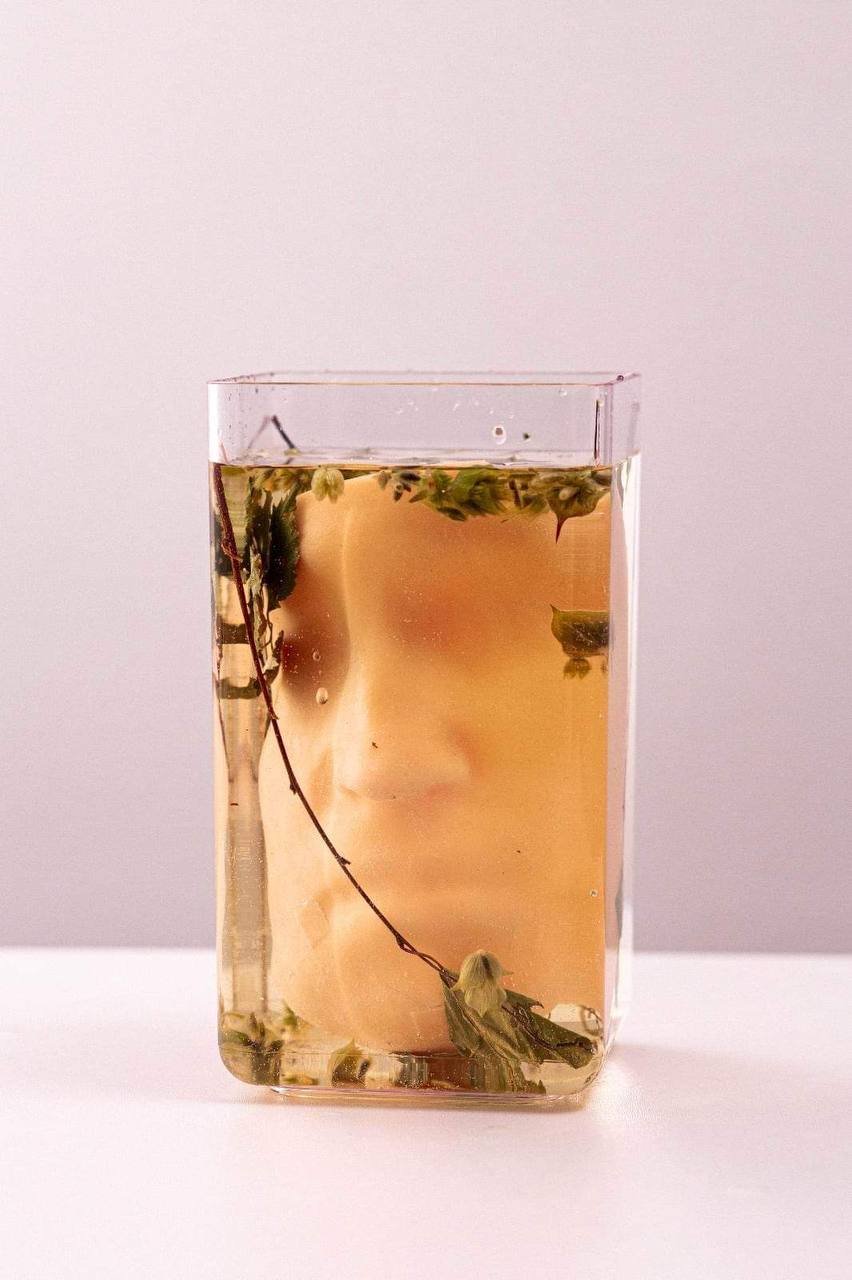
MG: We were talking about the concept of divorce as a “small death,” and that’s how I considered it and that’s why I was interested in the death mask genre, which has been quite popular since the eighteenth century. I really believe that every woman who goes through divorce goes through a small death and she rediscovers herself. So you are different when the divorce or your separation is complete; you are different and you are rediscovering yourself. It is like doing an investigation of yourself. So I decided to create my own mask, but using modern technologies, as you say.
I used a special technology to scan my face, to make a 3D image of my face and to do that I needed to do ninety-nine selfies. There are so many masks nowadays and so many ways to beautify yourself, to make yourself look better in real life. For me it was the opposite. It was interesting to learn about myself by doing those ninety-nine selfies, but then the scan of myself, of my face, that was created, wasn’t a real face, wasn’t a real mask. It was the image of who I am in AI, but it wasn’t really me. I decided to make it in silicone and put it in a jar where it floats in a herbal infusion, so there is a connection with the healing power of nature.
BB: And embalming as well. It’s fascinating to watch these 3D prints forming, because they are literally formed layer by layer, in strata. And you end up with something very uncanny, because it is both like you and not like you at the same time.
MG: So it was a process of self-study. For many centuries, artists studied themselves by doing self-portraits and for me, it was interesting to study myself through technology and the death mask genre.
BB: And for me too, you know, it’s a very powerful work and I’m delighted that you’ve gone on to show it in so many places and to sell parts of it because it is resonant on so many levels – at the level of contemporary myths, but at a deeper level too. So congratulations for producing such a wonderful piece.
MG: Thank you, Bernadette.
5 Minute Bedtime Stories is published by SKIRA and available for purchase at Amazon UK and Target USA.
Maria Gvardeitseva is a Belarus-born, London-based multidisciplinary visual artist exploring themes of identity, memory, loss, and feminism. Through video, installation, performance, and sculpture, she merges reality and mythology to create immersive, politically charged works that examine personal and collective histories. Gvardeitseva has participated in solo and group exhibitions and staged performances across the UK, Latvia, Lithuania, Poland, France, and Italy. Recent and forthcoming exhibition projects include the solo show Ex Contactu. Relics of Pain, Love, and Pleasure at SPACE – Art Gallery, Saint-Paul-de-Vence (2026) and earlier at Aorta Social Art Gallery, Pisa (2025); the touring Bitter Herbs exhibition presented across four museums: the Luckevic Belarusian Museum (Belarus), the Riga Ghetto and Latvian Holocaust Museum (Latvia), the Vilna Gaon Museum of Jewish History (Lithuania), and the Museum of Free Belarus (Poland) in 2025-2026; selection as a participating artist for the East Wing Biennial at the Courtauld Institute of Art, London (2025–2027); group exhibitions In The Space Between Words (Rethinking Eastern Europe Collective, Copeland Gallery, Peckham, London, 2025) and (Her)ban Rage (FRINGE Warszawa, Warsaw, 2025); the solo exhibition The Adoration of Mystic Goat. The Fall at the Museum of Free Belarus, Warsaw (2024); the ongoing presentation of Iconostasis. Altar of Migrant in exhibitions across London, Bologna, Florence, Venice, Pisa, Rome and Milan (2024–2025); and the solo exhibition DRYGVA: Breathe In Breathe Out at the Mark Rothko Art Center, Latvia (2022).
Bernadette Buckley is a writer and academic whose research explores the relationship between art and politics, art and conflict, cultural studies, and philosophy. Currently, she is Lecturer in International Politics at Goldsmiths College, London, where she also convenes the MA program in Art and Politics. Prior to joining Goldsmiths in 2007, she taught Contemporary Art Theory & Practice at the International Centre for Cultural and Heritage Studies, Newcastle University, Newcastle upon Tyne, where she established the Gallery and Art Museum Education Studies MA program. Buckley was also Head of Education and Research at the John Hansard Gallery, University of Southampton. In addition to writing for journals and art publications such as Brumaria, Postcolonial Studies, and Review of International Studies, her writings have appeared in numerous exhibition catalogues and anthologies, including Art and Conflict (2014), The Destruction of Cultural Heritage in Iraq (2008), and Art in the Age of Terrorism (2005). Buckley sits on the academic Advisory Board for Tate Papers and the Journal for Museum Education. She is on the steering group for Tate Learning Research Centre and the advisory committee for Artaker, which promotes encounters between peacebuilders, researchers, and cultural organizations on the one hand, and artists and creative practitioners on the other. Her research has been supported by grants from the Arts & Humanities Research Council, Arts Council England, En-quire, Heritage Lottery Fund, and the Wellcome Trust. Buckley lives and works in Bristol and London.