

Wojtek Grum
The viewer, expert culture, and ownership—these three concepts are challenged by the strategy of usership described by Stephen Wright in Toward a Lexicon of Usership1. The author proposes resisting the viewer’s passivity, elitism, and the exclusion that results from them, in favor of “making use of art.” This does not mean that every work of art should be utilitarian, but each should serve some purpose. The Polish edition of “Toward…” has been enriched with a short comic by Tymek Borowski, which emphasizes that a painting is useful even when, hanging on a wall, it simply “has a positive effect on the brain”2.
This resistance seems to be effectively countered by initiatives situated in the “dark matter” of the art world—beyond the visibility provided by the spotlight of the most high-profile media and institutions. From here emerge currents that subsequently—often even subconsciously—shape new artistic trends on the mainstream scene. This stems, among other things, from greater freedom and the absence of overarching obligations. As a result, independent projects can often afford to experiment in ways that, under institutional conditions, would be tempered—for example, by expert opinion or the market.
Łódź, known primarily for its Muzeum Sztuki, has a history spanning decades of such venues—grassroots galleries in private apartments, artist-run spaces, and nomadic exhibition projects. Currently, there are several of them, and one of them is Galeria WY, run by Joanna Szumacher and Piotr Strzemieczny. This year it is celebrating its tenth anniversary, which coincided with a move to a new location (one of many during its existence). Despite facing practical challenges, the gallery has consistently remained one of the key venues for Łódź’s art community.
From the very beginning, the gallery’s program has reflected the owners’ interests—in addition to the visual arts, music and performance were central, hence the numerous events and concerts. Furthermore, it has carried out projects that connect other independent initiatives and preserve the memory of historical ones that operated in Łódź during the People’s Republic of Poland. For years, the gallery has also been open to young artists—it organizes exhibitions by students from, among others, the Academy of Fine Arts in Łódź. The program is broad and interweaves well-known and respected artists with new, emerging practitioners.
Until this year, the gallery was located on Więckowskiego Street, next to Muzeum Sztuki. The space was bid farewell with the exhibition The Drill, the Pond, and the String by Dominika Sadowska and Karol Stolar, which ran from December 2025 to January 2026. The exhibition served as an example of grassroots independence, freely capitalizing on the absence of rules of communication. In this case, the significantly limited amount of information proved to be an asset that defined the event.

Experience
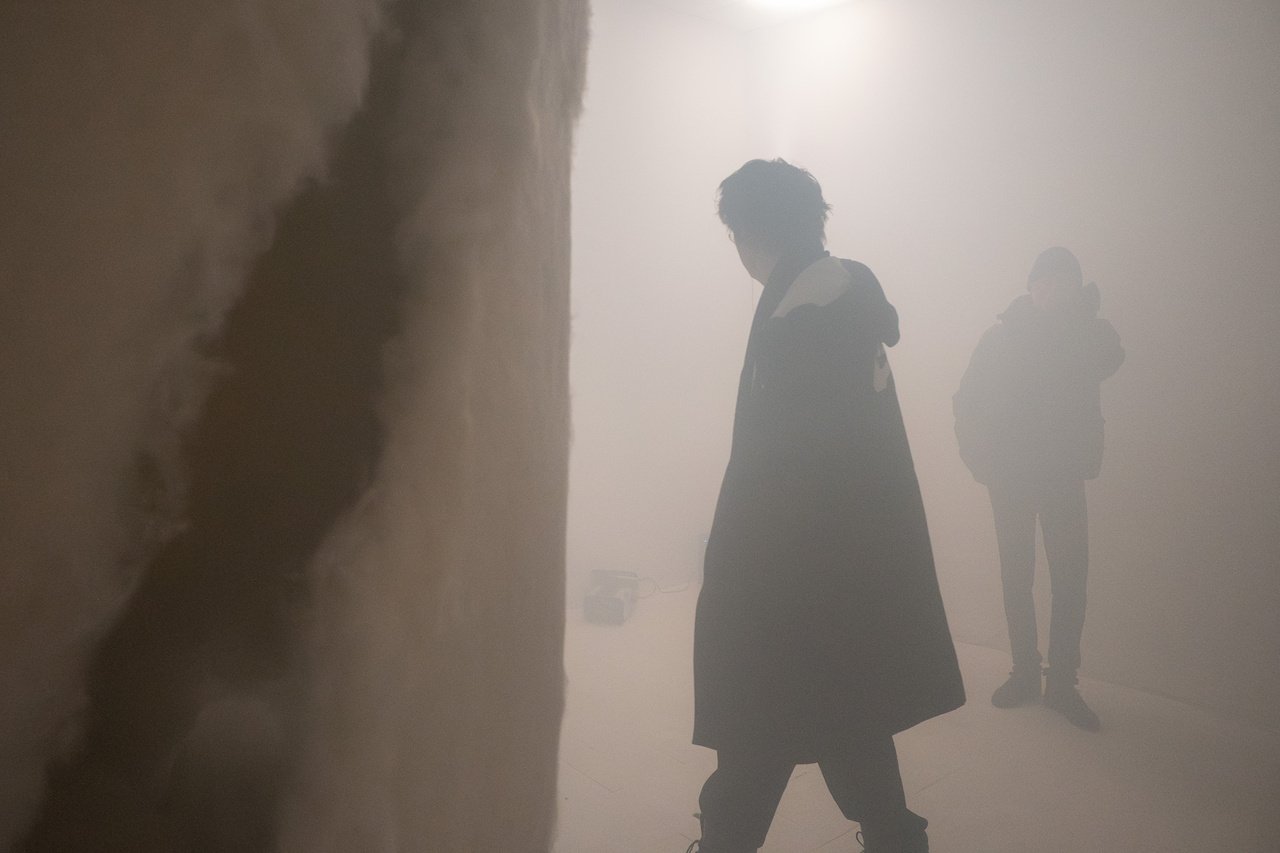
From the very beginning, the exhibition made it clear that it was more of a staged situation than a presentation of works of art. Entering the gallery involved a radical shift of setting. From an ordinary street, the surroundings transformed into a white expanse filled with fog, which made it almost impossible to see the opposite wall of the room. The exhibition spanned the three small rooms at Galeria WY, whose dimensions were visually distorted by the loss of the horizon. The first thing that caught the eye was extreme minimalism. The gallery was filled primarily with smoke, precisely choreographed lighting, and sound. Sadowska and Stolarek designed a multisensory experience that, despite limited resources, intensely engaged the viewer.
If someone hadn’t read the brief and enigmatic description of the event on the WY Gallery’s Facebook page before visiting, they couldn’t make up for it on site. The space was devoid of any messages—only the artistic installation had a voice. In any case, the text consisted of just a few sentences that generally announced an attempt to “simulate a specific sensory experience”3, without revealing any details about what that experience would entail. A visit to the venue was, de facto, the first encounter with a project that had been described only briefly for the purposes of basic promotion on social media.
It is telling that the neighboring Muzeum Sztuki was hosting the exhibition “How the Museum Works” at the time. Sadowska and Stolarek’s exhibition served as an unexpected counterpoint to it—not in content, but in its curatorial and artistic form: alongside an exhibition rich in text that explored the functioning of the institution stood a project fully focused on sensory experience and eschewing any narrative.

19.12.25 – 18.01.26. Photo: Dominika Sadowska, courtesy of the artists.

19.12.25 – 18.01.26. Photo: Dominika Sadowska, courtesy of the artists.
Structure
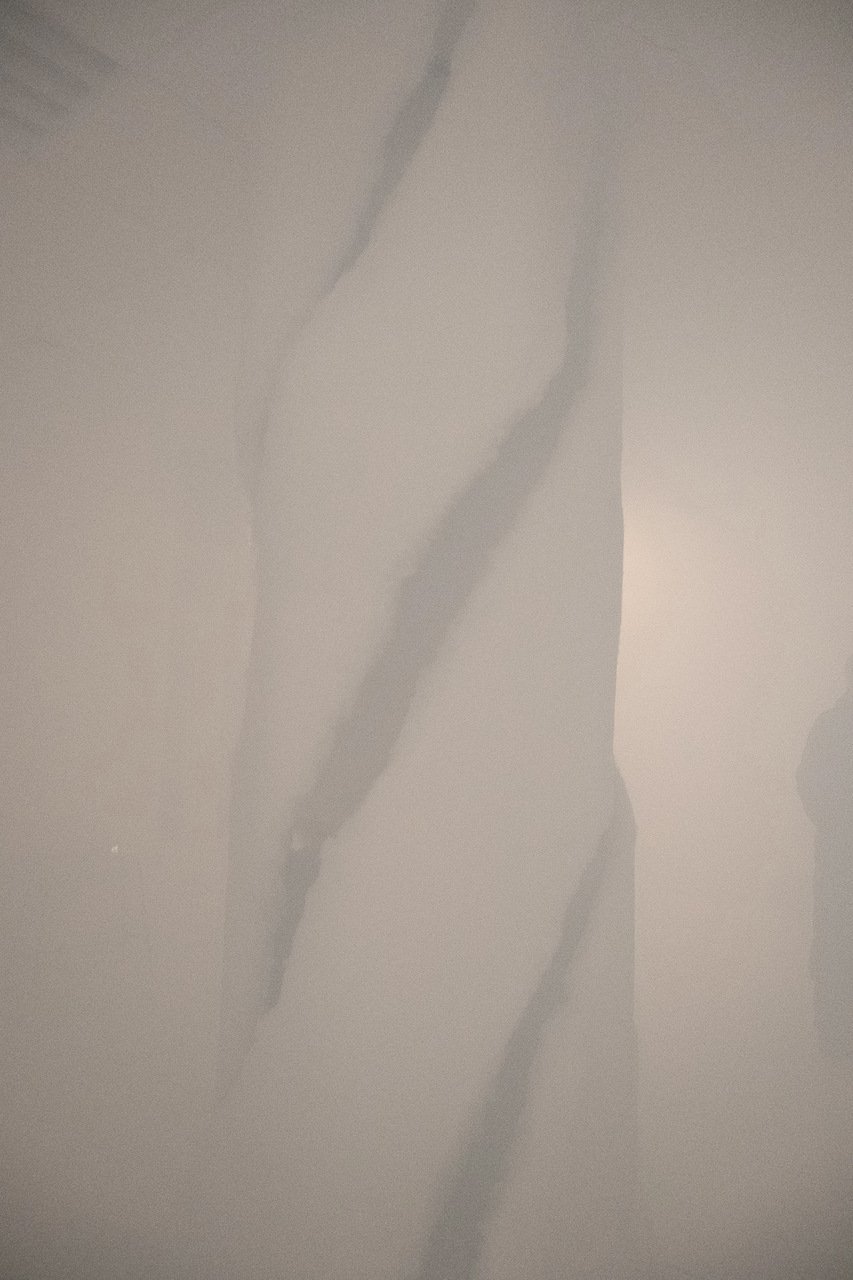
The exhibition’s title serves a literal, descriptive function—the tangible focal points of the exhibition were three objects: a drill, a pond, and a string. Each was given its own room. In the first one a large, rotating structure simulating the drilling through the floor and ceiling took center stage. The process was accompanied by intermittent low-frequency sounds that caused the body to tremble. The room was filled with diffused light reflected from the ceiling and fog that distorted the perception of real space. It hung in the air like drilling dust. The drill itself was constructed of spirally arranged strips of white synthetic down, which resembled accumulating drill cuttings. Its slow rotation lent the situation an air of solemn anticipation.
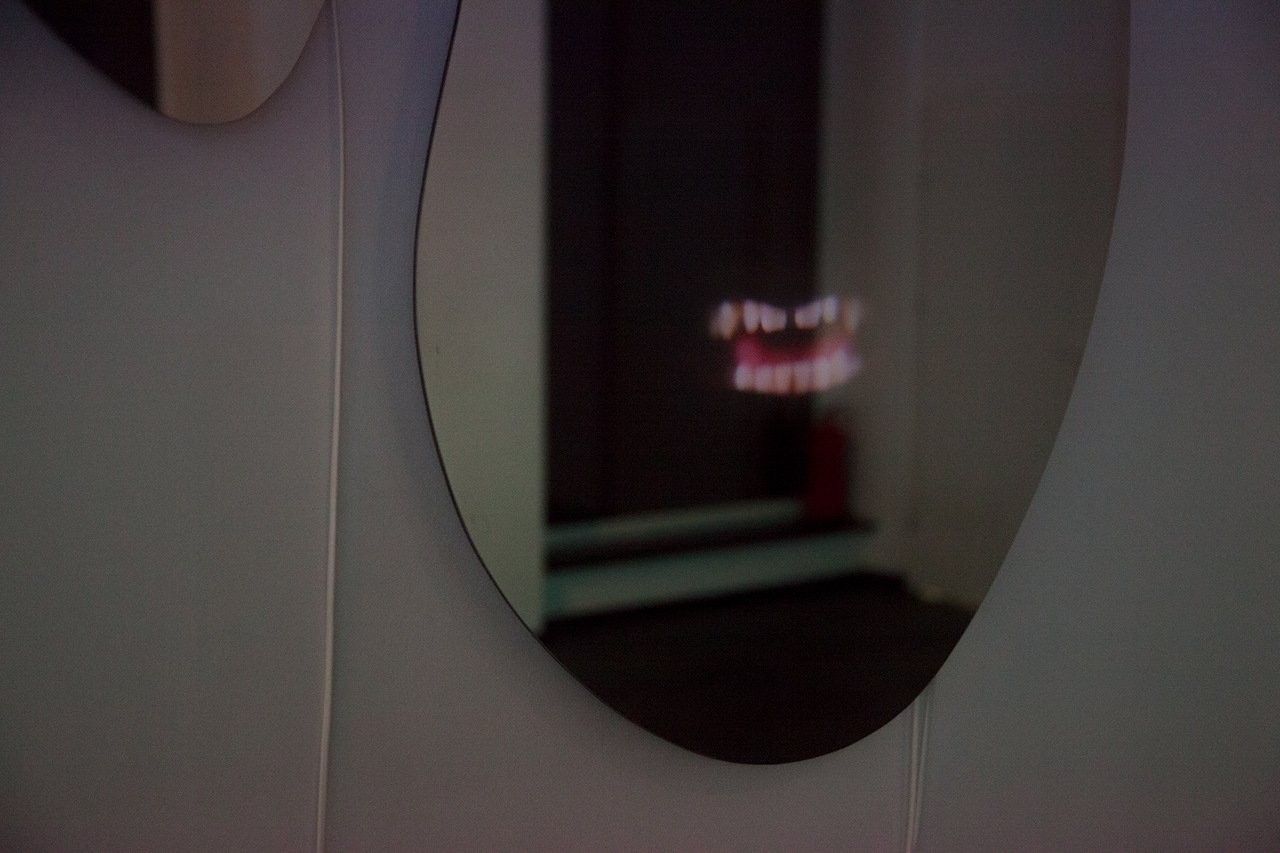
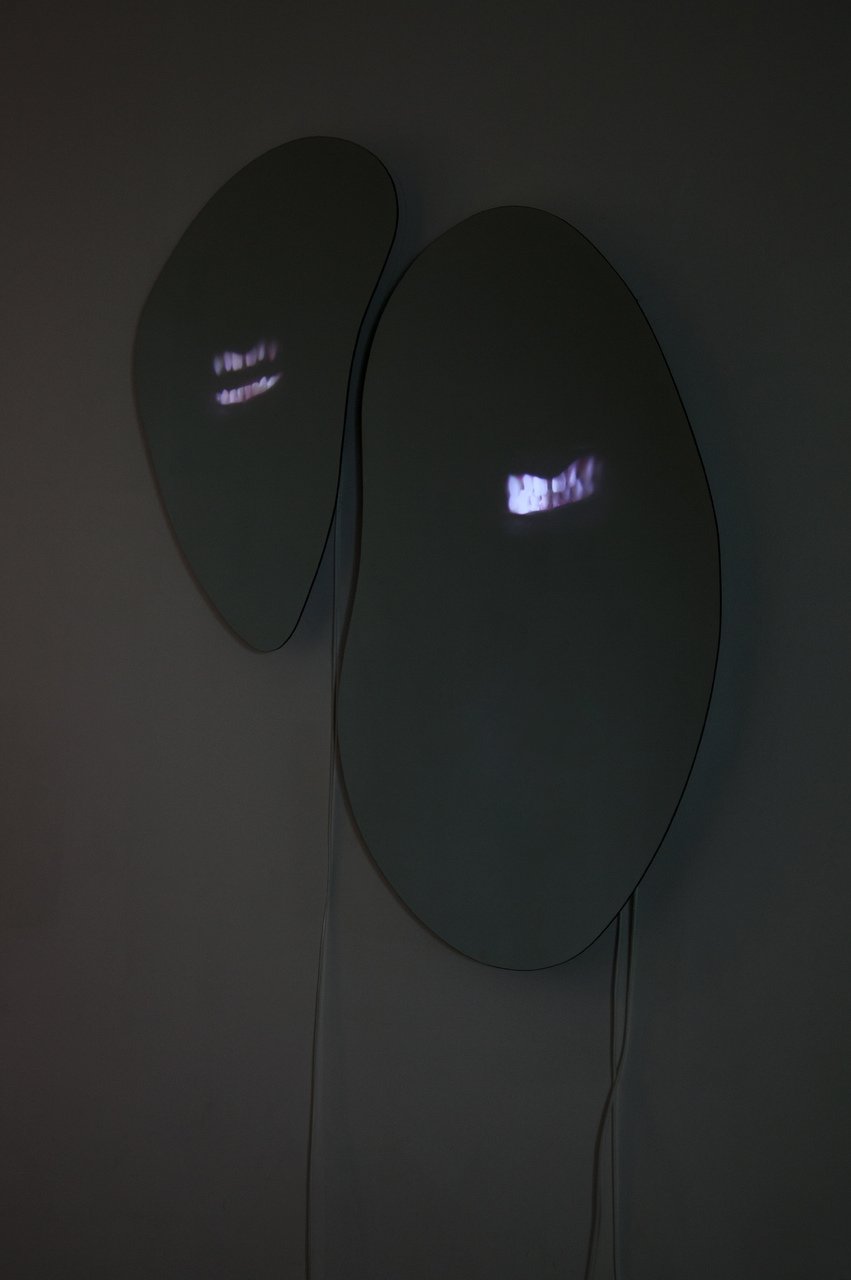
From the bright room, the viewer passed through a curtain into a smaller, darkened chamber, where a single spotlight illuminated a small, milky sheet of water—a pond. The pond was surrounded by a layer of black Styrofoam, as if it had been insulated to keep the water temperature constant. White fluff (the same as that found near the drill) was visible along the edges of the pond; juxtaposed with the insulation, it evoked the thick layers of ice in a freezer drawer. All around were three directional microphones on tripods, capturing the repetitive, subtle gurgling of the liquid, which was amplified by the speakers.
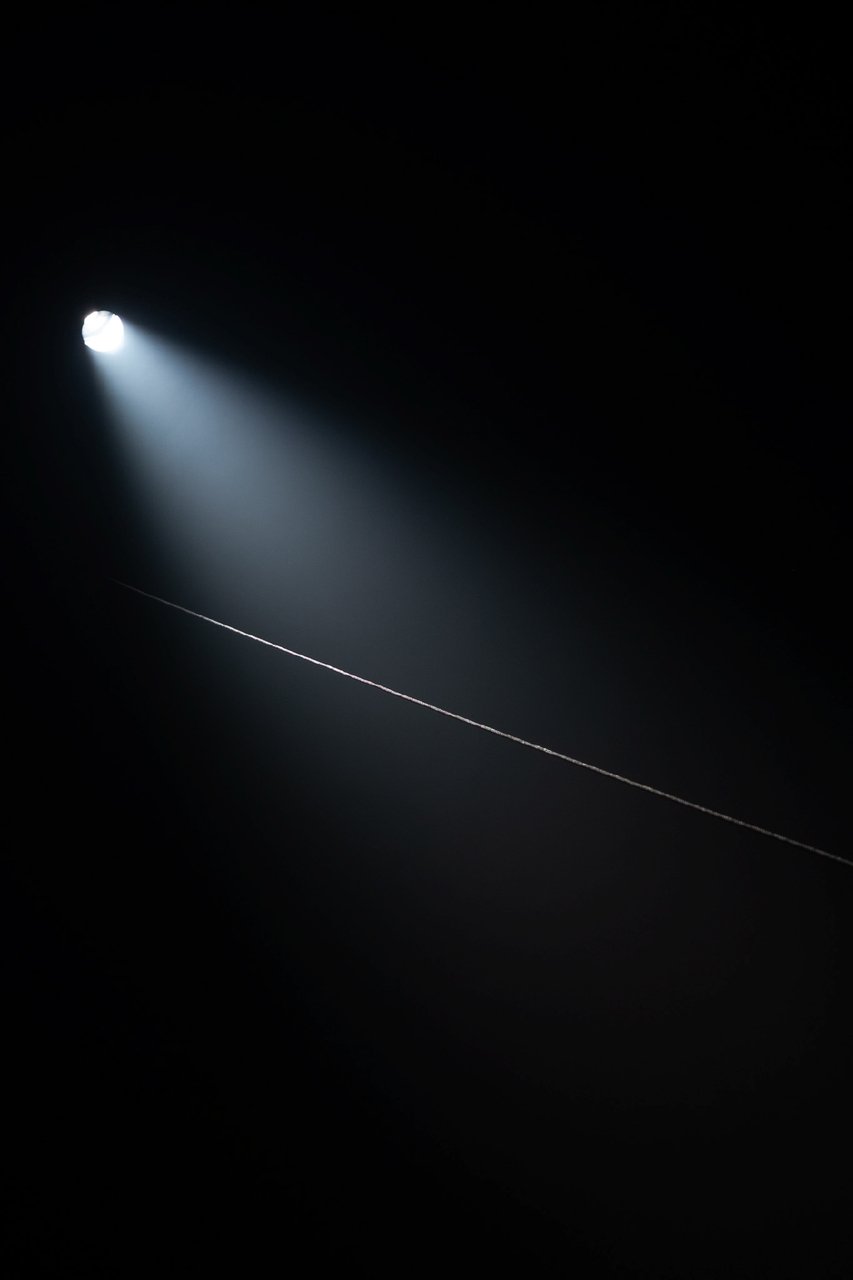
The last and smallest space was the site of a taut string, brought out of the darkness by the sharp light of a small spotlight that emphasized its unyielding line. It was stretched diagonally between two points on the walls. The object was also accompanied by sound—here, the composition consisted of higher frequencies that corresponded to the visual intersection of the space by the gleaming metal cable.
That is all it takes to describe what was physically on display. The viewer passed through black curtains from a bright and (seemingly) spacious room into darker and smaller ones, into which fog seeped through cracks and sound penetrated through the vibrating walls. In this way, they explored the space linearly, only to then be able to wander freely through it, discovering points of connection and searching for meaning that slowly dissolved into thin air.
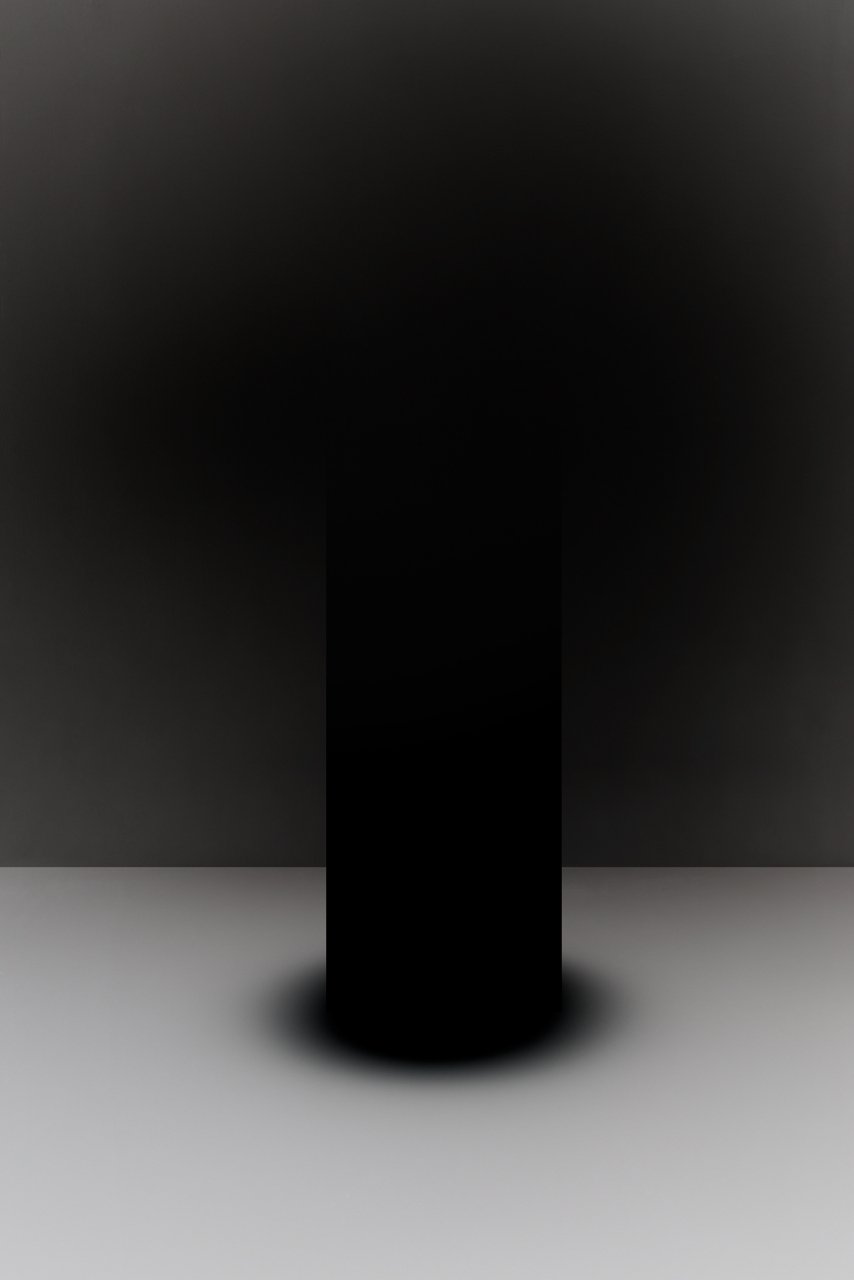
2014–2016, pigment print, 165 × 110 cm. Courtesy of the artist.
Restraint
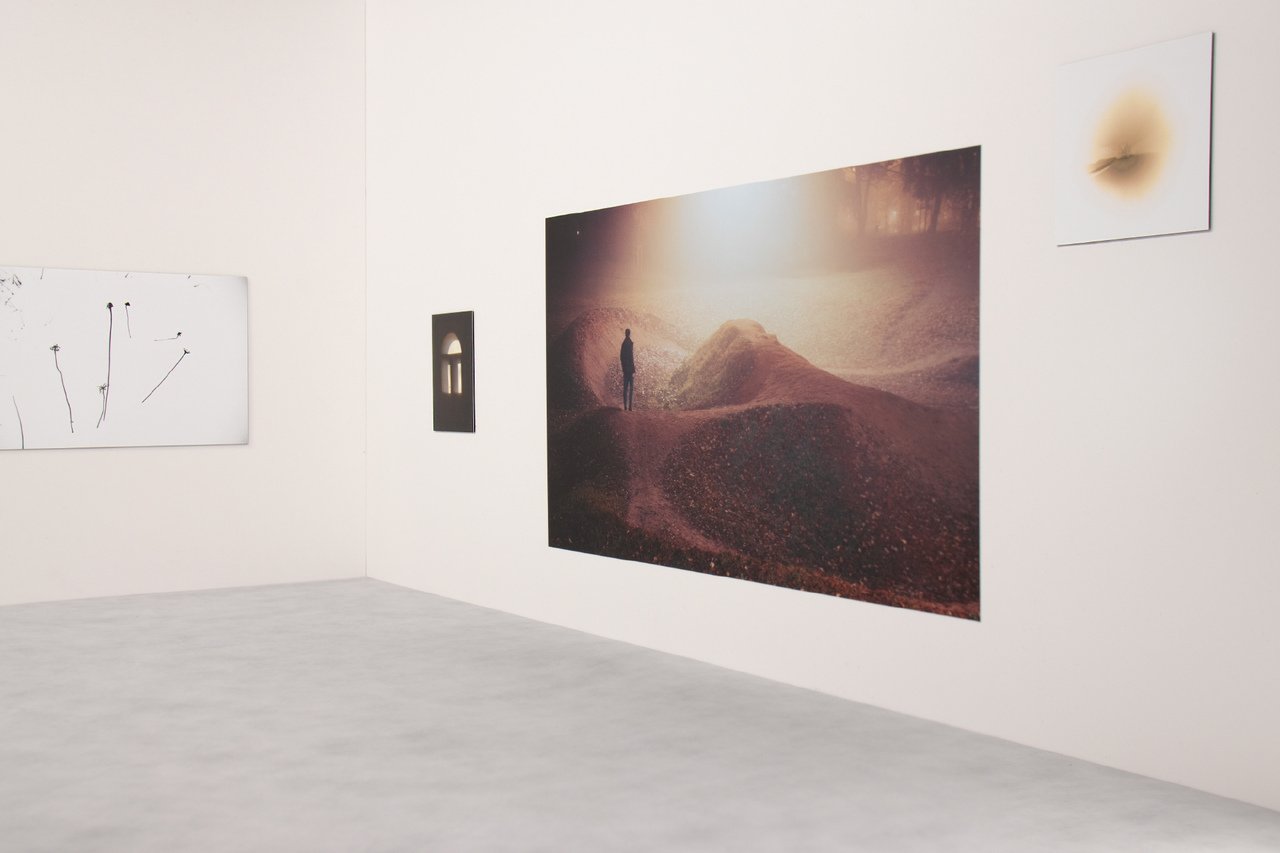
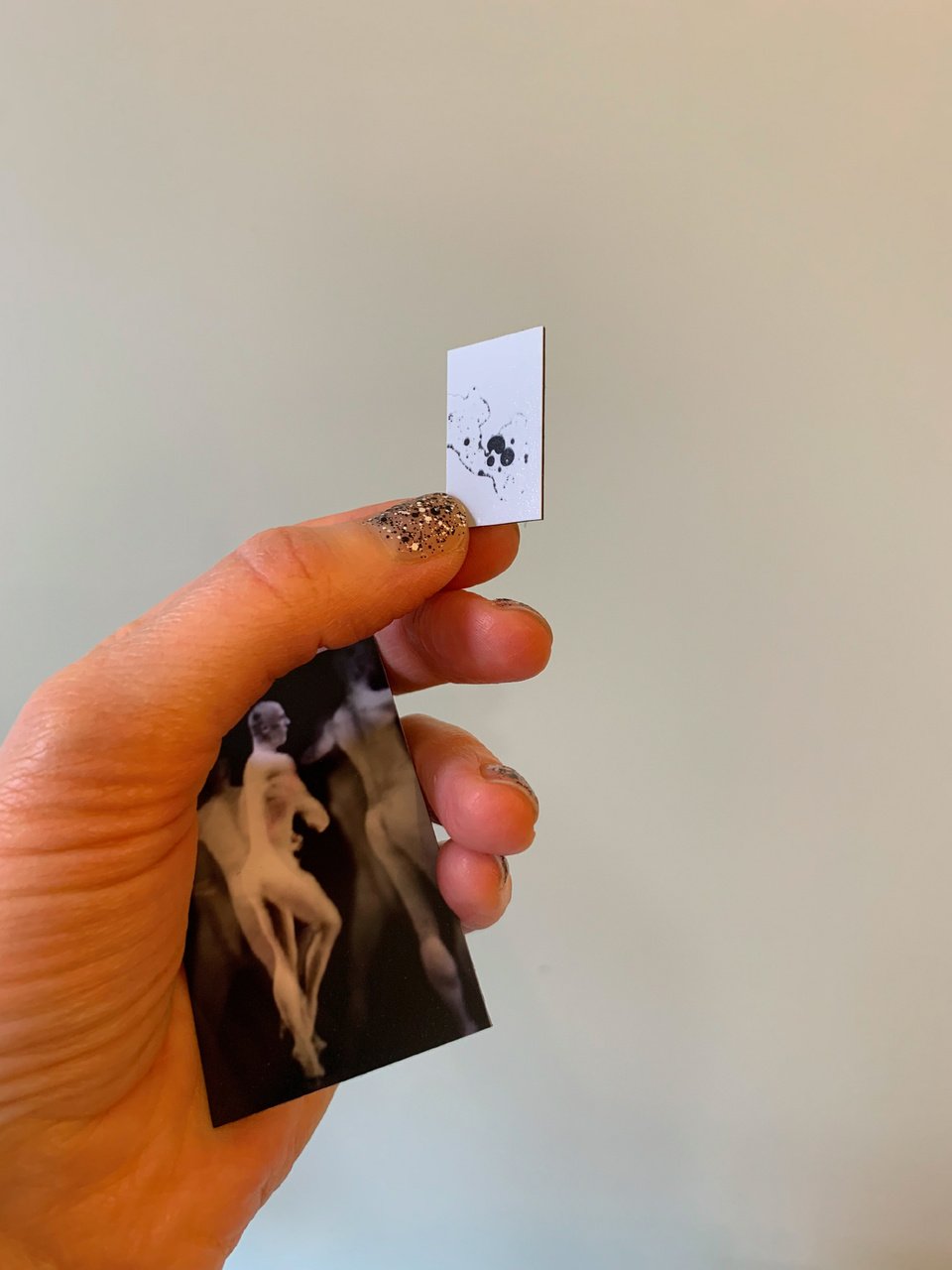
The minimalist use of diverse media is a defining feature of the duo’s practice. Sadowska and Stolarek have been working together for years, co-creating projects in which they combine related and complementary strategies. Sadowska’s primary focus is on the visual, while Stolarek’s is on sound.
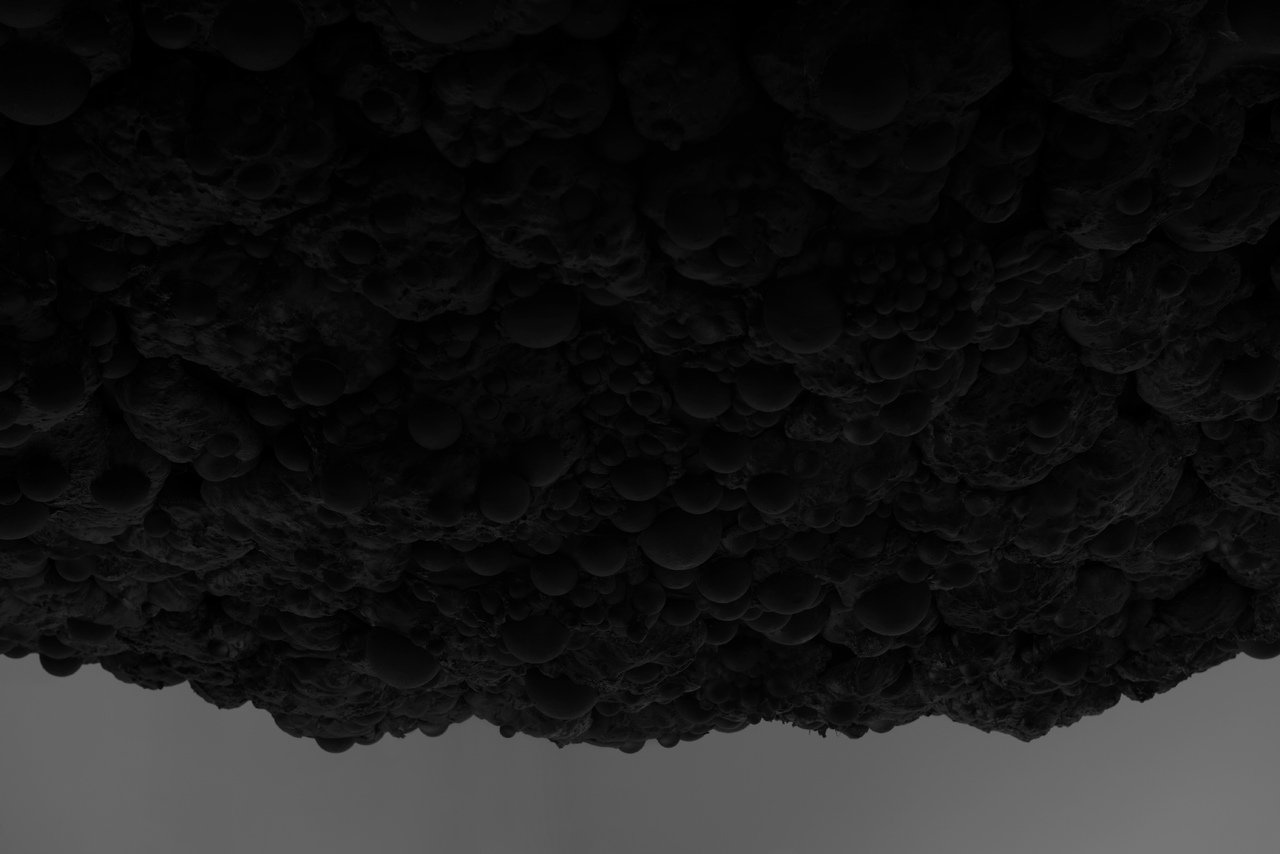
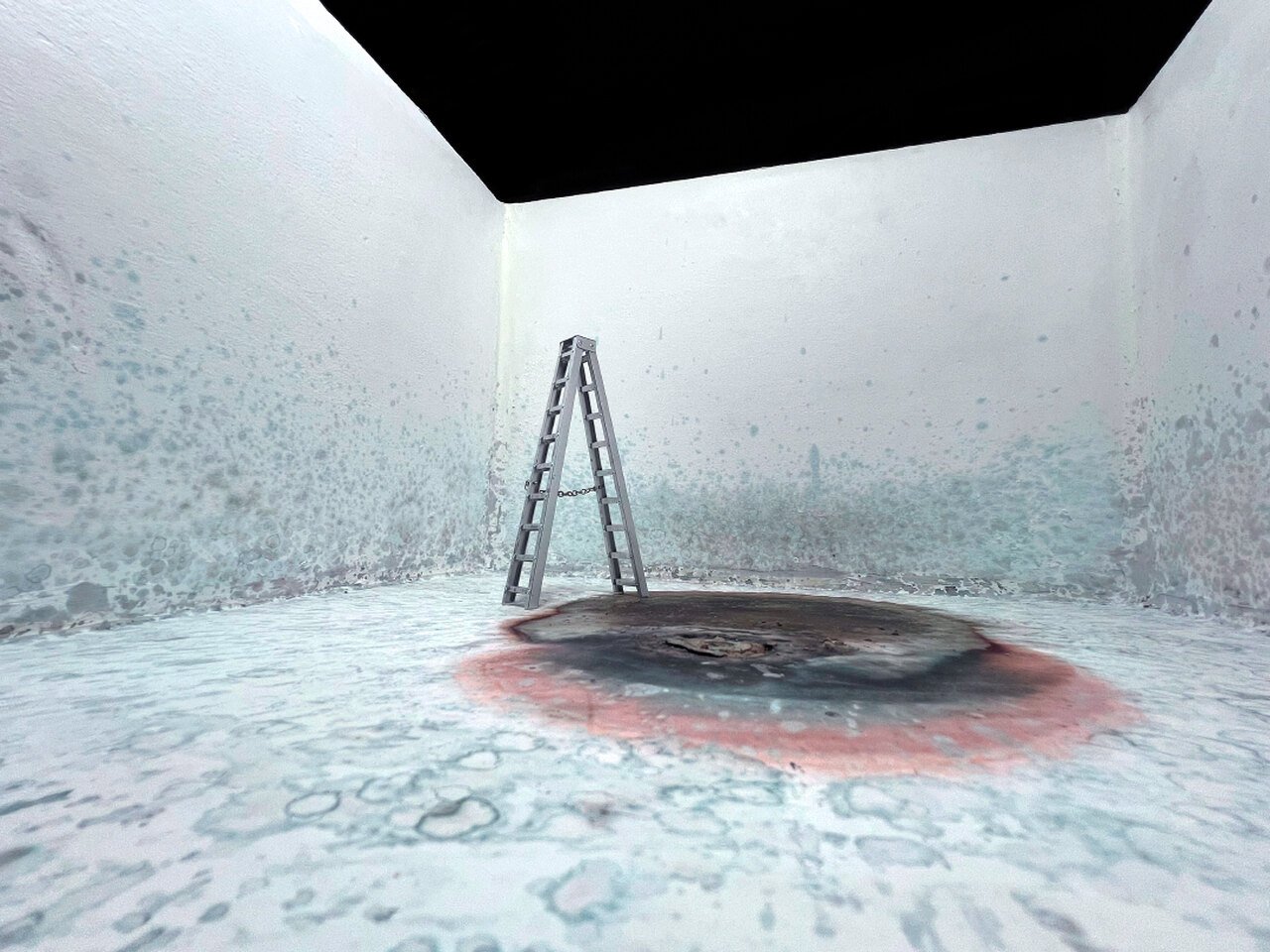
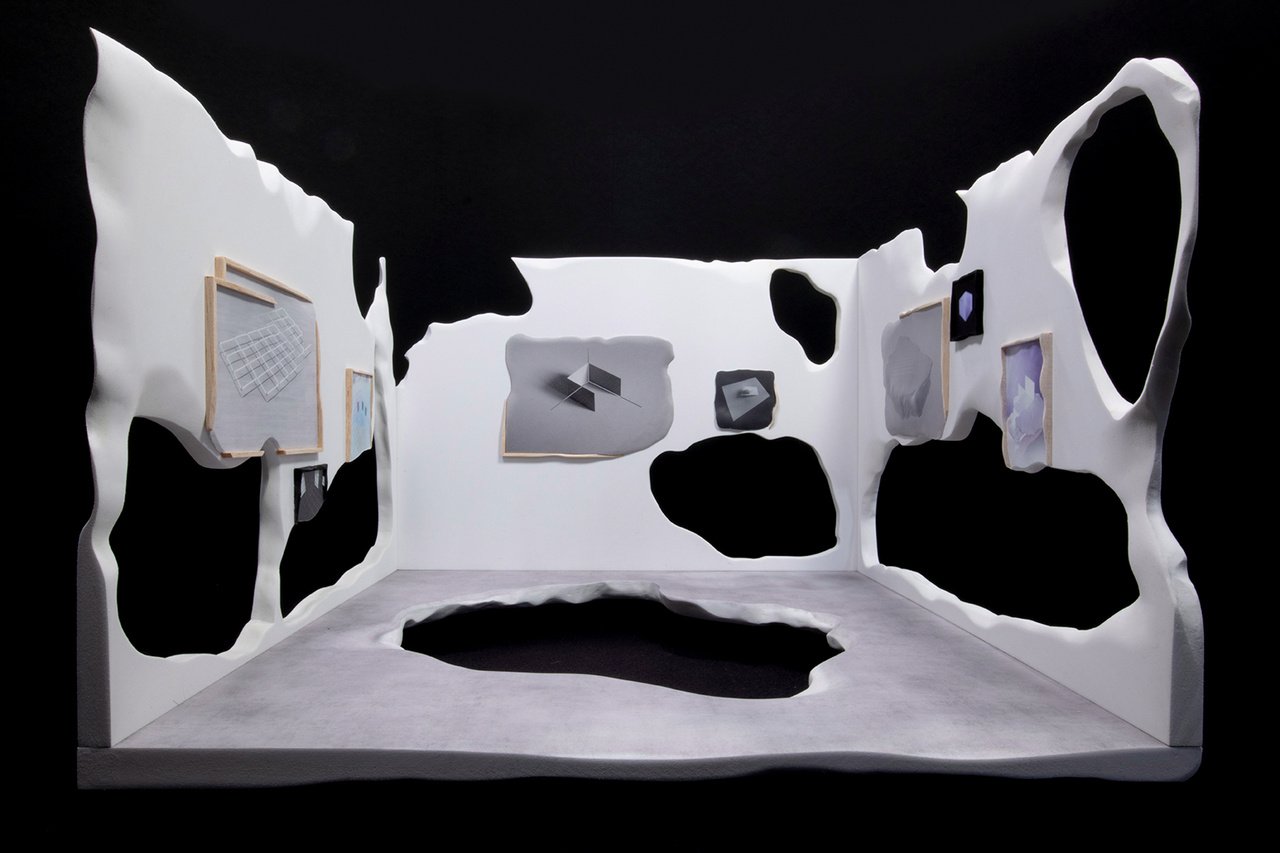
Sadowska’s work stems from a background in graphic design and photography, but currently most often takes the form of sculptures, objects, or installations. Central to her practice is a focus on space, material, and light—their characteristics and transience. An example is Black (2014–2016), a photobook dedicated to the eponymous color, which manifests itself in subtle, meticulously composed frames abstracted from reality. In addition to materiality, she is also interested in perception, which she analyzes, among other ways, through her Pure Research Studio series. This is a series of experimental exhibitions grounded in artistic research, which function as ready-made displays in the form of scale models and documentation simulating a 1:1 scale through 3D scans or photographs.
On the other hand, Stolarek—a musician and graphic designer—focuses his practice on the auditory dimension and its intersection with image and object. He is interested in audiovisual environments and performative actions, which are most clearly evident in his music projects, including his solo act Człowiek and the band mona polaski. Musically, his work is at times a blend of indie pop and post-punk, while in the realm of sound art, he emphasizes the careful layering of sounds, sensory experience, and the influence of the audio sphere on the perception of visual content. In lyrics that do not shy away from ordinary, everyday life and in the subtle relationships between sounds and objects, poetics comes to the forefront. His works focus on frequency, tone, and timbre, as well as the vibrations they generate.
In their collaboration, Sadowska and Stolarek navigate the boundary between understanding and disorientation, presence and emptiness. In 2025, they jointly produced the exhibition Witness at the Dira Gallery in Ostrava, in which they constructed an environment serving as a point of contact between familiar physical reality and an alien, mystical-digital one. The eponymous Witness is a fictional entity in the form of audio equipment that attempted a sensory experience of the world. Viewers were invited into a space that was transforming under its influence.
The project was based on the premise that the device’s perception redefines its surroundings, emphasizing the role of feedback in the perception of reality and of art itself. Individual objects served not so much to convey content as to intensify immersion and build tension. The one departure from this was a projection depicting imitations of the subject’s thoughts—poetic texts that constructed an ambiguous narrative about the Witness’ observations and feelings. The exhibition at the WY Gallery, where minimalism was taken a step further, is a natural continuation and expansion of their interest in working with space and the senses.

courtesy of the artist.

courtesy of the artist.
courtesy of the artist.
courtesy of the artist.

courtesy of the artist.
Puzzle
The textual explanation of the concept, present in the Witness exhibition through its accompanying brochure, was omitted from The Drill, the Pond, and the String in order to direct the viewer’s full attention toward experiencing the environment. In this sense, the exhibition departed from the standard situation in which viewing a work is accompanied by reading a description that allows for a better understanding of it. Moreover, similarly to Dira Gallery, here too the concept of a specific “work” was expanded from individual objects to the entire space, situation, and atmosphere.
During the opening, the artists avoided answering viewers’ questions about the logic of the arrangement, any hidden message, or meaning. They deliberately left the viewers in a state of uncertainty. As a result, the exhibition engaged everyone in a subversive way—there was no narrative and no content, so there was nothing to decipher. There was no exclusion through an ill-suited form of communication: instead of a message, the exhibition sent out multisensory impulses. One simply had to let go of one’s habits and come to terms with the dissonance, which, however, imposed certain demands.
Instead of a direct message, Sadowska and Stolarek proposed an openness to any interpretation. The exhibition was placed in the hands of the viewer. As a result, individual objects, as well as the entire space, could be perceived in many ways. For example, the exhibition could be an autotelic system of symbolic and audiovisual tensions, as Natalia Królikowska wrote in Miej Miejsce4. However, nothing prevented visitors from approaching it as subjectively as possible and, despite the lack of a narrative, creating their own, personally meaningful one. For instance, one could view it as an opportunity for a slow-motion observation of the micro scale on a macro level. It was a bit as if Sadowska was temporarily following the opposite of Pure Research Studio logic, and this time it was the viewers—not the exhibition—who were scaled down. Shrunk to a tiny size, they found themselves in a hole in the wall, a freezer, and a resonance box.
Cognitive disorientation went hand in hand with sensory disorientation, caused by distortions in the perception of real space and intermittent, unsettling sounds. The effect was amplified by the paradoxes employed. After all, an undisturbed string produced sound, and the icy surface bubbled slightly, as if something were boiling deep beneath it. Each element gave the impression of being unstable, and its condition seemed precarious—a feeling heightened by the impossibility of deciphering meaning. The whole piece seemed like the moment before an undefined “something”—such as the snapping of a taut string, whose stability, much like the audience’s senses, the artists put to the test.

Escapism
Sadowska and Stolarek created an atmosphere of mystery precisely to prevent it from being solved and to leave the viewer in a state of unfulfilled curiosity. In this way, the potential for “reward” was redirected from the realm of acquiring knowledge and information to the experience of satisfaction derived from wandering through the unknown.
This strategy is particularly interesting from the perspective of escapology, as described by Wright. The author adapted this term—originally used to describe Houdini’s magic tricks—to denote a field dedicated to studying strategies for escaping forms of social enslavement and affirming that “escape is happening”5. It seems that this was also at play in the exhibition.
The Drill, the Pond, and the String provided an opportunity to temporarily disappear from the radar of everyday life—both for the audience (or, following Wright, the “users”) of art and for the artistic duo itself. From the artists’ perspective, this escape was achieved through free action, unbound by the constraints that naturally arise when creating an exhibition. If one were to compare it to a painting, one could say that the duo devoted themselves to painting without giving a thought to justifying why something ended up on the canvas. After the fact, they didn’t even bother to explain what it all might mean to us.
For the viewer, entering the exhibition was synonymous with detaching oneself from the stimuli of the everyday environment, which obviously allowed for the fulfillment of an escapist need. Beyond offering a pleasant and uncluttered temporary isolation from the outside world, the exhibition encouraged visitors to sharpen their senses and become attuned to subtle nuances. Such an awakening seems beneficial for everyone, especially in an era of content overproduction. It also stands in contrast to “death” that Brian O’Doherty wrote about in the 1970s.
During the heyday of New York’s independent gallery scene, O’Doherty compared entering the timeless and almost sacred “white cube” to dying—as a result of which, at the exhibition, there was only the Eye and the Viewer6 instead of a human being. In this way, he described a situation in which works are detached from everyday life, and the viewer’s body is not welcome. At the WY Gallery, the situation was quite different—the viewer’s physical presence was desired. The exhibition did not separate the gaze (and the mind) from the body; on the contrary, it bound them even more tightly into a synergistic arrangement rooted in the here and now.
The timelessness of space—even though O’Doherty associated it with the oppression of the “white cube”—in the case of The Drill, the Pond, and the String represented resistance to the oppression of the surroundings. The space did not sanctify the works of art; rather, it was in itself the site where an artistic situation unfolded, resetting the overloaded senses to their default settings. The objects served as triggers and companions for an experience that jolted one out of routine (im)balance.


Imagination
Metaphorical and literal wandering in the fog, which lies at the heart of the exhibition, is a signature element of the Silent Hill game series, in which the player takes on the role of the protagonist in a story about nightmares haunting the eponymous, densely fogged-in town. This seemingly trivial association makes more sense when one considers the origins of the game’s style.
The fog, which has become Silent Hill’s hallmark, was initially merely a technical solution to a problem. The developers of the first installment from 1999 used it to circumvent hardware limitations in rendering the protagonist’s surroundings. The field of vision was significantly limited, which took the strain off the console’s components. This clever move, intended to improve gameplay, became a key element in building the atmosphere that has become inextricably linked to the series.
New possibilities arising from challenges are a constant feature of how grassroots galleries operate. Restrictions in one area spur the search for unconventional solutions or allow for greater freedom of movement in another. On the one hand, high electricity bills at the former Galeria WY venue made it impossible to run the smoke machine every day so that the exhibition could remain open daily and invite visitors inside with fog spilling out onto the street. On the other hand, the freedom to plan events and the lack of institutional communication obligations opened the door for a project that challenges conventions.
The limitations and discomfort imposed on the audience—mysterious objects and sounds, sensory distraction, and a lack of communication—are what made for a fresh experience. These obstacles prompted visitors to seek out an alternative way to engage with the exhibition. It can be described by slightly modifying a quote from a 1999 review of Silent Hill: “The show prefers to appeal to user’s imagination by limiting their vision to a small range of light surrounded by impenetrable darkness and fog or by jarring any grasp of reality that the user might have on what exactly is going on in the exhibition”7.

This text was written as part of the mentoring program for emerging art critics developed jointly by the Hungarian, Polish, and Slovakian sections of AICA. The program, now in its second year, seeks to support art critics at the beginning of their professional paths, while strengthening the networks of solidarity and exchange that connect the contemporary art scenes of Central and Eastern Europe. Committed to creating sustainable conditions for art criticism at a time when independent platforms for critical writing are under increasing pressure across the region, this program maintains a collaborative approach to mentorship. For this edition, the editors of MOST Magazine mentored the participants from Poland and are responsible for publishing the resulting texts from all three sections.
Hungary
Authors: Sára Vera Bodor, Kata Martincsák, Dóra Vázsonyi
Mentors: Jan Elantkowski, Réka Majsai, Hedvig Turai
Translator: Kata Balázs
Coordination: Kata Balázs
Co-coordination: Tamás Don
Poland
Authors: Ida Dziublewska, Wojciech Grum, Łucja Staszkiewicz
Mentors: Ewa Borysiewicz Vera Zalutskaya, Kathryn Zazenski
Translator: Ewa Borysiewicz
Coordination: Arkadiusz Półtorak
Slovakia
Authors: Ema Brestovanská, Sofia Suzziová, Gregor Zimmermann
Mentors: Daniel Grúň, Adrián Kobetič, Lucia Miklošková
Translator: Kamila Talarovič
Coordination: Peter Megyeši
Artists: Dominika Sadowska, Karol Stolarek
Exhibition Title: The Drill, the Pond, and the String
Venue: Galeria WY
Place (Country/Location): Łódź, Poland
Dates: 19.12.2024 – 18.01.2026
Photos: Images courtesy of the Artists.
- Stephen Wright, “Toward a Lexicon of Usership,” p. 66. ↩︎
- Tymek Borowski, “The Usefulness of Art,” p. 5. ↩︎
- Exhibition description, https://www.facebook.com/events/1205179734872870/1205179738206203/. ↩︎
- Natalia Królikowska, “Przyjemność i drżenie,” “Miej Miejsce,” Dec. 31, 2025, source: https://miejmiejsce.com/sztuka/przyjemnosc-i-drzenie. ↩︎
- Stephen Wright, “Toward a Lexicon of Usership,” p. 23. ↩︎
- Brian O’Doherty, “Inside the White Cube: The Ideology of Gallery Space,” 1976, p. 15. ↩︎
- Francesca Reyes, “Silent Hill. Konami’s answer to Capcom’s Resident Evil takes the horror genre into uncharted territory,” 1999, source: https://www.ign.com/articles/1999/02/25/silent-hill-4. ↩︎