
Vera Zalutskaya
In the first volume of his autobiography, The Tongue Set Free,[1] Elias Canetti describes the freeing experience of his childhood, when while being alone in a room, he would start to talk to human figures whose shapes he had discovered in the patterns of the wallpaper. It was his way of coping with the sudden death of his father, as well as with profound grief of his mother. Obviously, there is nothing extraordinary in the playful ability of children’s minds to recognise shapes of objects familiar to them in the clouds, shadows, frozen windows, or different textures. What is specific to Canetti’s experience is that adults had quickly forbidden him this activity. The autonomy of the child’s imagination appeared troubling to those who could neither enter nor control it.
The question of freedom of imagination and its limits was one of the first issues coming to my mind while visiting the exhibition of Tbilisi-born, Berlin-based Tolia Astakhishvili, Figure of the Child, at mumok in Vienna. One of childhood’s characteristics is an unstable relationship with the world, when things have not yet settled into the identities and functions socially assigned to them. But to perceive freely is not the same as to be free. The child invents meanings while inhabiting architectures, rules, and systems of care constructed by others. Astakhishvili makes this tension noticeable not by representing a child’s perspective from a distance, but by unsettling the visitors’ confidence in what they are looking at.
450 x 350 x 180 cm, Courtesy the artist, LC Queisser and Emalin. Photo: Tolia Astakhishvili Studio
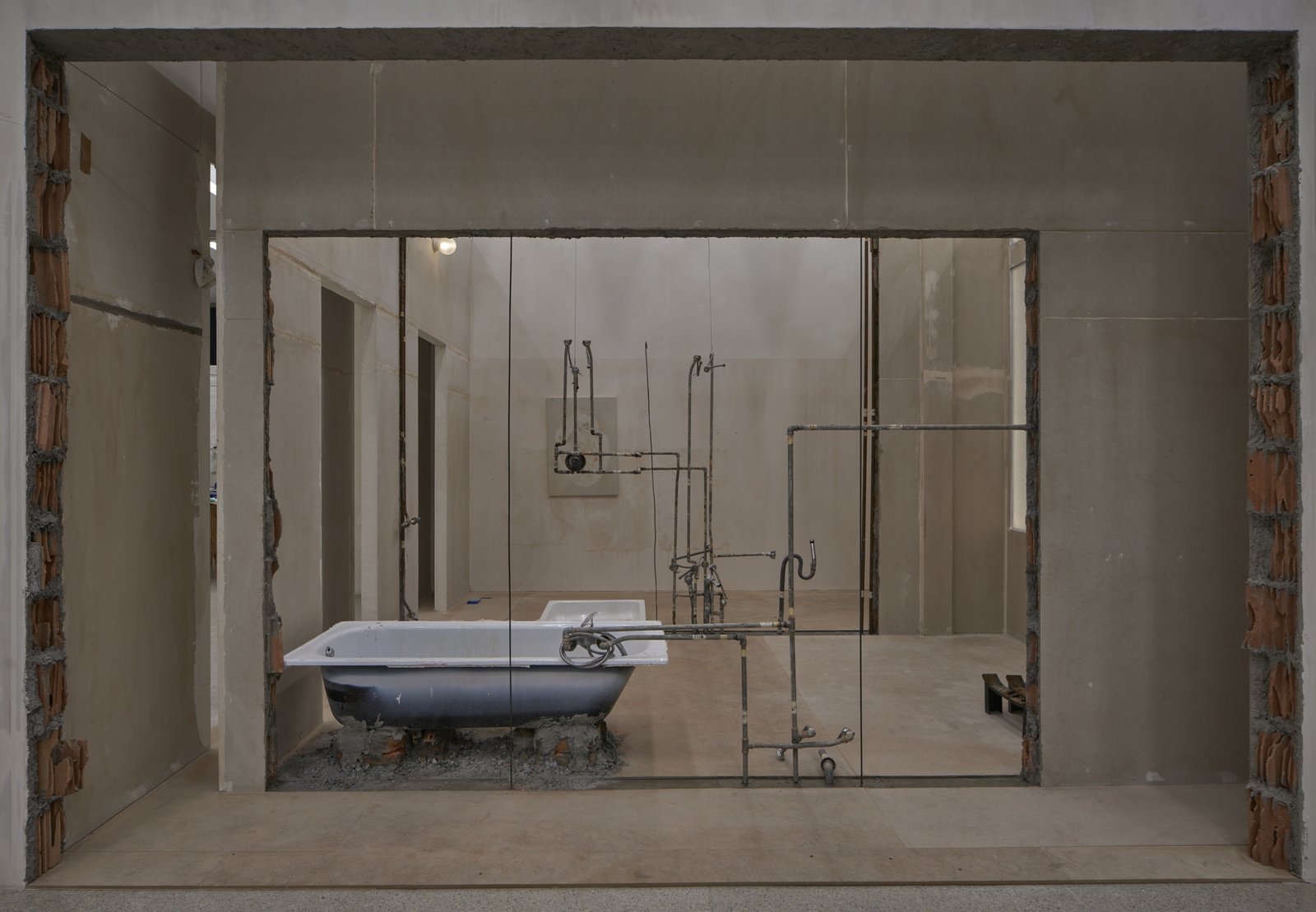
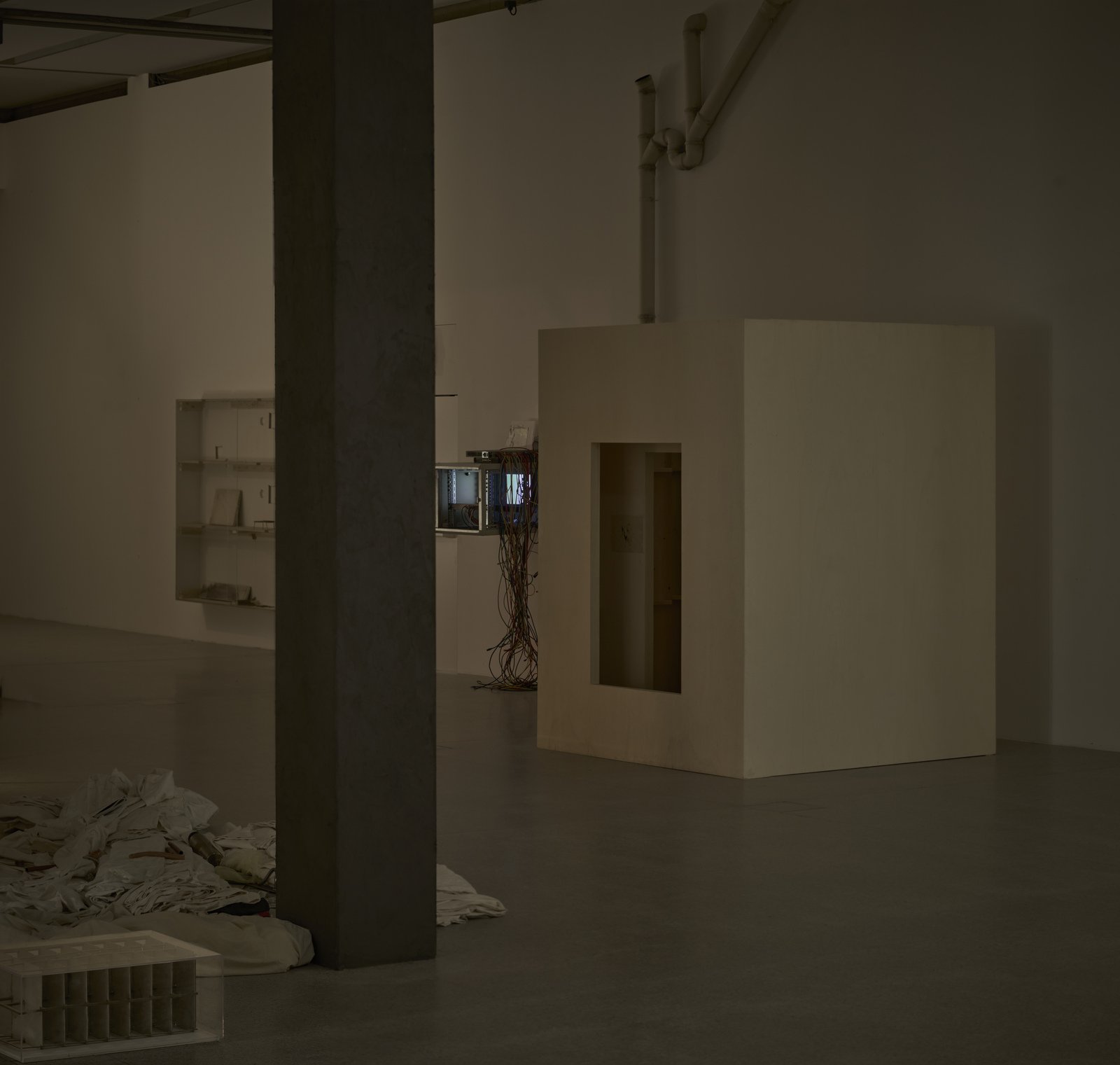
Across two levels of mumok, the exhibition brings together drawings, paintings, objects, sound, found materials, architectural constructions, and works by numerous other artists. Astakhishvili builds an environment that is both unmistakably deliberate and resistant to a comprehensive view. Yet calling it a total installation risks suggesting that beneath its many layers lies a coherent whole waiting to be deciphered. Instead, both my experience of the exhibition and my subsequent reflections on it resembled wandering through a garden of forking paths, where each discovery opened onto further possibilities rather than bringing me closer to a definitive interpretation.
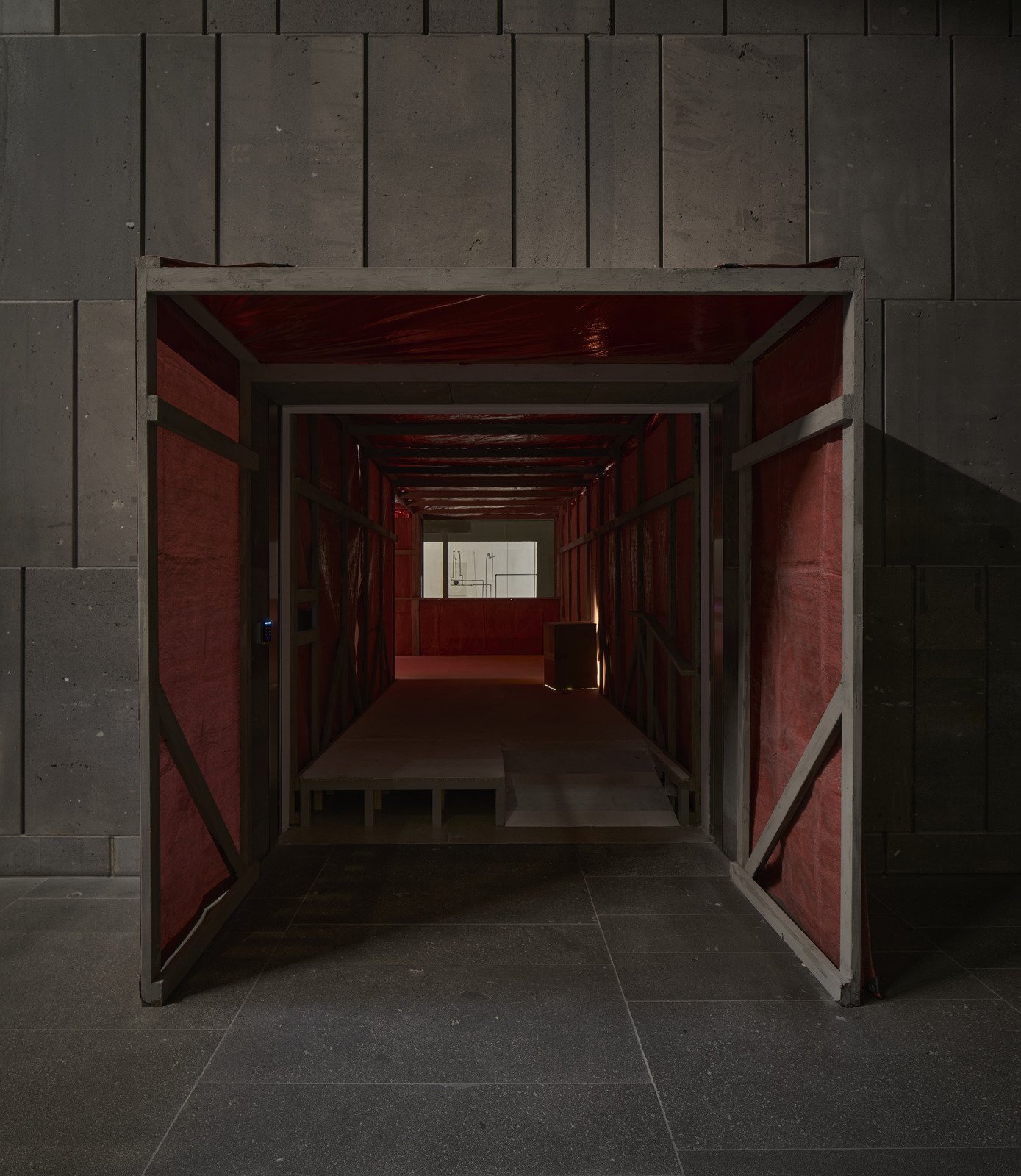
The most conspicuous disruptions occur at an architectural scale. Open doors expose cables and technical elements of the museum that are usually kept out of sight. The steel ventilation ducts of common ground, developed with Dylan Peirce, carry an eight-channel sound installation as well as playful, handwritten inscriptions in layered dust. The column-like constructions, There are always more things that are true somehow at once I–IV, borrow the visual language of architectural support without performing this task, which becomes understandable only after precise examination of these objects from multiple sides. Elsewhere, passages built from construction materials, concrete, wood, foil, woven polypyrene, metal, and colored light suggest interiors that might be unfinished or imagined. Moving through these spaces, one continually recalibrates the distinction between a real building and its double: a wall can be a wall, an image of a wall, an artwork, or the support for another artwork.
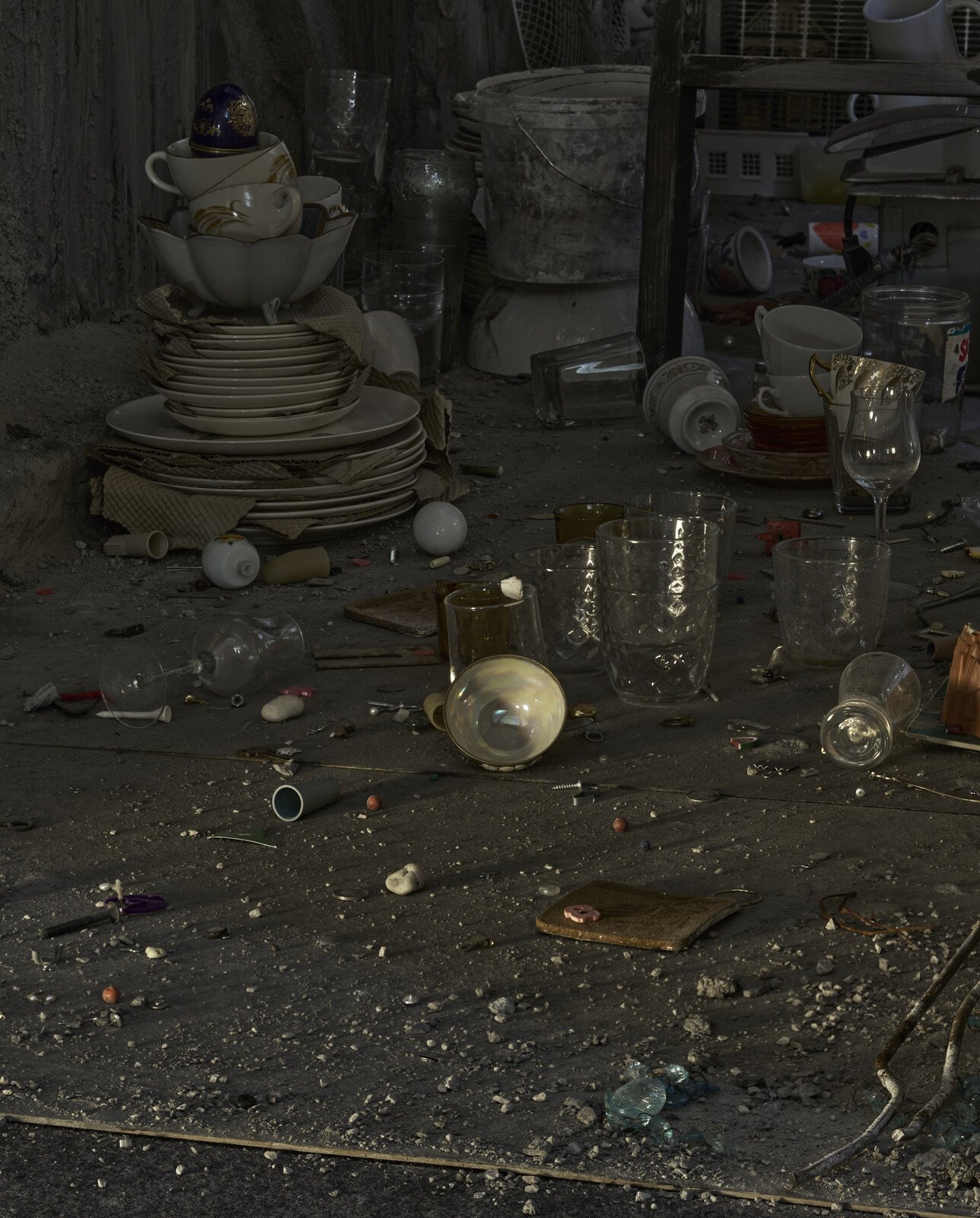
At the opposite end of the scale, empty blister packs, sweet wrappers, leaves, tiny porcelain dishes, jewellery fragments, toys, and other small objects are placed where they might be missed altogether. Some sit in vitrines, others lodge in the gaps of larger structures or are simply laying on the floor. The visitor is compelled to change not only direction but the distance and intensity of attention. In A sound in the tunnel between the ears / dark days / when the others are within us, raw construction elements are filled with multiple, seemingly accidentally gathered possessions. They look as though they could have accumulated in a storeroom, their placement suggests an order known only to their owner — not easy to decode by an external observer. In There is no time to be bored, a wooden structure containing mirrors and resembling a labyrinth can only be inspected from outside: the spectator cannot enter it or see the entire course of its passages. The title might be a teasing invitation to play, but the object withholds the freedom it seems to promise.
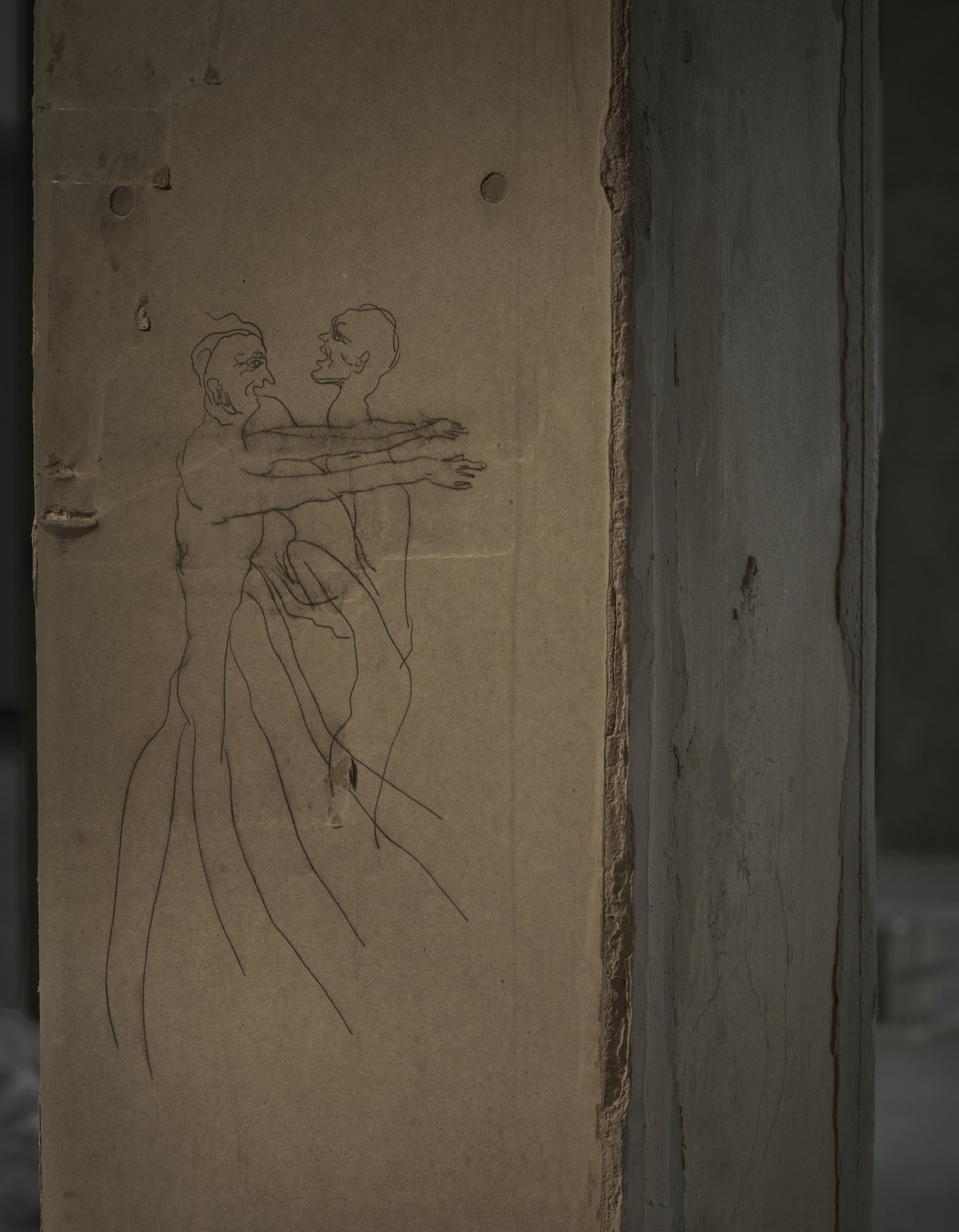
Titles are part of this adjustment of perception. A tiny work involving two pipes sticking out of the walls and dust collected in piles is called Some need comfort to compensate on a large inner trouble. This long, psychologically charged sentence feels almost larger than the thing it names. It makes an otherwise negligible object hard to overlook, while proposing an emotional layer to a possible interpretation of it. Elsewhere, a title may be humorous, unexpectedly intimate, or oddly detached. It does not supply an authoritative interpretation, it becomes another object in the constellation. Texts, drawings, printed pages, and handwritten inscriptions repeatedly place language in line with other material things rather than above them. A word can direct attention, but it can also expose the inadequacy of naming.
In the familiar art-historical metaphor, painting provides a window onto the world. Its frame limits the part that can appear in the picture. With this exhibition, Astakhishvili gives visitors the possibility to continually establish frames by themselves by shaping focus and redirecting attention. Each act of looking excludes other possible views. At the same time, the preciseness of the artistic gesture of selecting objects and preparing constructions makes the conditions and limits of interpretation perceivable.This is particularly evident when works by other artists enter Astakhishvili’s structures. In Hut 1, Hut 2, and Hut 3, as well as in various vitrines, pieces by other authors coexist with her constructions and collected materials. The exhibition includes works from the mumok collection by artists with wildly different practices, such as Elene Chantladze, James Ensor, Nan Goldin, Pablo Picasso, Heimo Zobernig, and others. Their authorship is acknowledged, but it appears that a labelled work can still become part of another artist’s piece. Where does its frame end in such a case: at the edge of the image, at the vitrine, at the room that holds the vitrine? In works such as Everything is so precious, even things that are not real I and II, the container and its contents are difficult to disentangle. The shelves themselves bear holes, irregularities, and traces of foam that appear to result from deliberate artistic interventions rather than accidental damage, blurring the distinction between the structure displaying the objects and the artwork itself.
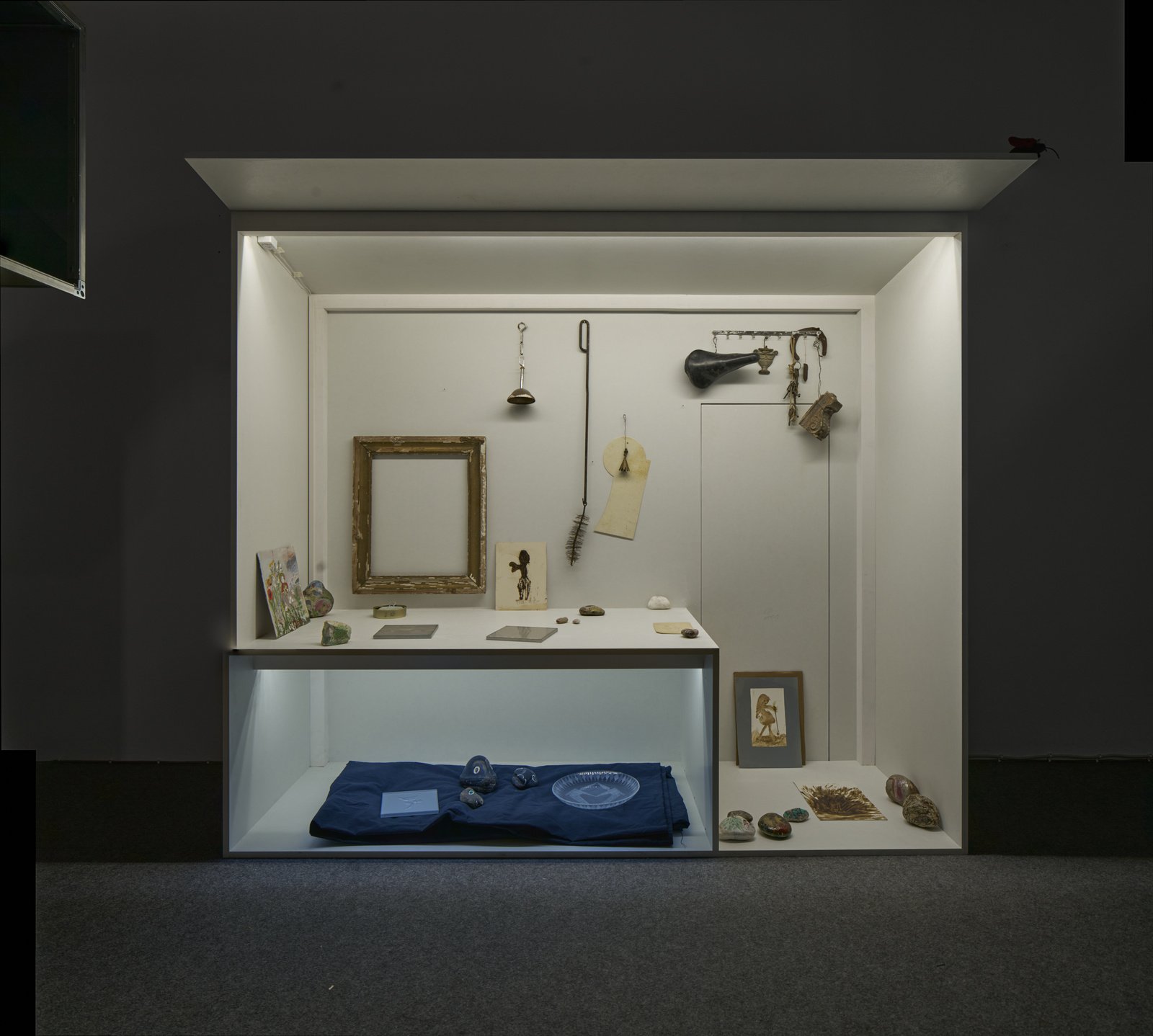
Here, imagination and collecting begin to meet around another concern of the exhibition: the museum as an institution that produces memory. A museum does not preserve objects in a neutral state. It separates, dates, attributes, groups, displays, and sometimes removes them from view. A vitrine protects its contents, but it also tells us that these particular things have survived a process of selection. A label establishes an identity while reducing the many possible lives of an object to a few recognized facts. Astakhishvili borrows both devices and disrupts their authority. Things of uncertain origin receive the care of museum display, while works of famous authors become their neighbors. The exhibition does not simply declare the equality of these objects, it guides our attention towards noticing the procedures by which distinctions of this kind are made and whose histories become readable through them.
Walter Benjamin describes another logic of selection in his essay Unpacking My Library.[2] The collector’s attachment is not exhausted by a book’s contents or its market value. Each copy bears the marks of a particular life and acquires further significance when it is brought into relation with other books. Benjamin compares this impulse to a child’s capacity to appropriate the world by touching, naming, gathering, and transforming what they find. He calls collecting, in this sense, a practice of renewal: the old object is neither restored to its original use nor simply consumed as a novelty. It is allowed to live again in another arrangement. Astakhishvili’s constellations share something of this impulse. Objects are gathered with care, but without the promise that their meaning can be exhausted by provenance or a caption. Their relations matter at least as much as their individual identities.
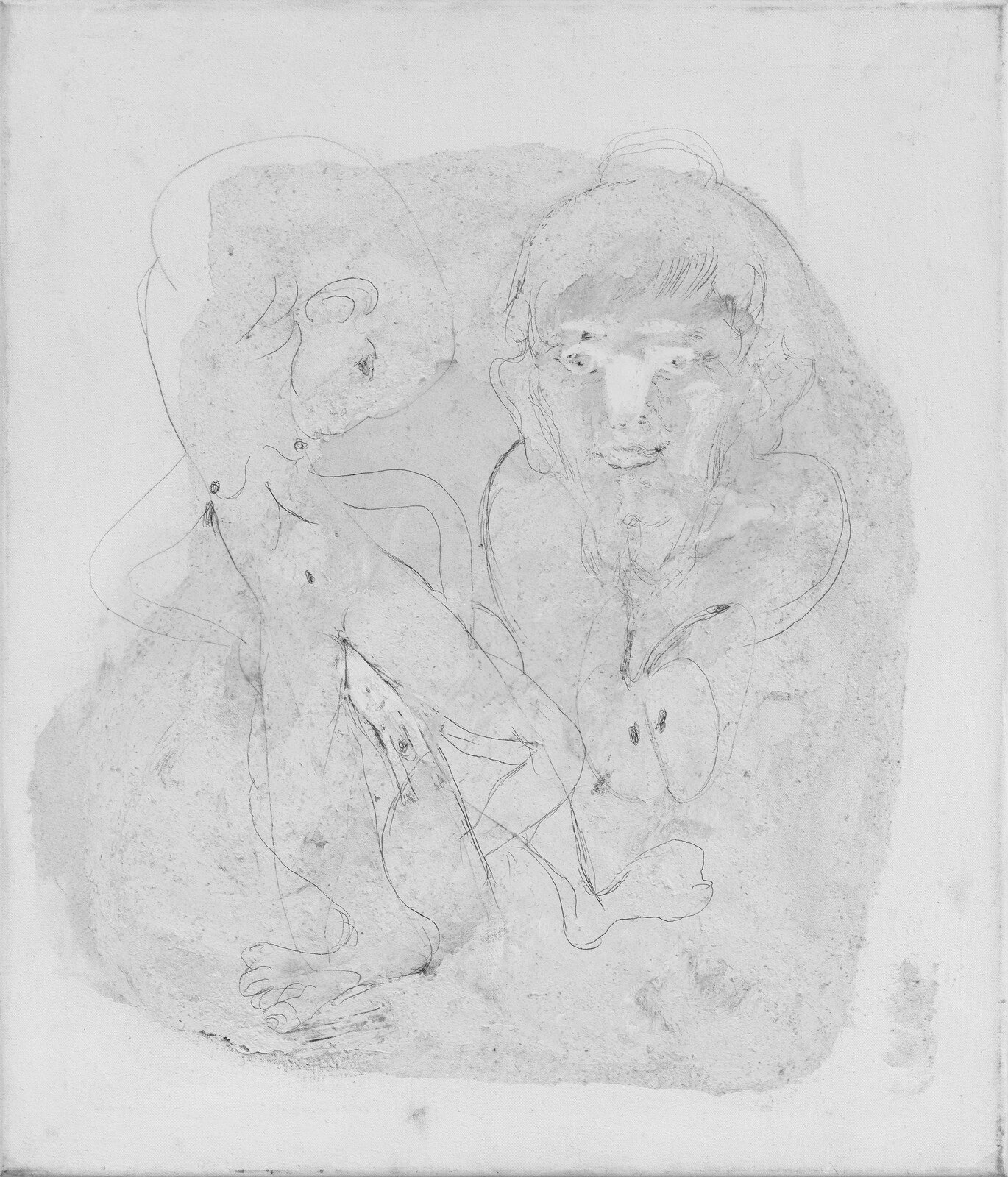
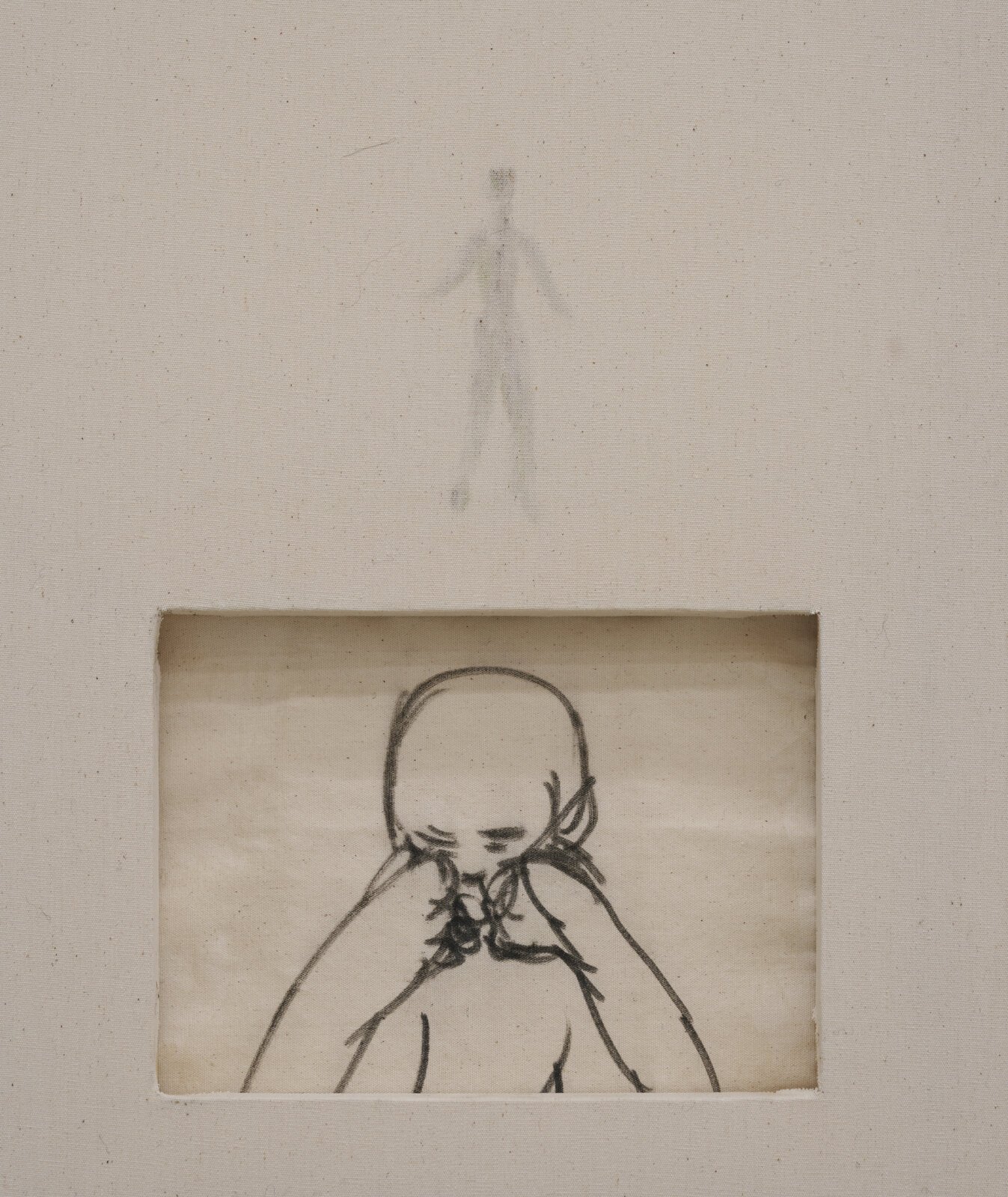
Yet the child’s collection is not only an alternative museum. It also forms an interior repertoire of images to which the adult mind returns. Writing to his fellow Polish Jewish writer, literary critic, and visual artist Stanisław Ignacy Witkiewicz, Bruno Schulz described the impressions entrusted to him in childhood as an “iron capital of the spirit,”[3] a limited but inexhaustibly interpretable stock of images that establishes the boundaries of one’s imaginative world. The formulation helps explain the recurrence of children, animals, intertwined human figures, and isolated body parts that appear throughout Astakhisvili’s exhibition. They reappear in drawings and arrangements without becoming stable symbols. A shape can hover between anatomical fragment and invented creature, an image can be recognized while resisting a definite name. Rather than progressing towards clarification, repetition allows something familiar to become strange again. The artist’s repertoire and the viewer’s repertoire may meet at a particular image, but they cannot coincide completely.
are within us, 2024–2026, construction material, found objects, 1020 x 150 x 136 cm. Courtesy the artist, LC Queisser and Emalin. Photo: Tolia Astakhishvili Studio
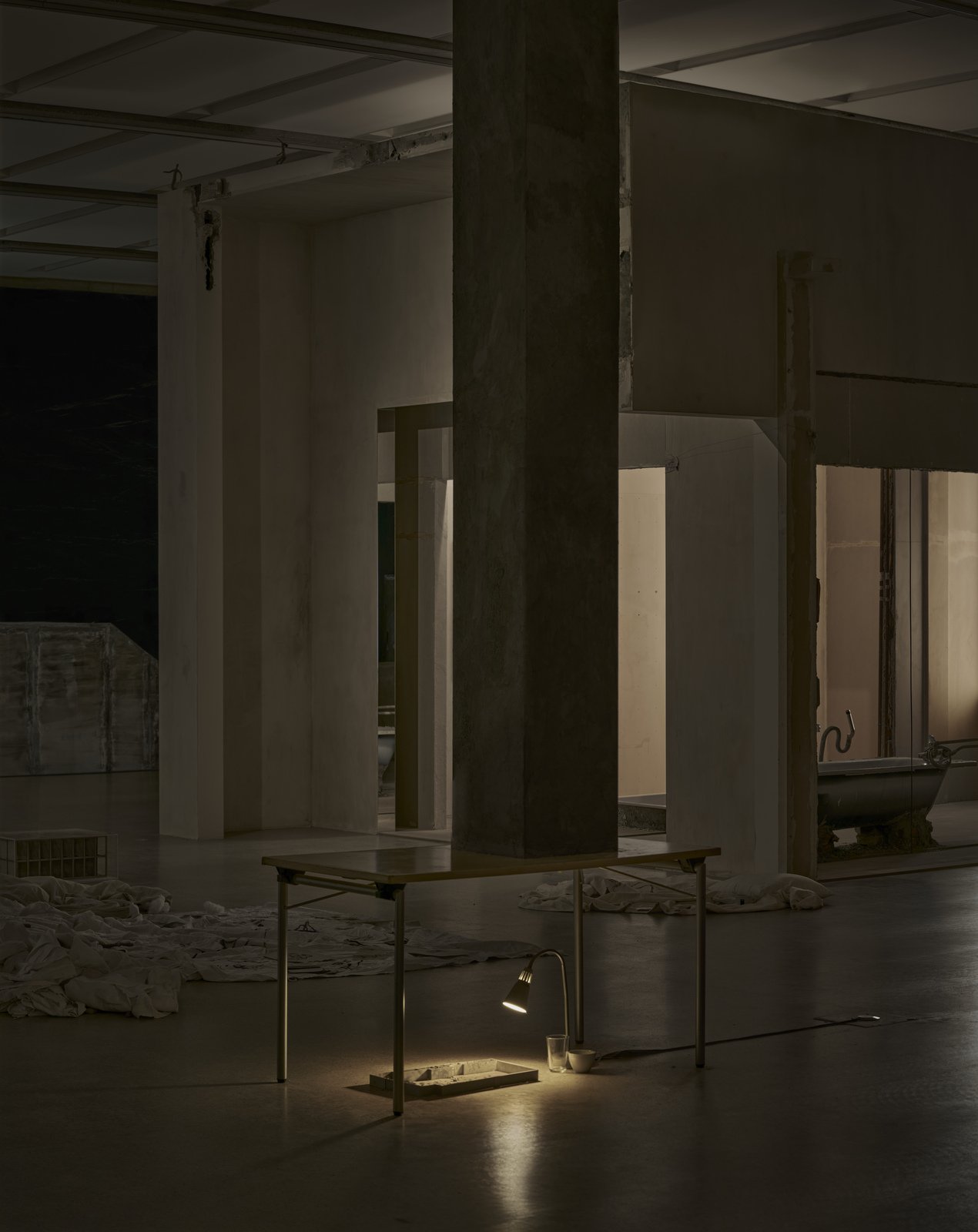
wood, concrete, light, found objects, 504 x 140 x 70 cm. Courtesy the artist, LC Queisser and Emalin.
Photo: Tolia Astakhishvili Studio
That gap seems to me quite important. The material gathered in Figure of the Child cannot be reconstructed into an inventory of the artist’s private experiences, and the exhibition is stronger for not requiring such reconstruction. It instead sets other people’s reservoirs of images into motion. The elongated construction A sound in the tunnel between the ears / dark days / when the others are within us brought back to me a wooden storage building in a Belarusian village that had belonged to my grandfather, whom I never met. His tools and other possessions remained there after his death, gathering dust. As children, we turned this space into an imaginary home. Objects whose functions we did not understand became furniture, treasures, or mysterious instruments in games we invented. Only later, through stories told by relatives, did some of the objects become traces of a person whose life was otherwise inaccessible to us.
The building was both a childhood playground and an accidental archive, but not in the same way at the same time. At first, not knowing what the objects were was part of their attraction. Later, not knowing became the mark of an absence that could not be repaired as well as evidence of a life that had been lived. Nothing in the object itself had to change for its meaning to change profoundly. This is also where Canetti’s recollections of childhood lead beyond an account of imagination. The child who can conjure figures into existence is also confronted with the incomprehensible fact that a person can disappear forever. Things remain after their owners, but they never tell the whole story of those who handled them. They preserve a presence and testify to its limits at once.
A different miniature archive appears in Oksana Zabuzhko’s novel The Museum of Abandoned Secrets.[4] It contains a description of “secrets” — a childhood game familiar in Ukraine and elsewhere in Eastern Europe: girls used to arrange flowers, beads, foil, colored wrappers, toy fragments, or other treasured objects in a hollow in the ground, cover the arrangement with glass, then conceal it under soil. Later they may lift the earth to reveal their “secret” to a friend. I remember making such compositions. And most probably, my generation, of those born in the 80s and 90s, was the last one to practice it. The objects were often trivial, but the act of selecting them — creating a composition, burying it, and then deciding to whom it might be shown — gave them a value no catalogue could have registered.
The aforementioned “secrets” and Astakhishvili’s vitrines share formal imperfection. Both frame fragile collections behind a transparent surface, both depend on the conviction that these particular fragments are worth keeping. But a child’s “secret” is preserved by being hidden while a museum object is preserved, in part, by being made public. The secret creates an intimate community among those allowed to know where it lies while the museum claims a more general public authority. The distinction raises a question more demanding than the familiar opposition between individual and collective memory: when does preserving something require revealing it, and when can exposure itself threaten the relationships that give meaning?
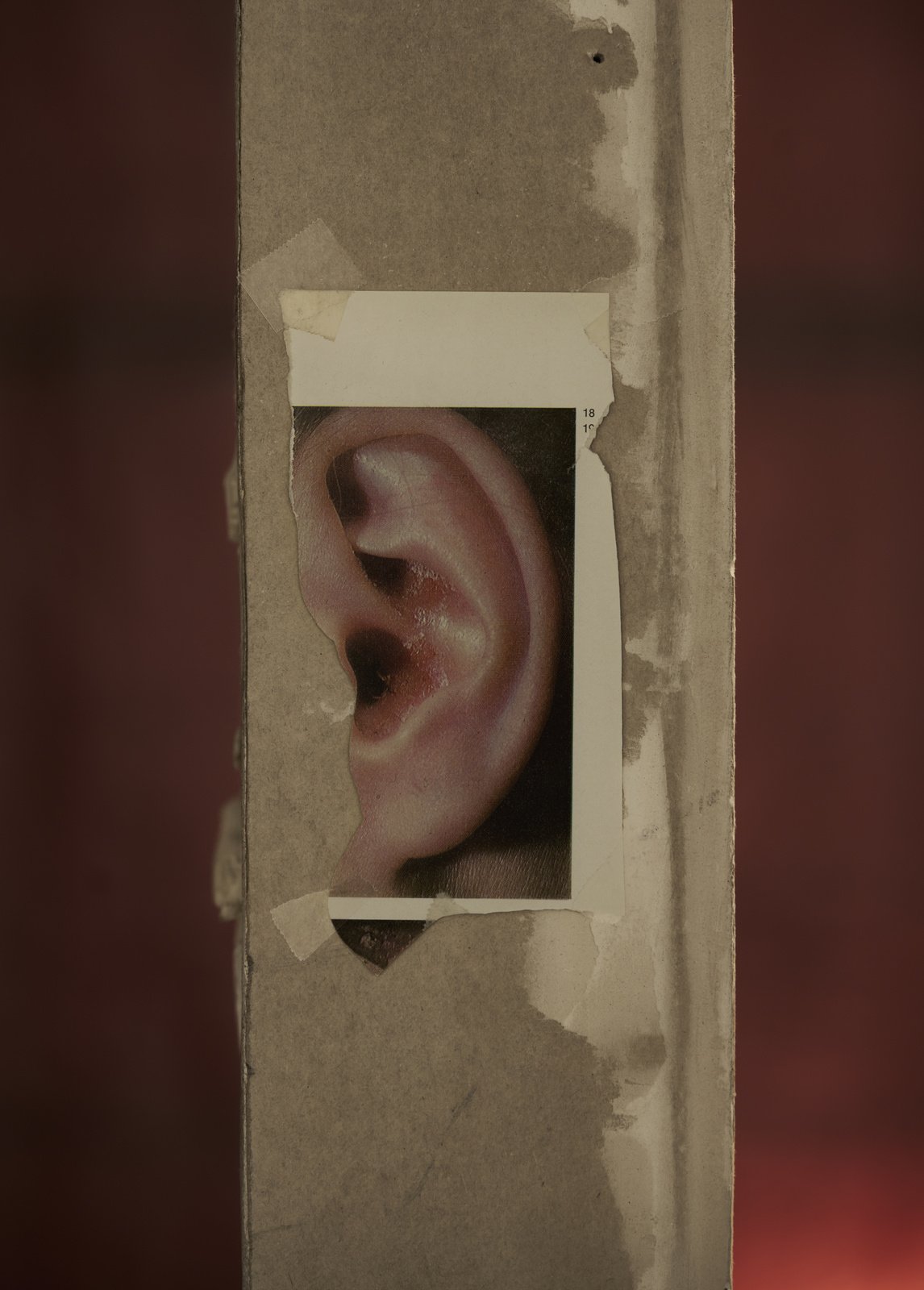
450 x 350 x 180 cm. Courtesy the artist, LC Queisser and Emalin. Photo: Tolia Astakhishvili Studio
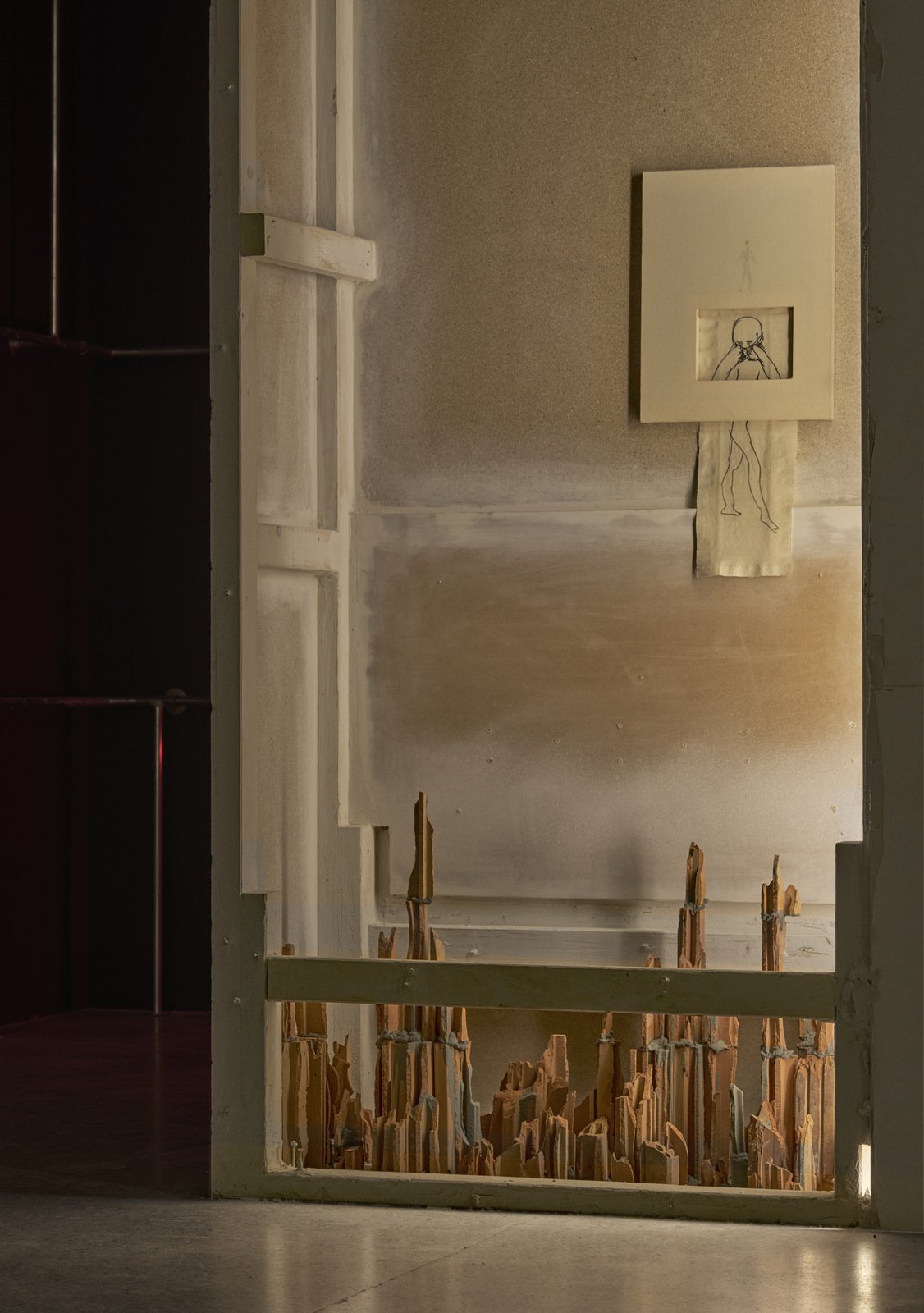
In Zabuzhko’s novel, the buried childhood compositions as well as other mundane family belongings (photographs, stories, papers, possessions, and things that have outlived their person) become a way of thinking about what earlier generations concealed and what later generations struggle to recover, and it mostly applies to the lives of people excluded from official — in this case framed by Soviet authorities — history. The novel gives the game a weight that cannot be contained by nostalgia. A secret is not only a charming image under glass, it can also evoke the necessity of hiding something because the world outside is dangerous. Such histories differ significantly from the imaginative freedom of the child who invents figures in wallpaper. Yet both involve worlds that cannot be fully accessed from the outside, and both make the act of looking inseparable from questions of permission and power.
I was tempted to read Astakhishvili’s collections through the material habits of post-socialist households: keeping apparently useless things, repairing what others might discard, saving parts whose future use cannot yet be imagined. These habits have histories shaped by scarcity, improvisation, family transmission, and abrupt transformation of everyday life. They may be recognizable to some viewers. But to assign them automatically to the artist because of her Georgian origin would be to repeat the museum’s classificatory impulse at another scale, replacing the label on the object with a geopolitical label on its maker. The exhibition allows these historical resonances without organizing objects around political ruptures or traumas, and this is not an argument for extracting the work from history. It is an argument for recognizing that histories are encountered unevenly: through material practices, individual recollections, shared habits, and associations that may not be visible to all viewers.
The problem of selective preservation is articulated with startling economy in one of the centrally placed works titled Museum is a mother. Across an expanse of white fabric, drawings, and inscriptions coexist with photographs, book pages, and small attached objects. One inscription reads, “museum is a mother and takes good care of some children.” The last two words expand the work’s title and guide one’s interpretation in a different direction, almost opposite of the reassuring allegory of maternal care. The museum, like any archive, doesn’t keep everything. The decisions made within this institution are consequential not merely because they make certain objects visible but because they leave other objects, people, and histories outside the shelter of institutional attention.
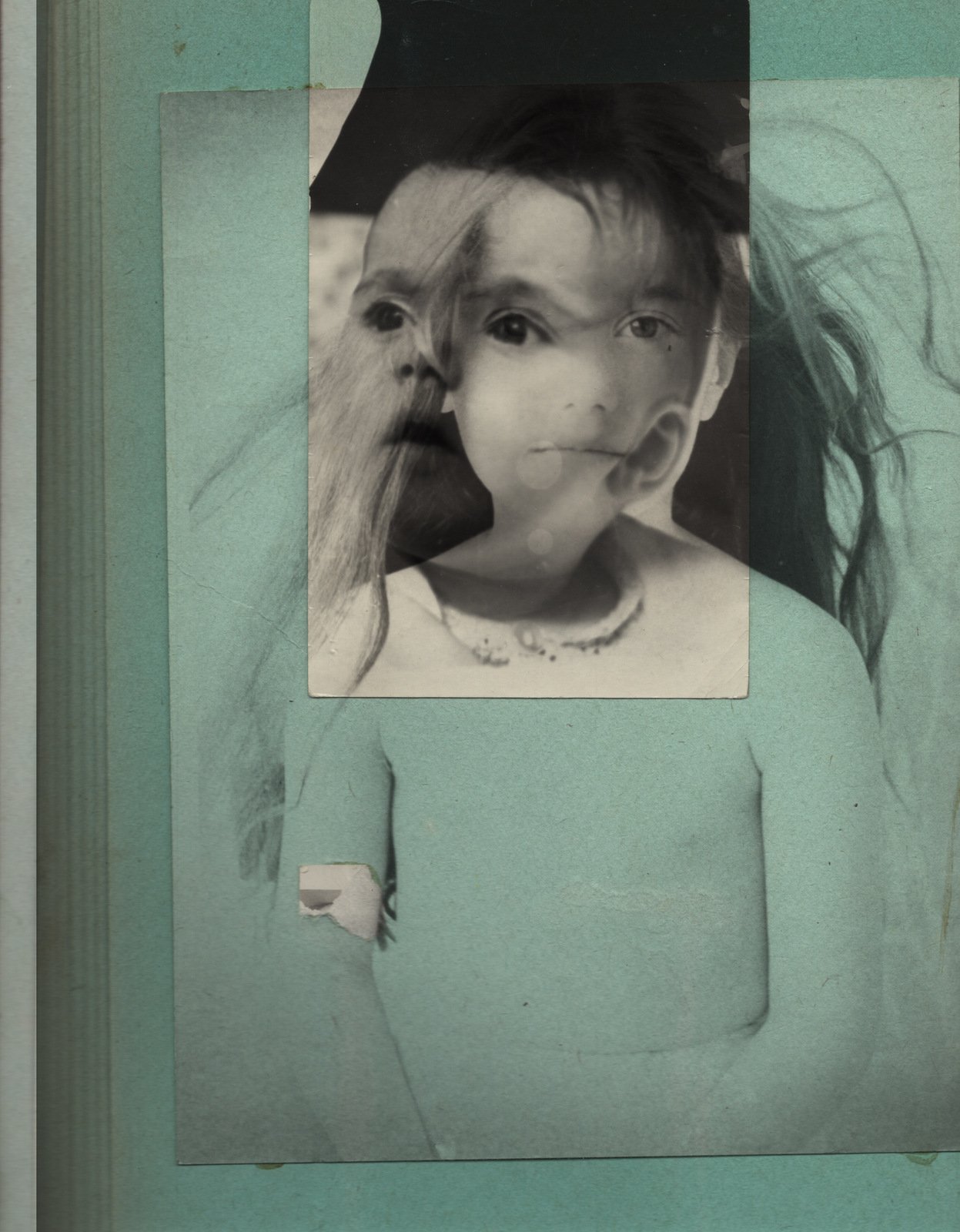
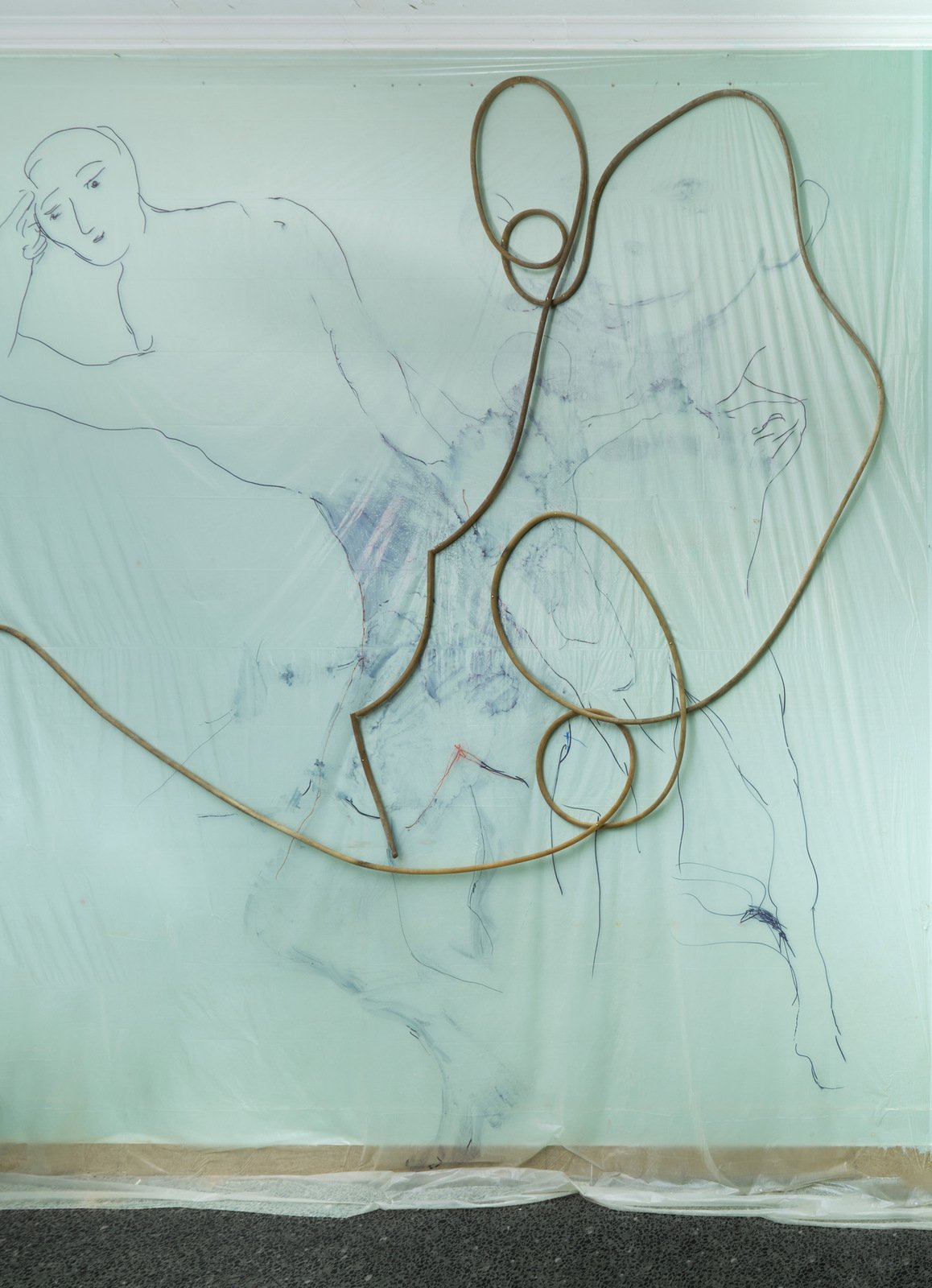
There is a second difficulty in the maternal metaphor. Care is not simply the opposite of authority: it can involve dependence, vulnerability, possession, and separation. The child’s imaginative autonomy is sustained by structures it did not choose. The raw, recurring, roughly-drawn or unfinished bodily fragments, joined figures, and images of children overlapping with other images in the exhibition do not permit childhood to become just an innocent symbol of unlimited possibility. Nor is the mother only an abstract figure of protection: the maternal body is itself exposed to systems of knowledge that classify, isolate, and display it. During the same visit to Vienna, I finally managed to see another collection: the historical anatomical wax models at the Josephinum, including the idealized eighteenth-century anatomical Venuses. Drawn by the promise of encountering figures that once “tacitly communicated the relationship between the human body and a divinely created cosmos, between art and science, and between nature and mankind,”[5] I was struck by their contrast with the models depicting childbirth. While objectification characterizes both types of representation, it takes a particularly unsettling form in the latter. Here, the female body is no longer presented as an idealized whole even when anatomically exposed, but as a site of medical intervention: dissected, penetrated, and manipulated by metal instruments. Fetuses, too, appear subjected to this violence; their fragile bodies cut open or positioned in ways that reveal the physical brutality of obstetric procedures. Where the anatomical Venuses aestheticize the body’s interior, the models of childbirth expose it as a site of vulnerability, control, and sometimes violence, making the relationship between mother and child appear not only intimate and life-giving but also profoundly precarious.
This strengthens a question already present in Astakhishvili’s work: can care, preservation, and the desire to collect and hold things or knowledge ever be separated from the power to divide, control, set limits, and possess? Astakhishvili addresses this question in a playful manner. In Syllabus (say one think another), developed with James Richards, artworks made to look like books gathered in the vitrine are pointing to the imperfection of knowledge production. The titles seem to be constructed around themes of childhood, language, psychology, or cognitive science. They function as conceptual objects and points of departure or riddles to solve rather than as a key that would explain everything around the exhibition.
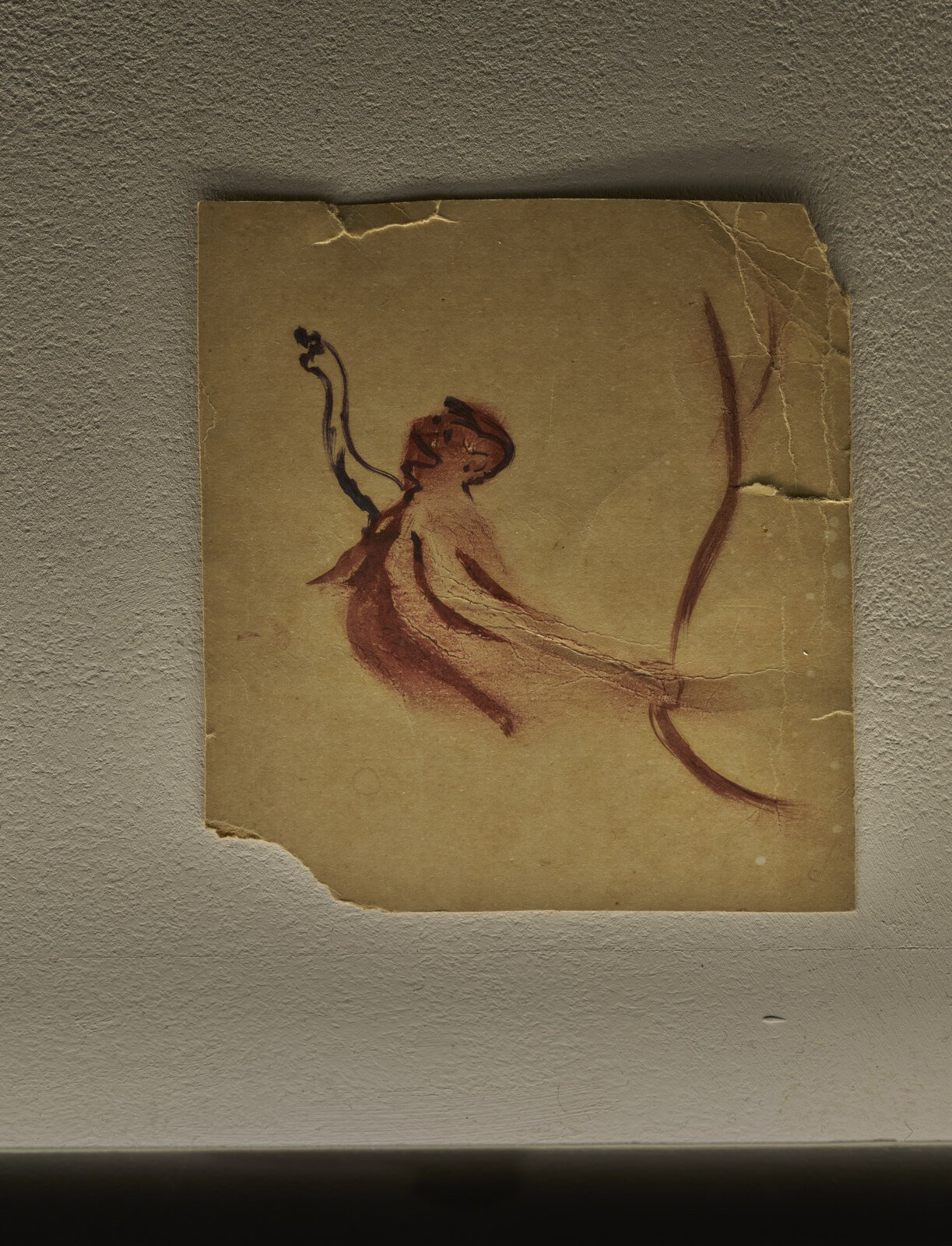
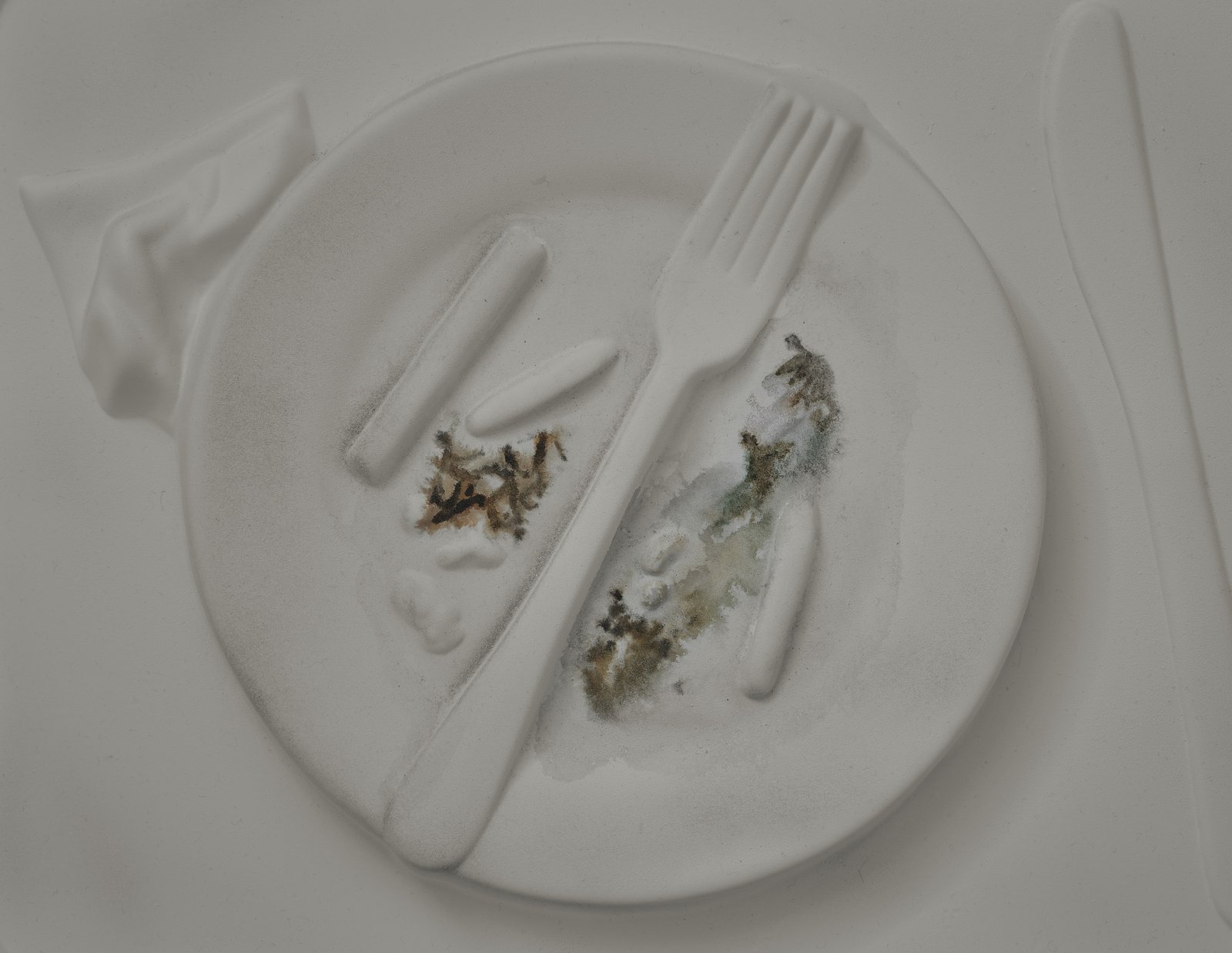
Astakhishvili makes her own process of working visible to viewers. On the second level of the exhibition space (museum’s -2 level), the show retained the character of a working environment in which the artist developed the exhibition and where encounters with visitors, including children, left traces. Before the opening, the public program Tolia Curriculum invited participants into the evolving installation process; further activities made drawing, building, and play part of the exhibition’s life. The publication accompanying the exhibition was conceived in three parts, extending the project beyond the finality usually promised by a catalogue. The result is not a romantic claim that everyone is an author or that a museum can simply relinquish authority. Rather, Astakhishvili shows that exhibitions, like collections and memories, are made through a succession of decisions and relationships whose effects remain relatively open. There is considerable discipline in this apparent openness. Astakhishvili decides where a door remains open, where the dust accumulates, which artworks share a room, how a title interrupts an encounter, and how much of a construction can be seen. The viewer is neither sovereign nor passive. A child speaking to a figure in wallpaper may invent the figure, but not the wall. A collector may rearrange inherited things, but cannot recover every life they once belonged to. A museum may preserve an object, but will never be able to conserve all that made it meaningful. Figure of the Child holds these asymmetries together and through imagination, objects are given another life. Collecting lets some of those lives endure. Memory attaches them to people and histories beyond our reach. The museum makes them public, but only through frames that preserve and exclude at once. What the exhibition ultimately reveals is not a hidden order beneath its fragments, but the difficult, never neutral work of deciding how things — and the lives attached to them — are allowed to remain.
[1] Canetti E., Ocalony język, wyd. Czytelnik, 1981, s. 65-77
[2] W. Benjamin, Illuminations, translated by H. Zohn, SCHOCKEN BOOKS, New York, s. 59-67
[3] St.I. Witkiewicz, Wywiad z Brunonem Schulzem, “Tygodnik Ilustrowany” 1935, nr. 17, s.322.
[4] O. Zabużko, Muzeum porzuconych sekretów, Wydawnictwo Agora, Warszawa, 2022, s. 60-68
[5] J. Ebenstein, The Anatomical Venus, Thames and Hudson, London, 2022, s. 14
Artists: Vito Acconci, Tolia Astakhishvili, Zurab Astakhishvili, Aurel, Ştefan Bertalan, Karl Blossfeldt, Kaucyila Brooke, Veronica Brovall, Günter Brus, Elene Chantladze, James Ensor, Nan Goldin, Yaryna Fedoriv, Irma Gubeladze, Ull Hohn, Joe Jones, Paul Joostens, Louise Lawler, Charlotte Moorman & Nam June Paik, Dylan Peirce, Pablo Picasso, Charlotte Posenenske, Alexandra Ranner, James Richards, Irena Rosc, Medardo Rosso, Dieter Roth, Maka Sanadze, Stefan Wewerka and Heimo Zobernig
Exhibition Title: Figure of the Child
Curators: Fatima Hellberg, Manuela Ammer
Venue: mumok
Place (Country/Location): Vienna, Austria
Dates: 20.06 – 1.11.2026