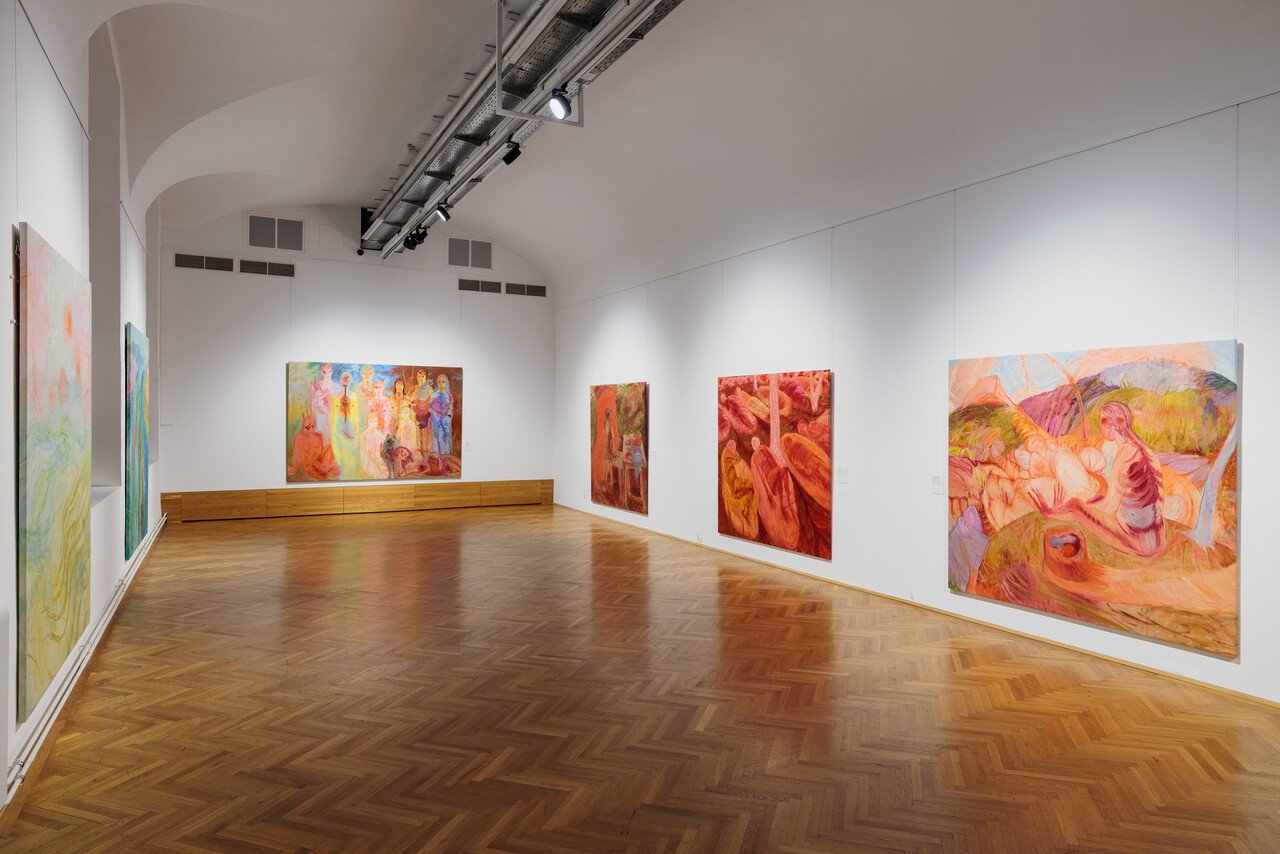
In the MAK exhibition KATERYNA LYSOVENKO: Borderland, the Ukrainian-born, Vienna-based artist Kateryna Lysovenko combines the language of classical painting with contemporary issues. In paintings—some of which were created specifically for the MAK—and selected watercolors, Lysovenko juxtaposes vulnerable bodies, hybrid beings, and mythological tales with heroic narratives of war. She investigates the connections between the body and ideology, using the medium of painting to make life in war and exile a tangible experience. With her thematic explorations, she opens up spaces for social and political imagination.
Lysovenko views painting as a social act and a political medium. Her work is less about illustrating events than about methods of discovering and questioning the world. Her dynamic imagery is based on observations, shifts, and fragments of everyday life. Here, painting becomes a tool to renegotiate visibility and reality. She develops series of large-scale paintings in oil or acrylic on canvas, or as watercolors on paper.
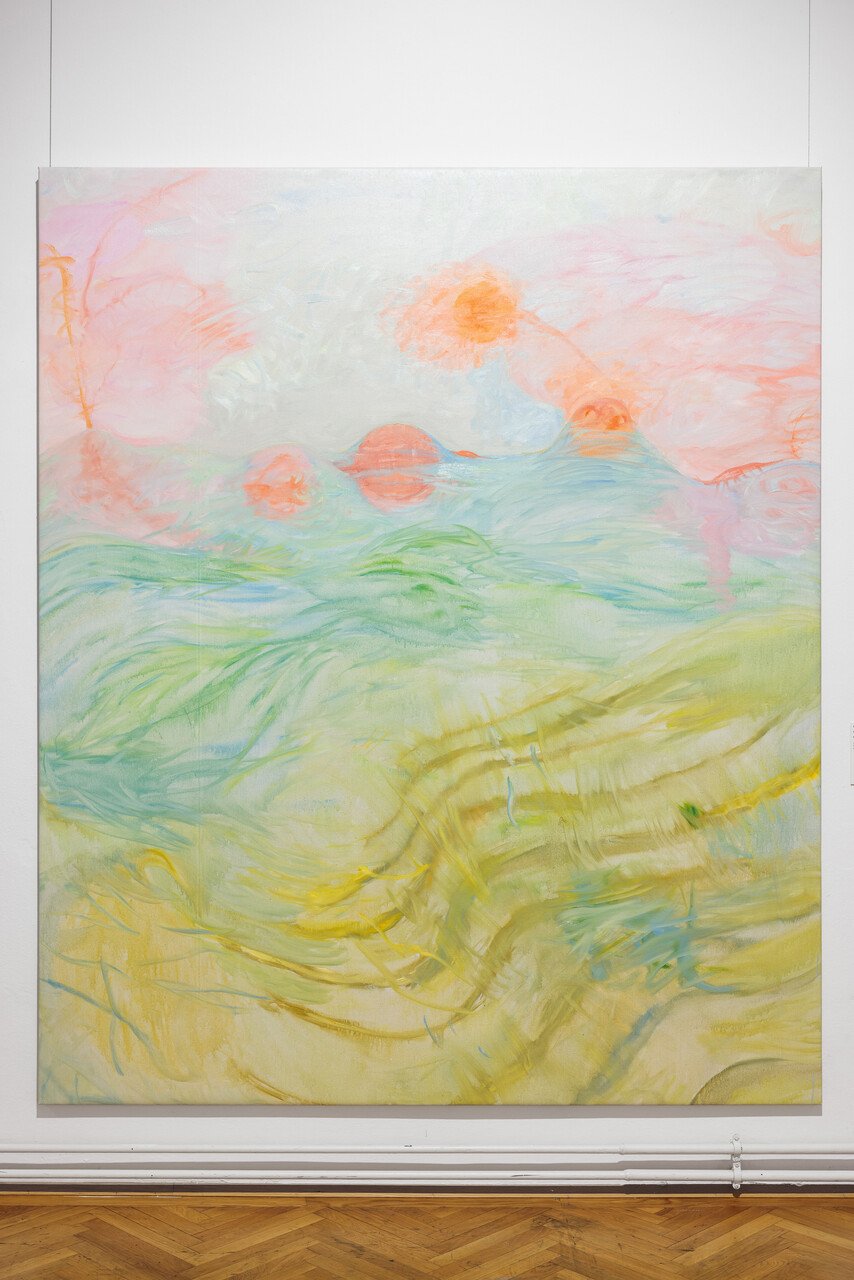
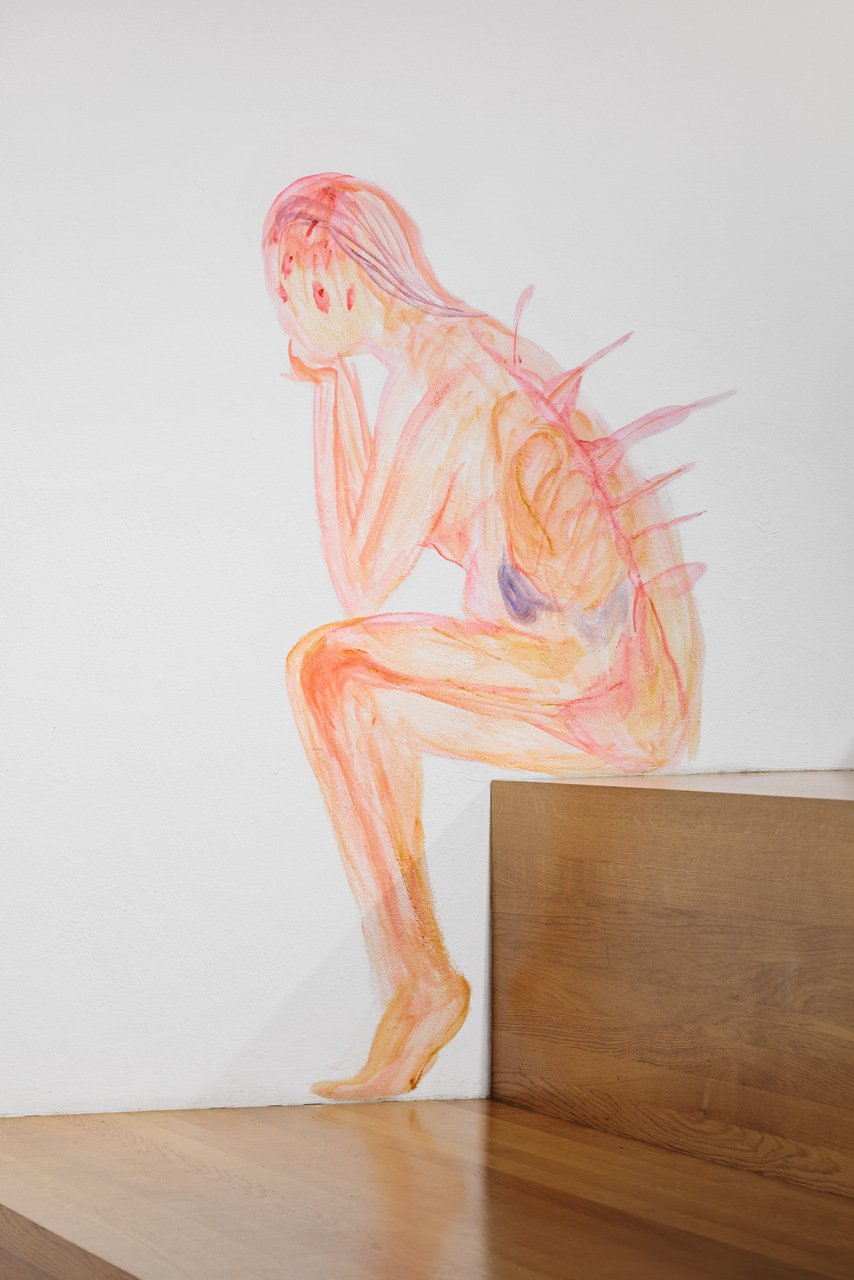
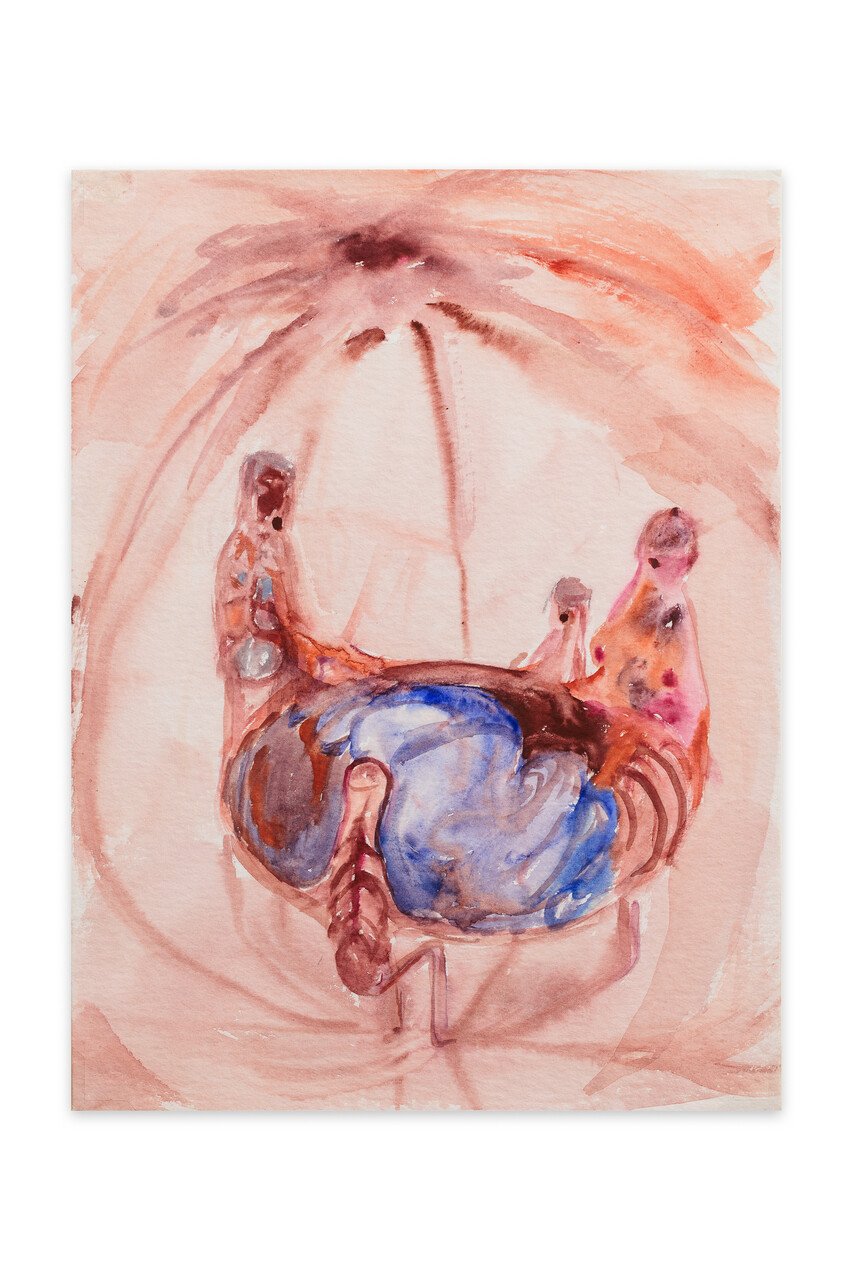
In her painting, Kateryna Lysovenko works with reduction and voids, interpreting coloration as its own resonant space. Starting from black-and-white works on paper, the artist eventually developed an assertive, polychrome formal language within an academic system she experienced as repressive. In her nuanced interplay of colors, Lysovenko uses milky shades of gray and green, bright blues, and intense reds, oranges, and pinks. They revolve around love, energy, and danger, symbolizing blood, life, and death, or signaling fire. The watercolors, on the other hand, are characterized by a subtle color palette. In her works, the artist emphasizes a shift in reality, vividly portraying situations of affected people and imaginary scenes of events.
© kunst-dokumentation.com/MAK.
2026, oil on canvas.
©kunst-dokumentation.com/MAK.
2026, oil on canvas.
©kunst-dokumentation.com/MAK.
2026, oil on canvas.
©kunst-dokumentation.com/MAK.
2026, oil on canvas.
©kunst-dokumentation.com/MAK.
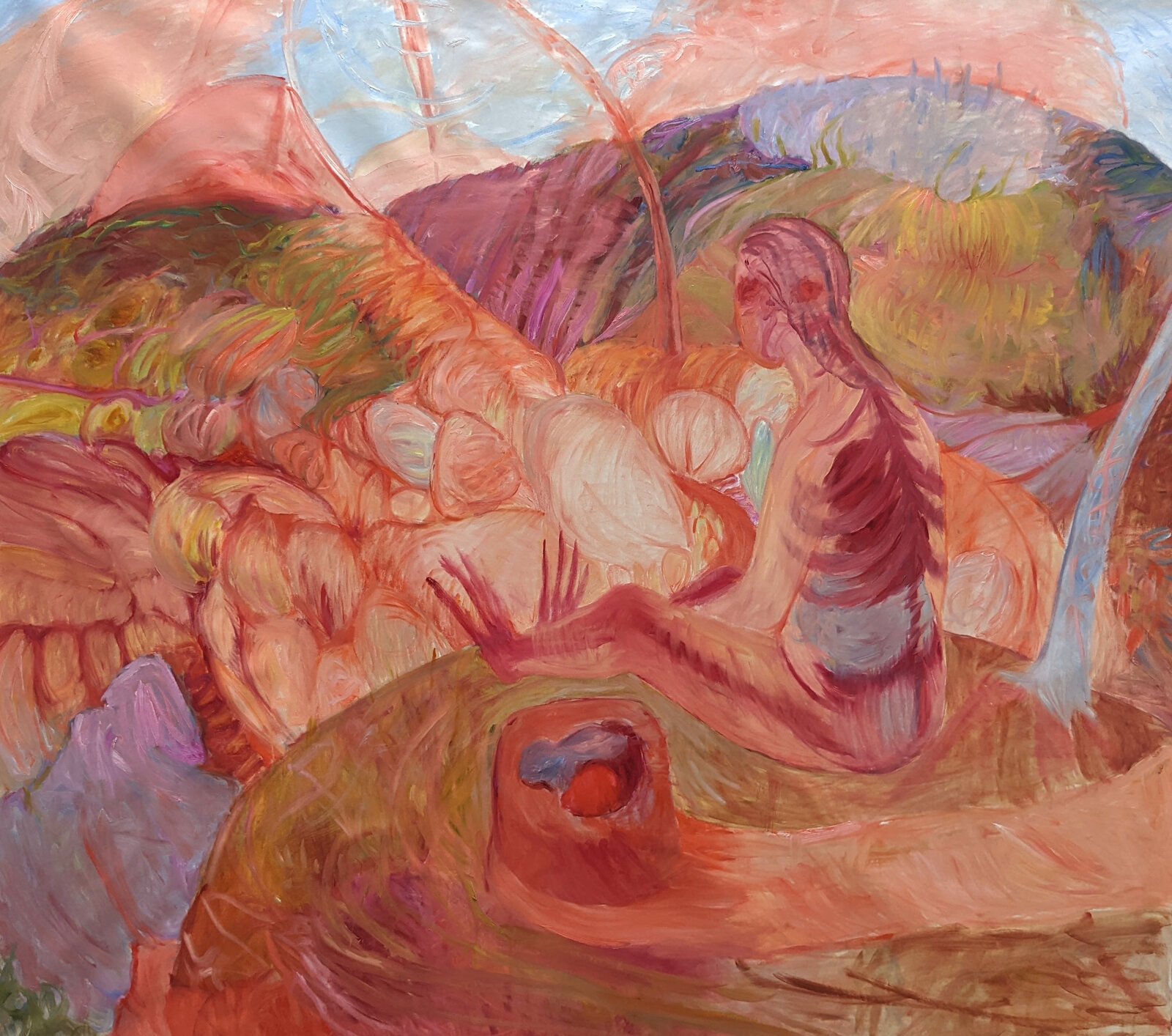
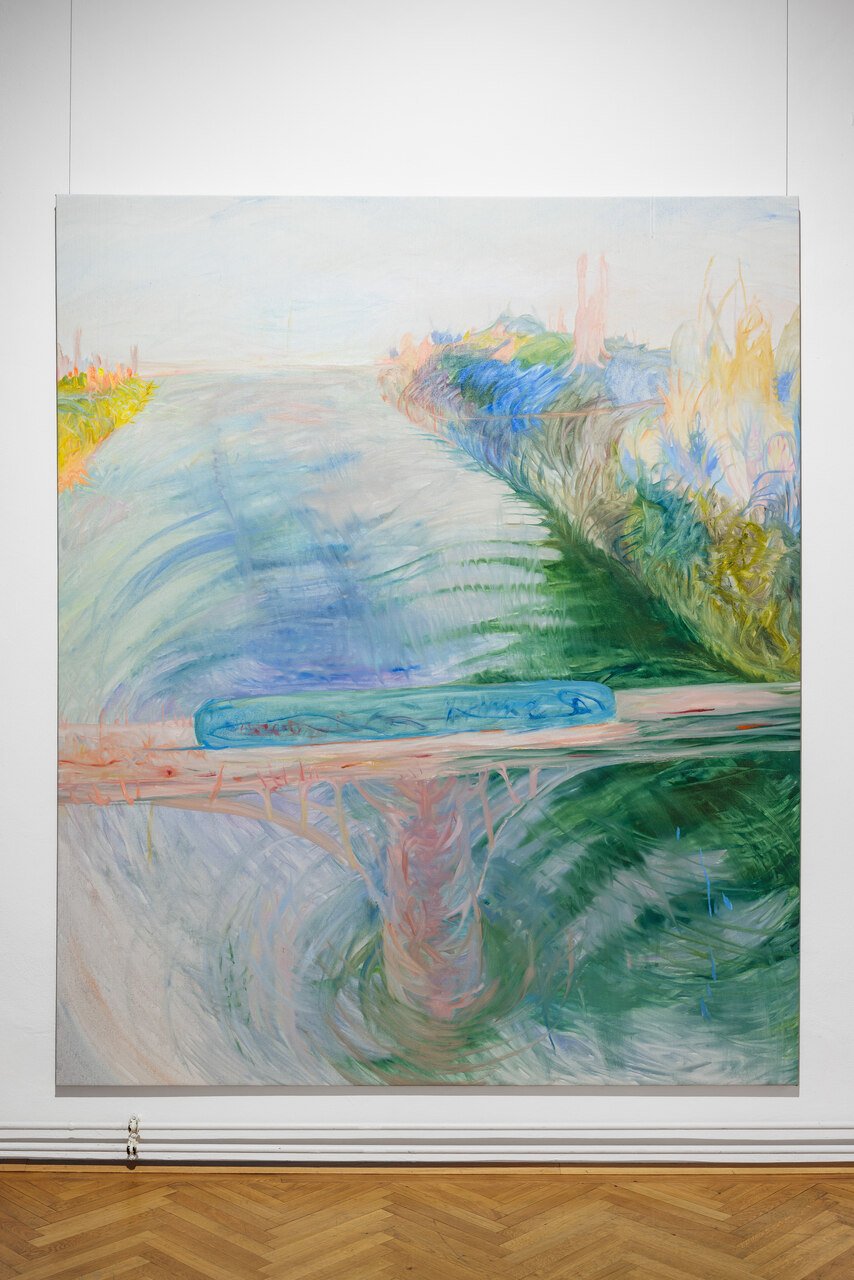
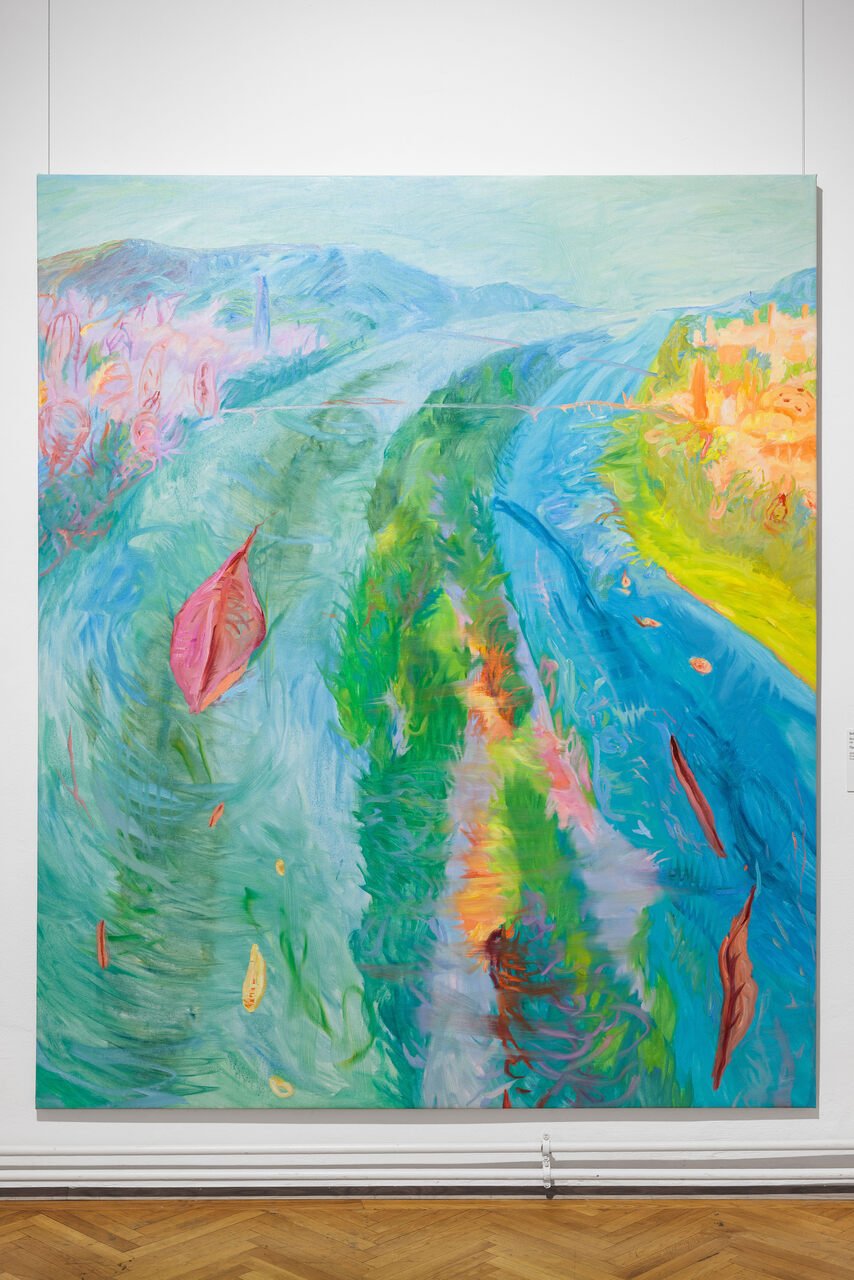
In the paintings created specifically for the MAK, Lysovenko focuses on the rivers Dnipro in Kyiv and Danube in Vienna, both of which shape a city and flow into the Black Sea as metaphors for political landscapes. They run through the pictures like veins, borders, and scars, carrying memories. Occasionally, islands serve as places of refuge and symbolize relics of the past. The flowing water and the waves of the sea symbolize migration and the shifting of political history, standing for community and solidarity.
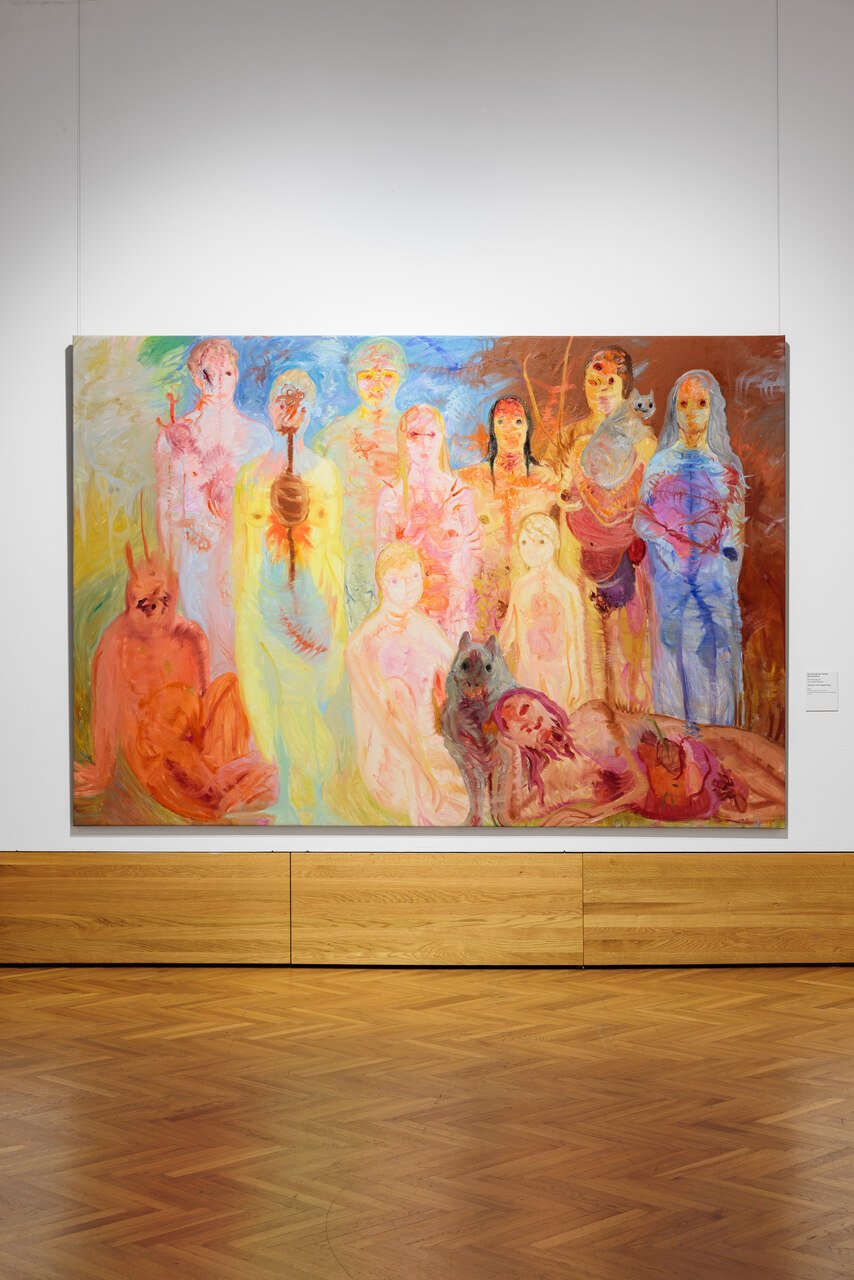
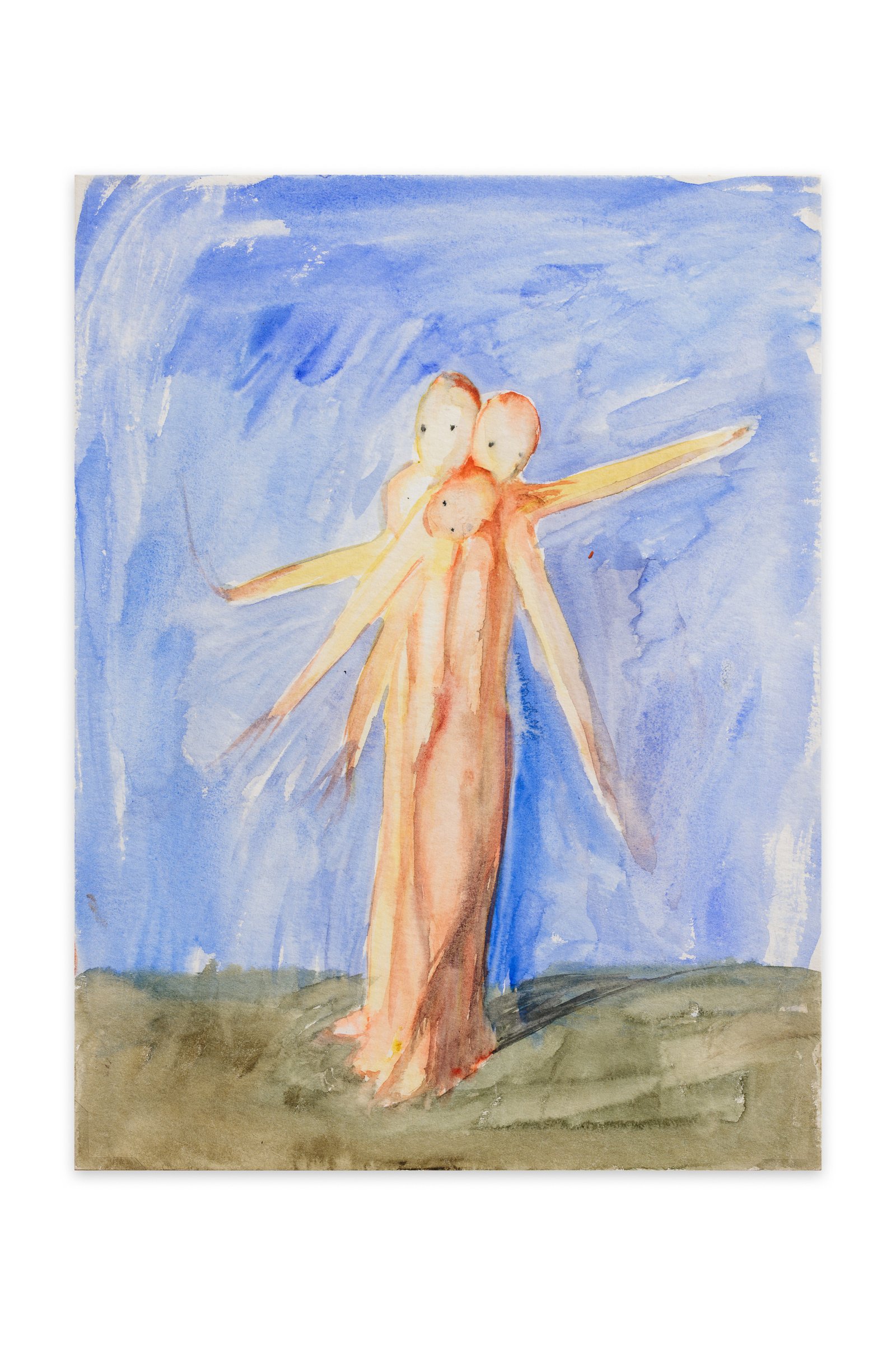
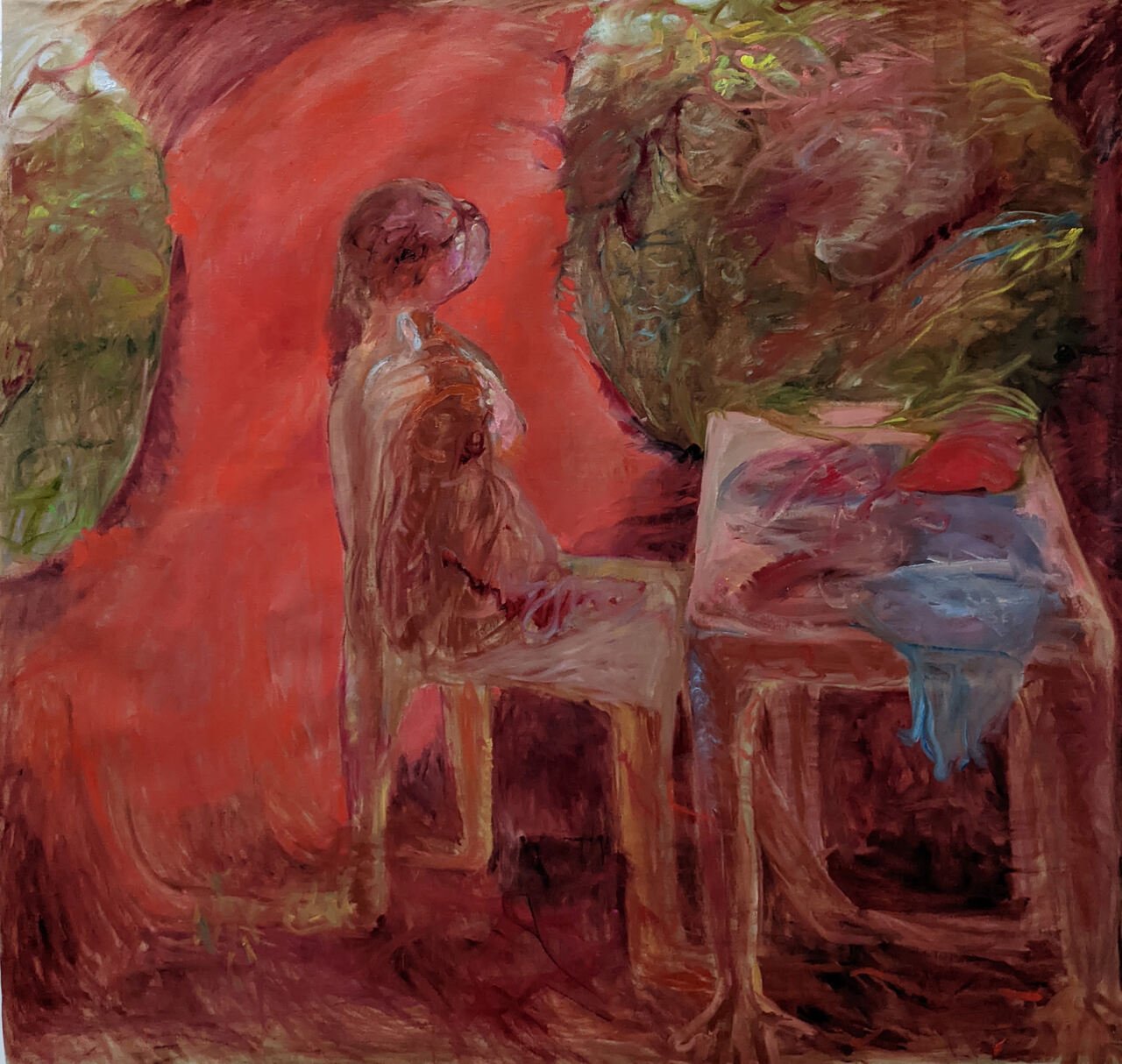
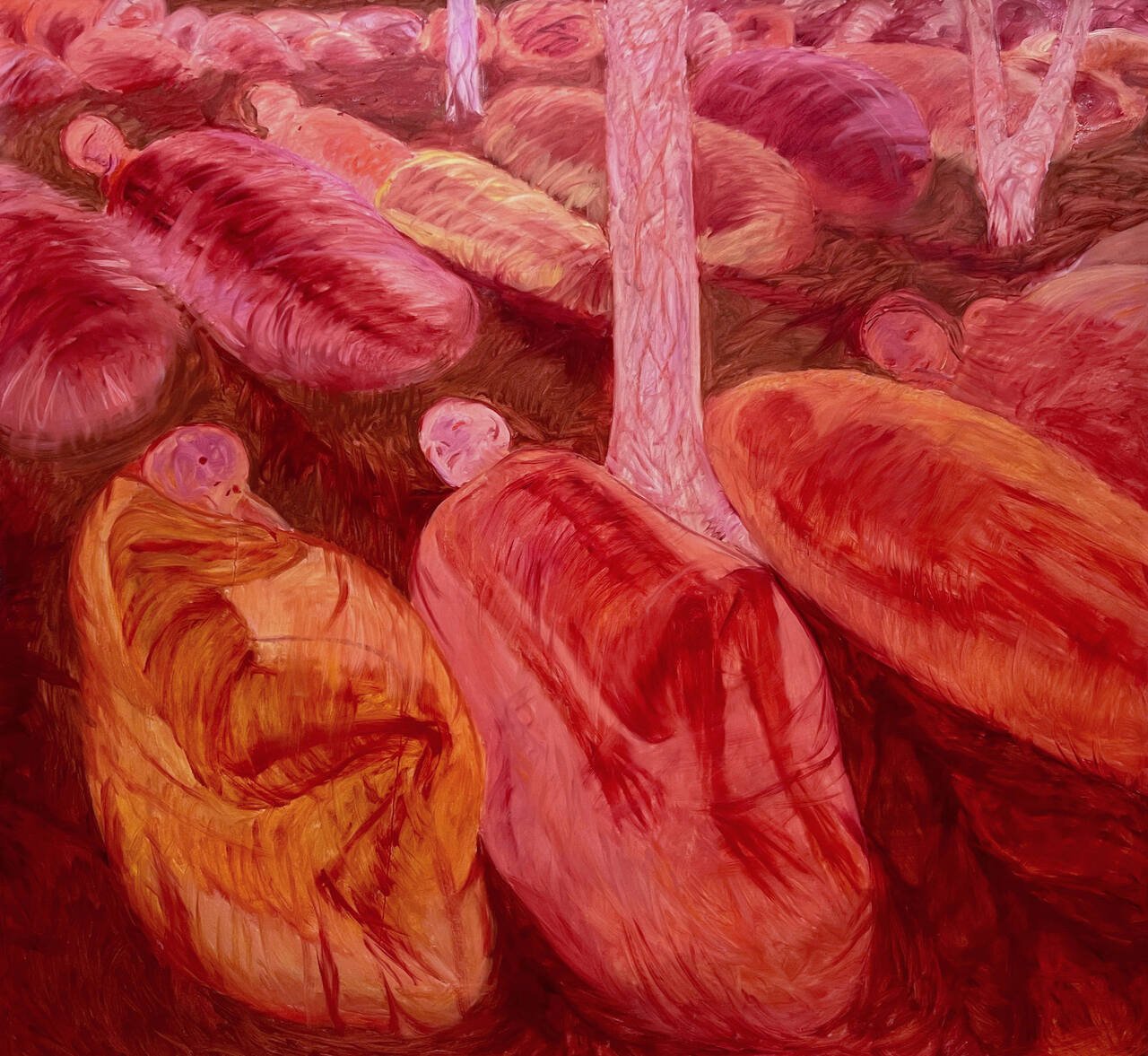
Figures are at the center of Lysovenko’s paintings and watercolors. For example, the work Kassandra sees Troy (2025) shows the protagonist amidst the landscape spreading out before her. The painting Home came at you (2024) portrays an overwhelmed woman sitting at a table while the room dissolves into a war scenario. Serving as a kind of memorial, sleeping figures
in a forest feature in the painting Still Hour (2025). Wrapped in sleeping bags and crouching, the soldiers or civilians look like cocoons and mummies. In the periphery, the fringes of the forest seem to extend into infinity.
The figures in Lysovenko’s paintings are in a constant state of transformation. Appearing translucent, they emerge as round shapes and embryonic bodies that weave through her imagery. The artist captures the humanity of her subjects in particular and portrays—in contrast to Socialist Realism—de-heroicized bodies, chimeras, and organisms that do not represent victims but acts of resistance, underscoring the vulnerability of the citizens.
© kunst-dokumentation.com/MAK.
© kunst-dokumentation.com/MAK.
© kunst-dokumentation.com/MAK.
Courtesy of the artist and Karma International, Zurich. © Kateryna Lysovenko.
Courtesy of the artist and Karma International, Zurich. © Kateryna Lysovenko.
Artist: Kateryna Lysovenko
Exhibition Title: Borderland
Curator: Bärbel Vischer
Venue: MAK – Museum of Applied Arts
Place (Country/Location): Vienna, Austria
Dates: 16.09. — 18.10.2026
Photos: Images courtesy of MAK, Vienna.