Eleanor Ivory Weber
What is the value of a hundred bucks?
Smuggling
It – by which I mean freedom – has to do with a hollow structure. That’s what appeals to me in the shoes. The foot goes in, and you walk around, just as usual. No-one knows what you’re carrying, maybe not even yourself, let’s be honest. And the smuggling shoes show this explicitly: despite their placement as evidence by the police, there’s some- thing we don’t see and can’t fully say that’s holding up the structure, which motors the walk. Language and money work like this, too. They make us ask ourselves: but of what is it evidence? Dora Budor is skilled at making the structure felt. No need to pressure yourself to find an answer to the riddle; it is your own. You just need to remember that if you could see everything inside the shoe’s sole it would be the end of intrigue. Let’s not mistake the image for an exposé; the money’s freedom comes from you. What is the value of a hundred bucks? Stick with the surface, your first intuition: it is a promise.
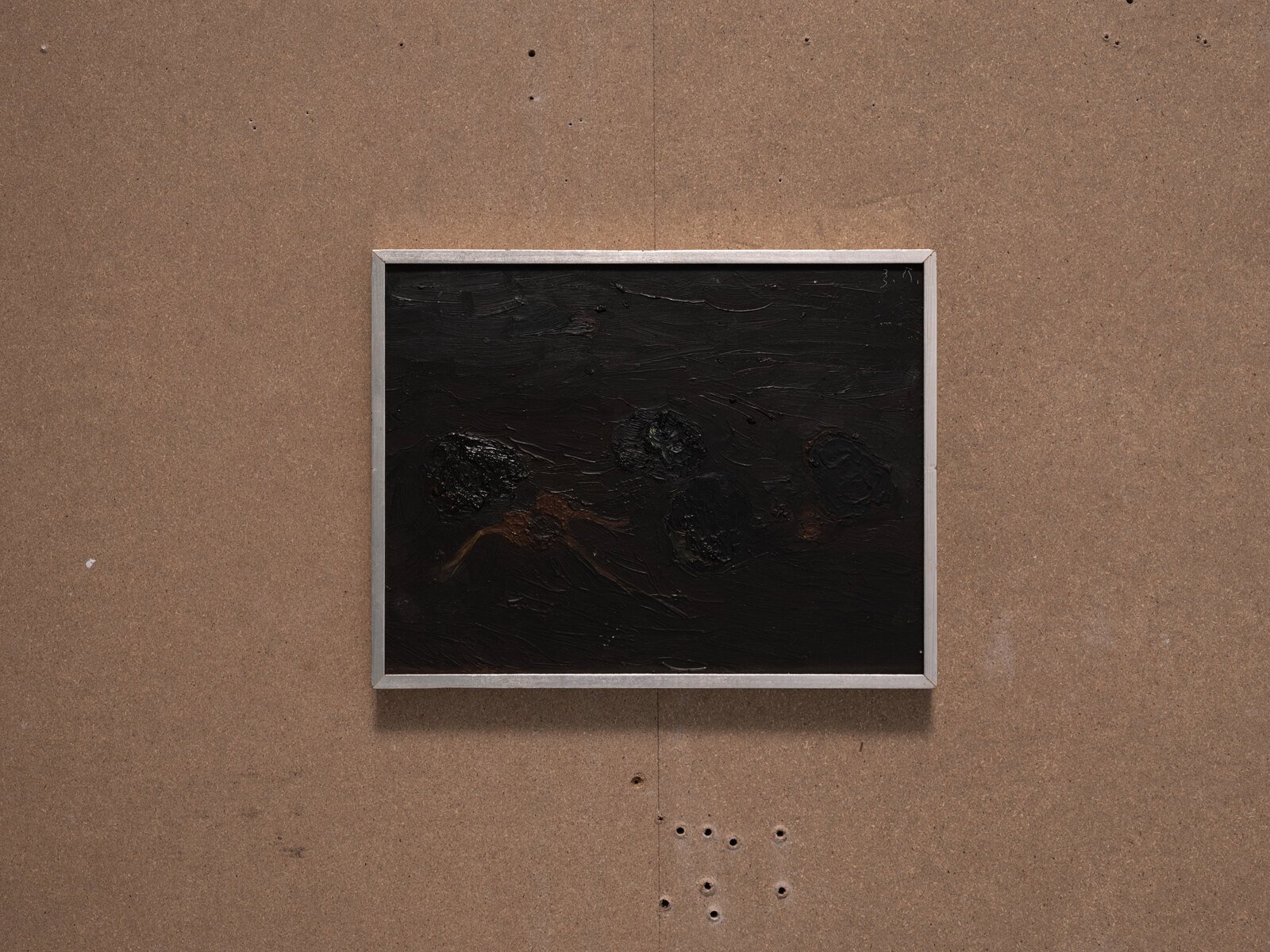
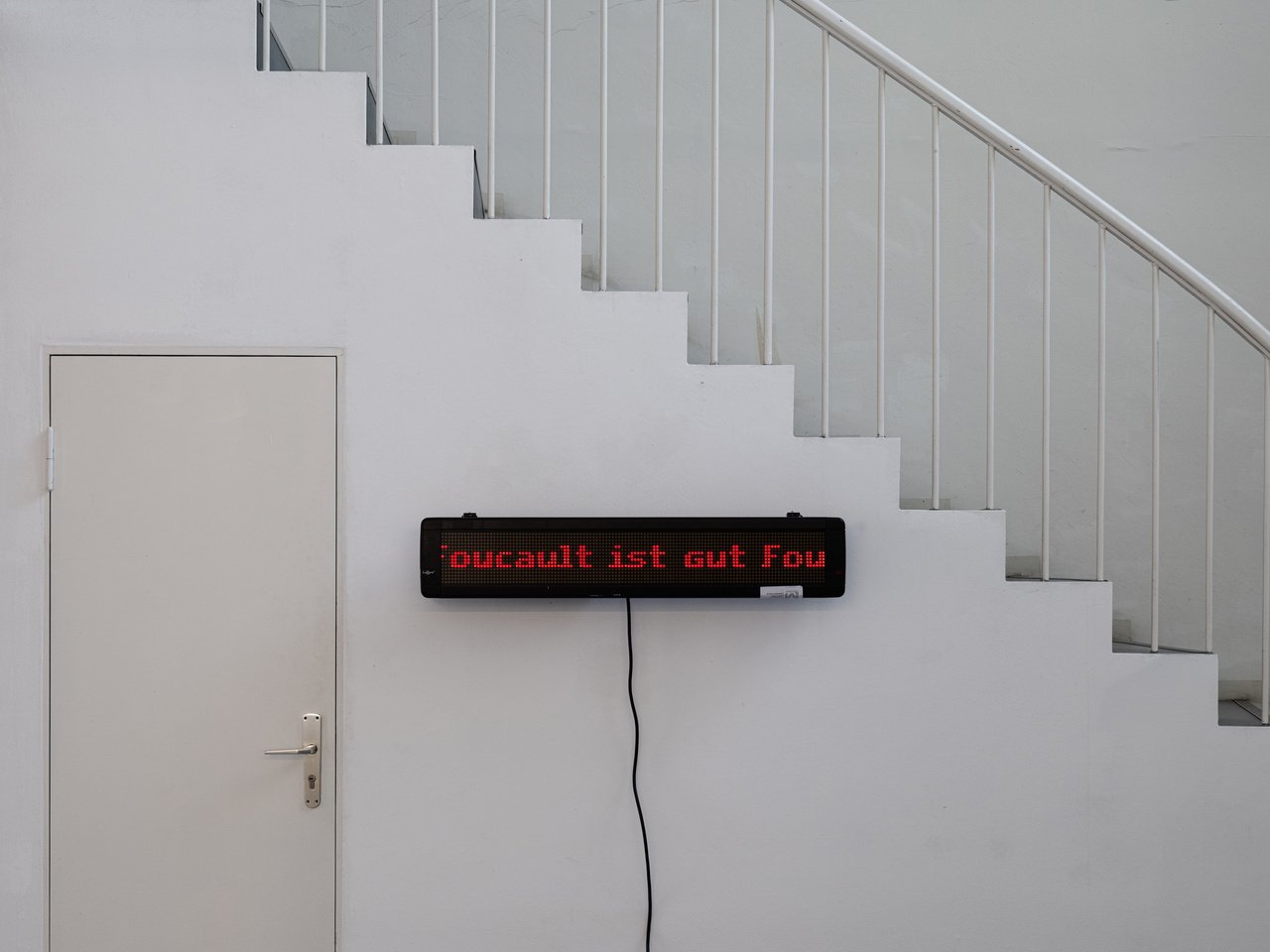
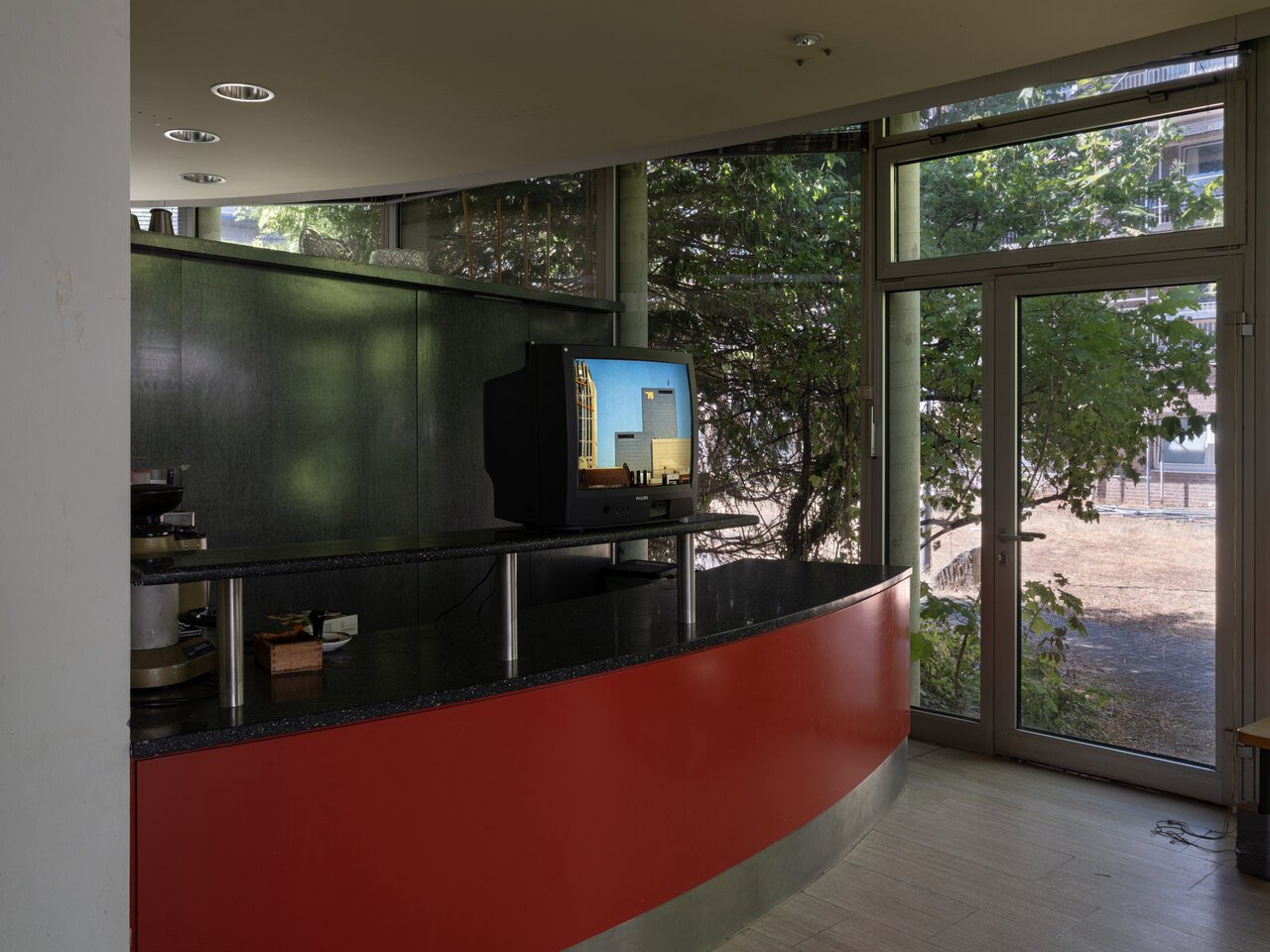
I walk through the lobby. I see hundred-dollar bills, four of them, named as follows: Le corps sous la peau est une usine surchauffée (The Body Underneath the Skin is an Overheated Factory), Dictated from the bed, Room 304 and Smoking is good. Henrik Olesen montages the extortionate profits of billionaires alongside images of their products; Camilla Wills dictates the ontology of pigs, cats and craziness against the grey Rotterdam skyline, from the bed; Yvo Cho films his former classroom in Düsseldorf to the sounds of two Godard characters seeking to relearn language entirely; and I created an incomplete list of words that are good and bad, tickering through a sign. Another word for energy is power. All of us are plugged into something that lights us up like a hundred bucks.
Art is not something that sits on top of reality, as if reality were merely a given upon which we walk for the sake of distraction from that given.[1] What we call ‘reality’ is already a scene of sorts, where a principle we will never have direct access to lines the wings. The point is not to flood the wings with light. At the very least that would mean the show would be over, but, more, there’s just nothing there to expose. The principle cannot be witnessed. The point, instead, is to play in such a way that the principle in whose name your part will come to be written (but to which you have no direct access) illuminates the scene. This is the situative, imaginal space where energy comes out of nothing. I open the soles of my shoes, I see the money. The principle that got it there – obscure to me – is what intrigues, not the bills themselves.
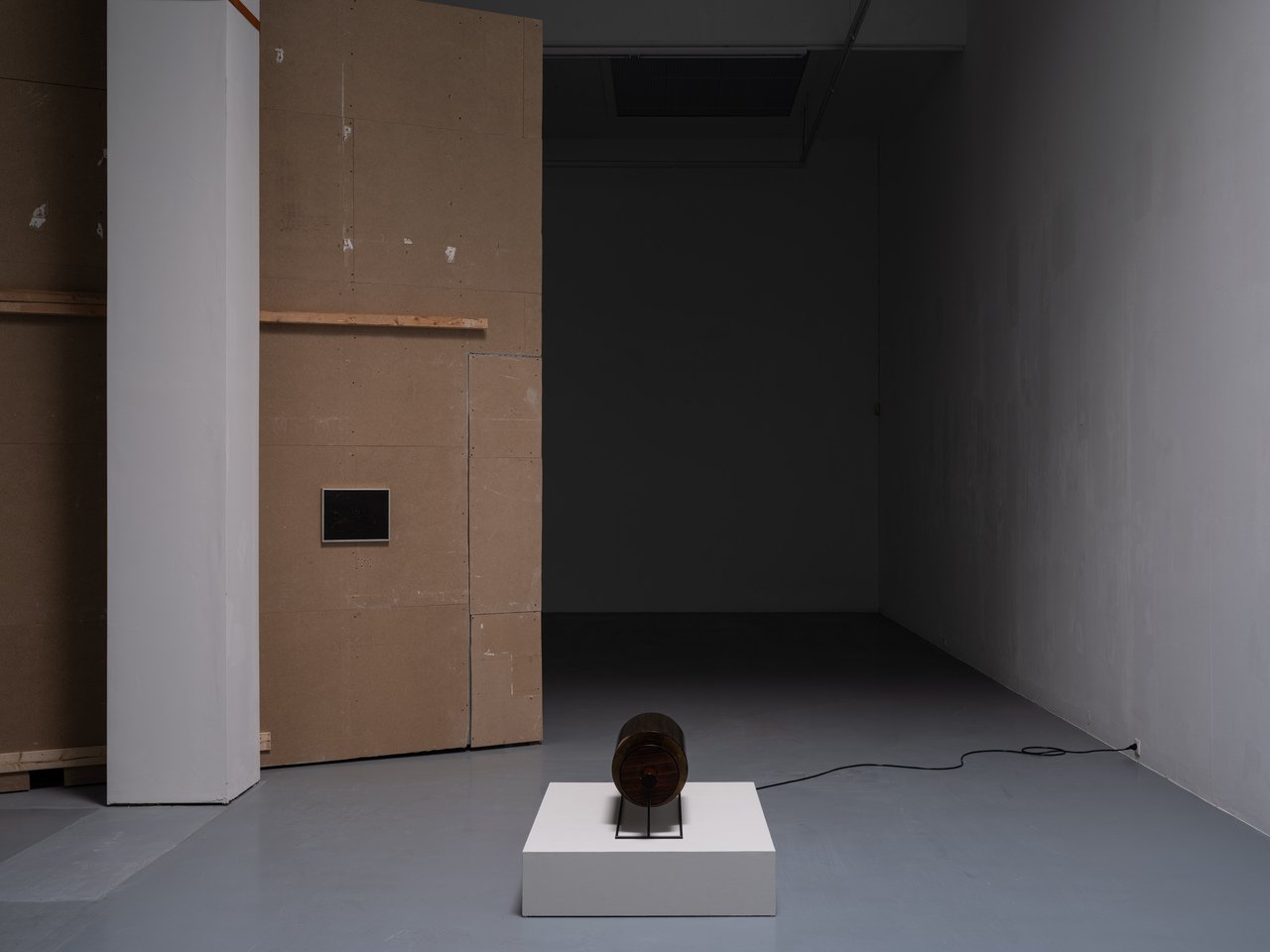
“MY ENERGY COMES FROM FREEDOM”, Bonner Kunstverein, 2026.
Photo: Oskar Lee. Courtesy the artist and Alma Sarif.
“MY ENERGY COMES FROM FREEDOM”, Bonner Kunstverein, 2026. Photo: Oskar Lee.
Courtesy the artist and dépendance, Brussels.
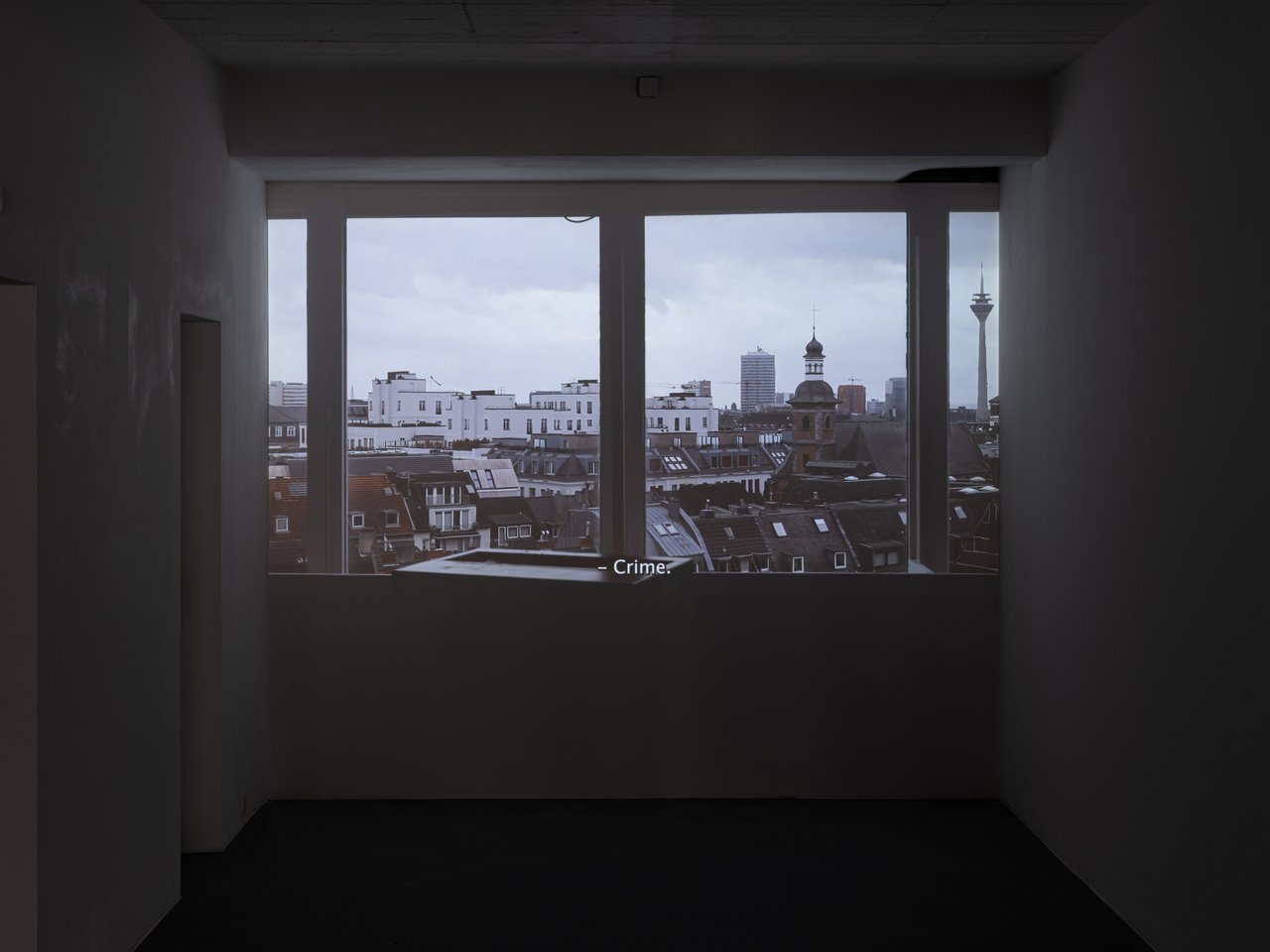
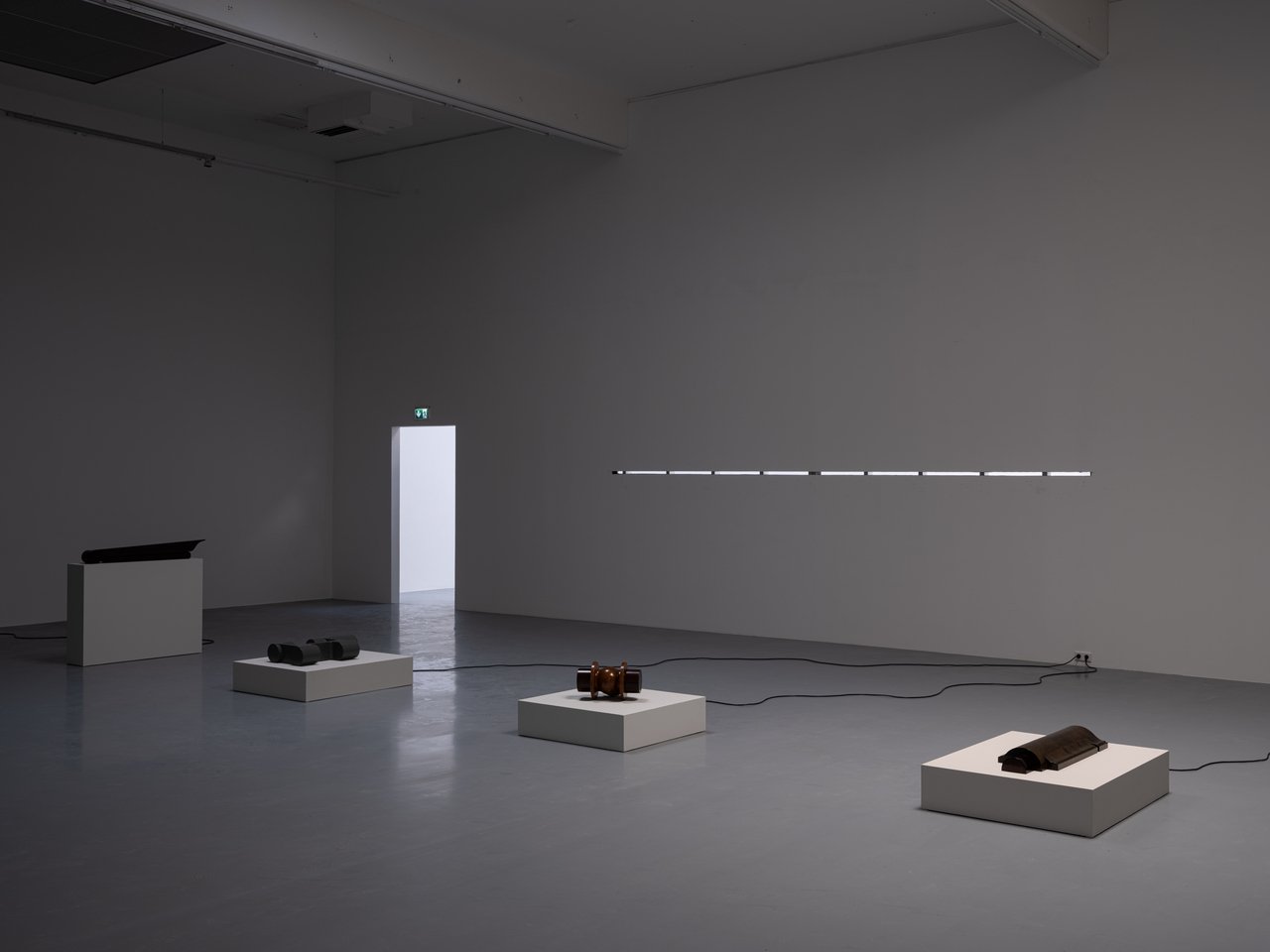
Bonner Kunstverein, 2026. Photo: Oskar Lee. Courtesy the artist.
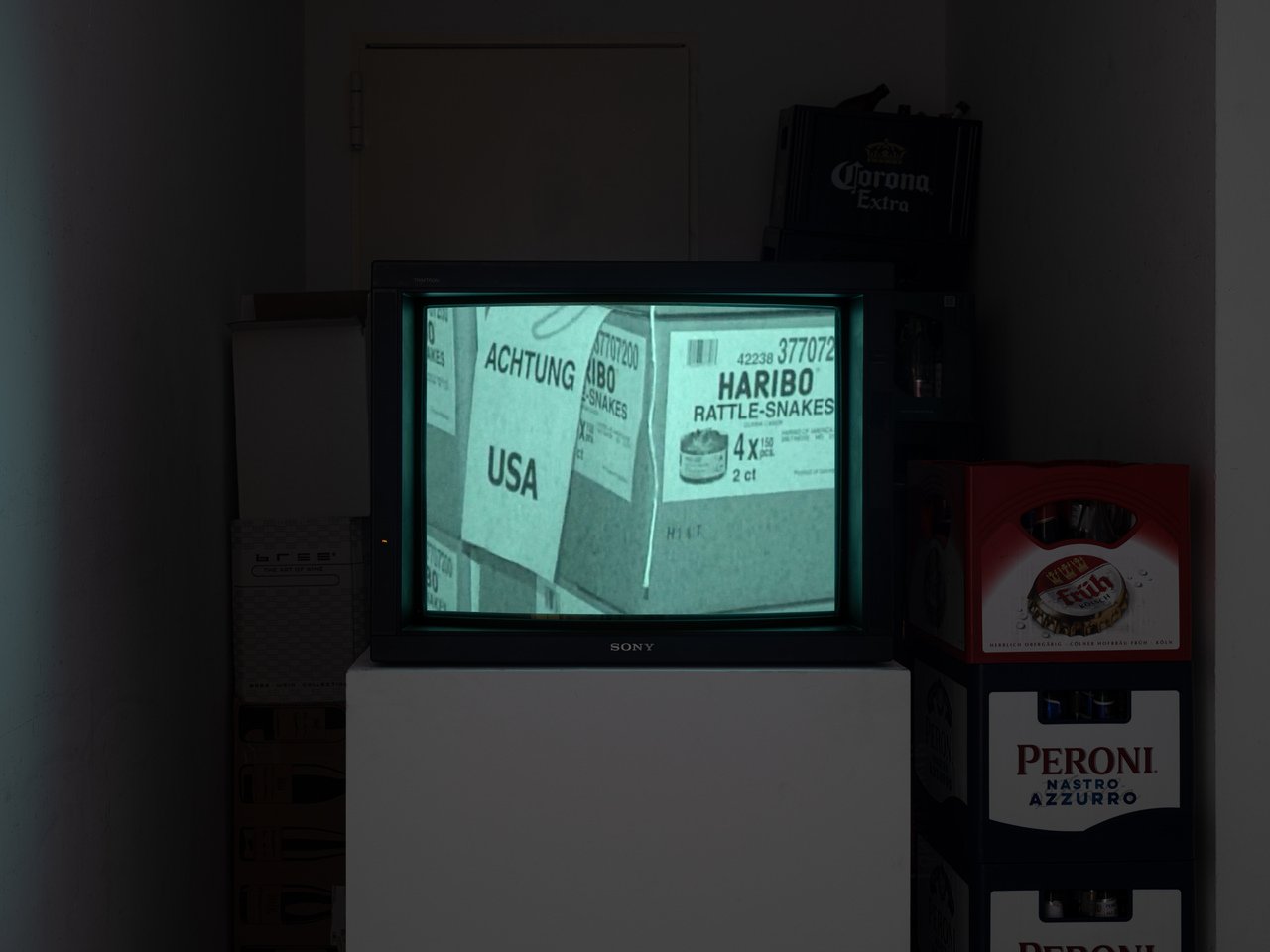
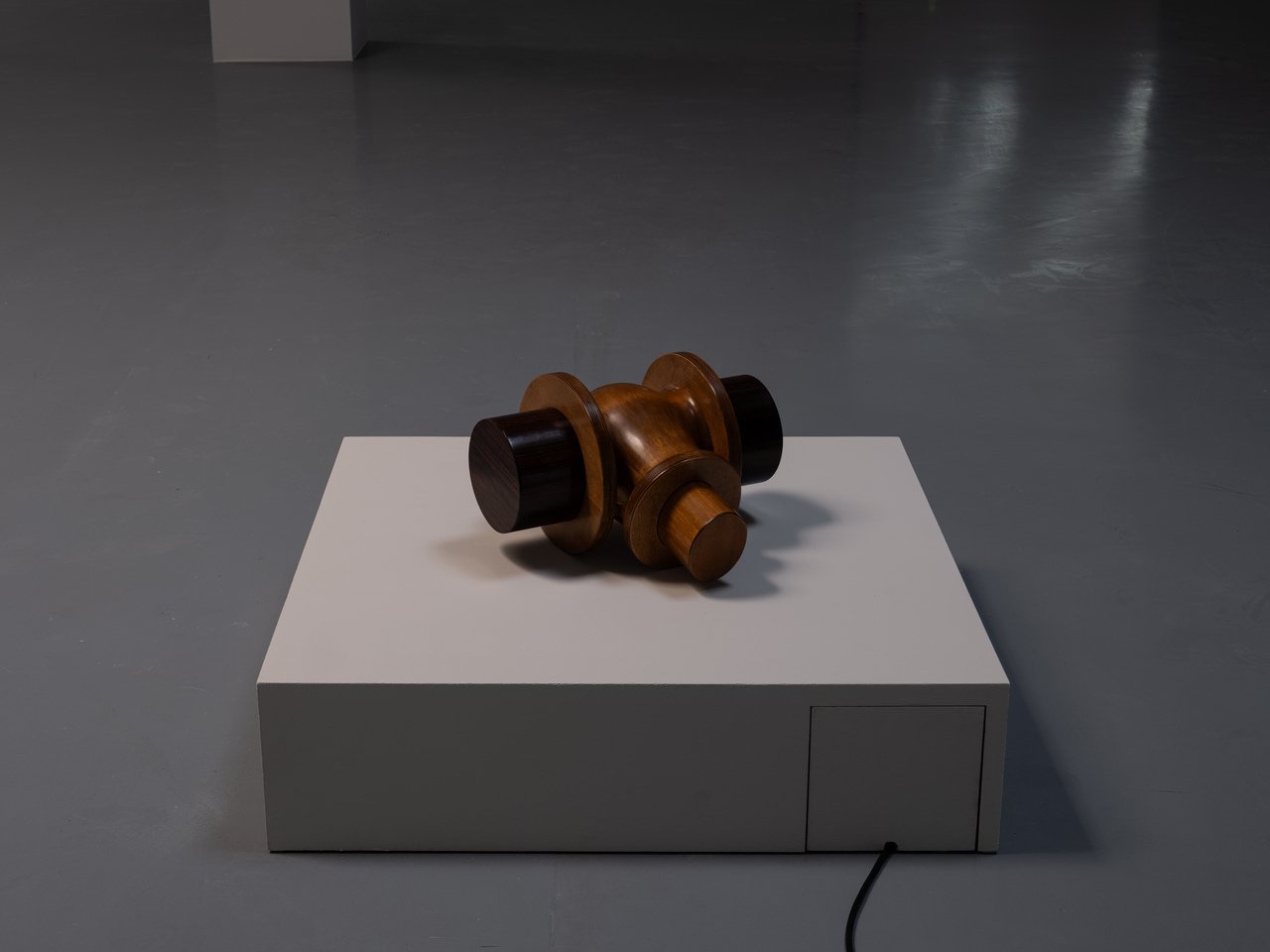
Bonner Kunstverein, 2026. Photo: Oskar Lee. Courtesy the artist, Galerie Buchholz, Cologne/Berlin/New York and dépendance, Brussels.
Clouding
In many of her works, the city – New York, Paris, Oslo, Bonn, etc. – is the scene of Budor’s creation of a suspended, virtual space, a kind of threshold. Her videos present industrially-produced forms and resonances as strange, emptied of their immediate recognisability. The sound of a hollow structure is audible because it isn’t determinate. As with Autophones (2022–), the automated world becomes foreign, the emission of invisible vibrations makes these works ‘neither purely abstract nor purely concrete and sensible.’[2] By this account, Budor’s practice is not so much site- specific as situative. If the site-specific is organised according to pre-established coordinates, the situative is what creates distance between the coordinates of the established space, without overriding it, in order for imagination to circulate. The situative is not strictly physical, nor strictly mental; it is a kind of materialism not founded in matter.
I want to suggest, reading alongside the Lacanian philosopher Joan Copjec’s latest book Cloud: Between Paris and Tehran: Kiarostami/Corbin/Lacan (2025), that the hollow structure is not only a pre-condition for situative space, but also implies a specific understanding of the visible, a definition of light to match. In Cloud, Copjec highlights the distinction between two conceptualisations of light: lux and lumen. In order to make this distinction, she needs to go back to the ninth century and a shift that took place in Christian dogma and by extension the art produced to depict Christ.
Copjec’s effort to theorise this shift must be understood within the context of her decades-long struggle to disarm historicist thinking,[3] which could be understood as the elevation of traceability, forensics and transparency of motives. Squinting back all those centuries ago, we can observe the roots of how images came to be understood today as mere proofs. What does the concept of the divine – a certain withdrawnness – have to offer us in the context of generalised exposure?
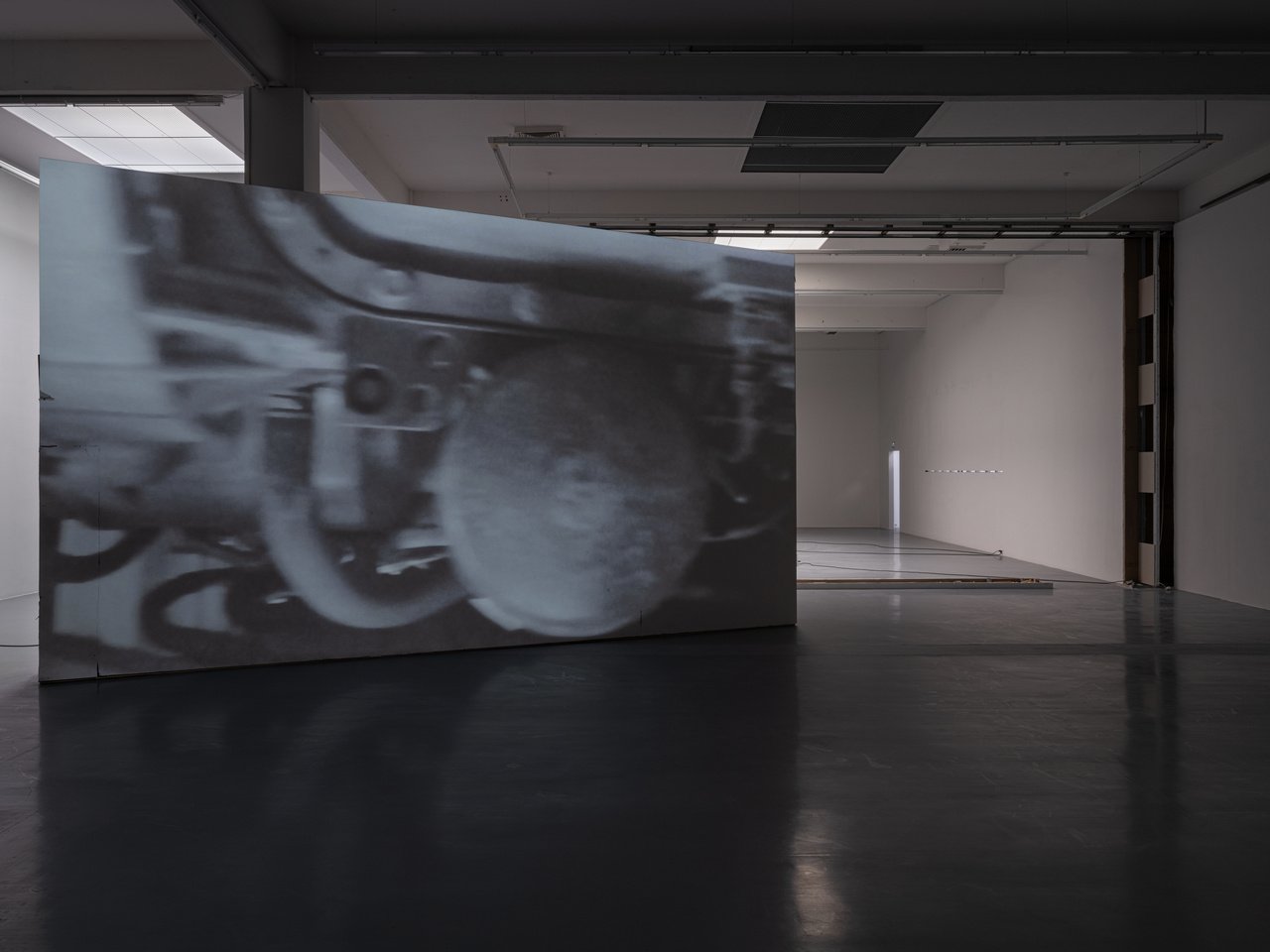
Bonner Kunstverein, 2026. Photo: Oskar Lee. Courtesy the artist and Galerie Molitor, Berlin.
Scene: 869 CE, Constantinople. After centuries of debate, the notorious filioque clause, which would divide the Eastern and Western traditions of Christianity, emerges victorious. Upheld in the West, the clause stated that the Holy Spirit proceeded from – was caused by – not just the Father but both the Father and the Son, making them equally divine. There was no longer a tripartite formation but only a duality: human–divine. Absent the minimal difference between God the Father and His Son, Jesus, the incarnate man, God no longer had an empty place held somewhere for Him. The literalist conception of incarnation congealed God in the body, making Jesus a lone proof. The questions opened up by Jesus himself, of the ceaseless repetition of creation, of the idea that God appears through all of us, of His insistence that the One is not self-identical but ‘One only through its plurality,’[4] these questions settled into the abstraction of the numerical, chronological One of historical order. Making Jesus into the unique appearance of God to be blindly followed paradoxically revived the obedience to Law that Jesus himself pushed against: it made light an abstraction, not something whose effects we partake in daily, precisely because its matter is invisible.
The shift in how light was conceptualised and so how art should be made as a form of evidence (of God’s fleshliness) commenced at the very time that filioque was taken up once and for all in the West: ‘While lumen reveals itself at the point of encounter with another dimension, lux is thought to be solely at the disposal of rational man, who reveals the truth by its means.’[5] Lux refers to the light of the police department, which seeks to expose what is hidden, indiscriminately bathing the world in abstract light, believing that all is there to be witnessed if only enough of the hard facts were shone upon. Lux makes those who look upon the image its mere consumers, people to be educated according to the dogma of the day. Lumen refers to the light of the artist, whose fundamental effort is the creation of distance between what is seen and the invisible source of illumination. This concept of light makes those who look upon the image bearers of their own hidden aspects, for ‘what this light illuminated was our intimate relation to the divine, not the divine itself, whose privileged obscurity was preserved.’[6]
In other words, if faith is just a matter of proving God was a man – showing the police the proof – then a hundred bucks is a piece of rectangular paper with ink on it.
Self-Loving
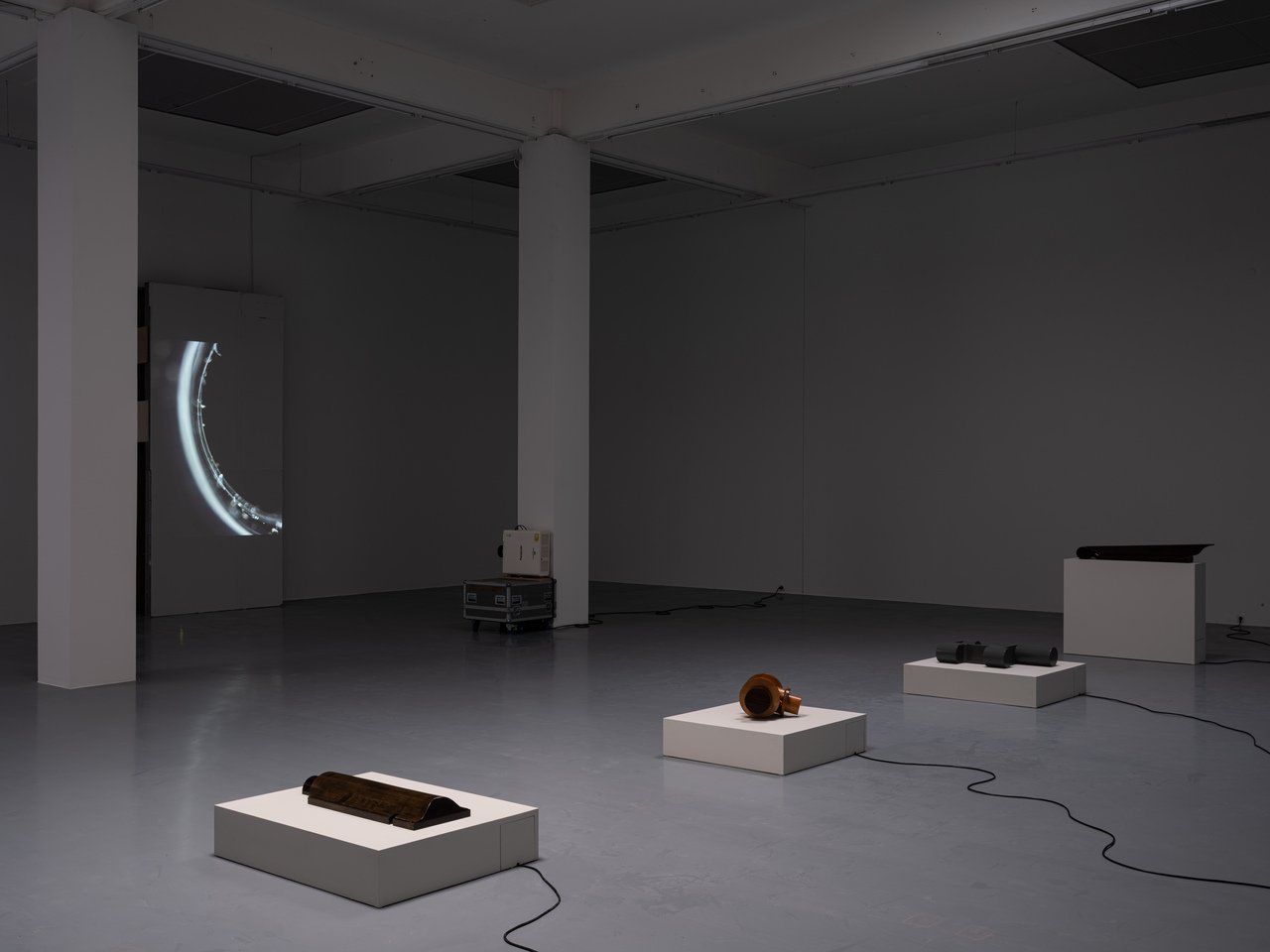
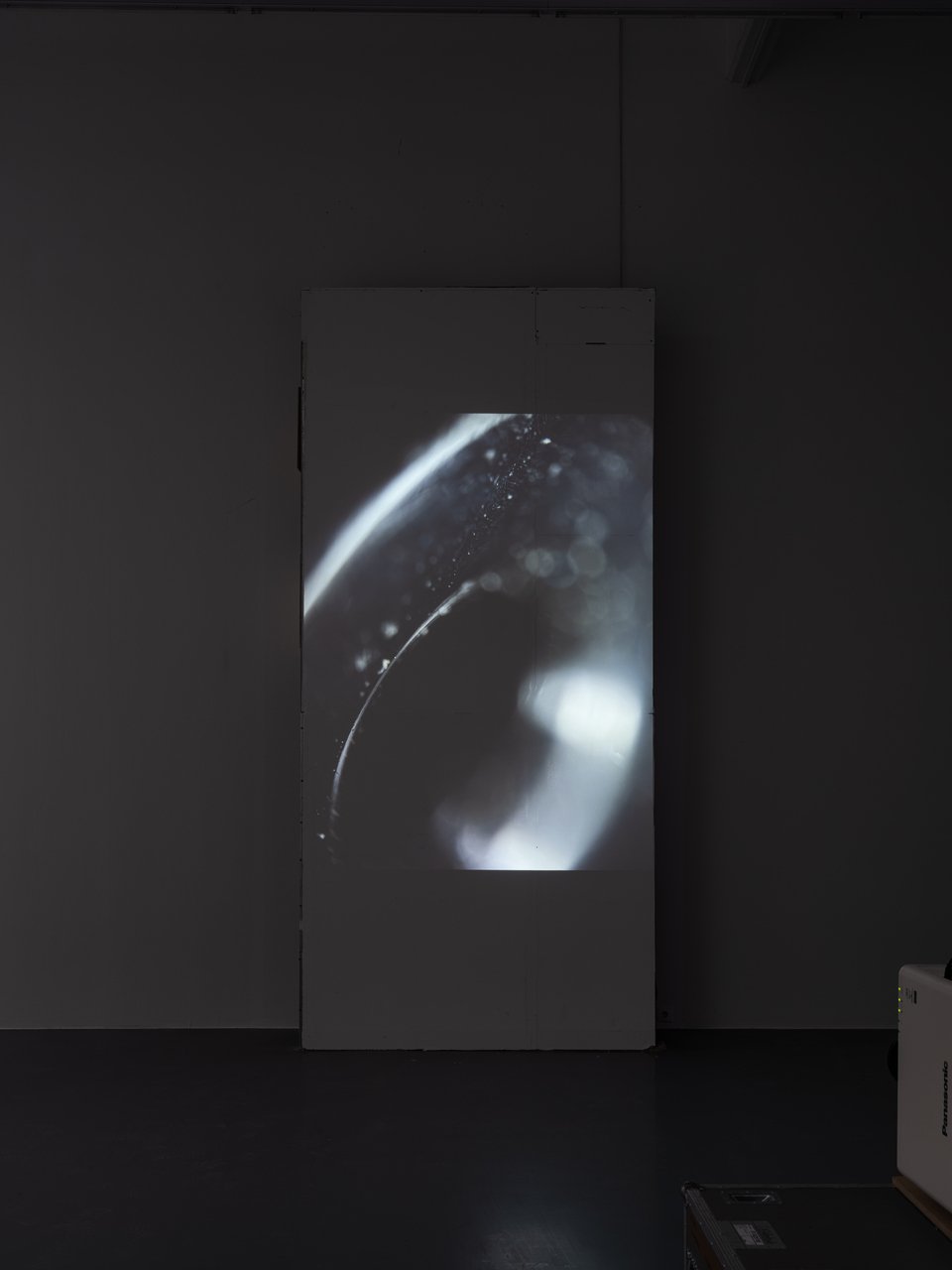
A machinic sound, that of a mini-projector whirring alongside little breathing machines, coping mechanisms. For Atomizer: Everything is here. (2026), Budor collected dozens of used disposable vapes from strangers in New York City and photographed them with a microscopic lens. This is not just a commentary on the atomisation of society and the isolated, consumerist, addictive bubbles that prevail, to which we are all party. We live under the reign of the vaporisation of public and private space, and this is not only because of what’s happening outside but also what that does to the inside, because of the way it defines the subject as merely the sum of its parts, and therefore – like a machine – generic.
Also called light micrographs, the images in Atomizer are made with a portable lens attachment that turns a smartphone into a microscope, enlarging its object by three-hundred times. I am looking at extreme close-ups, so extreme I lose perspective. But rather than extracting detail to scrutinise it as forensics would, these photomicrographs illuminate, to quote Copjec quoting Deleuze, ‘a dimension of another order.’[7] Budor’s title references the Charles Baudelaire poem, My Heart Laid Bare (Mon cœur mis à nu), published posthumously in 1887, which begins: “Of the vaporisation and the centralisation of the Ego. Everything is here.” (De la vaporisation et la centralisation du Moi. Tout est là.) This line evokes a contradictory movement, it reads like something solid becoming liquid becoming air, a kind of disappearance and splitting. And yet to centralise is to concentrate and bring together disparate parts, make them appear coherent. The Ego is among these states, it is plastic, has the capacity to change. Here, we are not in the world of dualism, but of imagination, where the tripartite structure is present: vaporisation, centralisation, Ego.
Budor stops the flow of vapour a minute, she centralises, and we can look, wonder, and even ask the burning question. I think: if cigarettes are like clocks, vapes are like apps. I suck and I suck. Vaping produces the sense that time is always running out, precisely because it has no end. For this reason, the sense of control they offer is merely the pitiful control of there being nothing outside yourself, and this produces an utterly deregulated (life) time, where enjoyment has no end and so is never experienced. Nonetheless, mouthing a vape is an internal, invisible pleasure, too. Budor zooms in on this pleasure that is at once one’s own and that of a stranger, for the time making these images is not spent in order to give us ‘direct knowledge’ of what they depict but, as Copjec writes in reference to John’s rejection of filioque, ‘the primary function of the image was to bore a hole, an opening, in the visible world through which the invisible could shine through.’[8]
Freedom is impossible without a hollow structure; when there is nothing empty, nothing that has not been filled up with information, no move we can make that is not calculated, then the money is gone and my sole is just a block of rubber.
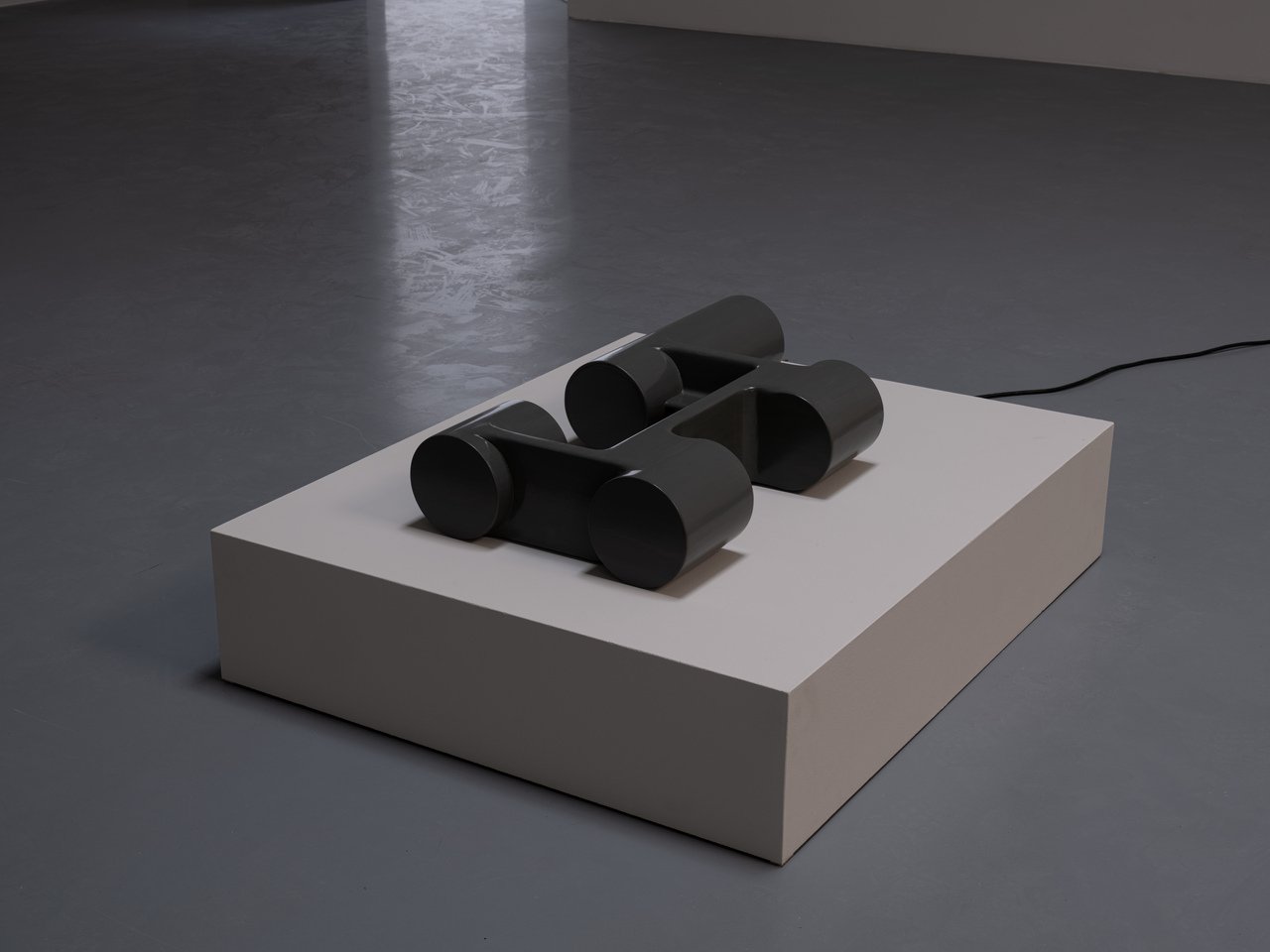
Courtesy the artist and Galerie Molitor, Berlin.
Driving
The historicist impulse to see chronology as king, and to reject anachronism in principle, is a blandly capitalist position that wants to know nothing of the unconscious. Reviving our imaginations is not a trifling matter. What Copjec and others are condemning, and are dating to the time when spirit – the imaginal world – was evacuated from the West, is the loss of an ‘organ of knowledge, the imagination, distinct from both the intellect and the senses.’[9] This organ is the very possibility to conceive of forms – whether plastic or conceptual – as having the capacity for change. This organ of knowledge is the medium that enables art to appear.
For Medium (2025) Budor placed spy cameras, which are cube-shaped like dice, in holes and manholes on the road driving from East to West on 29th Street in Midtown Manhattan, where her studio was located. Spy cameras are designed to film whatever passes in front of them, constantly. Stuck in the road, looking up at the sky, what they ‘see’ is the underside of cars and trucks. Each vehicle is a frame moving through the projector that is the road, editing the film as they go. Budor cut out the sky, filling it almost completely with blanks, except she kept one frame showing what’s above the traffic: the tower where Rose Hill Psychoanalysis clinic is located, framed by a cloudy sky.
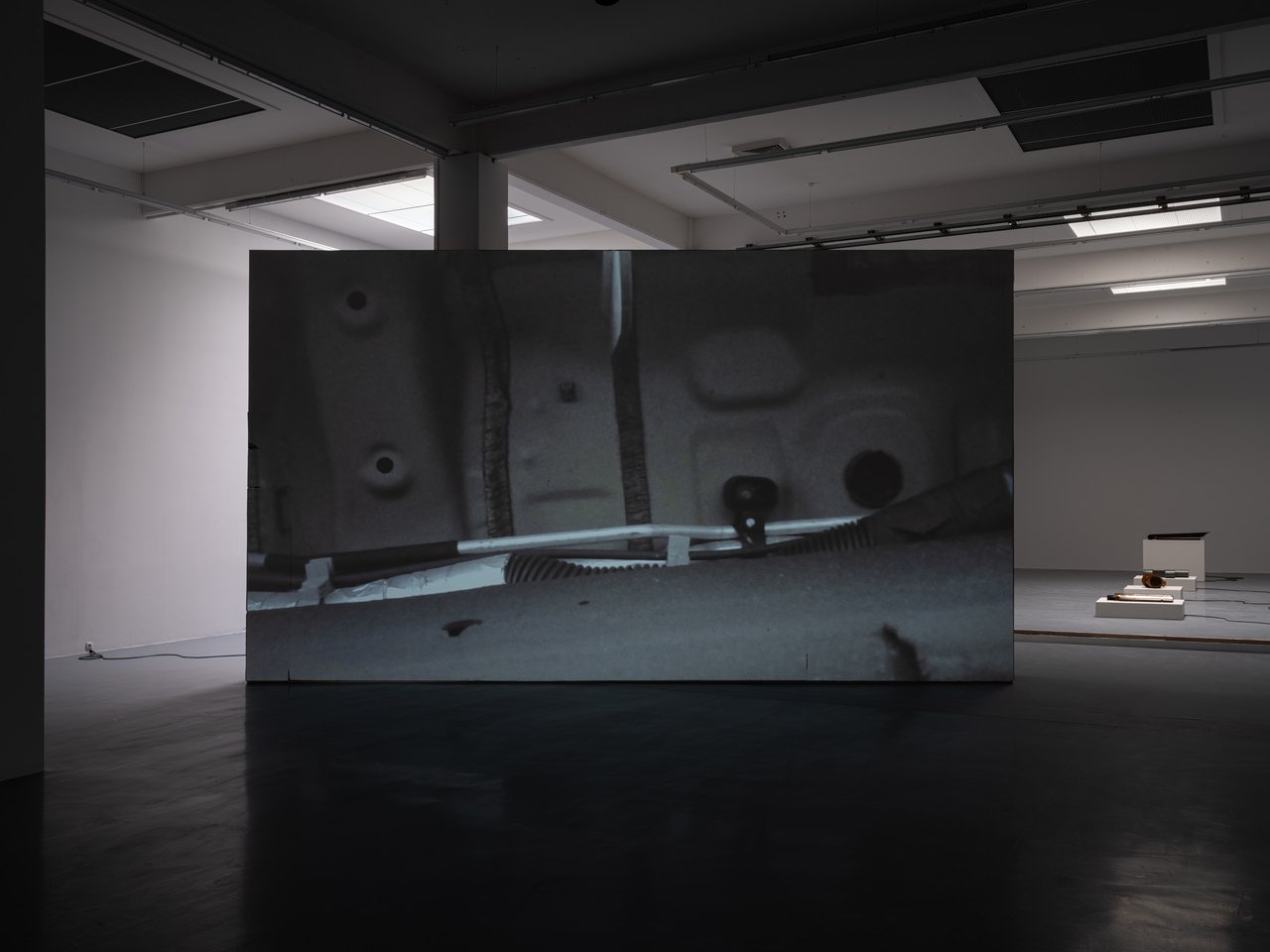
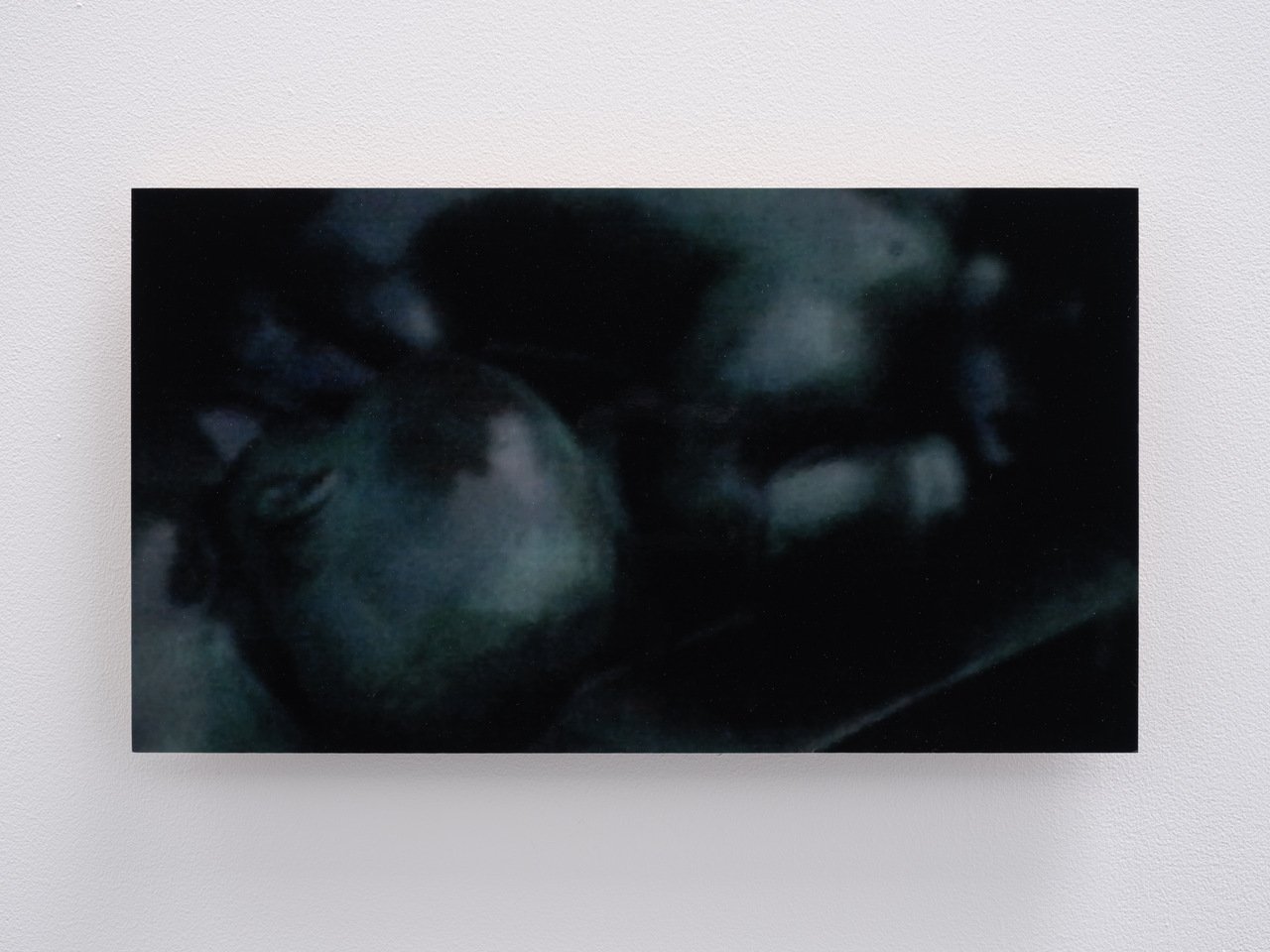
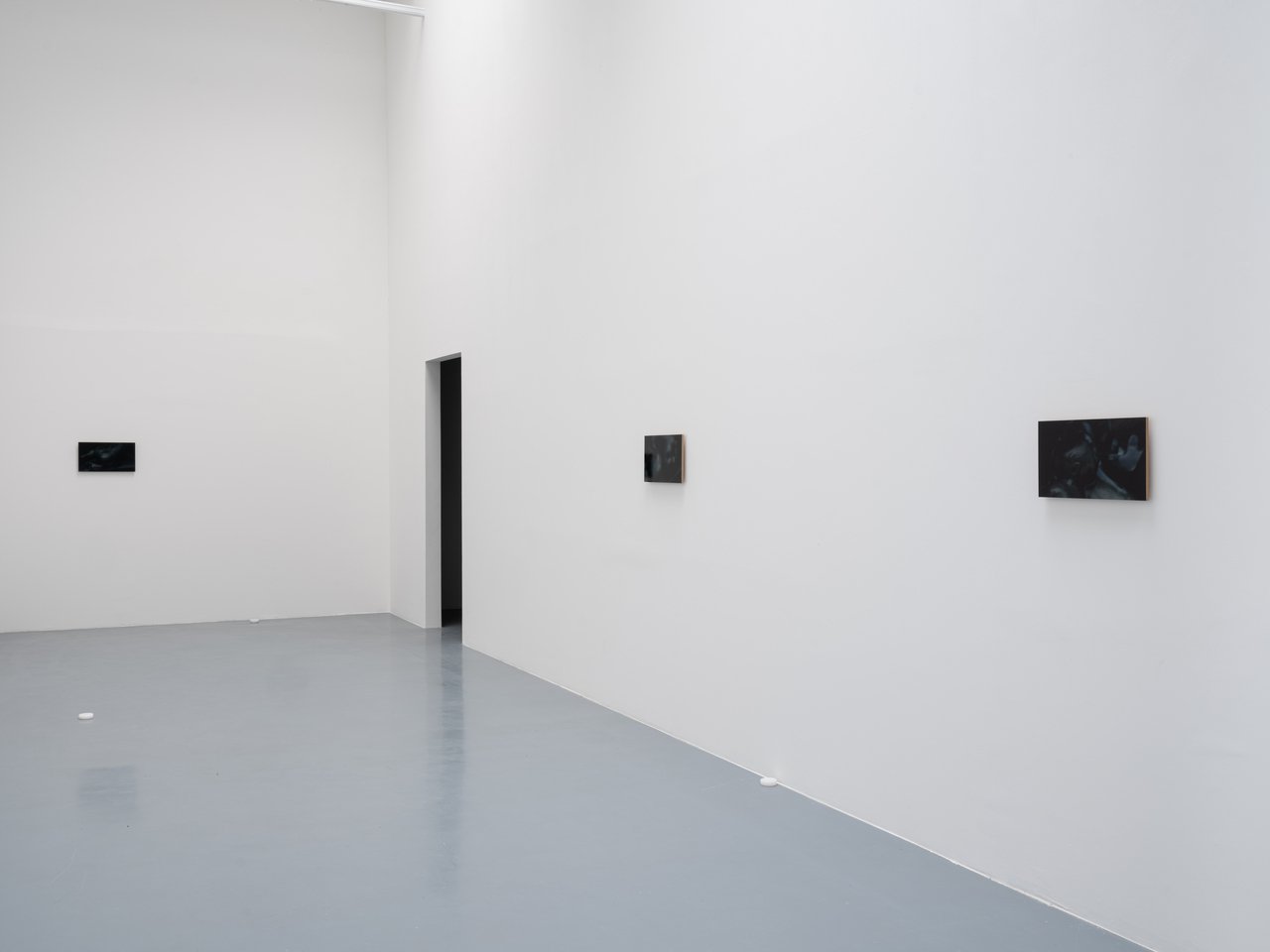
Spy cameras could be considered a lux technology par excellence, and yet Budor blocks their wish to expose, prove or reveal by turning their function into a question. So we get mysterious angles on industrial shapes, a syncopated rhythm that is physically familiar, and yet the images are excessive, the vehicles are too close. The chosen camera points to the imaginary bias of the technological world in which we live; the market suggests consumers purchase tiny cameras to install in houses, clothes or cars to spy on their husbands, clients, nannies, employees or practically anyone else. Happily, consumers like Budor do something else with them. The market function of such cameras is not all. Instead of the fantasy of omni-vision in which these cameras traffic, Budor’s view from below turns surveillance footage on its head. With this camera we can indeed do things other than stare indiscriminately at reality, as if reality were merely a fact, not itself impacted by our being there, by our looking at it.
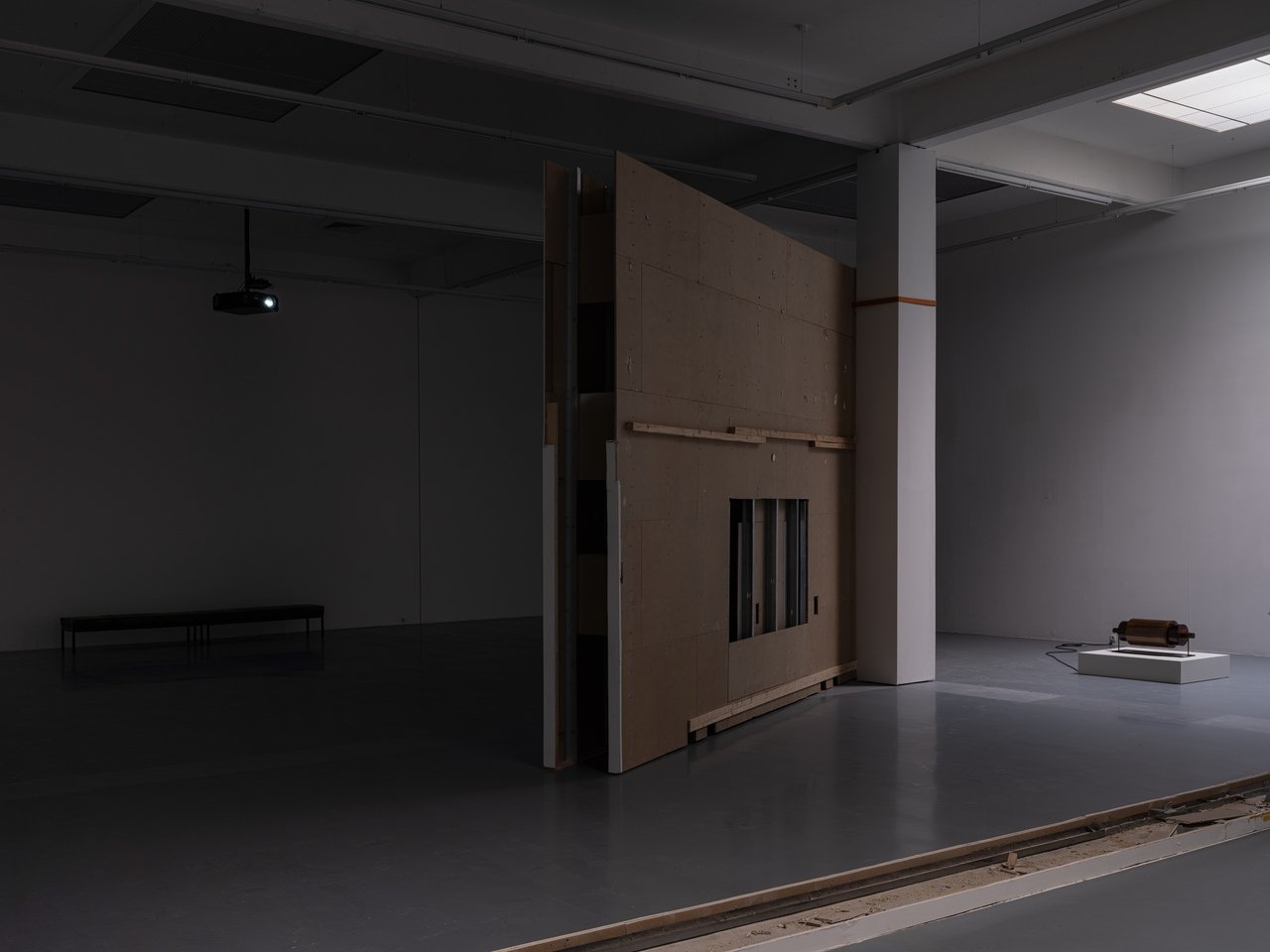
For many years there was a black box for showing video art in this space, the idea being that light should be limited to the projector beam. Budor dismantled this set-up for her show, with one full wall being cut out to stand alone and support Medium (another part supports Atomizer). We can look at its backside; what appears behind Medium is likewise Medium. This cut into the black box is at the same time a construction and an opening and repeats the logic of Medium itself, where without having an overview, we see the mechanics of a machine, the workings of a work. This is no mere tautology, it is tautology in the strong sense: it shows that repetition is not plainly superfluous – unnecessary – but it is necessarily superfluous, literally overflowing. There is not merely the functioning of the technology – the machine, the wall, the institution – there is what overflows it, which is not simply there but appears through our efforts, as their underside.
Budor wrote to me of the work, and of the ubiquitous traffic jam, “The stagnation is pitched as progress; it is an endless jam that still moves (towards the West, but where?)” Stagnation is the disavowed underside of what we call progress; it is also what Freud referred to as death drive, that force of stasis that Copjec says “insists beyond reason, beyond the needs of survival.”[10] Budor herself moved towards the West. If “West” is a synonym for “progress”, why is the forward march so draining? What element had to be eliminated so that the West could continue to illustrate, in the blinding light of lux, that freedom comes in the afterlife, but not today?
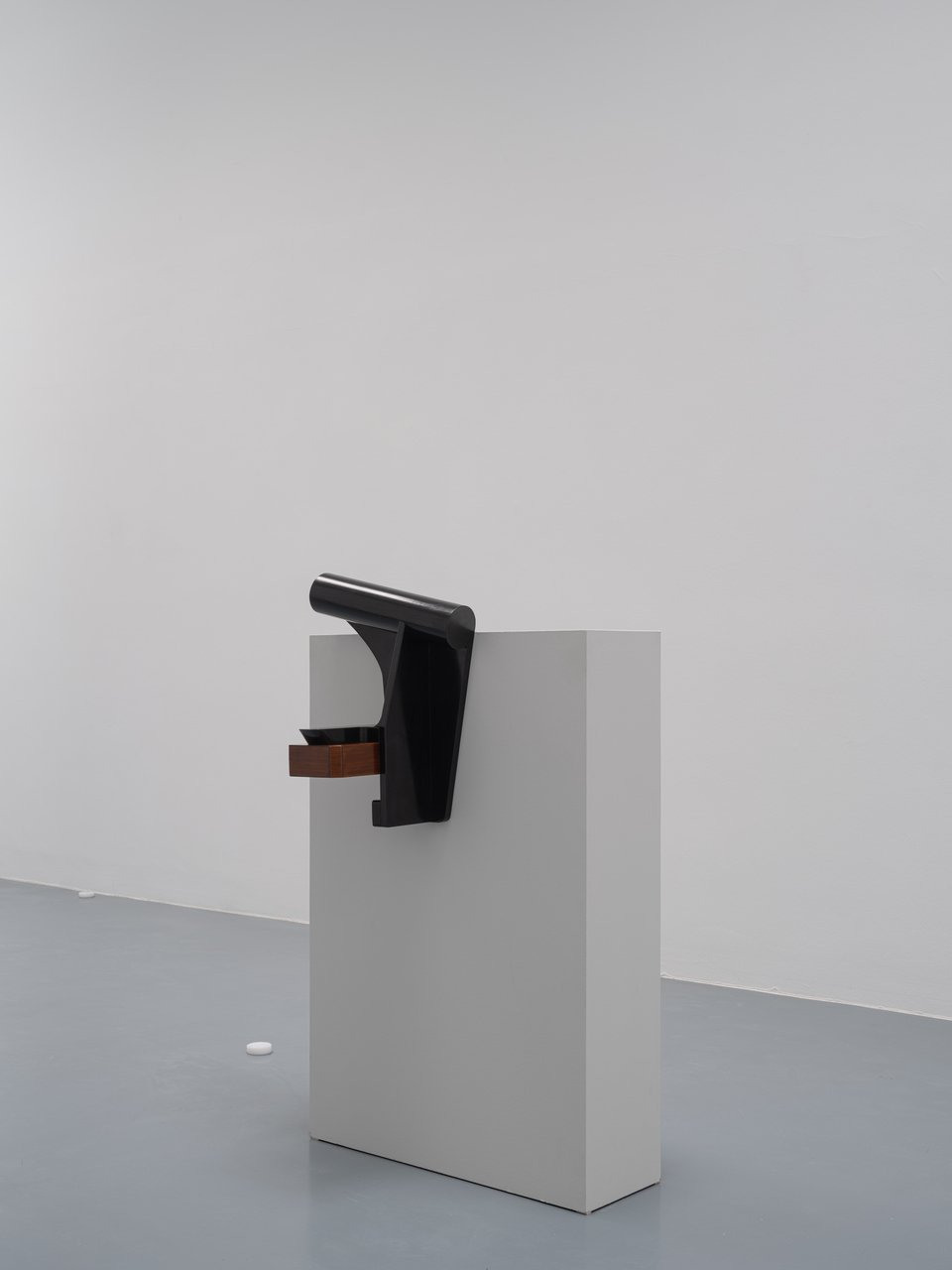
“MY ENERGY COMES FROM FREEDOM”, Bonner Kunstverein, 2026. Photo: Oskar Lee. Courtesy the artist and Galerie Molitor, Berlin.
[1] For more on this, see Joan Copjec, “The Unvermögender Other: Hysteria and Democracy in America”, in Read My Desire: Lacan against the Historicists (Cambridge, MA: The MIT Press, 1994), p. 141.
[2] Joan Copjec, “The Imaginal World and Modern Oblivion: Kiarostami’s Zigzag”, in Cloud: Between Paris and Tehran: Kiarostami/Corbin/Lacan (Cambridge, MA: The MIT Press, 2025), p. 17.
[3] That is, “the reduction of society to its indwelling network of relations of power and knowledge”: Copjec, “Introduction: Structures Don’t March in the Streets”, in Read My Desire, p. 6.
[4] Copjec, in Cloud, p. 19.
[5] Ibid., p. 34.
[6] Ibid., p. 21.
[7] Ibid., p. 38.
[8] Ibid., p. 20.
[9] Ibid., p. 18.
[10] Copjec, “Battle Fatigue: Bodies and Resurrection”, in Cloud, p. 93.
Artists: Dora Budor (Preludes by Camilla Wills, Eleanor Ivory Weber, Henrik Olesen, Yvo Cho)
Exhibition Title: MY ENERGY COMES FROM FREEDOM
Curator: Viktor Neumann
Venue: Bonner Kunstverein
Place (Country/Location): Bonn, Germany
Dates: 27.06–6.09.2026
Photos: All images courtsey of Bonner Kunstverein.