
Viktor Witkowski
On the morning of my visit to Beatrice Moumdjian’s exhibition Die gesiezte Tochter.[1] My Total Deconstruction of an Armenian Family at Galerie Wedding in Berlin, I met with a colleague and dear friend of mine who gifted me her most recent book that she had co-edited and which came out earlier this year.[2] The book presents a collection of vignettes from the early life of Grażyna Gross, a non-Jewish Polish woman and her path as a refugee during WW2. Written by Gross herself as an adult, this “paramemoir constitutes a type of lifewriting that goes beyond a single individual.”[3] In chapter four, titled Letter to an Unknown Man, Grażyna Gross writes:
“My father had told me that wars and revolutions had a way of breaking families apart and scattering them around the globe. So, someone somewhere may still be taking out the precious family album, if it survived the flight, and is showing it to your grandnephew or niece. ‘This is your great-uncle, a man to be proud of. He did not get out in time…’ Your photograph has turned yellow and brittle, its edges are beginning to split, but you are being remembered and will be for many years.”[4]
I kept returning to this passage and scholar Irene Kacande’s term paramemoir when I walked through Moumdjian’s exhibition. Kacandes describes paramemoir as the attempt to reflect on family members’ multiple experiences which are neither clear nor cohesive. These experiences are often chaotic, sometimes incomprehensible; often all that remains are fragmentary memories.[5]
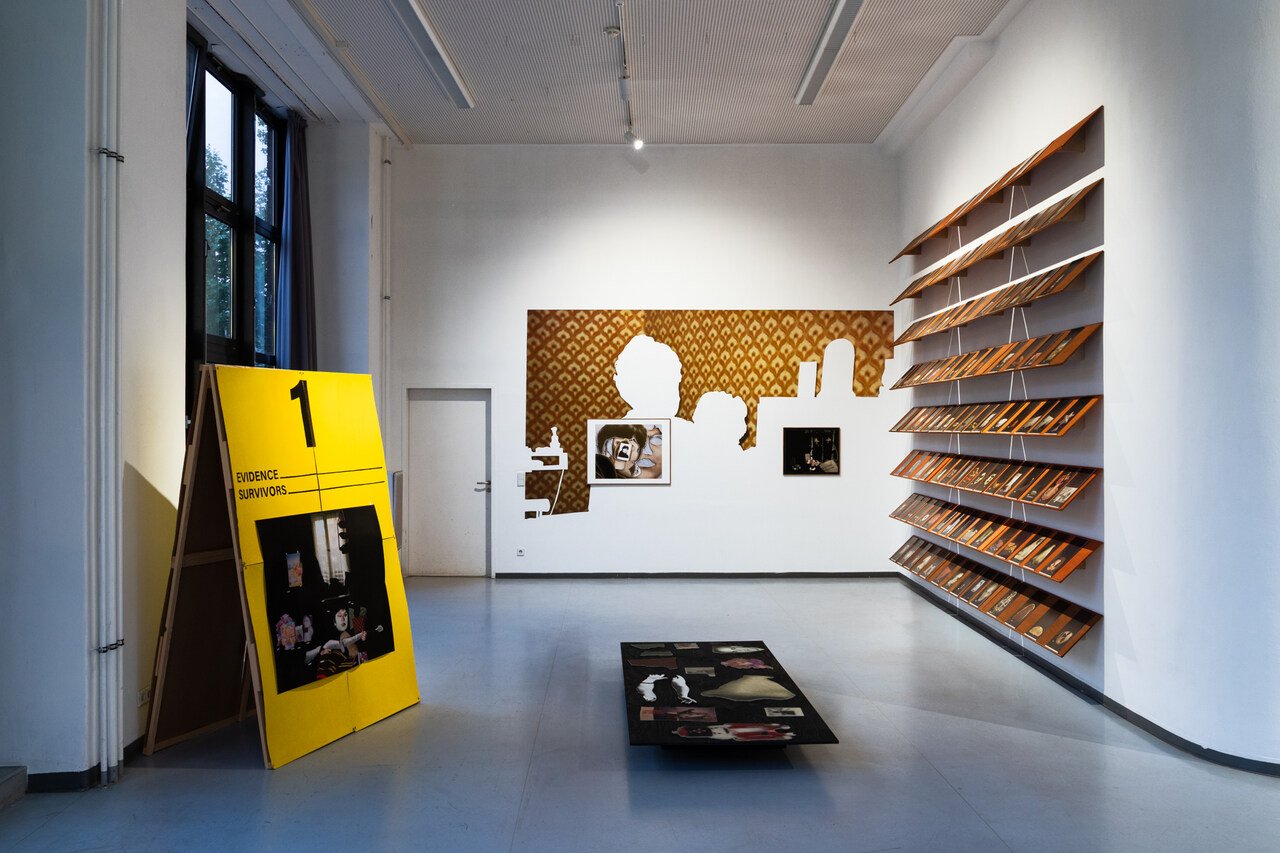
Image courtesy of Wataru Murakami.
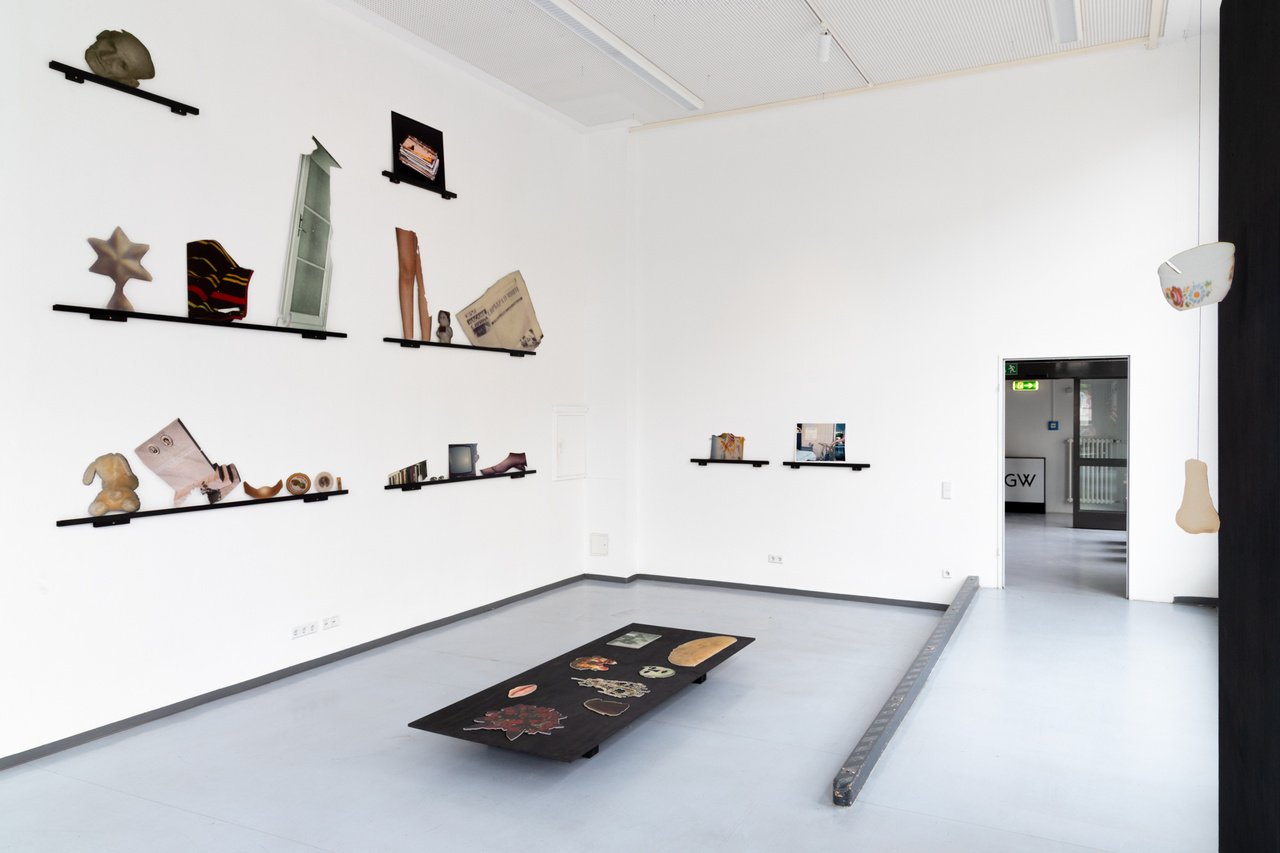
Image courtesy of Wataru Murakami.
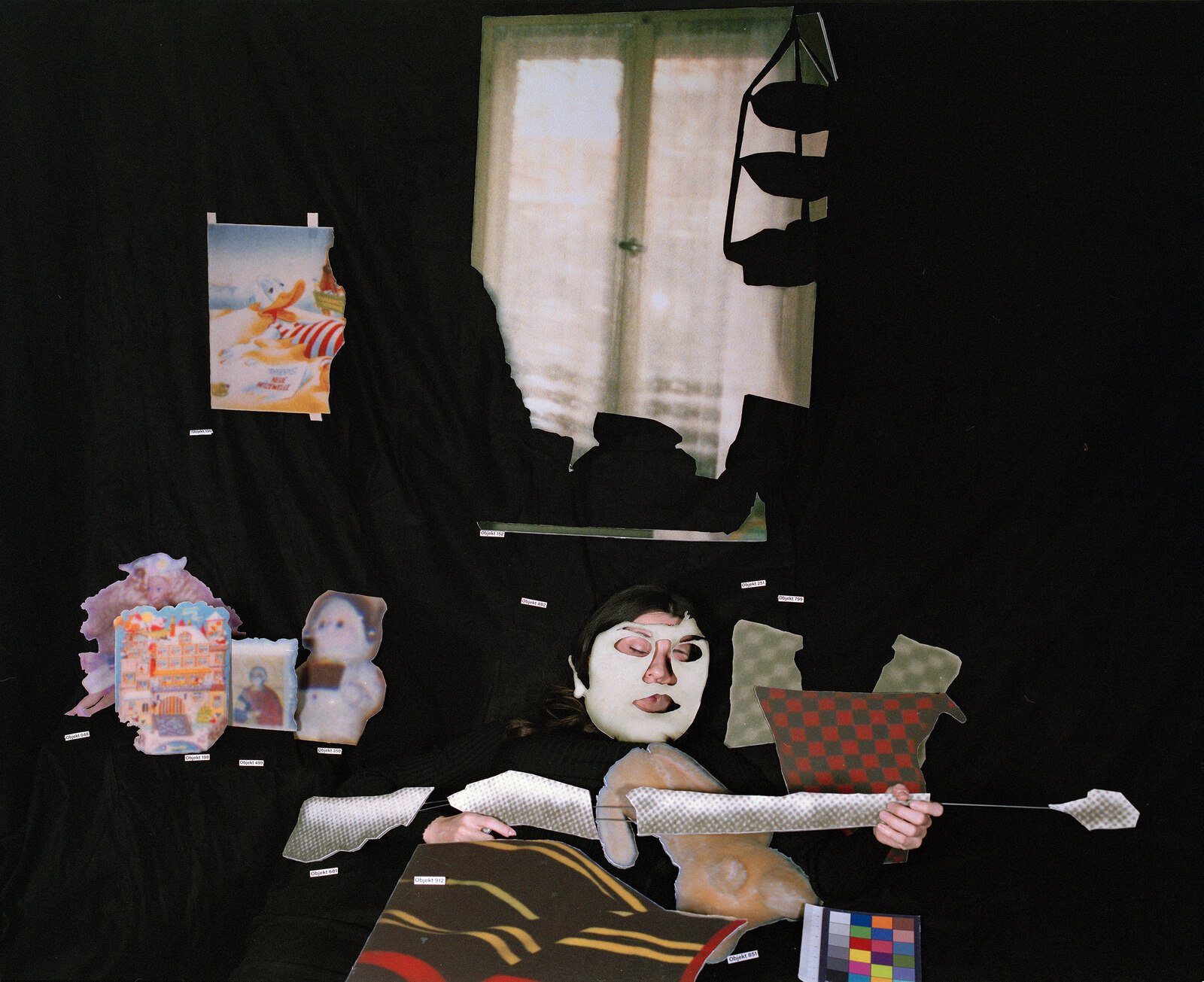
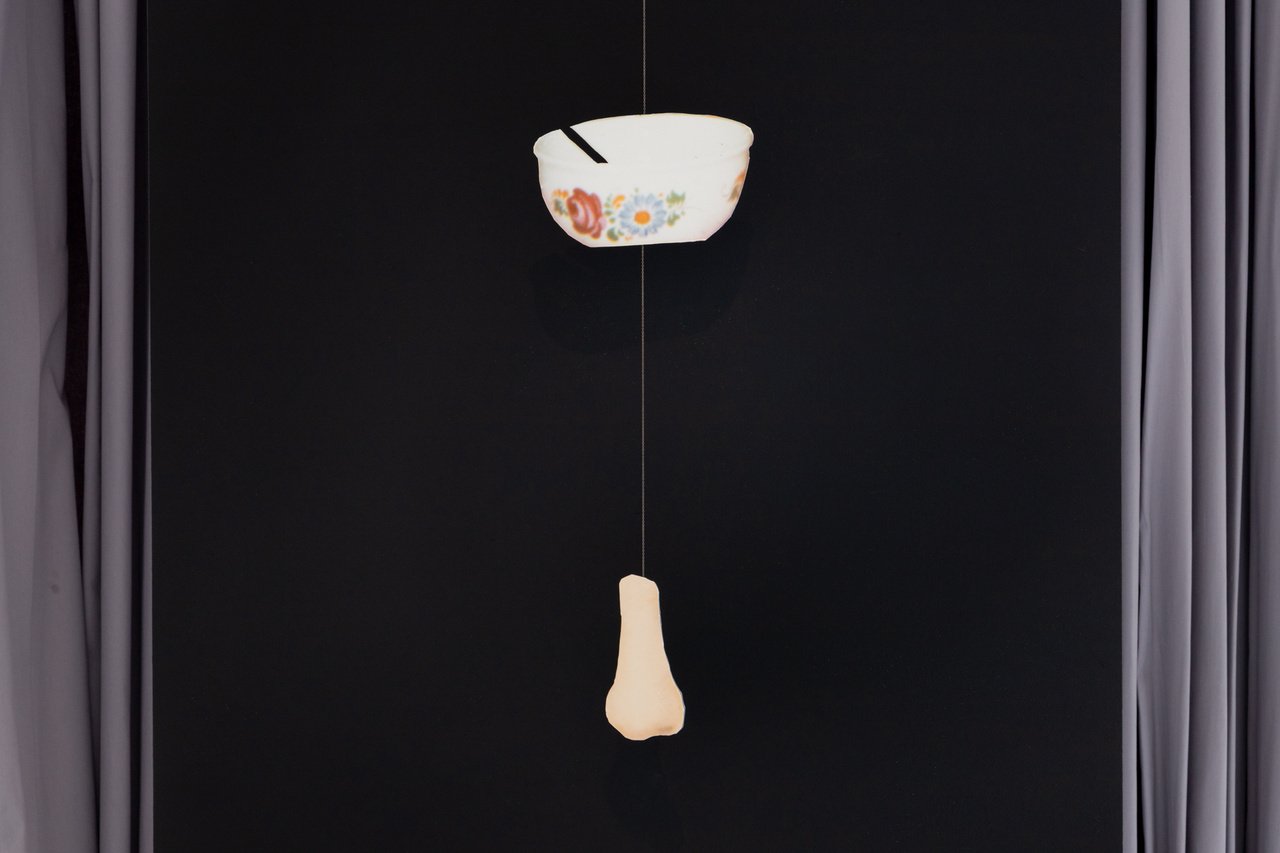
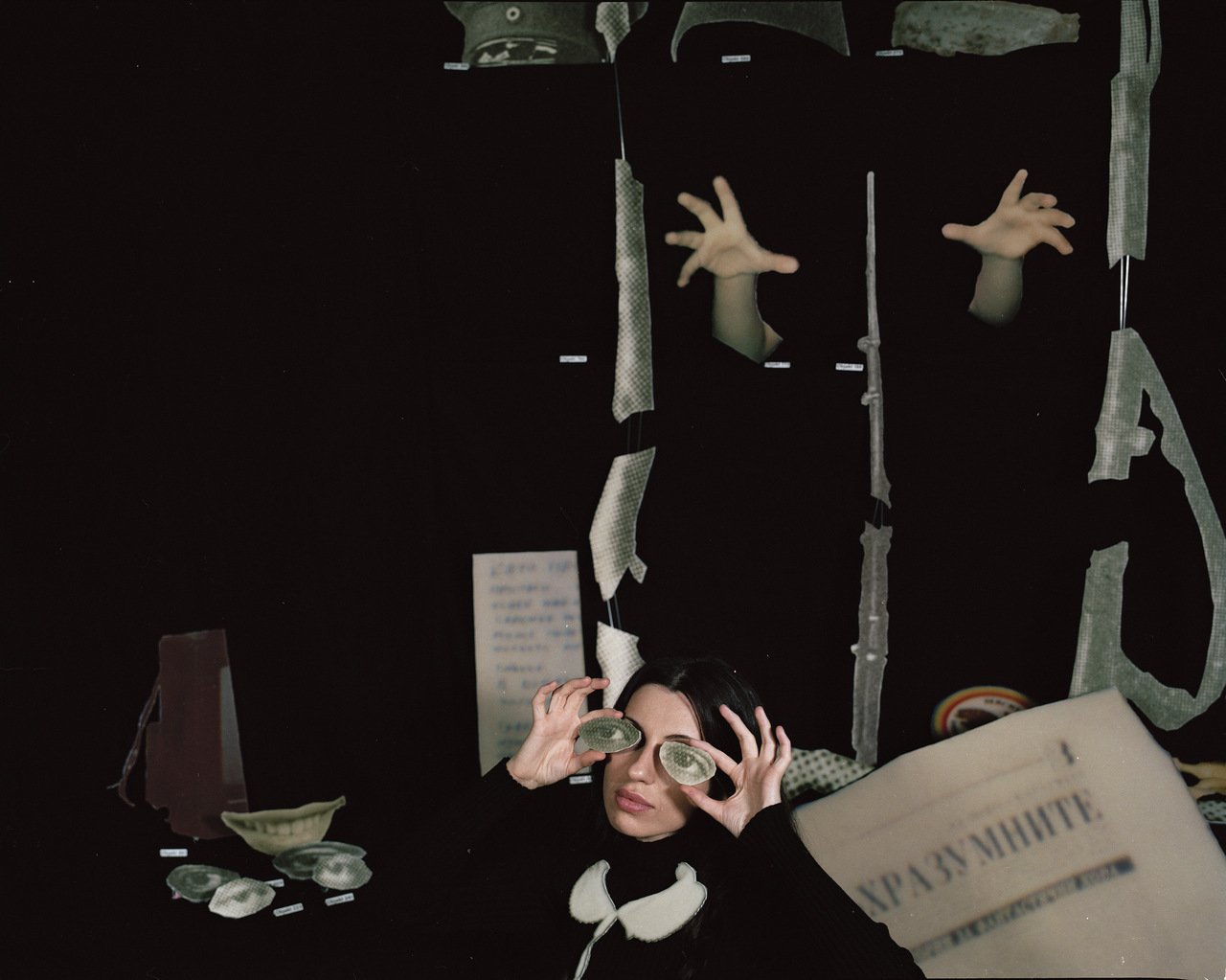
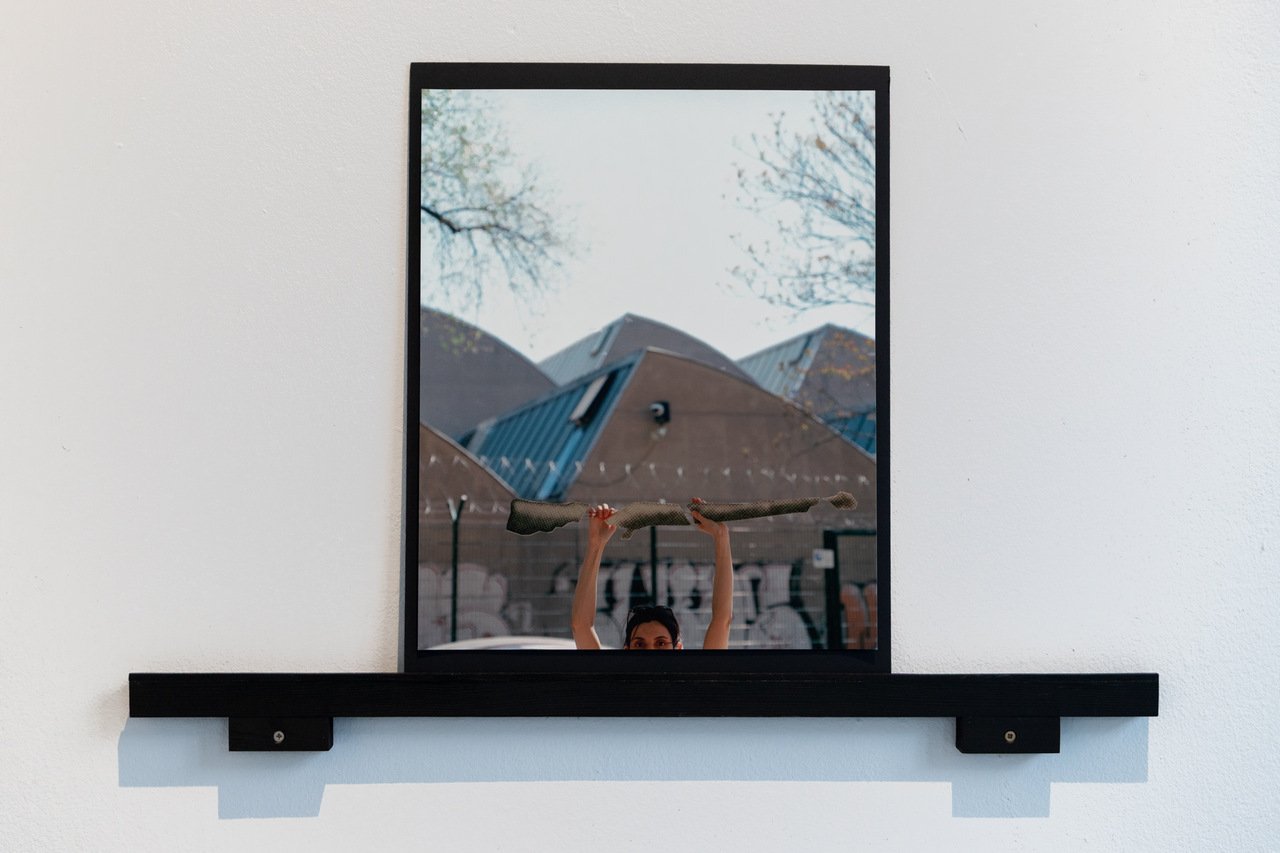
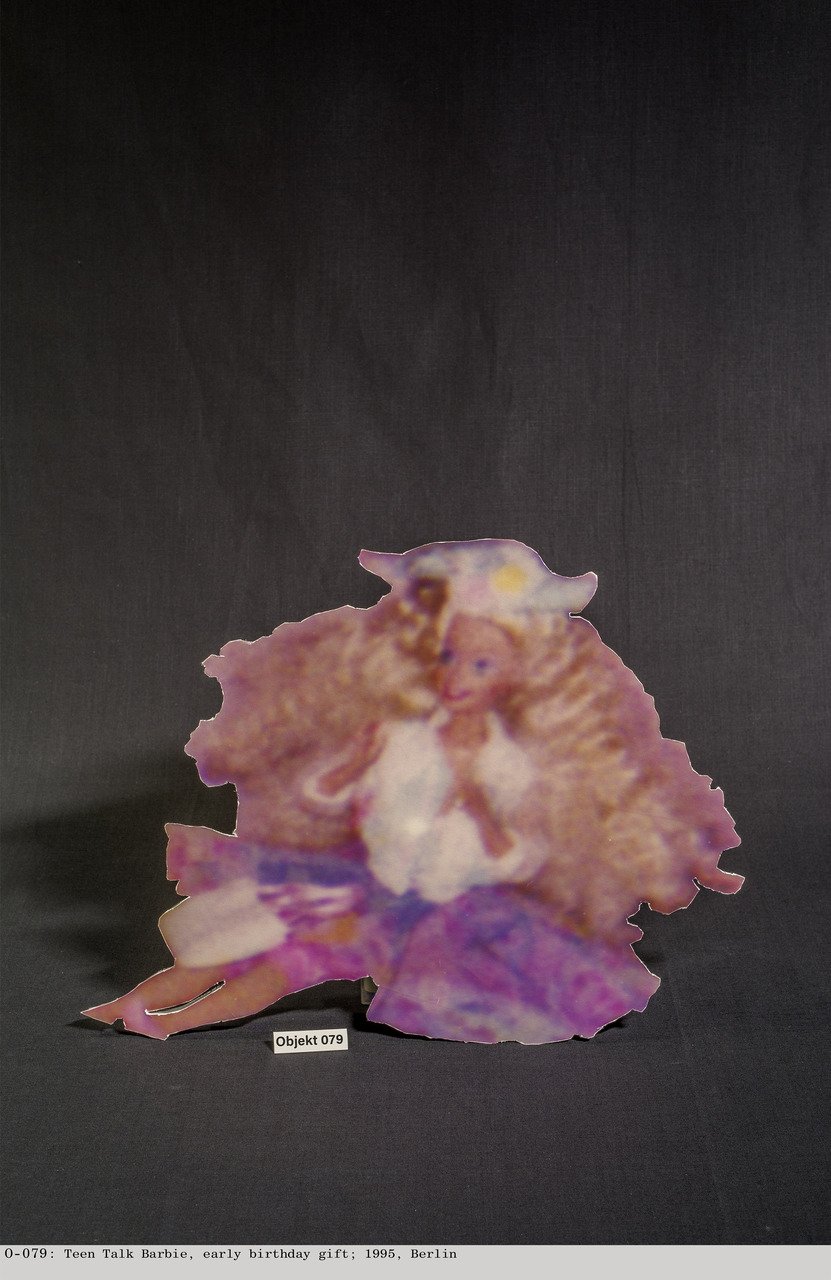
Moumdjian’s photo-sculptures, both as physical cut-outs in the gallery, arranged on shelves and as photographed and catalogued artifacts, perfectly fulfill the function of a visual paramemoir. The source of all her work are family photographs given to Moumdjian by her mother. Instead of maintaining each photograph’s integrity, Moumdjian transforms them from analog artifacts into digital objects. Her source photographs are scanned, scaled up, isolated from their surroundings, printed out as archival pigment prints, mounted on foamcore, and further cut by hand to mark these photographic hybrids as sculptural fragments of a fragile whole. What is amiss, what cannot be reconstituted is their point. Body parts like legs, heads, eyes, uniformed torsos, echo a violent origin.
In the exhibition’s excellent text written by the curator Eylem Sengezer, we learn about Beatrice Moumdjian’s biography, her Armenian heritage, her immigration from Bulgaria to Germany in the 1990s, and her family’s trajectory since the Armenian genocide, which claimed the lives of several of her ancestors. The impact and scale of systematic mass-extermination reverberates through the decades. Each unevenly textured edge of the handcut photo-sculptures serves as a reminder of a rupture still present, engrained in each image, be it flowers, doors, featureless faces, or 2000-era posters on display in Western European teenage interiors.
We witness an amalgam of hurting, searching, asking, listening, questioning, and above all, creating. Despite the inconsolable impact of genocide, Moumdjian wields her own powers, part research, part artistic practice, to great effect. Her photo-sculptures assume various identities in playful ways which extend and enhance the lives of her personal photo archive. Mediation and transformation of her sources reveal their intergenerational and often painful conditions. At the same time, these transformations speak to an empowered position Moumdjian takes on. She is one link in her family’s chain, but as an artist and archivist she is stepping outside of established narrative structures to acknowledge the unstable and unreliable conditions that shape our memory (as individuals and collectives), sense of self, ties to and notions of family.
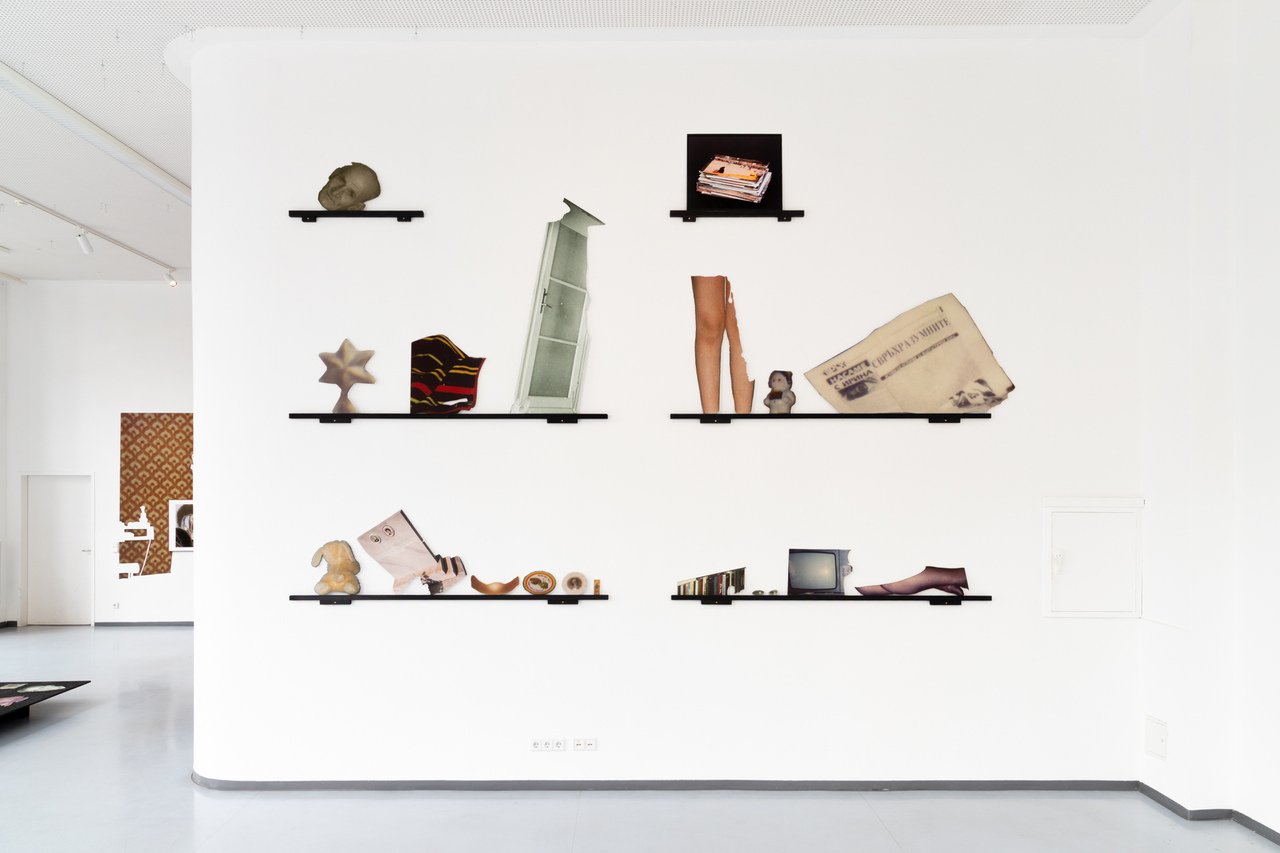
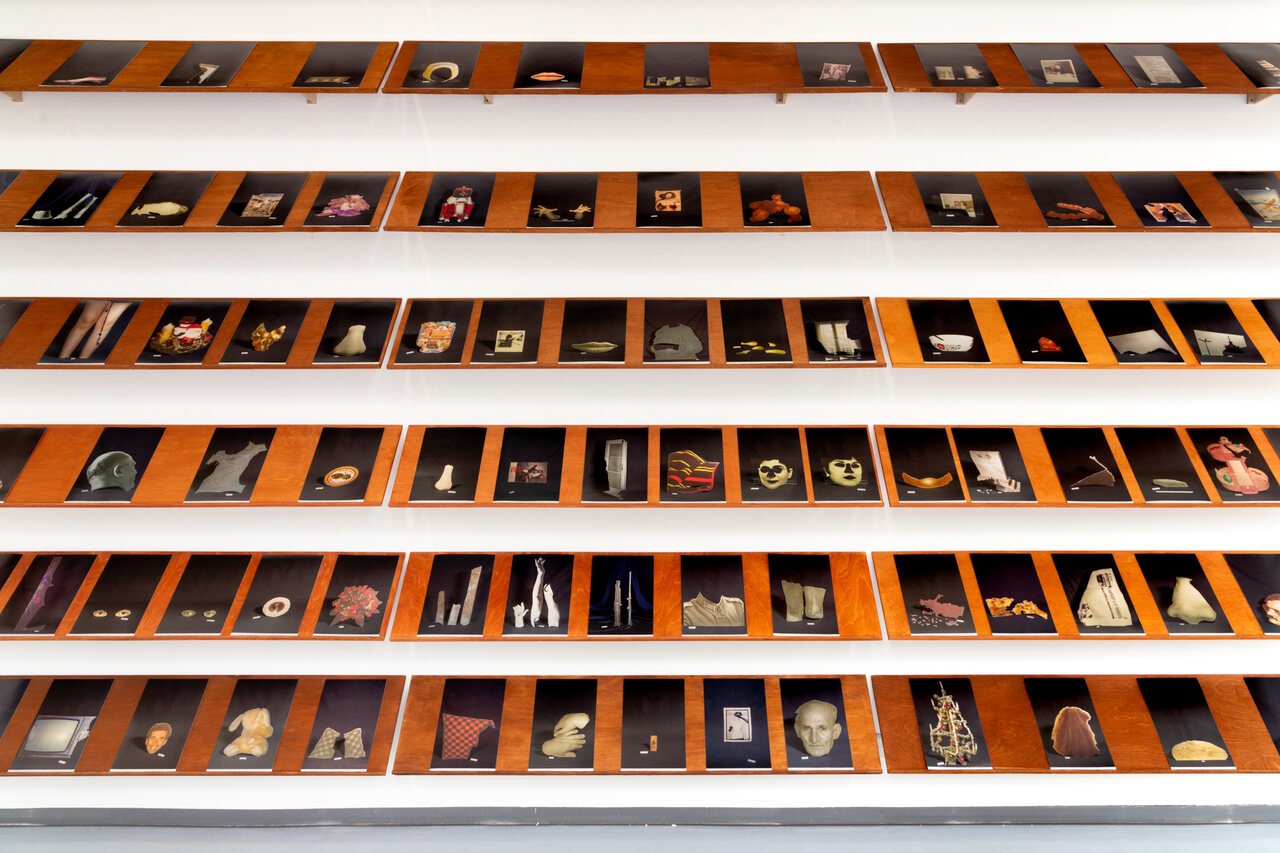
Image courtesy of Wataru Murakami.
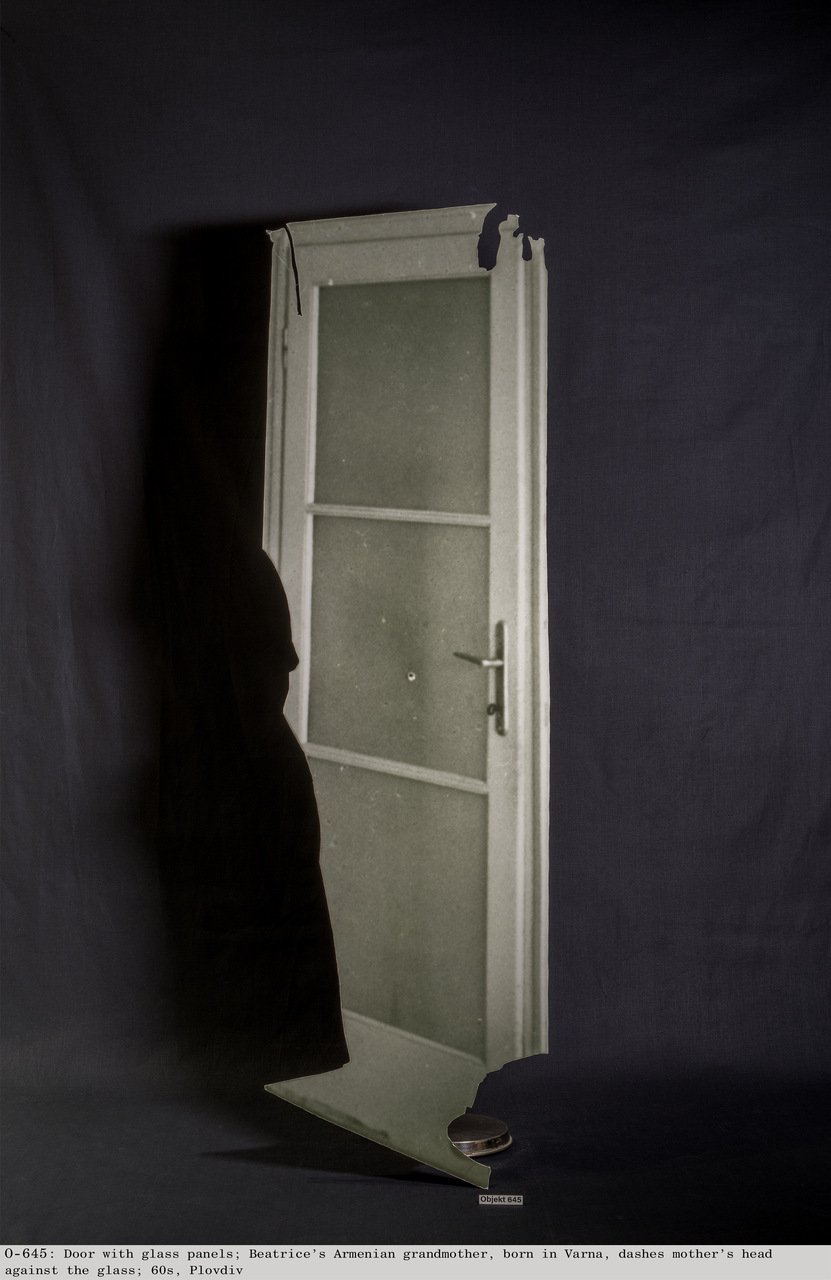
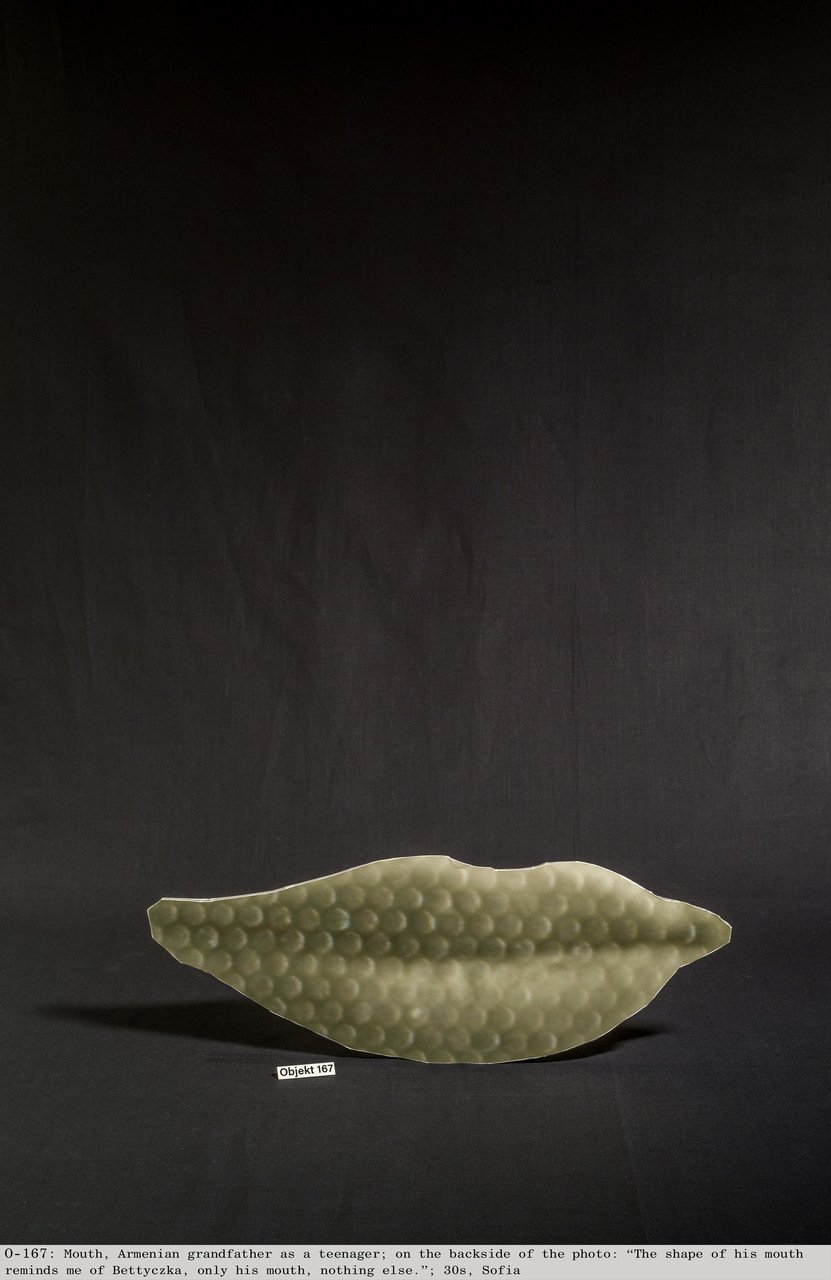
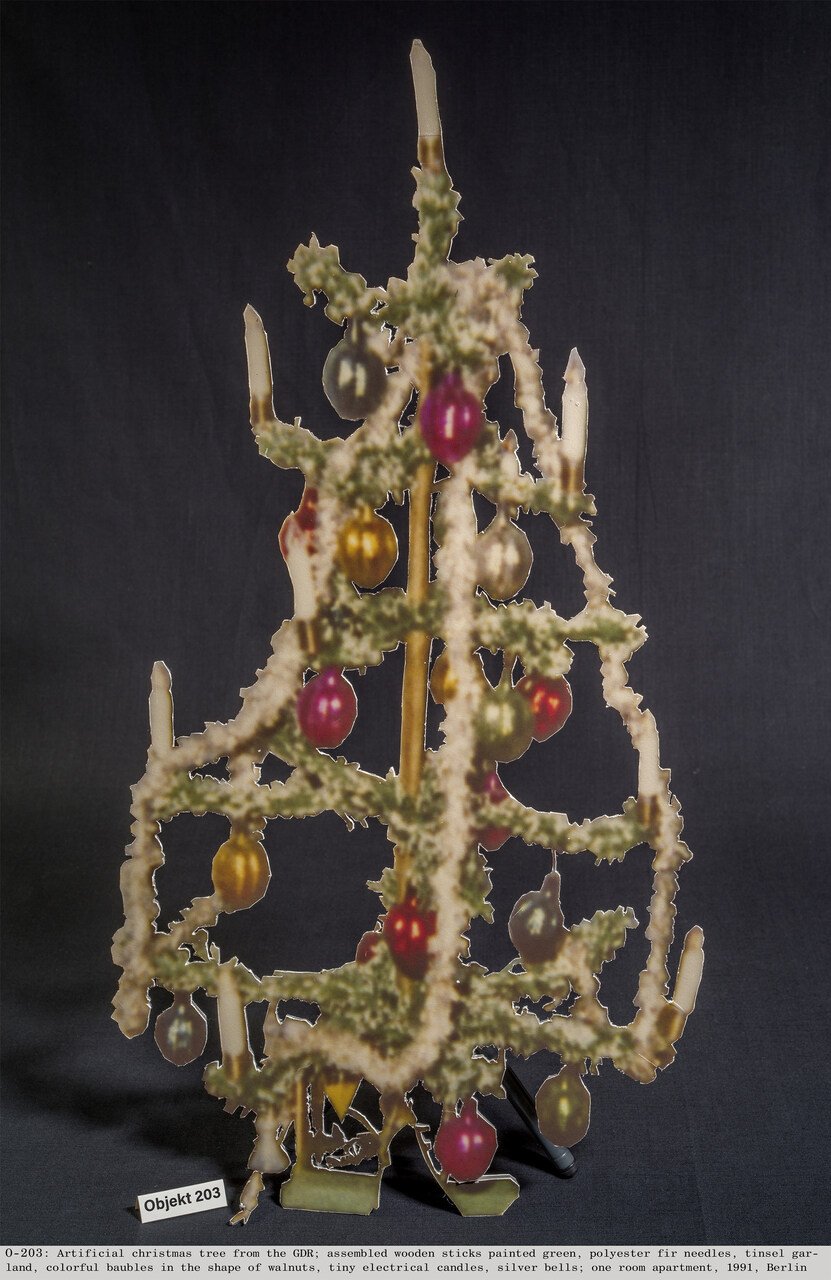
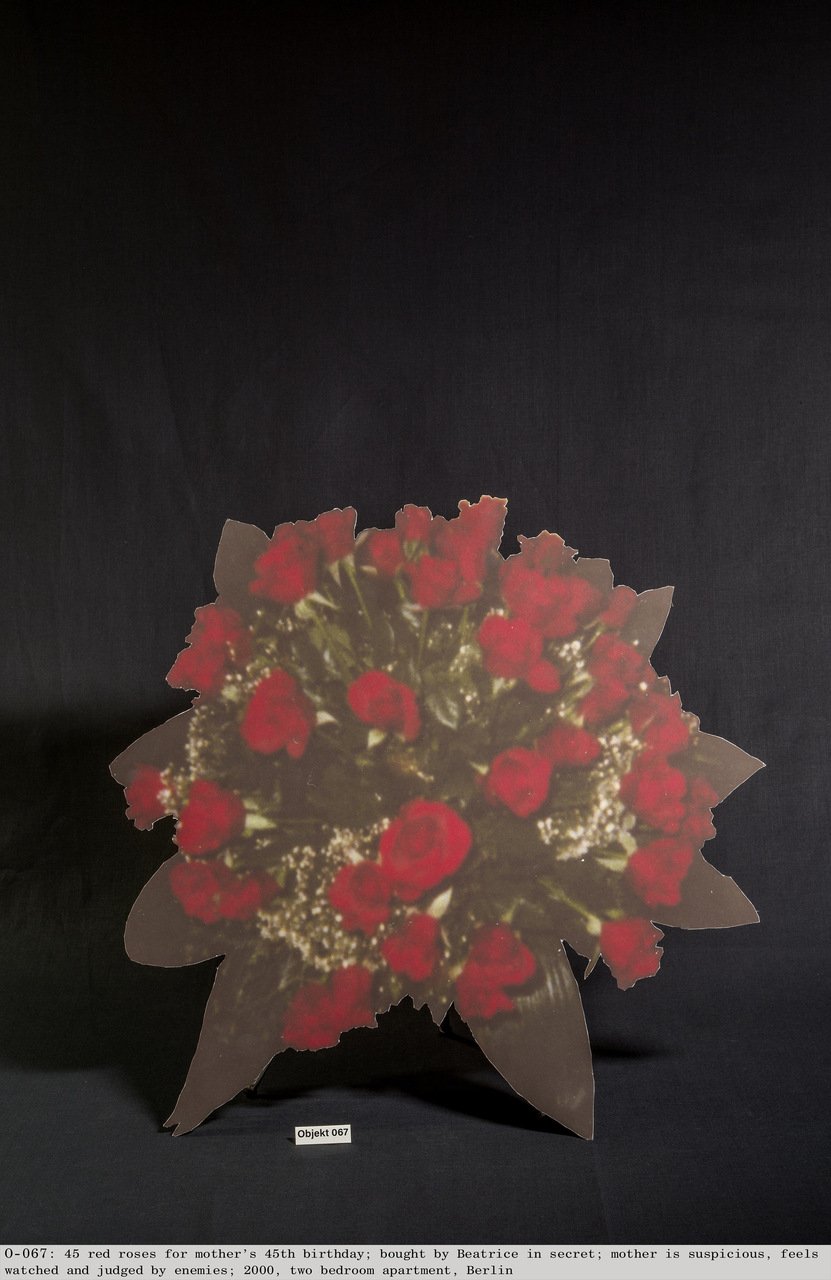
Moumdjian’s occasional use of language emphasizes the way she challenges and reframes established intra-familial narratives. In one particularly striking example, she has created a photo-sculpture of a white apartment door, Objekt 645. On three sides, the door is marked by omissions. What appears to be a broken or incomplete door, slowly reveals itself as obstacles positioned between the camera lens and the background (the door) of the original photograph. All that remains of the initial image is said door and human traces in the shape of a shadow cast onto its left side. As sculpture, these omissions and their bodily referent have become physical features and not just photographic phantoms. Moumdjian then arranged this sculpture in a studio in front of a dark background, propped it up, photographed it, printed and mounted it, and added a title and number, as is common for inventories. At the very bottom of this placard, the following text has been added:
“O-645: Door with glass inserts; Armenian grandmother, born in Varna, smashed mother’s head against the glass; 60s, Plovdiv.”
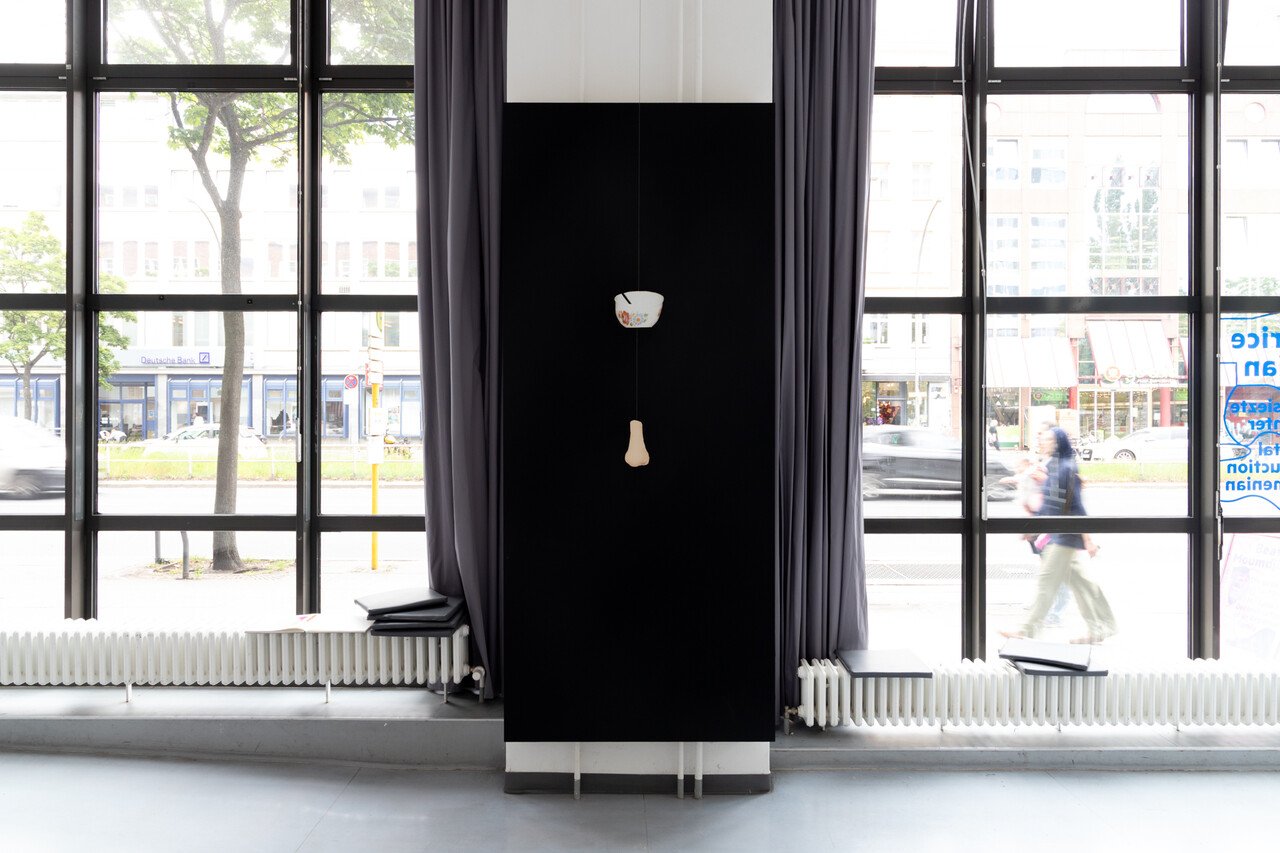
If some of the photo-sculptures appear elusive in meaning, Moumdjian’s use of language in this instance immediately draws us into what is at stake and how violence initially experienced by her Armenian family during the genocide was passed down to subsequent generations, enacted against those closest to them, those meant to be protected from harm. The foreshadowing of this violent act, carried out by Moumdjian’s grandmother against her mother, is marked and made visible by the door’s shape and its omissions. There are another 104 such placards neatly arranged in eight rows, placed on top of wooden display shelves handmade by the artist and covering most of one section of the gallery’s wall. Some of the photo-sculptures on display on the adjacent wall and spread out on two low-lying platforms in the gallery make a re-appearance as inventory placards. One such example is a pear-shaped object which the placard’s text identifies, in racialized terms, as the artist’s nose at age 13:
“O-462”: Armenian-Bulgarian Nose; Beatrice, 13 years old; does not know her father, believes him to be German; passport photo, 2000, Berlin.”
Or a man’s head described as:
“O-419: Great-Grandfather, sitting in a restaurant with his grandchild, Beatrice’s mother; smiling; fled the Ottoman Empire as a child; perhaps Yerevan; parents are butchered; thrown into the Euphrates; Sofin, 1952.”
Seen together, the accumulation of fragmentary histories and insights via added captions starts adding up to a vast and inferred whole. She is scratching the surface, but by doing so she is peeling off multiple layers that reach from the personal to the historical.
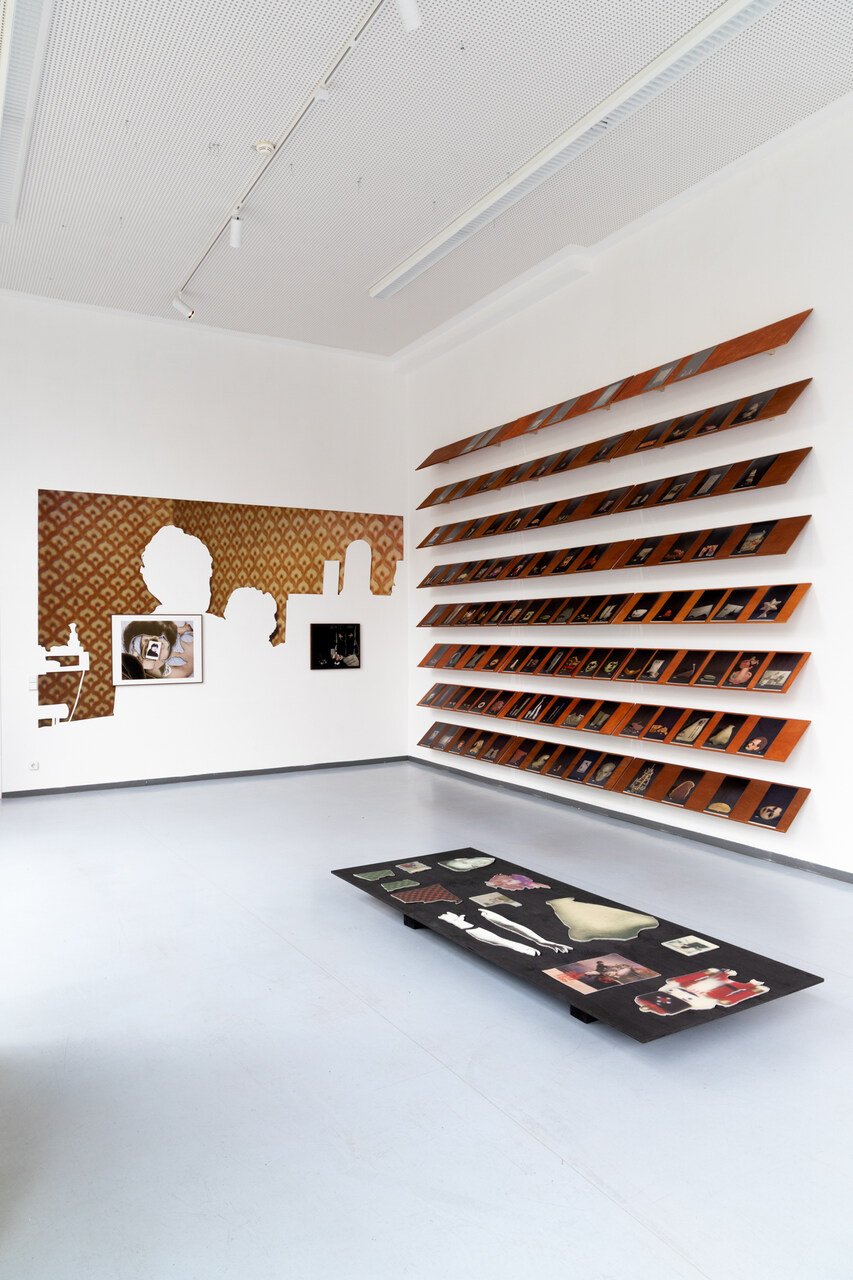
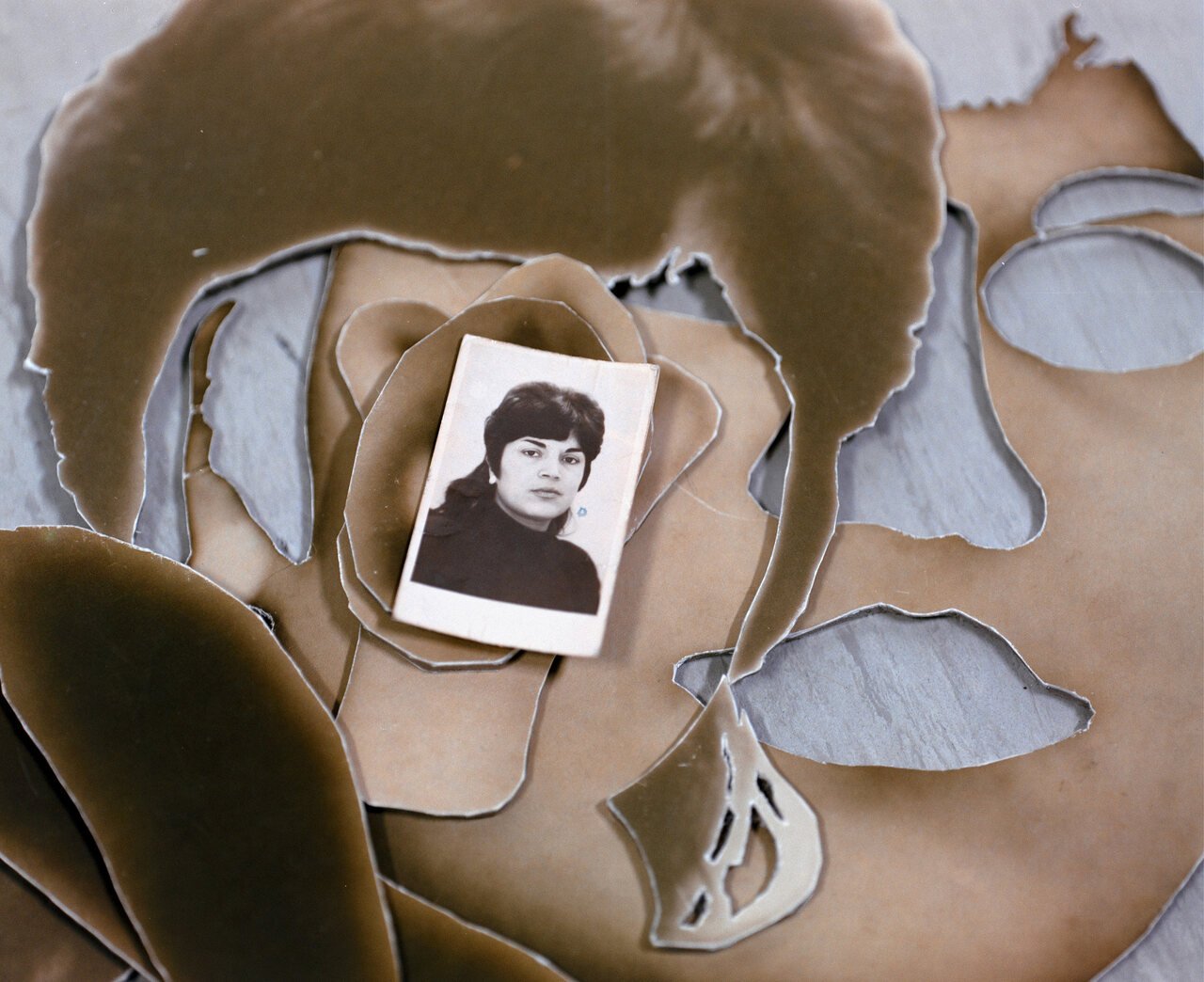
Moumdjian’s work Forensic Excavations Inventory or The Total Deconstruction of an Armenian Family, a photograph in a wooden frame mounted on the wall opposite to the gallery entrance, functions as a reference to her paradoxical process: adding layers of family history does not guarantee a linear or even complete narrative. In this work, multiple cutouts are arranged on a surface. The largest fragment sits below, while smaller ones have been added on top. The last photograph, depicting the artist’s grandmother, is the only one in the exhibition that has not been altered. It is most likely an official ID portrait and instantly conveys the extent of transformation that all of Moumdjian’s family photographs have undergone. To connect this straight-forward photograph to the exhibition’s methodological framework, it has been installed on top of another manipulated photograph which serves as its background. The latter depicts an interior scene with the human figures cut out and set against the backdrop of an intact, highly patterned dark mustard and reddish-brown wallpaper (Object-015). Since the larger head’s outline corresponds to other images of Moumdjian’s mother included in the show, the smaller head next to her must be the artist; perhaps in embrace, maybe smiling at the camera; we will never know. Moumdjian hints at causalities, but their exact cause, their impact and consequences escape our attempts to rationalize and narrativize the materials and objects at hand.
Upon exiting Moumdjian’s exhibition, I leave with the awareness to have co-witnessed the pain of others, not as detached voyeur, but as an invitee who is asked to become an active participant in a search for the how, the why, and our responsibilities as social beings. In its specificity, Moumdjian’s own family history, within the context of the Armenian genocide, opens a passage for the artist to tackle questions and doubts with universal implications that can and must concern us all. In a world in which “solidarity”, “listening”, “empathy” and “care” are too often reduced to catchphrases in politics, academia, and contemporary art, Moumdjian’s work reinvigorates these depleted concepts. I think of her exhibition as an attempt at portraying lived family experience with all its shortcomings, painful memories, its historical and political implications, and the desire to make peace – or at least come to terms – with an ever-present past.
Within the context of contemporary Germany and a strengthening far-right with aspirations for homogeneity, Moumdjian’s voice offers insights into a generation of Germans who have found a new home despite historical, societal, familial, and bureaucratic obstacles. In that sense, the exhibition is as timely as it is personal: it speaks to endurance in the face of repeated omission and attempted erasure – both as a reconstituted archive and a warning.
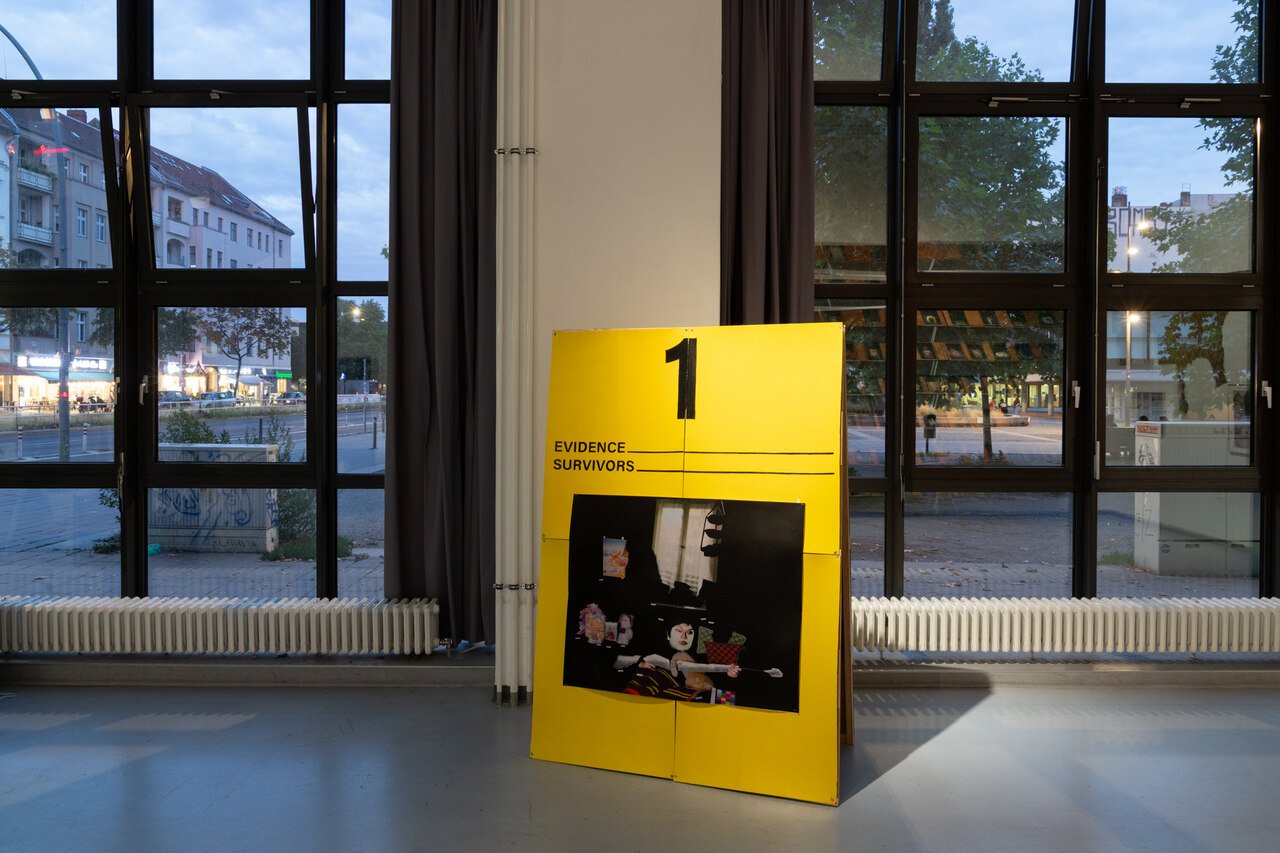
Image courtesy of Wataru Murakami.
[1] Translation: The formally addressed daughter.
[2] Gross, Grażyna. On the Run in Occupied Poland: Tales of a Refugee Childhood. With essays by Irene Kacandes, Joyce Gross, and Aleksandra Szczepan. Rochester: University of Rochester Press, 2026.
[3] https://boydellandbrewer.com/book/on-the-run-in-occupied-poland-9781648251504/?v=0b3b97fa6688
[4] Gross, On the Run, p.20
[5] https://www.ekathimerini.com/news/64652/a-paramemoir-on-surviving-in-occupied-greece/.
Artist: Beatrice Moumdjian
Exhibition Title: Die gesiezte Tochter. My Total Deconstruction of an Armenian Family
Curator: Eylem Sengezer
Venue: Galerie Wedding
Place (Country/Location): Berlin, Germany
Dates: 22.05–09.08.2026
Photos: Wataru Murakami