
Piia Oksanen
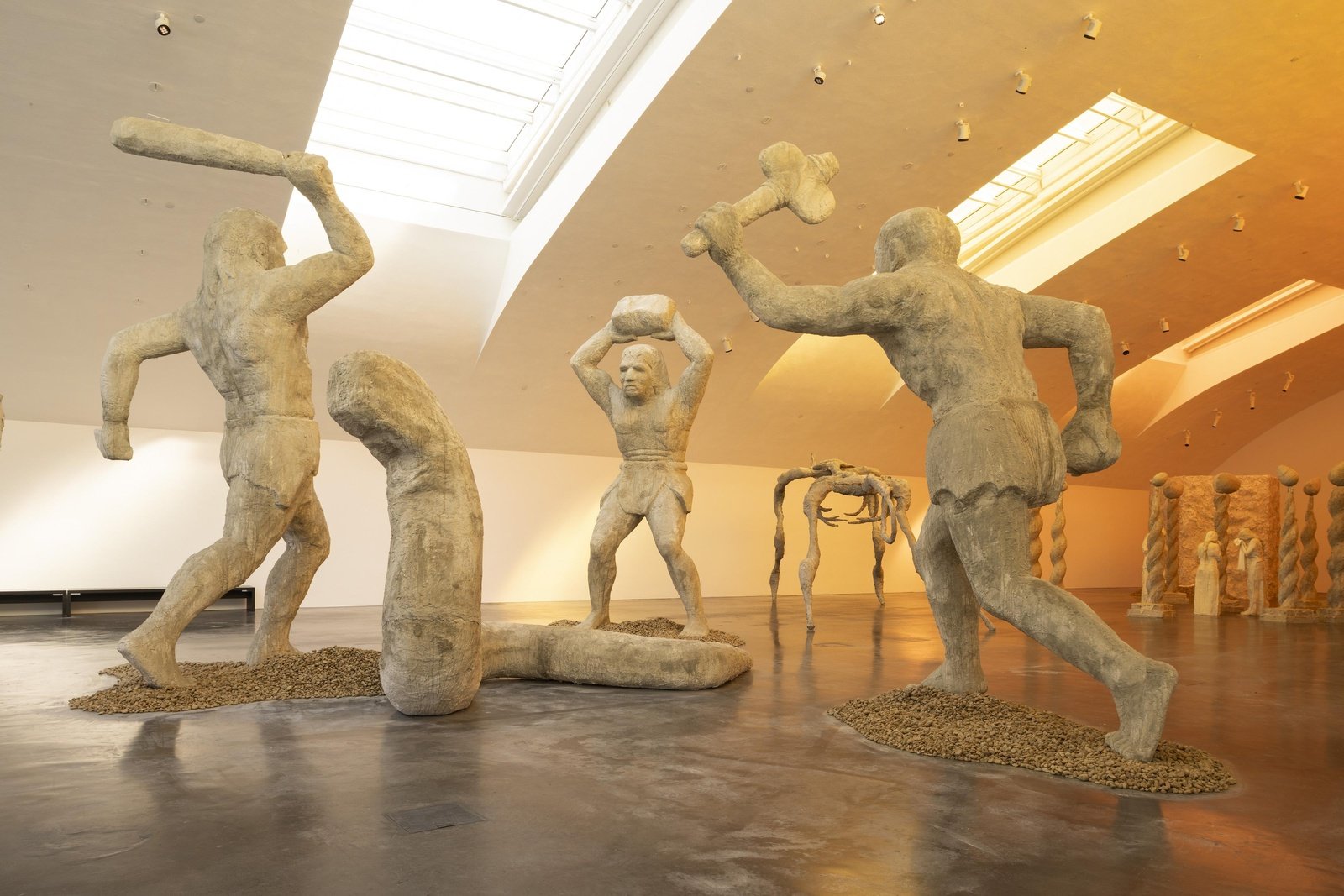
Edith Karlson works hands-on with a variety of materials. In her practice the materials retain their characteristics and remain able to communicate their origins, even when they are sculpted and given form to convey other narratives; she seems to stop working at the point where the material can still hold onto its essence. Leaving her ceramics unglazed and her surfaces raw, her works in clay or concrete evoke earth-boundness. Karlson works with a restricted colour scheme, tones of bedrock and flesh dominate. Electric blue and gold appear, only to return to cement grey, plaster white, and the reddish tones of latex. The exhibition explicitly celebrates the weight of the material and that of the sculptures. The giants, with their sturdy, four-metre bodies, are present, you might say omnipresent, in the exhibition.
Light is one of the materials in the exhibition; here, it is embraced at its fullest. It is tinted yellow, to make the immaterial like an elemental substance. The tiny sparks of light in some of the works are material, too. There are sculptures holding candles that give out small bursts of light to their surroundings, indicating the driving force in all life. In the gallery, light becomes an overarching guideline for following the drama formed jointly by the artworks: the intensity of the lighting changes from tones of yellow into clear, unfiltered natural light. The Panorama space at one end of the exhibition is bathed in sunlight, while the other end is more densely coloured. As there are three different entry points to the gallery space, their orientation and direction of approach differ, depending on which you enter from. This also complicates the narrative. From being a simple idea of a rise or fall, a transition from one state into another, it becomes more of a back-and-forth movement between them.
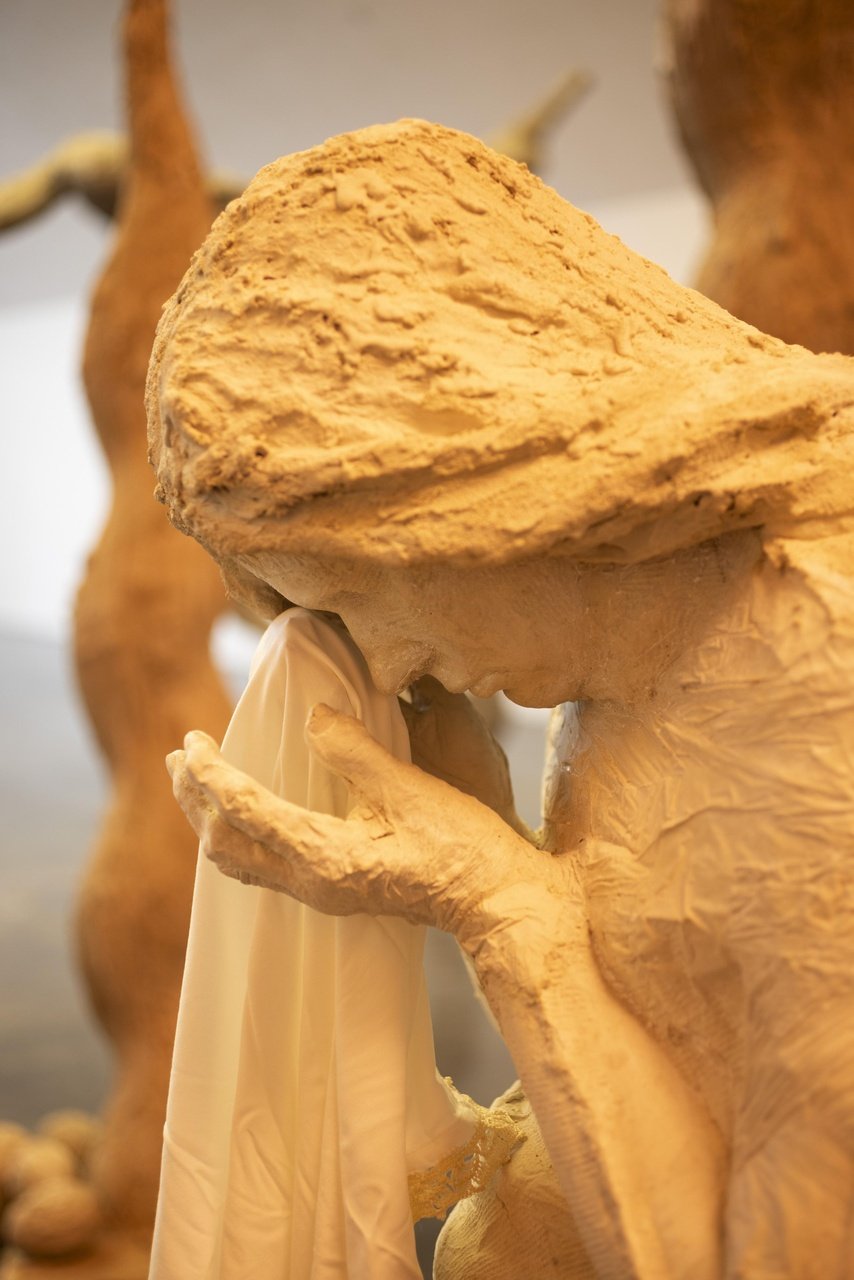
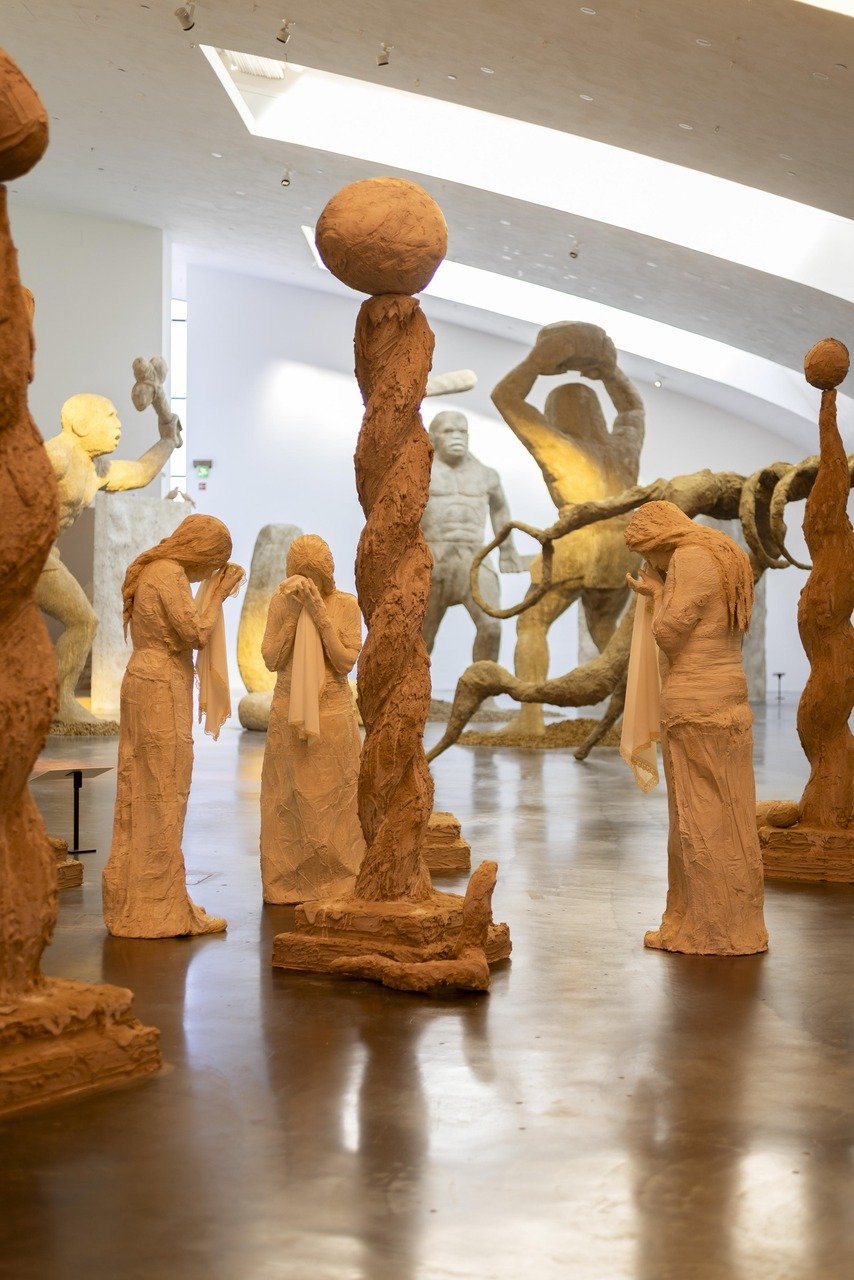
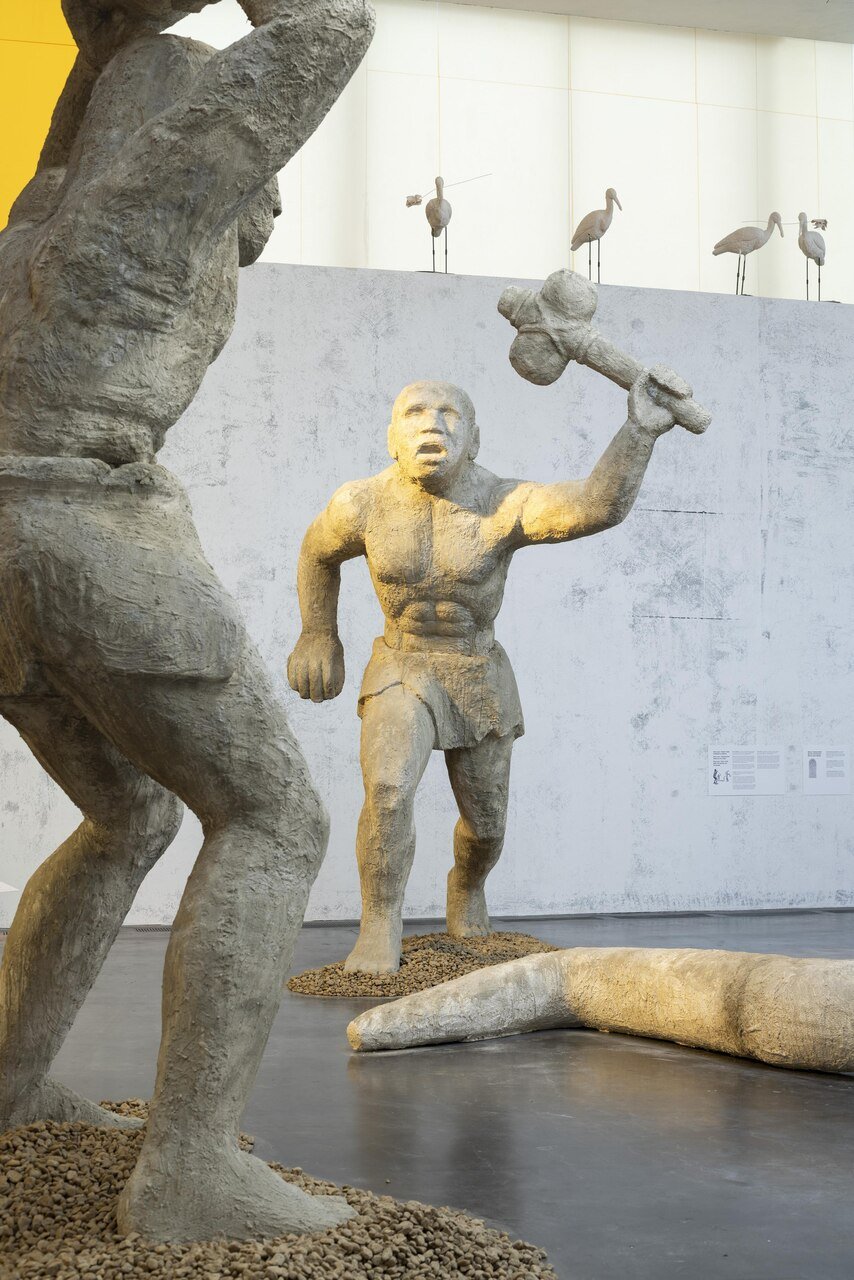
To enter the exhibition is to step into a world inhabited by flocks of animals, people, and mythic beings. Moreover, the placement of the groups of sculptures marks out several distinct areas within the exhibition space. In Hora Lupi: the Giants and the Snake the three massive figures form a circle, as does the trio of mermaids in Hora Lupi: Can’t See. The warriors in the March sculpture series form a distinct entity of their own, one that is more unwavering in its forward motion. The sculptures are seldom sole protagonists − the few exceptions prove the rule − instead, they form assemblages. The diverse bodies of works relate to one another, too, mingling, supporting and reinforcing each other’s presence. Like tall, twisted columns, they provide a protected area for Hora Lupi: Sad Women.
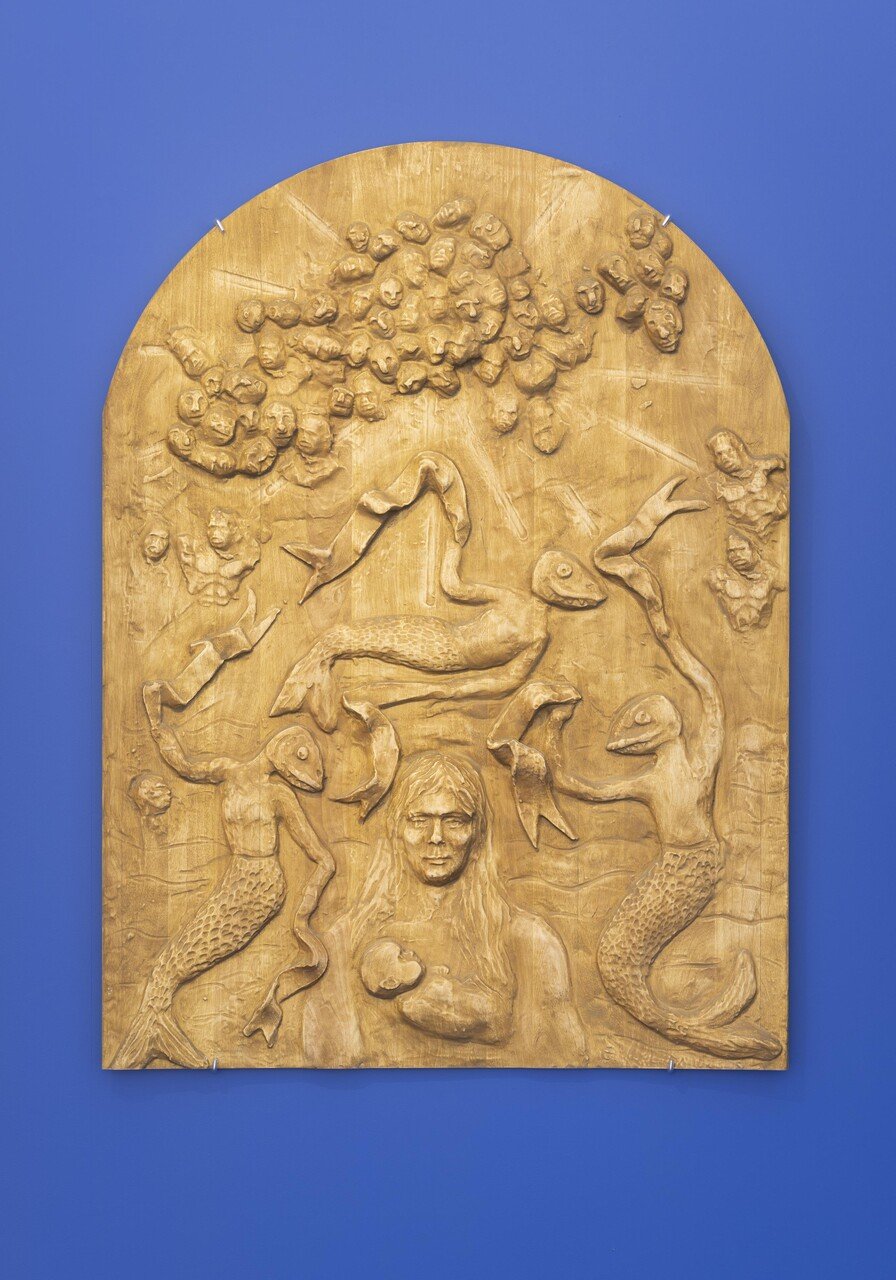
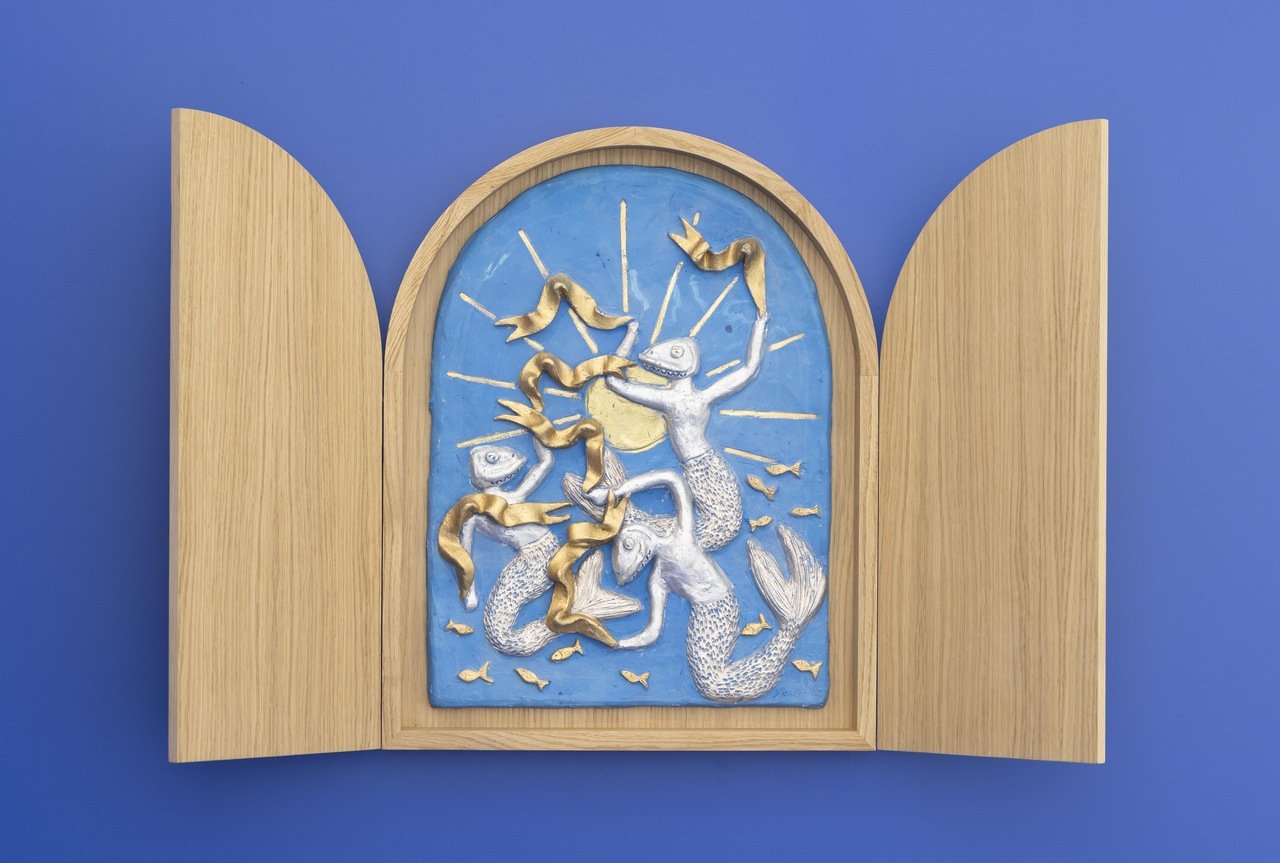
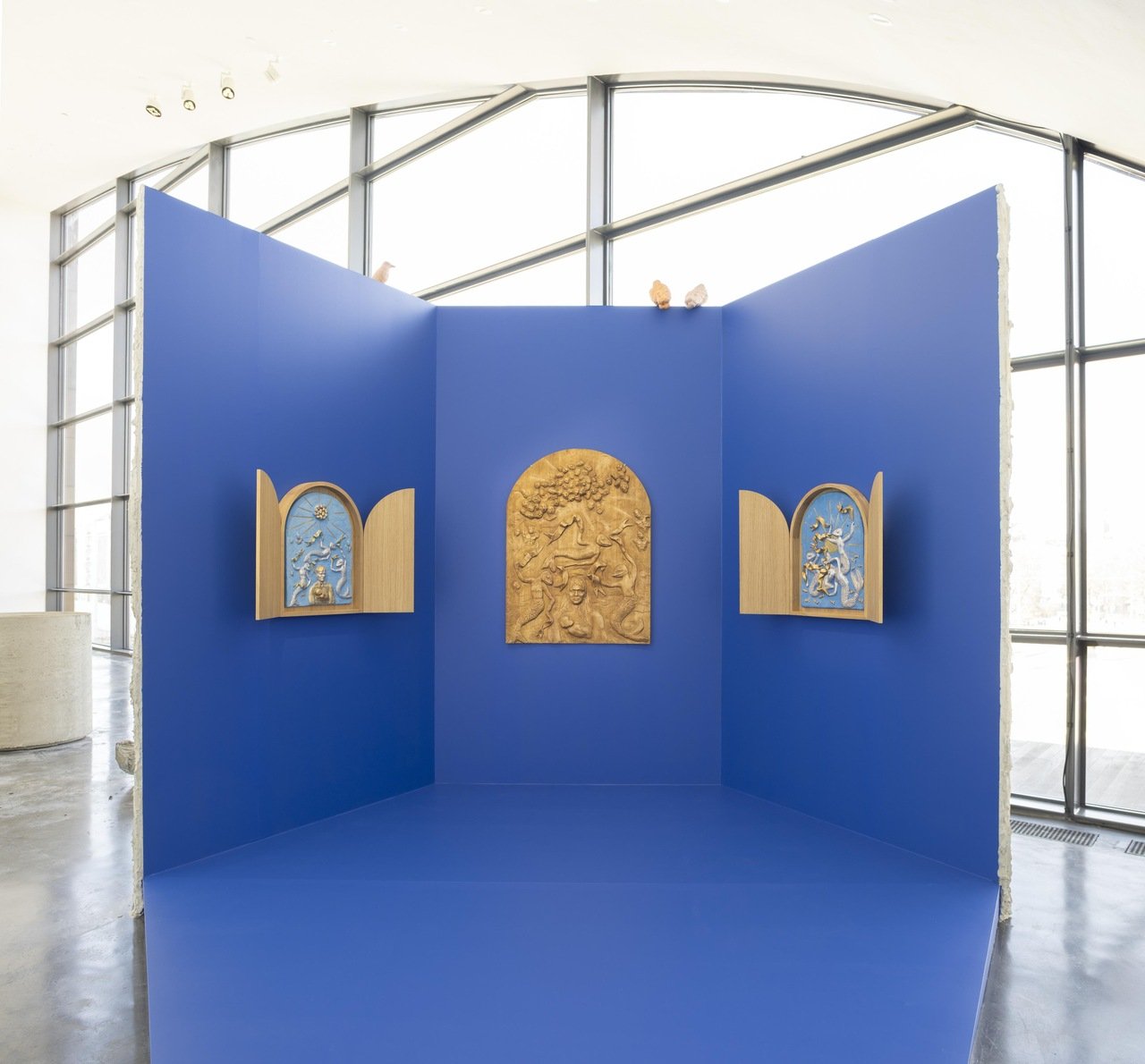
Entering Karlson’s exhibition includes an invitation to leave something behind. Another logic, another timeline prevails. The reference to a church in its spatial organization is intentional. Not so much to elevate the visitor’s spirit and their orientation towards the otherworldly, away from the here and now, but to enable them to let go and to attempt to cross a threshold into an unknown or forgotten territory. The exhibition includes four separate chambers that recall side chapels, areas reserved for private devotion. They stand slightly above the museum floor, marking them out as separate spheres. In Karlson’s exhibition, they provide a space for reliefs that evoke altarpieces in Christian imagery and devotional art. But not only that. Ghosts of the past or haunting images are sculpted into some of them. The sand reliefs show barely visible faces and figures, sleeping or dead. Another chamber hosts a series of animal heads, arranged like a line of busts, a reference to the historical way of displaying sculpted portraits. Monochrome, ghost-like figures.
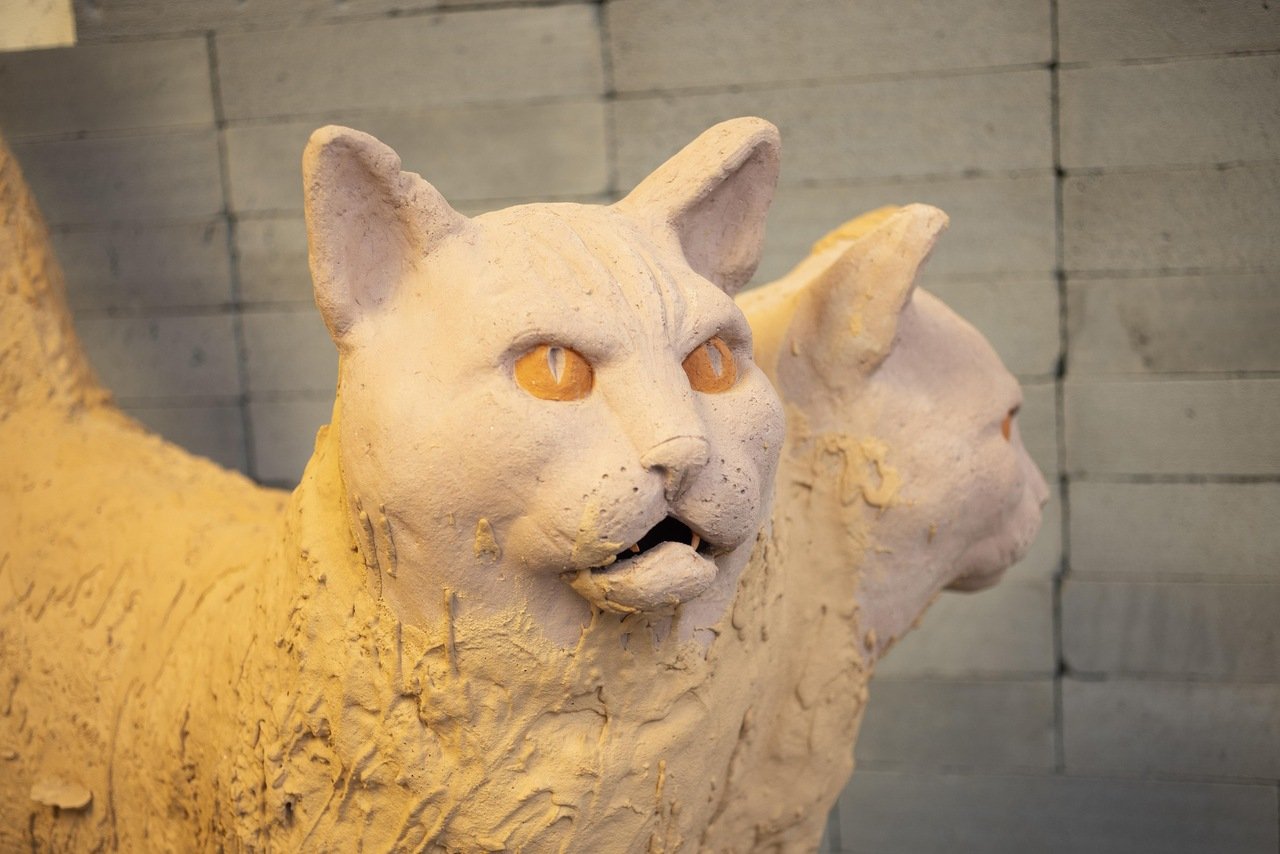
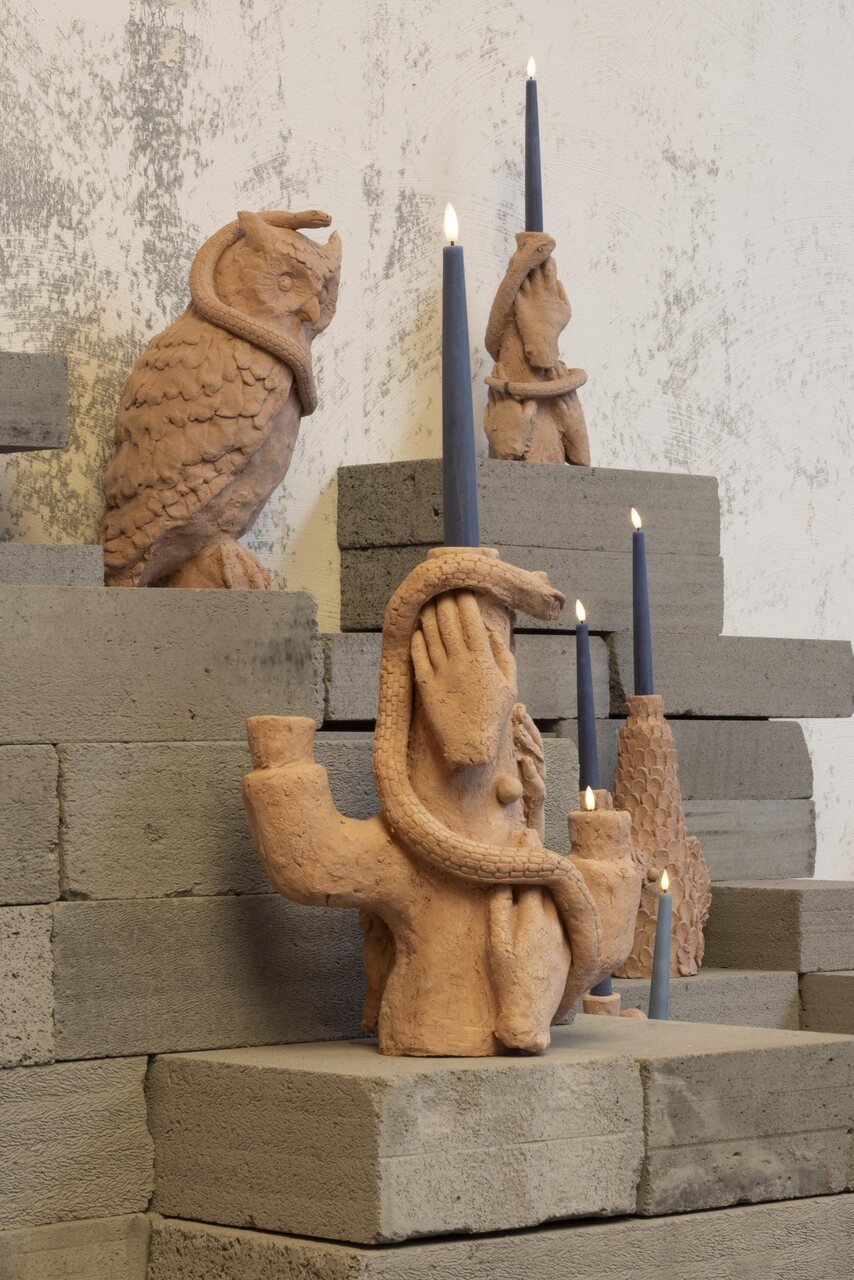
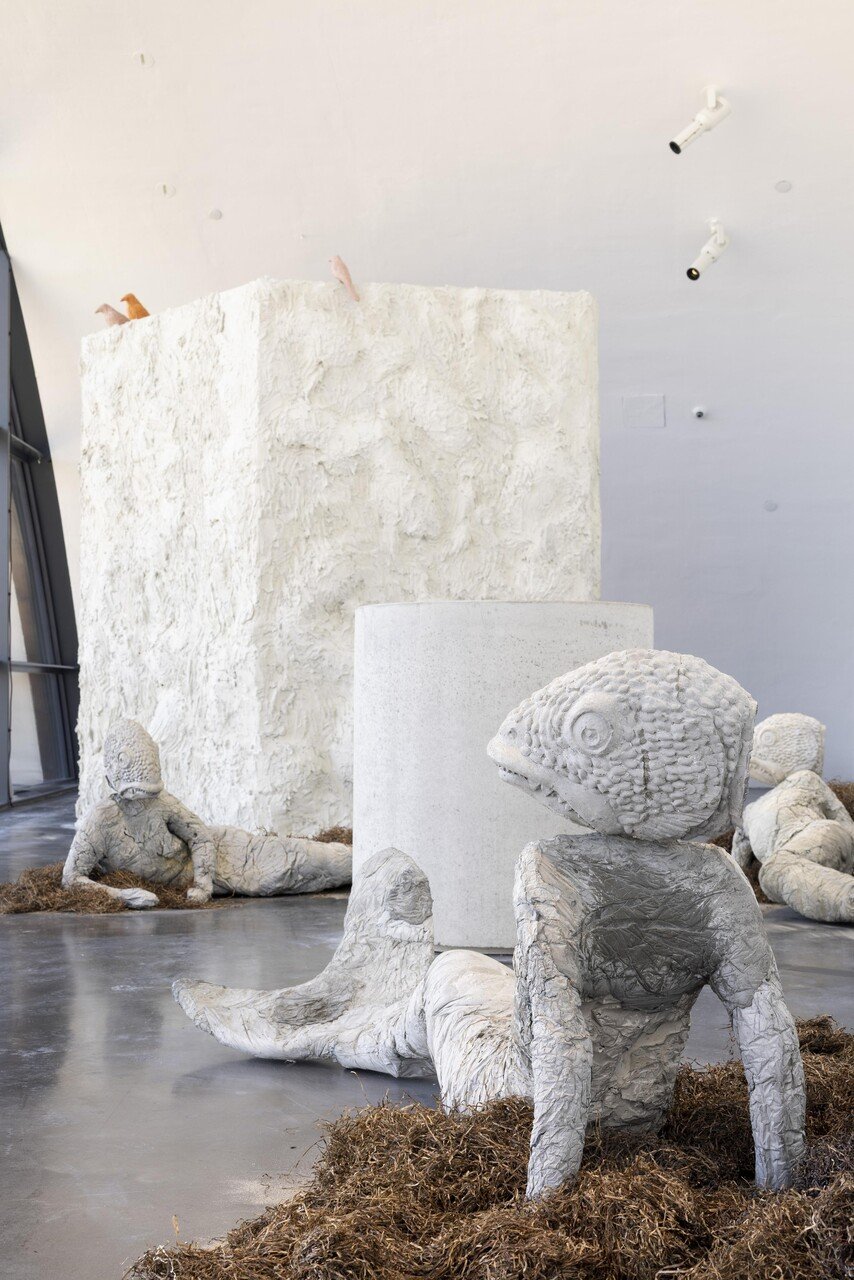
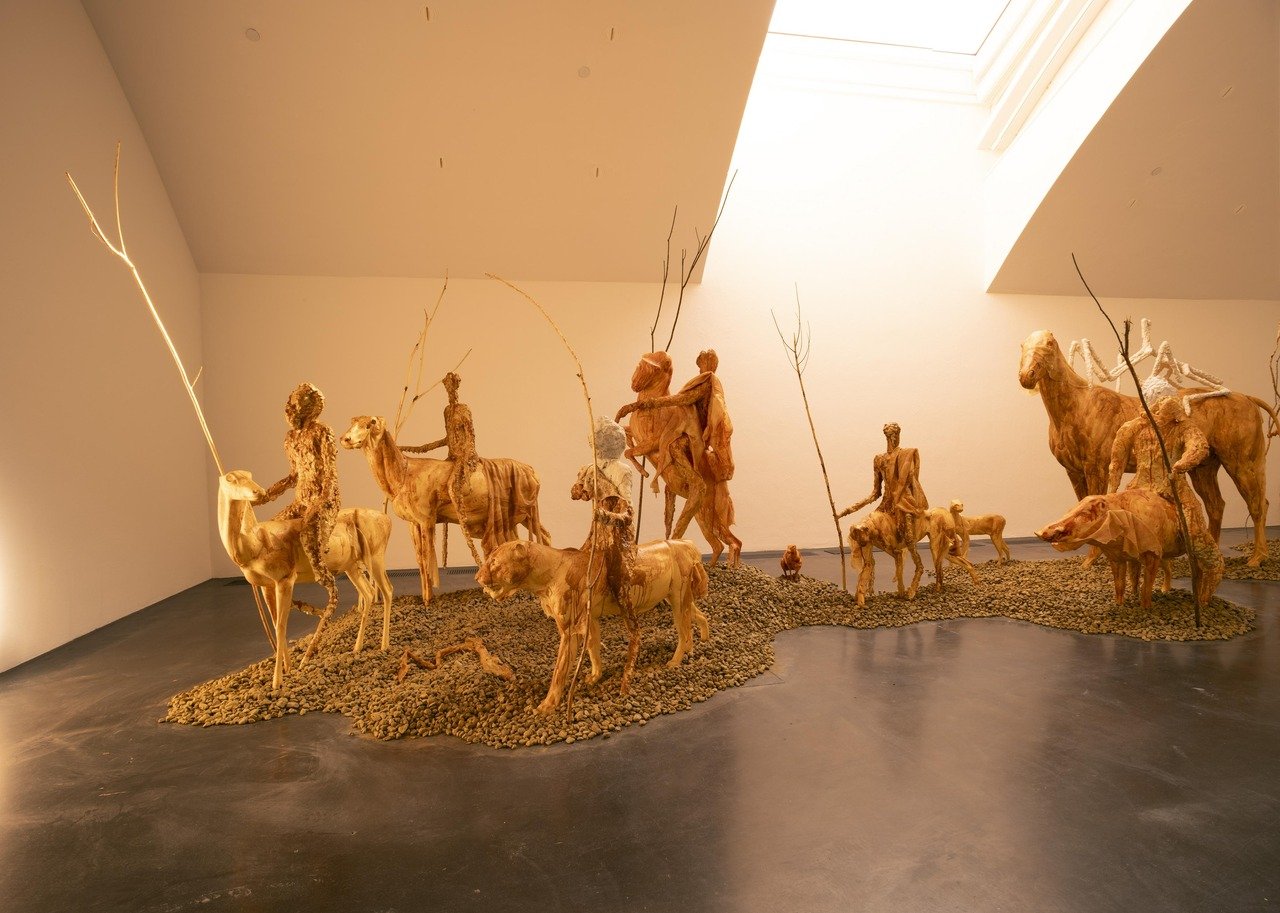
Visiting the exhibition and looking at Karlson’s sculptures might evoke a sense of melancholy. Sorrow is palpable and anxiety not far away. That melancholy is present in the sculptures that turn their backs to the visitor and in the transformation of the warriors, who look like they are about to leave their material bodies behind. The three female figures in Hora Lupi are turned towards each other and cover their faces with their hands. They form a space that seems to hide, rather than inviting visitors to engage with them. Some of the sculpted figures have no eyes, and the viewer is confronted with faces that communicate very little. Melancholy is an absence in the sculptures with closed eyes; here, but not really present, like the small dog sleeping in its basket. Doomsday leaves no room for doubt that we are facing an end.
‘’Life is a struggle from day one,’’ as Edith Karlson said in one of the preparatory meetings for her solo show at Kiasma. To illuminate the contradictions and complexities of human life, rays of light are needed. Karlson looks at both sides of the coin, and has trained her eye and mind to see the grey areas by looking into both extremes – anguish and joy, life and death – with curiosity, recognising the inevitable: one comes with the other.
Artist: Edith Karlson
Exhibition Title: Dawn till Dawn
Curated by: Piia Oksanen
Venue: Museum of Contemporary Art Kiasma
Place (Country/Location): Helsinki, Finland
Dates: 17.04.–27.09.2026