
Chiara Causo
The 2026 edition of the Venice Biennale is loud.
But to a more attentive ear, silence and absence were the real protagonists of this edition.
I had a conversation with Peter Sit, curator of the Czech and Slovak Pavilion, about The Silence of the Mole, the project he developed together with artists Jakub Jansa and Selmeci Kocka Jusko for this year’s pavilion. Together, they dedicated the project to exactly this fundamental key knot. With remarkable foresight and extreme precision, the project grasps the power of silence, its political force, and divisive charge, giving shape to an ontology of communication and turning it into artistic reflection. In our conversation, Sit reflected on silence as a tool for reading the present, describing a complex curatorial system that gives voice to an underlying drama: who has the right to represent whom?
Chiara Causo: Mr M. is a character developed by Krtek (Little Mole), an animated character who has crossed generations in the former Czechoslovakia and, over time, has become deeply embedded in a shared cultural imaginary. What was the initial impulse behind The Silence of the Mole? Did the project begin with Mr M., with the cultural and political history of Krtek, or with a broader question for which you were looking for a figure capable of embodying it? More specifically, did you conceive of Krtek as a political figure from the outset, or did his political potential emerge through the process of developing the project?
Peter Sit: The project did not begin with Krtek as a political figure. It started with a much broader interest in imagination and the strange afterlife of cultural symbols. Krtek is one of the very few figures that almost everyone in former Czechoslovakia shares, regardless of political position or generation. That made him interesting because he carries an enormous emotional memory.
The political dimension emerged gradually. Once we started asking what it means to embody such an iconic character for decades, the figure of Mr. M. appeared. He is no longer simply “playing” the Mole. He has become trapped inside a role that society continues to project onto him. Questions of labour, representation, national identity, and cultural expectations naturally followed from there, rather than being the starting point.
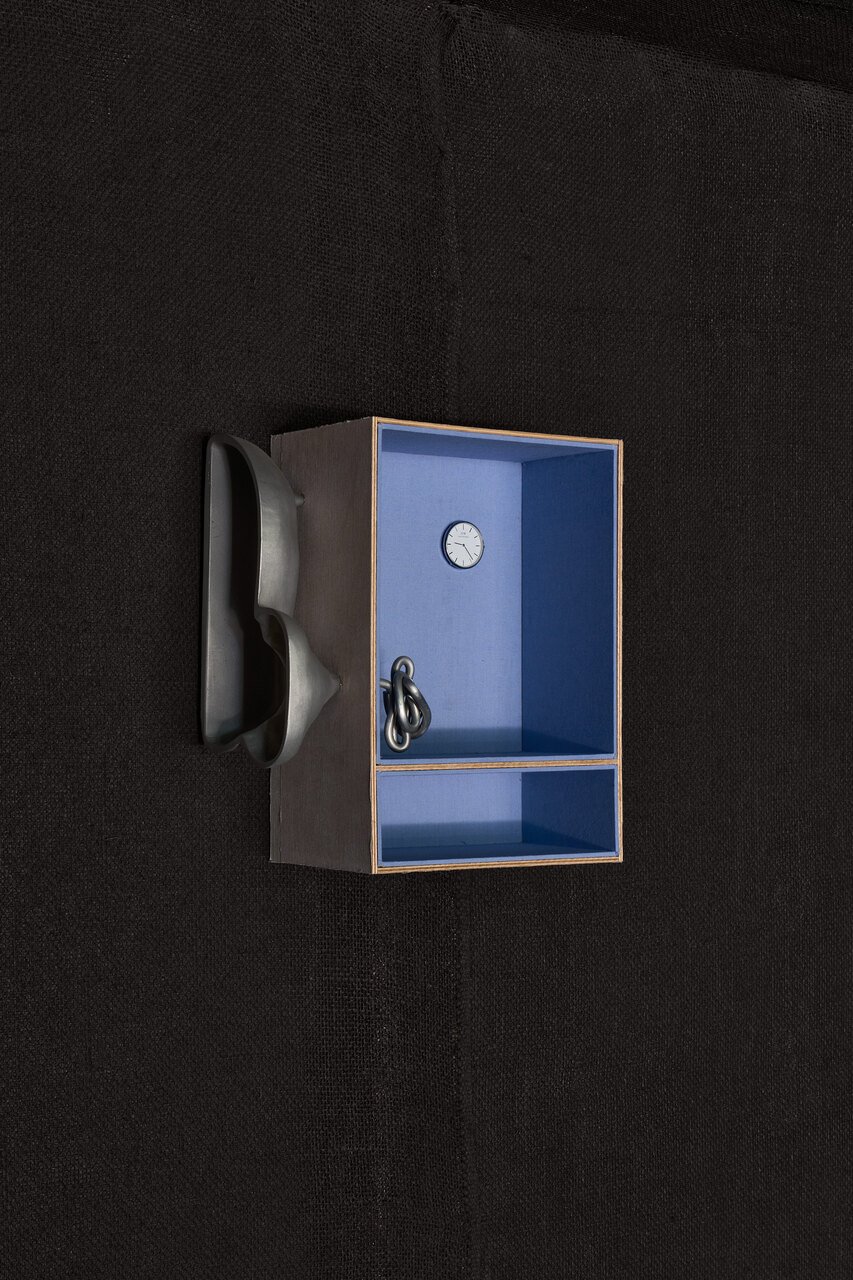
photo: Jan Kolský.
Courtesy of The National Gallery Prague.
Courtesy of The National Gallery Prague.
Courtesy of The National Gallery Prague.
CC: The title The Silence of the Mole immediately introduces the idea of silence, while Mr M.’s performance practice is based on a highly expressive language of gestures and movement. What does this silence represent within the project? Could it be understood as a form of absence or repression, but also as a form of resistance or non-verbal communication? And, politically speaking, who or what is rendered silent within the project?
PS: Silence is often understood as absence, but in this project it also becomes a form of agency. Krtek never speaks, yet generations understood him through gestures, empathy, and emotion. We wanted to preserve this quality while asking what silence means in today’s climate.
Silence can be imposed, but it can also become a refusal to participate in dominant forms of communication. In the exhibition it creates space for listening, imagination, and ambiguity. The project doesn’t show a straightforward political statement, it asks visitors to inhabit uncertainty and to become more attentive. Politically, the project is also interested in those who are expected to represent others while rarely being allowed to speak in their own voice.
CC: May you please explain if there is a political engagement in choosing this character and what it would be?
PS: Choosing an older performer was important because it shifts the project away from nostalgia and towards the reality of aging, labour, and embodiment. The body carries history.
We also intentionally avoided making the performer easily identifiable through gender. This creates a certain openness. The character becomes less an individual and more a vessel onto which different memories and expectations can be projected.
Courtesy of The National Gallery Prague.
Courtesy of The National Gallery Prague.

photo: Jan Kolský. Courtesy of The National Gallery Prague.
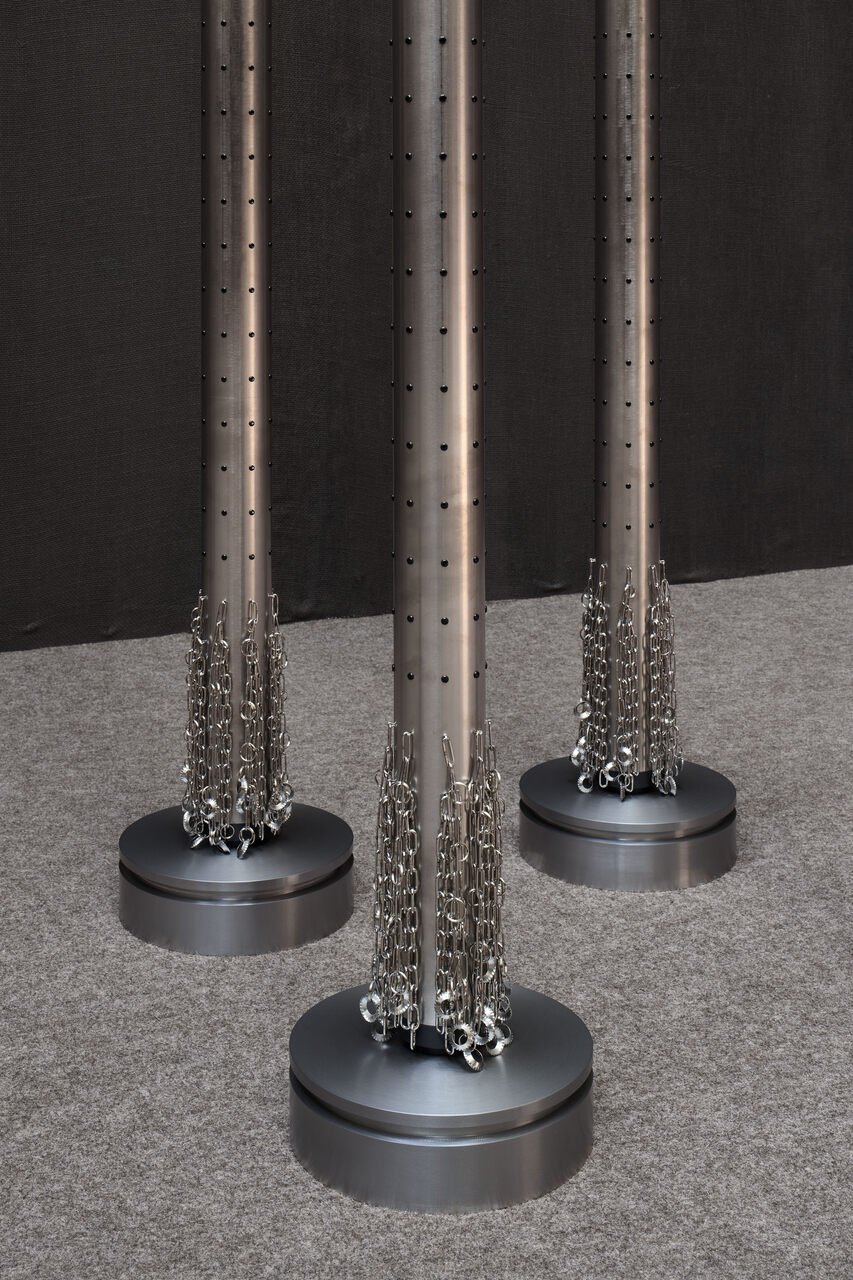
photo: Jan Kolský. Courtesy of The National Gallery Prague.
Courtesy of The National Gallery Prague.
CC: The mole is, by definition, a creature of the underground: it inhabits what remains hidden beneath the surface and emerges only temporarily into visibility. This opposition between underground and surface seems particularly significant within the project. Did this relationship between what is hidden and what becomes visible play a role in your curatorial thinking? Could the underground also be read as a metaphor for forms of power that remain invisible: hidden negotiations, institutional structures, suppressed memories, or decisions that take place beyond public visibility?
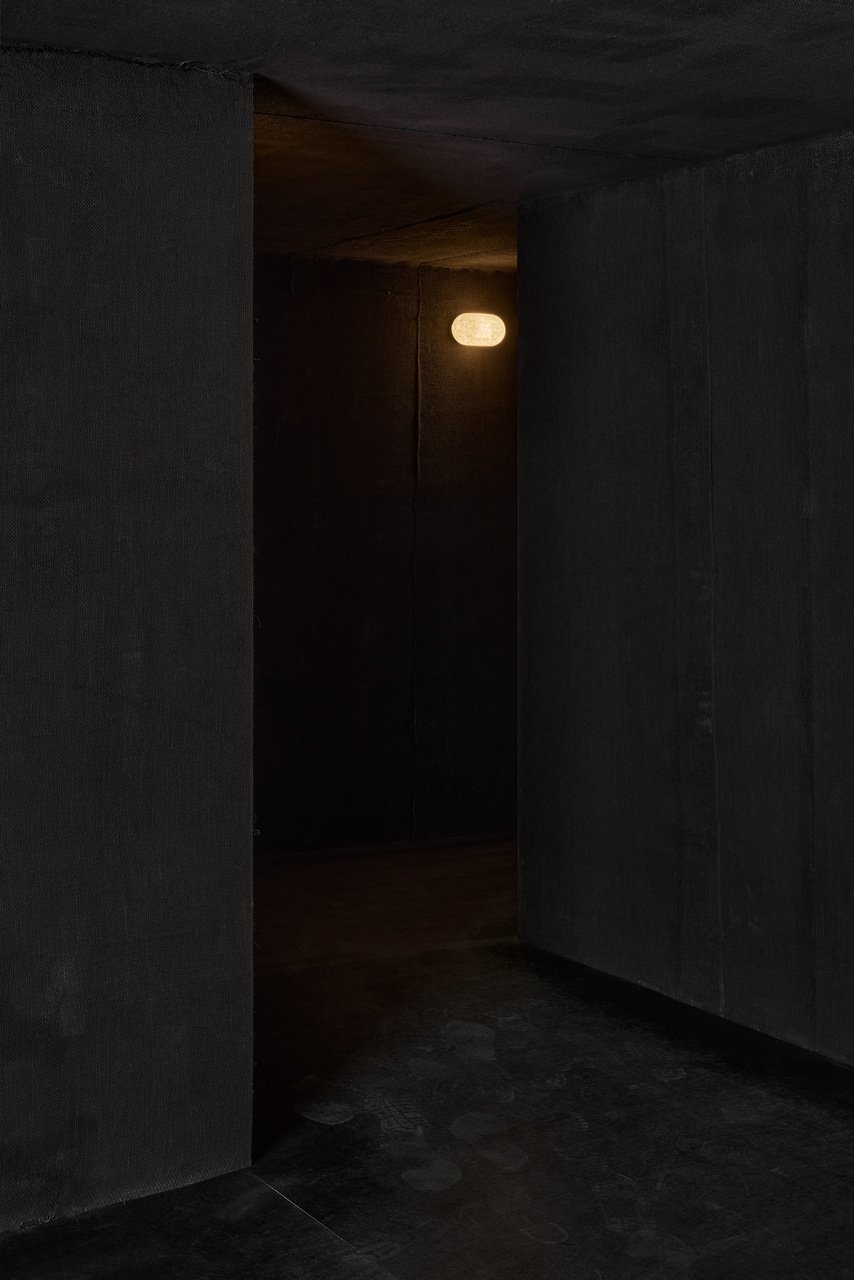
PS: The underground operates on several levels. It refers to the physical world of the mole, but also to histories that remain buried, invisible forms of labour, bureaucracy, and political processes that often happen beneath public visibility. We were interested in the underground not just as a hidden place but as a productive space where different futures can emerge. There are also a few examples of authors in literature and philosophy who used the term mole, or rather old mole, from Shakespeare through Kafka, to Hegel, Bataille, and Marx. We were particularly interested in Marx and Kafka. In “The Eighteenth Brumaire of Louis Bonaparte,” Marx stated:
“But the revolution is thoroughgoing … It completes the executive power, reduces it to its purest expression, isolates it, sets it up against itself as the sole target, in order to concentrate all its forces of destruction against it. And when it has accomplished this second half of its preliminary work, Europe will leap from its seat and exult: Well burrowed, old mole!”
Marx used the term “old mole” as a metaphor for working class people, living out of sight of the bourgeoisie, underground, in a place where through the power of masses revolution can be built slowly and quietly. The burrow offers you all the time and protection you need for such a revolution to be made.
Franz Kafka’s “The Burrow” was another important reference for us. We were particularly interested in the way Kafka constructs the atmosphere of the burrow through architecture, sound, silence, paranoia, and the constant possibility of intrusion. Today, “The Burrow” can also be read through a political lens, as a model of a society that organizes itself around security. Silence within the burrow represents a protected, controlled space, while sound becomes a disruption of order, a sign that something foreign may already be present. In this sense, the story resonates with a Foucauldian understanding of power: power does not have to be visibly present to organize our behavior, the mere anticipation of threat is often enough.
These ideas also informed the catalogue, for which we invited two authors whose work engages with related questions. Steve Goodman (Kode9) reflects on sound, listening, and the politics of sonic perception, while Aaron Schuster writes directly about Kafka’s “The Burrow.” As Schuster writes: “What is the burrow? I believe there are four possible responses: it’s an architectural edifice, a psychic structure, a speculative system, and a social-political diagnosis, one could add others: it’s also a sound laboratory, and a pleasure machine.”
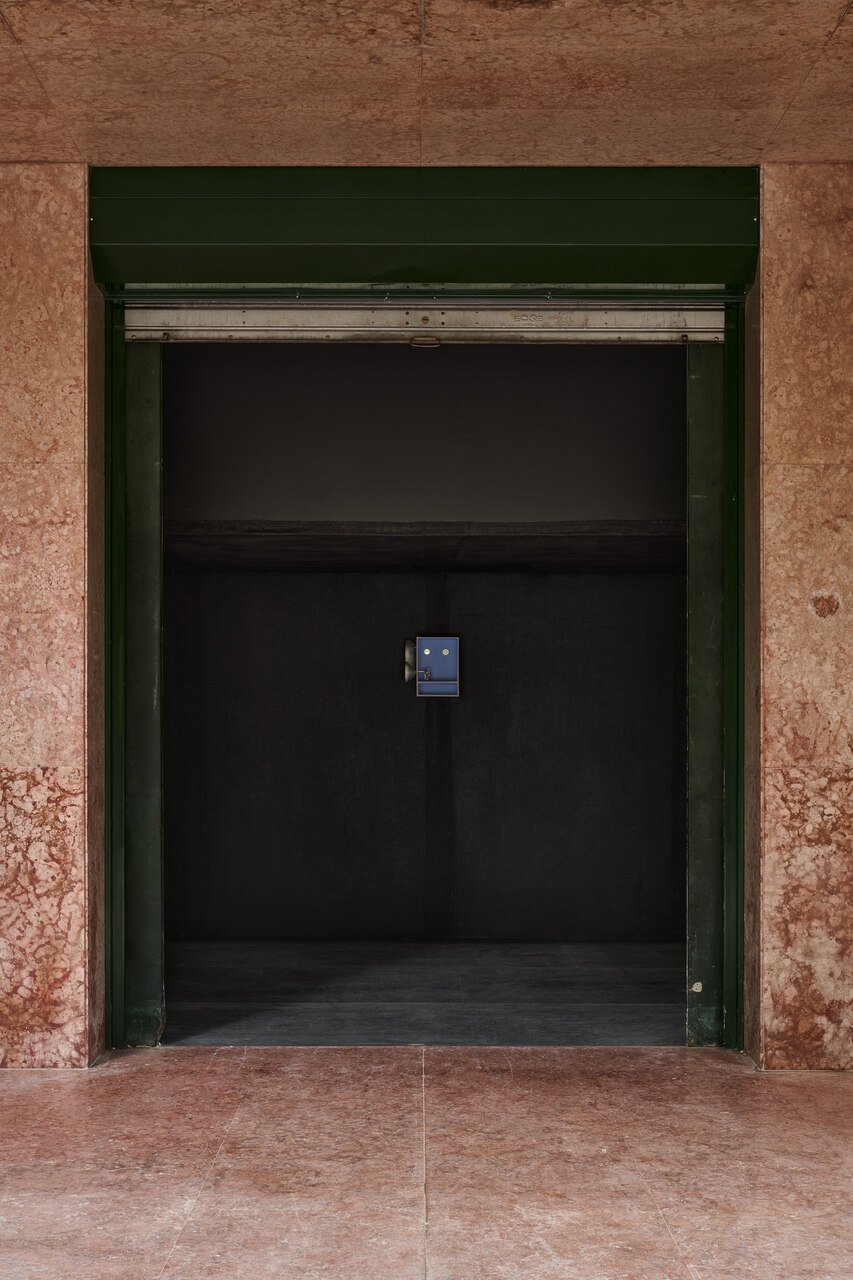
Also there is a piece when you are entering the pavilion by Selemci Kocka Jusko – The Ear of the Householder, a sculpture of the inner ear which, like in Kafka, senses a faint, indeterminate sound, bearing witness to it as an instrument of power, an invisible weapon that transgresses the boundary of the body without consent. It is a perfect instrument of biopolitical control, injecting that which is imperfectly called the “system” into us.
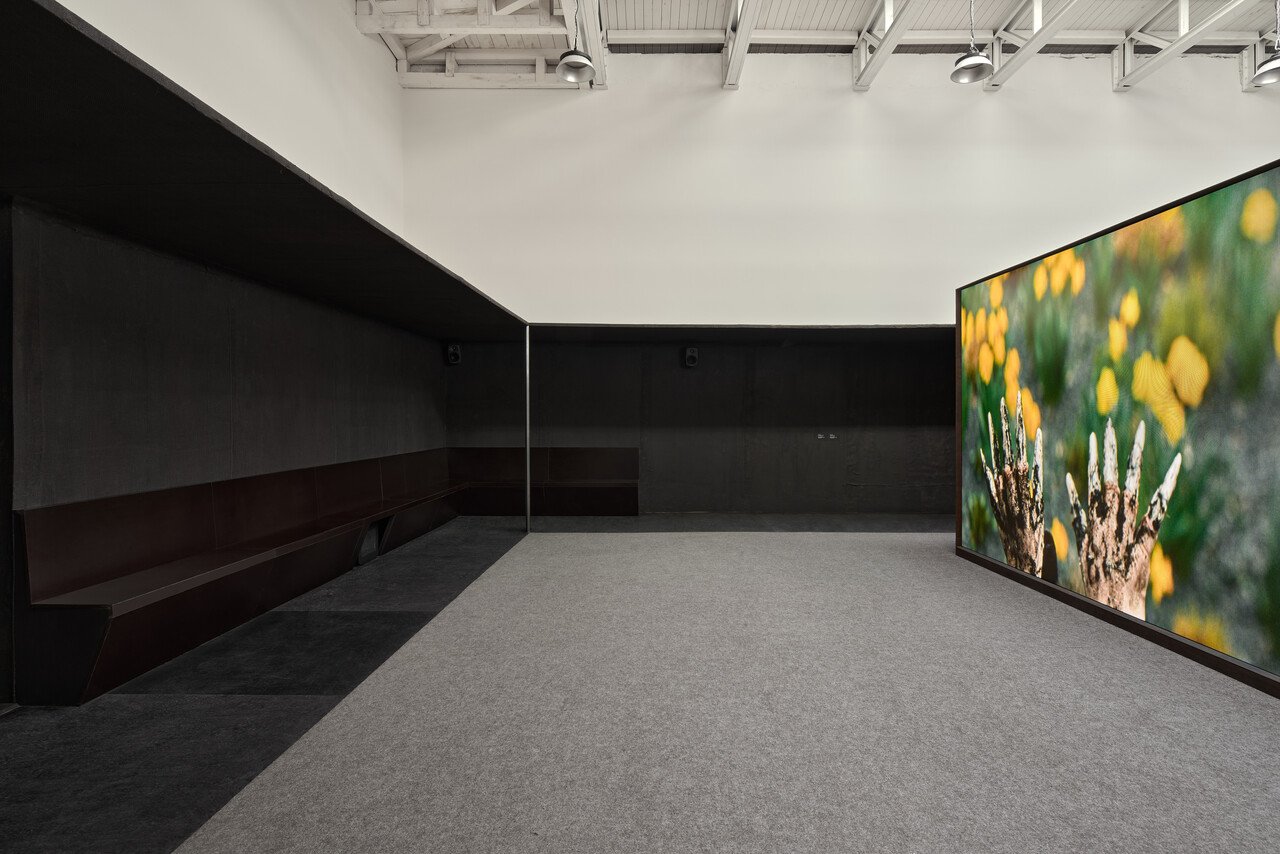
Czech and Slovak Pavilion, Venice, photo: Jan Kolsky. Courtesy of The National Gallery Prague.
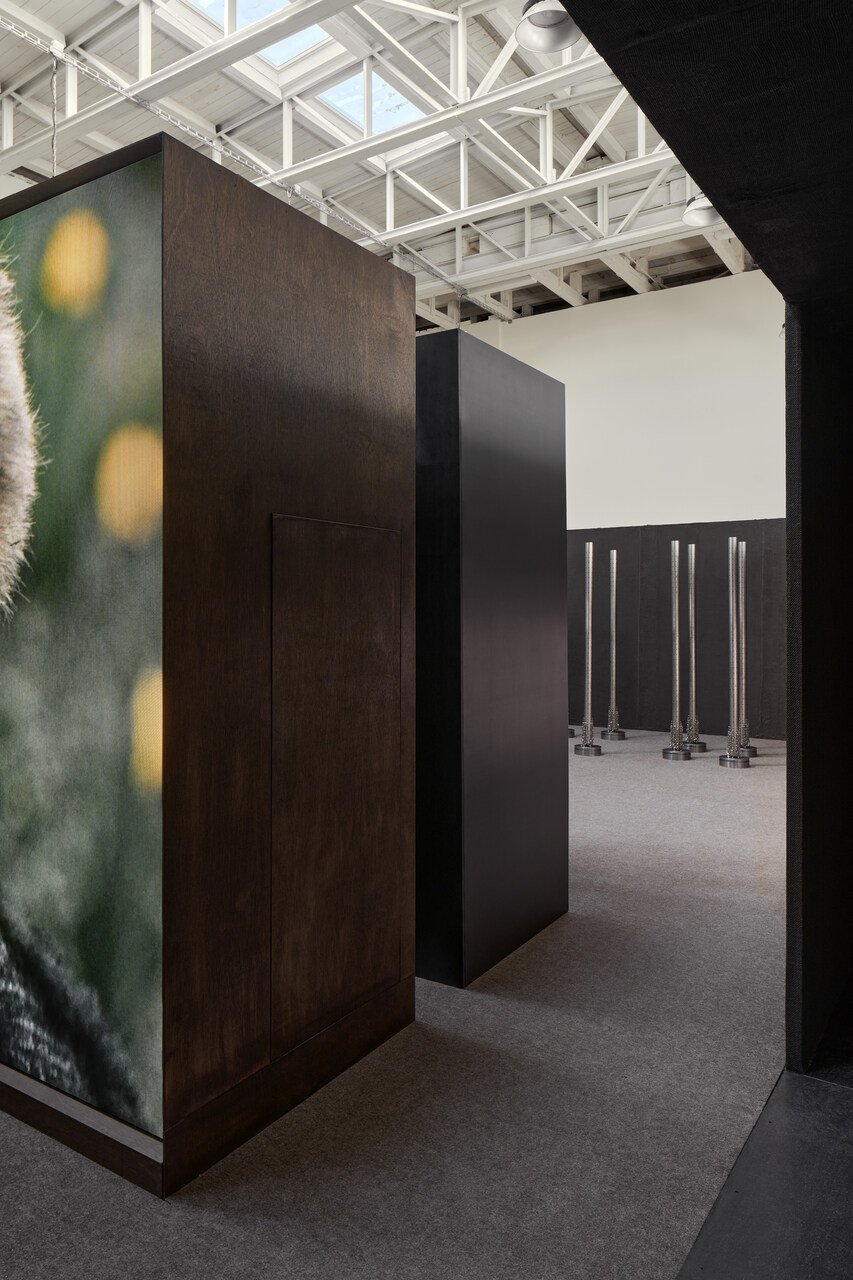
Courtesy of The National Gallery Prague.
CC: The project brings together moving image, sculpture, performance, and the architectural space of the pavilion. Rather than presenting a series of autonomous works, it seems to construct a complex dramaturgical apparatus in which each element acquires meaning through its relationship with the others. How did you conceive this structure? Was the pavilion imagined from the beginning as a single spatial and dramaturgical organism? And how did you determine the specific role and position of each artistic element within it?
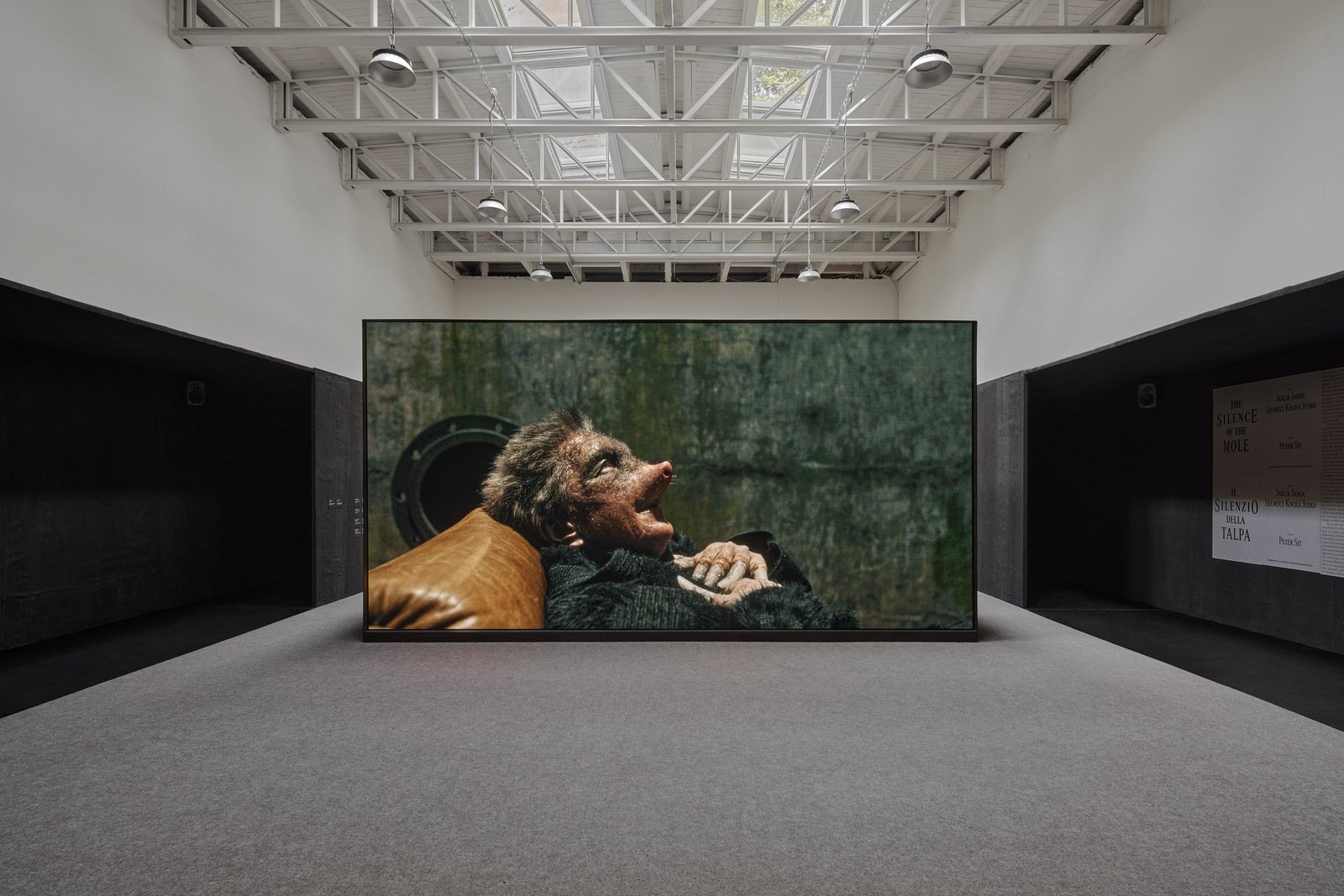
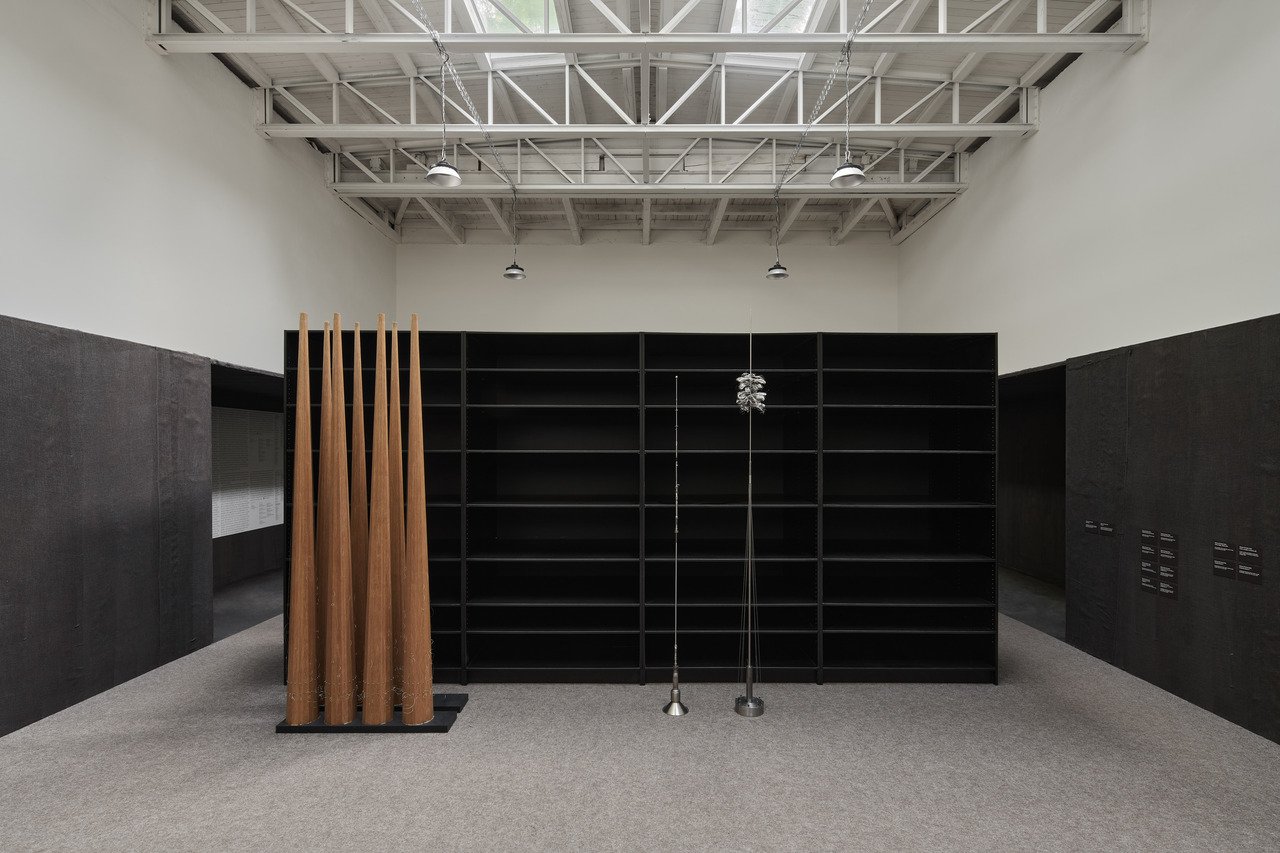
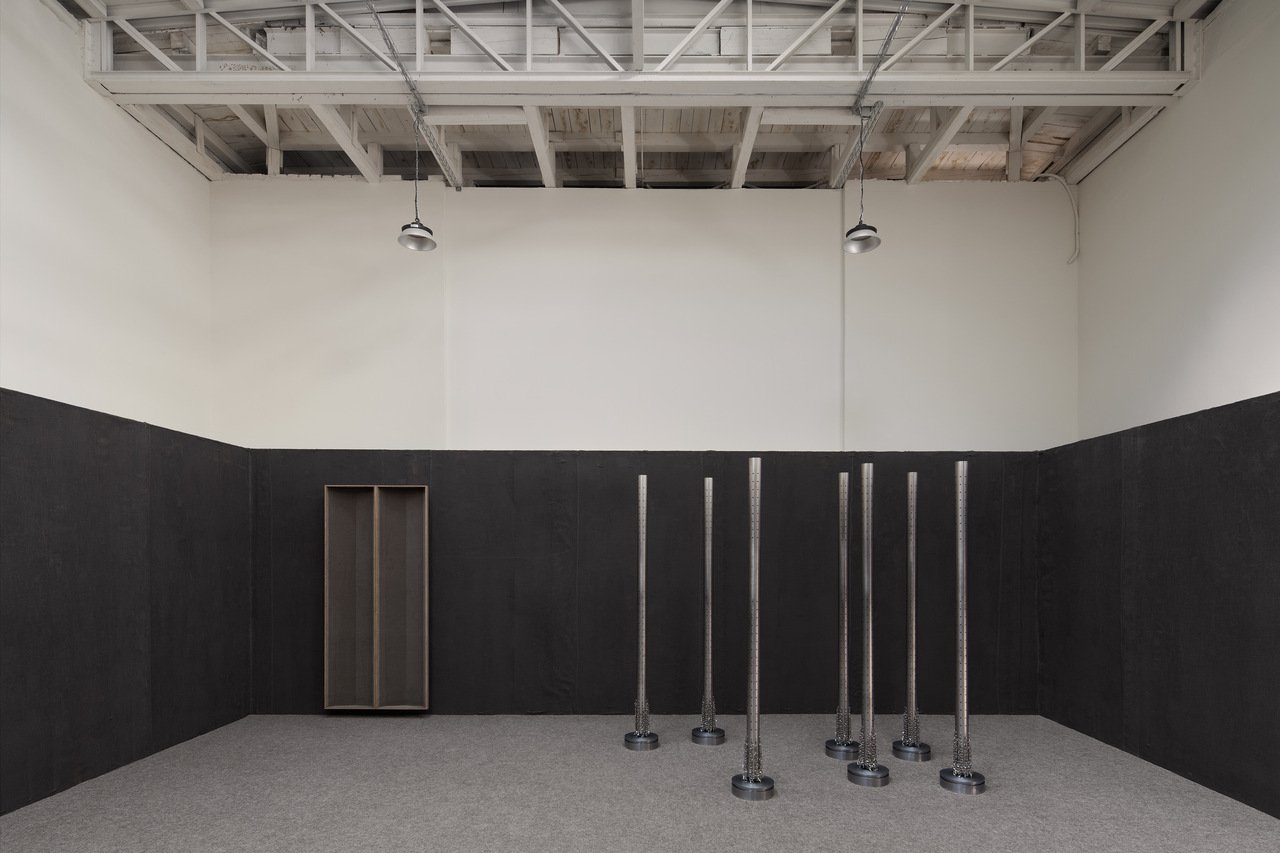
PS: We never thought about the works as separate pieces that simply occupy the same space. From the beginning we imagined the pavilion as one continuous environment. Film, architecture, sculpture, and sound function almost like different voices within one composition. Visitors are not simply looking at artworks but moving through a narrative that unfolds spatially.
We were interested in slowing people down and encouraging them to spend time inside the pavilion rather than consuming individual works one after another. We were working on the artworks together, even Jakub Jansa is author of the film and Selmeci Kocka Jusko are authors of sculptures and architecture, we were consulting everything together.
CC: Could you speak more specifically about the relationship between the works of Jakub Jansa and Selmeci Kocka Jusko? What is the precise function of their respective practices within the dramaturgical structure of the pavilion? Do the sculptures operate as scenographic elements, as autonomous artworks, as fragments of a fictional world, or as material counterparts to Jansa’s moving image? And how did you conceive the relationship between the physical presence of the sculptures and their appearance within the video?
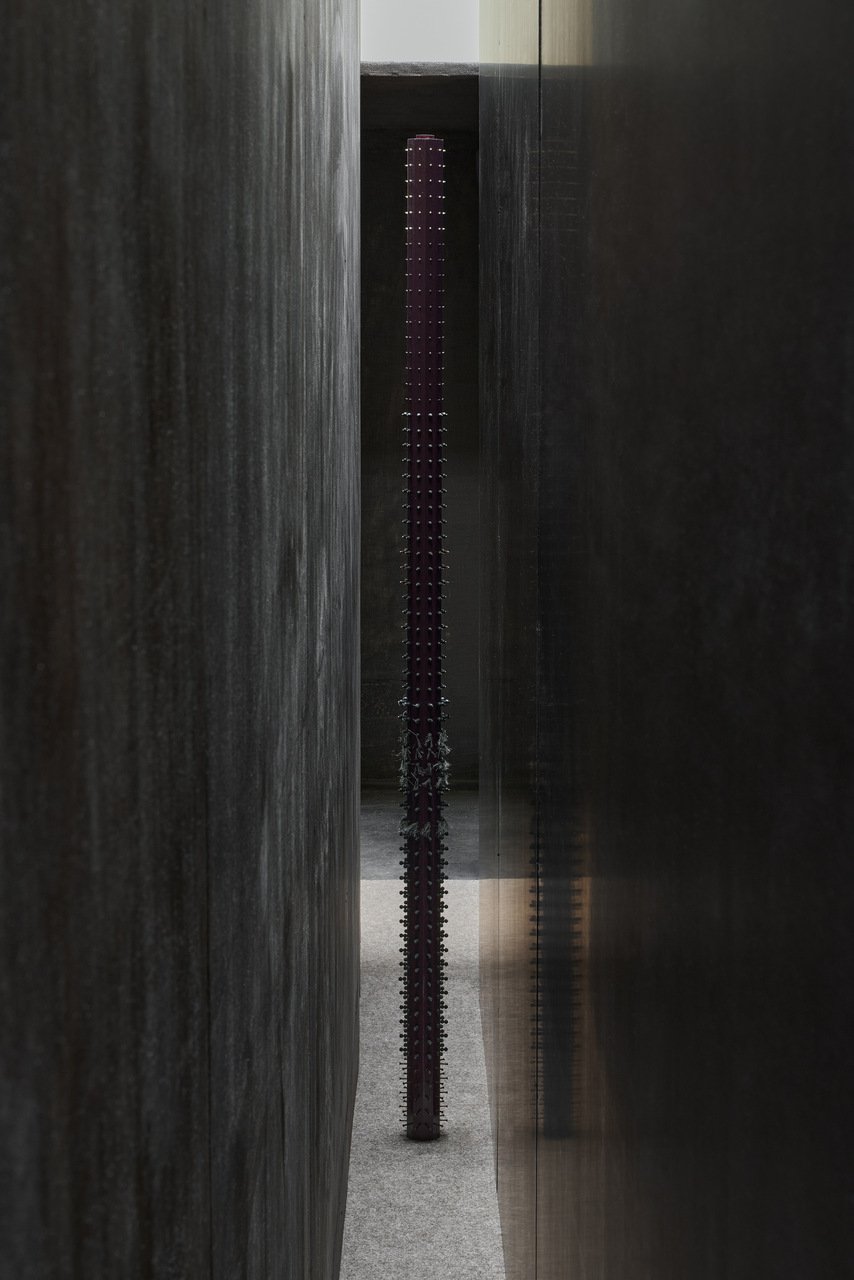
PS: Their practices remain distinct, but they continuously overlap. The sculptures are not props for the film, nor illustrations of it. Instead they extend its world into physical space. The same fictional universe exists simultaneously as architecture, object, and moving image, allowing visitors to move between different modes of perception.
CC: There is a strong sense of choreography in the way bodies, images, objects, sounds, silences, and architectural elements are arranged in relation to one another. Do you think of curating, in this context, as a form of choreography? If so, what exactly is being choreographed: the movement of the visitor, the perception of the artworks, the circulation of meaning, or perhaps the relationship between individual and collective memory?
PS: Yes, I think choreography is an accurate way to describe the curatorial process here. Not because visitors are literally directed, but because attention itself is choreographed. We wanted visitors to alternate between movement and stillness, between listening and watching, between collective and intimate experiences. I’m an artist myself, and I think about my role as a curator in an artistic way. Maybe that’s why, when I’m curating exhibitions, I think of them as a form of art. Even though the artworks here are not “mine,” because of my involvement, my artistic ego feels very fulfilled. And I think that’s something the artists also appreciated, because I understand both sides, and I care deeply about making the process of producing new work as smooth as possible for them. The role of the curator is to take care of both the artists and the project, to mediate between the artists, their needs, and the institution, and to help them navigate the pressures that inevitably come with a project of this scale.
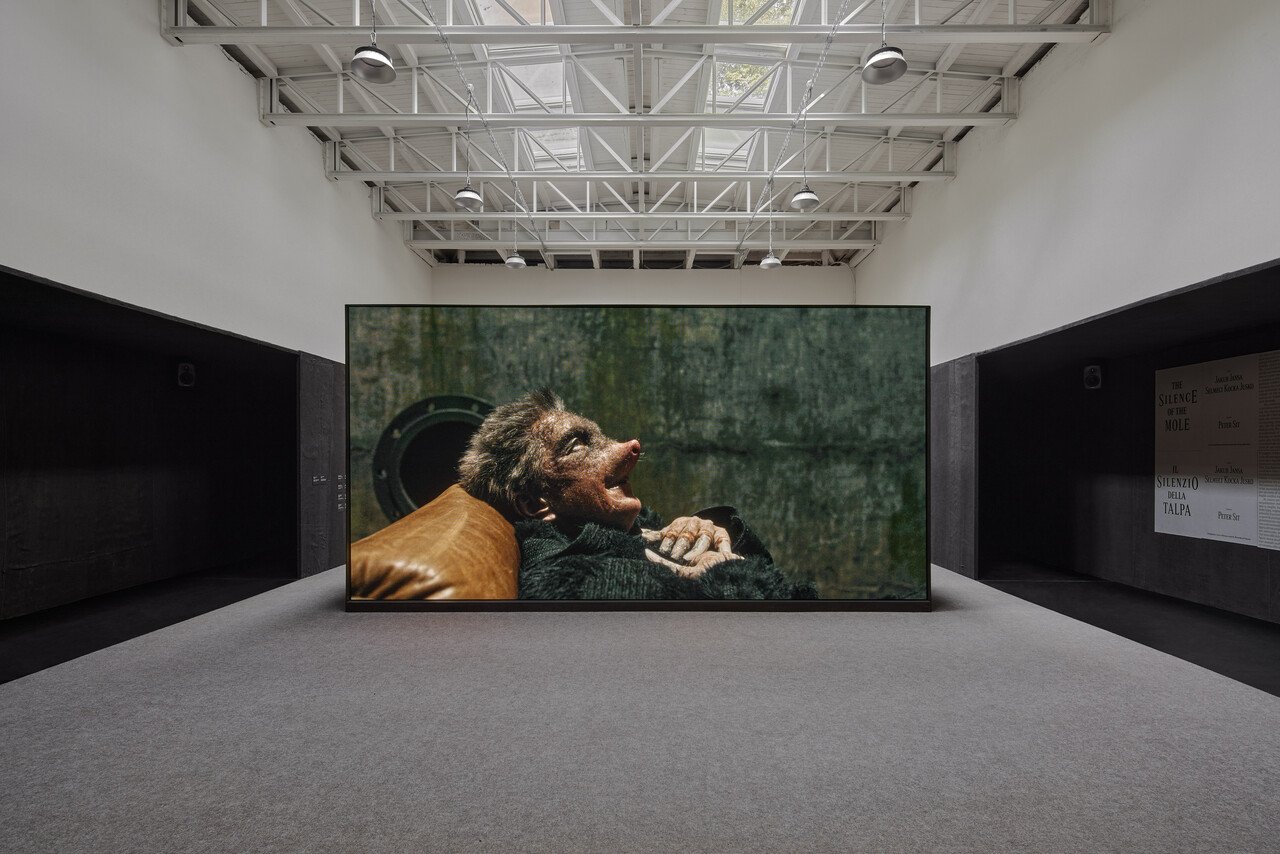
Courtesy of The National Gallery Prague.
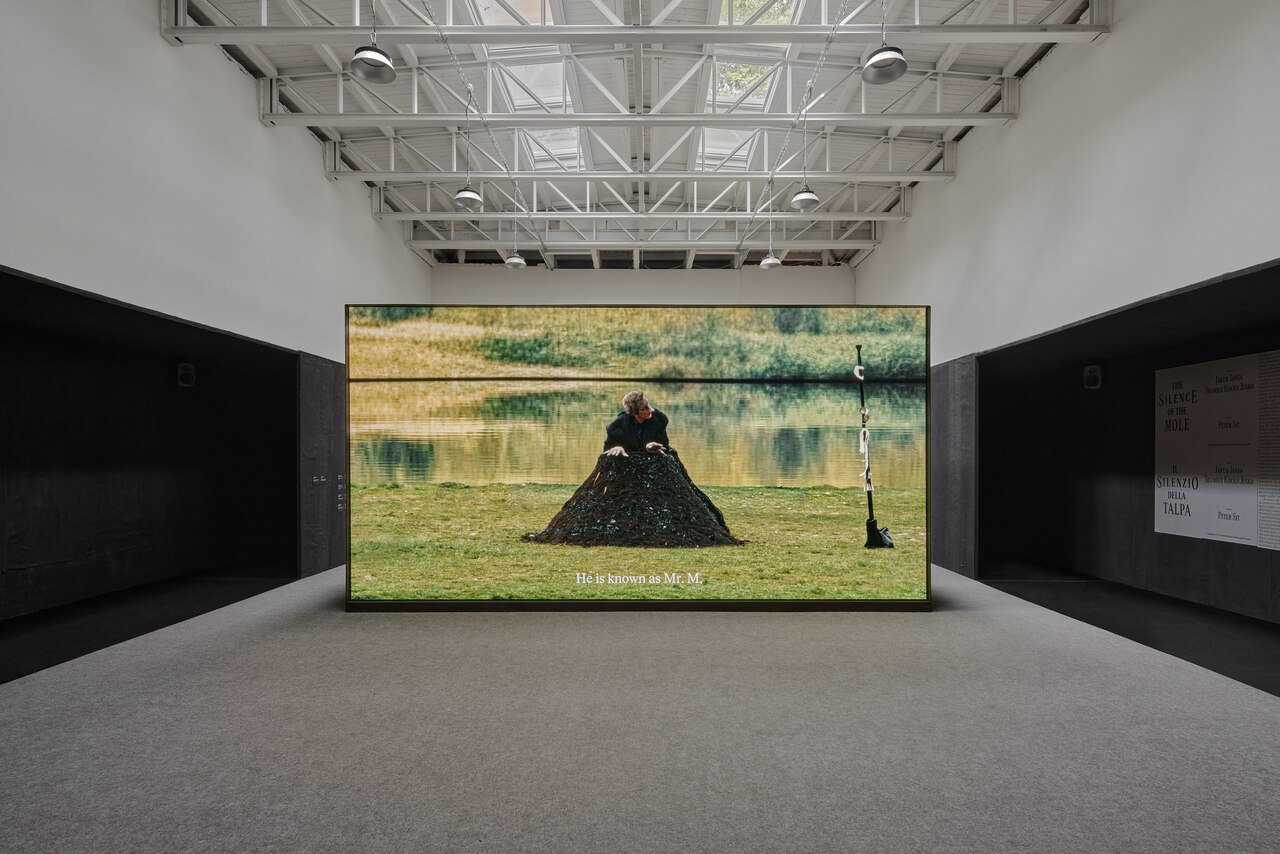
Courtesy of The National Gallery Prague.
CC: At the centre of the project seems to be a question about who has the power to represent whom. Mr M. represents The Mole; The Mole represents cultural memory; the pavilion represents two countries within an international exhibition. How did you reflect on this chain of representation? And did you see the pavilion itself as a space in which the politics of cultural representation could be questioned?
PS: Representation operates on several levels throughout the project. Mr. M. represents The Mole, but he is also burdened by that representation. Similarly, national pavilions inevitably raise questions about who is entitled to represent a country, whose stories become visible, and which identities remain excluded.
This year marks the 100th anniversary of the pavilion, which still bears the name of a country that no longer exists. Today, it is jointly owned by two countries. In a way, we are exhibiting in the pavilion of a fictional country. For me, that’s a beautiful metaphor. National representation, and the whole idea of the Venice Biennale as a system of national pavilions is quite problematic. I think it’s important to keep questioning it, and I hope that one day we will be able to move beyond this rather archaic model, which, at least for contemporary art, no longer makes much sense. At the same time, for nation states, and for the Biennale as an institution, it remains very important because it is deeply connected to power, money, and, as our project suggests, representation itself.
CC: What emerges from the underground? The Mole emerges from the underground into the space of the pavilion, but what reaches the surface is no longer simply the familiar character that generations have known. After passing through performance, sculpture, moving image, architecture, and cultural memory, what do you think The Mole has become within this exhibition? And what do you hope will remain with the visitor after leaving the pavilion?
PS: The Mole emerges transformed. It is no longer simply a beloved children’s character but a figure through which questions of imagination, the burden of bureaucracy, representation, and political responsibility become visible. I hope visitors leave with a renewed sensitivity towards silence. Not as emptiness, but as a space where listening, empathy, and imagination become possible again.
Despite everything that is happening in the world, and this problematic edition of the Venice Biennale which has included the russian and israeli pavilions, I’m leaving with a feeling of hope. We became friends with other artists and curators as well. We were hanging out, supporting each other, listening to each other’s struggles, and it really created a strong bond. I believe that people can sense in the artworks what we put into this project, not just our labour, but also our care. The process with the artists was really beautiful, from working on the application to the final installation. We really cared about each other. I’m proud of what we did in our pavilion, but these relationships are what will remain. And this is something that is worth fighting for.
CC: In the end, “What will remain?”
PS: There will remain relationships.

Chiara Causo is a writer, independent curator, and researcher. Her studies span anthropology, philosophy, and critical theory to investigate the relationship between the imaginary, the body, power, and society. Her research approaches art as a space for the production of thought and as a device capable of challenging the cultural and political structures of the present. Her writing explores themes related to systems of power, forms of control and participation, the construction of identity, and social transformations, with particular attention to artistic practices that generate alternative forms of knowledge and modes of relating.
Peter Sit is an artist and curator. He curated the Czech and Slovak Pavilion at the 61st Venice Biennale, bringing together Jakub Jansa and Selmeci Kocka Jusko in a joint presentation. The project, titled The Silence of the Mole, marked the 100th anniversary of the pavilion.
Sit currently works as art director at e-flux journal. From 2012 to 2022, he was co-founder and member of the collective and platform APART, where he curated and developed a wide range of exhibitions, publications, and discursive projects. Through APART, he exhibited at institutions including Kunsthalle Bratislava, Karlín Studios in Prague, Easttopics in Budapest, the Biennial of Graphic Design in Brno, CCA Chronicle in Bytom, MoMA in New York, Glassbox in Paris, Alserkal Arts Foundation in Dubai, City Gallery Prague, Kunsthalle TRAFO in Szczecin, and the Matter of Art Biennale in Prague, among others.
Sit has participated in international residencies including the Salzburg Summer Academy and Art in General, New York. His editorial and curatorial practice spans books, exhibitions, and public programs, including Woody and Steina Vasulka: Resonant Memory (e-flux, 2025), Harun Farocki: Shaping of Our Present (A Promise of Kneropy, 2022), Life, Death, Love and Justice with Didem Yazıcı (Yapı Kredi Culture Centre, Istanbul, 2022), and the 9th Futurological Congress: Future of Language with Julieta Aranda (Slovak Radio Building, Bratislava, 2019). He has organized and contributed to numerous lectures and discussions on conceptual art in relation to art education and mental health. He is currently working on a research and writing project, Art in Times of Anxieties and Depressions.
Artist: Jakub Jansa, Selmeci Kocka Jusko
Exhibition Title: The Silence of the Mole
Curated by: Peter Sit
Venue: Czech and Slovak Pavilion in Venice
Place (Country/Location): Venice, Italy
Dates: 09.05. – 22.11.2026
Photos: All images courtesy of The National Gallery Prague.