
Raluca Oancea
Dan and Lia Perjovschi represent one of those exceedingly rare cases of artists whose renown and force surpass the power of any art institution in Romania. Having collaborated with nearly the entire local art scene and exhibited in the most prestigious international contexts – documenta (Kassel), Manifesta, the Venice Biennale, MoMA (NY), Tate Modern (London), Centre Pompidou (Paris), Total Museum of Contemporary Art (Seoul), and the MOT Museum of Contemporary Art (Tokyo) –they no longer require any validation. On the contrary, they are actively sought after by new venues and associations, emerging as well as seasoned curators, and even by museums that are themselves in the process of consolidating their standing, often with their assistance.
Displaying an unparalleled generosity within our somewhat petty local scene, where solidarity often coalesces with difficulty, Lia and Dan Perjovschi initially fostered initiatives in Sibiu, where they have been working together in recent years. Exemplary in this regard is the 2023 decision of Dan Perjovschi to send home a portion of his compensation from documenta 15. This relational gesture, a destabilization of the Foucauldian “author function,” materialized through the redistribution of funds to an extensive list of organizations: the Visual Arts Platform PAV, the Association for Liberty and Gender Equality, the Arab Cultural Center, the Cultural Capital Association, the Simultan Association in Timișoara, dragoste Gallery, and countless visual artists. His and Lia’s support, however, was not confined to Sibiu, but extended to initiatives nationwide: from the artist-run space STUDIO-PORTALS@ARMEANĂ.18 initiated by Tudor Pătrașcu in Iași, to Cazul 101 and Tranzit.ro in Bucharest, Indecis in Timisoara, In Context in Slanic Moldova, Eforie Colorat on the Black Sea coast, and to Natural Bond for Vadoo Fest, an interdisciplinary festival organized by the Alt Real Association deep in the forests of Vadu Oii.
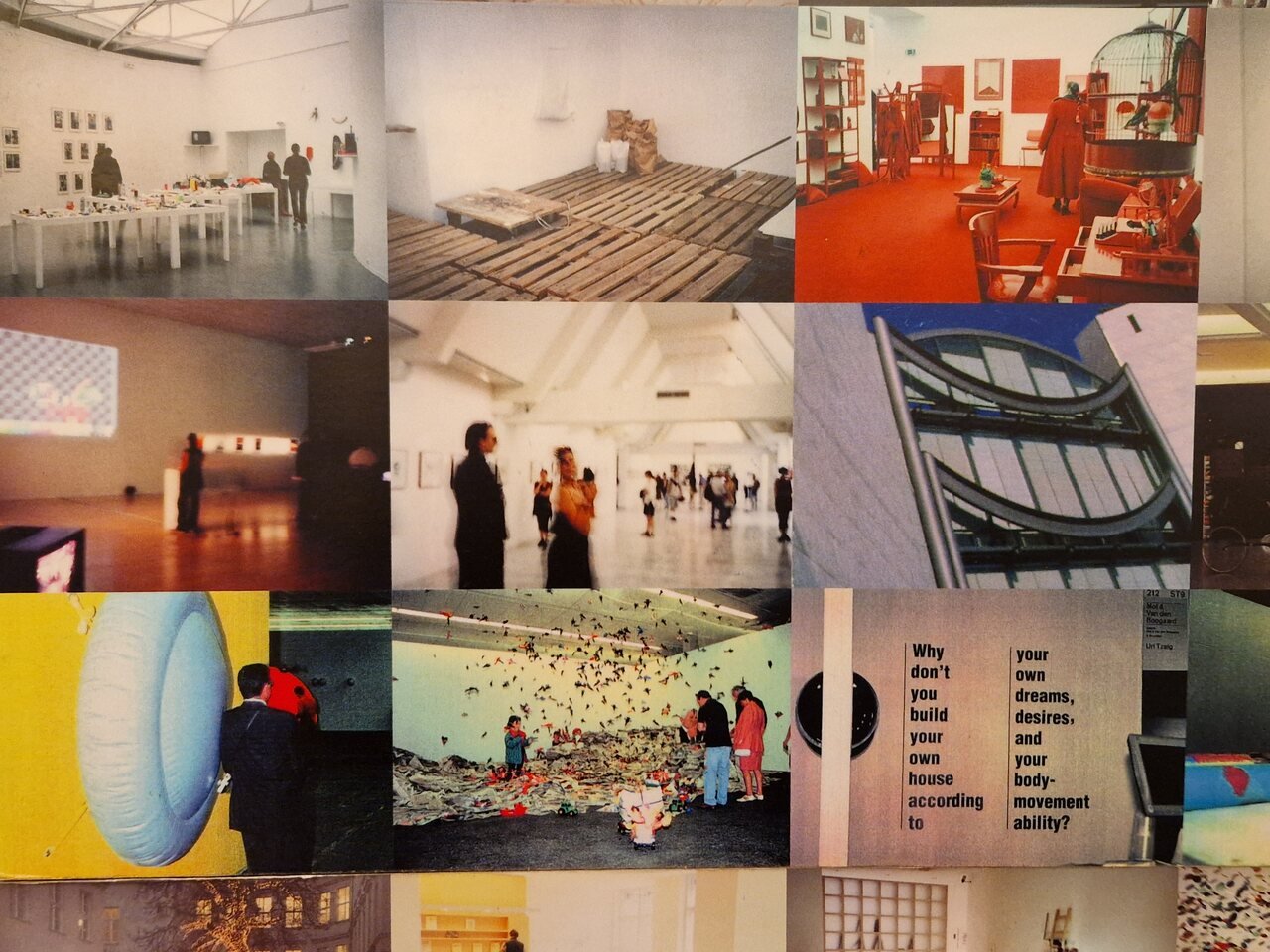
Proof of their positioning in the art scene is offered by the most recent exhibition of the artist duo, Lia Dan Perjovschi[1]. DRAFT for a shared retrospective, which opened in Bucharest on April 3, 2026, at ARCUB. ARCUB is a cultural center marking thirty years of activity, taking place in parallel with a critical debate regarding the fragile situation of the center, which, despite organizing a major event for the Romanian art scene and in the absence of any real consultation, was legally dissolved and merged, together with other entities, into a centralized institution subordinated to the municipality at the very moment of the exhibition’s opening.
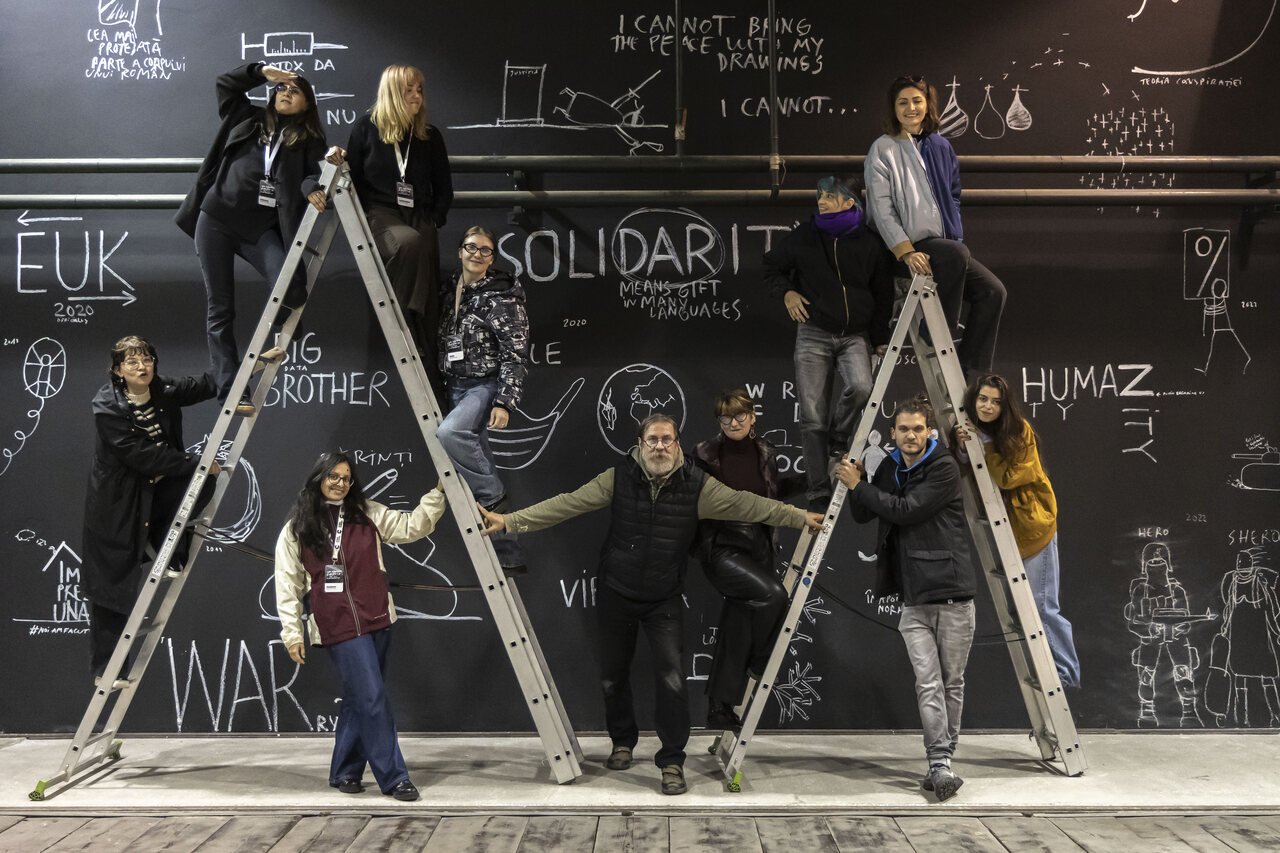
This same presence of genuine artistic force and authority is reflected in the way the exhibition Dan Perjovschi. Romania: A Retrospective 1985–2025 was articulated at the end of 2025 in Timișoara, his beloved city, which ignited the uprising against the Ceaușescu regime in December 1989. Without relying on the backing of any major museum, the event, largely orchestrated by the artist himself, set in motion a vast alternative network of specialists, friends, and admirers. This mobilization began with the Contrasens Cultural Association, coordinated by Dana Sarmeș alongside a curatorial team (Monica Dănilă, Magda Radu, Mihaela Tilincă), and extended to numerous brilliant young volunteers as well as a substantial roster of collaborators and discussion participants.
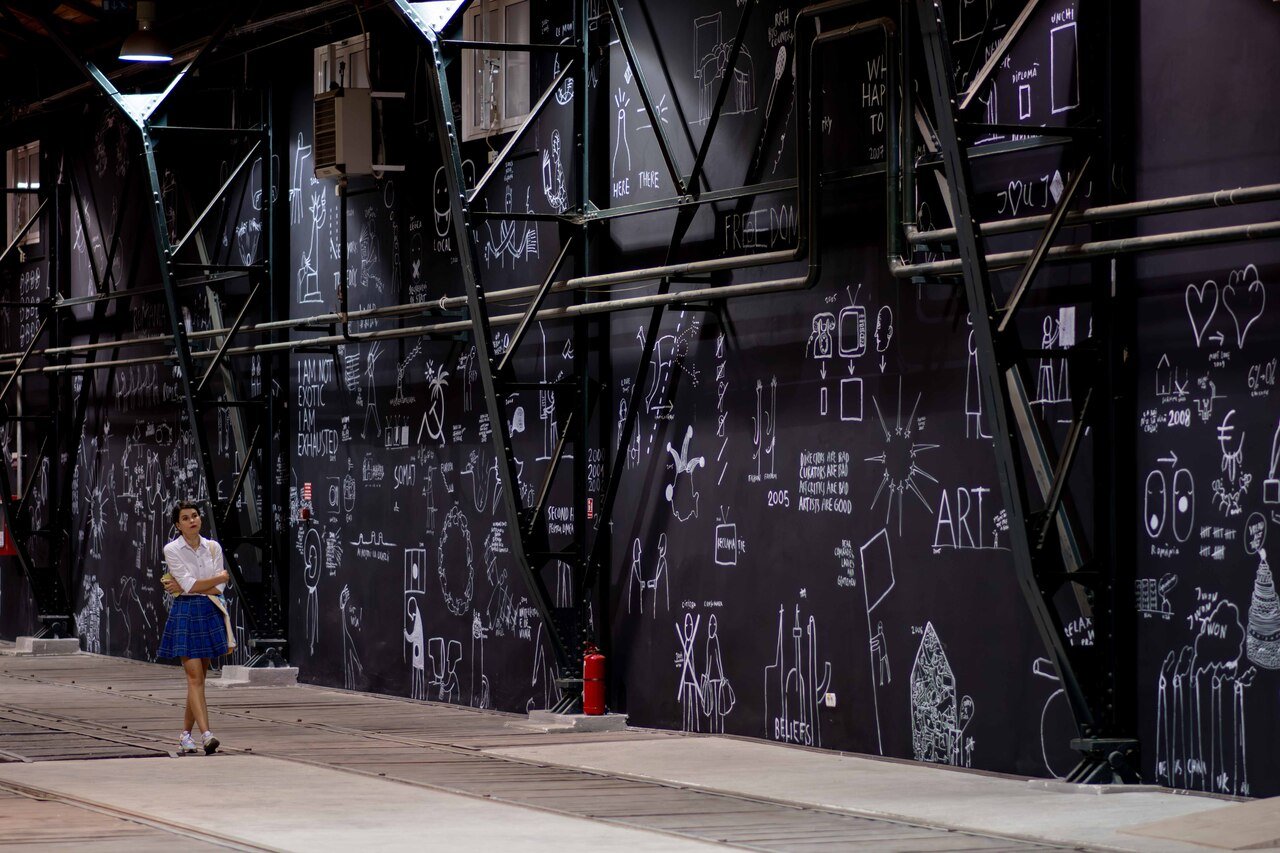
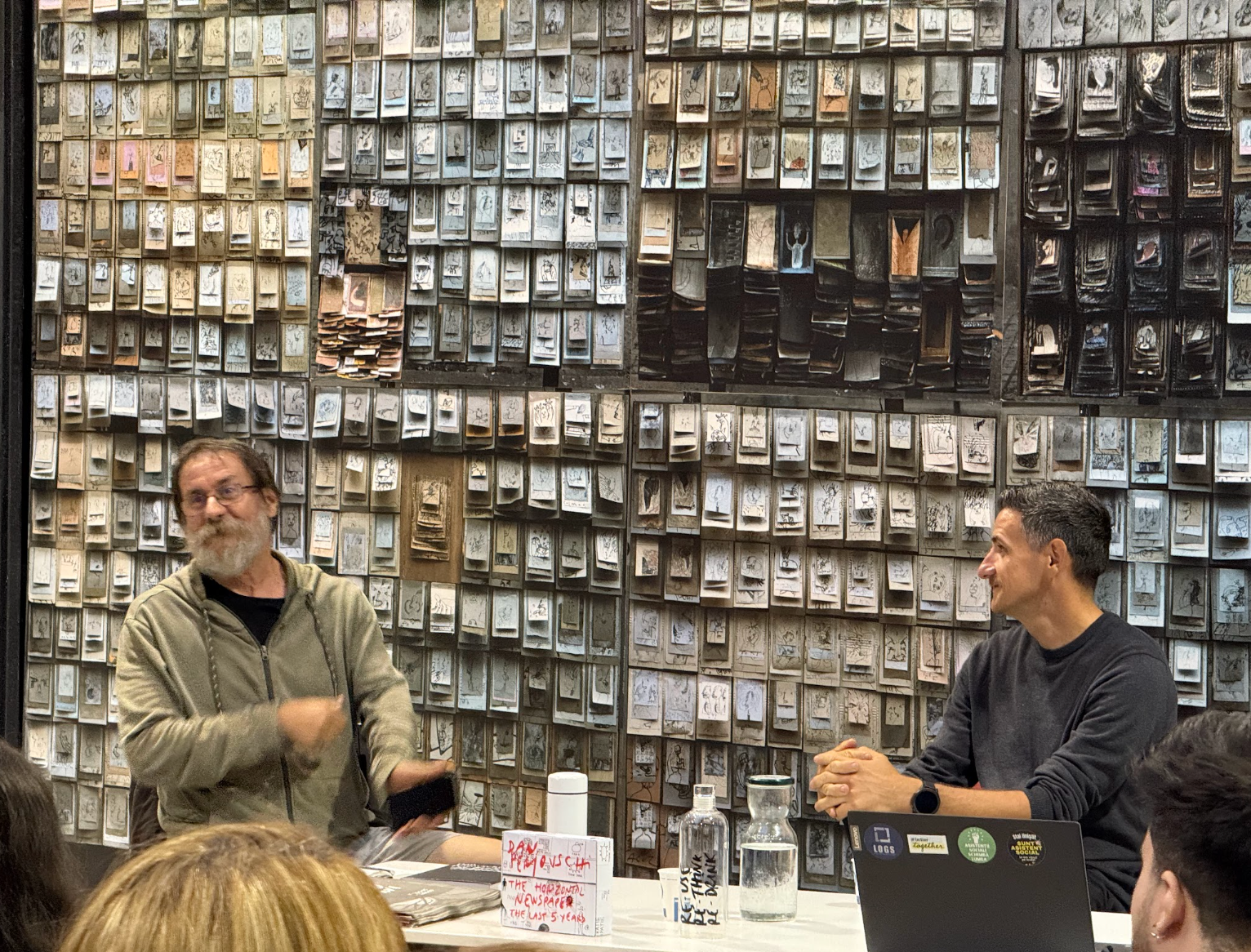
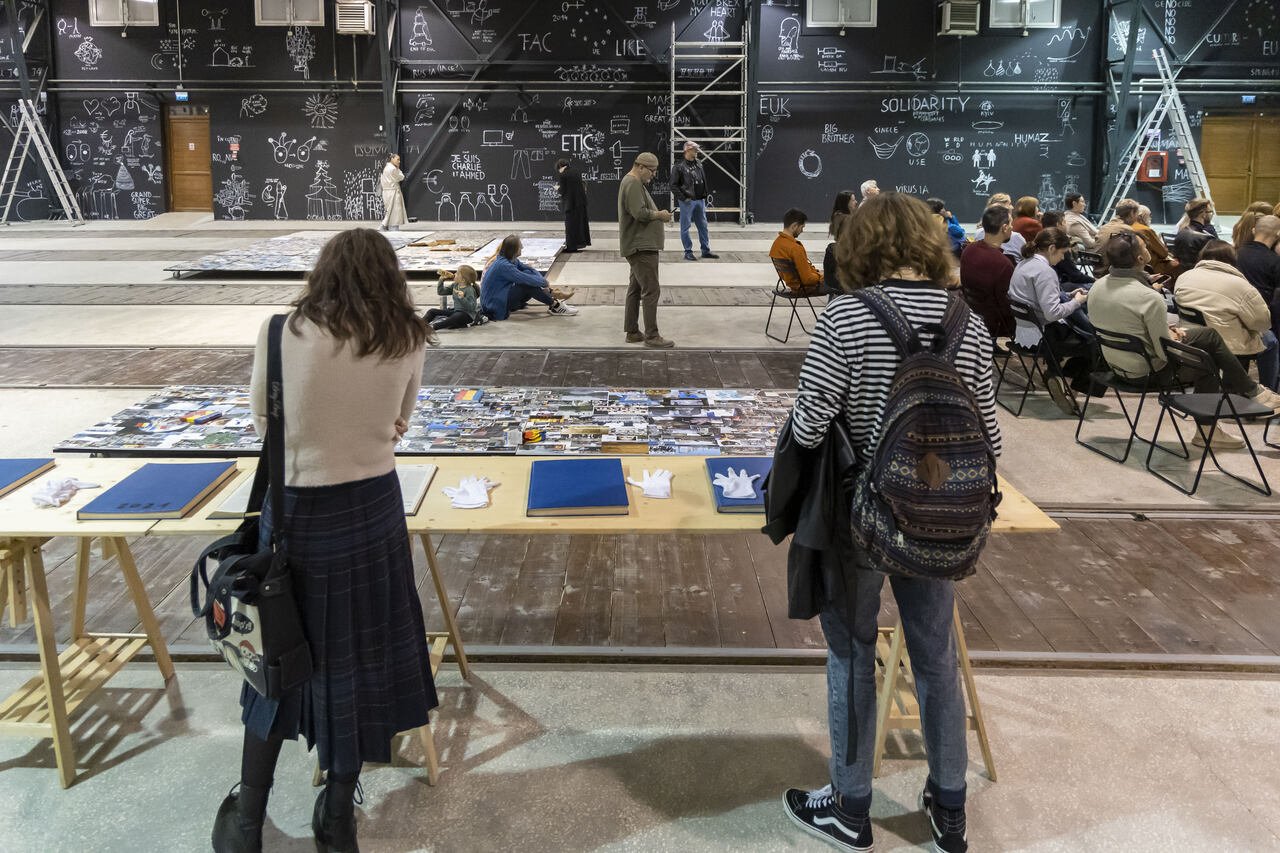
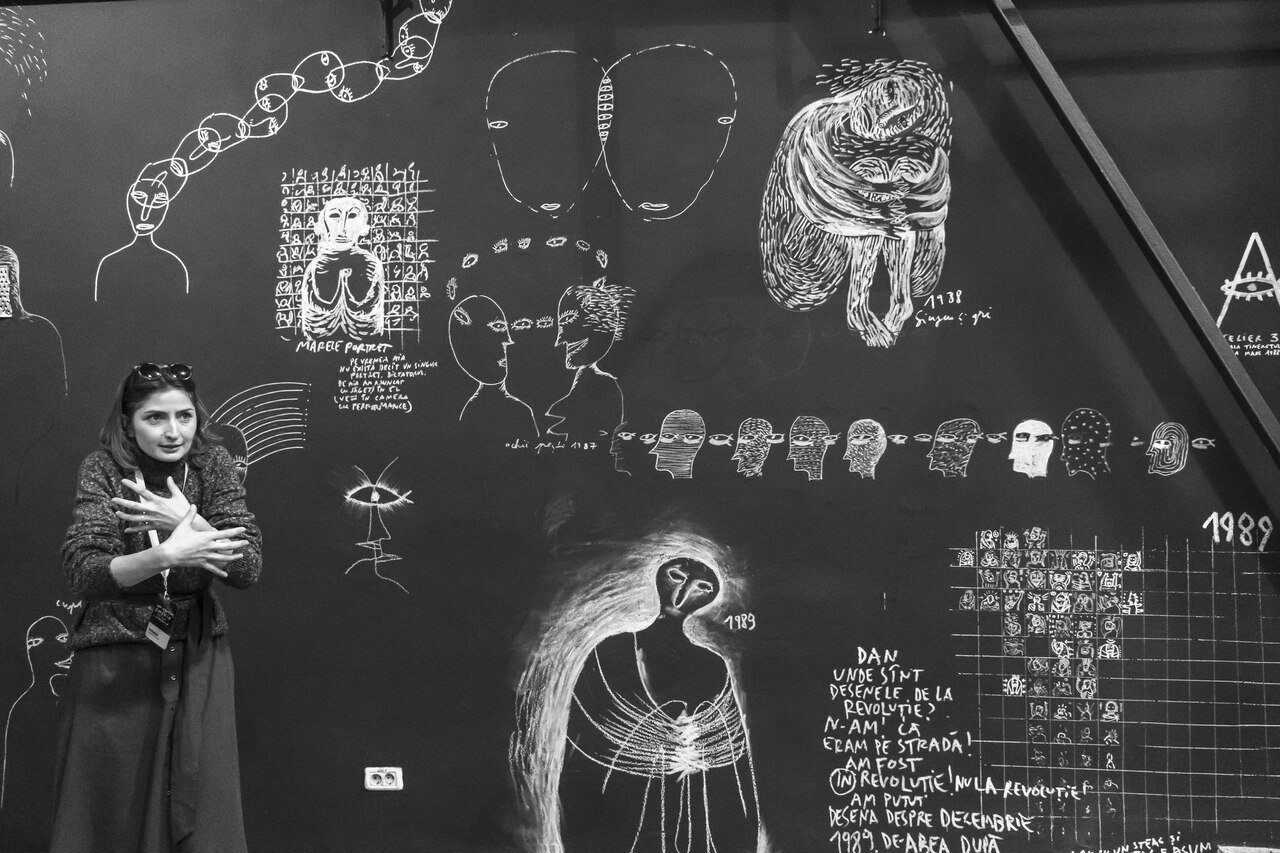
In my view, this latter retrospective primarily bears the imprint of the constitutive bond that Dan Perjovschi – graphic artist, illustrator, and long-time contributor to Revista 22 – maintains with written culture: newspapers, books, and experimental printed media. In this sense, the project unfolded in a largely linear yet hypertextual manner, originating from a massive wall in the historic Timișoara tram depot. On this immense surface, something like a horizontal palimpsest, the artist mapped recent history in his unmistakable graphic style, intertwining minimalist drawing, social critique, and concentrated political commentary, all inflected with that blend of humor and agile irony often associated with the Eastern European scene.
The narrative followed a loose chronological progression: beginning in the mid-1980s, when Dan and Lia Perjovschi, newly in love, stubbornly insisted on producing a different kind of art than the ideologically regimented one; continuing with the explosion of hope in the 1990s, when, in a Romania freshly liberated from the Iron Curtain and turned toward the world, artists resumed their international dialogue; and concluding with the inherent disappointments of integration into a less-than-perfect Europe.
Painted in a nearly black shade of gray, this wall evokes his intervention at documenta 15, where, invoking the metaphor of the blackboard and continuous education, the artist covered the columns at the entrance of the Fridericianum in the same tone to inscribe them with lumbung values: care, sustainability, collaboration, and decoloniality. The echoes of earlier social and educational projects from the history of documenta, such as Joseph Beuys’s “7000 Oaks,” are sedimented here. It also references the way the German artist, exemplary in his ability to confront and match the scale of any cultural institution, performed his concepts through his well-known “didactic blackboards,” in graphic forms that transcended mere linguistic expression.
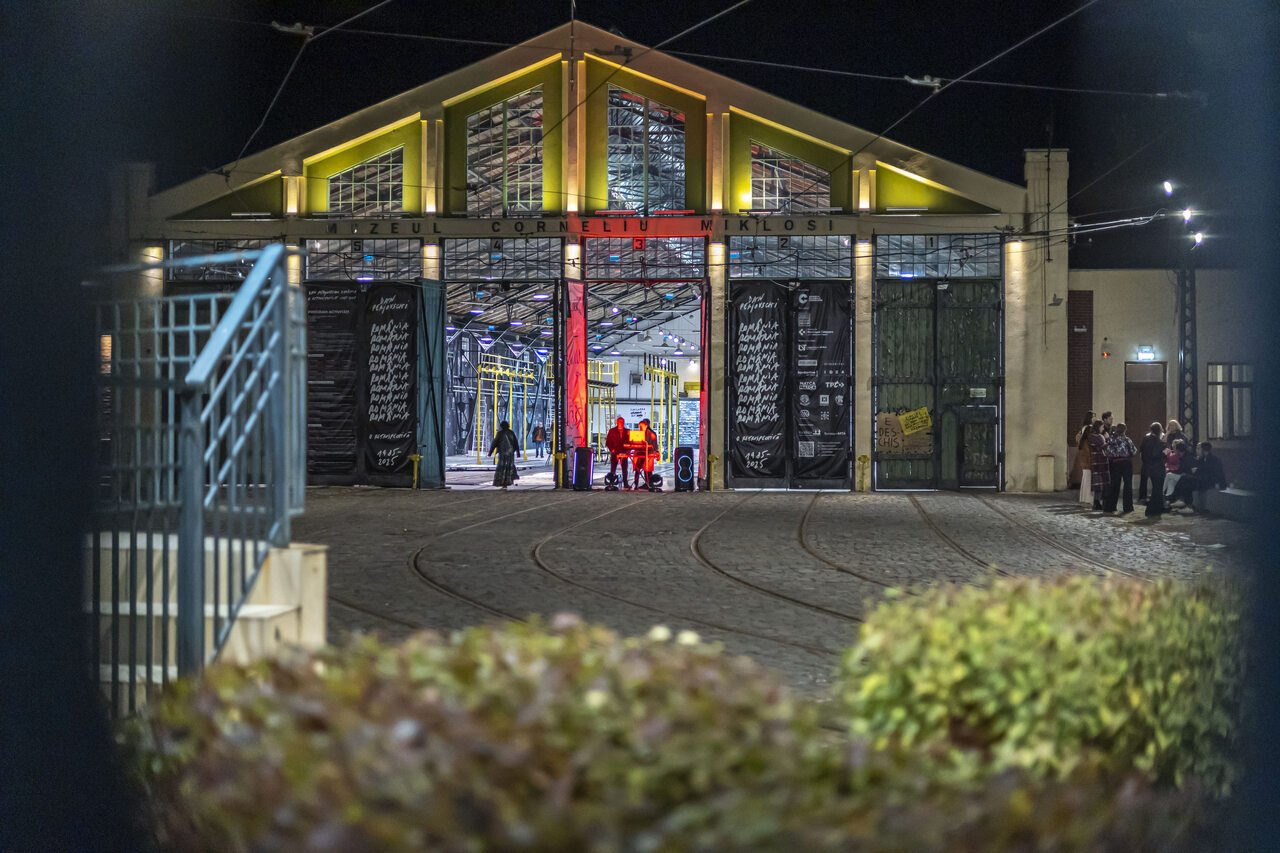
On the opposite wall of the main tram hall, at the entrance, a parallel timeline unfolded: the seemingly endless CV of the artist Perjovschi was transformed into a key artwork of the retrospective and articulated around the same major milestones: the 1980s, with exhibitions in Oradea and activities within Atelier 35, the young artists’ association; the 1990s, with his first residencies and international participations; followed by a sublime explosion of awards and exhibitions across major events and museums, unprecedented in the Romanian context.
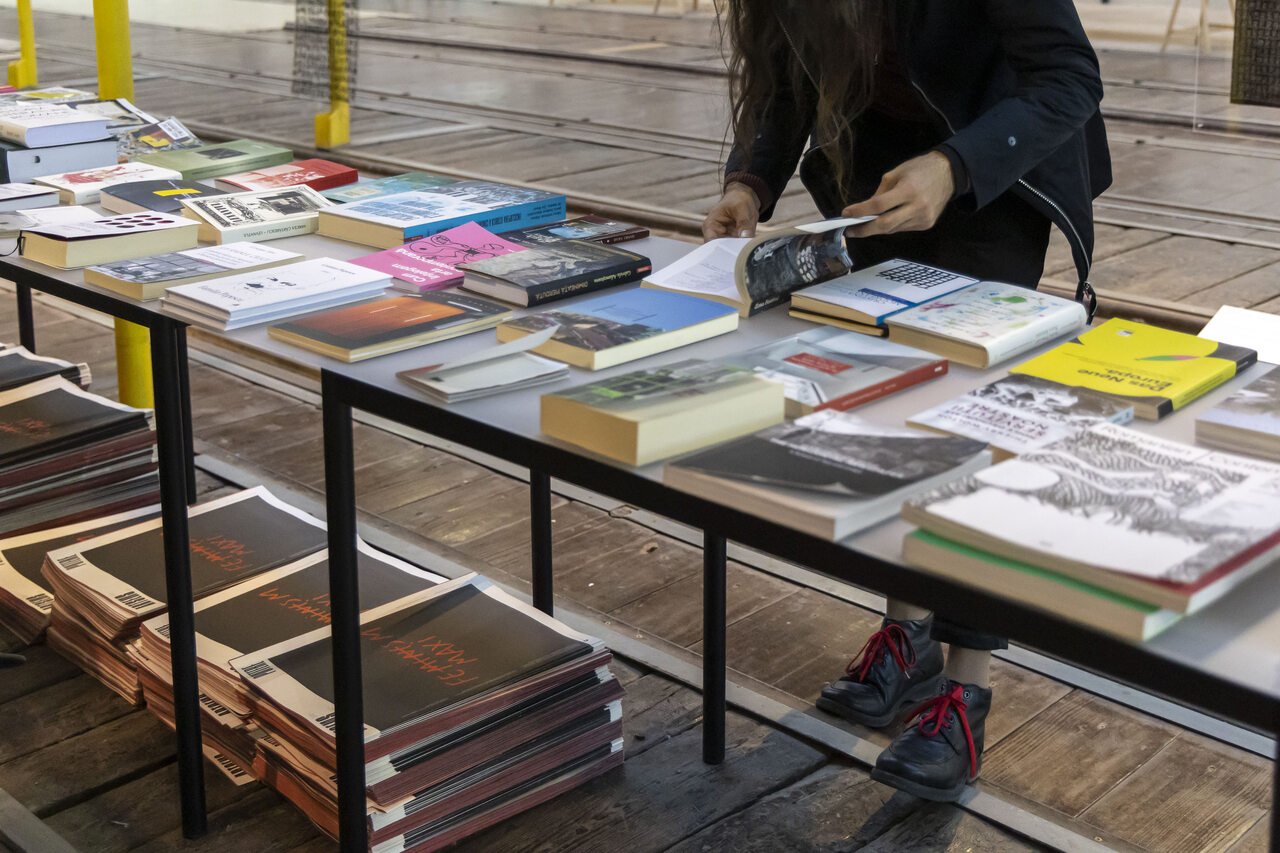
These two chronological sequences were complemented by two further linear structures, each sustaining a constitutive relation to writing. Immediately after the artist’s CV, displayed across a table over ten meters long, lay the complete collection of Revista 22, attesting to the 35-year existence of this first independent weekly publication in Romania (referred to by Perjovschi as “my 16-page gallery”). Parallel to this archive, at the center of the hall, a library assembled around one hundred books on Romanian history, sociology, literature, and art proposed an alternative mode of reading history.
The prominence of these textual trajectories encourages us to understand Dan Perjovschi’s retrospective less as a visual apparatus than as a textual architecture: a construction articulated from the uncanny perspective of “writing that writes itself,” in the sense articulated by Barthes[2], beyond the intention of any individual “author.” The rarefied space of the Timișoara depot thus appears as a material replica of the latent space of (hyper)textuality. What Perjovschi stages reveals itself, in fact, as the death of the “Author” Perjovschi and his gradual dissipation into the fabric of recent local and regional memory.
Paradoxically, in this process of dissipation, the artist does not lose himself, rather, he becomes-world. The symbolic gesture from 1993 of tattooing Romania onto his arm prefigures a process that will entail inoculating entire continents under his skin, incorporated one by one. The artist’s personal story thus merges with the broader narrative of Romania in transition from socialism to European structures, which in turn becomes entangled with the story of Europe and the world. A close reading of the main wall in the tram depot makes this evolution visible: from the rather monological expressions of gray isolation during the communist “Golden Age,” to drawings and commentaries that are increasingly expansive and attuned to global concerns. Particularly striking are the sharp critiques of post-1989 political formations, such as those targeting the PSD and President Iliescu, who “restored order” by calling in the miners against student protests in Bucharest, as well as an emergent ecological engagement, illustrated by the Roșia Montană case, and agile international responses to events such as the attack on Charlie Hebdo, the COVID-19 pandemic, or the policies associated with Vladimir Putin and Donald Trump.
How does all this help us decrypt Perjovschi’s profile? From the outset, it becomes clear that he transcends the figure of the classical illustrator, typically confined to the idealized or naturalistic representation of discrete images. A more productive interpretative key can be found in the modern Baudelairean conception of the artist: a cosmopolitan actor and flâneur who traverses the modern city, absorbing its rhythms, social typologies, and ephemerality[3]. Both operate through sequences of images that follow the flow of current events and excel at capturing the moment, the fleeting intensity of everyday life. However, Perjovschi moves beyond the modern paradigm of the author who still aspires to grasp an absolute truth, even a transitory one distilled at street level. In other words, he rejects both the model of the artist or intellectual as a figure who “reveals the truth” and the assumption of a privileged position from which reality could be definitively explained.
Linear and hyperlinear structures can also be found at ARCUB in the joint retrospective in Bucharest, covering the same period (1985–present), organized across two floors and accompanied by an important selection of video works displayed in the basement, in rooms with exposed brick walls well suited for such projections. Both the ground and the upper floors each feature, in this respect, two long rooms, the one on the right occupied by Dan, the one on the left by Lia. The exhibition also integrates the exemplary CVs of both artists, a joint CV, as well as a surprising and playful list of Core and Shared Themes, Key Statements, and Key Contributions to East European Art, produced by Lia Perjovschi in the context of a consciously assumed collaboration with ChatGPT.
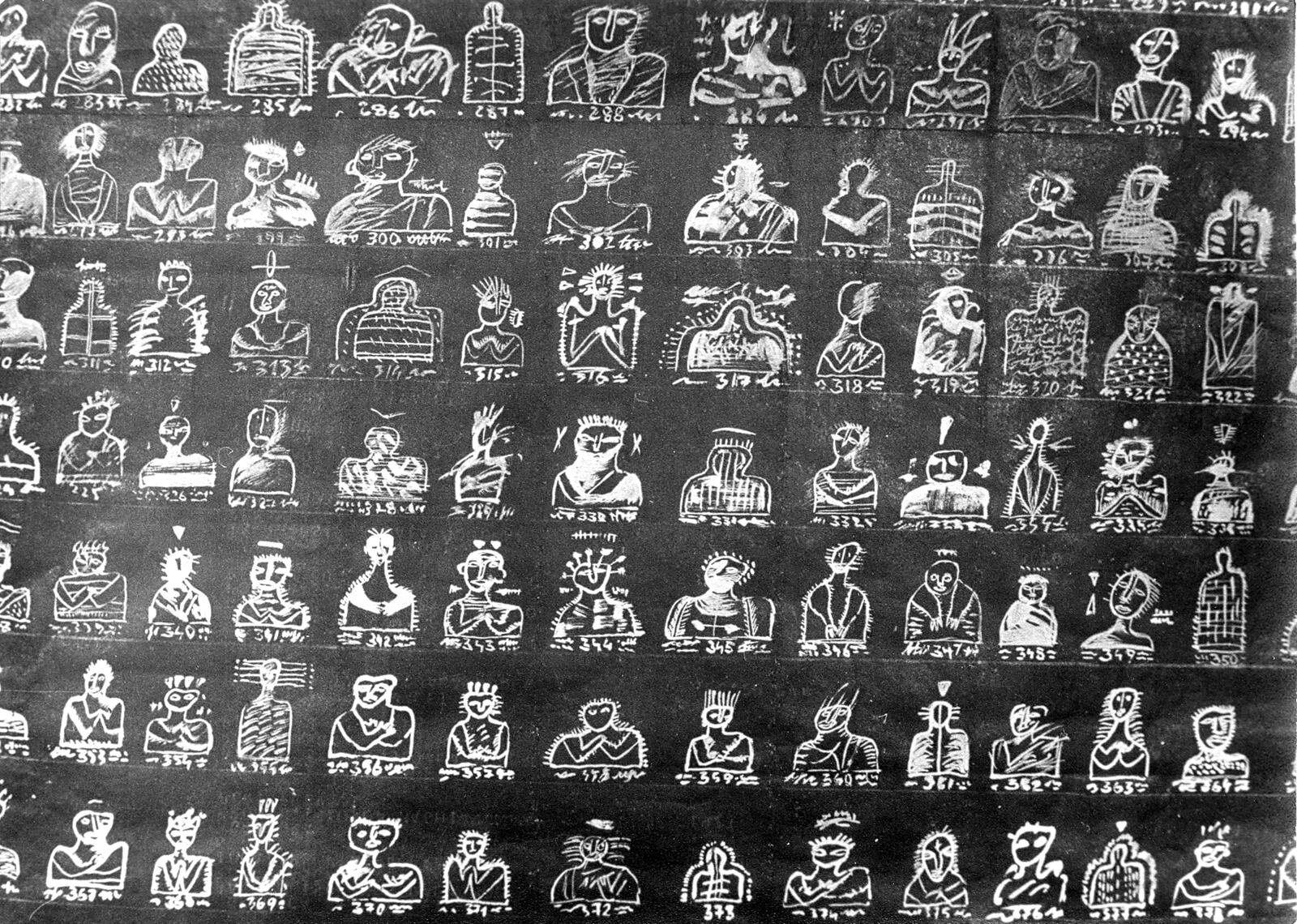
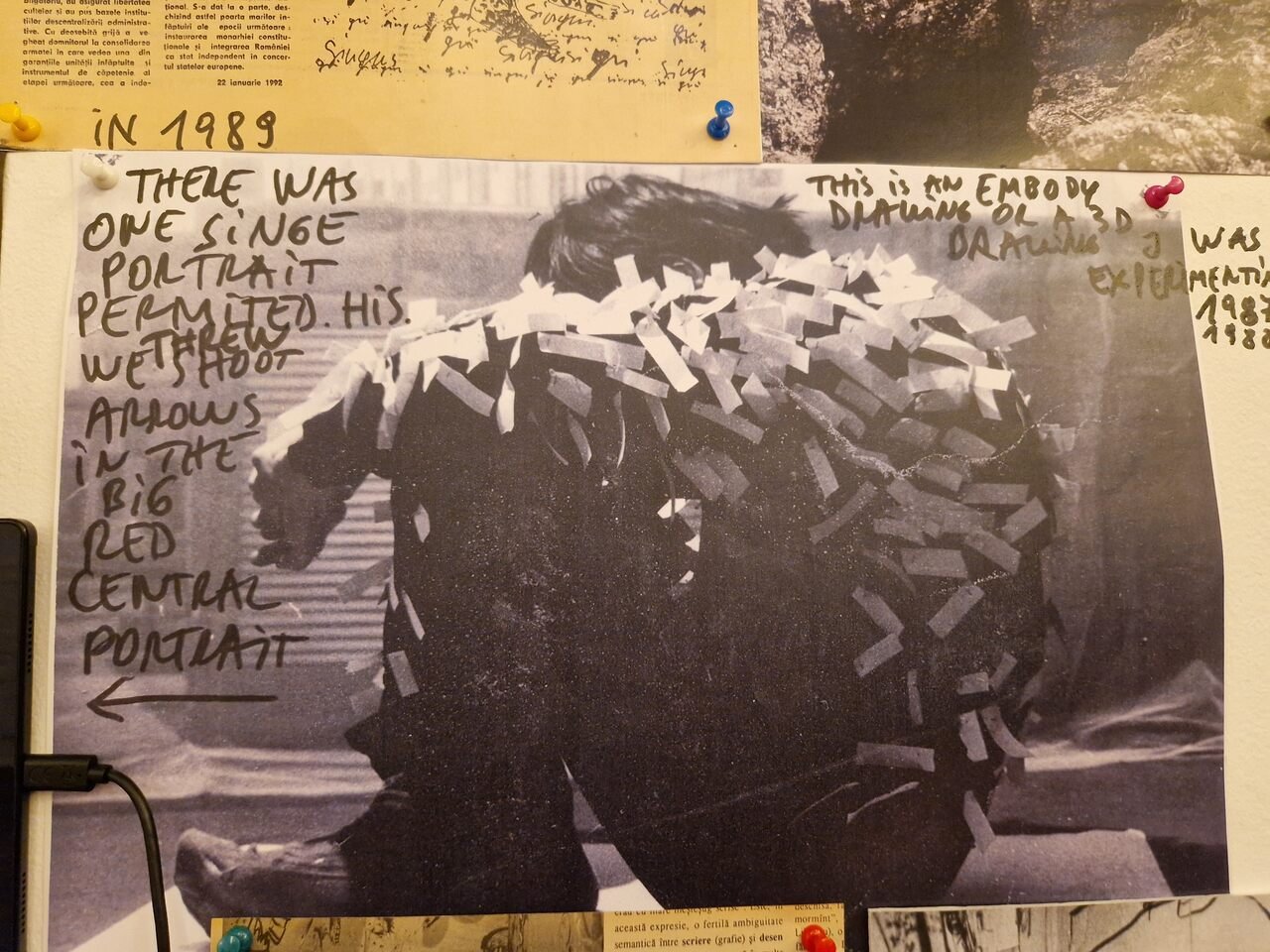
Returning to Timișoara, a deeper exploration of the motifs on the main wall proves, in my opinion, both useful and delightful. The more elaborate drawings from the late 1980s, featuring soft halos, cross-hatching, and expressive shadows, are populated by beautiful fish-like eyes and poetic silhouettes of lovers whose limbs and contours intertwine, yet they are also short-circuited by textual jabs aimed at the art academy he graduated from in Iași (“I went to the worst art school in the world. Lucky me!”) or at the Ceaușescu-era definition of the term “portrait” (“Back then, there was only one portrait. The dictator. That’s why I threw darts at it. See the performance room.”). Generic “non-portraits” abound instead, infinitely multiplied and inscribed within grids, or functioning as prototypes, such as that of the “alone and gray” Romanian individual, confronted not only with economic scarcity but also with the prohibition to travel and the restriction of imagination and understanding through literature and alternative perspectives on the history of art and the world. This homunculus, curled up within itself, with its knees drawn to its mouth and legs tightly clasped by three pairs of hands, encapsulates that feeling of isolation and loss of hope, a comatose state instituted in Romania at the end of the 1980s. As the artist notes, this character detaches itself from the drawings, acquiring three-dimensional extension in actions such as Post it (1989, Oradea). Simultaneously, Lia Perjovschi, an art student in Bucharest, expressed the very same sense of separation and disintegration in her own actions, in which she covered her body in bandages or bound her fellow students to one another with ropes.
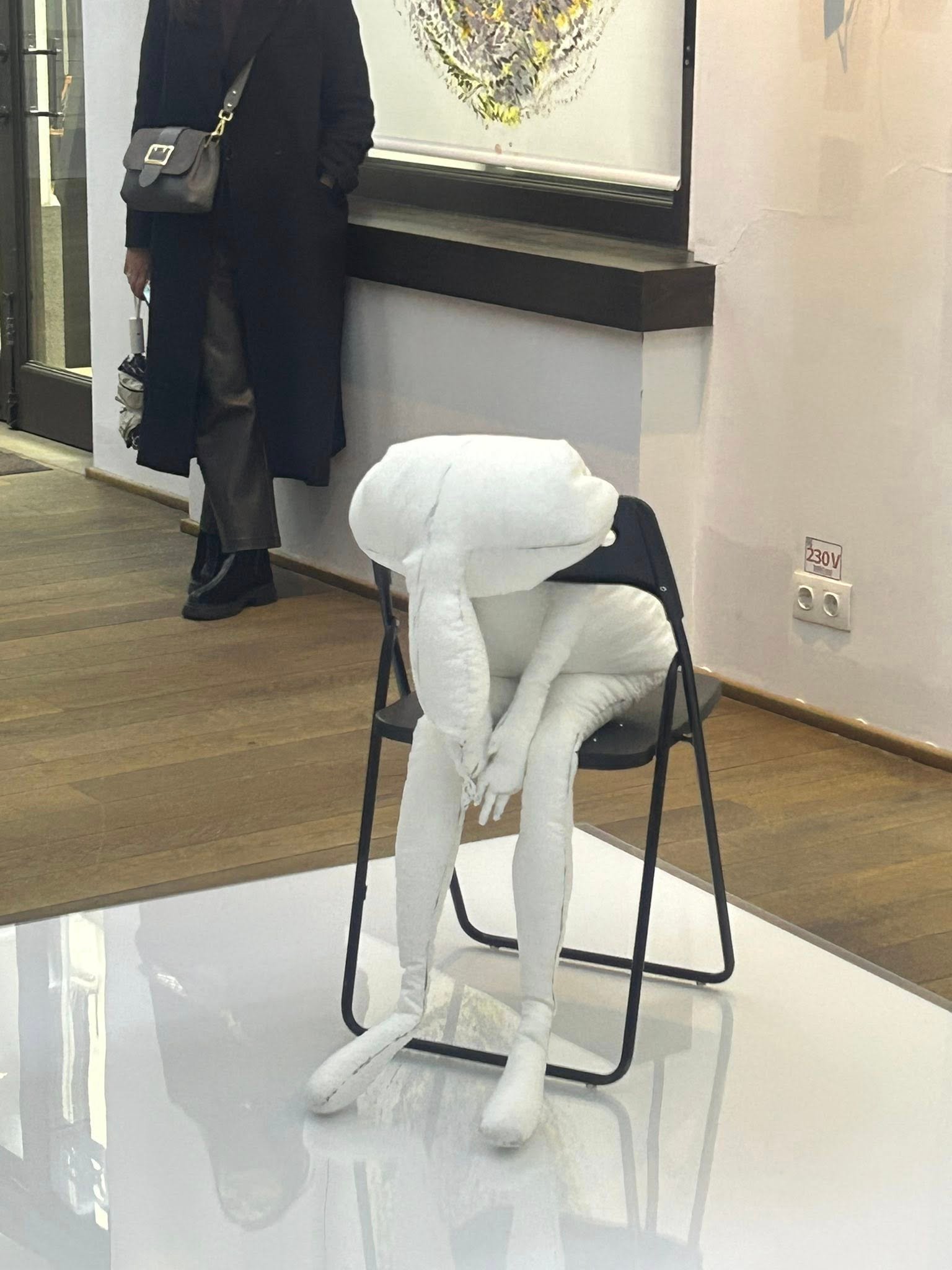
Such iconic works by Lia Perjovschi can be seen in the retrospective at ARCUB, emerging from the human silhouette and encapsulating the artist’s key message: “I do not want to be an object, but a subject of history.” The same concerns are further developed in the Shadows series, 2D silhouettes made of thin canvas that function as masks, heteronyms, or multiple identities, as well as in the three-dimensional mannequin The Doll, which reproduces the artist’s body while deliberately avoiding any facial features or emotional expression. The ARCUB retrospective also revisits, alongside video recordings of Lia’s experiments with ropes, an authentic low-fi documentation of her emblematic doubling action I Fight for My Right to Be Different, presented at the first edition of the regional festival Zona (1993, Timișoara). Here, she dresses the mannequin shaped after her own body in her clothes, then smears it with black paint, throws it into the spectators’ arms, drags it, and kicks it in a cathartic ritual of resistance and detachment from the docile status of the normalized body.
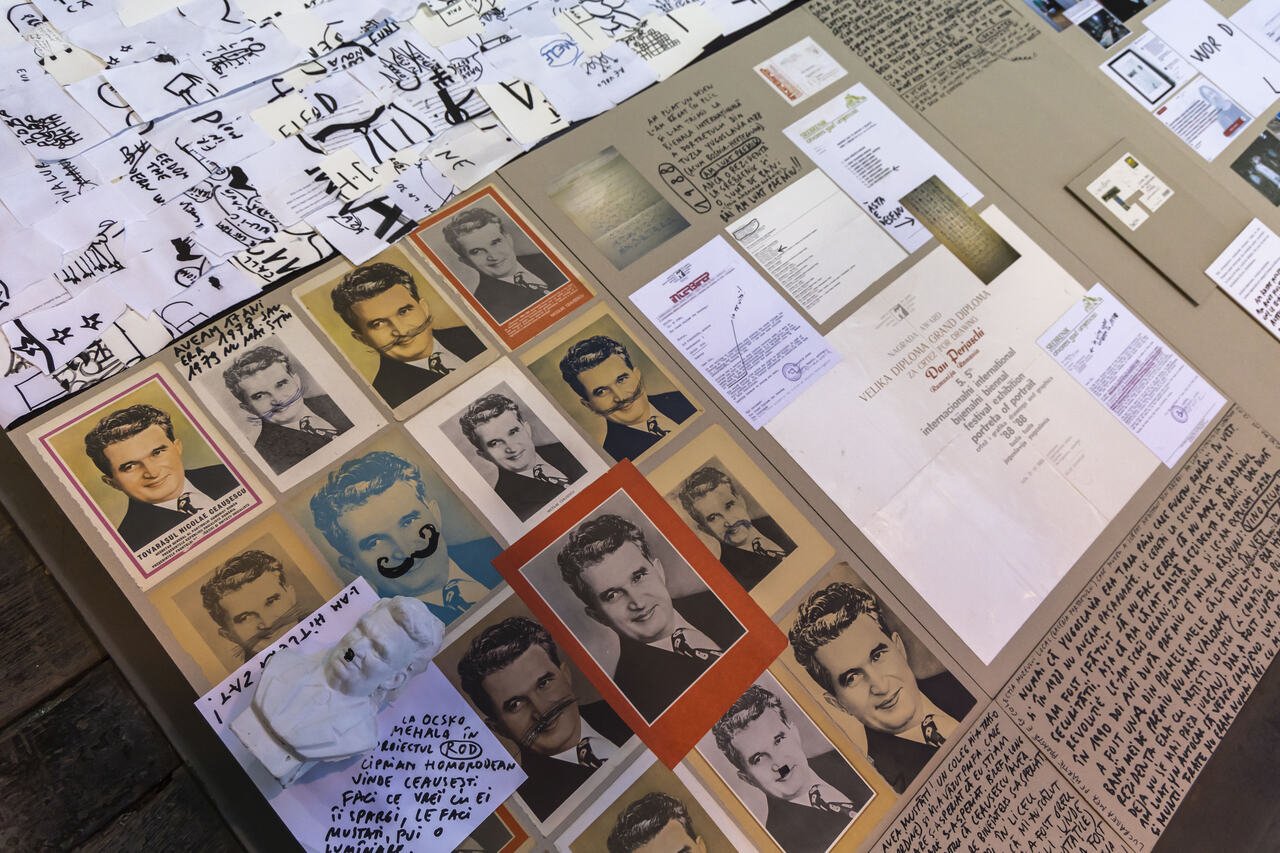
Back to the motifs on the main wall of Dan Perjovschi’s retrospective in Timișoara, one of the most revealing mechanisms is that of hypertextuality, which operates through spatial leaps, linking the narrative on the main wall to various other points in the exhibition. These include three side rooms where the curators documented performative actions (Magda Radu), civic activism (Mihaela Tilincă), and other publications associated with Perjovschi’s name (Monica Dănilă). For example, the “dictator” hyperlink mentioned above opens a dual connection: to a work in the room dedicated to performance, and to an installation in the center of the depot, where, on a “draisine,” an extensive series of reproductions of Nicolae Ceaușescu’s portrait is displayed, a portrait once omnipresent in classrooms, meeting spaces, and at the beginning of school textbooks. The cheap reproductions, either in black and white or tinted in primary colors, sometimes feature bushy, Balkan-style mustaches or minimal ones akin to Hitler’s toothbrush mustache. They are accompanied by a handwritten account in which the artist recounts how he was expelled from high school because of the mustaches he drew on the “Comrade” in his socialist education textbook.
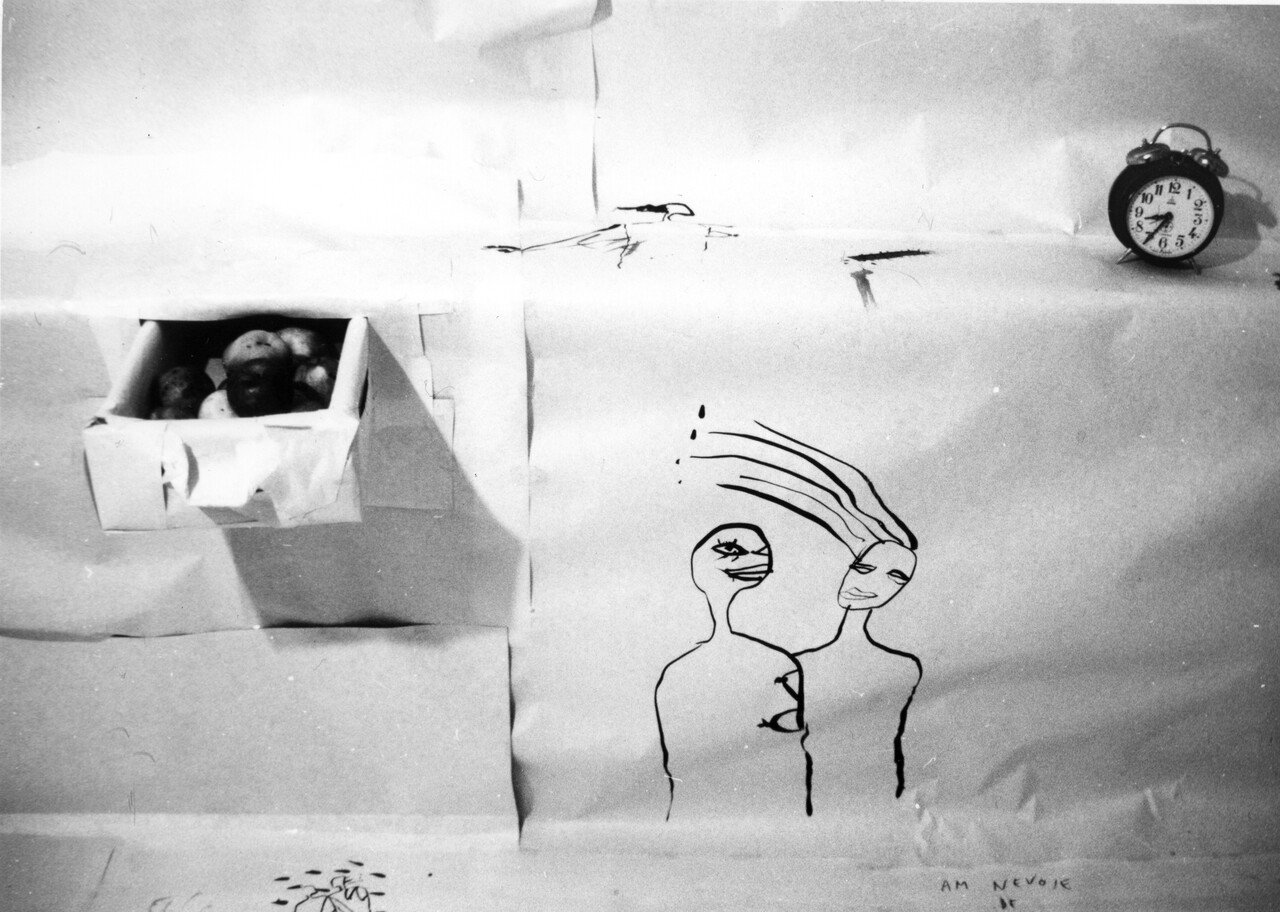
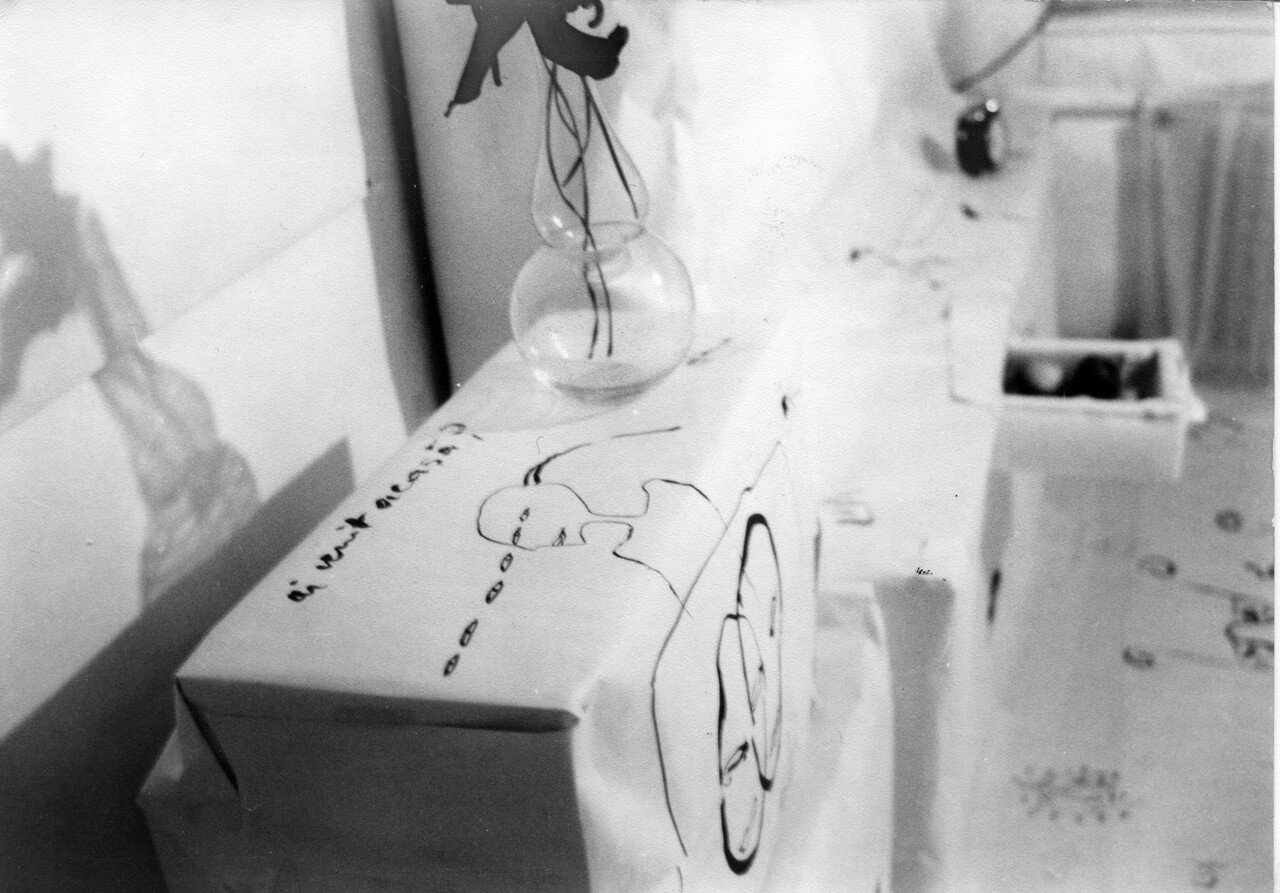
The drawings of lovers whose forms intersect, sometimes to the point of sharing the same eye, point in turn toward the performance room, for instance to the documentation of one of Dan Perjovschi’s earliest actions, Red Apples (1988, Oradea). Situated at the intersection of art and life, this was conceived as a surprise for his wife, Lia, who, upon returning from a short vacation after a demanding semester at the University of Arts in Bucharest, discovered their entire apartment wrapped in white paper. The white continuum in which the sofa, the television, and the wardrobe were absorbed together was interrupted only by a few drawings and verses written by the enamored artist, alongside a single splash of color: an open drawer full of red apples. This did not aim to symbolize anything, but were among the few fruits still to be found amidst the poverty of that time. The most relevant aspect within this performative art-life logic is that, for two weeks, the two actually lived inside the wrapped apartment. As was customary in those years, the action involved a minimal audience consisting of a few close friends, who also documented what transpired photographically.
The grids featuring the so-called anthropograms, letter-people embedded within individual cells, also point to another event, documented on the floor in the center of the main hall: a competition won by the artist in 1988 after he mailed a sheet of little men to the former Yugoslavia, the country through which Romanians fled to the West. Although Perjovschi did not pursue the international residency he had won, which would have required applying directly to the Securitate, we learn also from a handwritten note, that immediately after the fall of the regime he wrote to the organizers, who reinvited him, this time successfully. Another hyperlink leads to the back of the hall, where several grids of little men populate the famous Confessional (1988), a parallelepiped with movable walls of dark celluloid, inscribed with various drawings, inside which one could enter and reflect while looking at oneself in a small mirror. The installation, whose title irritated the vigilant party agents, was created for the first and only traveling exhibition of the Atelier 35 Oradea group in Cluj, Bucharest, and Bistrița.
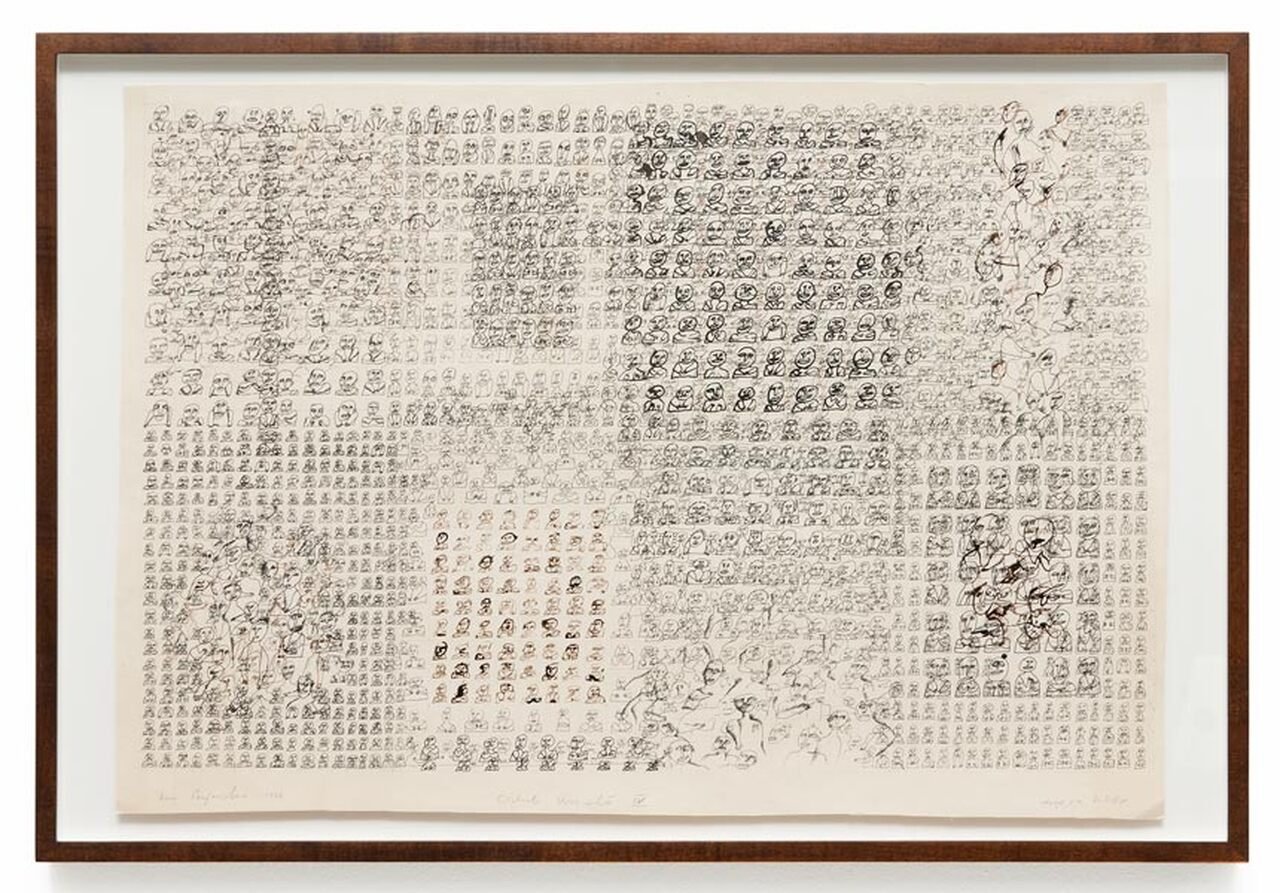
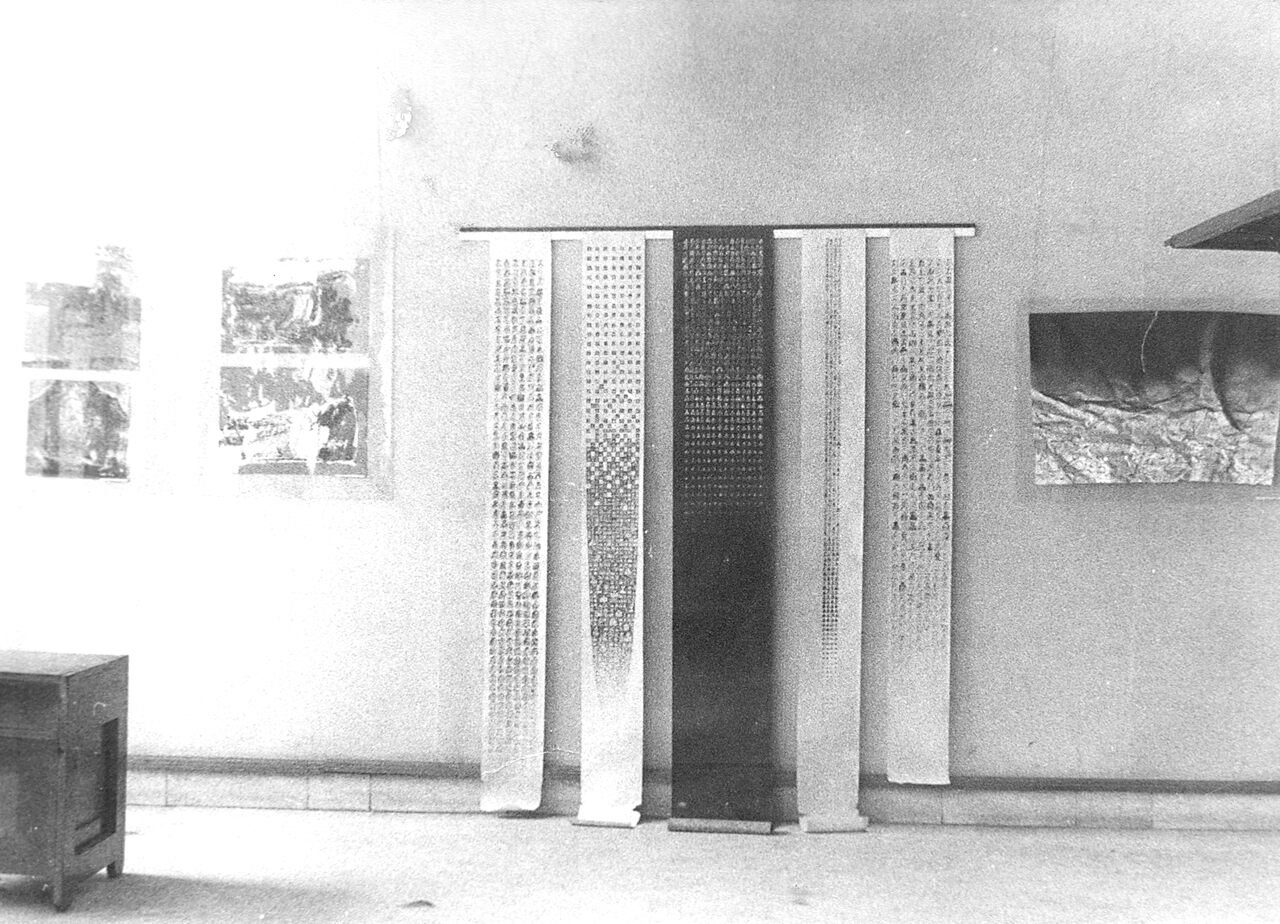
The anthropogram ensembles were resumed in the 1990s in a performative register, as seen in the Anthropogramming experiments in New York in 1995 and Krakow in 1996, documented in Timișoara in the performance room through a series of texts and photographs. These actions engaged the participation of a large audience, whom the artist invited, for example, to erase the thousands of little men drawn on the wall. We note that this act of erasure, characteristic of Perjovschi’s practice, engages questions with ontological-existential resonance, from the meaning of writing and the status of art in the era of media dematerialization, to human finitude, as well as situated socio-political references, such as the commemoration of AIDS victims in the US in the case of the New York event.
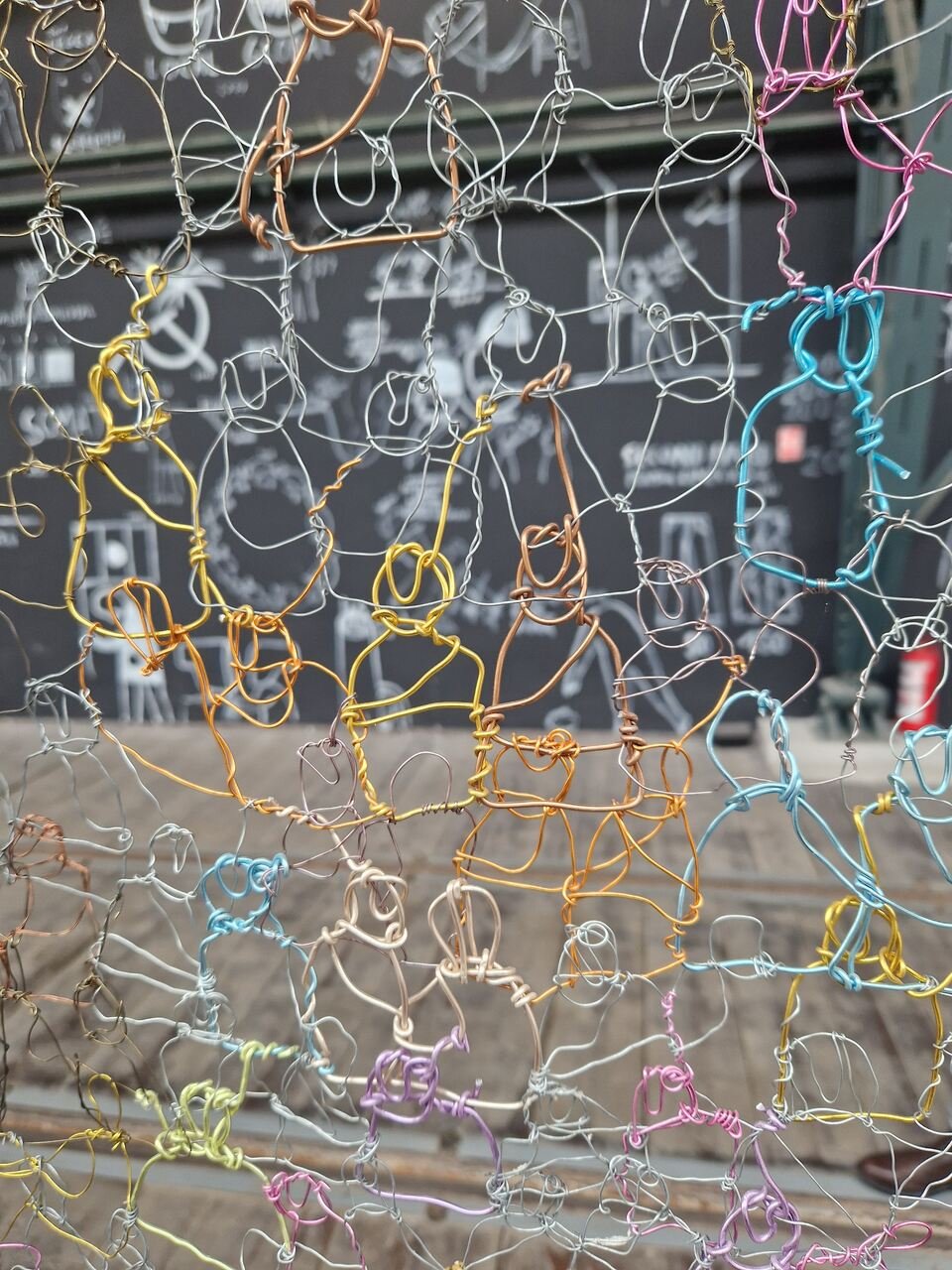
A connection is also forged with the curtains of little men made of wire, fragile yet simultaneously resilient. One of them was exhibited in Timișoara, right next to the library of one hundred volumes, in front of the main wall: gray on gray, difficult to distinguish unless one already knows it is there, much like what happens today with that local, affective truth, possibly the last survivor in the post-truth era.
Last but not least, the little men gather in an archive composed of thousands of overlapping drawings, which were nonetheless free to be browsed, Antropoteca (1990–1992), the library that Dan Perjovschi did not have in his youth. Beyond the vivid details recounted by the artist, who in 1995, with a salary of approximately 100 euros per month, sold it to Museum Ludwig for a sum that he and his wife then lived on for two years. The installation points toward the association between document, truth, and power, as analyzed by Foucault in The Archaeology of Knowledge4 and by Derrida in his reflections on the dual status of textuality, the pharmakon understood as remedy and poison, and the malady-inducing force of archives as structures that both organize and obscure history5. The two have expanded the concept of the archive from the simple topos of an accumulation of documents into an active, regulatory discursive system, a mode of expression and interpretation of the world specific to a center of force, a will to power. Thus, based on the dual connotation of the ancient Greek term arkhē – meaning beginning or principle, but also a mode of governance – it can be inferred that any archive establishes and legitimizes a particular order, its own way of being read.
Although archives initially emerged as instruments of state memory, as expressions and legitimations of the few yet powerful figures entrusted simultaneously with governing the city, writing history, and guarding documents (the archons), once they come into the possession of artists such as Dan and Lia Perjovschi, they are transformed into a subversive instrument (counter-archives). Contemporary archival projects therefore aim to generate possible scenarios, alternative narratives capable of undermining official history and memory.
This logic of accumulation and archiving extends into the Bucharest retrospective at ARCUB, where the room on the right-hand side of the first floor is likewise dedicated to anthropograms, accompanied by a new collection of issues of Revista 22. Dan Perjovschi’s impulse to multiply, assemble, and collect, in fact permeates the entire exhibition, where one encounters again a collage of Nicolae Ceaușescu’s portraits, as well as various so-called “accumulations” or “minor collections” of images, illustrations, and series of terms with both social impact and metaphysical resonance, cut directly from newspapers in different languages: time, Zeit, timp; art, Kunst, artă; future, Zukunft, viitor. Another chapter in the history of Romanian contemporary art can be revisited at ARCUB through the collection of postcards sent by the artist to his wife between 2010 and 2026, a project he explicitly frames as post-mail art. In doing so, it recalls the significance that mail art held in the 1980s in an Eastern European art scene shaped by post–Iron Curtain isolation: an artistic form that not only anticipated the emergence of the internet, but also enabled a minimal yet vital channel of East–West communication.
Even though he is not an avowed archivist like Lia Perjovschi, Dan Perjovschi’s general discourse approaches what Hal Foster6 identified as a counter-movement of contemporary artists subversively engaged in researching facts and documents, precisely in order to undermine the monopoly of power. His collections of drawings, caricatures, postcards, magazine pages, and printed media, unrolled chronologically or spatially on walls, tables, or rail trolleys, reveal themselves not simply as documents or thematic resources, but as active structures for organizing meaning, instruments of social and political commentary that engage the spectator in a process of connections and hypertextual leaps between events and meanings.
This density of connections between drawing, collection, and current events helps clarify the implicit theoretical position of Perjovschi’s practice, which can only be understood within a paradigm aware that truth does not exist as a pure entity, but is produced within regimes of knowledge and power. This paradigm took shape in the West in the 1970s, as political and cultural discourses increasingly became temporary media thematizations, eroding the universalist model of critique in which the intellectual functioned as a guarantor of truth. In an environment dominated by short attention cycles and successive thematizations, a form of art-as-research thus emerges, recovering its analytical function by focusing on subjects of interest without haste and without seeking the “truth about the world,” investigating instead how it is produced, circulated, or subverted.
Thus emerges a new type of artist preoccupied with archives and recent history, involved in various forms of “aesthetic journalism,” without, however, claiming a normative position, but rather a mobile and minoritarian one. The practices of artists such as Hito Steyerl or the collective Forensic Architecture investigate precisely these conditions of truth production, operating as forms of inquiry, unmasking, or critical reorganization of data. As Alfredo Cramerotti points out in Aesthetic Journalism7, the primary objective is no longer the formulation of a stable truth, but a targeted intervention into dominant languages, in order to temporarily suspend their mechanisms of legitimation and open up critical spaces within them.
Probably the first Romanian initiative pursuing a similar methodology of subversively injecting an alternative order and reinstating meaning is the Contemporary Art Archive / Center for Art Analysis (AAC/CAA), an ongoing project initiated by Lia Perjovschi in the late socialist 1980s, under conditions of closure and acute lack of information, with the aim of a subjective reconstruction of art history beyond censored manuals, institutional frameworks, genres, and categories. As an ongoing project, AAC/CAA marks the transition into the 1990s and 2000s, becoming increasingly present in exhibitions and even on national television, while also constituting an avant la lettre illustration of recent debates concerning the role of the artist in the post-truth era. This organic research, born of intuition, gradually expands, redefining itself in 2000 as the artistic section of the Museum of Knowledge, a broader interdisciplinary archive (on Body, Planet, Universe, Culture, Science).
The Museum of Knowledge project is exhibited at ARCUB on the first floor, facing Dan Perjovschi’s anthropograms. On the wall, the artist juxtaposes information concerning the political and cultural context with sections of the Contemporary Art Archive, which bring together movements and definitions of art, as well as information and images about exhibitions, books, films, or celebrities, thereby suspending traditional hierarchies between “major” and “minor” cultural domains: thus, the year 1986 places Madonna alongside Jeff Koons’s Rabbit, while Serrano’s Piss Christ (1997) is set next to Damien Hirst’s Medicine Box (1989).
These are followed by other sections of the virtual museum, which bring into dialogue media events – such as the debate sparked by the ethical implications of Kevin Carter’s photograph awarded the Pulitzer Prize in 1993, depicting a Sudanese girl nearly overcome by starvation, watched by a vulture – and scientific discoveries and theories about the formation and evolution of the universe, diagrams of atomic structure, of synapses in the human brain, and of the composition of the cosmos (Dark Matter: 25%, Dark Energy: 70%, and only Stars: 0.5%).
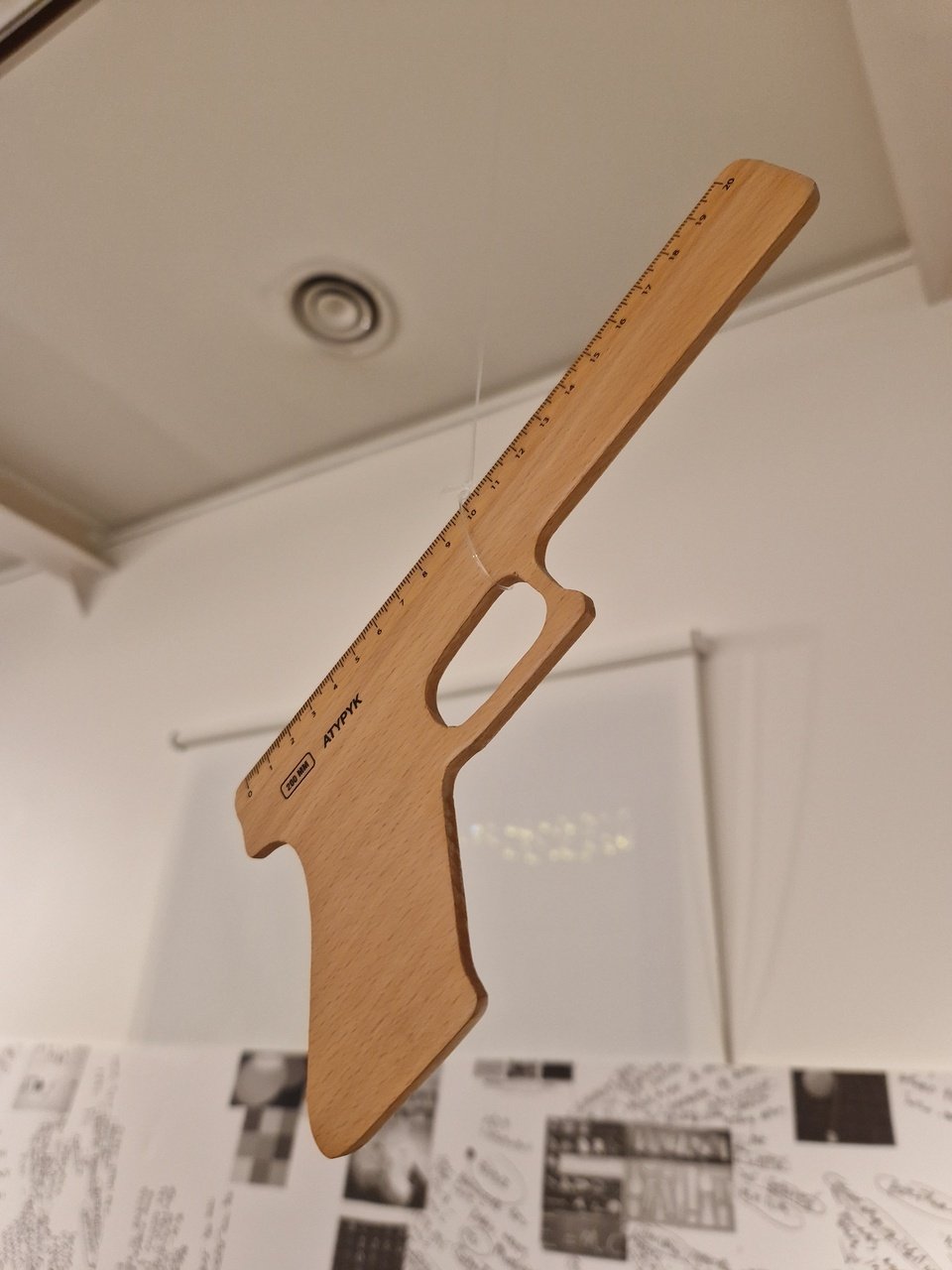
This counter-archive, which problematizes and opens up rather than catalogues and concludes, aligns perfectly with Hal Foster’s perspective, for whom the artistic archive calls for human, personal, fallible, affective interpretation rather than machinic, algorithmic thinking. The way Foster links his so called archival impulse8 to materiality and to the physical bringing-into-presence of historical events whose traces have been lost or covered over by institutional resolutions is likewise confirmed, in Lia Perjovschi’s case, by the striking presence not only of notes and newspaper clippings but also of a series of tangible objects acquired by the artist from various corners of the world. In the dedicated room at ARCUB, one thus finds hanging a pistol-shaped ruler purchased from the Pompidou, a grenade-shaped bottle of holy water acquired in Pristina, several unexpected camouflage-patterned items – a plate, a pencil case, a headband – which, together with the wall collages, point to the theme of war; a “traditional” Romanian pen with Dracula, exposing the issue of nationalism; or a silver pencil case with a pink fluffy keychain for girls who are expected to be princesses, alluding to social norms.
It can be observed that the transformations outlined above, relating to the artist’s engagement with the problem of truth, were delayed in the Eastern European context by approximately two decades, overlapping both with a systemic distrust of institutional forms of authority and with a veritable intoxication with freedom characteristic of the 1990s. The sudden opening of the public sphere after the fall of the Iron Curtain favored an unprecedented proliferation of authorial voices and alternative opinions. Not infrequently, visual artists assumed roles as magazine editors or producers of public discourse, as in the case of the Perjovschi duo or the kinema ikon group in Arad.
Dan Perjovschi’s engagements in civic and ecological activism also constitute paradigmatic examples of “aesthetic journalism,” starting with those dedicated to the Roșia Montană protests, reproduced on the wall, in postcards, or even in ecology textbooks (Paula and Elfriede Dörr, Yes we care). Paradigmatic for an entire generation of artists on the local scene, intermittently connected to the resources of their context and to the ecological consciousness of the West, is in fact the artist’s relationship to nature and ecology as a whole. His earliest actions from the 1980s, The Tree or Red Apples, thus reveal a Perjovschi who was relatively isolated in socialist Oradea and disconnected from the experimental knowledge of previous generations, such as the Sigma group in Timișoara. Despite these informational gaps, an intuitive experimental impulse nevertheless pushed him toward working with nature even then. Immediately after 1989, starting with the exhibition The Earth (1993, curated by Ileana Pintilie), his approach gradually reconfigured itself toward increasingly analytical, synchronized, and socio-politically situated positions.
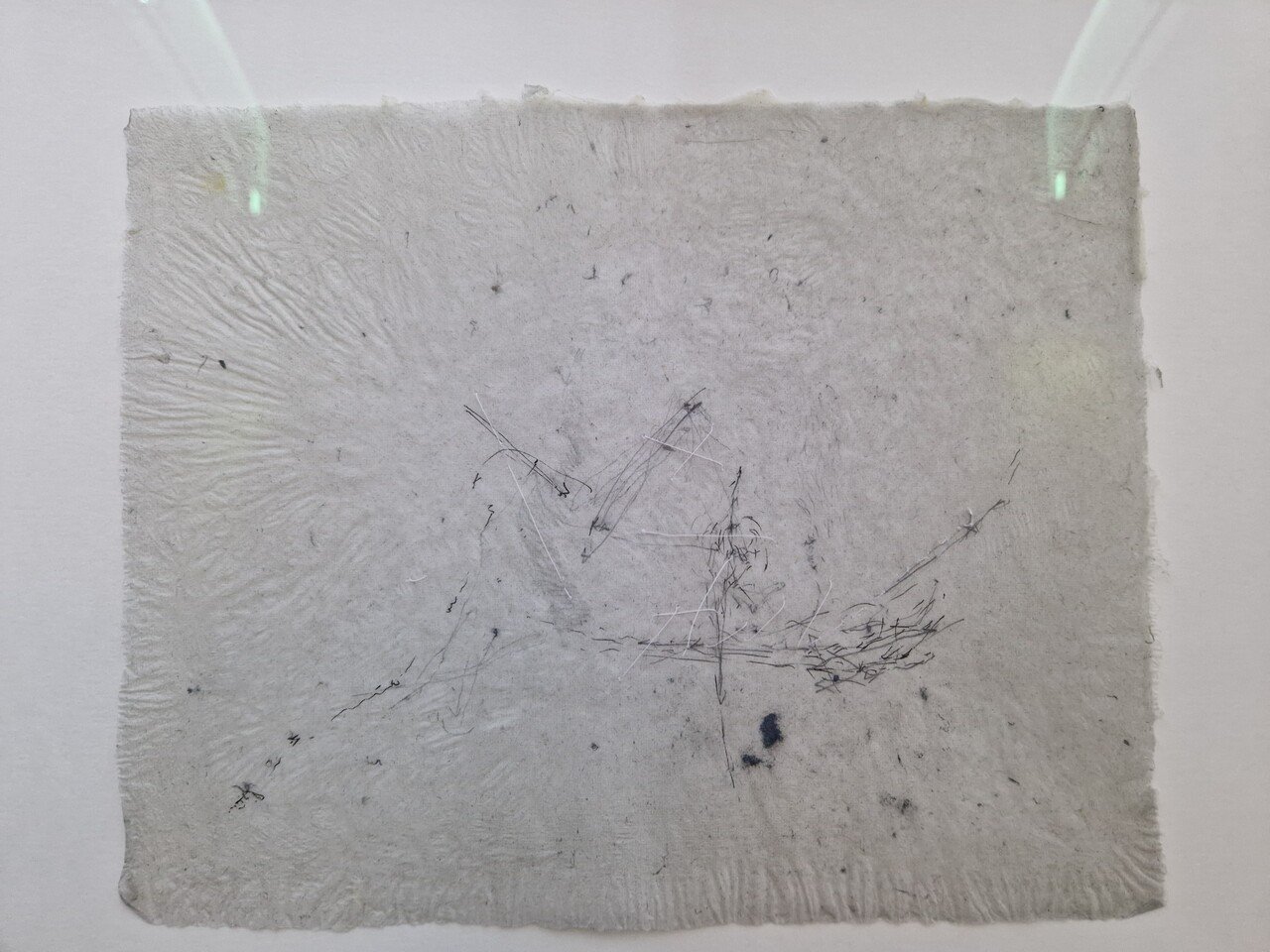
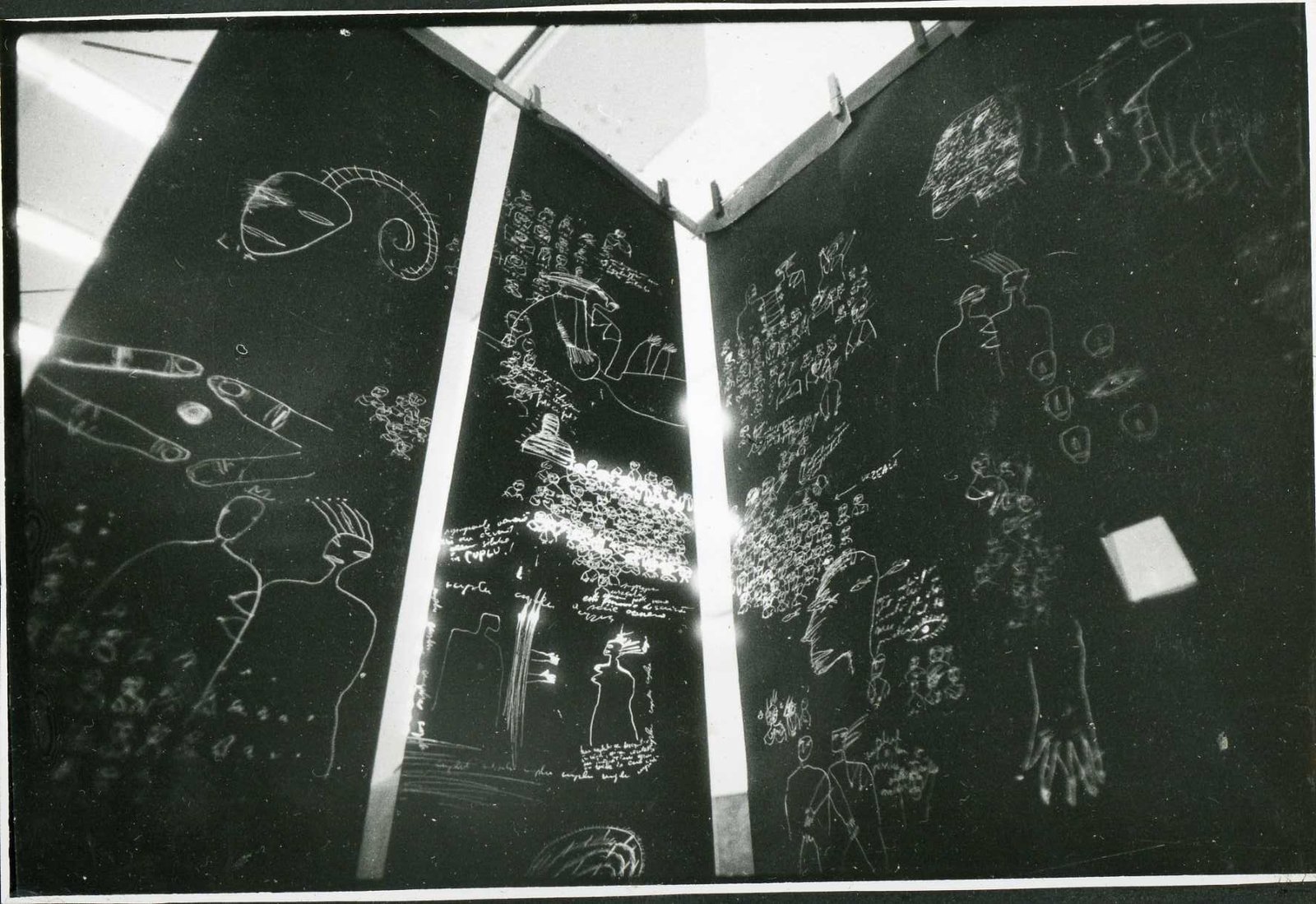
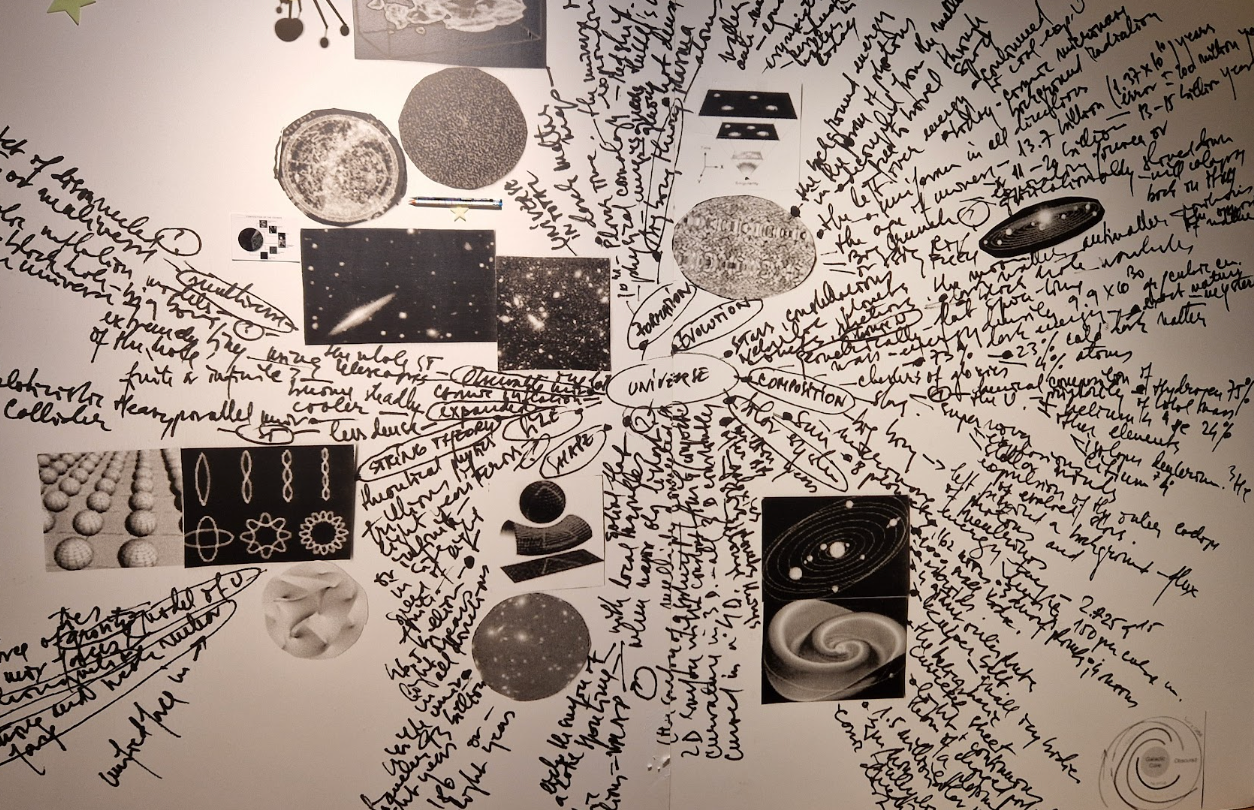
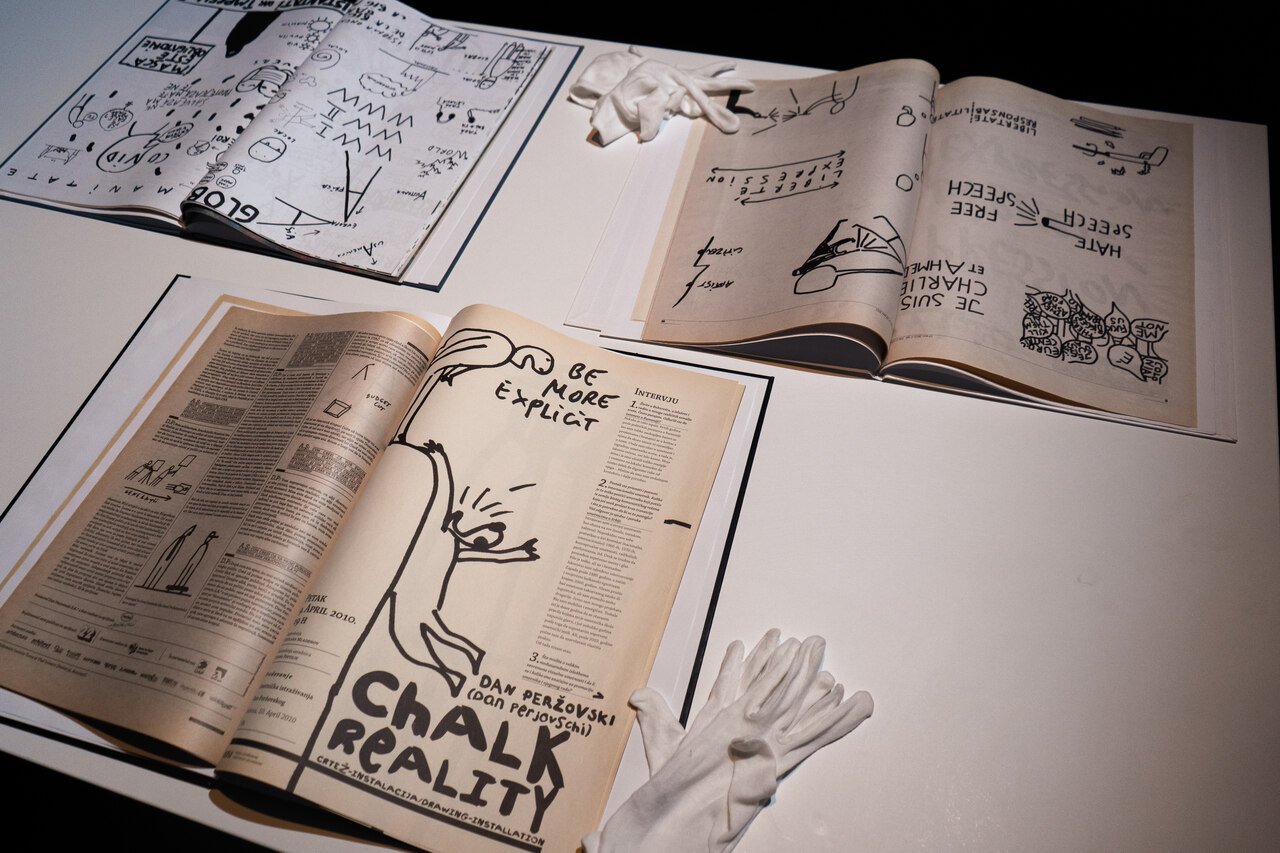
To all these directions, documented both in Bucharest and in Timișoara, in the rooms dedicated to activism and performance, a final line of inquiry is added regarding Dan Perjovschi’s practice of drawing and handwriting. From the perspective of archive theory and aesthetic journalism, this practice reveals itself primarily as an immediate reaction to current events and as an approach grounded in a distinctive material authenticity. The graphic gesture, the handwriting, and the incorporated documents thus produce concrete traces of the present, resonating once more with Foster’s “archival impulse,” interpreted here as the artistic mobilization of heterogeneous material evidence, not to demonstrate an objective truth, but to endow the representation with a certain “density of the real,” while simultaneously counteracting the abstraction of official discourses.
Impossible to confine to a mere graphic style, Perjovschi’s practice also functions within the logic described by Cramerotti, as an apparatus that makes visible the conditions under which truth is produced. A first argument is authenticity, understood not as a nostalgia for the past, but as a sign of presence and of the present. The images and texts drawn by Perjovschi thus act as direct notes; thoughts captured on the spot, creating the impression of a witness and distancing themselves radically from the register of images produced by media institutions or technical devices.
Another important aspect is the visibility of the discourse’s construction. Unlike classical journalism or the mechanisms of official archives, where the apparatus of information production remains hidden, in the works of Lia and Dan Perjovschi, the mechanism becomes transparent: the passage from thought to word, drawing, and political commentary is directly exposed to the viewer. Finally, because they are written rapidly on walls or cardboard and are often erased after the exhibition, the texts and drawings unmask the fragility of facts, replacing the idea of a “total truth” with local, provisional, situated, and affective truths.
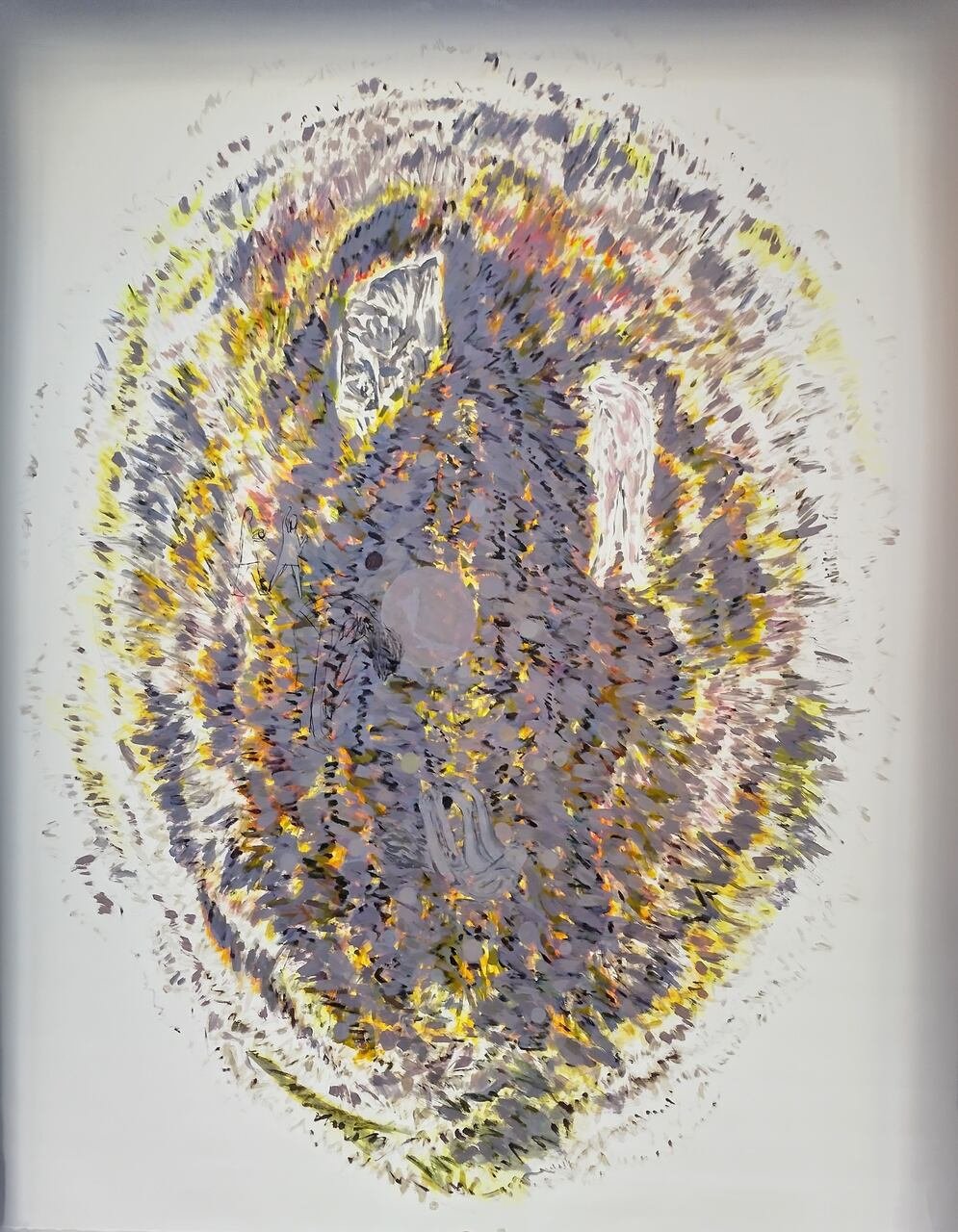
At the intersection of artistic research, aesthetic journalism, and the performative archiving of the present, Lia and Dan Perjovschi’s practice emerges as a subtle destabilization of the “machine” that produces stable truths. Dan’s drawings do not assert definitive theorems and principles, but rather trace the fragile circulation of moments of truth within the social space, transforming walls, newspapers, and archives into sites where experiences, information, and affects converge. Lia’s works – not only The Museum of Knowledge, but also the Shadows and Dolls series, as well as the paintings and drawings exhibited at ARCUB that reintroduce authentic colors drawn from berry juice, avocado, or coffee, capture the tiny particles that appear in the eye when looking toward the sun, and include the piece that at first resembles a solar explosion in yellow and brown tones but which in fact narrates a punch received from possible “parents,” “masters,” childhood bullies, or other authority-laden figures – stand as paradigmatic enactments of situated, affective truth. For the local art scene, the Perjovschi duo remains an active and exemplary force: artists who live beyond fear and have conquered their territories through persistent work, without attempting to impress, I am not exotic, I am exhausted9, but by continuously extending their body until their practice comes to coincide with the world itself.
Translated by Dragoș Dogioiu
[1] The artist duo signs their most recent joint retrospective with this compound name, which is conceived more as a symbiotic organism rather than a simple enumeration or juxtaposition.
[2] Roland Barthes, “The Death of the Author,” in Image, Music, Text, trans. Stephen Heath (London: Fontana Press, 1977), 142–148.
[3] Charles Baudelaire, The Painter of Modern Life, trans. Jonathan Mayne (London: Phaidon, 1964 [1863]).
[4] Michel Foucault, The Archaeology of Knowledge, trans. A. M. Sheridan Smith (London: Routledge, 2002 [1969]).
[5] Jacques Derrida, Archive Fever: A Freudian Impression, trans. Eric Prenowitz (Chicago: University of Chicago Press, 1996 [1995]).
[6] Hal Foster, “An Archival Impulse,” October 110 (Fall 2004): 3–22.
[7] Alfredo Cramerotti, Aesthetic Journalism: How to Inform without Informing (Bristol: Intellect, 2009).
[8] Hal Foster, “An Archival Impulse,” October 110 (Fall 2004): 3–22.
[9] The phrase ‘I am not exotic, I am exhausted’, used by Dan Perjovschi since the early 2000s, recurs across his site-specific wall drawings, being repeatedly recontextualized rather than tied to a single work.
Artists: Dan Perjovschi, Lia Perjovschi
Exhibition Title: Lia Dan Perjovschi. DRAFT for a joint retrospective
Curated by: Lia and Dan Perjovschi, produced by Marian Ivan of Ivan Gallery, Bucharest
Venue: ARCUB – Hanul Gabroveni
Place (Country/Location): Bucharest, Romania
Dates: 03.04 – 26.07.2026
Photos: credited to Contrasens and ARCUB
Artist: Dan Perjovschi
Exhibition Title: Dan Perjovschi. Romania: A Retrospective 1985–2025
Curated by: Dan Perjovschi alongside a curatorial team (Monica Dănilă, Magda Radu, Mihaela Tilincă)
Venue: Corneliu Miklosi Museum
Place (Country/Location): Timișoara, Romania
Dates: 03.09 – 26.10.2025
Photos: Andra Ușvat, Daliana Iacobescu, Cristian Dan