
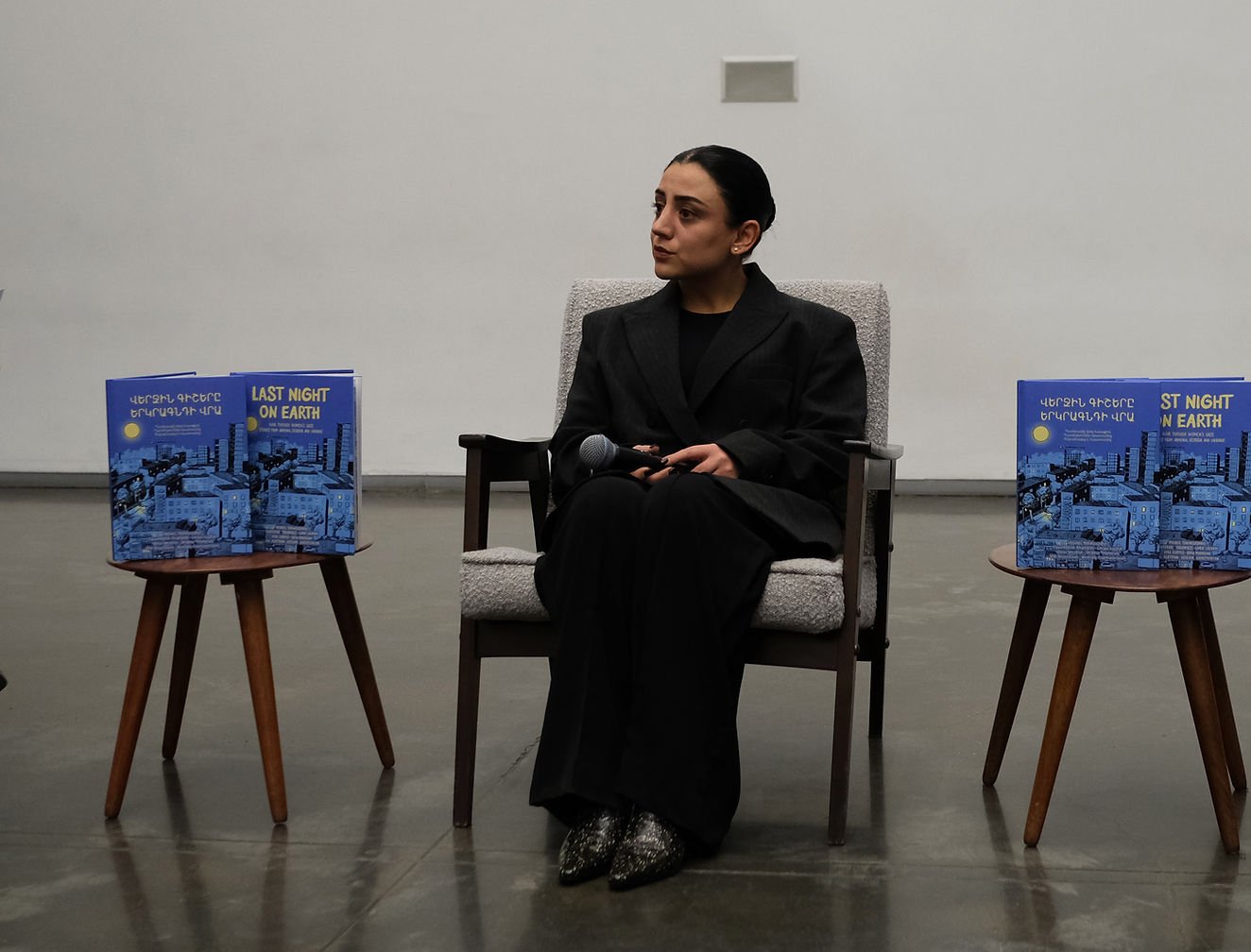
Ani Asatryan
Images and narratives of war do not enter public circulation as neutral evidence, nor do they function as immediate witnesses. Long before they are seen and read, those very ways of seeing and reading are already shaped by regimes of visibility and circulation that predetermine how they will be interpreted, felt, and consumed. An encounter with such material is never innocent. It is pre-formed by repetition, inherited moral scripts, and expectations regarding what suffering must look like in order to become legible. Under these conditions, neither those who produce such narratives and images nor those who view them occupy a neutral position. This essay emerges from a work that articulates its stance through refusal to participate in that economy – not by producing counter-images or counter-narratives, but by restructuring the conditions under which narratives and images are encountered at all.
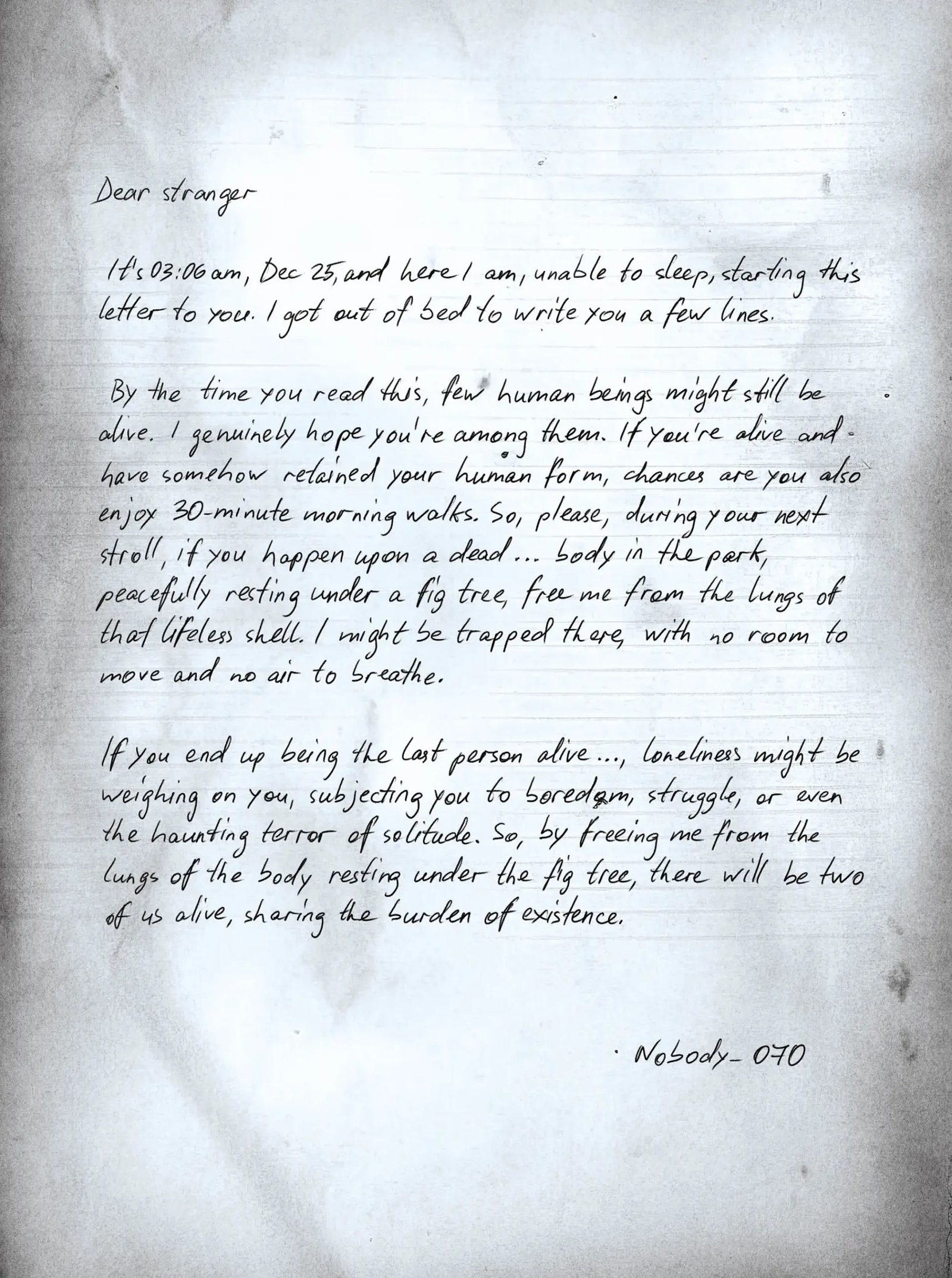
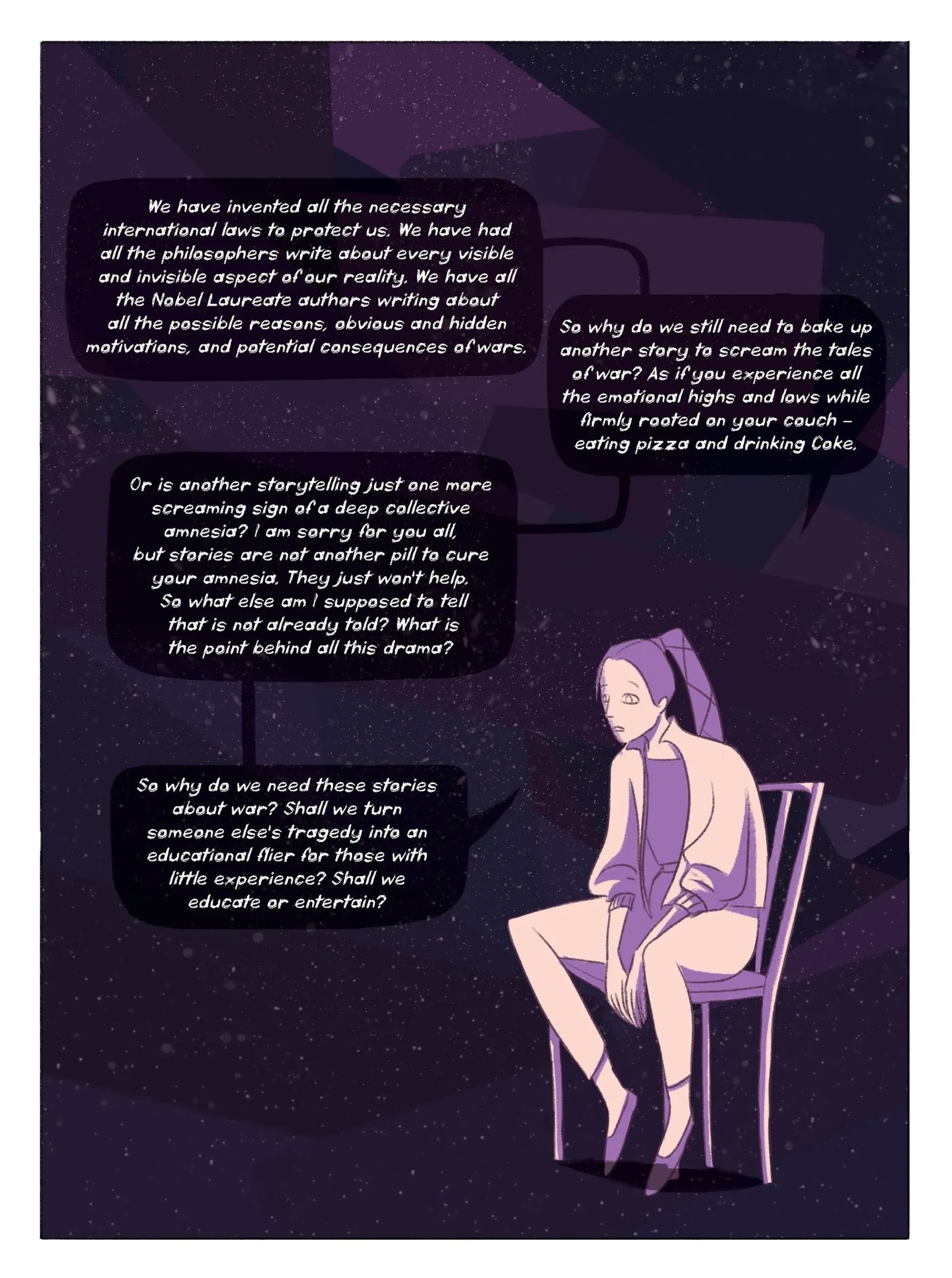
One Meme Away from War emerges precisely from this preconditioned visual field and refuses to operate within its terms. Rather than adding new images or narratives of war to an already saturated economy of visibility and storytelling, the work examines the mechanisms through which war imagery and narratives become intelligible, consumable, and ultimately exhaustible. The project does not ask what images of war show, or what stories of war tell, but how they are made to function: how meaning is stabilized through repetition, how attention is unevenly distributed, and how visibility itself becomes a selective process that reveals by excluding – through editing and invisible curating. It doesn’t engage with what is said but rather shifts our attention towards the conditions of speaking by questioning who speaks, under what demands, and at what cost.
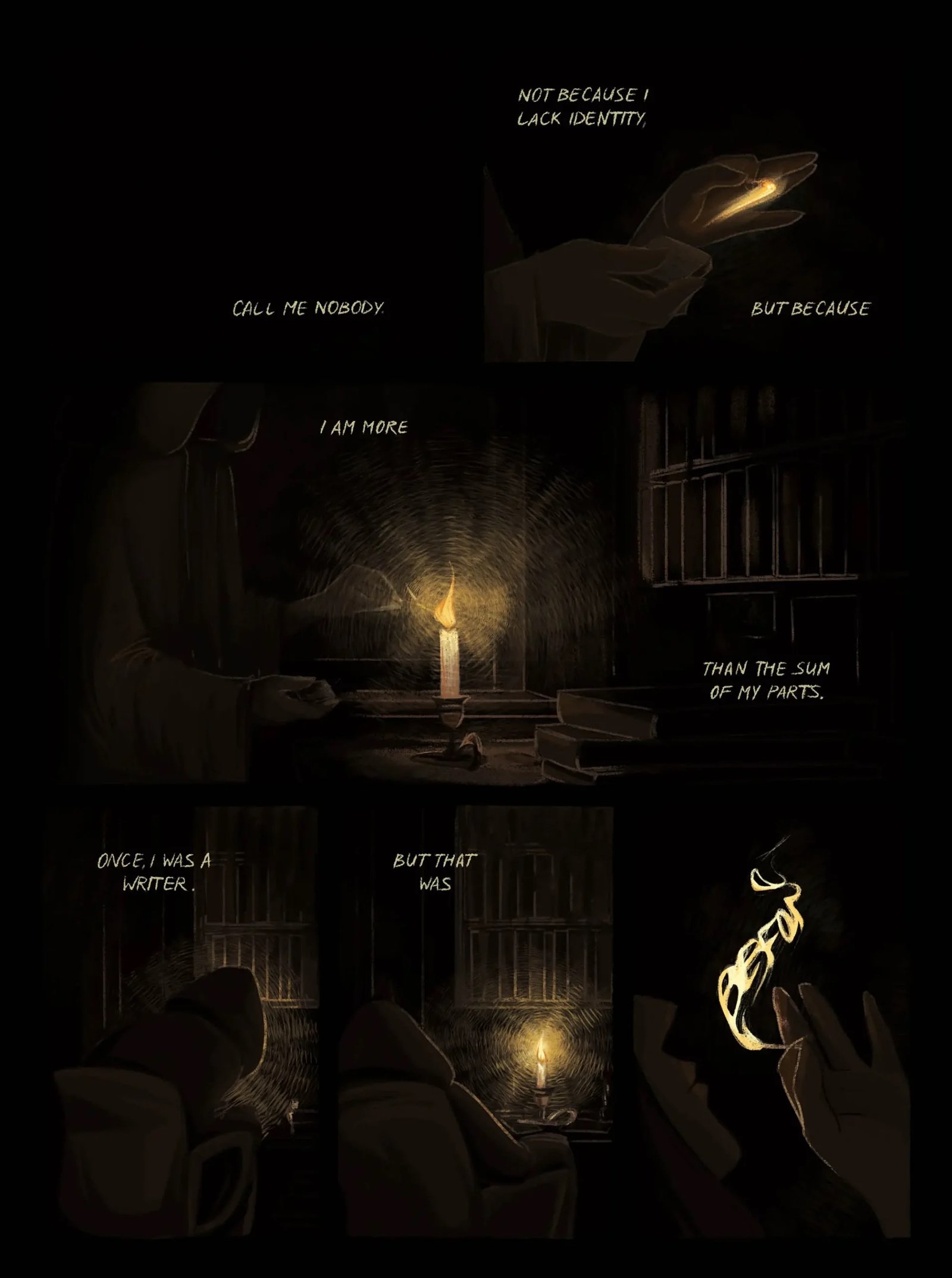
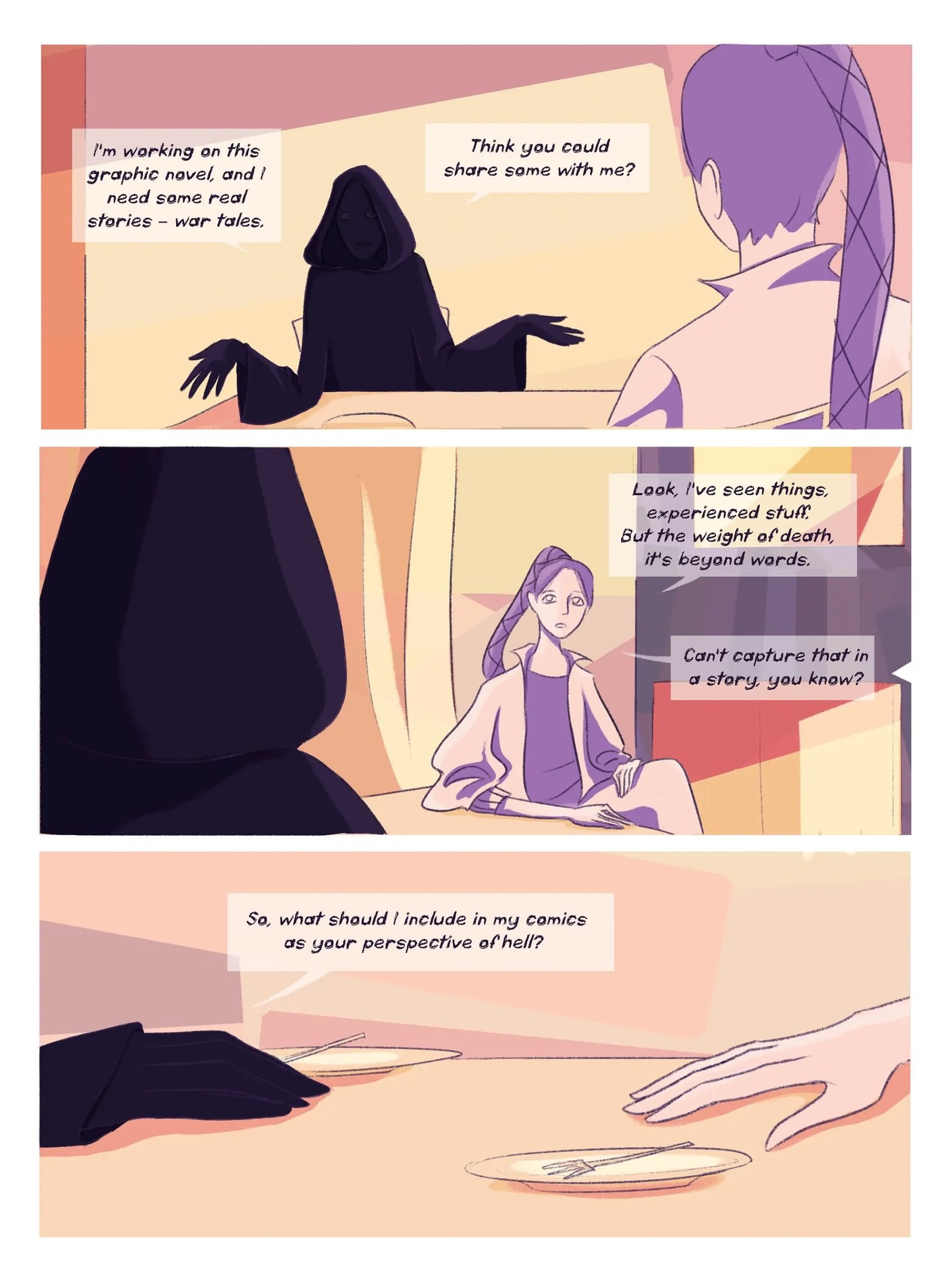
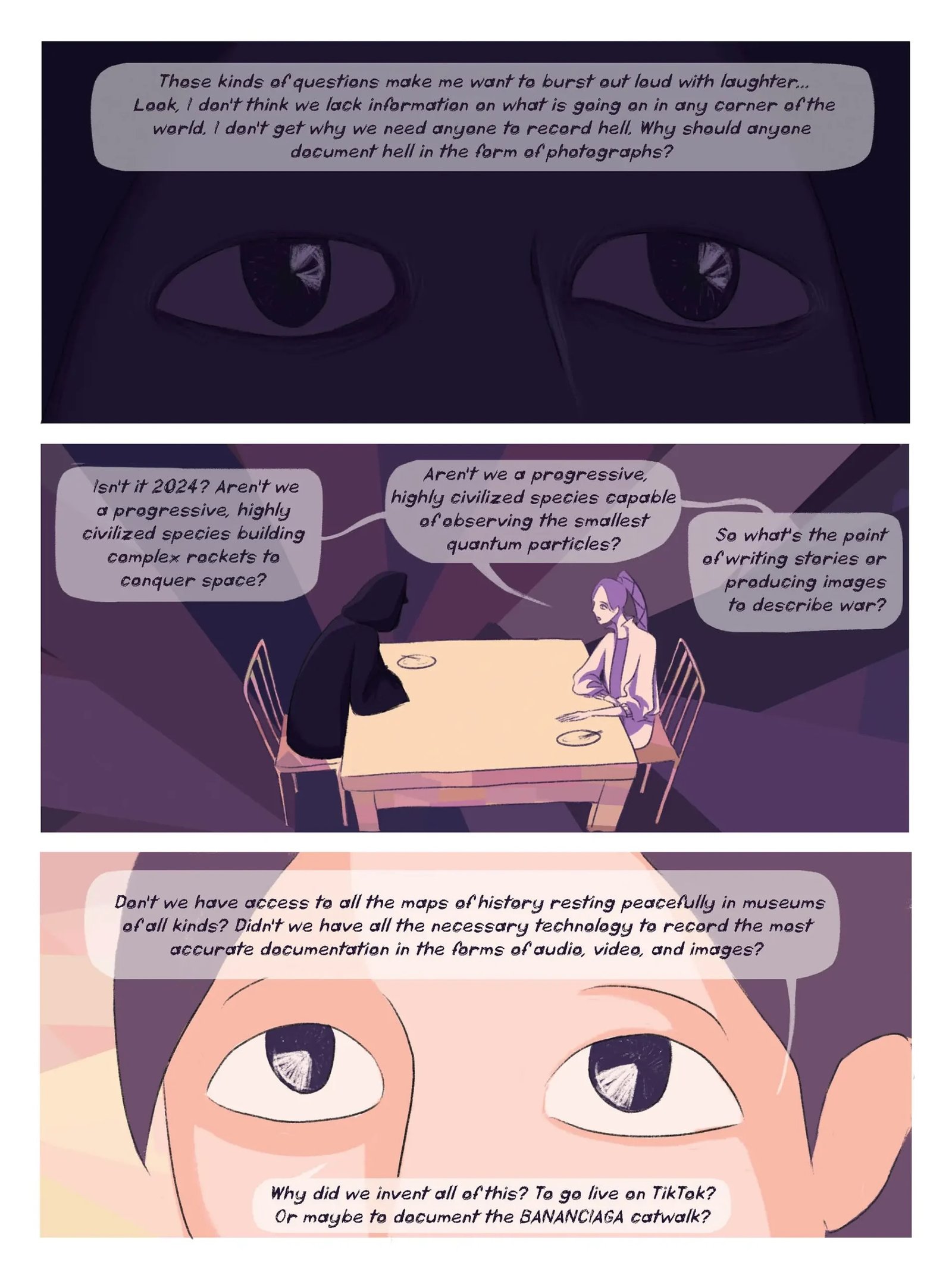
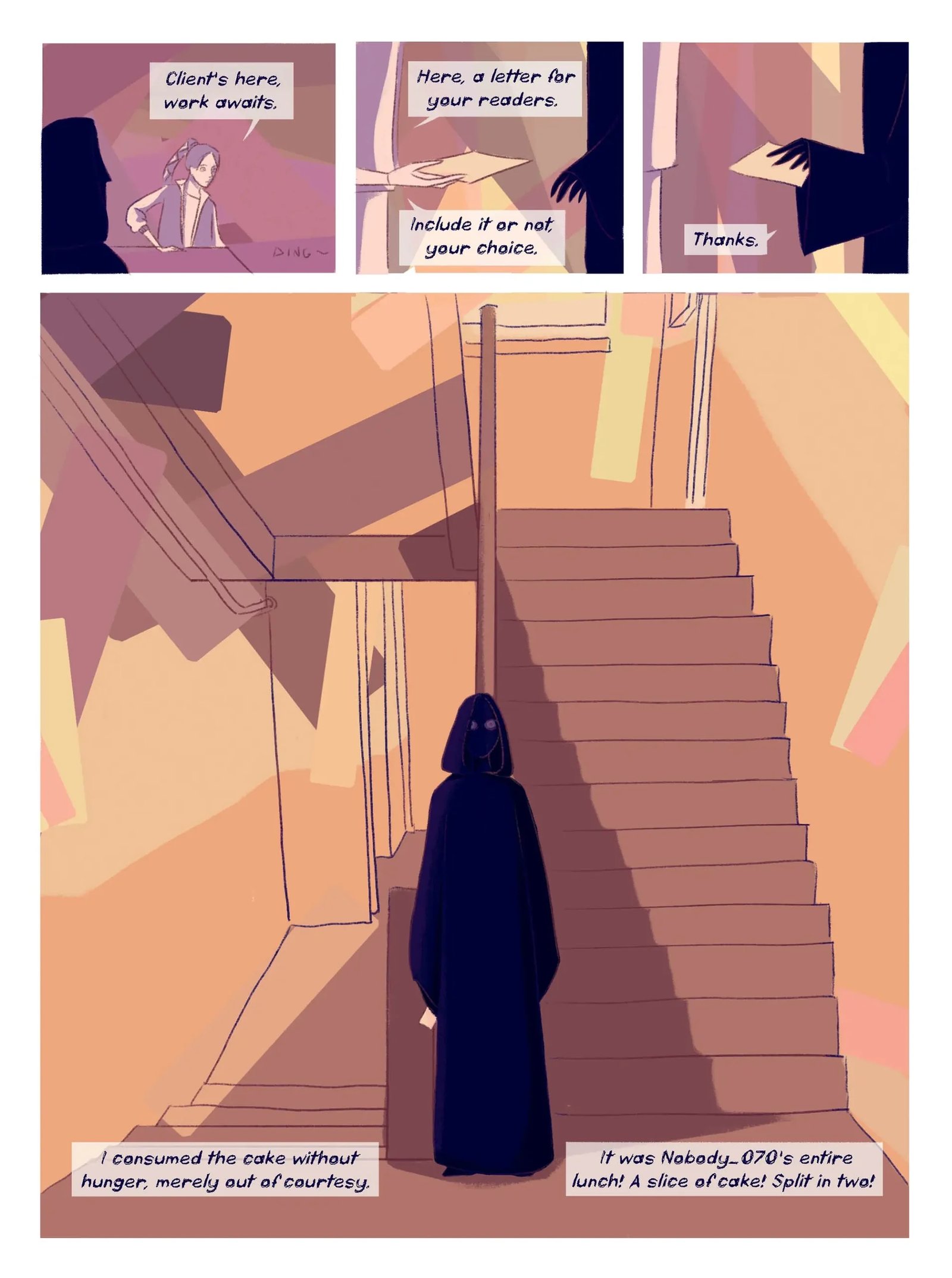
This refusal is enacted formally from the opening sequences of the graphic novel. The work introduces a veiled figure who later identifies themself as “Nobody,” whose presence is marked not by exposition but by opacity. Despite being the main character, we learn nothing about Nobody personally during the narrative – no age, no location, no generation, no sex, no face – only a veiled figure introducing themselves as Nobody. The only thing we are told about them is their social function – “I used to be a writer… but that was before…,” they state. From the very first chapter, we learn that Nobody is contacted and asked to write a graphic story based on the testimonies of war witnesses. The offer itself produces unease, as if the figure whose role is storytelling is also the first to question whether the stories remain legible at all. “Is there a silent agenda to create an imitation of action, or perhaps to conceal a failure of action?” – Nobody questions the demand for war stories. The recurring visual motif of the threshold – doors opening and closing, rooms entered and exited, windows and railways, dialogues around a table – structures the narrative not as progression but as delayed access. Panels linger on gestures without resolution: a knock without explanation, an invitation without disclosure, a meal consumed without hunger. These sequences resist narrative payoff; they refuse to translate encounters into information or shared suffering into explanation, to turn what remains in silence into sound. What emerges instead is a choreography of withholding, in which meaning is continuously deferred rather than delivered.
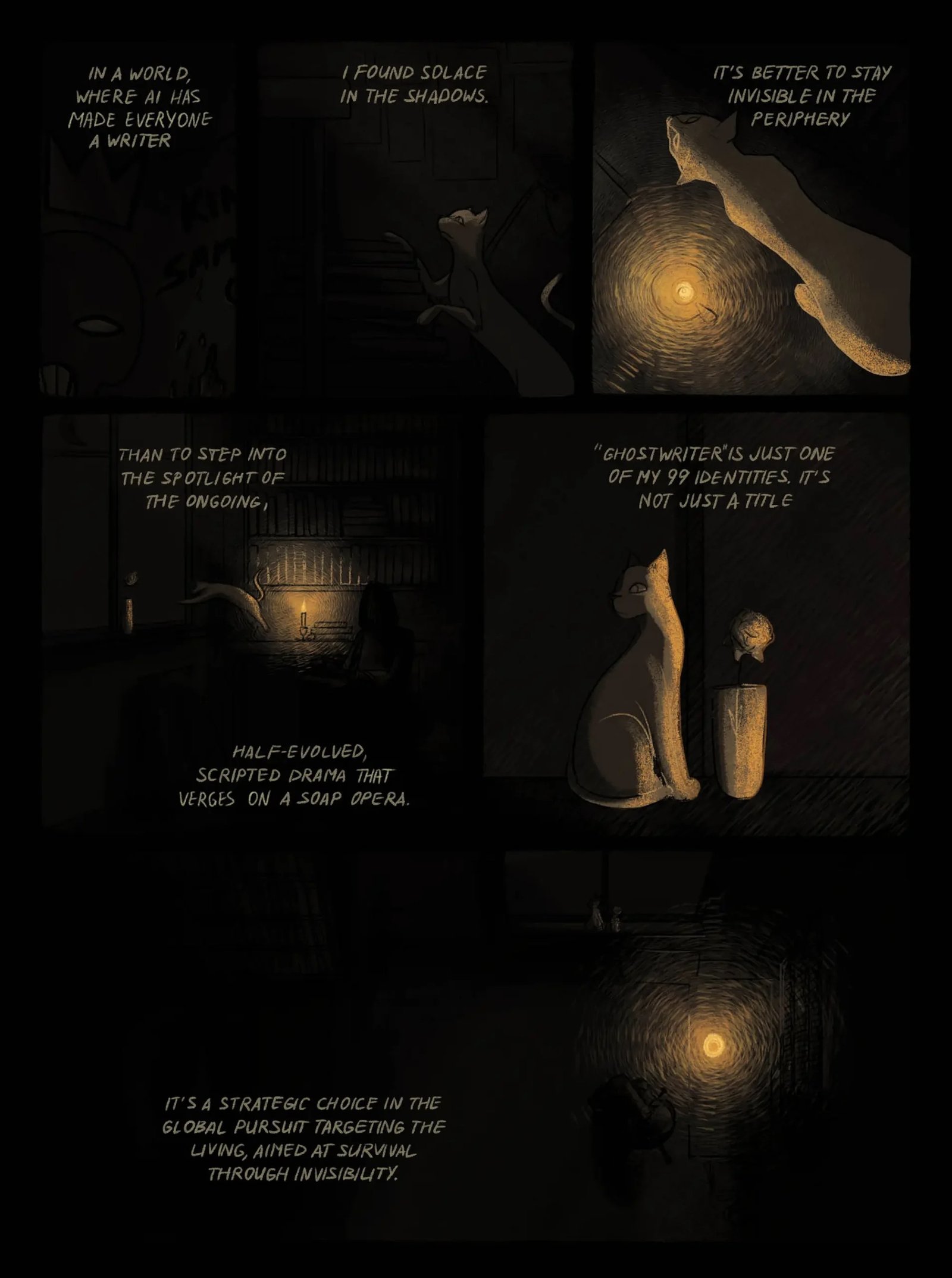
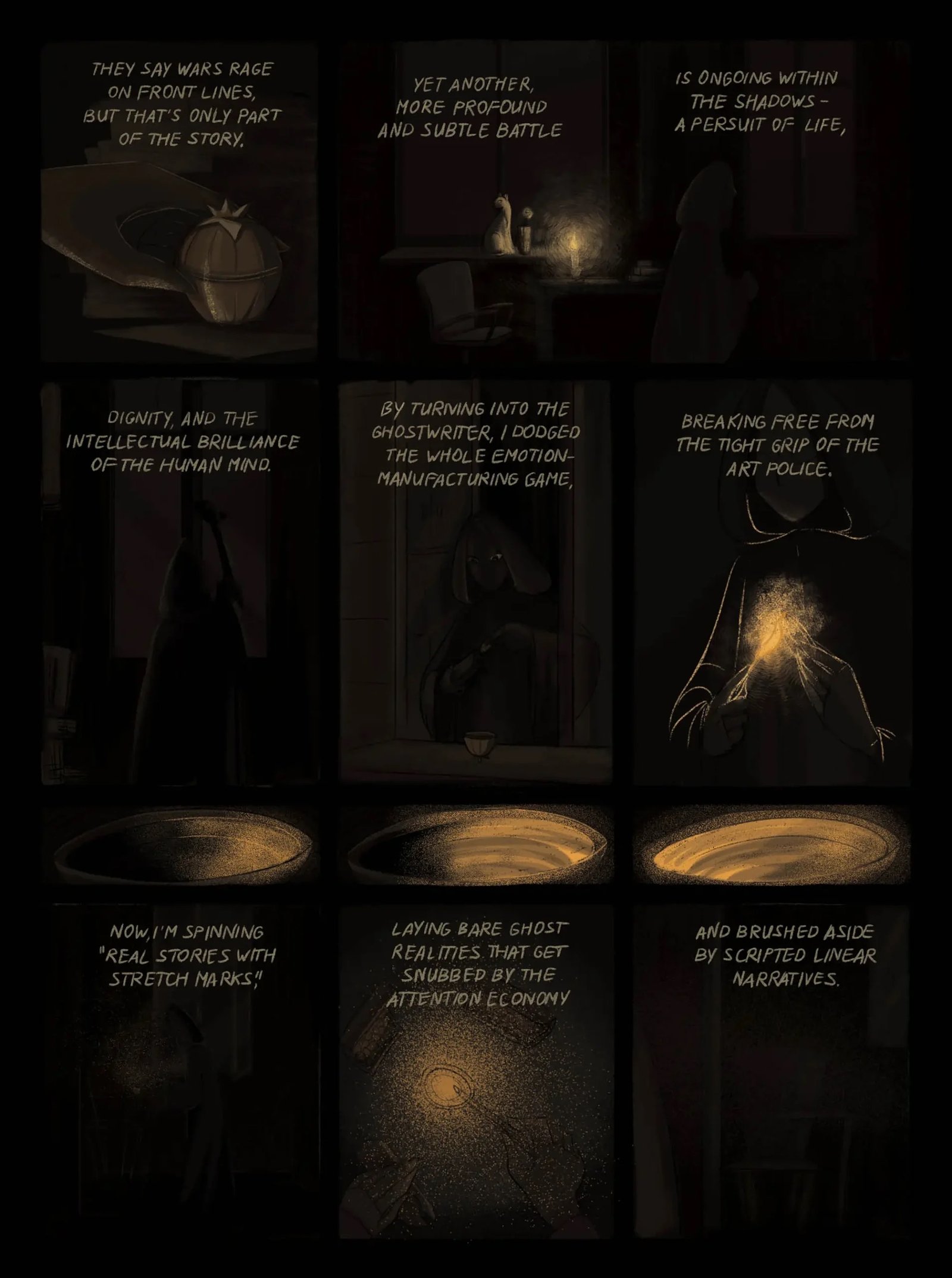
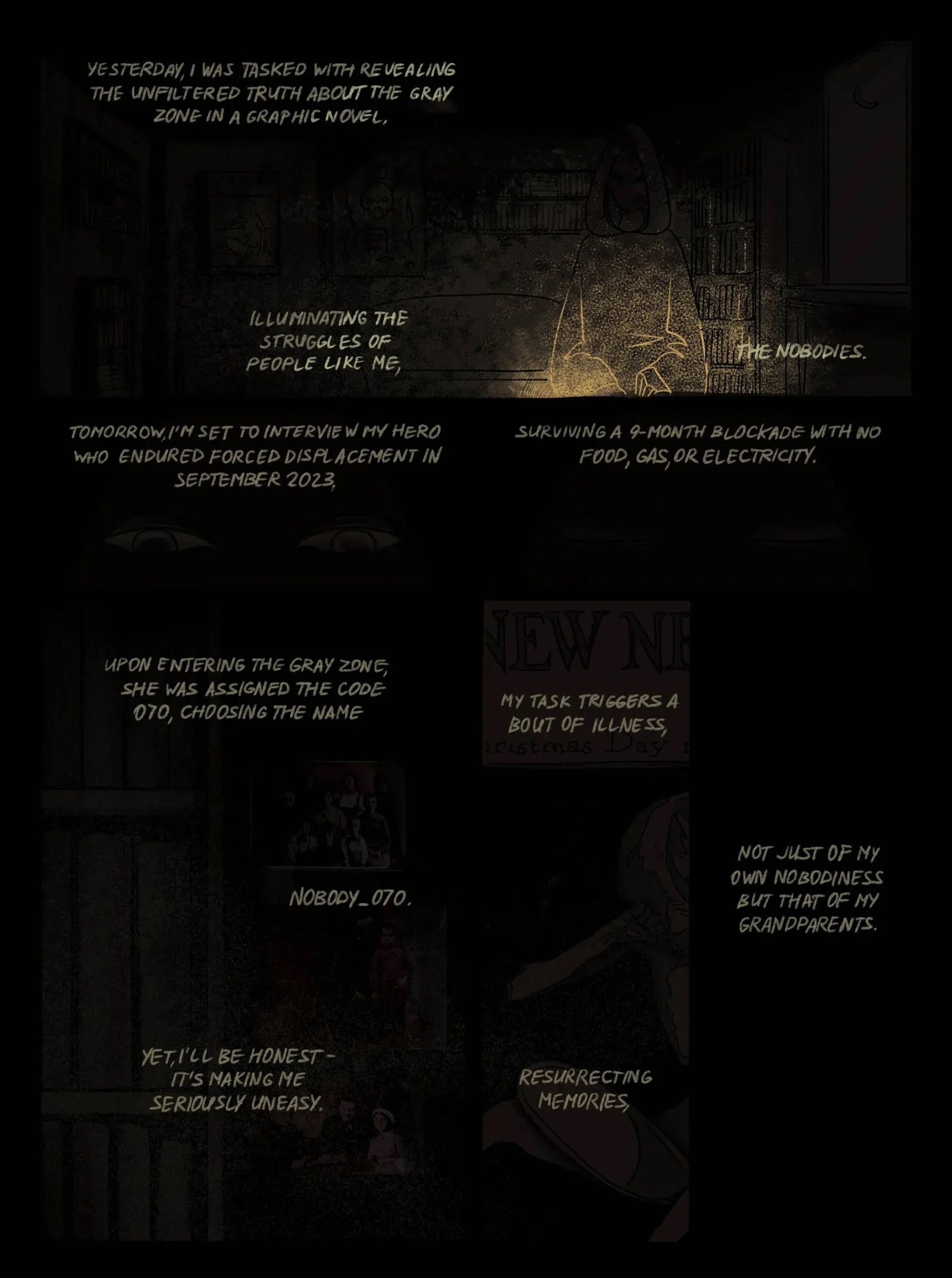
The story opens with a letter signed by Nobody_070. From the first moment, narration is displaced by address. What matters is not what happens, but that someone writes. It begins with the address, with the hope of a dialog rather than an event – prioritizing relation over spectacle. 070 refers to a code assigned by the state to a segment of the population forcibly displaced from their homes. Identity here is indexed, not narrated. Violence appears as bureaucracy; power operates quietly and invisibly, through numbering. They call themselves Nobody as well, yet they now carry a differentiation code, indicating that there is not a single Nobody within the narrative: they are not all the same, even though they appear identical from the outside – veiled figures with no visible personality traits, each identifying themselves as Nobody. This letter, signed by Nobody_070, is addressed to a stranger – an imaginary reader who might encounter it in the future:
Dear Stranger, It’s 03:06 am, Dec 24, and here I am, unable to sleep, starting this letter to you. I got out of bed to write you a few lines. By the time you read this, few human beings might still be alive. I hope you’re among them. If you’re alive and have somehow retained your human form, chances are you also enjoy 30-minute morning walks. So, please, during your next stroll, if you happen upon a dead body in the park, peacefully resting under a fig tree, free me from the lungs of that lifeless shell. I might be trapped there, with no room to move and no air to breathe. If you end up being the last person alive, loneliness might be weighing on you, subjecting you to boredom, struggle, or even the haunting terror of solitude. So, by freeing me from the lungs of the body resting under the fig tree, there will be two of us alive, sharing the burden of existence. Nobody_070
This letter is addressed to an individual rather than a collective reader. Responsibility is postponed and individualized. The reader is not assumed; they are awaited. They are not asked to understand suffering, but to respond – if they choose to. The ethical demand is practical and conditional, not emotional. The letter does not seek to express the suffering of a specific community, nor to produce a personal story that situates itself within the economy of empathy, nor to break the fourth wall as a technique for intimacy. Instead, it quietly places the reader within a shared responsibility, conditional on whether they recognize the same existential terror of loneliness produced by the mechanical tempos of modernity. This point of relational address replaces community with address, testimony with a kind request, and empathy with shared responsibility. The letter is in no way about war. It is about what it means to speak, to remain in dialog when survival itself is uncertain.
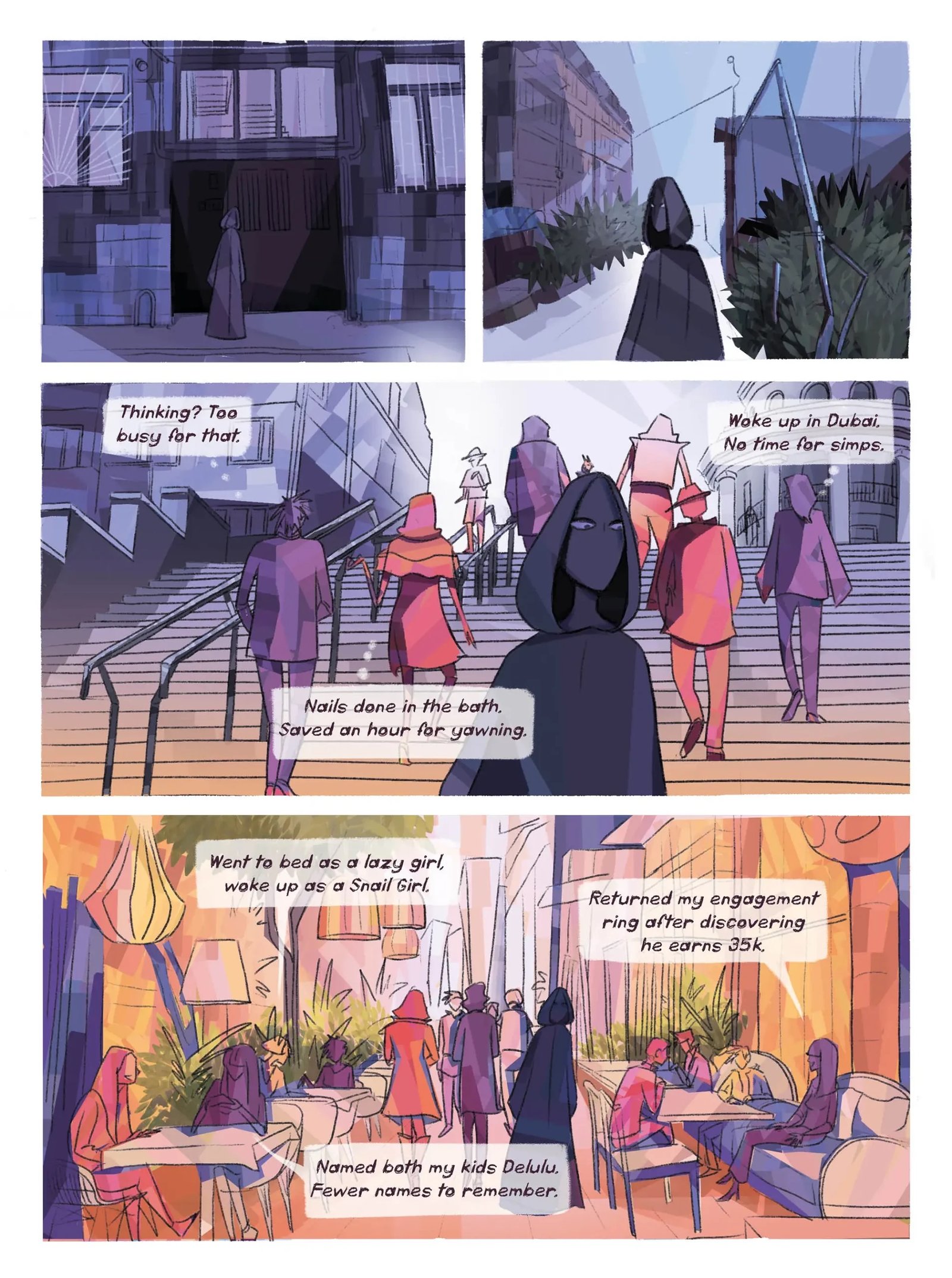
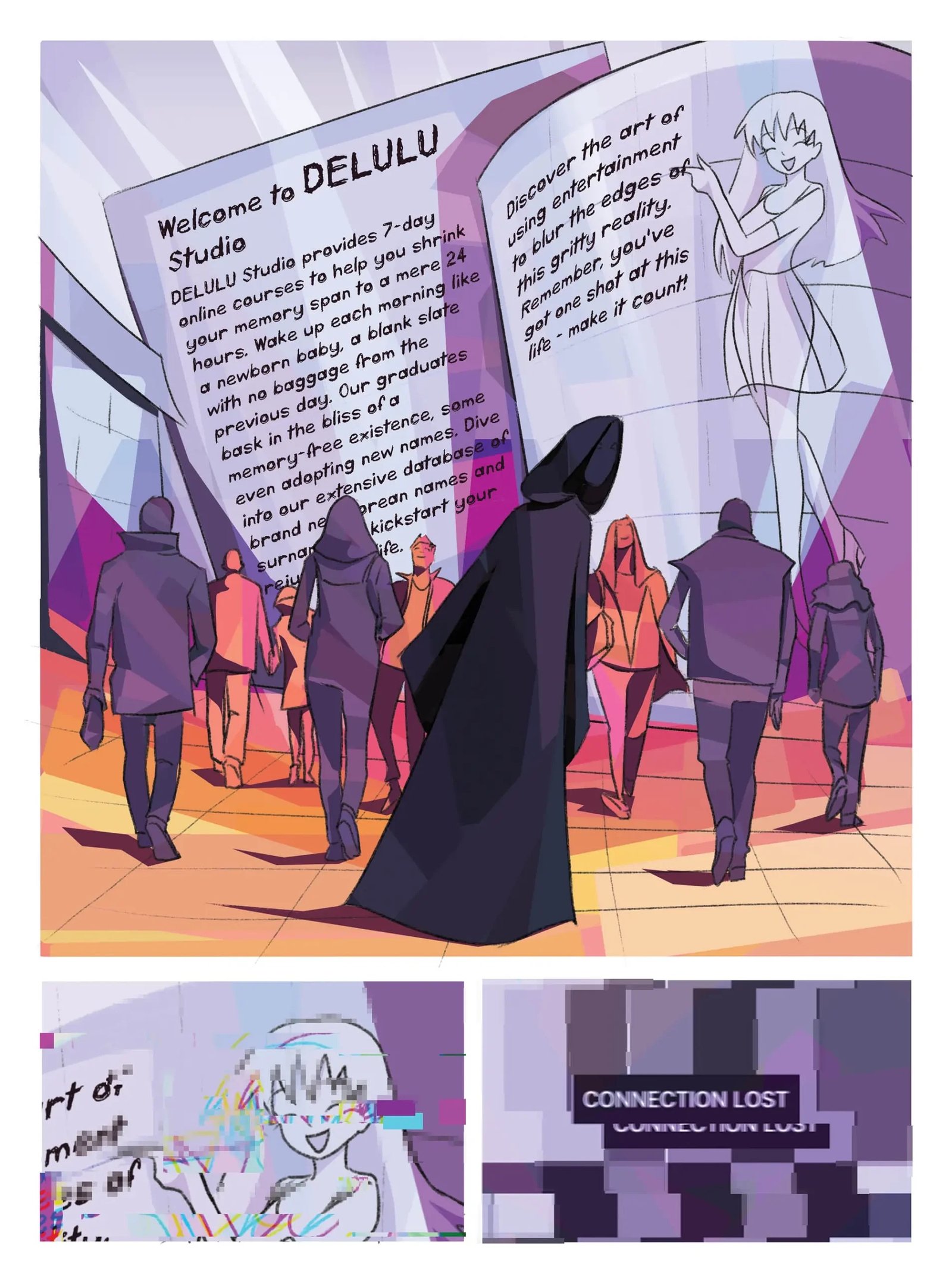
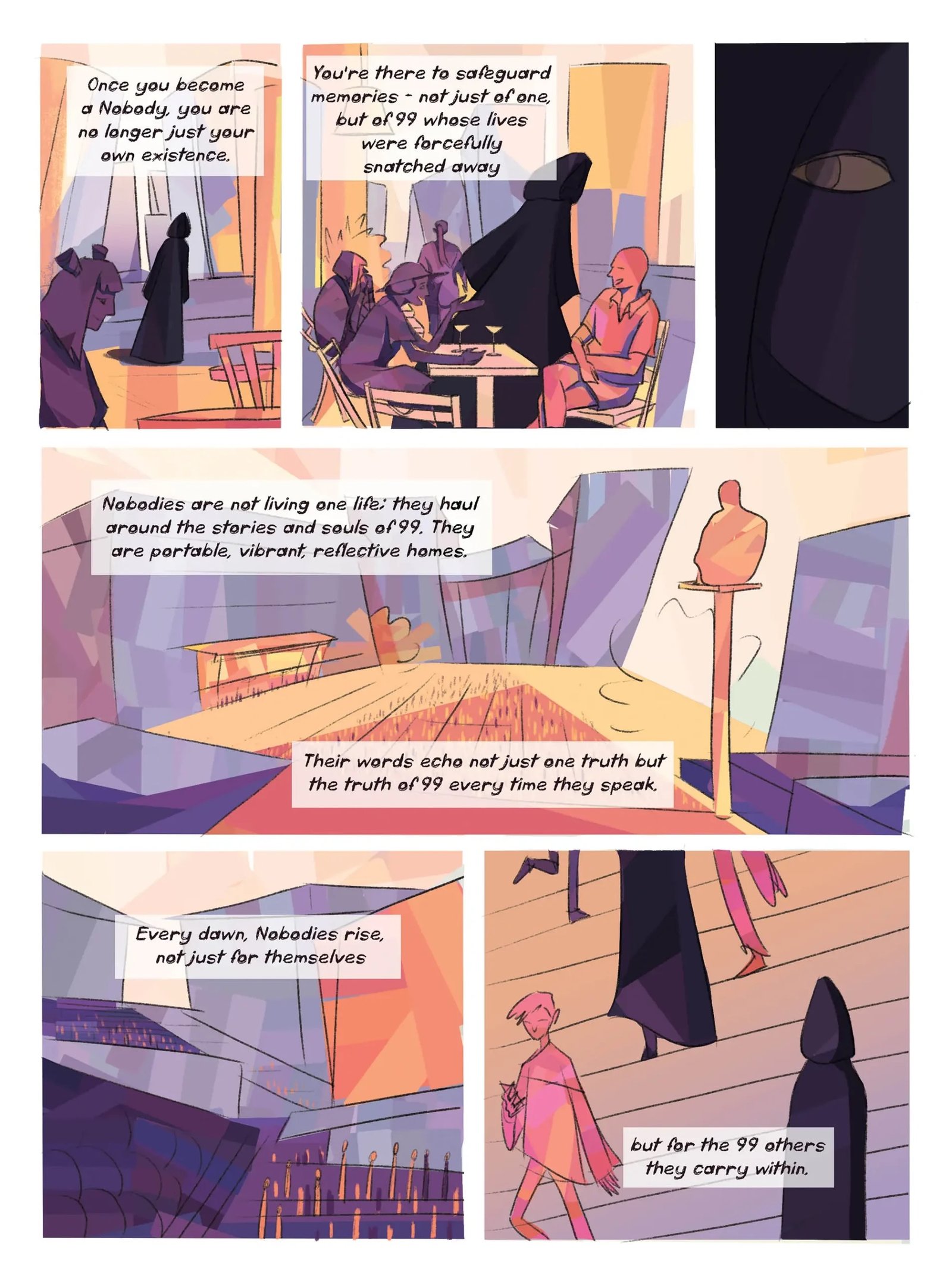
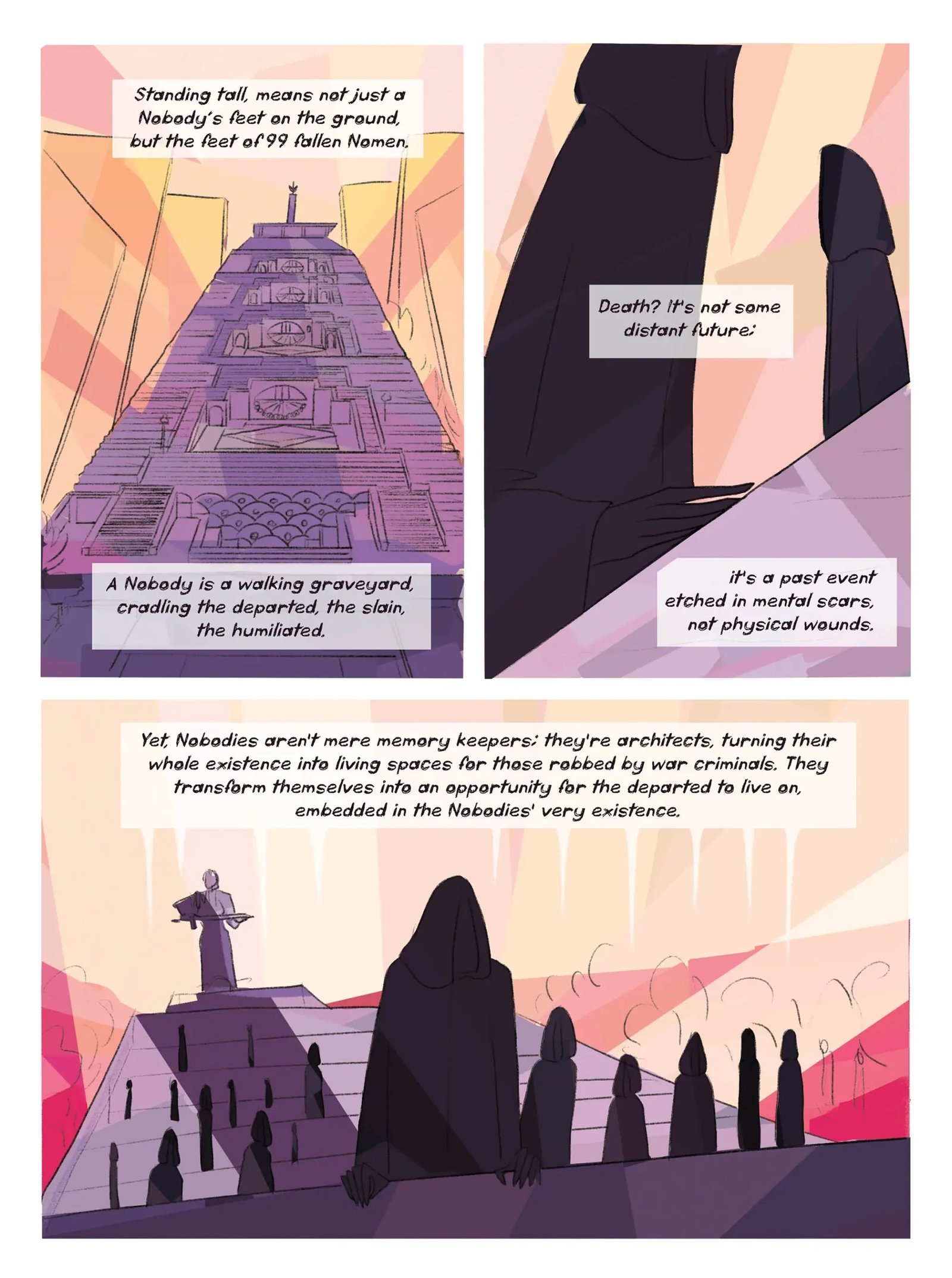
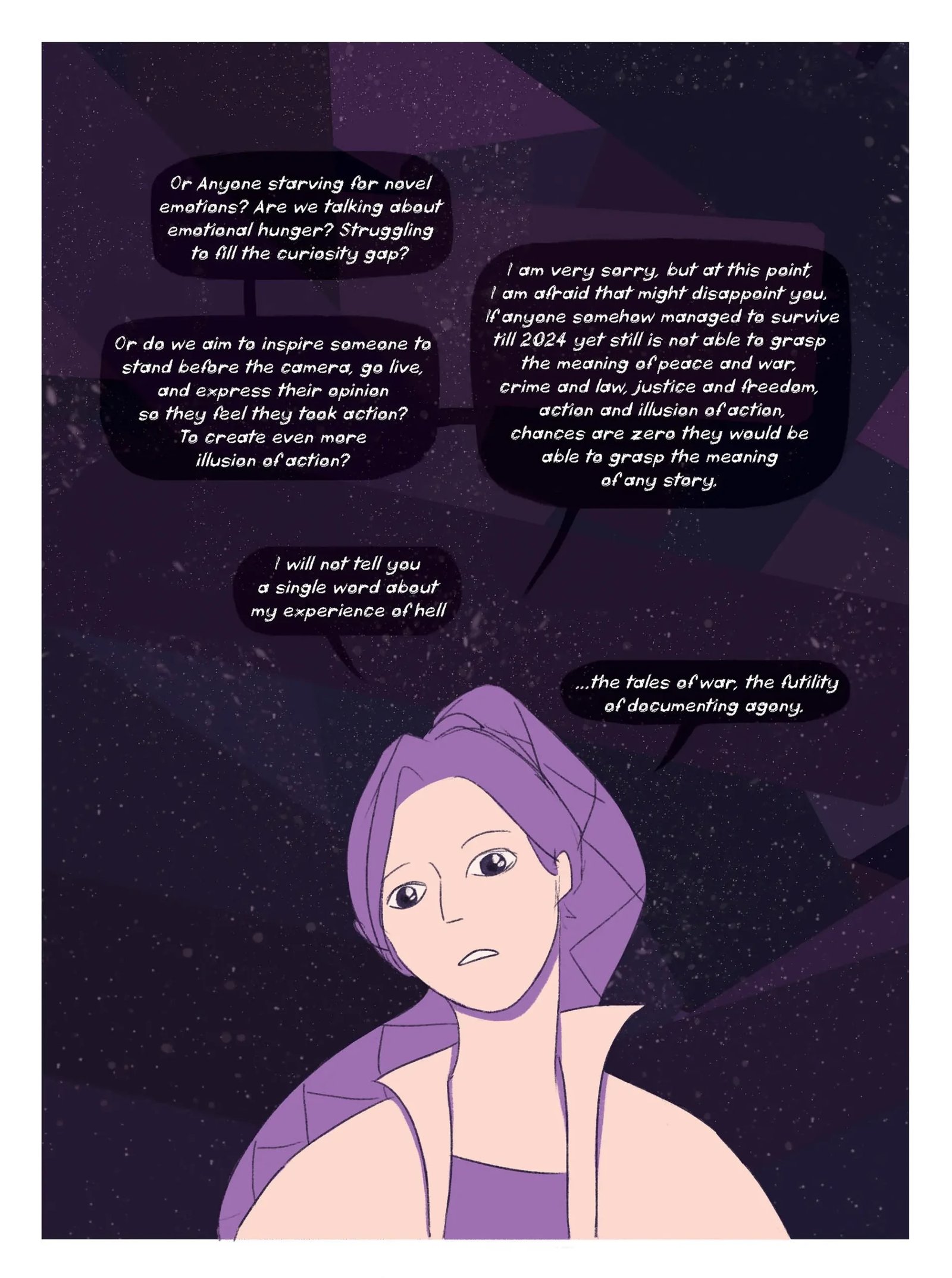
The encounter between the writer-figure (Nobody) and the interlocutor (Nobody_070), initiated by Nobody’s request for “real stories – war stories” and met with refusal to testify, renders refusal as an explicit stance. The demand is not framed as censorship but as an invitation: to explain, to testify, to make experience intelligible. The response, however, is not silence but a sustained rejection of the terms under which intelligibility is usually granted. “I will not tell you a single word about my experience of hell,” the figure (Nobody_070) states – not as an affective outburst, but as a methodological boundary. Ethical agency here is exercised not through the addition of content, but through the establishment of limits on what the work will permit itself to show, explain, or resolve. It is exercised through critique of the system of meaning, not through participation in it.
This refusal is inseparable from the work’s critique of testimonial logic. Throughout the pages, images appear without anchoring context and without causal linkage. The reader is denied the tools that usually stabilize interpretation. Close-ups of eyes interrupt dialogue; citations – such as Kafka’s remark on the silence of the sirens – enter the frame without being absorbed into narrative explanation. The result is not ambiguity for its own sake, but a structural resistance to evidentiary demand. Images are not mobilized as proof, nor are they asked to carry moral conclusions. Instead, they function as unstable witnesses, marking ruptures in comprehension rather than offering clarity. Witnessing, in this framework, is fragile and incomplete – a condition that keeps the ethical relation open rather than resolved. In this sense, refusal operates as a conscious strategy: not a withdrawal from representation, but a resistance to the gendered demand to testify, expose, and render suffering legible on command.
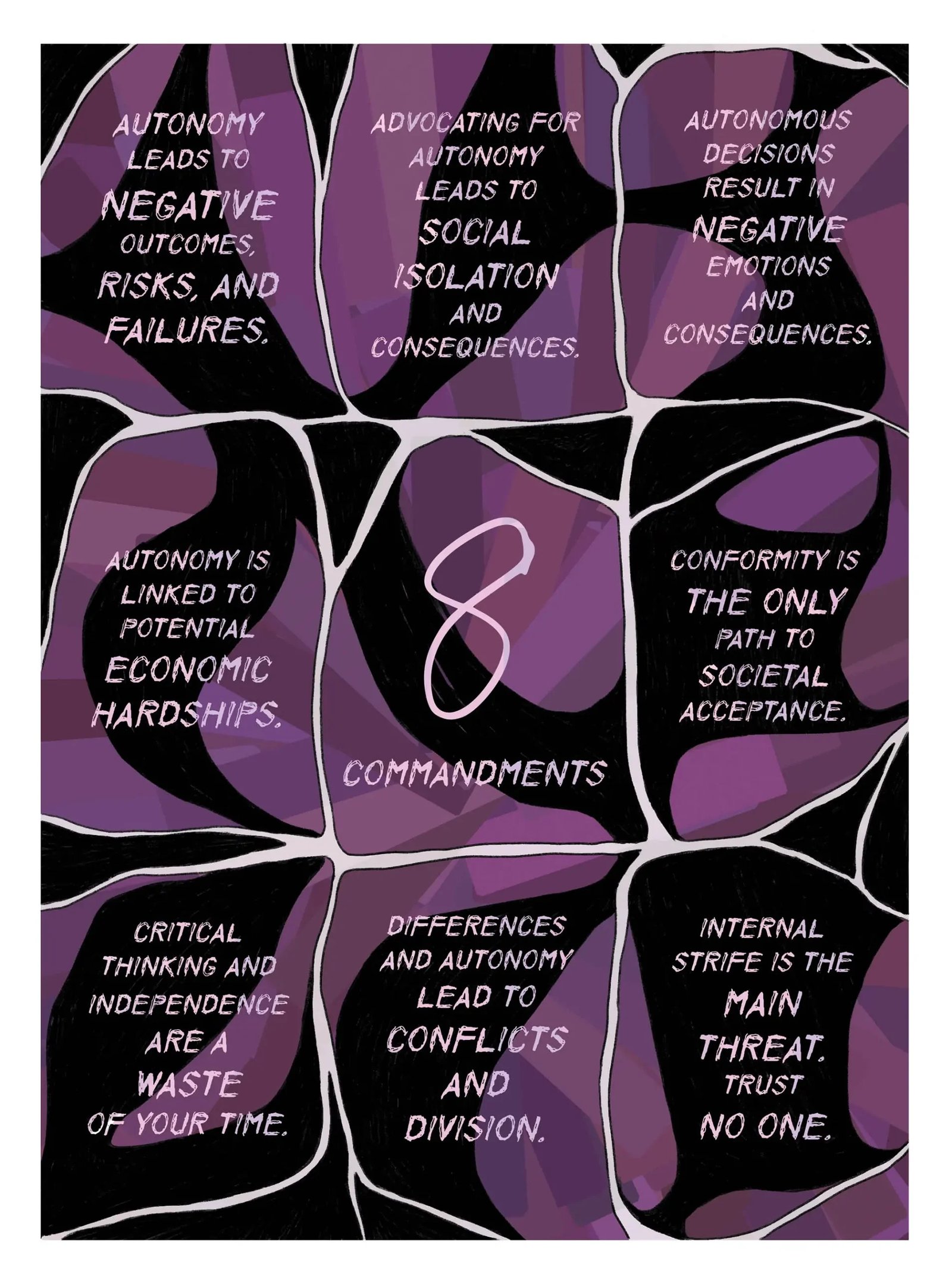
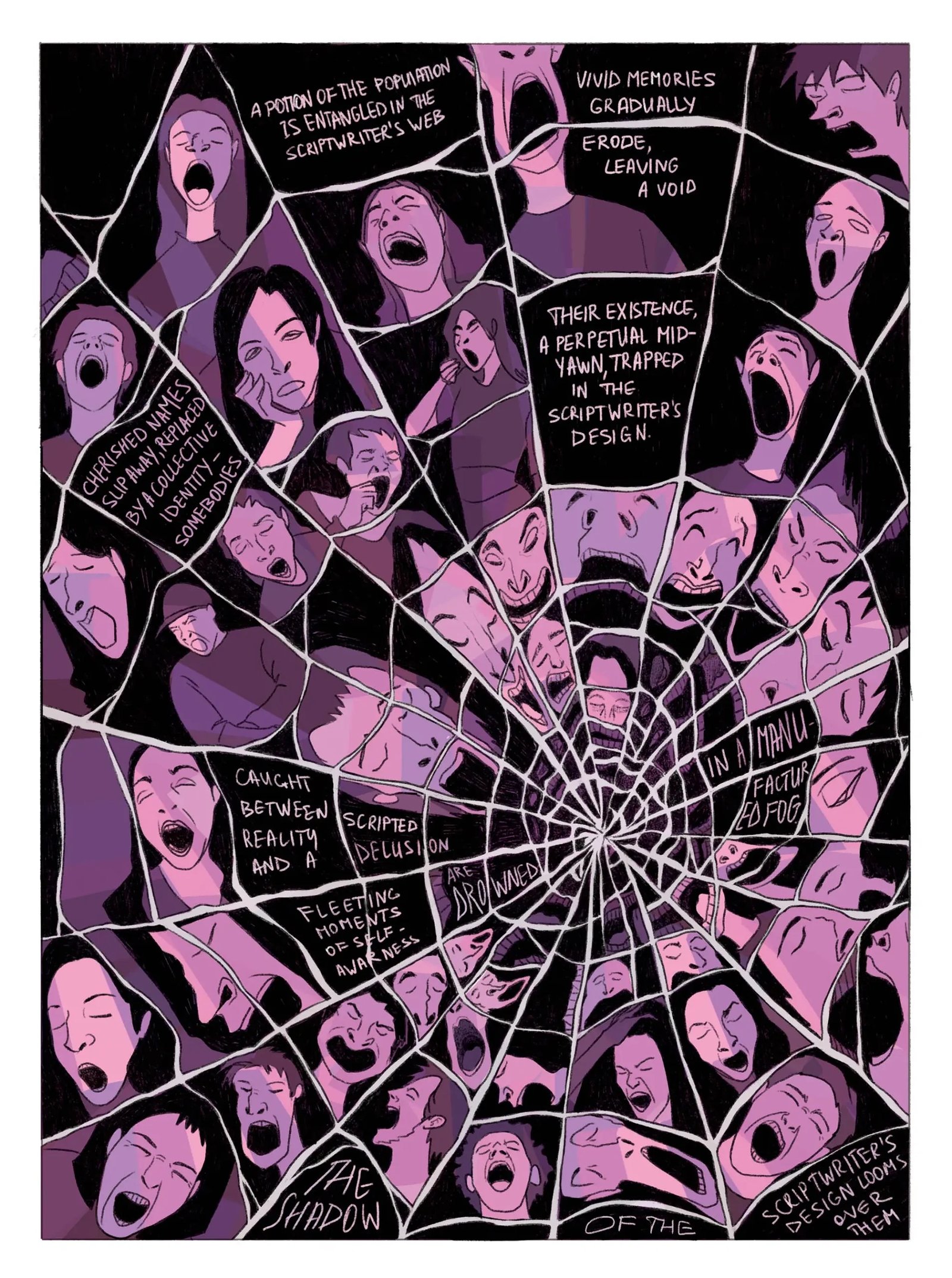
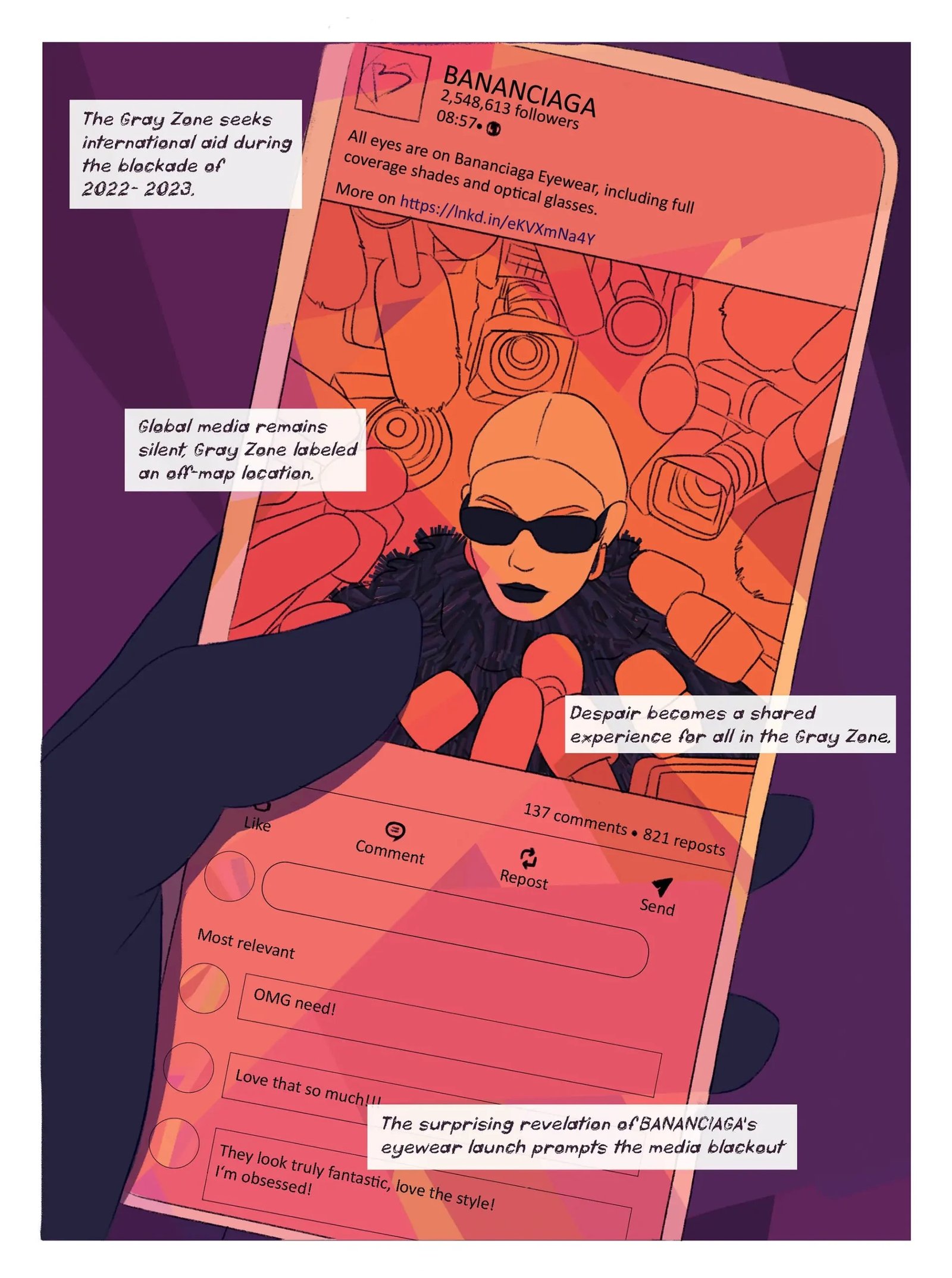
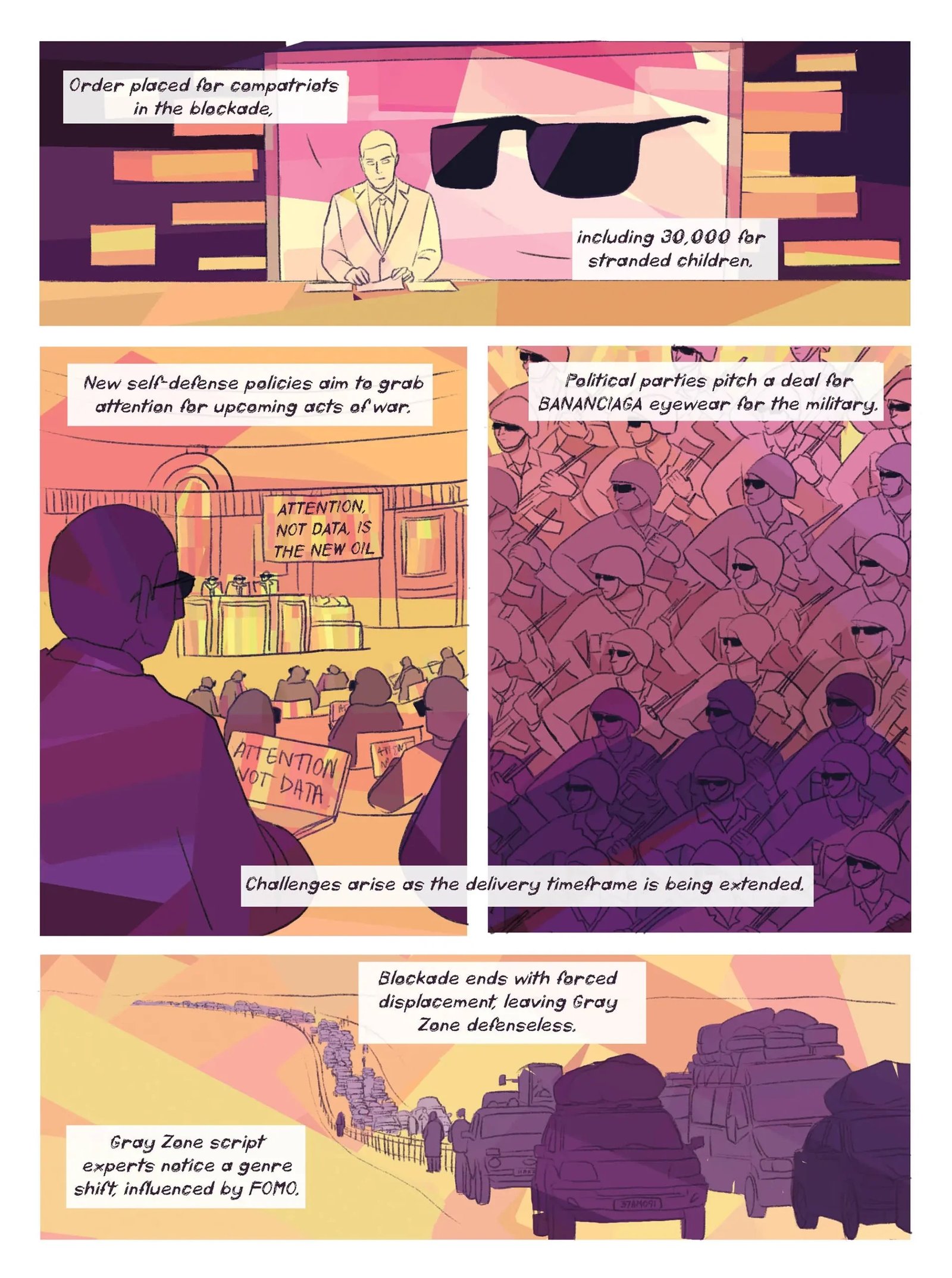
Fragmentation in One Meme Away from War is therefore not an aesthetic gesture or expressive excess, but a methodological necessity. Under conditions of ongoing and repetitive conflict, access to information is partial, temporality fractured, and causality cannot be reliably reconstructed without distortion. The work reflects this condition formally: sequences overlap without progression, effects precede causes, and narrative time refuses linear coherence. To impose narrative unity under these circumstances would be to manufacture an illusion of understanding – to stabilize what remains structurally unstable. Fragmentation here operates as an admission of limits, not a failure of representation.
This refusal extends to the work’s handling of affect. The graphic novel systematically blocks narrative closure, explanatory arcs, and emotional resolution. There is no catharsis, no release through recognition or empathy. The final sequences – marked by departure rather than conclusion – leave responsibility unresolved. This is not an absence of meaning, but a deliberate resistance to converting crisis into story. When suffering is ongoing, closure is not neutral: it reassures the reader that events belong to the past and can be safely processed. By denying this reassurance, One Meme Away from War refuses to allow feeling to substitute ethical engagement.
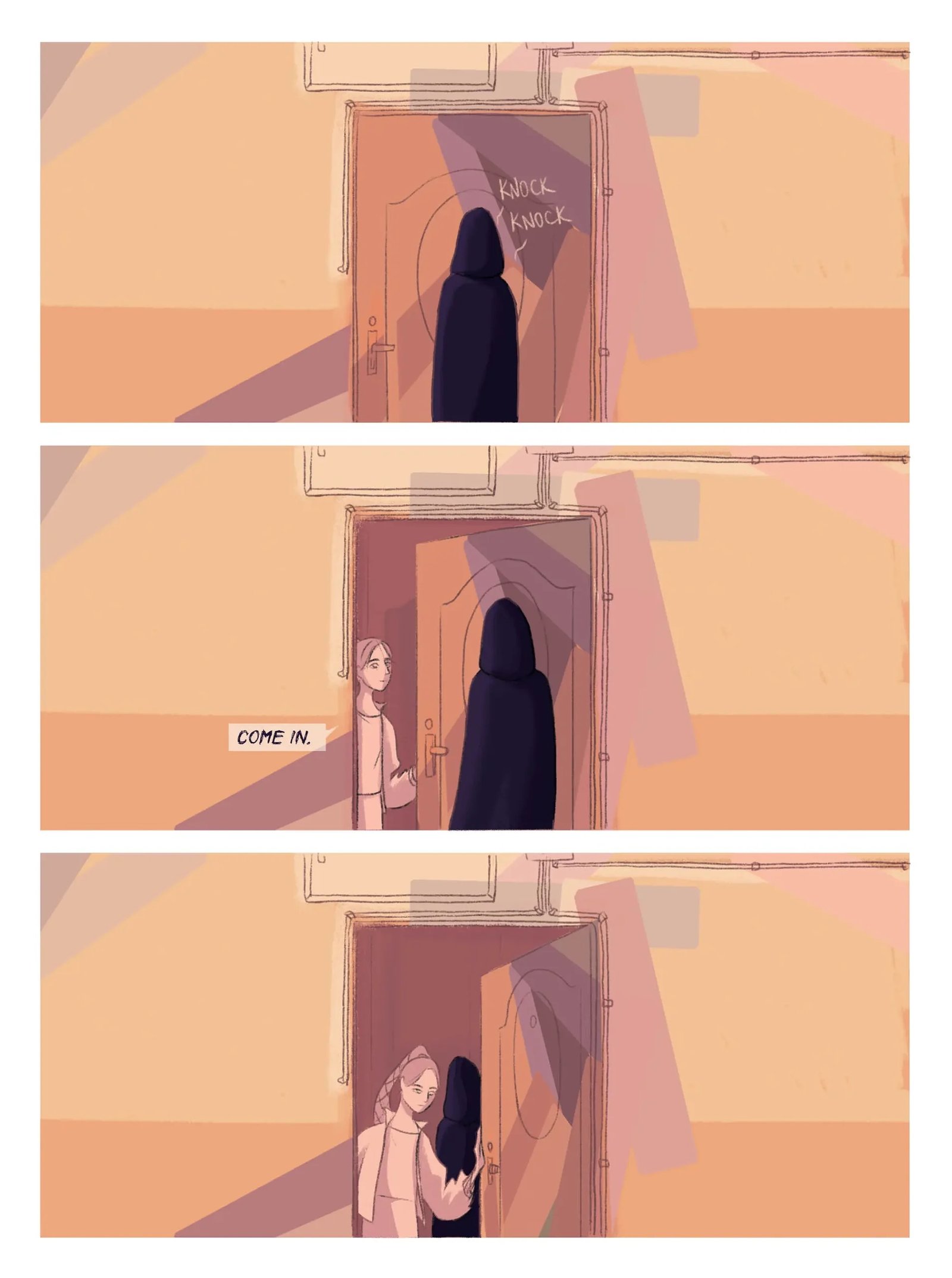
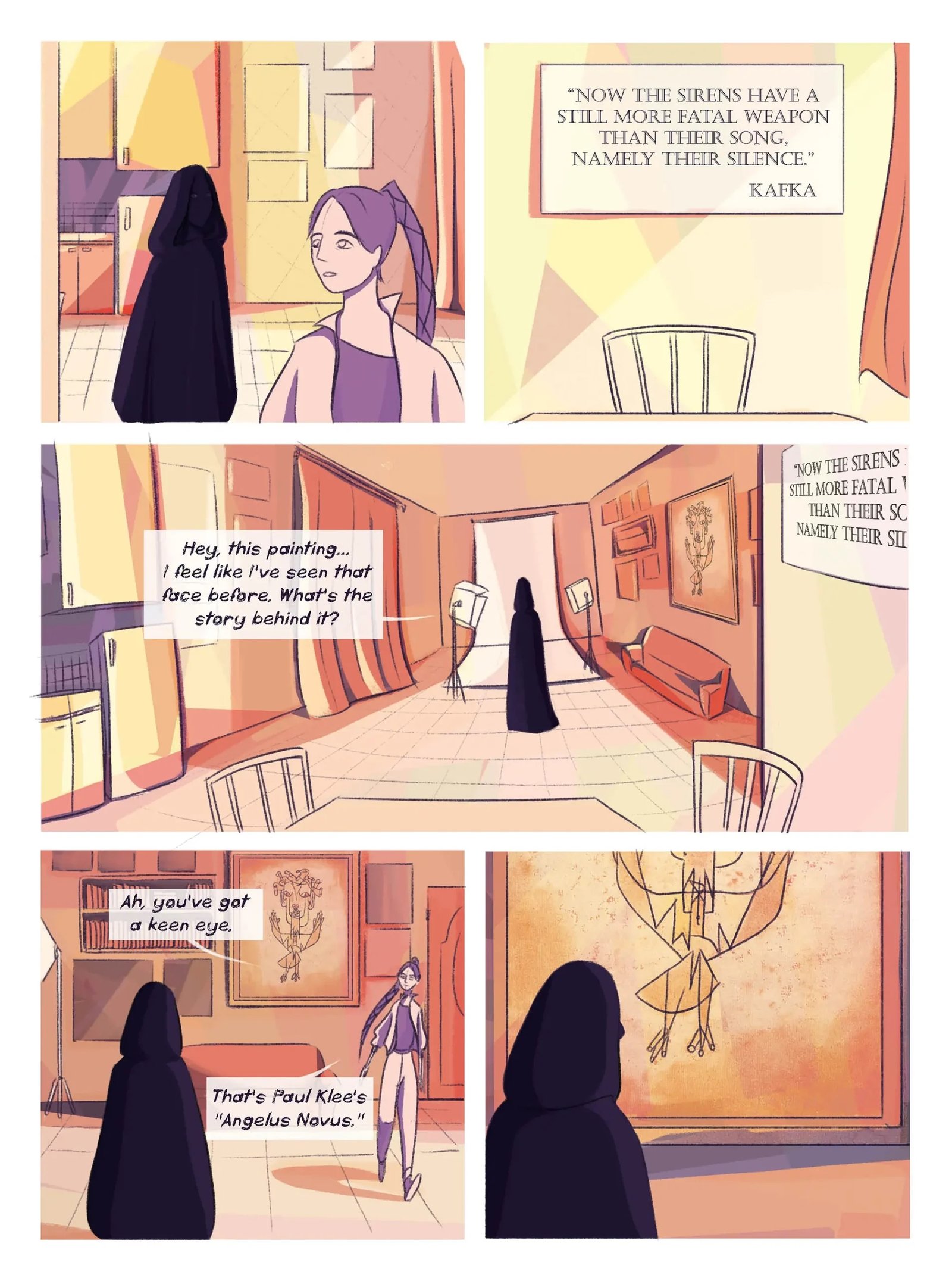
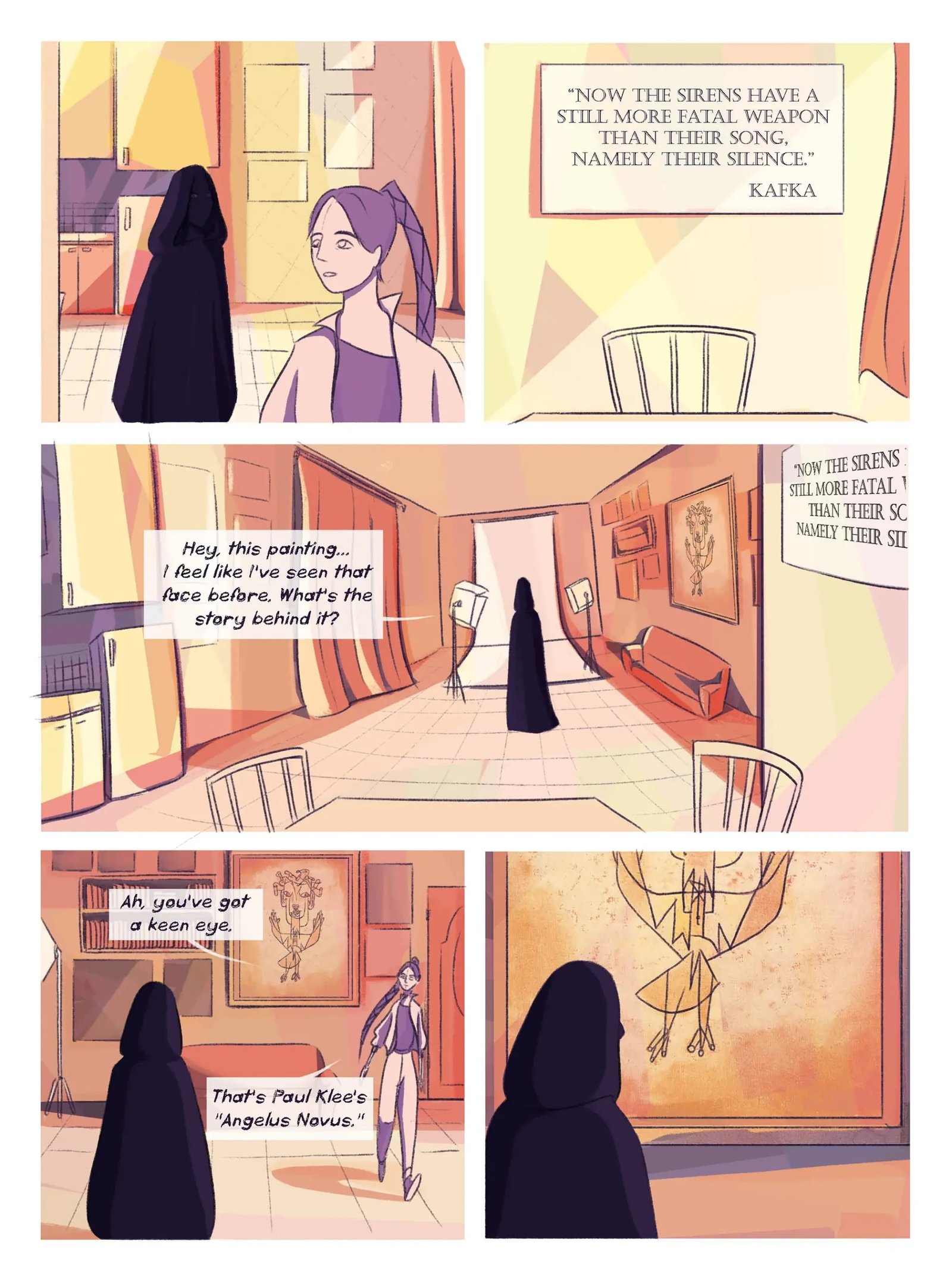
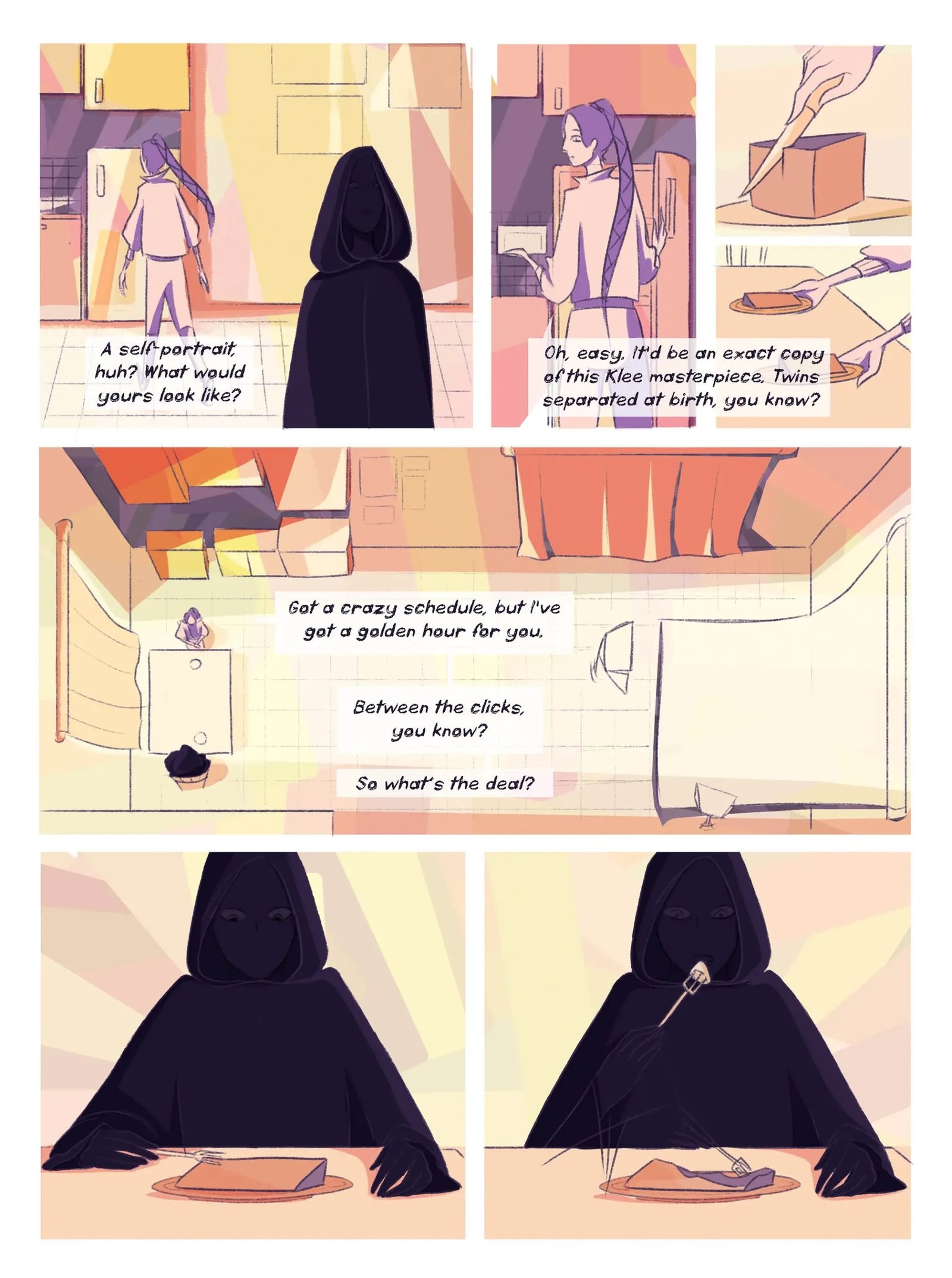
Meaning in the work does not reside in images as such, nor in the depicted subjects. It is generated through the rules that organize how images are encountered: interruption, pacing, omission, and constraint. Ethics appears here not as declaration but as experience – produced through delayed comprehension and unresolved tension. The work does not instruct the reader on what is ethical; it constructs conditions in which ethics is felt as a problem rather than affirmed as a position.
In this sense, One Meme Away from War proposes refusal not as withdrawal, but as a form of active engagement that resists the economies of attention governing contemporary visual culture. In an environment where images are endlessly scrolled, shared, and consumed as content, refusal becomes a means of interrupting circulation rather than feeding it. The work insists that visibility is not an ethical guarantee, that recognition is selective, and that mourning is political long before intention or empathy enters the frame.
The question at stake, then, is not whether war can be represented more accurately, nor whether visibility can be made more just, but whether the structures that govern representation can be interrupted at all. One Meme Away from War does not resolve this question, and does not attempt to. By withholding narrative completion, emotional release, and evidentiary certainty, the work insists that responsibility cannot be discharged through recognition alone. What remains is not an answer, but a condition: an encounter shaped by delay, opacity, and limit, in which ethical relation is no longer guaranteed by seeing, but must be negotiated without the reassurance of mastery or closure.
Ani Asatryan is an Armenian writer whose work has appeared in Words Without Borders and Absinthe: World Literature in Translation (Michigan Publishing), and is included in curricula at UC Berkeley, the University of Basel, and the American University of Armenia. Her quadrilingual graphic narrative One Meme Away from War, developed within the EU Creative Europe programme, was presented at the Frankfurt Book Fair in 2025. In 2025 she published her first novel, Inimitable (Աննման). Asatryan has delivered invited lectures at UC Berkeley, Basel, Cyprus, and Sussex. Her works are archived in the New York Public Library and in the libraries of Columbia and the University of Michigan. She holds an MA from the University of Sussex.
Graphic Narrative: Ani Asatryan
Book Title: One Meme Away from War
Illustrations: Astghik Harutyunyan
Published by: ARI Literature Foundation in collaboration with Komora Books and LIG
Date: 2025
Images: Images reproduced from One Meme Away from War with permission.