
Emma Lotta Lõhmus
This year, the eleventh edition of the Bazaar Festival in Prague asked the question “Whose body is my body?” as its conceptual centrepiece. We’re stuck with bodies, whether we want them or not, and quite often, we experience certain social, biological, cultural or political limits through them. However, the question this year offers an opportunity to be suspicious of these limits, of selfhood and of individuation, and the scope of our embodied experiences. The festival, which mainly presents the work of independent artists from Central and Eastern Europe (and since 2019, artists from the Middle East as well), draws on co-creation and anti-hierarchy in its program, and gives artists complete freedom of expression and the opportunity to present works that are still taking shape. The performing artists also conduct workshops where they reveal the background stories of their works and share creative practices and principles – this way, for a few hours, the body of the festival visitor can also become a performing one; an accomplice or an initiator in these processes. The workshops usually take place the day after the performance in a different setting, there are also other workshops and discussion events, mapping topics such as new ways of giving feedback or the opportunities and obstacles of contemporary freelance dancers in Europe. In their book, “Toward a Transindividual Self”, dramaturgs Ana Vujanović and Bojana Cvejić ask “What can I do insofar as I am not alone? How much potential do we have to go beyond our individual selves?”[1]. I happened to be reading this book shortly before attending the festival and believe this question is also implied in both the structural and substantive dramaturgy of this years’ festival.
1
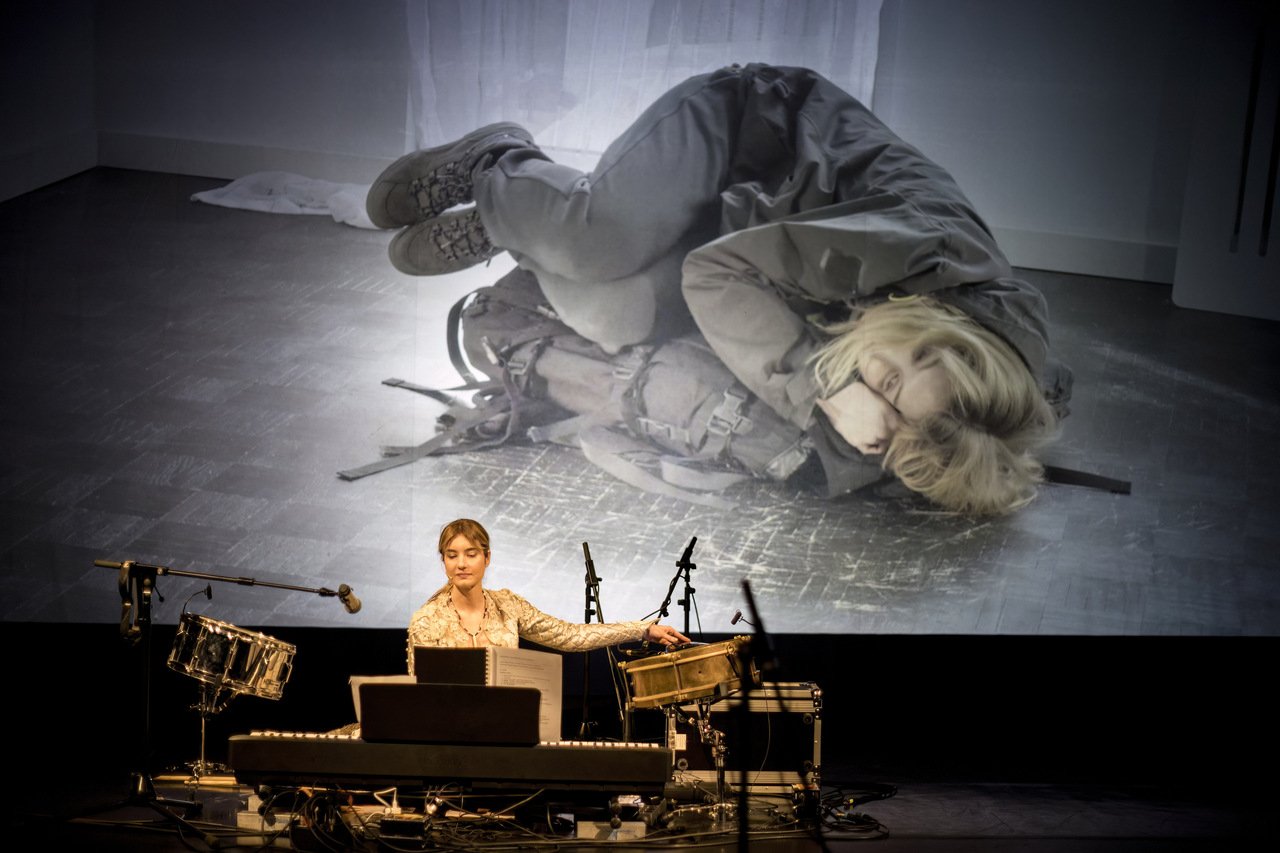
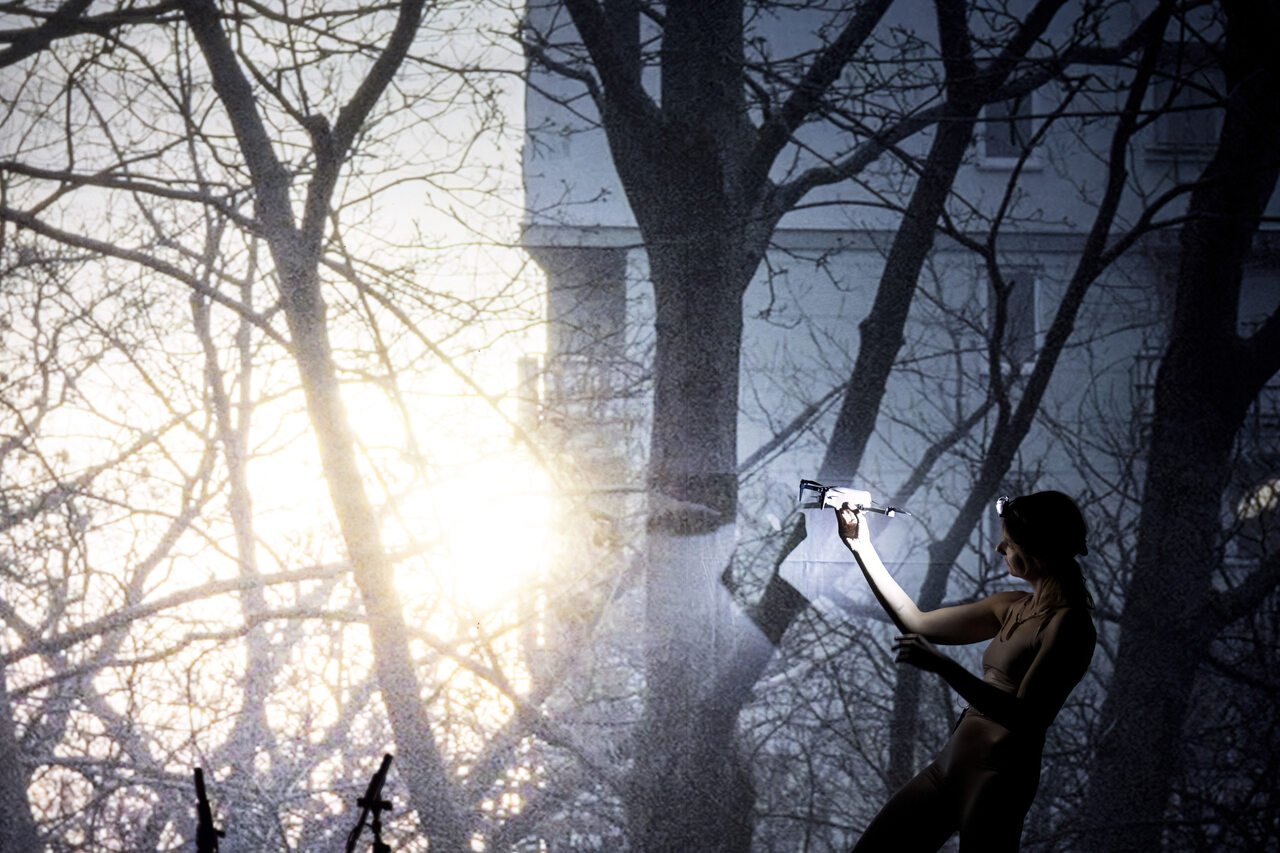
The festival opened with Magda Szpecht’s performance She stands in the middle of a battlefield, which follows the artist’s friend, a woman who decided to join the Ukrainian army in 2022. Through voice messages sent to her friends, the work reconstructs her thought processes, preparations, and everyday life during the war, and this sudden and total life change. The performance is scene-based. In a satirical manner that mimics content creators’ product presentations, the performer introduces a dry shower useful in spartan conditions, followed by a musical imitation of an anxious phone call, a monologue in the patriarchal language register of the military, the flying of a drone, and a training video in wastelands and unfinished construction sites. The performer, Agata Różycka, works alone on stage and in addition to everything else, changes batteries in radio transmitters and adjusts microphones, which is why what happens on stage is sometimes awkward and drawn-out. But the anguish that remains crippled by the fragmentary nature of the work is convincing – the reality of war cannot be summarized in complete scenes, tempered with harmonious compositions. In the discussion group after the performance, the author noted how important it was for her to put her friend’s experiences above all into sound; to make audible the voice of someone who is in an impossibly difficult situation, and whose decision to place herself (and her body) there was completely her own. I think about how many times women’s will, anger, and fear are mediated, and how here, it has reached me through several devices, wavelengths, and someone else’s body. How, comfortably dangling my feet while sitting in a black box theater, I can sense the sounds and shades of her microcosm, but never their full scope or sharpness.
2
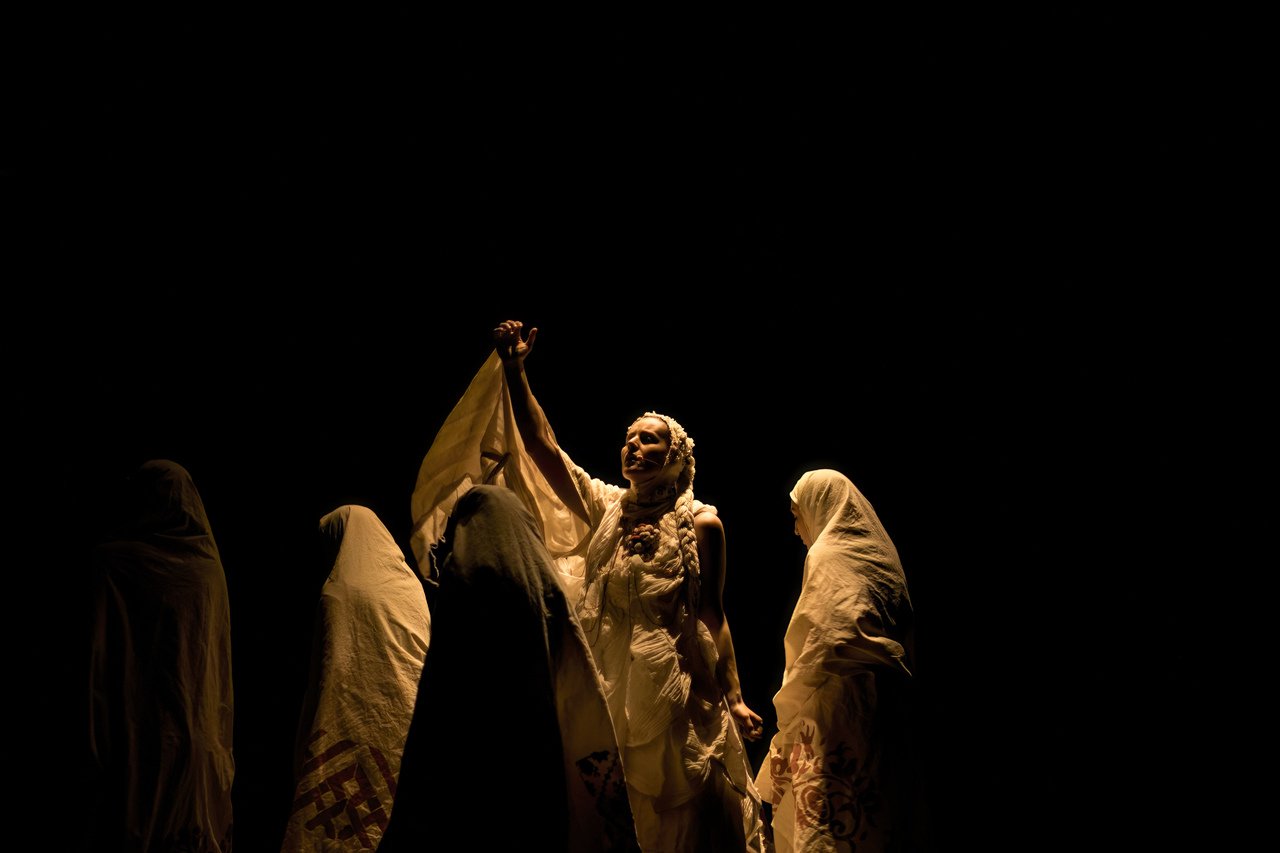
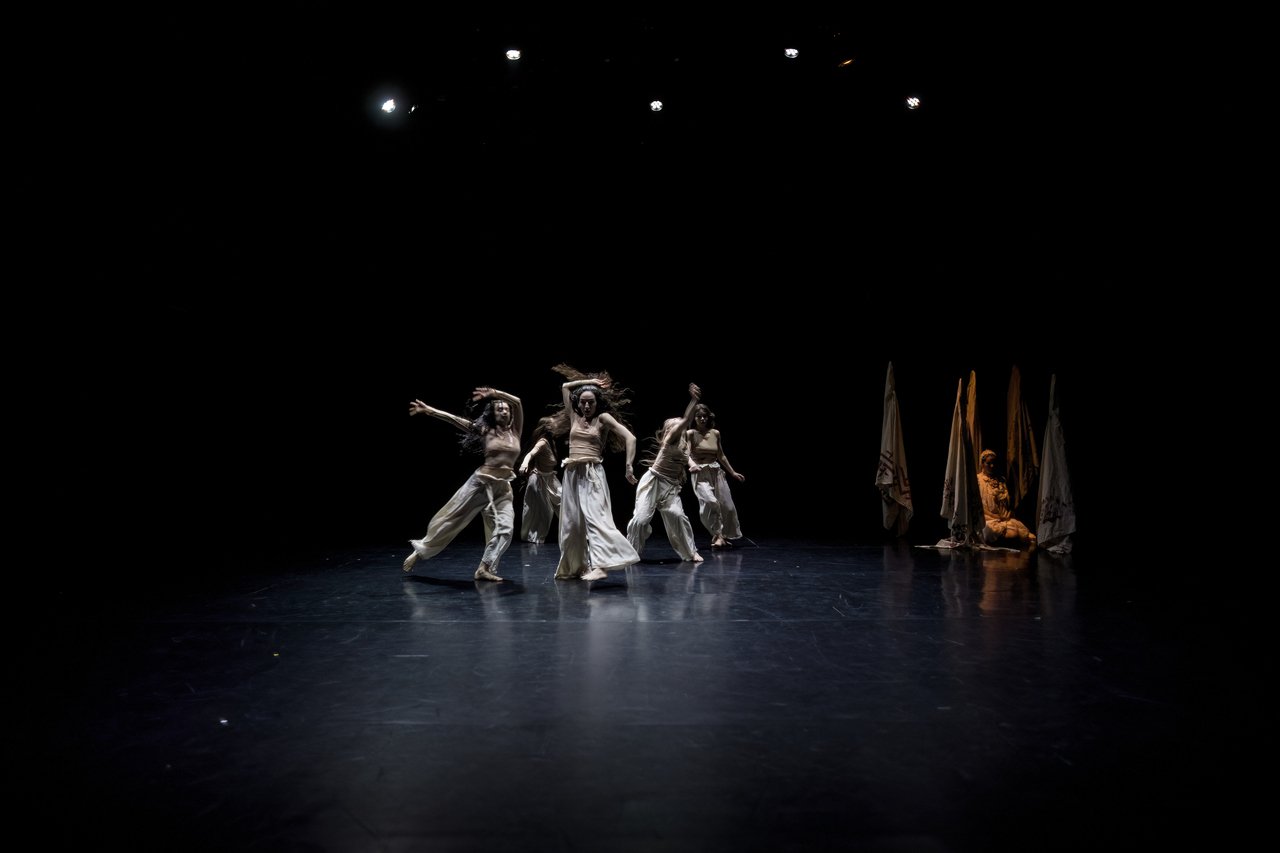
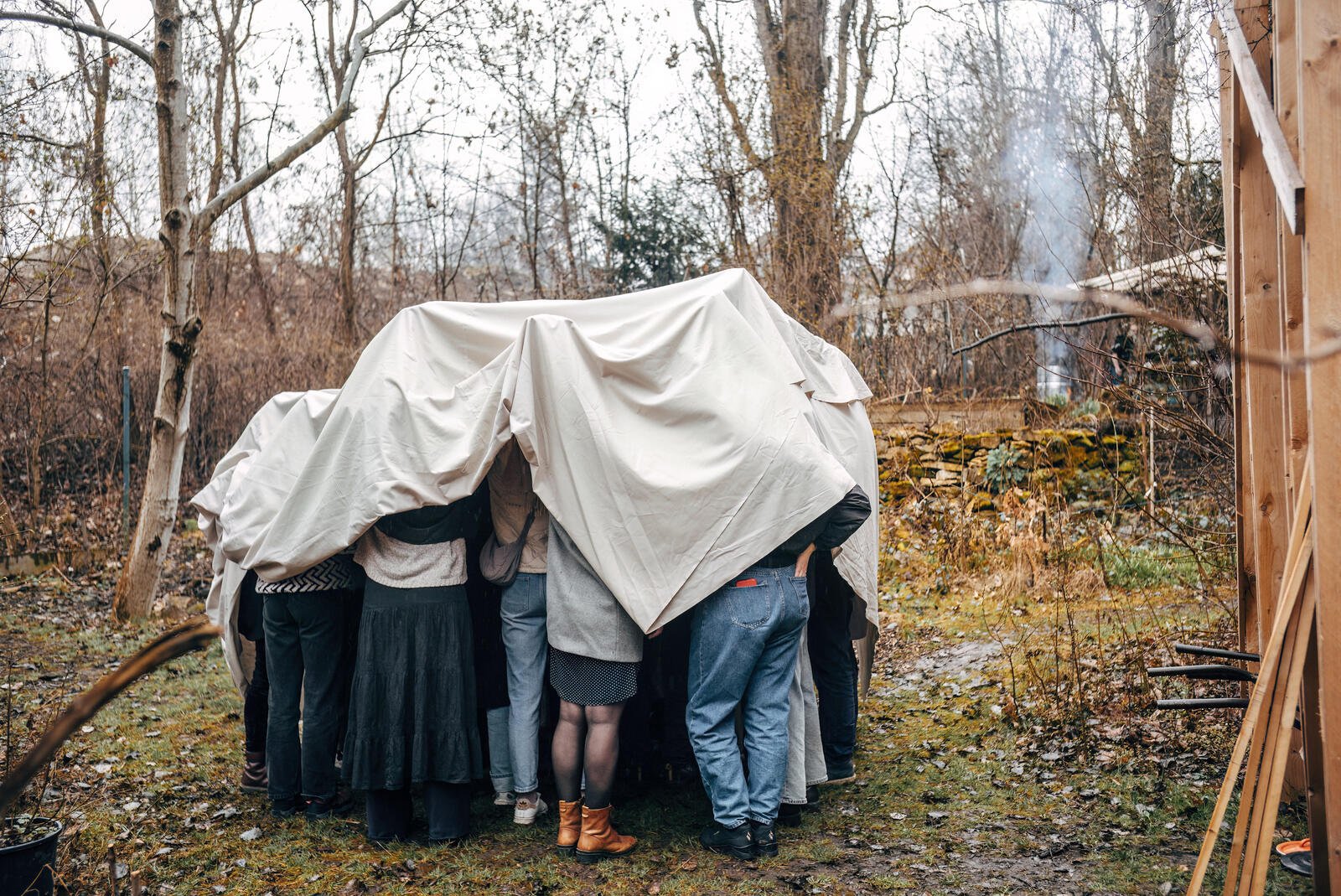
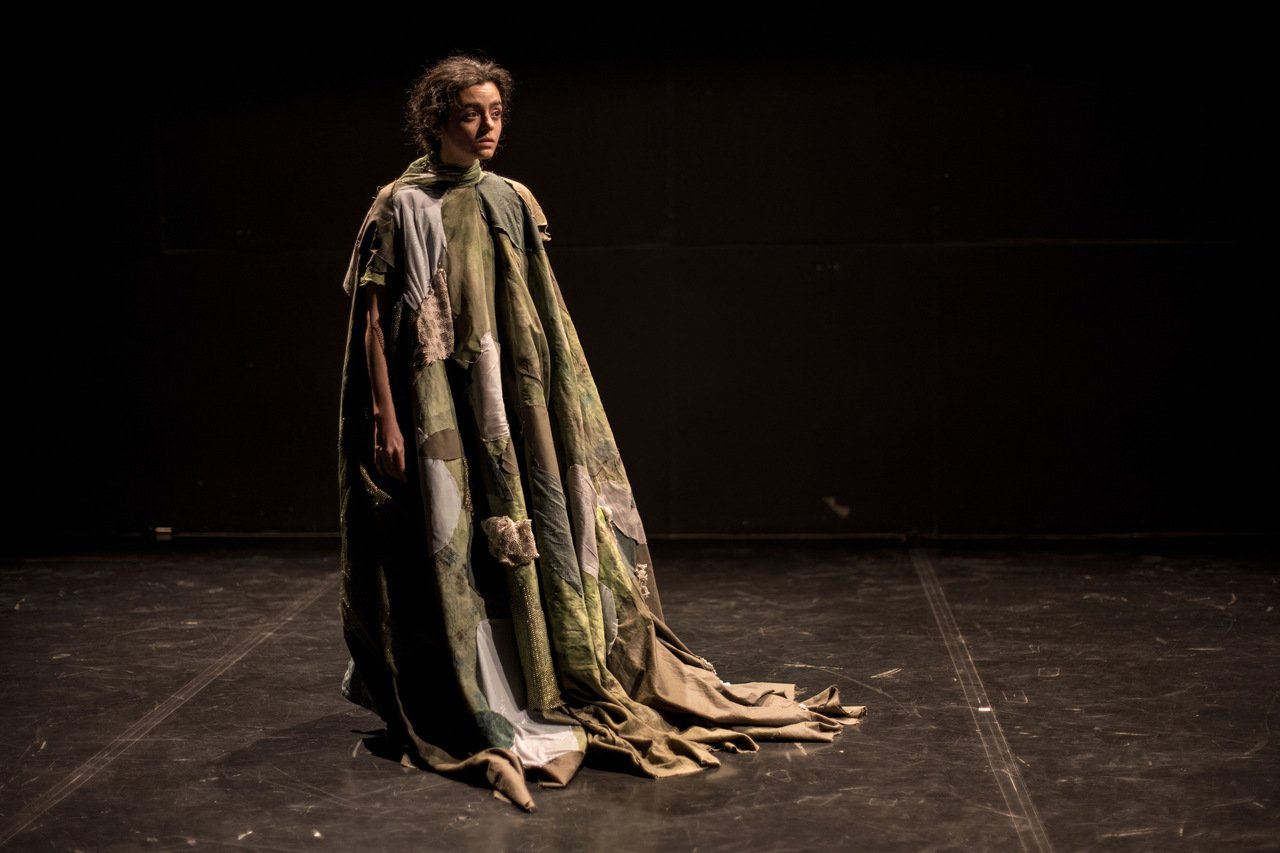
The opening night of the festival continued with the dance performance Cossachka by Juliia Lopata and Gala Pekha. Inspired by the Amazons in ancient Greek mythology – female warriors who are said to have lived from the 6th-2nd centuries BC in the Ukrainian steppe – the work dealt with the collective identity of women, the definitions that are attributed to bodies, and the feelings that nest in them within this context. The performance began with the singing of one dancer who seemed to embody a sort of mother figure, and her unwrapping of the other dancers from textile cocoons. The slow beginning transformed into a pulsating choreography. The dancers were impressive – their movements rhythmic and in sync, their bodies bent together reaching an invisible limit and then a little beyond it, only to start again in the next moment, fully focused already in another place. The harmony was almost militaristic at times, the collectivity serious and unambiguous. The militance was set against the recurring motif of long hair (at one point the dancers moved in a circle and braided each other’s hair), long white sheets, a plaintive and hypnotic song in the beginning and a slow end, hatching from the linen cocoon and finally returning to it, a murmuring shadow. The work felt ritualistic. And although the choreography was physically demanding and powerful, what I read most into it was spiritual resistance.
3
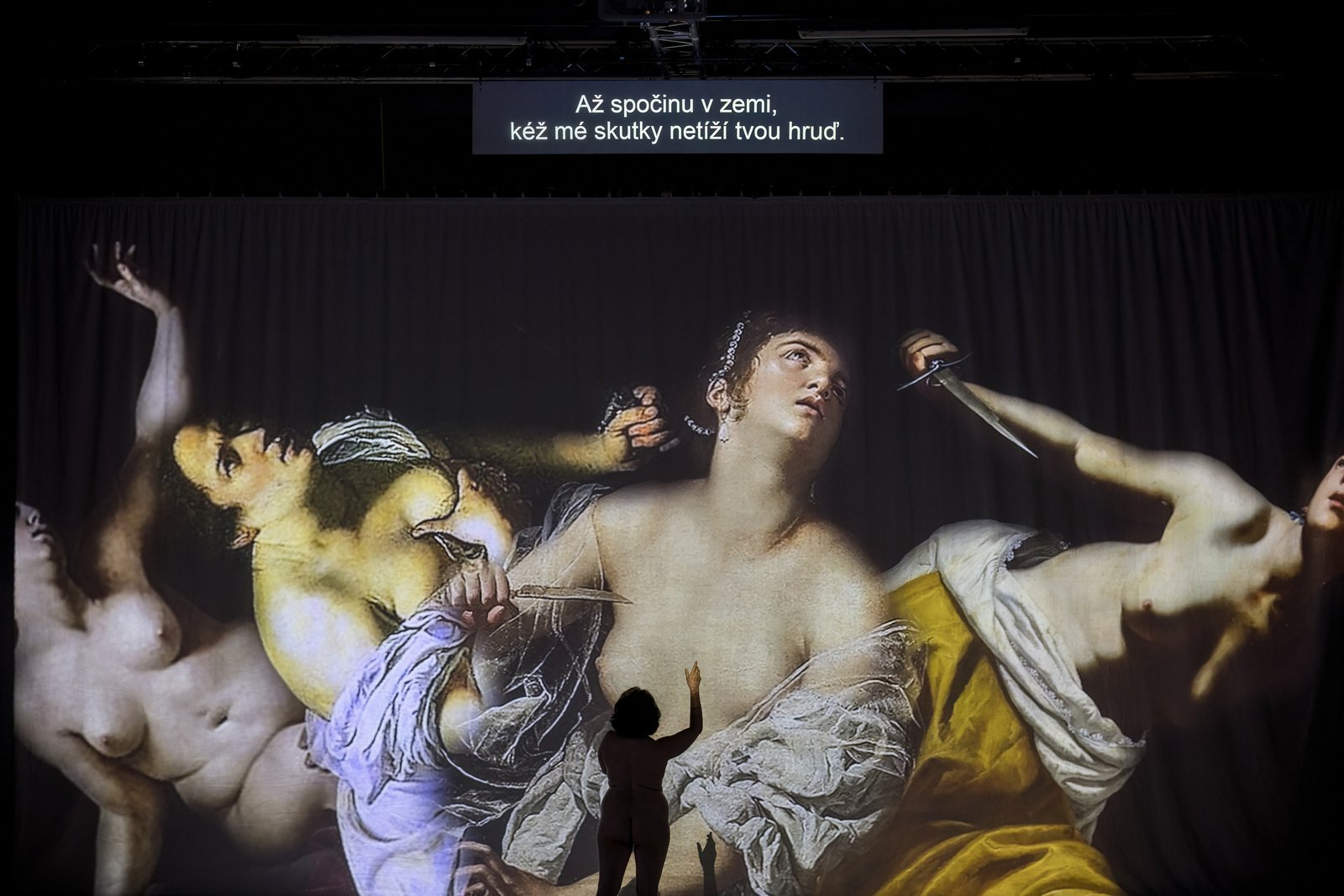
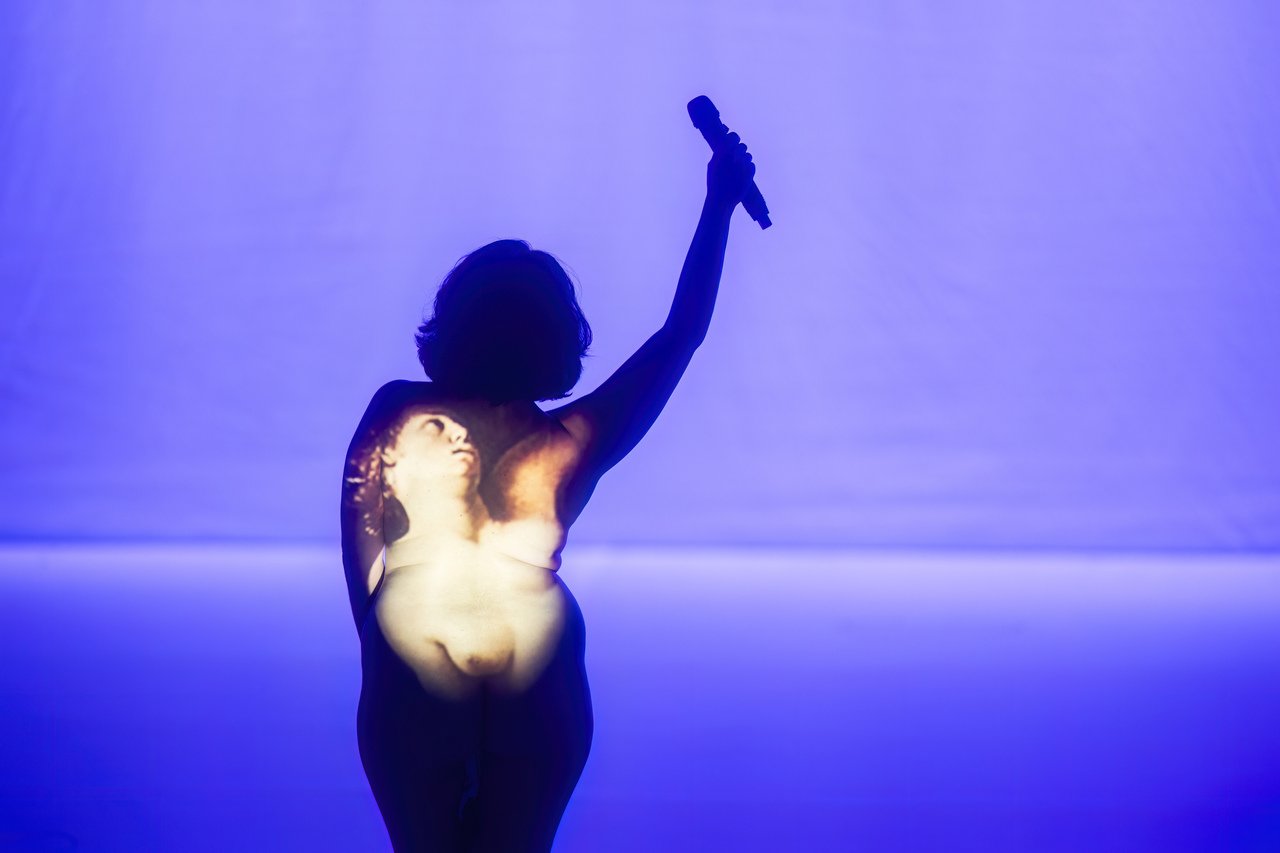
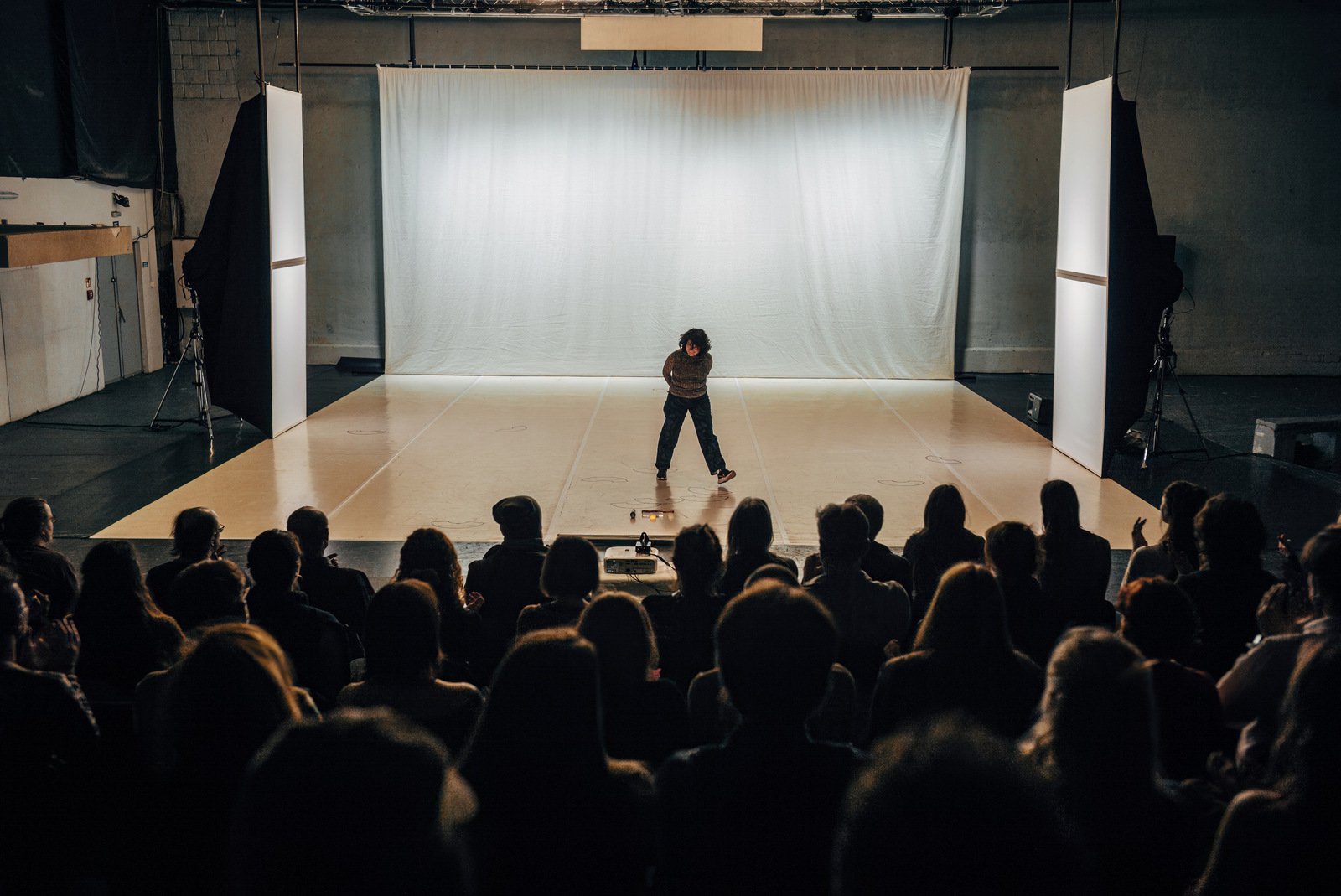
The next piece I went to see was Hana Umeda’s Rapeflower, which was the most memorable piece from the festival. The genesis for the work was a rape that occurred 18 years ago. When those words were displayed on the wall in the middle of the performance, the entire audience – and the air, the entire underground space, its black walls, the chairs we sat on – froze like a lump of ice. The performance began with a projection of a field of rapeseed which covered the entire wall. From the first moment, the gaze was a manipulative tool in the relationship between Umeda and the audience. The audience observed a naked body which also cast its gaze back at us. But in contrast to the audience’s gaze, hers was conscious, calculated, and cutting. At the beginning, the audience was in a position of power; we watched and withdrew ourselves from the obligation to act, because that’s what the logic of the performance dictated. Changes in light and music also seemed to coordinate the performer’s movements, she rather reacted to the outside than from the inside. But as the piece progressed, Umeda expanded her reach, taking back control of the situation. First with her gaze, then her body, then with her voice and her breath. Each of these elements grew larger, more spacious, more expressive, without losing sight of the entire space and her simultaneously powerful and fading presence. The reversal of the power dynamic was marked by the point where Umeda figuratively shits out the traumatic memory, from which she carefully reveals a fan, which subsequently became a feature of the performance. The author repeatedly performs the traditional Japanese dance jiutamai throughout, making a reference to the physical repressiveness of Japanese culture. Umeda has studied jiutamai professionally, and is one of a few non-Japanese individuals who can perform and teach this tradition[2].
In processing this traumatic experience, the performer uses several different figurative languages, hitting the pain points decisively and poetically. By performing this experience, Umeda creates a raw and striking world where she has reclaimed her own agency through her own means.
4
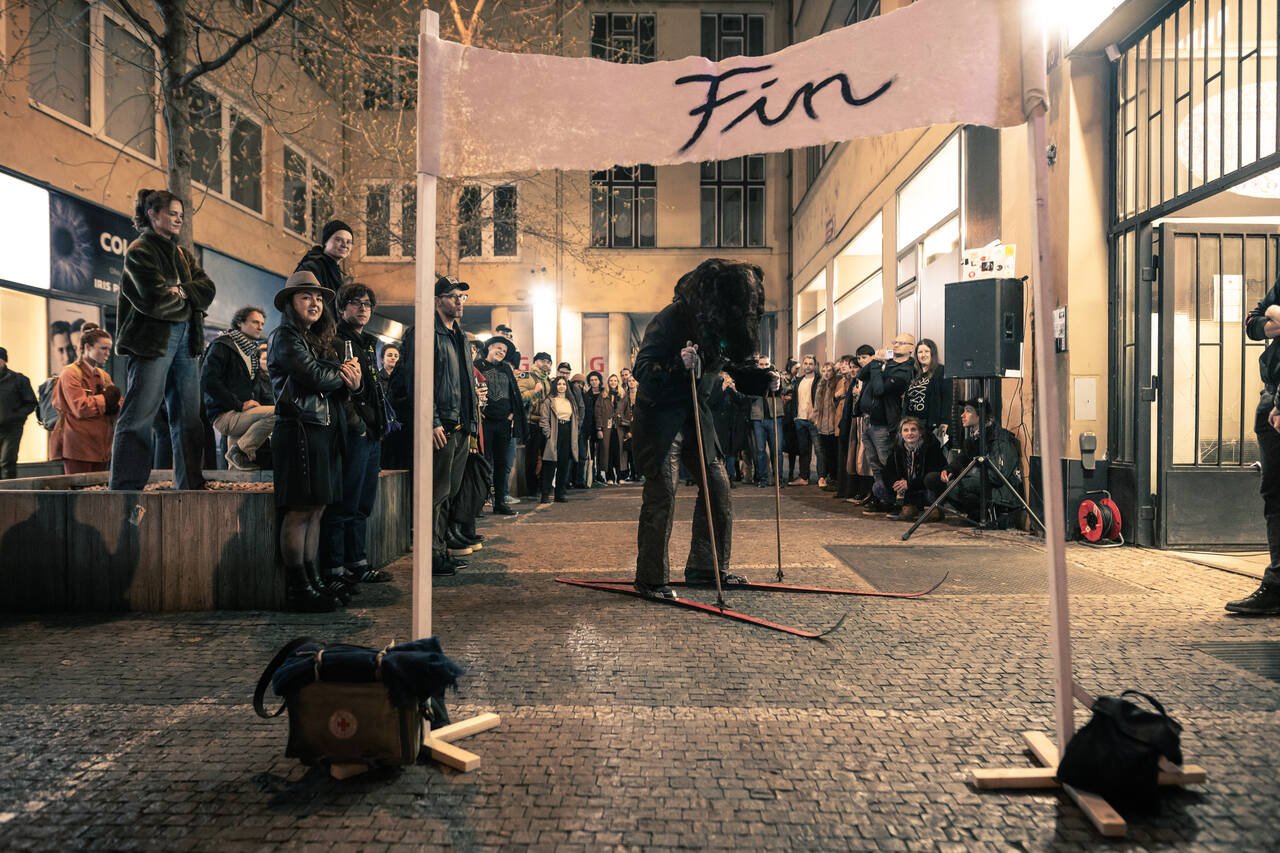
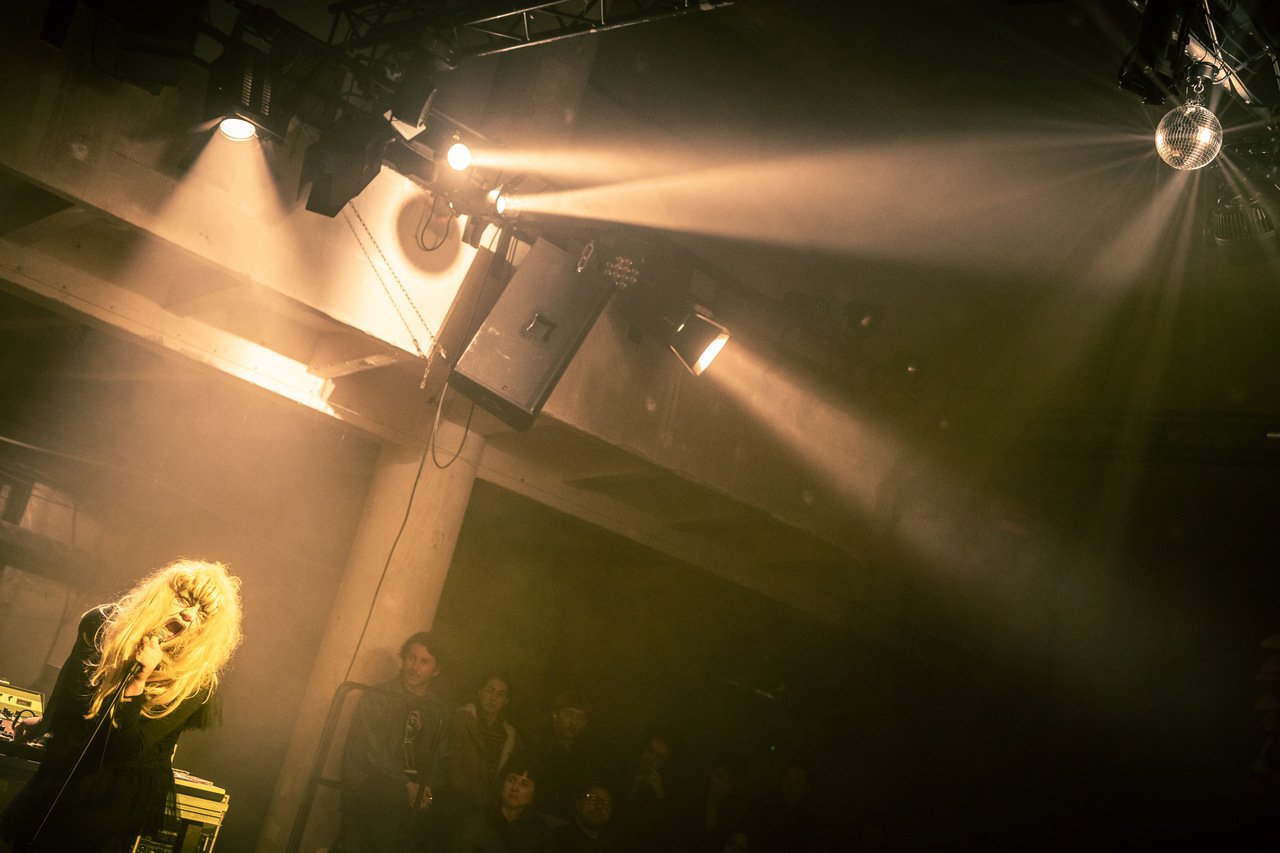
On Monday evening I headed to Divadlox10 to watch Pasi Mäkelä’s performance Fugk, which began outside. People smoked and chatted until a man on skis, wearing a bear’s head and a fur coat, emerged from the building. He made circles on the asphalt, dragged himself onto the main street and stared at tourists. At the same time, distorted sounds came from the speakers, which, I learned the next day in the workshop, were different Finnish words for bear, of which there are about two hundred in total. After about ten minutes, we were allowed into the hall.
The rest of the performance felt like a Nordic fever dream. Mäkelä incarnated and reincarnated relentlessly, without allowing the viewer to get used to or get to know any of the personas or forms closely. The transition between characters was beautiful – at one point the previous character seemed to disappear in the performer’s body, which then froze for a moment before plunging into the next state. Mäkelä seemed to be acting completely at random – chopping a red cabbage in half with an axe, giving a short noise concert, strutting on the red carpet and at one point, screaming right in my face, reminiscent of the Mystery Man from Lynch’s Lost Highway, but on steroids. Say no more about sitting in the front row… But it all ended with a plot twist which tied the previous madness together into a conceptual whole. I left the theatre not really sure if I was supposed to feel shocked or not, and what I should be taking from the performance. The impulses experienced seemed to dissolve quickly. However, the (controlled) chaos Mäkelä created reminded me to trust my body, to remember, but also to forget, and to always (at least try to) know what to do. And if the trust in one’s body still remains fragile, one can at least count on the mind (which anyways is the body too!) to come up with a clever plot twist.
5
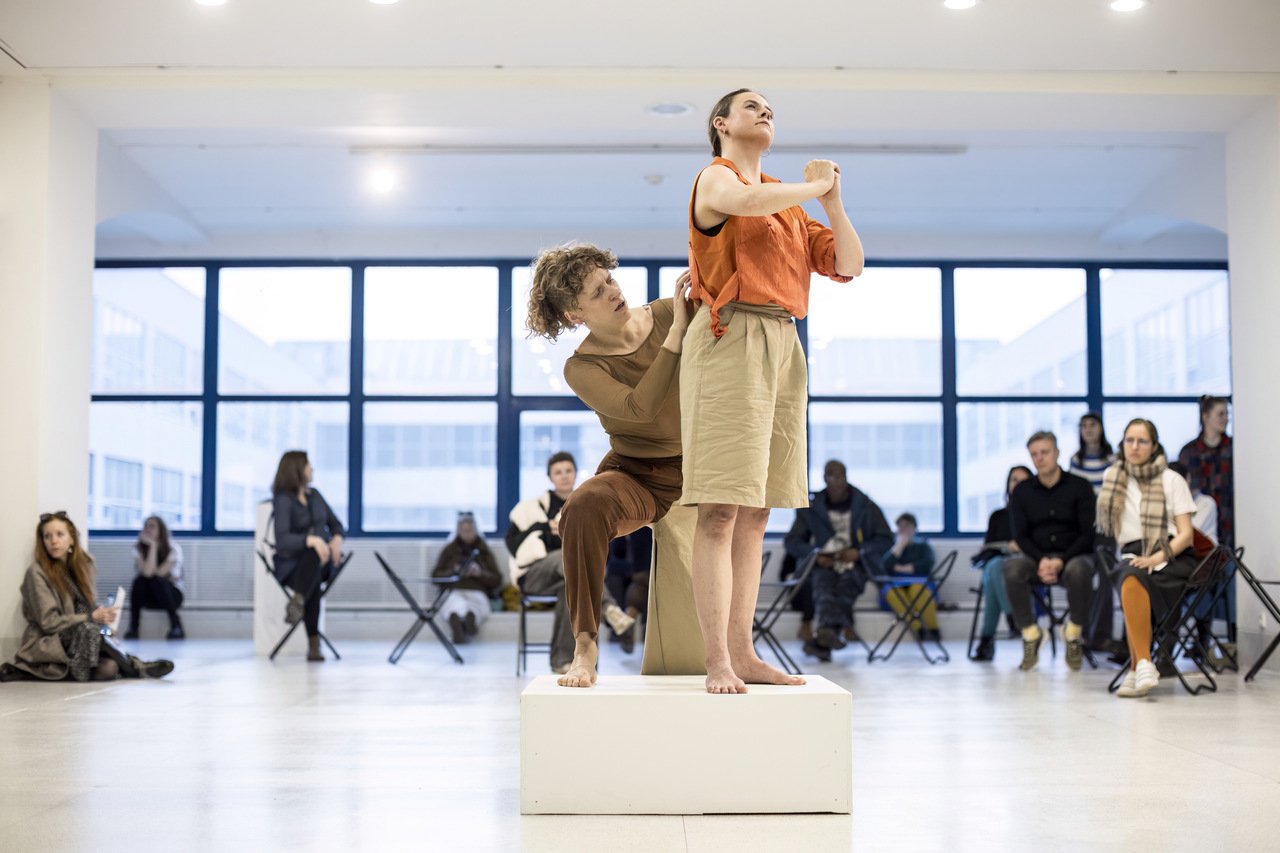
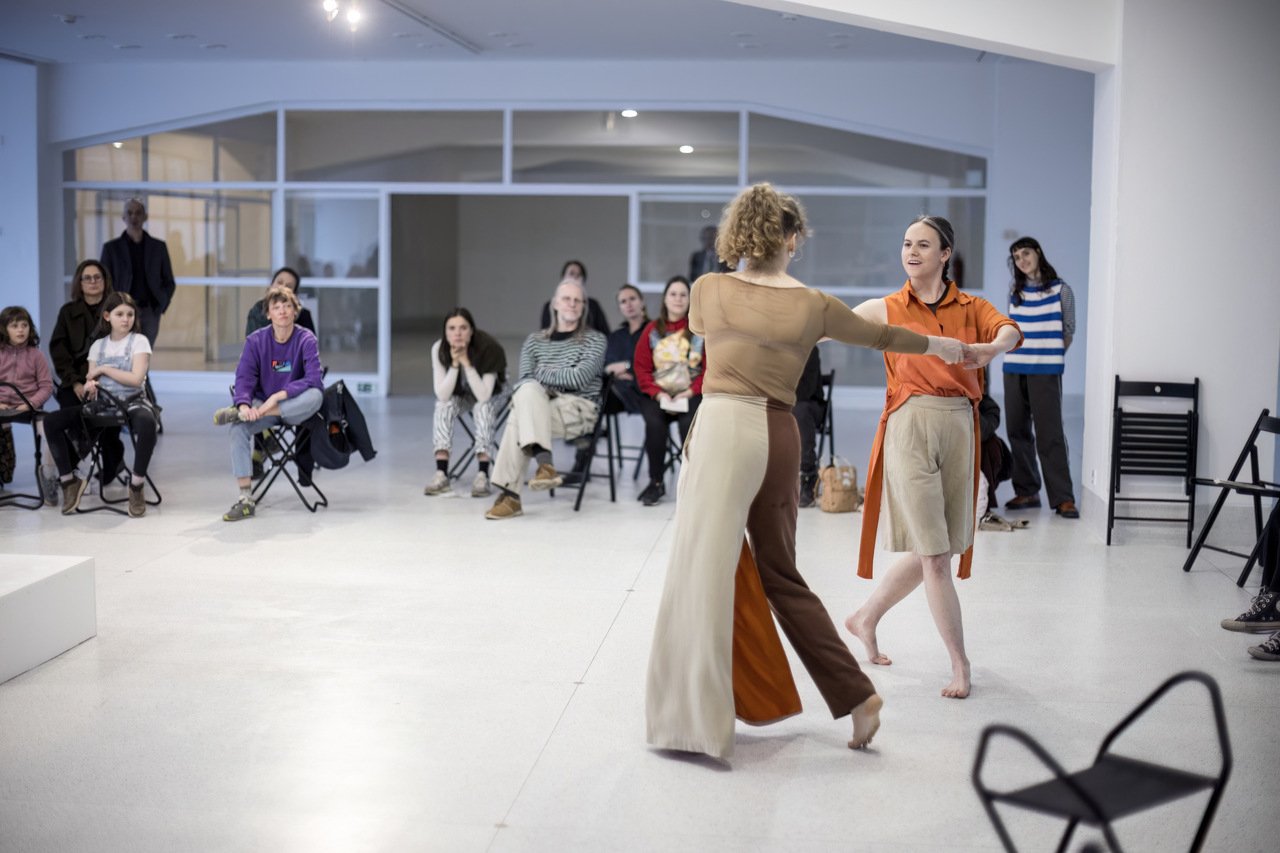
Ha-ha-ha-ha-ha-ha-ha, two women laughed on the podium, holding each other. The doors of the fifth floor of the National Gallery were unlocked and festival visitors were let into an empty, white, artless space. Dana Chmielewska and Monika Szpunar filled the air with rhythmic laughter while simultaneously assuming the physical stances of stone sculptures from art history – works created by female sculptors such as Camille Claudel (i.e. The Abandonment, 1905) or the lesser-known Tola Certowicz (i.e. Pokora, 1918) and Ewa Kulikowska. I felt the bodies wanting to escape the stone’s grip and come through the speaker’s lips. One of the choreographers of the piece, Weronika Pelczyńska, asked a question as the starting point for a performance in the workshop the next day: how can you remember the art history of your people in your own body? And, what becomes of your body in this case? The body can be an object to be carried around the room like a bronze sculpture, and with it, all the baggage – the marginal position of female artists in history, the even more marginal position of female sculptors in relation to painters, the requirement to be financially secure to even get into art school, etc. But the body can also be a means for the emergence of new meanings. Not for tearing down old ones, no, but for highlighting, moving them, playing with them. The area reserved for the dancers was bordered by four white pillars on which catalogues “Corset off. Camille Claudel and Polish Women Sculptors of the 19th Century” were placed for browsing during the performance. At one point, the audience became excited and began simultaneously looking up the sculptures embodied by the performers in the catalogues. Spontaneous unions were born – a man in a black suit held the pages of a book open while I followed the table of contents with my finger. Others across the room did the same. The audience’s agency was activated and a delicate network emerged in the room. After a while, I started to wonder if this is where the performance was heading; I waited for some kind of turn, a change. The performance finally culminated in liberation – the bodies danced as a means to express love, frustration, and why not also, history. “I would like to hug my friends now,” I thought to myself as I left the hall, or even more so to lie with them, to live on top of their backs, to touch them and to not break this contact. Pelczyńska emphasizes the creation of connections as an important element in her work – with institutions, with friends, with the audience, with one’s own body, with what you are truly interested in. I remember laughter, liberation, and activation.
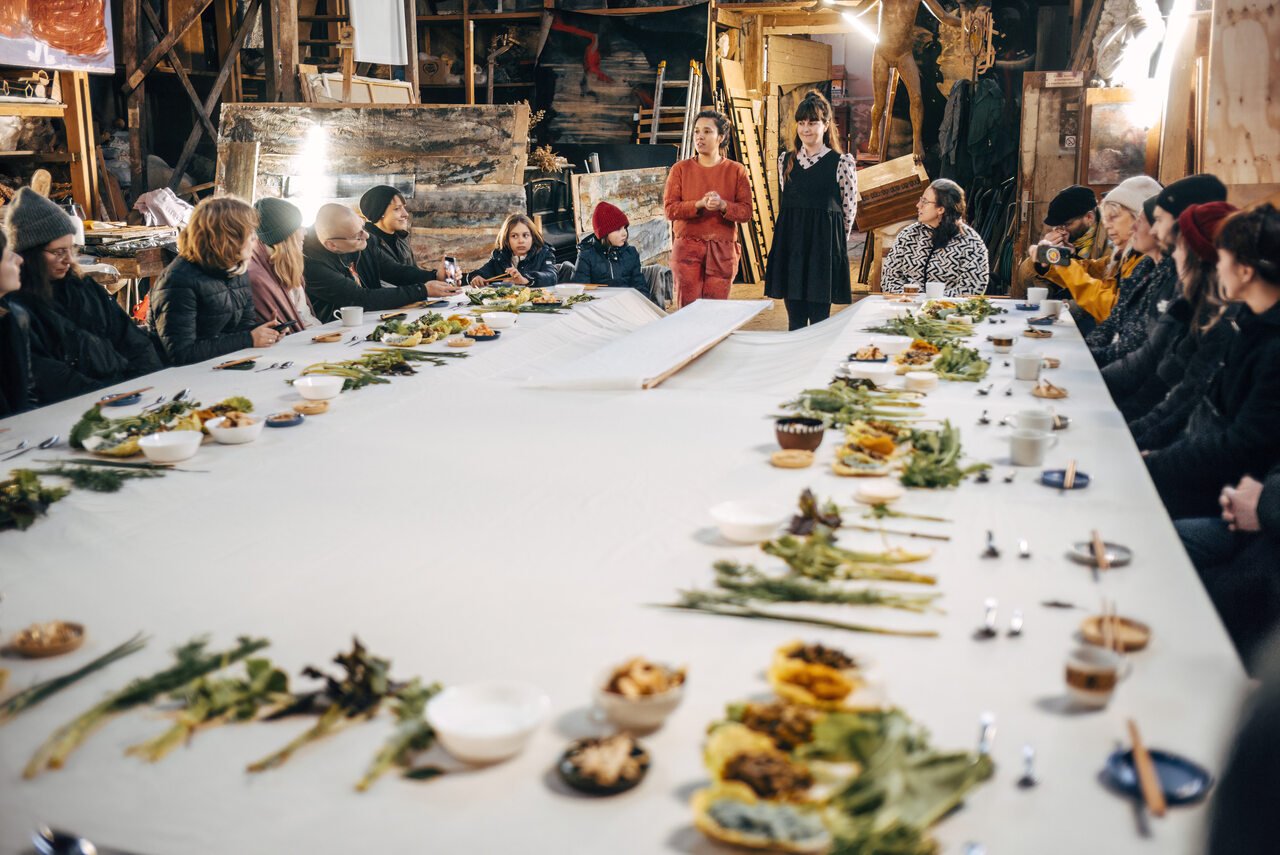
After the workshop, I planned to go to the performative banquet of Aslı Hatipoğlu, Heidi Hornáčková, and Suraia Abudi titled Whisk the wind, roast the loam, knead the fog. It was described as a food-based performance where participants will share a meal and a memory through different sensory encounters such as touch, fermentation, dissolution, etc. But I missed the address and instead of an old sculpture atelier, I entered a canteen that smelled of fish soup. This time, the birth of a ritual food collective remained unseen for me. It started to rain.
6
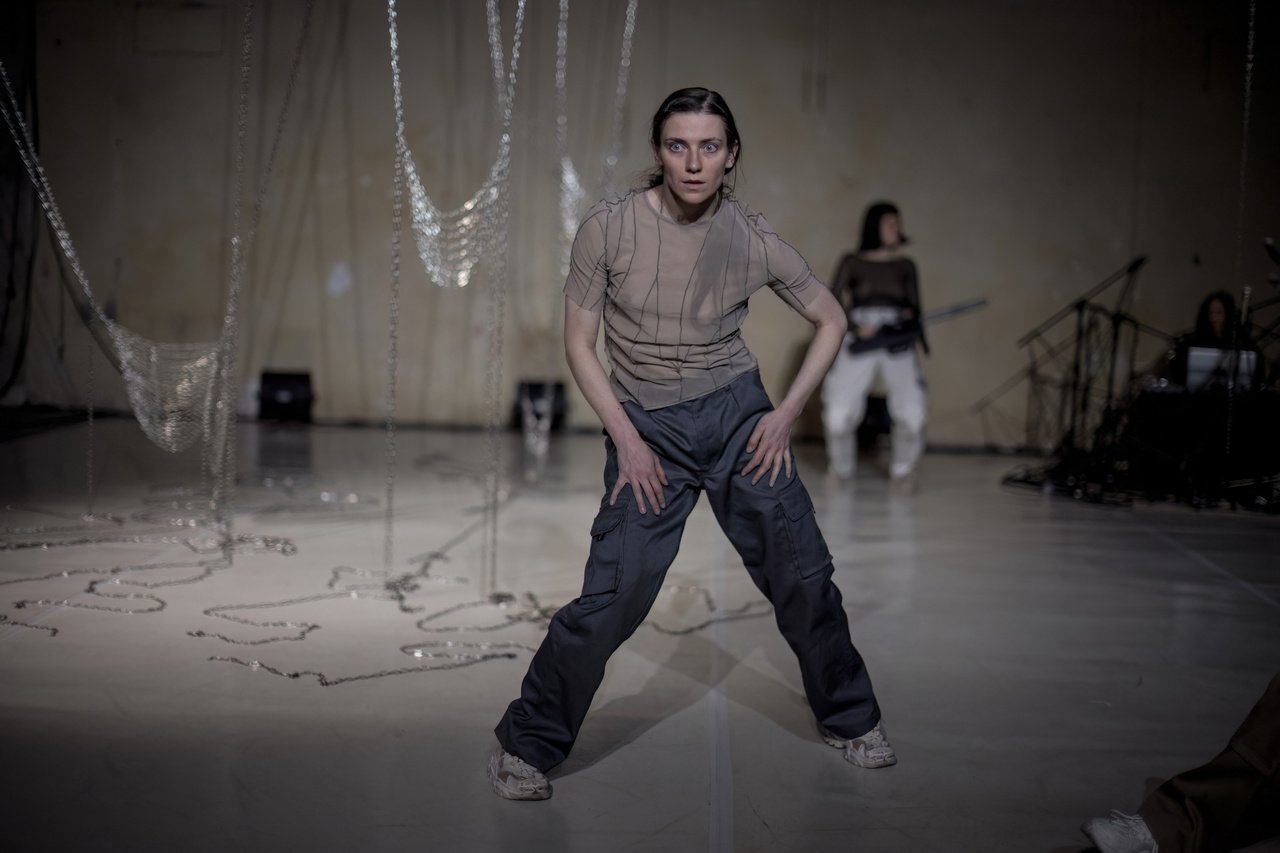
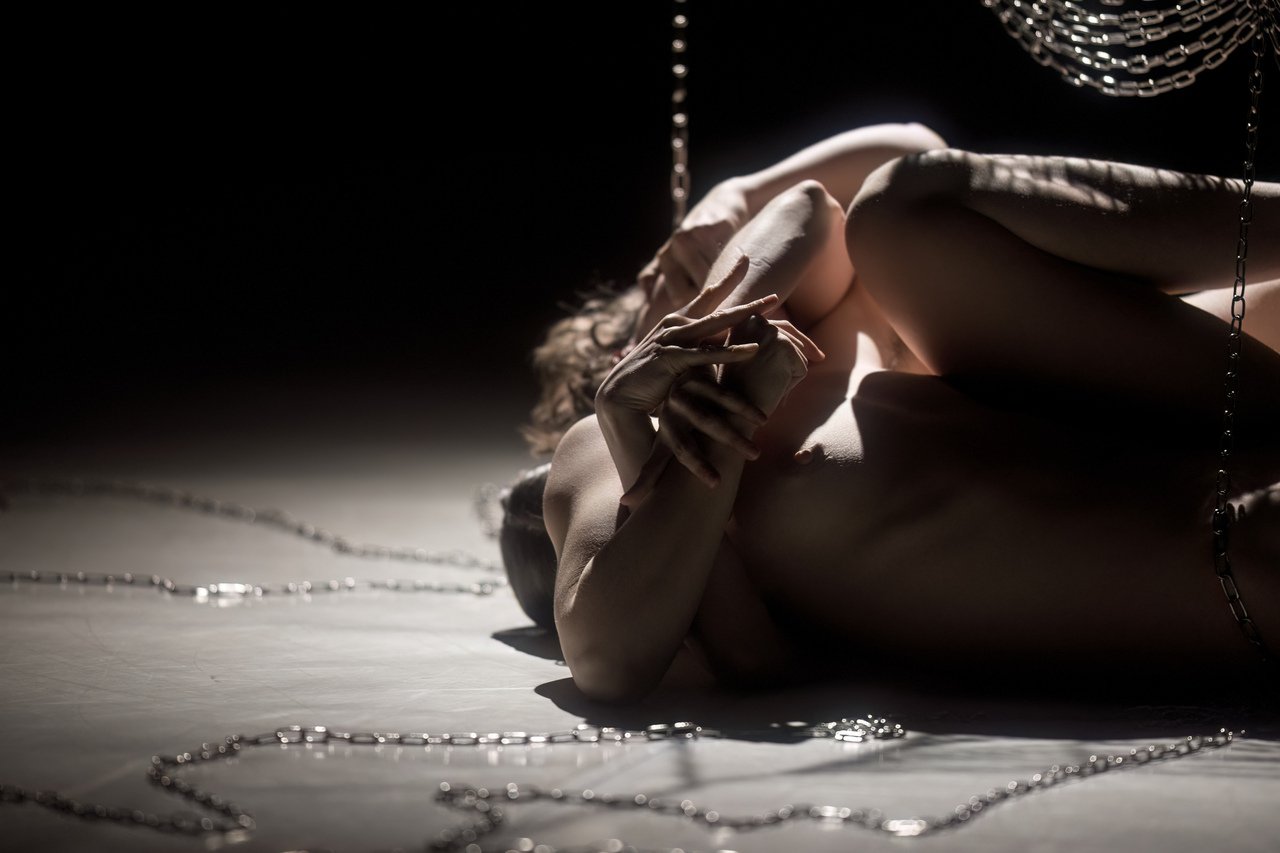
On the other hand, I am there just in time for the start of LUSH BLAST – tasting the untamed. There are three dancers on stage whose movements are choppy, fragmentary, arrhythmic. A large chain formation hung above their heads, Ola Zielińska sits in the middle of a tangle of wires in the back corner of the stage and creates music. The movement, which seemed impulsive and mechanical at the same time, gradually grew more intense. The bodies, caught in the chain structure, cling to each other, twist, and hang. It is interesting to watch the dancers – they move as if starting anew from some very sensitive point every moment, correcting, shifting, and breaking their postures. Although the movement became more dynamic as the performance developed, there was still a lack of rhythm pulsing underneath. In the discussion following the performance, the authors and dancers talked about how the work was born from a hike in the Tatras and about their interests in exploring the connections between different organisms, whether organic or artificial. Donna Haraway’s concept of becoming-with comes to mind – the connection between any subject and object keeps the parties in constant change, of course assuming that no complete entities already exist in the first place[3]. The atmosphere created in the performance reminded me also of the textured lyrics of the song Alien Babies by the musical duo Easter: “I see forever glass noodles / I see jelly in your hand / I see mushrooms / being born out of shrimps[4].” The work questions the human-centered dimension and tries to delve into the dim-light worlds of other living organisms, but somehow does it exactly as I imagined. Perhaps, of course, it is a matter of personal taste, but at the end of the performance I couldn’t help but feel deconstructed in a predictable way. Although, it does make me think of where we (as humans) draw the line of what constitutes a living thing, to whom or what do we bestow with the honor of passing the semiotic threshold? Based on epigenesis, an organism interprets its own cells and develops step-by-step, creating itself: LUSH BLAST manages to zoom into a process just like this and stretch it out into a continuous meeting between expressions tamed or otherwise.
7
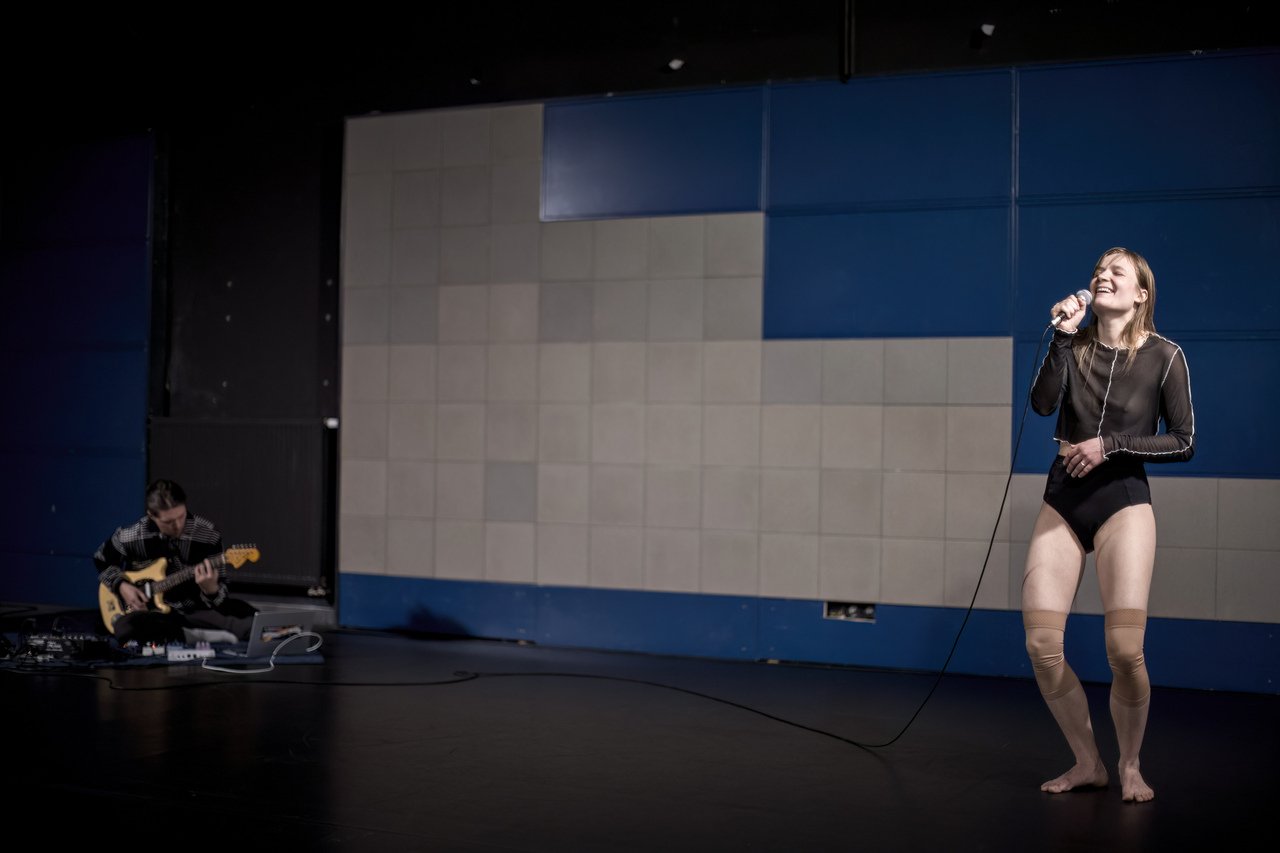
The last venue I visited was AVU Veletržní – the art school’s blackbox gallery where Sabina Bočková performed a section of her work Making Love. A work-in-progress, I read from the description that the theme was female sexuality. Bočková seemed to be striving for the peak of ecstasy on stage, initially lying on the floor, moving only a few individual body parts – her foot, her groin, her chin. Gradually, the pulsating and vibrating movements grew bigger, to the point where the whole room (the walls, the ground, etc.) became part of the movement; it seemed as if something began pulling her from the ceiling. The scope of usable space expanded, the movement spread through her entire body and finally to her voice, which was especially beautiful to witness – the high but calm and precise notes stretching the auditive and corporeal room vertically.
But sexuality is not only related to ecstasy, beautiful feelings, greatness, holiness, etc. Sexuality is something infinitely diverse, complex, and often incomprehensible. The work left me a bit unsatisfied; I wished to see the controversiality and friction of these contradictions more. Perhaps because I am suspicious of femininity as a concept, I felt biased already before seeing the performance. This being said, if nothing more, performing a desiring female body (which is very stigmatized) in a public setting and being able to do it in a safe space is deserving of recognition.
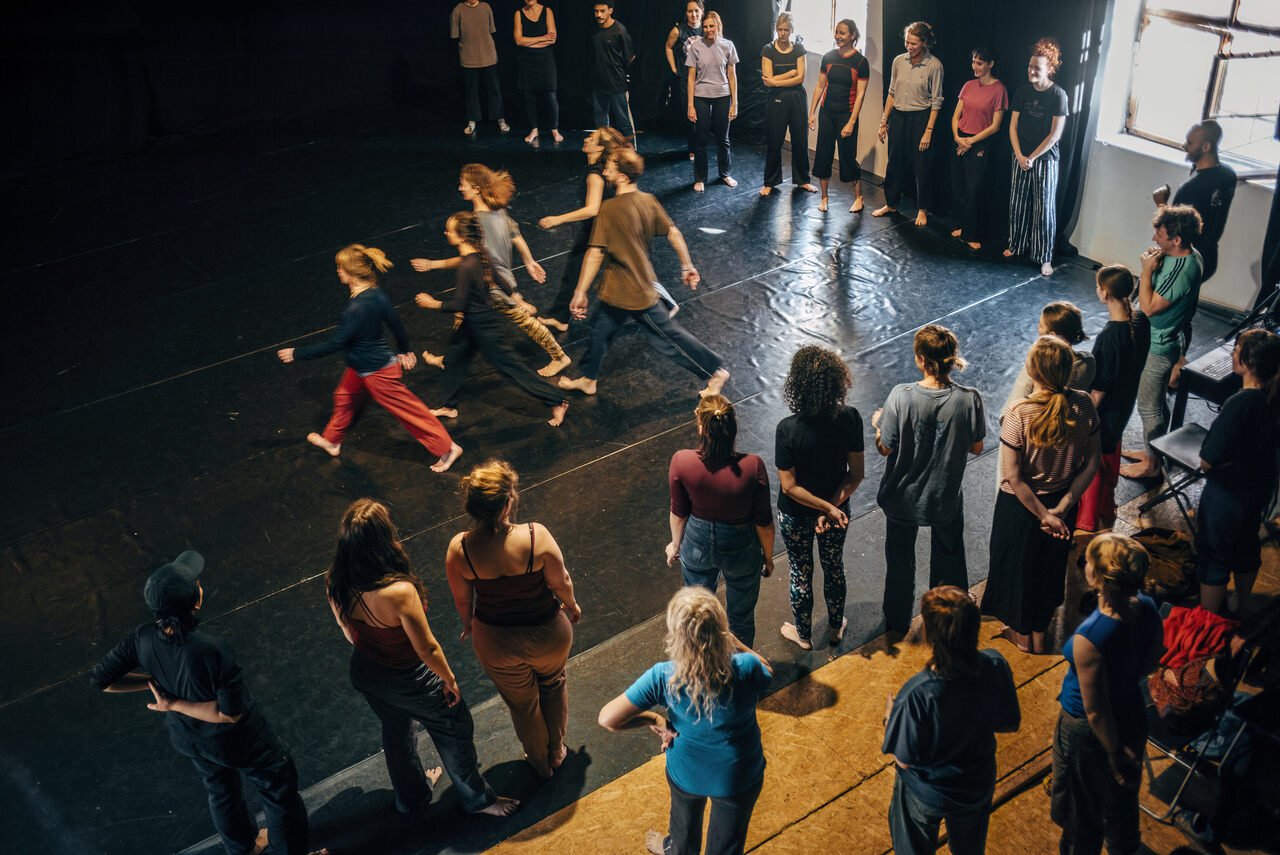
I couldn’t bring my body everywhere at the festival – for example, to make bread with Aslı Hatipoğlu and Heidi Hornáčková, to warm in the sauna at Štvanice with Magdalena Malinová and the other visitors of the festival, to several different workshops, to the Saturday Bazaar to see four excerpts of soon-to-be-performances, to STEAM ROOM collective’s performance dragON forever. However, it is worth being grateful that such a festival exists, which delicately balances plurality, cooperation, and independence. Several performances, in their own way, followed an axis of physical intensity, while only a few were able to play out the climax for me.
During the festival I was so often reminded of the importance of directly fabulating a shared reality because this is how any kind of different future becomes realized. Translating this into a meeting of a plurality of artistic imaginings is perhaps more important now than ever. And, the festival proved that the path beyond our individual selves holds potential we are not fully able to foresee. By remaining consistent and paying attention to the details (of each other), beautiful things are possible – let’s hope we can practice this more in our everyday life as well.
[1] Ana Vujanović, Bojana Cvejić Toward a Transindividual Self (Oslo, Oslo National Academy of Arts, 2022), 19.
[2] https://komuna.warszawa.pl/wydarzenia/rapeflower-2/
[3] Donna J. Haraway, “Parting Bites: Nourishing Indigestion,” in When species meet, Posthumanities, vol. 3 (Minneapolis, University of Minnesota Press, 2008), 287.
[4] See here: https://www.youtube.com/watch?v=2snrHI_qNmI&list=RD2snrHI_qNmI&start_radio=1
Artists: Magda Szpecht, Agata Różycka, Juliia Lopata, Gala Pekha, Hana Umeda, Pasi Mäkelä, Dana Chmielewska, Monika Szpunar, Weronika Pelczyńska, Magda Fejdasz, Aslı Hatipoğlu, Heidi Hornáčková, Suraia Abudi, Sabina Bočková, STEAM ROOM collective (Aleksandar Georgiev-Ace, Zhana Pencheva, Dario Barreto Damas), Magdalena Malinová, Aleks Borys, Viktoria Kaslik, Debora Štysová, Tinka Avramova, Miloš Janjić, Martina Hajdyla Lacová, Dorota Michalak, Alica Minar, Breanne Saxton, Ola Zielińska, Nur Nar Physical Theater Collective
Dramaturg/artistic director: Ewan McLaren
Festival Producer: Barbora Comer
Producers: Karolína Anna Hudská, Romana Packová, Lola Madyarova
Exhibition Title: Bazaar Festival: Whose body is my body?
Venue: Divadlo X10, Studio Hrdinů, UMPRUM Kafkárna, Alfred ve dvoře, Veletržní palác, AVU Veletržní, Štvanice, Studio ALTA, Archa+, Skautský institut
Place (Country/Location): Prague, Czech Republic
Dates: 20.03 – 30.03.2025