
Gaia Bobò
The Props assist the House
Until the House is built
And then the Props withdraw
And adequate, erect,
The House supports itself
And cease to recollect
The Augur and the Carpenter –
Just such a retrospect
Hath the perfected Life –
A Past of Plank and Nail
And slowness – then the scaffolds drop
Affirming it a Soul –
In The Props Assist the House, choreography—understood as a practice capable of reconciling bodily discipline with freedom of expression—becomes the lens through which Agnieszka Mastalerz’s poetic framework is explored. The ambiguity inherent in this language lies at the heart of the artist’s practice. Here, the investigation into corporeality takes shape through the relationship between the body and its surroundings, as well as the physical and mental structures that determine its behavior in space. For Mastalerz, the human being is an entity that both exercises control and is subjected to it: on the one hand, it is shaped by education and by the social norms imposed upon it; on the other, we assert control over our environment through the manipulation of nature, architectural construction, and industrial production.
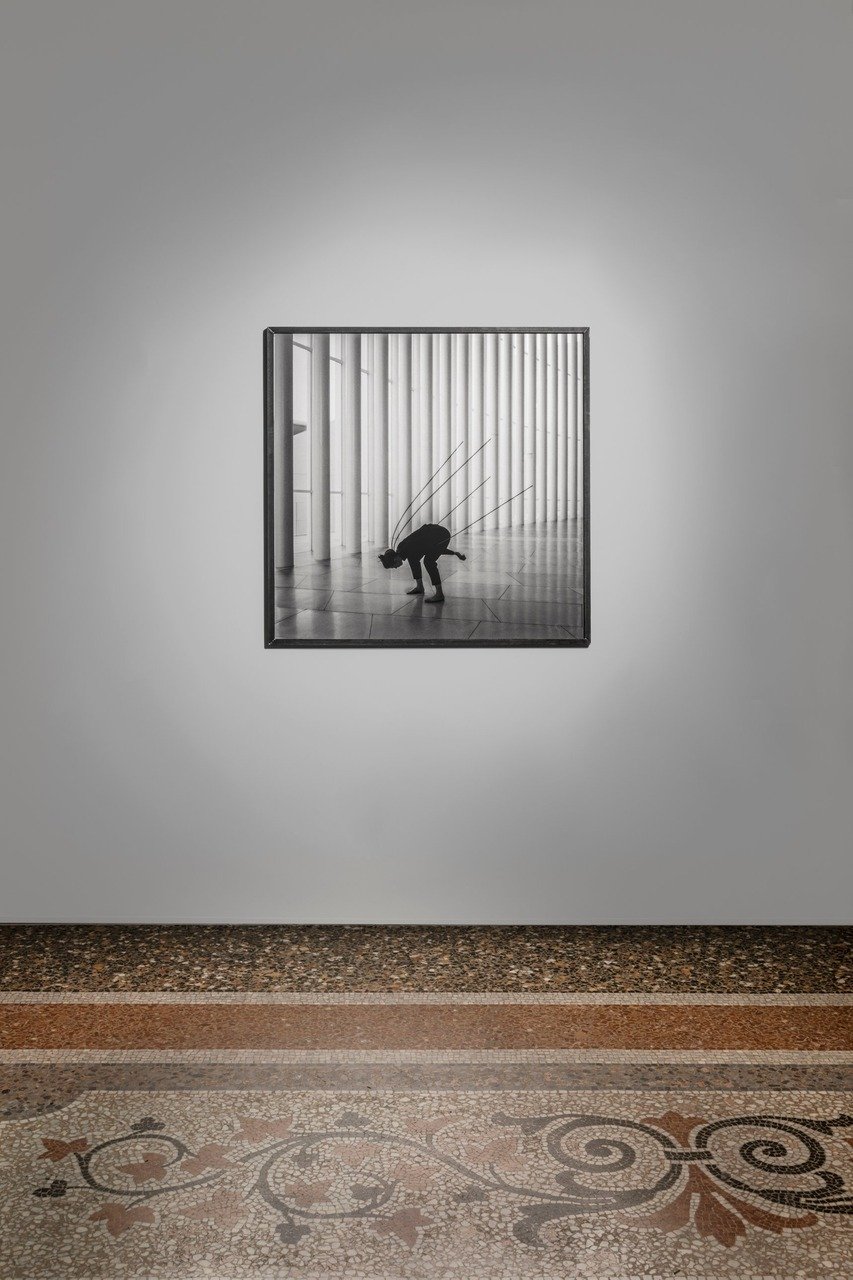
100 × 100 cm. Photo: Ela Białkowska.
Image courtesy of Polish Institute in Rome.
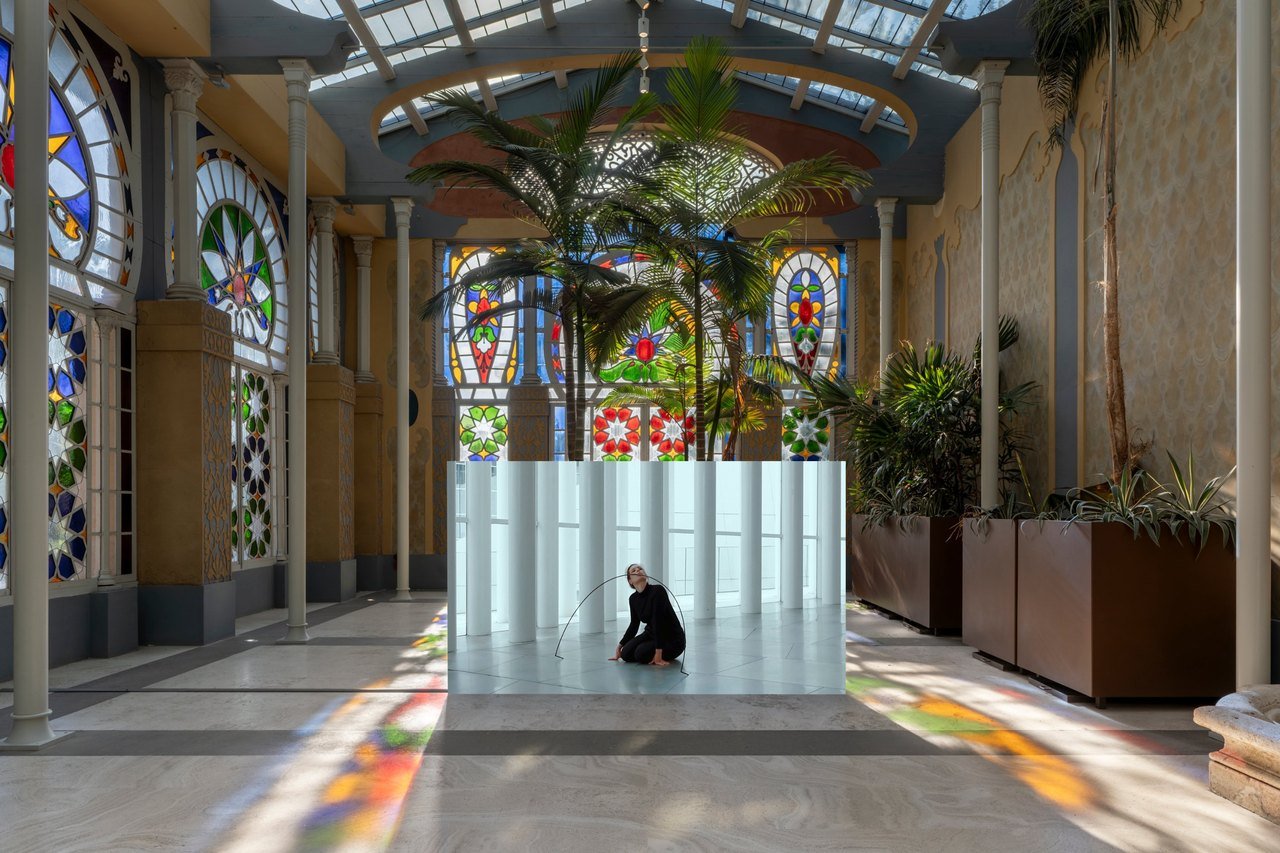
This dynamic can be seen in the Supports series (2020–26), presented as a video installation at the Serra Moresca and in photographic form at the Polish Institute in Rome. At the center of this body of work are the supports—predominantly made of metal—used in horticulture to guide the growth of plants. The ambiguity of these devices is emblematic of Mastalerz’s practice, as they embody both a concern with balance and functional form and the coercive intervention of human beings upon nature, which is shaped according to practical needs. Following an initial phase of documentation carried out in several European botanical gardens, including the Botanical Garden of Rome (2026), the artist moves towards a poetic appropriation of thes structures, identifying dance as her preferred critical tool. Mastalerz thus creates a series of metal supports modelled on the measurements of her own body, which become the focal point of a choreographic investigation aimed at making visible the structures that condition physical development.
Throughout her practice, the artist examines processes of domestication, which tend to neutralize the disruptive and uncontrollable potential of both natural elements and individuals. Etymologically, the notion of domestication traces back to the Latin domus, meaning house—a space whose ambiguity Mastalerz explores. The house is first understood in its aesthetic potential as an inhabited space « a Soul », as suggested by the Emily Dickinson poem from which the exhibition takes its title. At the same time, however, the home is also a privileged site for the imposition of predetermined behaviors and dogmas, which become embedded in individual identity and resurface in the form of involuntary gestures.
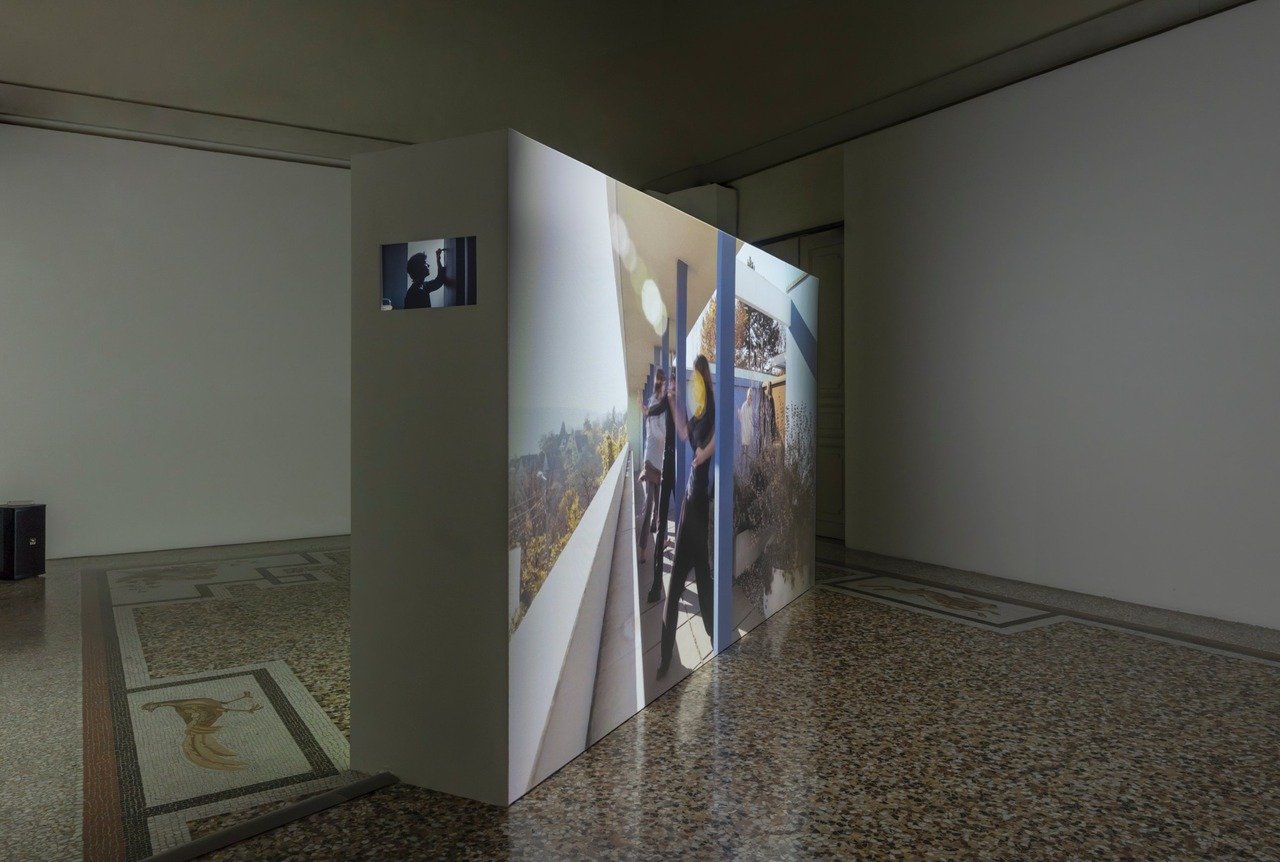
Image courtesy of Polish Institute in Rome.
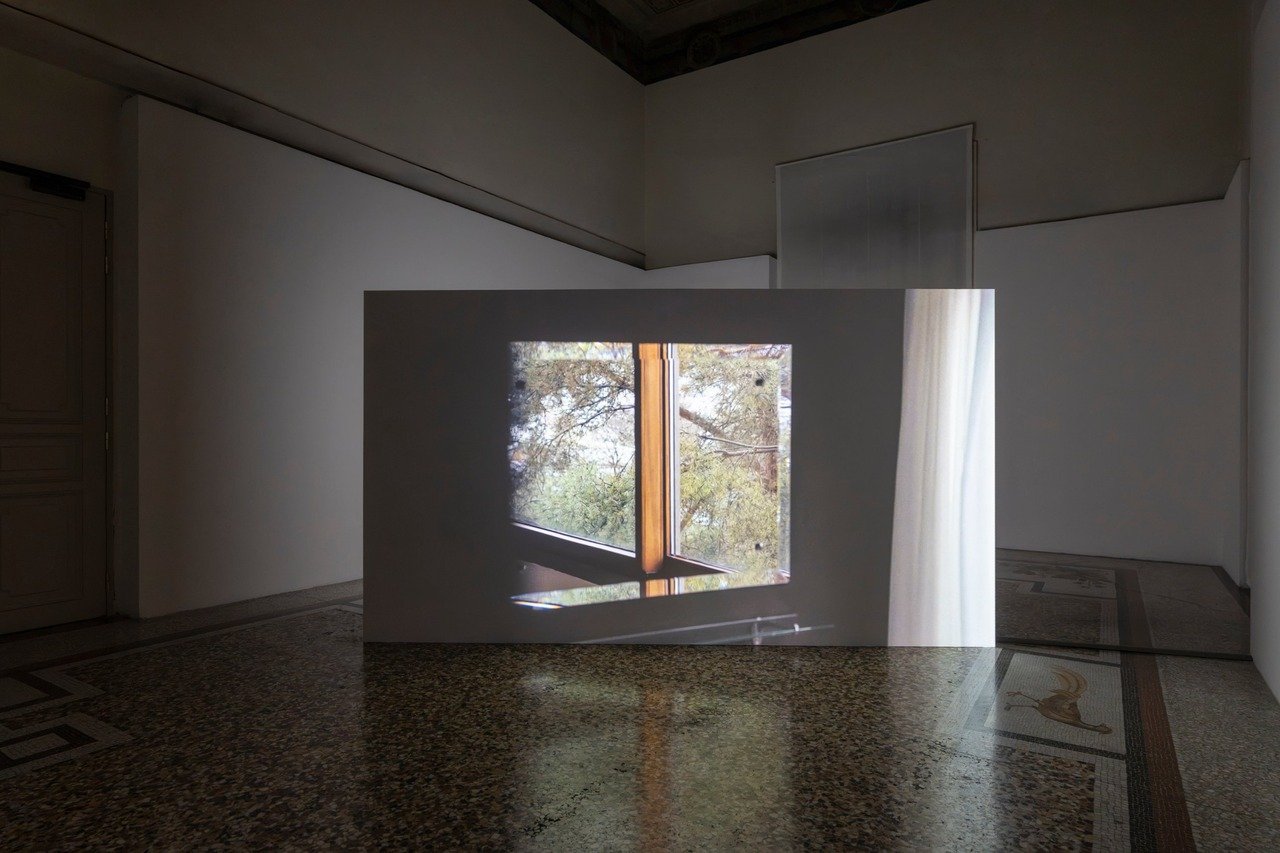
Image courtesy of Polish Institute in Rome.
Mastalerz extends this investigation into the field of modernist architecture in the video work Remainder (2026), exhibited at the Polish Institute and filmed entirely within Stuttgart’s Weißenhof Estate, designed by Le Corbusier. The artist focuses on this architectural model as a space conceived according to a physical standard that, in theory, aspired to universality but, in practice, inevitably produces forms of exclusion. Her approach, however, is not one of outright condemnation: the aesthetic quality of the architecture is woven into the work, revealing a central aspect of Mastalerz’s practice. For the artist, the poetic quality of the image does not stand in opposition to social and political critique; rather, it becomes a point of entry into it.
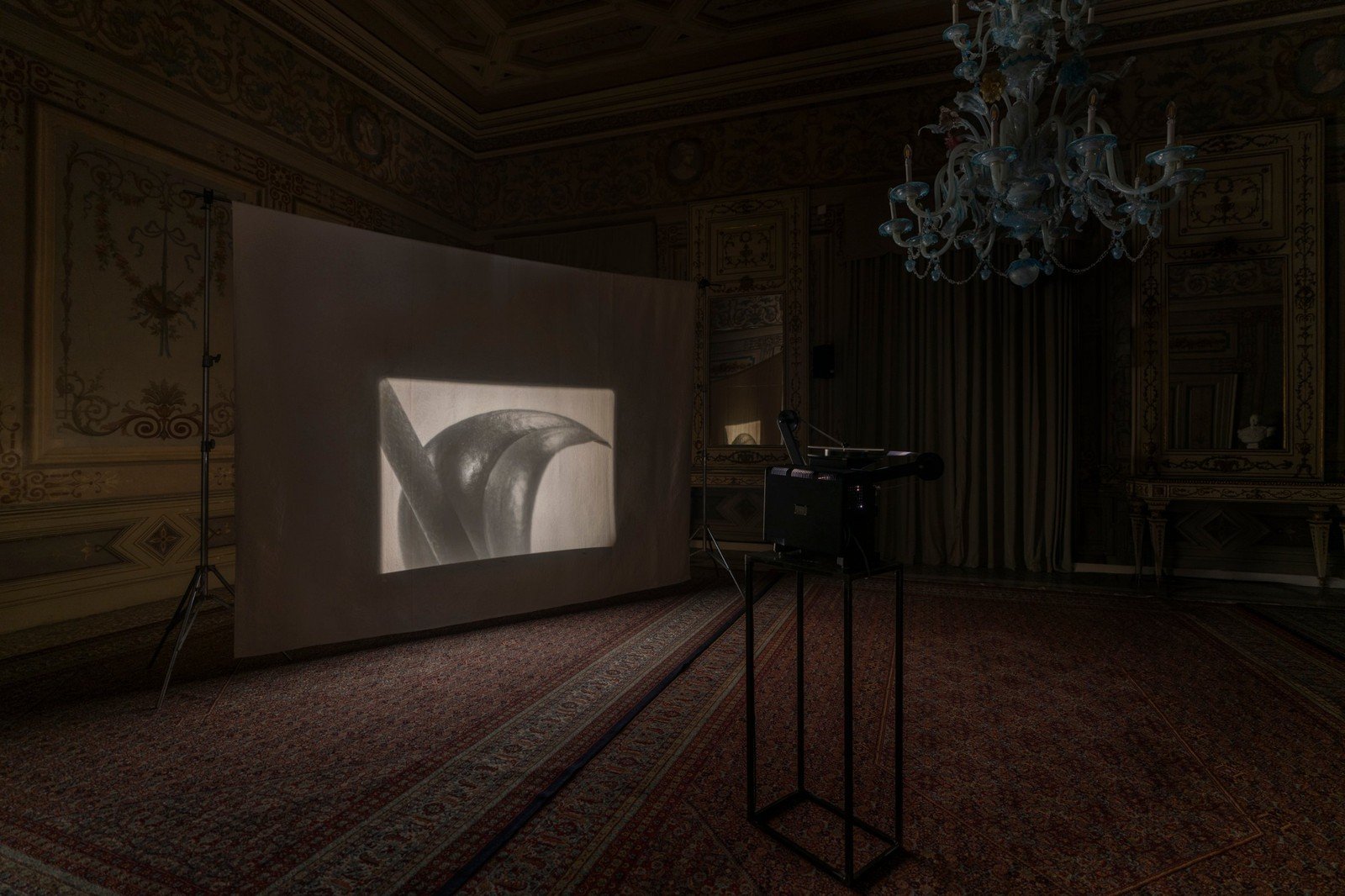
In Nodes (2023), exhibited in the Salone of the Polish Institute, the visual allure of the image likewise conceals a disturbing reality. The video is the result of an extended research process focused on the workings of the flower industry and, more specifically, on orchids. Once valued for their supposed aphrodisiac properties and used in the preparation of love potions, orchids are now at the center of large-scale production processes. This transformation ultimately strips the plant of its magical potential, which is displaced by the mechanisms of industrial production, reducing the flower to a primarily decorative function. The standardization of floral forms to meet the demands of the market thus diminishes their latent sensuality, prompting a reflection on aesthetic control as a form of disciplining living forms.
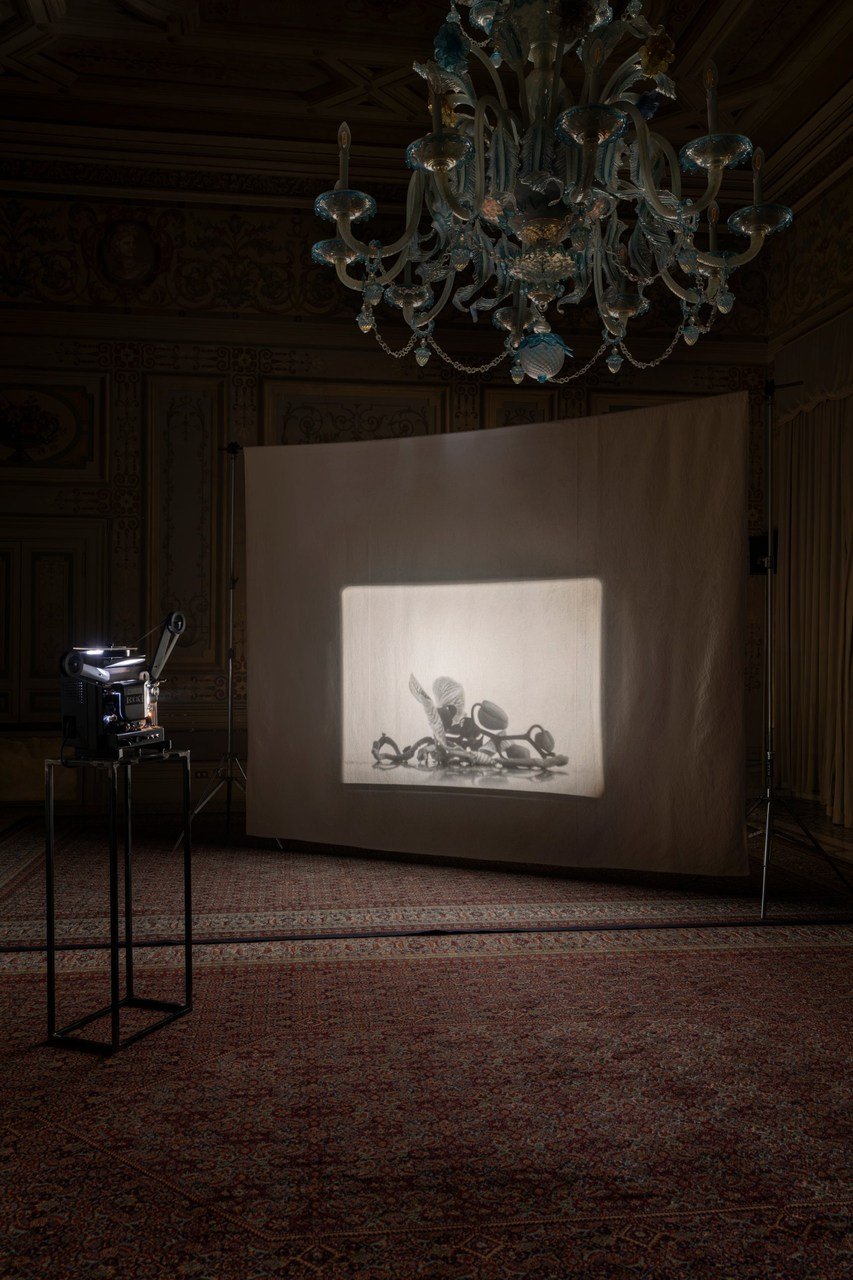
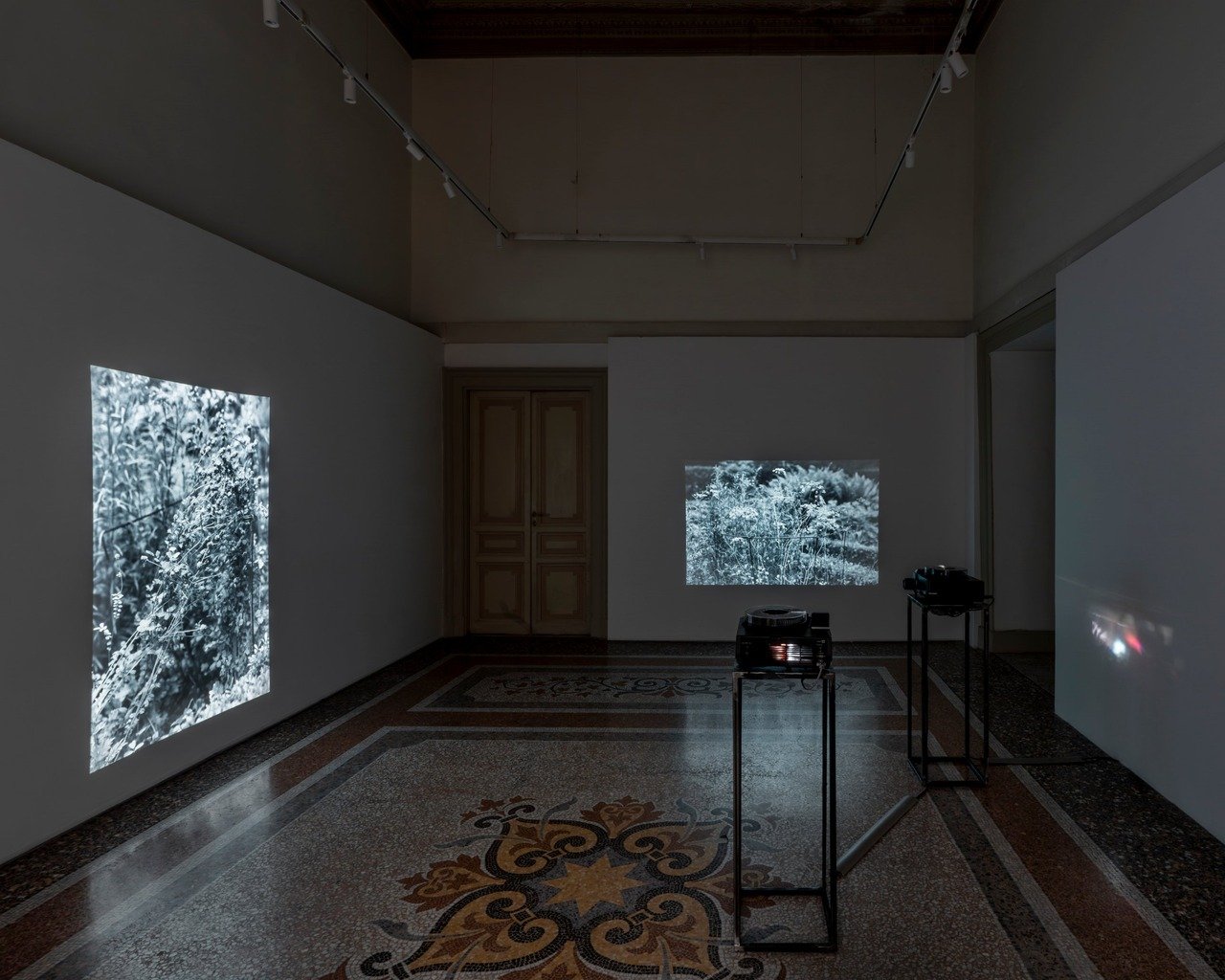
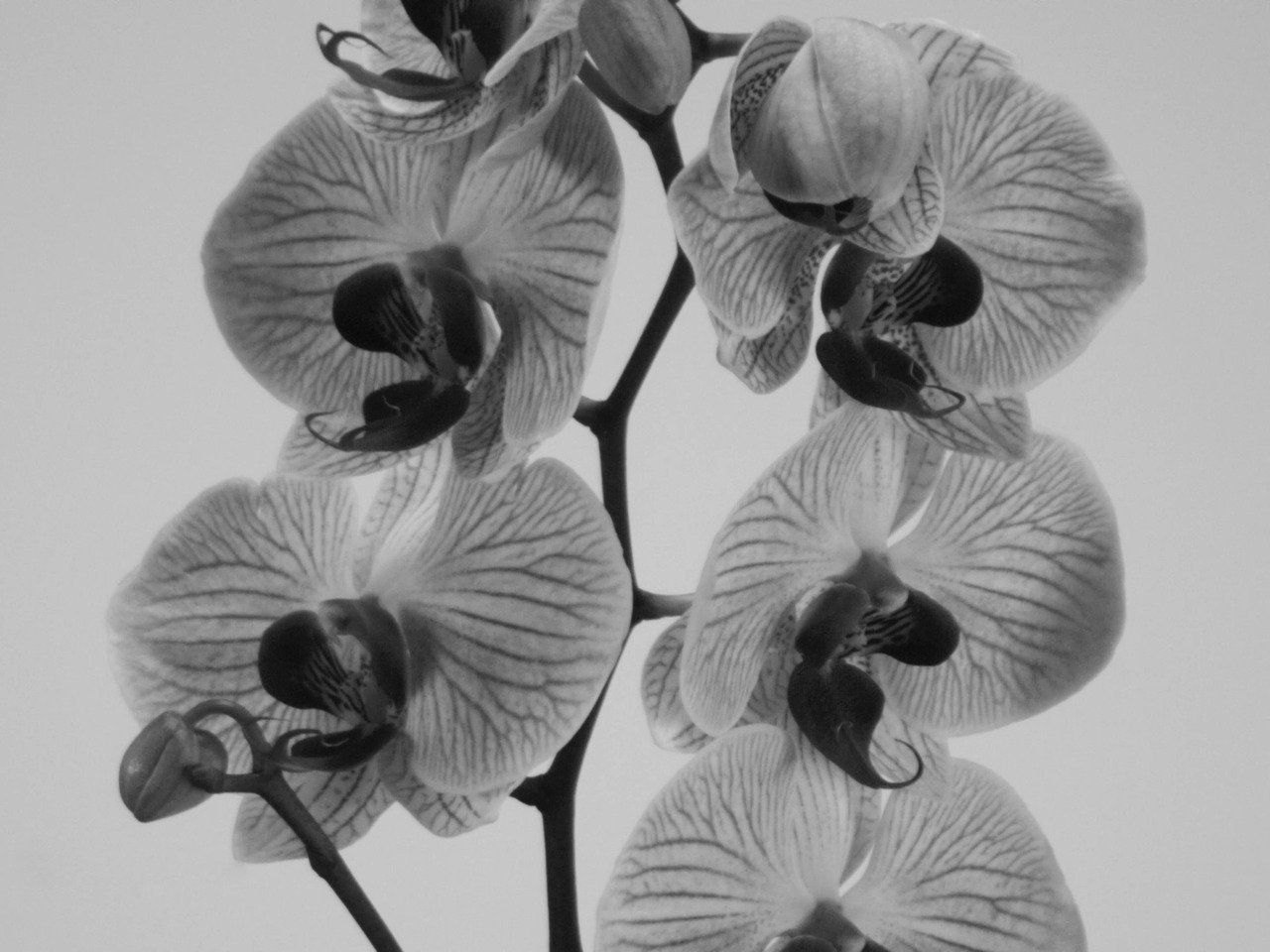
Image courtesy of the Artist.
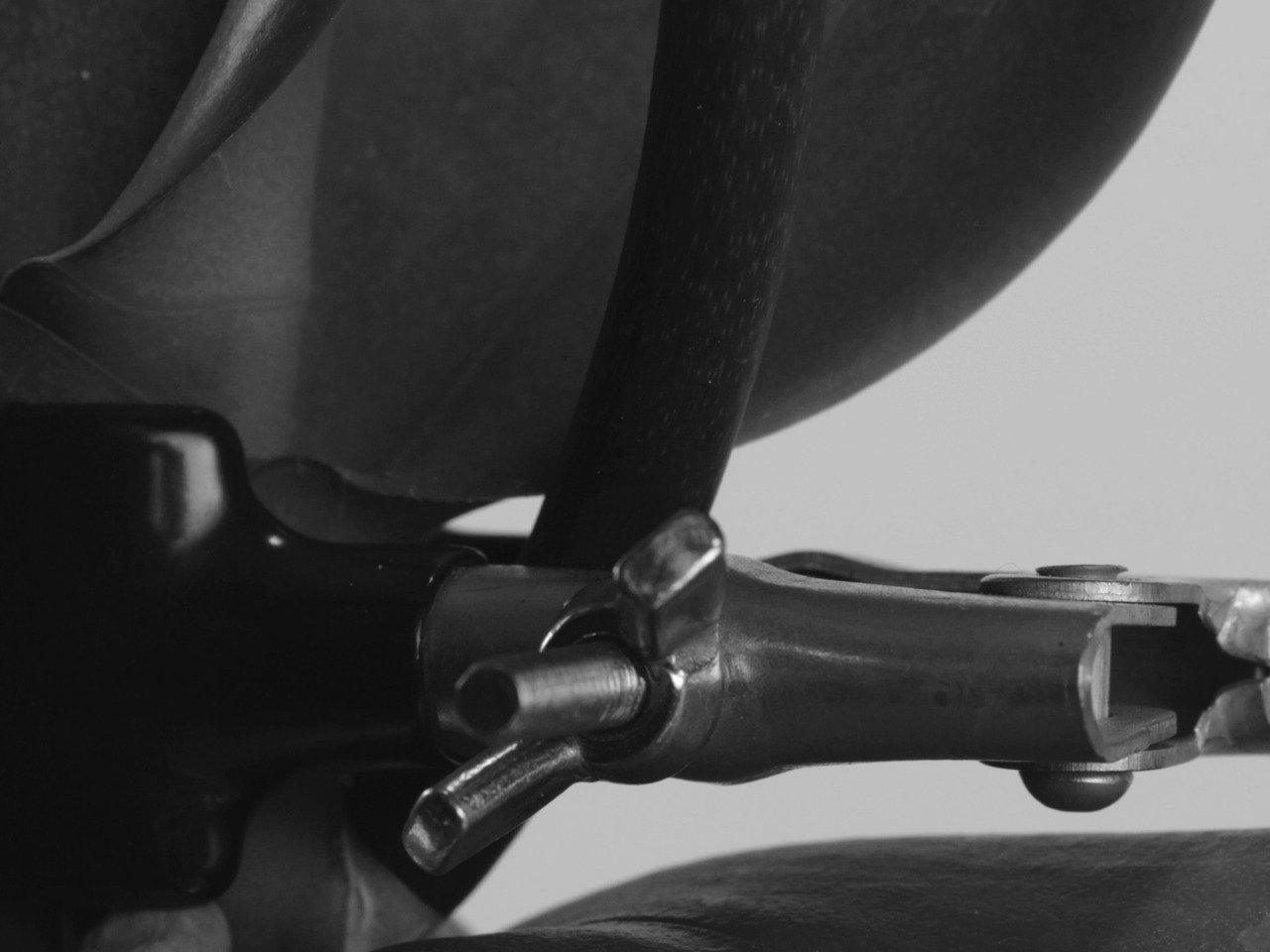
Image courtesy of the Artist.
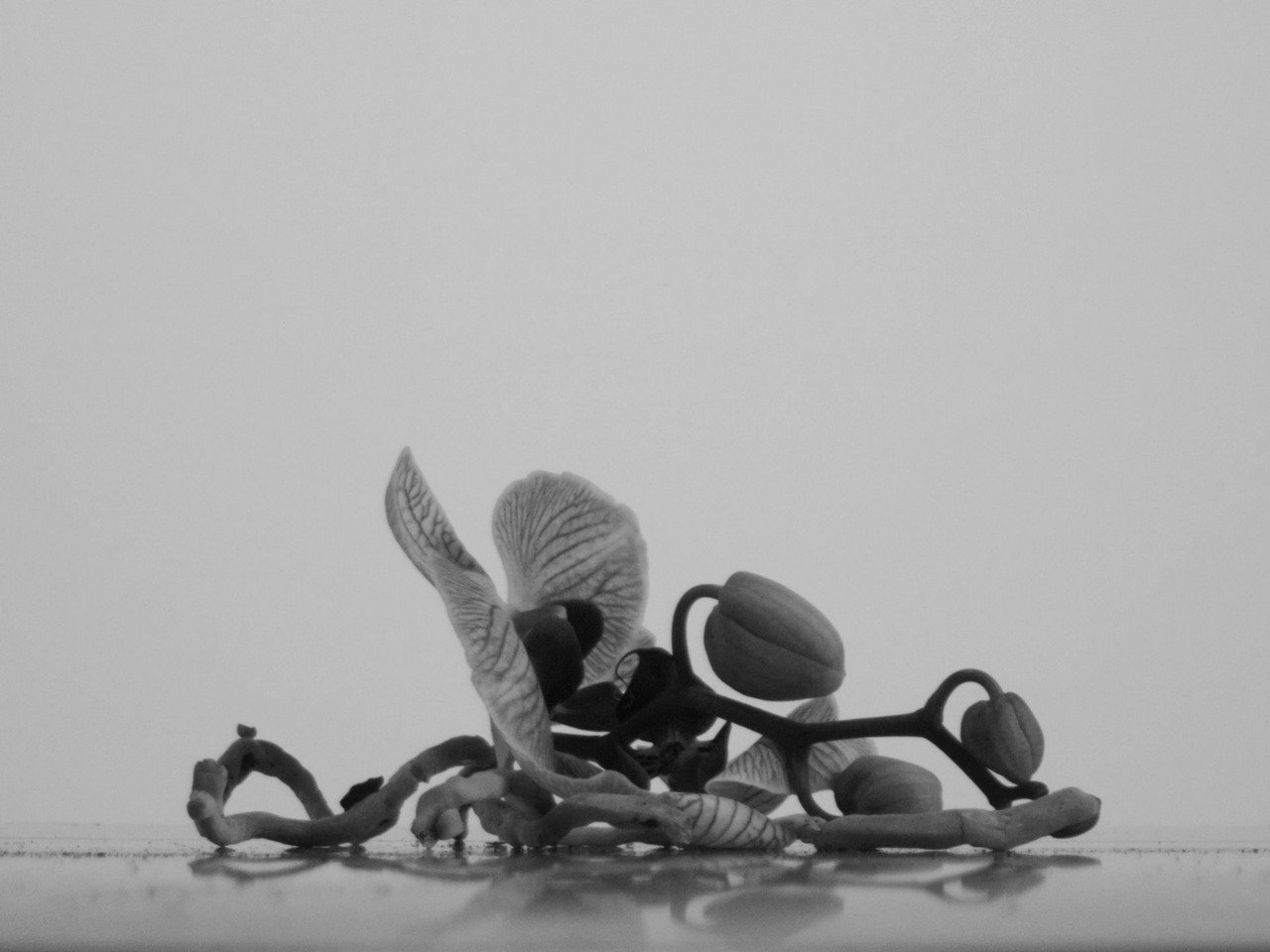
Image courtesy of the Artist.
Artist: Agnieszka Mastalerz
Exhibition Title: The Props Assist the House
Curators: Gaia Bobò
Venue: Polish Institute in Rome
Place (Country/Location): Rome, Italy
Dates: 3.10 – 22.11.2026
Photos: Images courtesy of the Artist and the Polish Institute in Rome.