Livia Klein
“You take my life / When you do take the means whereby I live.” Shylock warns in The Merchant of Venice, a line Peter Sloterdijk reads as an early premonition of what he would call the twentieth century’s essential discovery: that an enemy need no longer be struck directly, only deprived of the conditions that sustain him. So too, in Neja Zorzut’s practice, the body is never attacked outright, only what surrounds it.
In her artistic practice, Neja Zorzut approaches the body not as a sealed, self-contained organism but as a porous membrane, permanently in exchange with the world around it. In The Aesthetics of Environment, Arnold Berleant argues that aesthetic experience is inseparable from its surroundings, a continuous entanglement rather than a separation between observer and environment. Zorzut extends this premise into the body itself: breathing, ingestion, absorption, and exposure become the operations through which an outside keeps entering the flesh, while the flesh keeps acting upon and altering what lies beyond it. Nothing taken in disappears without consequence. What is extracted, consumed, or built into the world eventually finds its way back, so that cause and effect grow difficult to tell apart, and harm no longer belongs to one side of the exchange alone.
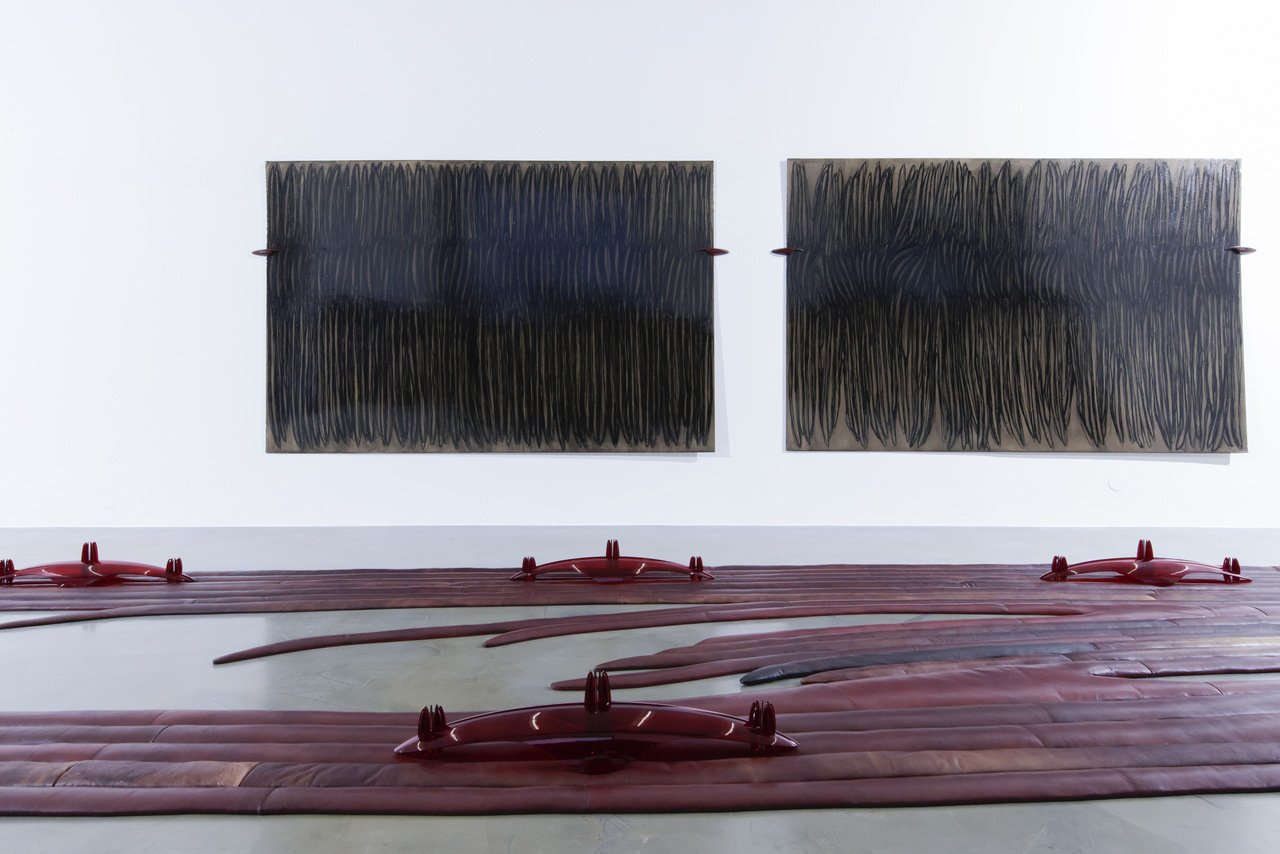
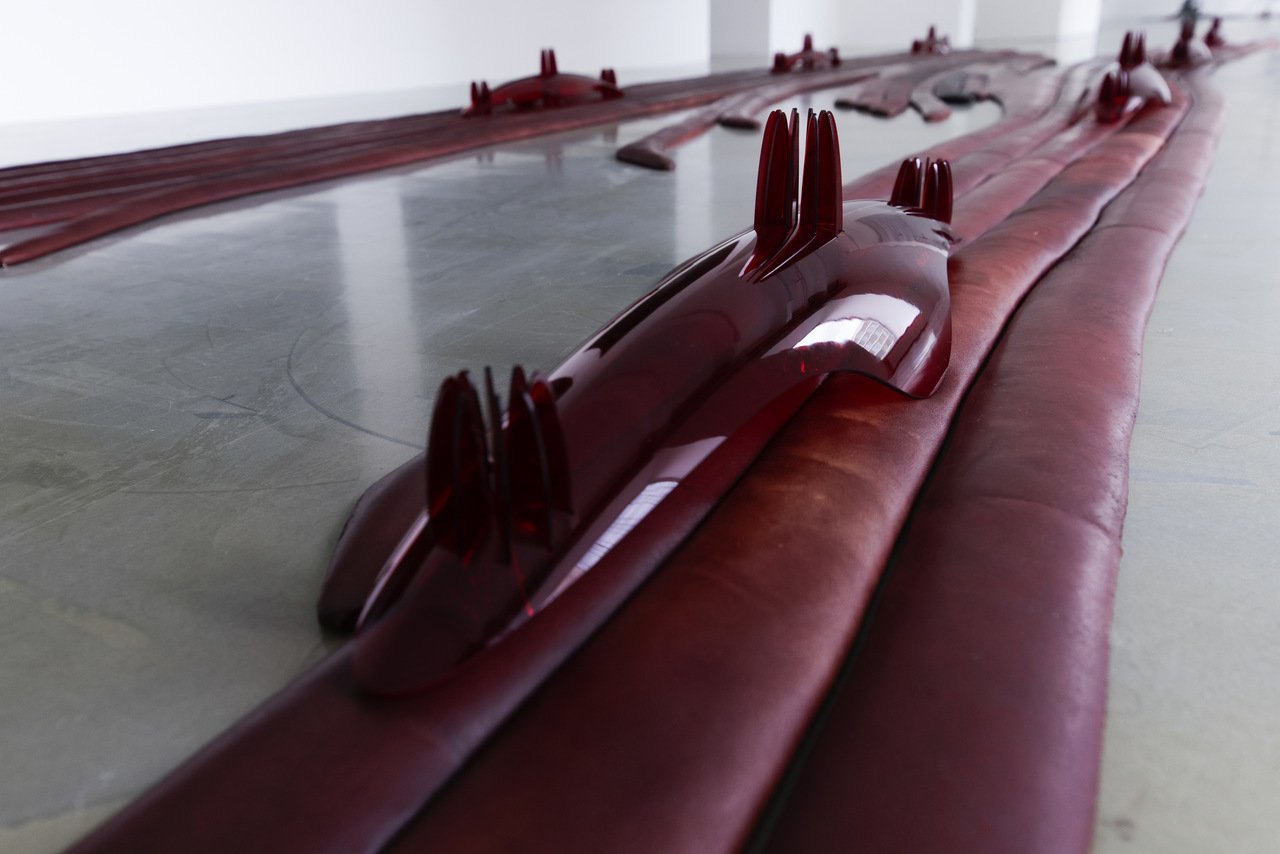
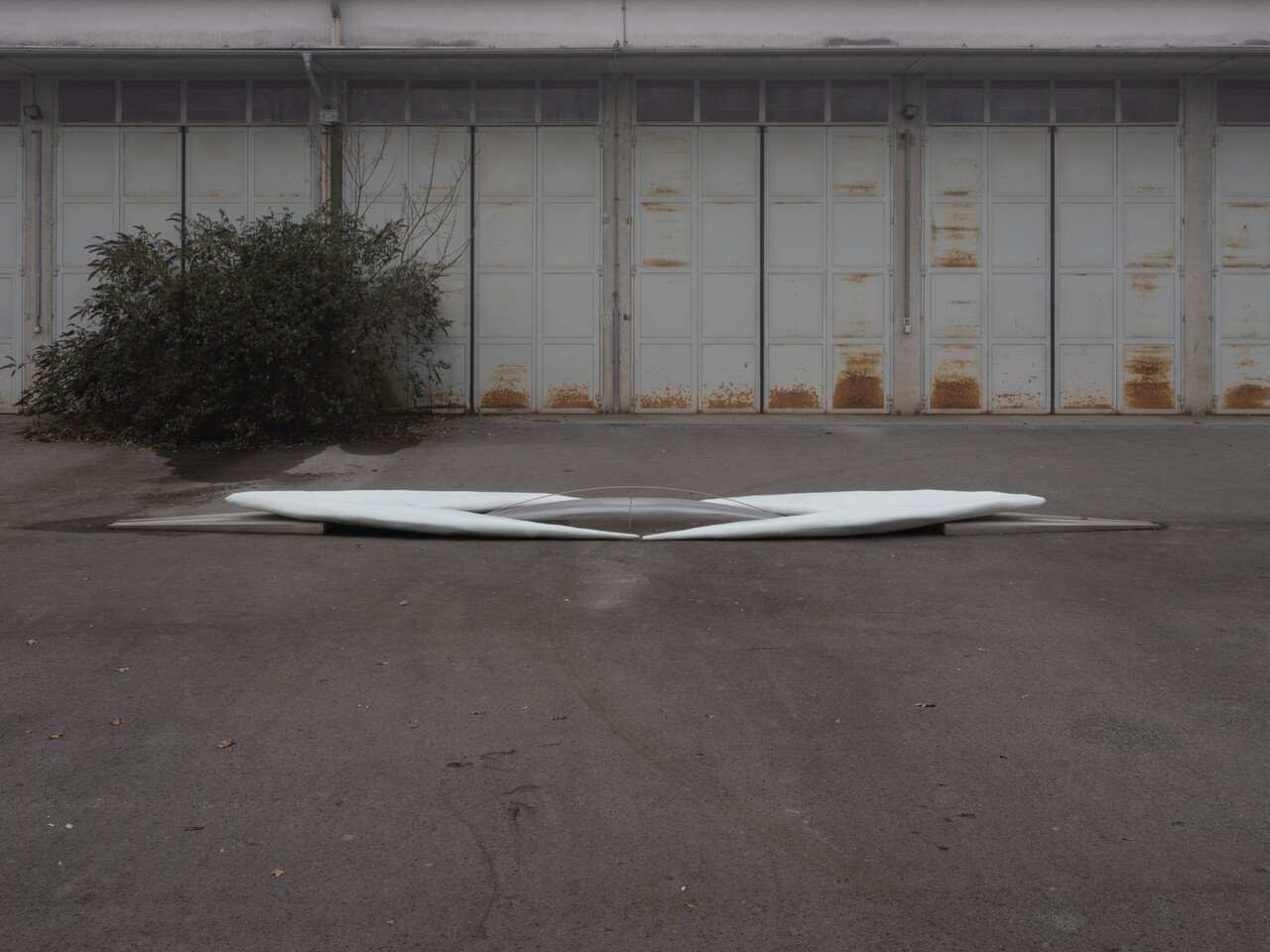
880 x 180 x 18 cm + 160 x 263 cm. Photo: Mario Zupanov. Image courtesy of the Artist.
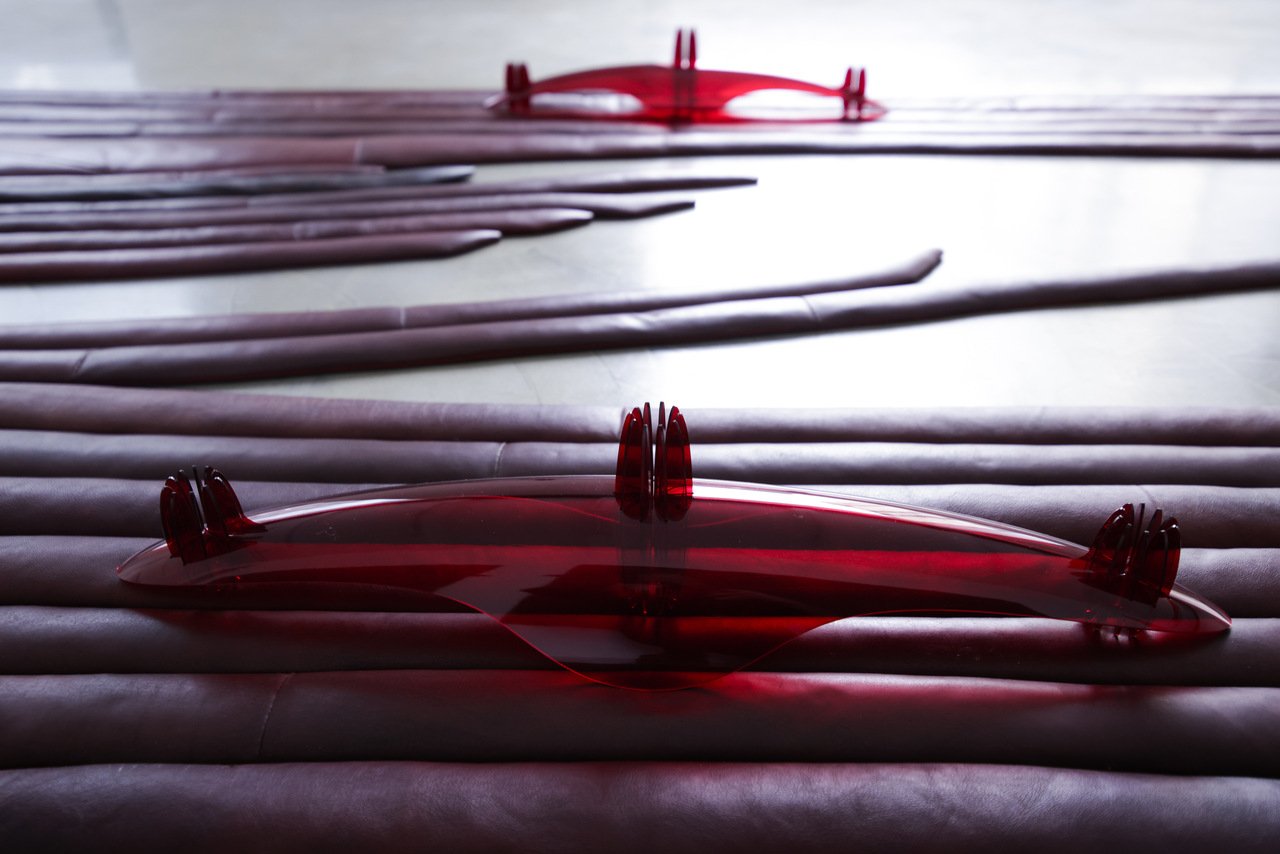
880 x 180 x 18 cm + 160 x 263 cm. Photo: Mario Zupanov. Image courtesy of the Artist.
Architecture follows a related logic, though one that tips more readily into control. In Flesh and Stone, Richard Sennett writes that it inscribes itself onto the body, regulating proximity, touch, and the rhythm of movement. Zorzut extends this logic beyond the walls of any single building, into landscape itself. Not simply nature; the pristine, external thing Timothy Morton has long urged us to stop believing in, but something constructed and politically organized, where roads, borders, infrastructure, and technological systems determine what a body can do, where it can go, and how long it can endure within a given space. What emerges from this is less a question of resistance than of control. If conditions can shape a body this thoroughly, then whoever governs those conditions governs the body by proxy, long before any direct act of violence takes place.
Sloterdijk’s own term for this shift is atmoterrorism, violence that no longer strikes the body but the medium that keeps it alive: the air breathed, the ground stood on, the systems relied upon for survival. Zorzut’s practice moves along a similar axis, turned toward the everyday rather than toward the battlefield. Violence here is not a single event but something distributed across space, latent within objects, landscapes, and infrastructures that may look inert, fragile, or even beautiful while carrying, underneath, the capacity to restrict, injure, or threaten. What counts as dangerous no longer coincides with what looks dangerous. A body can be made vulnerable simply by its position within a given environment long before anything resembling an attack takes place. If violence no longer needs a single point of impact, catastrophe itself starts to look different too.
Timothy Morton writes that “The end of the world has already occurred”; the observation sits close to Zorzut’s own sense of catastrophe. Not an event still to come, announced and then survived, but a condition already underway: diffuse, ongoing, without a clear beginning or a promised end. Once the environment is understood as something that acts upon a body as much as it is acted upon, the old apocalyptic image of a single, decisive collapse gives way to something harder to picture: an accumulation, a slow leak, a threat that never quite arrives because it is, in a sense, already here.
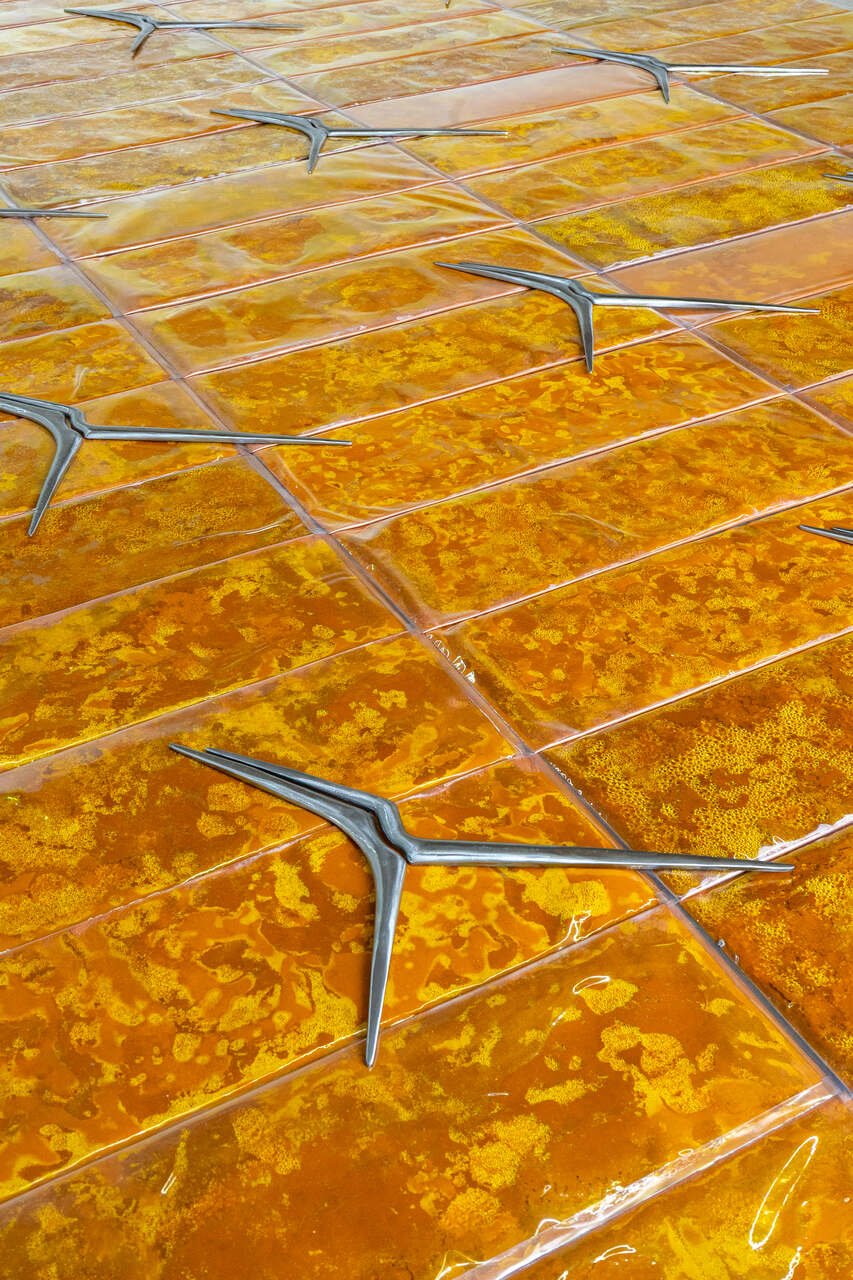
2x: 2700 x 4000 x 2.5 cm. Photo: Kibo.
Image courtesy of the Artist.
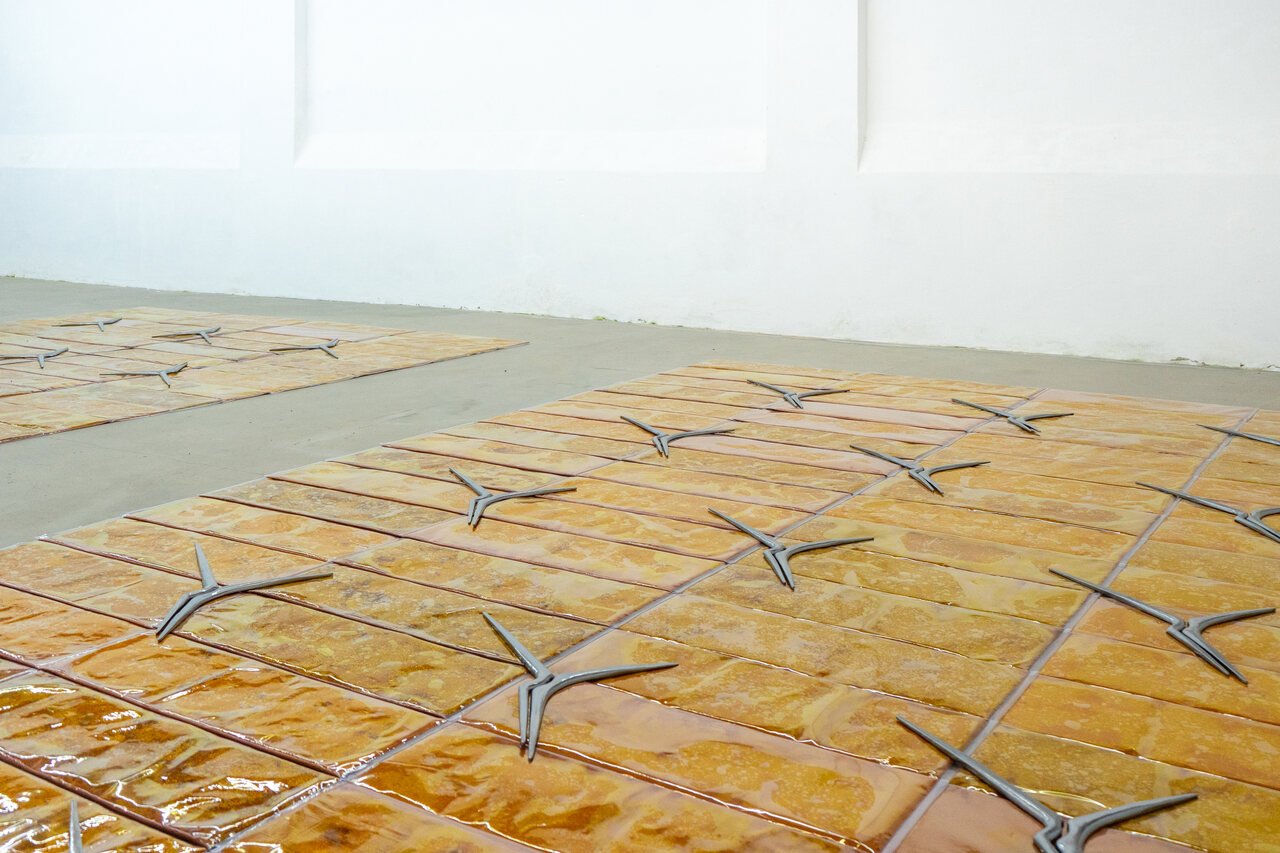
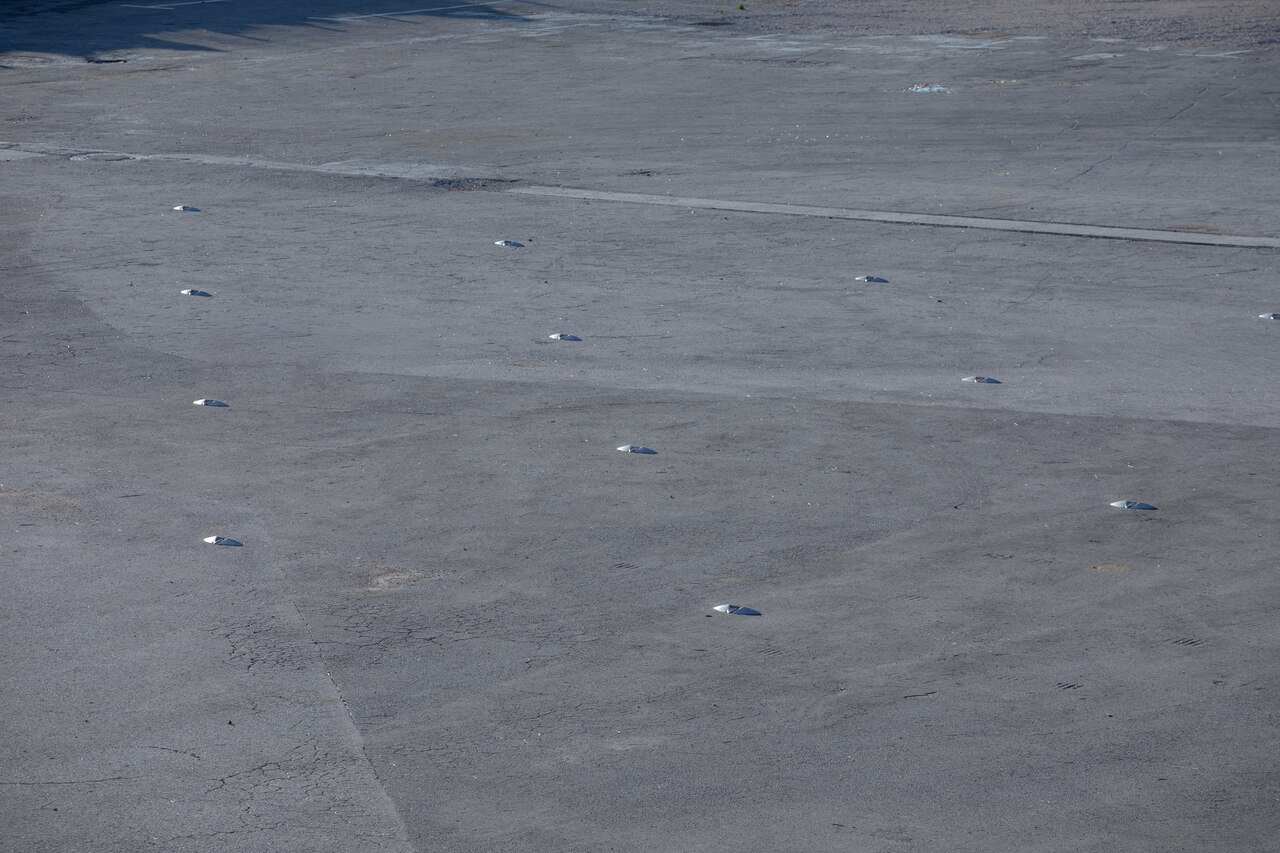
Image courtesy of the Artist.
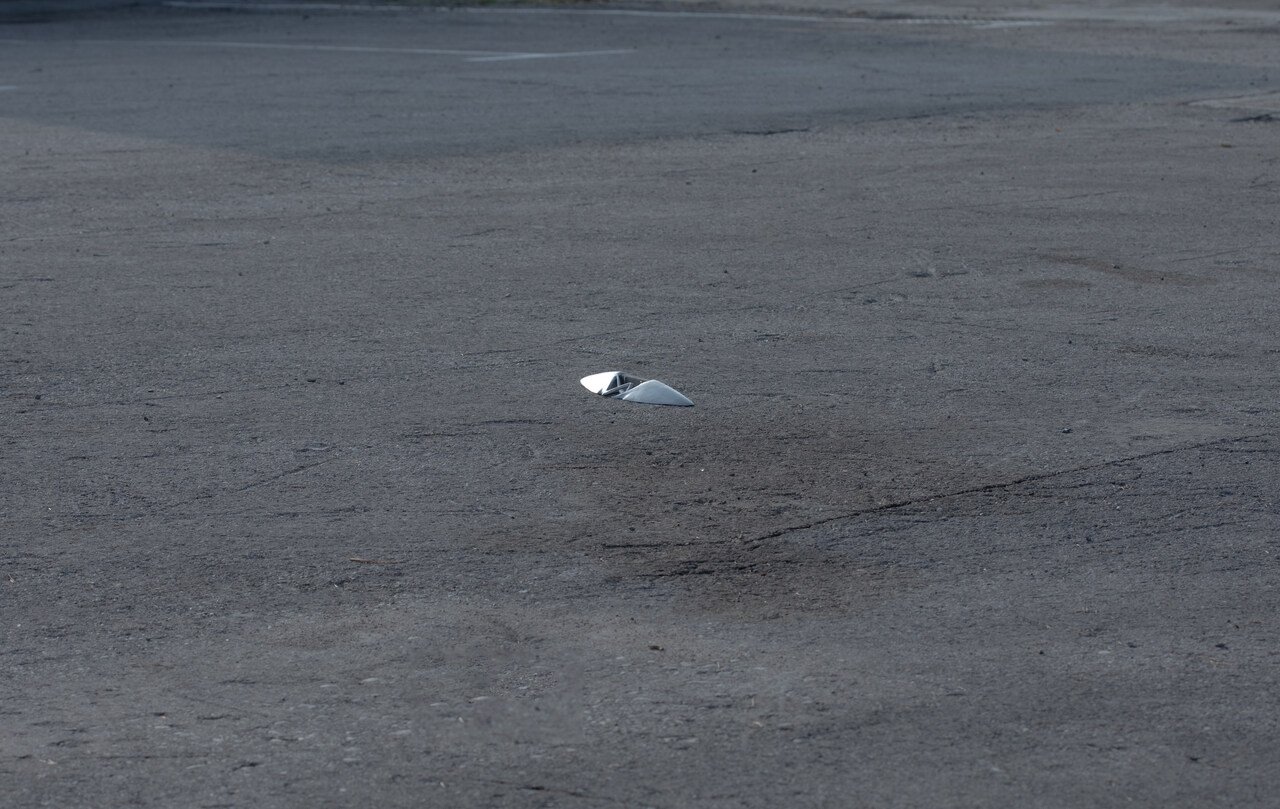
Photo: Valerija Intihar. Image courtesy of the Artist.
Materiality, in the artist’s practice, is never inert. Following Jane Bennett’s account of matter as a vital, active force rather than inert substance, Zorzut treats paint, resin, and metal less as tools than as agents in their own right: substances that oxidize, yellow, buckle, or soften according to a logic she can direct but never fully own. This is close to what Karen Barad calls intra-action — the idea that things do not simply interact as separate, already-formed entities but come into being through their relations with one another. A canvas thickened with resin, a sheet of metal left to corrode, are less finished statements than ongoing negotiations between hand, material, and time. Painting, in Zorzut’s work, keeps drifting into sculpture not as a stylistic choice but because the materials themselves refuse to hold still.
Zorzut’s work belongs to a broader shift within European art of the past several years, one that has moved away from the Anthropocene understood mainly as spectacle: the burning forest, the flooded city, the melting glacier rendered as sublime warning. That imagery treats catastrophe as something that happens elsewhere, to a nature still imagined as separate from us. Zorzut’s generation tends to work closer to the skin. Ecological thought here is not staged as landscape but lived as infrastructure, material, and bodily exposure, a condition inseparable from the systems, surfaces, and substances a person moves through every day. The shift is away from representing crisis and toward inhabiting its texture: less an image of the world ending than an account of what it already feels like to be inside that ending in a studio, in a body, surrounded by matter that has not yet decided what it wants to become.
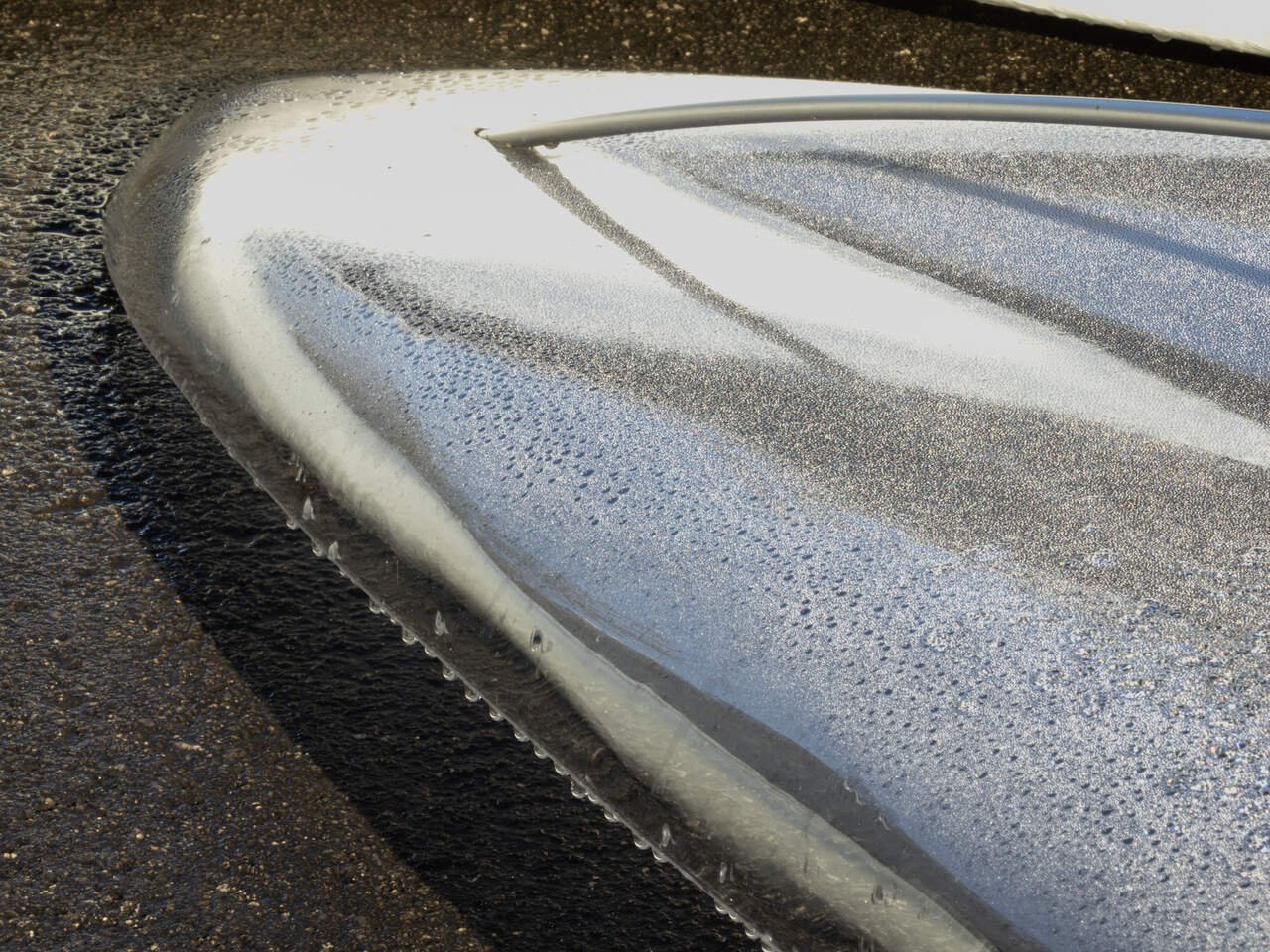
Image courtesy of the Artist.
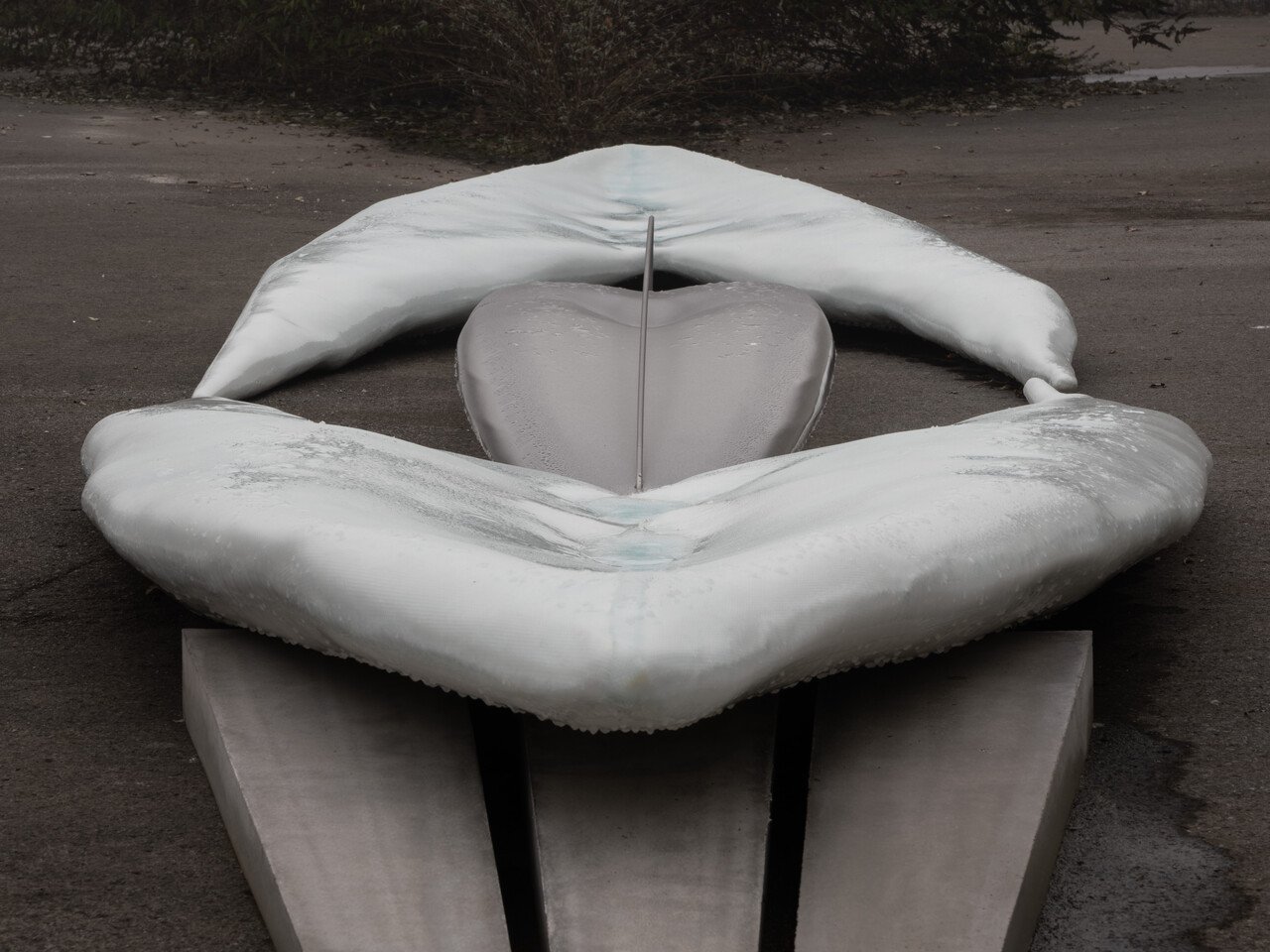
Image courtesy of the Artist.
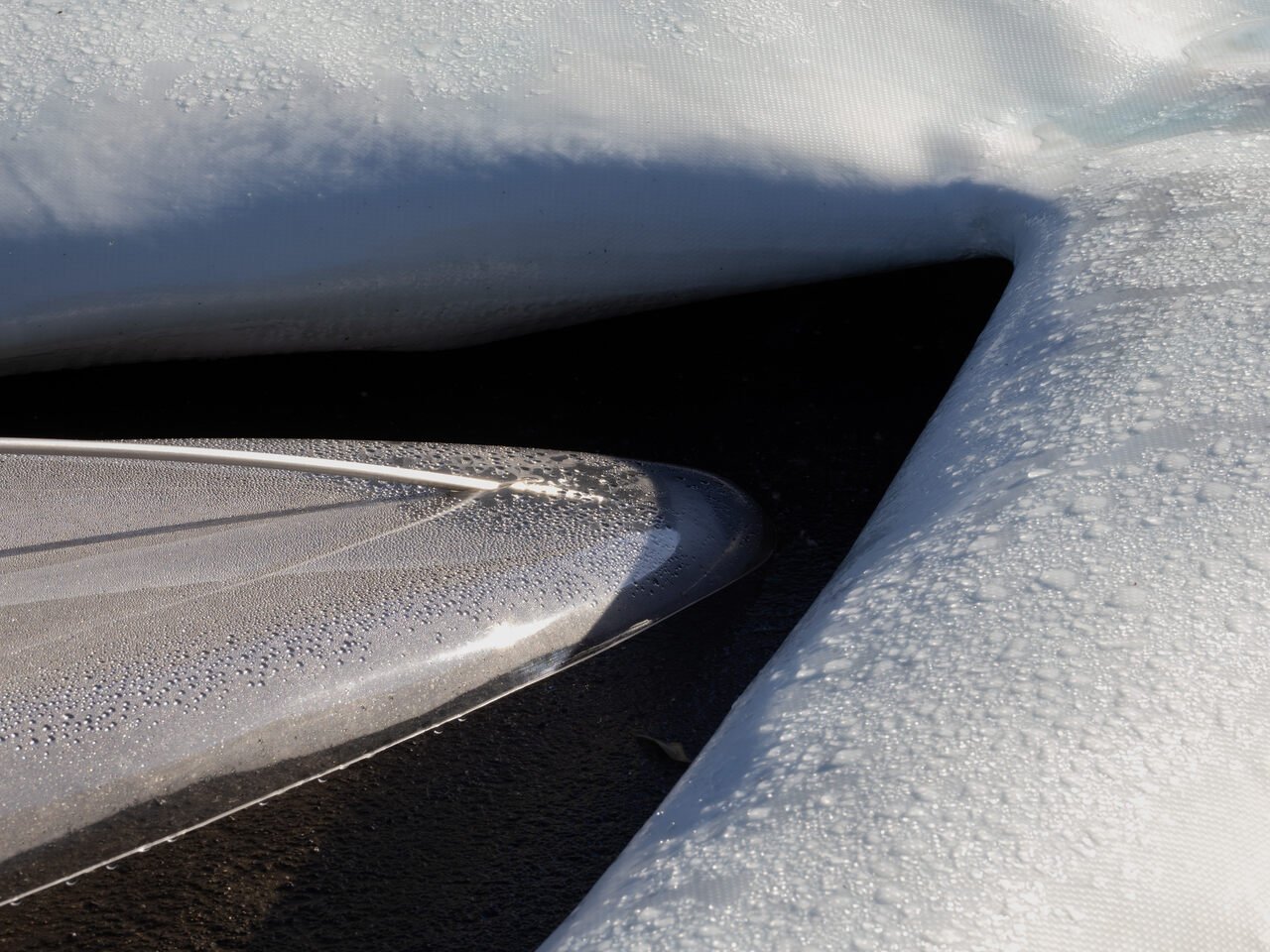
Image courtesy of the Artist.
There is something more than critique at stake here. Dystopia has become an aesthetic in its own right: images of collapse that are slick, cinematic, almost seductive. Zorzut’s practice resists that seduction. When a corroding surface or softening resin seems to take on a life of its own, the gesture becomes more than a statement about ecology or violence. It suggests something closer to reenchantment: the sense that close attention to matter, however compromised, might restore an intimacy with the world that spectacle tends to flatten. Nothing about this is comforting, and the work never settles neatly into either warning or wonder. It holds both at once, refusing the ease of choosing.
What runs through Zorzut’s practice, finally, is a series of quiet shifts: from the weapon to the environment that holds it, from a single act of violence to violence distributed and latent across space, from a body imagined as sealed and separate to porous, one with everything around it, and from catastrophe as an event still to come to catastrophe as a condition already underway. None of these shifts is offered as an argument to be resolved. They accumulate instead, the way sediment does, or corrosion — quietly, without announcement — until the line between what shaped a body and what a body has become is no longer possible to draw. Zorzut’s work does not ask to be rescued from this condition. It asks only to be looked at closely enough to see it for what it is.
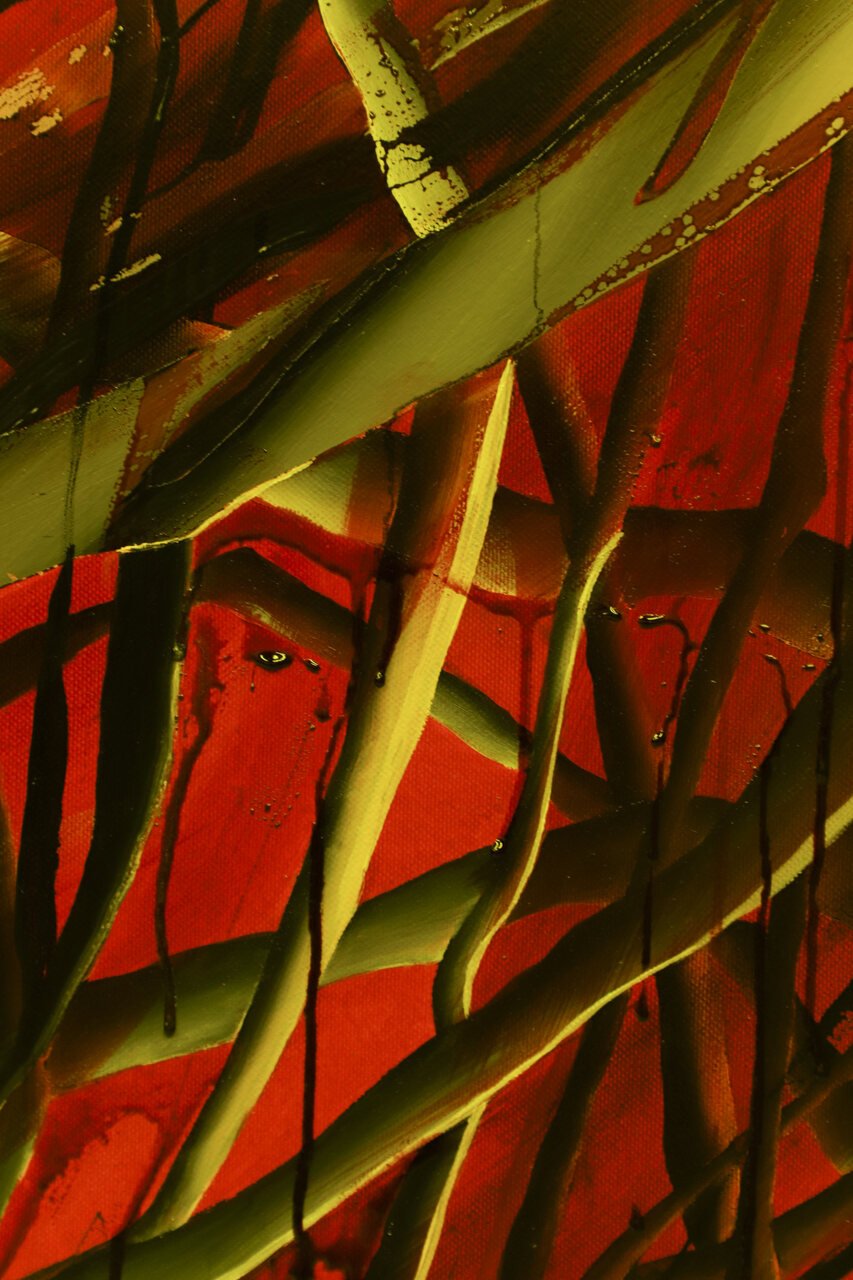
Image courtesy of the Artist.
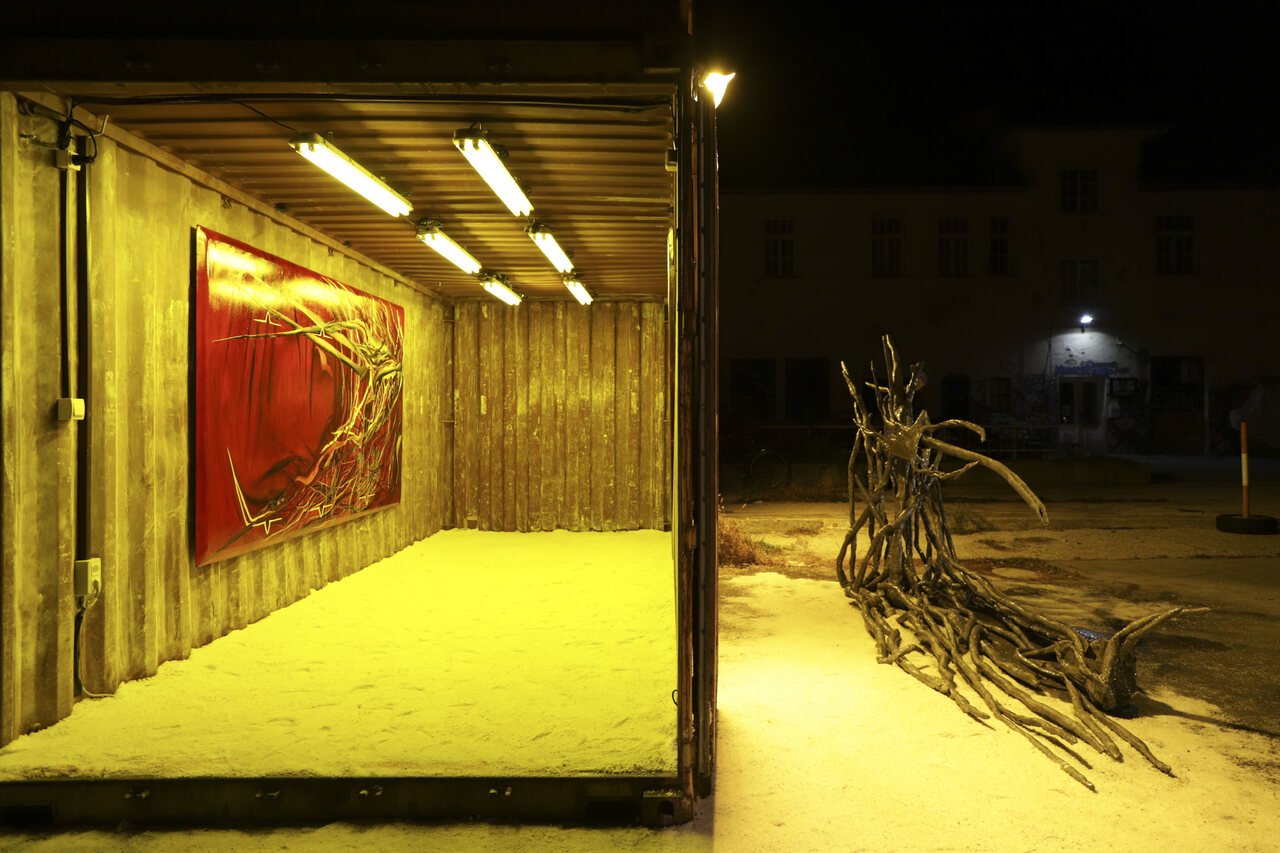
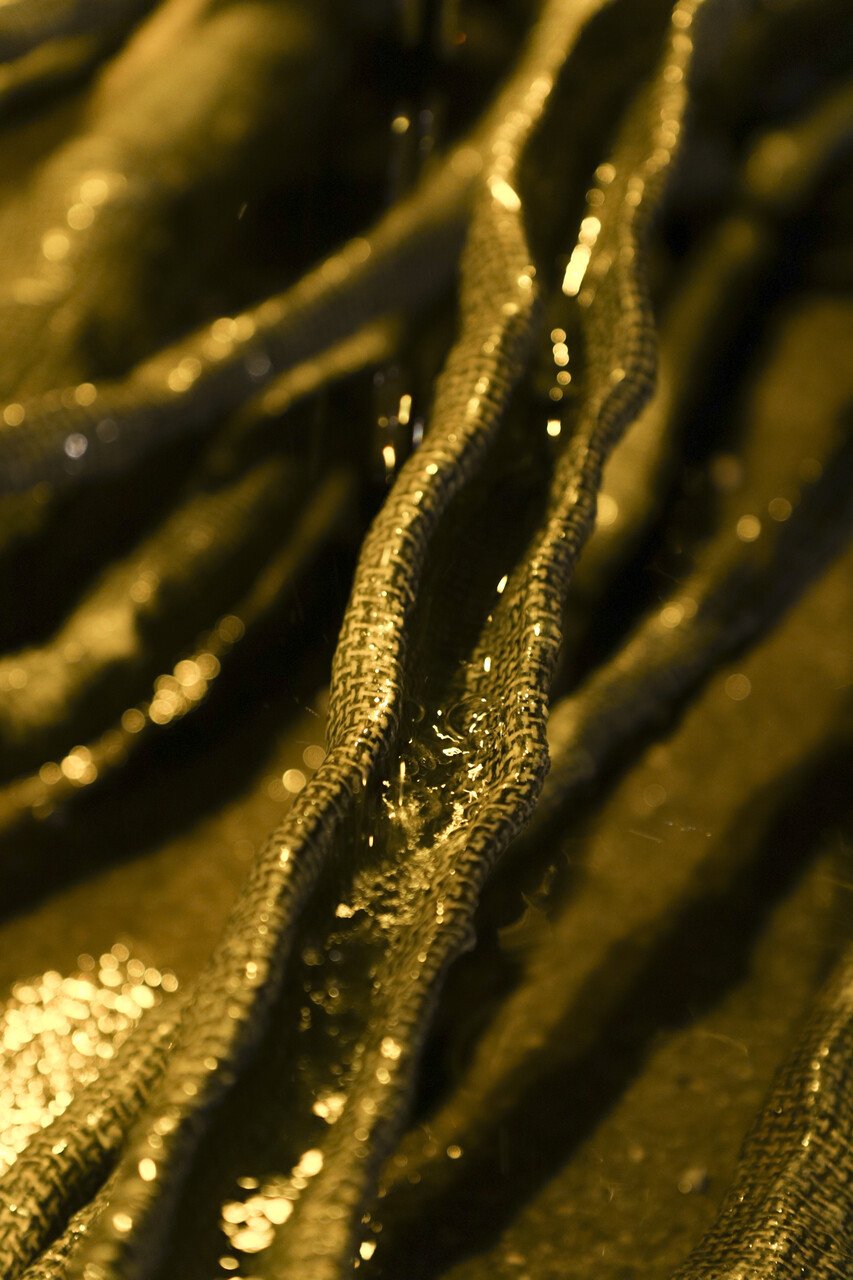
Image courtesy of the Artist.
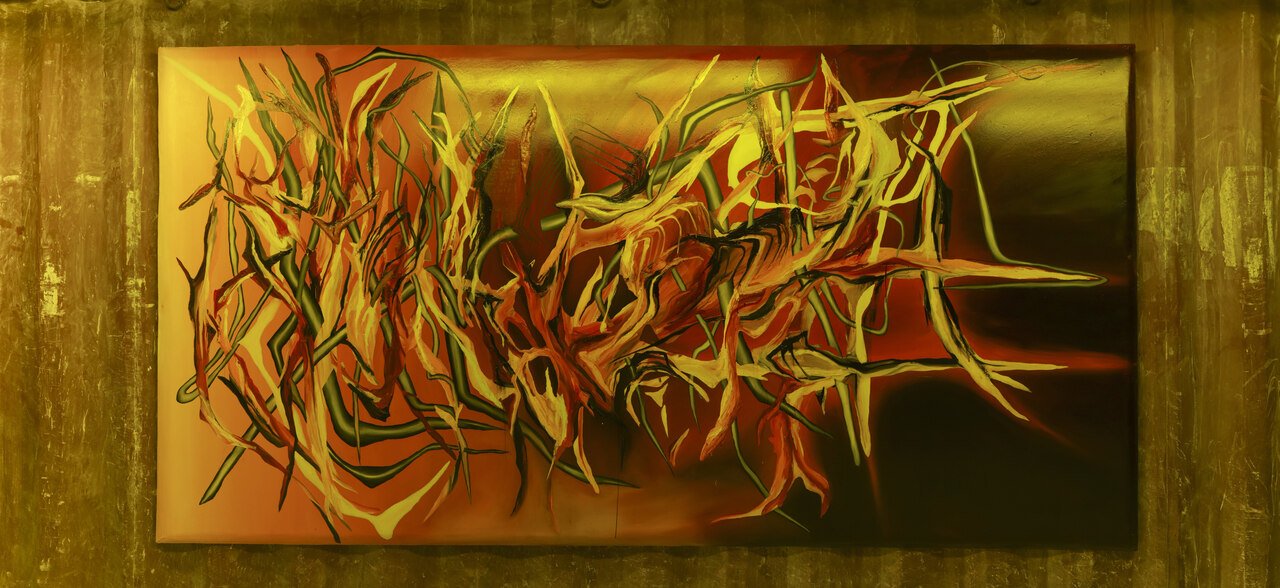
and salt, 340 x 170 cm + 430 x 200 x 50 cm. Photo: Mario Zupanov. Image courtesy of the Artist.
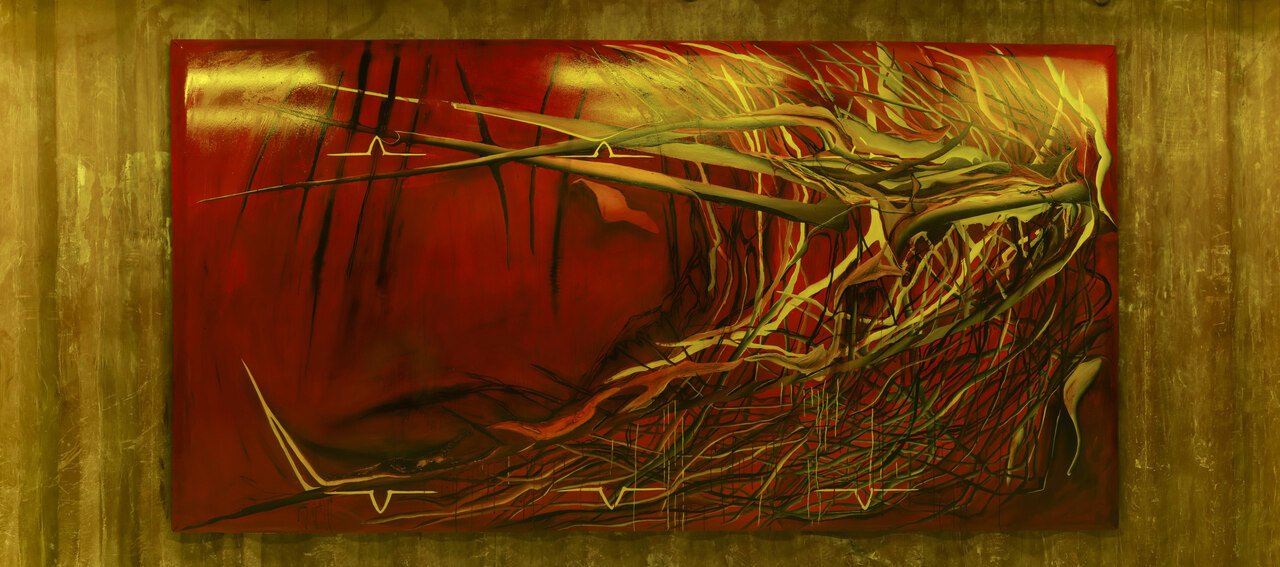
and salt, 340 x 170 cm + 430 x 200 x 50 cm. Photo: Mario Zupanov. Image courtesy of the Artist.