
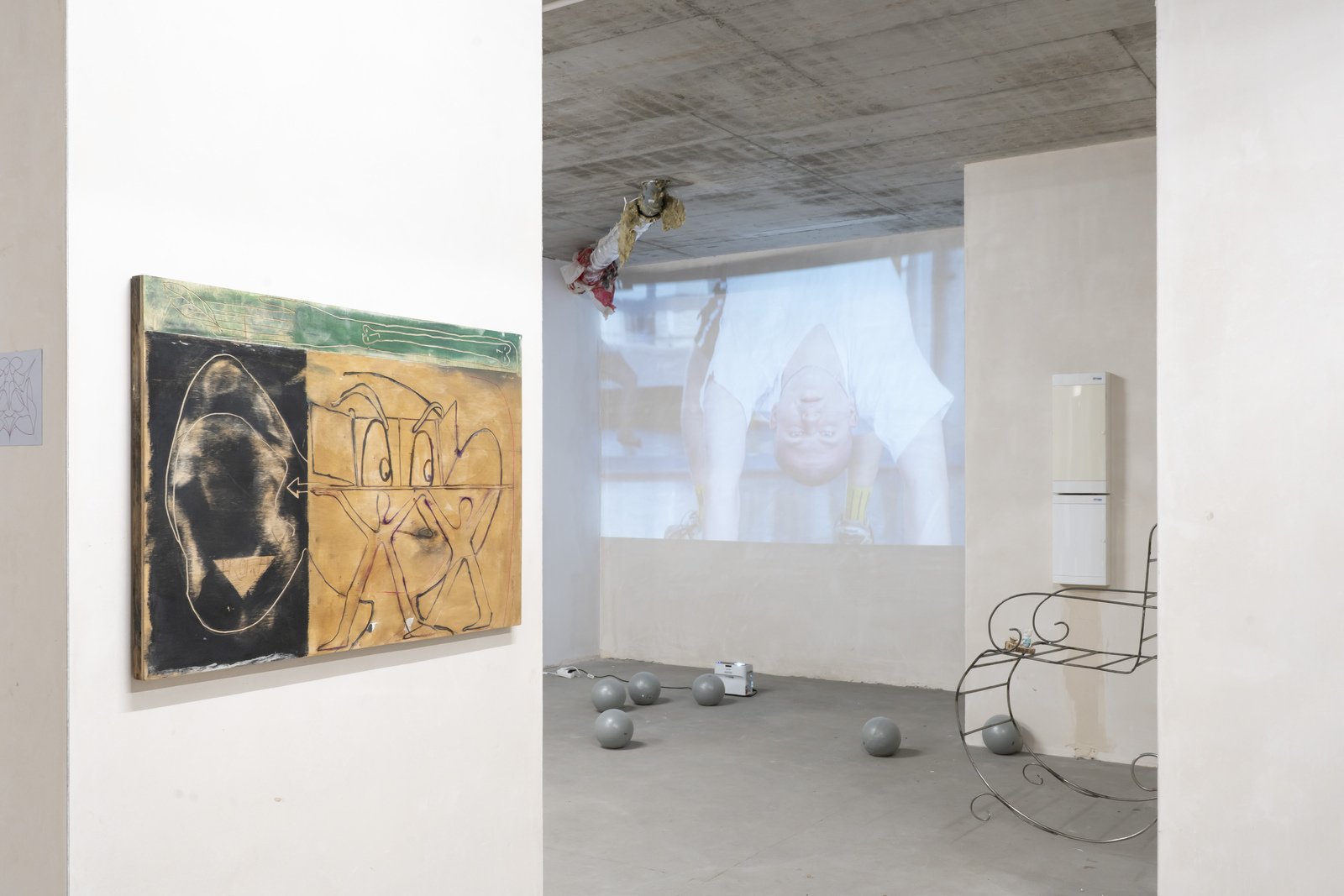
What happens when one tries to peak into the furthest horizons of perception? When sitting in front of a wall, do I know it’s behind me because I have seen it before, or rather because I sense it through my body’s relationship with space? In the exhibition “Regions of silence,” we examine the relationship between presence and absence, trying to showcase that it is not a simple binarism nor a structure based on complete polar opposites. Rather, both states define one another and are interdependent.
How can we perceive the imperceptible? This question – one that “common sense” tells us to treat as rhetorical – has a number of possible answers. One of them was proposed by the statistician Abraham Wald, who pointed out that the military, by drawing conclusions about how to optimize the safety of aircraft design based on those that returned from missions, is making a literally fatal mistake: by overlooking the planes that did not return, they ignore the ones whose damage reveals the most critical weaknesses in structural components. Another feasible answer can be found in the famous study by the writer and economist Caroline Criado Perez entitled Invisible Women; a study that reveals gaps concerning women in the data upon which we organize our world – such as the famous example of “crash tests,” in which vehicle safety during accidents was tested only on models with the body of the average man. A different insight is embodied by a patient with anosognosia, who is at the same time unaware of the paralysis of his own limb, and skillfully avoids situations in which they would have to notice and acknowledge that paralysis.
Maurice Merleau-Ponty, when writing about the regions of silence that suddenly emerge in the human body and the resulting inability to communicate with the rest of the world, states in his Phenomenology of Perception: “we avoid asking the question in order not to have to perceive this silence and we turn away from regions of our life where we could encounter this nothingness, but this is to say that we discern them.”
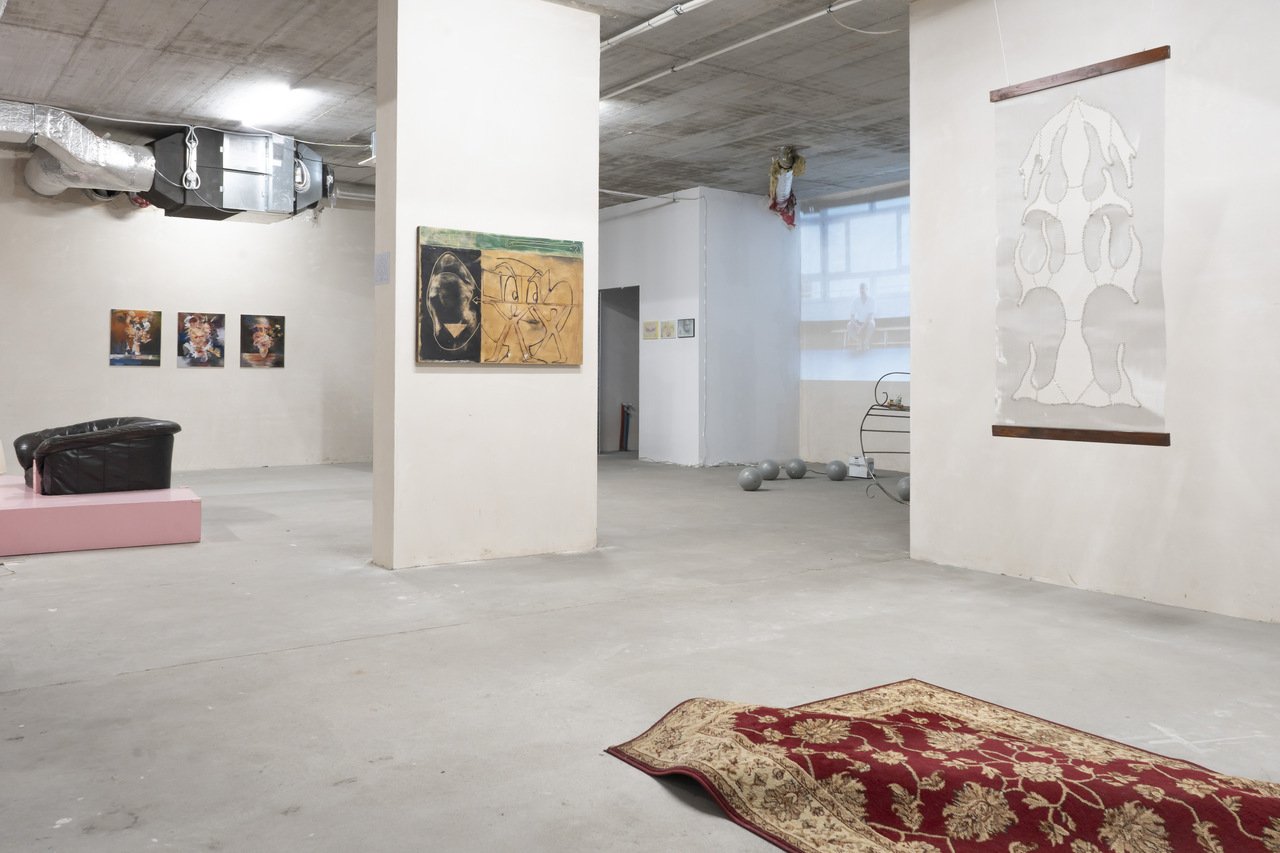
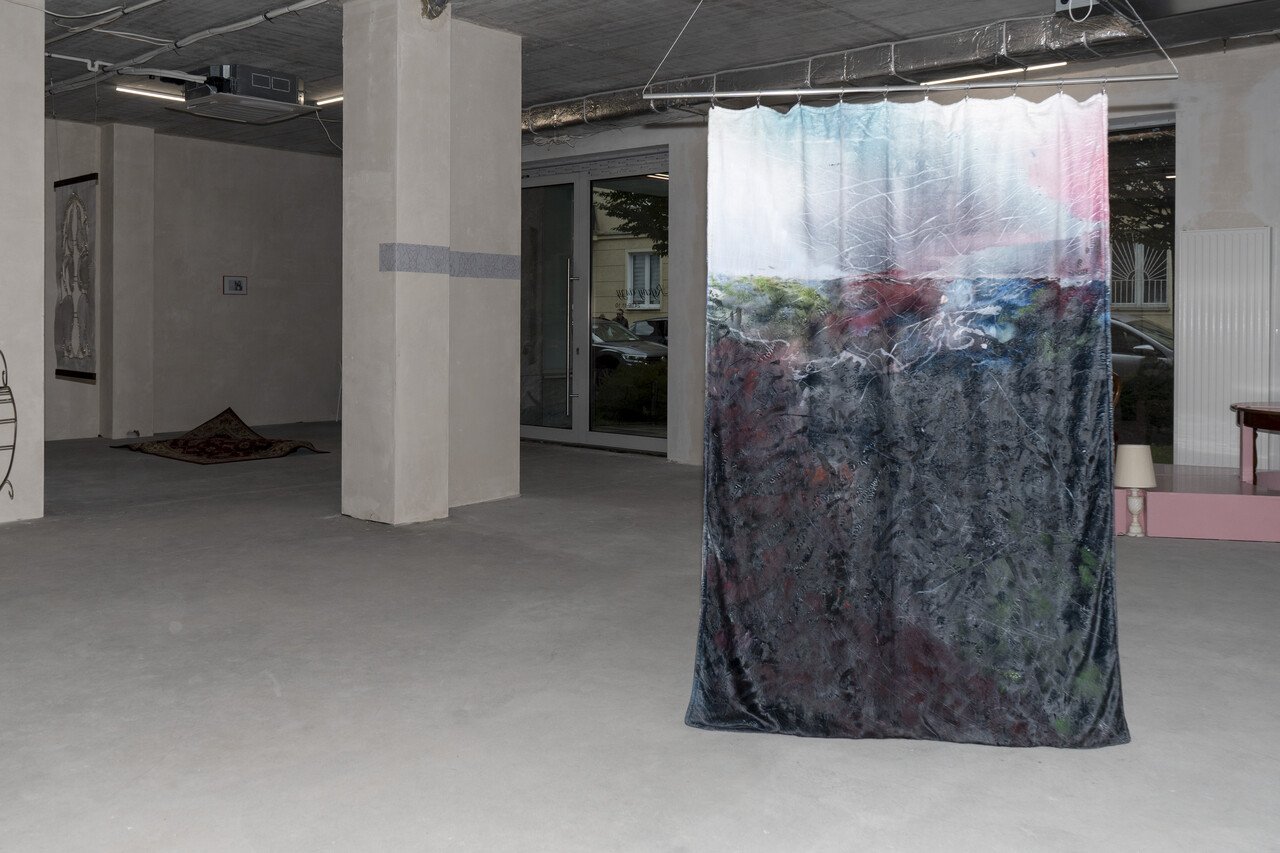
Michał Ciesielski (Curtain of Love) The work focuses on the landscape as a vehicle for remembering places and events occurring in public spaces. It is a camp-style performance that, through its subject and form, defuses mechanical violence, stripping it of its agency and gravity. Traumatic events, photographs of acts of violence and exclusion, and images of right-wing conservative politicians are stripped of their context and significance and become an idyllic landscape. It is a record of history. It does not describe its specificity, but rather draws out collective ideas and generalized communal memory. The landscapes are constructed from photographs containing homophobic or misogynistic themes. Superimposed on them are scans of automatic writing – a stream of consciousness during the writing process – that speak of love, desires, or professional aspirations, as well as hand-applied traces of paint and brushstrokes, intended to lend a personal character to these imaginary, nonexistent places.
(Still life series) A series of works depicting bouquets of flowers. The pieces are digital collages based on sketches that were subsequently reworked using images of conservative, right-wing politicians. Their distorted and transformed faces turn into floral compositions, losing their agency and reduced to images only. Through this process, their words and actions cease to have any meaning, becoming nothing more than a camp, aesthetic symbol.
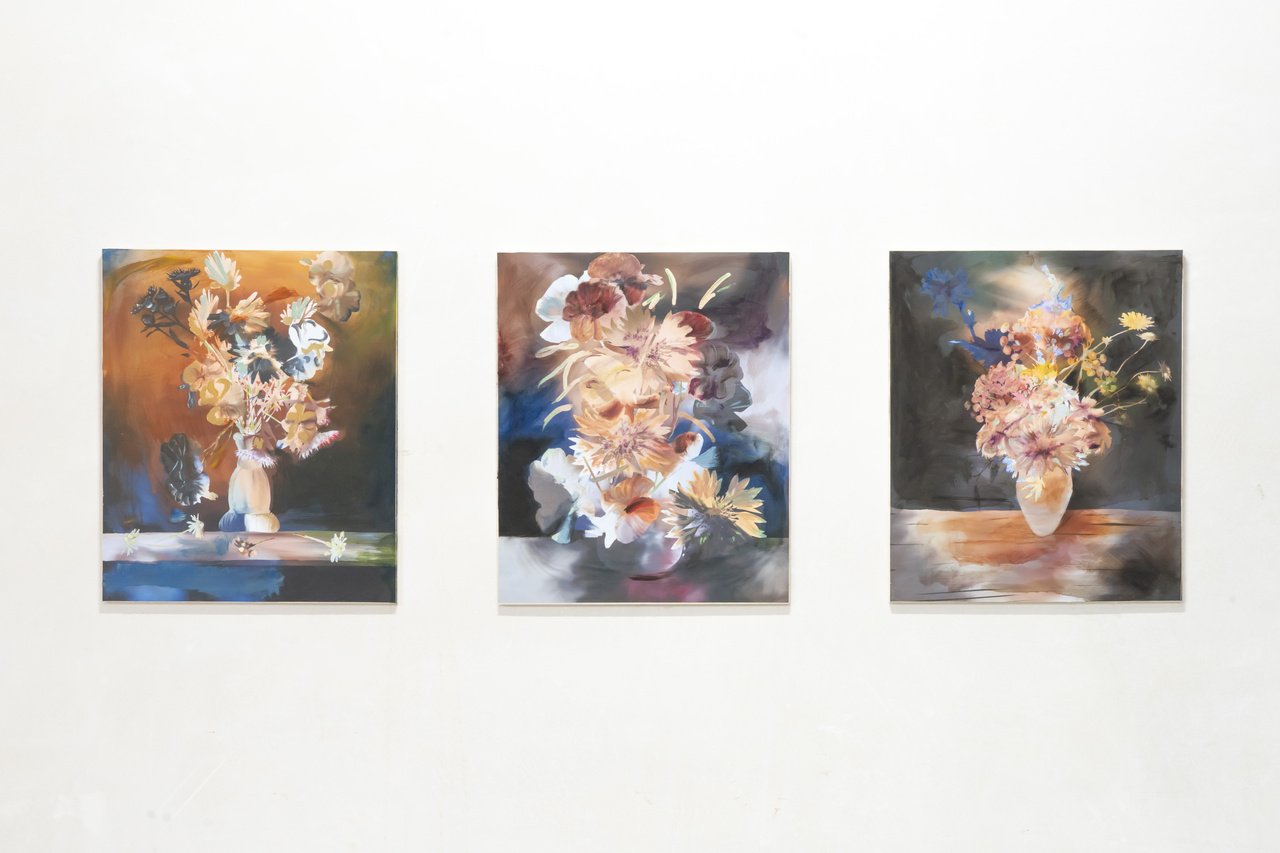
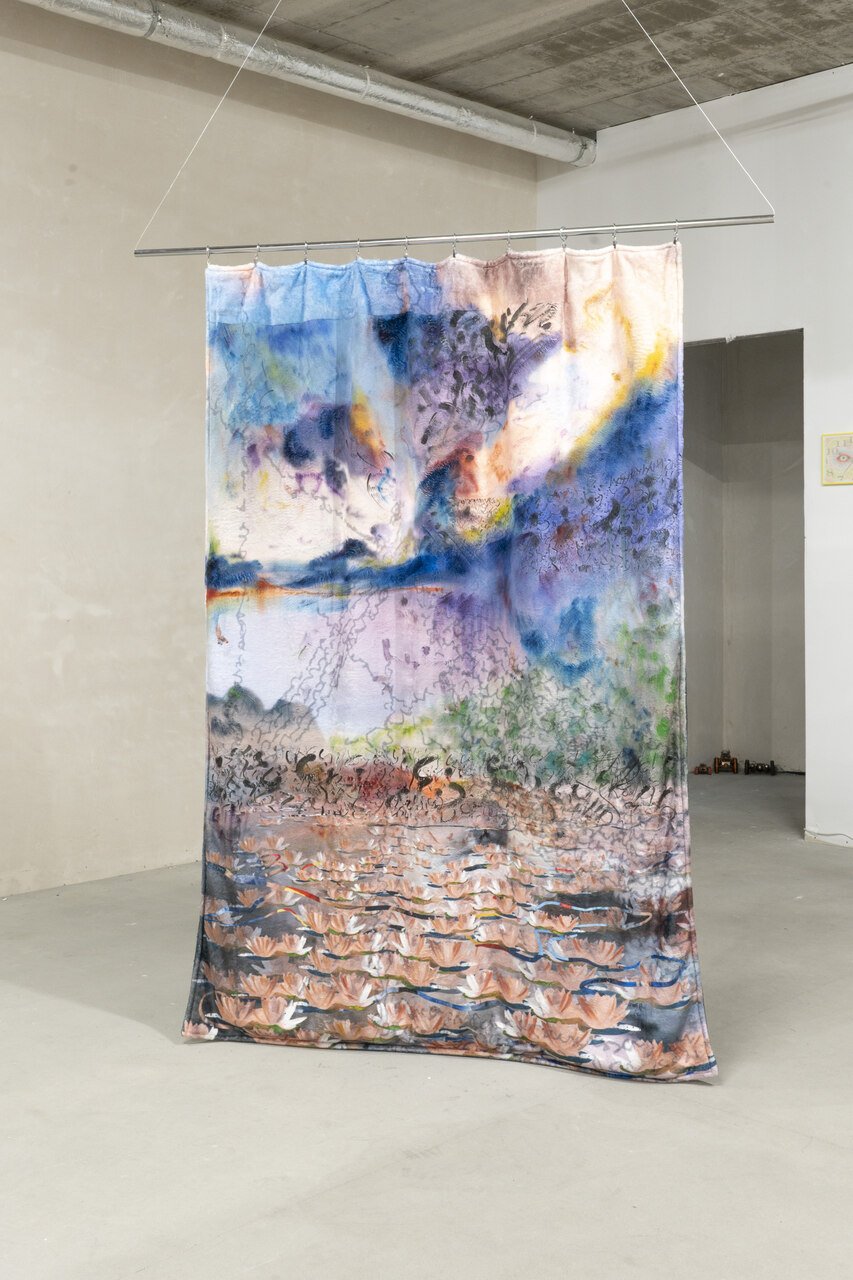
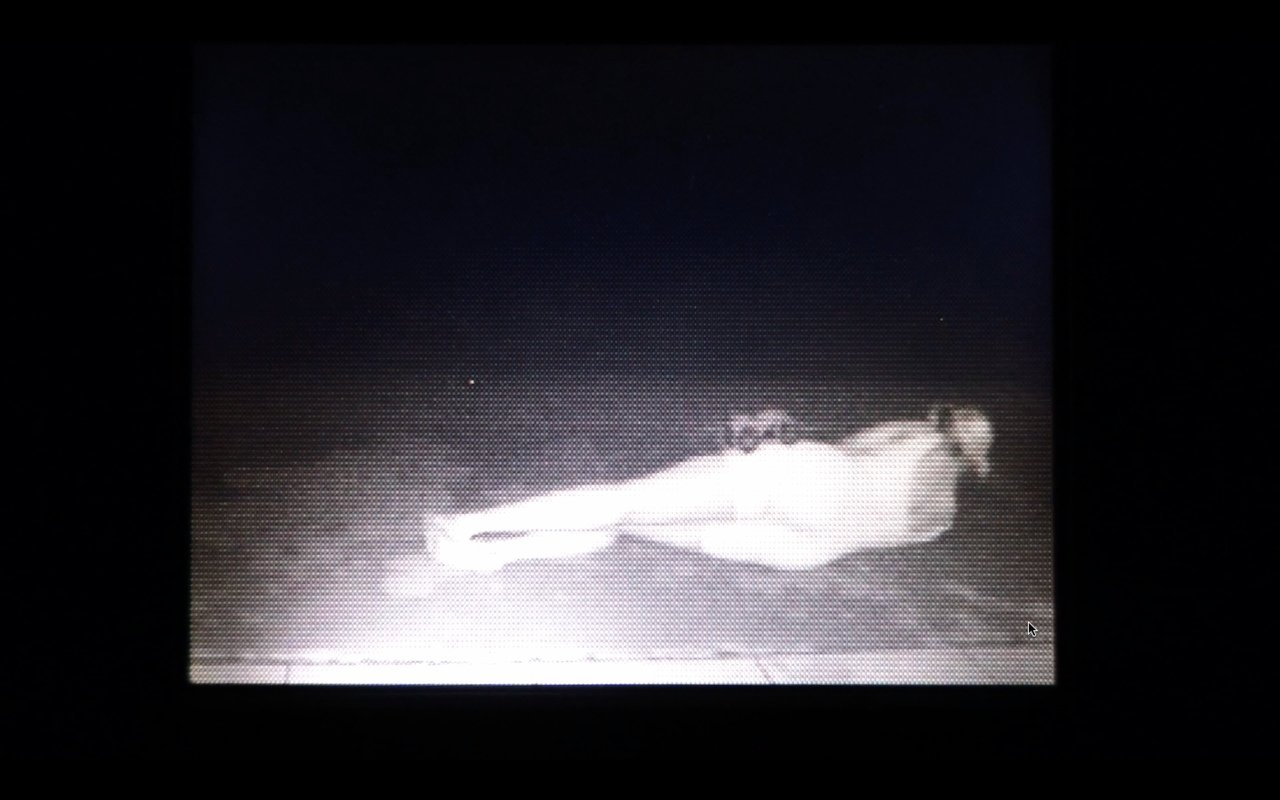
Image courtesy of the artist.
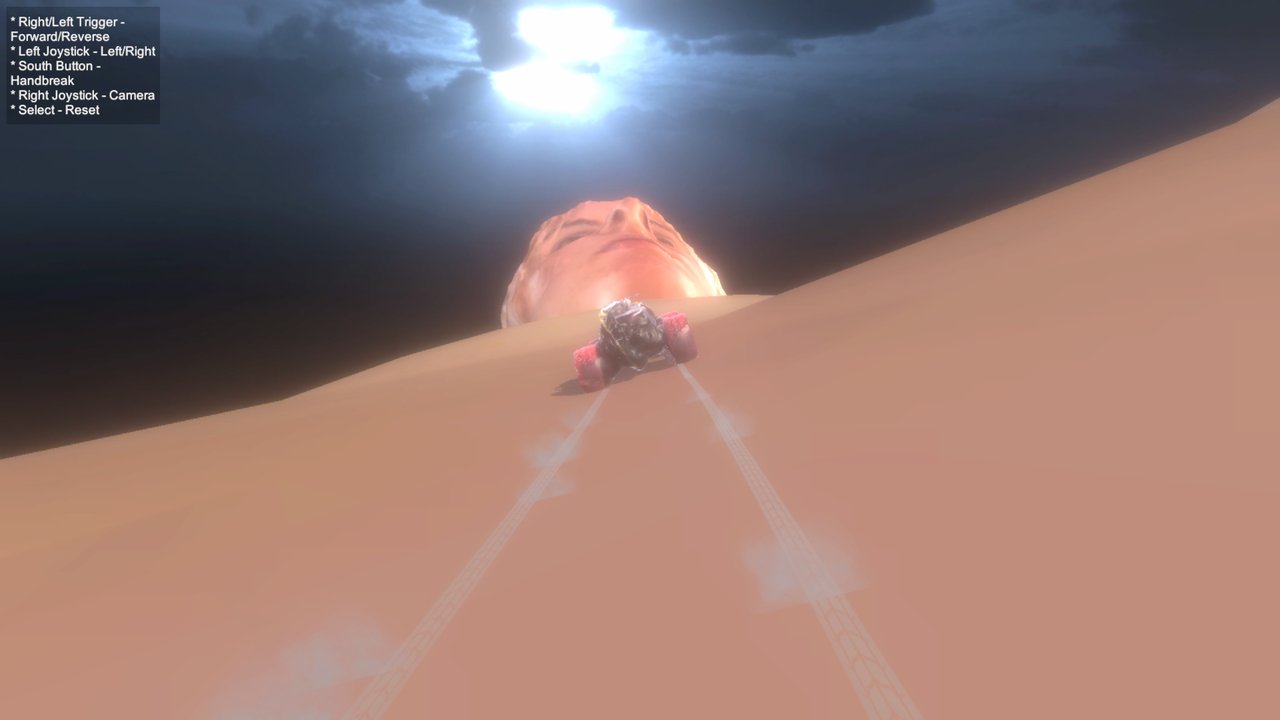
Image courtesy of the artist.
Michalina Czerwońska (co-realized with Radomir Majewski, camera work by Kornel Tchórzewski) The departure point for the work is both the experience of losing sensation in my left hip as a result of a 2023 injury and the enigmatic status of one’s own body within the prevalent western conceptual frameworks, which tend to categorically divide reality into two modes of existence: consciousness and matter.
When the realization that the former sensation of my own hip had been lost forever began to sink in, it became a source of discomfort, to say the least, or perhaps even a kind of existential panic. A numbness of a limb is no pleasant experience – the sudden strangeness one feels upon touching the stiffened area instantly induces a state of cognitive dissonance: I am touching myself, yet I sense someone else. Whose skin is this? Who is the one being touched when I am the one doing the touching? And how can one come to terms with being forever stuck in a malfunction of the nervous system that lays bare its uncomfortable secrets?
In response – one already separated by distance – I invite you to join the game of mapping my body, the result of which might just become a sketch of the cognitive limitations of a mind that demands a world clearly divided into subjects and objects. The unsettling strangeness is transformed into a spectacle of boundary and contact, and I imbue the intimacy of examining my own skin with the gravity and pathos of a space opera. One small step for a human is a giant leap for humanity – and what if that step is a ride!
Paula Jędrzejczak Repetitive segmentation of the body, even-numbered limbs, mechanical nature of movement, harmony and symmetry. Controlled diversity. A perfect composition featuring a face devoid of expression, from which I still manage to read emotions.
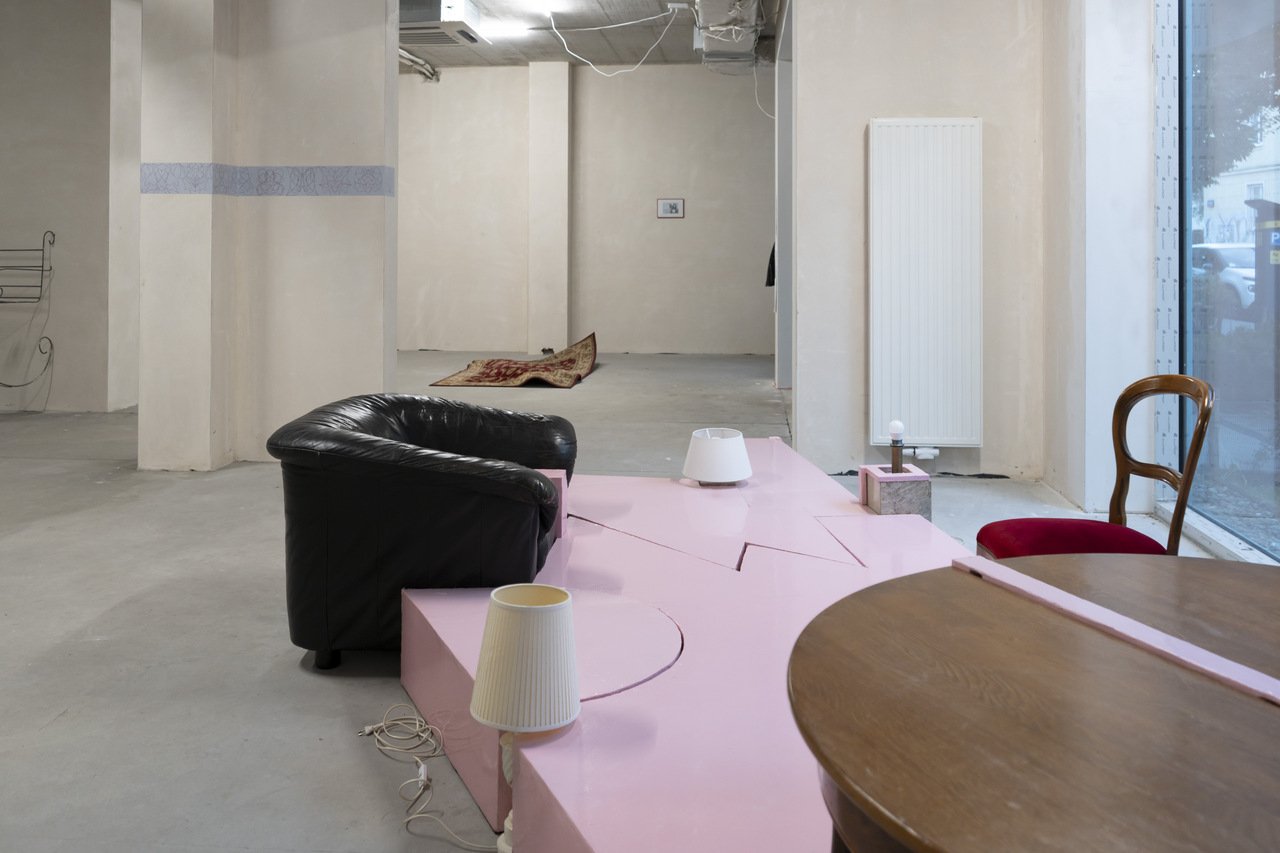
Justyna Kramarz The installation consists of furniture and a pink platform coated with silicone that conforms to its shape. The platform’s sharp corners are protected with covers designed to shield children from sharp edges. The armchair, table, chair, and lamps evoke a glimpse of the atmosphere that prevailed in my family home. The furniture was wooden, solid, and elegant. An oppressive mood dominated that space. The color pink, on the other hand, evokes a childlike sense of carefreeness. The silicone used is a material found in children’s toys as well as in items made for adults. In this way, I bring together two spheres: childhood and adulthood. The work relates to a sense of duality, in which we feel like adults in many ways, but not yet in others. Home is a sanctuary, and everything outside of it creates a sense of uncertainty.
Paweł Marcinek people who open their eyes and with them a world full of contradictions.
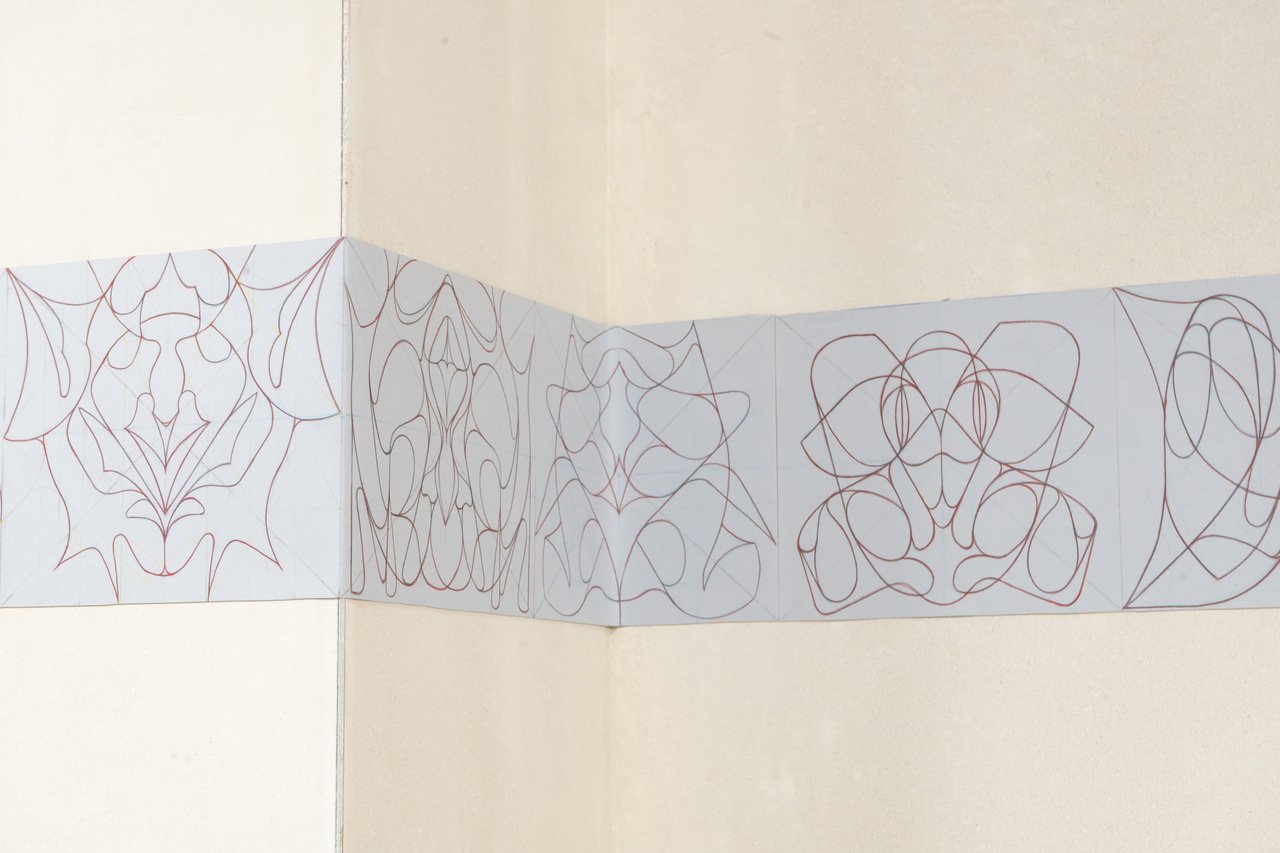
Image courtesy of the artist.
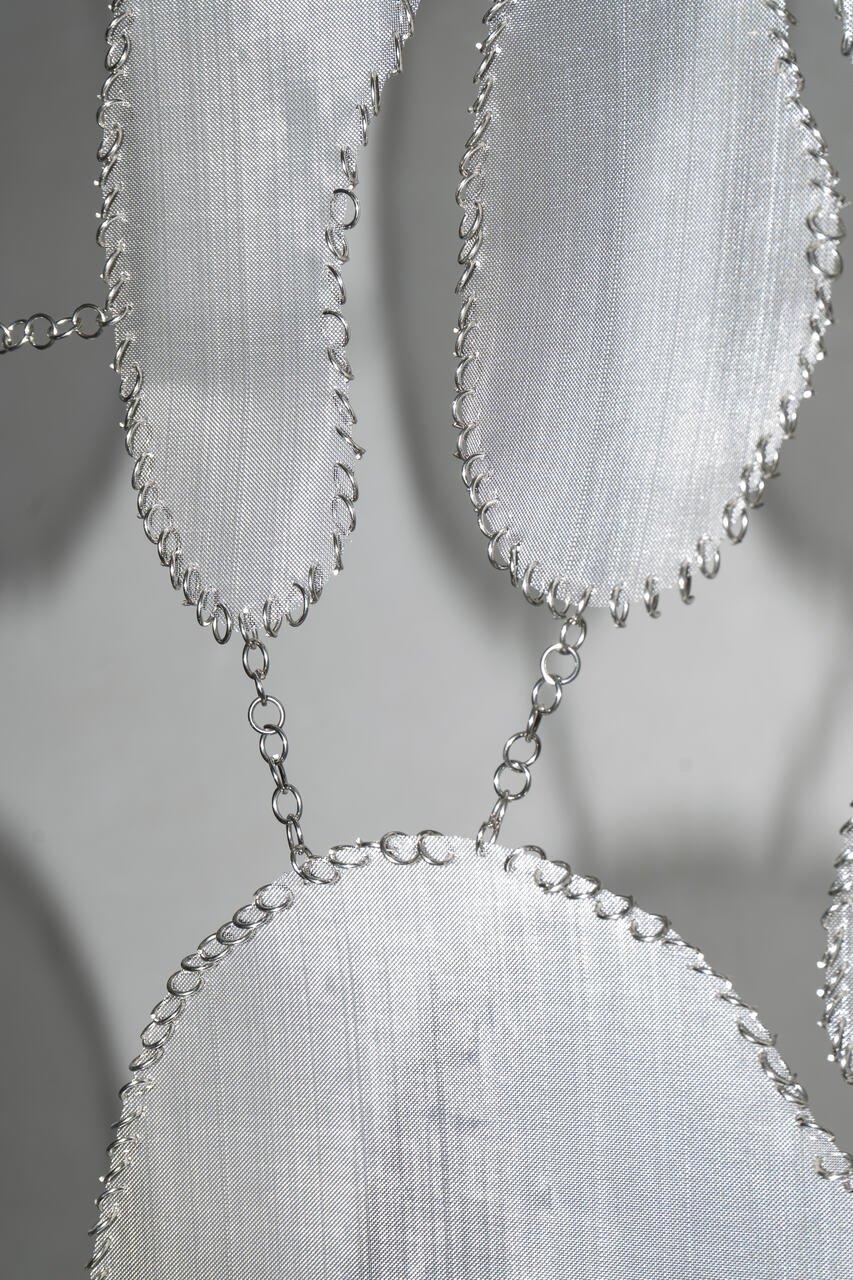
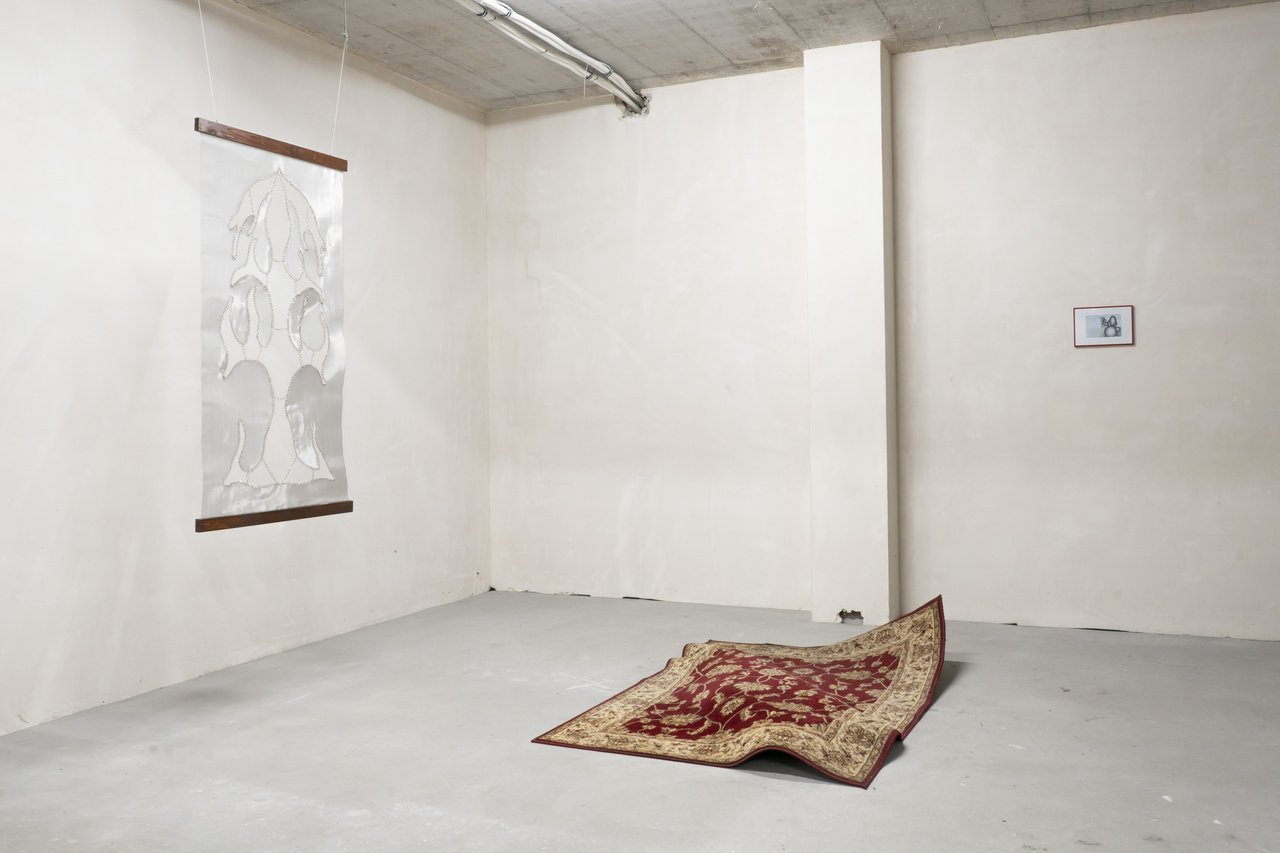
Marta Matysiak The object is a contemporary reworking of the motif of the tree of life, present in the folk tradition of paper cut-outs. It utilizes a wire mesh instead of paper, juxtaposing the industrial material with an organic form.
Emptiness is an important element of the project. In traditional cut-outs, the image is created via cutting out shapes and juxtaposing specific pieces of paper. The relationship between the material and the non-present is thus thrust into the foreground. Emptiness is also correlated to the invisible processes that support everyday life. I address the issues of reproduction of everyday life, understood as the repetitive activities and relations which render the functioning of entire societies possible. Care work, housekeeping, time management, rest, and upkeep of social ties aren’t always seen as value-producing activities, even though securing income or social and economic order would not be possible without them. In this sense, empty spaces can be seen as spaces of invisible work. What cannot be seen is not absent, but rather organizes the totality.
The steel mesh further allows this logic to be juxtaposed with the experience of contemporary work. The material is light and delicate, yet at the same time technical and industrial. Its repetitive structure evokes the modularity of contemporary production and work processes. The object thus remains somewhere between ornament and structure, nature and industry, presence and lack. The traditional motif of the tree of life is not here a symbol of a ready-made, harmonious order. Rather, it becomes a model of a system that must be constantly sustained, and whose stability also depends on what remains invisible.
Martyna Modzelewska’s works include: Bull anxious before entering a china shop, Baddie egg, Back when I’ve had shiny nails and you were in my DMs, and The woke is back .
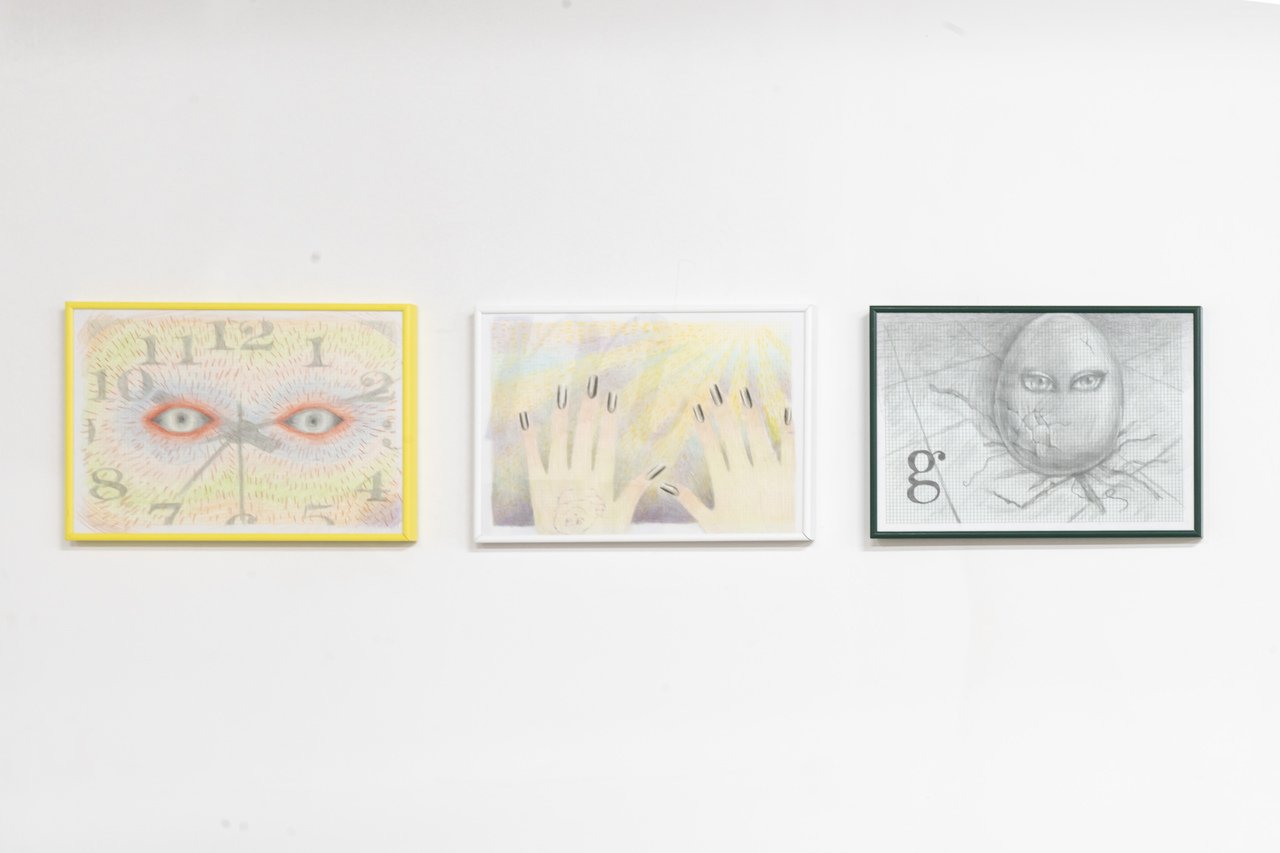
Image courtesy of the artist.
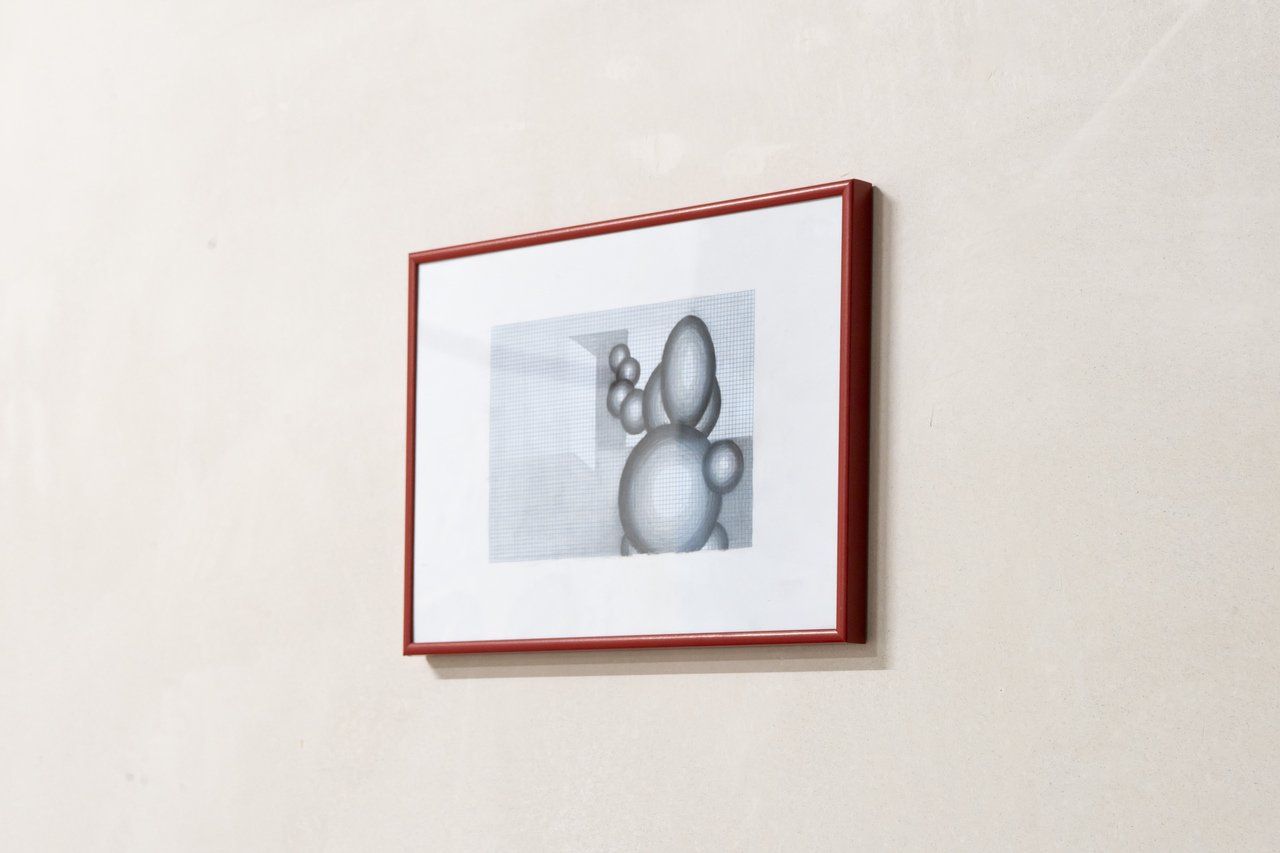
Photo: Lena Pierga. Image courtesy of the artist.
Joanna Ogińska The artwork grows out of the experience of the death of the artist’s father and the attempt to examine the information that began to appear after his passing. Death, which is supposed to function as a definite boundary, turned out to mark the beginning of a series of unanswered questions. The secrets that appeared in actuality constitute the dynamic that has accompanied the family through its entire life. Every few months, new information was emerging, alongside further pieces of the story and things which have not yet been uttered. Thus, paradoxically, the father’s absence does not mean his disappearance. The passing becomes a moment of revelation: his presence manifests itself differently than before through the stories, traces, and facts which appear only after his death. The process of discovery does not end with departure but rather continues as if the absence kept generating new forms of presence.
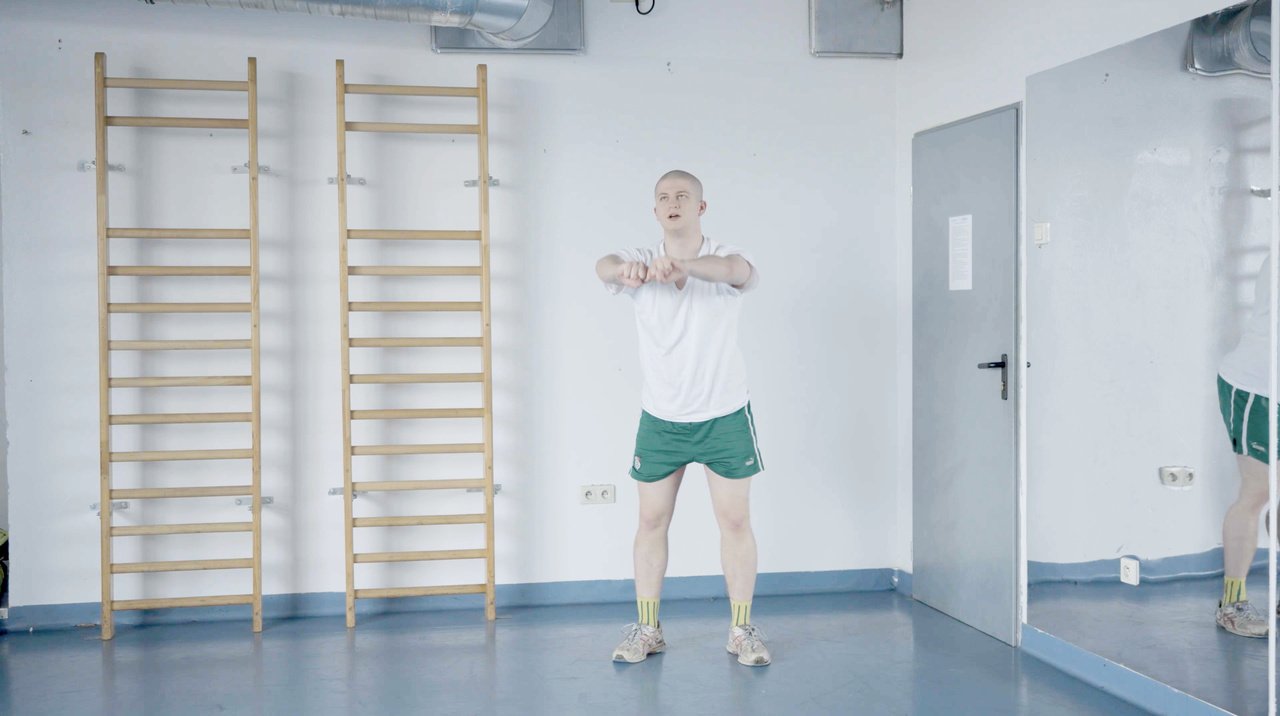
Lena Pierga The artwork explores a tension between individual effort, external discipline, and an endless search for a sense of belonging. The sound of a whistle and a ball bouncing off a linoleum floor, the smell of a rubber mattress mixed with sweat. I wonder if there are things we can never forget, no matter how insignificant they may seem. I’m curious about the silent trauma hidden in the collective choreographies encoded in the body over the years in the Polish educational system. The relationship between synchronization and yet an inevitable feeling of solitude. I’m revisiting a school gym, reliving the days of graded physical fitness tests. Is this movement truly yours, or does it belong to someone else? Standardization provides a clear framework, allows for optimized performance, and at times offers a sense of security – but usually only for a moment. Collective forms of movement, while providing a momentary sense of stability and belonging, simultaneously reveal their oppressive nature through the demand for order and elimination of deviations. Can shifts and disruptions in rhythm become tactics for negotiating imposed structures? I wonder if it’s possible to escape a sense of anxiety and loneliness – or to find agency within those existing forms.
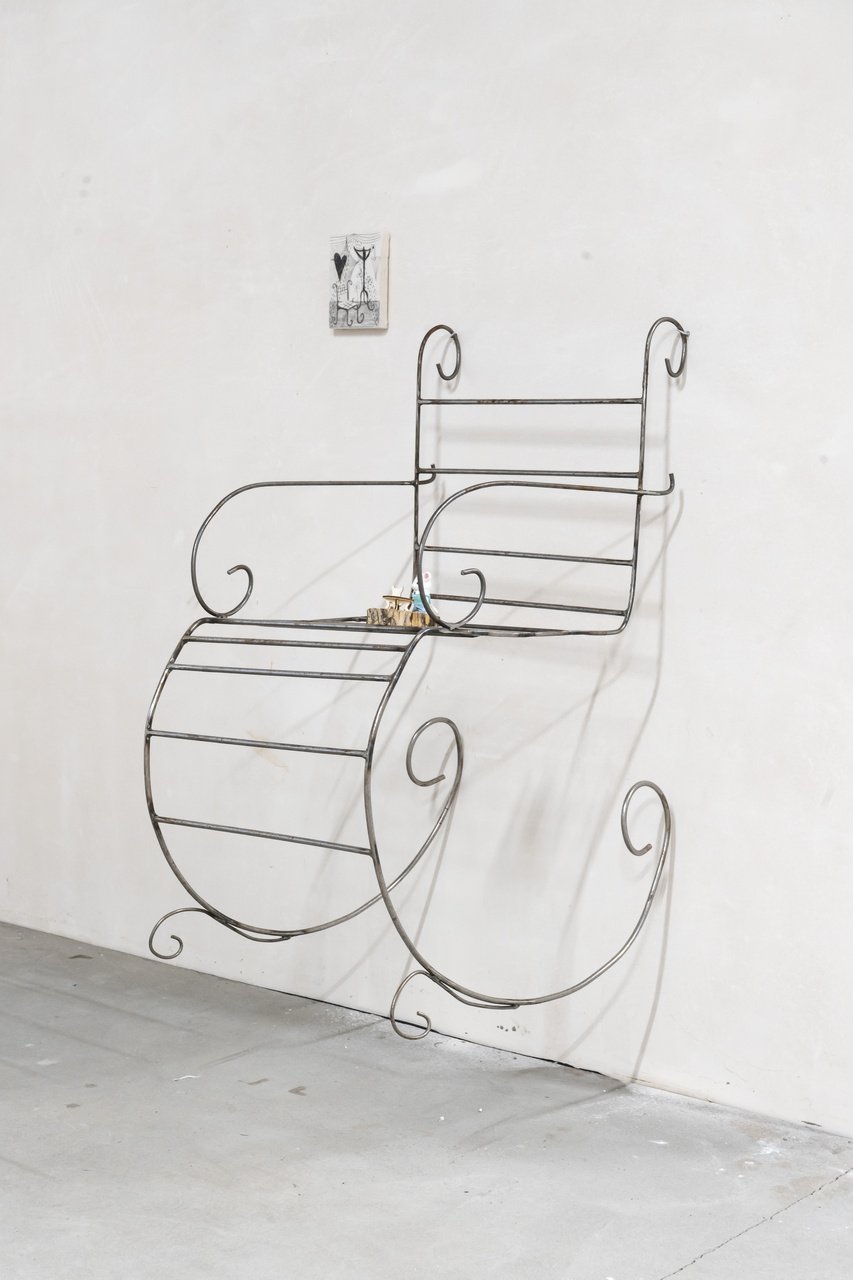
Kacper Tomaszewski An armchair is a symbol of the coziness and comfort that we usually associate with home. The piece shown here, however, is openwork, cold, and made of steel. Instead of evoking the sense of comfort, it raises a question: where exactly is the comfort to be found, and isn’t it only an illusion?
On top of the large metal armchair sits another armchair – this time made of wood – with a small Sylvanian Families mouse figurine. The contrast in scale and materials creates an image of apparent warmth juxtaposed with the coldness and weight of the large object.
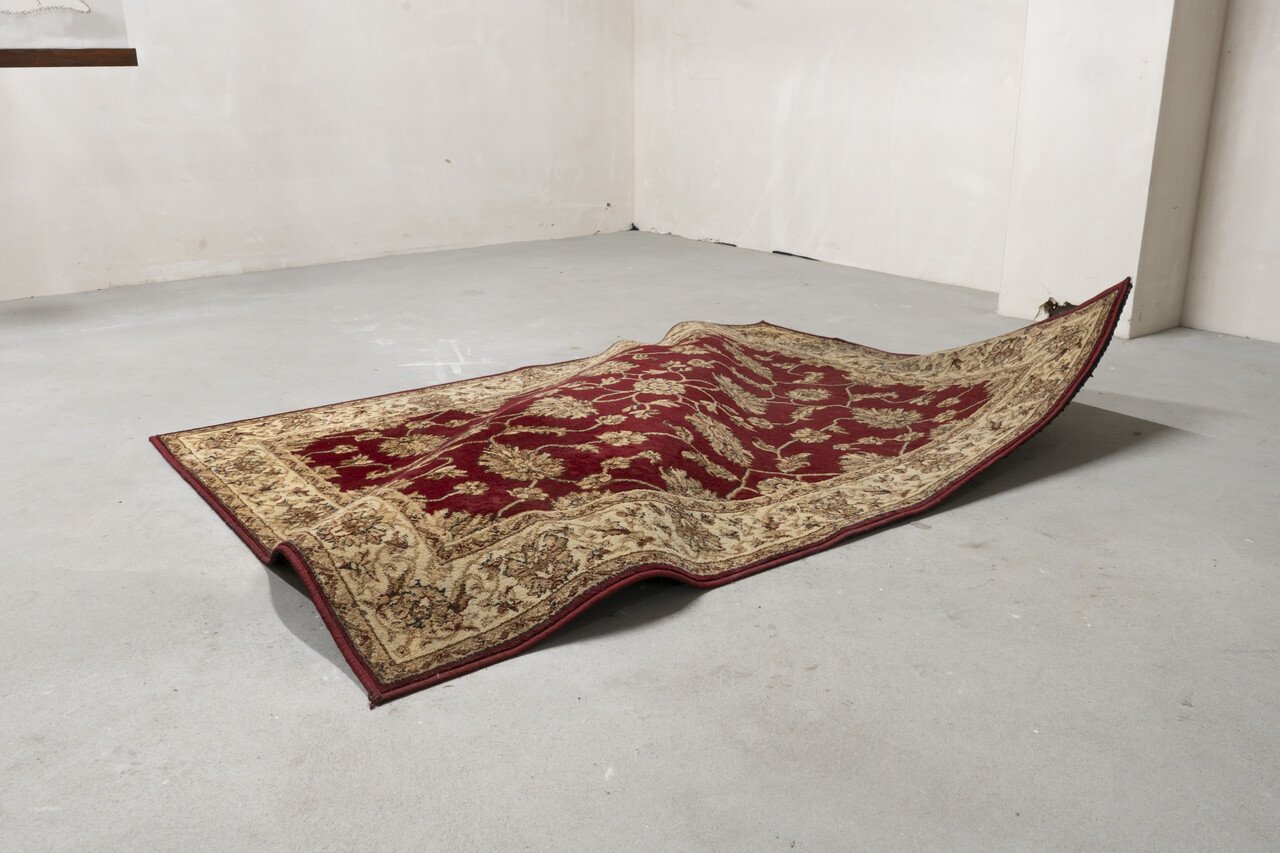
Familiar, everyday objects used in this series of works establish a relationship between the interior and the exterior, revealed through simple actions of closing, covering, and filtering. They define boundaries, separate, and sometimes simply enclose. It is precisely through these simple gestures that safety ceases to be merely a slogan and becomes something physical and tangible.
Artists: Michał Ciesielski, Michalina Czerwońska, Paula Jędrzejczak, Justyna Kramarz, Paweł Marcinek, Marta Matysiak, Martyna Modzelewska, Asia Ogińska, Lena Pierga, Kacper Tomaszewski
Exhibition Title: Regions of Silence
Curators: Michalina Czerwońska, Mateusz Włodarek
Venue: Przyszła Niedoszła
Place (Country/Location): Warsaw, Poland
Dates: 24.09 – 11.10.2026
Photos: Lena Pierga and Karolina Jackowska.