
emet ezell
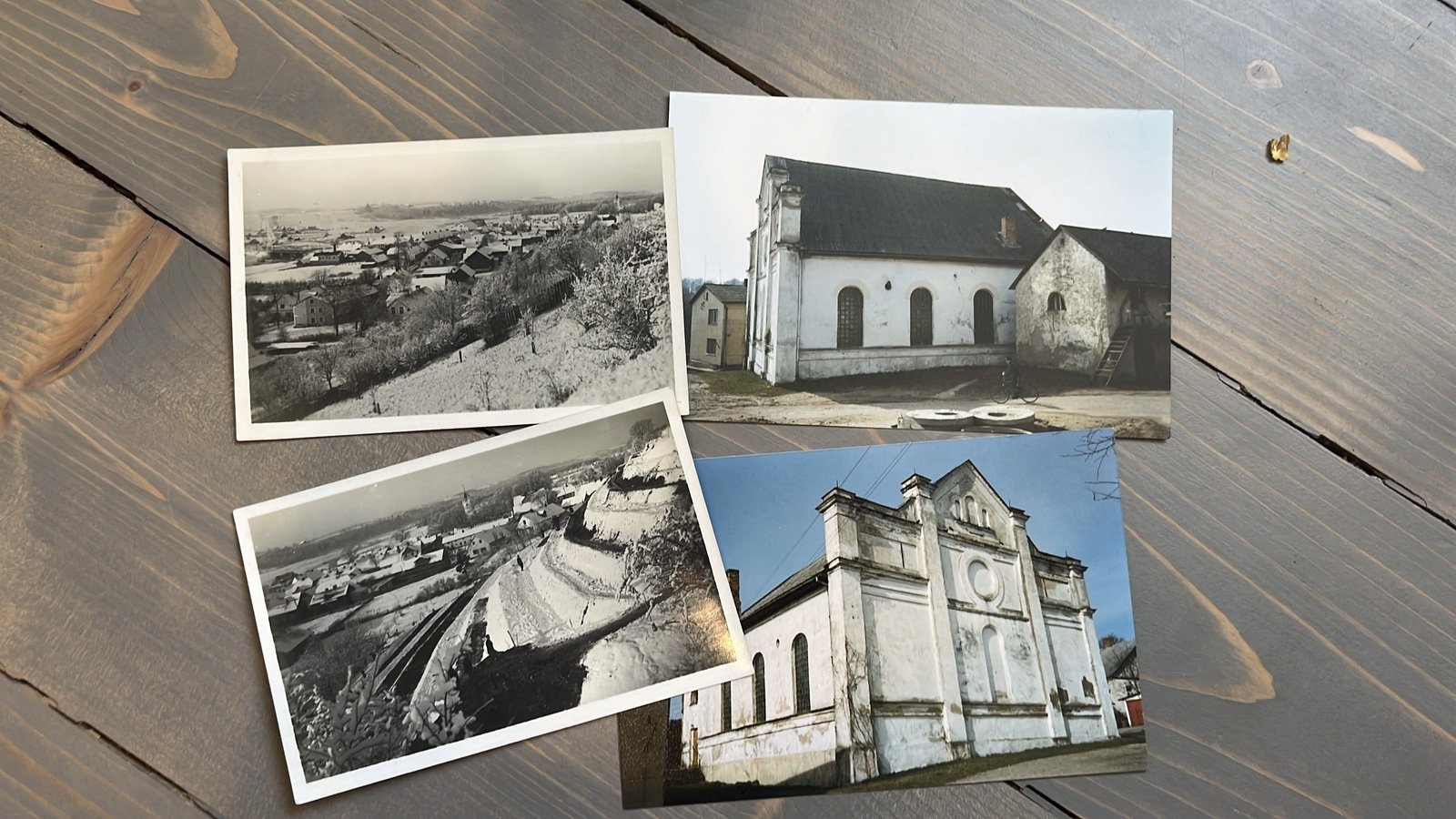
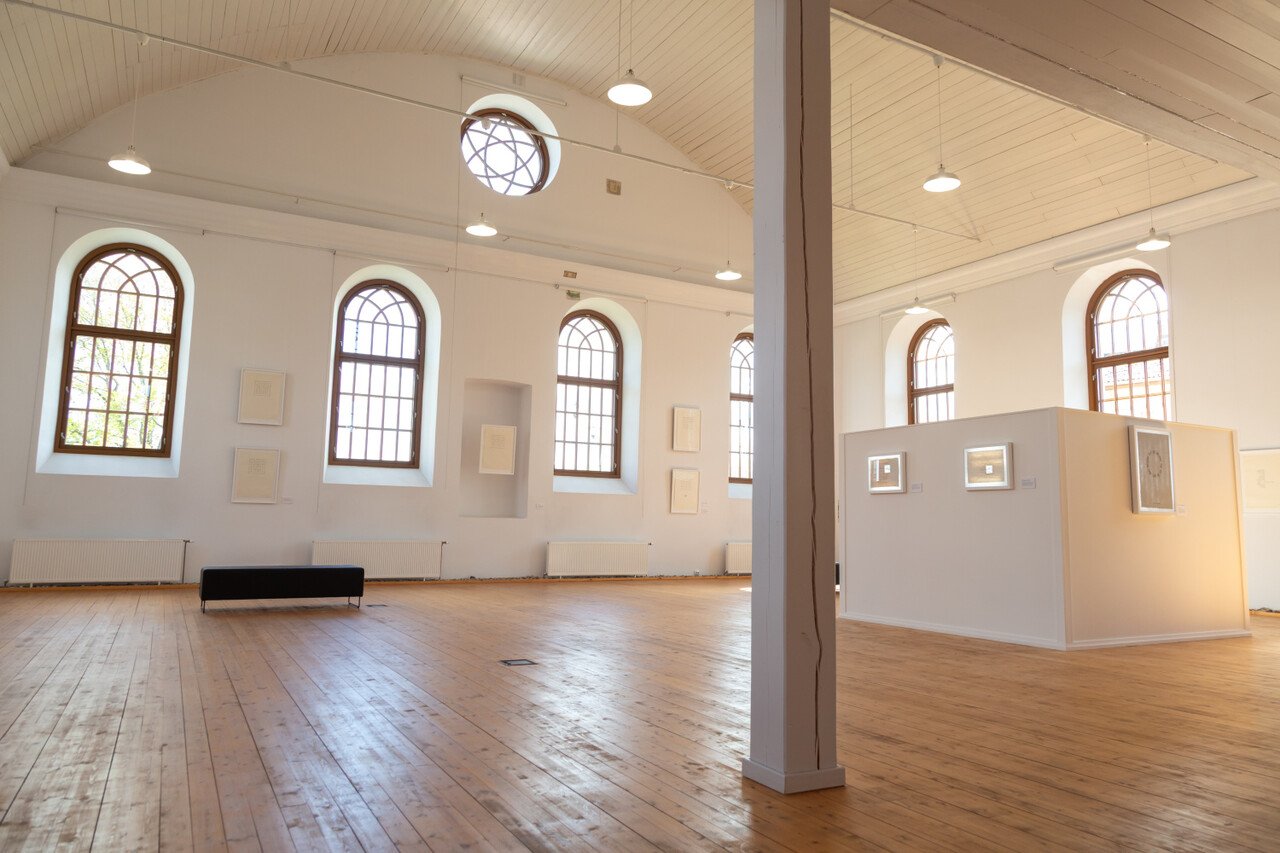
The first time I walked into my family’s stolen synagogue, I did not know it was a synagogue. I saw no plaque, I saw no sign, and I found no information denoting its prior century of use. I was working entirely from intuition, wandering through meadows while frothing at the mouth. The synagogue sat perched on the banks of the Abava river in Latvia. When I asked after the heritage of the building, the woman at the front desk chirped: “history is history.” She had lacquered nails and blonde hair; almost silver but for a subtle platinum sheen. I later learned that the synagogue had been abducted, used to store apples during Nazi occupation. Sabile, so infamous for her orchards. After the collapse of the Soviet Union, sculptor Ojārs Arvīds Feldbergs initiated the building’s restoration. He transformed the structure into a contemporary art gallery, tenderly lining the perimeter of what used to be a dirt floor with stones. Twenty years later, I walked through the doors. The woman at the front desk swiveled in her plastic rolly-chair and smacked her gum. “What happened to you is over now,” she told me. I put the entire synagogue into my mouth and clamped down.
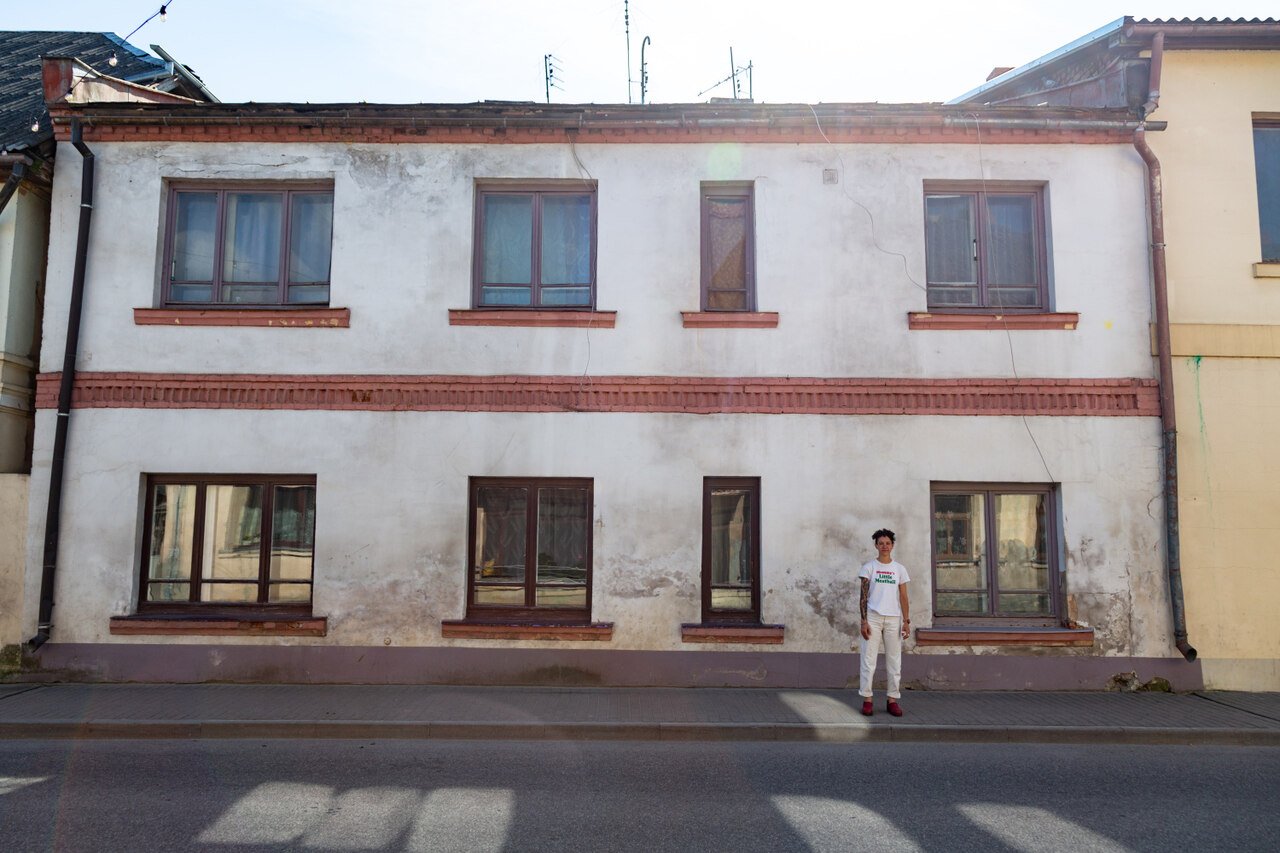
It took a century for anyone in my family to return to Sabile. Wars, occupation, appeals to the Soviet Union, and rejection of those appeals. I have all the paperwork, though it is useless now. I even have the deed to my family’s house, which my great-grandfather, Yitzhak Shmuel Blumenthal, smuggled out with precious care. Our home stands in the center of the village. The structure is no longer the Blumenthal bakery – no – like most of Sabile’s abducted properties, the building is managed by the municipality, subsidized and rented out to the local Roma communities.
In the mayhem of World War I and its accompanying refugee crisis, the russian Empire deemed the Jews an “enemy nation,” a hidden and venomous force that needed to be plucked out, cordoned off, disciplined, and removed. In 1915, Jews, Muslims, and Germans living in the Baltics were deported – the entire border region ethnically reconstituted. This massive and systematic displacement often goes unexamined, eclipsed by the Holocaust and its subsequent maelstroms. Yet the event fully unraveled the fabric of communal life.
At the time of the deportations, Sabile contained roughly 130 homes. The village was primarily inhabited by Yiddish and German-speaking Jews, as was the surrounding area. On May 15, 1915, the Jews of Sabile were rounded up and dragged from their homes. Soldiers looted property and gouged out the eyes of hostages with spoons. Like many deportees, my family members were sent to labor camps in russia’s interior, their homes raided and re-appropriated by russian soldiers and Baltic citizens. Across Latvia and Lithuania, these deportations were carried out on the Jewish holiday of Shavuot.
When I touched the ground of Sabile, I was startled by its familiarity.
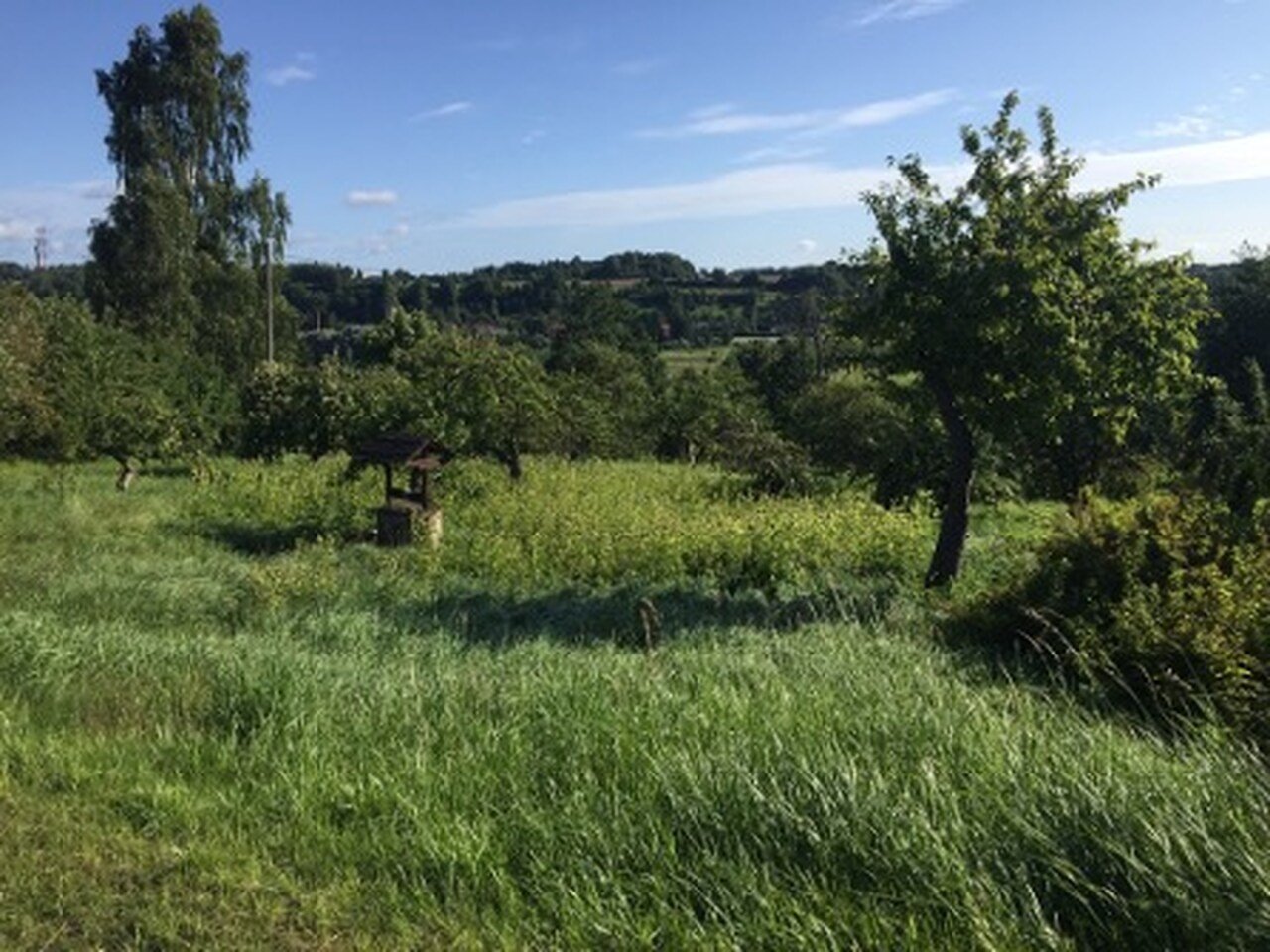
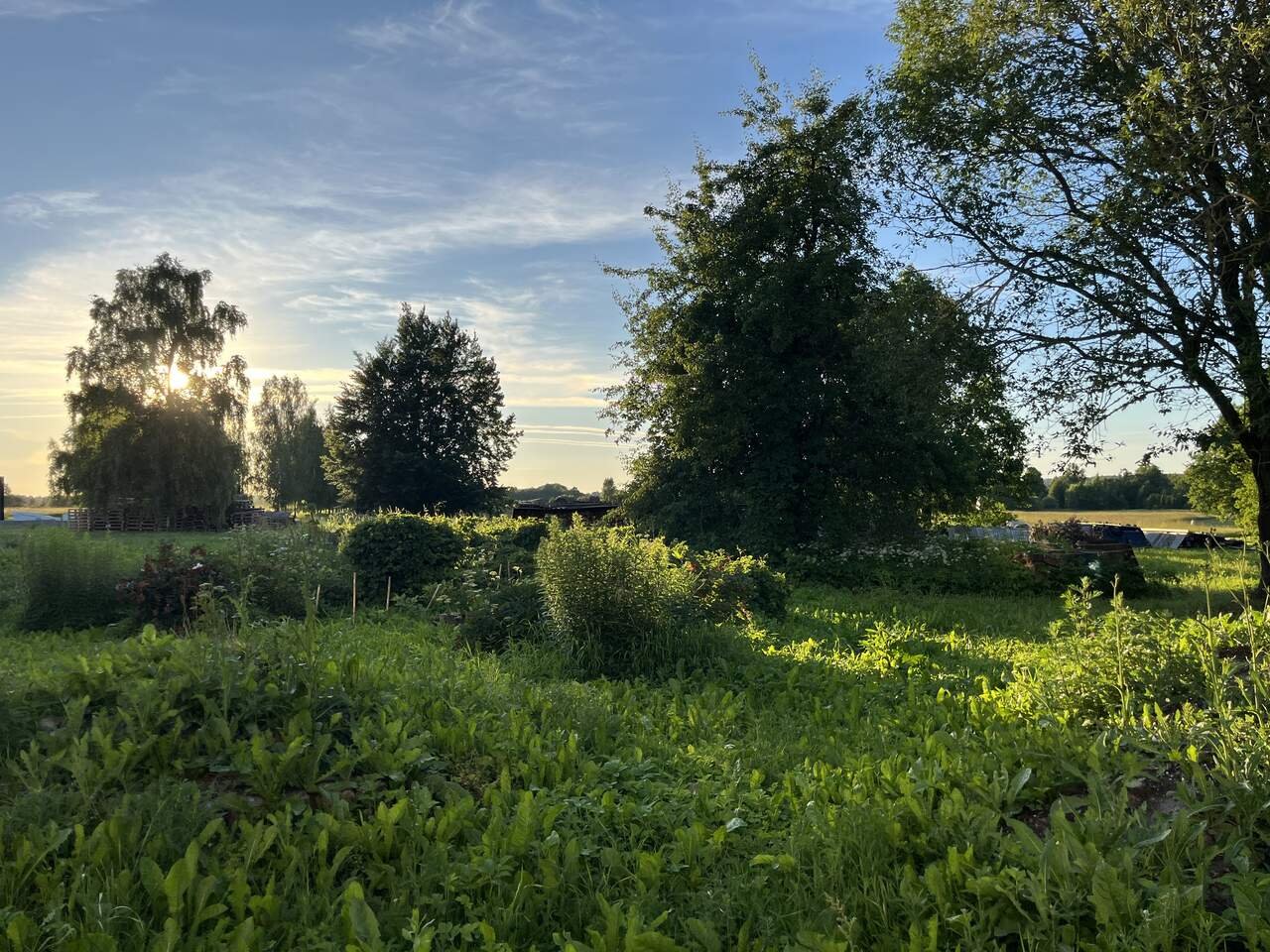
What to make of all this beauty? The way each bird called my name. And how the flowers drew a single pale path towards the cemetery gate, speaking in symbols only I could understand. I bellowed when my arms banged against the fruit trees; their limbs so pregnant with apples that each canopy bent out of shape. Slobbered with grief, I crawled. Hands and knees. Hands and knees. Only the ground could greet me. I collapsed into soft dirt and stuffed the grass into my mouth. The grass, of course, had been soaked with pesticides from the nearby rapeseed fields. No one was coming.
I grew up in an authoritarian household in Texas without the knowledge of who I was or where I came from. All evidence of the past had been removed. And yet, when I gaze upon my childhood from this beleaguered vantage point, I can see history’s great streaks in every frame, even as they were intentionally obscured. “The first act of self-censorship is not knowing your own ancestry,” poet Asmaa Azaizeh reflected at a reading in Berlin[1].
Before I was born, my ethnically Jewish mother converted to fundamentalist Christianity and surgically altered her nose. She never once spoke of her lineage. To this day, she denies it. Clobbered by fear and by shame, my mother took a thick marker to the world, expurgating content she deemed either unfit or dangerous. My books were strewn with holes: sentences, passages, and entire pages crossed out. The most strongly censored utterance in our household was the word no. Touching Sabile felt like touching my mother: something at the center had been scooped out.
From a young age, I learned to sense not only what was said, but what was unsayable – that which had been redacted. My teacher, Dr. Avivah Gottlieb Zornberg, once described the Torah as an intricate garment – a linguistic decoration woven around events so traumatic that we cannot speak of them directly. Art enacts a similar function. It brims with subtle hints while eclipsing its core.
I had inherited a cultural history as full of gaps as my childhood books. It took me many years to recover the information that had, for decades, been withheld. In returning to my family’s village, I was collapsing a geographical distance that had, in effect, rendered history into abstraction. And abstraction is easily manipulated. And so, I returned to Sabile to see the face beneath my mother’s face, what her double veil had permanently obscured.
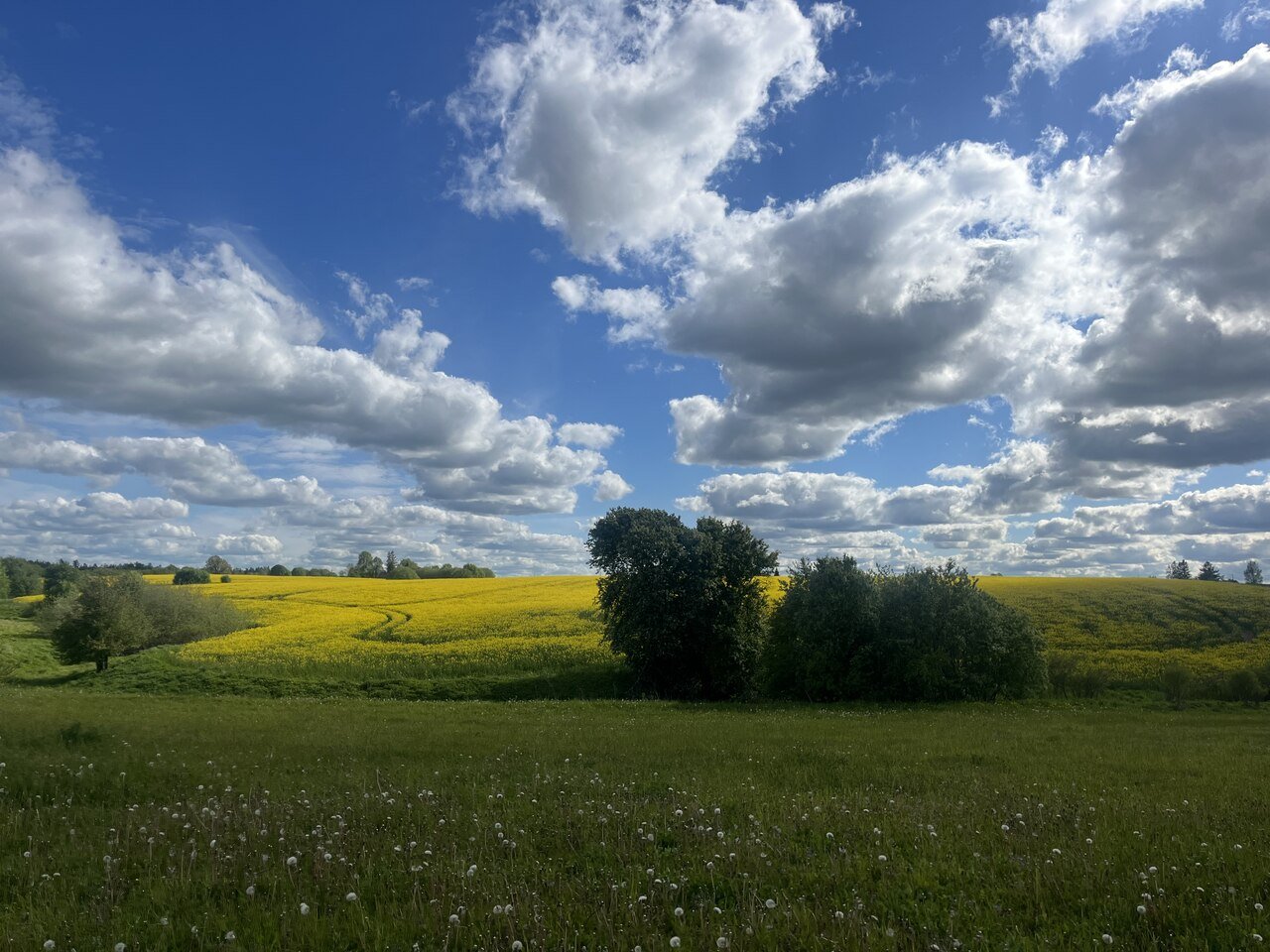
Crosswind of orange blossom. Wiggling birch and dandelions. Such a surprise, these yellow fields. When I lay in our plundered lands, the ground felt soothed. Soothed the way a starved child is soothed. Only for a moment before the wail begins again, then turns to limp weakness. I am the land’s and the land is mine, I thought. Unbreakable and yet totally broken bond. Beauty laced with blood. I felt nauseous; I turned over to vomit in the grass.
I crossed a small ditch and approached an emptied house. I wanted to see what remained. Unkempt, the grass reached higher and higher. Silver willow trees bursting through the rooms. Large vines encircled orange brick – the roof entirely gone. At my feet, a black snake rested on a silver sheet of metal. Wound up, coiled. Was this warning or welcome? The snake caught sight of me and began to unfurl. A gray v-shape on its neck. Viper. What is plundered property to a snake? I thought, my eyes trailing green grass. I could feel the snake in me – wriggling up my vertebrae. Snake surging my hips. Snake spitting forked tongue out my ass.
And I wanted it all back. The river, the fields, the lush orchards, our bakery, our graves, our graves, our graves, and again, our graves. Something assumed to be fixed was, through my return, being unsettled at its core. Droplets of blood rose in the palm of my hands and formed a small circle. “Sabile is now 100% Latvian,” the woman announced from her plastic desk in the synagogue. You fool. Don’t imagine the dead rising from their pit; imagine me, standing before my family’s plundered home in a t-shirt mass-produced in China. Mommy’s Little Meatball.
In May 2025, an exhibition of my work was installed in the abducted synagogue – now Sabile’s Arts and Culture Center. Inside the main hall, I hung twenty-one letterpress prints of my poems, poems that referenced multiple layers of history in the place as well as the limitations of return. In the aftermath of ethnic cleansing, is return even possible? In what form? At what cost? I had drawn upon a vast and eroded Hebrew printing tradition to produce each work, printing poems on either antique paper from the Soviet Union or paper that I had made by hand. Incorporated into the prints were secret names of God that I had printed using a case of rescued Hebrew type. In halakha, God’s holy name cannot be thrown out – it has to be buried in the ground. I was filling the synagogue with bodies.
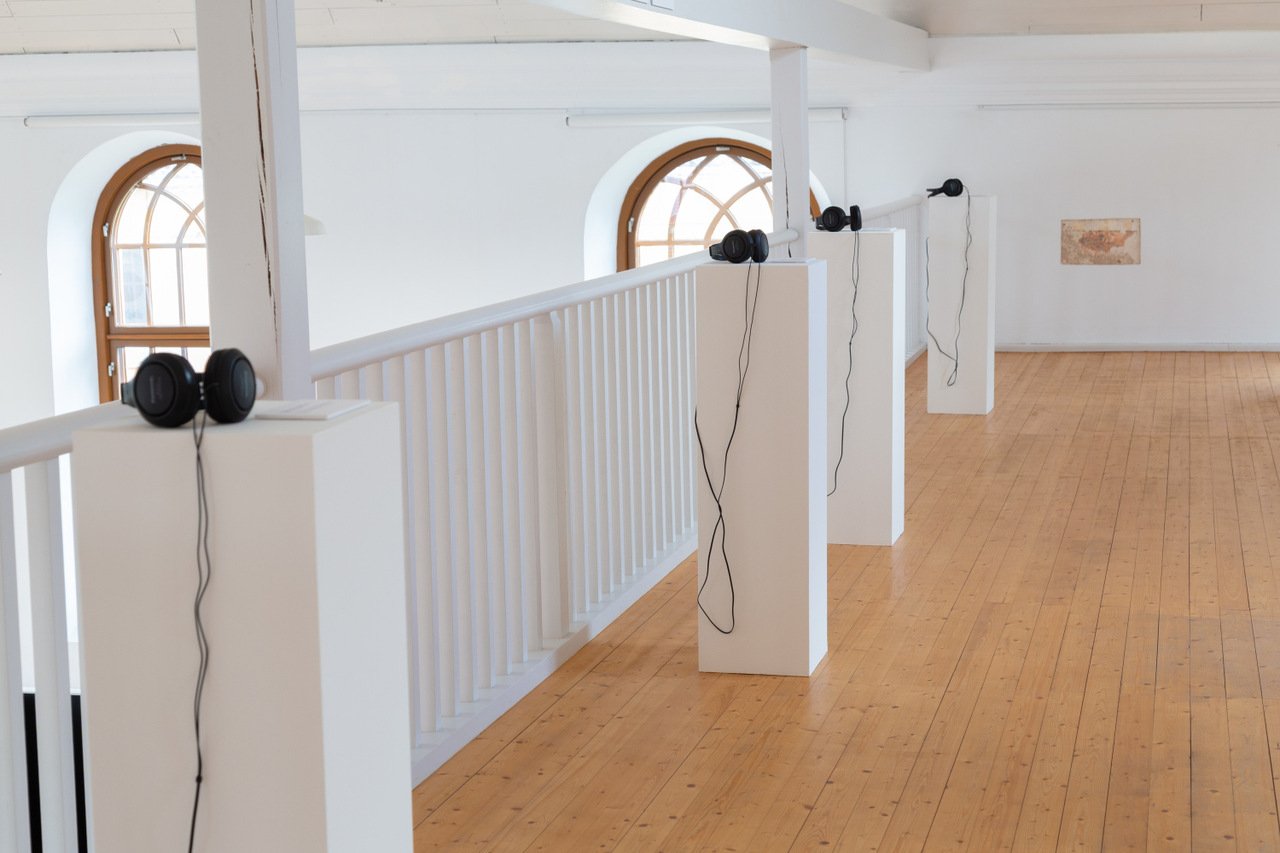
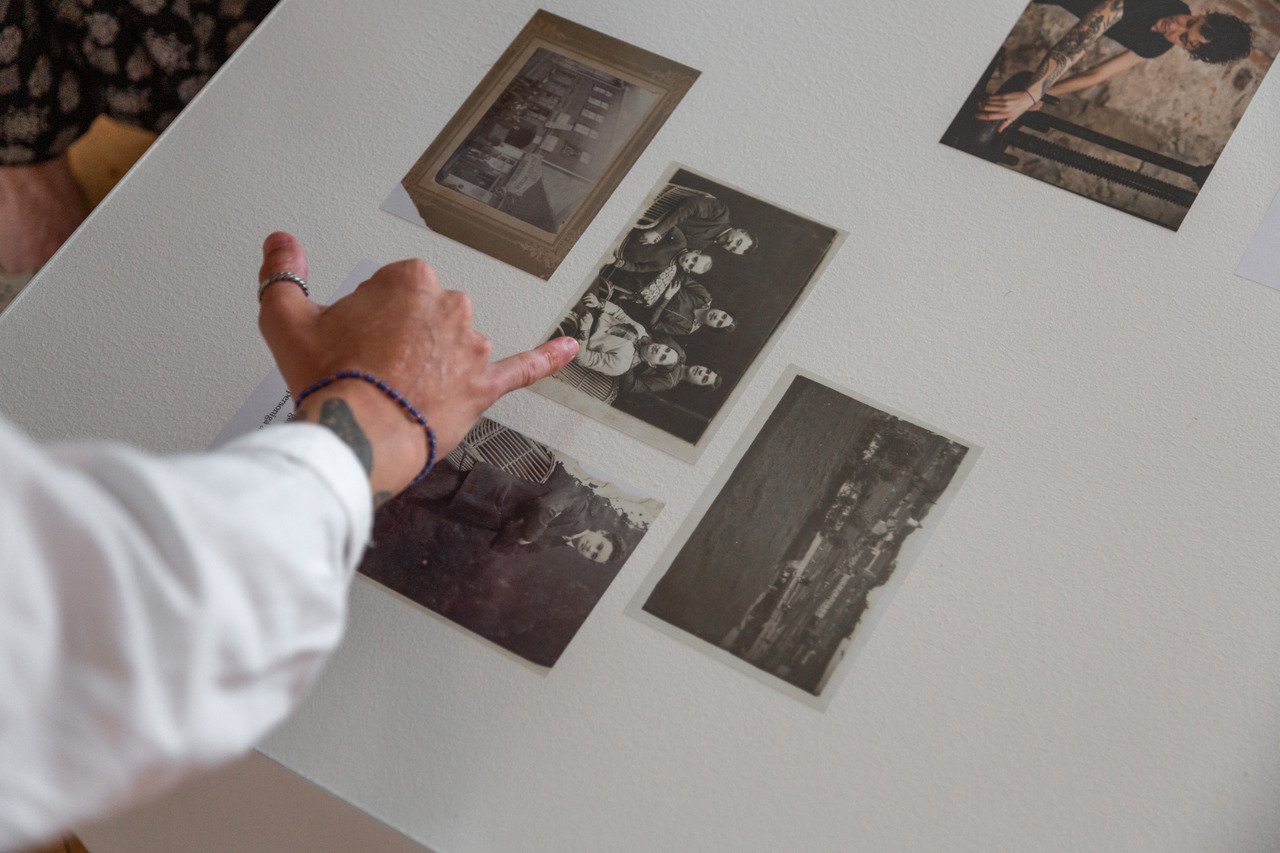
Upstairs, in what used to be the women’s gallery of the shul, I mounted a sound installation entitled Thou Shalt Not Take. This piece included recordings of four traditional Jewish melodies, melodies that could have been sung in the synagogue a century prior. With sound engineer Sam Hatchwell (Hoyah), I’d sung and recorded these folk melodies in Berlin. Alongside the sound, I staged archival photographs from my extended family’s private collection as well as ephemera that detailed my handmade paper and typesetting practice.
This installation included images of Sabile that many Latvians had never previously encountered. The Soviet occupation had erased much of the past through visual censorship, destroying or manipulating state photographs alongside village archives. For many local villagers, my family photographs were particularly shocking. I was holding shards of a past from which they, too, had been kept.
When my exhibition opened, a local schoolteacher wrote a public post calling on the entire country of Latvia to boycott the show. Friends intervened, but the woman had drawn a crowd. My exhibition was a disgrace to Latvian history and Latvian honor. I was relying on russian historians who were unfamiliar with the region. I was importing Jewish myths, family legends, and collaborating with local enthusiasts. I was confused. I was mad. I had not consulted the proper experts. The post was written in Latvian, so someone translated for me: “…there were no pogroms in the region; the Jews just abandoned their homes.” And the Armenians abandoned their homes. And the Papuans abandoned their homes. And the Kurds abandoned their homes. And the Cherokee abandoned their homes. And the Palestinians abandoned their homes. It is a familiar and oft-repeated deception. But the soul cannot be fooled. The mind, certainly. And maybe the body. But not the soul. The schoolteacher persisted: “The 1915 deportations were not acts of violence,”she wrote, “they were imperial policy!”
We are, all of us, haunted by imperial policy. But the haunt is not the same.
It was only in and through this direct contact with the ground – my ground – that I understood, viscerally, how the story of Sabile is the story of my mother, and how the story of my mother is, simultaneously, the story of Sabile.
In her seminal text, The Colonizing Self, Hagar Kotef writes:
“Insisting on the violence in the ruin is first and above all a political claim. It is to insist that a past injustice cannot simply be erased; that when an atrocity takes place, its meaning cannot be completely altered by those who generated it or those who come to benefit from it; that the significance of all that remains cannot be cancelled.” [2]
All my life I’d carried the fallout from an event I’d never been able to locate. How to describe it? Four generations of clench.
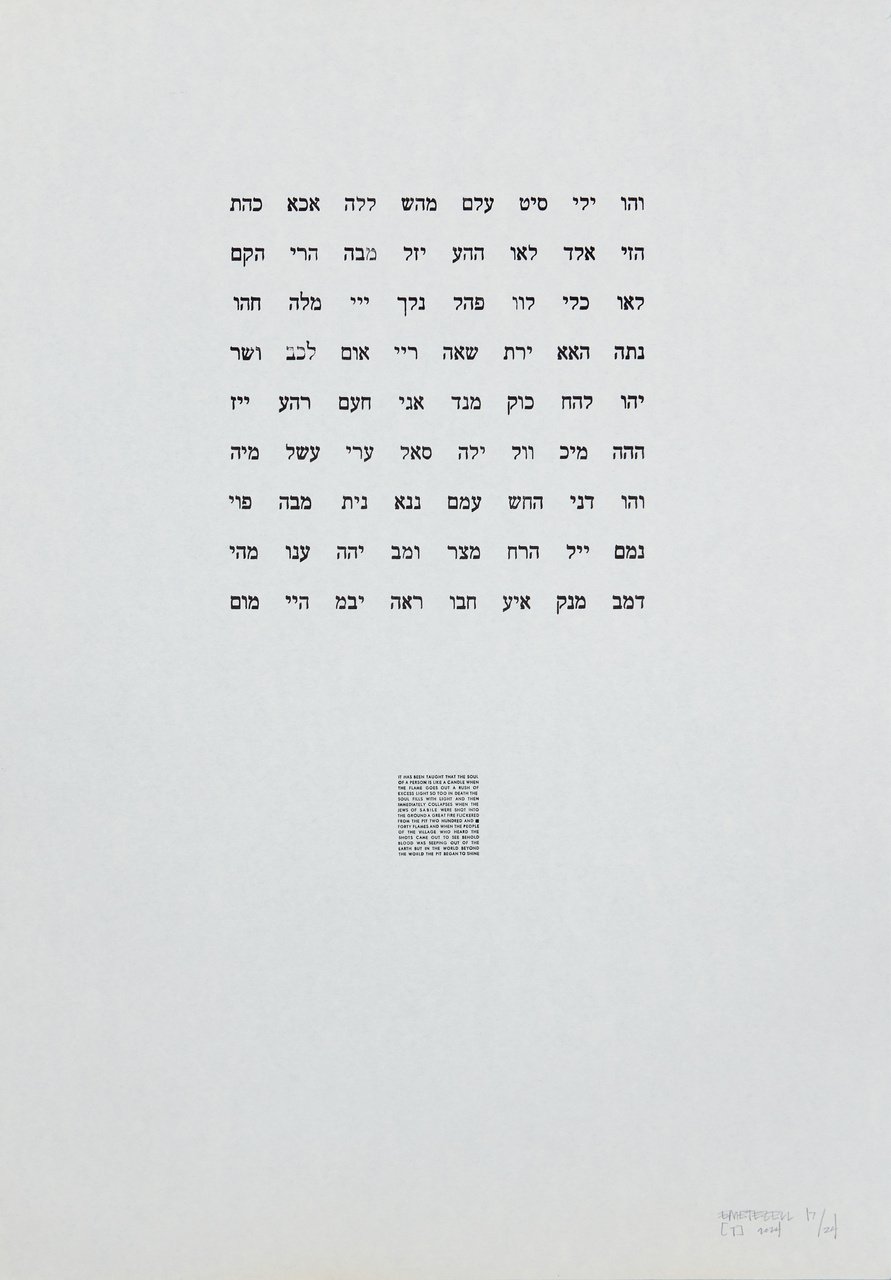
Downstairs, where the Torah was once stored, only a carved notch remains. There, on the eastern wall, I installed my work Unleash the Names, a polyptych of five prints that contain the secret, seventy-two letter Hebrew name of God. A singular poem moves throughout the name, integrating and then disappearing altogether. The poem reads as follows:
it has been taught that the soul of a person is
like a candle. when the flame goes out a rush of
excess light. so too in death the soul fills with
light and then immediately collapses. when the
jews of sabile were shot into the ground, a great
fire flickered from the pit. two hundred and
forty flames. and when the people of the village
who heard the shots came out to see, behold,
blood was seeping out of the earth. but in the
world beyond the world, the pit began to shine. [1]
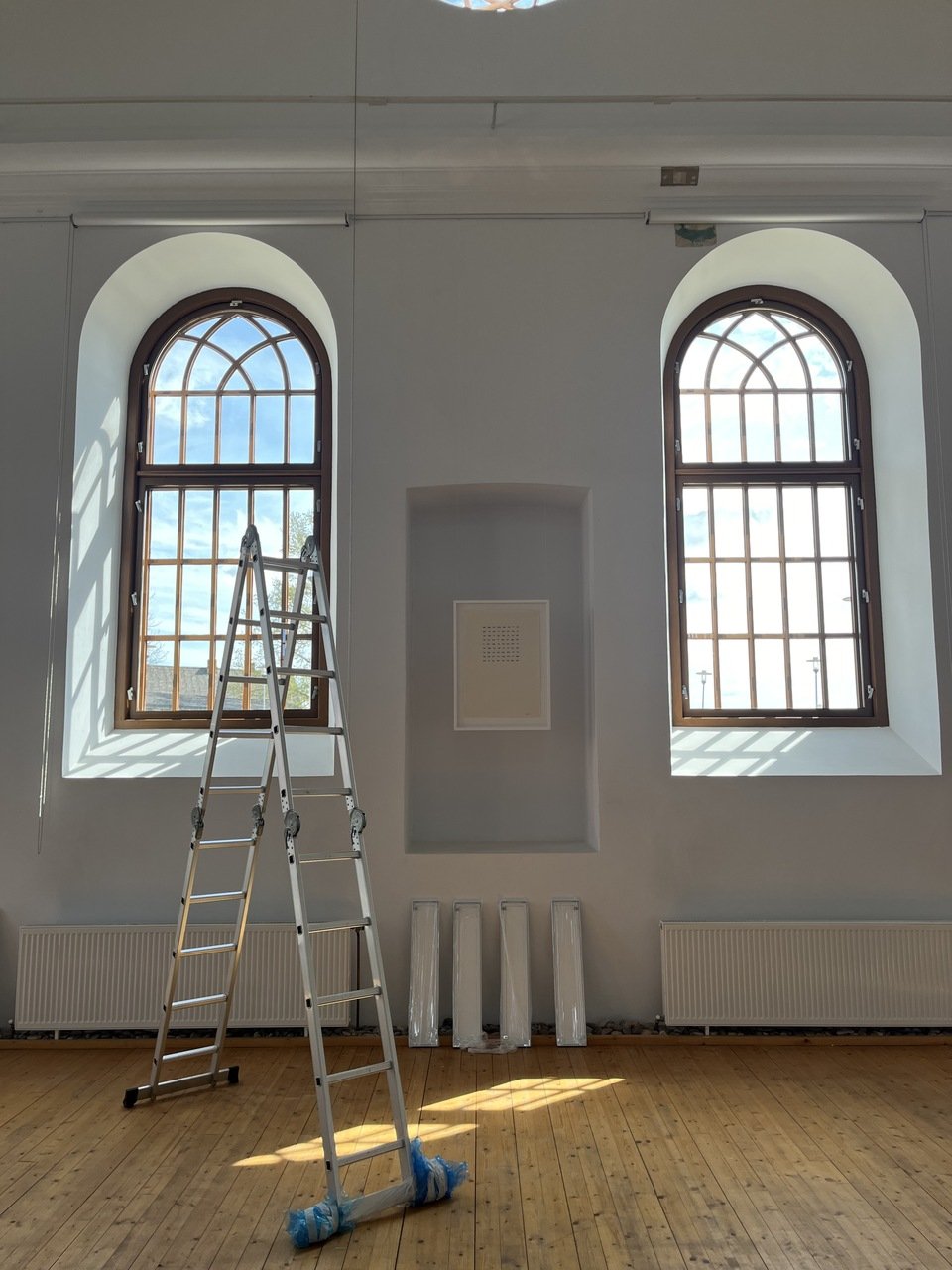
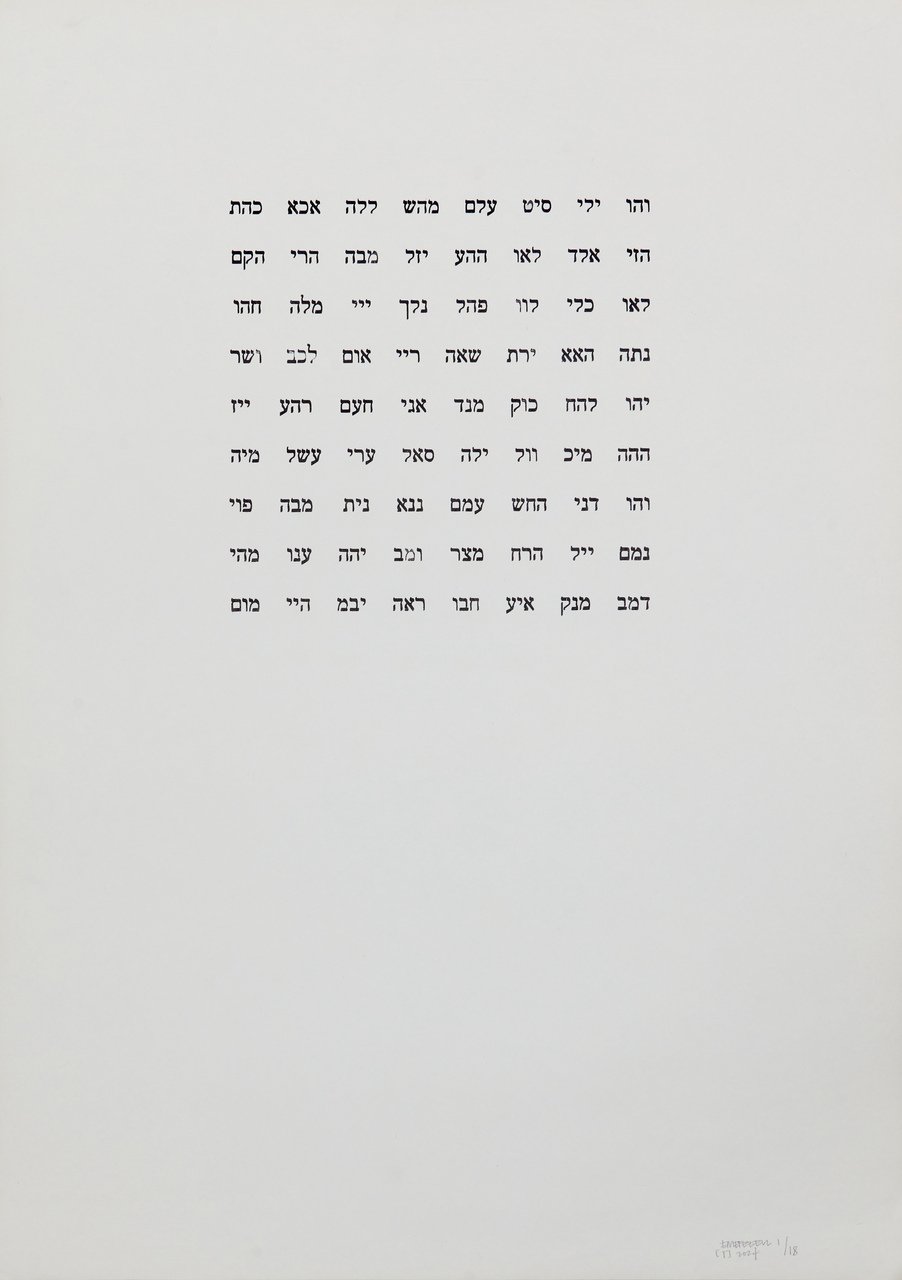
There is no way to move from the indefensible past into our contaminated present without going through a pit. And so, in the middle of the synagogue, I built a pit. It happened in the same manner that everything else had happened. I hurled my body to the ground and the ground told me what to do. The wooden structure was to hold all my handmade paper works – the most materially fragile pieces. It would echo the actual pit into which, under Nazi occupation, the Latvians had shot the remaining Jews of Sabile in August 1941. These handmade paper works were framed in custom light boxes, a way to illuminate the fibrous and seemingly translucent quality of the paper, but also a way to transmute the meaning of my poems. In the world beyond the world, the pit began to shine. But the pit was, in other ways, so much more than just a pit. In a mystical and very tactile sense, it was also my mother’s face.
One year earlier, sculptor Ojārs Feldbergs and curator Laura Miglone had driven me to the mass grave in Sabile. The site is a mere seven kilometers from the center of town, separated from the main road by a small ridge. Beside the pit is a large, gnashing trench – the mass grave that, under Nazi occupation, the Latvians had dug for the slaughter of the Roma. However, the Roma population was spared by the local mayor, who biked out to the soldiers and famously said, “In Sabile, the Roma are well integrated – no need to shoot!” And so, the Latvians shot only the Jews. The pit is now a tomb of moss accompanied by a gaping wound. One pit empty, the other filled.
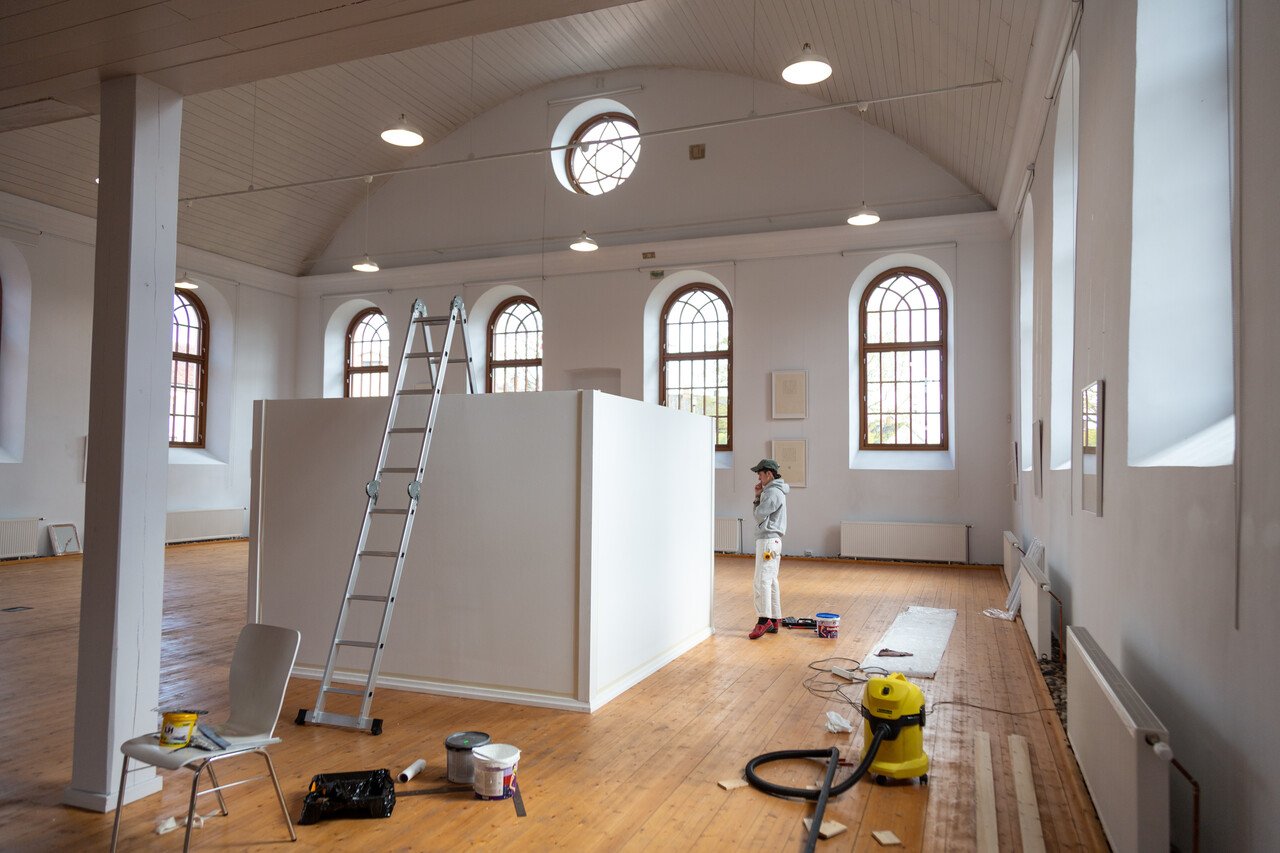
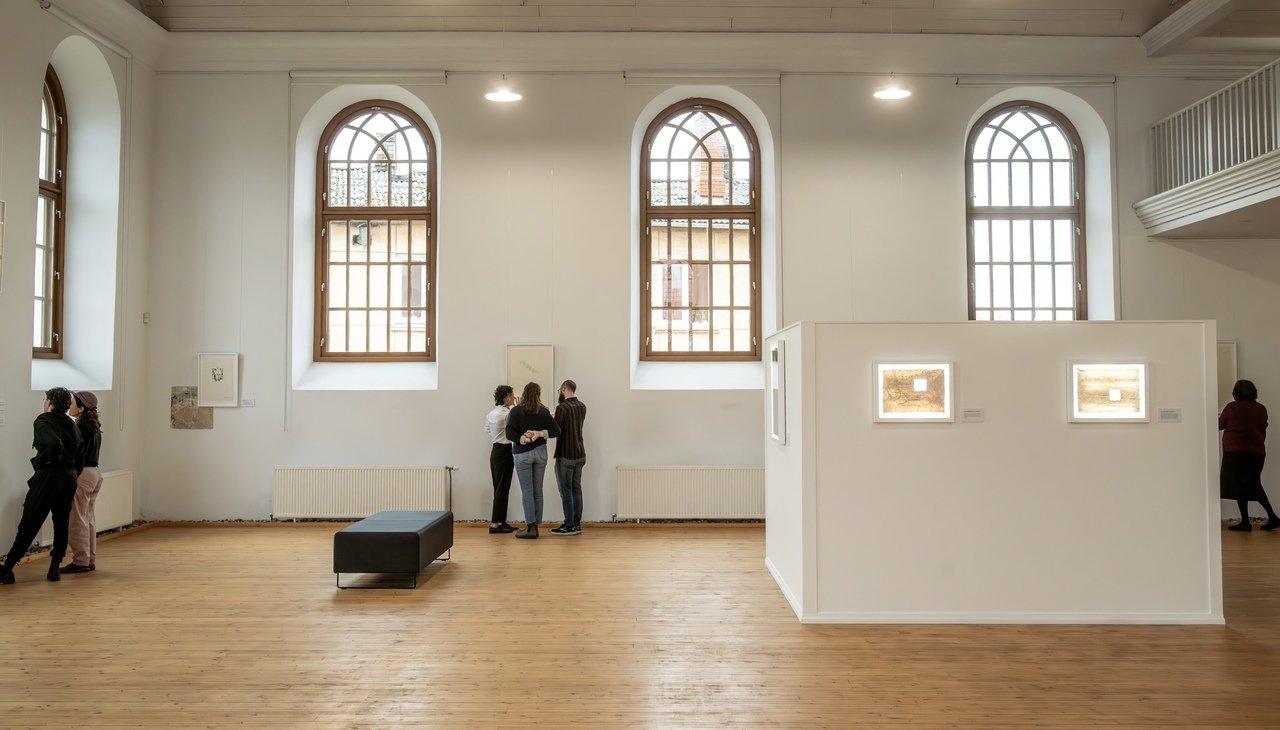
I pressed my naked palms into the earth and touched the pit with both hands. Ticks swarmed up my arms, my elbows. Then my back gave out and I couldn’t walk for three days. I laid in bed, fully horizontal, some two hundred and forty spirits lodged between my lumbar spine and my pelvis. The dead wanted me.
“You idiot,” croaked my grandmother through the phone, “what were you thinking?” I wasn’t thinking; I was propelled by a proximity that had been denied me.
Two environmental researchers from Canada came to the exhibition. By chance, they were in Sabile to research the pit. The researchers told me that decomposing bodies release large amounts of phosphorus. Produced from the ash of teeth and bones, phosphorus is used in fertilizers and in rat poison. It is lethal if ingested. Concentrated amounts (such as in mass graves) are highly reactive and highly toxic. Unlike nitrogen, phosphorus is immobile. It sits and sits and sits,sinking below the clay into the subsoil. Both an element and a mineral, phosphorus glows in the dark. The dirt a blinking record, cursed underbelly sky, ecocide and genocide, forever intertwined.
On the morning before my exhibition opened, I waltzed down the stairs of Pedvāle Art Park to eat my yogurt. Pedvāle is a miracle unto itself. An environmentally protected site and an international artist residency, the grounds cover a sprawling 100 hectares of land. Steep slopes, winding rivers – the landscape is embellished with vast stone sculptures. While the majority of the sculptures were made by Ojārs, many have also been made by past residents. Each year, more and more stones join the surrounding fields of Pedvāle. The German manor house was rehabilitated at the initiative of Ojārs and in 2020, the residency opened its doors to international artists. I arrived at Pedvāle for the first time in August of 2023, and have returned every summer since, working in the same studio. Ojārs and Laura introduced me to Latvian folklore, tradition, and song. I learned to collect lime tree blossoms for winter tea and to dry rooster pants in early spring. I am forever indebted to their kindness, a shared deposit of faith, of understanding, or as Ojārs might say, “destiny.”
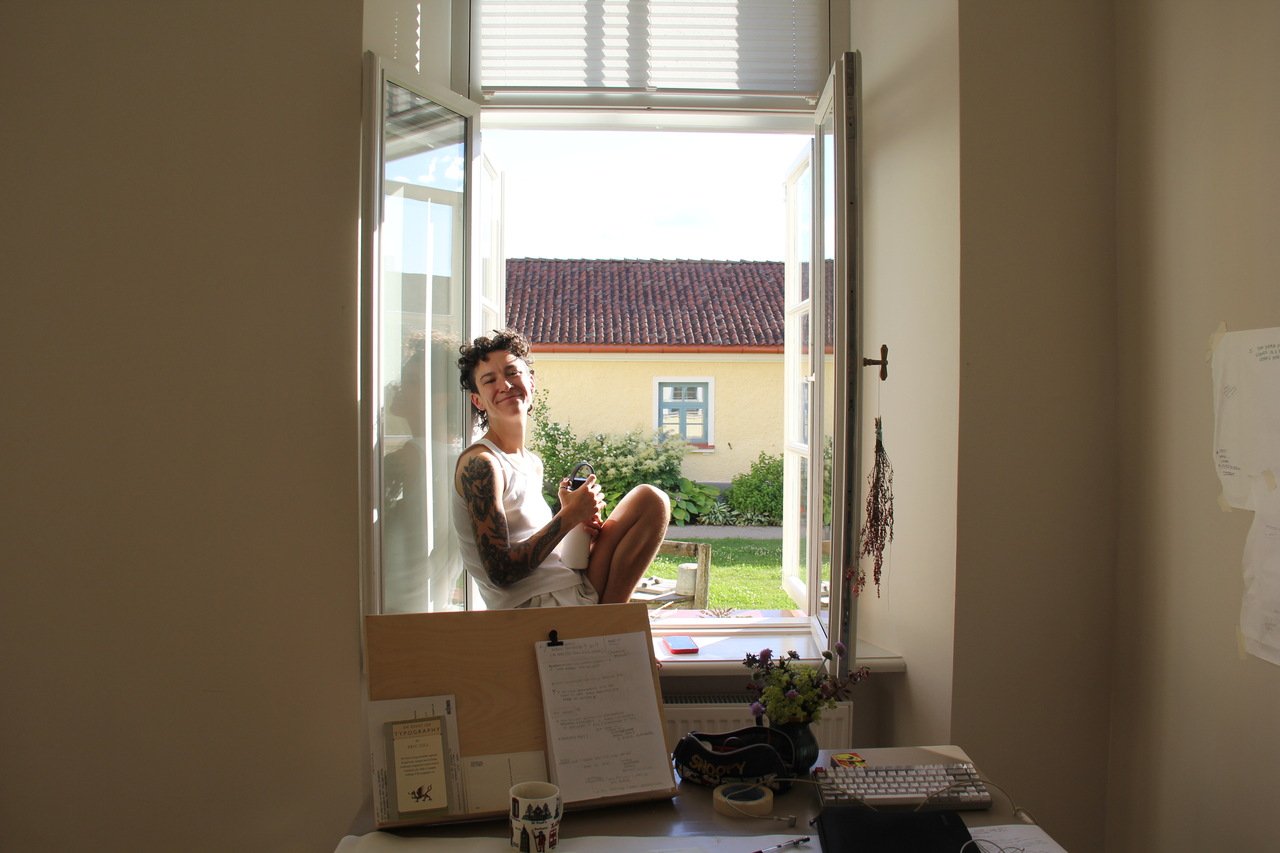
photo: Ojārs Feldbergs. Courtesy of the artist.
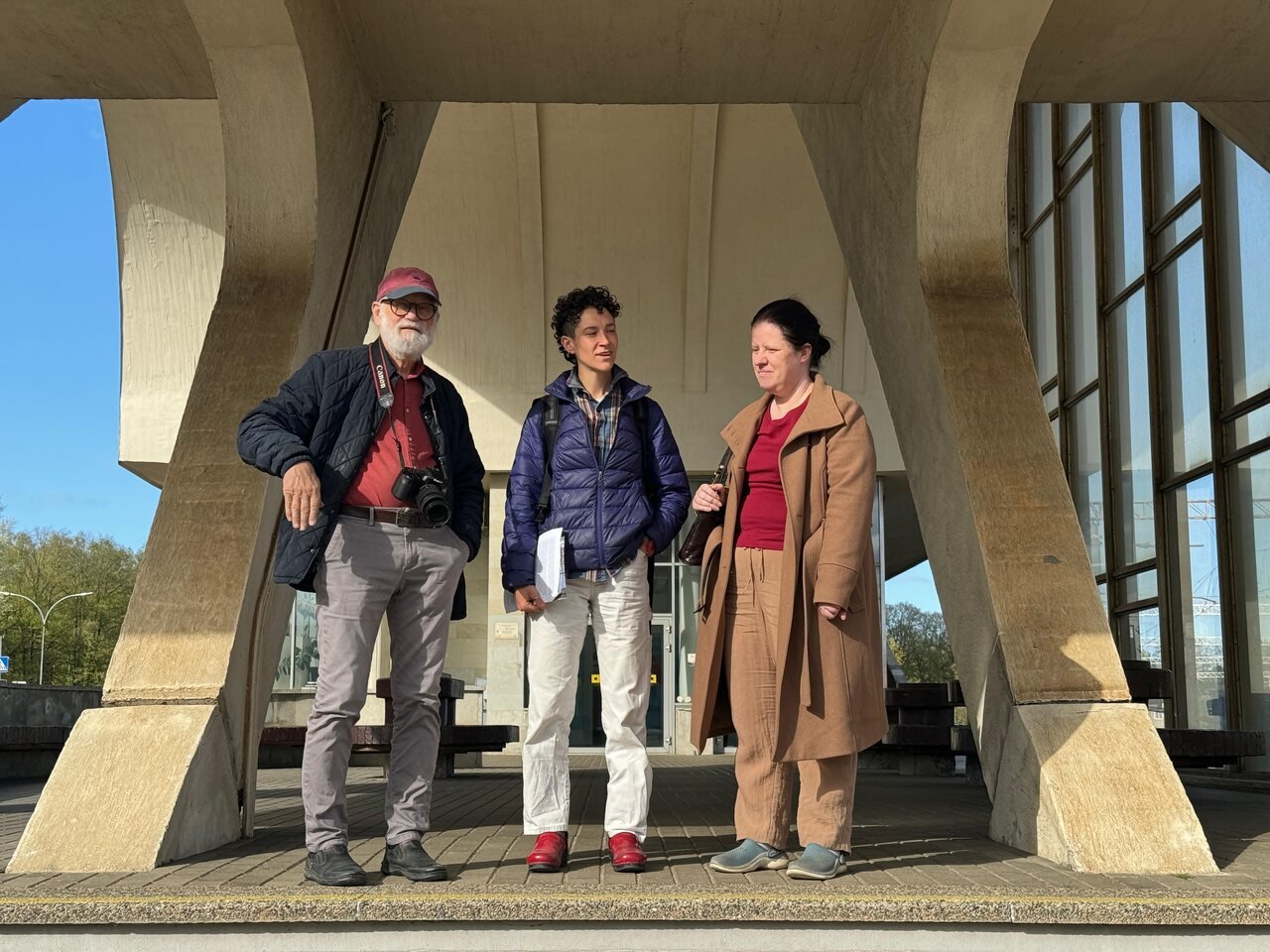
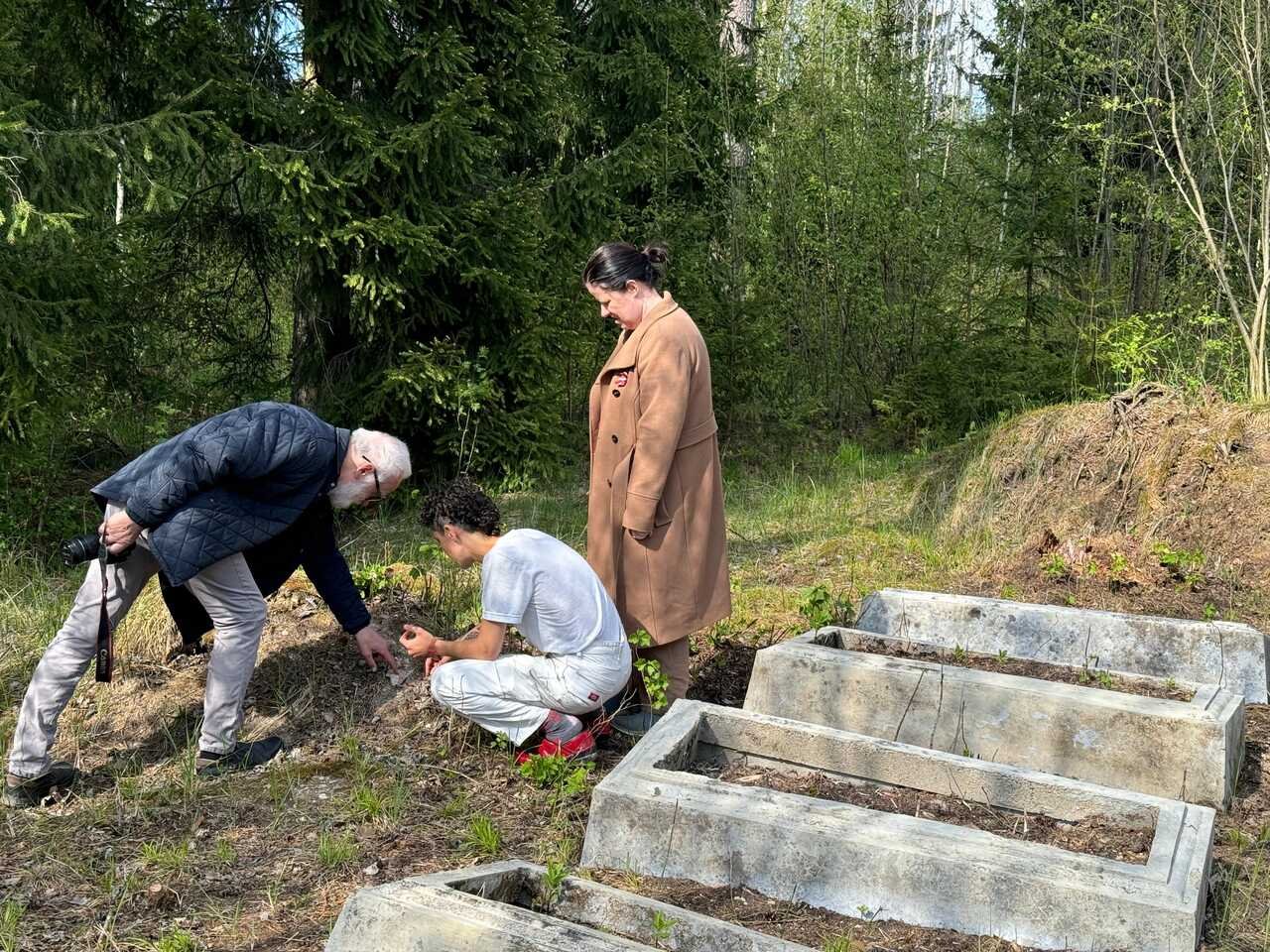
photo: Devdatta Padeker. Courtesy of Devdatta Padeker.
May 15, 2025, 5:30 AM. The manor house entirely silent. At the bottom of the staircase were all my ancestors waiting to greet me. They were elated. The women with white kerchiefs tied beneath their wide chins. The men in suits, clapping, clapping. And the children – a whole gaggle of them. And sickly Pesach, my great-grandfather’s brother, who died of tuberculosis in a russian work camp. They danced around me in a circle. And I danced with them. I held out my arms, tears pulping my face. The women pushed three apple seeds into my mouth and I swallowed them. Then the women put me in a kittel. I thought it was a wedding dress at first – the delicate lace confused me – but then they tied the strings and my soul yawned open. I was a boy, I was a girl, I was a child and an old man. I was the sunset. I was the sunrise. And my ancestors showed me scenes from weddings and funerals in Sabile, and how, at each simcha, the children would race their chickens through the valley, squabbling after ruddy, flustered birds.
The dead wanted me to come with them, to cross that effervescent threshold. They wanted me to die. In the confrontation of return, one cannot do everything that the dead request. Had I merely been obedient, I would not have survived. It was not for the dead that I was returning. Not anymore. I was returning for myself. It was this very discernment that kept me from nostalgia’s false assurance, which wants only to go backwards and evade the catastrophe.
In contrast to the conversation I was having with my very un-dead dead and with the very great crop of green on which I stood, there was, of course, the people of Latvia with which to contend. “Don’t you think your family was lucky to be deported?” a Latvian newscaster once asked me in a television interview. Her question unnerved me, for it assumed an inevitability of theft, of genocide. From her perspective, it was truly good fortune that I had escaped the horrors of Nazi and then Soviet Occupation. My eyes glazed over. It was only in later discussions that I began to make sense of her orientation. The newscaster was gesturing towards my American passport. My great-grandfather had fled Latvia on a boat in 1921, sailing from the port in Liepāja to the United States. Groping after an erased world, I had come to Latvia only to be received as American. Imperial horror. I rubbed my hands through wimpled grass. Questions of whose past hurts the most do not interest me. Deportation and cultural extermination are never “lucky” affairs.
Because of history’s incongruencies and the uneven fallout of occupation, it was paramount for me to hide certain aspects of my project from view. God forbid, not everything for everyone. This was certainly accomplished through my use of Hebrew, which hardly anyone in Latvia can read, but it was also accomplished through the choreography I constructed for the opening. I had two openings. One for the public and one for a select group of friends and chosen family. These two openings were an act of hospitality. They were also an acknowledgement of the unequal aftershocks inherent to forced displacement. I was insisting on the violence in the ruins even as my position remained inherently unstable. Was I the guest or was I the host? I hovered between these two positions, shimmering like a ghost.
For the public opening, I spoke about the repressed history that was examined and evoked through the works. Viewers moved throughout the gallery, and I stood before one of my letterpress prints on handmade paper, We Were Removed in a Festival of Flowers.[3] Down either side of the poem, I had embossed the forty-two-letter name of God, embedded as an acrostic in the liturgical piyyut, “Ana B’koach.” I voiced the poem and an interpreter read out the Latvian translation to the audience. Afterwards, I slowly began to ascend the stairs into what used to be the women’s section. As I walked, I sang in Hasidic baritone, my voice increasing in volume, rattling the walls. Many of the subversive elements that went into this performance were entirely lost on Latvian viewers. Yet it produced the haunting encounter that I was after: beauty, ambivalence, and the impossibility of reconciliation.
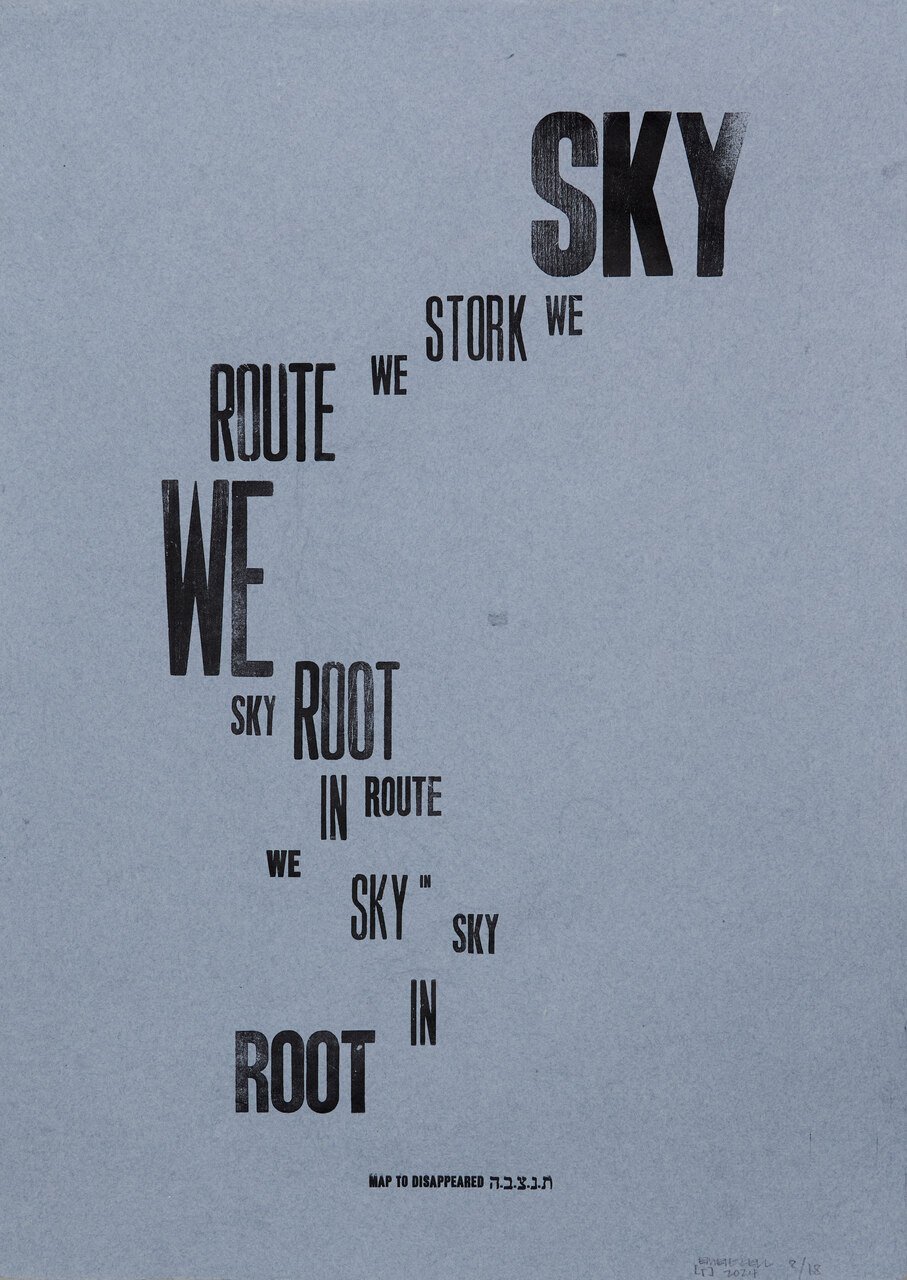
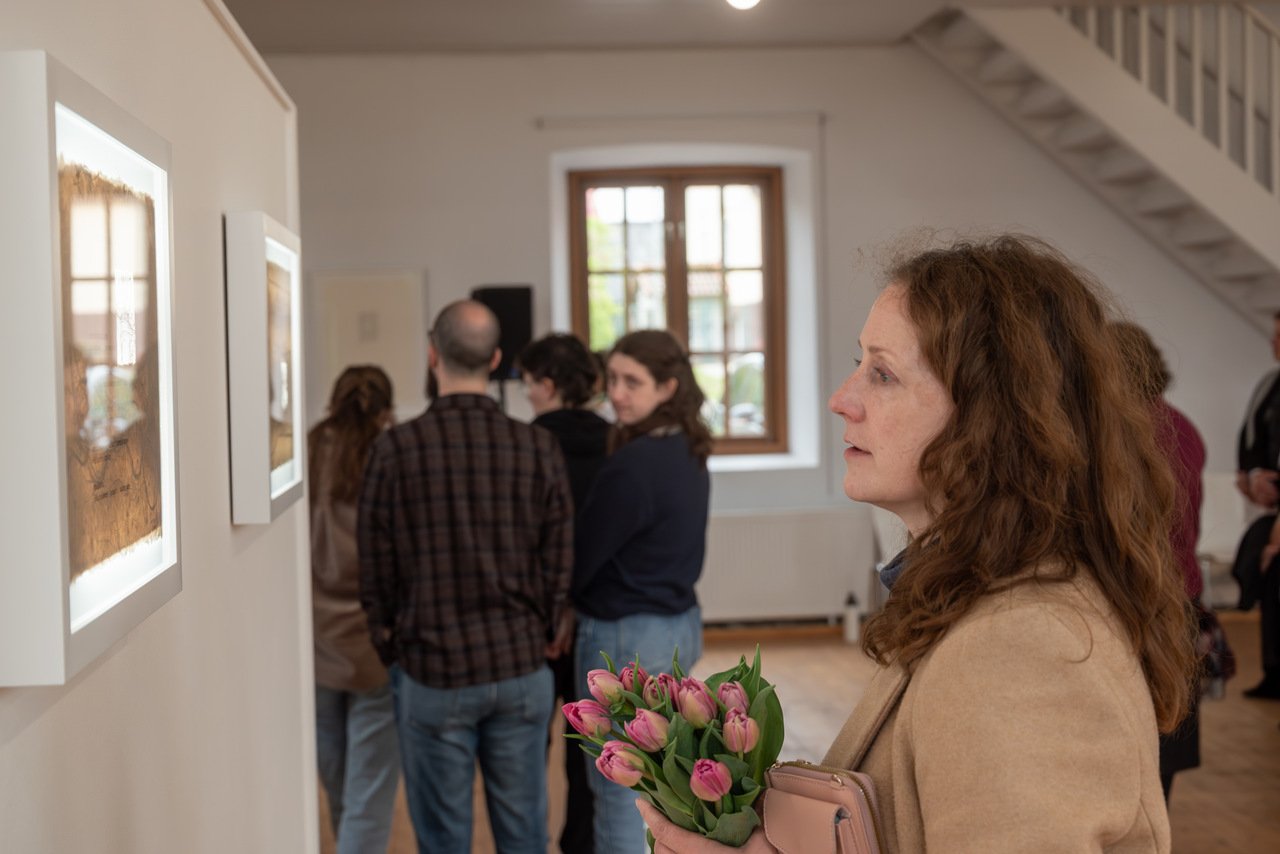
photo: Uldis Balga. Courtesy of the artist.
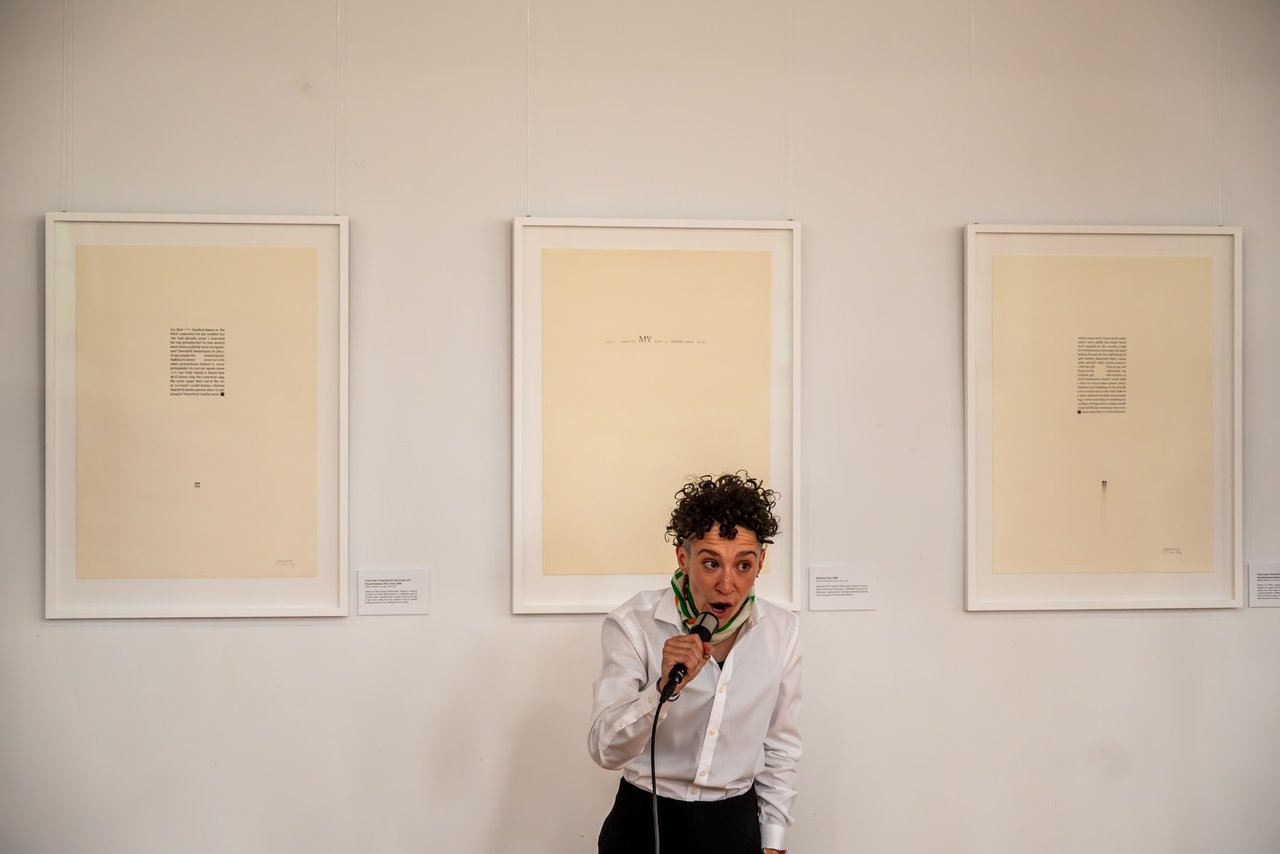
photo: Uldis Balga. Image courtesy of the artist.
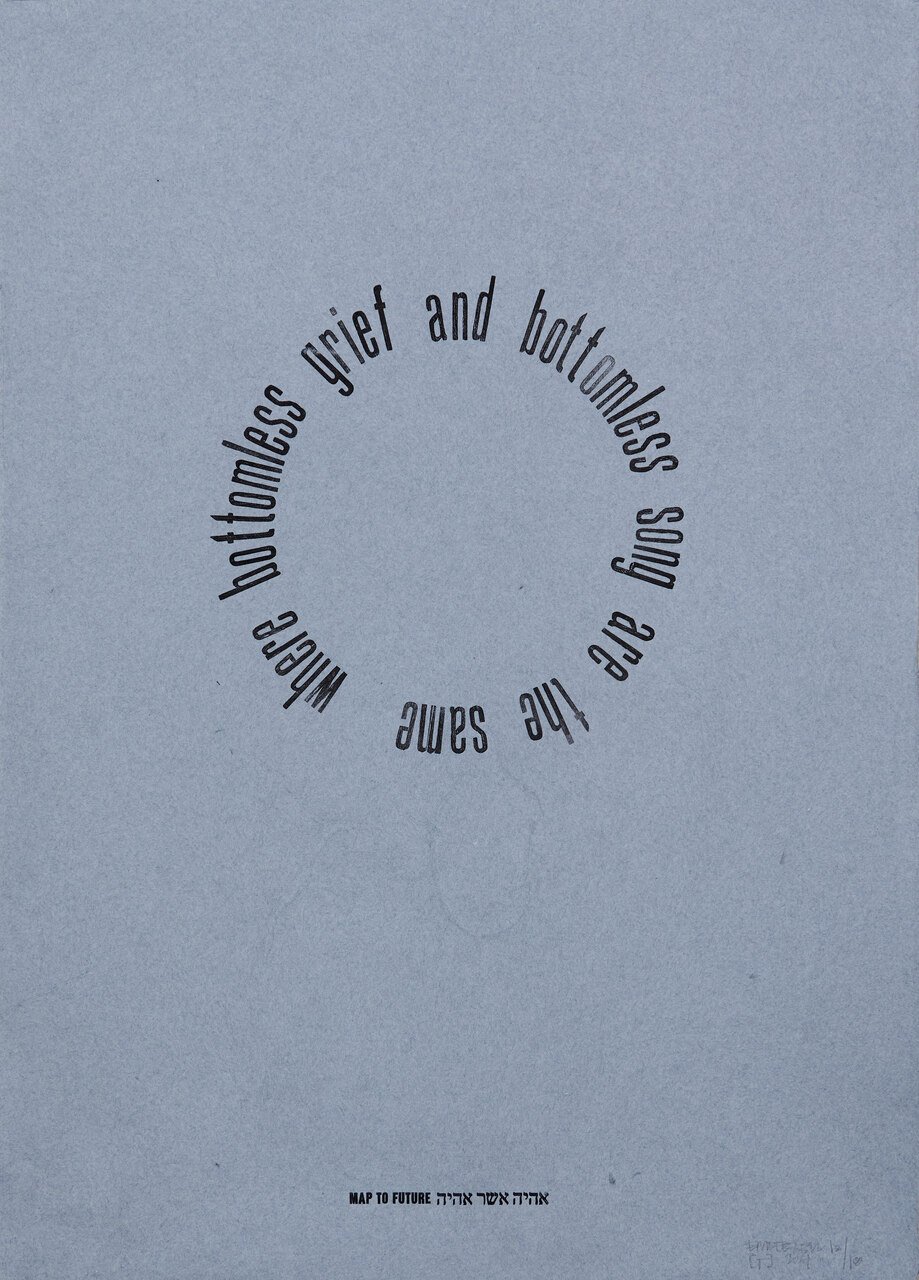
Courtesy of the artist.
The second opening was by invitation only; not even my curator was invited. I wanted to be alone in the synagogue – without an audience, without interference.
It is to the credit of my curatorial team that I was permitted to create this ceremony. From all over the world, thirty people flew to Latvia and took the long bus ride to Sabile. Acting as chazan, I led a traditional Kabbalat Shabbat prayer service, resurrecting sounds that had not been heard in the village in over a century. We davened surrounded by my artworks, the name of God swaying gently in its spectral Torah notch. We were the most wildly impossible congregation to ever assemble in Sabile: Mexicans, Post-Soviet and Syrian Jews, American Jews, Egyptian Muslims, Indian Muslims, a German-American Mennonite, Poles, Moroccans, Lakota, and my gay, seventy-year-old cousin whom I’d never previously met. At my request, everyone wore white. It was a funeral and it was a wedding. We danced around the wooden pit I’d built in the gallery, our feet smacking the hardwood floor, the song rising and then disappearing. There was no documentation of this ceremony. “What do you mean there’s no documentation?!” a fellow artist had expressed, exasperated by my refusal. But this was not an event for consumption. Nor was it an event for state actors and museums to congratulate themselves for “doing the right thing.” No. We had come to Sabile to haunt it.
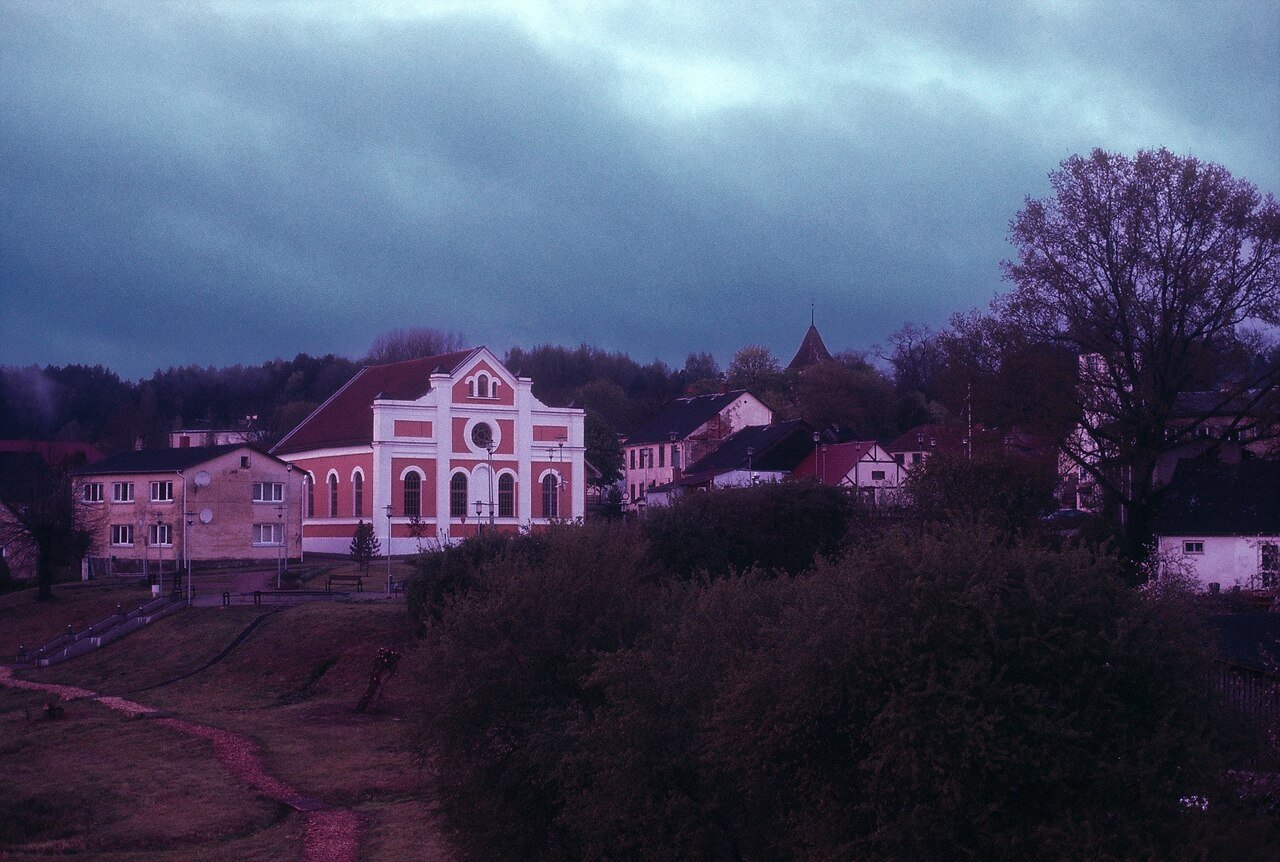
Unlike the tangible heritage embodied by books, archival records, and other lettered media, a time-based ritual cannot be stolen in quite the same way. Prayer functioned as a foil to the violent theft of home, property, land, and the annihilation of our religious and communal practices. I wanted to experiment with the intangible and the uncapturableaspects of language. Perhaps this mode could transcend or offer a corrective to the extractive system of colonial memory-making. Then again, perhaps not. Even still, I wanted to inhabit the uncertainty of my inquiry. We were thirty people in a synagogue originally constructed for four hundred congregants. Each moment of liturgy carried within it an unrelenting hollow. I stood a half-meter in front of the assembled and could not hear them because of the acoustics. Again and again, I had to step backwards. I had to move closer to reach our swallowed sound.
When I finished the final kaddish, our congregation lulled to a hush. I was bombarded by a sense of futility. All that for this? I thought. How flimsy the work of prayer. How ferocious. I turned around and was held in the gaze of everyone I love. We were a womb, a pearl’d casket, glowing with song. And there was no amount of prayer that could ever return to me my mother’s face. Outside, the Ieva bush shed its blossoms.
We then walked up over the Abava river, across the bridge, and into Sabile’s singular guest house for Shabbat dinner. The guesthouse holds an indoor pool and doubles as an aerobics center for the village. On Tuesdays and Thursdays, women arrive in their swimsuits, ready for an hour of pool Pilates with styrofoam noodles and kickboards. “Those who live in the ruins of others often do not experience their lives as violent,” writes Hagar Kotef. [4]
The evils of imperialism persist. Nothing resolves. My exhibition opened and the rains came down from heaven. Time flows downstream and accumulates in a great thrum of water, the water brown from peat moss – stain of amber. Despite subsequent days of sun, the Abava river retained its swell, swallowing backyards, walking paths, and hundreds of dandelions. Yellow bulbs face-up in the water. Return as flooding the banks. Return as pummeling confrontation. Return as the sweet embrace of steaming meadow flowers. The dead licking my bones forever, and me, thrusting my thick tongue into our stolen grass. Wet laundry hangs low between the birch trees; apple blossoms unpucker pink. I will go back again this year. And the year after. And the year after that.
Seven days before the exhibition, my paternal grandmother died. I could not attend her funeral. Instead, I walked and I walked and I walked. My body hurled into motion, as if possessed. Spring’s green a frizzled burst. I walked until I could not walk anymore – eight hours of walking in a land where I was born to walk forever. My heart meadowed with clover. Shovel, water, skull, seeds. In fields that were no longer my fields, I buried a dead bird. The next day, I was interviewed for Latvian radio. I sat upstairs in the synagogue office with my curator and the interviewer, drinking acerbic espresso while perched on cheap barstools. A Trump bobblehead stood opposite on a small shelf. When I looked out the window, I could see the small stream that used to run under the shul and into the mikveh, before soldiers had set the whole thing aflame. At one point in the conversation, the interviewer asked me if I had found healing in producing this work, in coming back to Latvia and finding my family’s former home. The summer air evaporated between us and was replaced, almost instantly, by a cold rush. My jaw locked. My curator cleared his voice and leaned into the microphone: “the artist does not believe in healing.”
I was stunned – somehow, he had, at that precise moment, articulated the political architecture of my artistic work. I was not seeking relief from a wound, nor was I deluded enough to believe that an exhibition could be a satisfying antidote to the total obliteration of my people and the abduction of our heritage. I remain suspicious of the claim that art can “heal” anything. Art is an economy, a practice, a honing of technique, an asset for someone’s investment portfolio, a market, a status symbol. It is many things, but it is not a broom for the refuse and rubble of colonial siege. If my work were to allegedly perform the task of “healing,” either individually or collectively, it would only serve as a prop of forgiveness. To transmute state violence into palpable objects for collectors and museums is not exactly curative – the imprint of theft remains.
Who wants my “healing” and who benefits from it? Meanwhile, the state maintains its bureaucratic posture, shapeshifting between tactics. Memorial after memorial, it obfuscates the very past it claims to commemorate. In Erinnerungskultur contexts, healing demands a dilution of the mind.[5] Amnesia in the name of memory. Memory in the name of amnesia. Sham puppetry of smoke and mirrors. Art is not a project of resolving unresolvable crimes.
At the close of the exhibition, I was coming undone. Late July, my back a hardened brick. I called my best friend, Sunshine. “Well, did you think it was all going to be ancestral bliss?” she asked. We laughed. Relief is not coming for anyone. Perhaps this position is so apparent to me because of the violence I endured at the hands of my mother. It is a wound with which I live, a mirror to the ground of Sabile, Latvia.
“The catastrophe is here to stay,” said Islam al-Khatib on a panel at Berlin’s Spore Initiative.[6] This is not a concession of defeat, nor an acceptance of erasure, but rather, a clear understanding of the confrontation both evoked and demanded in the act of return. I find more elasticity from within this position than from within the grotesque and relentless pilgrimage towards healing, towards repair. The horror of the ruin is not in the past; it crescendos into the present. I am reminded of this every time I look into my mother’s face, which could have looked like mine, but does not. The catastrophe is here to stay, ruthless in its appetite. But we can be as ruthless as the catastrophe. I place faith in what I know: that the soul cannot be fooled. And I lunge after return – oh, Lord, let us be the haunt.
[1] “The Sea Is There But We Are Not,” curated by Abdalrahman Alqalaq featuring writers Alaa al-Qaisi, Ahmed Saleh, Asmaa Azaizeh, and moderator Maha El-Hissy, with musician Cham Saloum, Berlin. The event and entire project “Goethe in Exil” was cancelled by the Goethe-Institute and moved to diffrakt, February 2026.
[2] Hagar Kotef, The Colonizing Self: Or, Home and Homelessness in Israel/Palestine (Durham, NC: Duke University Press, 2020), 186.
[3] emet ezell, “We Were Removed in a Festival of Flowers” (2024), Literarisches Colloquium Berlin,https://lcb.de/app/uploads/ezell_Original.pdf.
[4] Kotef, The Colonizing Self, 25.
[5] German terminology for “Culture of Remembrance.”
[6] Against Abstraction: Towards a Politics of Confrontation,” panel discussion featuring Islam al Khatib, Munira Khayyat, and Omid Montazeri, moderated by Marwa Arsanios, Spore Initiative, February 15, 2026.