
Kateryna Iakovlenko
Part I: Traces of war
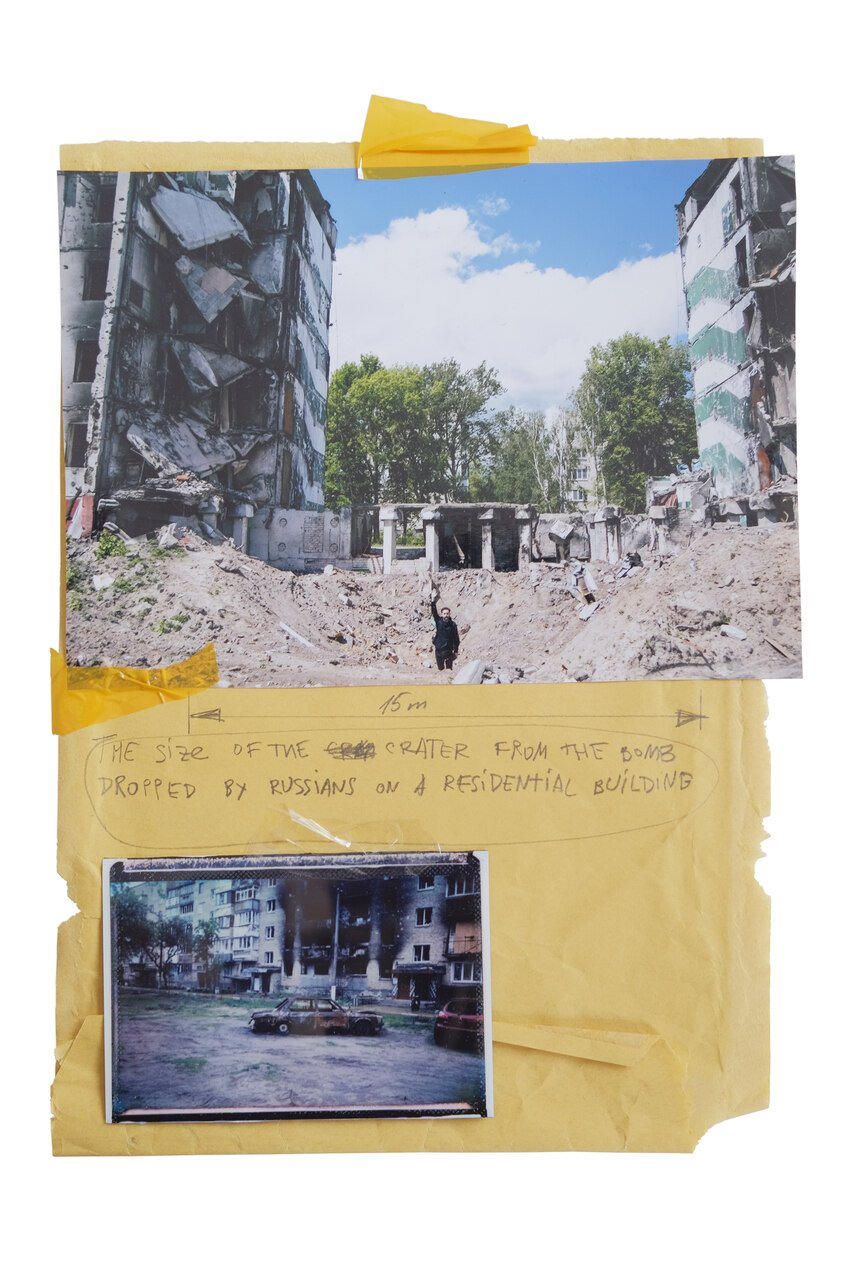
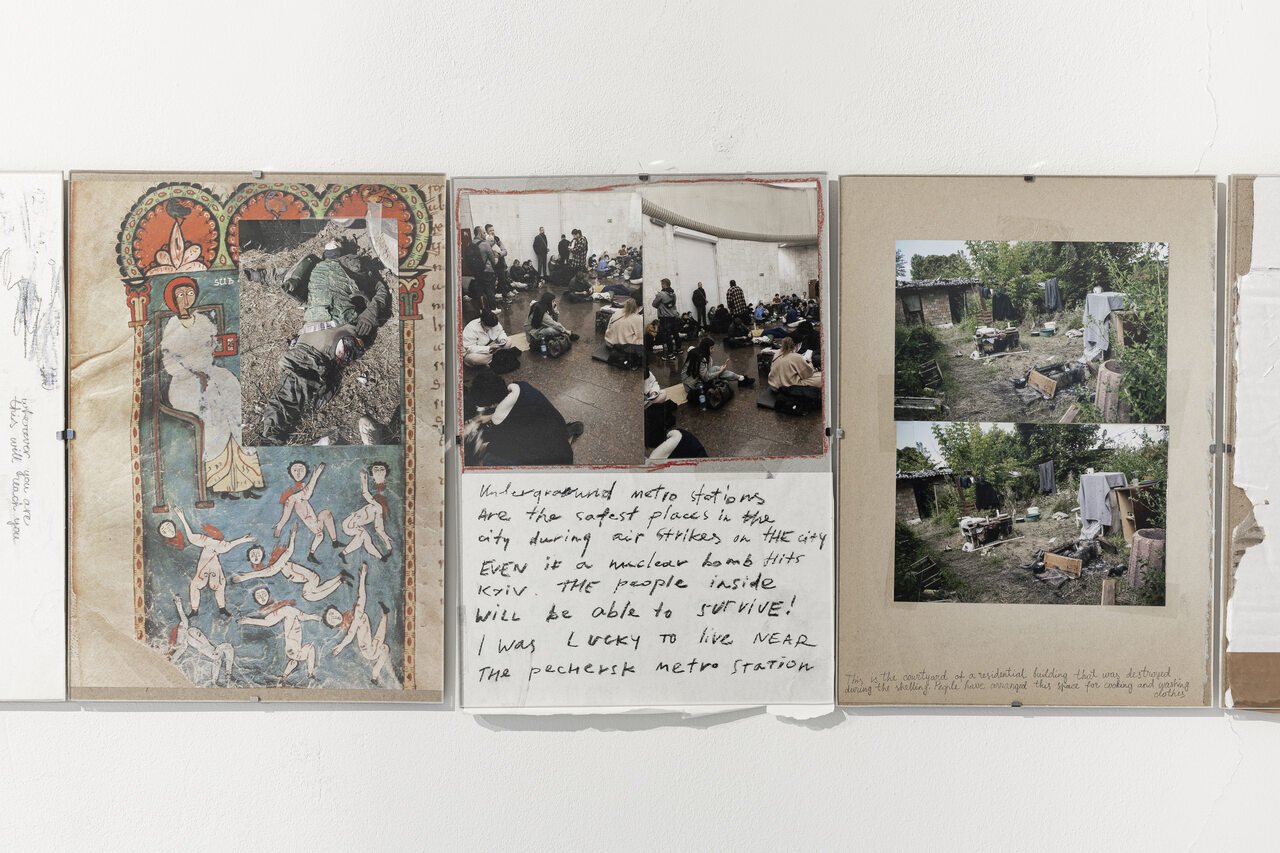
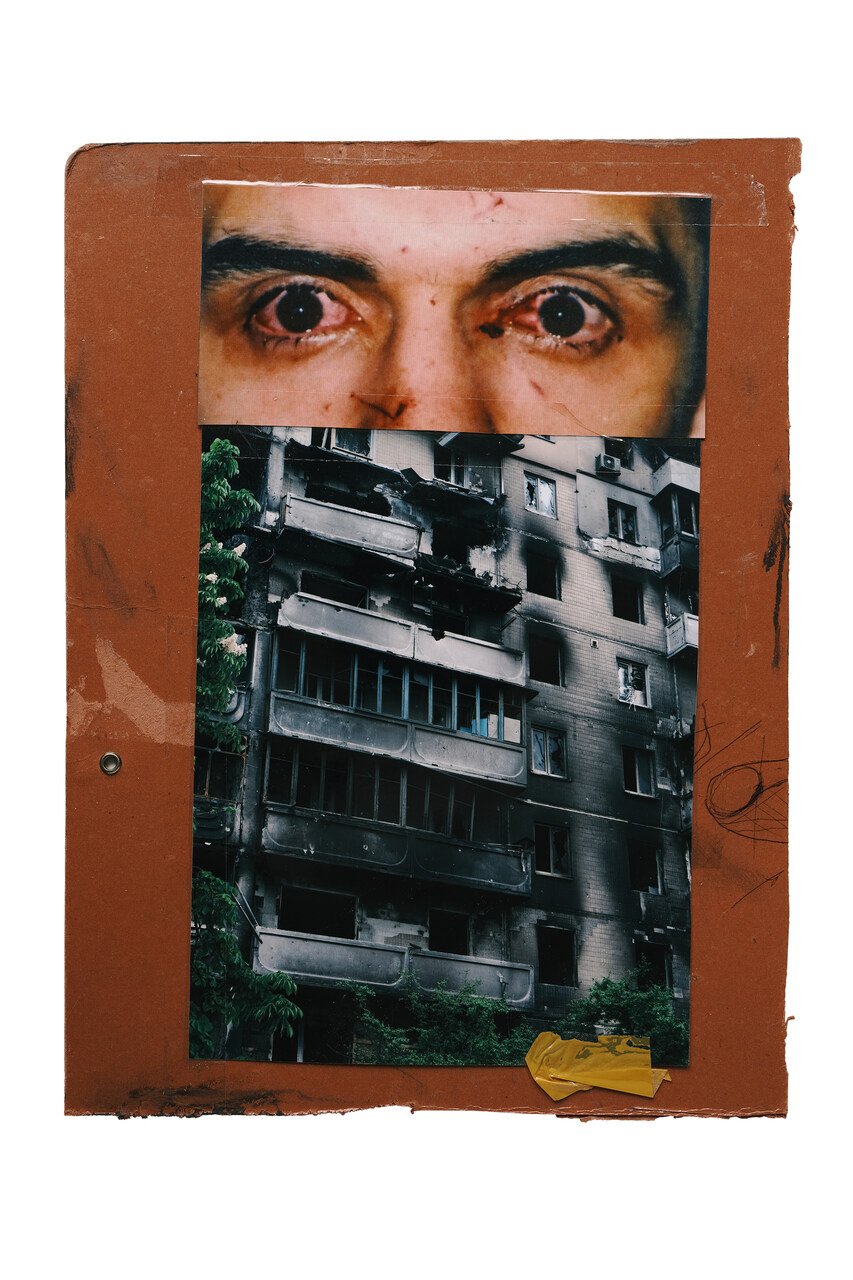
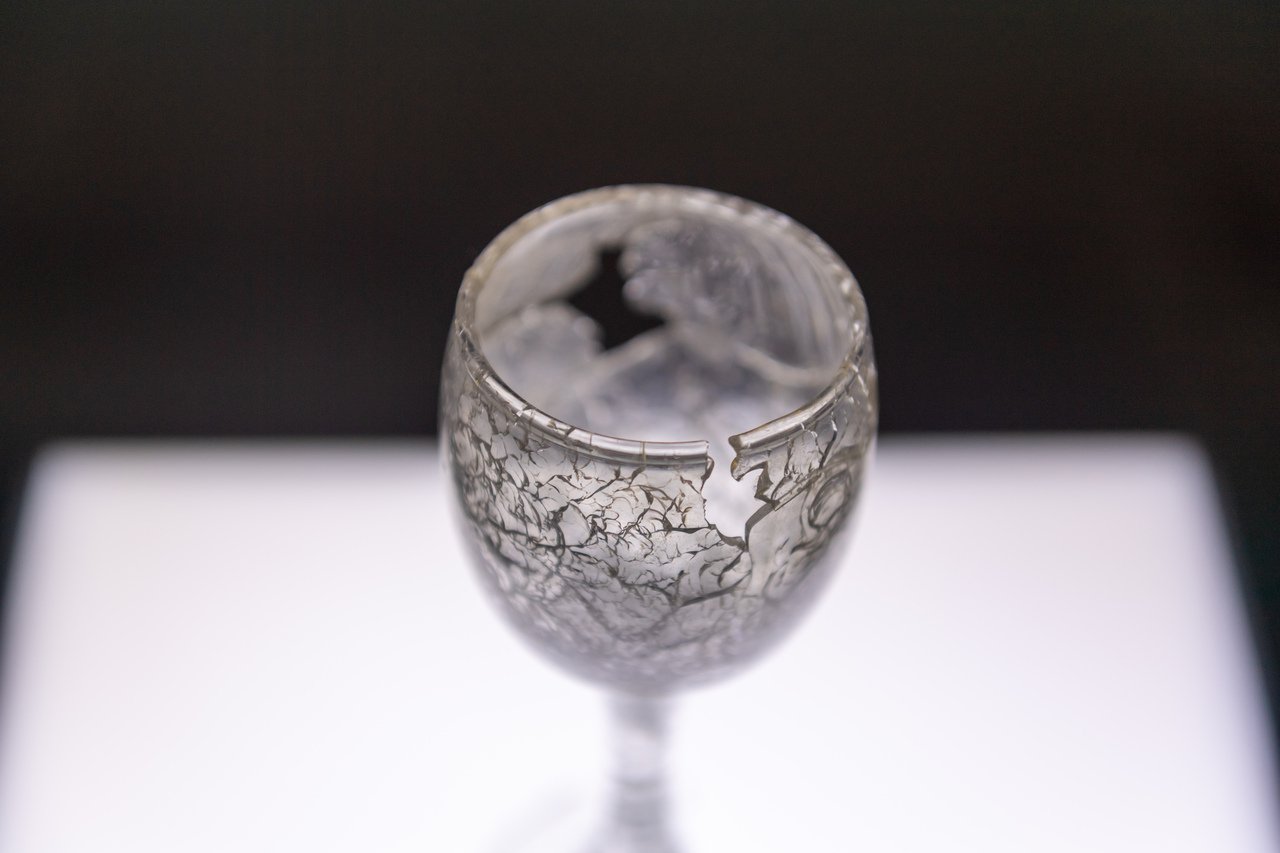
June 2022, standing in the space of a destroyed apartment, I tried to find something whole, or something resembling wholeness. Something that could remind me of the catastrophe that had occurred. There was almost nothing that I could take with me. My friend, photographer Sasha Kurmaz, framed the image of a deformed champagne glass; the image became part of his multi-page photographic project The Red Horse, which now includes 500 such images.
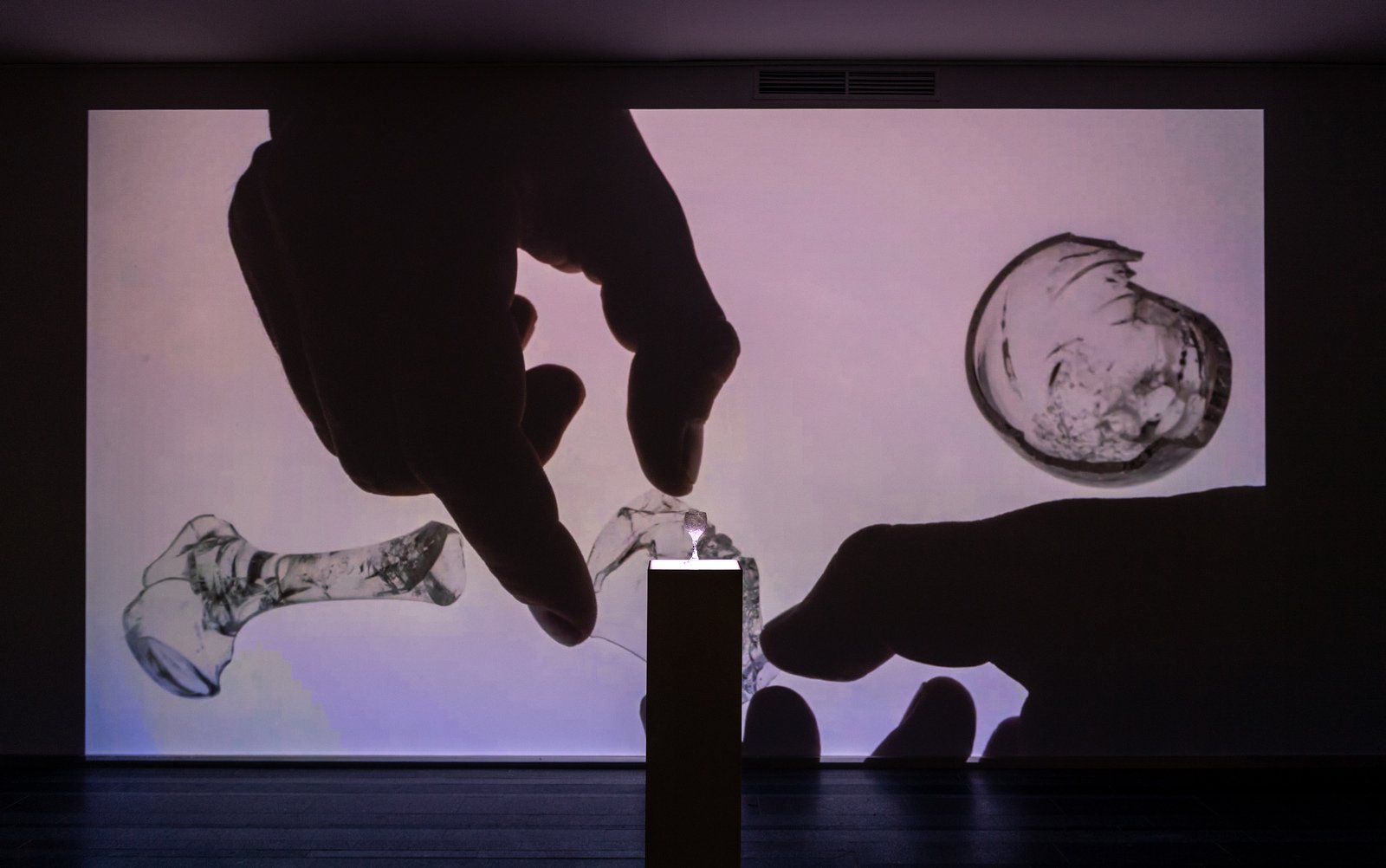
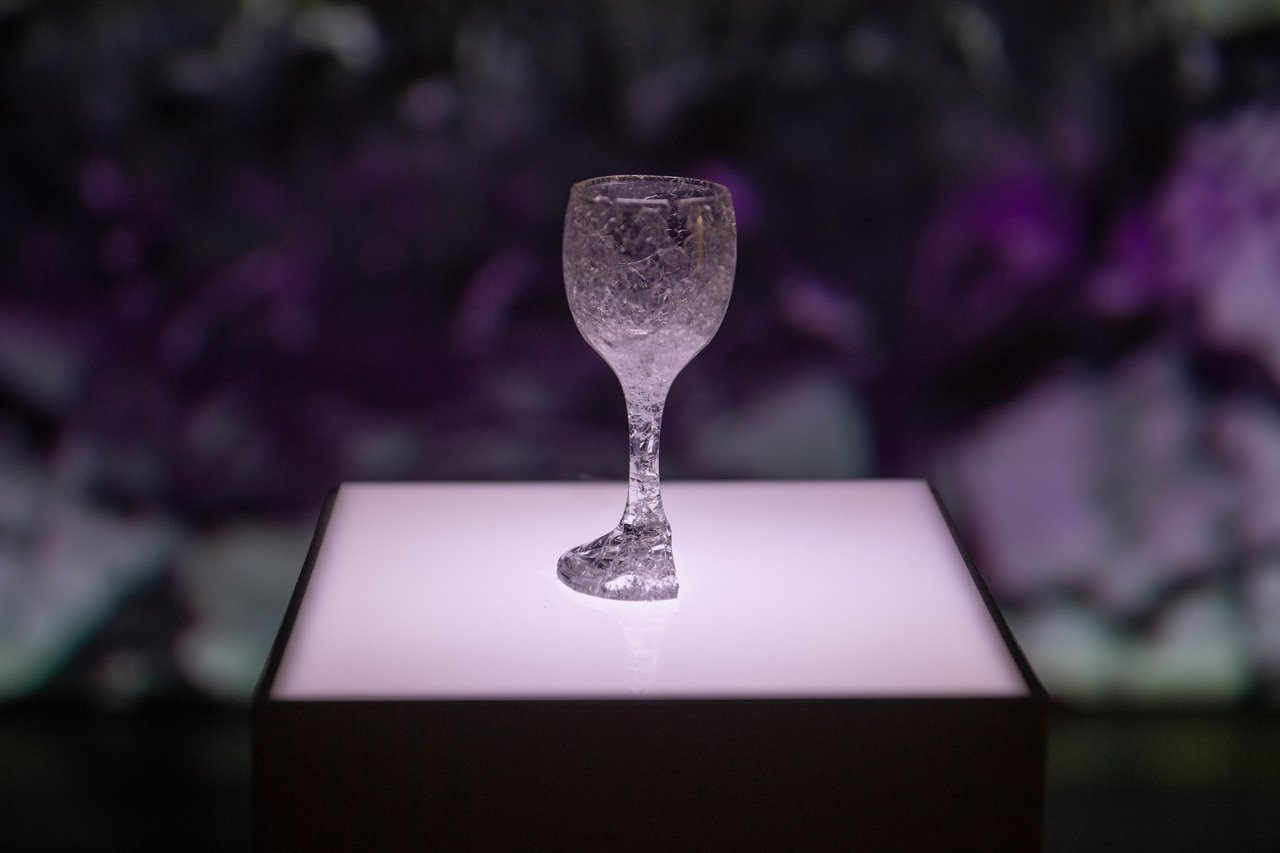
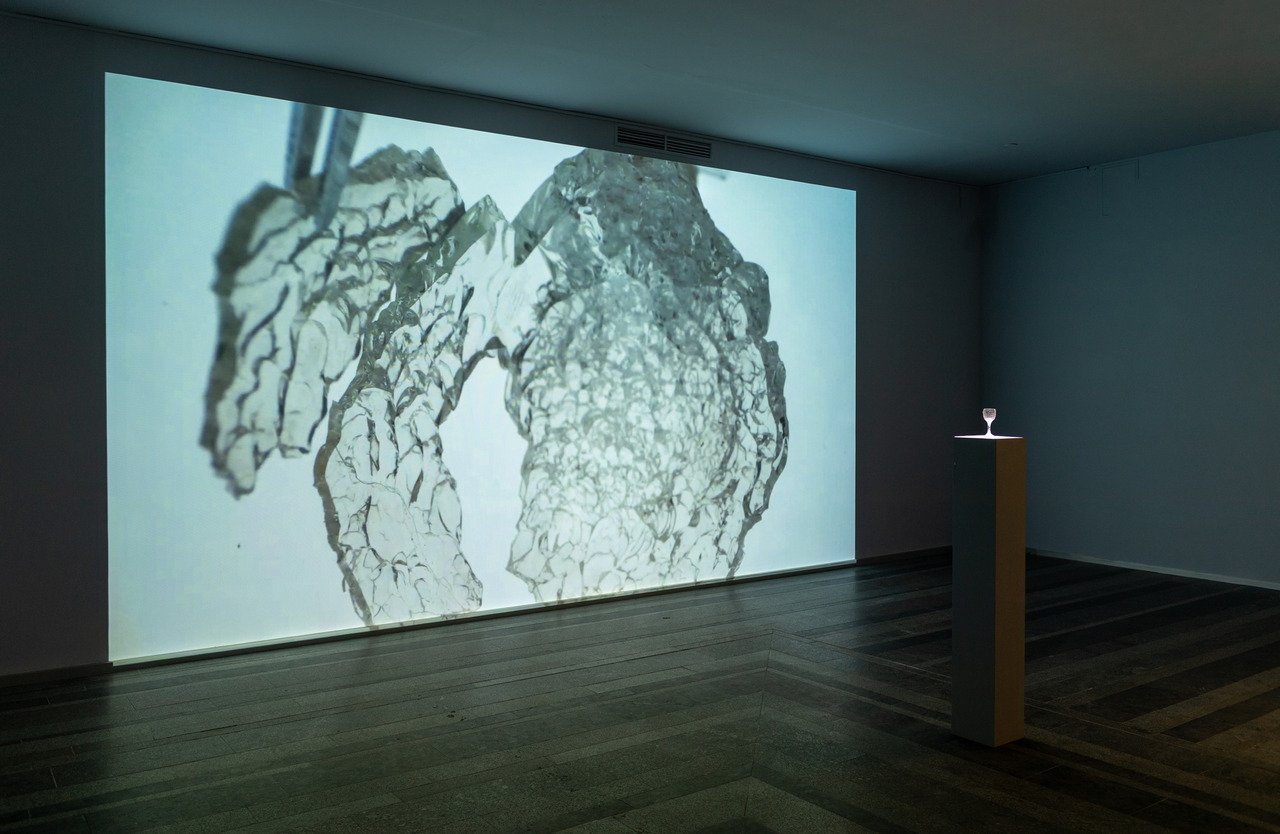
The artist Mykhailo Alekseenko found a similar glass at the same kind of debris site, took it home, glued the pieces of glass back together, and later made an artwork – a video of the restoration process and the object as a ready-made itself. He called his project Уламки (translated by the author as The Fragments) because during his expeditions documenting the aftermath of war, he found mutilated household objects that had once been “signs of wealth and prosperity.” The description of the work states that “it may seem that the glass is now usable again, but its entire surface is covered with cracks, so it is now more of an artifact that preserves memories of war than a vessel into which you can actually pour something.”
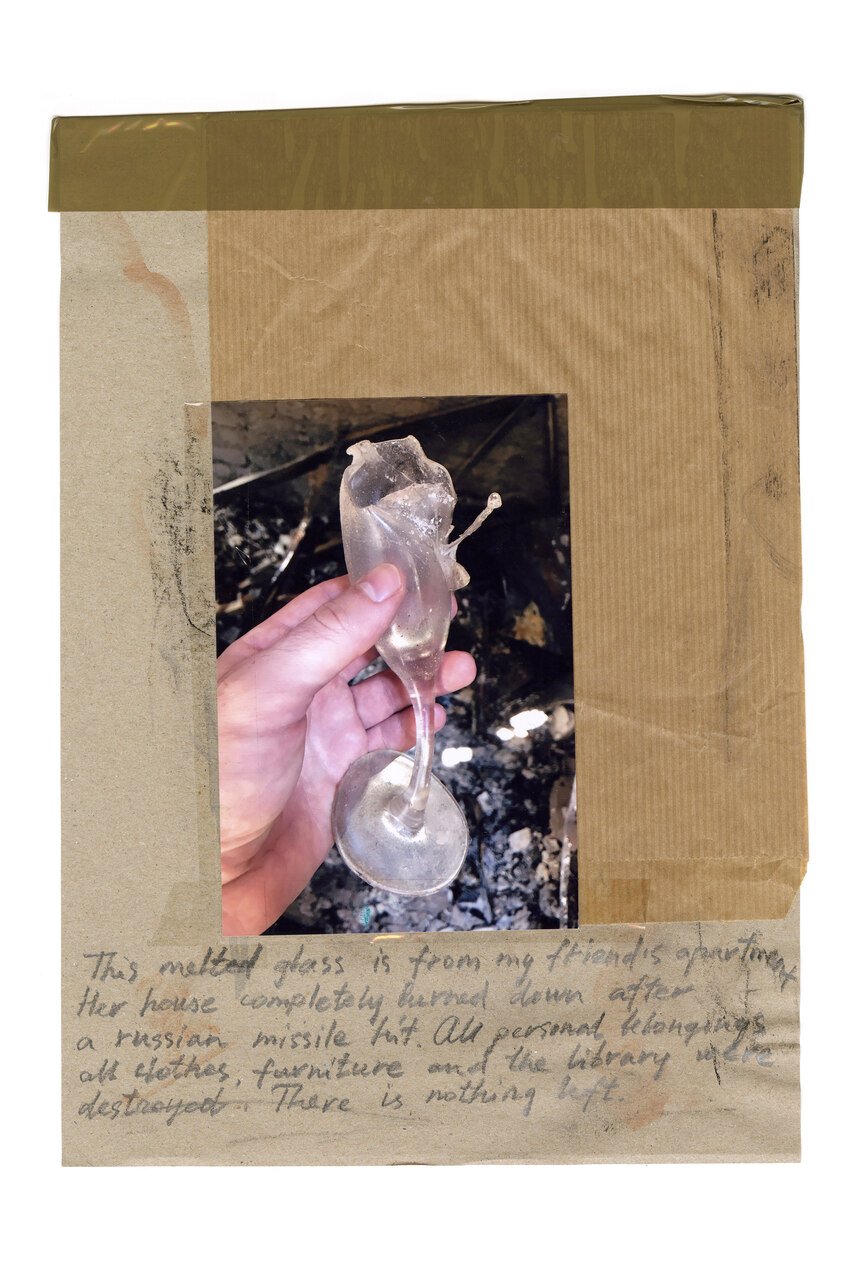
Image courtesy of the artist.
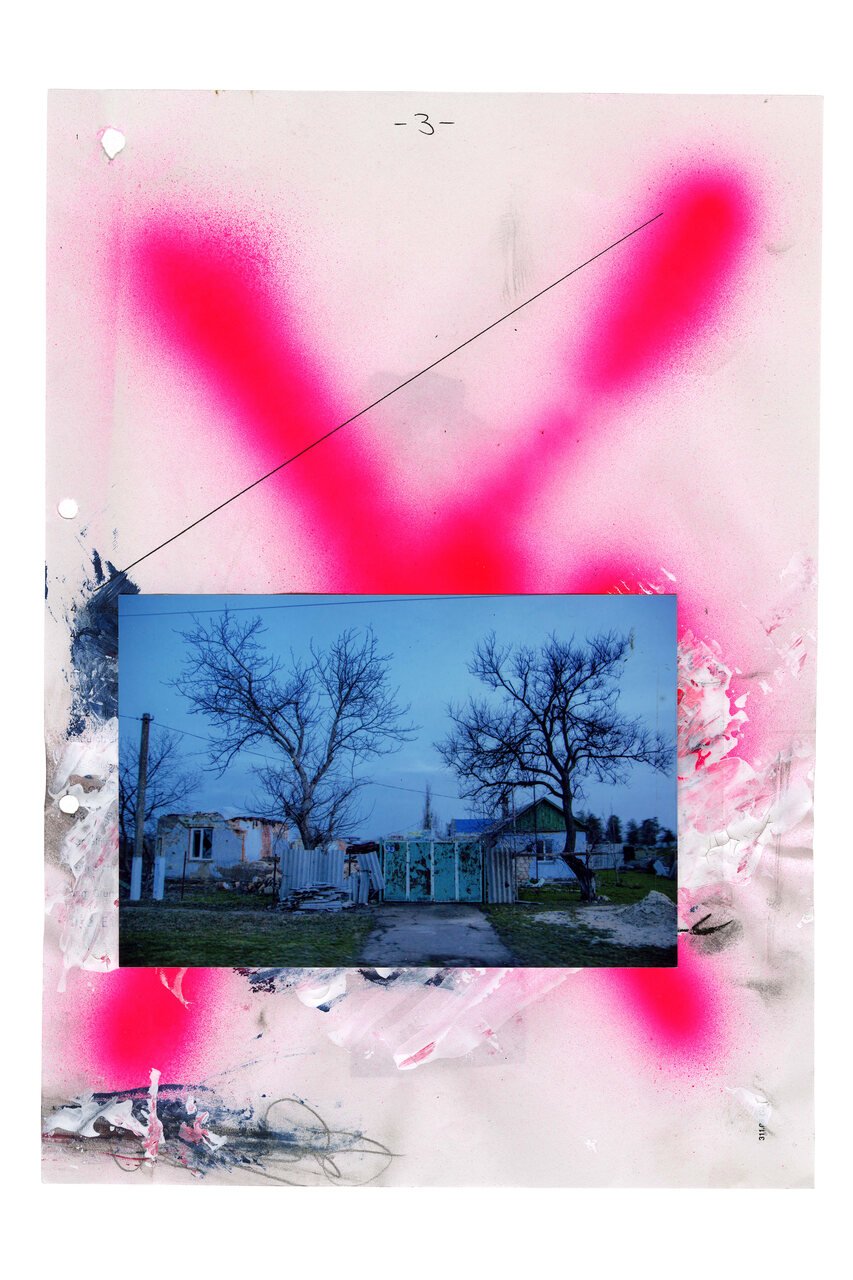
Image courtesy of the artist.
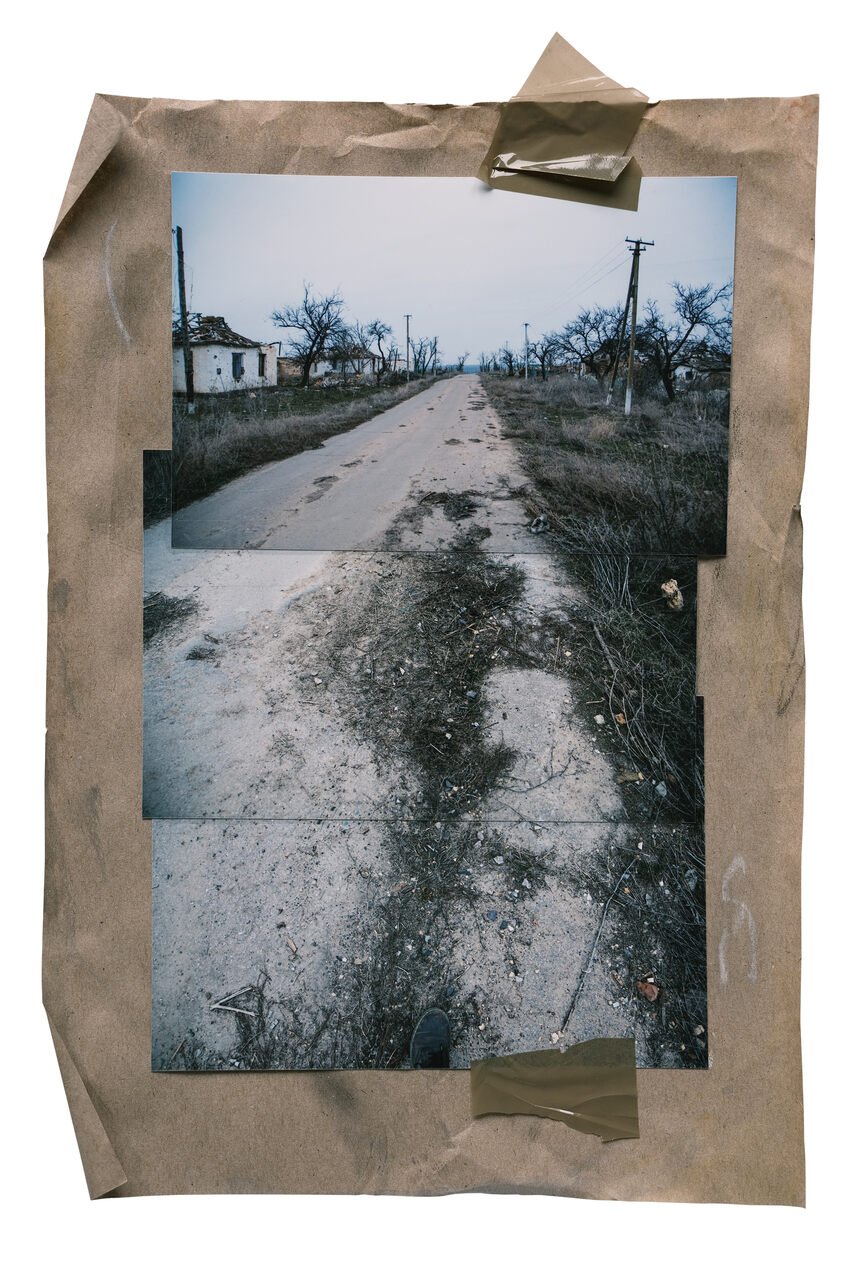
Image courtesy of the artist.
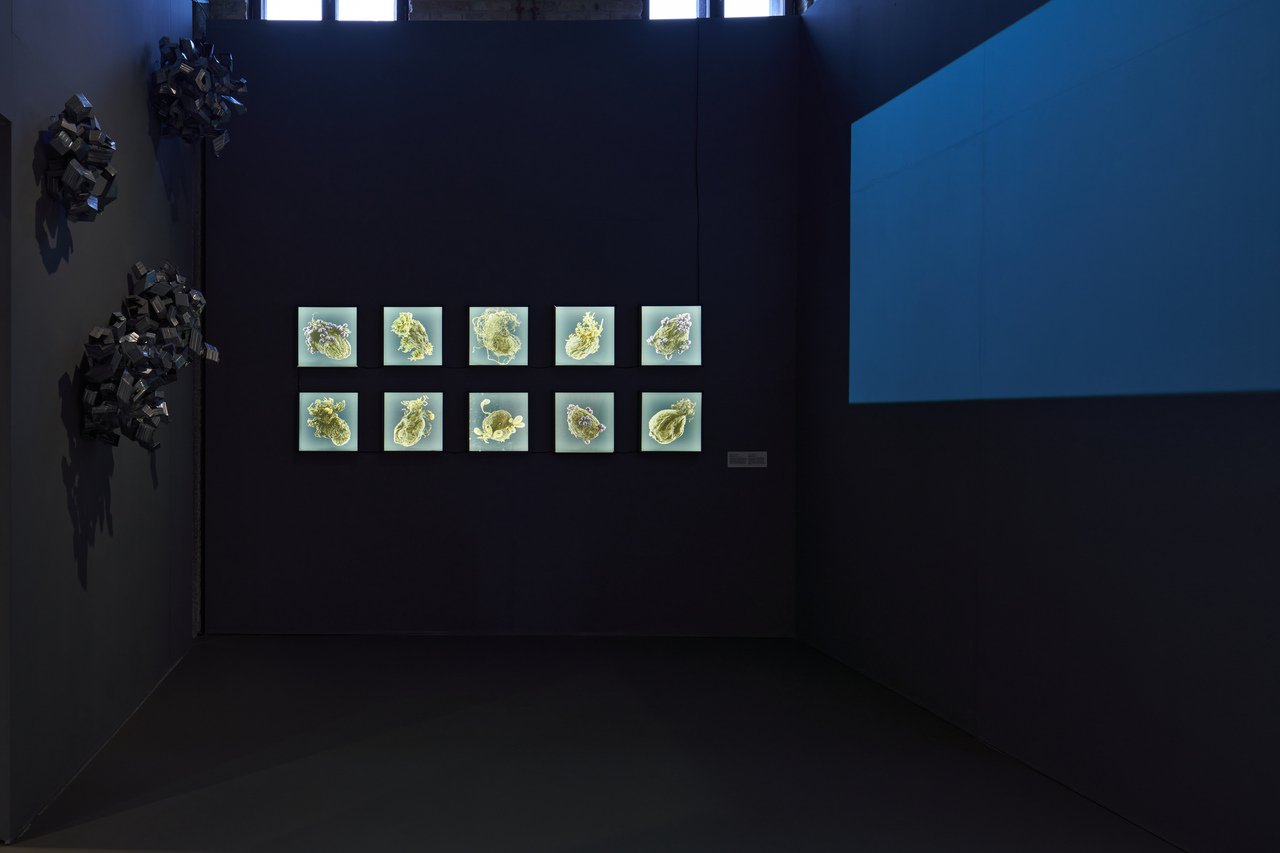
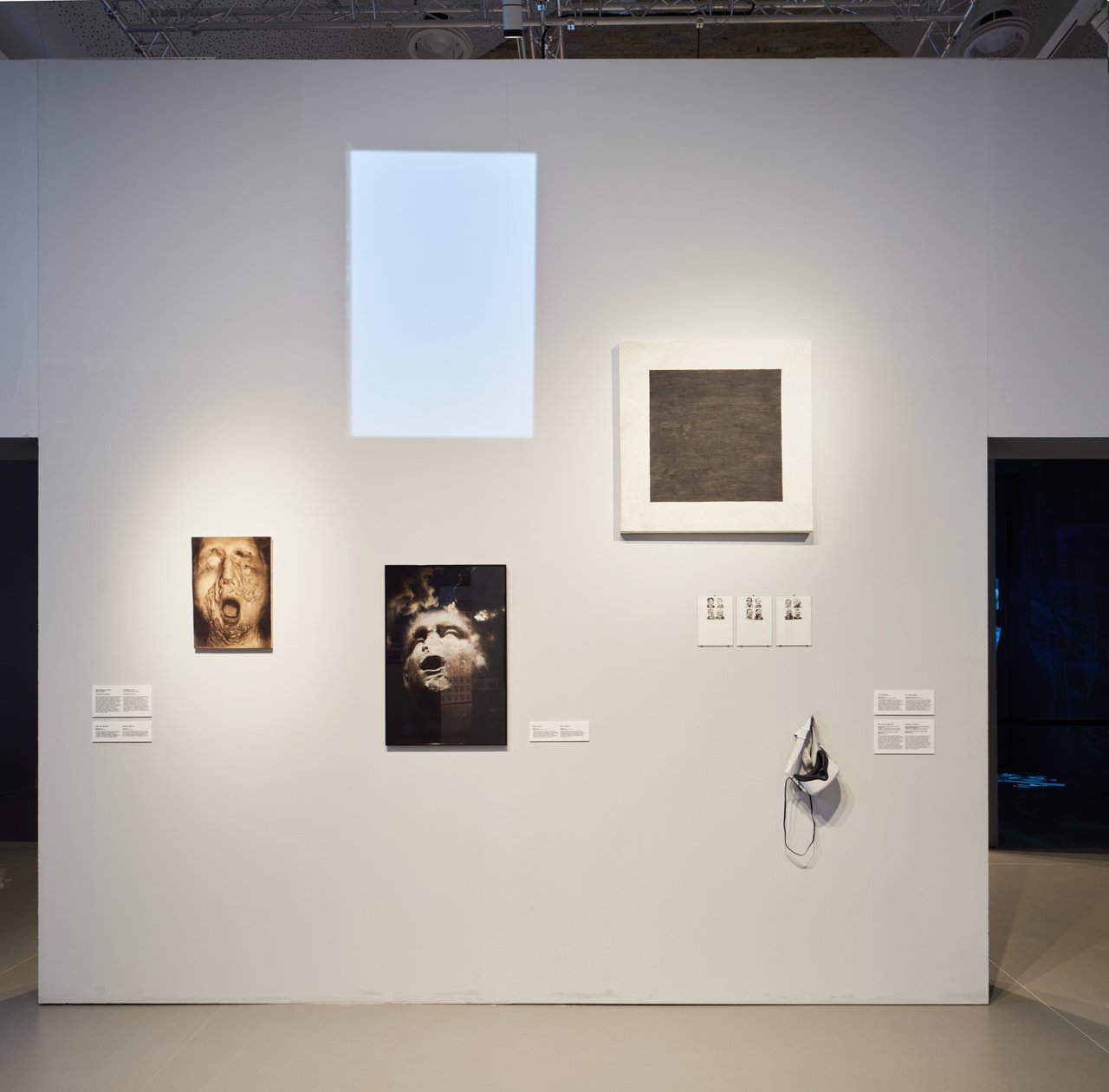
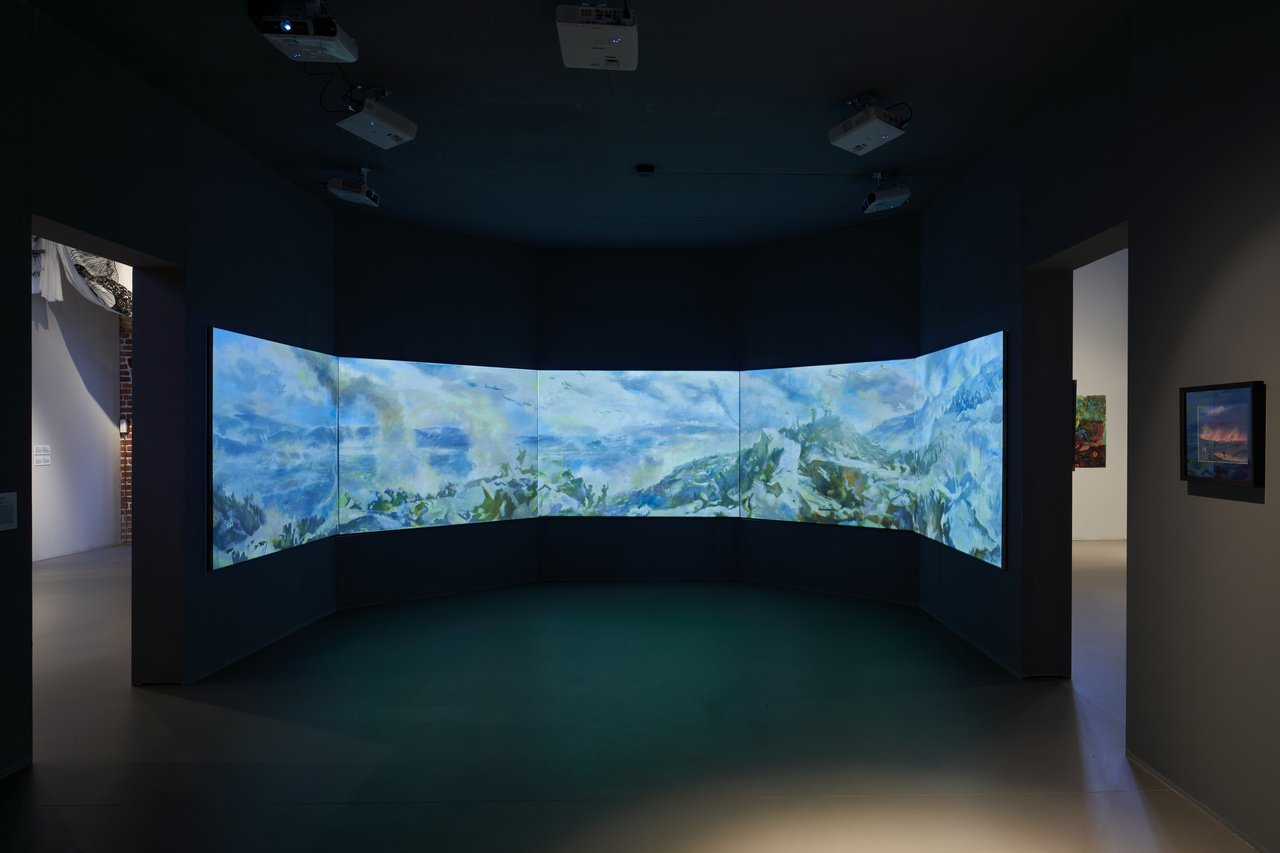
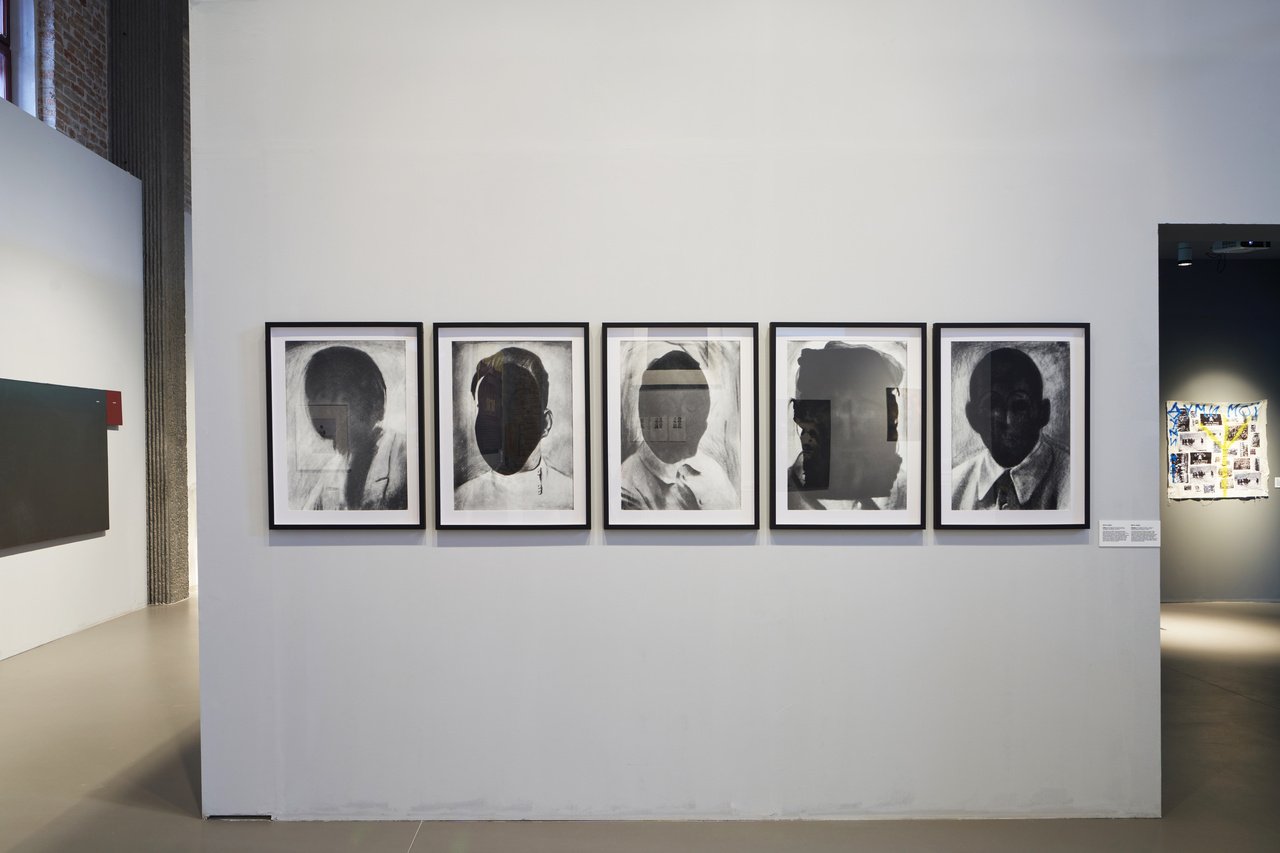
July 2026. I am standing in the Volyn Regional Museum facing a display of fragments of a curry comb and a fragment of an old revolver. To convey the object’s original volume, its outline – or rather, its trace – has been drawn almost the same color directly onto the wall. Together with Natalia Matsenko and Borys Filonenko, I employed a similar strategy in the exhibition Our Years, Our Words, Our Losses, Our Searches, Our Us (Jam Factory Art Center, 2023). There, the traces functioned as an exhibition device that pointed to epistemic violence, historical ruptures, and the impossibility of recovering a complete history of Ukrainian art, while at the same time offering a sense of the fullness that has been lost.
These are not exceptions, there are a large number of similar examples. Perhaps the strongest strategies in this respect belong to the Acropolis Museum in Athens, where the fragments are arranged in such a way as to recall wholeness. In most of the descriptions, the museum staff write “part” instead of “fragment.” These “parts” are joined to one another with metal or other materials and outlines of the former shape are also typically painted for posterity.
The remnants of war, or more broadly, the remnants of the past, are an extremely important topiс, and examples of once-utilitarian or everyday objects destroyed by war, accidentally or not, found by artists and processed or brought into artistic, museum, or public spaces, have long been commonplace. These are things one cannot disavow.[1]
Part II: Language. What do we call a piece of rubble, a piece of debris, a fragment?
In my recent conversation for Suspilne Kultura with the Lebanese artist, writer, and thinker Walid Sadek, I asked him about rubble in the context of his research on the protracted war in Lebanon. Instead, he corrected me and said it was more important for him to speak of debris.
Sadek’s clarification of debris led me to think more exactly about: what is considered rubble, debris, a ruin, and what, on the contrary, becomes rubbish and dust. What is:
сума каменів що не становлять стіни / a number of stones that do not become a wall
сума стін що не становлять дому / a number of walls that do not become a house
жменя драконячих зубів / a handful of dragon teeth
готових заколоситися списами / ready to sprout into spears
Ірина Шувалова / Iryna Shuvalova
Language matters.[2]
The Ukrainian dictionary defines the word уламок – a word that perhaps encompasses many of these meanings – as “a struck-off, broken-off piece of something, or a part of something broken, damaged, destroyed; a remnant of something obsolete, vanished, or annihilated.” So, уламок is both building materials and a culture or society that has been broken. What matters here is that the word conceals its own origin: struck off, broken off, vanished, annihilated – these are all verbs that testify to a violence that preceded them. Уламок derives from the Proto-Slavic verb *lomiti (to break). The word was formed with the prefix у-, indicating an action of detachment, and the suffix -ък, which was added to the older root *lomъ (break/fracture). Literally it means “that which broke off.”
“That which broke off” is a passive voice. Passive voice is not typical for the everyday, living, Ukrainian language, so linguists advise choosing an active verb. In English dictionaries like Merriam-Webster, Collins, and Oxford Learners Dictionaries, dozens of words are listed that are explained based on their structure, weight, and meaning. For example, “rubble” is broken fragments (e.g. rock) resulting from the decay or destruction of a building or a miscellaneous confused mass or group of usually broken or worthless things; a “relic” is a survivor or remnant left after decay, disintegration, or disappearance; “debris” are pieces of wood, metal, building materials, etc. that are left after something has been destroyed; a “shard” is a piece or fragment of a brittle substance like a glass or pottery. Many of these words have French or Latin roots.
Тиждень видибують лісами вздовж колій, / They dig through the forests along the tracks for a week,
не знають, як знову впізнатися, / they don’t know how to recognize themselves again,
допасуватися. Як тебе звати, уламку?”, / to fit in. What is your name, rubble?
Катерина Калитко / Kateryna Kalytko
***
придивися уважніше / take a closer look
попіл цього папірця / the ashes of this piece of paper
колись кликали Митенька / they used to call Mitenka
Ія Ківа/ Iya Kiva
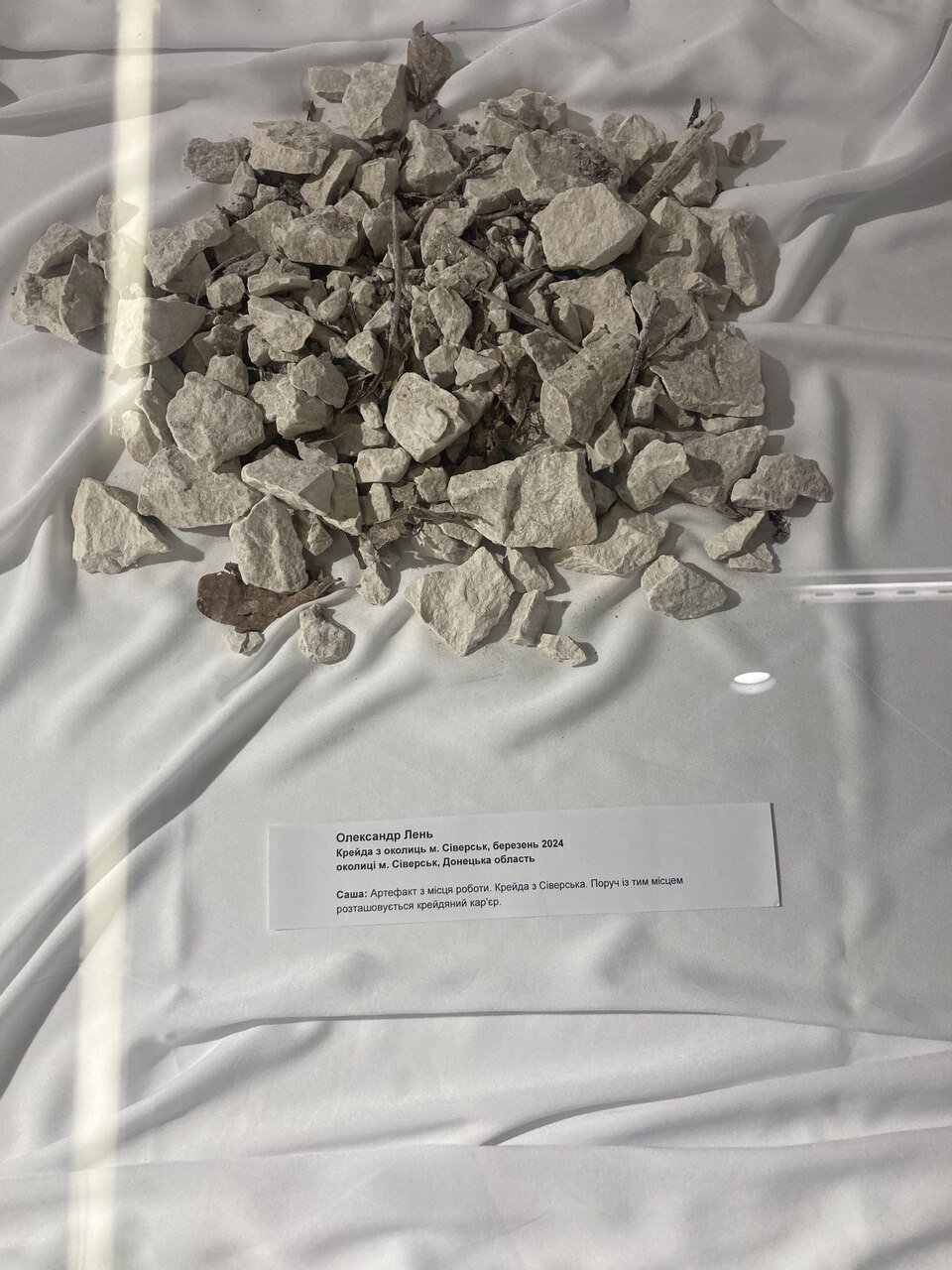
Image courtesy of Kateryna Iakovlenko.
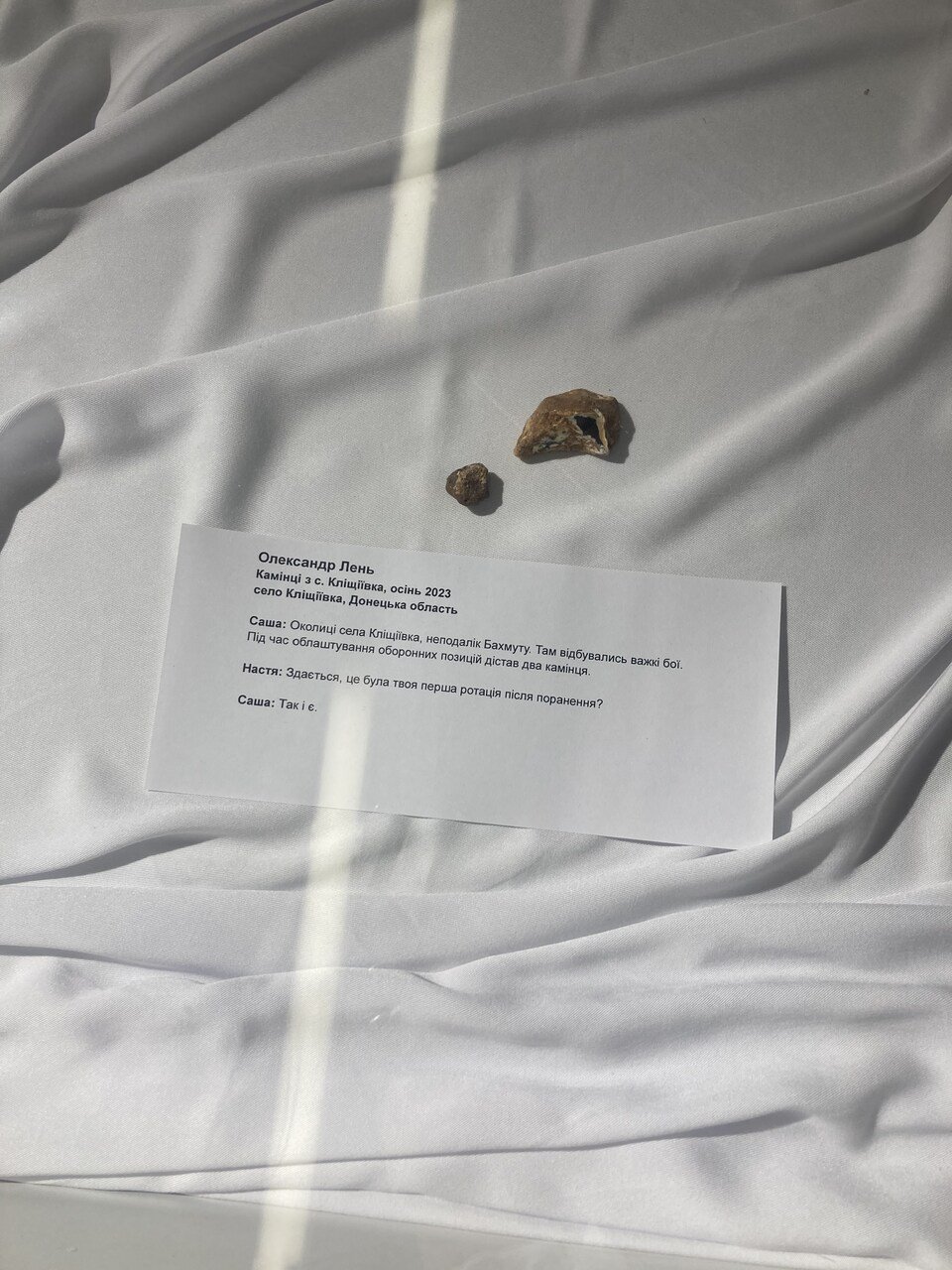
Image courtesy of Kateryna Iakovlenko.
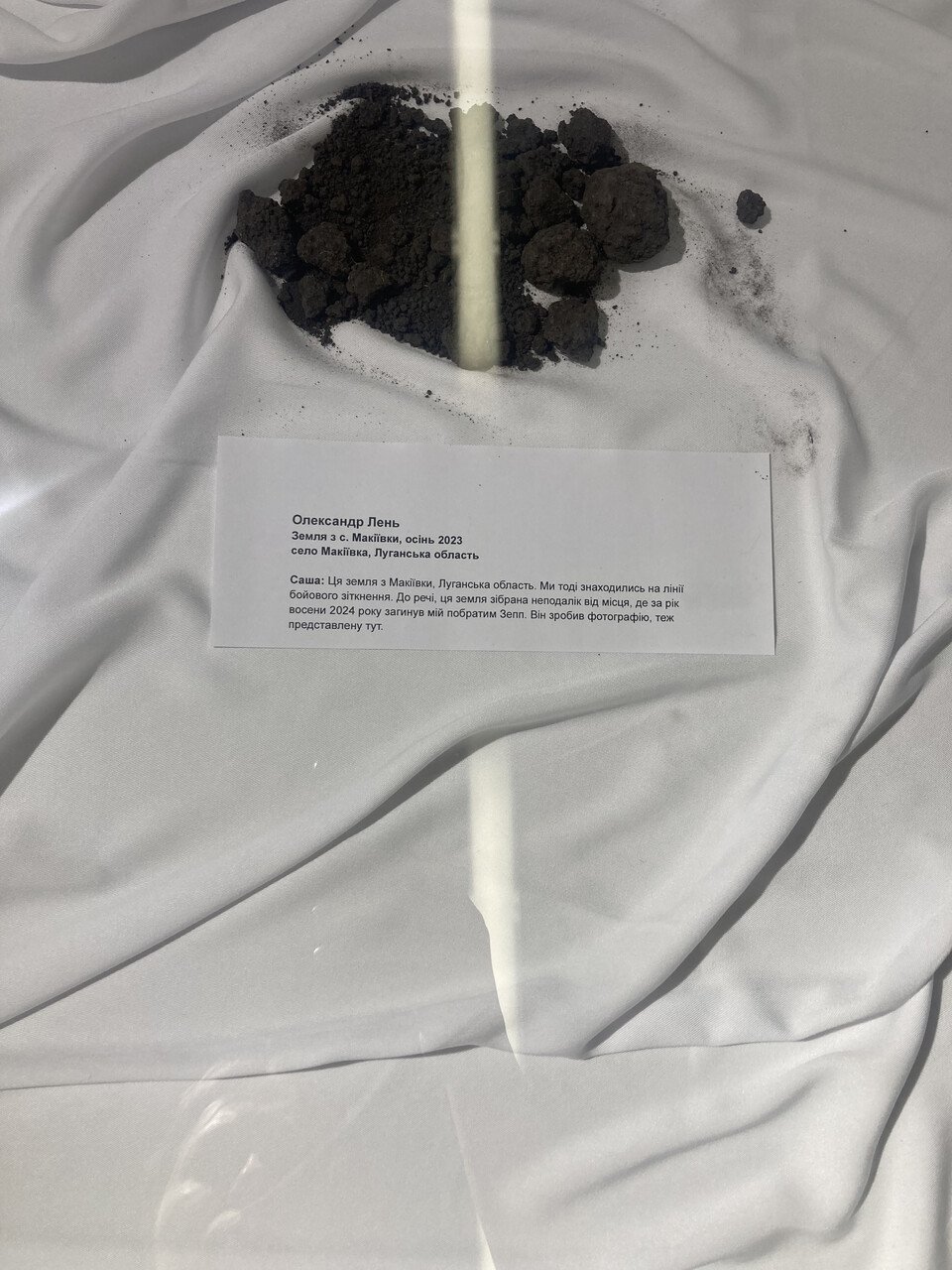
Image courtesy of Kateryna Iakovlenko.
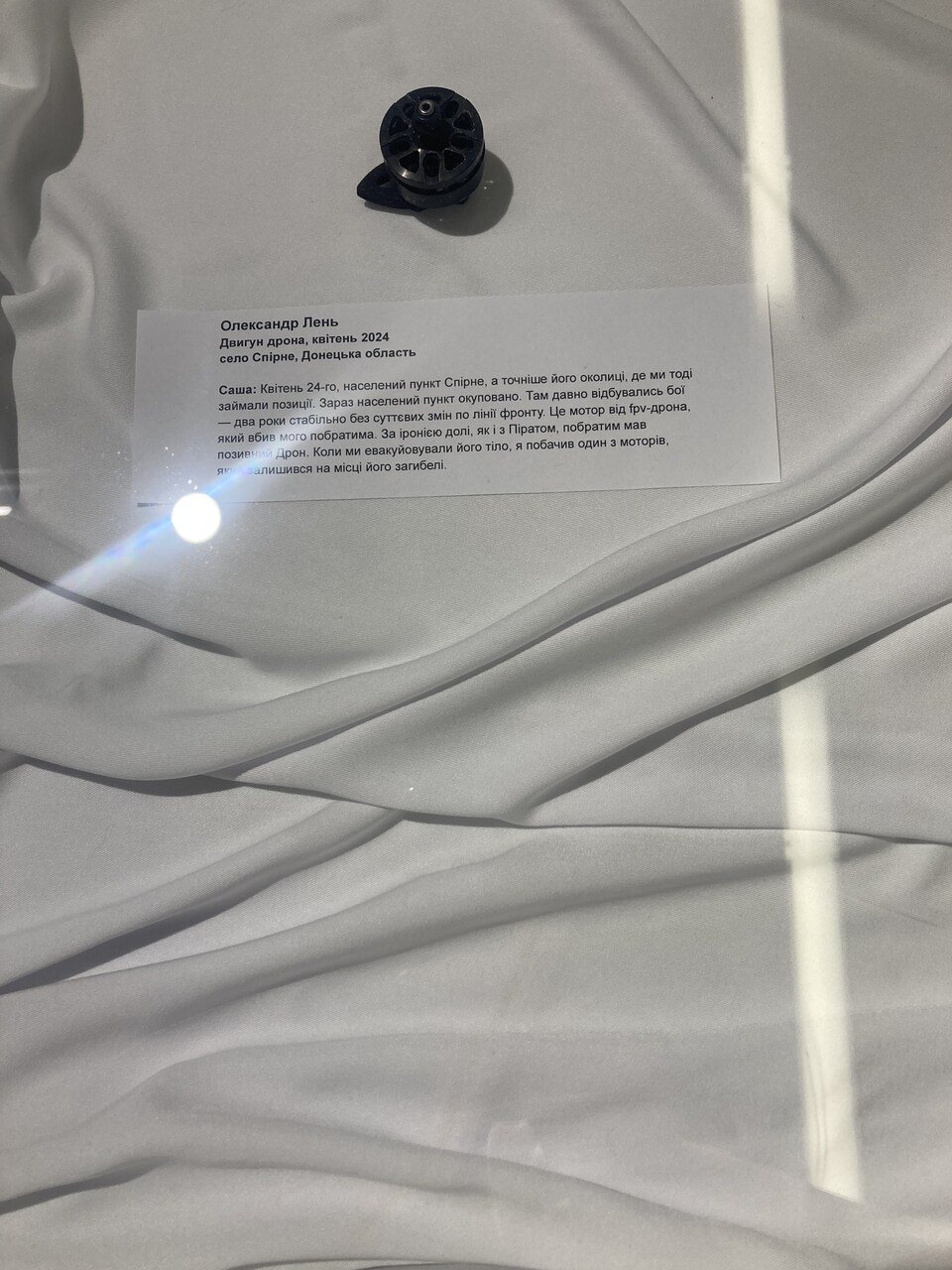
It turns out that уламок demands clarification. What kind of уламок is it exactly? What is its nature (material, texture, age), its character and history (why was this object destroyed), its dramaturgy (was it scattered and found among everything else, or is it a solitary, almost intact element)? Or like in Olexander Len’s artwork, where he selected the following objects: the engine of an FPV drone that killed a fellow soldier near the settlement of Spirne in April 2024; earth (more precisely, a handful or clod of soil) from the village of Makiivka in Luhansk Oblast; two stones from the village of Klishchiivka in Donetsk Oblast; chalk (described as an “artifact”) from the outskirts of Siversk, Donetsk Oblast, dating to 2024; and four pieces of shrapnel from his body, which the artist and serviceman received in August 2022. Every element he explains with a personal story, writing a text in two ways: as a short formal explanation that consists of a personal story and as an attachment to the object (e.g. the piece of land or stones) or a long, detailed conversation in two voices (e.g. the shrapnel).
So I think there are at least four phenomena that describe the states of war and its aftermath: the уламок (debris, a shard, rubble), the fragment, the ruin, and the echo. Let me begin with exactly what we call a уламок. Do all things found and left among ruins carry these symbolic, and perhaps at times even sacred, meanings? What else do we, those who call it уламок, endow it with?
Ultimately, language itself proves to be an important component. As a shell can also “land in language” (an allusion to a line of poetry by Viktoria Amelina, наче у мову влучив снаряд). That is why I consciously write this text in English, with the thought that уламок is constantly in translation, constantly in need of explanation: why exactly this уламок matters, why exactly this уламок testifies to something.
Уламок is shaped by language and expressed through language as if it were a stone falling into water, and under the force of the great pressure of time, its sharp edges, its rough surfaces, become smooth and worn down. The water in this case is not war as such, but rather a metaphor for colonial influence, or for the influence of any aggressor, any act of violence. The metaphor of water can also be used to refer to time, exhaustion, or fatigue. That is why it is worth recording the changes of its state,[3] its deformation, both linguistic and material – this is what will allow someone to come back to the conversation with it one day.
Torn language sometimes produces indistinct words that resemble muttering or screams. The incomprehensibility of the original language creates possibilities for interpretation.
Просто реальність війни / But the reality of war
з’їдає пунктуацію / devours punctuation
зв’язність сюжету / plot structure
Зв’язність / structure
З’їдає / devoured
Вікторія Амеліна/ Viktoria Amelina translated by Uilleam Blacker
Ruptured language forms a rhythm, moving beyond accepted literary boundaries.
Such language can be imagined in poetry, but rarely can be published in an academic journal because the academic dictionary, like water, smooths the sharp corners of language that were formed as a result of destruction. It is formed by the constant, imperial need to have clear and established references.
говорили надламано – схрипуючи, як ворони, / spoke brokenly – croaking like crows
***
ні щирості, ні брехні – лише паузу, / no sincerity, no lies – only a pause,
довгу і незручну, як одяг з чужого плеча / long and uncomfortable, like a garment from someone else’s shoulder
(того, хто оратиме землю цю віднині й довіку) / (the one who will plow this land from now on and forever)
вдягали в цю паузу птаха з чорним одненьким крилом / they dressed a bird with one black wing in this pause
й носили на шиї, і вітер вертали на кола свої / and wore it around their neck, and turned the wind to his own circles
***
мова зникає як вода між долонь / language disappears like water between the palms
посуха часу креслить воєнний пейзаж / the drought of time draws a warlike landscape
Ія Ківа / Iya Kiva
To conclude this part, for me, уламок is not an incomplete thing or object, it’s a new entity created by an act of rupture. It is understood not through the reconstruction of the whole, but through tracing the physical and linguistic violence that formed it, and its subsequent trajectory: its trace in the museum, its description, reproduction, captions, exhibition life, and everything that a person marks narratively and dialectically.
Part III: Уламок as a voice
Accordingly, уламки do not speak a universal language. They form their own grammar, often grounded in local traditions, in the languages of the communities against whom the violence is being committed.
A Palestinian teacher in Gaza, Hanan Habashi, problematizes the passive voice in English using the example of reports of death and destruction, such as “Reham was killed.” She adds: “In Arabic, the passive voice is called al-mabni lil-majhoul, ‘that which is constructed for the unknown.’ I have always found that phrase more honest than the English one. There is dignity in a grammar that admits that something has been withheld.”
“I remember clearly that I sat down to write, and the first line came to me in Arabic: ‘وطني الصغير لا يكفيني’ I followed it and wrote the whole poem in Arabic. Then I became afraid of it, which goes back to my fear of Arabic. I thought this might not be a good poem. So, I decided to translate it into English. I translated the whole thing, and when I looked at the English version, I thought, no, this isn’t it,” – says Zeina Hashem-Beck, a poet who invented her own writing style – Duetts – combining English and Arabic. In her poetry, she reflects not on bilingualism but on language as a space for epistemological justice, for the preservation of memory.
Some dictionaries advised me to translate the word уламок as “fragment,” the most universal and neutral option. While this word is often used in the context of war diary writing, because this writing becomes fragmentary, not holistic – war makes it more chaotic, emotional, incomplete – but in my opinion, a fragment is the most mystified, the most romanticized of the aforementioned phenomena. For the fragment, though understood as a part, still acquires a certain wholeness through interpretation and the imagining of that whole item or thing. Fragments form a narrative and eventually become a whole. But there is another fundamental difference: a fragment need not be formed through violence – through breaking or destruction. A fragment can be chosen from within a whole (as, say, when a portion of a literary work is discussed in a classroom), whereas уламок always carries within it the trace of violence: something has happened to break/disturb the wholeness. It is precisely уламок that possesses the force equal to the force that broke it from the whole. It does not gravitate back toward that whole, though it may still remember its former materiality and substance. But it lives in a reality full of remains and ruins, without trying to adapt itself to any particular context. This is the only case in which уламок becomes as self-sufficient as the whole, as it never was before the moment of violent destruction. Through this, уламок becomes stronger and gains agency. It is capable of testifying to destruction and violence not only through its materiality but also emotionally, culturally, sociologically, and historically.
Precisely because of the emancipative power of debris, what researchers call “resistant ruins” and a “labor of ruins” occurs – both terms speak of resistance to the oppressive colonial politics and conduct work in order to protect its memory and everything that has happened. Achille Mbembe uses a similar thesis about this possibility of resistance in his “The Power of the Archive and its Limits,” where he speaks of “the status of the debris,” which is determined by the selective gesture of the museum and archive owners, and their desire to perform the “act of burial” and erase, or rewrite, evidence of life and the past. “The best way to ensure that the dead do not stir up disorder is not only to bury them, but also to bury their ‘remains,’ the ‘debris’,” he writes.
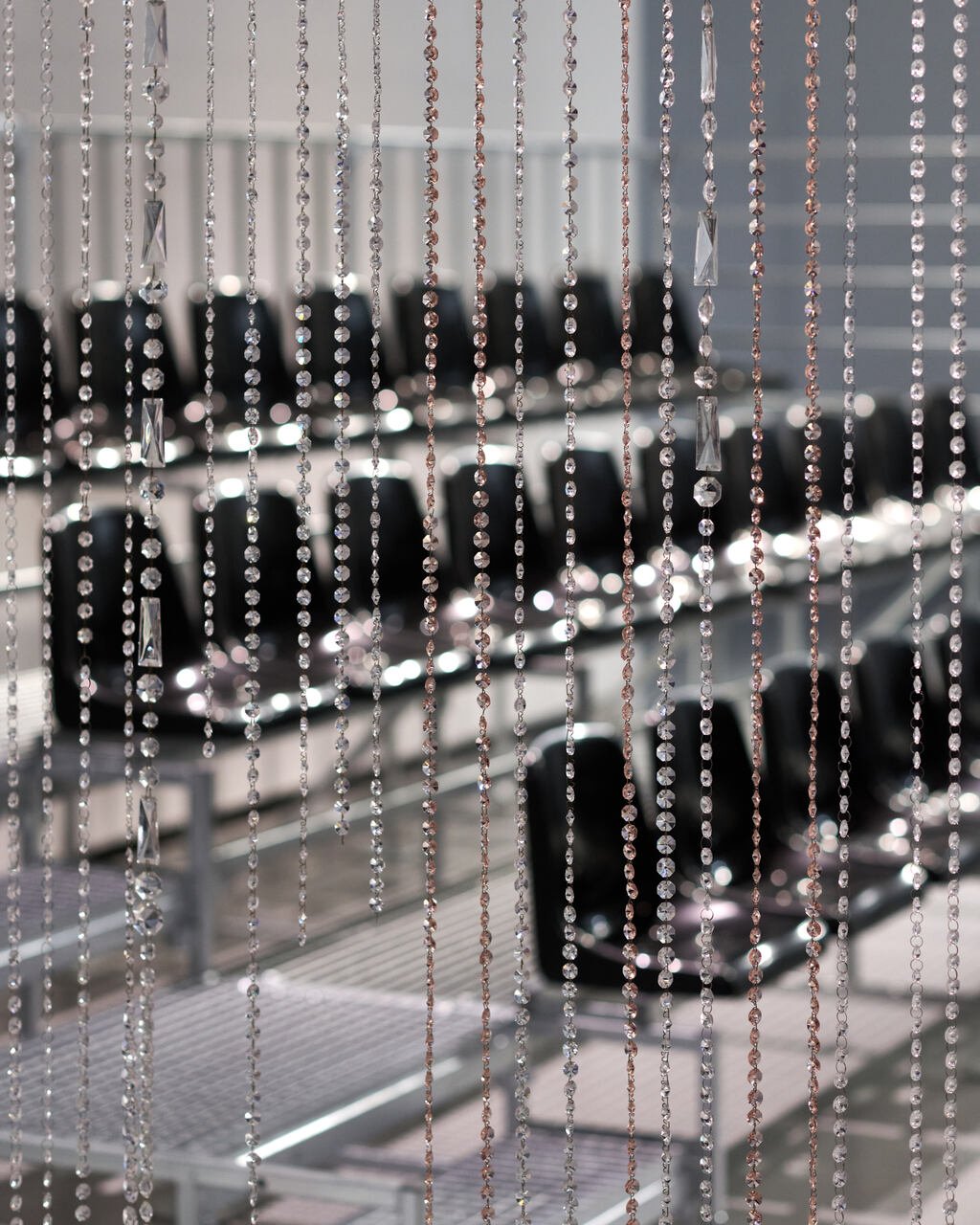
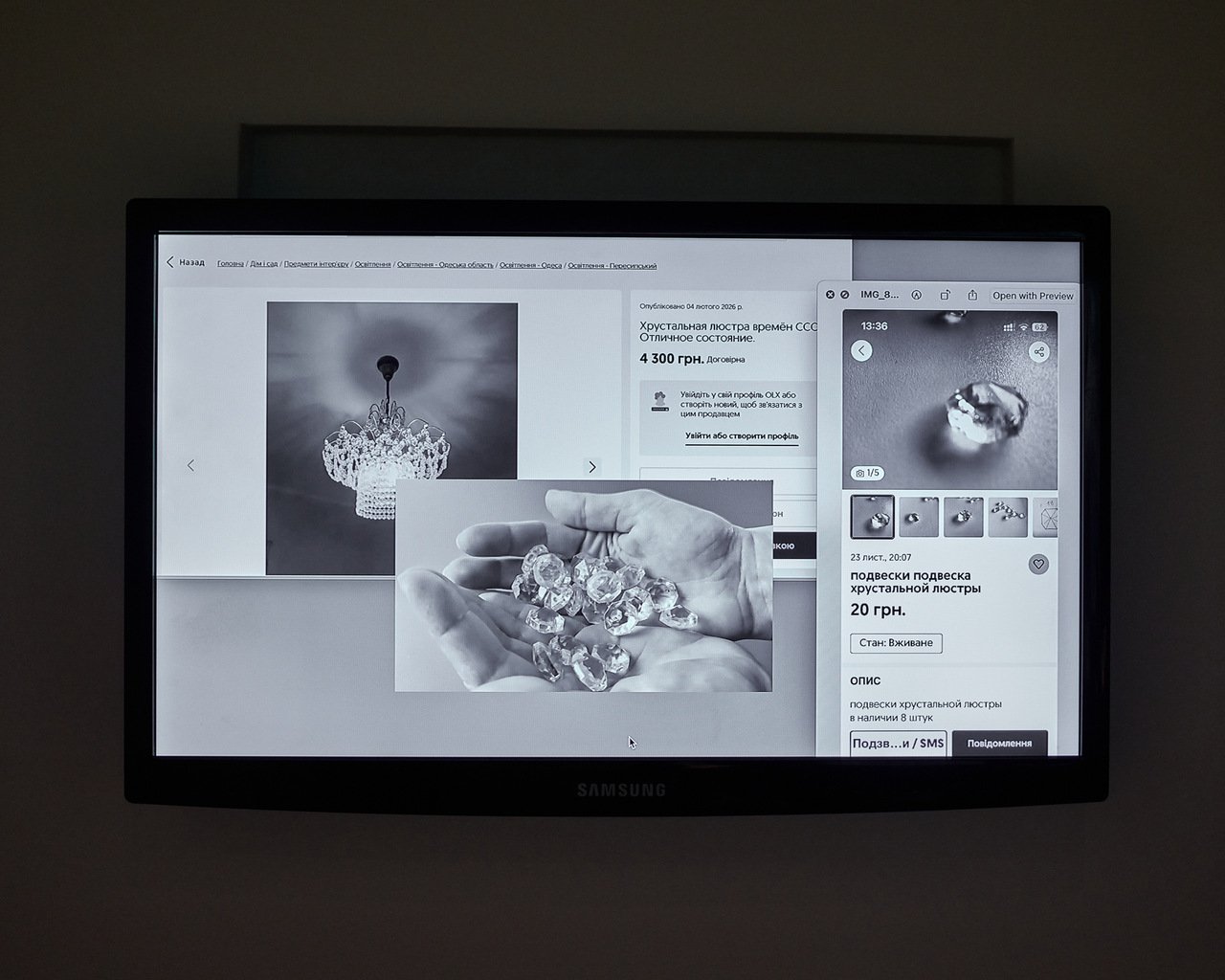

I will give an example: after the destruction of the Mariupol Drama Theater, the russian museum began to collect fragments from its own destruction, in particular, crystal from one of the chandeliers. Displayed in the russian museum as “historical evidence,” according to Ukrainian representatives of UNESCO, the description of the fragments sounds neutral without indicating the detailed history of how the thing became a fragment and, most importantly, who caused the violence. This story of rapid archiving prompted the Ukrainian artist Lada Nakonechna to create the artwork, A Prey, which, using similar crystal and video, focuses on and analyzes the details of such empires and their need to use a selective neutral language to rewrite the stories of how such objects end up in the spaces of museums and archives.
This example shows that the fragments, in addition to their own voice (debris-as-testimony, ruble-as-evidence) becomes a site of competing agency. And as soon as the fragment enters the museum, it is embedded in the narrative structure of the institution, which silences with its very own voice. This does not mean that the language of the fragment is lost, it means that there is the need to talk about the violence against the debris, which has been described by many theoreticians and museum workers.
Sadek, who appealed to the state of debris, the scraps left behind by shelling and heavy destruction, focused on the size and nature of these remains. They are so small that it seems impossible to grasp the whole. They are scattered, everything is devastated. Everything that was previously – buildings, household items, things both significant and insignificant – everything is reduced to debris. So, I wonder, can dust be glued together so that it rises as a thing, rises as testimony, as history, as a force of resistance to oblivion and submission to power? That is, the destruction of war can occur even where everything has already been destroyed – as, for example, the Lebanese researcher Yasmine Khayyat describes in “War Remains,” remarkably noting that war also destroys the things that have already been demolished. Ruins themselves can become a ruin, and the nature of destruction can be violent or non-violent.
Part IV: To stand before a ruin, to stand before the grave
So, when nothing remains, is there anything that has agency? Can this space bear witness?
I asked myself these questions when I was standing near the Hertica School House, which was burned down by Serbian forces in 1999. To preserve this memory, Kosovars covered the school with a roof to protect it from the elements, while choosing to leave everything inside exactly as it was. The voice of grief and trauma still speaks from there today, because justice for this crime has not yet come.
Sadek proposes the concept of “the labor of ruins” to describe processes that are invisible at first glance. But returning to that state, when I stood in my own ruin and closed my eyes, I heard an echo – something that spoke to me through space.
and the morning sky
is blue as the robe of glory
and warm as my love
so glad to be alive
to make these ashes speak.
These lines belong to the Scottish poet Colin Mackay and are included in his collection “Cold Night Lullaby” (1998), in which he recalls his experience as a volunteer in Bosnia. His poems are written as those that should not have been written. In his Oscar speech, Ukrainian director Mstislav Chernov also said that his film should not have existed. All literature, documentary films, and photographs – everything that testifies to the horrors of war – has been born of such agony and injustice. In his review of the work of Slovenian poet Tomaž Šalamun, the American poet of Ukrainian origin, Ilya Kaminsky, uses the word “echo.” Šalamun’s writing is considered fragmentary, and an echo in Kaminsky’s case is something that returns, something that arises between speaking or reading words, on an ethical level.
I started this essay by recounting stories that testified to my encounter with ruins and debris, and I would like to return to this state of presence. In the Arabic poetic tradition there is a lyric motif entitled Aṭlāl: the poet arrives at the place where the poet’s beloved was supposed to be, but sees before him a ruin, the site of a former settlement that has disappeared. While writing this text, and thinking about the difference and commonality between what remains of such destruction, I came across a speech with similar questions by Isabella Hammad. In her research-based essay, she raises the topic of this ontological and epistemological dimension, which draws directly on the experience of Palestinians in life and literature. She writes:
While ‘atlal’ (أطلال) in Arabic is close to a word for looking, invoking spectatorship, the word for rubble, ‘anqadh’ (أنقاض) is related to the word for collapsing: it contains a trace of the word that turned it into debris. The root verb ‘naqadh’ can mean to destroy, to demolish, to knock down, to cleave, to burst open, to violate, to break, to breach. It can also mean to nullify, to annul, to invalidate, to cancel, to quash, to veto. It is closely related to the word for contradiction, for paradox, for logical incompatibility.
Yasmin Hayyat in her book “War Remains” notes the aṭlāl forms a certain type of encounter, relationship, and conversation with the ruin, when the material remnant begins to produce memory, and awakens a remembrance of the past. Today, Hayyat looks at this lyric motif not romantically but politically, emphasizing its nature of colonial resistance.
Interestingly, in the Ukrainian tradition, this “encounter” takes place under conditions that are similar, yet at the same time slightly different: in particular, in the poetry of Taras Shevchenko. The poet comes to a ruin where he sheds tears over the past (“And I, on thy ruins, demented, remain // And uselessly pour out my tears”[4]). However, another motif is also equally frequent – standing on the edge of a grave/mound. This connection between ruins, language, and death/the grave is extremely important. It signifies the presence of a “sleeped,” an unfinished struggle for freedom, and the possibility of the ruined awakening and ultimately resisting the oppressor. This awakening occurs precisely when the poet arrives at the site of the tragedy, reads the traces of the past, and through his own poetry, speaks to those who have fallen on this grave, thus, through the landscape and its language, a lost connection between generations begins to be restored.
The past is echoing.
So I think of an echo as what remains of the remains even when they are removed. It is also about voices and testimonies that do not disappear. It is also about the space created where something was, because in this space, the sound reflects through the void. It is, it becomes, a place of memory. An echo is what remains even when nothing physically remains. Nothing but us, because we still remain And so an echo can also be interpreted as our presence. Because we are responsible for what we hear and what we do not hear. Ukrainian poet Kateryna Kalytko described it in her poem like this: “here in the shell of the body the contusion is rustling” (ось у мушлі тіла шумить контузія).
War is our dialogue. It brings explosions at home, debris of
human limbs, booby-trapped love letters. We’re sorrow’s old
veterans, having written lamentations on too many bones.
Always the writing, that recorded silent voice which jumps
generations to claim eternity for blood.
Etel Adnan, from “The poetry of Arab women: a contemporary anthology”, edited by Nathalie Handal
[1] A reference to the work of Walid Raad, Scratching on things I could disavow (2007-)
[2] I also describe this in my essay “A Word: War”, Apofenie, March 14, 2023: https://www.apofenie.com/the-latest-content/2023/3/12/a-word-war. Also read Victoria Amelina’s essay “Diary of Silence” on Apofenie, March 21, 2023
[3] In one of her works i, c, m, e, a, k (2022) Katya Buchatska uses asemic language.
[4] Shevchenko’s poem “Chyhyryn, O Chyhyryn!” translated by Vera Rich