
Belinda Grace Gardner
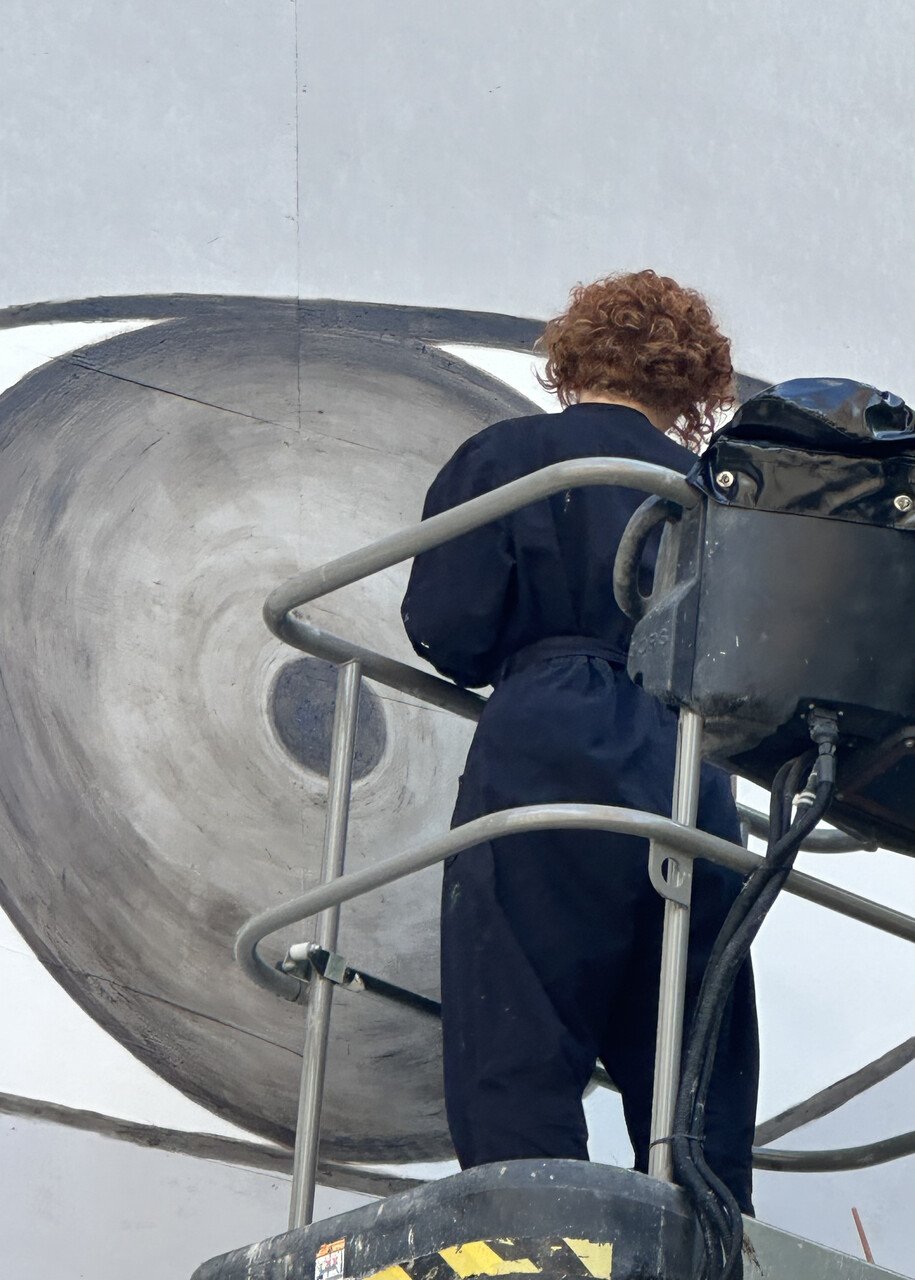
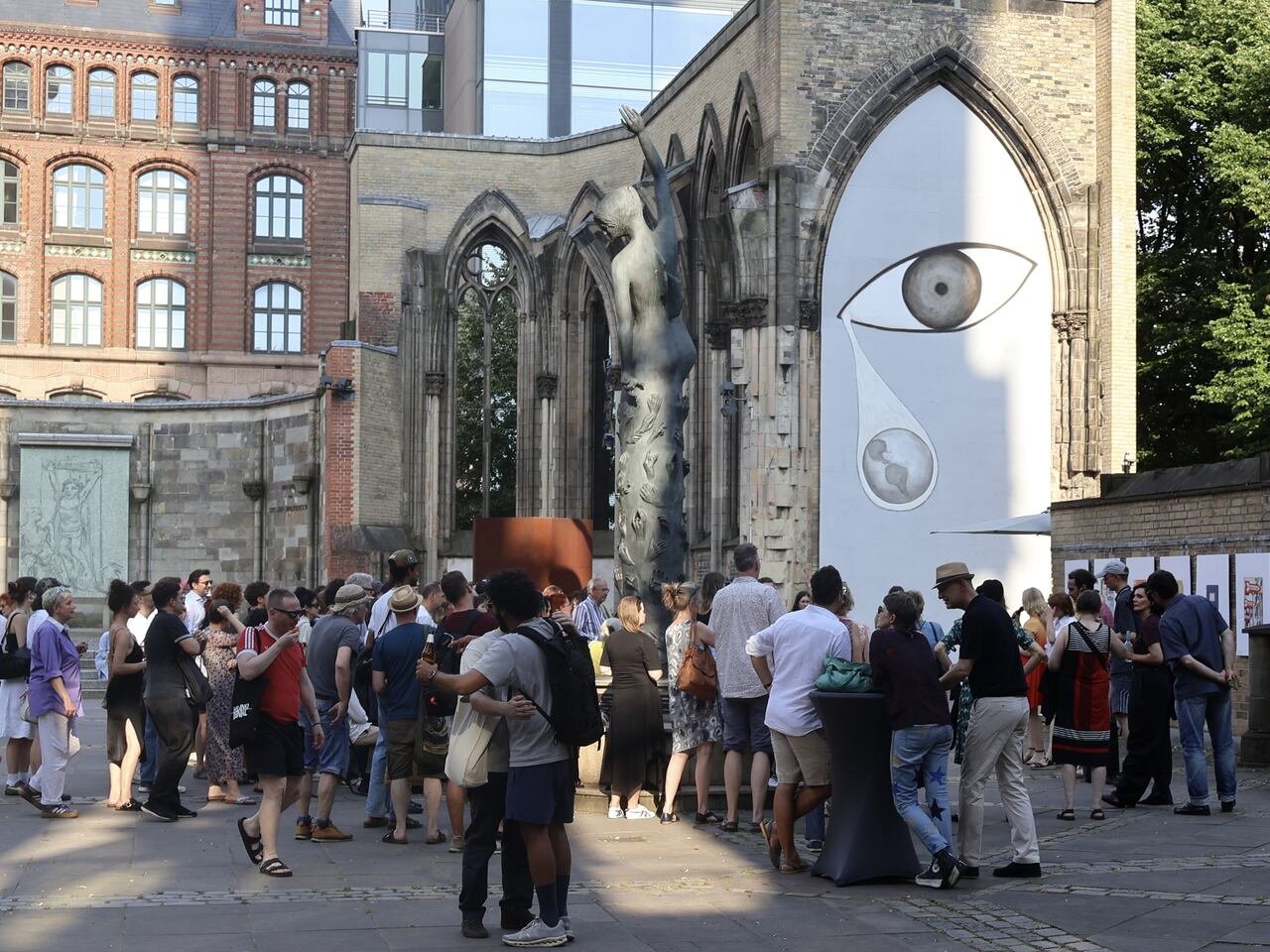
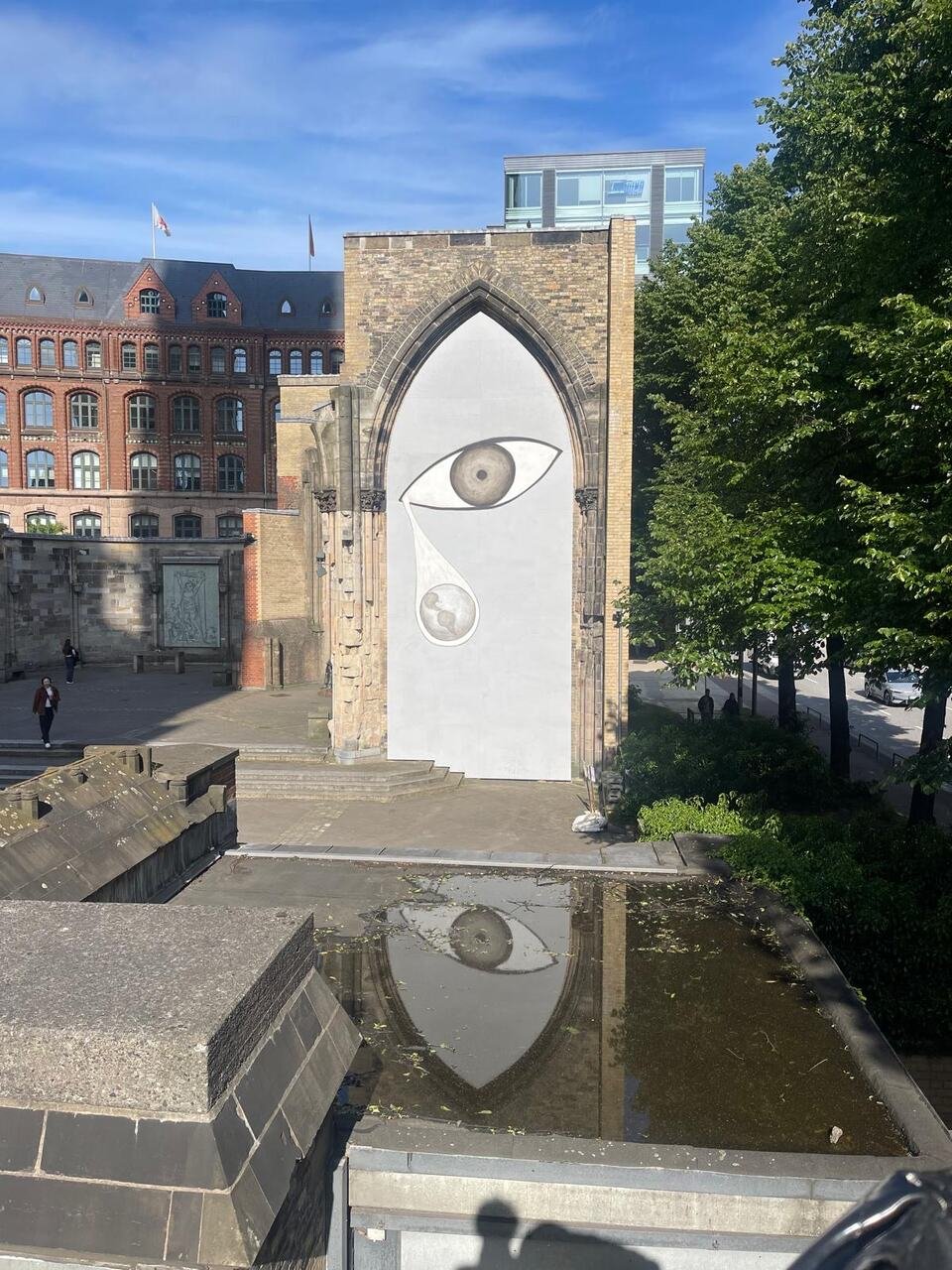
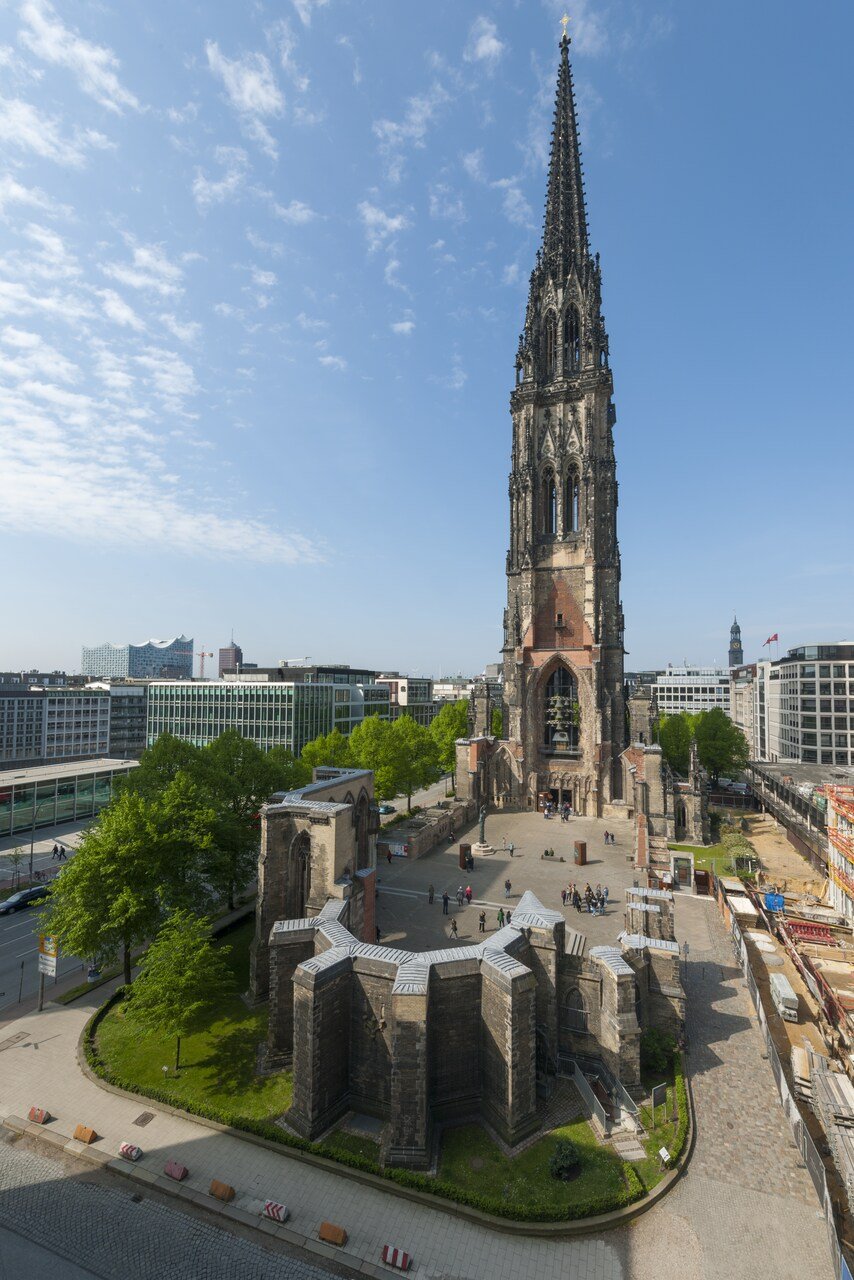
On a wall at St. Nikolai Church Memorial, an immense, stylized eye looks out towards busy Willy-Brandt-Straße in Hamburg’s city center, bearing a teardrop that precariously, tenderly, holds the world. The eye is painted on a large wooden panel covering the choir structure of the former church, which was founded in the late 12th century, rebuilt after the Great Fire of Hamburg in the 19th century, and almost entirely destroyed again by bombs in World War II. Conserved in its demolished state with only its steeple remaining intact, St. Nikolai now serves as a monument dedicated to the victims of tyranny and war, standing as a beacon of peace, tolerance, and intercultural dialogue. Tara’s Tears (A Prayer for the World), conceived by renowned Chilean poet, artist, and activist Cecilia Vicuña, is a memorial in its own right. It was realized in collaboration with Berlin-based artist Coco Bergholm, whose murals can also be seen on facades of the Hamburg artist-run cultural center Gängeviertel. The work was created with ashes gathered by the Brazilian collective Cinzas da Floresta from wildfires raging in the Amazon rain forest – a reference to the devastating effects of deforestation and other environmentally destructive practices on climate change.
Serving as both a warning and a call for change, Tara’s Tears epitomizes the multidimensional character of many of the works assembled in FIRE, the new project conceived by the current City Curator of Hamburg, Joanna Warsza. Since 2013, alternating curators have been invited for five-year spans to develop temporary art interventions in Hamburg’s urban spaces (since 2024 in cooperation with the exhibition institution Kunsthaus Hamburg and its director, Anna Nowak). FIRE is the second part of the internationally active Polish curator’s multi-year public art series From the Cosmos to the Commons: Five Years – Five Elements, which explores the classical four elements plus the cosmos as the core energies at the basis of all existence in their symbolic, societal, and political ramifications. Proceeding from Cosmos (2025) to Fire (2026), Earth (2027), Air (2028), and, finally, Water (2029), Warsza’s series is an invitation “to look toward the horizon of a planetary public sphere.” This implies reimagining of how we, as human beings, might find ways to “move toward forms of planetary coexistence grounded in care, justice, and nonviolence” in our shared world.
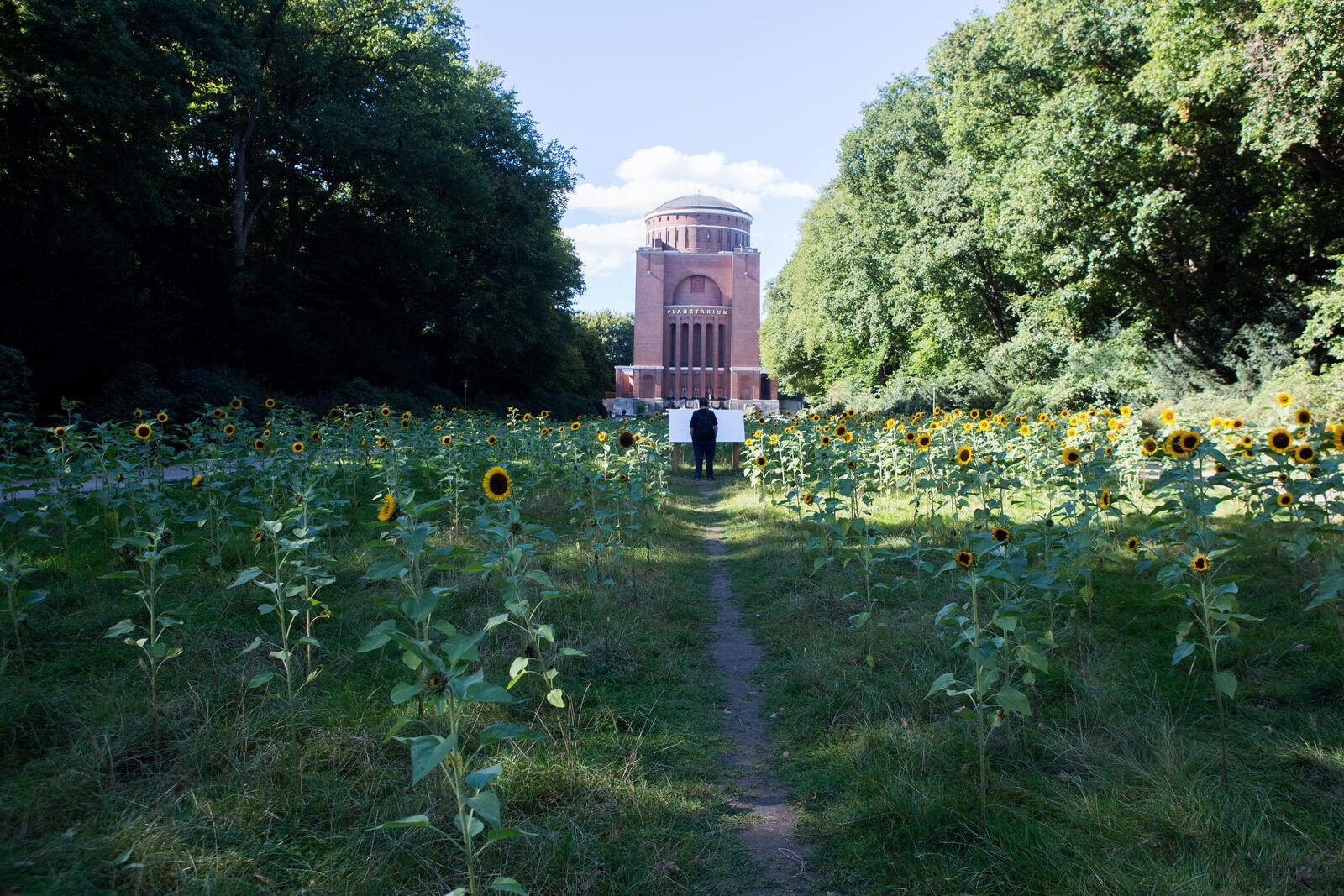
Launched last year in Hamburg’s City Park, the first outdoor exhibition of the series, Cosmos, featured an open-air ensemble of works by international and local artists revolving around planetary and cosmic interrelationships and interdependencies. This was underpinned by a reconstruction of the legendary Image Collection on the History of Astrology and Astronomy envisaged by the groundbreaking Hamburg art historian and cultural theorist Aby Warburg for the opening of the Planetarium Hamburg in the City Park in 1930. Beyond this, Warsza’s curatorial planning as the Hamburg City Curator includes an ongoing series titled Counter-Monuments. Performing the Public Collection of Hamburg and the initiation of the ReferenzBibliothek – a reference library taking shape in collaboration with the collective para-education. The library will document Hamburg’s trailblazing program for art in public spaces from its inception in the early 1980s to today.
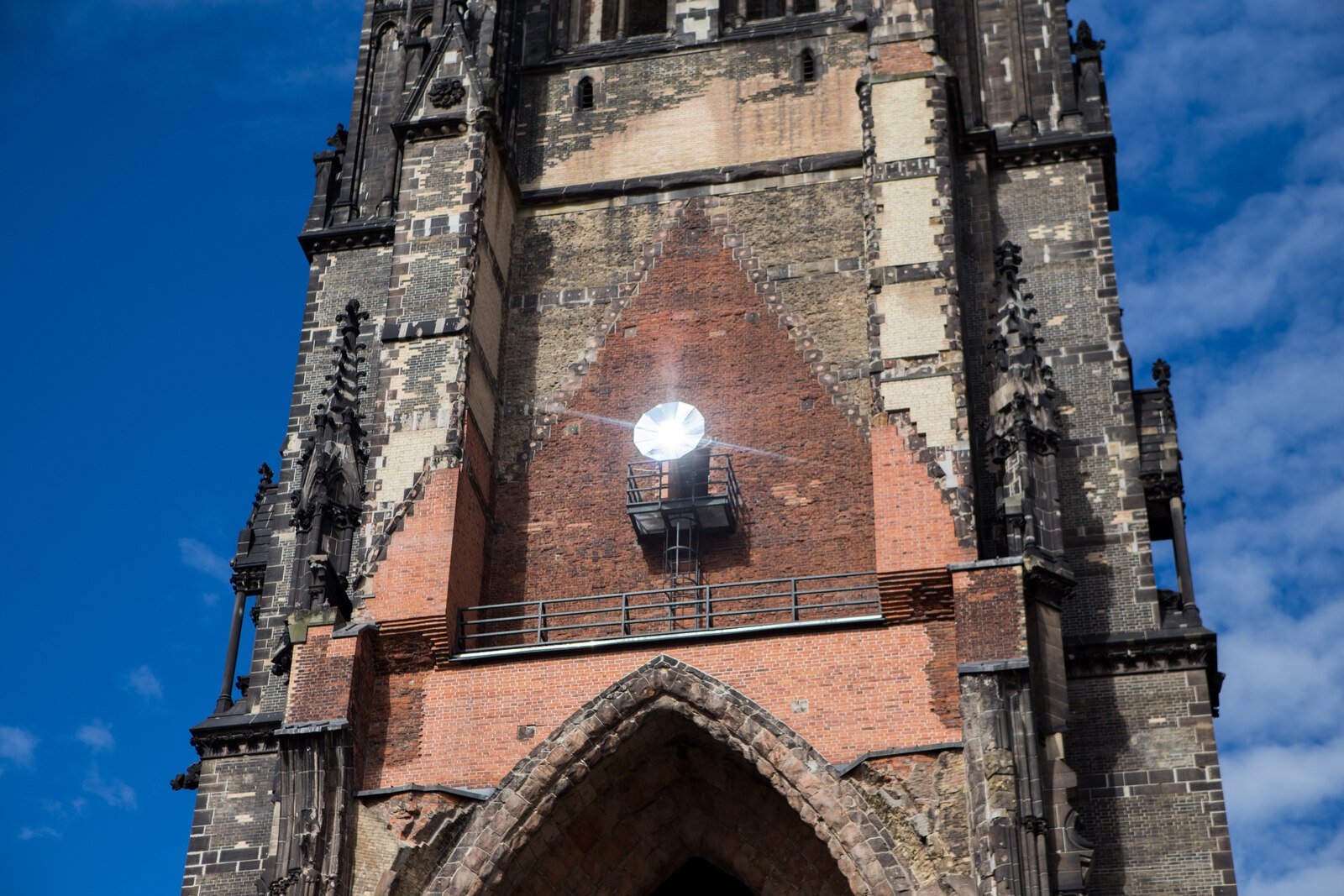
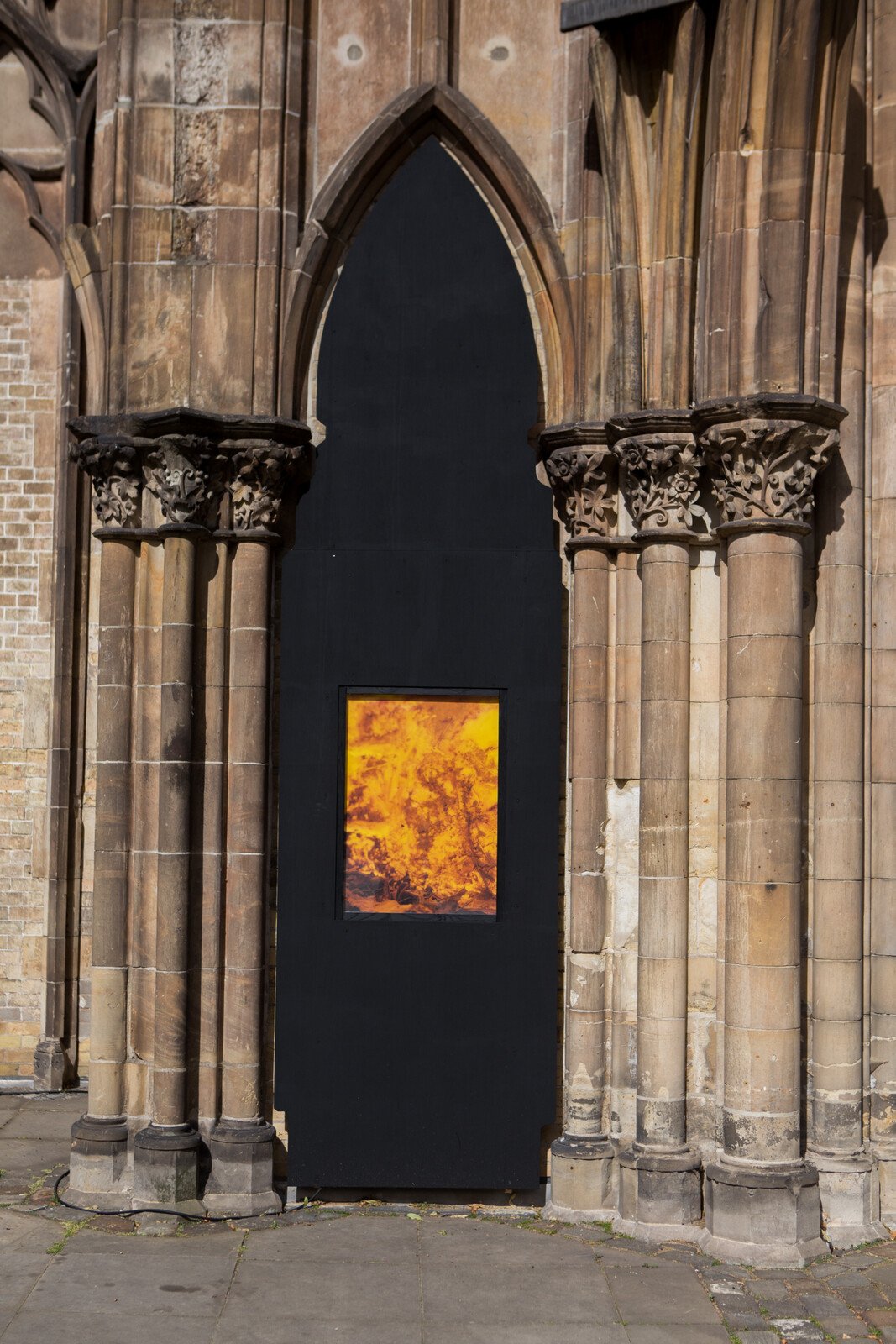
Warsza has placed a main focus on boosting “planetary thinking” and the formation of collective interrelationships in our crisis-ridden time – a perspective that also fuels the exhibition FIRE at the St. Nikolai Memorial. “In FIRE,” she says, “we look at the burning world, its various ends, its renewals, and the current overwhelming feeling of apocalypse,” while stressing that this feeling is already concretely existent “for many Indigenous peoples.” In different ways, against the backdrop of past and present scenarios of disaster and destruction, the international and Hamburg-based artists (Hala Alnaji, Billy Bultheel, Saodat Ismailova, Nikita Kadan, Hamedine Kane, Annette Kelm, Lene Markusen, Mark Morris, Neda Saeedi, Mikołaj Sobczak, Cecilia Vicuña & Coco Bergholm) participating in FIRE evoke visions of peaceful coexistence in our shared world, in alliance with nature’s life-sustaining forces. The idea that essential transformation can, and must, emerge from the ashes left by the fires of devastation to maintain planetary existence manifests here in various forms as well. Thus, apart from Vicuña’s and Bergholm’s mournfully watchful eye urging ecological commitment for the sake of survival, among the ruins of St. Nikolai, the viewer is confronted with works that throw light on traumatic events and forgotten memories, in addition to immediate personal and collective experiences, as a method of kindling processes of rethinking, compassion, and healing.
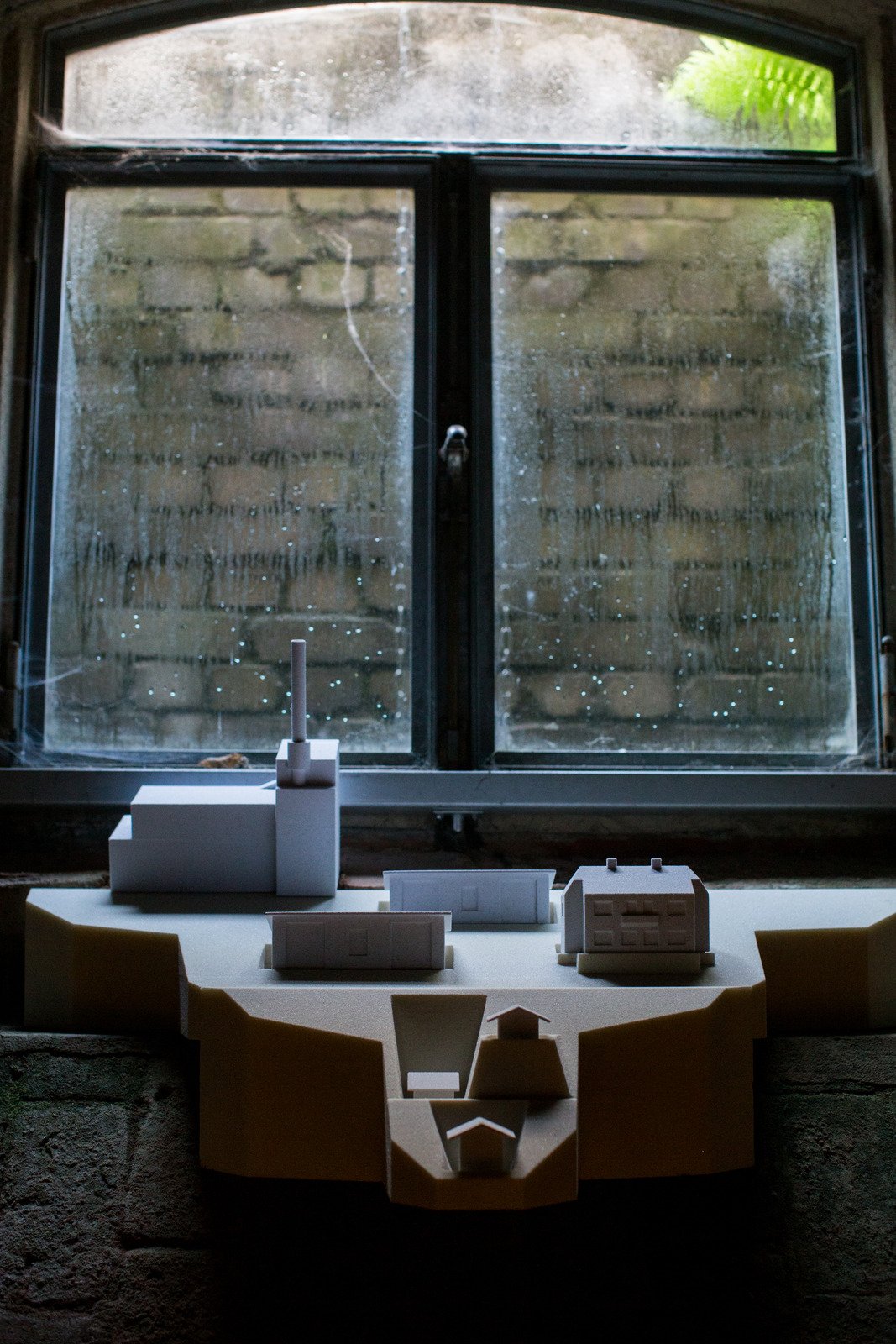
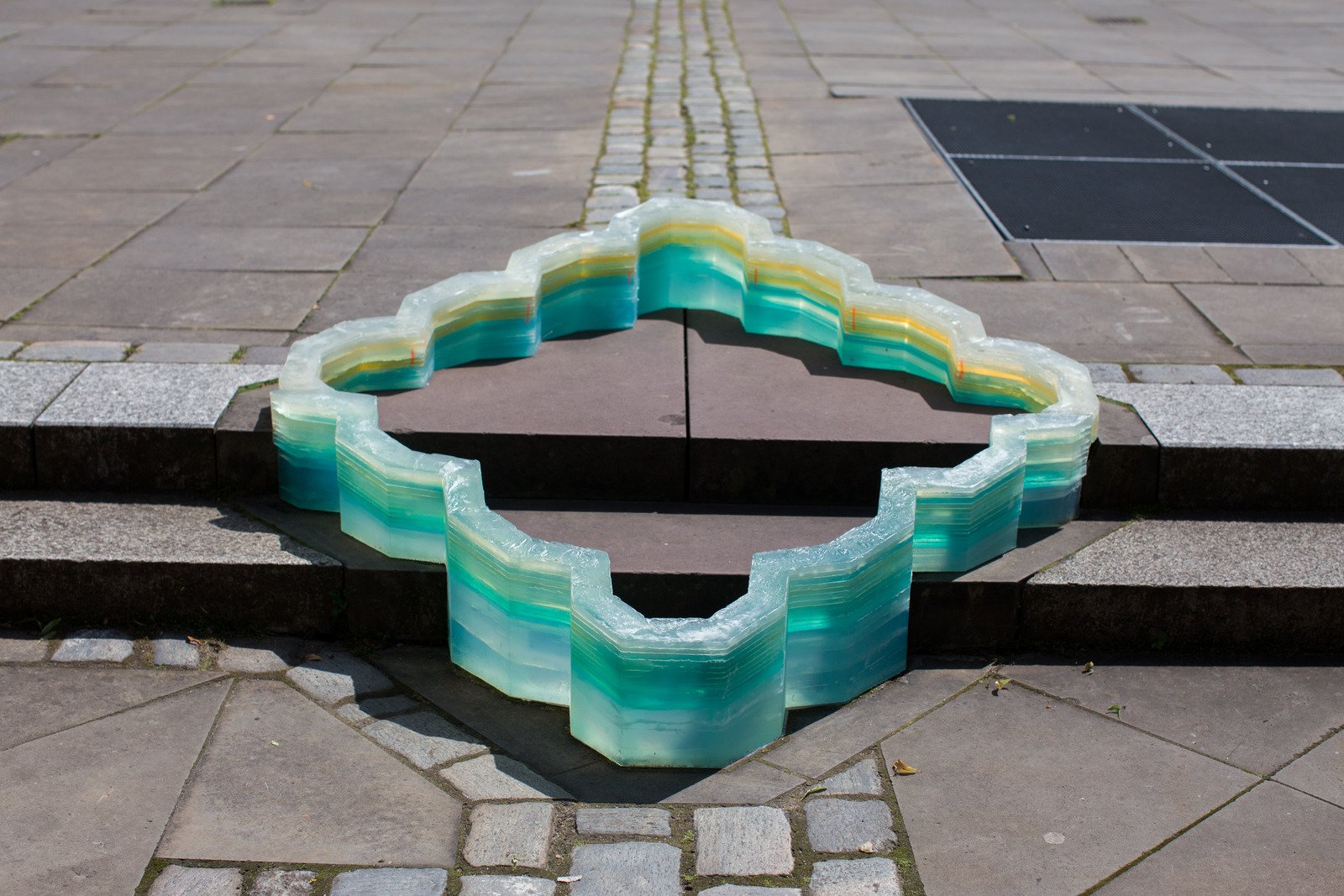
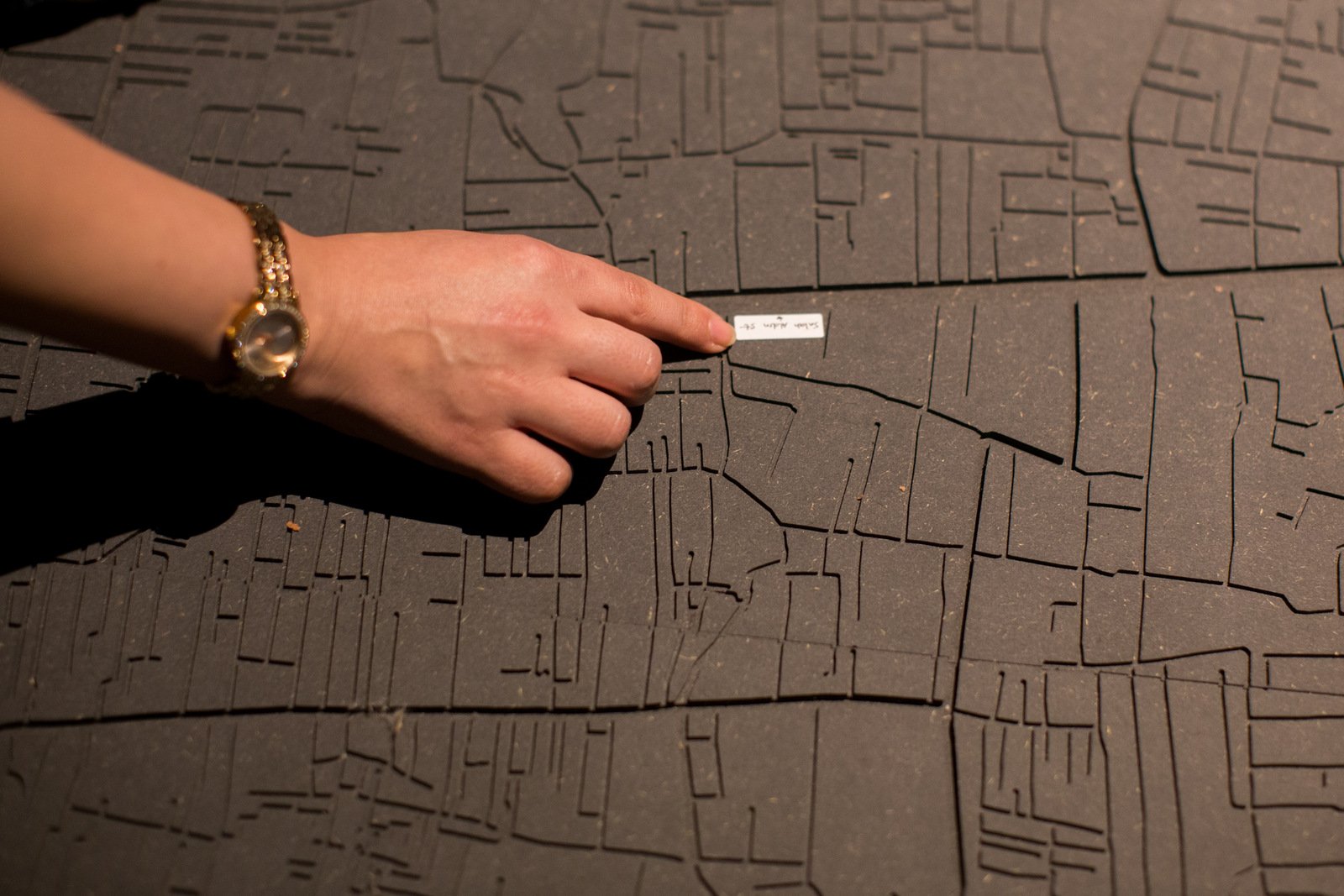
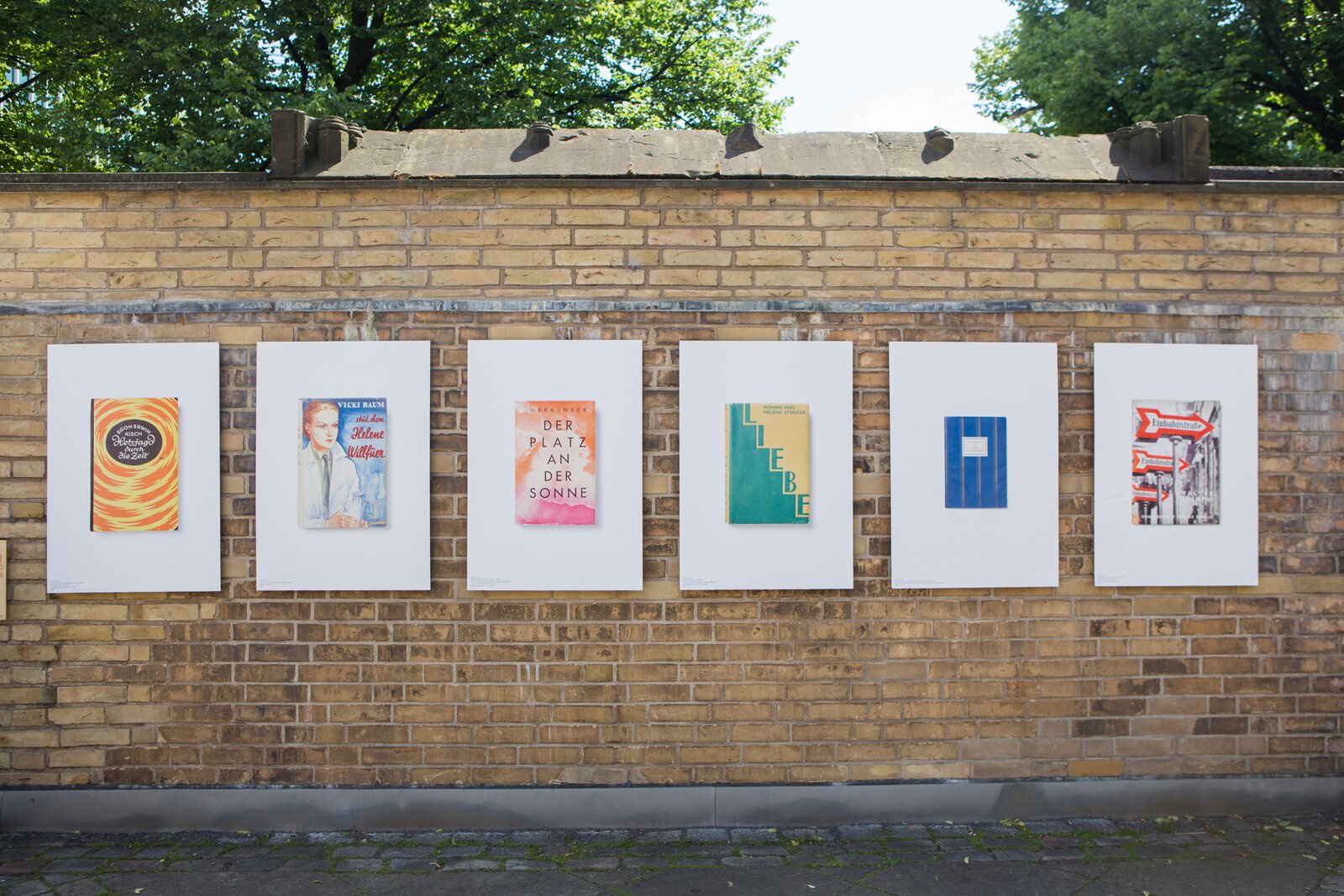
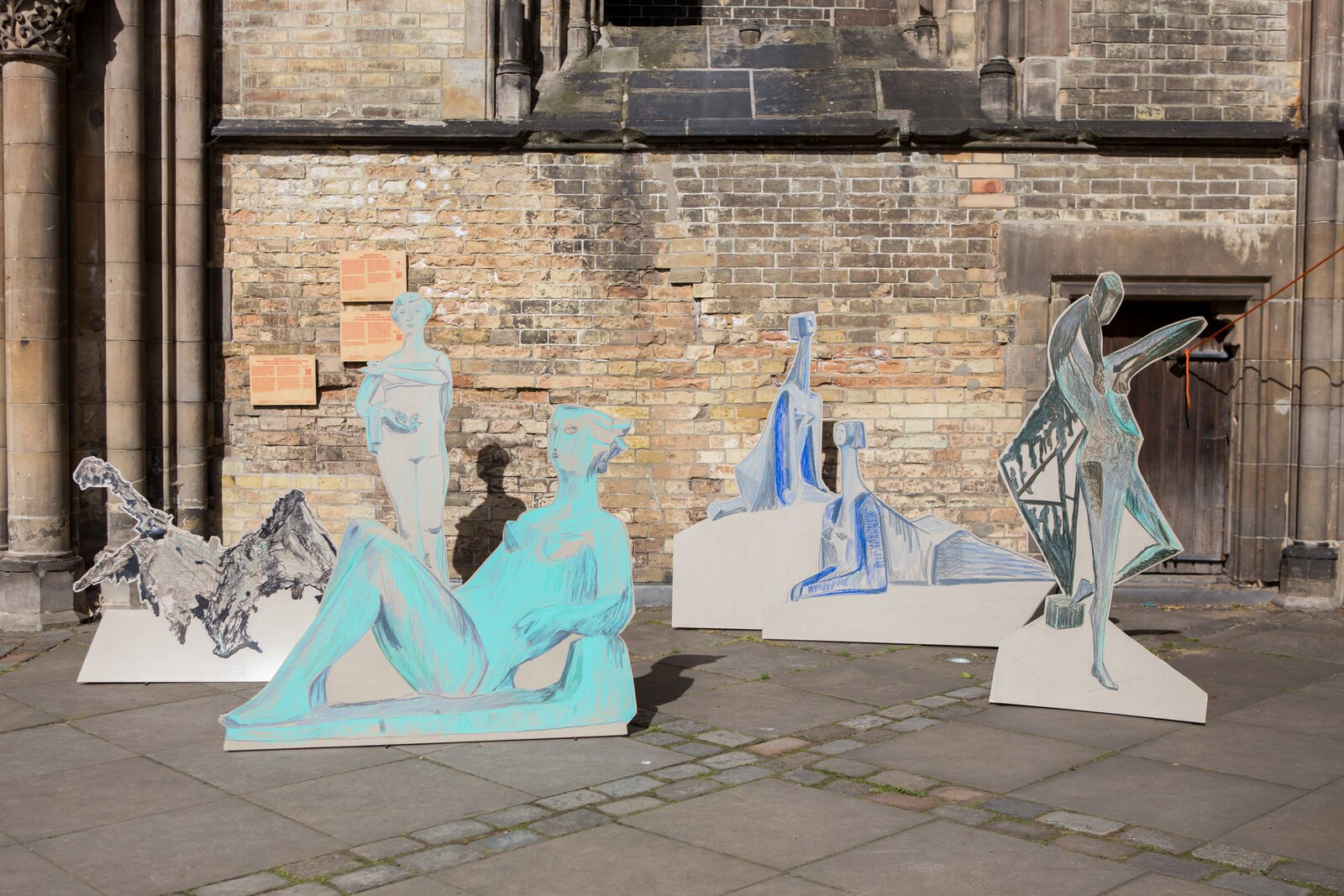
Berlin photographer Annette Kelm’s series Die Bücher / The Books depicts the covers of books by well-known and long forgotten authors, which were banned and publicly burned by the National Socialists. They are distributed outdoors on one of the walls of the demolished church that frame a large platform open to the sky. The artist’s series is an appeal to defend and uphold freedom of expression, which again, is increasingly threatened in many parts of the world. Other works distributed along the structures lining the empty space where the church building once rose are connected by themes of fragmentation. They consist of pieces representing the whole, of details pointing to larger realities, or of placeholders for what is missing. While evoking notions of fragility and vulnerability, they simultaneously highlight an enduring resilience that reaches beyond damage and destruction.
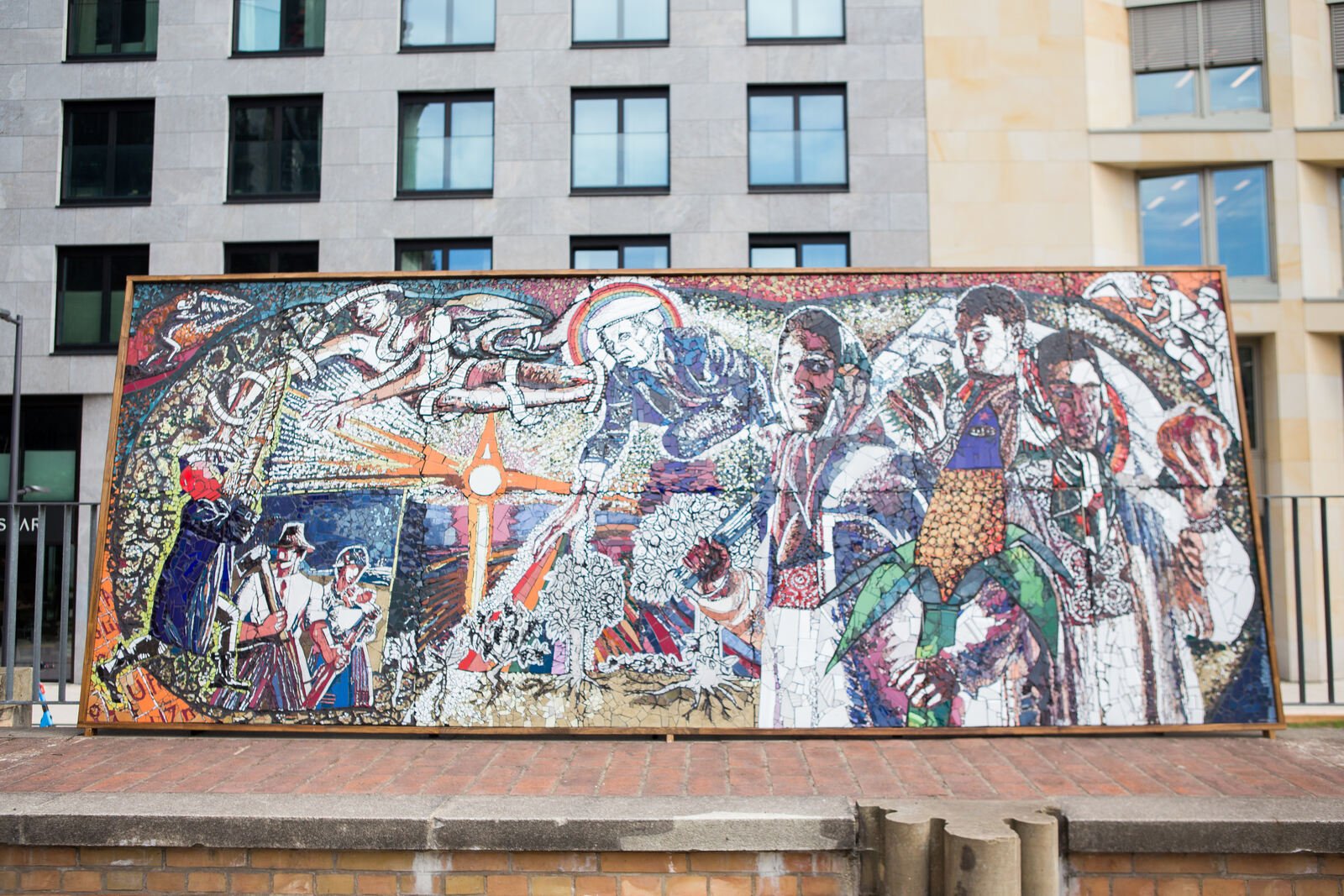
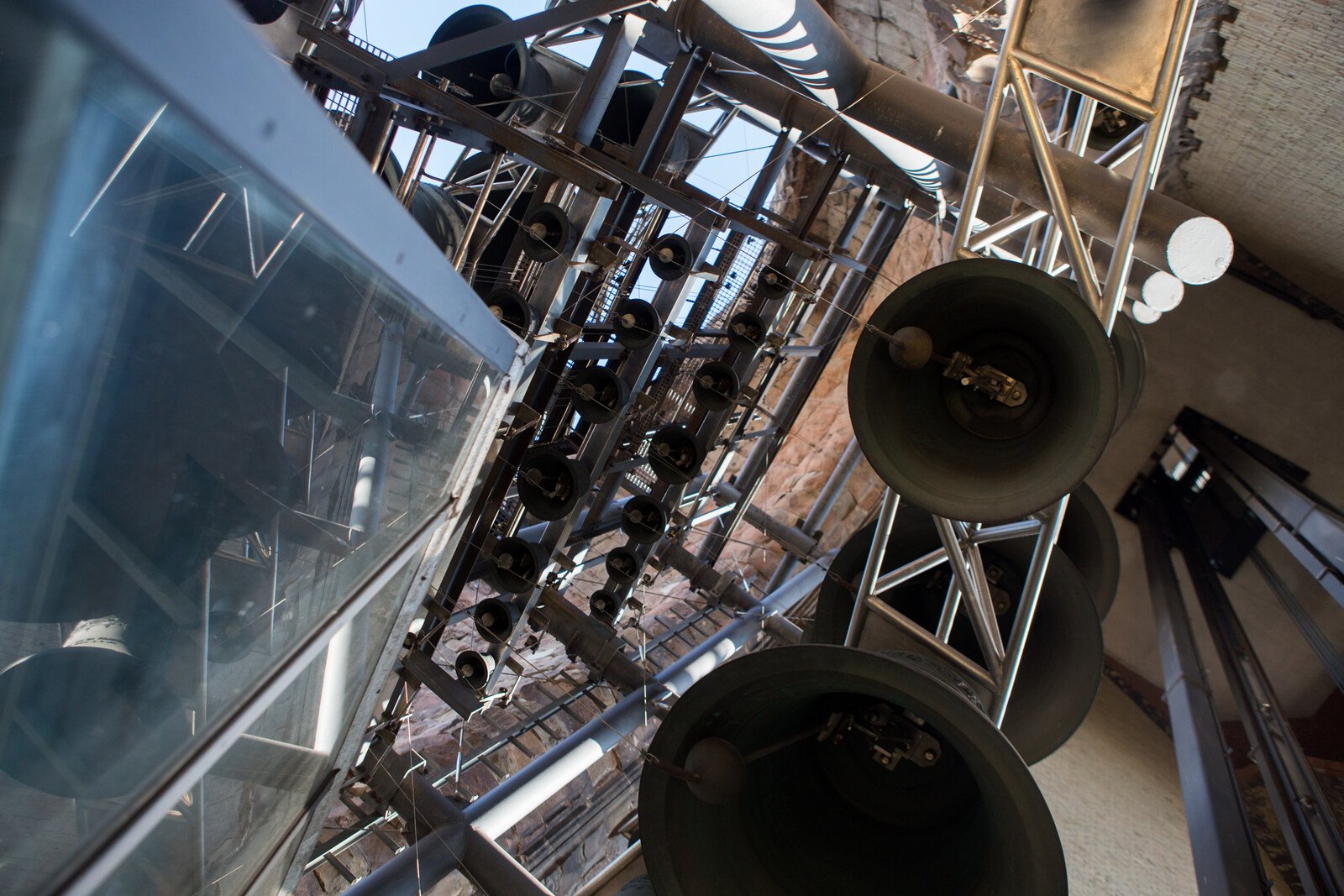
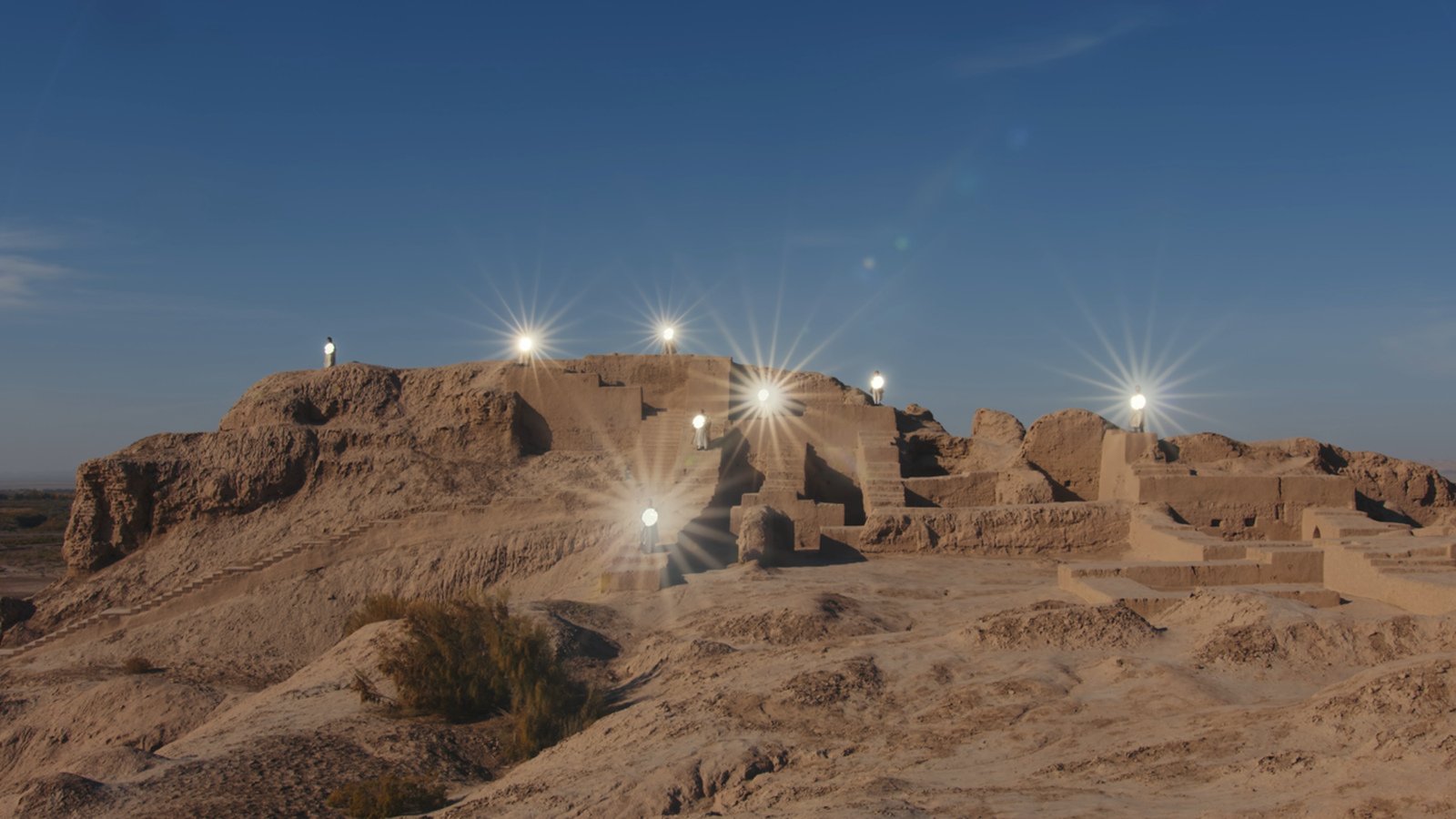
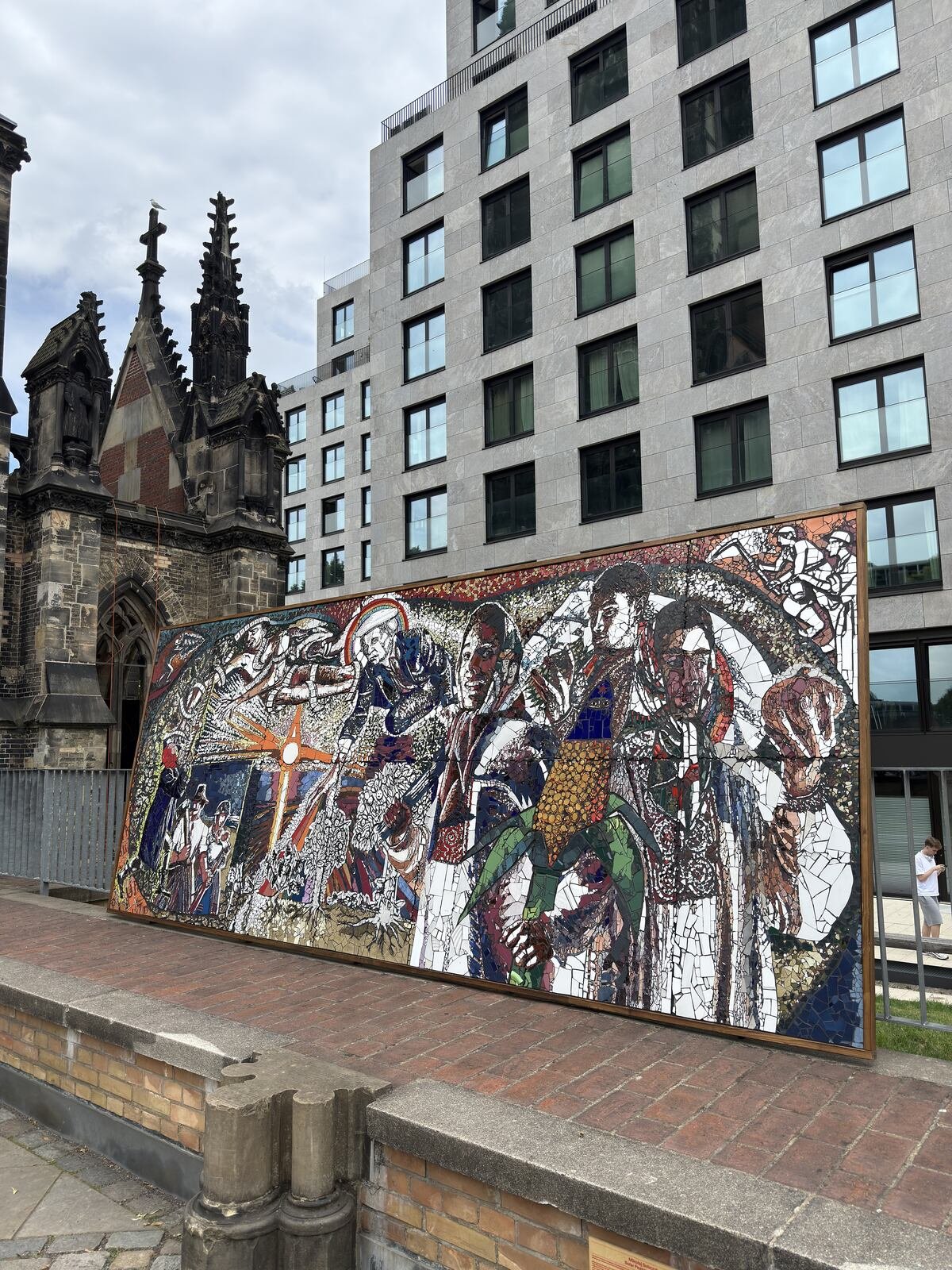
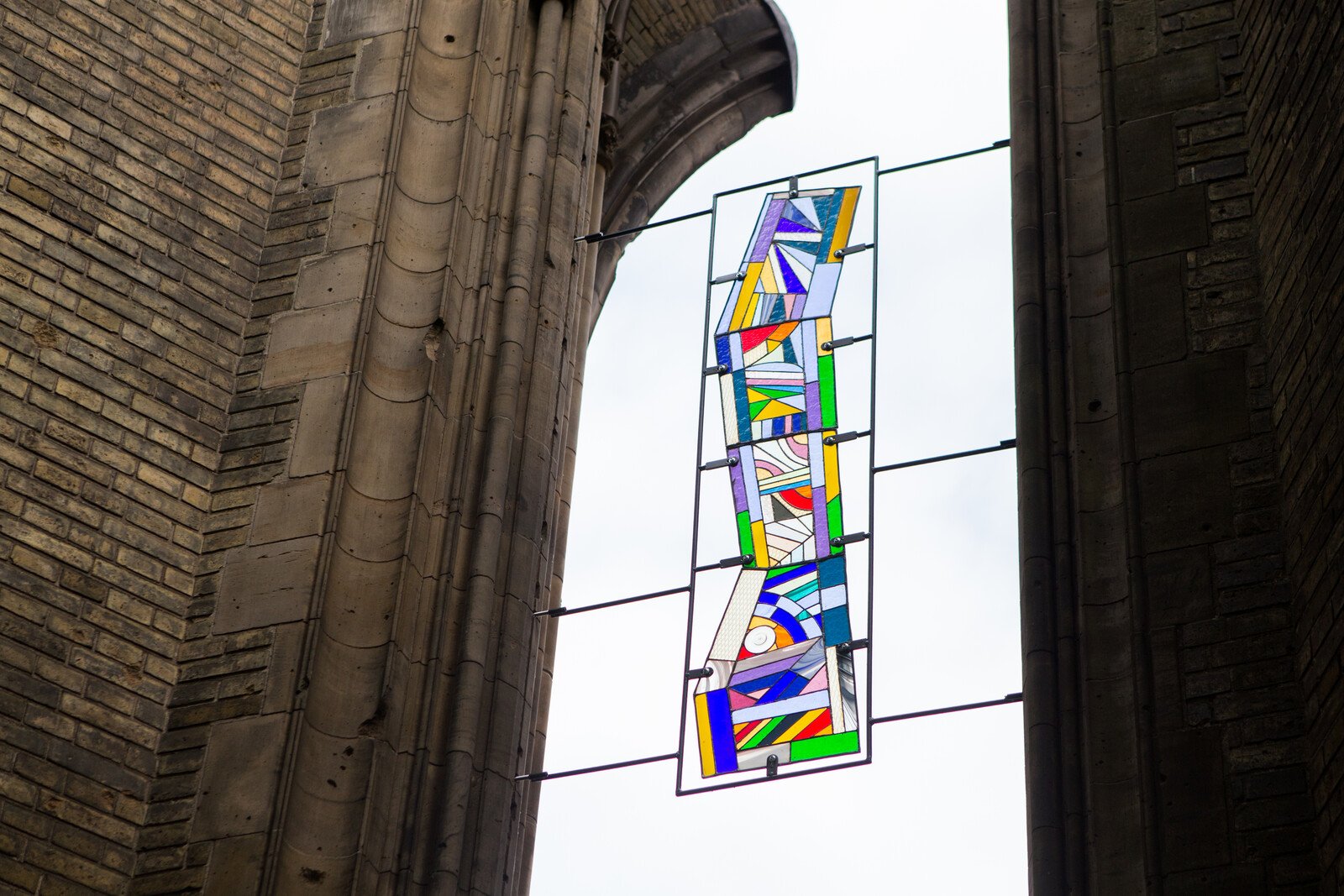
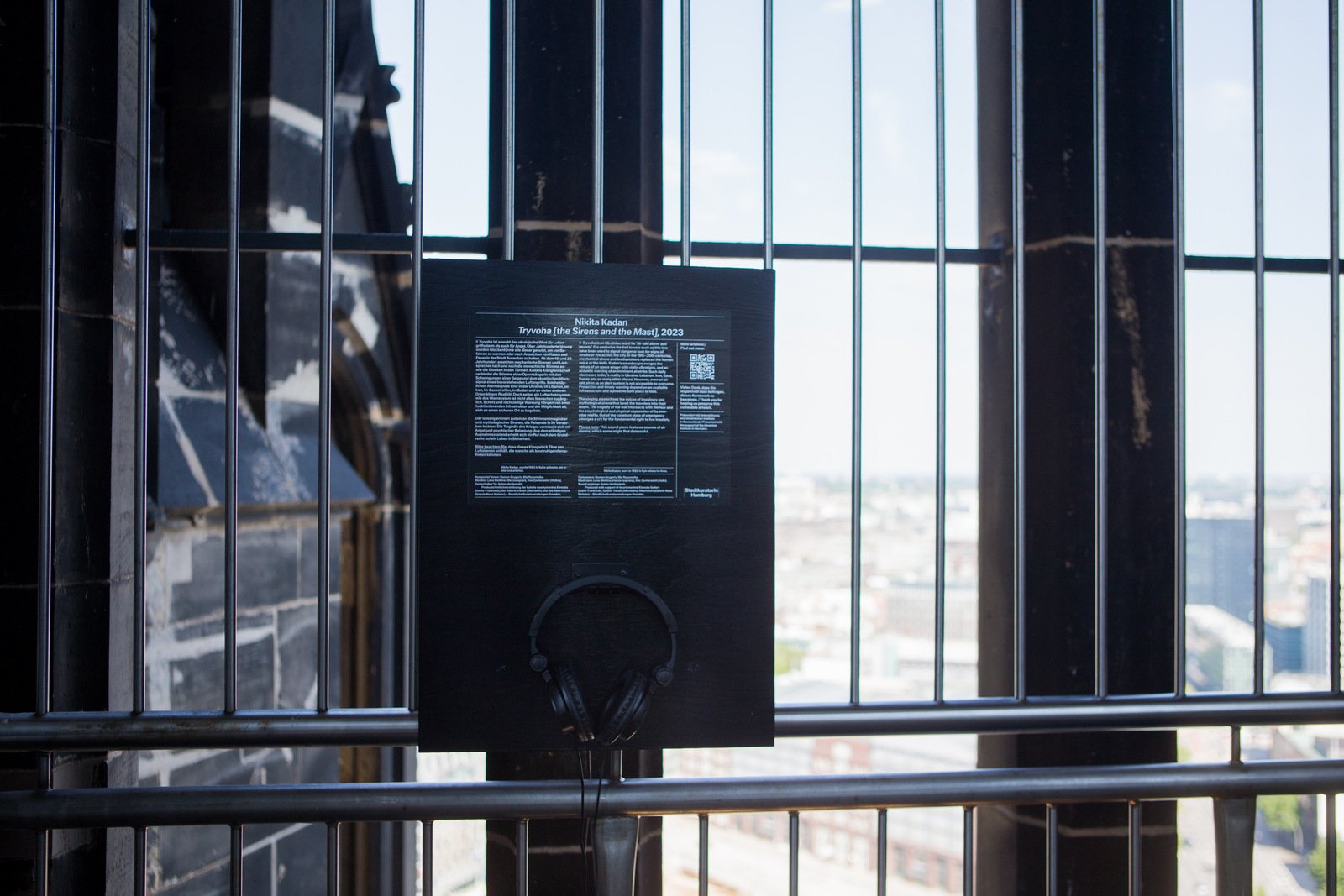
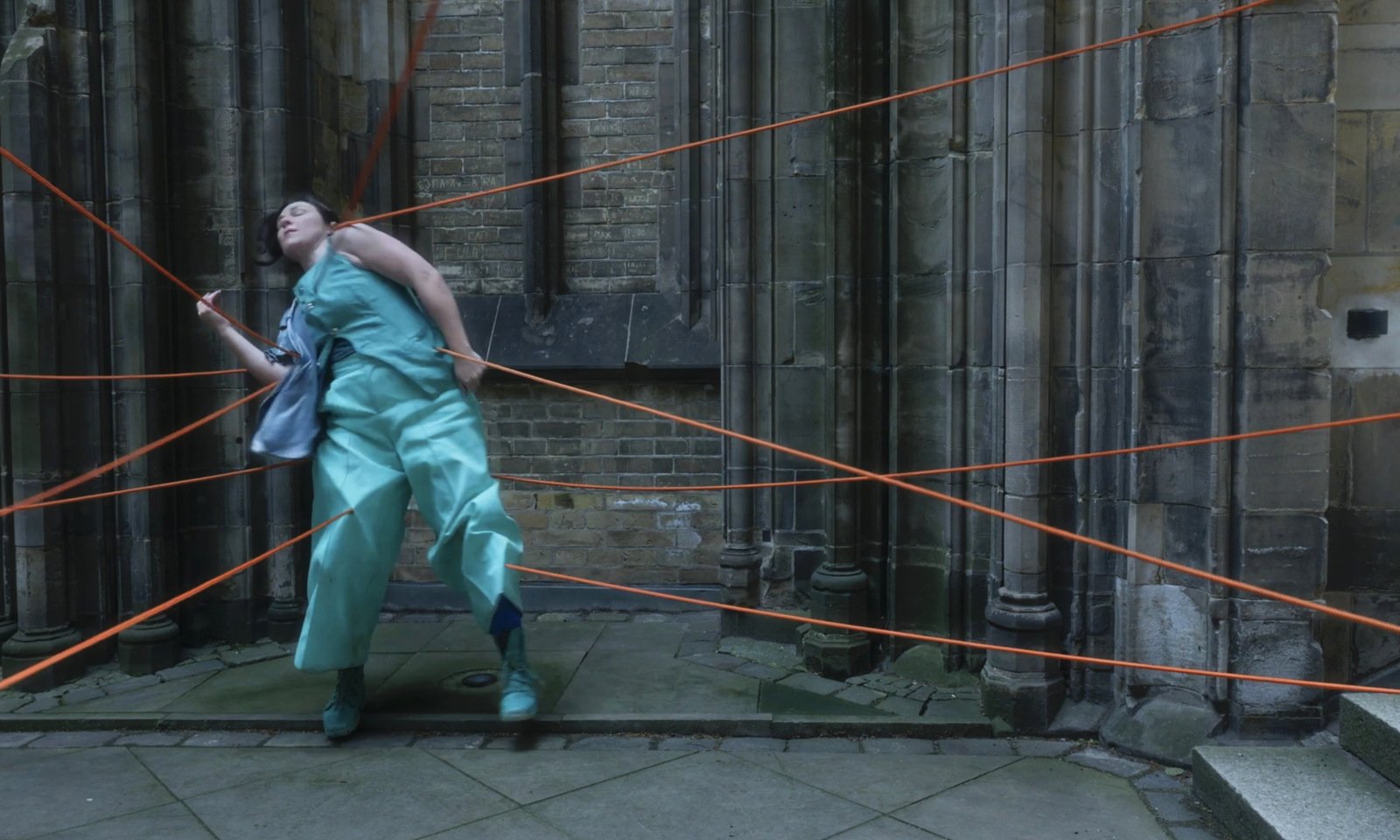
While Solar Peasants, a brightly hued mosaic created by Polish artist Mikołaj Sobczak, merges allusions to historical occurrences, marginalized groups, farming, and the fight for freedom, Iranian artist Neda Saeedi created a fragmentary stained-glass installation derived from tracing old maps and urban plans. Suspended in what was an arched window space, this piece transcends time and place by filling the vacuum left in the empty niche. Saeedi replaced the biblical motifs of the historical panes with references to waterways that once surrounded the church, filled with debris of the destroyed city after World War II, and have since disappeared. In Ukrainian artist Nikita Kadan’s sound installation, located at the top of the church’s surviving bell tower (which can be reached by elevator), an opera singer accompanied by a violin brings forth the menacing wail of sirens, recalling signals of warning before impending air strikes. The view from the tower reveals a cityscape that is free of the violence of war, making the work all the more poignant. In the restored crypt housing the museum spaces of St. Nikolai, the video of a performance by Hamburg-based Danish filmmaker Lene Markusen is displayed; this is part of her multi-media work Cycle of Warmth, which conflates personal and collective female experiences with urban and societal “heat waves.” Next to it, a poetic film by Uzbek artist Saodat Ismailova speaks of migration, the long shadows of colonialism, and the reviving energies of shared narratives from which communities are formed and resistance against repression can grow.
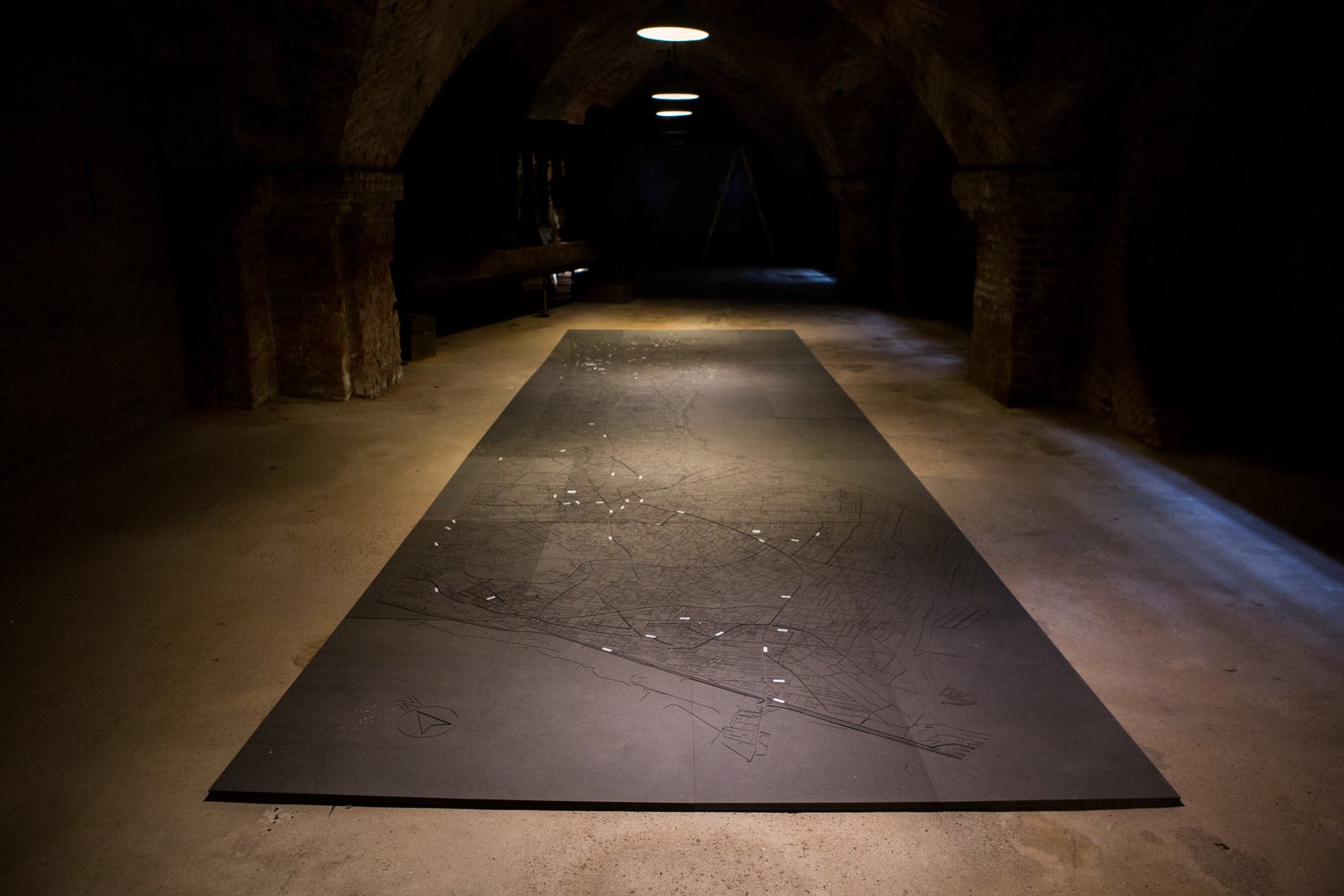
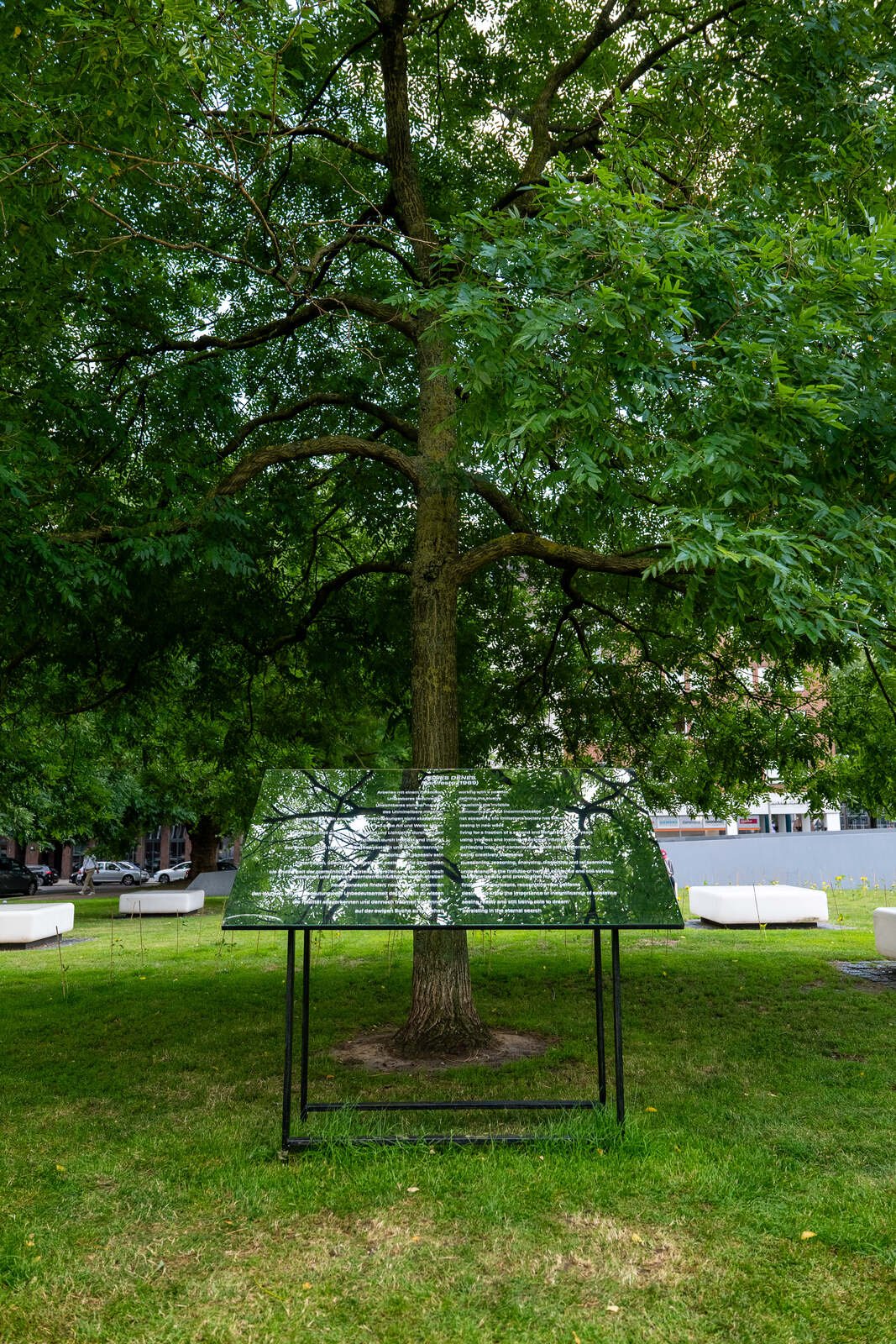
A new iteration of Sunflower Fields conceived by the Hungarian, New York-based innovator of environmental art, Agnes Denes – which already flourished in Cosmos, the first part of Warsza’s series From the Cosmos to the Commons which took place last year – has been planted around the corner of St. Nikolai Memorial on Hammaburg-Platz, a square in the heart of the city and pivotal site of its founding myth. The field is a vital embodiment of the powers of constant rebirth propelled by the natural cycles of life and a place of collective caretaking and communal action.
Taking shape in the dialectical tension between destruction and creation, ruins and renewal, FIRE seeks to visualize how new prospects of hope might emerge from the ashes. As Warsza puts it, “I believe that art has a capacity to tell us about the not-yet, to give us images of the tangible feeling of what might come.” This includes imagining the catastrophes looming before us, but also visualizing how these might be averted and overcome.
Artists: Agnes Denes, Annette Kelm, Billy Bultheel, Cecilia Vicuna and Coco Bergholm, Hala Alnaji, Hamedine Kane, Lene Markusen, Mark Morris, Mikolaj Sobczak, Neda Saeedi, Nikita Kadan, Saodat Ismailova
Exhibition Title: FIRE, from the City Curator exhibition series “From the Cosmos to the Commons: Five Years – Five Elements”
Curators: Joanna Warsza
Venue: St. Nikolai Memorial
Place (Country/Location): Hamburg, Germany
Dates: 21.06 – 21.09.2026