
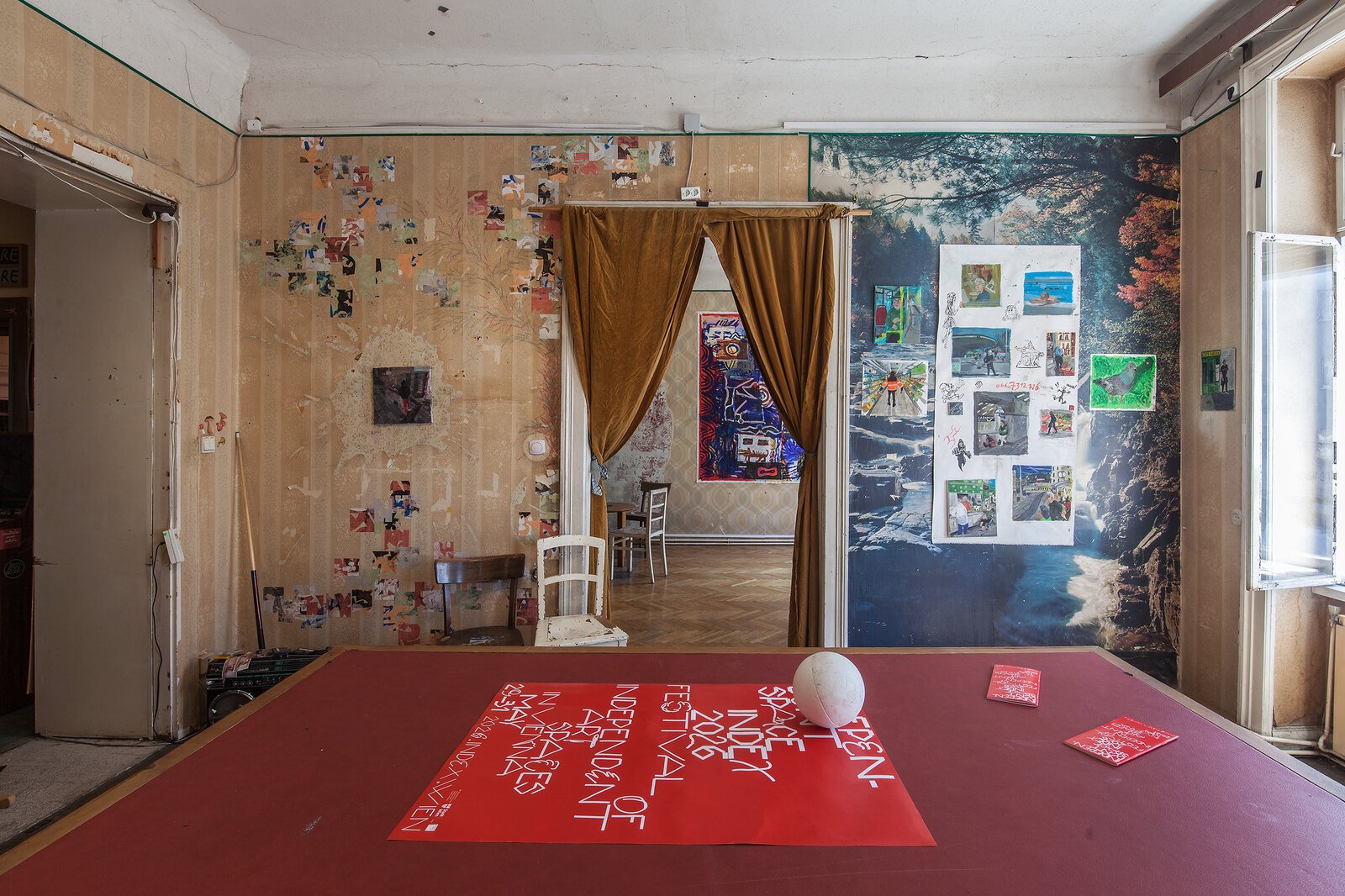
Katie Zazenski
I can still feel that breath-like layer of cool air hanging in between the palm of my hand and the surface of Minus 2015 (Reprise); a piece composed of three small-ish squares hanging edge-to-edge on the long left wall of the gallery. The left-most panel with a clear/hazy acetate-like scrim and a swipe of blue wire forming a convex arc, the middle panel covered in a density of small, off-white feathers, the right panel encrusted with actively-growing ice crystals supported by a cooling unit on the floor connected by tubes from the bottom edge of the frame. It was the first day of Independent Space Index 2026, the festival of independent art spaces in Vienna; Pech was the last stop before lunch, the fifth on the press tour on one of the first truly hot days of the early summer. Having convened at Cache – an exhibition space connected to a workshop and artist studios – for the official welcome, I found it a cheeky note to begin this trip at a space located in a garage, two months after handing over my own independent space in a garage in Warsaw — Stroboskop — to a new generation of caregivers, after nearly ten years of stewardship. Independent spaces are something I thought I understood well. But this time in Vienna showed me that for all that unites us (the “independent”[1] community), there are stark differences among us yet. And what I found myself asking over the course of the weekend, through the 30+ projects I visited out of the 68 on view, was what is an independent space in Vienna, and what is gained and what is lost through naming oneself as independent in the broader (European continent) context? While struck by a few specific works during my time at the festival, I found myself less concerned with evaluating individual exhibitions than with understanding the conditions that shape this community, and trying to stretch and revise my expectations for what we call independent.
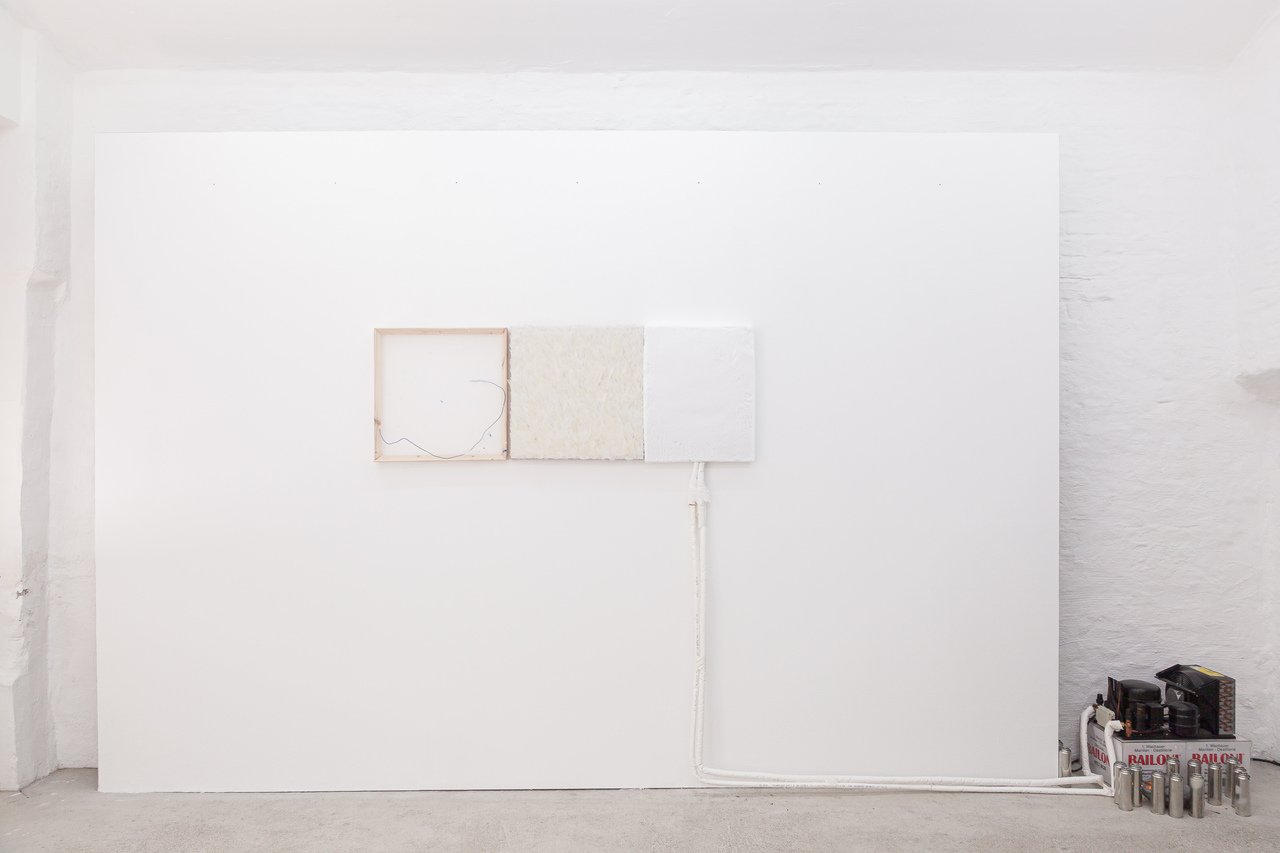
Image courtesy of Independent Space Index.
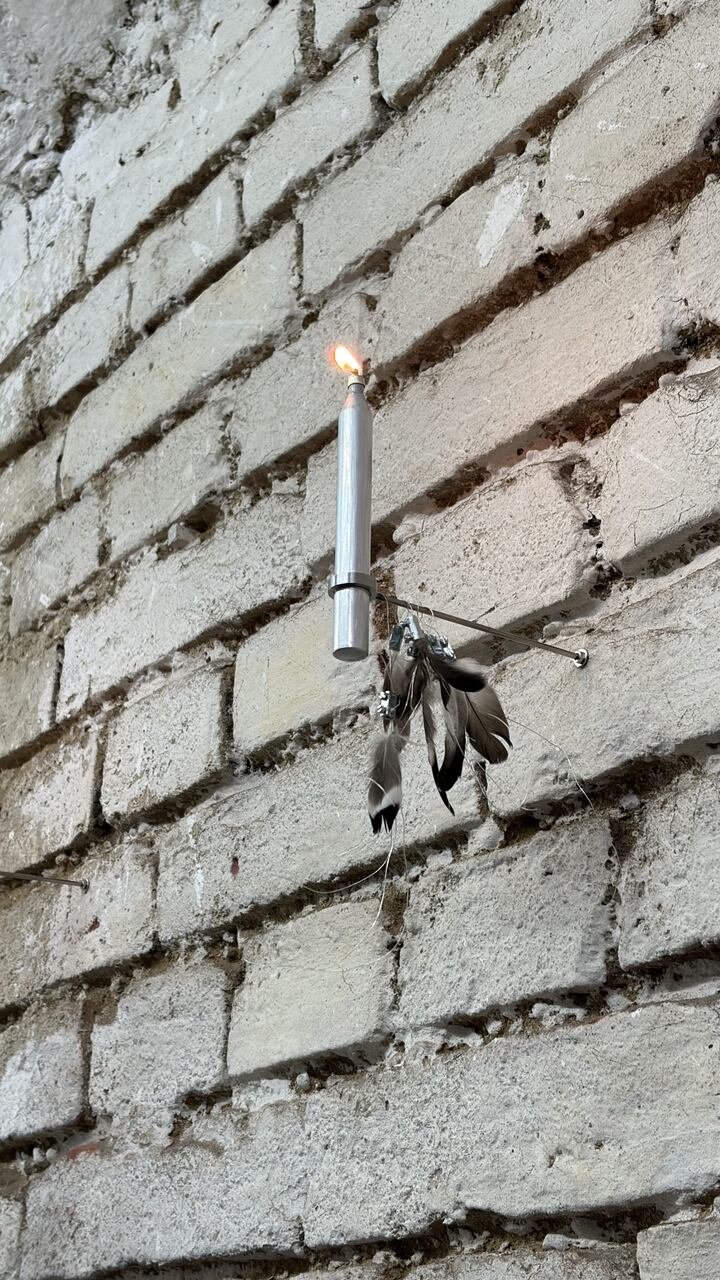
Image courtesy of Independent Space Index.
After a brief introduction to the festival from this year’s organizers, Bruno Mokross and Niklas Schöler, and a walk-thru with the artist (Jonas Morgenthaler) at Cache, we moved on to School, prolet.AIR, and then to LAURENZ – a space founded in 2020 by Aaron Amar Bhamra and Monika Georgieva, located in an old horse stable on the grounds of Palais Wernburg. Every bit as romantic as it sounds, the space’s history is inescapable; from the white-tiled panels to the grooves worn into the ancient floorboards and the strong smell of horse lingering in the air (I was totally into it). Balanced against this were the works of eleven artists – a personal favorite being the small collage of tulip petals by Jennifer Tee, Tampan Migration Bird #1 – which actively engaged with the context within which they were set, as described in the exhibition text by Pieternel Vermoortel:
These horses did not produce. They appeared. They moved the household through the city, carrying visibility with them: ownership, status, presence extended into the street. That logic lingers…Nature is presented as presence, but presence is staged…Flowers enter this field as image and language: rare, clean, controlled…they stabilize the system by smoothing its discontinuities, making extraction appear seamless.[2]
Entering the space, your eye immediately goes to the large-scale painting of flowers by Maureen Kägi, Only Workers Forage for Food (3) [2024], with smaller works and a table-top display coming into focus after initial impact. A well-trodden staircase to the right of the painting leads to a small white cube room featuring works by Anna Zemánková, Lucia Elena Průša, Magali Reus, and Minne Kersten. This space represents exactly the kind of thing that I am totally seduced by, and is one of the elements that lured me into the independent community in the first place – the surprises, the experimentation and transformation/sometimes subversion of expectations, the way that art lives and breathes in and responds to such spaces and conditions, how that is celebrated, and the rawness with which so much of it occurs. And the casual, unpretentious atmosphere that is more easy to find than in the commercial or institutional realms of the contemporary art world.
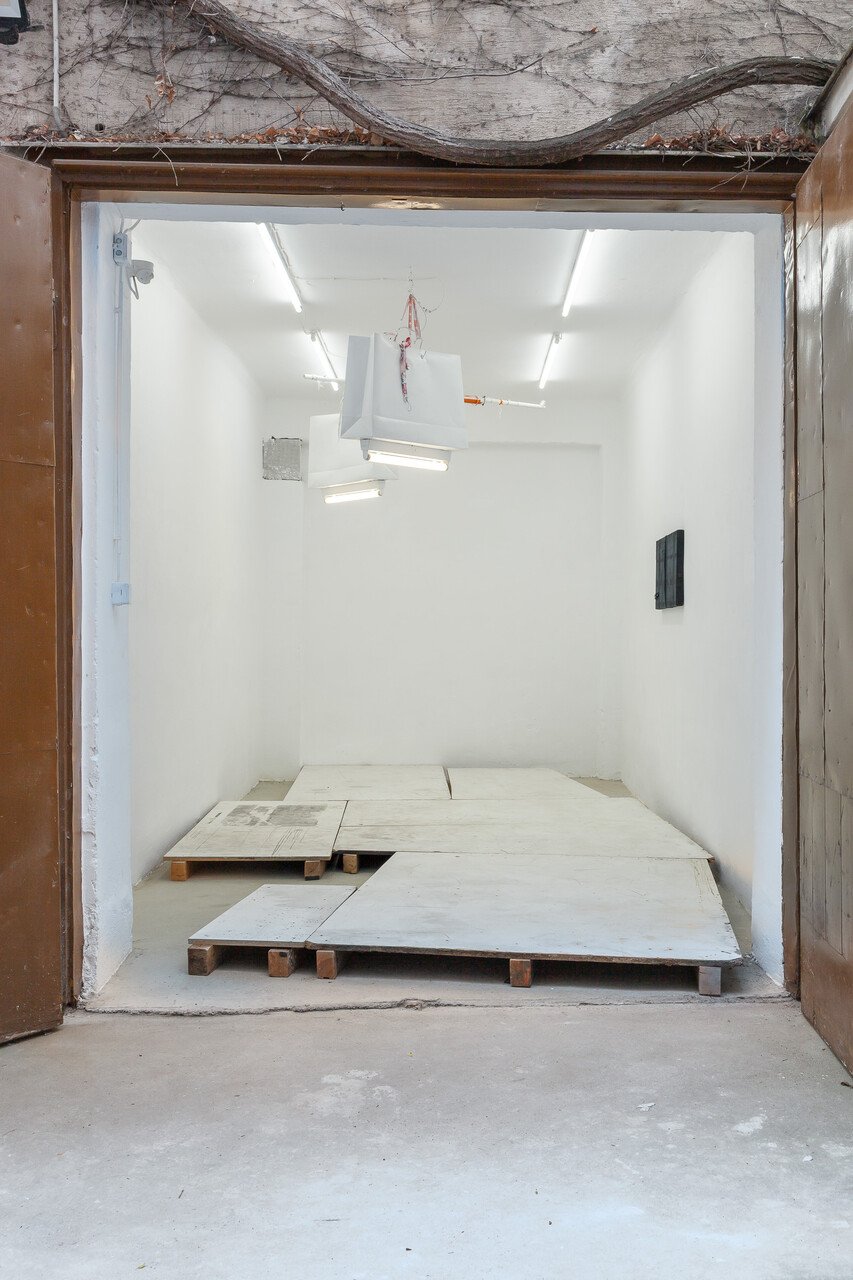
Image courtesy of Independent Space Index.
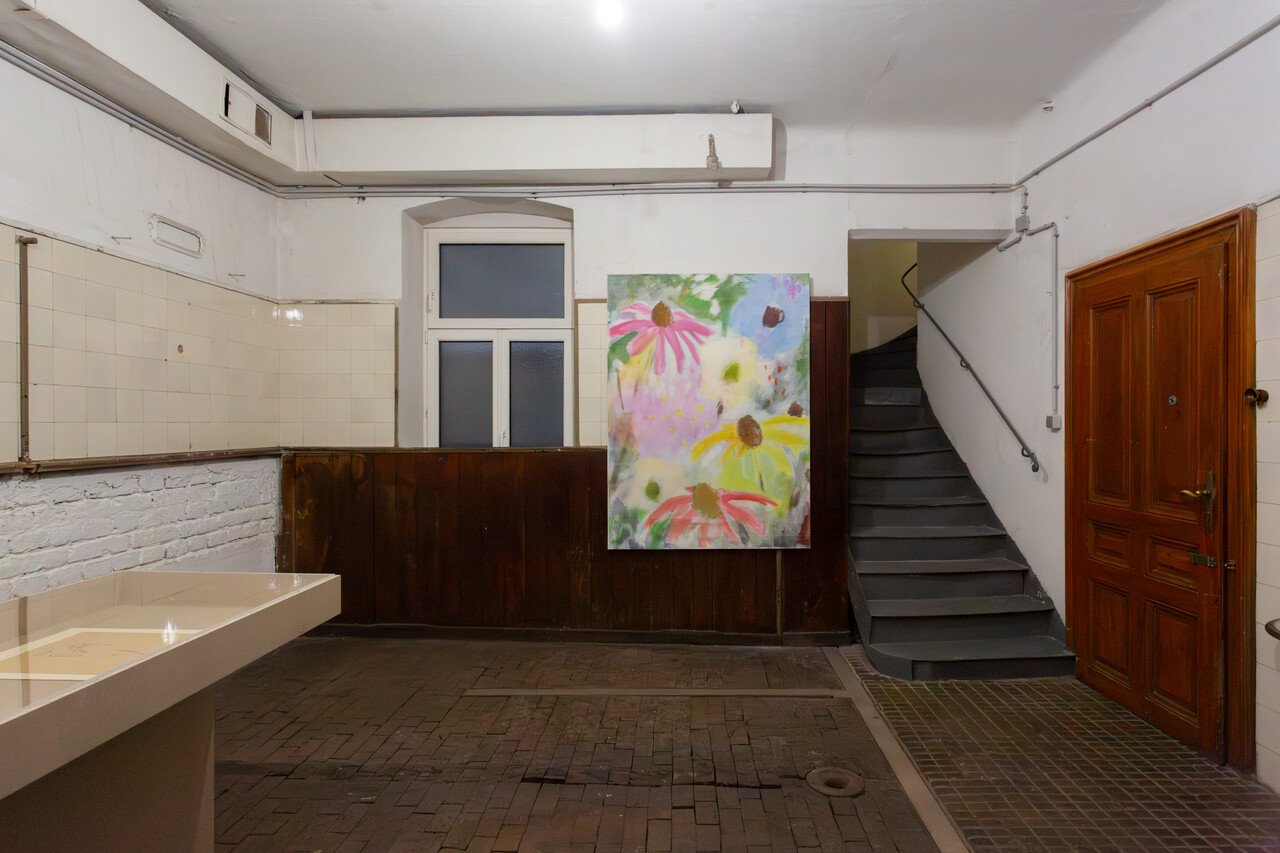
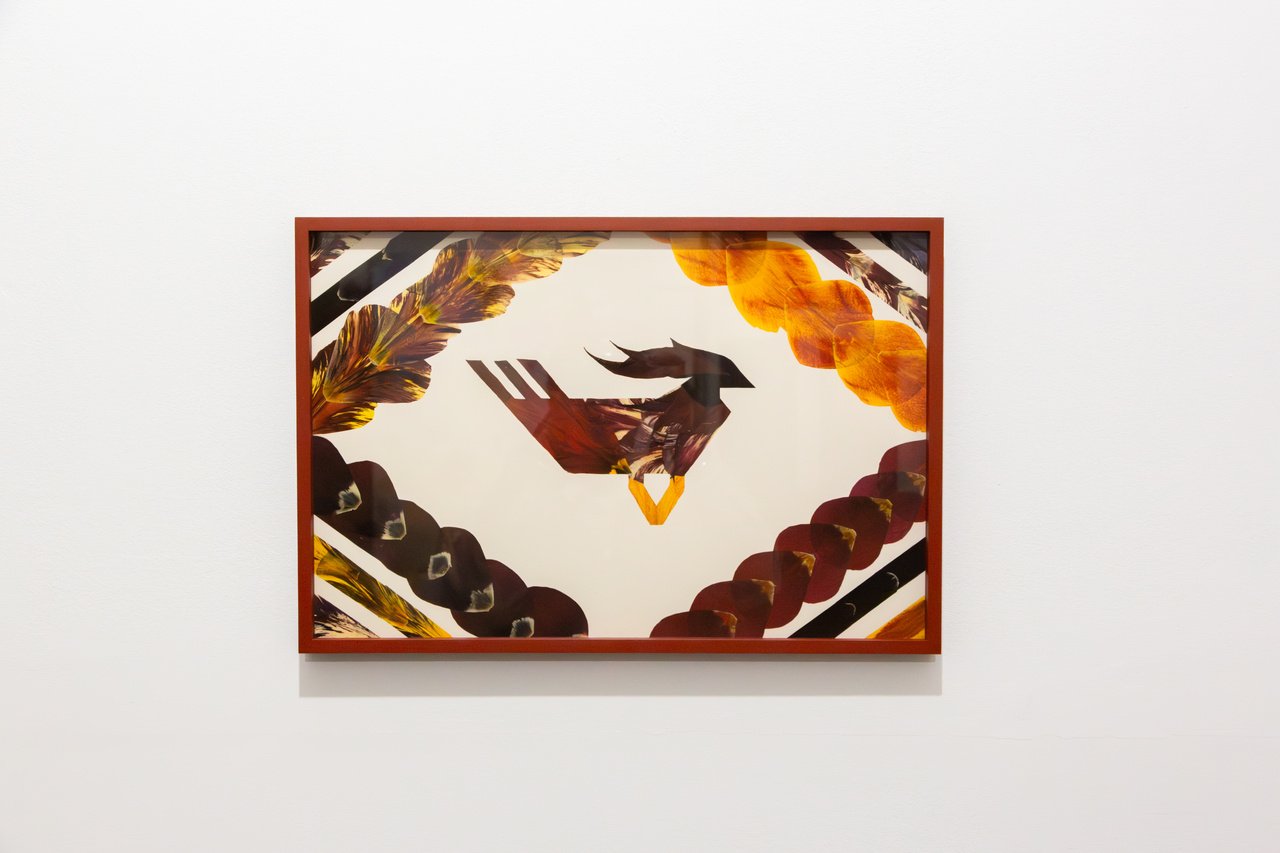
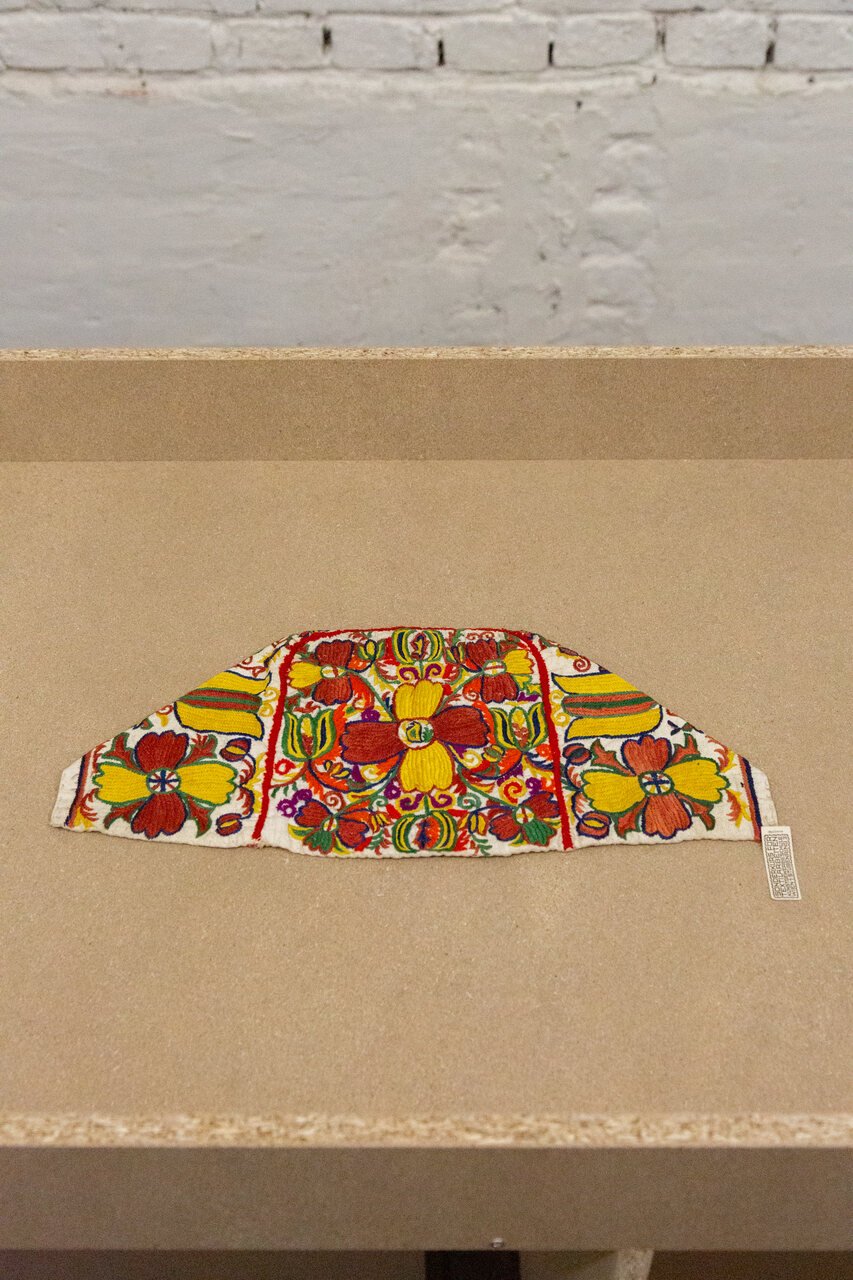
Image courtesy of LAURENZ, Vienna.
But I encountered another, perhaps more unexpected surprise at LAURENZ — the production quality, which was in part illustrated by the late 19th and early 20th century pieces on loan from the Collection and Archive of the University of Applied Arts Vienna that complemented the contemporary works. How does an independent space have the credibility (in the eyes of the institution, of course) to be able to negotiate such a loan? And the insurance, to boot! The independent community that I know best has emerged from need. And until that moment, I had naively assumed “need” to mean the same thing across the (continental European) independent community. Now this is absolutely not a competition or some sort of impoverishment “porn,” but this represents something that I haven’t really come across yet at all in our community – the disparities that exist between communities, and that what it means to be independent in a place like Vienna means something wholly different than what it means in a place like Warsaw. What baffled me at that experience at LAURENZ gained more clarity through the course of the weekend, and underscores the predicament I find myself in now, post festival.
The Independent Space Index was founded in 2017 as a way of bringing “like-minded cultural initiatives” together while simultaneously promoting visibility. The festival functions as a way of accessing cultural work that usually remains dispersed across neighborhoods, storefronts, former industrial sites, apartments, workshops, and improvised architectural situations, defining an “independent space” as “a permanent, public, physical space dedicated to contemporary art, that is neither an art dealer nor a major institution.”[3] This year, the festival featured 68 positions, all of which are regularly functioning, i.e. pop-up projects or artist studios that don’t already have an occurring exhibition program cannot participate. The fact that the festival can assemble such a vast constellation of regularly-occurring projects means that Vienna has the infrastructure to support dozens upon dozens of active spaces, committed to presenting contemporary art outside traditional institutional frameworks, which at this scale, is nothing short of mindblowing.
As I spent more and more time talking with the people running these spaces, I learned more about the funding situation in Vienna, more specifically, the impending budget cuts, as it was the predominant theme of conversation. Independent Space Index founder and director of Pech, Bruno Mokross, noted, “I wonder about the material importance of budget cuts. It’s the entire ecosystem that relies on it, not just the independent spaces, and dare I say: In comparison, there’s not a lot of money for us, and only a handful of spaces have access to public funding in the first place. The cuts of course are a symptom of a general recession, not just in the economic sense. Idealism (not doing it for the money) replaced by pessimism (not having the money to do it).” This year, artist, curator, and co-founder of the project space Pilot, Niclas Schöler, joined the festival team, and had this to add to the note about funding cuts, “The large number of such initiatives in Vienna has certainly been supported by relatively favourable public funding structures, particularly when compared to many other European countries. Without these funding opportunities, many spaces would either not exist at all or would operate on a much smaller scale. In addition, rents in Vienna have remained comparatively affordable, although this is also beginning to change.
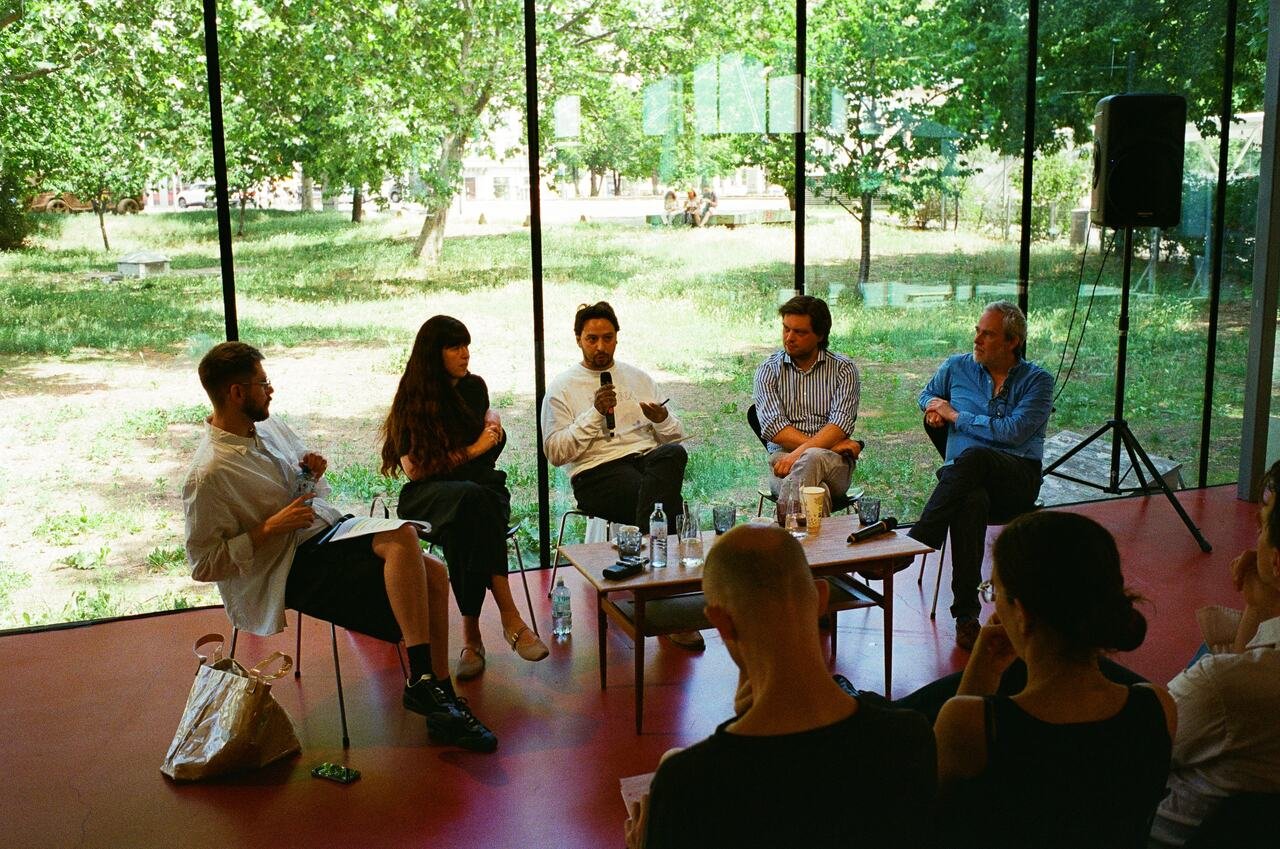
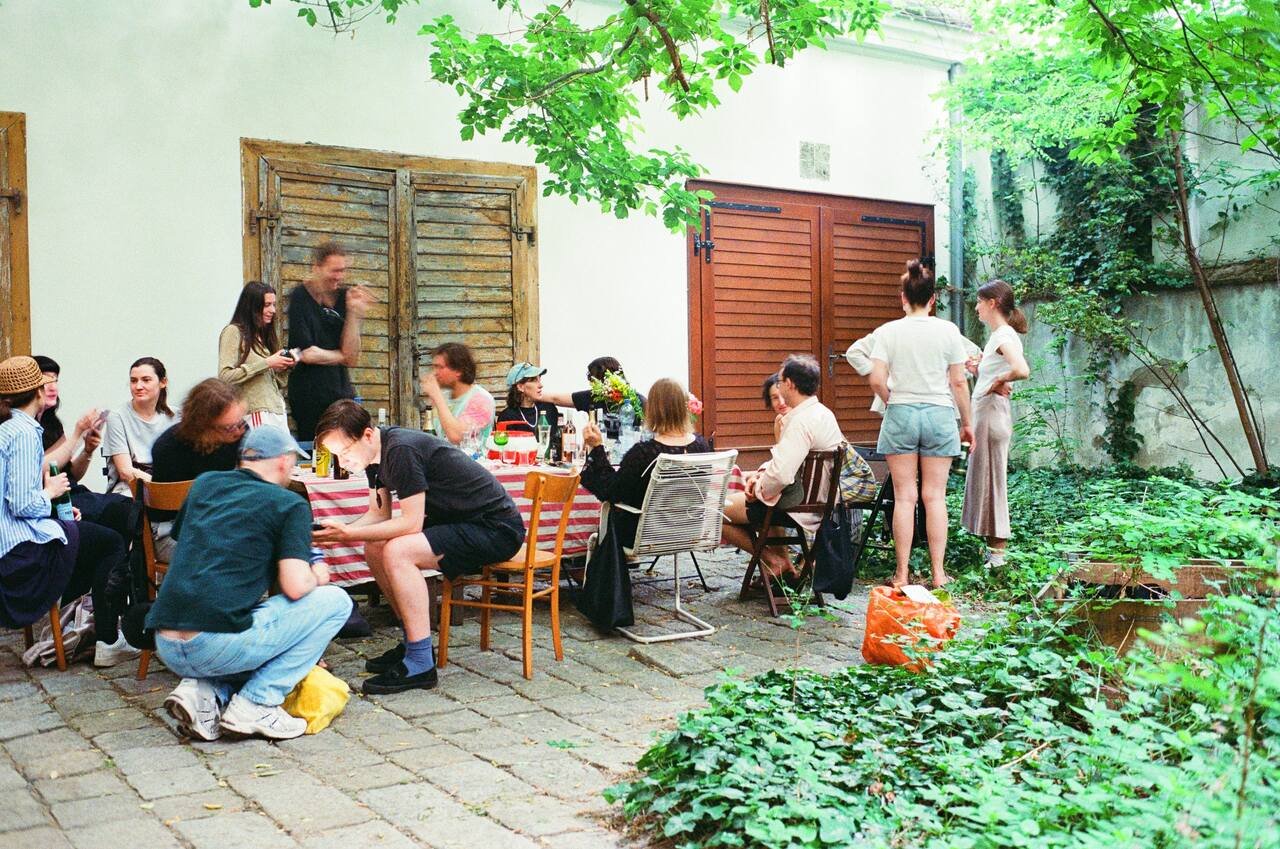
photo: Nikola Hergovich. Image courtesy of Independent Space Index.
Both voices are a reminder that even what are perceived (from the outside) as stable cultural ecosystems remain vulnerable, but it also revealed something more complicated: for me, arriving from a locale to the east, the budgets being discussed occupied an entirely different scale from those available to the artist-run initiatives that I’m familiar with, operating in regions like the Baltics, the Balkans, and “Eastern Europe.” What one participant described as their operating budget in Vienna resembled something much closer to the annual budget of a commercial gallery in Warsaw. Independent spaces here couldn’t dream of such a budget even if we wanted to. So for someone like me, coming from a place where that’s not even a conversation because scarcity is what our community[4] has emerged from, it was a bit shocking. I almost couldn’t even dream of what I would be able to do with such a massive budget, even a fraction of it at that. And this lack of sensitivity for this disparity is what made me pause: first, incensed at such “frivolous” fears. But then after sitting with it for a while, I realized what it was that I was really tapping into with this discord. It wasn’t jealousy for the conditions, or lack of compassion for the precarity of my Viennese counterparts, it was rather the feeling that uncertainty is relative. And this was the crux of it all: instead of engendering feelings of kinship between communities, I felt a widening gap.
Independent spaces occupy an ambiguous position within the broader cultural ecosystem. They are neither institutions nor commercial galleries, yet they frequently perform functions associated with both. They provide exhibition opportunities, facilitate professional development, create public programs, build audiences and artists careers, and establish networks. At the same time, they often serve as sites of experimentation where artist practices can develop, oftentimes removing (or at least alleviating) the pressure from having to create something marketable, sometimes before becoming legible to larger institutions or at other times as way for a more established artist to branch out, to take bigger risks. The work performed by the caretakers of such spaces is more often than not done for free, or if there is funding it is almost never accurate to the expenditures (of time, resources, materials, etc); the economy that we function within most readily is that of social capital.
But comparison is not particularly useful because it establishes a hierarchy of hardship, and there are always exceptions. I did also visit a few spaces that don’t receive much if any funding, where it felt like the active practice of those running these spaces plays a prominent role in the works/artists that were on view. What needling out these differences does expose, is how profoundly local conditions shape our assumptions about what cultural work is and can be. During a conversation with another guest of the festival, the phrase “learned helplessness”[5] emerged. Not as an accusation, but as a provocation. This is something that I have experienced firsthand in my own independent community: when we live life within one framework it can be almost impossible to see alternatives/solutions/possibilities that are not conventional, no matter how obvious they might be to someone from the outside looking in. Which conventions have become so normalized that they no longer appear contingent? Which forms of support have become invisible precisely because they are taken for granted? And conversely, what kinds of organizational creativity emerge when support structures are absent? What are the conventions that the Independent Space Index community operates within, and what are their opposites? I am not saying that I hold the answers to the issues facing this community, but I do know that if there is any community that is perfectly suited to invent a solution – a new way of doing things, a different way of existing within a system, or challenging how the convention is administered or structured – it is the artist community. And, there are members within this very community that are having to contend with such conditions already, so why not use this as an opportunity to learn and adapt, together? To create a more equitable distribution of funding across the board?
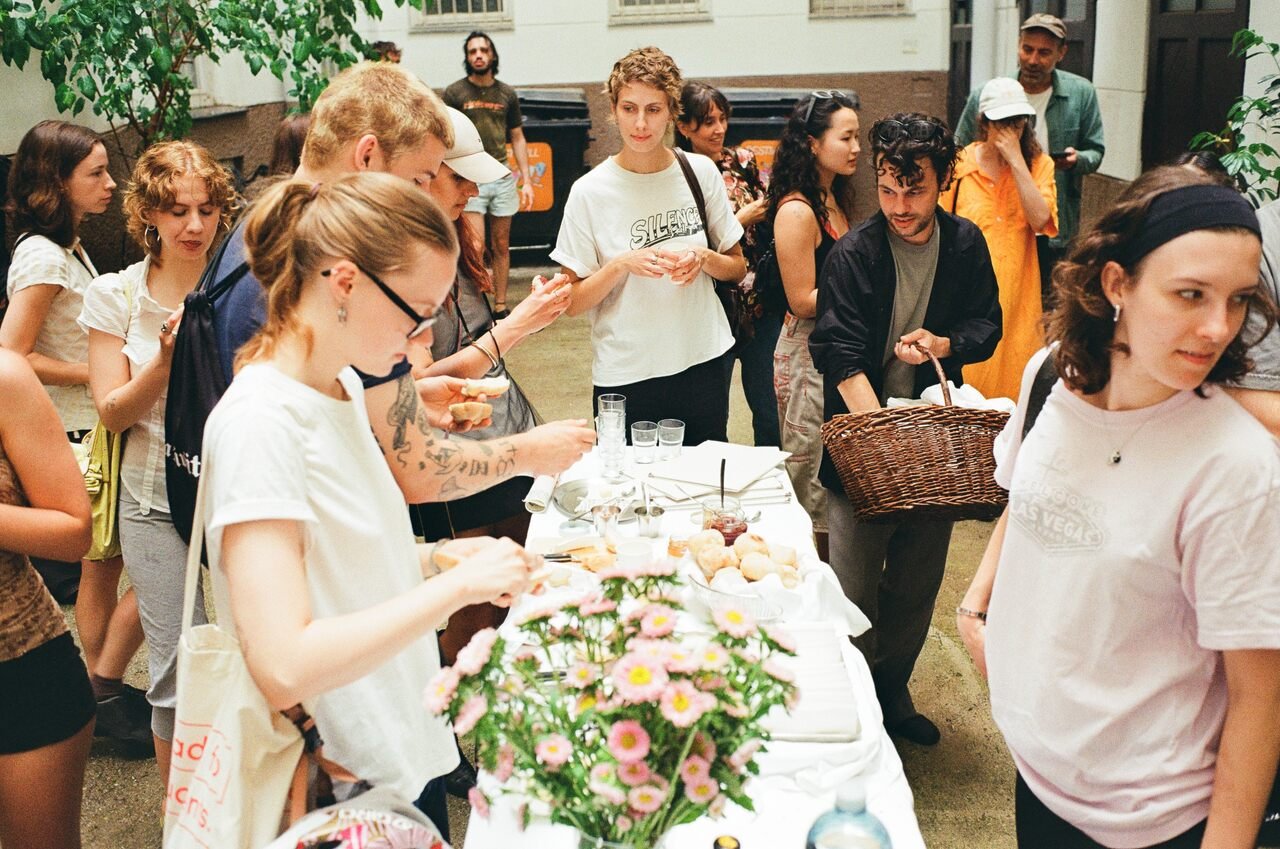
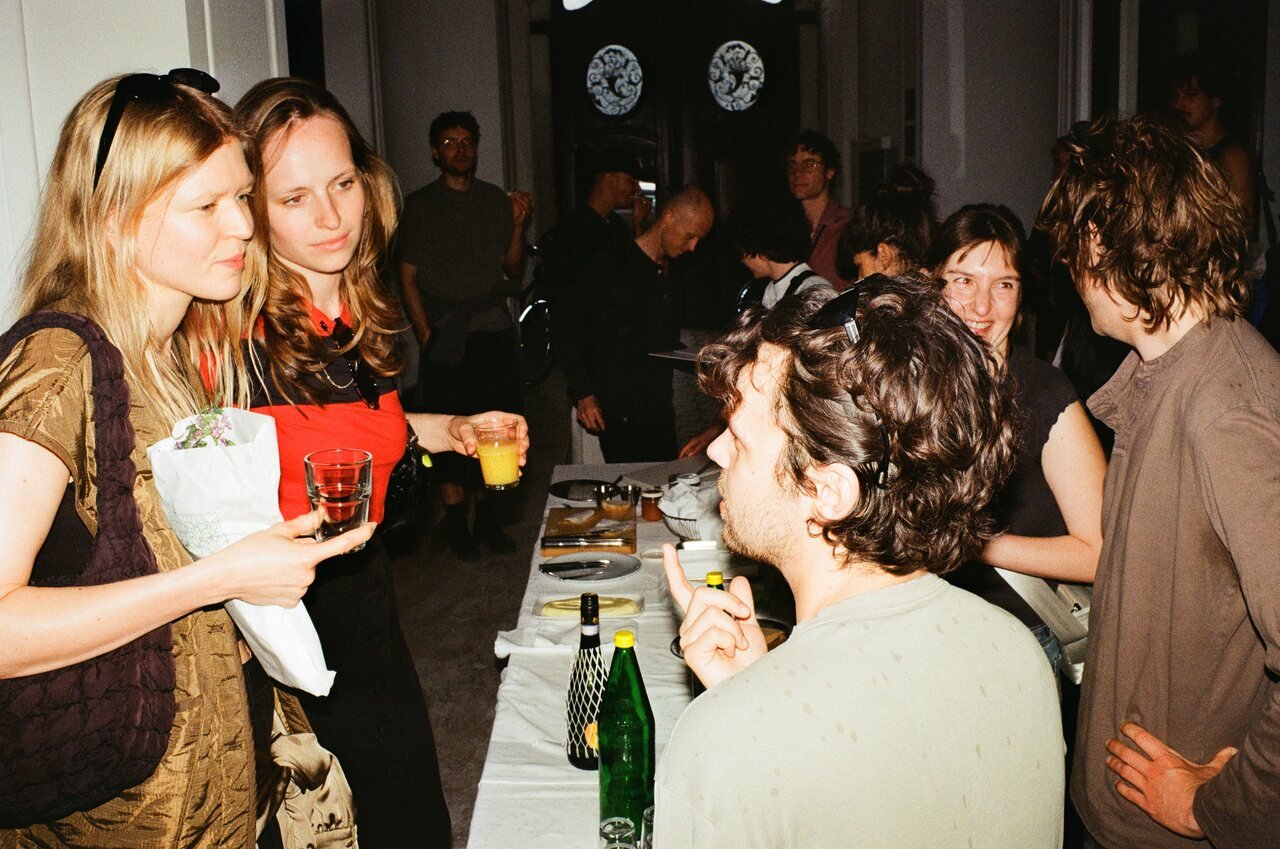
Insecurity doesn’t only come from the availability or lack of funding, and I felt this spirit emerging in certain exhibitions that weekend. We are existing in worlds now where uncertainty pervades every aspect of life, from the most local to the most global of concerns: genocide, war, the rapidly destabilizing climate. Fascism, wealth disparity, inequity. The exhibitions that resonated with me most that weekend were those that connected me to something bigger, something outside of one particular place, moment in time, or embodied experience, that somehow made an effort to subvert, platform, confront, or transcend the circumstances that pervade lived realities. And it might be important to note, that as a long time Poland-based consumer and producer of culture, in 2026, my interests are inextricably linked to geopolitical verity.
At hoast, a space run by artists Wolfgang Obermair and Ekaterina Shapiro-Obermair, I walked into a collection of delicate drawings, paintings, and other 2D, image-based works by Alina Kleytman, Anatoly Belov, Boji, Bogdana and Tamara Kosmina, Davyd Chychkan, Fito, Fedir and Bohdan Tetyanych, Love Curly, Lucien Gurbert, Nikita Kadan, Nikolay Karabinovych, Plisetskiy, and Yevgenia Belorusets. However the exhibition was attributed to Bögdana Kosmina, because these pieces were what she chose to pack in her suitcase when evacuating Kyiv in February 2022, the onset of the full-scale russian invasion of Ukraine. The project is described as “a refusal to abandon what sustains. It functions as a counter-archive: where institutions demand permanence, the suitcase embraces precarity and lived experience’s sensual disorder.”[6] For me, this sentiment, and this collection in general, is a reminder of what nourishes, what affirms, and what is lost through war and genocide, beyond what is most obvious. Art is not on the list of what to include in your “go-bag,” so for me, this gesture is one of absolute beauty and resistance.
1zwei3 is a small, lantern-like two-story communal/community space flanking an apartment block; here the vibe was quite different. People laid on the grass, chatting. Others were coming home from work, walking their cats, taking out the garbage. The bits of everyday life were inextricably linked to the way this place operates. And unfortunately, the show that I caught there, Wer abbeißt, muss auch kauen. (Third Act)[7], was their last. The space, run by Amelie Bachfischer, Theresa Hattinger, and Magdalena Kreinecker for the last three years, has finished its cycle, or as they put it, “the collective is ending its active, space-bound phase.” Of course, nothing lasts forever, but in our neverending neocapitalist pursuit for more, we can sometimes let things run on far too long – past their relevance, past their lifecycles. While I can only assume their reasoning, from the outside I see it as a gesture that allows for generous experimentation with a built-in mechanism to replenish scarce resources, and to bring the act of reflection into the journey and evolution of an idea. Something that we for sure need more of.
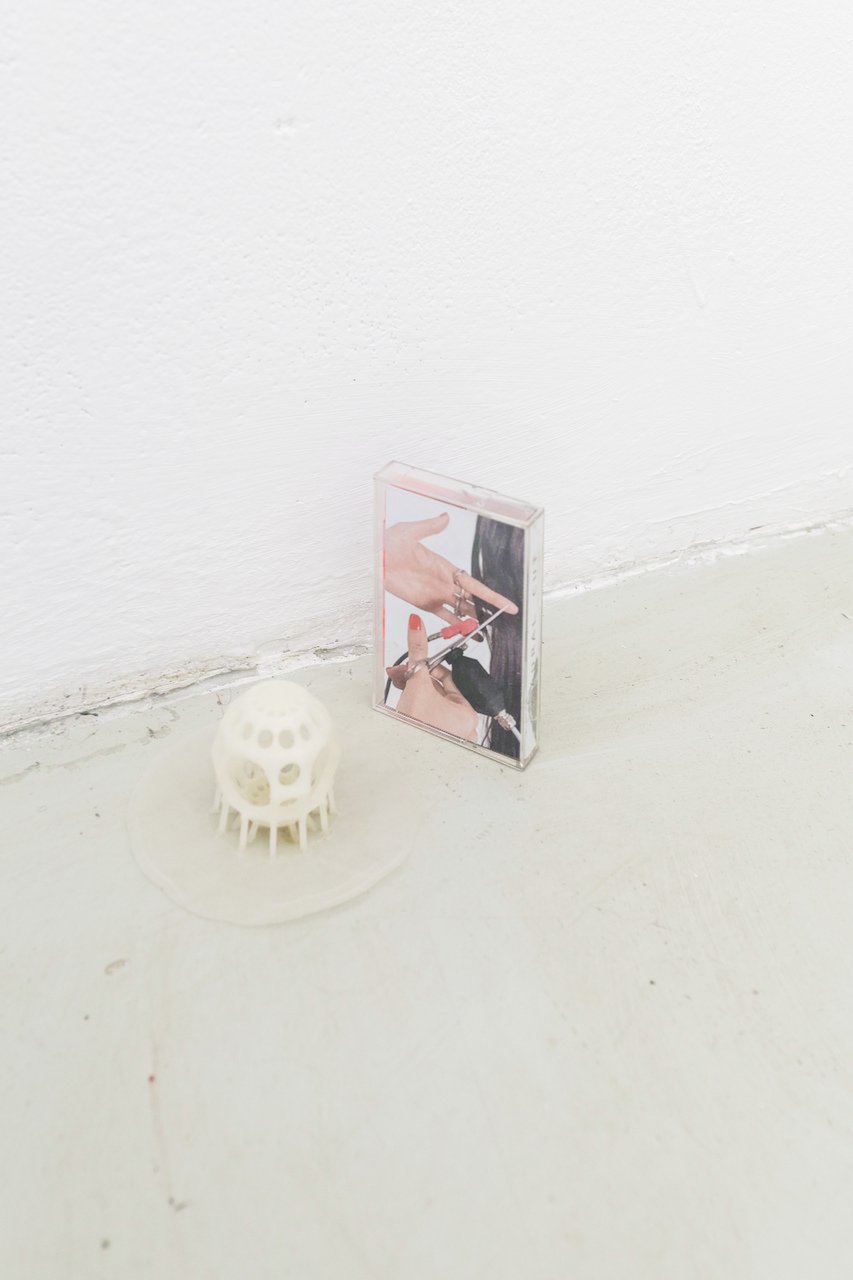
photo: Wolfgang Obermair. Image courtesy of hoast.
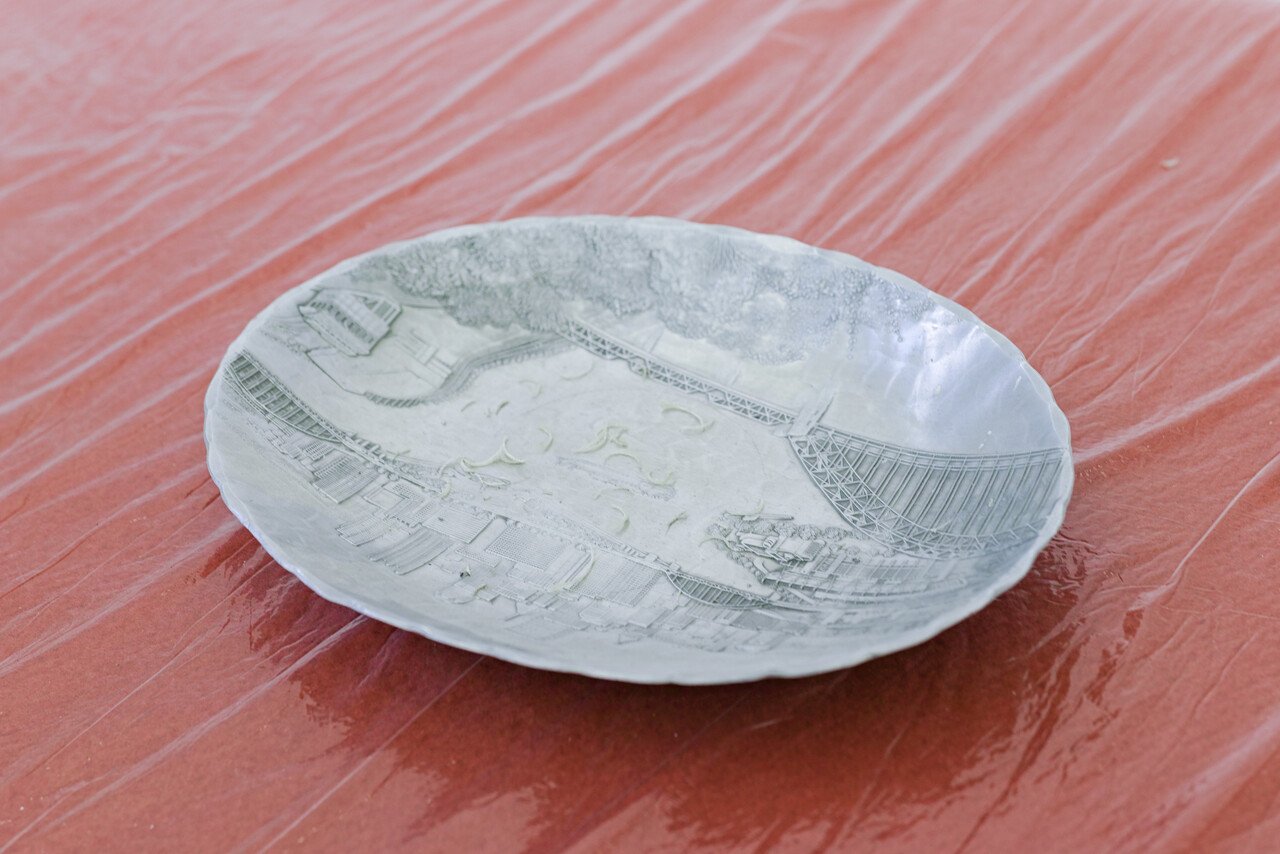
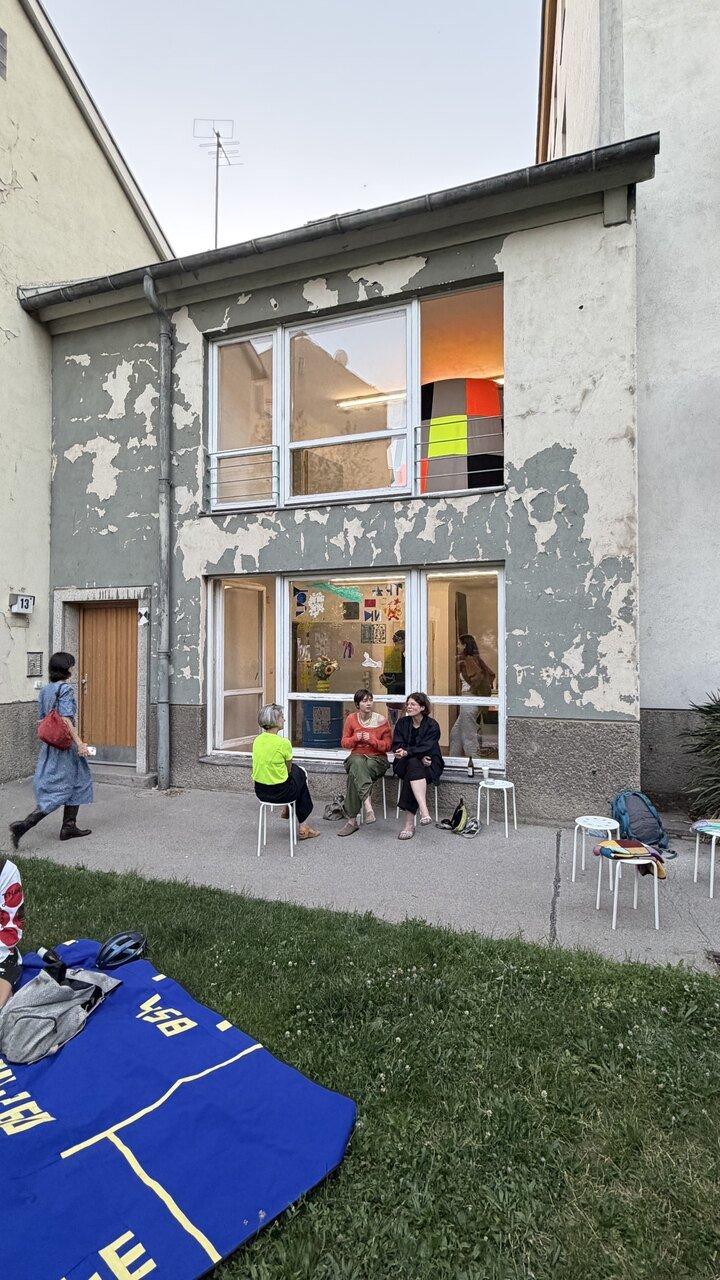
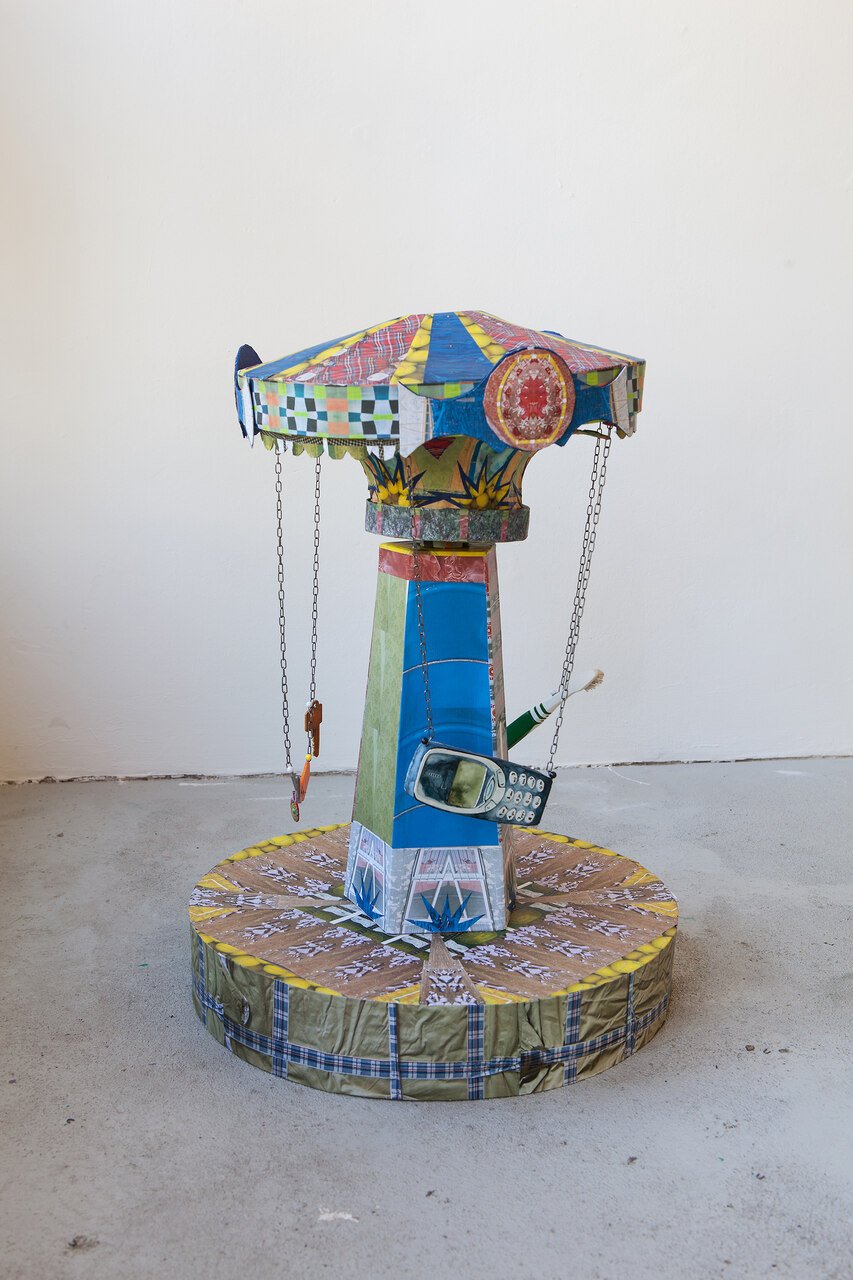
Image courtesy of Independent Space Index.
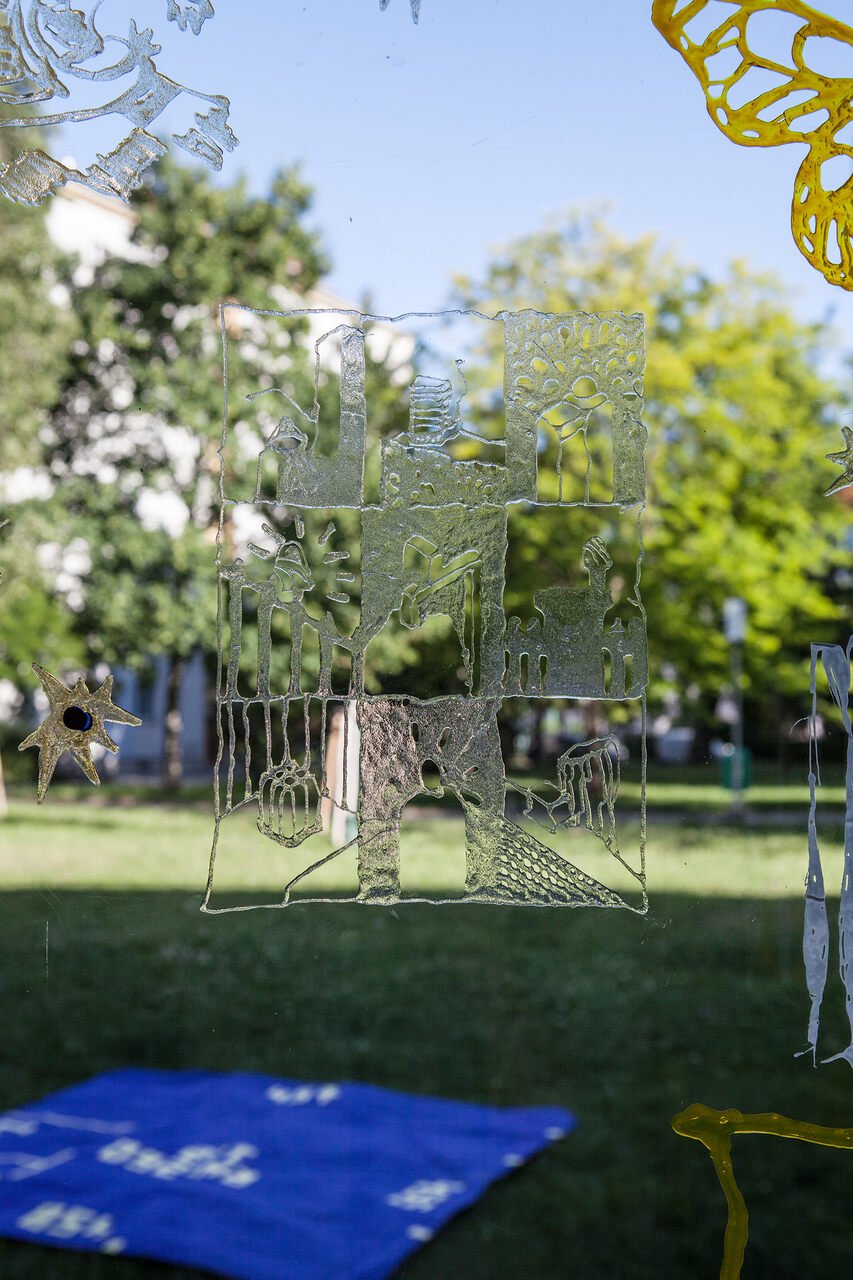
Image courtesy of Independent Space Index.
There is also often a collapse of hierarchy or refutation of conventional boundaries (i.e. fine art, craft, gaming, etc.) that occurs in these kinds of spaces, which I find particularly important. Two examples of this were Briefs at Medienwerkstatt Wien, a non-commercial video studio founded in 1978 and selected by at Studio Wurlitzer. The show at Wurlitzer featured female artists who have influenced the artistic practices of the studio members, “creating a map of rhizomatic connections that offers insight into practices beyond their usual presentation contexts.” The sound piece by Bernadette Laimbauer, Mutig in die neuen Zeiten (Bravely Into a New Era), was particularly notable. The recording was of a performance the artist gave at the University of Art and Design Linz in 2019, where Laimbauer sang the first verse of the Austrian national anthem backwards. Bringing in elements of Alpine yodeling and Arabic song, it was a critical gesture pointing at the rising sense of Islamophobia being fomented by the conservative government at the time. At Medienwerkstatt, you could play different computer games, all of which were winners of the annual (now in its sixth edition) curated open call for game developers and media artists. I particularly loved Mondays: a Sisyphean Typing Game by maxhgrobins wherein the player types out one of several completely banal messages that appear at the top of the screen (“We’ll circle back on this momentarily”). As you type, Sisypheus rolls a boulder up the hill and if your typing speed isn’t good enough, the boulder rolls right back down. As you accrue points, pop-ups appear with things to “purchase” like a rainbow propeller hat for the boulder to wear as it rolls up and down the mountain.
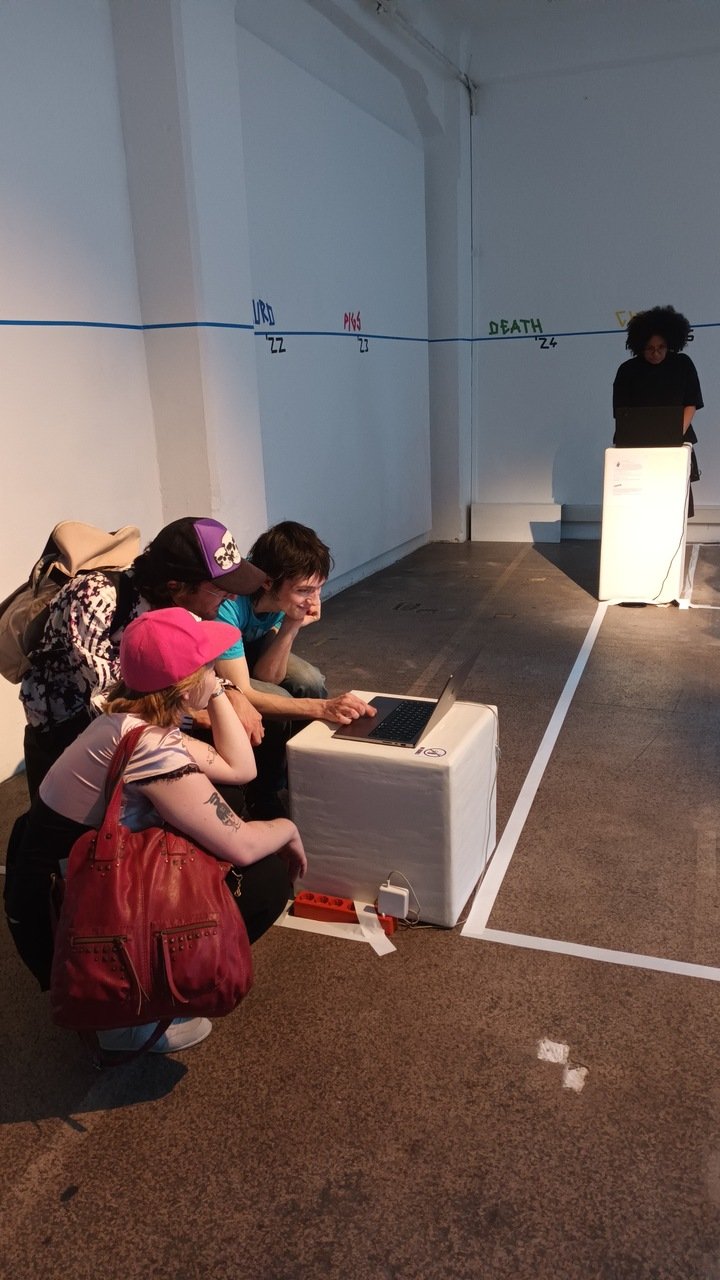
Image courtesy of Medienwerkstatt Wien.
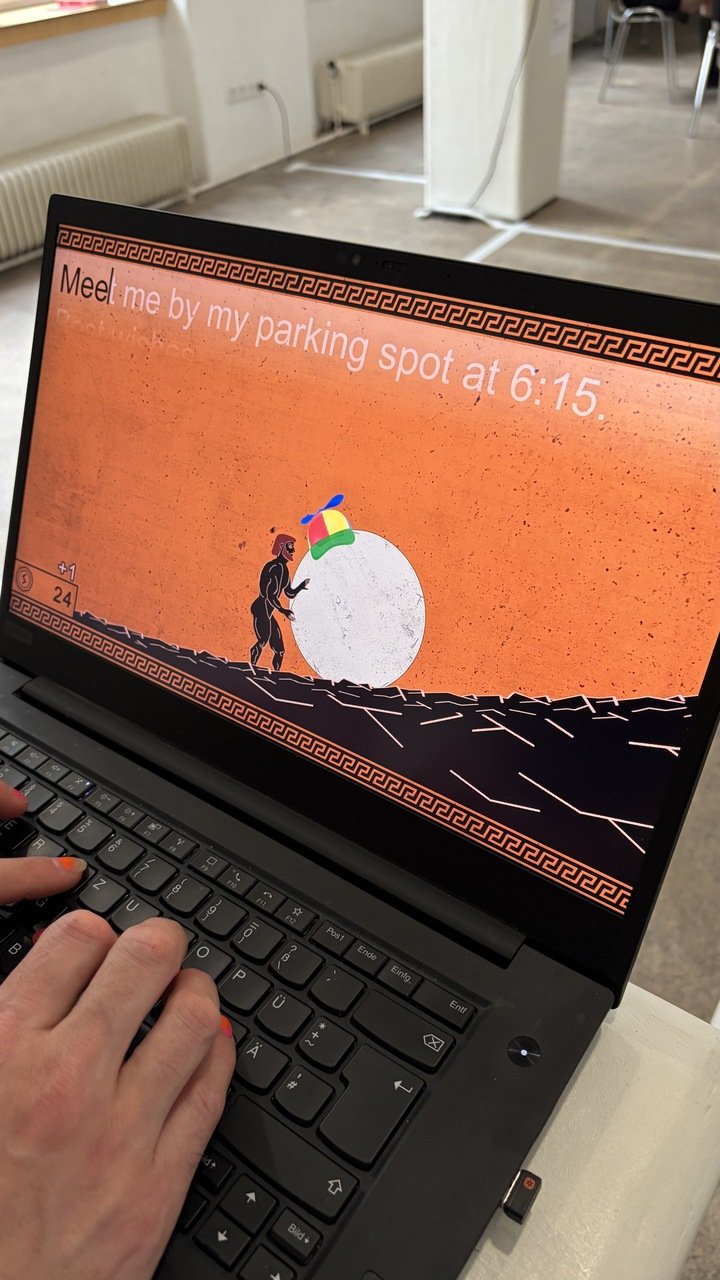
Image courtesy of Katie Zazenski.
So coming back to the original question: what is the role of the independent space in Vienna? As indicated on the Independent Space Index website, this community is intended to be “open and accessible to the public and engages in mediation work.”[8] To me, it seemed that all of this was happening: people were visiting the exhibitions, the panel discussions were very well attended, and there was a real sense of excitement at the idea of trying to see as many spaces as possible – at least that’s how I felt about it. There were exhibitions in private studios, apartments, repurposed shopfronts, an old pharmacy, featuring works by students, hobbyists, and legends alike. But, when asked about who the people are that make up the audience of the festival, it turns out that it is mainly the folks of the independent art community. There are certain members of the private gallery or institutional community that show their support as well, but it seems that the at-large community is still the most difficult one for them to reach. In terms of how the community and this festival are organized, members of the network have regular meetings where they “collectively develop this shared identity and program.”
When asked about the evolution of the Index community and festival over the past eight years and what he hopes is its trajectory, Mokross said, “The more visibility the festival gets, the more expectations emerge – from visitors, from participants, from funding bodies. Growth and mediation are expected, but in the past we’ve been sort of going against the grain on both these matters.” This sentiment made me feel hopeful for the position the independent community of Vienna finds itself in regarding funding, and genuinely interested to see what solutions they devise to survive. Perhaps on its face, it doesn’t feel particularly useful to spend so much energy trying to distinguish between one sector of this contemporary art world of ours or the other. It won’t solve the problem of funding cuts and it won’t increase viewer participation from those that don’t already engage. What I hope for this rumination to incite is continued self-reflection. If nothing else, the independent community is the best positioned to be responsive, reactive, and nimble. Adaptive, inventive, and resilient. There is always someone who has to figure out how to create something from nothing, and to me, this kind of knowledge exchange – the economy that I’m more familiar trading in in my independent community: resources, tools, time, skills, etc. – is for sure what holds not only the key to longer-turn sustainability, but is also from where that shapeshifting, effervescent “thing” that sets this community apart, emerges.
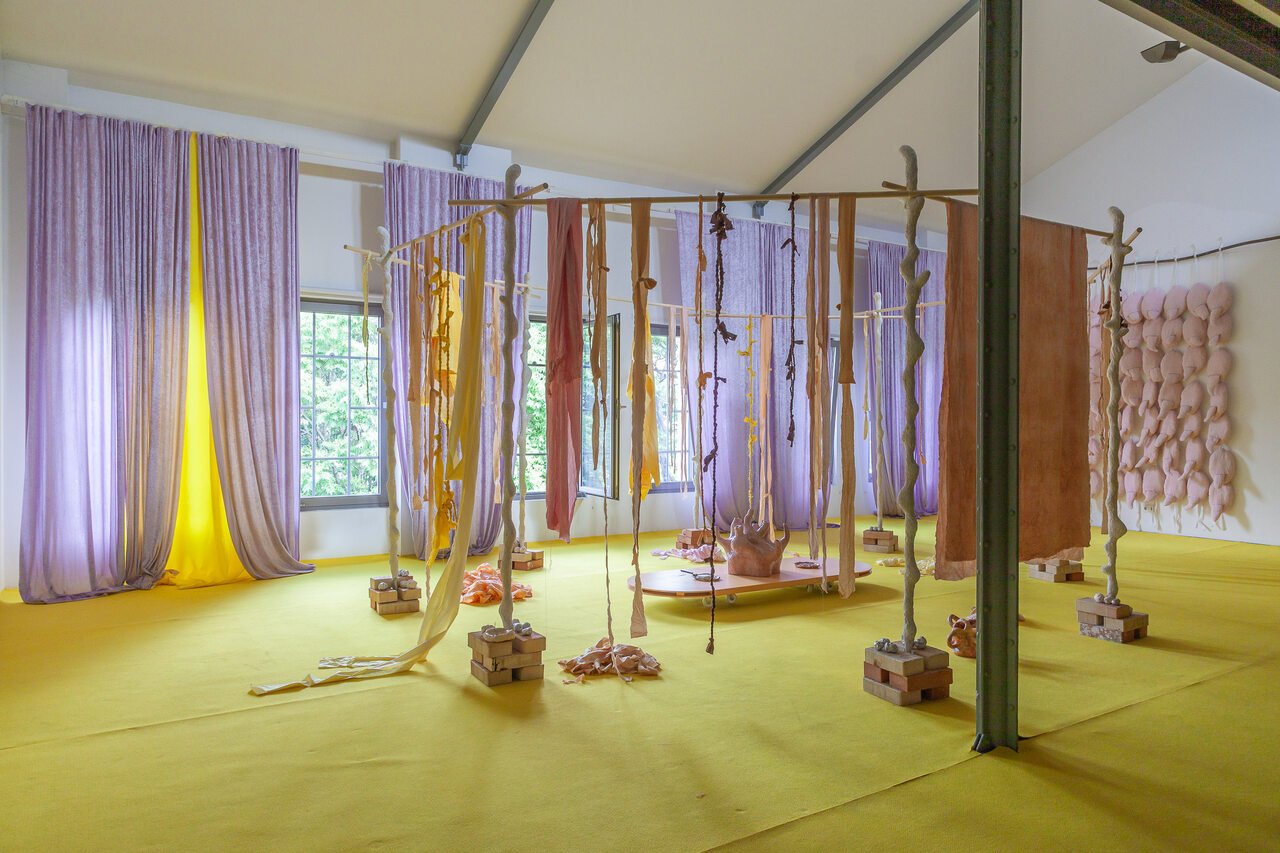
photo: Flavio Palasciano. Image courtesy of Independent Space Index.
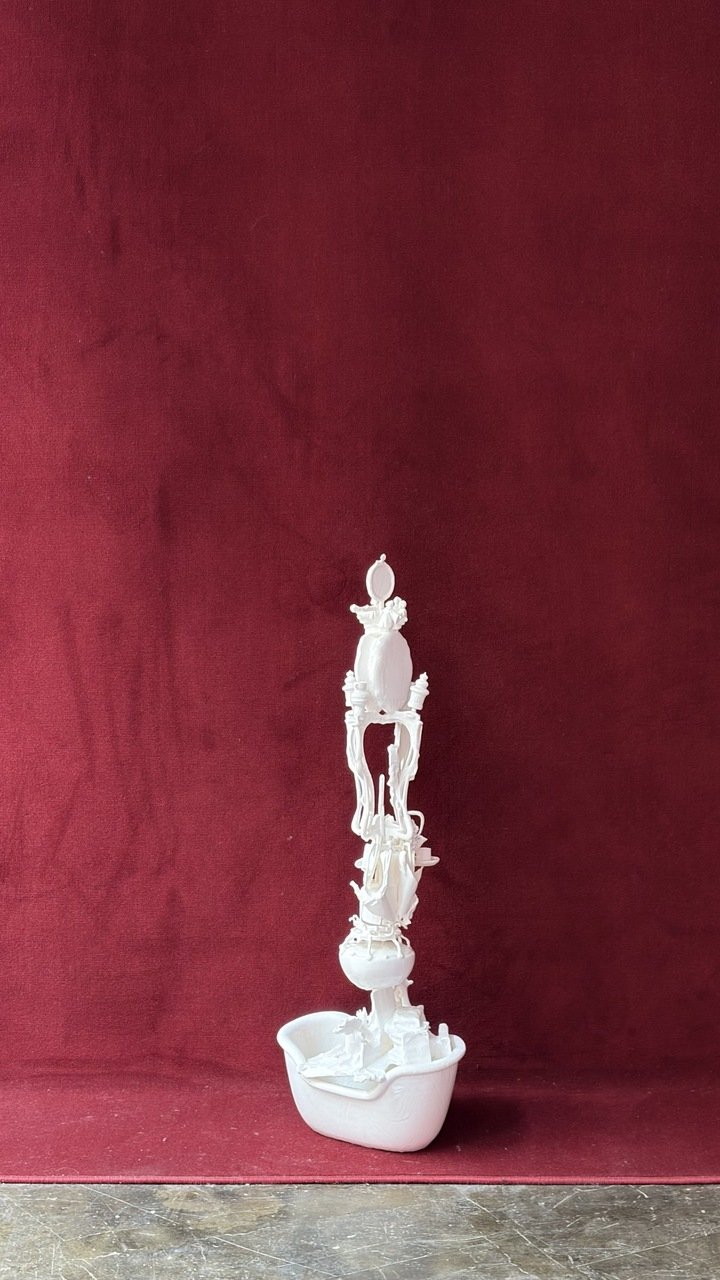
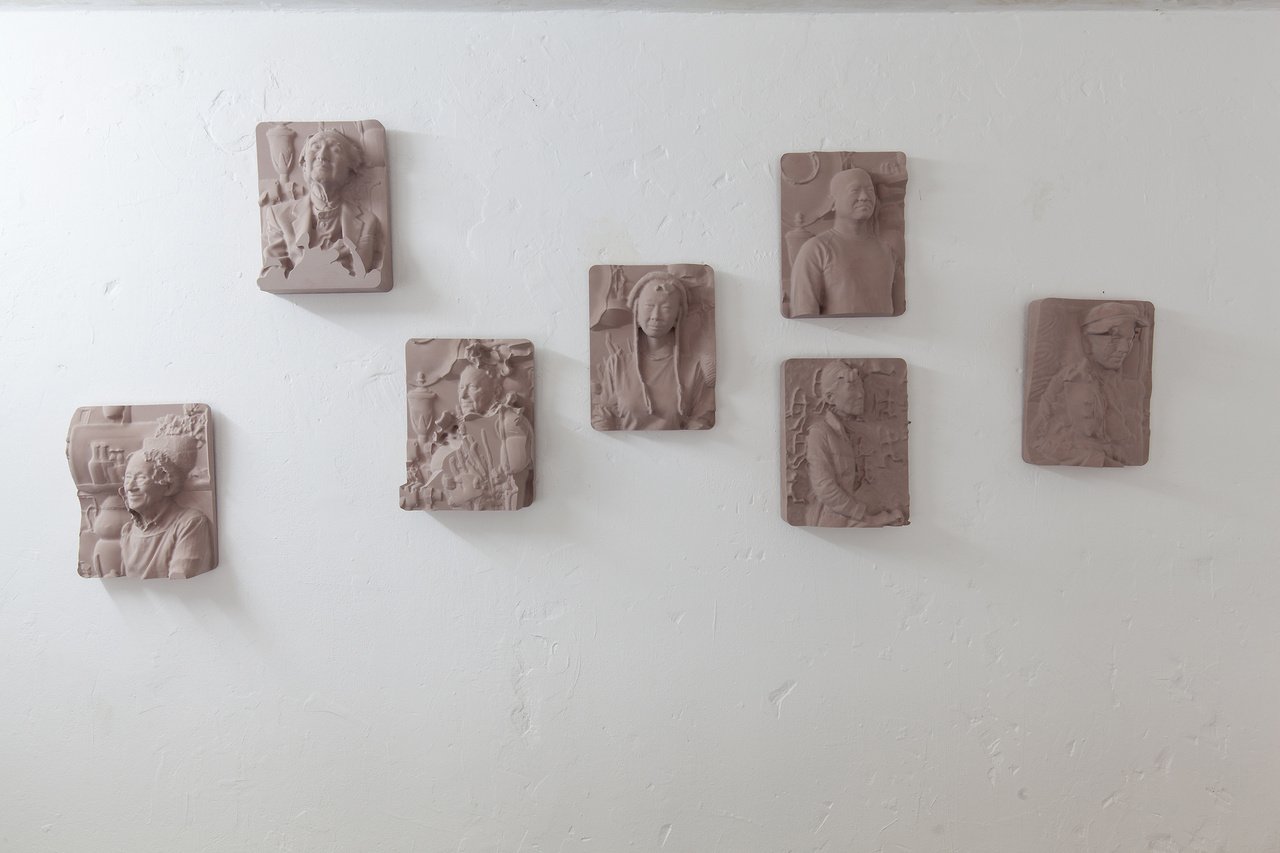
Image courtesy of Independent Space Index.
[1] I’ve put the word “independent” in quotes to emphasize the spectrum that this word represents in the contemporary art community. While the primary association is with the non-commercial sector, this is not exclusive nor necessarily apt for the context of Vienna. In each community it represents something different, and even within these communities there is not necessarily consensus. It might be just as complicated to try to put hard edges around this term as it is that of “art” itself.
[2] Vermoortel, Pieternel “The Stable, The Ground, The Secretion.” Exhibition text for flowers, 15.04 – 07.06.2026, LAURENZ (Vienna). https://www.laurenz-space.com/exhibitions/26
[3] A segment from the definition of “independent space” from the “about” section of the Independent Space Index website https://independentspaceindex.at/about
[4] Here, referencing FRINGE Warszawa, a grassroots, non-commercial, artist-led, independent community which first became active in 2022 https://fringewarszawa.com/en/about-fringe
[5] Here the term is applied in relation to Bernard Weiner’s attributional approach (1986), to the theory which was first developed by psychologist Martin Seligman (1967).
[6] An excerpt from the exhibition text for Emergency Suitcase, 23.05 – 07.06.2026, hoast (Vienna). https://www.hoast.net/h/bogdana-kosminaemergency-suitcasemay-23-june-7-2026/
[7] “Wer abbeißt, muss auch kauen” roughly translates to “If you’re going to bite, you’ve got to chew.”
[8] A segment from the definition of “independent space” from the “about” section of the Independent Space Index website https://independentspaceindex.at/about
Artist: various
Exhibition Title: Independent Space Index Festival
Curators: various
Venue: 68 locations across the city of Vienna
Place (Country/Location): Vienna, Austria
Dates: 29 – 31.05.2026
Photos: various