
Maximilian Lehner
The former orangery – a building that once made it possible to cultivate plants far from their natural habitats – already reveals some of Anna Hulačová’s solo exhibition The Land of Plenty from the outside, through the walls entirely made up of windows. Formerly a winter garden on the estate that now hosts the Center of Polish Sculpture, it lays out the perfect backstory for this exhibition.
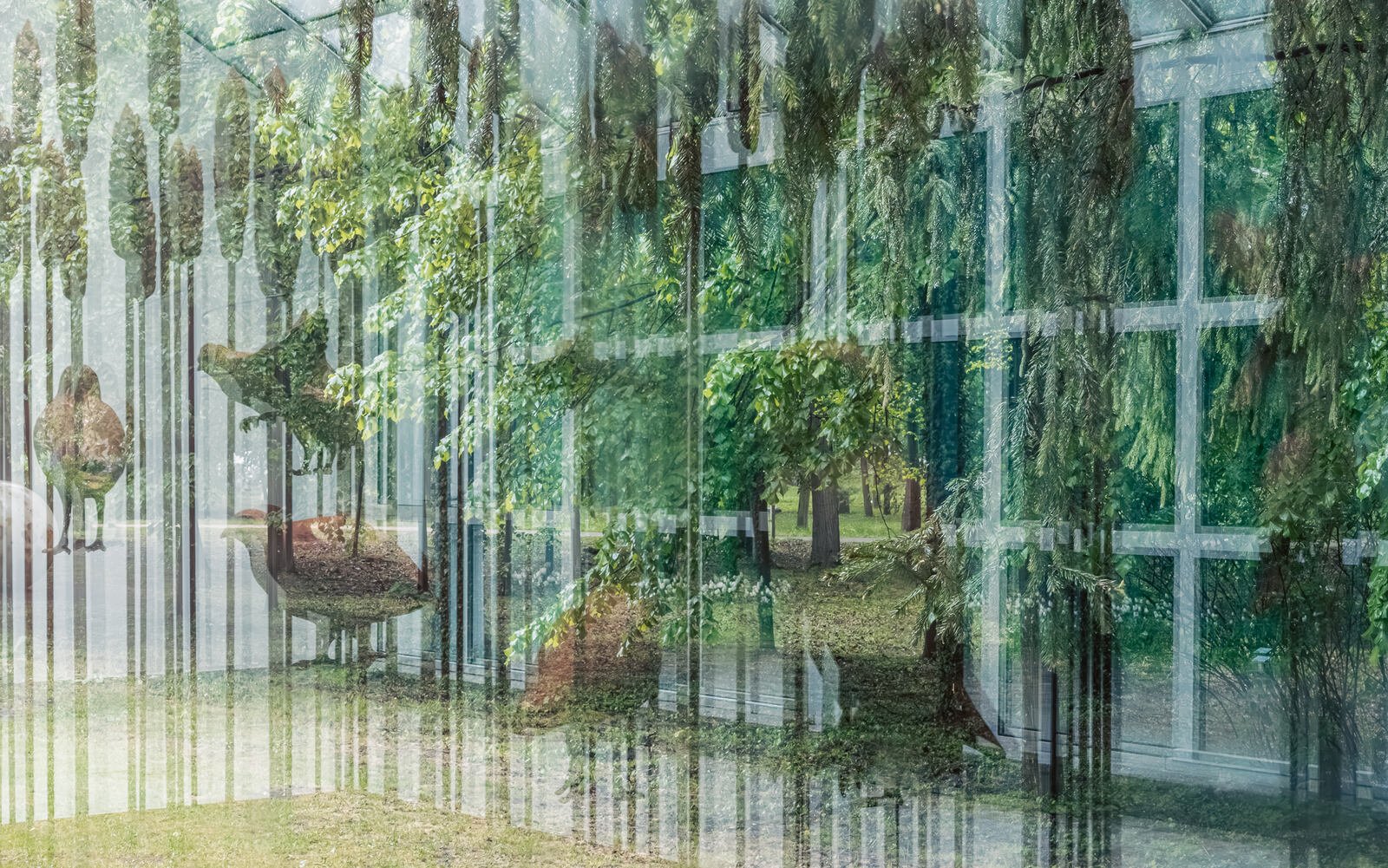
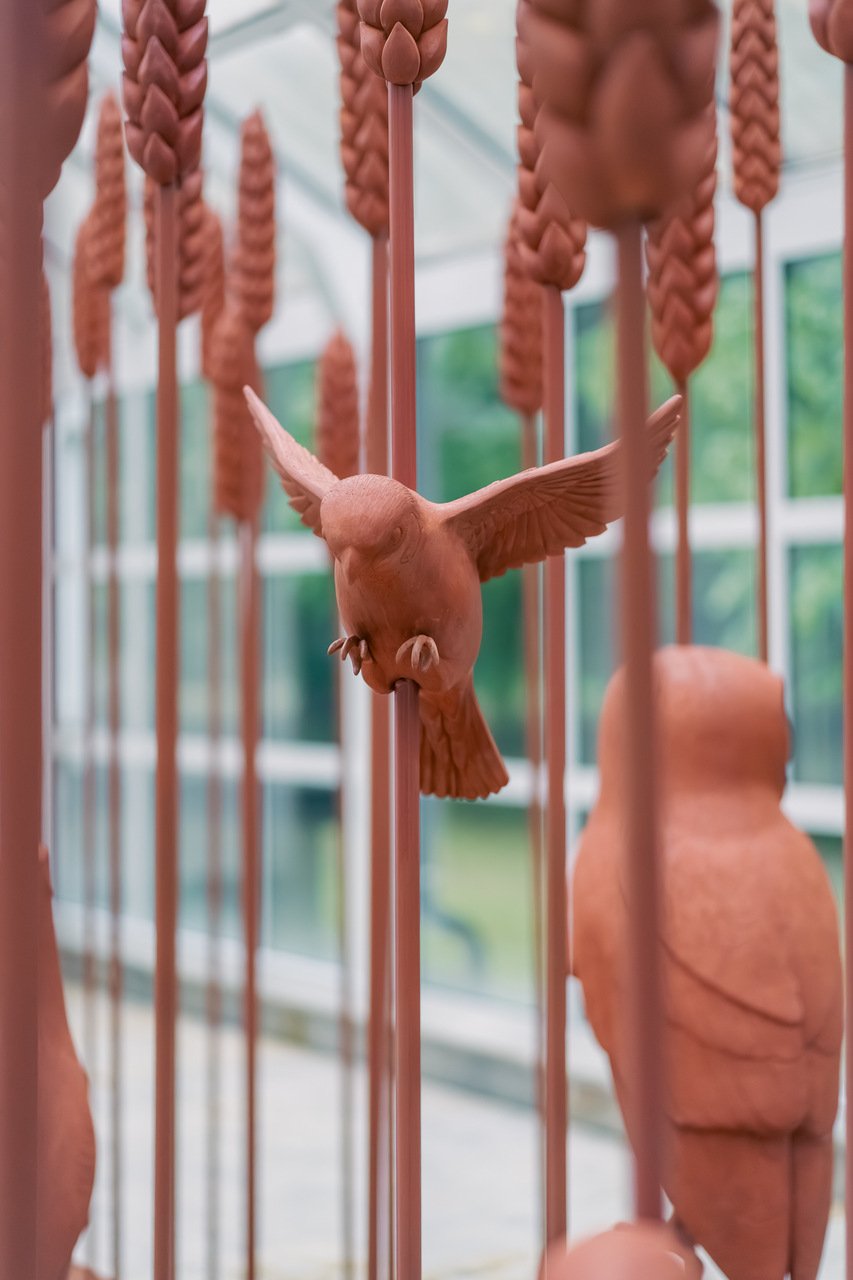
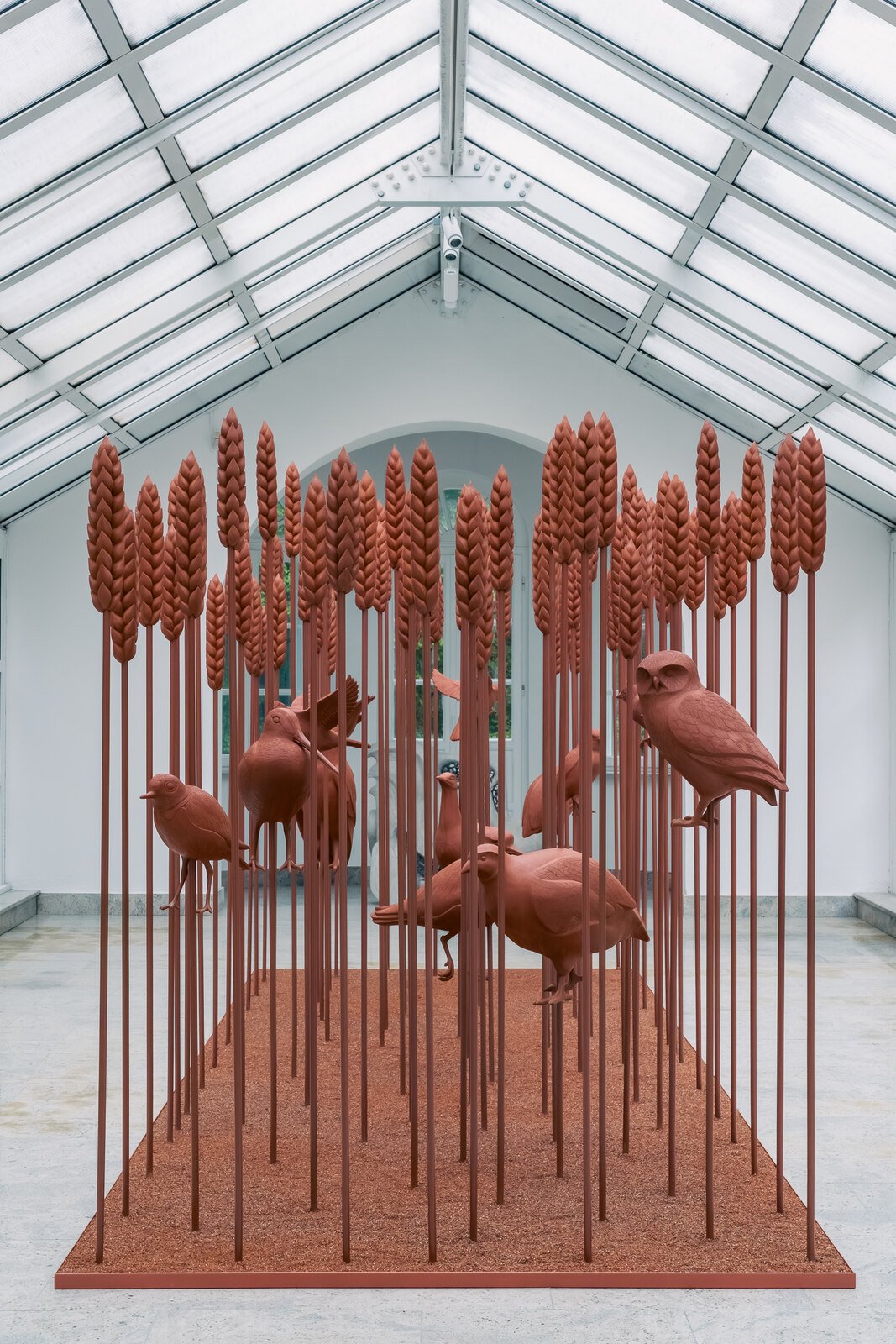
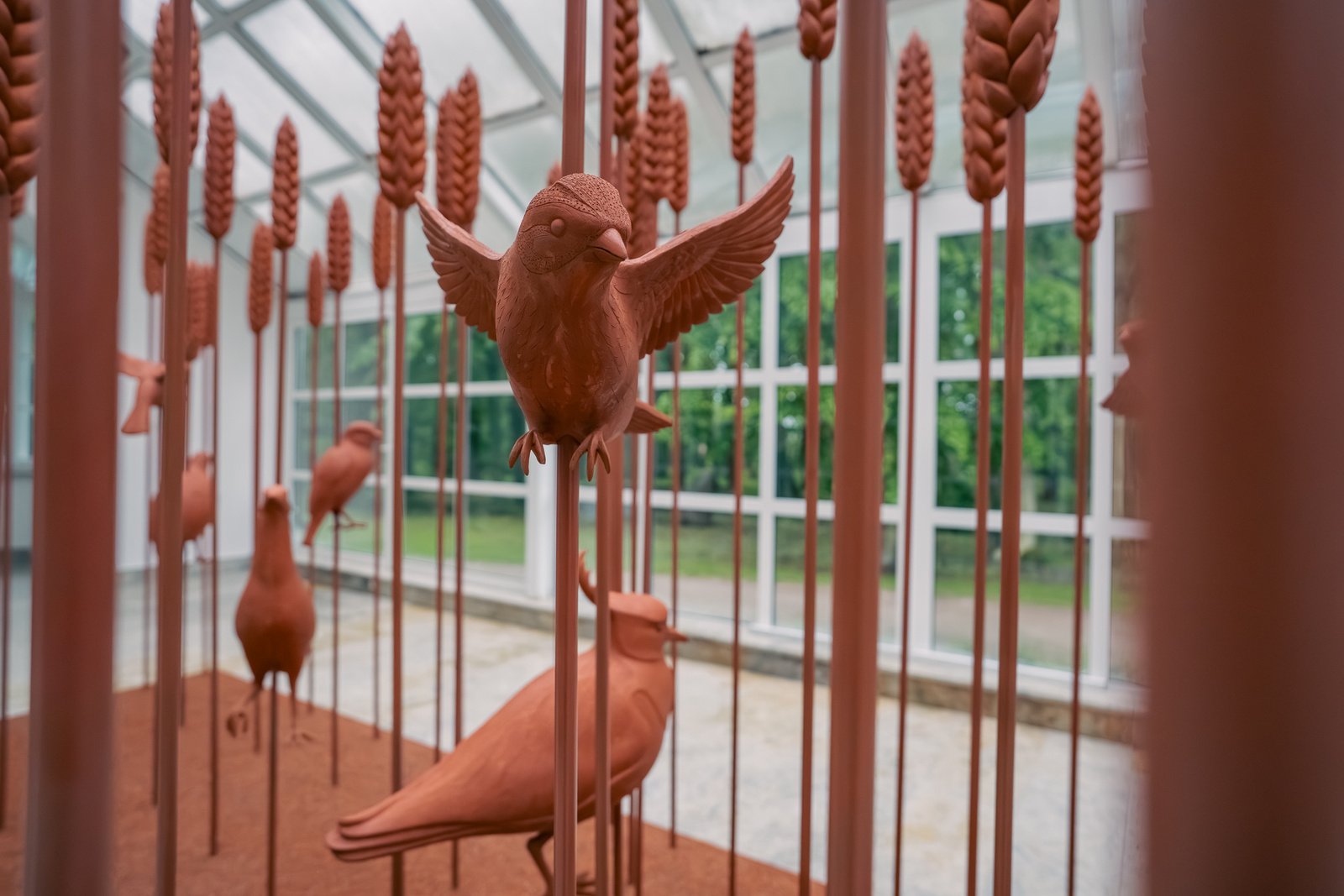
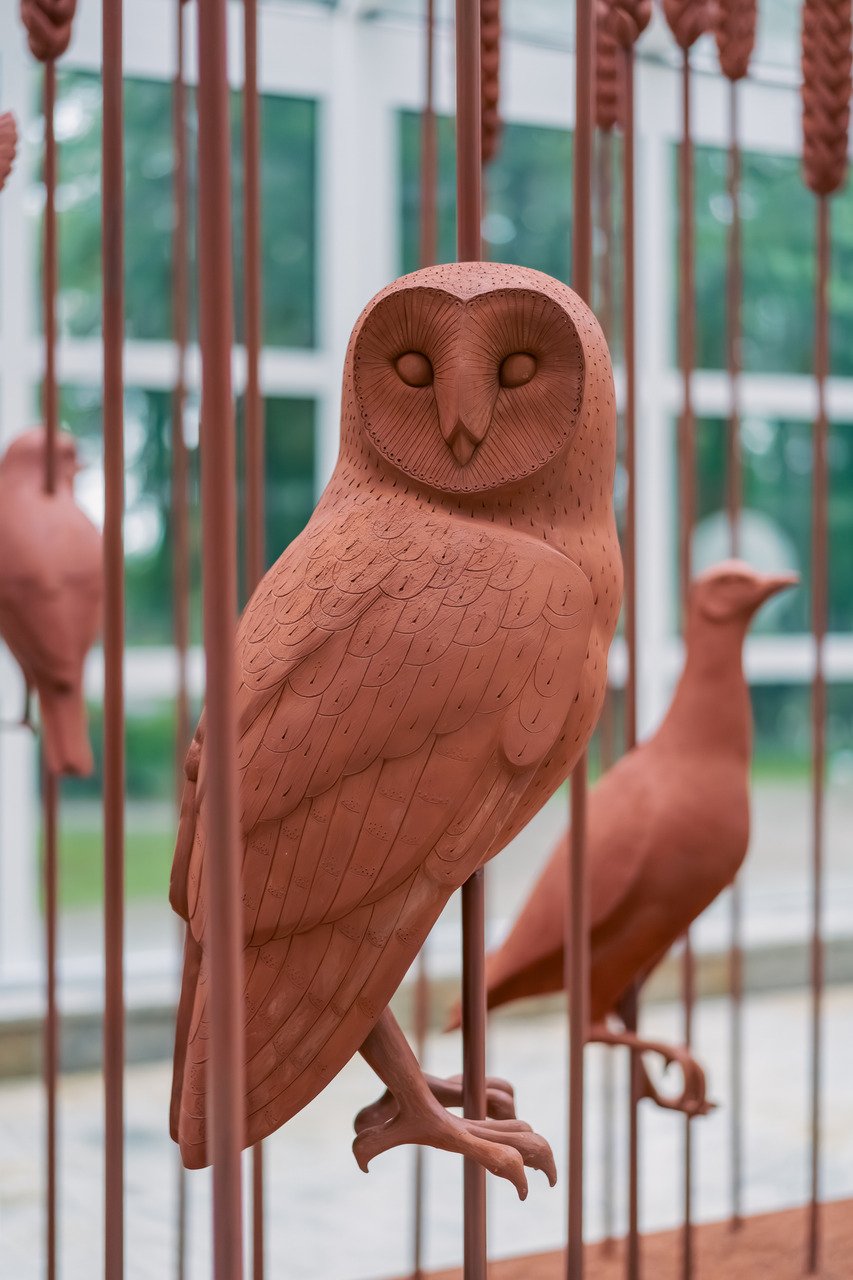
When entering, a look to the right draws us to the large-scale installation Harvest, in which an oversized crop made from iron and flint-clay, monochromatically coated in brick-red enamel, grows towards the glass ceiling of the space. Several birds, made from the same material, are stuck between the ears of the wheat, as if they are hiding in a crop field. Immediately the kind of natural balance and protection that growing grasses and grains provide for the fauna comes to my mind. A look into the catalog reveals that previous iterations showed the piece on a lawn rather than on gravel, which is spread out in the rectangular field from which the metal rods emerge in the center of the room. Surprisingly, re-planting the work on a stone ground in the exhibition space rather than outdoors on the lawn still maintains the meaning of the work: coating the birds and the plants in the same color and putting them in this close relation becomes a monument to this ecosystem that is under threat; the sculpture freezes a symbiosis and therefore an equilibrium that should be kept or achieved rather than a historical moment that serves as a reminder how things used to be.
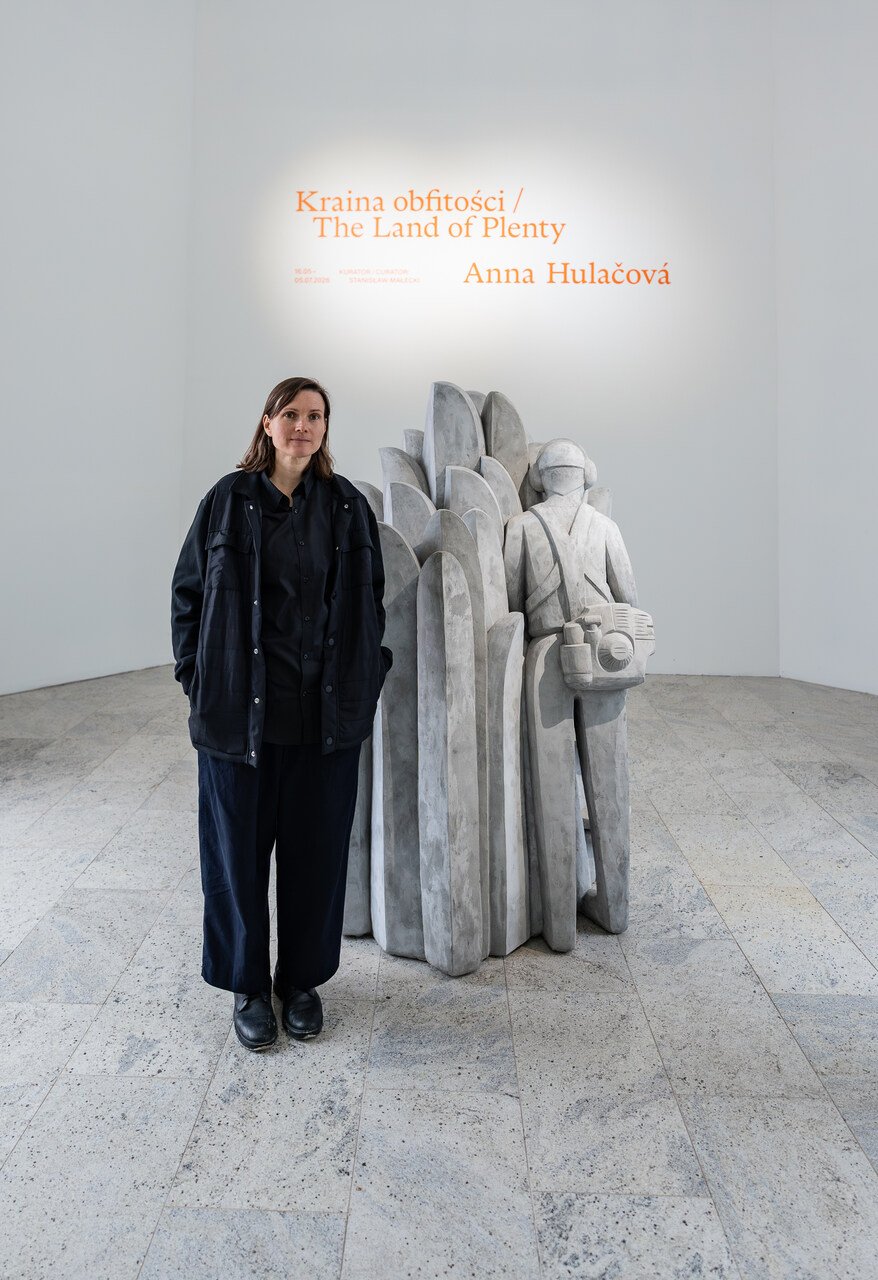
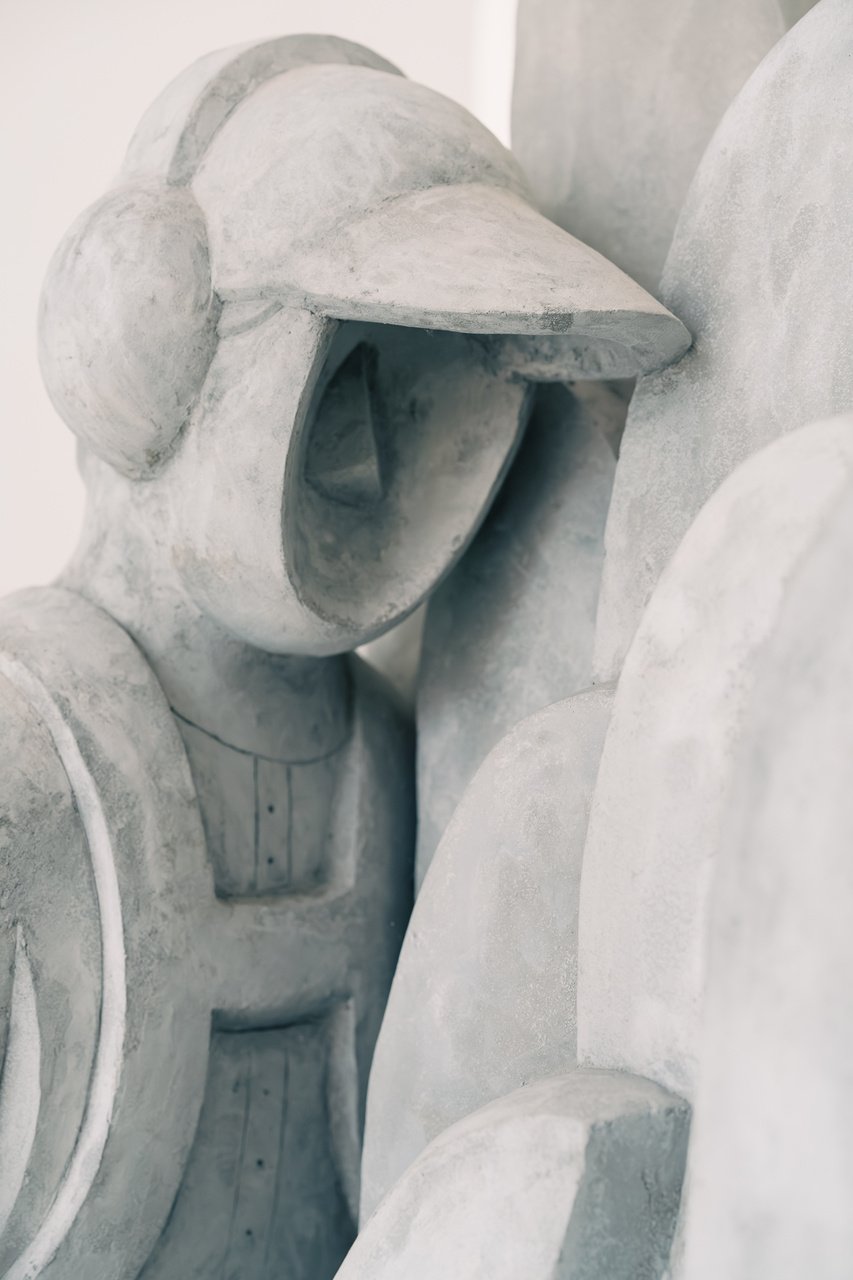
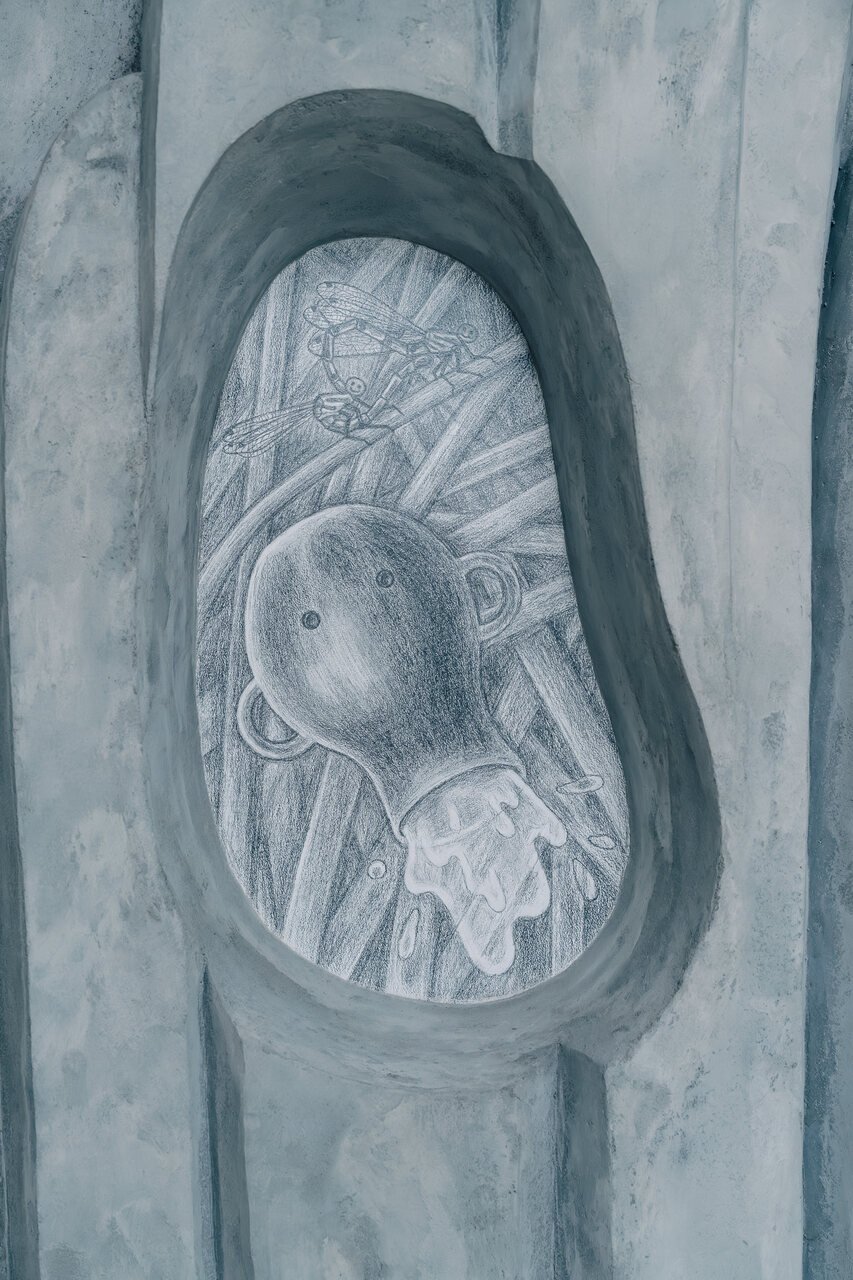
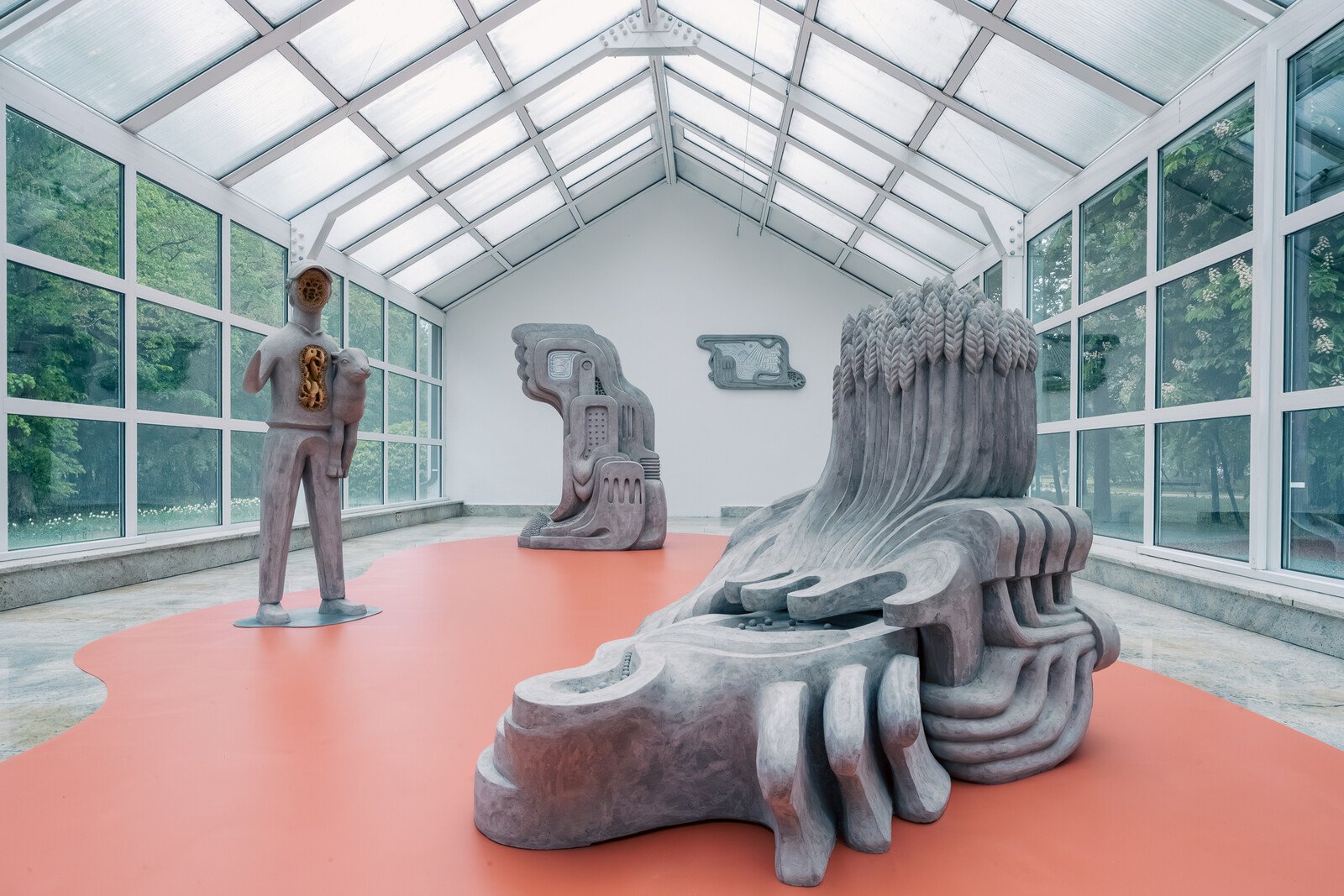
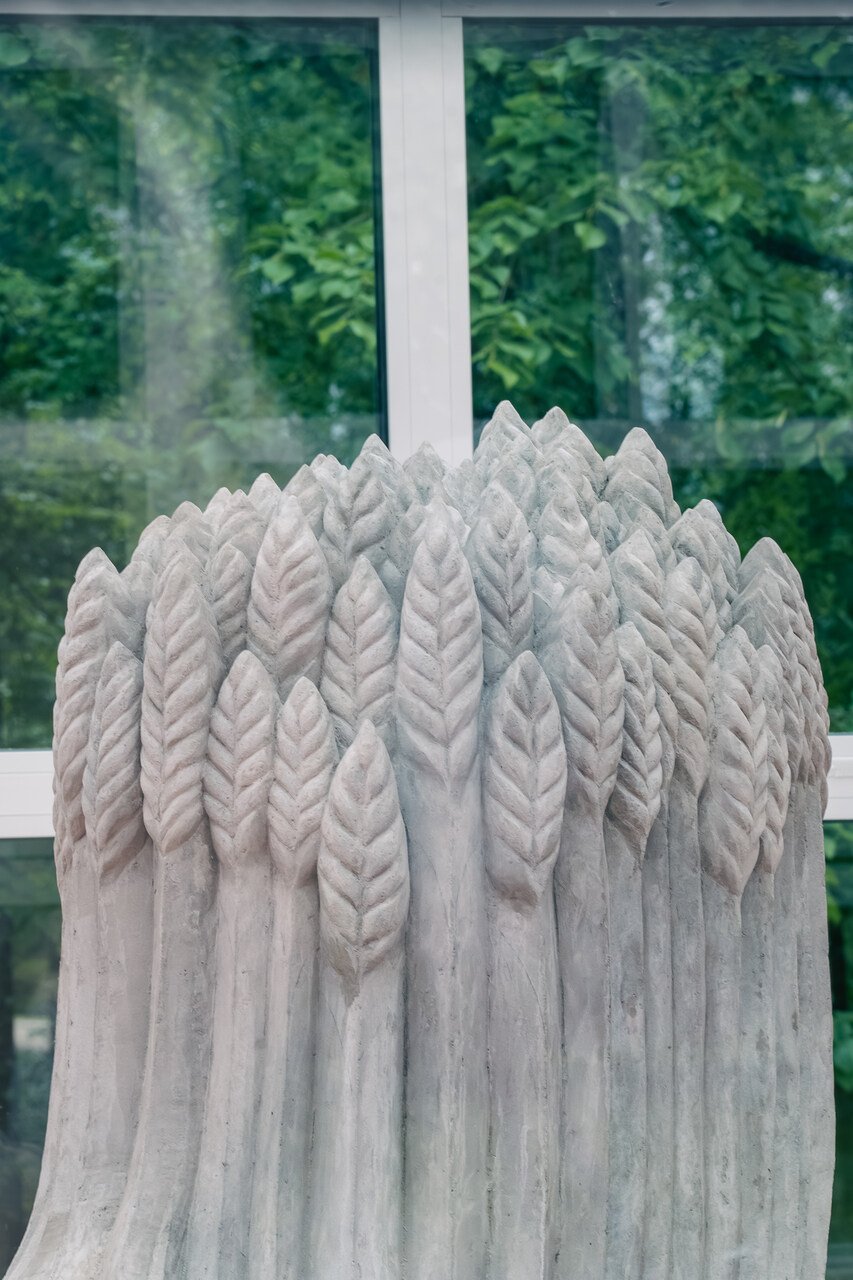
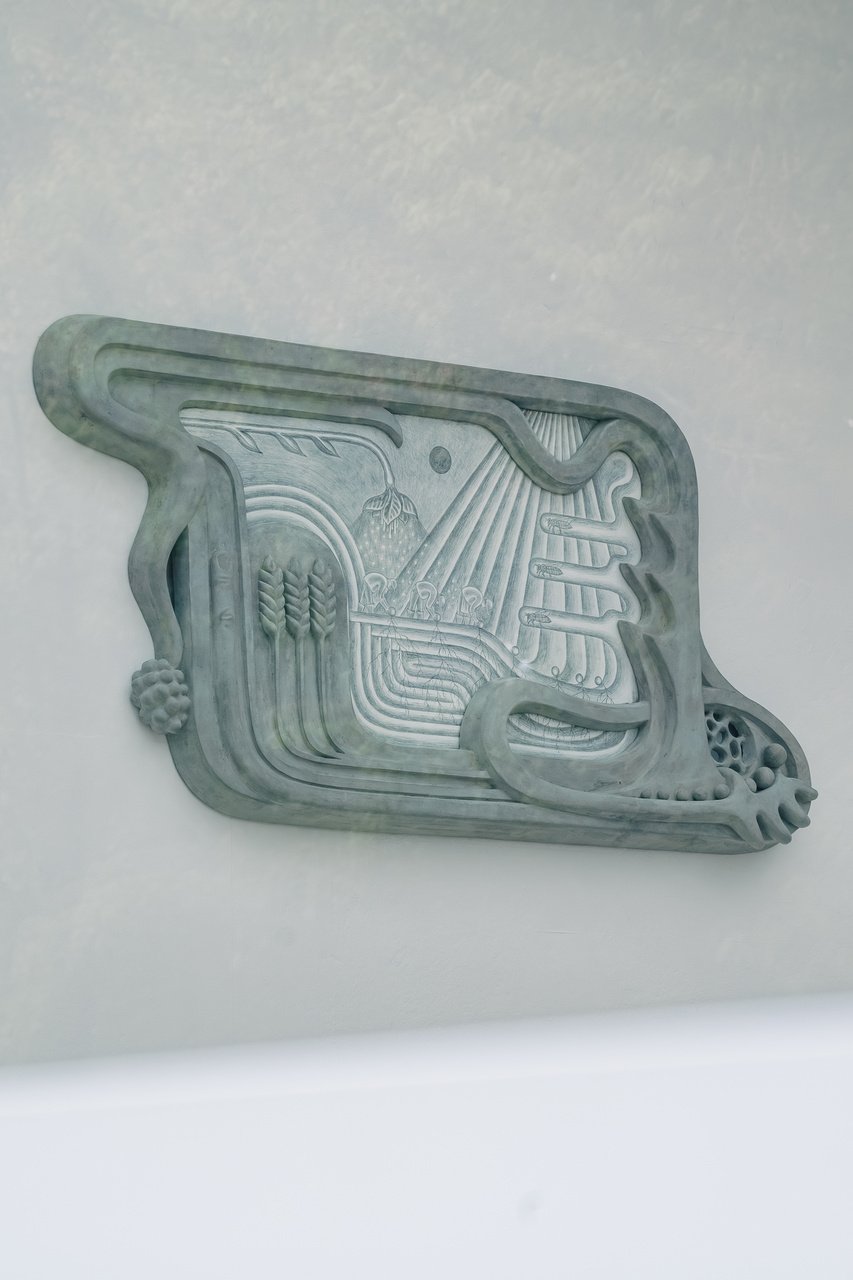
Further into the building, we’re welcomed by one of Hulačová’s massive concrete sculptures. The element that catches my attention are the thick vertical lines. Cut like cylindrical sectors with pointy heads, they stand for different types of grasses. When we notice the figure on the side, with protective headphones and a mowing device in their hand, the question of scale arises: are the blades of grass gigantic or might the person and their bush cutter just be tiny? The relation shows that the faceless worker might never achieve anything, when confronted with nature’s ongoing resilience. On the back of it, we discover a small drawing inserted into the concrete: it shows some smiling insects on grass and a mysterious liquid pouring from a vessel, that with two dots added, almost becomes a living being itself. It remains unclear what this liquid does, and its container is not actively manipulated to be poured there – obscuring the agency as well as its effect. We might consider this a little addition to our understanding of the field worker in this constellation: They are destroying something that would be beneficial to the bird or insect communities, or the overarching ecosystem, which is anyhow suffering from the decline in biodiversity. In the sculpture, we see the strong embedding of the farmers into this system, where humans, nature, and technology co-evolve – and not farmers as the ones using the fields as continuous resources. It might be an over-interpretation of this small gesture of the pouring liquid, but it feels it can contain the uncertainty that comes with caring about the field, and knowing that one has to balance between nurturing and destroying parts of it.
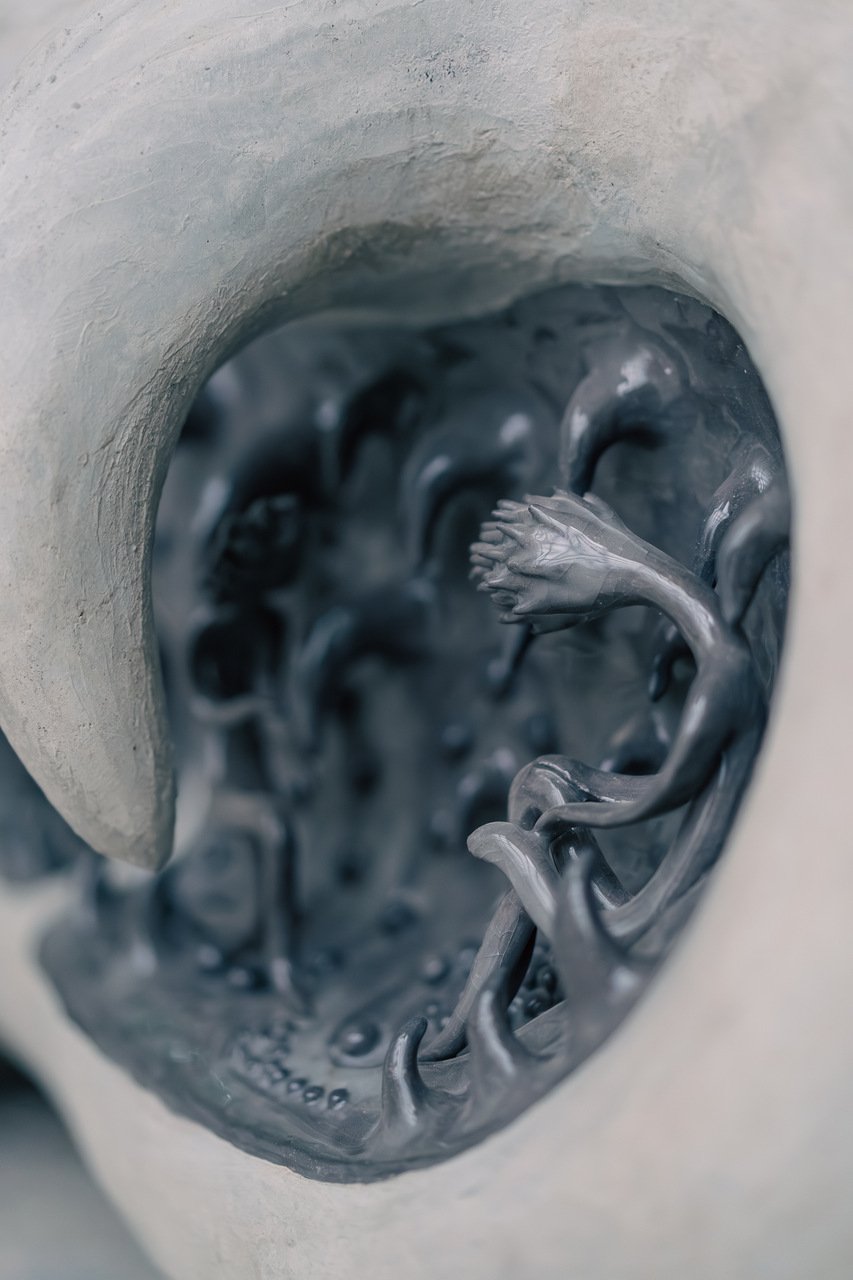
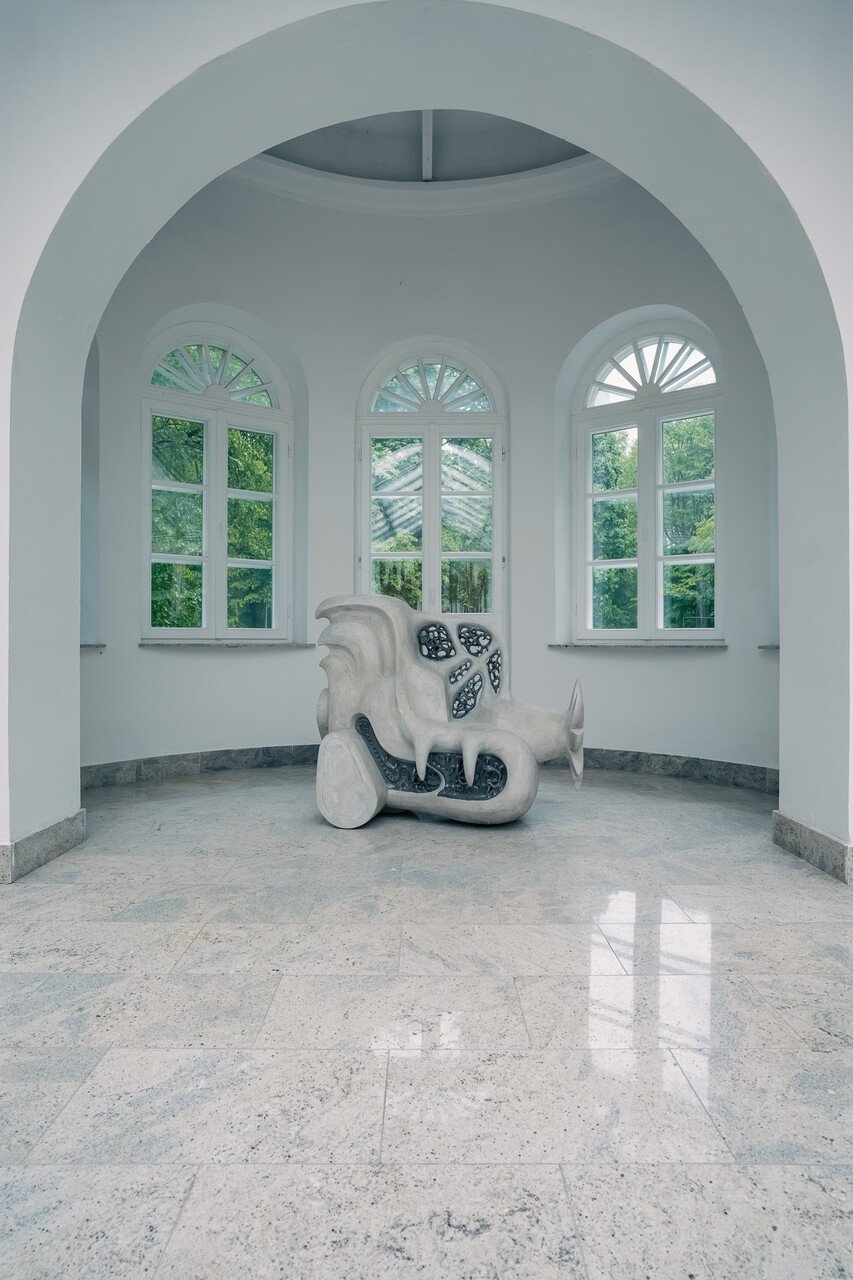
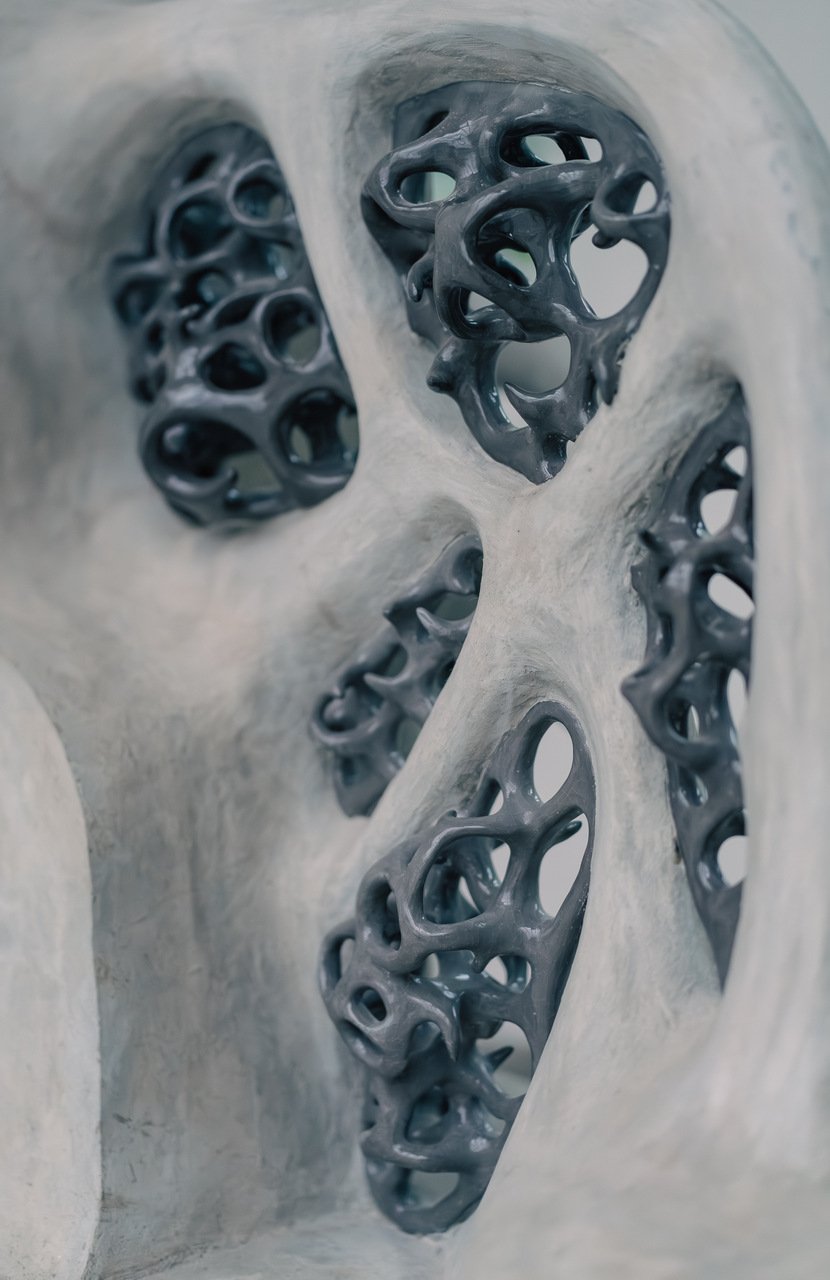
All works in this exhibition play with the absurd blending of technological and natural or agricultural tropes. In the apse, at the very end of the orangery’s right wing, a more compact sculpture presents itself like some nautical vehicle, powered by a small engine with a star-shaped wheel at the back. Here, the concrete is permeated by glazed black structures resembling gynoecia, with plant and human hybrids sitting in them. Another detail reminds me of a mechanical V belt, an element that appears in many machines, including the tools used in agriculture. The belts visually connect to patterns reoccurring in the other sculptures where these lines seem to represent the furrows in the fields, or the straw, weeds, or crops set out next to each other along the ploughed lines of the earth.
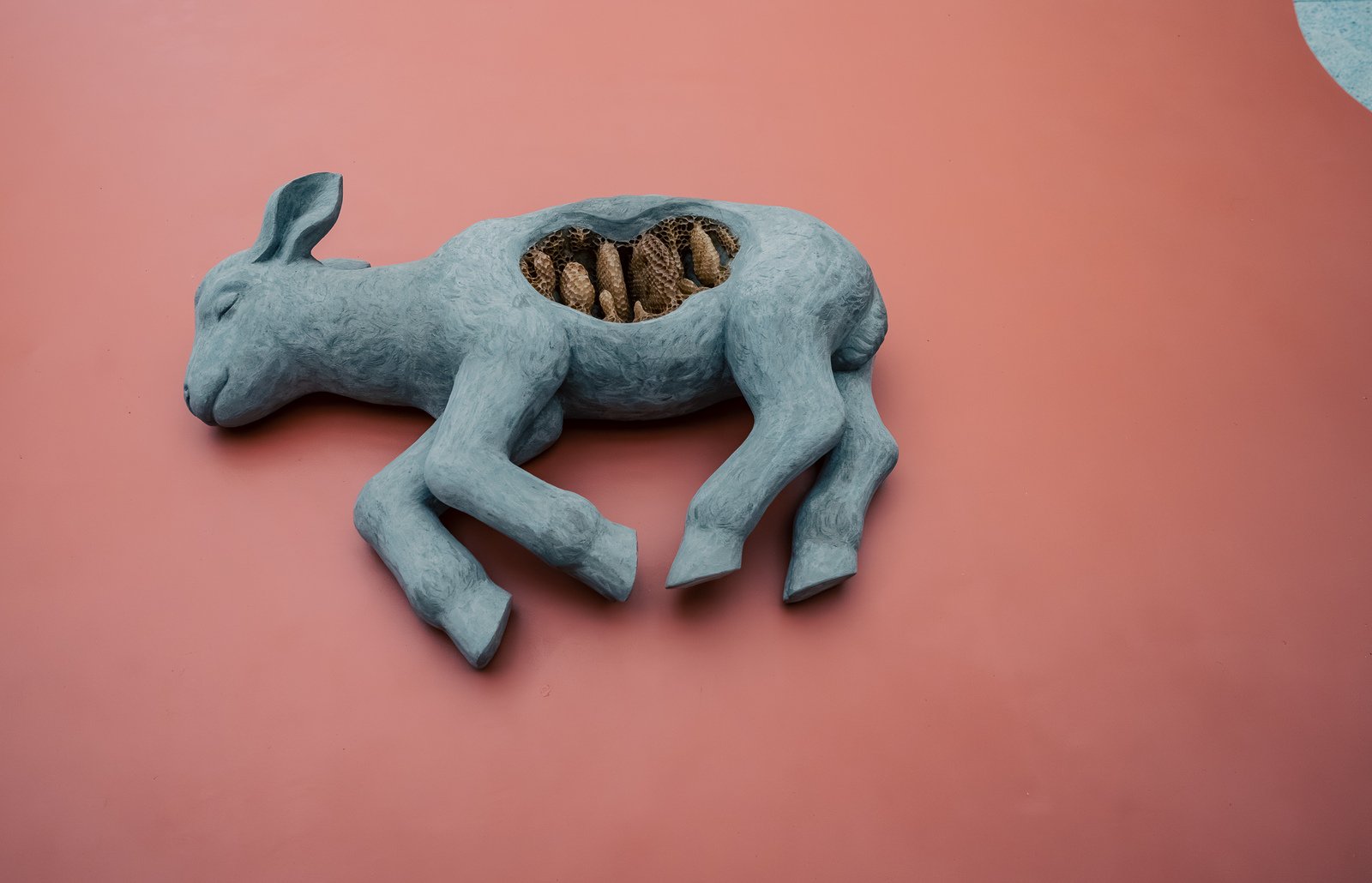
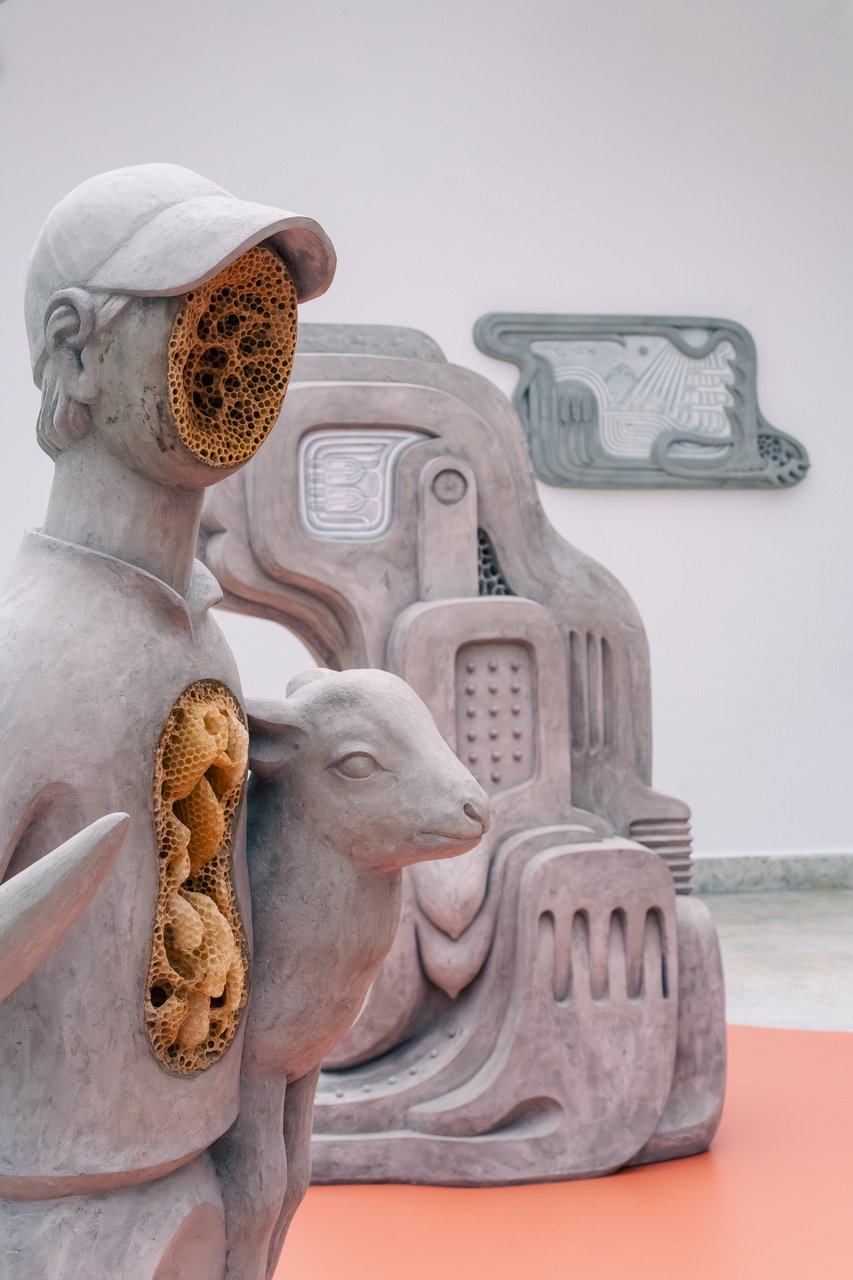
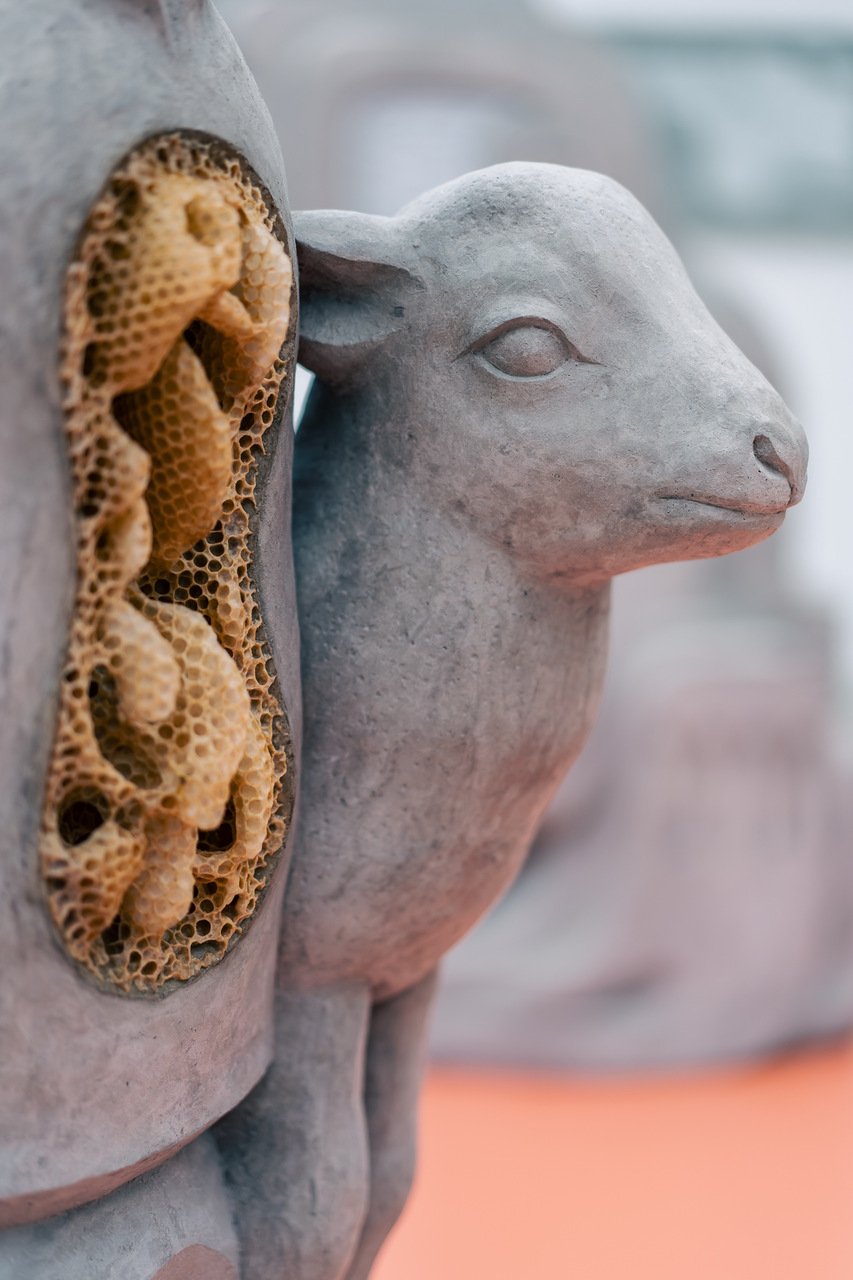
The exhibition confronts us with this continuous overlap between nature and its technological mastery with tools, between care and destruction. It is no coincidence that the figure of the lamb appears twice in this section of the orangery (in the sculptures Lamb and Boy with Lamb). Upon entering this part, we stand in front of Lamb, the animal recumbent on the floor with its viscera made of actual honeycomb, exposed. A figure, like in the aforementioned sculpture too small to be a worker, rather seeming like a boy with a cap, standing a bit further in the middle of the space, has his guts presented in the same way, swapped for honeycomb, and even the face is flat and replaced by another bees’ habitat. He is holding the lamb under his left arm, this one without presenting its insides, strongly resembling the iconography of the good shepherd and the calf bearer. While the latter was bringing the calf as a sacrifice, early Christians reinterpreted this as a representation of care that the shepherd brings to his sheep, referencing Jesus as the shepherd. So, this lonely guy, the only human figure not totally blending into a conglomerate of crops and machines, with all his insides exposed, stands there, holding a lamb and being trapped in between taking care of or sacrificing, between two interpretations of the same iconography. Again, the sculptures reference some sort of equilibrium within a system. There is nothing frightening about the figures presenting their guts, even though the same drenched in dripping red paint would evoque quite the opposite. In this case it is calming down, and you rather imagine the sculptures as a home for bees – which in fact they could serve as. Equally, it might be inspired by ancient myths of cycles between humans and animals, which, once more emphasizes a reading in the idea of thinking how all the differences represented can come together in the sculptures – and on this planet.
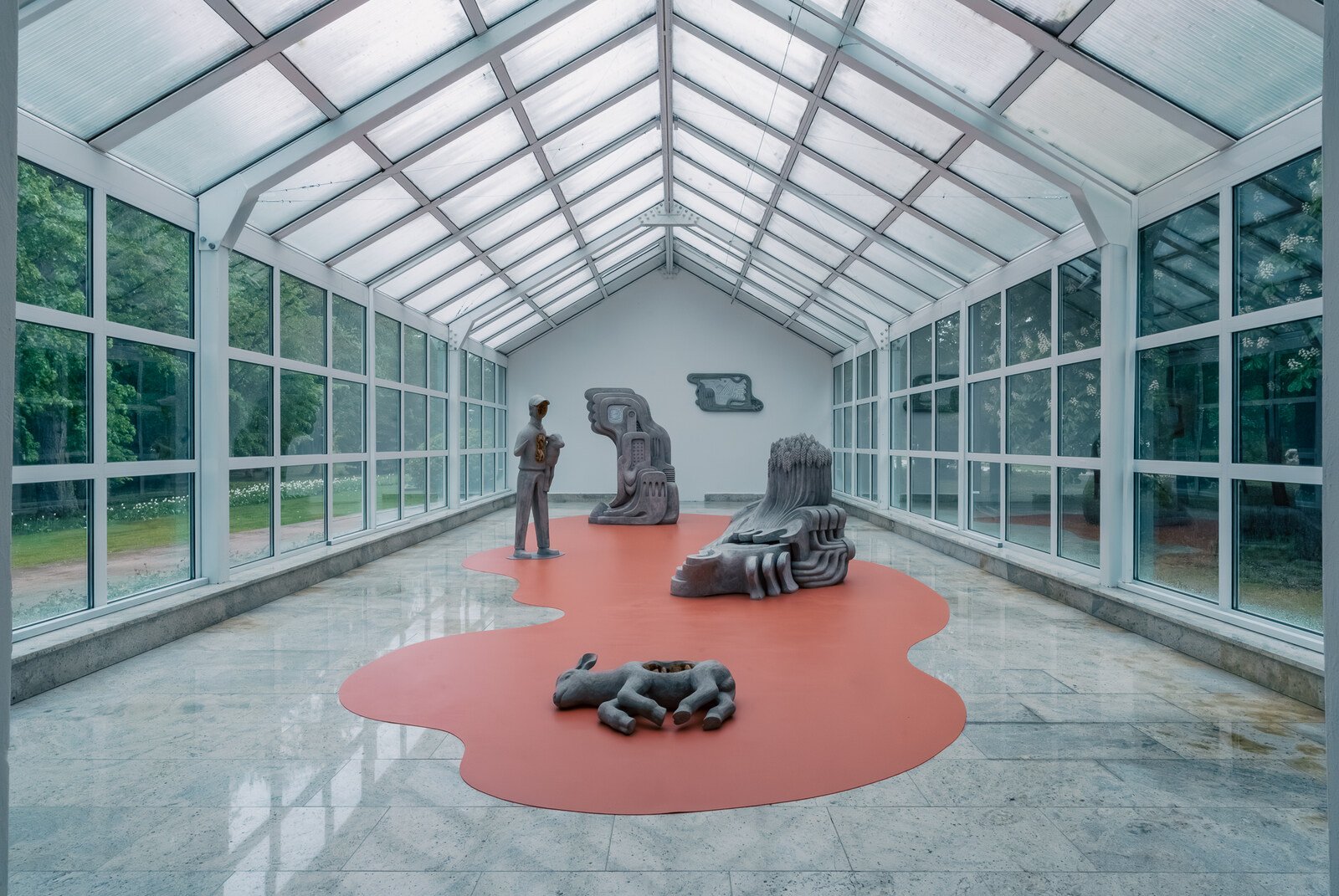
The glass house this exhibition is situated in is a brilliant choice for these works, hinting at the transformation of nature through human culture. Hulačová’s work emphasizes the complexity of the connections between humans, technology, and the environment. Agriculture has always occupied precisely this intersection, and The Land of Plenty binds these dimensions together with remarkable consistency. The exhibition’s title alludes to the promise of abundance and permanent availability – a condition that has become so familiar in contemporary supermarkets that it is often mistaken for a natural state. Hulačová instead reminds us that plenty is always produced, maintained, and paid for. Every promise of abundance depends on infrastructures, technologies, labour, and the transformation of landscapes.
The sculptures’ predominant use of concrete reinforces this tension. As the quintessential material of modernity, concrete evokes not only industrialization but also the monumental aesthetics of the socialist era, whose public sculptures frequently celebrated agricultural workers as heroic builders of collective prosperity. Yet Hulačová’s figures refuse this triumphalist narrative. Her workers remain anonymous, faceless, and seem overwhelmed by the very environments they are expected to manage. Rather than glorifying agricultural labour, they expose its contradictions: cultivation is inseparable from extraction, and nature is always already embedded in the human-technological condition.
The Land of Plenty avoids nostalgia for either socialist collectivism or neoliberal capitalism. The former sought to secure abundance through central planning, regulation, and the radical reorganization of land ownership; the latter promises efficiency through market mechanisms and global supply chains. Both systems, however, rely on forms of labor and environmental exploitation that largely remain invisible to those who ultimately benefit. Hulačová does not propose an alternative model. Instead, she materializes these entanglements in sculptures where mechanical components morph into plant organs, bodies become hives, and landscapes appear simultaneously cultivated and grown as a result of the co-evolution with humans and technology. And, it is this refusal to uphold such categorization that makes The Land of Plenty so compelling.
Nature is never simply opposed to technology, nor is humanity positioned outside of either. Instead, every organism, machine, and worker becomes part of a single network of dependencies that is at once productive and fragile. The exhibition ultimately confirms that abundance has also always been artificial, even in the woods and fields where we might deem it natural. The question is not whether humans or technology shapes nature, but how we choose to live with the consequences of having done and continuing to do so. Subtle but all-present, Hulačová’s use of honeycomb serves as an ostinato, reminding us to think about the possibilities of co-evolution, co-habitation, and mutual care – between humans, nature, and technology. Always entangled, but never fully contained.
Artist: Anna Hulačová
Exhibition Title: The Land of Plenty
Curators: Stanisław Małecki
Venue: The Center of Polish Sculpture
Place (Country/Location): Orońsko, Poland
Dates: 15.05 – 05.07.2026
Photos: HAWA