Maja Ćirić
A review of P. Staff’s Durchdringung (penetration) at Kunstverein Bonn
Clinic White. Bordello Red. Acid Yellow. Midnight Blue. Laser Green. Bodies hacked. Binaries unsettled, and back again: these are the colors of hypnotizing environments, four site-specific installations, each staged to guide the visitor’s body through space, moving in, out, and back again, as perception, physiology, and disoriented power circulate with every step. It is not yet clear who constitutes the “center,” who acts, who is acted upon, or how the subject relates to the Other. A similar sense of dizziness and disorientation was evoked by P. Staff’s On Venus, as presented at the 2022 Venice Biennale. It left me with that same unsettled feeling: a mirror on the floor caught and reflected the projection, further destabilizing any fixed sense of perspective or position.
In Staff’s Durchdringung (penetration), the architecture doesn’t hold; it leaks. As the first exhibition curated by new director Viktor Neumann, this total intervention brings to mind P. Staff’s previous exhibitions. It follows the industrial leakages of On Venus (Serpentine, London, 2019) and the shimmering exhaustion of In Ekstase (Kunsthalle Basel, 2023), positioning the Bonner Kunstverein as a debilitated, “penetrated” body in its own right. It is a sequence of intensities where the work seems to thread through the walls, yet it reveals a more clinical truth: the systemic ways institutions[1] enter (perceive, categorize and internalize) moral and bodily forms: hormonally, architecturally, infrastructurally. It is a double movement of decentered penetration, a state of exposure with no possible outside.
1. Clinic White: Minimum World[2], 2025
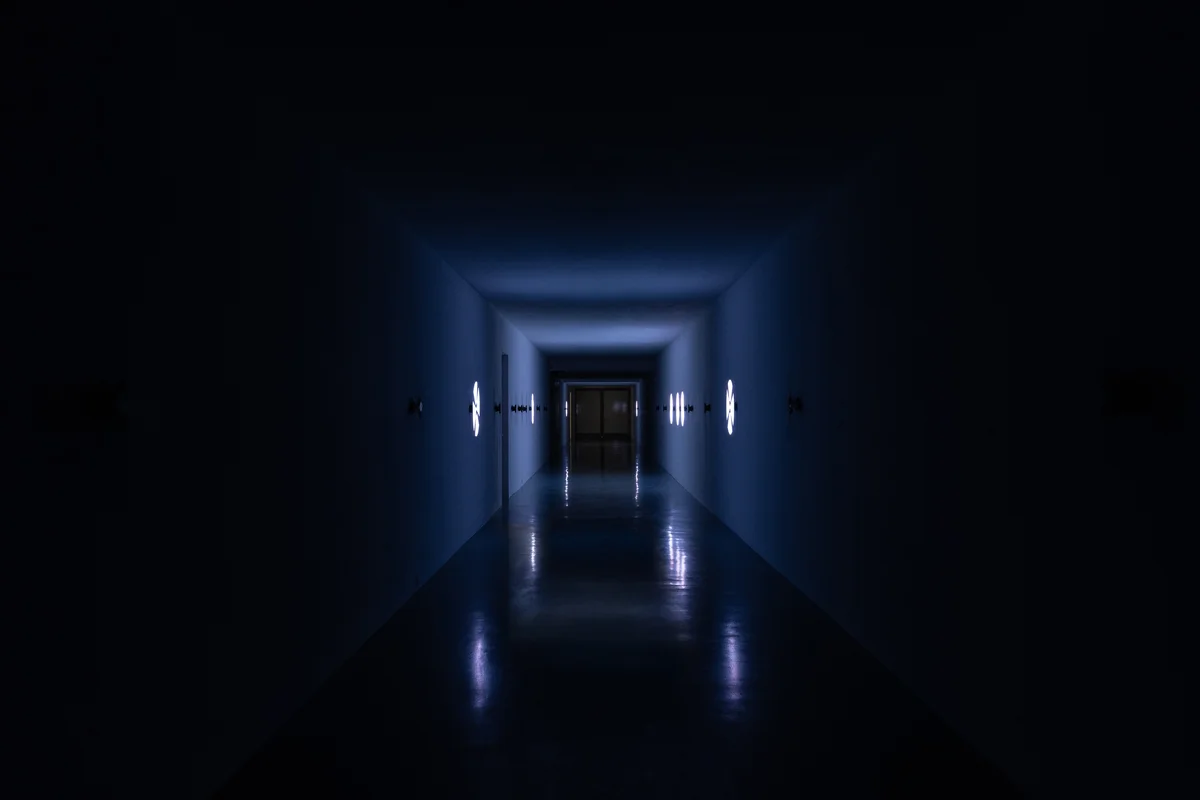
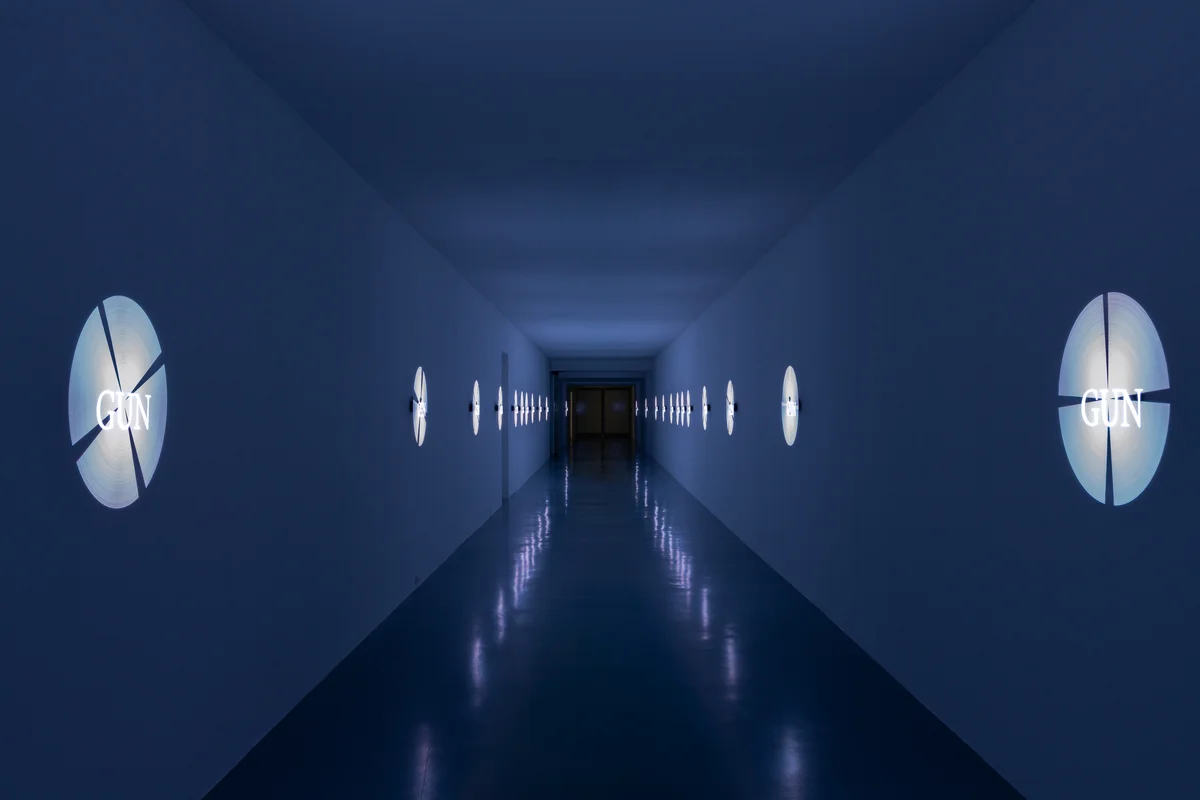
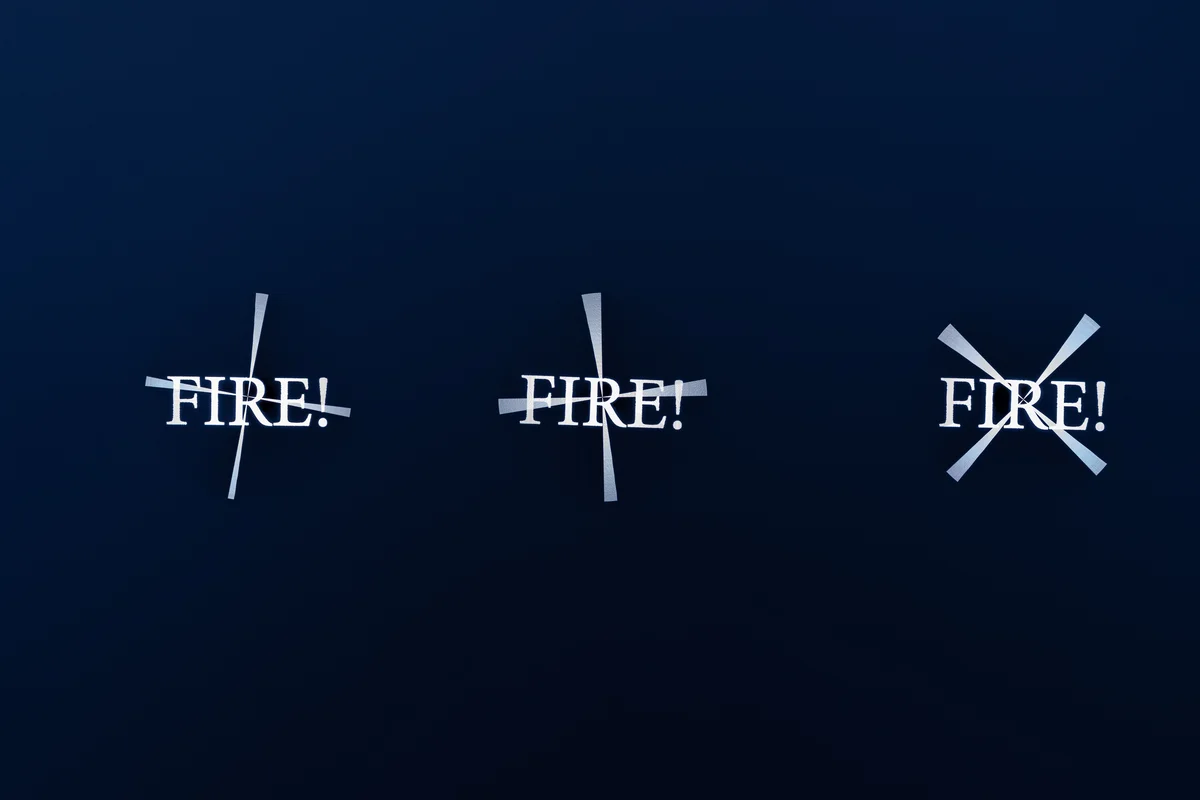
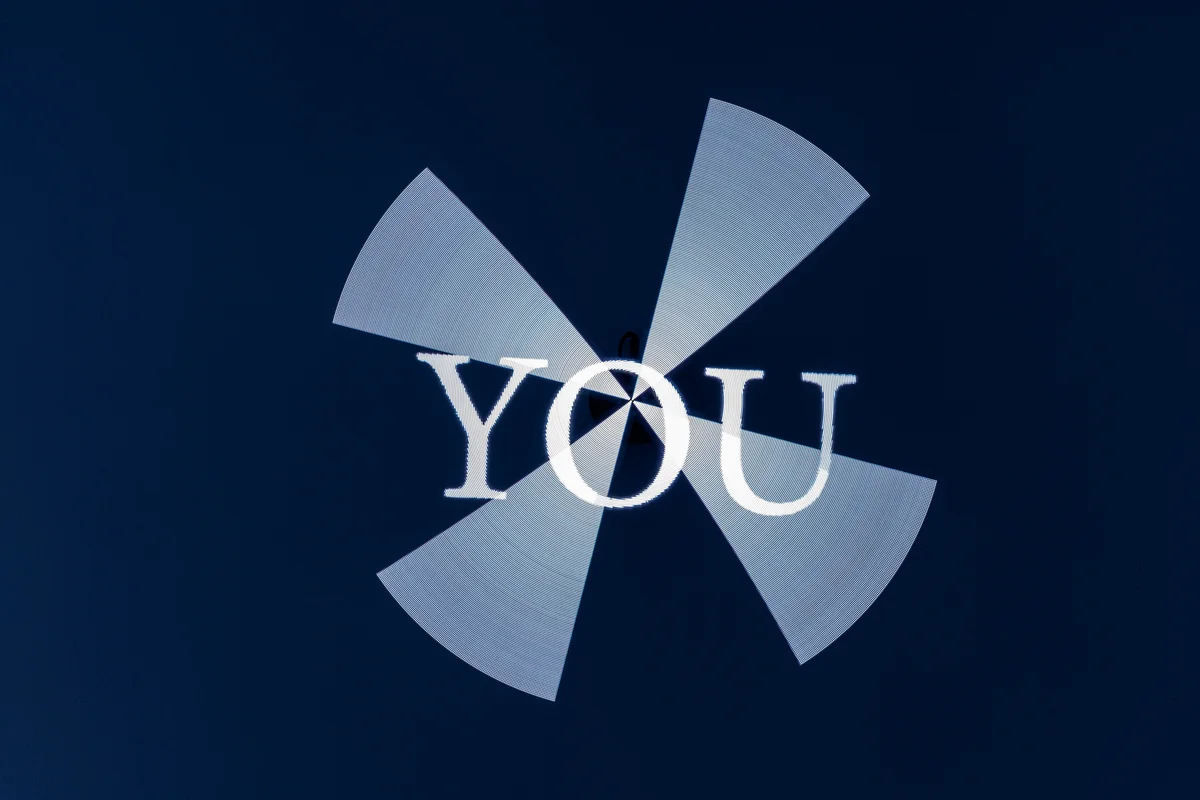
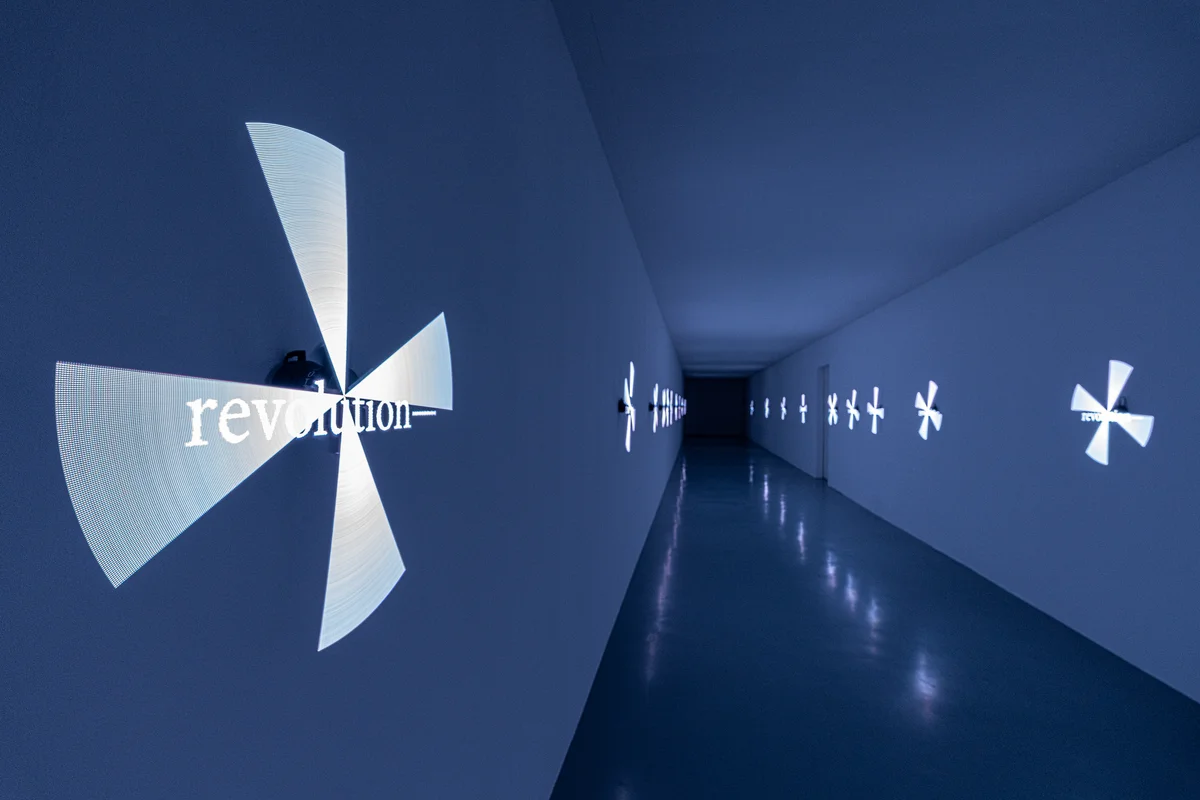
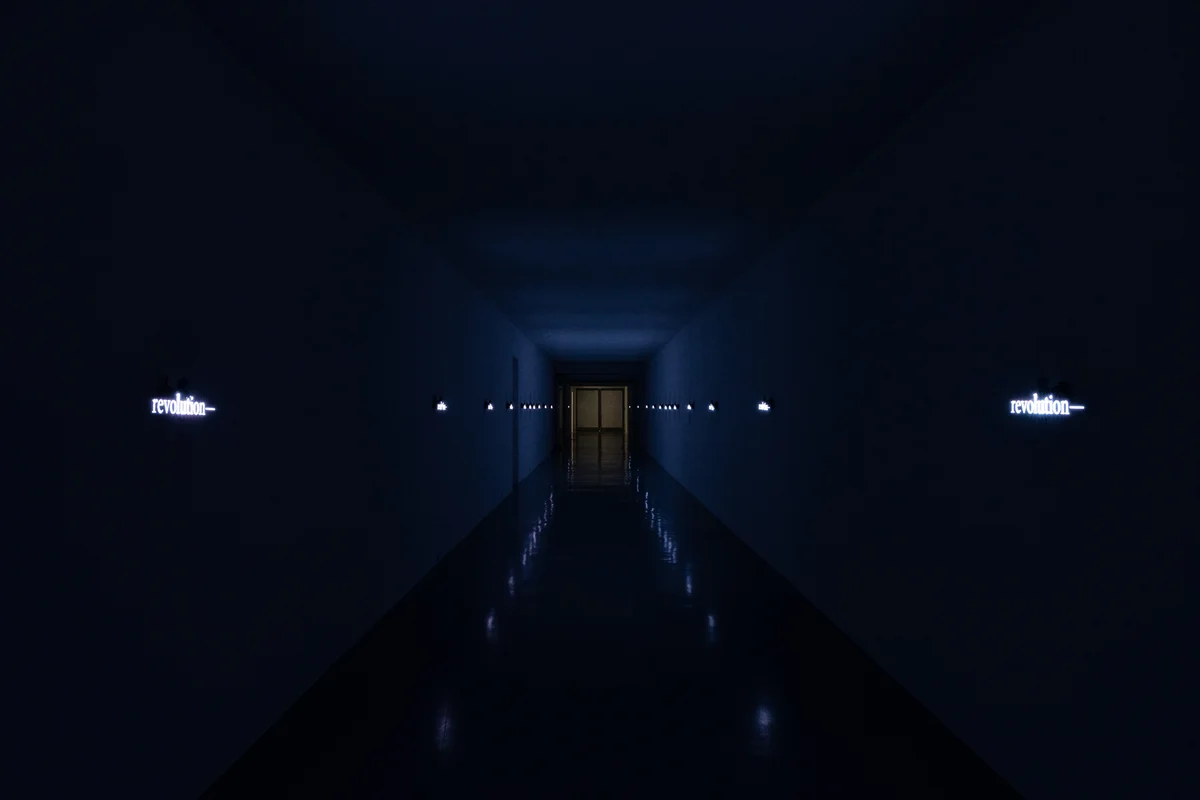
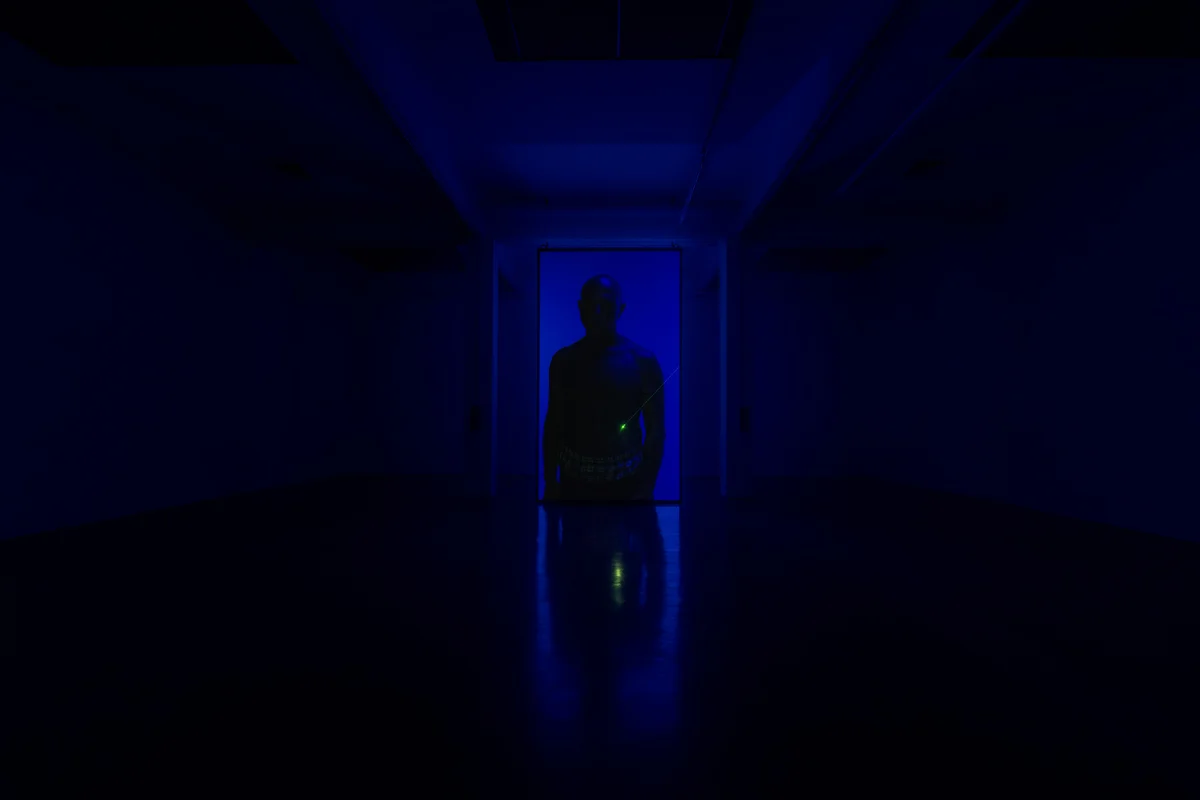
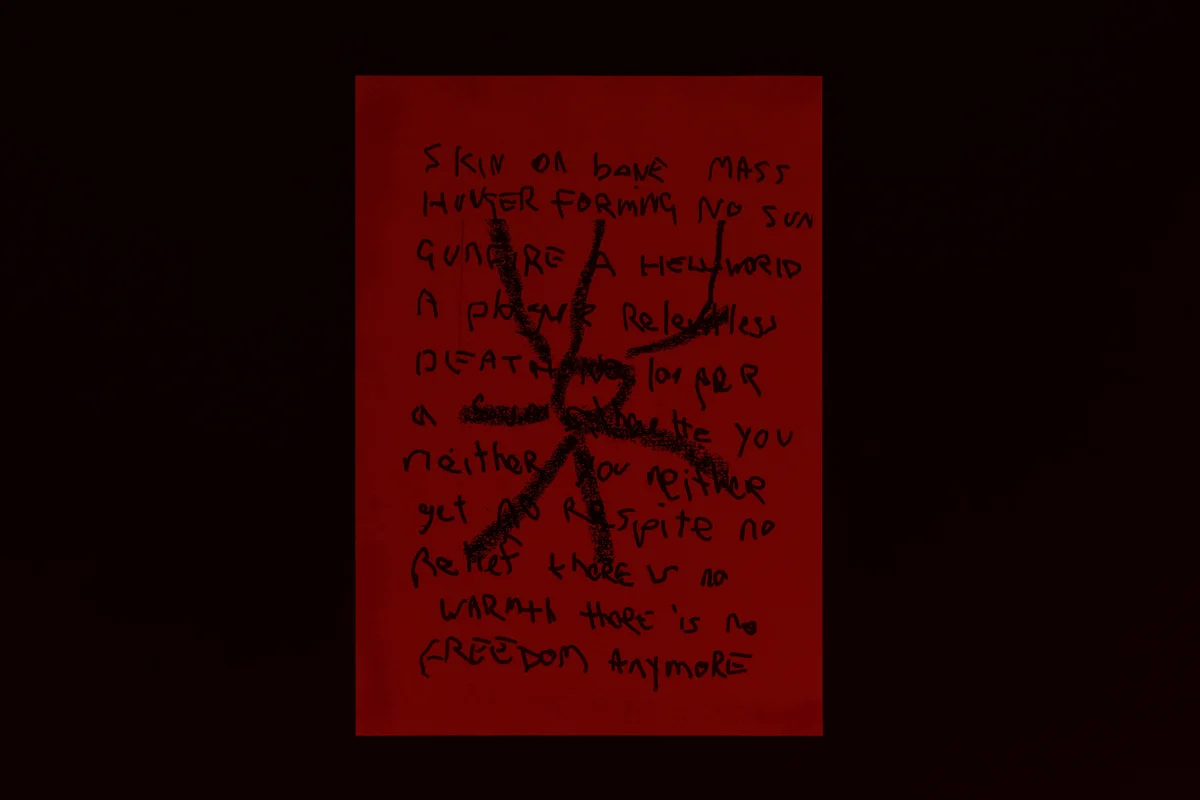
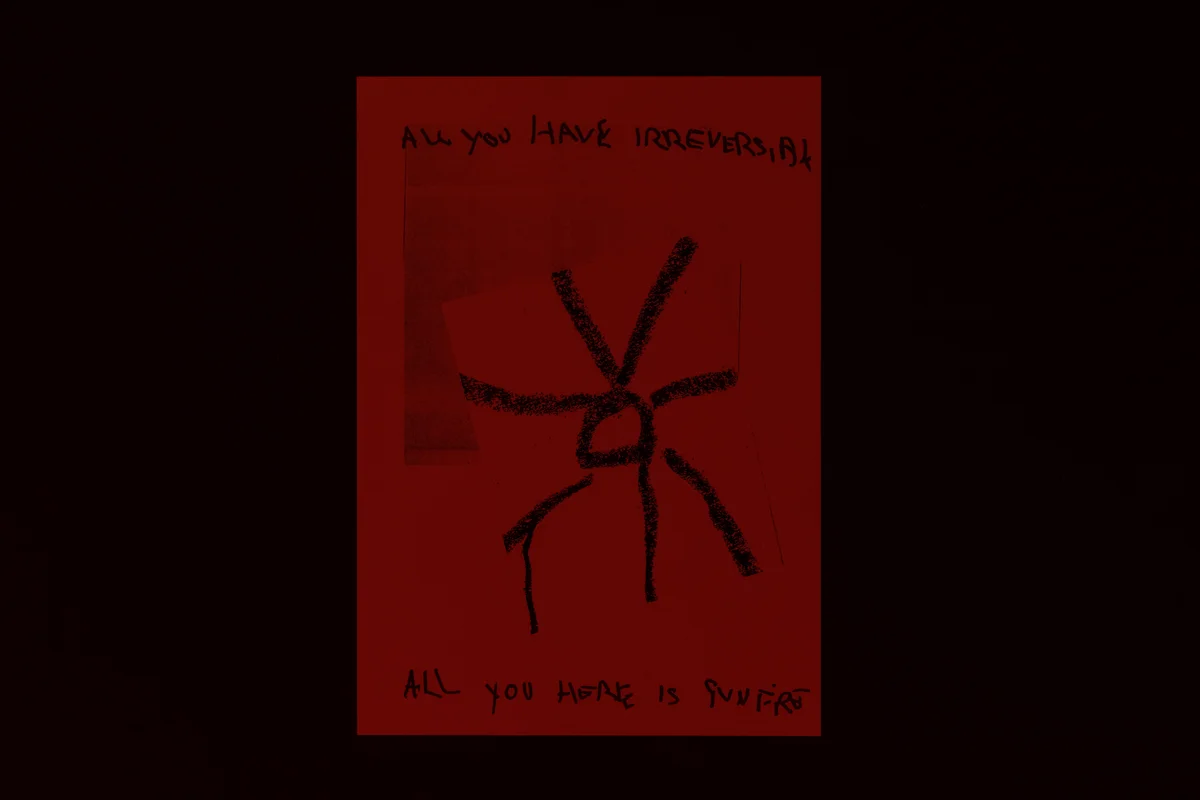
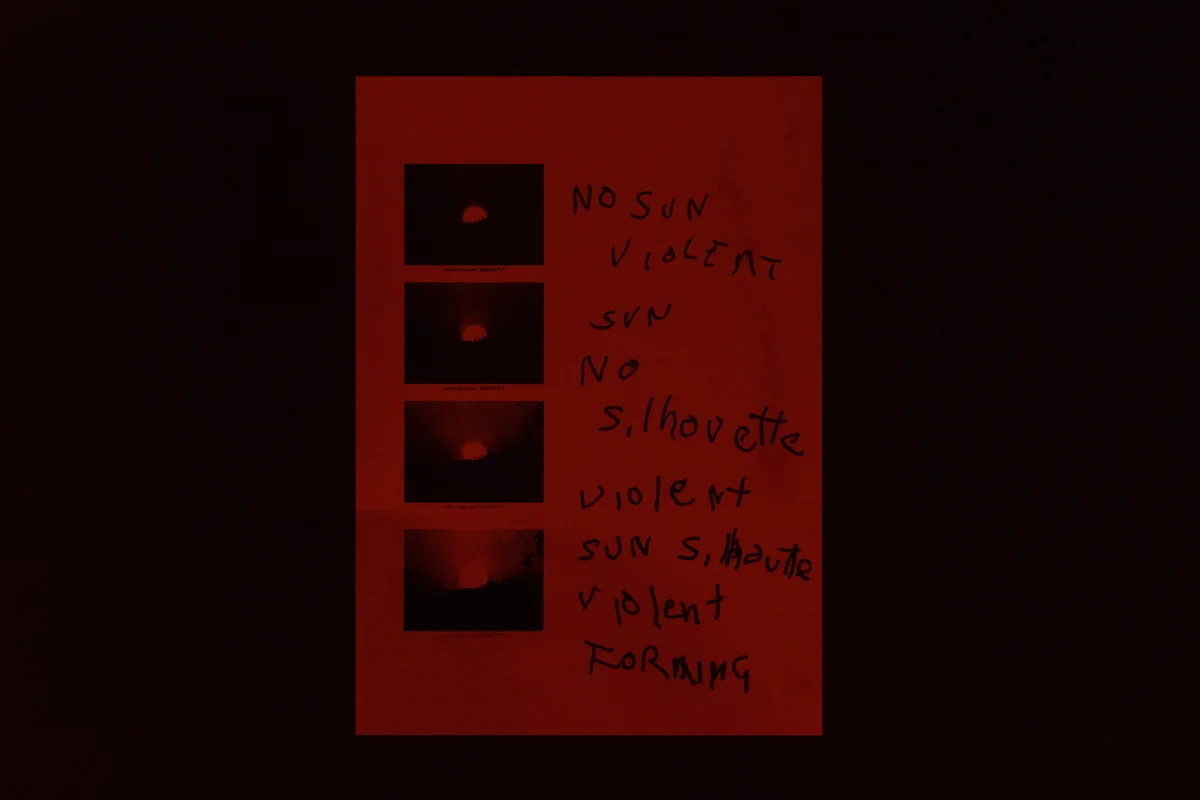
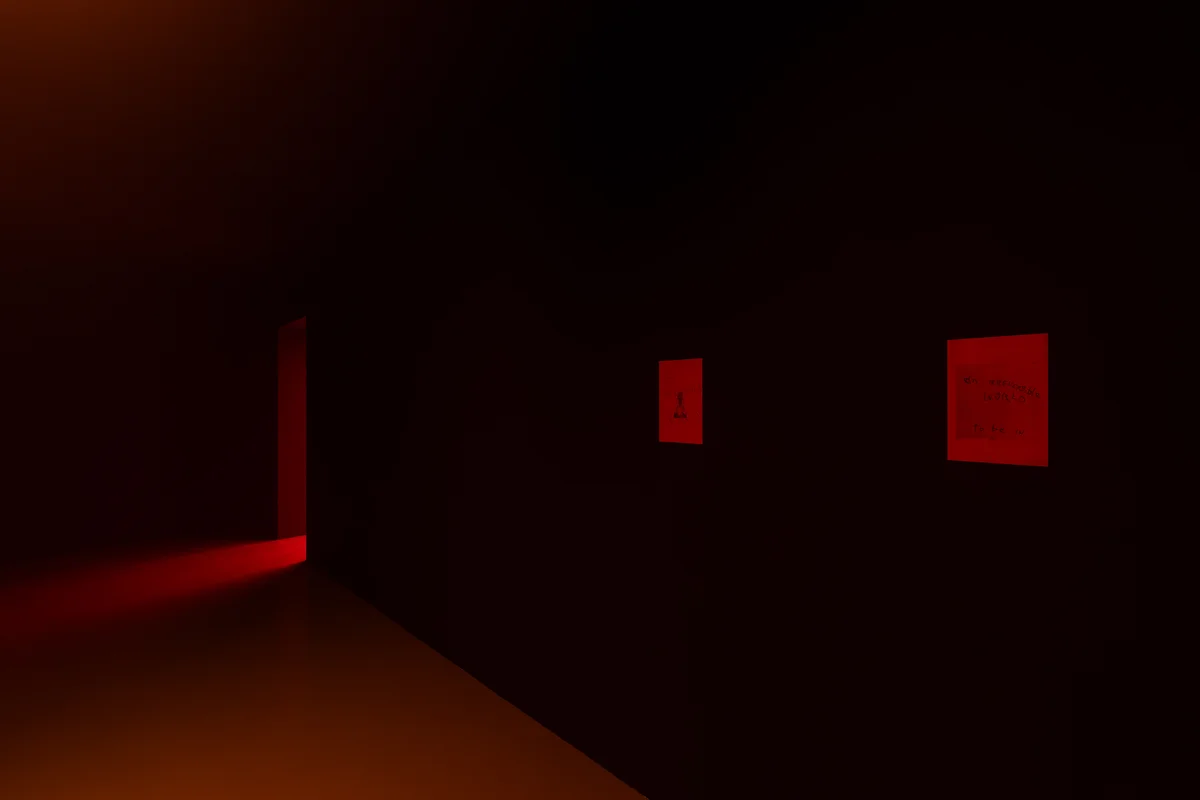
A fifty-meter tunnel, suggesting depth and passage inward, serves as the prologue that reorganizes perception, position, and intensity: Minimum World. Here, a poem is fractured into twenty-four flickering holograms. As the corridor extends, this “minimized world” evaporates; it refuses to hold. To be inside it is to be disoriented, caught in a lighting state that oscillates between the sterile glare of an MRI scan and the icy blue of an X-ray. It feels almost honest, even direct, but truth slips away as the architecture compresses the very language of the poem. GUN FIRE. extreme HUNGER. violent sun silhouettes. These are no longer just words; they are stroboscopic fragments of a necropolitical reality that transcends the merely transpoetic. By weaponizing this architectural flow and synthetic light, Staff does not conceal the environment, they disperse it. It is a site-specific subversion that exposes the violent registers of institutional discipline: an evaporating world where the only thing that remains is the systemic pressure on the body.
Our world. A minimum world. A world consenting to witness war crimes on an unimaginable scale, broadcast across every screen, every device. Durchdringung illuminates this inherited condition. It offers no resolution, only a cold recognition: that every act of exposure participates in a history of governance and violence. No light is neutral. No lens is innocent. What remains is a single, sharp question: how to reclaim opacity?
2. Bordello Red: Skeleton, 2025
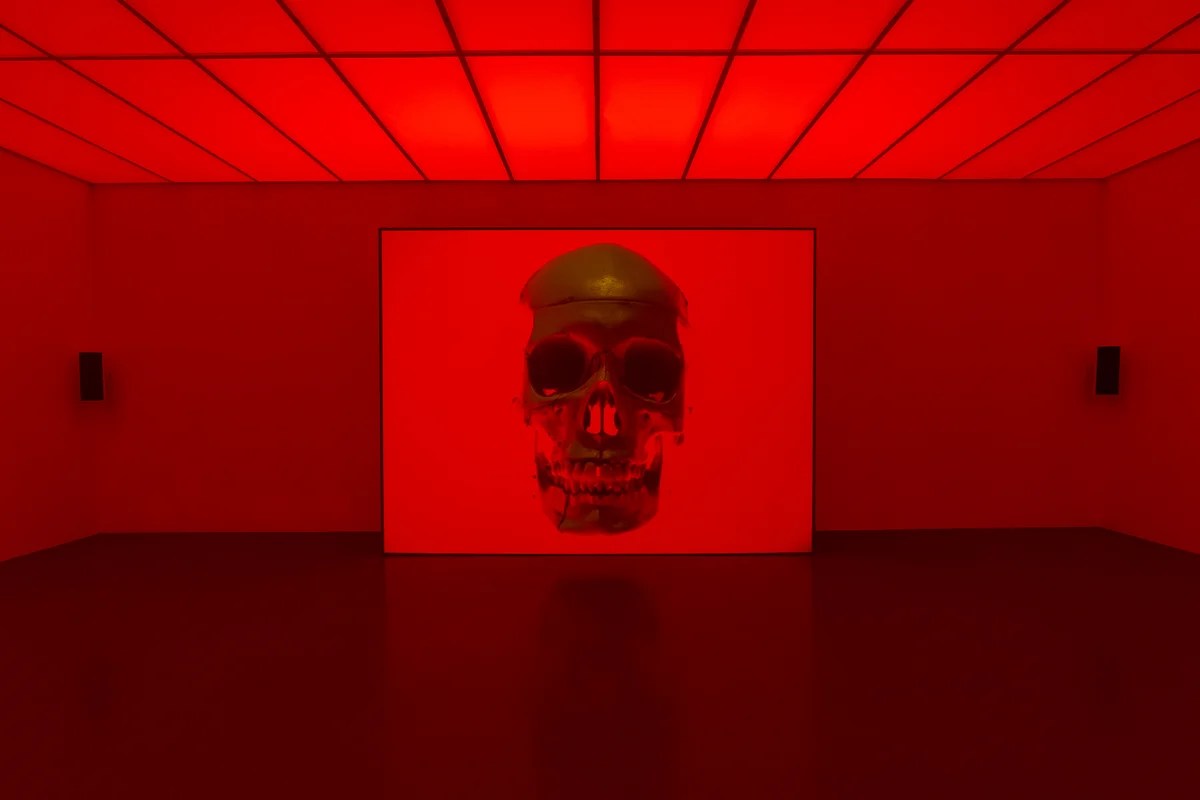
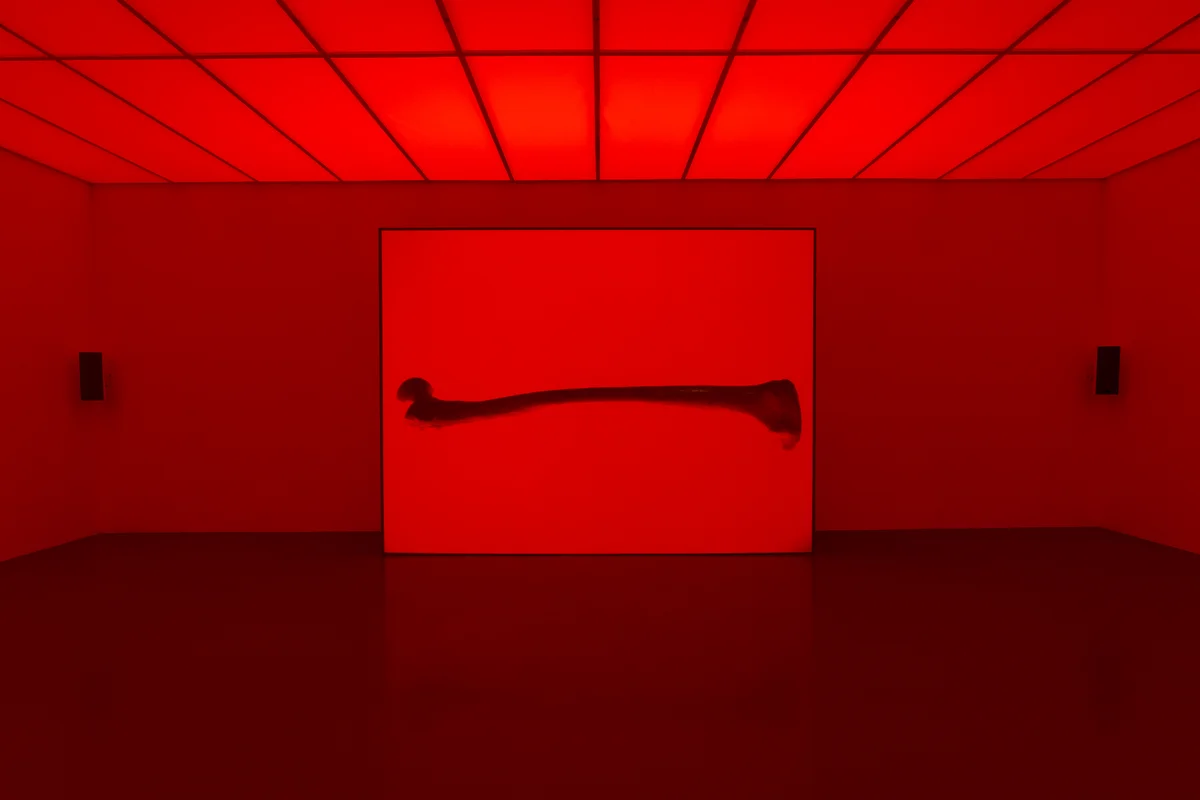
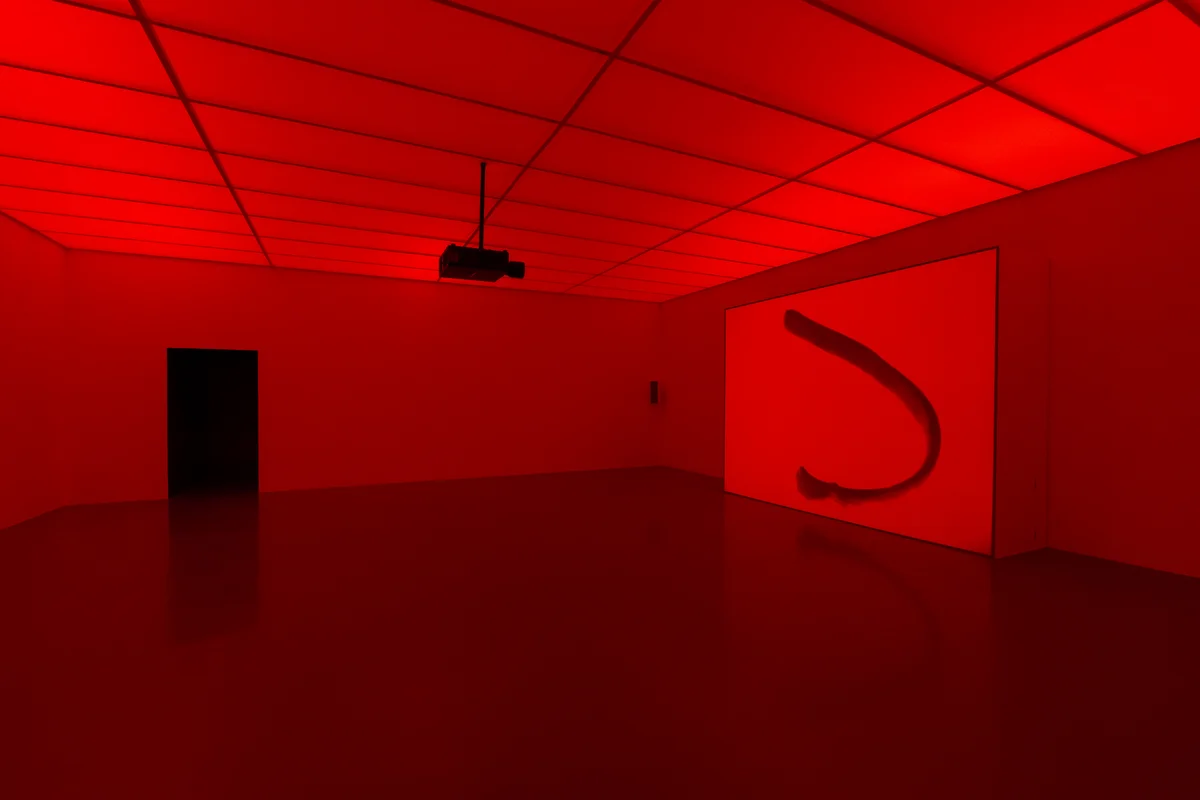
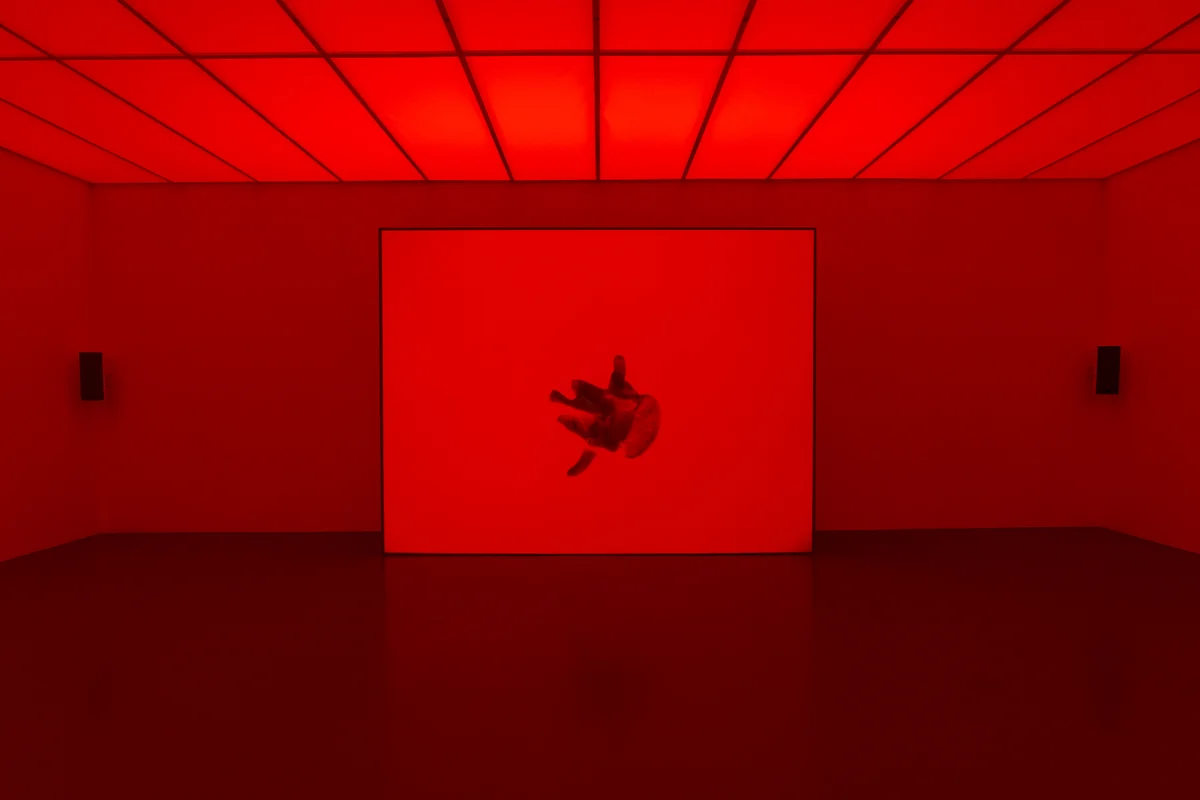
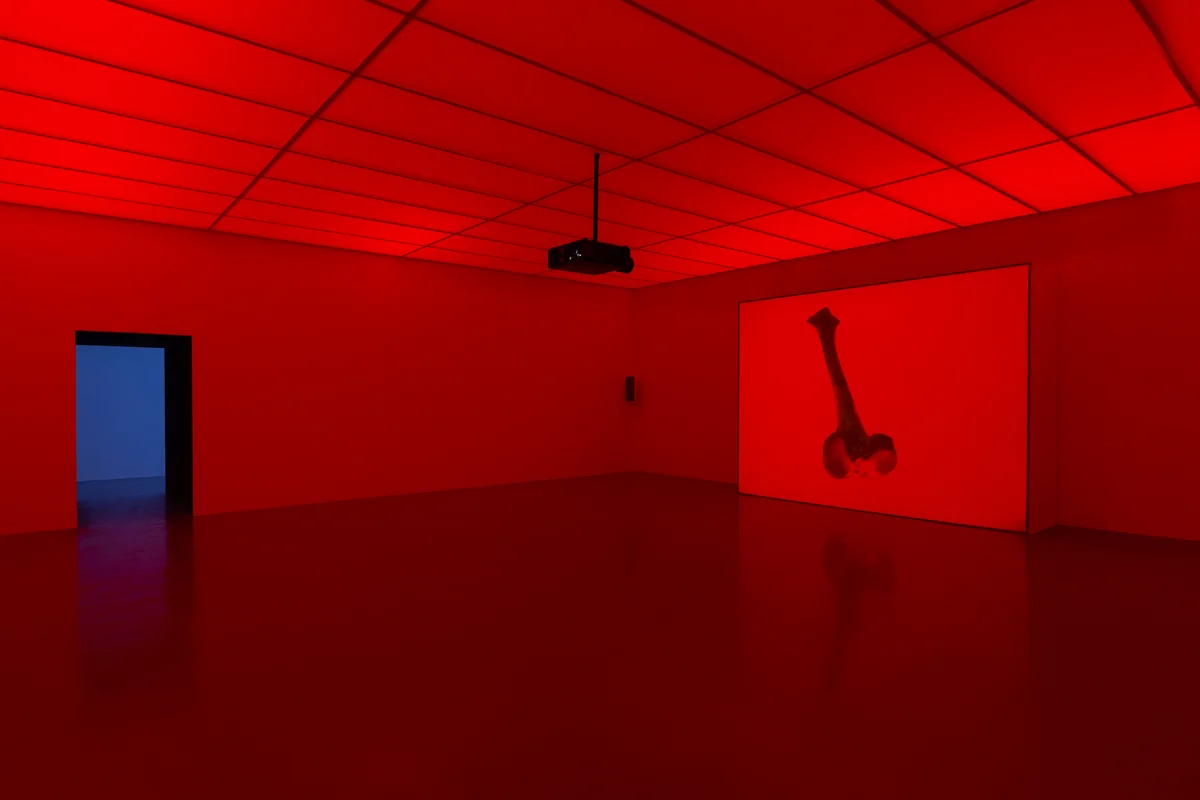
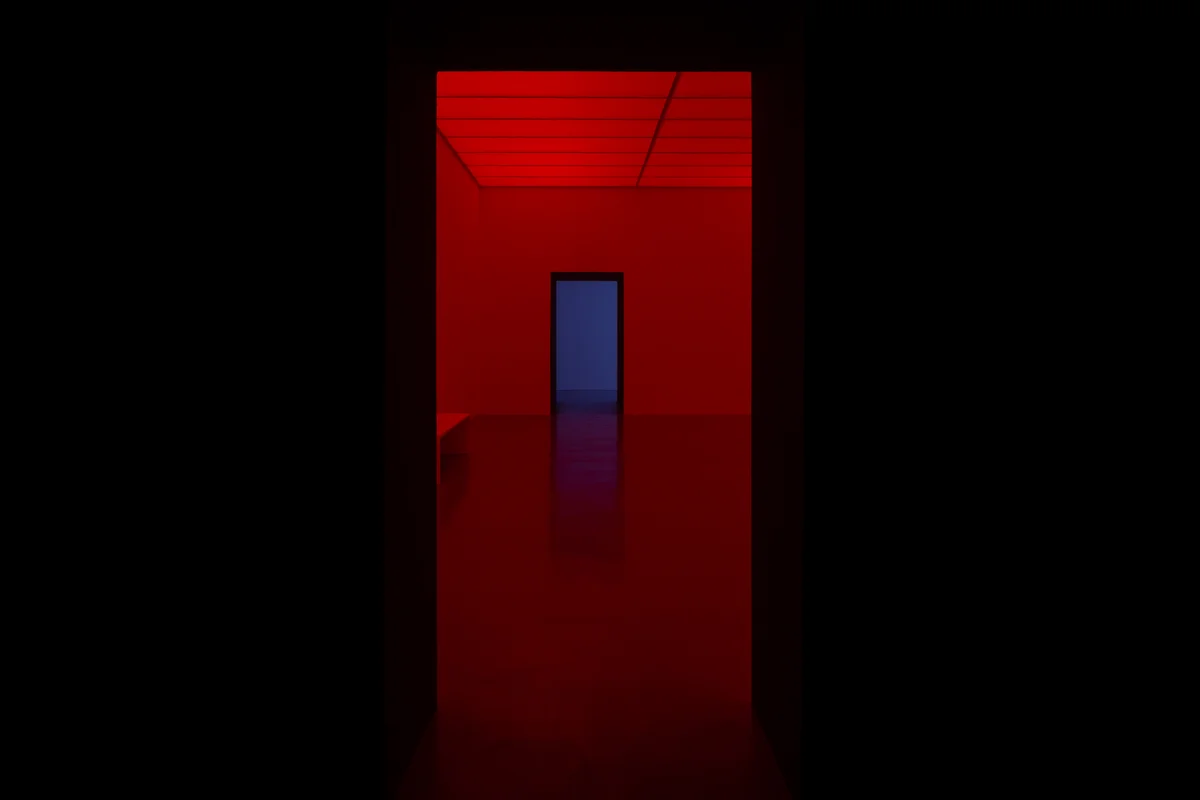
This is a red zone, a space where human bones projected one by one on the screen meet human institutions. Amongst other bones, a skull appears, serving as a memento mori, yet notably without accompanying vanitas elements. Here, boundaries blur: who is marking whom? How does a nonbinary body inscribe itself onto the skeleton, and how does the institution respond? This is a work against policing, against gender essentialism, against the assumption that bodies must fit fixed categories.
The skeleton is not binary. It holds traces of all identities, a shared substrate for personal and collective experience. Ideally, marks on these bones would not be just anatomical, they are social, affective, relational. Red signals alertness, visibility, and potential. It does not oppress; it illuminates.
I’ve noticed a queer couple sitting on a bench for an extended period of time, absorbed in the vibrancy of the red. The alert is palpable, tangible in feeling if not also in form. A granular soundtrack fortifies the image: industrial, mechanistic, collaged recordings of cleanings, radio transmissions, and various operations skitter across a thudding, heavy bass. Each sound follows the succession of bones, echoing the rhythm of identity, of bodies being disassembled.
This is a space of belonging, not exclusion. One bone at a time, the skeleton of our collective body revealing fragility, potential, and possibility. It may be reassembled, differently, by each observer, by each participant.
Remove the red, and only bones remain, unmarked, abstract, silent. But here, the red is on, and potential is real. It signals the emergence of a new body: a body that is nonbinary, fluid, relational, in dialogue with itself and fully recognized by an institution willing to listen, reflect, and adapt.
Bordello Red. Skeleton stages an invitation: to be recognized beyond the binary, to attune to the granular, industrial rhythm of bones, to interrogate belonging, and to speculate on bodies and institutions as mutually constitutive.
3. Acid Yellow: Hormonal Fog, 2017–
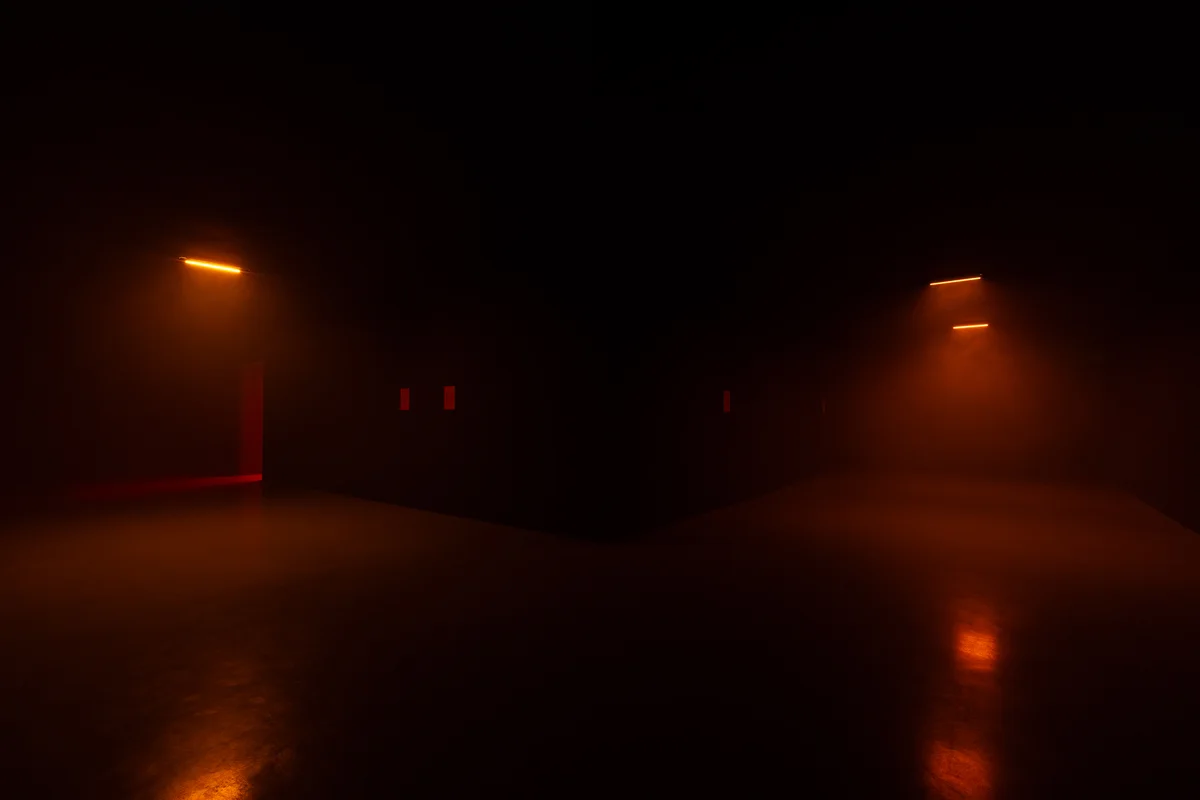
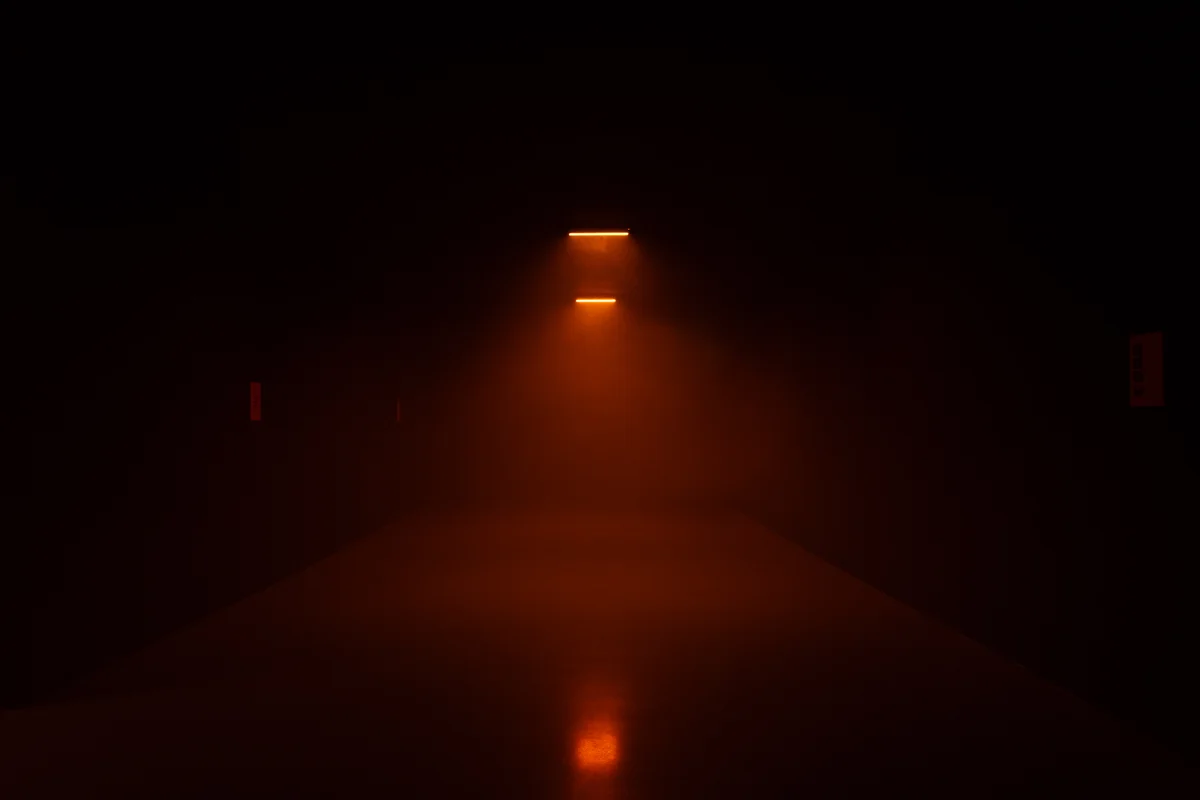
The corridor is low. Dim. Bending. Acid-yellow lines fracture the ceiling, glinting off shadowed walls. A hormonal fog, the latest site-specific collision between P. Staff and Candice Lin, drifts through the gloom. It quiets the testosterone found in many institutions, the corporate offices, the police stations, where it acts as a chemical marker for the “male.” Testosterone-inhibiting compounds are vaporized here. An aspiration for endocrinic balance. Visitors inhale it. Physiology entwined with architecture. Identity and power circulate in new ways. In this corridor, hormones are political. Perception is resistance. Rigid binaries dissolve. What remains is a liminal zone: gender, embodiment, and possibility, not dictated, but discovered.
4. Midnight Blue and Laser Green: Penetration, 2025
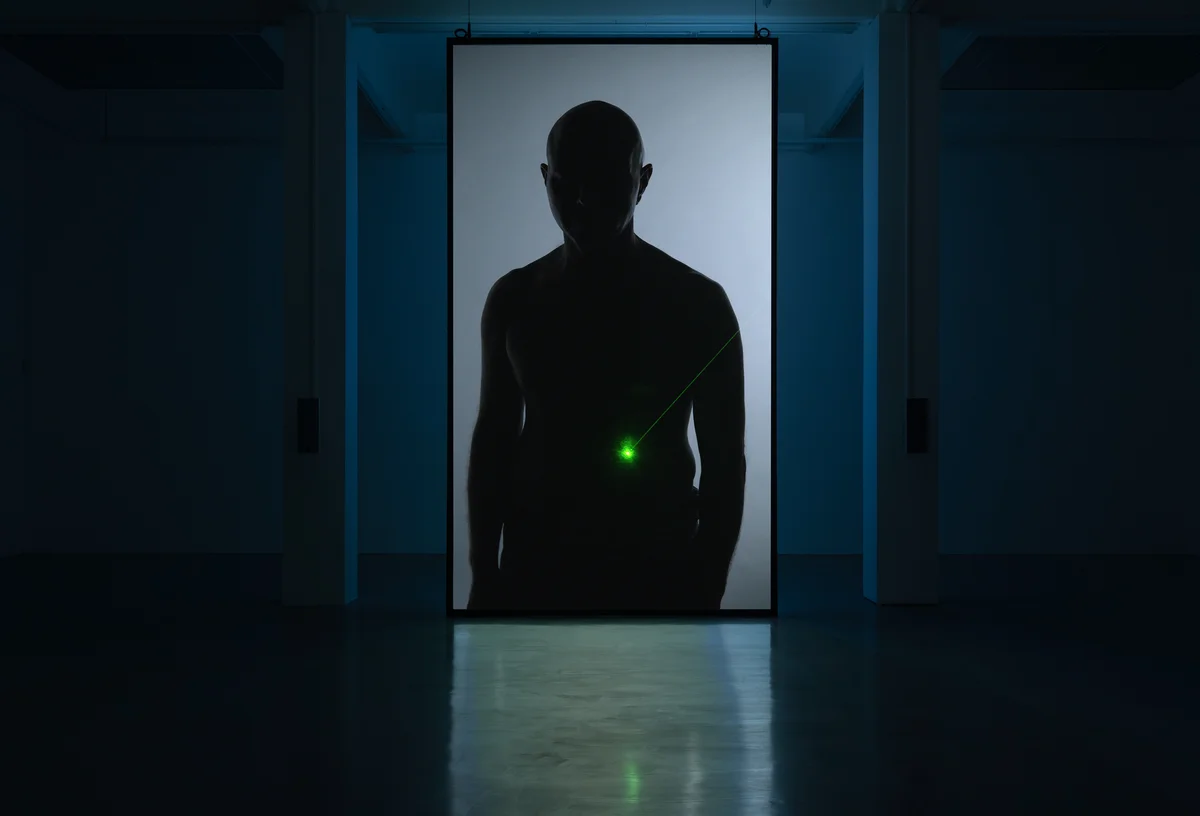
Ultimately, the spatial choreography of the exhibition functions as a slow-motion dissection of agency. After enduring the artificial, lowered ceilings of the earlier rooms, a physical compression that mimics the claustrophobia of a body under clinical scrutiny, we are suddenly released into the full, true volume of the institution. Here, the final room hosts the only complete figure in the exhibition; everywhere else, the “body” exists only as fragments of bone or skeletal suggestions.
Before its appearance at Bonner Kunstverein, the installation was installed at David Zwirner gallery’s 69th Street townhouse in New York, where Penetration functioned as a spectral architectural haunting; the projection spilled over a three-story staircase, fracturing the male coded figure across the vertical void of the residence. This domestic-turned-commercial setting allowed the “institutional steps” to both negate the body and provide it with a unique, cascading spectacle, where the image was woven into the very fabric of a private home turned blue-chip contemporary art gallery.
At Bonner Kunstverein, however, the work shifts toward a Herzogian logic, where the “spell” of the image is broken to reveal the raw mechanics of its creation. By pinning the projection to a massive, freestanding monolithic screen, the installation explicitly exposes the camera and the apparatus behind it, almost like a weapon. This reveal strips away the architectural camouflage of the gallery, forcing a confrontation with the cold, indifferent gaze of the technology itself, treating the act of penetration not as a haunting, but as a deliberate, mechanical extraction of the body.
4.1. The Living Corpse
This “maximal” man is a monolithic, faceless monument projected onto a freestanding screen, yet his size is a deceptive armor. His eyes are evacuated.
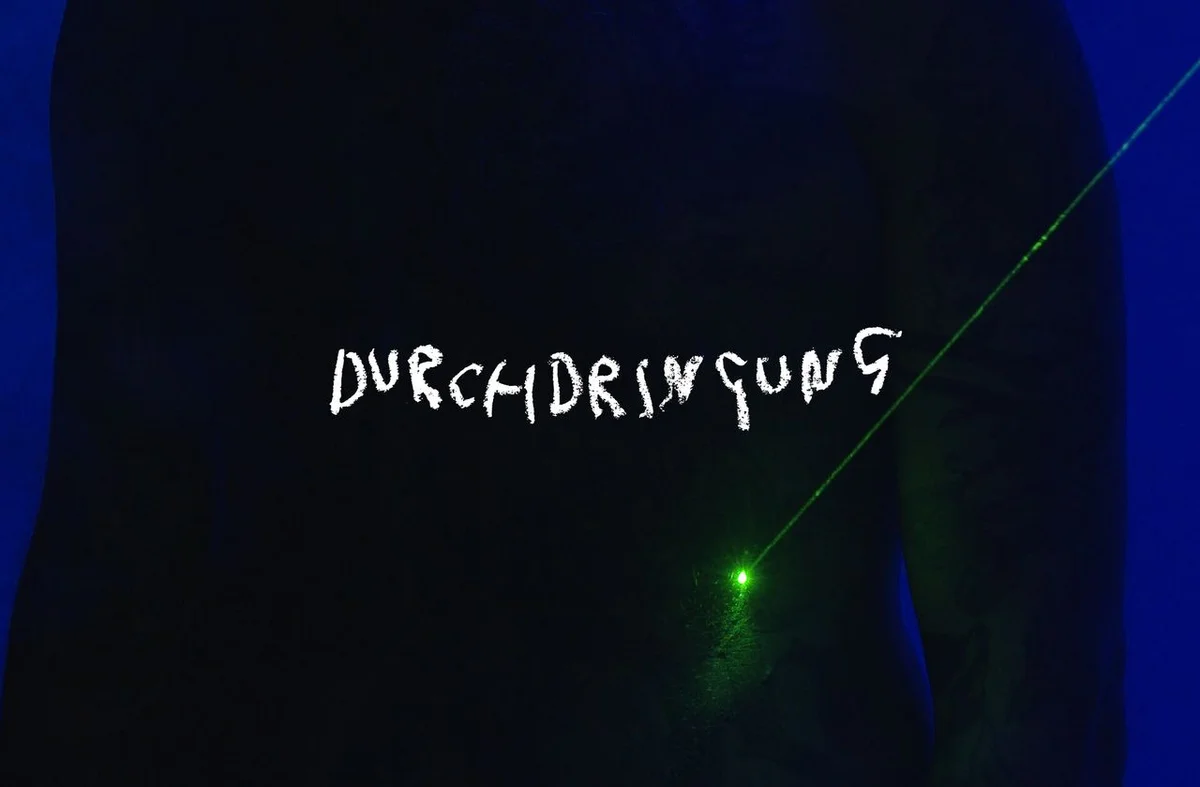
The punctum of this image is not found in the body’s massive scale, but in the superiority of a single green laser tag. This 532nm diode carries a tactical history of destruction, shifting the work into a different ordre de puissance, the color of night vision, high-precision targeting, and medical cauterization. It is a violent act reduced to a single, clickable coordinate.
Just as the musca depicta (depicted fly)[3] once broke the illusion of the Renaissance canvas to remind the viewer of their own mortality, this green laser acts as a digital parasite. It reminds me of the chilling narration of Vincent Price in the 1959 trailer for Return of the Fly: “The world cries out in terror… and the return of the fly, listen… turning the screen into a buzzing, creeping nightmare of terror.” In P. Staff’s world of minimized freedom, the “maximal” male body, without a gaze and unable to look back, is revealed as a “living corpse,” a hollow site of a return of the real. The subject is continuously inscribed by forces that have no single origine. As the screen buzzes with visceral sounds, the laser represents the minimalist perspective of the hunter, the doctor, the soldier. I am left to wonder: in an era of high-precision targeting, is the maximal body anything more than a target waiting for its inevitable, mechanical end?
5. Penetration: Entering and Being Entered
P. Staff’s Durchdringung at Bonner Kunstverein unfolds less as an exhibition than as an atmospheric condition. A somatic experience. Human bodies are subjected to regimes of permeability. Light leaks. Hormonal fog accumulates. Surfaces dissolve into gradients of chromatic intensity. Nothing stabilizes long enough to hold as an object. P. Staff destabilizes power and the classification that comes with it. They disrupt ways of seeing. They demonstrate counter-institutionalized cognition in action.
The show approaches, perversely, the limit case of Tractatus Logico-Philosophicus. Wittgenstein insists on the primacy of logical form. The sayable. P. Staff, by contrast, operates in the remainder: what resists formalization, what exceeds propositional capture. The exhibition does not argue. It saturates. Its “content,” if it can be called that, inheres in relations. In choreography. The slow violence of systems entering and reorganizing matter.
Staff performs a subtle critique: by marking the institution with their vision, they render it complicit. Yet the happening remains unmarked, slipping through authority, refusing codification. The institution is stage and subject. The viewer implicated less as reader than as body among bodies. Traversed by forces. Shown. Never fully said.
Decentered and disoriented. the institution is entered. The viewer is entered, inhibited. Power becomes impotent. Positioning becomes impossible. The exhibition is lived, absorbed, destabilized. Penetration is both conceptual and corporeal, a condition of exposure in which, this time nothing is fixed, everything is traversed, and all bodies, human, institutional, spectral, are implicated in an enactment of systemic critique that provokes unease.
[1] Mary Douglas, How Institutions Think (New York: Syracuse University Press, 1986).
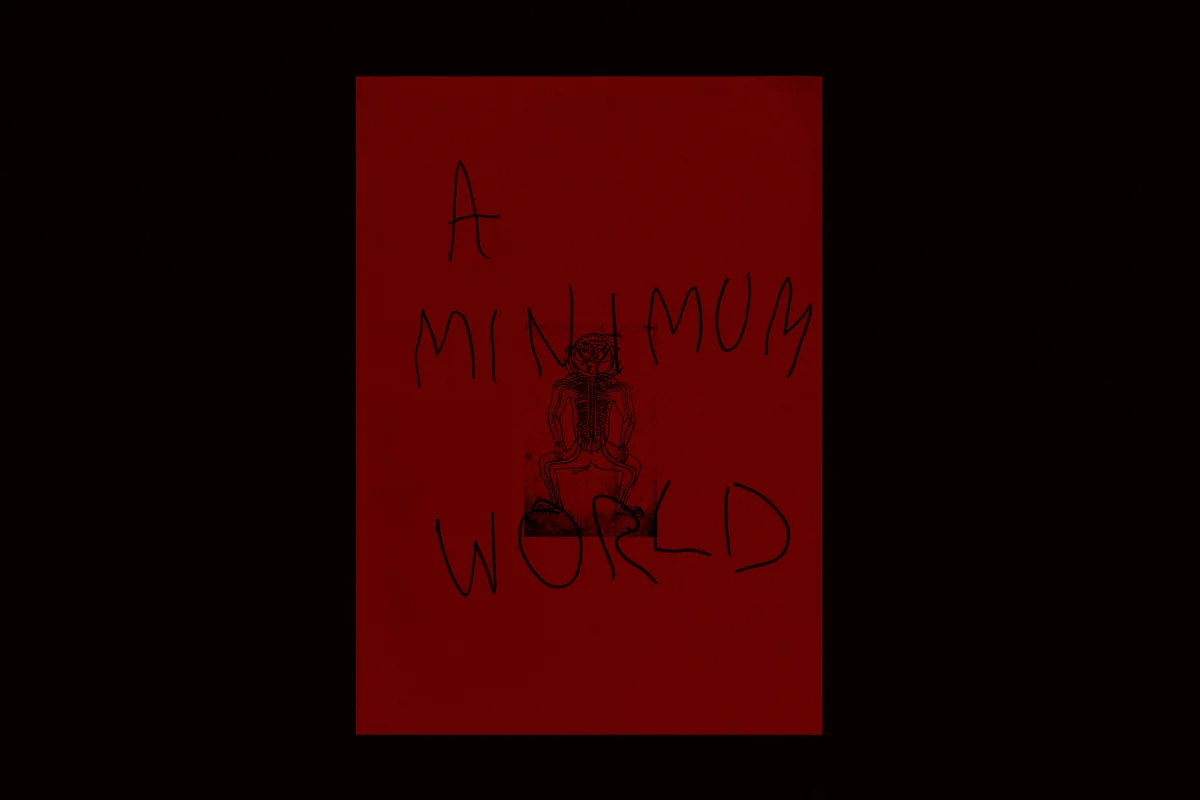
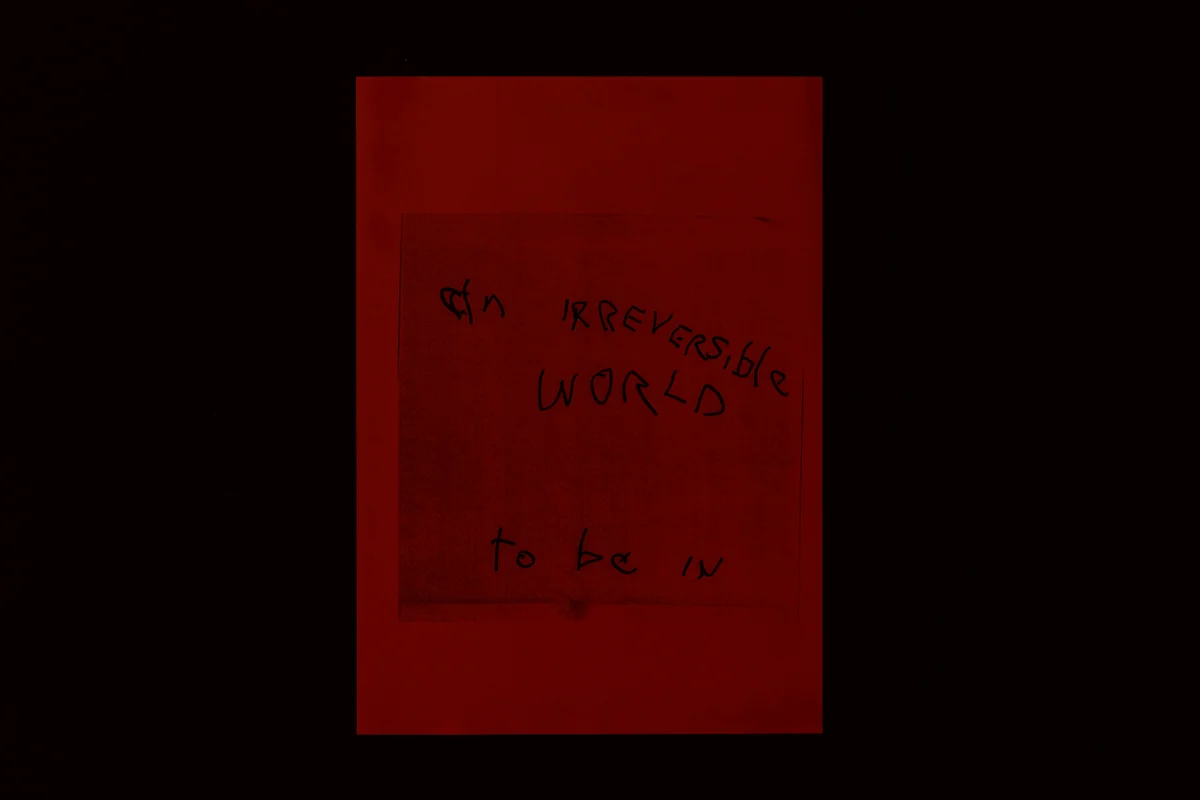
[2] On this occasion: a first collection. Staff’s poetry, entitled Minimum World, published now. Collating texts from 2018 to 2025, a ledger of seven years. The publication highlights a visual, concrete poetics. Experiments in typography. Obsessive linguistic tics. It is language as an architectural fragment; words not just read, but encountered.
[3] Peter Geimer, Mouches. Un portrait, trans. Laurent Cassagnau (Paris: Éditions Macula, 2026)
Artist: P. Staff
Exhibition Title: Durchdringung
Curated by: Viktor Neumann
Venue: Bonner Kunstverein
Place (Country/Location): Bonn, Germany
Dates: 11.10.2025 – 08.03.2026
Photos: Niklas Goldbach