
Vera Zalutskaya
This interview took place as a follow-up to the Minna Tarkka Lectures 2025 produced by the Helsinki-based Media Culture and Art Agency M-Cult. Inspired by the legacy of media art pioneer and M-Cult’s founder Minna Tarkka (1960–2023), this series continues her commitment to critical experimentation and socially-engaged practices rooted in a deep commitment to hospitality and the intersections of political and technological development.
Responding to pressures within contemporary social and cultural environments impacted by digital, networked, and so-called intelligent technologies, the second edition of the Lectures, named Collective Imagination in the Era of Optimisation, asked: What forms of togetherness and resistance surface through media within the context of artistic practices today? How can artists, communities, and technologies rewire shared futures when the dominant narratives emphasise acceleration and optimisation?
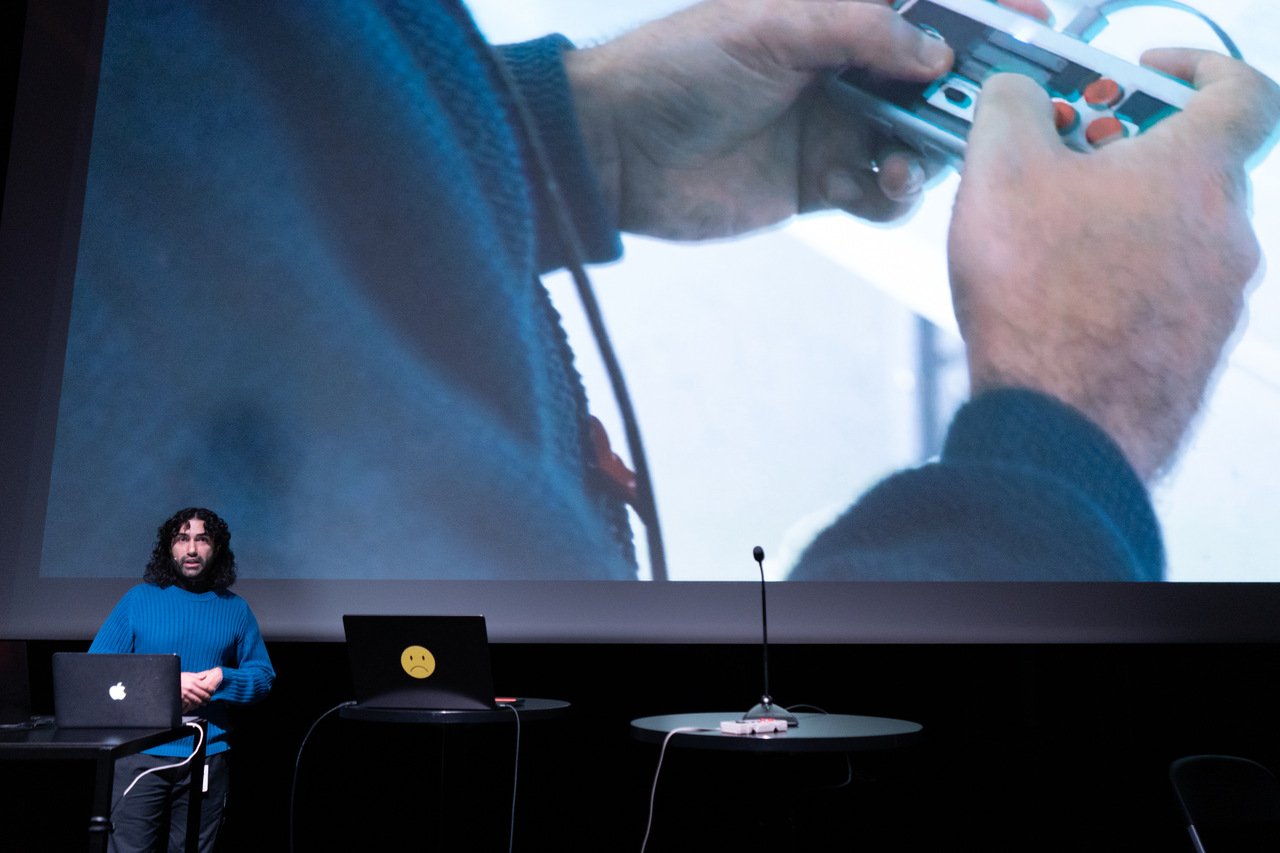
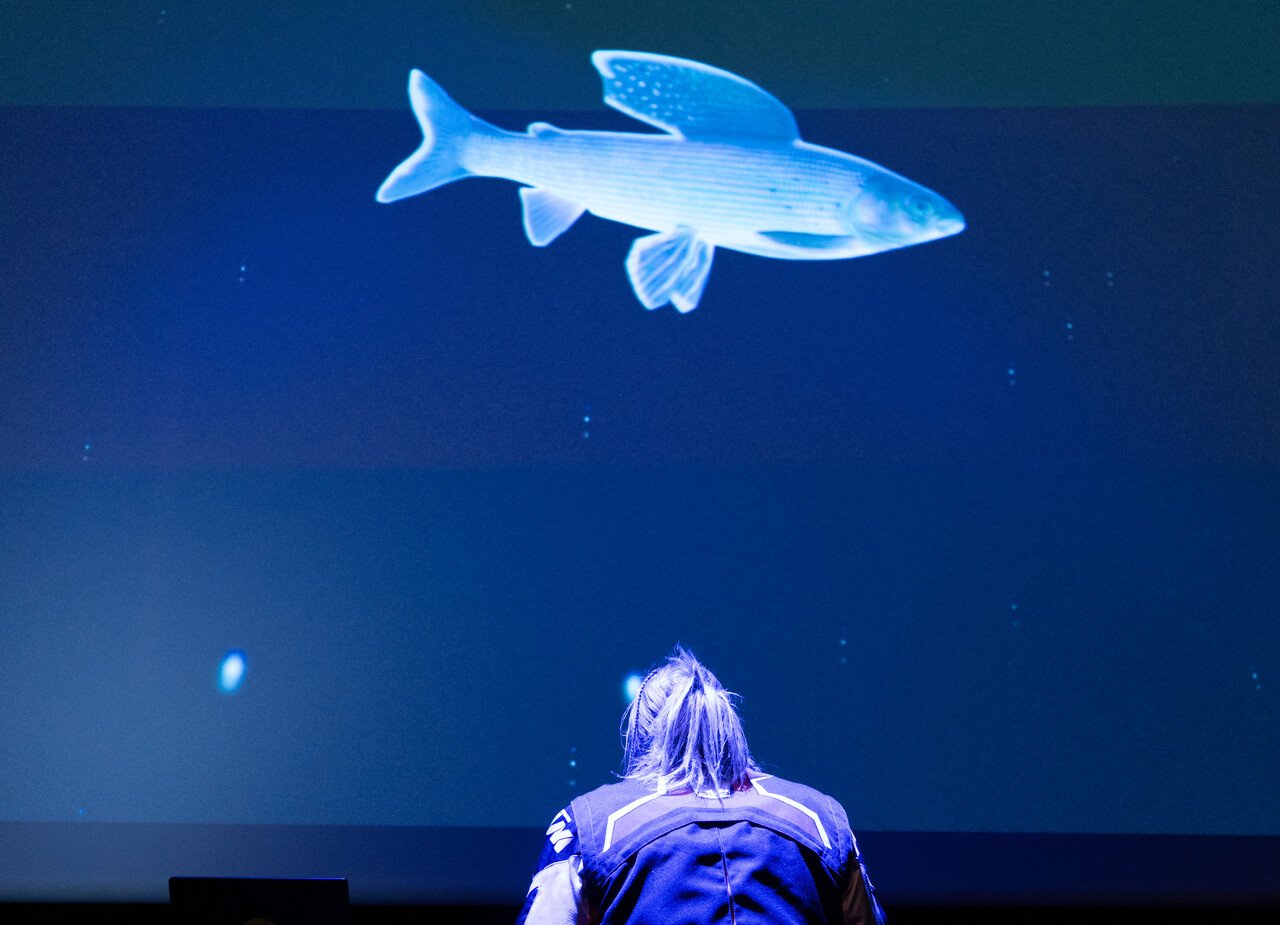
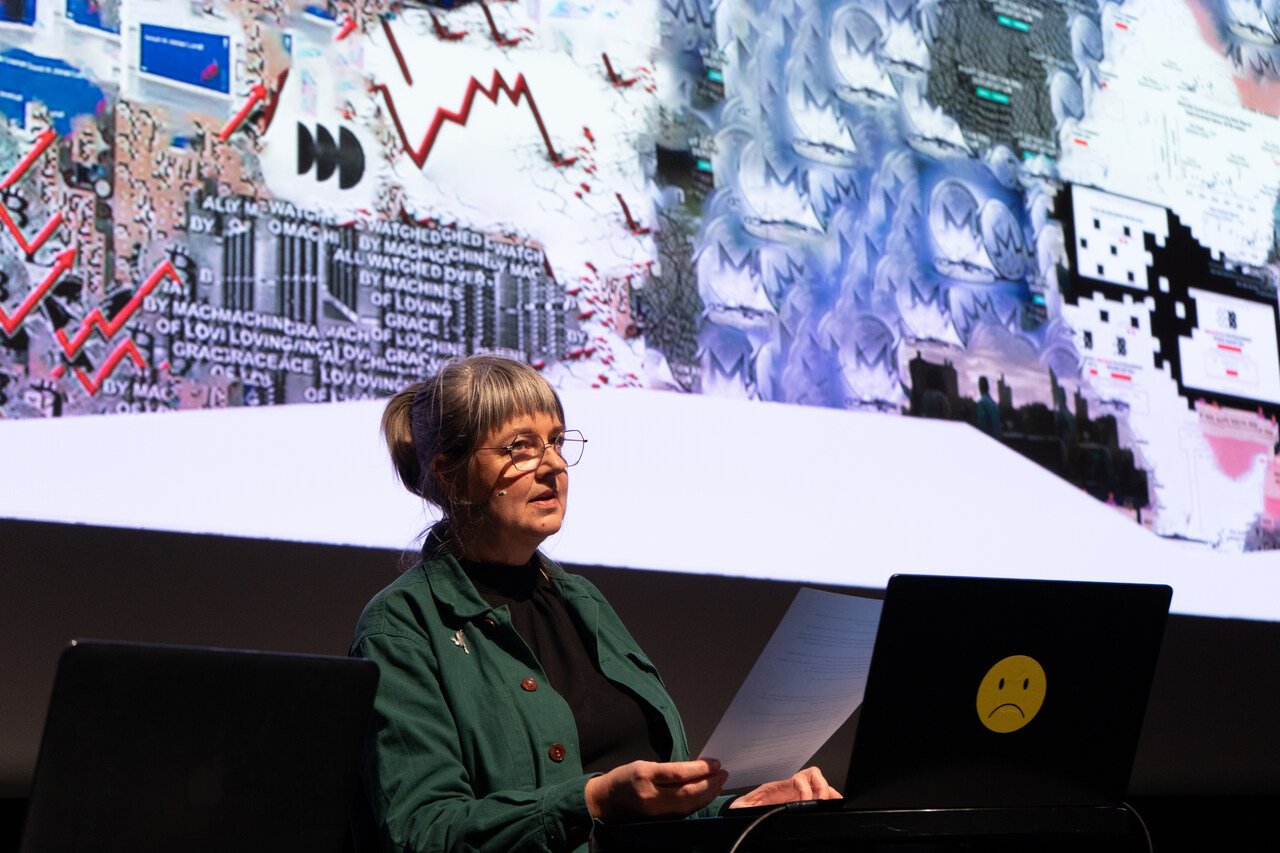
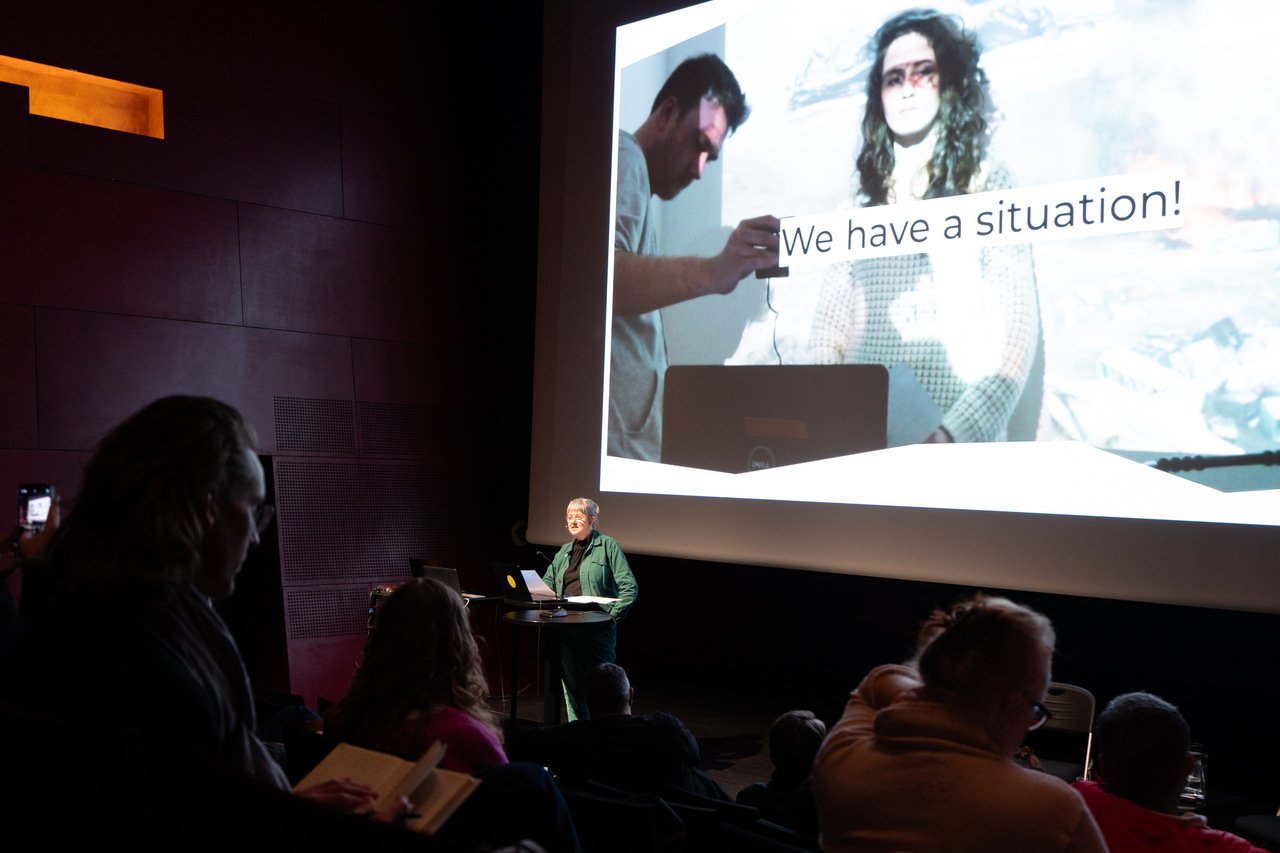
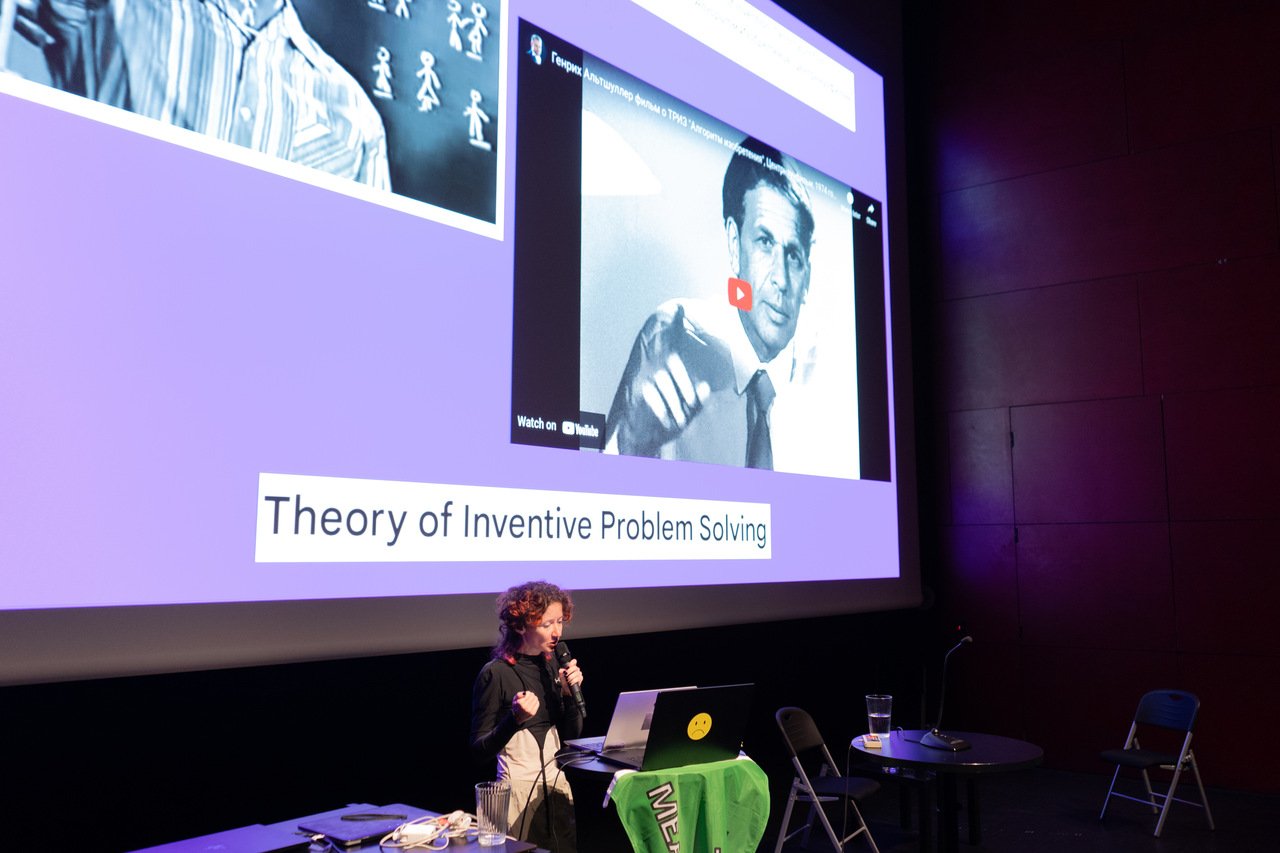
Among the invited guests that are challenging technological power while cultivating emerging forms of collectivity was the artist collective eeefff, formed by artist and fiction writer Dzina Zhuk and artist and computer scientist Kolja Spesivtsev. Their contribution included the lecture Scenes of Algosomatics, Educational Fiction, Partisan Technologies as well as the workshop Algosomatic Session. In this interview, we are revealing the working methodologies of eeefff, and discussing their various practices exploring the poetics and politics of new technologies.
Vera Zalutskaya: Dzina, Kolja, you describe eeefff as Minsk–Berlin based collective. How does that geography (and moving between contexts) shape your practice?
eeefff: We usually write Minsk-Berlin in brackets, as it indicates that we are from Minsk, based in Berlin. Obviously, as you know, going back to Minsk is not an option right now, five years after the revolution in Belarus and the full-scale russian invasion of Ukraine in 2022. We are currently trying to bring our approaches and methods that were developed previously with us into a new constellation in Berlin. It is important for us to have Minsk mentioned, as it indicates the uneasy temporality of the revolution. This is like a leap into the future, insisting that there is this possibility to go back.
VZ: I always had the feeling that your practice, despite being digital and algorithmically-oriented, is strongly connected with context and the specific tensions which are happening in our complicated geography. Did the transfer to Berlin influence your practice, how you shape and communicate it?
eeefff: It’s a complex question, we’re still analyzing it. On the one hand, in Berlin it’s much easier to find other artists who are working within the techno-social landscape. On the other hand, our approach may seem a bit strange to some people, because our work with technologies is not about some fancy interfaces, it’s much more about creating relationships within these technological fields. Because we think the distribution of knowledge, of affect, is very geographically dependent. When we are thinking about situated actions, we are thinking about them not from the side of aesthetics, but more from a political conjunction. It’s also relevant when we’re talking about collective actions related to automation or algorithms, which are some of our main interests.
Due to the abstract nature of the entities we are dealing with, in many situations, an explanation is needed. When we are dealing for example with algo-aided situations, or relations, which are totally unevenly distributed around the globe, there is also a need for an explanatory or educational moment. Sometimes we are doing introductory talks or we have to reveal some things, or help to activate memory or do some tricks to bring people to the same page, and then we can act together with this as a background.
VZ: Perhaps it is a perfect moment for a little introduction to your practice and interests in general.
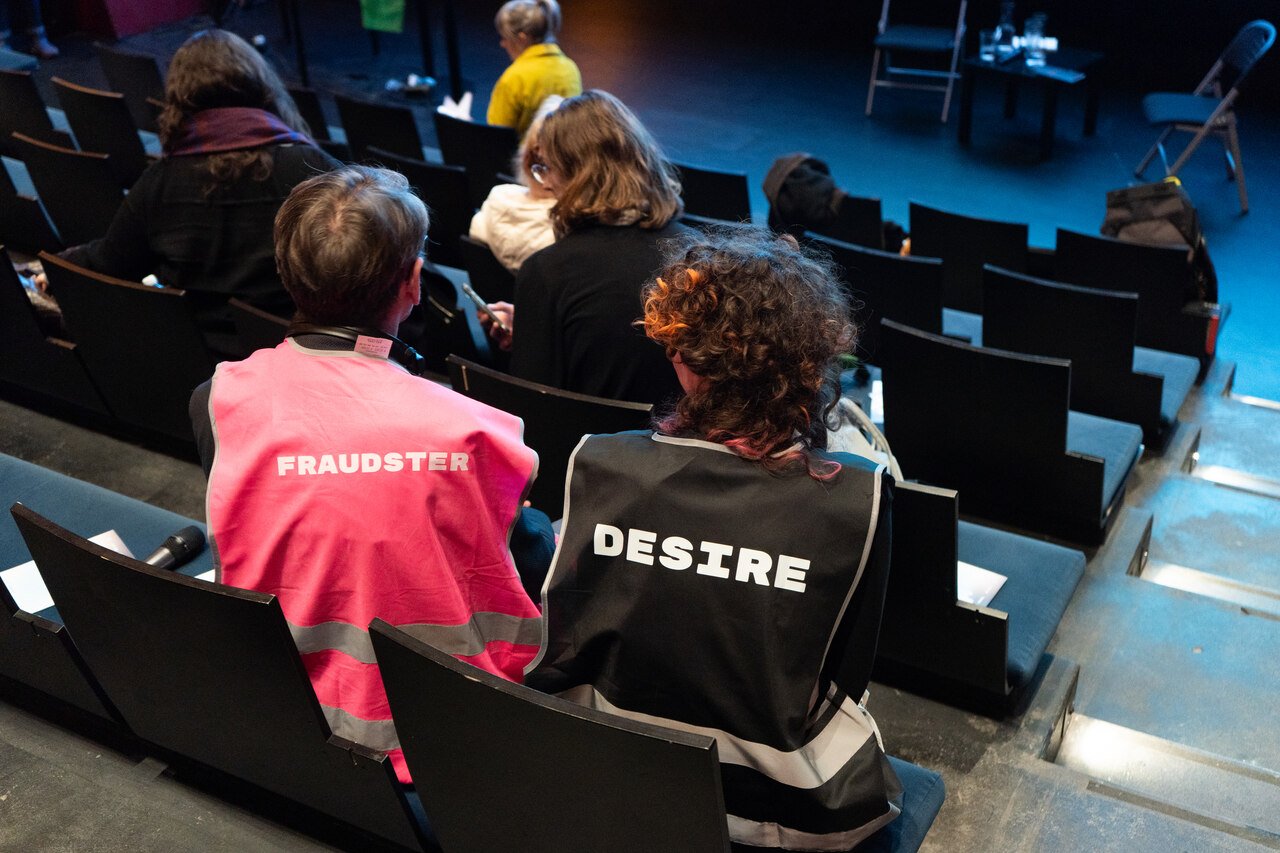
eeefff: Sure! We work a lot with emotional and affective sides of computation, or what is called new technologies. We often explore tensions between the algorithmic and the sensorial, between something that is known as stable, as, for example, algorithms or infrastructures, and something which is more affective, or more fragile, like desire.
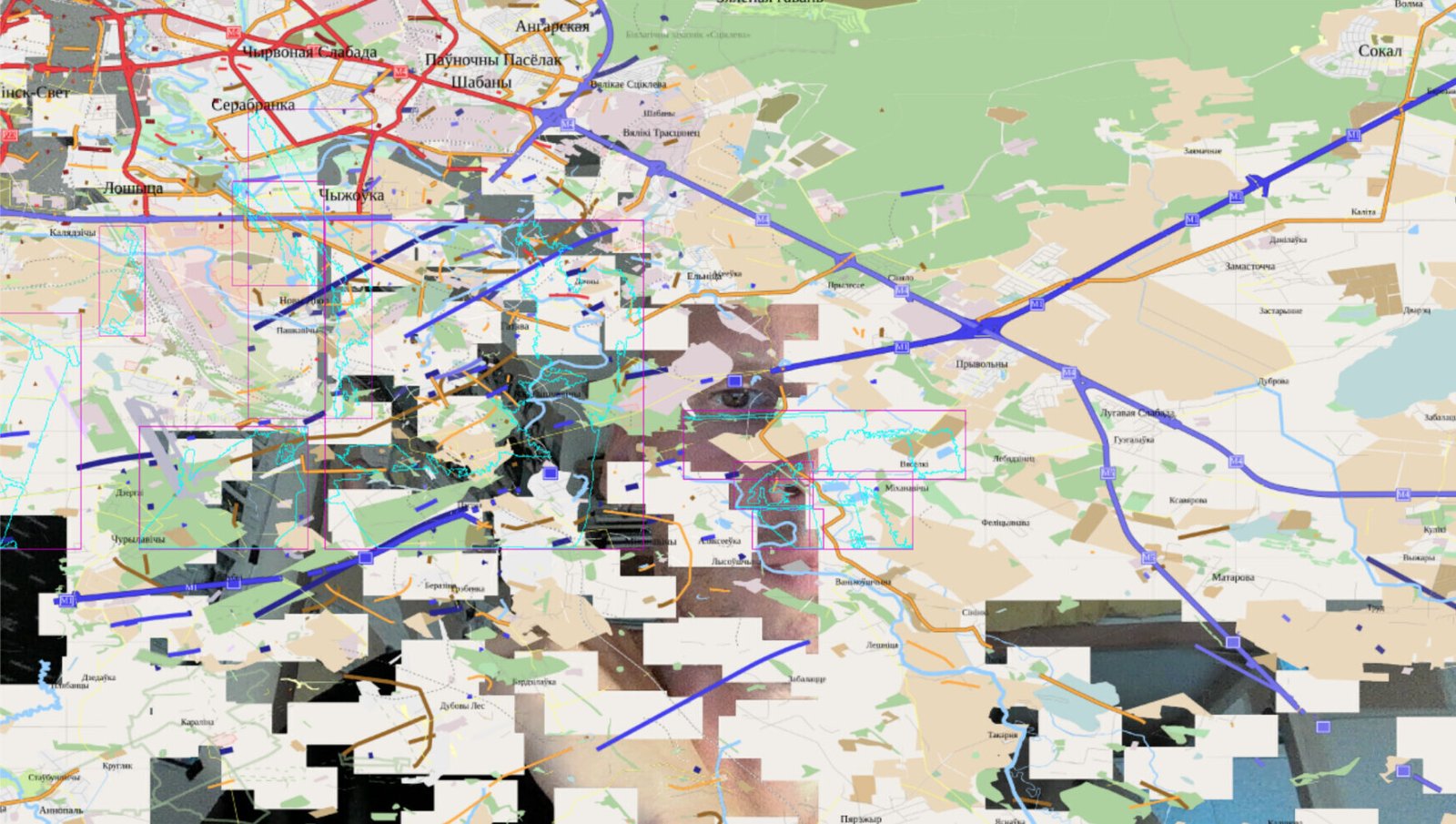
For us it’s super important to work with regimes of visibility, or non-visibility, or possibilities and not possibilities, chosen or forced transitions. Our practice embraces human bodies as well as economic entities; sometimes we are trying to analyse a gradient of labor across regions. Outsourcing is also a theme of our artistic and solidarity practices.
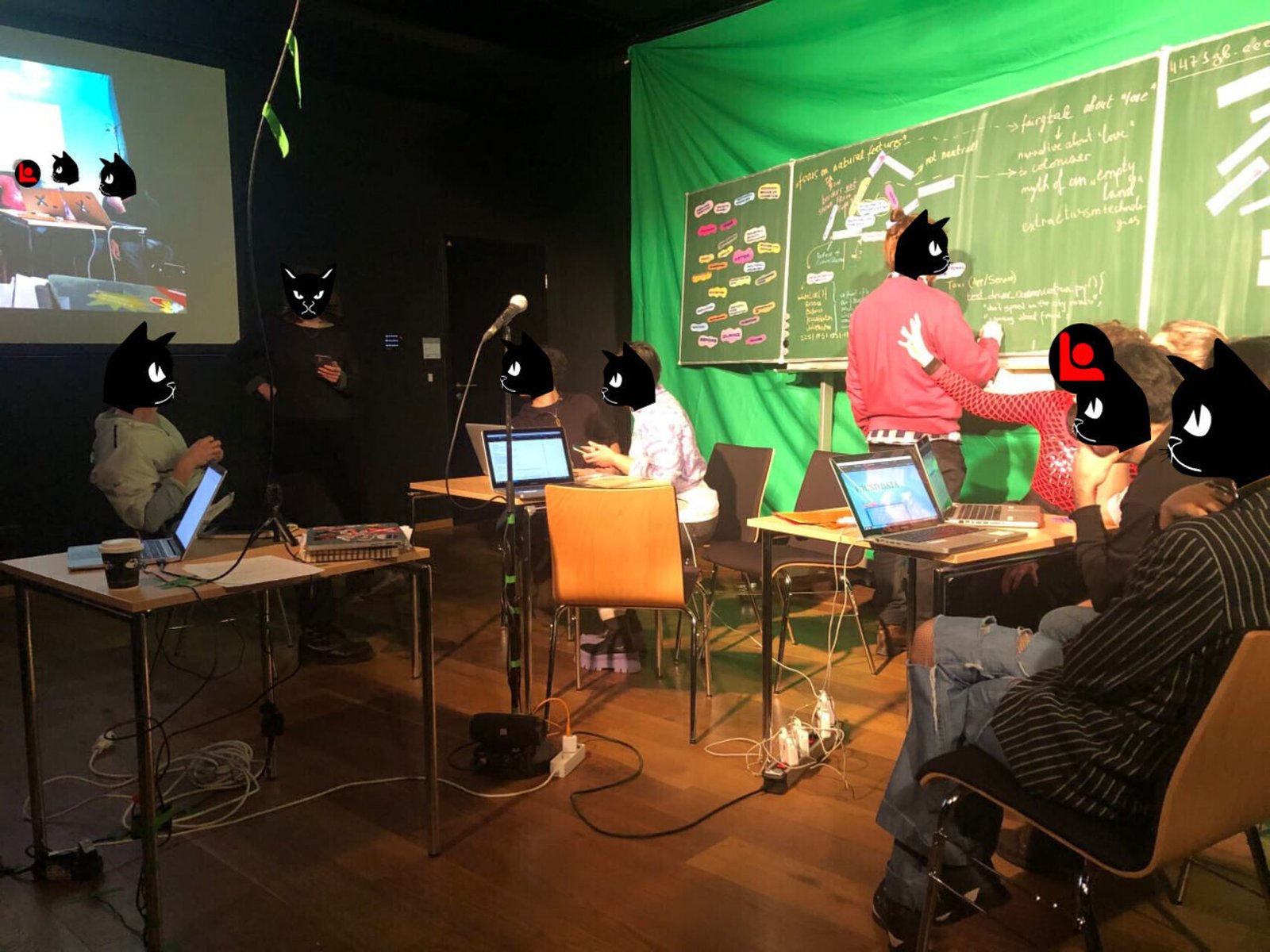
Our works exist in different forms: installations, performances, moving images, walks, interventions, hacking, made-up environments. Very often we are focusing on creating social situations, or places for collective activities to happen. Collectivity strongly informs our practices and we rather work collectively than individually. We are regularly creating made-up temporary collectives, with various geographies and choreographies.
VZ: What is the difference between participatory formats and other forms of your practice? How do you decide which one is more optimal in a given context?
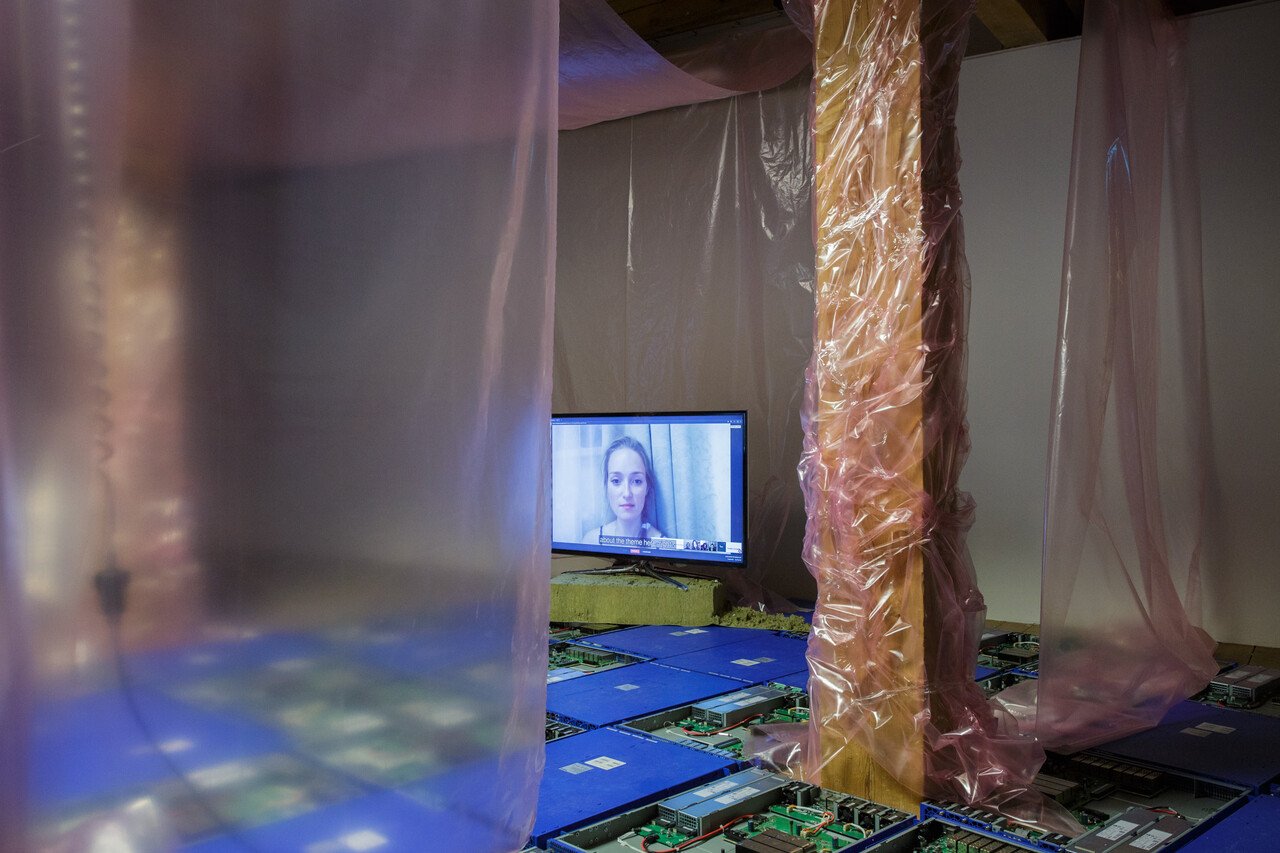
eeefff: Look, now we’re sitting in different cities talking through Zoom. It’s a massive bunch of algorithms. We are looking at the squared pieces of metal, silicon, plastic, and other things that allow us to talk. We are using these devices as individuals and are feeling quite alone, right? The roots of our interest are in aiming to destabilize these separated positions of the users.
When we’re talking about the technologies of nowadays, one of the ways to destabilize them is to create made-up collectivities. This is the reason why these participatory, as you said, or as we call it collective, practices are so important. And then surrounding them, there are numerous other outcomes, for example, didactic materials, info stands, or some other traces that could be found on the internet. Traces are important because our sessions may only fit 15-20 people at a time. So, there are different forms for how people can engage with our practices, or follow the processes we are initiating. The exhibition format allows for montage, to create narration, in order for traces to exist in different settings, or within different temporalities.
VZ: When you mention the traces of sessions, you don’t necessarily mean documentation, right?
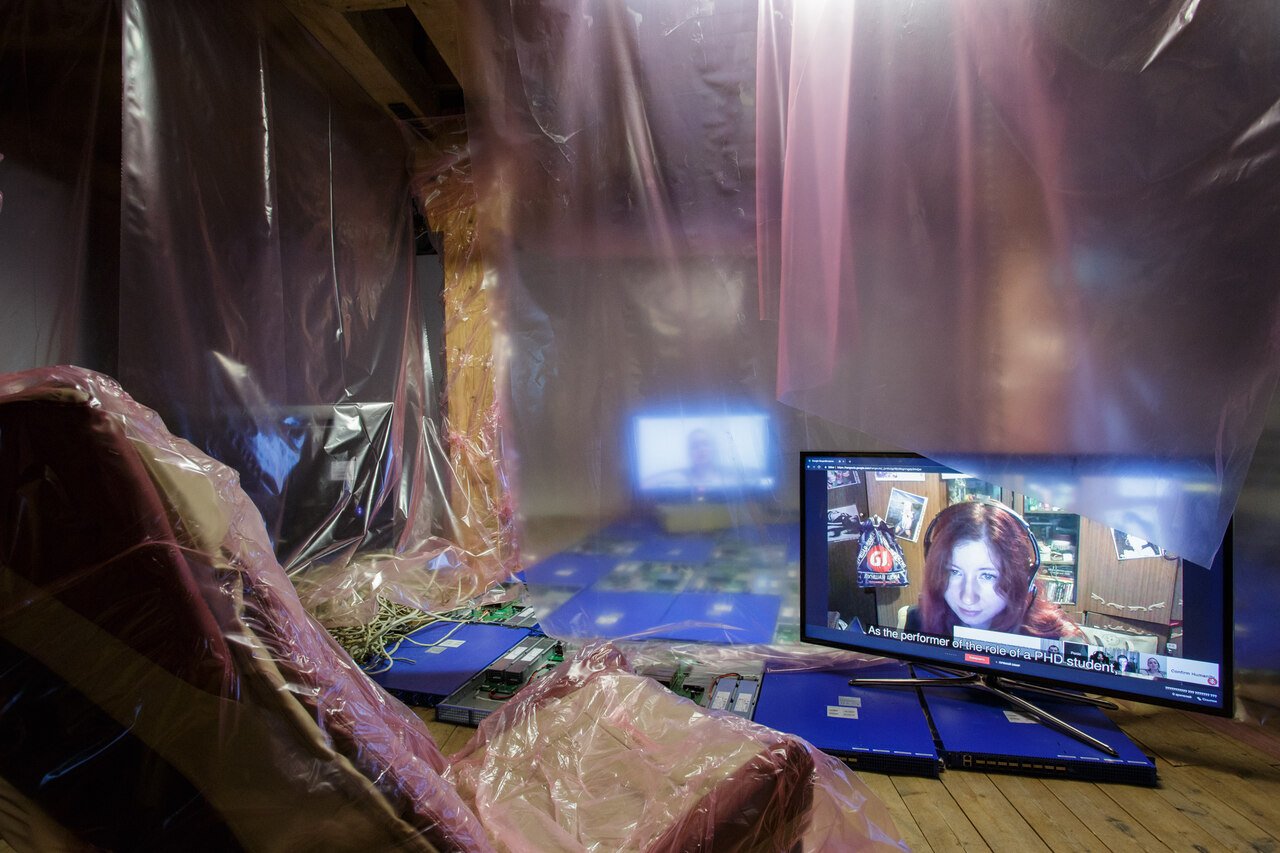
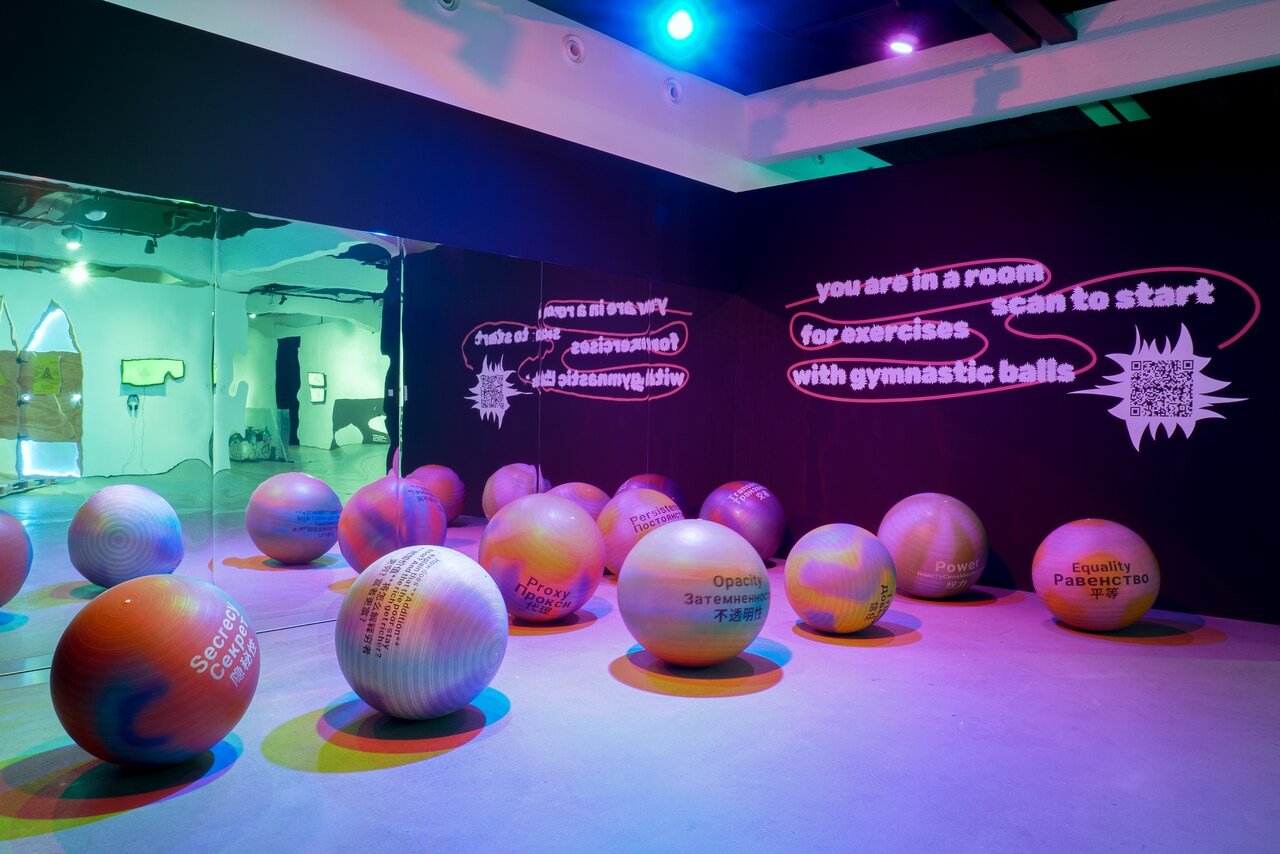
eeefff: Yeah, exactly. It’s very difficult to document sessions, and it’s maybe not that interesting to see such documentation. Sometimes we are playing with the possibility and impossibility of participation, or with the invitation to join our sessions in a more imaginary way. As well, with the formality of the protocols that can be presented while also being detached from the situation we made. For an installation we can, for example, take one particular prop that was used during a session and expand its functionality. In this way, one branch of the Economic Orangery, which was a two month-long online situation, later stayed in the form of an installation with exercise balls that were used during the sessions, but were not crucial elements. The installation focused on body exercises that visitors could do together with the bot that we created much later. We borrow the term “bleeding out” from different made-up city games and LARPs for describing the process of how objects for installations are evolving from the situations we are making. Their creation is often the result of this “bleeding out” of affects and effects.
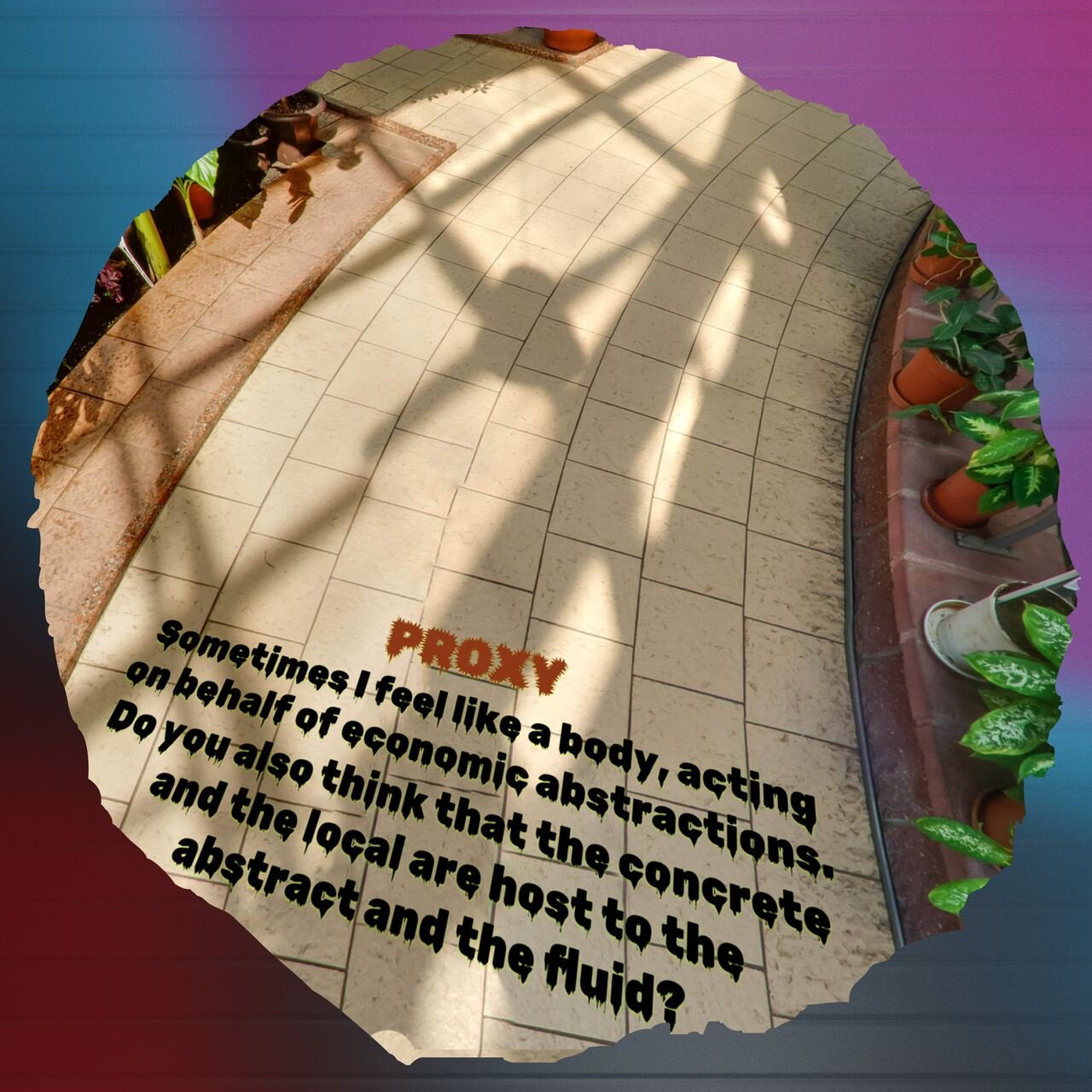
VZ: What was the Economic Orangery? Please tell a bit more about its idea and process.
eeefff: We organized the Economic Orangery in 2021 and it went in parallel with the then-ongoing uprising in Belarus. We observed the massive rise of new types of institutions born out of the uprising process, which supported its continued development.
Usually, people’s living space in Belarus is organized around sleeping districts and mass forms of housing where common spaces, especially yards, are shared by hundreds of people. Typically these people have very different backgrounds, biographies, social characters, incomes, and have no need to communicate with each other. That is difficult to imagine, but in the autumn of 2020, they suddenly started to organize very unstable, elementary forms of communal living. For example, initiating some sort of gift economy, tea parties, cinema screenings, concerts, self-organised kindergartens or other forms of mutual aid. It opened up new forms of social structures and helped the protests keep going.
Our idea was to playtest the fictional community built around one such yard. We wanted to experiment with this gap between what is really happening and what could be imagined. So we organized regular gatherings online for around 15 people for two months, maybe a bit longer, as well as a collective chat, with inputs and outputs from all the participants. Additionally, we shifted temporality and played simultaneously in two times: one was the actual time of the revolution in Belarus, in parallel with the events in our fictional community. The second, in surplus time, was the imagined future, where participants were taking care of the museum of this uprising and developing relations to the objects in the collection.
These objects and archives were part of the choreography that we asked people to develop according to made-up characteristics of their personalities. Someone could be obsessed with their opacity; someone could think through the idea of being a proxy; someone could be risky or have strong relations to transparency. So, the whole idea of the initiative was to make an experiment to see if it’s possible to have distance from the events of the uprising that were happening in parallel. We had different outcomes of these gatherings, sometimes quite detached from the sessions, like the Anonymous Collective, which was formed and has stayed active for some time.
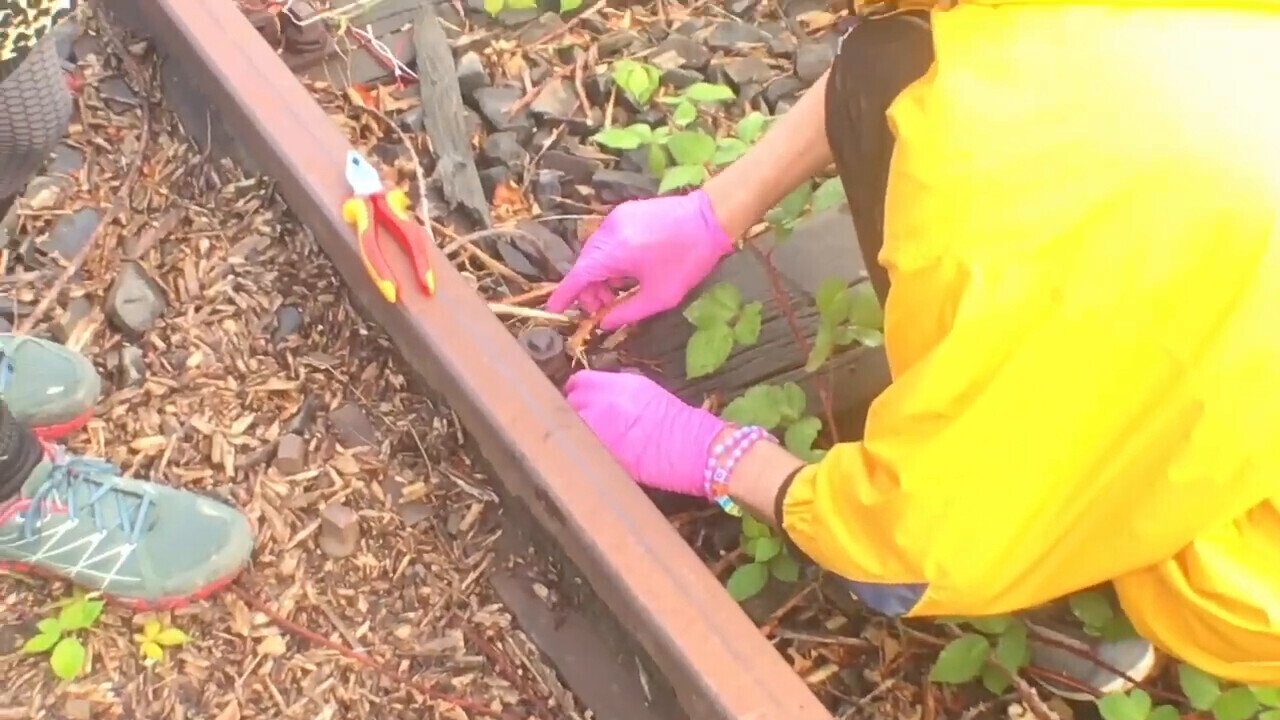
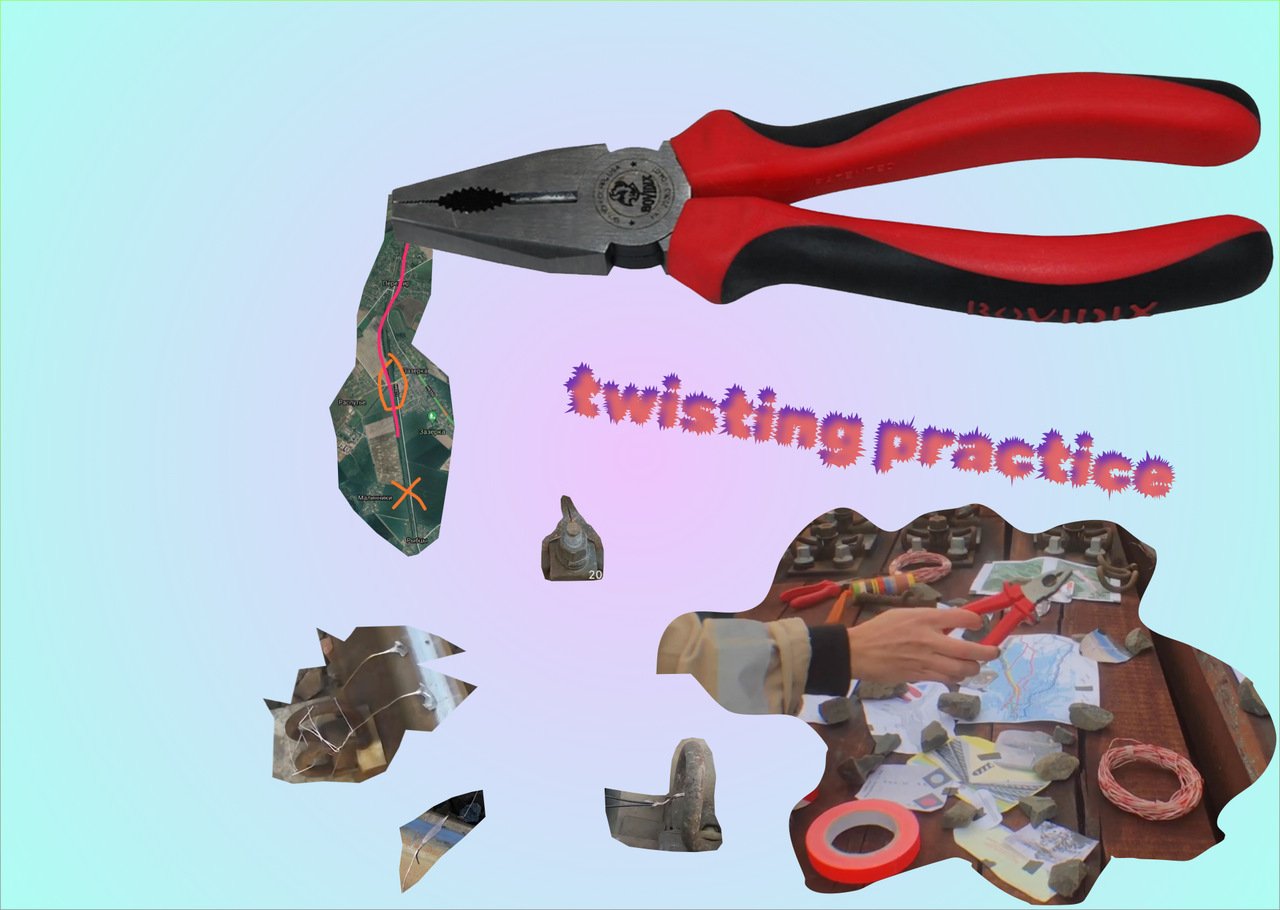
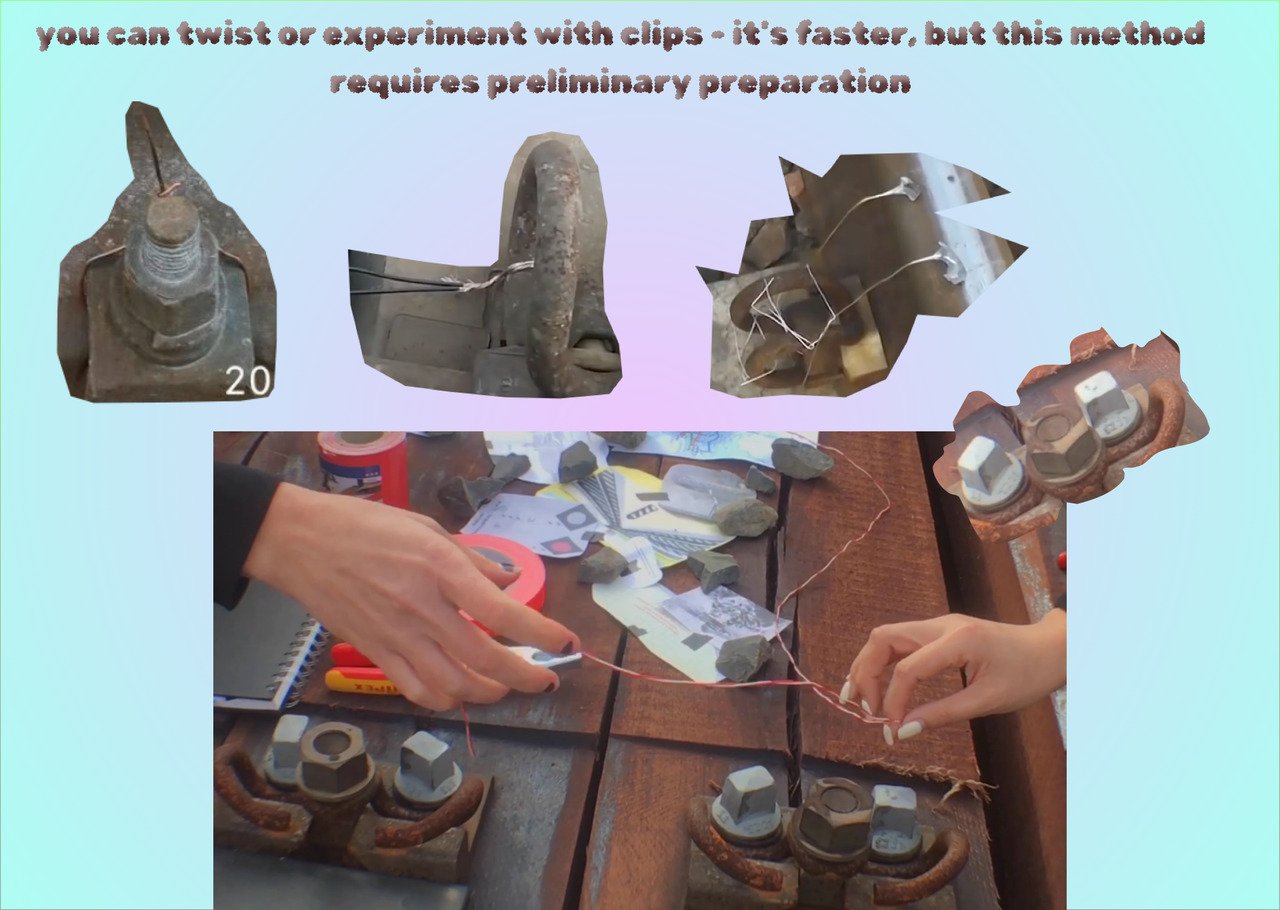
VZ: How do you connect this kind of subversive and often impractical knowledge with the community-building idea and also with the aim of reenacting the inner logic of algorithms and infrastructures? Maybe the train stopping session Is it possible to feel the infrastructural time? is a good example, which is referring to some partisan actions on the Belarusian railways that was organized to slow down the russian military supplies transfer to the territory of Ukraine?
eeefff: This example is useful to widen a bit the landscapes to which algorithms are being applied. For us, it’s interesting to think about where algorithms live and how we function inside an algorithmically-driven landscape, rather than just to use this notion in the abstract computer science or mathematical space. When we think about algorithms, most often we imagine screens, pixels, possibly some keyboards, microphones, and speakers used in interactions. But if we think about algorithmicized environments, and actions at a distance not at the user scale but on an industrial one, we would notice that the landscape is full of sensors and activators. In industrial areas, or the territory where railway logistics are happening, you barely find screens. These are territories full of devices that are intended to serve not users’ desires, but more political and economic needs.
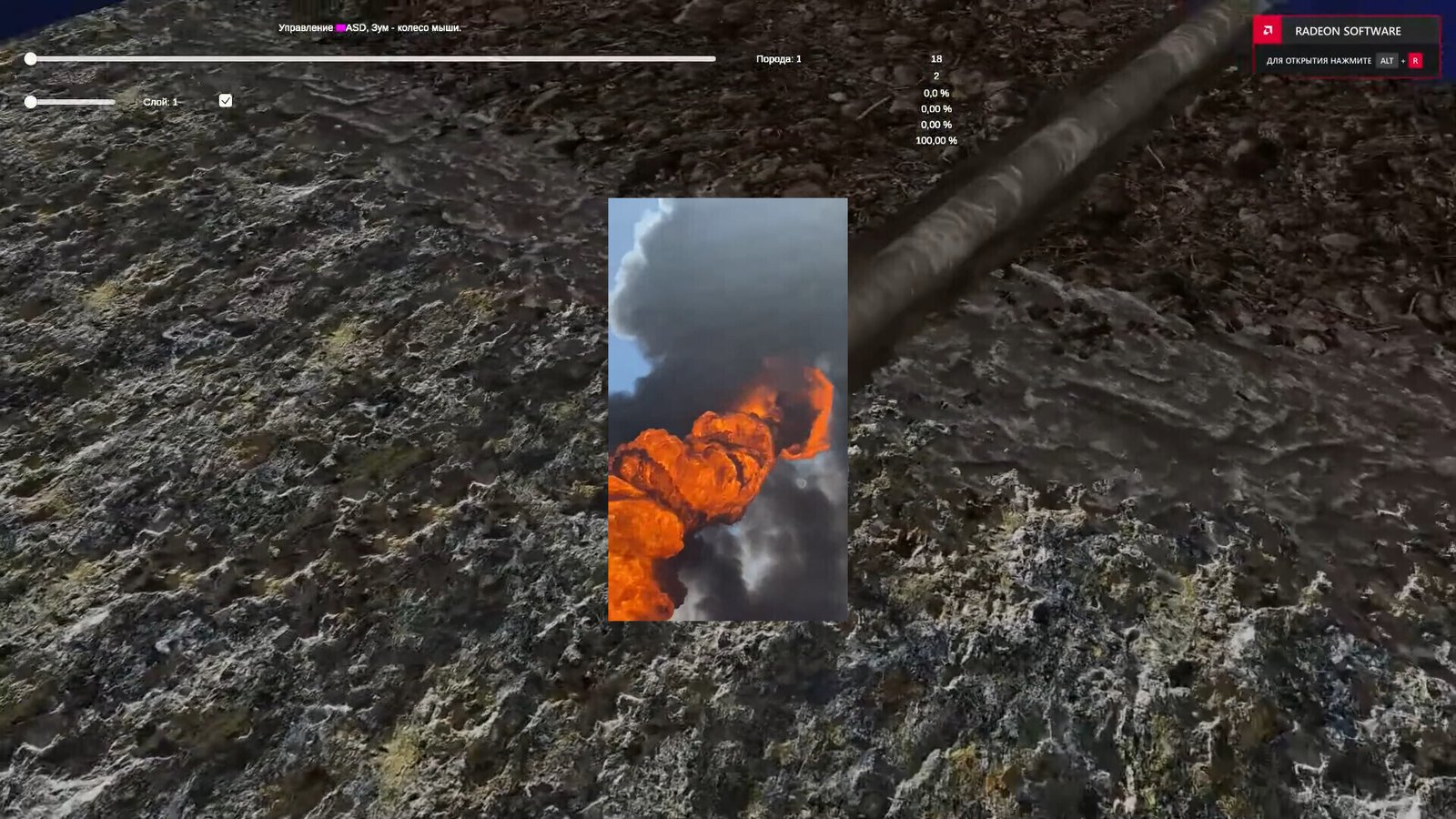
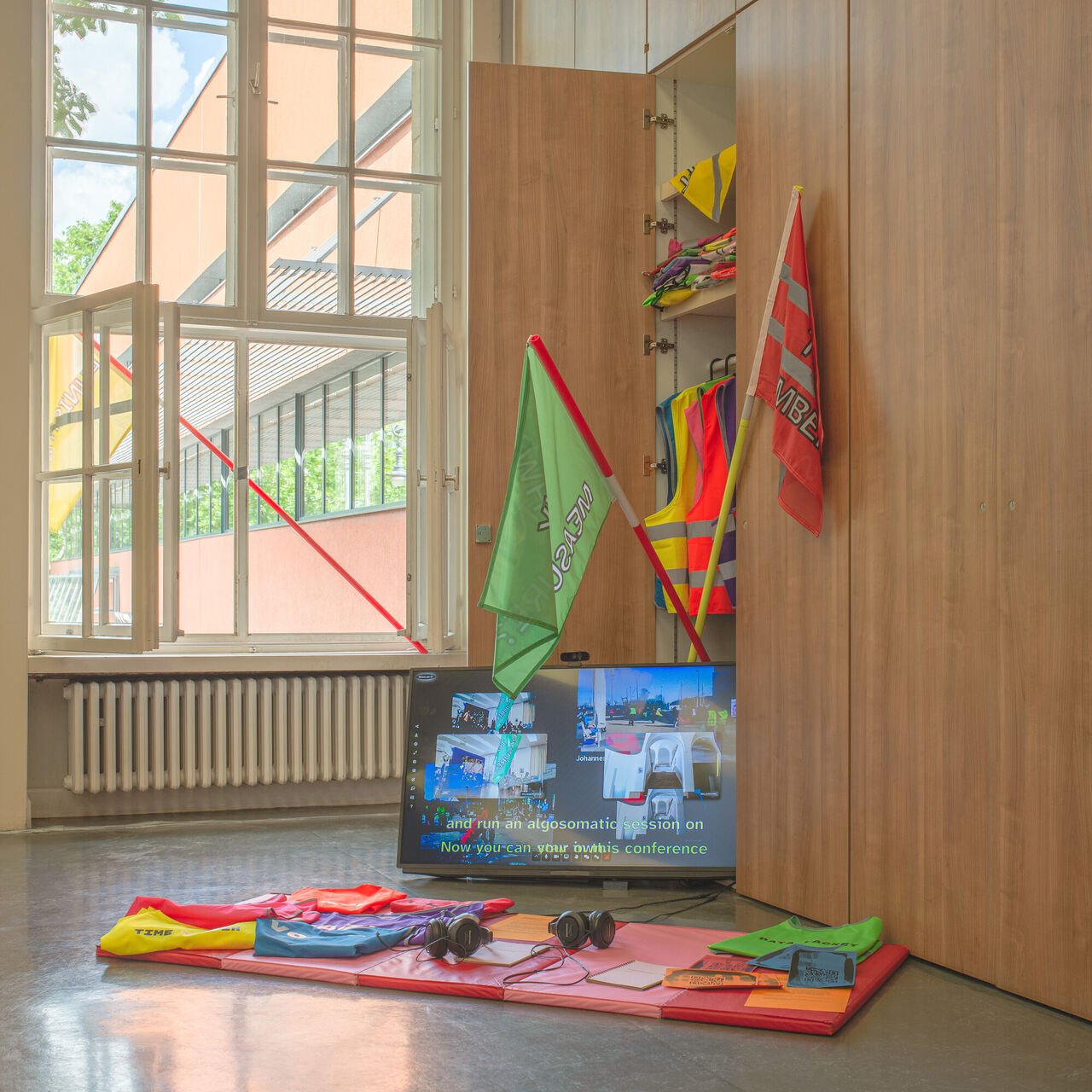
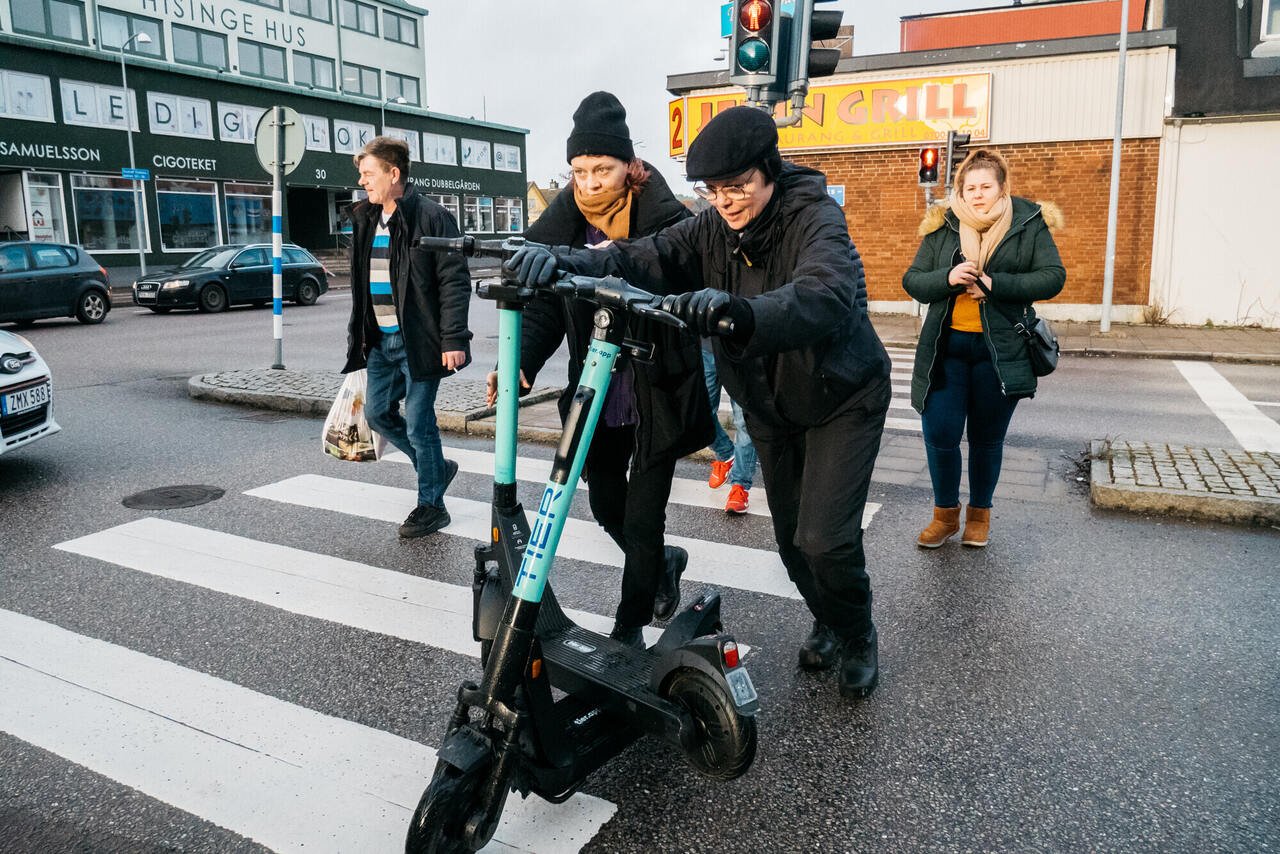
During the first version of this session, we wanted to jump inside such a landscape; we literally went to the railway tracks in Kassel to train the skills of behaving in this industrial landscape, rather than the user one. Usually we think about some specially trained people, some experts, who are dealing with these algorithms. During our session we tried to turn it around and to think about how these mechanisms affect all of us, or specific territories. Maybe there is some made-up knowledge that is useful in the case of, let’s say, partisan actions. Maybe it’s coming from another epistemology of how to think about algorithms, how do they function at a distance? We proposed for people who came to the session to develop some unprofitable and impractical skills. Or, to develop feelings and emotions that one doesn’t have yet, but in future scenarios, that could also potentially be useful. So, our speculation was around the scenes of partisan technologies that connect us to the algo-somatic experience.
Algo-somatic is not about our posture – sitting next to a computer and looking at the screen – it’s extended to different situations, including being on the side of logistics, where we also have the paroxysms of discipline and empowerment, which are not happening only in our brains but with our bodies, and what is important for us, between our bodies.
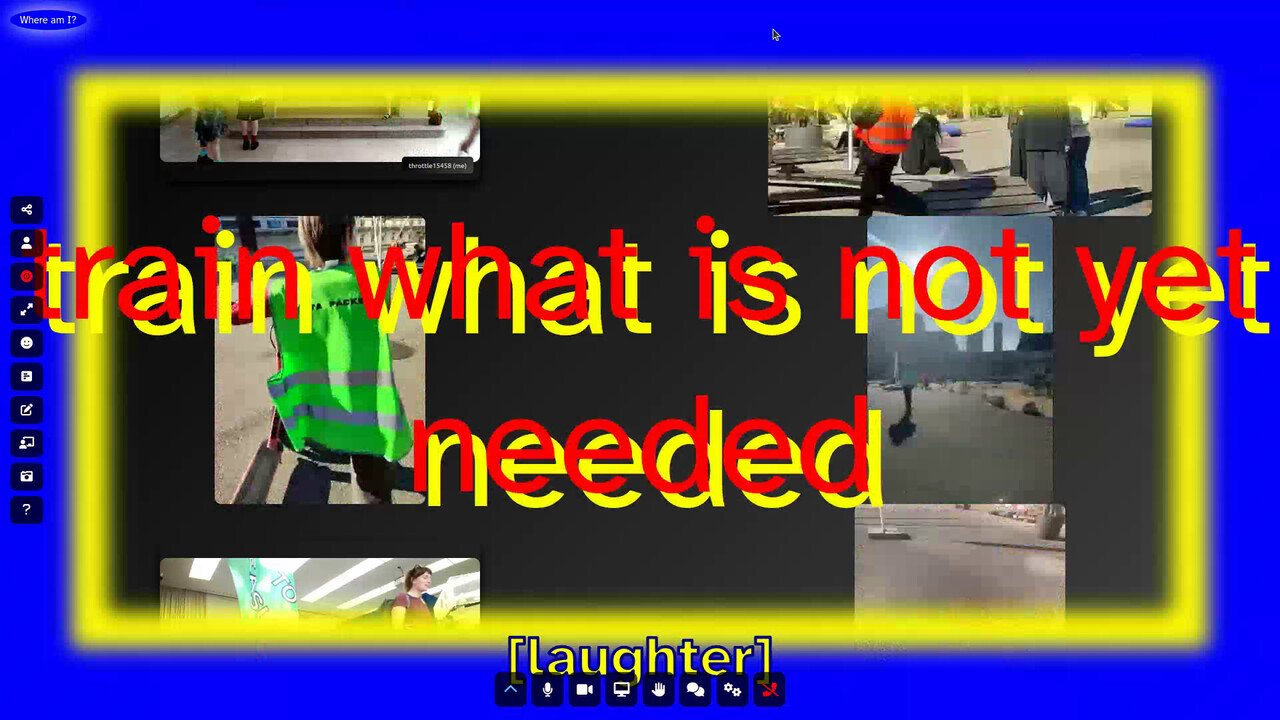
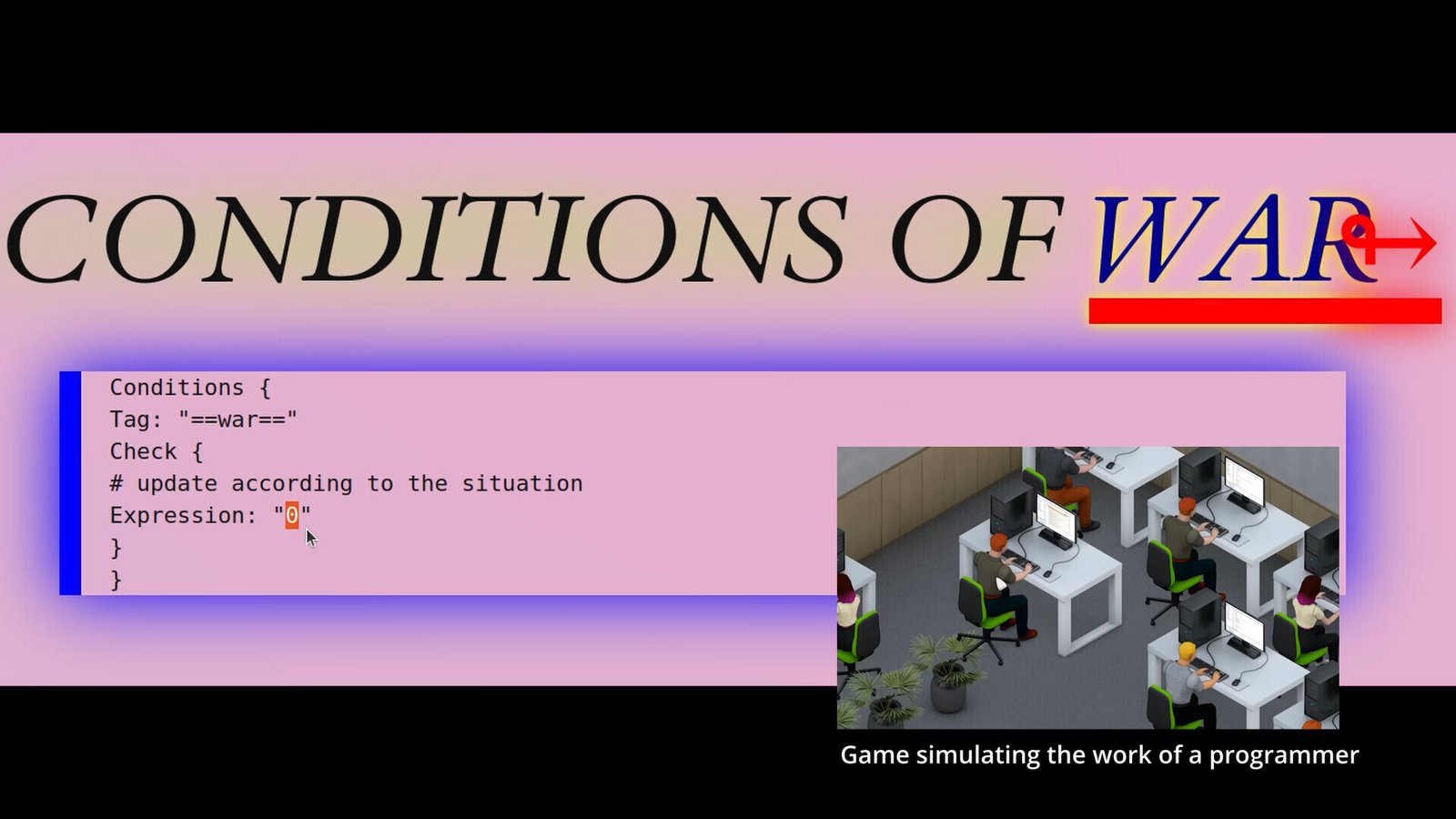
VZ: What exactly do you call Algosomatics? And what can bodies know about algorithms that language can’t express well?
eeefff: Algosmatics is from one side, an artistic method for tracing how algorithmically-aided environments modulate bodies, and from the other, how what we call “motor inventiveness” can repurpose these effects into forms of imagination. By algosomatics we mean the embodied dimension of life, exploited by computation. So we explore how digital economies, cybernetic relationalities, and technological infrastructures inscribe automatism into everyday gestures, postures, and muscular patterns. It also refers to this motor inventiveness, that sometimes we can use our bodies and go from this pattern that we already have, that we might not notice. And when we notice it, it kind of destabilizes the situation, and then we can use it as a vehicle to try to jump outside the usual path. We can destabilize the order of things that we have pregiven: some path, some route, something established, or something computational. That can come, as you asked in your question, as something that language cannot express.
But at the same time, algosomatics as a made-up term could critically refer to the controversial territories where the body is understood as a biological computer, which is connected with understanding society as a big machine, where agents are being connected to find the best solution. Our construction of this term, consisting of the algorithmic and somatic, also has the aim of tackling the way to understand embodiment or algorithms. For us it’s important to question this neoliberal free market understanding of our bodies as reservoirs for computation and our behavior as an outcome of some process in our brains that is analogous to cybernetic processes. We like to question all this behaviorist approach toward the body and see collective sessions as places where we can express these differences while staying on the side of solidarity with each other.
VZ: You have a big project called the School of Algorithmic Solidarity. We spoke a bit about algorithms today, but how do you understand solidarity?
eeefff: Solidarity comes from the angle where not only criticism is possible, because it’s quite hard nowadays to stay together while not being in full agreement. Inside our school, we have mainly gatherings and sessions, so it’s again functioning around collective processes and practices that come not from the position of critique, but from an attempt to build some alternative protocols on how to act. When people that have different backgrounds and attitudes toward technologies are doing things together in one space it is a practice of solidarity in and of itself.
VZ: Could you explain the difference between collective intelligence and artificial intelligence, which you mention in your artist statement?
eeefff: The idea of artificial intelligence is about growing the amount of data for “better functioning.” We are rather interested to work with something that is, let’s say, repressed from this technological progress idea or with some excesses that are not predicted, because artificial intelligence is about predicting, but based on past experience. So, nothing new can be born out of it and that’s the main critique of artificial intelligence from our side. It’s just repeating some cultural and political patterns and is unable to do this work that collective intelligences can do. Because it doesn’t overcome the psychological inertia, it just analyzes and measures. And collective intelligence is more about interpersonal connections that can produce creativity, or inventiveness, which could be commodified or not, depending on the practice of solidarity.
VZ: This interview is happening, in the framework of the Minna Tarkka Lectures organised in December 2025 by M-Cult Helsinki, which is an organisation focusing on both digital and community practices. I know that you had the experience of collaborating with Minna before she passed away in 2023, could you share a bit of this experience?
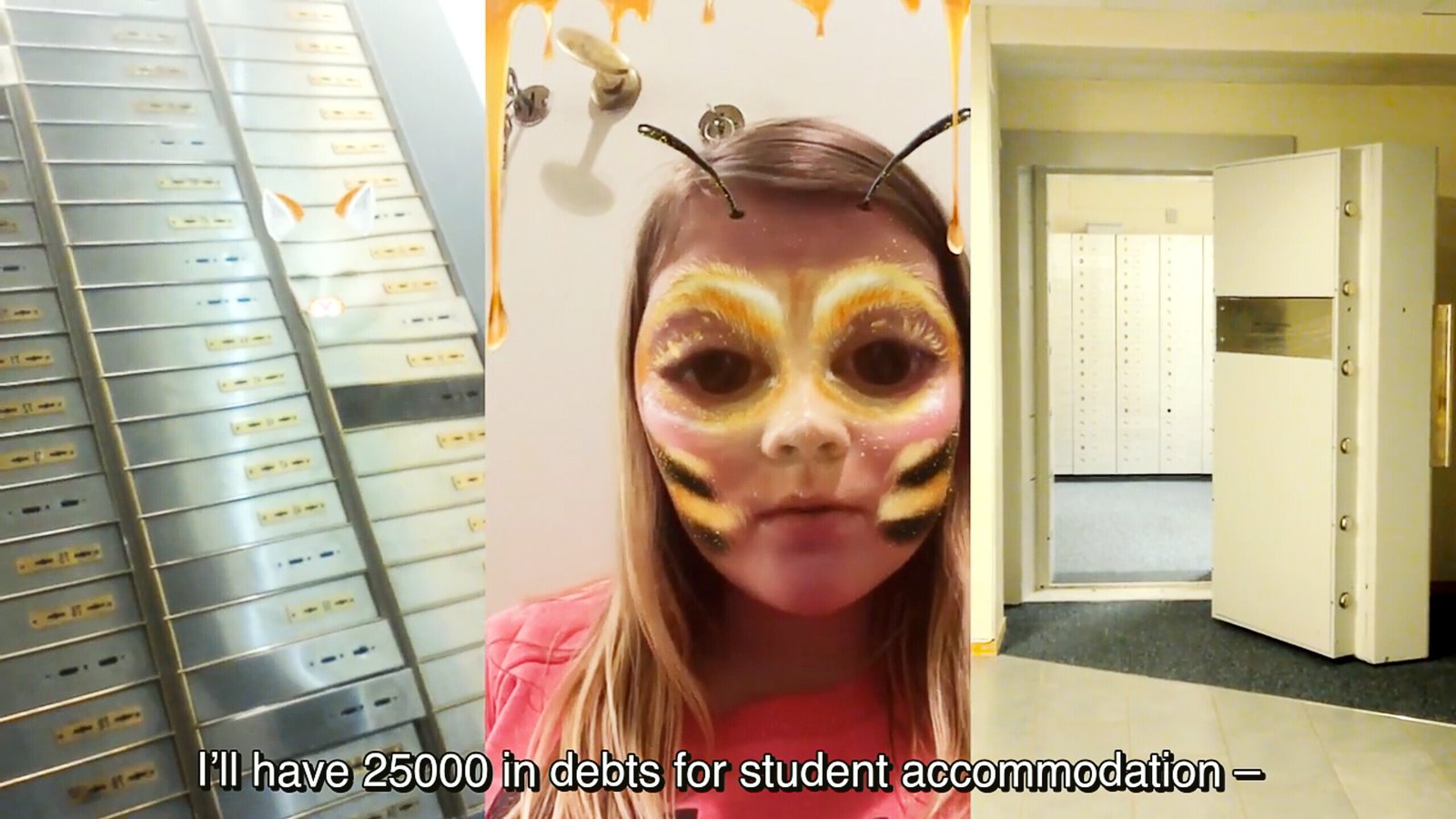
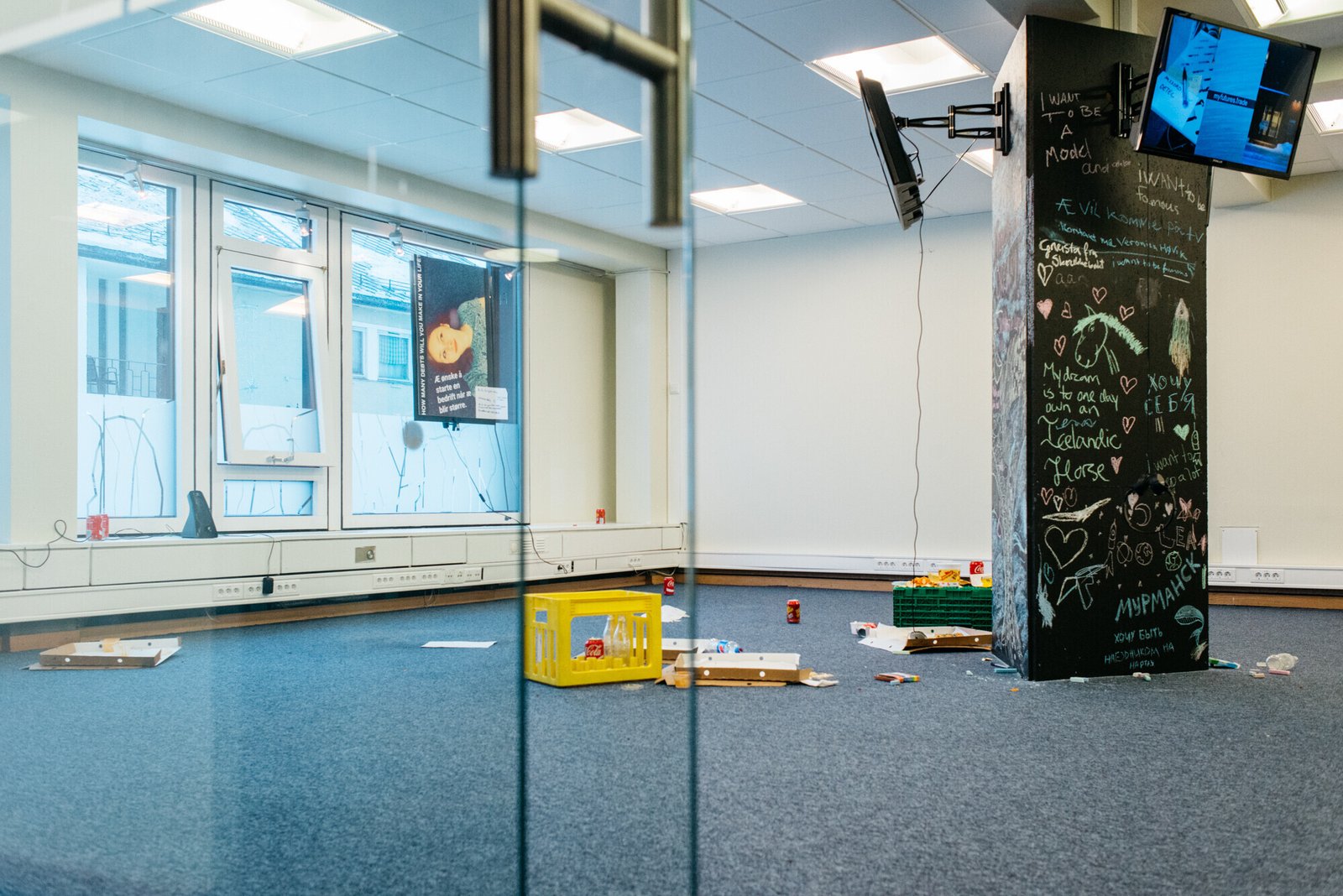
eeefff: We had a one-month residency in Helsinki in 2017, we were working with teenagers in Youth House in the Maunula district. There was a very interesting dynamic because the majority of teens and young adults were interested in the computer class because they didn’t have a stationary computer at home. Most of them were from migrant families, so we didn’t need to invent any communities there, it was already there. For us it was important that our inviting organisation, M-Cult, was deeply engaged in the activities inside this youth center. We were impressed by how they managed to create long-standing relationships with the community in the district, which is located outside of the city center, not in some shiny place for technological art. Because usually you come to a residency and the requirement is to create a community, which is practically impossible to do in a short time. Minna Tarkka and M-Cult offered another way of working, as an art institution that gives artists an opportunity to learn a lot and work with what is already existing in that place.
The teenagers there were engaged and willing to think about alternatives to the existing techno-social order because they didn’t have any stability in terms of digital life. And that also refers to your first question about Minsk-Berlin, because maybe when people don’t have stability, they pose questions to the existing order, like “How come I don’t have any basic means that others are having?”. Our response was to make Embassy of the Future, which was dependent on some debts and the monetization of the teenagers’ lives. We also created a “waiting list of desires” that formed some other type of economy and overcame this usual understanding of how the market, for example, is functioning.
VZ: It appears that imagination plays a considerable role in your practice.
eeefff: Our focus is on material and social possibilities to imagine. It’s important to think about the question of techniques and supporting materials: maybe not what, but how we imagine? That’s what we call “infrastructures of imaginations,” or material force to imagine. Because of these objects or props, or settings or duration, we can playtest some scenarios. And this sort of creativity must have an open form; our role is not having in mind the whole scenario, but more about creating the possibilities. We were speculating based on Olexii Kuchanskyi’s thought that imagination doesn’t need truth. That it rather can be used as a vehicle that moves through different models and registers with the help of supporting materials. From another side, the supporting materials can build a kind of imagination that is not abstract, but has its concreteness, or is built on a particular structure that has very specific materiality. We want to build this imagination, not out of anything, but based on concrete ground.
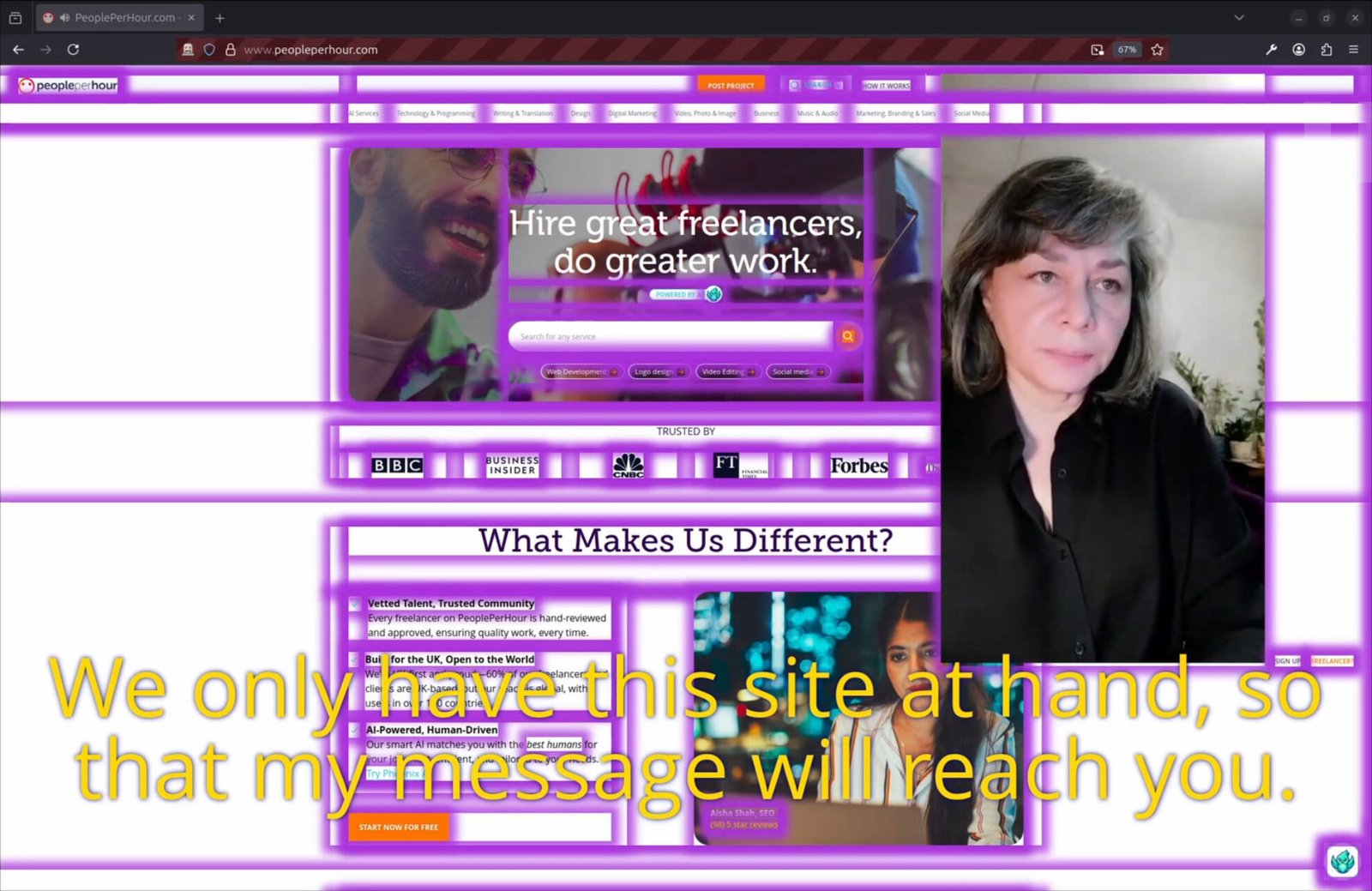
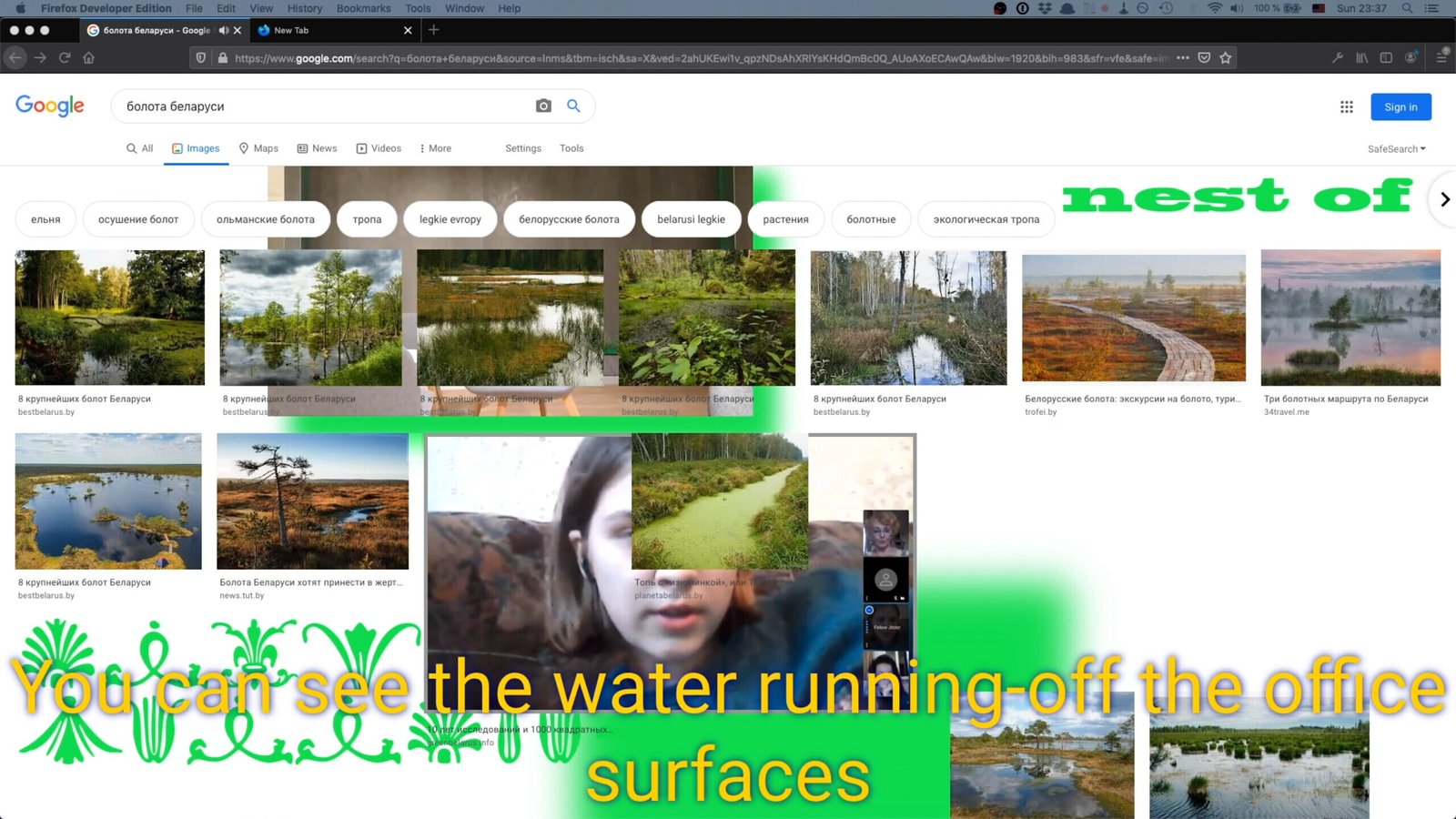
VZ: What was the “imaginary space” of the Outsourcing Paradise (Parasite) project? What kinds of “breaks” in a production cycle are actually possible and which do you aim for?
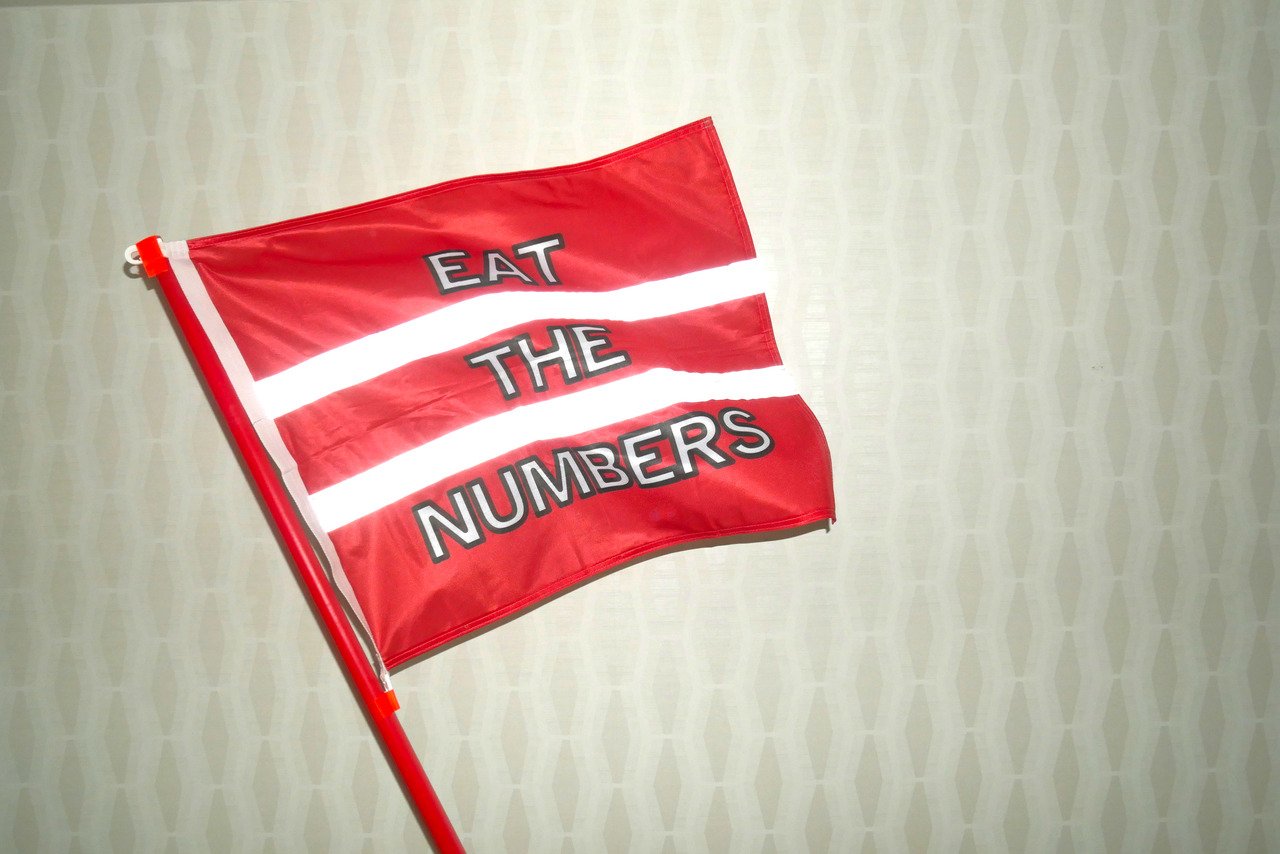
eeefff: We are interested in the labor hidden behind smart systems. Inside of Outsourcing Paradise (Parasite), we made an algorithm that functions on top of the existing web pages that starts to eat the different content of a website, from the smallest to the biggest, if you are not moving your mouse for some time. It was an outcome of the gatherings we made for outsourcing workers and together with them, where we tried to imagine the possible workers’ club. We use this hack on our website, and proposed other people use it as an extension or as a plugin for some websites with which they have some relations. That destroys the usual way websites are working, because we are used to the user-friendly interface, but this is kind of an error-friendly interface. So if you are not active on this website, it will disappear. It will be eaten by the “outsourcers.” This is an imaginative space of outsourcers (those who create the contemporary algorithmic reality and are hidden behind the veil of microtasks) with whom we worked for several months. We went through different exercises, and now they are montaged on top of each other.
VZ: Wrapping up our conversation, I’d like to paraphrase the question posed as a starting point of the Minna Tarkka Lectures 2025: Within currently dominant narratives that emphasise acceleration and optimisation, how do you see the role of artists in rewiring futures? Or even more general: do you believe in possibilities of art to create revolutionary ideas or to guide us towards (hopefully better) future?
eeefff: On Minna Tarkka’s lecture we had a slide about growing unprofitable and yet impractical skills; skills that are not yet useful – we are working with temporary zones that could include inventing infrastructure, perpendicular to the existing practices of capital, playful, poetic, and not nostalgic, dealing with technologies, and social processes. So, for us it is interesting to work with what we once called “present future,” a multilevel tuning, rehearsing, testing, calibrating, grinding, reclaiming life practices. But there we are rather interested in the moments of productive conflicts, and not agreements, when “layers of future” come over one another, where there is tension between different desires. Part of our methodology is also critically understood open-endedness, a process-based approach, as a navigation towards coexisting multiplicities of how everything can go. It also really depends on the context – what kind of knots are woven by creative and inventive practices, and art in particular, in relation to a social-political situation.
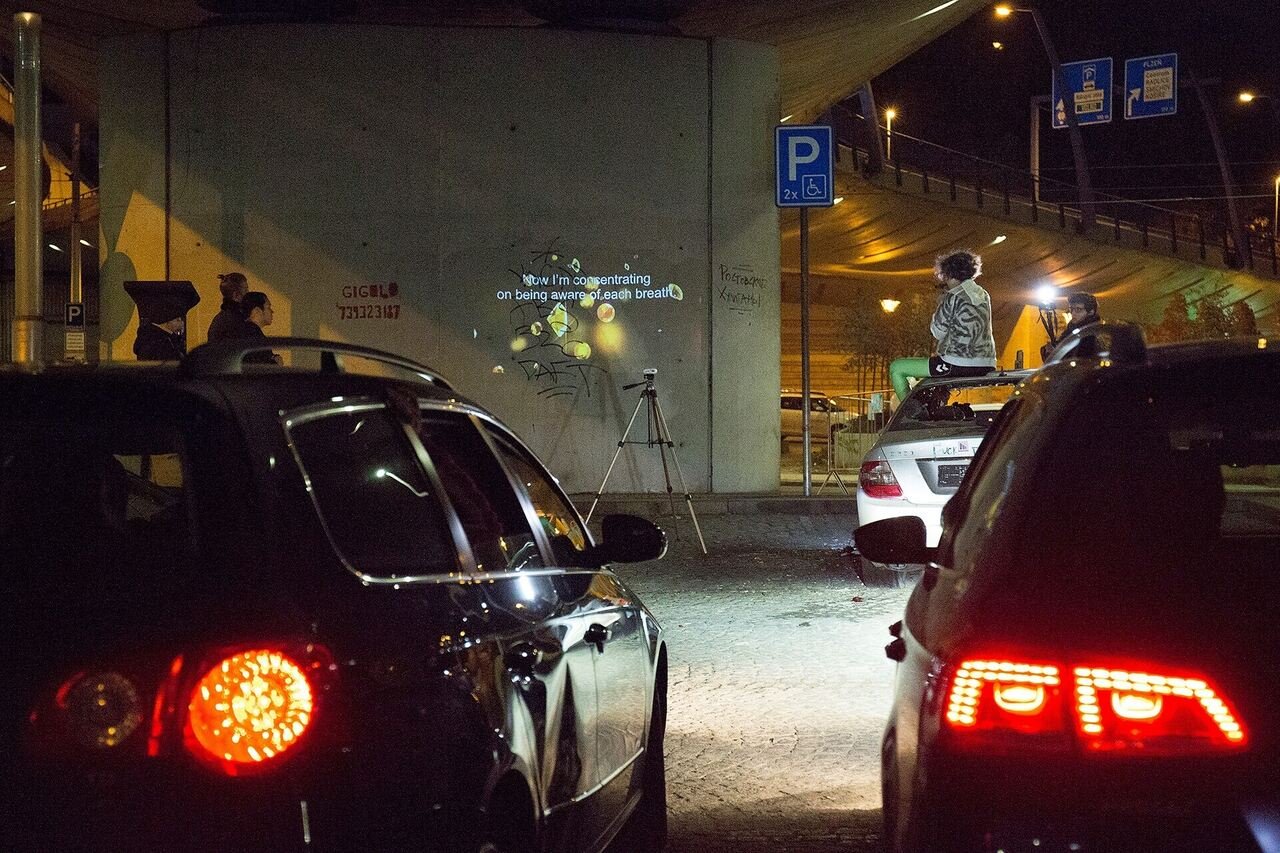
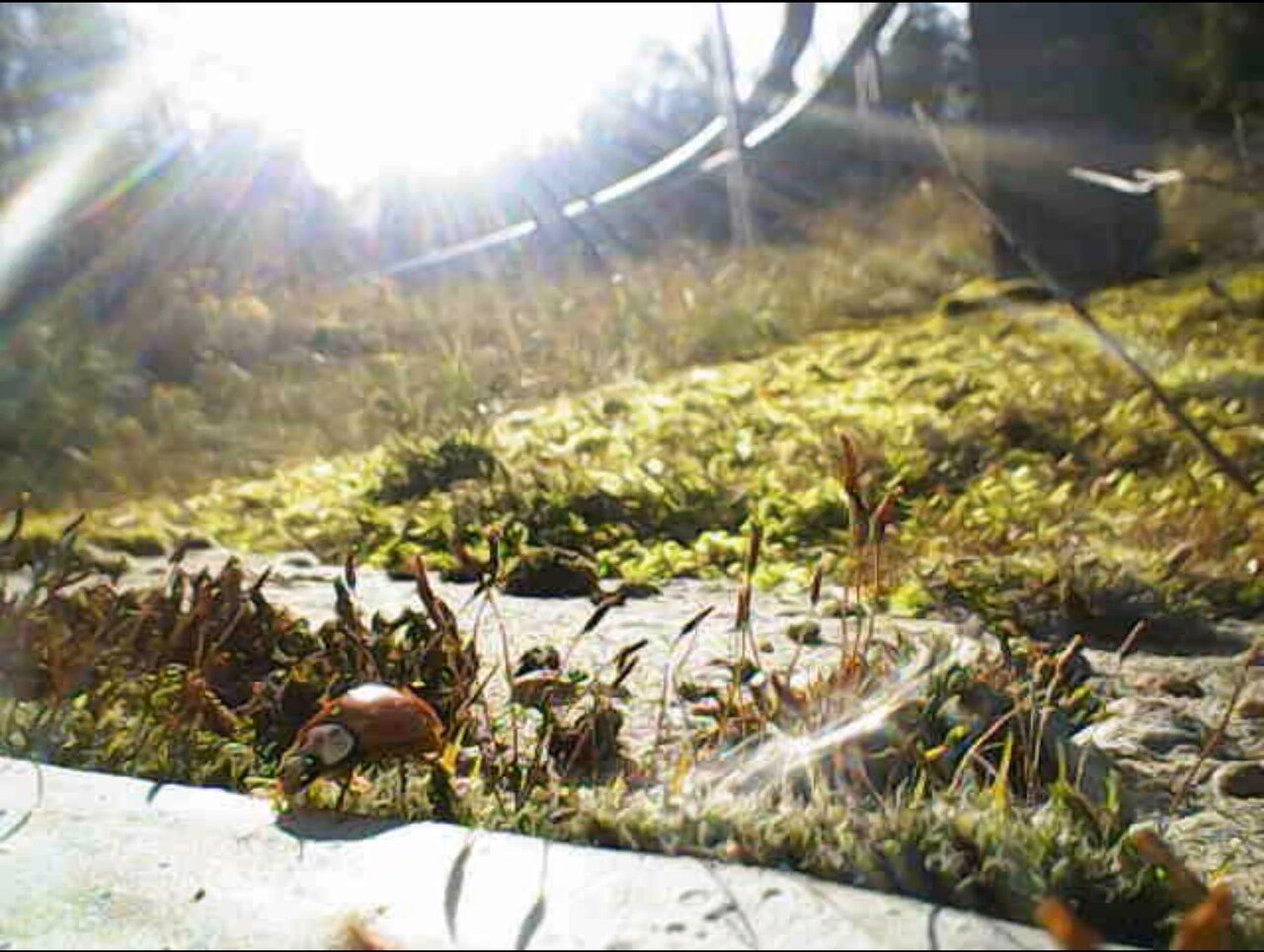
Lecturers: eeefff, Harold Hejazi, Ruth Catlow
Get-Together Title: Minna Tarkka Lectures 2025: Collective Imagination in the Era of Optimisation
Organised by: Art & Media Culture Agency M-Cult
Venues: Museum of Contemporary Art Kiasma, Kiasma Theatre; Aalto University, Media Lab
Place (Country/Location): Helsinki, Finland
Dates: 1 – 4.12.2025